让更多的孩子得到更好的教育
地址:北京市西城区新德街20 号4 层 电话:010-82025511 传真:010-82079687  第1页 共8页
Unit 11 How was your school trip?
责编: 郭素清
词汇精讲
1. milk
  (1)milk 作名词,意为“牛奶”,是不可数名词。例如:
       I’d like a cup of milk. 我想要杯牛奶。
  (2)milk 作动词,意为“挤奶”。例如:
       I helped the farmer (to) milk the cow. 我帮助农民挤奶。
2. feed
  feed 作及物动词,意为“喂养,饲养”,其后常接表示动物名称的词作宾语。例如:
  My father’s job is to feed the animals. 我父亲的工作是喂养动物。
  拓展:
(1)feed..to…意为“把……喂给……吃”。feed 后接饲料或者食物名称做宾语,to 为介
词,其后一般接动物或者小孩等名词表示对象。例如:
     Please feed some grass to the cow. 请给这头奶牛喂些草。
     She fed milk to the baby. 她给婴儿喂了奶。
(2)feed 可以做不及物动词,意为“食,吃”(主要指动物),与介词on 构成词组,
意为“以……为食,靠……为生”。例如:
     Sheep feed on grass. 绵羊以草为食。
3. quite&very
词语
用法
例句
quite
语气比very 弱,常用于“quite a/an
+可数名词单数的结构中。
It’s quite a good idea. 那真是个好主
意。
very
语气比quite 强,多用于褒义形容
词前,常用于“a very+可数名词单
数”结构中。
Li Ming is a very good student. 李明
是个非常好的学生。
4. anything
  anything 不定代词,意为“任何事情,任何东西”,常用于否定句和疑问句中,在肯定
句中常用something。something, anything 作主语时,谓语动词用单数。例如:
  I can’t see anything in the box. 盒子里我看不到任何东西。
  Is there anything in the box? 盒子里有一些东西吗?
5. pick
pick 意为“采,摘”,常用于词组“pick up”,意为“拾起,捡起”, 当宾语为代词时,
宾语应放在pick 和up 中间;当宾语为名词时,宾语可放中间,也可放在后面。例如:
There is a pen on the playground, please pick it up. 地上有一支笔,请捡起它。
Bob stopped to pick up a watch. = Bob stopped to pick a watch up.
Bob 停下来,捡起来地上的一块手表。
拓展:
(1)pick up 意为“搭载,开车去接”。例如:
The bus stopped and picked up some passengers.
公共汽车停下来,搭载了一些乘客。
      Please wait at the school gate. John will pick you up there.
请在校门口等候, 约翰会到那里接你。
 (2)pick up 意为“偶然学会,获得”。例如:
                                   让更多的孩子得到更好的教育
地址:北京市西城区新德街20 号4 层 电话:010-82025511 传真:010-82079687  第2页 共8页
      She picked up English when she played with the American children.
      她和美国小孩儿玩的时候不经意间学会了英语。
6. worry
     (1)worry 可用作不及物动词或及物动词。作及物动词时,意为“使烦恼,使担忧”。作
不及物动词时,意为“发愁,担心,烦恼”,常与介词about 连用。例如:
          What’s worrying you? 什么事使你烦恼?
          Don’t worry about me. 不要为我担心。
      (2)worry 也可用作名词。既可作可数名词,也可作不可数名词。例如:
          Her face showed signs of worry. 她脸上显出担忧的神情。
          I have a lot of worries. 我有很多担心。
      (3)worry 的过去分词worried 相当于形容词,意为“担心的,烦恼的”,常与be/look/fe
el 等系动词连用。be worried about 意为“为……担心”。例如:
           She is worried about her sick mother. 她担心她生病的母亲。
7. luckily
  luckily 是副词,意为“幸运地,幸亏,侥幸”。例如:
Luckily there was a doctor on the spot.
幸运的是现场有一位医生。
拓展:
  lucky 是luckily 的形容词形式,意为“幸运的, 吉祥的, 侥幸的”。例如:
He is a lucky dog.  他是个幸运的家伙。
luck 是luckily 的名词形式,是不可数名词;意为“运气, 好运, 幸运 ”。good luck to sb
表示“祝某人好运”,bad luck 意为“倒霉”。例如:
She had no luck finding a job. 她很不幸,找不到工作。
I wish you luck =Good luck to you! 祝你好运!
8. exciting&excited
exciting 是形容词,意为“令人兴奋的”,一般用来说明事物的特征。例如:
I like football. I think it’s very exciting. 我喜欢足球。我认为它非常令人兴奋。
       excited 也是形容词,意为“感到兴奋的”,一般用来说明人的感受。例如:
       He is very excited at the news. 因为那个消息他很兴奋。
9. slow
  (1)slow 作形容词,意为“缓慢的,迟缓的”,其反义词为fast。例如:
       Why are you so slow? Hurry up!It’s late.
       你怎么这么慢啊?快点!要迟到了。
     (2)slow 和slowly 一样也可以作副词,但是用法有区别。slow 一般用于口语中,不可以
用于句首,只能和go, drive 或pass 连用且位于其后。而slowly 比较常用,可以置于
句首或者动词之后(或前)修饰动词。例如:
          How slow the time passes! 时间过得真慢!
          I told the driver to go slow. 我告诉司机慢点开车。
          He slowly opened the door. 他慢慢地把门打开。
    10. fast
(1)fast 作副词,意为“快地”,可以用来修饰动词或者动词短语。例如:
          We got there so fast by train. 我们乘火车很快到了那儿。
      (2)fast 作形容词,意为“快的”。例如:
           A train is very fast. 火车很快。
                                   让更多的孩子得到更好的教育
地址:北京市西城区新德街20 号4 层 电话:010-82025511 传真:010-82079687  第3页 共8页
      拓展:fast&quickly
       fast 强调动作的速度快;quickly 指动作敏捷或者完成得快。例如:
       Li Ming can run very fast. 李明能跑的很快。
       He had breakfast quickly and then went to school. 他快速吃完早餐去上学了。
     11. all in all
all in all 固定词组,意为“总的来说”,常用于句首。例如:
All in all, it is a great success. 总的来说,它非常成功。
All in all, I’m too excited. 总的来说,我太兴奋了。
拓展:常见的和all 有关的词组
after all 毕竟,终究    all over 到处    not…at all 根本……不
all right 行,好的   in all 总共
     12. dark
       (1)dark 作形容词,意为“黑暗的,昏暗的”。例如:
            The room is dark and quiet. 这个房间漆黑一片,寂静无声。
       (2)dark 作名词,意为“黑暗,无光(尤指夜晚)”。例如:
            We stood outside in the dark. 我们站在黑漆漆的屋外。
词汇精练
Ⅰ. 词形转换。
   1. paint (名词)__________   2. luck (副词)________
   3. love (形容词)_________   4. interest (形容词)_______
   5. fast (反义词)_________    6. cheap (反义词)_______
Ⅱ. 根据句意、汉语意思或首字母提示补全单词。
 1. She is badly ill and her mother is w______ about the health.
 2. Look at the apple on the trees. Can you p______ one for me?
 3. Slow down! You’re driving too f______.
 4. I got many g______ on my birthday.
 5. The car is too e________ for me to afford.
 6. All in a______. You’re too lucky.
 7. This is q______ an interesting book.
 8. I gave some f______ to my mother on Mother’s Day.
 9. I never go to the cities. I come from the c_______.
 10. We can get milk from the c______.
Ⅲ. 用括号中所给单词的适当形式填空。
    1. He went to the farm and ______ (feed) many chickens there.
2. My friend gave me a _______ (love) dog yesterday.
3. Peter and his family _______ (have) a good time in the park yesterday.
4. He ______ (milk) a cow yesterday.
5. Is there _______ (something) new in today’s newspaper?
6. The old man walked ______ (slow).
7. ______(luck), he passed the exam.
8. I like this movie. I think it’s very _______ (excited).
9. It was _______ (sun) yesterday.
10. Thanks for _______ (tell) me the good news.
IV. 听力链接。
                                   让更多的孩子得到更好的教育
地址:北京市西城区新德街20 号4 层 电话:010-82025511 传真:010-82079687  第4页 共8页
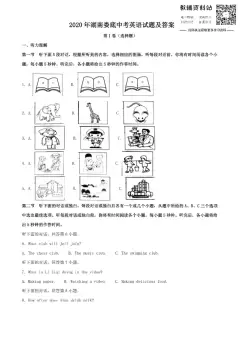
 (2015 湖南张家界中考)
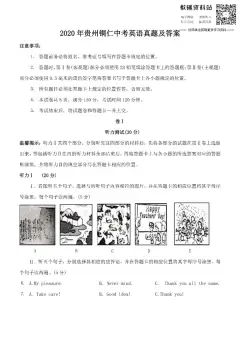
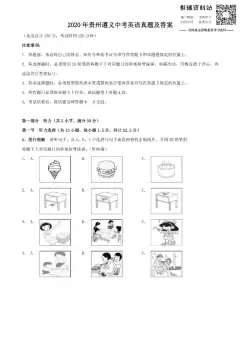
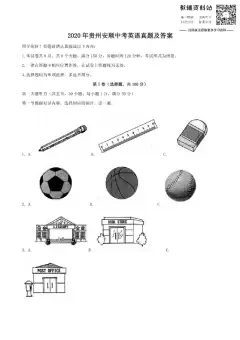
选择与所听句子意思相关的图画(图画有多余选项)。

A                                       B


                C                                       D

              E                                         F
1._____  2._____  3._____  4._____  5._____
参考答案
Ⅰ. 词形转换。
1. painting  2. luckily  3. lovely  4. interesting / interested   5. slow  6. expensive
Ⅱ. 根据句意、汉语意思或首字母提示补全单词。
1. worried   2. pick   3. fast   4. gifts   5. expensive
6. all   7. quite   8. flowers   9. country  10. cows
Ⅲ. 用括号中所给单词的适当形式填空。
1. fed  2. lovely  3. had  4. milked  5. anything
6. slowly  7. Luckily  8. exciting  9. sunny  10. Telling
IV. 参考答案及听力材料
1.E
  2.B
  3.F
  4.D 5.A
 听力材料:
 选择与所听句子意思相关的图画(图画有多余选项)。
  1.  This book is amazing! Read it!
  2.  How happy these kids are!
  3.  Show your thanks. Write a card!
                                   让更多的孩子得到更好的教育
地址:北京市西城区新德街20 号4 层 电话:010-82025511 传真:010-82079687  第5页 共8页
  4.  Alex! You ride a bike, right?
  5.  It’s pretty hot today. Drink some water.
句式精讲
1. How was your trip yesterday?
 (1)本句为询问某事情况的常用句型,其中was 是be 动词的过去式,如果询问当前的
情况则be 动词用is。其答语常用:It was great! (好极了) / It was OK.(还可以)/ It
wasn’t good.(不好。)/ All right.(很好。)/ It was not bad.(还不错。)等。How
+ be+…?相当于 What + be +… + like? 例如:
-How was her holiday?她的假期过得怎么样?
-It was not bad. 还不错。
 (2)How 是疑问副词,意为“如何,怎样”,常用来引导特殊疑问句来询问方式、程
度、状况等。常用于以下交际用语中:
      1)How is/are +sb. ? 用来询问人的身体、工作、学习或生活等的状况。例如:
         -How are you? 你好吗?
         -Fine, thank you. 好,谢谢。
     2)How is/are +sth.?用来询问某物或者某事的状况如何。例如:
        How is your work? 你的工作怎么样?
     3)How do you do? 并不表示疑问,是第一次见面时的问候语,回答仍用此句。例
如:
        How do you do? 你好!
        How do you do? 你好!
     4)How is it going?/ How is everything going? 用来询问事情进展如何。例如:
        How is it going? 情况/进展如何?
        Very well./ Not too bad./just so so.
        很好。/还不坏。/一般吧。
 2. Did you see any cows?
      此句是一个一般过去时的一般疑问句,用于询问过去发生的动作或事情。句式是
“Did+主语+动词原形+其他成分?”。一定要注意,一般过去时的一般疑问句,无论
主语是第几人称,是单数还是复数,都要用助动词did 提问。用did 提问时谓语动词要
用原形。一般过去时的一般疑问句的肯定答语为“Yes,主语+did.”;否定回答为“No,
主语+didn’t.”。例如:
   -Did you do your homework yesterday? 昨天你做作业了吗?
   -Yes, I did. / No, I didn’t. 是的,我做了。/ 没有,我没做。
   -Did she go to bed? 她上床睡觉了吗?
   -Yes, she did. / No, she didn’t. 是的,她上床睡觉了。/不,她没有上床睡觉。
3. The rooms were really dark and it was difficult to take photos, so I didn’t take any.
    (1)It is +adj.+ to do sth. 意为“做某事是……”,其中it 是形式主语,真正的主语是后
面的动词不定式,所以it was difficult to take photos 相当于to take photos was
difficult。例如:
         It’s interesting to play the computer games. 玩电脑游戏很有趣。
(2)It is + 形容词(+of / for sb.)+ to do sth. 对某人来说,做某事是……。用介词of 时,
形容的是某人做这件事情所表现的品质;用介词for 时,指的是所作的事情本身的一
个性质。例如:
It is very kind of you to help me. 你能帮助我真是太好了。
                                   让更多的孩子得到更好的教育
地址:北京市西城区新德街20 号4 层 电话:010-82025511 传真:010-82079687  第6页 共8页
It is important for us to learn English well. 对我们来说,学好英语很重要。
4. What did the farmer say?
  本句是一般过去时的特殊疑问句,句子的结构是“特殊疑问词+ did + 主语+谓语+其
它?”。
特殊疑问词可以根据实际情况选择需要的词,例如对地点提问用where,对时间提问用
when 等。助动词did 后面的谓语动词要用原形,did 没有人称和数的使用限制。回答时,
要根据问句回答具体的内容。例如:
-When did you go there? 你什么时候去的哪儿?
-About seven o’clock. 大约7 点钟。
-How did you go there? 你们怎么去的那儿?
-By bus. 坐公共汽车。
 5. Then the guide taught us how to make a model robot.
   本句中的how to make a model robot 是“疑问词+不定式”结构,作动词taught 的宾补。
用来补充和说明宾语的情况。“疑问词+动词不定式”结构还常在句中作主语、宾语、
表语等。例如:
    Where to go is a problem. 到哪里去是一个问题。(主语)
    I know where to find the key. 我知道在哪儿找到钥匙。(宾语)
    The question is how to learn English well. 问题是如何学好英语。(表语)
句式精练
Ⅰ. 根据对话内容,从方框中选择适当的选项补全对话。

A.What about you?
B.Then I studied for the test.
C.Because I went on the school trip.
D.NO,I stayed at home.
E.Well,It wasn’t very bad.
F.Because I had lots of things to do.
Tom:Hi,Lucy! Did you go on the school trip? I didn’t see you on Sunday.
Lucy:
  1


Tom:Why?
Lucy:
  2


Tom:What did you do?
Lucy:I cleaned my room and did my homework.
  3
  .
Tom:Really? Not much fun!
Lucy:
  4

 I went to a movie with my sister on Sunday evening.
  5

 . Was the school
trip interesting?
Tom:Yes,it was great.We went to the Science Museum and took many photos.
1._____    2._____    3.______  4._____   5._____
Ⅱ. 句型转换,每空一词。
      1. My school trip was excellent. (对划线部分提问)
        _______ _______ your school trip?
      2. The weather was very terrible this morning. (改为否定句)
        The weather _______ ________ very terrible this morning.
      3. I saw some flowers in the park. (对划线部分提问)
        _______ _______ you _______ in the park?
                                   让更多的孩子得到更好的教育
地址:北京市西城区新德街20 号4 层 电话:010-82025511 传真:010-82079687  第7页 共8页
      4. He knew something about it. (改为一般疑问句)
        ______ he ______ _______ about it?
      5. I played games with my friends yesterday. (就划线部分提问)
        What _______ you _______ yesterday?
      6. My mother has a busy weekend every week. (用last week 改写)
        My mother ______ a busy weekend last week.
      7. Tom takes an interest in the book. (改为同义句)
        Tom is _______ ________ the book.
      8. He wants to do nothing. (改为同义句)
        He doesn’t want to do ________.
      9. We enjoyed ourselves in the zoo. (改为同义句)
        We _______ _______ ________ ________ in the zoo.
      10. He has no dogs and no family. (改为同义句)
         He doesn’t have dogs_______ family.
  Ⅲ. 根据汉语意思,完成句子,每空一词。
      1. 你对英语感兴趣吗?
         Are you ________ _________ English?
      2. 你能告诉我如何制机器人吗?
         Can you tell me ________ ________ ________ a robot?
      3. 他一点也不喜欢弹钢琴。
         He _______like playing the piano________ ________.
      4. 礼品店的东西太贵了,所以我什么也没买。
         The things in the gift shop were _______ ________, _______ I didn’t buy anything.
      5. 这个夏天我们去了乡下。
         We _______ _______ the _______ this summer.
      6. 对于大多数孩子来说,周末是有趣的。
         _______ _______ ________, the weekend was fun.
      7. 去年,他通常呆在家里看电视。
         Last year, he usually _______ _______ _______and _______ _______.
      8. 去年我常和爸爸一起去钓鱼。
         I often _______ ________ with my father last year.
      9. 他们去海边玩的很开心。
         They went to the beach and _______ _______ great _______ there.
      10. 对我们来说学好英语是很重要的。
          It’s _______ ________ us to _______English ______.
   IV. 根据中文意思和所给词组写句子。
    (2015 北京西城区期末)
    1.你想喝茶吗?(would like)
    ___________________________________________________________________
 2.我爸爸不仅是个老师,还是个作家。(not only…but also…,teacher,writer)
 ___________________________________________________________________
 3.一个好班长总是乐于助人的。(monitor,be ready to help)
 ___________________________________________________________________
 4.我期待着与朋友们一起看电影。(look forward to…,watch a movie)
                                   让更多的孩子得到更好的教育
地址:北京市西城区新德街20 号4 层 电话:010-82025511 传真:010-82079687  第8页 共8页
__________________________________________________________________________
  参考答案
Ⅰ. 补全对话,每空一词。
 1-5: DFBEA
Ⅱ. 句型转换,每空一词。
   1. How was  2. was not  3. What did, see  4. Did, know anything  5. did, do
    6. had  7. Interested in  8. anything  9. had a great/good time  10. or
Ⅲ. 根据汉语意思,完成句子,每空一词。
   1. interested in  2. how to make  3. doesn’t, at all  4. too expensive, so
5. went to, country/countryside  6. For most kids  7. stayed at home, watched TV
8. went fishing  9. had a , time  10. important for, study, well
  IV. 根据中文意思和所给词组写句子。
1. Would you like some tea/Would you like to have(drink)a cup of tea?
  2. My father is not only a teacher,but also a writer.
 3. A good monitor is always ready to help others.
 4. I look/am looking forward to watching a movie with friends.