ARTICLE · 1299553
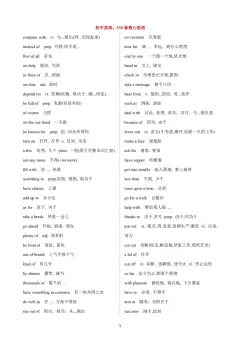
别再只背单词了!小学英语666个核心短语,对标新课标,阅读写作轻松提分!
新课标主题语境 · 人与社会 · 家庭与朋友
小学英语「家庭生活」
240 条高频短语
写 "My Family" 一篇全够 · 4 大类 240 条 + 作文进阶 30 条 · 可打印晨读
4 大类 240 条 + 作文进阶 30 条 · 适配小学 1–6 年级
让孩子写 "My Family",十篇有八篇是这三句:"There are three people in my family." "My mother is a doctor." "I love my family."——三句写完,就没了。
不是孩子没话说,是手里没有能直接搭进句子的短语。家庭成员怎么说全、家务怎么写出画面、和爸妈的对话怎么记、周末全家做了什么怎么按时间写下来——每一步都需要现成的表达。
这一篇只讲「家庭生活」一个主题,把最常考的 240 条按场景分成 4 类,每条配例句和用法提示。读完写家人、写周末、写"我最感谢的人",句子直接拎出来用。
📌 本篇信息
主题语境:人与社会 —— 家庭与朋友(成员称呼、家务劳动、家庭沟通、家庭活动)
适配年级:小学 1–6 年级(1–4 年级主攻 🟢,5–6 年级补 🟡)
标记说明:🟢 基础必背 · 课标高频 / 🟡 拓展加分 · 写作口语提分
用途:晨读背诵、书面表达素材、口语问答、读后续写、可复制打印
— 目 录 —
01👨👩👧 家庭成员与称呼 60 条
02🧹 家务劳动 60 条
03💬 家人沟通与情感 60 条
04🎉 家庭活动与周末 60 条
05📚 作文进阶词汇专区 30 条
每一类末尾都有 ✨本组小结;文中穿插 🔹同义表达组,方便替换防重复。
PART 01
家庭成员与称呼
课标说明:能说出家庭成员和常见亲属的称呼,用简单句子介绍家人是谁、什么样、常一起做什么,表达家人之间的关爱。是写"My Family"、介绍全家福照片的核心素材。
🟢father|爸爸
My father often helps me with my homework.我爸爸常帮我做作业。
💡 适用:写"My Family"开头;写作替换:my father 可换成 my dad,更口语。
🟢mother|妈妈
My mother makes breakfast for us every morning.我妈妈每天早上给我们做早饭。
💡 适用:介绍家人;易混 mother 是书面说法,mum 是平时喊的"妈妈"。
🟢parents|父母
My parents love me very much.我的爸爸妈妈非常爱我。
💡 适用:作文开头总起;注意 parents 指"父母二人",等于 father and mother。
🟢grandpa|爷爷;外公
My grandpa takes me to the park on Sundays.我爷爷周日带我去公园。
💡 适用:写祖孙日常;易混 grandpa 是口语称呼,grandfather 更正式。
🟢grandma|奶奶;外婆
My grandma makes delicious noodles for me.我奶奶给我做好吃的面条。
💡 适用:写家的温暖;注意 grandma 既可指奶奶也可指外婆。
🟢grandparents|祖父母;外祖父母(总称)
My grandparents live in the countryside.我的爷爷奶奶住在乡下。
💡 适用:写探望老人;注意它是"祖父母"的总称,爷爷奶奶、外公外婆两边都可用。
🟢brother|哥哥或弟弟
My brother likes playing football after school.我哥哥放学后喜欢踢足球。
💡 适用:介绍家人;易混英语 brother 不分哥哥弟弟,前面加 older / younger 才说得清。
🟢sister|姐姐或妹妹
My sister is good at singing.我姐姐唱歌很好。
💡 适用:写兄弟姐妹;sister 同样不分姐姐妹妹,需要时加 older / younger。
🟢son|儿子
Their son is only two years old.他们的儿子才两岁。
💡 适用:介绍别人家孩子;写作替换:Their son is... 可换成 They have a son.
🟢daughter|女儿
My aunt's daughter is my cousin.我姑姑的女儿是我的表妹。
💡 适用:理清亲戚关系;这句顺带复习了 cousin 的用法。
🟡grandson|孙子;外孙
My grandpa says I am his favourite grandson.爷爷说我是他最疼的孙子。
💡 适用:写祖孙情;口语里孩子说"我是孙子"直接用 I'm his grandson。
🟡granddaughter|孙女;外孙女
I am the only granddaughter in my family.我是家里唯一的孙女。
💡 适用:写祖孙情;易混 grand- 开头的词都指"隔一代"的亲属。
🟢uncle|叔叔;舅舅;伯伯
My uncle works in Beijing, and he comes home every Spring Festival.我叔叔在北京工作,每年春节都回家。
💡 适用:介绍亲戚;注意英语 uncle 把叔叔、舅舅、伯伯全包括,要细说可用 my father's brother。
🟢aunt|姑姑;阿姨;婶婶
My aunt is a nurse in a hospital.我姑姑是医院的护士。
💡 适用:介绍亲戚;易混 aunt 同样不分姑姨婶,需要时用 my mother's sister 说清。
🟢cousin|表(堂)兄弟姐妹
My cousin comes to play with me every summer.我表哥每年夏天都来和我玩。
💡 适用:写一起玩的伙伴;易混 cousin 不分男女、不分表堂,是本组最易错词。
🟡aunt's baby|姑姑家的小宝宝
My aunt's baby is only three months old.我姑姑家的小宝宝才三个月大。
💡 适用:写家里添了小宝宝;写作替换:aunt's baby 也可说 my little cousin。
🟡family photo|全家福
Look at my family photo! Everyone is smiling.看我的全家福!每个人都在笑。
💡 适用:写"我的全家福";注意复数直接加 s:family photos。
🟡family tree|家庭树;家谱
We drew a family tree in English class.我们在英语课上画了家庭树。
💡 适用:课堂活动、理清亲属关系;注意这里的 tree 是"谱系图",不是真树。
🟢a family of four|四口之家
I come from a family of four.我来自一个四口之家。
💡 适用:作文开头自我介绍;易混人数用 of 连接:a family of four / five。
🟢a big family|大家庭
There are eight people in my big family.我的大家庭里有八口人。
💡 适用:写人多热闹的家庭;写作替换:a big family 也可说 a large family。
🟢an only child|独生孩子
I am an only child, so I often play with my cousins.我是独生孩子,所以常和表兄妹一起玩。
💡 适用:写独生子女话题;注意 child 单数,说"他们都是独生子女"用 only children。
🟢a happy family|幸福的家
We are a happy family.我们是一个幸福的家庭。
💡 适用:作文结尾点题;写作替换:也可说 I love my happy family.
🟡live with my grandparents|和爷爷奶奶住在一起
I live with my grandparents on weekdays.上学日我和爷爷奶奶住在一起。
💡 适用:写家庭构成;注意 live 后直接接 with,不加 in。
🟡grandparents' home|爷爷奶奶家
We spend the summer at my grandparents' home.我们每年夏天在爷爷奶奶家过。
💡 适用:写假期安排;注意撇号写在 s 后面,表示"祖父母的家"。
🟢older brother|哥哥
My older brother helps me with maths.我哥哥帮我学数学。
💡 适用:介绍兄弟姐妹;易混 older 口语常用,elder brother 更正式。
🟢older sister|姐姐
My older sister takes me to school on her bike.我姐姐骑车带我去上学。
💡 适用:写姐姐照顾"我";elder sister 也是正式说法,意思相同。
🟢younger brother|弟弟
I share my toys with my younger brother.我和弟弟分享玩具。
💡 适用:写照顾弟弟;写作替换:younger brother 口语里常说 little brother。
🟢younger sister|妹妹
My younger sister is in Grade One.我妹妹上一年级。
💡 适用:写和妹妹相处;写作替换:little sister 更口语。
🟡twins|双胞胎
My cousins are twins, and they look the same.我的两个表哥是双胞胎,长得一模一样。
💡 适用:写有趣的家人;注意 twins 指双胞胎两人,常用复数。
🟡the youngest in my family|家里年纪最小的孩子
I am the youngest in my family.我是家里最小的。
💡 适用:写自己在家的位置;注意 youngest 是最高级,前面要加 the。
🟡the same age as me|和我同岁
My cousin is the same age as me.我表姐和我同岁。
💡 适用:介绍同龄亲戚;易混 as...as 结构,第二个 as 不能丢。
🟢kind and hard-working|又善良又勤劳
My mother is kind and hard-working.我妈妈又善良又勤劳。
💡 适用:描写家人品质;写作替换:hard-working 也可说 works hard。
🟢be kind to me|对我很和善
Everyone in my family is kind to me.家里的每个人都对我很好。
💡 适用:写家人对我的好;易混 be kind to sb 中介词用 to。
🟡be strict with me|对我很严格
My father is strict with me, but he loves me.我爸爸对我很严格,但他很爱我。
💡 适用:写爸爸妈妈的要求;易混 be strict with sb,介词是 with 不是 to。
🟢tall and strong|又高又壮
My father is tall and strong.我爸爸又高又壮。
💡 适用:描写外貌;写妈妈可用 beautiful and kind,别都写 tall and strong。
🟡wear glasses|戴眼镜
My grandpa wears glasses when he reads.我爷爷看书时戴眼镜。
💡 适用:描写外貌细节;易混 wear 指"戴着、穿着"的状态,不用 put on(动作)。
🟢seventy years old|七十岁
My grandpa is seventy years old.我爷爷七十岁了。
💡 适用:写老人年龄;注意十位数字后 years 用复数,提问用 How old。
🟢be busy|很忙
My mother is busy from morning to night.我妈妈从早忙到晚。
💡 适用:写爸妈工作辛苦;写作替换:be busy 也可说 have a lot of work。
🟡come home late|很晚才回家
My father often comes home late on weekdays.工作日我爸爸常常很晚才到家。
💡 适用:写等爸妈下班;注意 come home 中 home 前不加 to。
🟢work in a hospital|在医院工作
My mother works in a hospital near our home.我妈妈在我家附近的一家医院工作。
💡 适用:写爸妈的职业;易混 work in + 地点,work as + 职业。
🟡work as a teacher|是一名教师
My aunt works as an English teacher.我姑姑是一名英语老师。
💡 适用:介绍职业;as 后直接跟职业名词,不用加 be 动词。
🟢love each other|互敬互爱
We love each other very much.我们一家人互敬互爱。
💡 适用:作文结尾表达温情;注意 each other 就是"互相",不要再加 ourselves。
🟢help each other|互相帮助
My brother and I help each other.我和哥哥互相帮助。
💡 适用:写兄弟姐妹情;可与 love each other 连用,升华作文结尾。
🟡look after me|照顾我
My grandma looks after me when my parents are at work.爸妈上班时奶奶照顾我。
💡 适用:写谁在照顾"我";易混 look after = take care of,都是"照顾"。
🟢tell me stories|给我讲故事
My grandpa tells me stories before bedtime.睡前爷爷给我讲故事。
💡 适用:写祖孙时光;易混 tell 后直接接人 tell me,say 后不接人。
🟢have dinner together|一起吃晚饭
We always have dinner together at seven.我们总是七点一起吃晚饭。
💡 适用:写一日三餐的团聚;注意三餐前不加冠词:have dinner / have lunch。
🟢watch TV together|一起看电视
We watch TV together after dinner.晚饭后我们一起看电视。
💡 适用:写晚间家庭时光;易混 watch TV 中间不加 the。
🟢go for a walk with my grandma|陪奶奶散步
In the evening, I go for a walk with my grandma.晚上我陪奶奶散步。
💡 适用:写晚饭后活动;注意 a walk 中 a 不能省。
🟢play with my little brother|陪弟弟玩
I often play with my little brother in the garden.我常在花园里陪弟弟玩。
💡 适用:写陪伴弟弟妹妹;写作替换:play with 也可说 stay with。
🟢visit my grandparents|看望爷爷奶奶
We visit my grandparents twice a month.我们每个月看望爷爷奶奶两次。
💡 适用:写周末、假期安排;注意 visit 后直接接人,表示"看望某人"。
🟢talk with my parents|和爸爸妈妈聊天
I like to talk with my parents after dinner.我喜欢晚饭后和爸爸妈妈聊天。
💡 适用:写家庭沟通、谈心;talk with 比 talk to 更显平等亲近。
🟢make a card for my mother|给妈妈做贺卡
I made a card for my mother on Mother's Day.母亲节那天我给妈妈做了贺卡。
💡 适用:母亲节、感恩类作文;注意 make sth for sb 表示"为某人做某物"。
🟡play chess with my grandpa|陪爷爷下棋
I play chess with my grandpa every Saturday.我每周六陪爷爷下棋。
💡 适用:写祖孙互动;易混棋类前不加冠词:play chess。
🟡draw pictures with my cousin|和表妹一起画画
At the weekend, I draw pictures with my cousin.周末我和表妹一起画画。
💡 适用:写和亲戚一起玩;写作替换:draw pictures 也可说 do some drawing。
🟢read books with my sister|和姐姐一起读书
In the evening, I read books with my sister.晚上我和姐姐一起读书。
💡 适用:写安静温馨的家庭时光;read books 泛指看书、读书。
🟢go to the park with my family|和家人去公园
On Saturday, I go to the park with my family.周六我和家人去公园。
💡 适用:写周末家庭活动;易混 go to the park 中 the 不能省。
🟡celebrate my grandma's birthday|给奶奶过生日
We have a big dinner to celebrate my grandma's birthday.我们吃一顿丰盛的晚饭给奶奶过生日。
💡 适用:写生日聚会;注意 celebrate 后直接接生日,不加 for。
🟢sing a song for my mother|为妈妈唱首歌
I sing a song for my mother on her birthday.妈妈生日那天我为她唱首歌。
💡 适用:写感恩表达;写作替换:sing a song 也可说 sing a little song。
🟡say "I love you" to my parents|对爸爸妈妈说我爱你
I say "I love you" to my parents every night.我每天晚上都对爸爸妈妈说我爱你。
💡 适用:写家庭温情;易混 say... to sb 中 to 不能丢。
🟢help my parents|帮爸爸妈妈做事
I help my parents do some housework at the weekend.周末我帮爸爸妈妈做些家务。
💡 适用:结尾表达孝心、衔接下一组家务话题;help sb (to) do sth 或 help sb with sth 都对。
✨ 本组小结
介绍家人只要三步:称呼(my father / my cousin)→ 一句描写(kind and hard-working / seventy years old)→ 一件常做的事(tell me stories / go for a walk with my grandma),三句话一篇"My Family"就立起来了。最易失分的是"笼统称呼":brother、sister、cousin、uncle、aunt 都不分长幼男女,前面加 older / younger 才说得清;older 用于比较,elder 只放在名词前且更正式(elder brother)。
🔹 同义表达组 · 家人称呼
grandpa|grandfather (爷爷;外公)
grandma|grandmother (奶奶;外婆)
younger brother|little brother (弟弟)
older|elder (年长的,elder brother 更正式)
PART 02
家务劳动
课标说明:能用动词短语说出常见的家务劳动,表达自己分担家务的意愿和劳动后的感受。是劳动教育看图写话、写"我做的一件事"的主要素材。
🟢do housework|做家务
I often do housework with my mother on Sundays.周日我常和妈妈一起做家务。
💡 适用:家务话题总起句;易混 housework 不可数,不加 a、没有复数。
🟢sweep the floor|扫地
After dinner, I sweep the floor.晚饭后我扫地。
💡 适用:写扫地场景;易混 sweep 是用扫帚扫,mop 是用拖把拖。
🟢mop the floor|拖地
My father mops the floor every evening.我爸爸每天晚上拖地。
💡 适用:写全家分工;写作替换:mop the floor 也可说 clean the floor with a mop。
🟢clean the windows|擦窗户
Let's clean the windows together.我们一起擦窗户吧。
💡 适用:写大扫除分工;写作替换:clean 换成 wash 时侧重用水洗。
🟢wipe the table|擦桌子
Please wipe the table after lunch.午饭后请把桌子擦一擦。
💡 适用:饭后帮忙的小任务;易混 wipe 是用布"擦净",clean 的范围更大。
🟡clean the mirror in the bathroom|擦卫生间的镜子
I clean the mirror in the bathroom every Sunday.我每周日擦卫生间的镜子。
💡 适用:写家里各处的小家务;注意 bathroom 也指家里的卫生间,不只是浴室。
🟡sweep the leaves in the yard|扫院子里的落叶
In autumn, I help Grandpa sweep the leaves in the yard.秋天我帮爷爷扫院子里的落叶。
💡 适用:写秋天、乡村生活;写作替换:也可简单说 sweep the yard(扫院子)。
🟢do some cleaning|打扫卫生
We do some cleaning on Saturday morning.我们周六上午大扫除。
💡 适用:写周末大扫除;易混 do some cleaning 侧重打扫,do housework 泛指一切家务。
🟢clean my room|打扫我的房间
I clean my room every Saturday.我每周六打扫自己的房间。
💡 适用:写自己负责的家务;写作替换:clean my room 也可说 tidy up my room(收拾整齐)。
🟢make my bed|铺床
I make my bed before breakfast.我在早饭前把床铺好。
💡 适用:写早晨自理习惯;易混 make the bed 是"铺床",不是"做床"。
🟢fold my clothes|叠衣服
Look! I can fold my clothes by myself.看!我会自己叠衣服了。
💡 适用:写学做家务、自理能力;易混 fold 叠、wash 洗,动作对象不同。
🟢put away my toys|把玩具收好
Put away your toys, please.请把玩具收好。
💡 适用:写收拾玩具、房间收纳;易混 put away 是"收好放回原处",away 不能丢。
🟢put my shoes by the door|把鞋子摆到门口
I put my shoes by the door before I go in.进门前我把鞋子摆到门口。
💡 适用:写进门好习惯;易混 by the door 是"在门边",by 表示"在……旁边"。
🟢put the food in the fridge|把食物放进冰箱
Mum asks me to put the food in the fridge.妈妈叫我把食物放进冰箱。
💡 适用:写帮忙收纳;注意 fridge 是日常说法,更正式的是 refrigerator。
🟢keep my room clean and tidy|保持房间干净整洁
I keep my room clean and tidy every day.我每天保持房间干净整洁。
💡 适用:作文点睛句;易混 keep + 宾语 + 形容词,表示"让……保持某种状态"。
🟡tidy up the bookshelf|把书架收拾整齐
I tidy up the bookshelf before bed.睡觉前我把书架收拾整齐。
💡 适用:写整理收纳;易混 tidy up 侧重把东西归位,clean 侧重弄干净。
🟢wash my clothes|洗衣服
On Sundays, I wash my clothes with Mum.周日我和妈妈一起洗衣服。
💡 适用:写学做家务;写作替换:wash my clothes 也可说 do some washing。
🟡wash my socks by myself|自己洗袜子
I can wash my socks by myself now.我现在会自己洗袜子了。
💡 适用:写"我能行"成长主题;注意 by myself 是"独自、亲自"。
🟡hang up the clothes|晾衣服
I help Mum hang up the clothes.我帮妈妈晾衣服。
💡 适用:写洗衣的后续步骤;易混 hang up 挂起来,fold 叠起来,方向正好相反。
🟡by hand|用手(洗)
Grandma washes the clothes by hand.奶奶用手洗衣服。
💡 适用:写奶奶辈的劳动习惯;注意 by hand 中间不加 a。
🟢use the washing machine|用洗衣机
Mum teaches me to use the washing machine.妈妈教我用洗衣机。
💡 适用:写现代家务、新旧对比;washing machine 是固定说法。
🟡clean my bike|擦洗我的自行车
I clean my bike after school.放学后我把自行车擦洗干净。
💡 适用:写爱惜自己的物品;写作替换:擦得湿洗也可说 wash my bike。
🟢brush my shoes|刷鞋子
I brush my shoes every Friday.我每周五刷鞋子。
💡 适用:写自理小任务;brush 就是"用刷子刷",和刷牙用的是同一个词。
🟢do the dishes|洗碗
I often do the dishes after dinner.晚饭后我常常洗碗。
💡 适用:写饭后家庭分工;do the dishes 是固定说法,口语里也说 wash the dishes。
🟡dry the dishes|把碗擦干
Let me dry the dishes for you.让我来帮你把碗擦干。
💡 适用:写"一人洗一人擦"的分工;易混 dry 在这里是"把……弄干"的意思。
🟢clear the table|饭后收拾桌子
I clear the table after we eat.吃完饭后我收拾桌子。
💡 适用:写饭后任务;易混 clear the table 是"把碗筷收走",擦桌子用 wipe the table。
🟢wash the rice|淘米
I help Mum wash the rice.我帮妈妈淘米。
💡 适用:写帮厨第一步;易混 rice 泛指米、米饭,不可数。
🟢wash the fruit|洗水果
Wash the fruit before you eat it.吃水果前要先洗一洗。
💡 适用:写厨房小帮手;fruit 表总称时常不可数。
🟢help in the kitchen|在厨房帮忙
I help in the kitchen at the weekend.周末我在厨房帮忙。
💡 适用:总写帮厨场景;in the kitchen 表地点,help 后不接 to the kitchen。
🟡learn to cook|学做饭
I want to learn to cook like Mum.我想学妈妈那样做饭。
💡 适用:写新本领、成长;易混 learn to do sth 中 to 后用动词原形。
🟡pass the bowls|帮忙递碗筷
Please pass me the bowls.请把碗递给我。
💡 适用:饭桌上搭把手;易混 pass me... = pass... to me,两种说法都对。
🟢keep the kitchen clean|保持厨房干净
Let's keep the kitchen clean.我们要保持厨房干净。
💡 适用:写厨房卫生与安全;结构和 keep my room clean and tidy 一样。
🟢take out the rubbish|倒垃圾
It's my turn to take out the rubbish.轮到我倒垃圾了。
💡 适用:写每天固定任务;易混 rubbish 是英式说法,美式常用 trash。
🟡put the rubbish in the bin|把垃圾扔进垃圾桶
Put the rubbish in the bin, not on the floor.把垃圾扔进垃圾桶,别扔在地上。
💡 适用:垃圾分类、讲卫生话题;bin 是垃圾桶,美式常说 trash can。
🟢water the plants|浇花
I water the plants every morning.我每天早上浇花。
💡 适用:写每天固定的小任务;易混 water 在这里是"浇水"的动作,不当"水"讲。
🟢feed the cat|喂猫
Don't forget to feed the cat.别忘了喂猫。
💡 适用:写照顾宠物;写作替换:feed the cat 也可说 give the cat some food。
🟢feed the birds|喂鸟
I feed the birds before school.我上学前喂鸟。
💡 适用:写有爱心的一家;写作替换:feed 也可换成 look after(照看)。
🟡change the water for the fish|给鱼换水
I change the water for the fish every week.我每周给鱼换水。
💡 适用:写养鱼的小细节;change the water 就是"换水",change 表"更换"。
🟡walk the dog|遛狗
Can I walk the dog after dinner?晚饭后我能去遛狗吗?
💡 适用:写傍晚的家庭任务;易混 walk 在这里是"遛(狗)",不是"走路"。
🟡give the dog a bath|给狗洗澡
We give the dog a bath on Sunday.我们周日给狗洗澡。
💡 适用:写周末家务趣事;易混 give sb a bath 中 bath 前要加 a。
🟡plant flowers with Dad|和爸爸一起种花
I plant flowers with Dad in spring.春天我和爸爸一起种花。
💡 适用:写春天劳动、家庭园艺;写作替换:plant flowers 也可说 grow flowers。
🟢help Dad wash the car|帮爸爸洗车
I help Dad wash the car on Sundays.周日我帮爸爸洗车。
💡 适用:写亲子合作;易混 help sb (to) do sth,wash 前加不加 to 都对。
🟡make tea for my grandpa|给爷爷泡茶
I make tea for my grandpa after lunch.午饭后我给爷爷泡茶。
💡 适用:写孝敬老人;易混 make tea 是固定说法,tea 不可数。
🟡answer the phone|接电话
I can answer the phone for Mum.我能帮妈妈接电话。
💡 适用:写小主人的责任;易混 answer 在这里是"接(电话)",不是"回答问题"。
🟢go shopping with Mum|和妈妈去买东西
I go shopping with Mum on Saturday.周六我和妈妈去买东西。
💡 适用:写周末采购;易混 go shopping 里 shopping 用 -ing 形式。
🟡buy some bread on my way home|放学路上买面包
I buy some bread on my way home.我在放学路上买些面包。
💡 适用:写顺路帮家里买东西;易混 on my way home 中 home 前不加 to。
🟡carry the bags for Mum|帮妈妈拎袋子
I carry the bags for Mum.我帮妈妈拎袋子。
💡 适用:写体贴爸妈的小细节;易混"提、拎"用 carry,不用 take。
🟢clean the room for Grandma|帮奶奶打扫房间
At the weekend, I clean the room for Grandma.周末我帮奶奶打扫房间。
💡 适用:写帮助长辈;注意"替某人做"用 for,不用 to。
🟢help at home|在家帮忙干活
I like to help at home.我喜欢在家帮忙干活。
💡 适用:总写参与家务;写作替换:help at home = help with the housework。
🟢share the housework|分担家务
We share the housework in my family.在我们家,家务是大家分担的。
💡 适用:写全家分工合作;易混 share 是"分担、分享",后直接接名词。
🟢Mum's little helper|妈妈的小帮手
I am Mum's little helper.我是妈妈的小帮手。
💡 适用:作文里给自己"贴标签"的点睛句;注意所有格 's 表示"妈妈的"。
🟢twice a week|一周两次
I wash the dishes twice a week.我一周洗两次碗。
💡 适用:写做家务的频率;易混 twice = two times,三次及以上用 three times 等。
🟢at the weekend|在周末
I clean my room at the weekend.我周末打扫房间。
💡 适用:写周末的家务安排;英式 at the weekend,美式 on the weekend,都对。
🟢be tired but happy|累但快乐
After doing housework, I am tired but happy.做完家务,我累但快乐。
💡 适用:写劳动感受的万能句;易混转折用 but,不用 and。
🟢feel proud|感到自豪
When I see the clean room, I feel proud.看到干净的房间,我感到自豪。
💡 适用:写劳动后的成就感;写作替换:feel proud 也可说 feel great。
🟢make me happy|让我开心
Helping Mum makes me happy.帮妈妈的忙让我开心。
💡 适用:写劳动的快乐;易混 make sb + 形容词,happy 前不加 be。
🟢be happy to help|乐于帮忙
I am always happy to help at home.我在家里总是乐于帮忙。
💡 适用:表达愿意分担家务;易混 be happy to do sth 中 to 后用动词原形。
🟢What a busy but happy day!|多么忙碌又快乐的一天啊!
What a busy but happy day!多么忙碌又快乐的一天啊!
💡 适用:家务作文的结尾感叹句;易混 What a + 形容词 + 名词,a 不能丢。
🟢take turns to do housework|轮流做家务
My sister and I take turns to do housework.我和姐姐轮流做家务。
💡 适用:写兄弟姐妹分工;易混 take turns to do sth 是"轮流做某事"。
🟢take the umbrella to Dad|给爸爸送伞
It's raining. I take the umbrella to Dad.下雨了,我给爸爸送伞去。
💡 适用:写帮家人跑腿、送东西;易混 take... to... 表示"把……带给某人"。
✨ 本组小结
这一组全是"动词 + 对象":sweep 扫、mop 拖、wipe 擦、fold 叠、water 浇、feed 喂,动词选对了,画面就对了。写家务作文按三步走:做什么(sweep the floor)→ 频率(twice a week)→ 感受(tired but happy),最后补一句 feel proud 升华。最易失分的是固定搭配和不可数名词:housework 不加 a,do the dishes 不说 give the dishes,倒垃圾的 rubbish 英式、trash 美式。
🔹 同义表达组 · 做家务
do the dishes|wash the dishes (洗碗)
take out the rubbish|take out the trash (倒垃圾)
water the plants|water the flowers (浇花)
clean my room|tidy up my room (收拾房间)
PART 03
家人沟通与情感
课标说明:能就家庭生活进行日常交流——跟家人聊天、表达关心、开口求助、闹矛盾后和好,并会用简单的话向家人表达爱与感谢。是写"My Family"、记"一件家事"、写对话题的核心素材。
🟢chat with Grandma on the phone|和奶奶打电话聊天
I chat with Grandma on the phone every Saturday.我每周六和奶奶打电话聊天。
💡 适用:写亲情、写想念;on the phone 是"通过电话",不加 the 也常见但课标用带 the 的说法。
🟢tell Mum about my school day|告诉妈妈学校里的事
I tell Mum about my school day when I get home.到家后我把学校里的事讲给妈妈听。
💡 适用:记事作文、日常对话;注意 tell sb about sth 里的 about 不能丢。
🟢listen to Grandpa's stories|听爷爷讲故事
I like to listen to Grandpa's stories before bed.我喜欢睡觉前听爷爷讲故事。
💡 适用:写长辈、写温馨场景;listen 后面必须带 to,不能单独接对象。
🟢call Grandma|给奶奶打电话
I call Grandma every Sunday evening.我每周日晚上给奶奶打电话。
💡 适用:写关心长辈;写作替换:call Grandma 可换成 give Grandma a call。
🟡have a video call with Dad|和爸爸视频通话
Dad is away, so I have a video call with him at night.爸爸出门在外,我晚上和他视频通话。
💡 适用:写思念、现代家庭生活;"打电话给某人"用 call sb,不可以说 call to sb。
🟢ask Mum about her day|问问妈妈这一天过得怎么样
I ask Mum about her day at dinner.晚饭时我问问妈妈这一天过得怎么样。
💡 适用:对话题作文、口语交际;ask sb about sth 表示"向某人打听某事"。
🟢tell my family the good news|把好消息告诉家人
I run home to tell my family the good news.我跑回家把这个好消息告诉家人。
💡 适用:获奖、报喜类作文;tell sb sth 是双宾语结构,中间不加 to。
🟡write a note to Mum|给妈妈写便条
I write a note to Mum and put it on the table.我给妈妈写了张便条,放在桌上。
💡 适用:看图写话、生活场景;note 指随手便条,letter 指正式书信。
🟡send a message to Dad|给爸爸发消息
I send a message to Dad on Mum's phone.我用妈妈的手机给爸爸发消息。
💡 适用:现代家庭场景;易混 message 消息,letter 信件。
🟢say good night to Mum and Dad|跟爸妈道晚安
I say good night to Mum and Dad before I sleep.睡觉前我跟爸妈道晚安。
💡 适用:一日作息类作文的收尾句;say good night 后用 to 连接对象。
🟢Are you OK, Mum?|妈妈,你还好吗?
Mum looks tired. "Are you OK, Mum?" I ask.妈妈看起来很累。"妈妈,你还好吗?"我问。
💡 适用:对话描写、口语交际;表达关心先问这句,再看对方需要什么帮助。
🟢give Mum a hug|抱抱妈妈
I give Mum a hug when she is tired.妈妈累了的时候,我抱抱她。
💡 适用:情感描写;give sb a hug 是固定搭配,也可直接说 hug Mum。
🟢make a card for Mum|给妈妈做一张卡片
I make a card for Mum on Mother's Day.母亲节我给妈妈做一张卡片。
💡 适用:节日、感恩类作文;make sth for sb 表示"为某人做某物"。
🟢take care of my little sister|照顾我的小妹妹
I take care of my little sister when Mum cooks.妈妈做饭时我照顾小妹妹。
💡 适用:写"我能为家做的事";写作替换:take care of 可换成 look after。
🟡ask Mum to have a rest|劝妈妈休息一下
Mum is tired, so I ask her to have a rest.妈妈累了,我劝她休息一会儿。
💡 适用:关心家人类作文;ask sb to do sth 是"请某人做某事"的常用句型。
🟢bring Dad a cup of tea|给爸爸端一杯茶
I bring Dad a cup of tea after work.爸爸下班后,我给他端一杯茶。
💡 适用:关心家人的细节句;易混 bring 指拿来,take 指拿走。
🟢Don't worry, Mum|别担心,妈妈
"Don't worry, Mum. I can do it," I say.我说:"别担心,妈妈,我能做到。"
💡 适用:对话描写;后接担心的事时用 Don't worry about sth。
🟢hold Grandma's hand|牵着奶奶的手
I hold Grandma's hand when we walk in the park.我们在公园散步时,我牵着奶奶的手。
💡 适用:温馨细节描写;hold 是"牵着、握着",后面直接接对象。
🟡give my seat to Grandma|把座位让给奶奶
I give my seat to Grandma on the bus.在公交车上,我把座位让给奶奶。
💡 适用:品德类写话;give sth to sb 和 give sb sth 两种说法都对。
🟢pour a glass of water for Grandpa|给爷爷倒一杯水
I pour a glass of water for Grandpa when he reads.爷爷看报时,我给他倒一杯水。
💡 适用:关心长辈的动作句;易混 pour 是"倒",drink 是"喝"。
🟢ask Dad for help|向爸爸求助
I ask Dad for help with my maths problem.数学题不会做,我向爸爸求助。
💡 适用:学习类记事;ask sb for sth 是固定搭配,for 不能换成 to。
🟢give me some advice|给我一些建议
Dad gives me some advice on my study.爸爸给我的学习提了一些建议。
💡 适用:写父母的帮助;advice 不可数,不说 an advice,也不加 s。
🟢follow my parents' advice|听父母的建议
I follow my parents' advice and do better next time.我听取父母的建议,下次做得更好。
💡 适用:写进步与成长;follow 此处是"听从",不是"跟着走"。
🟡have a problem with my homework|作业上遇到难题
I have a problem with my homework, so I ask my brother.作业遇到难题,我去问哥哥。
💡 适用:求助场景的开头句;have a problem with 后接事物。
🟢teach me to ride a bike|教我骑自行车
Dad teaches me to ride a bike in the park.爸爸在公园教我骑自行车。
💡 适用:写亲子时光;teach sb to do sth 是固定句型。
🟢help me with my English|帮我学英语
Mum often helps me with my English after dinner.晚饭后妈妈常帮我学英语。
💡 适用:写父母陪伴;help sb with sth 也可以说 help sb do sth。
🟡work out the problem together|一起把题做出来
Dad and I work out the problem together.我和爸爸一起把这道题解了出来。
💡 适用:写克服困难;work out 表示"解出、算出"。
🟢check my homework|帮我检查作业
Dad checks my homework every evening.爸爸每天晚上帮我检查作业。
💡 适用:写家庭学习日常;易混 check 是"检查",change 是"改变"。
🟡encourage me to try again|鼓励我再试一次
When I fail, Mum encourages me to try again.我失败时,妈妈鼓励我再试一次。
💡 适用:写挫折与成长,五、六年级加分句;encourage sb to do sth。
🟡believe in me|相信我
My parents believe in me, so I work harder.爸妈相信我,所以我更加努力。
💡 适用:抒情结尾;易混 believe in sb 是"信任某人",believe sb 是"相信某人的话"。
🟢argue with my brother|和哥哥吵架
I argue with my brother about the TV show.我和哥哥为了电视节目吵了起来。
💡 适用:写矛盾的起因;argue with sb 后可接 about sth 说明"为什么吵"。
🟢say sorry to each other|互相说对不起
After the fight, we say sorry to each other.吵完架后,我们互相说了对不起。
💡 适用:和好场景;say sorry to sb 里的 to 不能丢。
🟢be friends again|重新和好
We are friends again before dinner.晚饭前我们又和好了。
💡 适用:矛盾类作文的结尾;be friends 后接 again 表示"恢复朋友关系"。
🟡borrow my things without asking|不问就拿我的东西
My sister borrows my things without asking.妹妹总是不问一声就拿我的东西。
💡 适用:写矛盾起因;without 是介词,后接 asking 这样的 -ing 形式。
🟡get angry with each other|互相生气
We get angry with each other sometimes.我们有时候会互相生气。
💡 适用:写真实生活;get/be angry with sb 表示"生某人的气"。
🟡calm down|冷静下来
Mum asks us to calm down and talk slowly.妈妈让我们冷静下来,慢慢说。
💡 适用:调解矛盾的场景;calm down 指情绪平复下来。
🟢tell the truth|说实话
I tell the truth and say sorry to Dad.我说了实话,并向爸爸道歉。
💡 适用:诚实主题作文;tell the truth 是固定说法,truth 是"真话、事实"。
🟡shake hands with my brother|和哥哥握手和好
After the talk, I shake hands with my brother.谈过之后,我和哥哥握了握手。
💡 适用:和好的画面句;shake hands 中 hands 习惯用复数。
🟢It doesn't matter|没关系
I say sorry. My brother says, "It doesn't matter."我说了对不起,哥哥说:"没关系。"
💡 适用:道歉后的回答;这是回应 sorry 最地道的说法之一。
🟢learn to share|学会分享
Mum teaches me to share my toys with my sister.妈妈教我和妹妹分享玩具。
💡 适用:家庭教育主题;learn to do sth 表示"学会做某事"。
🟢family rules at home|家里的规矩
We have some family rules at home.我们家有一些家规。
💡 适用:规则类作文的开头;rule 常用复数 rules。
🟢come home before six|六点前回家
I come home before six every day.我每天六点前回家。
💡 适用:写家规条目;before 后接时间点,表示"在……之前"。
🟢finish homework first|先完成作业
I finish my homework first, then I play.我先完成作业,然后再玩。
💡 适用:家规、习惯类写作;注意 finish 后接名词或 doing,不接 to do。
🟡put down the phone|放下手机
We put down the phone at dinner.吃晚饭时我们都放下手机。
💡 适用:现代家规话题;put down 表示"放下"。
🟢wash hands before dinner|饭前洗手
We wash our hands before dinner.饭前我们要洗手。
💡 适用:习惯类家规;wash one's hands 中 hands 用复数。
🟢ask Mum first|先问过妈妈
I always ask Mum first when I want to go out.想出门时,我总是先问过妈妈。
💡 适用:家规对话;first 放在句尾表示"先"。
🟢keep quiet after nine|九点后保持安静
We keep quiet after nine at night.晚上九点以后,我们都保持安静。
💡 适用:家规条目;keep quiet 里 keep 相当于"保持"。
🟢listen to my parents|听父母的话
I listen to my parents and they listen to me.我听父母的话,他们也听我说。
💡 适用:总结句;listen 后必须带 to。
🟡tell Mum where I go|告诉妈妈我去哪儿
I tell Mum where I go when I go out to play.出去玩时,我会告诉妈妈自己去哪里。
💡 适用:安全类话题;where I go 是"去哪儿",从句语序不倒装。
🟡be polite to guests|对客人有礼貌
We are polite to guests at home.在家里,我们对客人有礼貌。
💡 适用:家规、礼仪话题;be polite to sb 表示"对某人有礼貌"。
🟢say "I love you" to Mum|对妈妈说我爱你
I say "I love you" to Mum every night.我每天晚上都对妈妈说我爱你。
💡 适用:抒情句、作文结尾;引号里的话用 say 引出。
🟢say thanks to my parents|对父母说谢谢
I often say thanks to my parents.我常常对爸妈说谢谢。
💡 适用:感恩类作文;写作替换:可换成 say thank you to my parents。
🟢thank Mum for dinner|谢谢妈妈做的晚餐
I thank Mum for dinner after we eat.吃完饭,我谢谢妈妈做的晚餐。
💡 适用:餐桌礼仪、感恩句;thank sb for sth 里的 for 表示"因为"。
🟢miss my family|想念家人
I miss my family when I am at summer camp.在夏令营的时候,我很想家。
💡 适用:写分离与思念;miss 是"想念",情感类作文常用。
🟡enjoy the time with my family|享受和家人在一起的时光
I enjoy the time with my family very much.我非常享受和家人在一起的时光。
💡 适用:结尾抒情句;enjoy 后直接接名词,不加 to。
🟢a warm home|温暖的家
Mum and Dad make a warm home for me.爸爸妈妈给了我一个温暖的家。
💡 适用:"My Family" 的点题句;易混 family 指家人,home 指家这个地方。
🟡celebrate Mother's Day|庆祝母亲节
We celebrate Mother's Day with flowers and a big dinner.我们用鲜花和大餐庆祝母亲节。
💡 适用:节日类作文;celebrate 后直接接节日名,不加介词。
🟡with the help of my parents|在父母的帮助下
With the help of my parents, I learn to swim.在父母的帮助下,我学会了游泳。
💡 适用:写成长进步的过渡句;注意用 of,不用 from。
🟡be proud of my dad|为爸爸骄傲
I am proud of my dad because he helps many people.我为爸爸骄傲,因为他帮助很多人。
💡 适用:写榜样、抒情;be proud of sb 表示"为某人骄傲"。
🟢love my family|爱我的家人
I love my family, and they love me.我爱我的家人,他们也爱我。
💡 适用:作文万能结尾句;and 连接两个对称短句,读起来有节奏。
✨ 本组小结
这一组的主线是"把心里话说出口":聊天用 talk with,关心用 give Mum a hug,求助用 ask Dad for help,道歉用 say sorry to each other,道谢用 thank Mum for dinner——各背熟两三句,作文立刻有温度。最易失分的是介词:argue with、say sorry to、thank sb for sth、listen to,介词一丢就会被扣分。
🔹 同义表达组 · 沟通与情感
talk with|talk to (和……交谈)
take care of|look after (照顾)
ask sb for help|turn to sb for help (向某人求助)
get angry with|be angry with (生某人的气)
PART 04
家庭活动与周末
课标说明:能描述和家人一起做的事:一起吃饭、全家出游、看望长辈、在家游戏、过生日、安排周末,并用时间词把一天或一个周末说清楚。是写"My Weekend"、记"快乐的一天"的主要素材。
🟢eat out with my family|和家人出去吃饭
We eat out with my family on special days.特别日子里我们会全家出去吃饭。
💡 适用:写庆祝、写周末;eat out 是固定搭配,意为"下馆子",后面不接地点。
🟢a big family dinner|丰盛的家庭晚餐
On Mid-Autumn Day, we have a big family dinner.中秋节我们吃一顿丰盛的家庭晚餐。
💡 适用:节日、团圆类作文;dinner 表示"一顿饭"时可数,前面加 a。
🟢cook dinner with Mum|和妈妈一起做晚饭
I cook dinner with Mum on Friday.周五我和妈妈一起做晚饭。
💡 适用:写"我能为家做的事";还可以说 cook sth for sb"为某人做饭"。
🟢make dumplings with Mum|和妈妈一起包饺子
At Spring Festival, we make dumplings with Mum.春节时我们和妈妈一起包饺子。
💡 适用:春节主题看图写话;dumpling 常用复数 dumplings。
🟡come home for dinner|回家吃晚饭
Dad comes home for dinner at half past six.爸爸六点半回家吃晚饭。
💡 适用:写等家人吃饭的场景;for 表示目的,"为了吃饭"。
🟡talk and laugh at the table|饭桌上说说笑笑
We talk and laugh at the table every evening.每天晚上饭桌上我们都说说笑笑。
💡 适用:温馨画面句;at the table 指坐在桌边吃饭。
🟡try Mum's new dish|尝尝妈妈的新菜
I try Mum's new dish and it is delicious.我尝了妈妈的新菜,真好吃。
💡 适用:吃饭场景;易混 dish 此处指"一道菜",plate 才是"盘子"。
🟡have a picnic in the park|去公园野餐
We have a picnic in the park with my cousins.我们和表兄弟姐妹们去公园野餐。
💡 适用:周末出游写作;have a picnic 是固定搭配。
🟡eat mooncakes at the Mid-Autumn Festival|中秋节吃月饼
We eat mooncakes at the Mid-Autumn Festival.中秋节我们吃月饼。
💡 适用:传统节日作文;festival 前要加 the,mooncake 常用复数。
🟢take a family trip|来一次全家旅行
We take a family trip every summer.每年夏天我们都全家旅行一次。
💡 适用:写"My Weekend"、假期作文;写作替换:可换成 go on a trip。
🟢go to the park with my parents|和爸爸妈妈去公园
I go to the park with my parents on Sunday.周日我和爸爸妈妈去公园。
💡 适用:周末作文高频句;go to 后接地点,park 前要加 the。
🟢go fishing with Dad|和爸爸去钓鱼
I go fishing with Dad by the river.我和爸爸去河边钓鱼。
💡 适用:周末活动;go + 动词ing 表示"去做某事"。
🟢go to the beach|去海边玩
In summer, we go to the beach and play in the sea.夏天我们去海边,在海里玩水。
💡 适用:夏日、假期作文;"去海边"固定说 go to the beach。
🟢go to the zoo|去动物园
My family goes to the zoo on Children's Day.儿童节我们家去动物园。
💡 适用:写家庭出游;my family 作整体看时,动词用单数 goes。
🟢fly kites in the park|在公园放风筝
We fly kites in the park in spring.春天我们在公园里放风筝。
💡 适用:春天、户外活动写话;kite 常用复数 kites。
🟢go to the cinema|去看电影
My family goes to the cinema once a month.我们家一个月去看一次电影。
💡 适用:周末计划;cinema 是英式说法,美式口语常说 see a movie。
🟡climb mountains|爬山
At the weekend, we climb mountains near our home.周末我们去爬家附近的山。
💡 适用:秋天、锻炼类写话;泛指爬山时 mountain 用复数 mountains。
🟢have a picnic|去野餐
We have a picnic in the park on Sunday.周日我们在公园野餐。
💡 适用:户外活动作文;注意 have a picnic 中间有 a。
🟡visit the museum with my family|和家人参观博物馆
I visit the museum with my family when it rains.下雨时,我和家人去参观博物馆。
💡 适用:写长知识的活动;museum 前要加 the。
🟡go camping|去野营
We go camping in the forest in summer.夏天我们去森林里野营。
💡 适用:假期作文;和 go fishing、go swimming 一样是 go + 动词ing。
🟢visit my grandparents at the weekend|周末看望爷爷奶奶
We visit my grandparents at the weekend.我们周末去看望爷爷奶奶。
💡 适用:周末作文的常用首句;visit sb 就是"看望某人"。
🟢help Grandma in the garden|帮奶奶打理花园
I help Grandma in the garden on Sunday morning.周日上午我帮奶奶打理花园。
💡 适用:看望长辈的细节句;garden 指花园或小菜园。
🟡have dinner at Grandma's|在奶奶家吃饭
We have dinner at Grandma's every Friday.每周五我们都在奶奶家吃晚饭。
💡 适用:走亲戚场景;at Grandma's 后面省略了 house,撇号不能少。
🟡read the newspaper to Grandpa|读报纸给爷爷听
Grandpa's eyes are not good, so I read the newspaper to him.爷爷眼睛不好,我读报纸给他听。
💡 适用:关心长辈的暖心细节;read sth to sb 表示"读给某人听"。
🟢pick apples with Grandpa|和爷爷摘苹果
In autumn, I pick apples with Grandpa on his farm.秋天我和爷爷在他的农场摘苹果。
💡 适用:秋天、乡村生活写话;pick 是"摘、采"。
🟡look at old photos with Grandma|和奶奶一起看老照片
I look at old photos with Grandma after dinner.晚饭后我和奶奶一起看老照片。
💡 适用:回忆、亲情场景;易混 look at 强调"看着",see 是"看见"。
🟢watch a film with my family|和家人看一场电影
On Friday night we watch a film with my family.周五晚上我们全家看一场电影。
💡 适用:周末活动写作;film 是英式说法,美式用 movie,全篇统一即可。
🟢play chess with Grandpa|陪爷爷下棋
I play chess with Grandpa in the evening.晚上我陪爷爷下棋。
💡 适用:陪长辈场景;棋类前不加 the,不说 play the chess。
🟢read stories to my little sister|给妹妹读故事
Before bed, I read stories to my little sister.睡觉前我给妹妹读故事。
💡 适用:写哥哥姐姐的担当;read stories to sb 和 read sb stories 都对。
🟢plant flowers with Mum|和妈妈一起种花
We plant flowers with Mum in the yard in spring.春天我们和妈妈在院子里种花。
💡 适用:春天、劳动类写话;flower 常用复数 flowers。
🟢play hide-and-seek|玩捉迷藏
I play hide-and-seek with my brother at home.我和弟弟在家玩捉迷藏。
💡 适用:游戏场景看图写话;游戏名中间用连字符。
🟢make a model plane with Dad|和爸爸做飞机模型
I make a model plane with Dad on Saturday afternoon.周六下午我和爸爸做飞机模型。
💡 适用:动手活动;model plane 指模型飞机,model 是"模型"。
🟡play badminton with Mum|和妈妈打羽毛球
I play badminton with Mum in the yard.我和妈妈在院子里打羽毛球。
💡 适用:家庭运动场景;球类运动前不加 the。
🟢make paper planes|折纸飞机
I make paper planes with my little brother.我和弟弟一起折纸飞机。
💡 适用:室内游戏场景;paper 修饰名词时不加 s。
🟡tell jokes|讲笑话
Dad tells jokes and we all laugh.爸爸讲笑话,我们都笑了。
💡 适用:欢乐家庭场景;tell jokes 是固定搭配,joke 常用复数。
🟢make a snowman with Dad|和爸爸堆雪人
After the snow, I make a snowman with Dad.下过雪后,我和爸爸堆雪人。
💡 适用:冬天写话;make a snowman 中间有 a,复数是 snowmen。
🟢watch cartoons with my sister|和姐姐看动画片
I watch cartoons with my sister on Saturday evening.周六晚上我和姐姐一起看动画片。
💡 适用:周末在家场景;cartoon 常用复数 cartoons。
🟢a birthday party at home|在家办的生日会
On my birthday, I have a birthday party at home.我生日那天,在家里办一场生日会。
💡 适用:生日主题作文;party 是可数名词,"办聚会"用 have。
🟢make a cake for Mum|给妈妈做蛋糕
My brother and I make a cake for Mum on her birthday.妈妈生日时,我和弟弟给她做蛋糕。
💡 适用:感恩、生日场景;make a cake 中 cake 用单数并带 a。
🟢blow out the candles|吹灭蜡烛
I blow out the candles on the cake.我吹灭蛋糕上的蜡烛。
💡 适用:生日流程句;blow out 后接蜡烛,blow 是"吹"。
🟢sing the birthday song|唱生日歌
We sing the birthday song for Grandpa.我们为爷爷唱生日歌。
💡 适用:生日流程;sing sth for sb 表示"为某人唱"。
🟡make a wish|许个愿
I make a wish before I blow out the candles.吹蜡烛前,我先许个愿。
💡 适用:生日描写加分句;make a wish 是固定搭配,wish 是"心愿"。
🟢give Mum a birthday gift|送妈妈生日礼物
I give Mum a birthday gift every year.我每年都送妈妈生日礼物。
💡 适用:生日、感恩场景;give sb sth 是双宾语结构。
🟢celebrate my birthday with my family|和家人一起过生日
I celebrate my birthday with my family at home.我和家人一起在家过生日。
💡 适用:生日主题点题句;celebrate 后直接接生日,不加介词。
🟢on Sunday morning|在周日早上
On Sunday morning we make pancakes together.周日早上我们一起做煎饼。
💡 适用:写周末一天的计划;具体某天早上用 on,这是必考点。
🟢my weekend plan|我的周末计划
This is my weekend plan for Saturday and Sunday.这是我周六、周日的周末计划。
💡 适用:计划类作文的标题和开头;plan 常用单数并带 my。
🟢stay at home with my family|和家人待在家里
Sometimes I stay at home with my family on Sunday.有时候周日我和家人待在家里。
💡 适用:写安静的周末;易混 stay 是"待着",live 是"长期居住"。
🟢on Saturday morning|在周六上午
On Saturday morning, Dad and I make breakfast.周六上午我和爸爸一起做早餐。
💡 适用:时间线写作;具体到某天的上午要用 on,不用 in。
🟢have a good time|玩得开心
We have a good time at the party.聚会上我们玩得很开心。
💡 适用:活动结尾句;写作替换:可换成 have fun。
🟢have a happy weekend|过了一个开心的周末
I have a happy weekend with my family.我和家人度过了一个开心的周末。
💡 适用:周末作文结尾句;weekend 可数,可以说 a happy weekend。
🟢ride bikes with Dad|和爸爸骑自行车
I ride bikes with Dad in the park.我和爸爸在公园骑自行车。
💡 适用:周末运动场景;"骑车"可说 ride a bike 或 ride bikes。
🟢go swimming with Dad|和爸爸去游泳
In summer, I go swimming with Dad.夏天我和爸爸去游泳。
💡 适用:夏天、运动类写话;go swimming 是 go + 动词ing 结构。
🟡go to the bookshop with Dad|和爸爸去书店
I go to the bookshop with Dad and buy two storybooks.我和爸爸去书店买了两本故事书。
💡 适用:周末安排、买书场景;bookshop 是英式说法,bookstore 是美式。
🟡invite my friend to my home|请朋友来家里玩
I invite my friend to my home on Sunday afternoon.周日下午我请朋友来家里玩。
💡 适用:写待客、友谊;invite sb to 后接地点。
🟡play with my cousins|和表兄妹一起玩
I play with my cousins when they come to our home.表兄妹来我家时,我和他们一起玩。
💡 适用:家庭聚会场景;cousin 泛指表(堂)兄弟姐妹。
🟢take a family photo|拍一张全家福
We take a family photo every Spring Festival.每年春节我们都拍一张全家福。
💡 适用:春节、团圆作文;take a photo 是"拍照"的固定说法。
🟢a photo of my family|一张我家的照片
This is a photo of my family.这是一张我的全家福。
💡 适用:介绍家庭作文的开头句;of 表示"内容是"。
🟡hang the photo on the wall|把照片挂在墙上
Mum hangs the family photo on the wall.妈妈把全家福挂在墙上。
💡 适用:写家的温馨细节;hang … on the wall 表示"挂在墙上"。
🟡keep the photo on my desk|把照片放在书桌上
I keep the photo of my family on my desk.我把全家福放在书桌上。
💡 适用:写思念家人;keep 是"存放、保留"。
🟡show the photo to my friends|把照片给朋友们看
I show the photo to my friends at school.我把照片带到学校给朋友们看。
💡 适用:分享类场景;show sth to sb 和 show sb sth 都对。
✨ 本组小结
写周末就按时间线串:at the weekend / on Saturday morning 开头,中间挑两三个活动(have a picnic、play chess with Grandpa),结尾用 have a good time 收束。最易失分点:go fishing / go swimming / go camping 是 go + 动词ing;watch TV、play chess、have dinner 前都不加 the。
🔹 同义表达组 · 活动与时间
take a family trip|go on a trip (全家出行)
have a good time|have fun (玩得开心)
at the weekend|on the weekend (在周末,英式/美式)
take a family photo|take a photo of my family (拍全家福)
PART 05
📚 作文进阶词汇专区
课标说明:这一部分是同主题下的拔高表达,难度偏高,适合书面表达、读后续写加分。来源仍是"家庭生活",只是把普通说法换成更有温度、更有画面的说法。建议 5–6 年级重点攻克。
🟡a small but warm family|一个小而温暖的家
Mine is a small but warm family.我的家不大,但很温暖。
💡 适用:作文开头点题;两个形容词并列,短的在前面。
🟡get together|团聚
The whole family gets together at Spring Festival.春节时全家人团聚。
💡 适用:节日团圆场景;主语是 family 时动词用单数 gets。
🟡a family reunion|家庭团聚
New Year's Eve is a family reunion for us.对我们来说,除夕就是一次家庭团聚。
💡 适用:续写、节日作文;reunion 是名词,比 get together 更书面。
🟡take care of each other|互相照顾
In my family, we take care of each other.在我们家,我们互相照顾。
💡 适用:写家风、写亲情;each other 是互相,不能写 each others。
🟡support each other|互相支持
My parents support each other in hard times.父母在困难时互相支持。
💡 适用:写父母、写家风;support 后直接接人,不加介词。
🟡be grateful to|对……心怀感激
I am grateful to my parents for their love.我感激父母给我的爱。
💡 适用:感恩类作文;be grateful to sb for sth 是完整结构。
🟡grow up in a loving family|在有爱的家庭里长大
I grow up in a loving family.我在一个有爱的家庭里长大。
💡 适用:自我介绍、成长类作文;grow up 是"长大"的固定说法。
🟡no matter where I go|无论我走到哪里
No matter where I go, home is the best place.无论我走到哪里,家都是最好的地方。
💡 适用:结尾升华;no matter where 引导让步状语从句。
🟡full of laughter|充满笑声
Our home is always full of laughter.我们家总是充满笑声。
💡 适用:写家庭氛围;替换 very happy,画面感强得多。
🟡sweet memories|甜蜜的回忆
The summer with Grandma left me sweet memories.和奶奶过的那个夏天给我留下了甜蜜回忆。
💡 适用:回忆类记叙;memory 表示"回忆"时常用复数。
🟡the warmth of family|家的温暖
I can always feel the warmth of family.我总能感受到家的温暖。
💡 适用:结尾抒情;warmth 是 warm 的名词形式。
🟡set a good example for me|为我树立好榜样
My father sets a good example for me.爸爸为我树立了好榜样。
💡 适用:写父母、写长辈;set an example 是固定搭配。
🟡be proud of my parents|为爸爸妈妈骄傲
I am proud of my parents.我为我的父母骄傲。
💡 适用:写人物品质;与父母为孩子骄傲(They are proud of me)可成对使用。
🟡learn from my parents|向父母学习
I learn from my parents how to be kind.我从父母身上学会善良。
💡 适用:成长收获类;learn from sb 后可接疑问词从句。
🟡spend time with family|陪伴家人
Dad spends time with us every evening.爸爸每晚都陪我们。
💡 适用:写陪伴、写周末;spend time with sb 中介词用 with。
🟡keep in touch with|和……保持联系
We keep in touch with Grandma by phone.我们打电话和奶奶保持联系。
💡 适用:写远方的亲人;by phone 表示"通过电话"。
🟡the love from my family|来自家人的爱
The love from my family makes me brave.家人的爱让我勇敢。
💡 适用:抒情结尾;from my family 作后置定语。
🟡the happiest moment|最幸福的时刻
The family trip was the happiest moment of this year.这次全家旅行是今年最幸福的时刻。
💡 适用:记叙文点题;moment 可数,用单数时加 the。
🟡a family tradition|家庭传统
Making dumplings together is a family tradition.一起包饺子是我们家的传统。
💡 适用:写家风、写节日;tradition 可数,用 a。
🟡the best gift in my life|生命中最好的礼物
My family is the best gift in my life.家人是我生命中最好的礼物。
💡 适用:结尾金句;in my life 是"在我一生中"。
🟡in my heart|在我心里
Grandma lives in my heart.奶奶活在我心里。
💡 适用:写想念、写纪念;in my heart 指"在心中",不是"心脏里"。
🟡when I grow up|等我长大以后
When I grow up, I will take care of my parents.等我长大了,我会照顾父母。
💡 适用:理想、感恩类结尾;主将从现是必考点。
🟡my home is always full of love|我家总是充满爱
My home is always full of love and laughter.我家总是充满爱与笑声。
💡 适用:点题句;与 full of laughter 可合并成一句更长的加分句。
🟡be close to my mum|和妈妈很亲
I am close to my mum and tell her everything.我和妈妈很亲,什么都告诉她。
💡 适用:写亲子关系;be close to sb 指"关系亲近"。
🟡share my feelings with|向……倾诉心事
I share my feelings with my best friend and my mum.我会向好朋友和妈妈倾诉心事。
💡 适用:写沟通、写信任;share sth with sb 是固定结构。
🟡a warm hug|一个温暖的拥抱
Mum gave me a warm hug before I left.出门前妈妈给了我一个温暖的拥抱。
💡 适用:续写动作细节;give sb a hug 是"拥抱某人"。
🟡family means a lot to me|家庭对我意义重大
Family means a lot to me.家庭对我意义重大。
💡 适用:议论文观点句;mean a lot to sb 是"对某人很重要"。
🟡East or west, home is best|金窝银窝,不如自家的草窝
East or west, home is best.金窝银窝,不如自家的草窝。
💡 适用:结尾引用谚语;前后结构对称,west 与 best 押韵。
🟡Home is where the heart is|心在哪里,家就在哪里
Home is where the heart is.心在哪里,家就在哪里。
💡 适用:抒情收尾;where 引导表语从句,是高级句式。
🟡the smell of Mum's cooking|妈妈做饭的香味
I miss the smell of Mum's cooking.我想念妈妈做饭的香味。
💡 适用:细节描写;the smell of + 名词是"……的气味"。
✨ 本组小结
家庭主题的进阶写法有个规律:把"我家很幸福"换成"充满笑声",把"我爱爸妈"换成"心怀感激",把"我想奶奶"换成"想念妈妈做饭的香味"。写读后续写里的亲情场景,一句"a warm hug"加一句"the smell of Mum's cooking",比十句 I love my family 都动人。
精华复盘
① 家庭成员与称呼
father|爸爸
parents|父母
grandparents|祖父母、外祖父母
cousin|表(堂)兄弟姐妹
an only child|独生孩子
a family of four|四口之家
older brother|哥哥
younger sister|妹妹
kind and hard-working|又善良又勤劳
look after me|照顾我
② 家务劳动
do housework|做家务
sweep the floor|扫地
mop the floor|拖地
make my bed|铺床
do the dishes|洗碗
take out the rubbish|倒垃圾
water the plants|浇花
feed the cat|喂猫
tidy up the bookshelf|把书架收拾整齐
be tired but happy|累但快乐
③ 家人沟通与情感
chat with Grandma on the phone|和奶奶打电话聊天
tell Mum about my school day|告诉妈妈学校里的事
take care of my little sister|照顾我的小妹妹
ask Dad for help|向爸爸求助
follow my parents' advice|听父母的建议
say sorry to each other|互相说对不起
finish homework first|先完成作业
give Mum a hug|抱抱妈妈
make a card for Mum|给妈妈做一张卡片
say thanks to my parents|对父母说谢谢
④ 家庭活动与周末
eat out with my family|和家人出去吃饭
a big family dinner|丰盛的家庭晚餐
take a family trip|来一次全家旅行
visit my grandparents at the weekend|周末看望爷爷奶奶
play chess with Grandpa|陪爷爷下棋
watch a film with my family|和家人看一场电影
make a cake for Mum|给妈妈做蛋糕
celebrate my birthday with my family|和家人一起过生日
on Sunday morning|在周日早上
take a family photo|拍一张全家福
⑤ 作文进阶词汇专区
a small but warm family|一个小而温暖的家
take care of each other|互相照顾
be grateful to|对……心怀感激
set a good example for me|为我树立好榜样
be proud of my parents|为爸爸妈妈骄傲
spend time with family|陪伴家人
the warmth of family|家的温暖
sweet memories|甜蜜的回忆
when I grow up|等我长大以后
a warm hug|一个温暖的拥抱
family means a lot to me|家庭对我意义重大
East or west, home is best|金窝银窝,不如自家的草窝
配套小练习
十道汉译英,全部出自本篇。先遮住答案写一遍,再对答案。写对 8 句以上,这一篇就基本吃下了。
1. 我们是四口之家。
2. 我每天早上自己铺床。
3. 晚饭后我帮妈妈洗碗。
4. 我经常向爸爸求助。
5. 到家后我把学校里的事讲给妈妈听。
6. 我会听父母的建议。
7. 周末我们去看爷爷奶奶。
8. 我们拍了一张全家福。
9. 我为我的父母感到骄傲。
10. 家人之间要互相照顾。
参考答案
1. We are a family of four.(也可 There are four people in my family.)
2. I make my bed every morning.
3. I do the dishes for Mum after dinner.
4. I often ask Dad for help.
5. I tell Mum about my school day when I get home.
6. I follow my parents' advice.
7. We visit my grandparents at the weekend.
8. We take a family photo.
9. I am proud of my parents.
10. Family members should take care of each other.
注:第 1、3、10 题写法较多,只要短语用对(a family of four / do the dishes / take care of each other)就算过关。
学习小贴士
家庭成员类短语最好记的方式是"画":画一张 family tree。爷爷、奶奶在顶层,爸爸妈妈在中间,我在下面,再把舅舅、姑姑、表哥挂上去。称呼挂成一棵树,cousin 为什么不分男女、grandparents 为什么是总称,一眼就懂。
具体三步:
① 一天只攻一类,二十条,读三遍、遮住中文说英文;
② 第二天先回顾昨天的,再学新的,滚动复习;
③ 每类学完,用其中五个短语口头说一段 "My Family" 或 "My Weekend",说出来才算会。
家长只需要做一件事:睡前问孩子一句 "What did you do with Mum and Dad today?",让 TA 用英语说一件今天和家人一起做的事。说一件真事,比背十句模板都管用。
往期回顾
① 学校生活篇:240 条,写校园、写课堂一篇全够
② 饮食与健康篇:240 条,写三餐、写健康建议一篇全够
加上本篇,三大生活主题已经集齐,欢迎转发给同年级的家长群。
下期写什么
留言告诉我孩子最想攻克的主题:
· 自然与环境(天气、动物、环保)
· 节日与庆祝(春节、生日、礼物)
· 出行与交通(问路、坐车、旅行)
· 兴趣与爱好(运动、音乐、画画)
票数最高的主题,下期就写它,同样 240 条。
📎 这篇可打印:四类短语按页分开打印,贴在书桌前,每天读一类。
📤 转发给需要的家长和老师,孩子少背一本单词书。
⭐ 收藏起来,期中、期末写作文前翻一遍。
本文短语与例句依据义务教育英语课程标准「人与社会 · 家庭与朋友」主题语境编写,不超纲、不混主题。