ARTICLE · 1319617
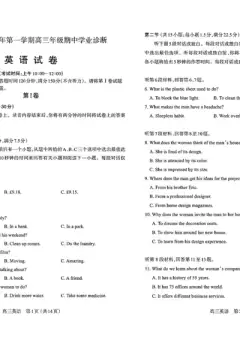
太原市2026-2027学年第一学期高三期中考试英语试卷参考答案及解析11.5
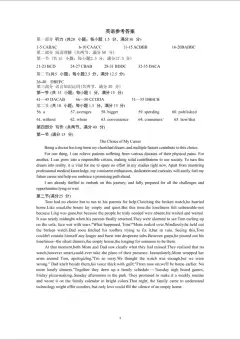
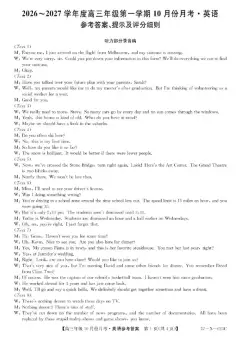
阅读理解答案:
21-23 ACD|24-27 CDCD|28-31 BACB|32-35 ABCD
完型填空答案:
41-45 ABBDD;46-50 ACDCB;51-55 ABCAD
详细原文依据与解析:
A篇(口袋公园 Pocket Parks)
21. What helps block the noise from the traffic around Greenacre Park?
原文:“this Manhattan pocket park is built around a 25-foot waterfall that blocks out the traffic noise.”
明确说是 25-foot waterfall(瀑布/流水声) 挡住了交通噪音。
答案 A(The rushing waterfall)
22. What is special about Louise Nevelson Plaza?
原文:“This small plaza … was the city's first public space named after a woman artist.”
特点是以一位女性艺术家命名(纪念/致敬女艺术家)。
答案 C(It honors a woman artist)
23. What do Norman B. Leventhal Park and Pershing Square have in common?
Norman 公园:“Its lawns… came from a 1983 design competition”
Pershing Square:“A major redesign, chosen through a design competition”
共同点:都源自设计竞赛(design competition)。
答案 D
B篇(艺术家 Helga Stentzel 的旧衣艺术)
24. What forms the basis of Stentzel's clothesline art?
原文首段:“she centers her works on reusing worn-out daily clothes”(重复使用破旧的日常衣物)
答案 C(Used everyday clothing)
25. What does paragraph 2 focus on about Stentzel?
第2段描述:把旧T恤、裤子折叠、悬挂在晾衣绳上,靠布料翻转和光线形成动物造型,有的在自然场景拍、有的做数字处理——这是在讲她独特艺术形式的创作过程。
答案 D(Process of creating her unique art forms)
26. What is the main purpose of the poster project?
原文:“Beyond simple commercial promotion, these posters served as public reminders: they called on viewers to value resource recycling and pay closer attention to threatened wildlife.”
核心是传递环保理念(回收资源、关注野生动物)。
答案 C(To deliver environmental ideas)
27. What belief lies behind Stentzel's creative practice?
末段:“artistic creation does not require expensive supplies. It starts with a patient eye and a willingness to rethink ‘rubbish’.”
即观察(耐心的眼睛)比昂贵材料更重要。
答案 D(Observation outweighs expensive supplies)
C篇(时间与内在秩序)
28. Why do many people feel time is not enough?
原文第1段:“What we lack is not time but a stretch of uninterrupted focus.”(缺的不是时间,而是不被打断的专注)
答案 B(They hardly keep continuous focus)
29. What leads to low efficiency in our work (para 2)?
第2段:“the extra hours are consumed by hesitation and restarts… the time spent getting ready far exceeds what is necessary. Remove those fragments of preparation and switching…”
效率低是因为犹豫、反复准备、任务切换等不必要的拖延/耽搁。
答案 A(Unnecessary delays)
30. “juggle” in paragraph 3 means?
原句:“One can juggle a hundred things and remain orderly”——能同时应付一百件事仍井井有条,juggle=同时处理/兼顾=balance。
答案 C
31. What does the author advise?
第4段:“attention can be directed to one thing at a time”;末段建议写优先清单(priority list)。
即分清优先级、一次做一件事。
答案 B
D篇(录音卡 GetSeed)
32. What problem does GetSeed solve?
首段:传统录音 “easily cut off by incoming calls and messages”(被来电、消息打断)。
GetSeed 解决录音过程被打断的问题。
答案 A
33. Advantage stressed in paragraph 2?
第2段:“no menu to search and no setting to adjust—a single button starts and stops everything.” → 操作简单易用。
答案 B
34. How does “Sprouting” help users?
原文:“matches them against Dedao's library of books and courses, and suggests related reading, fresh research and even opposing views.”
把零散语音笔记关联到更广泛的书籍、课程、研究资源。
答案 C(relating notes to wider resources)
35. Best title?
全文介绍 GetSeed 这款硬件 + AI,从对话/录音中提炼要点、关联知识、让想法“生长”,本质是从对话中汲取智慧。
A太泛(recorders),B只讲AI系统片面,C偏题。
答案 D(GetSeed: Drawing Wisdom from Conversations)
七选五解析(Talent Is Practice Made Invisible)
文章主旨:所谓“天赋”其实是大量练习后变得“隐形”的结果;先天差异存在,但练习决定你能走多远。
36. A — 前一句说“人天生有不同的身体、敏感度、兴趣和优势”,后一句“即便如此(Even so),练习能帮助你建立在先天优势之上”。中间需要承接“先天差异”的句子。A. Practice does not erase those differences.(练习并不会消除这些差异)正好衔接:先承认差异存在、练习不消除它,再转折说练习能放大优势。
37. G — 本段讲“感知(perception)随练习提升”。前句“初学时感知有限”,后句“有经验的音乐家能听到节奏、力度、平衡和音色”。中间应举初学者的反例。G. A beginner may hear only the tune, missing minor changes in rhythm.(初学者只听到旋律,错过节奏的细微变化)与后文“经验丰富者听得更多”形成对比。
38. F — 前一段结尾提到“Experts can appear intuitive(专家看似凭直觉)”,本段继续解释直觉。F. What feels like intuition is simply this rapid pattern recognition.(所谓的直觉不过是快速的型态/模式识别)承上启下,呼应前文“recognize patterns”。
39. C — 前句“光重复不够,重复错误只会更熟练地犯错”,后句“这解释了为何同样练了很多年进步却不同”。C. Time spent is not automatically progress made.(花的时间不会自动等于取得的进步)点明“时长≠进步”,衔接因果。
40. E — 段首总结句,后文“Practice shapes what you do after you begin(练习塑造开始之后的你);别人后来称作天赋的东西,其实是你未见过的多年练习”。E. Talent may shape where you start, but not where you end.(天赋决定起点,但不决定终点)完美概括。
答案:36-A, 37-G, 38-F, 39-C, 40-E
完形填空解析(父母来洛杉矶小住)
41. A. running — “don't leave the water running(别让水一直流着)”,洗手时关水,固定表达 leave water running。
42. B. shortage — 加州缺水(water shortage),所以提醒节约用水。
43. B. kitchen — 后文提到“dishcloth 擦炉子和台面、paper towels”,显然是厨房里的冲突。
44. D. single-use — 作者用“一次性纸巾(single-use paper towels)”,父亲觉得浪费。
45. D. argued — 父亲认为纸巾浪费,作者反驳/争辩(argued)说湿抹布可能带细菌。
46. A. comfortable — 气温会很快升高,穿轻薄T恤更舒适(comfortable)。
47. C. disapproval — 每次父亲虽配合,但表情里带一丝不赞同(disapproval)(暗示他并不完全认同女儿的安排)。
48. D. sighed — 看着父亲的小动作(藏纸巾、关灯),作者叹气(sighed),意识到自己变得像小时候父亲管自己那样。
49. C. lead / take the lead — “厌倦了只纠正他,我发现主动带头(take the lead)有好处”。take the lead = 起主导作用、主动承担。
50. B. ensure — 用洗碗机确保(ensure)一切被洗干净。
51. A. planned — 作者规划(planned)每日行程、开车去各处。
52. B. saving — 替父亲开车,省去(saving)他在洛杉矶拥堵交通中导航的压力。save sb. the stress。
53. C. insight — give sb. a fresh insight into… 对父母有了新的理解/洞察。
54. A. handing over — 看到他们逐渐把控制权移交(handing over)给我。
55. D. support — 终于能反过来支持/照顾(support)他们,心怀感激。
语法填空答案解析(56–65)
56. who
非限制性定语从句,先行词是 Qi Baishi(人),从句缺主语,用关系代词 who。
57. using
句子主干已有谓语 celebrated,此处用现在分词 using 作伴随/方式状语,表示“利用齐白石所画的小生命来开启交流”,主语 exhibition 与 use 是主动关系。
58. frequently
修饰动词 drew,需用副词 frequently(频繁地)。
59. views
a variety of(各种各样的)后接可数名词复数,view 表示“观点/视角”,复数为 views。
60. Based
固定搭配 be based on(基于……),此处作状语省略 be,用过去分词 Based(句首大写)。
61. a
泛指“一部14世纪的意大利藏品(合集)”,Cocharelli Codex 是单数可数名词,用不定冠词 a。
62. with
固定搭配 be illustrated with…(用……加以插图/配图),表示“一些章节配有丰富插图,内容是象征善恶的昆虫”。
63. significant
修饰名词 celebration,用形容词 significant(重要的、意义重大的)。
64. to appreciate
固定结构 inspire sb. to do sth.(激励某人做某事),填 to appreciate。
65. is regarded
which 指代前面的 the micro-world / macro-nature(单数概念),与 regard 是被动关系“被视为……”,且全文为一般现在时,故 is regarded
语法填空重点考:
定语从句、非谓语(using/based)、词性转换、固定搭配(illustrated with, inspire…to do, be regarded as)、冠词。
写作第一节(短文投稿,约80词)
范文参考:
When choosing a university major, I would rank interest > ability > job prospects.
First, interest is the strongest driving force. Without passion, even a promising major becomes a burden. Second comes ability — we should assess whether we have the aptitude for the subject, since talent makes learning smoother. Job prospects, though important, ranks last: a well-paid field means little if we lack interest and capability. In short, follow your heart, match your strengths, and opportunities will follow.
(约75词,逻辑清晰,符合格式)
写作第二节(读后续写)
Paragraph 1(开头:On the day of the project presentation, I showed my detailed research results.)
On the day of the project presentation, I showed my detailed research results. Pointing to the bar chart on the screen, I explained how only $48 went into actual production while the remaining $172 was pure brand premium and marketing hype. The classroom fell silent, then burst into discussion. My teacher praised the depth of my analysis, and several classmates admitted they too had been tempted by the same algorithm-driven ads. I ended by saying, “A pair of shoes doesn’t define who we are — wisdom does.” Applause followed, and I felt a relief I had never expected.
Paragraph 2(开头:Back home, I pulled out the jar of pocket money I had so carefully saved.)
Back home, I pulled out the jar of pocket money I had so carefully saved. Counting the bills and coins, I had over $160 — far from enough for the sneakers, but more than enough for something meaningful. I told my parents I no longer wanted the shoes, and instead asked if we could use part of it for a family dinner and donate the rest to a local charity. They smiled, pride glowing in their tired eyes. That night, I realized true “coolness” wasn’t wearing trendy sneakers, but understanding value, resisting manipulation, and caring for those who love you.
(两段合计约 160+ 词,情节连贯、主题升华)
核心要点总结:
续写抓住“算法制造虚假欲望→通过调研看清营销本质→放弃购买→把钱用在更有意义之处→成长与感恩”的情感线。
太原市2026~2027学年第一学期高三年级期中考试英语试卷11.5