ARTICLE · 1387778
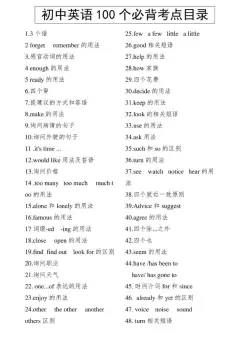
初中英语同义句转换100组:按考点分类标注,每天10组10天背完
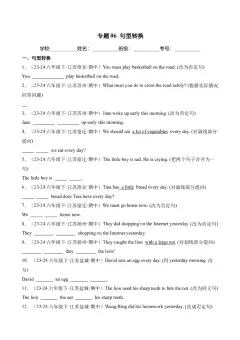
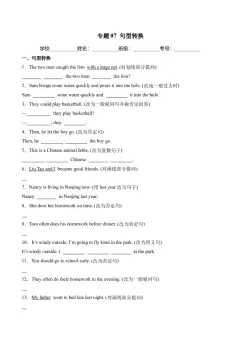
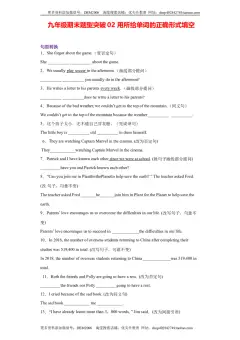
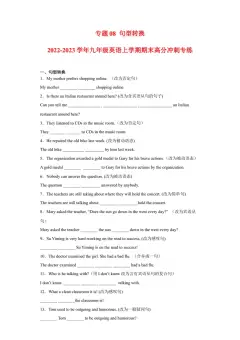
每次考试讲评卷子,同义句转换那一栏都是丢分重灾区:单词都认识,句子就是换不过来。
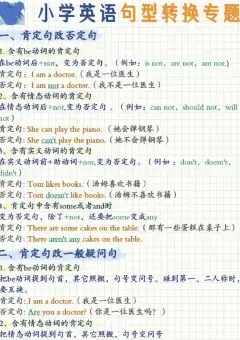
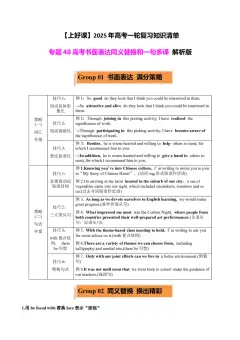
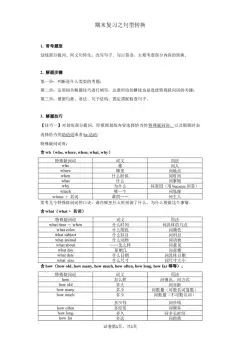
其实句型转换考来考去就是十类套路:短语替换、too...to 与 so...that 互换、感叹句、比较级、被动、宾语从句……每类练熟十组,考场上遇到就是「眼熟题」。
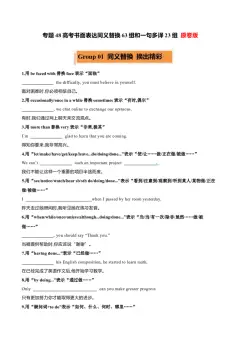
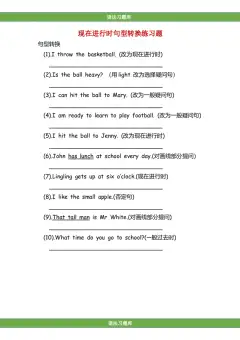
我把初中阶段最高频的 100 组同义句转换整理成了对照表:上面是原句,下面是转换句,每一组都标了考点,家长可以直接让孩子每天背 10 组。
使用建议:第一遍遮住「=」后面的句子自己转换,再对照检查;第二遍只看转换句,反推原句;第三遍把错的组抄在本子上,考前只翻错题。
1 Please look after my cat while I am away.
= Please take care of my cat while I am away.
〔look after = take care of 照顾〕
2 He is good at maths.
= He does well in maths.
〔be good at = do well in 擅长〕
3 I called you last night, but you didn't answer.
= I rang you up last night, but you didn't answer.
〔call = ring up 打电话〕
4 Don't worry about your son.
= Don't be worried about your son.
〔worry 动词 = be worried 形容词〕
5 We enjoyed ourselves at the party.
= We had a good time at the party.
〔enjoy oneself = have a good time〕
6 He didn't pass the driving test.
= He failed the driving test.
〔not pass = fail 不及格〕
7 The coat cost me 100 yuan.
= I spent 100 yuan on the coat.
〔物作主语用 cost,人作主语用 spend...on〕
8 She returned the book to me on time.
= She gave the book back to me on time.
〔return = give back 归还〕
9 I have over fifty English books.
= I have more than fifty English books.
〔over = more than 超过〕
10 Finally, we won the football match.
= In the end, we won the football match.
〔finally = in the end 最后〕
11 It's time for lunch.
= It's time to have lunch.
〔It's time for+名词 = It's time to+动词〕
12 Why don't you go with us?
= Why not go with us?
〔Why don't you = Why not 提议〕
13 What about playing football after school?
= How about playing football after school?
〔What about = How about〕
14 Let's go swimming this Sunday.
= Shall we go swimming this Sunday?
〔Let's = Shall we 提议句式〕
15 How is the weather today?
= What is the weather like today?
〔问天气的两种固定句式〕
16 Remember to close the window when you leave.
= Don't forget to close the window when you leave.
〔remember to do = don't forget to do〕
17 He spent two hours finishing his homework.
= It took him two hours to finish his homework.
〔人+spend...doing = It takes sb...to do〕
18 She paid 50 yuan for the dictionary.
= The dictionary cost her 50 yuan.
〔pay...for = cost 花钱〕
19 I borrowed a bike from Tom.
= Tom lent a bike to me.
〔borrow...from = lend...to 借入与借出〕
20 They walked to the museum.
= They went to the museum on foot.
〔walk to = go...on foot 步行〕
21 The box is too heavy for me to carry.
= The box is so heavy that I can't carry it.
〔too...to = so...that+否定〕
22 He is old enough to go to school.
= He is so old that he can go to school.
〔enough to = so...that+肯定〕
23 She ran too fast for me to catch up with.
= She ran so fast that I couldn't catch up with her.
〔too...to = so...that+否定〕
24 He is not strong enough to lift the box.
= He is so weak that he can't lift the box.
〔not...enough to = so...that+否定〕
25 The little boy is too young to understand this.
= The little boy is so young that he can't understand this.
〔too...to = so...that+否定〕
26 The hall is big enough to hold 500 people.
= The hall is so big that it can hold 500 people.
〔enough to = so...that+肯定〕
27 He was too nervous to say a word.
= He was so nervous that he couldn't say a word.
〔too...to = so...that+否定〕
28 The girl is old enough to dress herself.
= The girl is so old that she can dress herself.
〔enough to = so...that+肯定〕
29 Grandpa was too tired to walk on.
= Grandpa was so tired that he couldn't walk on.
〔too...to = so...that+否定〕
30 The ice is too thin to walk on.
= The ice is so thin that we can't walk on it.
〔too...to = so...that+否定〕
31 How lovely the baby is!
= What a lovely baby (it is)!
〔How+形容词 = What a+形容词+单数名词〕
32 What an interesting book it is!
= How interesting the book is!
〔What an = How 感叹句互换〕
33 How heavy the box is!
= What a heavy box (it is)!
〔How+形容词 = What a+名词短语〕
34 What beautiful flowers they are!
= How beautiful the flowers are!
〔复数名词用 What 不加 a/an〕
35 What a fine day it is!
= How fine the day is!
〔What a = How 互换〕
36 How delicious the mooncakes are!
= What delicious mooncakes (they are)!
〔How+形容词 = What+复数名词〕
37 What a tall building it is!
= How tall the building is!
〔What a = How 互换〕
38 How carefully he does his homework!
= What a careful boy he is!
〔副词感叹句转名词:carefully→careful boy〕
39 What an exciting game it was!
= How exciting the game was!
〔What an = How 互换〕
40 How cold it is today!
= What a cold day (it is)!
〔How+形容词 = What a+名词短语〕
41 Tom is taller than Jim.
= Jim is not as tall as Tom.
〔比较级 = not as...as〕
42 This box is heavier than that one.
= That box is not as heavy as this one.
〔比较级 = not as...as〕
43 She runs faster than her brother.
= Her brother doesn't run as fast as she.
〔比较级 = not as...as(动词句式)〕
44 My room is bigger than yours.
= Your room is not as big as mine.
〔比较级 = not as...as〕
45 He got up earlier than I did.
= I didn't get up as early as he.
〔比较级 = not as...as〕
46 Tom is the tallest boy in his class.
= No other boy in his class is taller than Tom.
〔最高级 = no other...+比较级〕
47 Lily is the most beautiful girl in the school.
= No other girl in the school is more beautiful than Lily.
〔最高级 = no other...+比较级〕
48 This is the best film I have ever seen.
= I have never seen a better film.
〔最高级 = never...+比较级 经典转换〕
49 Maths is the most difficult subject of all.
= No other subject is more difficult than maths.
〔最高级 = no other...+比较级〕
50 Shanghai is the biggest city in China.
= No other city in China is bigger than Shanghai.
〔最高级 = no other...+比较级〕
51 People grow rice in the south of China.
= Rice is grown in the south of China.
〔一般现在时被动:is/are+过去分词〕
52 He cleaned the classroom yesterday.
= The classroom was cleaned yesterday.
〔一般过去时被动:was/were+过去分词〕
53 We will hold a sports meeting next week.
= A sports meeting will be held next week.
〔一般将来时被动:will be+过去分词〕
54 You must finish the work today.
= The work must be finished today.
〔含情态动词被动:must be+过去分词〕
55 They are building a new bridge over the river.
= A new bridge is being built over the river.
〔现在进行时被动:is being built〕
56 Someone stole my bike last night.
= My bike was stolen last night.
〔someone 作主语变被动后常省略〕
57 We should plant more trees on the hill.
= More trees should be planted on the hill.
〔should be+过去分词〕
58 My mother made this cake this morning.
= This cake was made by my mother this morning.
〔by 短语保留动作执行者〕
59 People all over the world know the Great Wall.
= The Great Wall is known to people all over the world.
〔be known to 固定搭配〕
60 Did he break the window?
= Was the window broken by him?
〔疑问句被动:was 提前〕
61 Hurry up, or you'll miss the early bus.
= If you don't hurry up, you will miss the early bus.
〔祈使句+or = if 否定条件〕
62 Study hard, and you will pass the exam.
= If you study hard, you will pass the exam.
〔祈使句+and = if 肯定条件〕
63 Come earlier, or you won't see him.
= If you don't come earlier, you won't see him.
〔祈使句+or = if 否定条件〕
64 Don't be late for school, or the teacher will be angry.
= If you are late for school, the teacher will be angry.
〔否定祈使句变 if 肯定条件〕
65 Work harder, and you'll catch up with others.
= If you work harder, you will catch up with others.
〔祈使句+and = if 肯定条件〕
66 Take exercise every day, and you'll be healthy.
= If you take exercise every day, you will be healthy.
〔祈使句+and = if 肯定条件〕
67 Get up early, or you will be late again.
= If you don't get up early, you will be late again.
〔祈使句+or = if 否定条件〕
68 Use your head, and you will find a way.
= If you use your head, you will find a way.
〔祈使句+and = if 肯定条件〕
69 Don't play with fire, or you may get burned.
= If you play with fire, you may get burned.
〔否定祈使句变 if 肯定条件〕
70 Think it over, and you will work out the problem.
= If you think it over, you will work it out.
〔祈使句+and = if 肯定条件〕
71 Where does he live? Do you know?
= Do you know where he lives?
〔疑问句变宾语从句:陈述语序〕
72 What is she doing? Can you tell me?
= Can you tell me what she is doing?
〔宾语从句用陈述语序〕
73 He will come back tomorrow. I think.
= I think (that) he will come back tomorrow.
〔陈述句作宾语从句用 that 引导〕
74 When will the train leave? Could you tell me?
= Could you tell me when the train will leave?
〔宾语从句:时态与语序双考点〕
75 What time is it now? I want to know.
= I want to know what time it is now.
〔疑问句变宾语从句:陈述语序〕
76 Who is knocking at the door? Do you know?
= Do you know who is knocking at the door?
〔who 作从句主语,语序本身不变〕
77 She can swim very fast. She says.
= She says (that) she can swim very fast.
〔that 在宾语从句中可省略〕
78 Why did he leave early? Nobody knows.
= Nobody knows why he left early.
〔宾语从句:过去时态回移〕
79 Where did you put the book? Please show me.
= Please show me where you put the book.
〔宾语从句:陈述语序〕
80 Does Tom like Chinese food? I wonder.
= I wonder if Tom likes Chinese food.
〔一般疑问句变宾语从句用 if/whether〕
81 Both of them are students.
= Neither of them is a student.
〔both 全否定变 neither,注意单数〕
82 All of them like playing basketball.
= None of them likes playing basketball.
〔all 全否定变 none〕
83 Both Tom and Jim are here.
= Neither Tom nor Jim is here.
〔both...and = neither...nor(就近原则)〕
84 He can't sing or dance.
= He can neither sing nor dance.
〔or 否定 = neither...nor〕
85 I have no money with me.
= I don't have any money with me.
〔no = not any〕
86 There is nothing in the box.
= There isn't anything in the box.
〔nothing = not anything〕
87 I know neither of the twins.
= I don't know either of the twins.
〔neither = not either〕
88 He didn't say anything at the meeting.
= He said nothing at the meeting.
〔not...anything = nothing〕
89 Both of us have been to Beijing.
= Neither of us has been to Beijing.
〔both→neither,has 用单数〕
90 He went to bed after he finished his homework.
= He didn't go to bed until he finished his homework.
〔after = not...until 经典转换〕
91 It's very kind of you to help me.
= You are very kind to help me.
〔It's kind of sb to do = sb is kind to do〕
92 He got up early so that he could catch the train.
= He got up early in order to catch the train.
〔so that 从句 = in order to 不定式〕
93 I don't know what I should do next.
= I don't know what to do next.
〔疑问词+从句 = 疑问词+不定式〕
94 Can you tell me how I can get to the station?
= Can you tell me how to get to the station?
〔疑问词+从句 = 疑问词+不定式〕
95 She doesn't know where she can find the key.
= She doesn't know where to find the key.
〔疑问词+从句 = 疑问词+不定式〕
96 He is such a strong man that he can lift the box.
= He is so strong a man that he can lift the box.
〔such...that = so...that 语序互换〕
97 To learn English well is very important.
= It is very important to learn English well.
〔不定式作主语 = It 句型〕
98 Seeing is believing.
= To see is to believe.
〔动名词作主语表语 = 不定式〕
99 He didn't come to school because he was ill.
= He didn't come to school because of his illness.
〔because 从句 = because of 短语〕
100 If it doesn't rain tomorrow, we'll go to the park.
= We'll go to the park unless it rains tomorrow.
〔if 否定条件 = unless 除非〕
老师总结
句型转换题最忌「凭感觉改」。先判断这道题考的是哪一类:看到原句里有 so/such 想感叹句,看到两个简单句想宾语从句,看到 than 想比较级,看到 by 想被动。类型对了,答案基本就对了。
最容易扣分的三个细节:宾语从句忘记改陈述语序、both 变 neither 后动词忘记用单数、被动语态忘记用过去分词。这 100 组里每一类都安排了对应的题组,错哪里就回去重背哪一组。
每天 10 组,10 天一轮;坚持两轮,句型转换基本可以做到不丢分。