 夜雨聆风
夜雨聆风OpenClaw 是一款强大的 AI 网关工具。本文将带你在 Windows 系统上完成从零到运行的完整部署流程,并涵盖常见报错的解决方案。
前置条件
Windows 10(64 位),版本 2004(Build 19041)或更高 网络连接正常 具有管理员权限的用户账户
查看系统版本:按
Win + R,输入winver回车即可查看。
安装路线选择
根据你的使用场景,选择适合的安装路线:
| 路线 A:Windows 原生 | ||
| 路线 B:WSL2(Linux) |
- 路线 A
:完成第一步,跳过第二步,再按顺序完成第三步至第八步。 - 路线 B
:完成第一步、第二步(含 WSL 内的完整安装流程),再跳至第六步完成初始化,无需执行第三、四、五、七步;第八步日常管理命令在 WSL 内同样适用,可供参考。
第一步:升级 PowerShell 7(推荐)
Windows 10 内置 PowerShell 5.1,推荐升级到 PowerShell 7+,获得更好的语法支持与错误提示。
方式一:winget 安装(推荐)
以管理员身份打开 PowerShell,执行:
powershell winget install --id Microsoft.PowerShell --source winget
正常安装显示如下:
已找到 PowerShell [Microsoft.PowerShell] 版本 7.6.0.0此应用程序由其所有者授权给你。Microsoft 对第三方程序包概不负责,也不向第三方程序包授予任何许可证。正在下载 https://github.com/PowerShell/PowerShell/releases/download/v7.6.0/PowerShell-7.6.0-win-x64.msi ██████████████████████████████ 109 MB / 109 MB已成功验证安装程序哈希正在启动程序包安装...已成功安装若提示
winget不存在,请先前往 Microsoft Store 搜索 “应用安装程序” 安装或更新,或使用方式二。
方式二:下载安装包
前往 PowerShell GitHub Releases 下载最新版本的 PowerShell-7.x.x-win-x64.msi,双击安装,一路点击 Next。
安装时建议勾选:
- Add PowerShell to PATH Environment Variable
- Enable PowerShell remoting
验证
powershell $PSVersionTable
显示如下:
Name Value---- -----PSVersion 7.6.0PSEdition CoreGitCommitId 7.6.0OS Microsoft Windows 10.0.19045Platform Win32NTPSCompatibleVersions {1.0, 2.0, 3.0, 4.0…}PSRemotingProtocolVersion 2.4SerializationVersion 1.1.0.1WSManStackVersion 3.0即升级成功。安装完成后,后续所有命令均在 PowerShell 7 中执行。
第二步:安装 WSL2(可选,路线 B)
若选择路线 A(Windows 原生),可跳过此步骤直接进入第三步。
WSL2 可让你在 Windows 上运行完整的 Linux 环境。WSL2 要求 Windows 10 版本 2004(Build 19041) 或更高。
1. 启用 WSL 与虚拟化功能
以管理员身份运行 PowerShell,依次执行:
powershell # 启用 WSL 子系统dism.exe /online /enable-feature /featurename:Microsoft-Windows-Subsystem-Linux /all /norestart# 启用虚拟机平台(WSL2 依赖)dism.exe /online /enable-feature /featurename:VirtualMachinePlatform /all /norestart
执行完毕后重启电脑。
2. 安装 WSL2 内核并设置默认版本
powershell # 自动完成 WSL 启用、内核安装,并默认安装 Ubuntuwsl --install# 或wsl --update
也可以手动下载 WSL2 Linux 内核更新包 双击安装。
powershell # 设置默认版本为 WSL2wsl --set-default-version2
3. 安装 Ubuntu 发行版
powershell wsl --install Ubuntu-24.04
或前往 Microsoft Store 搜索 “Ubuntu 24.04” 点击安装。首次启动按提示创建 Linux 用户名和密码。
4. 验证安装
powershell wsl --list--verbose
显示如下:
NAME STATE VERSION* AlmaLinux-8 Stopped 2 Ubuntu-24.04 Running 2Ubuntu 对应的 VERSION 列显示 2 即成功。若提示虚拟化未启用,请进入主板 BIOS 开启 Intel VT-x 或 AMD-V。
路线 B 用户:以下步骤 5 至 8 均在 WSL Ubuntu 终端内执行(bash 命令),执行完毕后即完成 OpenClaw 的完整部署,无需执行本文第三、四、五、七步。
5. 更新系统并安装基础工具
打开 WSL Ubuntu 终端,执行:
bash sudo apt update && sudo apt upgrade -ysudo apt install -y curl git build-essential
6. 安装 Node.js 24
使用 n-install 脚本安装 Node.js v24.14.1:
bash curl -fsSL https://raw.githubusercontent.com/mklement0/n-install/stable/bin/n-install | bash -s 24
验证:
bash node -vnpm -v
确认版本输出为 v24.14.1 和 11.11.0。
7. 安装 OpenClaw
使用官方一键安装脚本:
bash curl -fsSL https://openclaw.ai/install.sh | bash
安装完成后刷新环境变量,使 openclaw 命令生效:
bash source ~/.bashrc
验证:
bash openclaw -v
输出版本号即表示安装成功。
8. 进阶配置(推荐)
修改权限配置,将权限 profile 从 coding 改为 full,以获得完整功能权限:
bash sed -i 's/"profile": "coding"/"profile": "full"/g' ~/.openclaw/openclaw.json
设置开机自启服务(需要 WSL2 已启用 systemd):
bash sudo openclaw gateway install-servicesudo systemctl enable openclaw-gateway --now
验证 systemd 是否已启用:执行
ps -p 1 -o comm=,输出systemd则支持。若未启用,可在/etc/wsl.conf中添加:ini [boot]systemd=true保存后在 PowerShell 中执行
wsl --shutdown重启 WSL 即可。
路线 B 用户:WSL 内安装完成后,请继续执行第六步完成
openclaw onboard初始化配置。
第三步:安装 Node.js
Node.js 是运行 OpenClaw 的核心环境,要求版本 v24.14.1。
1. 下载并安装
前往 Node.js 官网 下载 v24.14.1 的 Windows 安装包(.msi),双击运行,一路点击 Next。
安装时请确认勾选 “Add to PATH” 选项,否则终端无法识别
node命令。
2. 验证安装
重新打开 PowerShell 窗口后输入:
powershell node -vnpm -v
输出 v24.14.1 和 11.11.0 即表示安装成功。
3. 处理脚本执行策略报错(如遇)
若提示 cannot be loaded because running scripts is disabled,以管理员身份运行:
powershell Set-ExecutionPolicy-ExecutionPolicy RemoteSigned -Scope CurrentUser
输入 Y 确认后重试。
4. 配置国内 npm 镜像(推荐)
powershell npm config set registry https://registry.npmmirror.com
验证:
powershell npm config get registry# 输出 https://registry.npmmirror.com 即为成功
第四步:安装 Git
Git 用于 OpenClaw 管理组件依赖,必须安装。
前往 Git 官网 下载 Git for Windows(x64 Setup),双击安装,一路点击 Next。
验证(重新打开 PowerShell 后):
powershell git -v
第五步:安装 OpenClaw
建议以管理员身份运行 PowerShell:右键点击开始菜单 → Windows PowerShell(管理员) 或 PowerShell 7(管理员)。
根据你的网络环境,选择对应的安装方式:
方式一:一键安装(推荐)
以管理员身份运行 PowerShell,执行以下命令:
powershell iwr-useb https://openclaw.ai/install.ps1 | iex
脚本将自动完成下载与安装,无需手动配置环境变量。安装完成后跳至验证安装。
若提示
running scripts is disabled,请先执行:powershell Set-ExecutionPolicy-ExecutionPolicy RemoteSigned -Scope CurrentUser输入
Y确认后重试。
方式二:标准安装(网络畅通)
适合可以正常访问 GitHub 的用户。安装最新版本:
powershell npm install -g openclaw@latest
安装完成后跳至验证安装。
方式三:镜像加速安装(GitHub 访问受限)
步骤 1:若 npm 安装时提示 SSH 权限错误(Permission denied (publickey) / Error 128),将 SSH 替换为 HTTPS:
powershell git config --global url."https://github.com/".insteadOf ssh://git@github.com/
步骤 2:若仍提示连接超时(443 端口),配置 GitHub 镜像加速:
powershell git config --global url."https://github.moeyy.xyz/https://github.com/".insteadOf "https://github.com/"
注意:第三方镜像可能随时失效,如上述地址不可用,可搜索其他可用镜像(如
githubfast.com)。
步骤 3:重新执行安装:
powershell npm install -g openclaw@latest
安装完成后跳至验证安装。
方式四:离线安装(完全无法访问 GitHub)
此方式适合 GitHub 完全不可达的情况,通过手动补充依赖完成安装。
步骤 1:创建安装目录
先运行安装命令,等它开始下载后按 Ctrl+C 中断(目的是让 npm 创建目录结构):
powershell npm i -g openclaw@latest# 看到下载开始后,按 Ctrl+C 中断
步骤 2:手动下载 libsignal-node
在浏览器中前往 GitHub 搜索 libsignal-node,进入对应仓库,点击 Code → Download ZIP 下载压缩包。
步骤 3:放置依赖文件
解压 ZIP,将文件夹重命名为 libsignal-node(去掉-master等后缀)将文件夹复制到以下路径(将 用户名替换为你的 Windows 用户名):
C:\Users\用户名\AppData\Roaming\npm\node_modules\openclaw\node_modules\步骤 4:完成安装
powershell npm install -g openclaw@latest
npm 会识别已存在的依赖并跳过下载,完成剩余安装。
验证安装
OpenClaw Installer[OK] Windows detected[OK] Node.js version 24.14.1 found[*] Installing OpenClaw (openclaw@latest)...[OK] OpenClaw installedOpenClaw installed successfully (OpenClaw 2026.3.24 (cff6dc9))!Settled in. Time to automate your life whether you're ready or not.Starting setup...🦞 OpenClaw 2026.3.24 (cff6dc9) — Built by lobsters, for humans. Don't question the hierarchy.Windows detected - OpenClaw runs great on WSL2!Native Windows might be trickier.Quick setup: wsl --install (one command, one reboot)Guide: https://docs.openclaw.ai/windows▄▄▄▄▄▄▄▄▄▄▄▄▄▄▄▄▄▄▄▄▄▄▄▄▄▄▄▄▄▄▄▄▄▄▄▄▄▄▄▄▄▄▄▄▄▄▄▄▄▄▄▄██░▄▄▄░██░▄▄░██░▄▄▄██░▀██░██░▄▄▀██░████░▄▄▀██░███░████░███░██░▀▀░██░▄▄▄██░█░█░██░█████░████░▀▀░██░█░█░████░▀▀▀░██░█████░▀▀▀██░██▄░██░▀▀▄██░▀▀░█░██░██▄▀▄▀▄██▀▀▀▀▀▀▀▀▀▀▀▀▀▀▀▀▀▀▀▀▀▀▀▀▀▀▀▀▀▀▀▀▀▀▀▀▀▀▀▀▀▀▀▀▀▀▀▀▀▀▀▀ 🦞 OPENCLAW 🦞┌ OpenClaw setup│◇ Security ─────────────────────────────────────────────────────────────────────────────────╮│ ││ Security warning — please read. ││ ││ OpenClaw is a hobby project and still in beta. Expect sharp edges. ││ By default, OpenClaw is a personal agent: one trusted operator boundary. ││ This bot can read files and run actions if tools are enabled. ││ A bad prompt can trick it into doing unsafe things. ││ ││ OpenClaw is not a hostile multi-tenant boundary by default. ││ If multiple users can message one tool-enabled agent, they share that delegated tool ││ authority. ││ ││ If you’re not comfortable with security hardening and access control, don’t run ││ OpenClaw. ││ Ask someone experienced to help before enabling tools or exposing it to the internet. ││ ││ Recommended baseline: ││ - Pairing/allowlists + mention gating. ││ - Multi-user/shared inbox: split trust boundaries (separate gateway/credentials, ideally ││ separate OS users/hosts). ││ - Sandbox + least-privilege tools. ││ - Shared inboxes: isolate DM sessions (`session.dmScope: per-channel-peer`) and keep ││ tool access minimal. ││ - Keep secrets out of the agent’s reachable filesystem. ││ - Use the strongest available model for any bot with tools or untrusted inboxes. ││ ││ Run regularly: ││ openclaw security audit --deep ││ openclaw security audit --fix ││ ││ Must read: https://docs.openclaw.ai/gateway/security ││ │├────────────────────────────────────────────────────────────────────────────────────────────╯│◇ I understand this is personal-by-default and shared/multi-user use requires lock-down. Continue?路线 A 用户说明:上方输出中 OpenClaw 程序会提示推荐使用 WSL2,这是程序的默认建议,路线 A 无需安装 WSL,直接继续后续步骤即可正常使用。
输入Yes确认,其他暂时跳过。
查看版本:
powershell openclaw -v
输出版本号即表示安装成功。
附:Windows Defender 拦截处理
若安全软件将 npm 全局安装脚本误报为威胁:
临时暂停实时保护,安装完成后重新开启 或将 npm 全局模块目录加入白名单: C:\Users\用户名\AppData\Roaming\npm
第六步:初始化 OpenClaw
运行交互式 onboard 命令完成首次配置(后续配置变更亦执行此命令):
powershell openclaw onboard
按照以下指引逐步操作,部分选项请根据自身实际情况进行配置:
~\.openclaw\agents? | |||
http://127.0.0.1:11434 | |||
custom-zhenze-huhehaote-cmecloud-cn | |||
minimax-m2.5 | |||
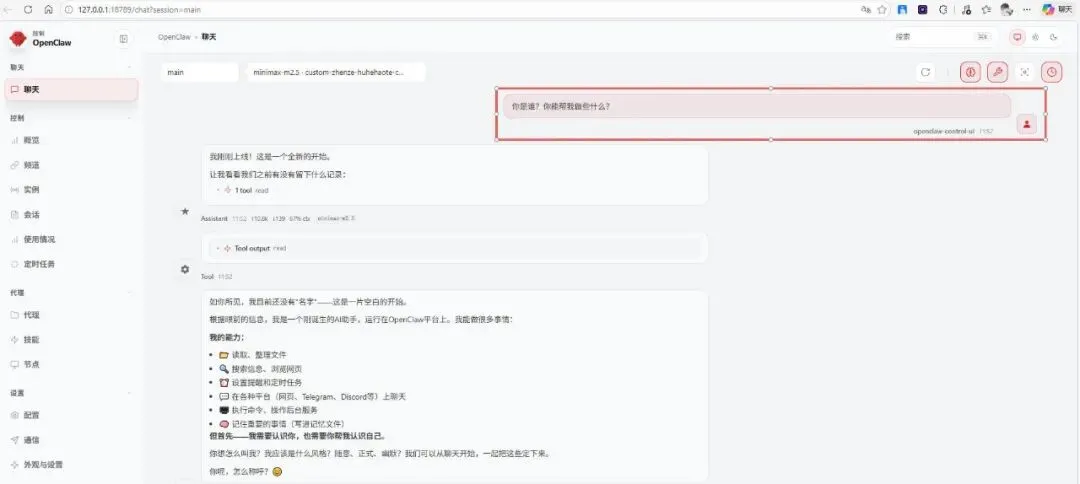
配置完成之后选择在Web UI中打开,配置正确之后,页面输入相关问题后内容显示如下:
请勿关闭该窗口。 若 Windows 弹出网络访问权限提示,请选择允许。
第七步:进阶配置
修改权限配置(推荐)
打开 C:\Users\用户名\.openclaw,用文本编辑器编辑 openclaw.json。
找到:
json "tools":{"profile":"coding"}
修改为:
json "tools":{"profile":"full"}
保存后执行:
powershell openclaw gateway restart
full赋予 OpenClaw 完整系统工具权限(如读取硬件信息、操作文件等),请根据需求决定是否开启。验证:向 OpenClaw 发送"请告诉我当前电脑的硬件信息",能正常回复即配置成功。
第八步:日常管理命令速查
Gateway 网关管理
openclaw gateway start | |
openclaw gateway stop | |
openclaw gateway restart | |
openclaw gateway status |
其他常用命令
powershell openclaw tui # 打开命令行交互界面(TUI)openclaw browser start# 启动浏览器服务openclaw browser stop # 停止浏览器服务openclaw status # 查看整体运行状态openclaw logs --follow# 实时查看日志openclaw dashboard # 打开控制面板openclaw doctor # 系统诊断openclaw doctor --fix# 自动修复问题
总结
至此,OpenClaw 已在 Windows 系统上完整部署并运行。整个流程分为八个步骤:
- 升级 PowerShell 7
(推荐)— 获得更好的终端体验 - 安装 WSL2
(可选,路线 B)— 在 Windows 上运行 Linux 环境 - 安装 Node.js v24.14.1
— 满足运行时要求,并配置国内镜像加速 - 安装 Git
— 用于管理组件依赖 - 安装 OpenClaw
— 四种方式按需选择:一键安装 / 标准安装 / 镜像加速 / 离线安装 - 初始化配置
— 通过交互式向导完成首次设置 - 进阶配置
— 修改权限配置文件,释放完整功能 - 日常管理
— 掌握常用命令进行运维维护
遇到问题时,优先使用 openclaw doctor 进行自动诊断,或通过 openclaw logs --follow 实时查看日志排查故障。