 夜雨聆风
夜雨聆风
点击上方蓝字关注我们
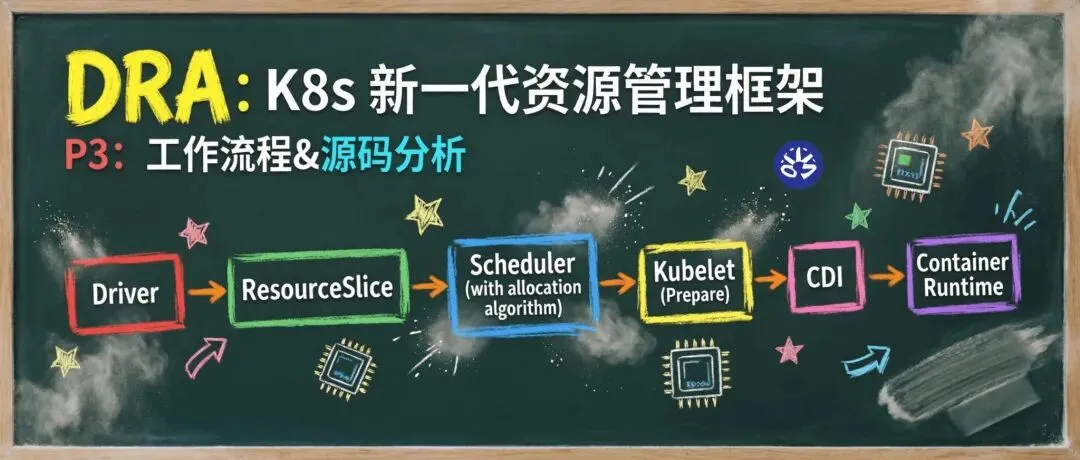
前两篇 DRA 能解决什么问题?从部署到使用的完整体验 以及 DRA P2---理解 DRA:ResourceSlice、Claim、Class 三角关系 我们完成了 DRA 的部署实战和核心概念拆解,知道了 ResourceSlice、DeviceClass、ResourceClaim 各自的职责和协作方式。
但还有一个问题没回答:从 Pod 提交到 GPU 可用,中间到底发生了什么?每个组件具体做了哪些事?
本篇逐阶段拆解 DRA 的端到端工作流,每个阶段结合 NVIDIA DRA Driver 源码分析。
1. 端到端工作流概览
以 P1 的 gpu-test-pod 为例,从 Pod 提交到 GPU 可用,完整流程分为六个阶段:
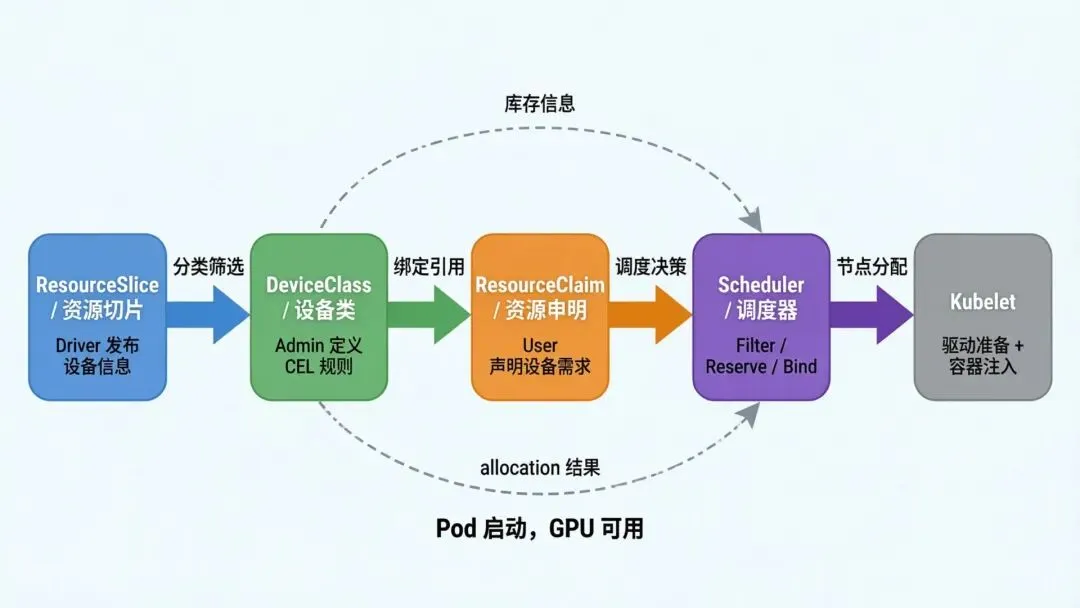
下面逐阶段展开,每个阶段结合 NVIDIA DRA Driver[1] 源码(cmd/gpu-kubelet-plugin/)分析。
2. 阶段一:设备注册
2.1 流程
DRA Driver(DaemonSet)启动 │ ├─ 1. 调用 NVML 扫描节点上的 GPU 设备 │ → 收集每个 GPU 的属性:型号、架构、显存、CUDA 版本、驱动版本、UUID... │ ├─ 2. 注册到 Kubelet(通过 plugins_registry socket) │ → Kubelet 发现 DRA Plugin,建立 gRPC 连接 │ └─ 3. 发布 ResourceSlice 到 API Server → 构建 ResourceSlice 对象并发布,包含所有 GPU 设备及其属性 → 调度器、Kubelet、用户都可以通过 kubectl 查看和 DevicePlugin 的区别:DevicePlugin 通过 ListAndWatch() gRPC 把设备列表上报给 Kubelet,Kubelet 再更新到 Node 的 capacity 字段,只有数量。DRA Driver 直接创建 ResourceSlice 对象,包含完整的设备属性,调度器可见。
2.2 源码分析
NewDriver() 是整个驱动的初始化入口,核心步骤对应设备注册的全过程(省略了 DynamicMIG 处理、健康检查启动等中间步骤):
// cmd/gpu-kubelet-plugin/driver.go:70funcNewDriver(ctx context.Context, config *Config)(*driver, error) {// 1. 初始化 NVML,枚举所有设备 state, err := NewDeviceState(ctx, config)// ... driver := &driver{ state: state, pulock: flock.NewFlock(filepath.Join(config.DriverPluginPath(), DriverPrepUprepFlockFileName)), }// 2. 注册 DRA Plugin,暴露 Prepare/Unprepare 接口 helper, err := kubeletplugin.Start(ctx, driver, kubeletplugin.DriverName(DriverName), kubeletplugin.Serialize(false), // 禁用自带序列化,改用 flock 控制// ... ) driver.pluginhelper = helper// 3. 发布初始 ResourceSlice 到 API Serverif err := driver.publishResources(ctx, config); err != nil {returnnil, err }return driver, nil}设备发现的逻辑在 nvlib.go 中:
// cmd/gpu-kubelet-plugin/nvlib.go:174func(l deviceLib)enumerateAllPossibleDevices()(*PerGPUAllocatableDevices, error) { perGPUAllocatable, err := l.GetPerGpuAllocatableDevices() // 遍历 NVML 获取所有物理 GPUif featuregates.Enabled(featuregates.PassthroughSupport) { err = l.enumerateGpuVfioDevices(perGPUAllocatable) // 额外枚举 VFIO PCI 设备 }return perGPUAllocatable, nil}每个 GPU 的信息封装为 GpuInfo 结构体(deviceinfo.go),包含 UUID、型号、架构、显存、CUDA 计算能力、驱动版本、MIG 能力等完整属性。
对比 DevicePlugin:同样通过 NVML 发现设备,但结果只上报为 nvidia.com/gpu:4 这样一个整数。
ResourceSlice 发布由 publishResources() 完成,有两种模式:
DynamicMIG 模式:调用 GenerateDriverResources生成资源,每张物理 GPU 一个 ResourceSlice(K8s 1.35+ 会进一步拆分为 G+1 个)普通模式:一个节点一个 ResourceSlice,包含所有 GPU 设备
// cmd/gpu-kubelet-plugin/driver.go:455func(d *driver)publishResources(ctx context.Context, config *Config)error {if featuregates.Enabled(featuregates.DynamicMIG) { resources := d.GenerateDriverResources(config.flags.nodeName)return d.pluginhelper.PublishResources(ctx, resources) }// 普通模式:所有设备放进一个 Slicevar resourceSlice resourceslice.Slicefor _, devices := range d.state.perGPUAllocatable.allocatablesMap {for _, device := range devices { resourceSlice.Devices = append(resourceSlice.Devices, device.GetDevice()) } } resources := resourceslice.DriverResources{ Pools: map[string]resourceslice.Pool{ config.flags.nodeName: {Slices: []resourceslice.Slice{resourceSlice}}, }, }return d.pluginhelper.PublishResources(ctx, resources)}3. 阶段二:分类定义
管理员创建 DeviceClass,定义"什么样的设备属于这一类":
apiVersion:resource.k8s.io/v1kind:DeviceClassmetadata:name:gpu.nvidia.comspec:selectors:-cel:expression:device.driver=='gpu.nvidia.com'&&device.attributes['gpu.nvidia.com'].type=='gpu'CEL 表达式可以组合任意属性条件,例如只包含 A100:
spec:selectors:-cel:expression:| device.driver == 'gpu.nvidia.com' && device.attributes['gpu.nvidia.com'].type == 'gpu' && device.attributes['gpu.nvidia.com'].productName == 'NVIDIA A100'这一步一般在安装 DRA Driver 时由 Helm Chart 自动创建,用户通常不需要手动操作。
4. 阶段三:用户声明需求
用户创建 ResourceClaimTemplate 和 Pod:
apiVersion:resource.k8s.io/v1kind:ResourceClaimTemplatemetadata:name:single-gpuspec:spec:devices:requests:-name:gpuexactly:deviceClassName:gpu.nvidia.comallocationMode:ExactCountcount:1---apiVersion:v1kind:Podmetadata:name:gpu-test-podspec:containers:-name:cuda-containerimage:nvidia/cuda:12.1.0-base-ubuntu22.04command:["nvidia-smi","-L"]resources:claims:-name:gpu-claimresourceClaims:-name:gpu-claimresourceClaimTemplateName:single-gpuPod 提交后,ResourceClaim Controller 根据 Template 自动创建 ResourceClaim(Pod 作为 OwnerReference,垃圾回收自动清理),然后 Pod 进入调度队列。
ResourceClaim Controller 的逻辑:
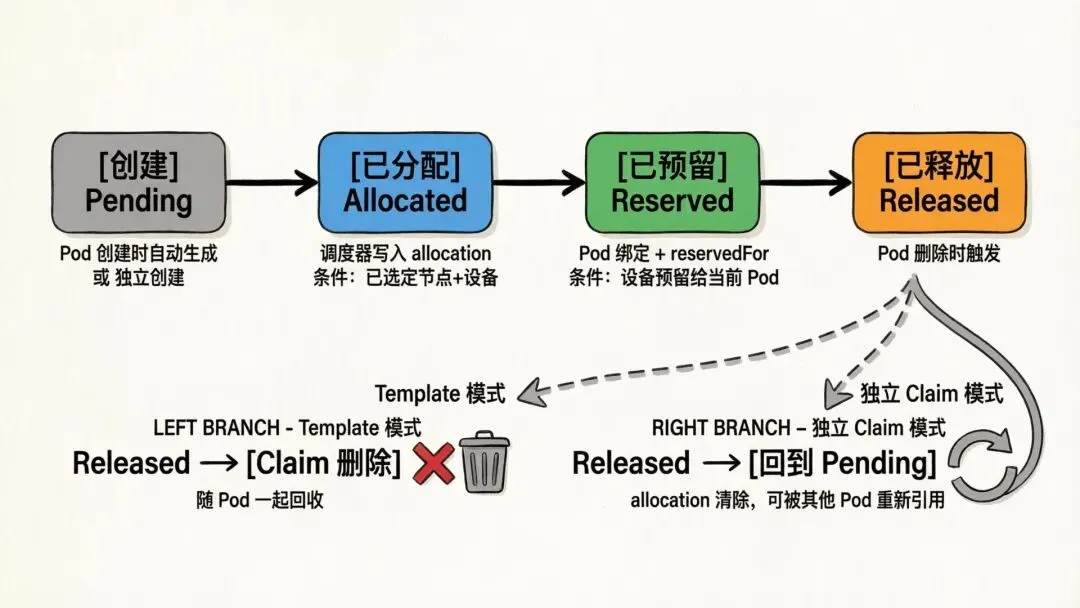
创建 Claim:Pod 引用 ResourceClaimTemplate 时,Controller 为每个 claim 生成 ResourceClaim 对象, GenerateName避免命名冲突,Pod 作为 OwnerReference 保证随 Pod 一起删除补充预留:正常情况下调度器的 PreBind 已完成预留;Controller 作为回退,为已分配但因冲突等原因未预留的 Claim 补充添加 ReservedFor条目清理终止 Pod 的 Claim:当 Pod 终止后,移除 ReservedFor条目;当ReservedFor为空时,清除分配并移除 Finalizer;基于模板生成的 Claim 最终由垃圾回收器删除(Controller 也会在确认 Pod 不再运行时主动删除)
ResourceClaim 的状态流转和回收机制如下图所示:
5. 阶段四:调度器分配
这是 DRA 和 DevicePlugin 差异最大的阶段。DRA 的调度器实现了调度框架的多个扩展点:
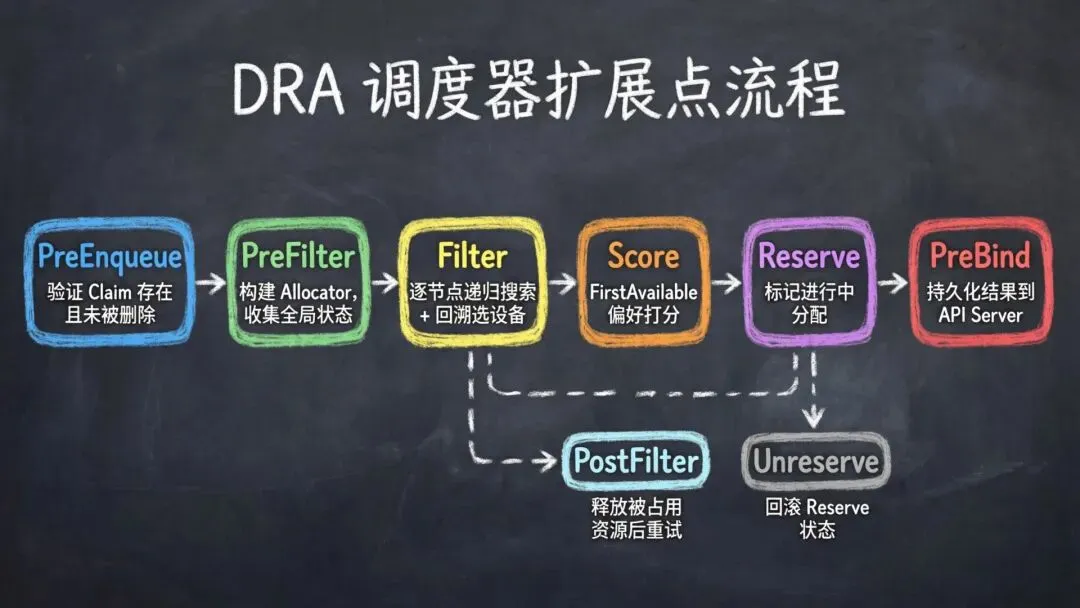
调度器不仅选节点,还选定了具体设备。分配结果在调度阶段就确定了,写入 ResourceClaim.status.allocation,后续 Driver 和 Kubelet 都基于这个结果工作。
对比 DevicePlugin:调度器只检查 nvidia.com/gpu 数量够不够,具体用哪张 GPU 由 Kubelet 本地的 Allocate() 决定。
5.1 调度器扩展点实现
DRA 调度器插件 DynamicResources 实现了调度框架的 9 个扩展点接口:PreEnqueue、PreFilter、Filter、PostFilter、Score、Reserve(含 Unreserve)、EnqueueExtensions、PreBind、SignPlugin。
PreEnqueue — 验证所有 ResourceClaim 存在且未被删除,不满足的 Pod 留在不可调度队列。
PreFilter — 收集所有 Claim、构建分配器,是调度周期中最重的准备工作:
// pkg/scheduler/framework/plugins/dynamicresources/dynamicresources.go:444func(pl *DynamicResources)PreFilter(ctx context.Context, state fwk.CycleState, pod *v1.Pod, nodes []fwk.NodeInfo)(*fwk.PreFilterResult, *fwk.Status) {// ... s := &stateData{} state.Write(stateKey, s)// 收集 Pod 引用的所有 ResourceClaim userClaims, err := pl.podResourceClaims(pod)// 处理扩展资源 extendedResourceClaim, status := pl.preFilterExtendedResources(pod, logger, s)// 对已分配的 Claim,提取 NodeSelectorfor index, claim := range claims.all() {if claim.Status.Allocation != nil {if claim.Status.Allocation.NodeSelector != nil { nodeSelector, err := nodeaffinity.NewNodeSelector(claim.Status.Allocation.NodeSelector) s.informationsForClaim[index].availableOnNodes = nodeSelector } } else { numClaimsToAllocate++// 验证 DeviceClass 存在for _, request := range claim.Spec.Devices.Requests {// ... } } }// 收集全局已分配状态 + 列出所有 ResourceSlice + 创建结构化分配器if numClaimsToAllocate > 0 {// EnableDRAConsumableCapacity 启用时使用 GatherAllocatedState,否则使用 ListAllAllocatedDevices allocatedState, err := pl.draManager.ResourceClaims().GatherAllocatedState() slices, err := pl.draManager.ResourceSlices().ListWithDeviceTaintRules() features := AllocatorFeatures(pl.fts) allocator, err := structured.NewAllocator(ctx, features, *allocatedState, pl.draManager.DeviceClasses(), slices, pl.celCache) s.allocator = allocator s.nodeAllocations = make(map[string]nodeAllocation) }// ...}Filter — 对每个候选节点调用分配器,判断节点是否满足需求:
// pkg/scheduler/framework/plugins/dynamicresources/dynamicresources.go:733func(pl *DynamicResources)Filter(ctx context.Context, cs fwk.CycleState, pod *v1.Pod, nodeInfo fwk.NodeInfo) *fwk.Status {// ...// 构建待分配 Claim 列表 claimsToAllocate := make([]*resourceapi.ResourceClaim, 0, state.claims.len())for index, claim := range state.claims.toAllocate() {if state.informationsForClaim[index].allocation != nil { pendingResult = append(pendingResult, *state.informationsForClaim[index].allocation)continue } claimsToAllocate = append(claimsToAllocate, claim) }// 调用分配器 allocationResult, err := state.allocator.Allocate(allocCtx, node, claimsToAllocate)switch {case errors.Is(err, structured.ErrFailedAllocationOnNode):return statusUnschedulable(logger, err.Error(), ...)// ... }// 缓存分配结果 state.nodeAllocations[node.Name] = nodeAllocation{ allocationResults: allocations,// ... }// ...}PostFilter — 所有节点都不满足时,对未被其他 Pod 预留的 Claim 同时清除 Allocation、ReservedFor 和 Devices 三个字段,清除后 Pod 会在 Claim 状态变更事件触发时重新入队调度。
Reserve — 选定节点后,将 Claim 标记为进行中分配,防止并发冲突:
// pkg/scheduler/framework/plugins/dynamicresources/dynamicresources.go:1129func(pl *DynamicResources)Reserve(ctx context.Context, cs fwk.CycleState, pod *v1.Pod, nodeName string)(status *fwk.Status) {// ...if state.allocator != nil { allocations, ok := state.nodeAllocations[nodeName]for index, claim := range state.claims.toAllocate() { allocation := &allocations.allocationResults[allocIndex] state.informationsForClaim[index].allocation = allocation claim = claim.DeepCopy() claim.Status.Allocation = allocation// 标记为"进行中分配" err := pl.draManager.ResourceClaims().SignalClaimPendingAllocation(claim.UID, claim)// ... } }// ...}PreBind — 将分配结果持久化到 API Server:
// pkg/scheduler/framework/plugins/dynamicresources/dynamicresources.go:1317func(pl *DynamicResources)PreBind(ctx context.Context, cs fwk.CycleState, pod *v1.Pod, nodeName string) *fwk.Status {// ...for index, claim := range state.claims.all() {if !resourceclaim.IsReservedForPod(pod, claim, pl.fts.EnableDRAWorkloadResourceClaims) { claim, err := pl.bindClaim(ctx, state, podGroupState, index, pod, nodeName)// ... } }// ...}bindClaim 内部通过 retry.RetryOnConflict 将 claim.Status.Allocation 和 claim.Status.ReservedFor 写入 API Server。
Unreserve — 调度失败时回滚:移除进行中分配(MaybeRemoveClaimPendingAllocation),仅在成功移除时恢复 AssumeCache(AssumedClaimRestore),并通过 strategic-merge-patch 移除 Pod 的 ReservedFor 条目。此外还会清理 PodGroup 的 pendingAllocations、扩展资源 Claim 以及 NodeAllocatable 资源状态。
5.2 三层 Claim 跟踪机制
调度器内部通过 claimTracker(dra_manager.go)维护三层跟踪,防止并发调度导致资源冲突:
层级 1:Informer + AssumeCache — PreBind 写入 API Server 后立即更新本地缓存,不等 Informer 同步 层级 2:In-flight Allocations — Reserve 到 PreBind 期间,将 Claim 标记为进行中分配,防止其他 Pod 并发分配相同设备 层级 3:allocatedDevices — 响应式维护所有已分配设备 ID 集合,PreFilter 阶段获取并合并 In-flight 的分配
5.3 深入:结构化分配器
调度器 Filter 阶段的核心是结构化分配器(Structured Allocator),负责从 ResourceSlice 的设备中找到满足 Claim 需求的设备组合。
分配器分层:
调度器按稳定性排序选择:选第一个支持所需 Feature Gate 集的分配器。各层完全独立,当孵化层代码足够成熟时,整体晋升到稳定层。
分配算法分三个阶段:
Phase 1 — 收集池(GatherPools):收集与目标节点相关的 ResourceSlice,按 (Driver, PoolName) 分组,构建候选设备池。
Phase 2 — 验证请求:检查选择器使用 CEL、验证 DeviceClass 引用、确定设备数量或列表。
Phase 3 — 递归搜索:
allocateOne(remainingClaims, currentAllocation) │ ├─ 基线情况:所有 Claim 已分配 → 返回成功 ├─ FirstAvailable:按优先级顺序尝试子请求,第一个成功的胜出 ├─ All 模式:按预计算列表顺序分配,每个设备必需 └─ ExactCount 模式:遍历池/切片/设备,对每个候选: a. 跳过已使用的设备 b. 检查 CEL 选择器 c. 检查污点/容忍 d. 检查约束(matchAttribute) e. 匹配则递归尝试下一个设备索引 f. 失败时回溯(deallocate),尝试下一个候选CEL 选择器评估两个优化:编译缓存(每表达式编译一次)、设备匹配缓存(缓存每个 (设备, 请求) 对的布尔结果)。
约束检查两种类型:matchAttribute(同值约束,如同型号 GPU)、distinctAttribute(异值约束)。分配时逐一检查,失败则回滚之前已添加的约束。注意 distinctAttribute 仅 incubating 及以上层级支持,stable 层只支持 matchAttribute。
5.3.1 分配器选择与初始化
NewAllocator(allocator.go:127)按稳定性排序遍历 availableAllocators,选第一个 supportedFeatures 包含所需 Feature Gate 集的分配器。三层分配器传入的参数略有不同:stable 传入 AllocatedDevices,incubating 和 experimental 传入完整的 allocatedState。
5.3.2 Allocate — 收集池与验证请求
stable 分配器的 Allocate(allocator_stable.go:110)分三阶段执行:
Phase 1:收集池 — GatherPools(pools_stable.go:58)遍历所有 ResourceSlice,按 (Driver, PoolName) 分组构建候选设备池。含 SharedCounters 的 Slice 直接加入(无需节点匹配);其余按 Slice 级别的 NodeName/AllNodes/NodeSelector 和 PerDeviceNodeSelection(设备级别节点选择)进行节点匹配。
Phase 2:验证请求 — 对每个 Claim 的每个 Request 调用 validateDeviceRequest,确定设备选择器和候选设备列表,同时构建约束。注意 DistinctAttribute 仅 incubating 及以上层级支持,stable 层遇到会报错。
Phase 3:递归搜索 — 调用 allocateOne(deviceIndices{}, false) 启动分配。
5.3.3 allocateOne — 递归搜索与回溯
allocateOne 是分配算法的递归函数(allocator_stable.go:766),逐一为每个 Claim 的每个 Request 选择设备。逻辑和 5.1 节的伪代码一致,这里补充几个实现细节:
allocateDevice(allocator_stable.go:1105)— 检查设备可用性并标记分配,成功时返回回滚函数:
跳过已占用设备( deviceInUse),AdminAccess 允许分配其他 Claim 已占用的设备(但不允许同一 Claim 内重复分配)检查 PartitionableDevices 的计数器容量( checkAvailableCounters)检查污点/容忍( taintPreventsAllocation)逐一检查约束( constraint.add),失败时回滚之前已添加的约束标记为已分配,返回 deallocate 闭包用于回溯
6. 阶段五:设备准备与注入
6.1 流程
Kubelet 收到绑定的 Pod │ ├─ 1. PrepareResources(4 阶段) │ ├─ 阶段 1:验证 │ │ → 获取每个 ResourceClaim,验证 Pod 在 ReservedFor 中 │ │ → 解析每个需要的 DRA 驱动 │ ├─ 阶段 2:缓存更新 + Checkpoint │ │ → 将 ClaimInfo 加入缓存 │ │ → 如果已 Prepared → 跳过;否则构建 gRPC 批次 │ ├─ 阶段 3:gRPC 调用 │ │ → 调用 Driver 的 NodePrepareResources │ │ → Driver 返回 CDI 设备 ID │ └─ 阶段 4:标记已准备 + 最终 Checkpoint │ ├─ 2. GetResources → 为容器运行时提供 CDI 设备列表 │ └─ 3. 容器运行时注入 → 根据 CDI 描述文件挂载设备文件、驱动库,注入环境变量Kubelet DRA Manager 的 Checkpoint 机制保证重启后状态恢复。还有一个协调循环(每 60 秒)扫描不活跃 Pod 的 Claim 执行 Unprepare。
6.2 NodePrepareResources
上面是 Kubelet DRA Manager 的流程。当 Kubelet 通过 gRPC 调用 Driver 的 NodePrepareResources 时,进入 NVIDIA Driver 的处理逻辑。调用入口是 nodePrepareResource()(driver.go:373),获取全局 flock 后委托给 DeviceState.Prepare()(device_state.go:229):
func(s *DeviceState)Prepare(ctx context.Context, claim *resourceapi.ResourceClaim)([]kubeletplugin.Device, error) { s.Lock()defer s.Unlock() cp, err := s.getCheckpoint(ctx)// 如果 Claim 已经 PrepareCompleted → 直接返回缓存结果(幂等性) preparedClaim, exists := cp.V2.PreparedClaims[claimUID]if exists && preparedClaim.CheckpointState == ClaimCheckpointStatePrepareCompleted {return preparedClaim.PreparedDevices.GetDevices(), nil }// 如果处于 PrepareStarted(上次崩溃未完成),先回滚if exists && preparedClaim.CheckpointState == ClaimCheckpointStatePrepareStarted { s.unpreparePartiallyPrepairedClaim(claimUID, preparedClaim, cp) }// 更新 Checkpoint:标记为 PrepareStarted s.updateCheckpoint(ctx, func(cp *Checkpoint) { cp.V2.PreparedClaims[claimUID] = PreparedClaim{CheckpointState: ClaimCheckpointStatePrepareStarted, ...} })// 核心逻辑:按调度器的分配结果准备设备 preparedDevices, err := s.prepareDevices(ctx, claim)// 生成 CDI 描述文件 s.cdi.CreateClaimSpecFile(claimUID, preparedDevices)// 更新 Checkpoint:标记为 PrepareCompleted s.updateCheckpoint(ctx, func(cp *Checkpoint) { cp.V2.PreparedClaims[claimUID] = PreparedClaim{CheckpointState: ClaimCheckpointStatePrepareCompleted, PreparedDevices: preparedDevices} })return preparedDevices.GetDevices(), nil}几个设计要点:
Checkpoint 持久化:本地 JSON 文件持久化每个 Claim 的准备状态,保证重启后状态不丢失(传统 DevicePlugin 进程内无持久化,重启后依赖 Kubelet 通过 ListAndWatch 重新同步) 幂等性:Claim 已 PrepareCompleted 则直接返回缓存结果,不会重复准备 两阶段状态:PrepareStarted → PrepareCompleted。PrepareStarted 阶段崩溃则重启后回滚 分配结果由调度器决定: prepareDevices()的输入是claim.Status.Allocation,Driver 只需按分配结果准备,不需要自己选设备
6.3 CDI 设备注入
CDI(Container Device Interface)是容器运行时级别的设备注入标准。DRA Driver 在 Prepare 阶段生成 CDI 描述文件,最终靠它把 GPU 注入到容器里。
// cmd/gpu-kubelet-plugin/cdi.go:181func(cdi *CDIHandler)CreateClaimSpecFile(claimUID string, preparedDevices PreparedDevices)error { commonEdits, err := cdi.GetCommonEditsCached() // 通用容器编辑(缓存 5 分钟)for _, group := range preparedDevices {for _, dev := range group.Devices { dname := fmt.Sprintf("%s-%s", claimUID, dev.CanonicalName()) // claim 专属名称if dev.Type() == GpuDeviceType { dspecsgpu, _ := cdi.GetDeviceSpecsByUUIDCached(dev.Gpu.Info.UUID) // 从缓存获取// ... }if dev.Type() == PreparedMigDeviceType { /* MIG:父 GPU 规格 + MIG 设备节点 */ }if dev.Type() == VfioDeviceType { /* VFIO:PCI 设备规格 */ } } }// ...}生成的 CDI 设备名称格式:k8s.gpu.nvidia.com/claim=<claimUID>-<canonicalName>
CDI 设备 ID 返回给 Kubelet 后,Kubelet 通过 GetResources 为容器运行时提供 CDI 设备列表,容器运行时根据 CDI 描述文件完成挂载设备文件、驱动库、注入环境变量。Unprepare 时删除 CDI 描述文件,容器运行时就不再能访问这些设备。
对比 DevicePlugin:Allocate() 返回设备路径和环境变量的列表,Kubelet 自己手动挂载,每个 DevicePlugin 各自实现。DRA 通过 CDI 标准化了设备注入流程。
6.4 并发控制
DRA Driver 通过全局文件锁(flock)串行化所有 Prepare/Unprepare 操作,保证同一时刻只有一个操作在执行。驱动在调用 kubeletplugin.Start() 时显式设置了 Serialize(false),禁用 kubeletplugin 自带的序列化机制,转而通过 flock 自行控制并发。
7. 阶段六:Pod 运行与清理
7.1 流程
Pod 终止 │ ├─ 1. Kubelet 清理 │ → UnprepareResources:调用 Driver 的 NodeUnprepareResources │ → 移除 Pod 引用,当没有 Pod 引用时执行 Unprepare │ ├─ 2. ResourceClaim Controller 清理 │ → 移除 ReservedFor 条目 │ → 当 ReservedFor 为空时:清除分配、移除 Finalizer、删除从模板生成的 Claim │ └─ 3. 设备回到可分配状态7.2 NodeUnprepareResources
// cmd/gpu-kubelet-plugin/driver.go:420func(d *driver)nodeUnprepareResource(ctx context.Context, claimRef kubeletplugin.NamespacedObject)error { release, err := d.pulock.Acquire(ctx, flock.WithTimeout(10*time.Second))if err != nil {return fmt.Errorf("error acquiring prep/unprep lock: %w", err) }defer release()return d.state.Unprepare(ctx, claimRef)}// cmd/gpu-kubelet-plugin/device_state.go:426func(s *DeviceState)Unprepare(ctx context.Context, claimRef kubeletplugin.NamespacedObject)error { s.Lock()defer s.Unlock() checkpoint, err := s.getCheckpoint(ctx) pc, exists := checkpoint.V2.PreparedClaims[claimUID]if !exists {returnnil// 不在 Checkpoint → 直接返回(幂等性) }switch pc.CheckpointState {case ClaimCheckpointStatePrepareStarted: // 上次崩溃未完成 → 回滚 s.unpreparePartiallyPrepairedClaim(claimUID, pc, checkpoint)case ClaimCheckpointStatePrepareCompleted: // 正常完成 → 清理 s.unprepareDevices(ctx, claimUID, pc.PreparedDevices) } s.cdi.DeleteClaimSpecFile(claimUID) // 删除 CDI 描述文件 s.deleteClaimFromCheckpoint(ctx, claimRef) // 从 Checkpoint 中删除该 Claimreturnnil}unprepareDevices() 按设备类型执行相应清理(如 VFIO 反配置、MIG 设备删除等)。CDI 描述文件的删除和 Checkpoint 中 Claim 的移除由调用方 Unprepare() 负责,不在 unprepareDevices() 内部。
8. 小结
从 Pod 提交到 GPU 可用,DRA 的工作流程可以概括为:Driver 注册设备 → 用户声明需求 → 调度器分配具体设备 → Kubelet 准备并注入 → Pod 终止后清理回收。
DRA Driver 通过 NVML 发现设备 → 注册到 Kubelet → 发布 ResourceSlice 用户创建 Pod + ResourceClaimTemplate → Controller 生成 ResourceClaim 调度器:PreFilter 构建分配器 → Filter 递归搜索 + 回溯选定具体设备 → Reserve 标记进行中 → PreBind 持久化结果 Kubelet:NodePrepareResources → Driver 生成 CDI 描述 → 容器运行时注入设备 Pod 终止:Kubelet NodeUnprepareResources 清理设备 → Controller 清除分配 → GC 删除 Claim → 设备回可用
和 DevicePlugin 的根本区别:DevicePlugin 要自己管发现、分配、注入全流程;DRA Driver 只需实现 NodePrepareResources/NodeUnprepareResources,分配决策由调度器完成。
NVIDIA DRA Driver: https://github.com/kubernetes-sigs/dra-driver-nvidia-gpu


DRA P2---理解 DRA:ResourceSlice、Claim、Class 三角关系
来都来了,点个在看再走吧~~~
