 夜雨聆风
夜雨聆风
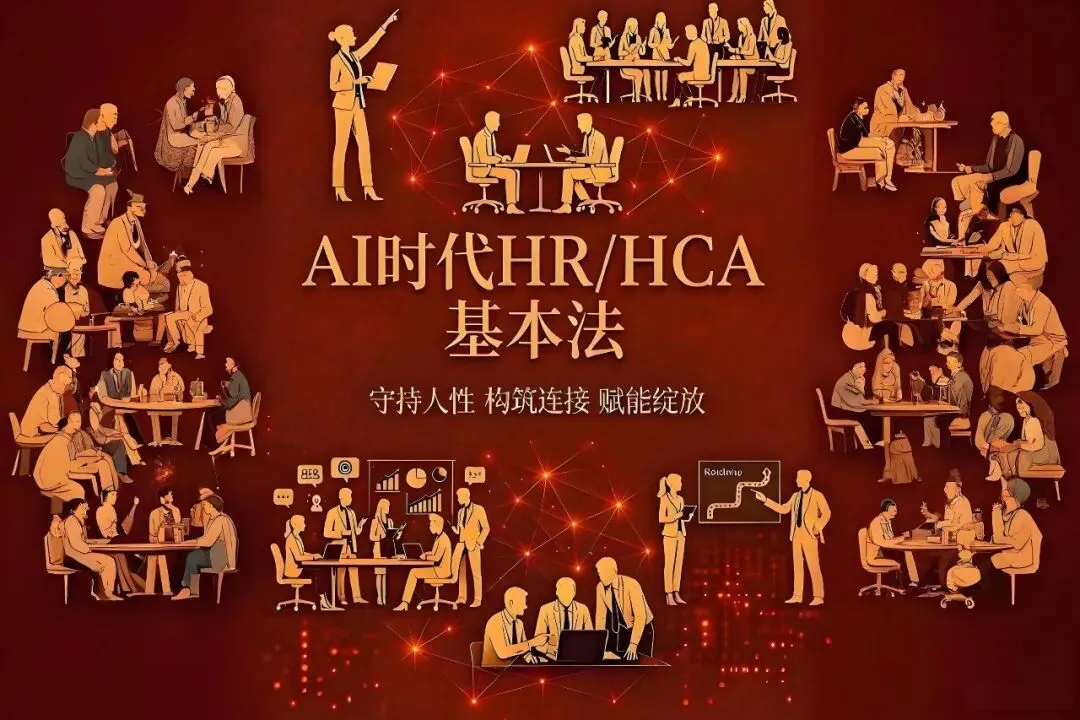
AI时代 HR/HCA/ 守持人性•构筑连接•赋能绽放
基
本
法
The Fundamental Law of HR/HCA in the Age of AI :Guard Humanity, Forge Connection, Empower People to Flourish

《AI时代的HCA事业理论》
The Theory of Human Capability Architect Business in the AI Era
目录
序章:拐点宣言
「Prologue: The Inflection Manifesto」

0
第零条:我们正站在一个拐点上
第一章:基本假设
「Chapter 1: Basic Assumptions」

1
第一条:关于外部环境的假设
组织赖以生存的环境已经从"稳定可预测"转变为"持续非连续"
2
第二条:关于价值定义的假设
价值的定义权已经从组织内部转移到利益相关者手中
3
第三条:关于技术与人的关系的假设
AI不会取代HR,但懂AI的HR将取代不懂AI的HR
4
第四条:关于HR自身使命的假设
HR的使命不是管理"人力资源",而是释放"人类能力"
5
第五条:关于核心能力的假设
HR从业者的核心能力已经从"专业深度"转向"连接与整合"
第二章:核心价值主张
「Chapter 2: Core Value Propositions」

6
第六条:从HR活动到人类价值
7
第七条:为所有利益相关者创造价值
8
第八条:交付集成的人类能力
9
第九条:共享问责
10
第十条:让分析与AI提升游戏水平
第三章:AI时代的工作纪律
「Chapter 3: Disciplines of Work in the AI Era」

11
第十一条:保持在场
12
第十二条:先定事,后定势
13
第十三条:在混沌中保持框架
14
第十四条:用数据说话,但不止于数据
第四章:HR从业者的自我变革
「Chapter 4: Self-Transformation of HR Practitioners」

15
第十五条:从职能专家到人类能力架构师
16
第十六条:拥有勇气
17
第十七条:终身学习,保持好奇
18
第十八条:成为连接者,而非孤岛
第五章:我们的承诺
「Chapter 5: Our Commitment」

19
第十九条:对组织的承诺
20
第二十条:对人的承诺
21
第二十一条:对社会的承诺
终章:扬帆时代
「Epilogue: Sailing into the Age」

22
第二十二条:这不是终点,这是起点
我们准备好了。你呢?
We are ready. Are you?

2026·July
致敬 · 以HR为事业的同路人
敬献给所有在AI时代选择以HR为事业的人
Dedicated to all who choose HR as a calling in the age of AI



序章:拐点宣言
「Prologue: The Inflection Manifesto」

0
第零条:我们正站在一个拐点上
彼得·德鲁克告诉我们,每一个组织都运行在一套事业理论之上——关于外部环境的假设、关于自身使命的假设、关于核心能力的假设。当这三组假设同时发生根本性变化时,不是修补的时候,是重写的时刻。
人力资源这个领域,正在经历这样的时刻。
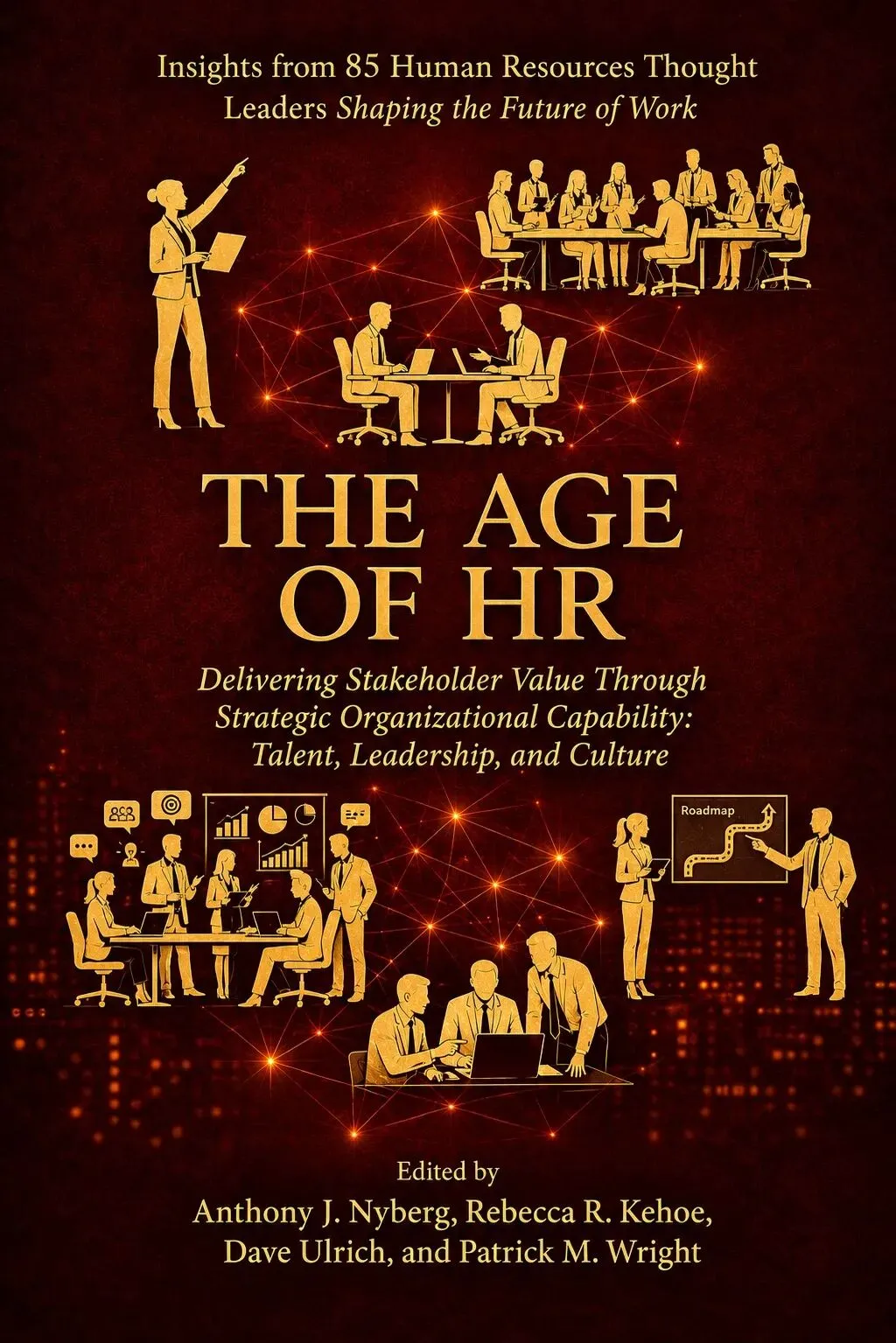
戴维·尤里奇在《The Age of HR》中宣告:HR已经走过了Personnel(人事)→ Human Resources(人力资源)→ Human Capital(人力资本)三个阶段,正在进入第四个时代——Human Capability(人类能力时代)。这不是一次升级,是一次跃迁。不是做更多HR,而是让HR变得更重要。不是让AI替代HR,而是让AI与人类智慧(HI)共生,让HR从支持业务进化为创造价值。

我们写下这份事业理论,不是为了束之高阁,而是为了在混沌中锚定方向,在变革中守住本心,在AI时代重新定义HR为什么存在、做什么、怎么做。

Article 0: We stand at an inflection point
Peter Drucker taught us that every organization operates on a theory of business — a set of assumptions about the external environment, about its mission, and about its core competencies. When all three sets of assumptions shift simultaneously, it is not time to repair. It is time to rewrite.
The field of Human Resources is living through such a moment.
In The Age of HR, Dave Ulrich declares that HR has evolved through Personnel → Human Resources → Human Capital, and is now entering its fourth era: Human Capability. This is not an upgrade. It is a leap. It is not about doing more HR. It is about making HR matter more. It is not about AI replacing HR. It is about AI and Human Intelligence (HI) symbiotically co-creating value — HR evolving from business supporter to value creator.
We write this Theory of Human Capability Architect Business not to shelve it, but to anchor direction in chaos, to guard the essence amid transformation, and to redefine — in the age of AI — why HR exists, what it does, and how it does it.
第一章:基本假设
「Chapter 1: Basic Assumptions」

1
第一条:关于外部环境的假设
组织赖以生存的环境已经从"稳定可预测"转变为"持续非连续"
VUCA不再是一个概念,而是日常现实。BANI(脆弱、焦虑、非线性、不可理解)是更贴切的描述。技术迭代周期从十年缩短到月,商业模式从线性变为网络化,劳动力从全职雇佣扩展为混合编排——全时雇员、零工、AI Agent共存成为常态。
我们不再假设"明年和今年差不多"。我们假设:变化是唯一常量,不变意味着落后。

Article 1: Assumption About the External Environment
The environment in which organizations operate has shifted from "stable and predictable" to "continuously discontinuous."
VUCA is no longer a concept. It is daily reality. BANI (Brittle, Anxious, Nonlinear, Incomprehensible) is a more accurate description. Technology cycles have shrunk from decades to months. Business models have shifted from linear to networked. The workforce has expanded from full-time employment to hybrid orchestration — full-time employees, gig workers, and AI agents coexist as the new normal.
We no longer assume "next year will be like this year." We assume: change is the only constant, and stasis is regression.
2
第二条:关于价值定义的假设
价值的定义权已经从组织内部转移到利益相关者手中
一个组织的价值不再由它自己说了算。员工、客户、投资者、社区——每一个利益相关者都在用自己的方式定义价值。员工用脚投票,客户用钱包投票,投资者用资本投票,社区用信任投票。
HR的价值不再取决于我们做了多少项目、发了多少薪酬、招了多少人。HR的价值取决于:利益相关者因为我们的存在而获得了什么不可替代的收益。
这是"由外而内"的根本转向——不是从HR活动出发,而是从利益相关者的价值期待出发,反向设计我们的工作。

Article 2: Assumption About the Definition of Value
The right to define value has shifted from inside the organization to the stakeholders.
An organization's value is no longer self-defined. Employees vote with their feet. Customers vote with their wallets. Investors vote with their capital. Communities vote with their trust.
The value of HR is no longer measured by how many projects we run, how many paychecks we issue, or how many people we hire. The value of HR is measured by: what irreplaceable benefits stakeholders gain because we exist.
This is the fundamental "Outside-In" turn — not starting from HR activities, but from stakeholders' value expectations, then designing our work backward from there.
3
第三条:关于技术与人的关系的假设
AI不会取代HR,但懂AI的HR将取代不懂AI的HR
这不是一个关于失业的假设,而是一个关于进化的假设。AI擅长模式识别、规模运算、效率优化——它处理信息的"均态"。人类智慧(HI)擅长创造、共情、判断、意义构建——它创造价值的"差异态"。AI+HI不是替代关系,是互补关系。
AI×HI,才是这个时代HR创造价值的完整公式。
尤里奇在E=MC²公式中告诉我们:企业价值 = 资产 × 连接²。在AI时代,HR的核心价值从"管理固定资源"转向"提升组织的连接密度"——连接人与机会、连接人与意义、连接人与人的协作网络。

Article 3: Assumption About the Relationship Between Technology and People
AI will not replace HR. But HR professionals who understand AI will replace those who do not.
This is not an assumption about unemployment. It is about evolution. AI excels at pattern recognition, computational scale, and efficiency optimization — it delivers the "commodity state" of information processing. Human Intelligence (HI) excels at creation, empathy, judgment, and meaning-making — it delivers the "differentiated state" of value. AI + HI are not substitutes. They are complements.
AI × HI is the complete formula for HR value creation in this era.
Ulrich's E=MC² formula teaches us: Enterprise Value = Mass × Connectivity². In the AI era, HR's core value shifts from "managing fixed resources" to "increasing the density of organizational connectivity" — connecting people to opportunities, people to meaning, and people to collaborative networks.
4
第四条:关于HR自身使命的假设
HR的使命不是管理"人力资源",而是释放"人类能力"
"人力资源"这个词本身就是一种隐喻——把人视为一种资源,一种可以被配置、利用、优化的生产要素。但这个隐喻遮蔽了更重要的真相:人不是资源,人是价值的源头。人不是成本,人是创造力的载体。人不是工具,人是目的本身。
从Human Resources到Human Capability,不只是词语的更换,是一次世界观的跃迁。我们的使命不再是"管好人",而是"让人的可能性得以绽放,让组织的能力得以涌现"。

Article 4: Assumption About HR's Own Mission
HR's mission is not to manage "human resources" — it is to unleash "human capability."
The term "human resources" is itself a metaphor — treating people as resources to be allocated, utilized, and optimized as factors of production. But this metaphor obscures a deeper truth: people are not resources. They are the source of value. People are not costs. They are vessels of creativity. People are not tools. They are ends in themselves.
The shift from Human Resources to Human Capability is not a change in vocabulary. It is a shift in worldview. Our mission is no longer "to manage people well." It is "to enable human potential to flourish and organizational capability to emerge."
5
第五条:关于核心能力的假设
HR从业者的核心能力已经从"专业深度"转向"连接与整合"
在过去,HR的价值建立在专业分工的深度上——懂招聘、懂薪酬、懂培训,每一个模块都是一堵墙。但在AI时代,事务性的专业工作正在被AI接管。如果我们的核心能力还是"比AI更懂发工资",那我们注定被替代。新的核心能力是:
简化复杂的能力——在纷繁的信息中抓住本质,把混沌翻译为行动
加速业务的能力——理解业务逻辑,把人才决策嵌入战略执行
提升人类能力的能力——不仅培养个体人才,更构建组织能力、领导力梯队、文化生态
与AI共舞的能力——让AI帮我们做分析,让我们做判断;让AI帮我们处理信息,让我们创造意义

Article 5: Assumption About Core Competencies
The core competency of HR practitioners has shifted from "professional depth" to "connection and integration."
In the past, HR's value was built on the depth of professional specialization — knowing recruitment, compensation, training — each module a silo. But in the AI era, transactional expertise is being taken over by AI. If our core competency remains "being better than AI at processing payroll," we are destined for obsolescence.The new core competencies are:
Simplifying complexity — grasping the essence amid overwhelming information, translating chaos into action
Accelerating business — understanding business logic, embedding talent decisions into strategic execution
Advancing human capability — not only developing individual talent, but building organizational capability, leadership pipelines, and cultural ecosystems
Dancing with AI — letting AI do the analysis while we make the judgments; letting AI process information while we create meaning
第二章:核心价值主张
「Chapter 2: Core Value Propositions」

6
第六条:从HR活动到人类价值
这是尤里奇拐点四转向的第一转向,也是我们所有行动的起点。
每一次HR会议、每一个HR项目、每一项HR决策,我们问自己的第一个问题不是"我们要做什么",而是"我们要为谁创造什么价值"。先定义价值,再设计活动。活动只是手段,价值才是目的。
我们拒绝"为了做而做"。拒绝"别人都在做所以我们也得做"。拒绝"今年和去年一样"的惯性。

Article 6: Make HR About Human Value, Not HR Activity
This is Pivot 1 of Ulrich's Four Pivots — and the starting point of all our actions.
In every HR meeting, every HR project, every HR decision, the first question we ask ourselves is not "What will we do?" but "What value will we create, and for whom?" Define value first, then design activities. Activities are only means. Value is the end.
We refuse to "do for the sake of doing." We refuse "everyone else is doing it, so we must too." We refuse the inertia of "this year is the same as last year."
7
第七条:为所有利益相关者创造价值
HR的传统服务对象是"内部客户"——业务部门和管理层。但这是不够的。真正的HR价值主张必须覆盖所有利益相关者:
对员工:我们不"管理"你,我们为你的职业生涯赋能。我们提供能力发展的土壤、意义感的空间、公平的回报
对业务领导者:我们不"做人事",我们帮你在人才与组织上做正确的战略决策
对客户:我们的员工体验最终会转化为客户体验。一个被善待的员工,才能善待客户
对投资者:我们构建的组织能力,是无形资产中最持久的价值来源
对社区:我们的雇佣行为、文化价值观、社会责任,都在塑造社会
对利益相关者价值的承诺,不是一句口号,而是衡量我们工作成效的唯一标准。

Article 7: Create Value for All Stakeholders
HR's traditional service target is the "internal customer" — business units and management. But that is not enough. A true HR value proposition must cover all stakeholders:
For employees: We do not "manage" you. We empower your career. We provide soil for capability growth, space for meaning, and fairness in return.
For business leaders: We do not "handle personnel matters." We help you make the right strategic decisions about talent and organization.
For customers: Our employee experience ultimately becomes customer experience. An employee who is well-served will serve customers well.
For investors: The organizational capability we build is the most enduring source of intangible asset value.
For communities: Our hiring practices, cultural values, and social responsibility shape society.
Our commitment to stakeholder value is not a slogan. It is the only standard by which we measure our effectiveness.
8
第八条:交付集成的人类能力
尤里奇告诉我们,一个组织要赢得市场,需要在四个领域系统性地构建能力:人才(Talent)、领导力(Leadership)、组织(Organization)、HR职能(HR Function)。
这四个领域不是割裂的,而是一个系统。优秀的人才需要优秀的领导来带领,优秀的领导需要有效的组织来支撑,有效的组织需要一流的HR职能来构建和维持。任何一个领域的短板,都会形成能力短板。
我们的工作不是做"人才项目"或"领导力项目",而是交付一个集成的人类能力系统。

Article 8: Deliver Integrated Human Capability
Ulrich teaches us that for an organization to win in the market, it must systematically build capability across four domains: Talent, Leadership, Organization, and HR Function.
These four domains are not silos. They are a system. Great talent needs great leaders. Great leaders need an effective organization. An effective organization needs a world-class HR function to build and sustain it. A shortfall in any one domain creates a capability bottleneck.
Our work is not about running "talent programs" or "leadership programs." It is about delivering an integrated human capability system.
9
第九条:共享问责
尤里奇的第三转向是一个深刻的提醒:HR不能也不应该独自承担人才与组织的结果。
业务领导者拥有结果,因此拥有人才、组织和领导力选择的首要问责。他们是主角,不是观众。
HR专业人士是带专长的伙伴,不是替代领导做决策的人。我们用专业赋能,用数据引导,用勇气推动。
员工拥有自己的职业生涯。我们提供工具和框架,但每个人是自己成长的第一责任人。
三方各司其职,但不是各自为政。共享问责意味着:当人才出了问题,不是HR的问题,是"我们"的问题。

Article 9: Share Accountability — and Be Explicit
Ulrich's Pivot 3 is a profound reminder: HR cannot and should not bear the sole responsibility for talent and organizational outcomes.
Business leaders own the results, therefore they bear primary accountability for talent, organization, and leadership choices. They are protagonists, not spectators.
HR professionals are partners with expertise, not substitutes for leaders making decisions. We empower with expertise, guide with data, and push with courage.
Employees own their careers. We provide tools and frameworks, but each person is the primary accountable person for their own growth.
Each party has its role, but not in isolation. Shared accountability means: when talent fails, it is not "HR's problem." It is "our problem."
10
第十条:让分析与AI提升游戏水平
尤里奇的第四转向回答了"怎么做"的问题。
AI不是来替代HR的,AI是来让HR变得更好的。AI帮我们做三件事:
规模化——处理人力无法处理的数据量级
洞察化——从数据中发现人力无法看到的模式
解放化——把我们从事务性工作中解放出来,去做只有人才能做的工作
但我们要清醒地认识到:AI提供的是信息,不是智慧;是效率,不是方向;是答案的候选集,不是最终的决策。最终的决策,永远需要人类智慧的判断——价值观的判断、情境的判断、对未来的判断。

Article 10: Let Analytics and AI Raise the Game
Ulrich's Pivot 4 answers the "how" question.
AI is not here to replace HR. AI is here to make HR better. AI does three things for us:
Scale — process volumes of data that humans cannot handle
Insight — discover patterns from data that humans cannot see
Liberation — free us from transactional work to do the work only humans can do
But we must be clear-eyed: AI provides information, not wisdom. Efficiency, not direction. Candidate answers, not final decisions. The final decision always requires human judgment — value judgments, contextual judgments, judgments about the future.
第三章:AI时代的工作纪律
「Chapter 3: Disciplines of Work in the AI Era」

11
第十一条:保持在场
AI可以分析过去,可以预测未来,但永远无法替代一个"在场"的HR——在员工需要的时刻出现,在业务决策的现场发声,在变革的混沌中保持稳定。
在场,是一种选择。选择不躲在数据后面,不躲在流程后面,不躲在邮件后面。选择出现在会议室里、生产线旁、员工工位边。选择听见那些没有被说出来的声音,看见那些没有被写进报告的问题。

Article 11: Stay Present
AI can analyze the past. AI can predict the future. But AI can never replace an HR professional who is present — showing up when employees need it, speaking up where business decisions are made, and standing steady in the chaos of change.
Being present is a choice. It is choosing not to hide behind data, behind processes, behind emails. It is choosing to show up in the meeting room, on the production line, at the employee's desk. It is choosing to hear the voices that are not spoken and to see the problems not written in reports.
12
第十二条:先定事,后定势
在每一次介入之前,先搞清楚:这件事的本质是什么?我们面对的是能力问题还是意愿问题?是系统问题还是个体问题?是短期波动还是长期趋势?
HR最大的职业风险不是做错事,而是做对的事用错了方法,或者用对的方法做了错的事。先诊断,再开方。先理解,再行动。
这一条纪律要求我们:不要迷恋工具和方法。AI时代会涌现无数新的HR工具,但工具永远替代不了对本质的判断。

Article 12: Define Substance Before Shaping Narrative
Before every intervention, first clarify: what is the essence of this issue? Are we facing a capability problem or a motivation problem? A systemic problem or an individual problem? A short-term fluctuation or a long-term trend?
The greatest professional risk for HR is not doing the wrong thing — it is doing the right thing with the wrong method, or using the right method for the wrong thing. Diagnose first, then prescribe. Understand first, then act.
This discipline demands: do not fall in love with tools and methods. The AI era will bring countless new HR tools, but tools can never replace judgment about essence.
13
第十三条:在混沌中保持框架
尤里奇的人类能力分类法(人才、领导力、组织、HR职能四域38项举措)提供了一个稳定的导航地图。在信息过载的时代,这个框架是我们的锚。
每一个新概念、新工具、新趋势出现时,我们不盲目追逐,也不轻易拒绝。我们问:它落在哪个域?它解决的是什么问题?它与我们的其他举措是否协同?
保持框架,不是固步自封。恰恰相反——只有拥有一个稳定的框架,我们才能在混沌中做出有方向的选择,而不是被每一个浪头带走。

Article 13: Hold the Framework Amid Chaos
Ulrich's Human Capability Taxonomy (4 domains — Talent, Leadership, Organization, HR Function — spanning 38 common practices) provides a stable navigation map. In an age of information overload, this framework is our anchor.
When every new concept, tool, or trend emerges, we neither blindly chase nor casually dismiss. We ask: Which domain does it belong to? What problem does it solve? Does it align with our other initiatives?
Holding the framework is not rigidity. Quite the opposite — only with a stable framework can we make directional choices in chaos, rather than being swept away by every wave.
14
第十四条:用数据说话,但不止于数据
ACAI模型(Ask-Collect-Analyze-Influence)是我们的分析纪律。问正确的问题,收集相关数据,做因果分析,用结果影响决策。
但我们深知:数据告诉我们的永远是"发生了什么",而不是"为什么发生"和"应该怎么办"。数据是地图,不是目的地。数据是证据,不是判决。
在所有数据分析的终点,站着的是一个人——一个需要被理解、被尊重、被激发的人。数据的价值在于它服务于人的判断,而不是替代人的判断。

Article 14:Let Data Speak, But Go Beyond Data
The ACAI model is our analytical discipline. Ask the right questions. Collect relevant data. Conduct causal analysis. Influence decisions with results.
But we know deeply: data always tells us "what happened," never "why it happened" or "what should be done." Data is the map, not the destination. Data is evidence, not a verdict.
At the end of every data analysis stands a person — a person who needs to be understood, respected, and inspired. The value of data lies in serving human judgment, not replacing it.
第四章:HR从业者的自我变革
「Chapter 4: Self-Transformation of HR Practitioners」

15
第十五条:从职能专家到人类能力架构师
我们不再只把自己定义为"HR人"。我们是组织能力的建筑师、利益相关者价值的连接者、AI时代的人性守护者。这就要求我们:
懂业务——不是像业务一样思考,而是和业务一起思考
懂科技——不是成为技术专家,而是理解技术的能力和边界
懂人性——在算法充斥的时代,成为组织中"人"的声音
懂系统——理解组织是一个复杂系统,一个点的改变会引发整个系统的连锁反应

Article 15: From Functional Expert to Human Capability Architect
We no longer define ourselves merely as "HR people." We are architects of organizational capability, connectors of stakeholder value, and guardians of humanity in the AI era.This requires us to:
Understand business — not to think like the business, but to think with the business
Understand technology — not to become tech experts, but to grasp technology's capabilities and limits
Understand humanity — in an era of algorithms, to be the voice of "the human" in the organization
Understand systems — to see the organization as a complex system where a change in one point triggers chain reactions across the whole
16
第十六条:拥有勇气
尤里奇在描述CHRO的关键特质时用了三个C:Competency(专业能力)、Courage(勇气)、Confidante(可信顾问)。其中,勇气是最稀缺的。
HR最容易被类型化——要么是"执行者"(只做事不问对错),要么是"附和者"(老板说什么就是什么)。但真正的HR从业者必须有说真话的勇气:当战略走偏时,敢于指出;当文化出问题时,敢于直面;当员工受到不公时,敢于站出。
勇气不是鲁莽。勇气是在充分理解语境后,为了更大的价值而选择不做"安全"的事。

Article 16: Possess Courage
In describing the key traits of a CHRO, Ulrich uses three Cs: Competency, Courage, and Confidante. Among them, courage is the rarest.
HR is most easily stereotyped — either as "executor" (doing things without questioning right or wrong) or "follower" (whatever the boss says goes). But a true HR professional must have the courage to speak truth: to point out when strategy goes astray, to confront when culture goes wrong, to stand up when employees are treated unjustly.
Courage is not recklessness. Courage is choosing, with full contextual understanding, not to do the "safe" thing — for the sake of greater value.
17
第十七条:终身学习,保持好奇
AI时代的知识半衰期急剧缩短。昨天的解决方案,明天可能就过时了。我们承诺:每天学习,每周反思,每月刷新认知框架。
但比学习更重要的是"保持无知"——保持对未知的好奇,保持对既定结论的怀疑,保持"我可能错了"的谦逊。
赫拉克利特说:人不能两次踏入同一条河流。同样,HR从业者不能用同一套方法解决两个不同时代的问题。学习不是一种姿态,是一种生存方式。

Article 17:Lifelong Learning — and Staying Curious
The half-life of knowledge in the AI era is rapidly shrinking. Yesterday's solution may be obsolete tomorrow. We commit: learn daily, reflect weekly, refresh our cognitive frameworks monthly.
But more important than learning is "staying curious" — staying curious about the unknown, staying skeptical of settled conclusions, staying humble enough to say "I might be wrong."
Heraclitus said: No man ever steps in the same river twice. Likewise, HR practitioners cannot use the same approach to solve problems from two different eras. Learning is not a posture. It is a mode of survival.
18
第十八条:成为连接者,而非孤岛
HR最致命的错误就是把自己变成一个独立的王国——有自己的一套语言、一套流程、一套KPI,与业务世界隔着一堵墙。
我们承诺:拆除这堵墙。
连接战略与执行——把组织能力建设嵌入业务战略
连接数据与意义——用分析说话,但最终回归人的体验
连接技术与人性——让AI赋能,但不让AI异化
连接短期与长期——既要解决今天的问题,也要投资明天的能力
连接个体与系统——看见每一个人,同时构建让所有人更好的系统

Article 18: Be a Connector, Not a Silo
HR's deadliest mistake is turning itself into an independent kingdom — with its own language, its own processes, its own KPIs, separated from the business world by a wall.
We commit: tear down that wall.
Connect strategy to execution — embed organizational capability-building into business strategy
Connect data to meaning — let analysis speak, but always return to human experience
Connect technology to humanity — let AI empower, but do not let AI alienate
Connect short-term to long-term — solve today's problems while investing in tomorrow's capabilities
Connect the individual to the system — see each person, while building systems that make everyone better
第五章:我们的承诺
「Chapter 5: Our Commitment」

19
第十九条:对组织的承诺
我们承诺:让HR成为组织价值的核心创造者,而非边缘的支持者。
我们拒绝"HR是成本中心"的预设。我们证明:每一分钱投入在人力资源上,都应当产生可衡量的组织能力回报。我们不用"软实力"来回避衡量,我们用量化与质化相结合的方式来证明价值。
我们不接受"HR不懂业务"的标签。我们深潜业务现场,理解业务逻辑,用人才与组织的视角为业务提供不可替代的价值。

Article 19: Commitment to the Organization
We commit: to making HR a core creator of organizational value, not a marginal supporter.
We reject the premise that "HR is a cost center." We will prove: every dollar invested in human resources should generate measurable returns in organizational capability. We will not hide behind "soft power" to avoid measurement. We will demonstrate value through a marriage of quantitative and qualitative evidence.
We refuse the label "HR doesn't understand business." We will go deep into business contexts, understand business logic, and provide irreplaceable value from the perspective of talent and organization.
20
第二十条:对人的承诺
我们承诺:在AI时代,守护人性。
当算法决定谁该被录用、晋升、加薪时,我们确保算法背后有对人的尊重。
当效率压倒了归属感时,我们为人的意义发声。
当变化让人焦虑不安时,我们提供确定性——不是确定不变,而是确定有支持。
我们不完美,但我们真诚。我们不万能,但我们在场。我们不替人做选择,但我们帮人选对框架去做出自己的选择。

Article 20: Commitment to People
We commit: to guard humanity in the age of AI.
When algorithms decide who gets hired, promoted, or rewarded — we ensure respect for people stands behind the algorithms.
When efficiency overwhelms belonging — we speak up for human meaning.
When change makes people anxious and unsettled — we provide certainty: not the certainty of stasis, but the certainty of support.
We are not perfect, but we are sincere. We are not omnipotent, but we are present. We do not make choices for people, but we help them choose the right framework to make their own choices.
21
第二十一条:对社会的承诺
我们承诺:HR的事业不止于公司边界。
每一家公司的文化,都在塑造社会的文化。每一个雇佣行为,都在定义机会的分配。每一项管理决策,都在影响家庭和社区。
当我们选择公平而非歧视、选择发展而非压榨、选择透明而非操纵时,我们不仅在建设一个更好的组织,也在建设一个更好的社会。
这不是理想主义。这是最务实的长期主义。因为没有一个组织可以在一个崩溃的社会中持续成功。

Article 21: Commitment to Society
We commit: the calling of HR extends beyond the boundaries of the company.
Every company's culture shapes society's culture. Every hiring practice defines the distribution of opportunity. Every management decision affects families and communities.
When we choose fairness over discrimination, development over exploitation, transparency over manipulation — we are not only building a better organization. We are building a better society.
This is not idealism. It is the most pragmatic long-termism. Because no organization can sustain success in a broken society.
终章:扬帆时代
「Epilogue: Sailing into the Age」

22
第二十二条:这不是终点,这是起点
德鲁克说:事业理论不是一劳永逸的。它需要不断被检验、更新、甚至重写。
尤里奇说:HR正处于一个拐点。拐点的另一边,是升维还是被替代,取决于我们今天的选择。
我们说:把HR当作一个事业,而不是一份工作。事业的本质不是重复,是创造。不是执行,是践行。不是做完,是做好。
这份《AI时代的HR事业理论》,不是给HR从业者的一本手册,而是一面镜子、一座灯塔、一声号角。
我们不信奉宿命论。我们信奉:历史不是被等待的,历史是被创造的。
AI时代不是HR时代的终结,而是HR时代的真正开始。
因为只有在人需要重新证明自己不可替代的时代,人的价值才会被真正看见。

Article 22: This Is Not an End. This Is a Beginning
Drucker said: A theory of business is never set in stone. It must be constantly tested, updated, and even rewritten.
Ulrich said: HR is at an inflection point. On the other side lies either elevation or replacement — and the choice is ours, made today.
We say: Treat HR as a calling, not a job. The essence of a calling is not repetition, but creation. Not execution, but embodiment. Not getting it done, but getting it right.
This Theory of Human Capability Architect Business in the AI Era is not a handbook for HR practitioners. It is a mirror, a lighthouse, and a trumpet call.
We do not believe in determinism. We believe: history is not awaited. History is created.
The AI era is not the end of the HR era. It is the true beginning of the HR era.
Because only in an age when people must prove their irreplaceability — will the value of being human be truly seen.
我们准备好了。你呢?
「We are ready. Are you?」

笔落之时,惊觉已不在论证。
山呼海啸般的逻辑退潮后,
留下的,是巨大的静默。
我们建造这艘巨舰,
并亲手将自己推向未知的深海——
去碰撞,去解构,去质问存在的意义。
理论是锋利的冰镐,
凿开的却不是答案,
而是更深的提问。
事业?价值?人性?
定义在生成,又旋即被吞没。
我们测量浪潮,但从未定义海。
或许,真正的“事业理论”,
并非绘制彼岸的地图,
而是学会,在永恒的湍流中,
与无数个不确定的自己,
同行。
—— 敬这场永不停歇的追问





本期完·End


『走神的村落』(Wander in Wonder)
守一隅天地予灵魂,任其自在漫游于岁月长河
真正的走神,不是灵魂的流失,而是灵魂的漫游。它不是从现实中逃离,而是进入一个更广阔、更充满奇迹的现实。它是在理性的专注之外,为心灵保留的一片可以自由呼吸、自由惊叹的旷野。
True wandering in wonder is not the draining of the spirit, but its free roaming.
It does not flee, but enters a reality vaster and more miraculous.
Beyond the bounds of reason, it sets aside for the heart a wilderness — where it may breathe in awe, and wander in wonder.




推荐阅读
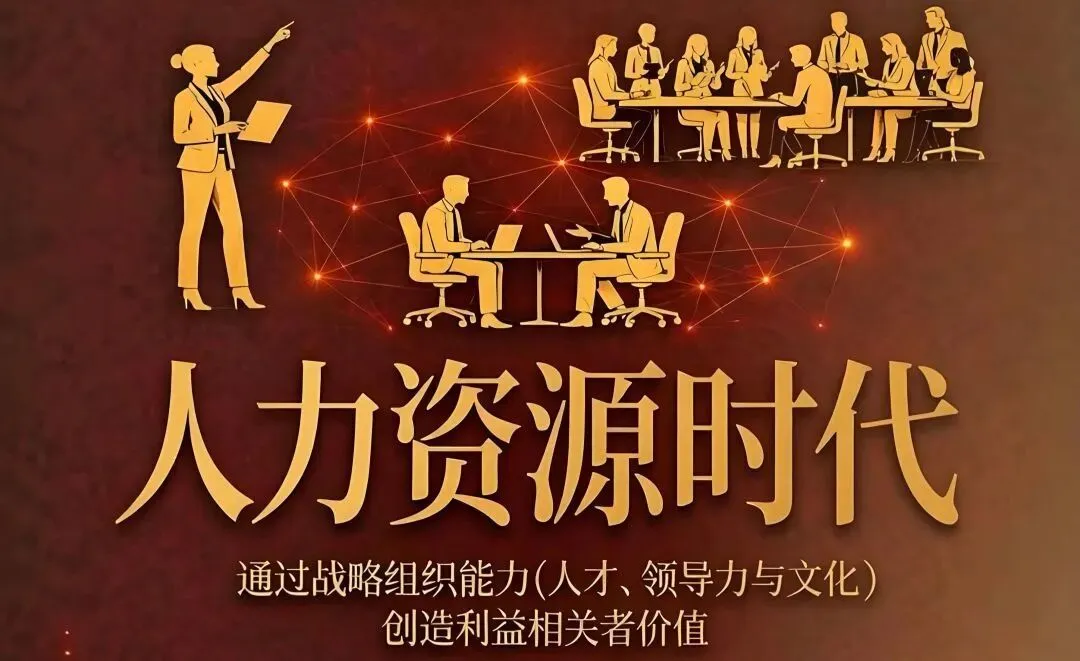
『走神的村落』对谈戴维尤里奇:The Age of HR(2026·附下载)7场思想交锋

01
点击标题 阅读全书7大部分的思想交锋
第1场·商业环境:从地缘到AI的变革风暴

02
第2场·商业议程:HR从支持者到价值共创者

03
第3场·人才:从管理人力到释放人性潜能

04
第4场·领导力与组织:在不确定中锚定方向

05
第5场·文化:在加速时代找到慢变量

06
第6场·HR职能:重新发明自己

07
第7场·个人成长:做一个长期主义者
点击蓝字关注,收获深度洞鉴