文档文本内容
Preparation Guide
Verbal Analysis
This preparation guide helps you to prepare for verbal aptitude assessments. It provides guidance on
how best to approach the assessment, allowing you to give your best possible performance.
Why are Aptitude Assessments used?
Employers often use aptitude assessments as part of their assessment procedures for the selection and
development of staff. Research has shown that they are powerful predictors of performance at work.
Assessments help you to:
- demonstrate your strengths
- be assessed fairly on job relevant criteria
- find out more about your strengths and development needs
- make future career decisions based on your abilities
Assessments help employers to:
- select people best suited to the demands of the job
- identify areas where individuals might benefit from further development
- obtain objective information about people’s abilities
Instructions
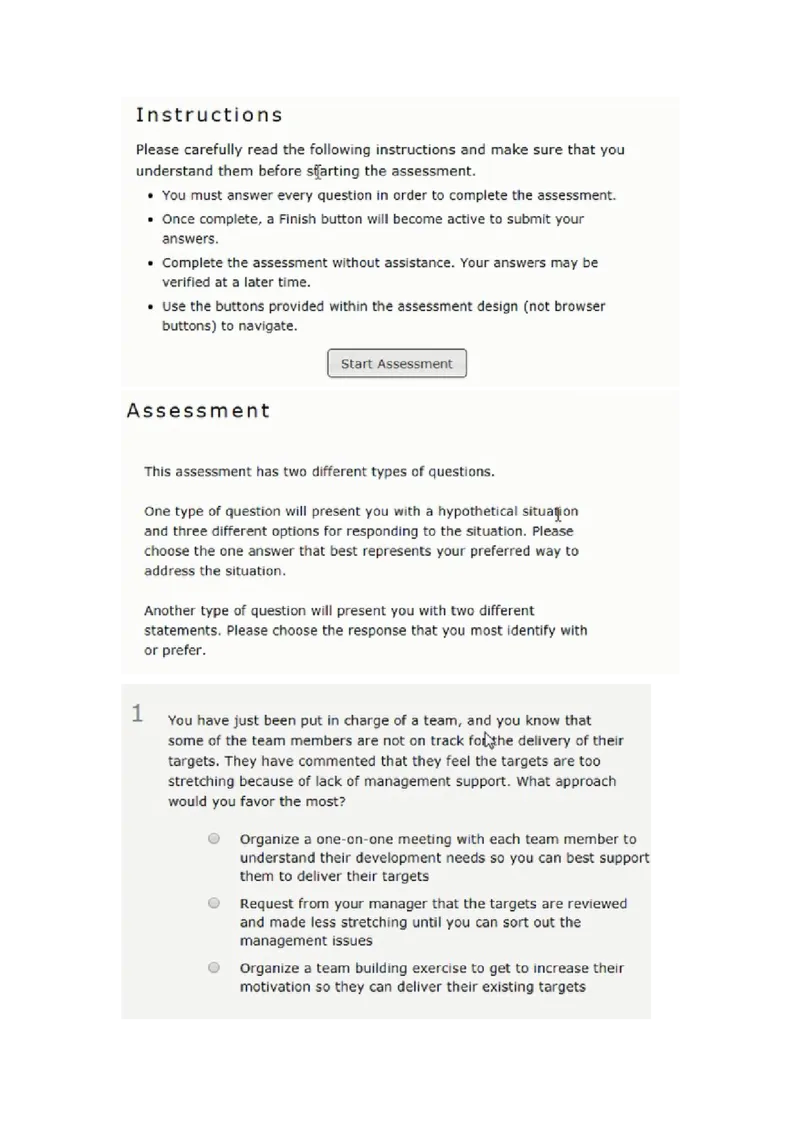
On the following pages are some practice questions which are similar to those you will be asked in the
assessment. Completing these will help you to understand the types of questions used and gain
experience in taking ability tests.
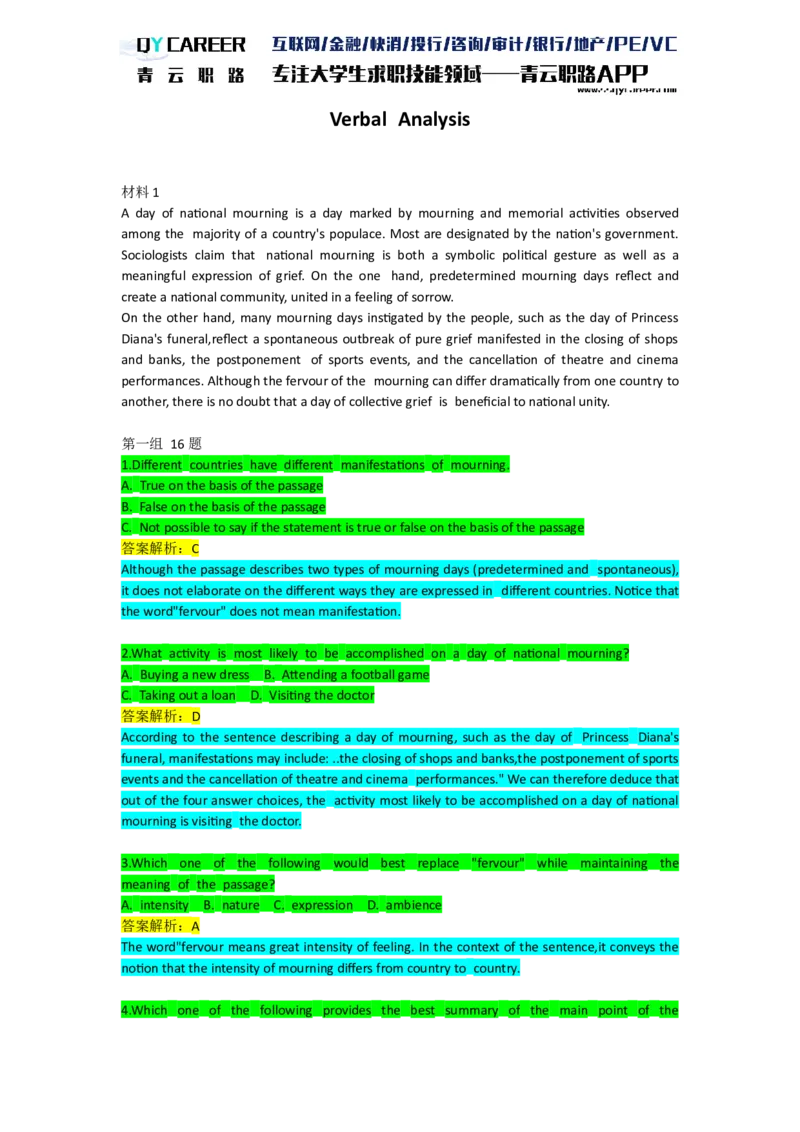
These questions are designed to assess your ability to understand written information. You will be
presented with a series of text passages, each of which is followed by several questions. Your task is to
choose the best answer to each question from the options given based only on the information provided.
Have a pen and paper to hand to indicate your answers and make notes.
The actual test is strictly timed. Try to complete each set of 4 questions within 3 minutes.
Turn to page 2 and begin.Practice Questions 1 - 4 2
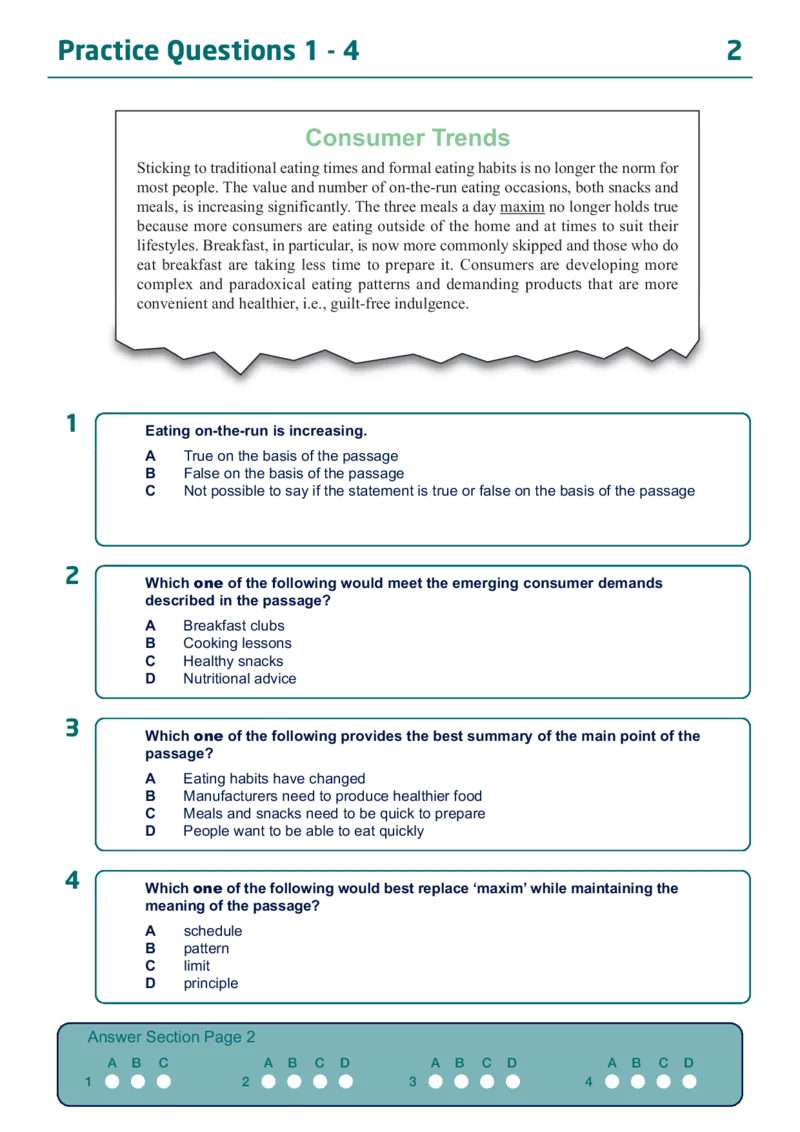
Consumer Trends
Sticking to traditional eating times and formal eating habits is no longer the norm for
most people. The value and number of on-the-run eating occasions, both snacks and
meals, is increasing significantly. The three meals a day maximno longer holds true
because more consumers are eating outside of the home and at times to suit their
lifestyles. Breakfast, in particular, is now more commonly skipped and those who do
eat breakfast are taking less time to prepare it. Consumers are developing more
complex and paradoxical eating patterns and demanding products that are more
convenient and healthier, i.e., guilt-free indulgence.
1
Eating on-the-run is increasing.
A True on the basis of the passage
B False on the basis of the passage
C Not possible to say if the statement is true or false on the basis of the passage
2
Which one of the following would meet the emerging consumer demands
described in the passage?
A Breakfast clubs
B Cooking lessons
C Healthy snacks
D Nutritional advice
3
Which one of the following provides the best summary of the main point of the
passage?
A Eating habits have changed
B Manufacturers need to produce healthier food
C Meals and snacks need to be quick to prepare
D People want to be able to eat quickly
4
Which oneof the following would best replace ‘maxim’ while maintaining the
meaning of the passage?
A schedule
B pattern
C limit
D principle
Answer Section Page 2
A B C A B C D A B C D A B C D
1 2 3 4Practice Questions 5 - 8 3
Chapter 7
“To be a good leader you need to have a
vision of where you are going and understand
how to unite people around you in seeing that Leadership
vision. I think charisma is a very important
part of leadership. I have never seen a really Those in authority often lack an appreciation of the
great leader who doesn’t have some kind of nature of leadership. They tend to dwell on concepts that
charisma. Great leaders know how to take divide and separate people rather than on concepts that
risks and are comfortable taking risks. Good reflect their interconnectedness and commonality. They
leaders know when to cut their losses. Good
become forgetful of purpose and values that
leaders pass all the glory down so that the
explain why and what for. They have little awareness of
team feels great about winning, and when
the context of their office or the external environment
things go wrong they claim responsibility.
Really great leaders are willing to give the that frames whatever it is they are responsible for.
power to get things done to other people. They
are not hoarders of power.”
Lesley Kim on Leadership
5
According to Lesley Kim, which one of the following should a ‘good leader’ do?
A Allocate blame for team failures
B Create a collective sense of achievement
C Hand over power completely
D Keep pursuing projects, even if they are failing
6
Which one of the following would best replace ‘commonality’ while maintaining
the meaning of the Leadership chapter?
A common sense
B regularity
C similarity
D simplicity
7
Which one of the following provides the best summary of the common ground
between the quote and the chapter?
A A leader should guide the work of individuals
B Effective leadership depends on the charisma of the leader
C Leaders should bring individuals together
D Most leaders are ineffective
8
Which passage is overtly critical of leaders?
A Lesley Kim’s quote only
B The Leadership chapter only
C Both Lesley Kim’s quote and the Leadership chapter
D Neither Lesley Kim’s quote nor the Leadership chapter
Answer Section Page 3
A B C D A B C D A B C D A B C D
5 6 7 8Your Assessment 4
Try to answer any questions you did not reach in the time limit before checking your answers.
Checking your Answers
Check your answers against the correct answers at the bottom of this page. Look at any questions you got
wrong and try to understand how to arrive at the correct answer. Keep in mind that most ability assessments
are designed so that the questions gradually increase in difficulty and that people typically do not complete all
of the questions within the time limit. If you took much longer than 6 minutes to answer the questions, try to
speed up your work rate. If you finished all of the questions within the time limit but made many mistakes, try
focusing more on the accuracy of your responses.
Improving your Verbal Abilities
Some tips for improving verbal abilities are provided below:
• Read and critically evaluate texts.
• Look up the meaning of words and think of alternative words with the same meaning.
• Look for associations between words or types of words.
• Complete crosswords and word games to improve vocabulary.
• Read newspapers, articles on the Internet, books and journals to improve ability to understand and
interpret written material.
Before the Session
• Follow the suggestions included in this preparation guide.
• Get a good night’s sleep before the assessment.
• Make sure you are wearing any glasses, contact lenses or hearing aids you may require.
• If you have any special requirements, such as larger print versions of the test, specific lighting or
seating needs, it is important that you make these known immediately to allow appropriate
accommodations to be made.
During the Assessment
• Try to stay calm. Using the practice tips above should help you feel more at ease.
• Follow the instructions carefully, and ask questions if you are not sure of anything before the
assessment starts.
• Read each question carefully.
• Work as fast as you can. Do not take too much time over any one question.
• If you find a question too difficult or are unsure of an answer indicate your best choice and move on
quickly.
• After an assessment always seek feedback. It is much easier to improve your abilities if you know
how well you have done.
Good luck in your assessment session. We wish you every success in your career.
Answer Section Page 2 Correct Answers
Answer Section Page 3 Correct Answers
ANA-AP-PG-VAS1-INTE@16th July 2010
© 2010 Saville Consulting. All rights reserved.
The reproduction of any part of this document by any means info@savilleconsulting.com
or method, manual or electronic, is breaking the copyright law. www.savilleconsulting.com