文档文本内容
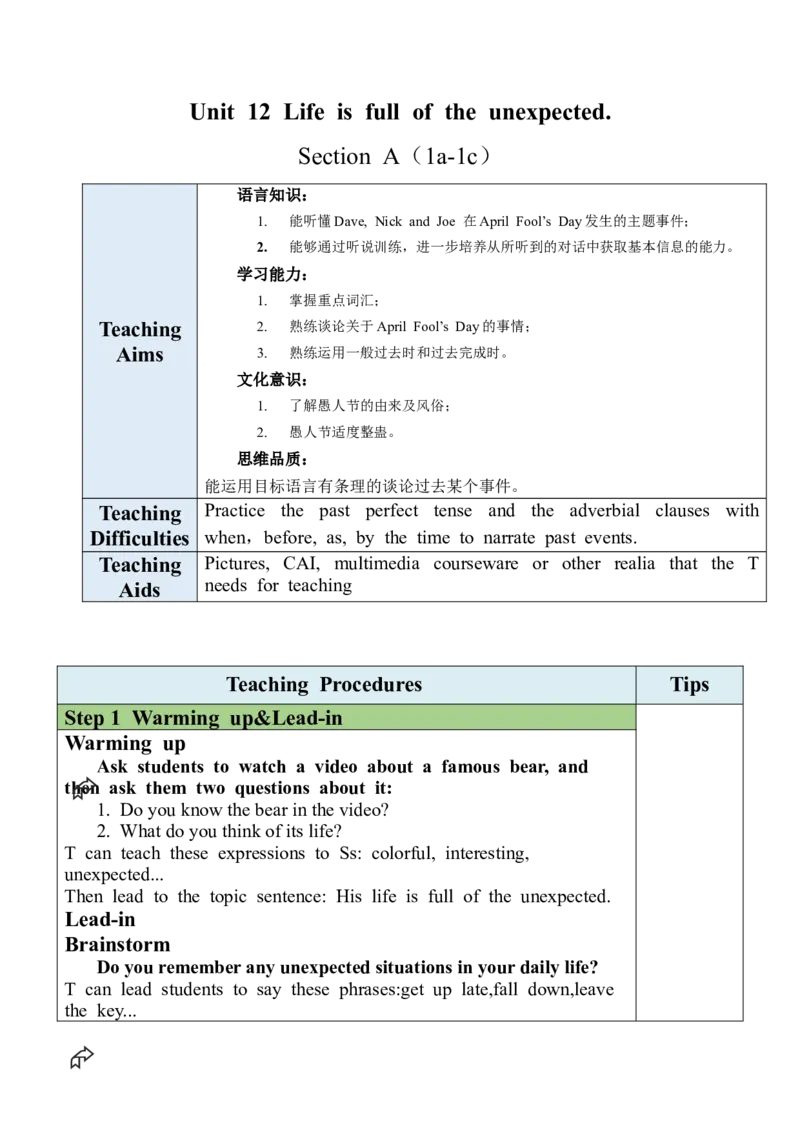
Unit 12 Life is full of the unexpected.
Section A(1a-1c)
语言知识:
1. 能听懂Dave, Nick and Joe 在April Fool’s Day发生的主题事件;
2. 能够通过听说训练,进一步培养从所听到的对话中获取基本信息的能力。
学习能力:
1. 掌握重点词汇;
Teaching 2. 熟练谈论关于April Fool’s Day的事情;
Aims 3. 熟练运用一般过去时和过去完成时。
文化意识:
1. 了解愚人节的由来及风俗;
2. 愚人节适度整蛊。
思维品质:
能运用目标语言有条理的谈论过去某个事件。
Teaching Practice the past perfect tense and the adverbial clauses with
Difficulties when,before, as, by the time to narrate past events.
Teaching Pictures, CAI, multimedia courseware or other realia that the T
Aids needs for teaching
Teaching Procedures Tips
Step 1 Warming up&Lead-in
Warming up
Ask students to watch a video about a famous bear, and
then ask them two questions about it:
1. Do you know the bear in the video?
2. What do you think of its life?
T can teach these expressions to Ss: colorful, interesting,
unexpected...
Then lead to the topic sentence: His life is full of the unexpected.
Lead-in
Brainstorm
Do you remember any unexpected situations in your daily life?
T can lead students to say these phrases:get up late,fall down,leave
the key...Step 2 Listening &Presentation
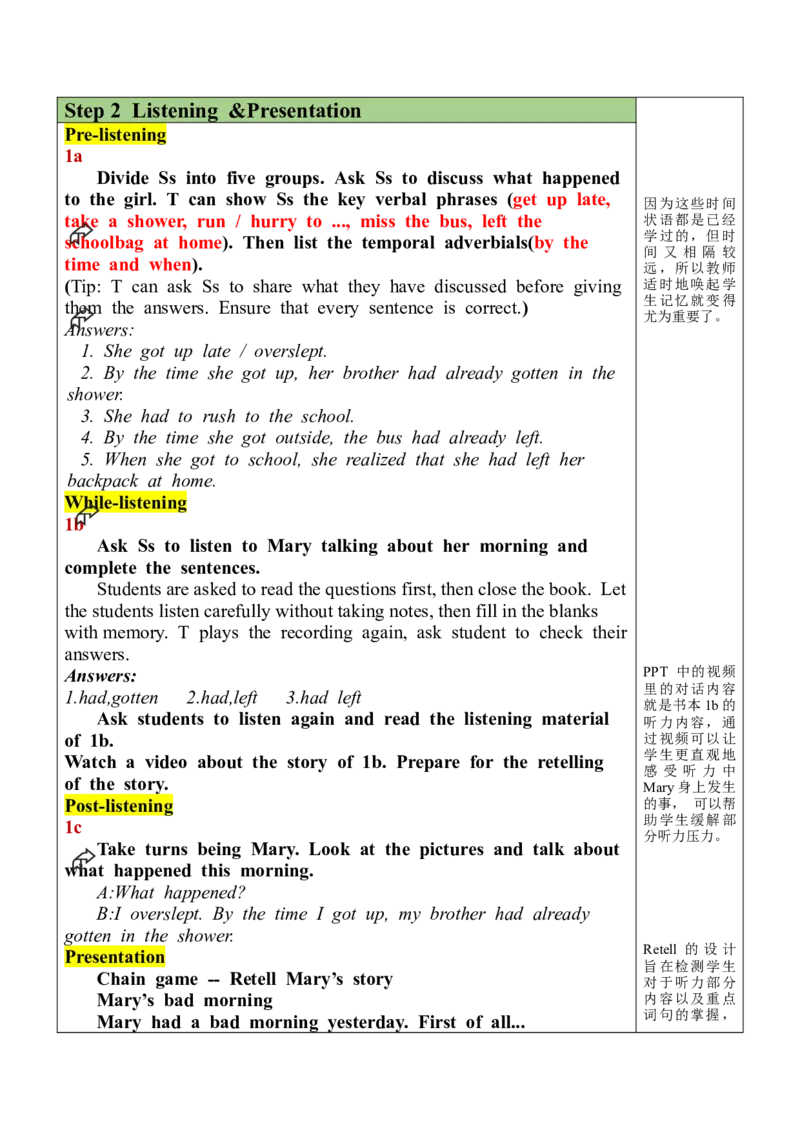
Pre-listening
1a
Divide Ss into five groups. Ask Ss to discuss what happened
to the girl. T can show Ss the key verbal phrases (get up late,
因为这些时间
take a shower, run / hurry to ..., miss the bus, left the 状语都是已经
schoolbag at home). Then list the temporal adverbials(by the
学过的,但时
间 又 相 隔 较
time and when).
远,所以教师
(Tip: T can ask Ss to share what they have discussed before giving 适时地唤起学
生记忆就变得
them the answers. Ensure that every sentence is correct.)
尤为重要了。
Answers:
1. She got up late / overslept.
2. By the time she got up, her brother had already gotten in the
shower.
3. She had to rush to the school.
4. By the time she got outside, the bus had already left.
5. When she got to school, she realized that she had left her
backpack at home.
While-listening
1b
Ask Ss to listen to Mary talking about her morning and
complete the sentences.
Students are asked to read the questions first, then close the book. Let
the students listen carefully without taking notes, then fill in the blanks
with memory. T plays the recording again, ask student to check their
answers.
Answers: PPT 中的视频
里的对话内容
1.had,gotten 2.had,left 3.had left
就是书本1b的
Ask students to listen again and read the listening material
听力内容,通
of 1b. 过视频可以让
学生更直观地
Watch a video about the story of 1b. Prepare for the retelling
感 受 听 力 中
of the story.
Mary身上发生
Post-listening 的事, 可以帮
助学生缓解部
1c
分听力压力。
Take turns being Mary. Look at the pictures and talk about
what happened this morning.
A:What happened?
B:I overslept. By the time I got up, my brother had already
gotten in the shower.
Retell 的 设 计
Presentation
旨在检测学生
Chain game -- Retell Mary’s story
对于听力部分
Mary’s bad morning 内容以及重点
词句的掌握,
Mary had a bad morning yesterday. First of all...(Tips: Divide Ss into five groups and let each of them say a 同时对与学生
口语表达能力
sentence to continue the story.)
和逻辑思维能
力也有一定促
进作用。
Step 3 Language points learning
过去完成时:
(1) 构成:由“助动词had(用于各种人称和数) + 过去分词”构成。
否定式:had not + 过去分词
缩写形式:hadn’t
(2) 用法:过去完成时表示在过去某一时间或动作之前已经发生或完
成了的动作。
(3) 它所表示动作发生的时间是“过去的过去”。
① 表示过去某一时间可用by, before 等构成的短语来表示。
② 也可以用when, before 等引导的时间状语从句来表示。
③ 还可以通过状语从句或通过上下文暗示。
例如:
When I got there, you had already eaten your meal.
当我到达那里时,你已经开始吃了。
By the time he got here, the bus had left.
在他到达那里之前,公共汽车已经离开了。
1. Life is full of the unexpected.
unexpected adj. 出乎意料的;始料不及的
e.g. It will not be unexpected if Tom comes late again, because he is
always like this.如果汤姆又迟到了,一点也不意外,因为他一向如
此。
Life is full of the unexpected.
“the + 形容词”表示一类人或物
2. By the time I got up, my brother had already gotten in the shower.
by the time 在……以前,常引导表示过去的时间状语从句,主句
常用过去完成时,即had+动词过去分词。
e.g. By the time I got there, he had already left.
在我到那儿之前,他已经离开了。
Step 4 Summary & Homework
Homework
Preview the conversation in 2d.
Do the exercises in students’ book.
In this period,students will learn to practice the past perfect tense
and they will review the adverbial clauses with when,before,by the
Teaching
time...The main teaching points are practicing listening and
Reflection
speaking.We help students to review some verbs and phrases in their
past forms. And they will practice telling stories with the tense andthe adverbial clauses. This is also the difficulties for the students.