Unit 12 Life is full of the unexpected.
Section A(2a-2d)
语言知识:
1. 掌握本课时出现的生词句型及表达方式;
2. 能读懂关于愚人节的文章。
学习能力:
1. 通过阅读训练,提高理解关键词和短语的能力;
Teaching
2. 训练快读和精读两种策略。
Aims
文化意识:
1. 进一步了解西方愚人节;
2. 开玩笑不能伤害别人的感情。
思维品质:
培养学生良好的行为习惯。
Teaching Practice the past perfect tense and the adverbial clauses with
Difficulties when,before,as,by the time to narrate past events.
Teaching CAI,multimedia courseware or other realia that the T needs for
Aids teaching
Teaching Procedures Tips
Step 1 Warming up&Lead-in
Warming up
Revision
Show students the phrases on PPT P6. The teacher asks each
student to write down a translation for each phrase on the paper, 游戏导入可以
then ask students to check the answers with their partner. If all the
让学生更快进
入课堂,而且
translations are correct, each student can get two points. The teacher
当前的游戏将
then designates the individual student to make sentences using the 本节课的重点
phrases, and the student who answers well will receive another
词汇结合在一
起,加强了他
point.
们对于学习的
Free talk 积极性。
What do you usually do in the morning before school?
T can teach these expressions to Ss: brush teeth,go to school,have
breakfast, take a shower.
Lead-inBrainstorm(Discussion)
Do you like mornings? Why or why
not?
T can lead students to say these phrases about unexpected events:be
late for school, miss the bus, lose the key, leave the backpack at
home, forget to bring homework, receive a birthday present,
oversleep
Step 2 Listening &Presentation
Pre-listening
Divide Ss into five groups. Ask Ss to discuss what
happened to the girl. T can ask Ss some questions to give
some clues about the story.
问题导入是常
Where is Mary in the pictures? 见的导入方式
Is anything good or bad happening to her?
之一,这种导
入方式有利于
What do you think it is about?
学生通过问题
(Tip: T can ask Ss to share what they have discussed before giving 提前预测听力
的动词甚至内
them the answers. Ensure they truly understand what happened in
容。
the story.)
While-listening
2a
Listen to Mary continue her story and number the
pictures in the correct order.
Answers:3,1,2,4
2b
First ask the Ss to fill in the blanks with the correct
forms of the verbs in brackets. Then let some students to
write their answers on the blackboard. Finally teacher checks
the answers. (If there is something different for them, teacher
can let them listen it again.)
Answers:
1.got,had left 2.got,had rung 3.walked,had started
Role-play
Ask two pairs of students to role-play the listening material of 2b.
Post-listening
Look at the pictures in 1a and 2a and retell the story.
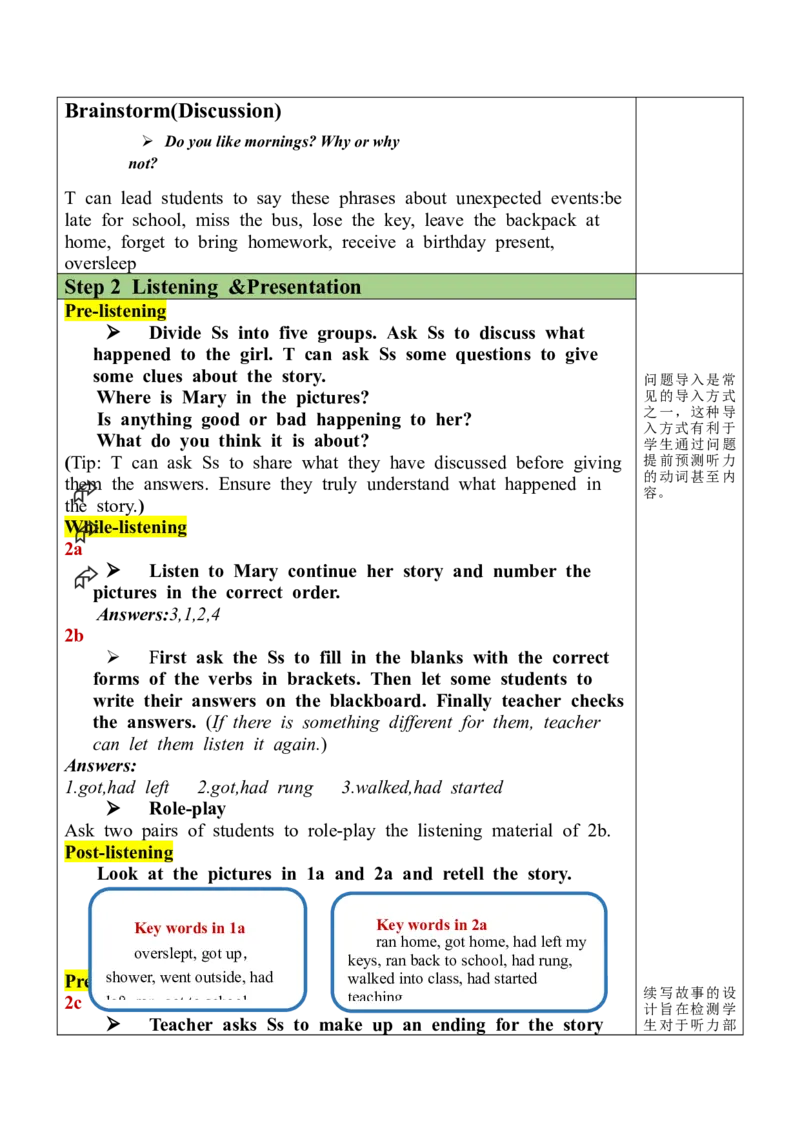
Key words in 1a Key words in 2a
ran home, got home, had left my
overslept, got up,
keys, ran back to school, had rung,
Presesnhtoawteior,n went outside, had walked into class, had started
teaching 续写故事的设
2c left, ran, got to school,
计旨在检测学
Teacher asks Ss to make up an ending for the story 生对于听力部and share it with their partners. 分内容以及重
点 词 句 的 掌
The teacher divides the class into five groups, one of whom continues the
握,同时对与
story by saying one sentence, and at last, the five sentences must be a
学生口语表达
complete story. 能力和逻辑思
维能力也有一
2d
定促进作用。
Read the conversation in 2d and answer the questions
below.
PPT 中的视频
1. Why was Kevin late for class?
里的对话内容
2. How did Kevin get to school?
就是书本2d的
Ask students to read the dialogues of 2d carefully in 听力内容,通
过视频可以让
pairs.
学生更直观地
Teachers can remind students of the stress, conjunctions,intonation,
感 受 听 力 中
and intonation of words before they read together. Kevin 身 上 发
Watch a video about the story of 2b. Prepare for the
生的事, 可以
帮助学生缓解
retelling of the story.
部 分 听 力 压
力。
Step 3 Language points learning
leave v. 忘了带;丢下
leave+宾语+地点状语 把······忘在某地
leave
leave sb. by oneself 把某人单独留下
【易混辨析】leave与forget
两词都可以表示“遗忘”的意思,其区别如下:
leave 通常与地点状语连用,表示将某物遗忘在某地。
forget 不与地点状语连用,表示忘记带某物。
put on 穿上
put on是动副短语,强调动作,反义短语是take off。其宾语若是代
词,代词要放在put与on中间。
【拓展】put on的其他用法:
(1)增加(体重);发胖
(2)上演;举办
Step 4 Exercises& Homework
一节课后的练
Exercises
习是必不可少
Complete pages from 26 to 26 of the PPT. 的环节,学生
Homework 通过练习可以
加强对基础知
Preview the passage on Page 91.
识的巩固。
Preview the new words and phrases.
Do the exercises in students’ book.
Teaching This is the second period of the unit. Our main task is to get the students
Reflection to learn the structure “make+sb.+do sth.” and “make+sb.+adj.”. Theteacher should teach the main structure by giving students a lot of
oral and listening practice and then let them read a short conversation
and learn some idioms and useful expressions.Tell the students to
remember these idioms when learning English. Have the students learn
the structure by comparing and making summaries.