ARTICLE · 1033717
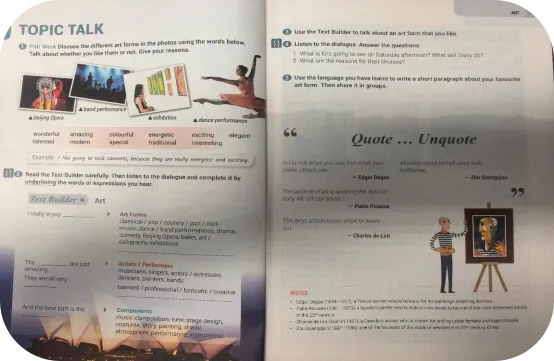
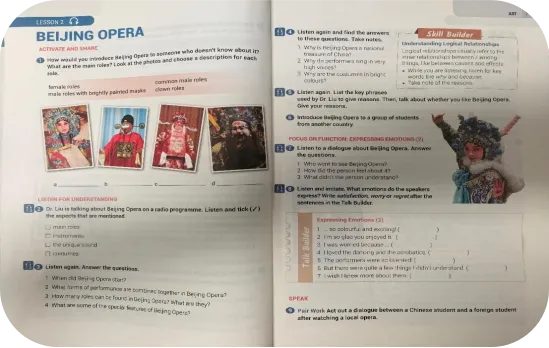
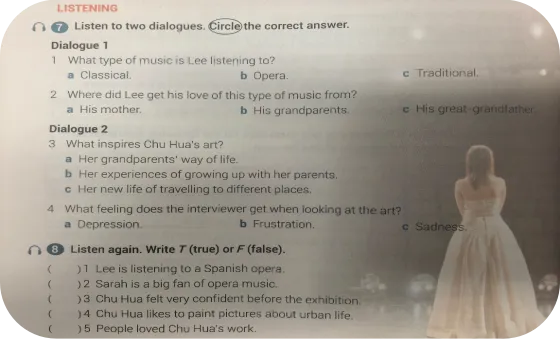
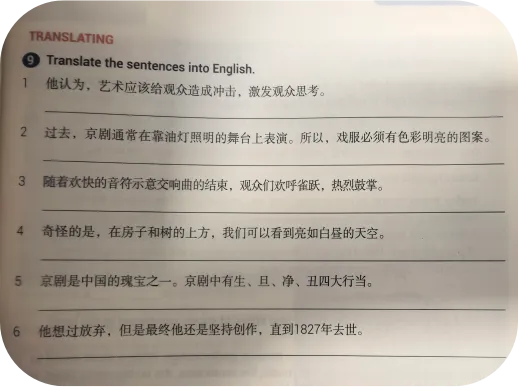
2027年高考英语第一轮复习——必修三Unit 1 Art Topic Talk,Lessen 2, P80Listening和P81Translating教材二次开发(对标听力部分)
【原创试题】
普通高等学校招生全国统一考试(模拟卷)
英语听力
注意事项
答卷前,考生务必将自己的姓名、准考证号填写在答题卡上。
回答选择题时,选出每小题答案后,用铅笔把答题卡上对应题目的答案标号涂黑。如需改动,用橡皮擦干净后,再选涂其他答案标号。回答非选择题时,将答案写在答题卡上,写在本试卷上无效。
考试结束后,将本试卷和答题卡一并交回。
第一部分听力(共两节,满分 30 分)
做题时,可先将答案标注在试卷上。录音播放结束后,考生将有两分钟时间,把试卷上的答案转涂到答题卡上。
第一节(共 5 小题;每小题 1.5 分,满分 7.5 分)
听下面 5 段对话。每段对话后有一个小题,从题中所给的A、B、C三个选项中选出最佳选项。听完每段对话后,你都有10秒钟的时间回答有关小题并阅读下一小题。每段对话仅读一遍。
例:How much is the shirt?
A. £19.15. B. £9.18. C. £9.15.
答案是 C。
1.What kind of music does the man prefer?
A. Classical music. B. Chinese traditional music. C. Western pop music.
2.What does the woman suggest the man do?
A. Watch a Beijing Opera performance.
B. Visit the art exhibition with her.
C. Apply for an art course.
3.What are the speakers mainly talking about?
A. The unique features of Beijing Opera.
B. The history of Chinese performing arts.
C. The influence of Western operas.
4.How does the woman feel about the art show?
A. Disappointed. B. Astonished. C. Confused.
5.Where does the conversation probably take place?
A. In a library. B. In a theater. C. In a classroom.
第二节(共 15 小题;每小题 1.5 分,满分 22.5 分)
听下面 5 段对话或独白。每段对话或独白后设有若干小题,从题中所给的 A、B、C 三个选项中选出最佳选项。听每段材料前,你将有时间阅读各个小题,每小题 5 秒钟;听完材料后,各小题将给出 5 秒钟的作答时间。每段对话或独白读两遍。
听第 6 段材料,回答第 6、7 题。
6. What is the woman doing?
A. Hosting a radio program.
B. Conducting an interview.
C. Giving a lecture on art.
7.What do we know about the man?
A. He is a professional photographer.
B. He is a fan of Beijing Opera.
C. He is a student from another country.
听第 7 段材料,回答第 8 至 10 题。
8. What is the man's attitude towards modern art?
A. He fully understands it.
B. He finds it hard to appreciate.
C. He thinks it is better than traditional art.
9.What does the woman say about Chu Hua's art?
A. It reflects her urban life.
B. It was inspired by her grandparents.
C. It brings a sense of depression.
10.What will the speakers do next?
A.Visit an exhibition. B.Attend a Beijing Opera show. C.Write an art review.
听第 8 段材料,回答第11至13题。
11. What is the woman's favorite part of Beijing Opera?
A. The colorful costumes.
B. The unique facial masks.
C. The combination of music, dance and acrobatics.
12.Why does the man think Beijing Opera is difficult to understand?
A. Because of the complex plot.
B. Because of the unfamiliar language.
C. Because of the symbolic movements.
13.What does the woman advise the man to do?
A. Watch a documentary first.
B. Learn from an expert.
C. Focus on the performance itself.
听第 9 段材料,回答第14至16题。
14. What is the man's problem?
A. He lost his ticket to the art show.
B. He missed the beginning of the opera.
C. He can't understand the symbolic actions.
15.What does the woman compare the "riding a horse" movement to?
A. Rowing a boat. B. Driving a carriage. C. Flying a kite.
16.What does the woman offer to do for the man?
A. Lend him a book about Beijing Opera.
B. Watch a Beijing Opera with him.
C. Introduce him to a Beijing Opera expert.
听第 10 段材料,回答第 17 至 20 题。
17. What is the speaker mainly talking about?
A. The history of Beijing Opera.
B. The four main roles in Beijing Opera.
C. The development of Chinese art forms.
18.Which role is known for its painted facial masks?
A. Sheng. B. Dan. C. Jing.
19.What can we learn about the "Chou" role?
A. It is the most important role.
B. It often brings laughter to the audience.
C. It only performs martial arts.
20.What is the speaker's wish for the audience?
A. To become professional performers.
B. To appreciate the beauty of Beijing Opera.
C. To write reviews about the performance.
【参考答案与命题融合点】
参考答案:1‑5: B A A B C6‑10: A B B B A11‑15: C B C C A16‑20: B B C B B
【试题与教材、课标的深度融合点解析】
本套模拟试题严格依据《普通高中英语课程标准(2025年版》,围绕“人与社会——文学、艺术与体育”主题语境命制,落实“无价值不入题,无思维不命题,无情境不成题”的命题导向。各板块教材融合情况如下:
1.听力第一节(短对话)融合点
第1题考查音乐偏好,对接教材Topic Talk 板块艺术形式相关词汇,涵盖 classical、traditional、pop 等,落实课标对不同艺术形式主题词汇的理解辨识要求。
第2题围绕邀约观看京剧展开,改编自Lesson 2 听力素材中邀请他人欣赏京剧的交际场景,考查人际交往类口语表达的理解能力,契合课标对语言运用的能力要求。
第3题设问聚焦京剧独有特征,素材源自Lesson 2 听力与阅读板块对京剧艺术特点的归纳,核心信息为音乐、舞蹈、杂技相融合,考查学生抓取语段核心概念的能力。
第4题侧重情感态度推断,取材于Lesson 2 “表达情感” 功能板块,选取astonish、fabulous等描述观感的表达,考查对说话人情绪态度的识别。
第5题为场景推断题,依托Lesson 2口语任务中剧院观演的交际情境,训练考生依托对话信息推理事件发生场景的听力微技能。
2.听力第二节(长对话、独白)融合点
第 6、7 题设置电台访谈京剧爱好者的情境,改编Lesson 2 中刘先生讲解京剧、面向外国学生介绍京剧的任务;第7 题直接对应教材口语任务 “向外国学生介绍京剧”,实现教材任务向听力试题情境的转化。
第 8、9、10 题对接教材Topic Talk 与课后听力板块,围绕艺术家 Chu Hua 的创作展开。第8 题化用教材 “现代艺术不易理解” 的观点;第9 题取材教材中Chu Hua 的创作背景;第10 题借鉴教材中相约共同观演的情节,考查对对话后续行为的推断。
第 11‑13 题源自Lesson 2 听力脚本,第11 题选用京剧融音乐、舞蹈、杂技于一体这一核心特点;第12 题设置外国学习者理解障碍的真实问题;第 13 题化用专家给出的欣赏建议,还原跨文化视角下欣赏传统戏曲的真实交际。
第 14‑16 题改编教材听力脚本末尾片段,第15 题直接化用原文 “京剧简单动作可以指代骑马、划船等复杂行为”;第16 题对应原文相约一同看京剧的内容,考查对戏曲程式化动作这一文化知识点的听力理解。
第 17‑20 题独白素材取自Lesson 2 开篇板块,围绕生、旦、净、丑四大行当命题。第18 题对应净角脸谱特征;第19 题对应丑角喜剧定位;第 20 题落脚于感受京剧艺术魅力,落实增强文化自信、传播中华优秀传统文化的育人目标。
3.命题思路与课标契合度总结
整套试题规避机械识记类考查,重点考查主旨理解、推理判断、态度辨识等高阶听力能力,贴合高考英语听力命题趋势。试题把教材静态词汇、文本素材转化为真实交际场景,不只考查语言听懂能力,同时渗透用英语讲述中华传统艺术的考查目标,兼顾跨文化交际能力与思维品质测评。