ARTICLE · 1148875
AI Interviewers Freak Out Job Seekers in China

If you’re job-hunting in China, your next first interview may not be with a human. It may be with an AI avatar that looks almost real—and that’s why Chinese job seekers are freaking out.
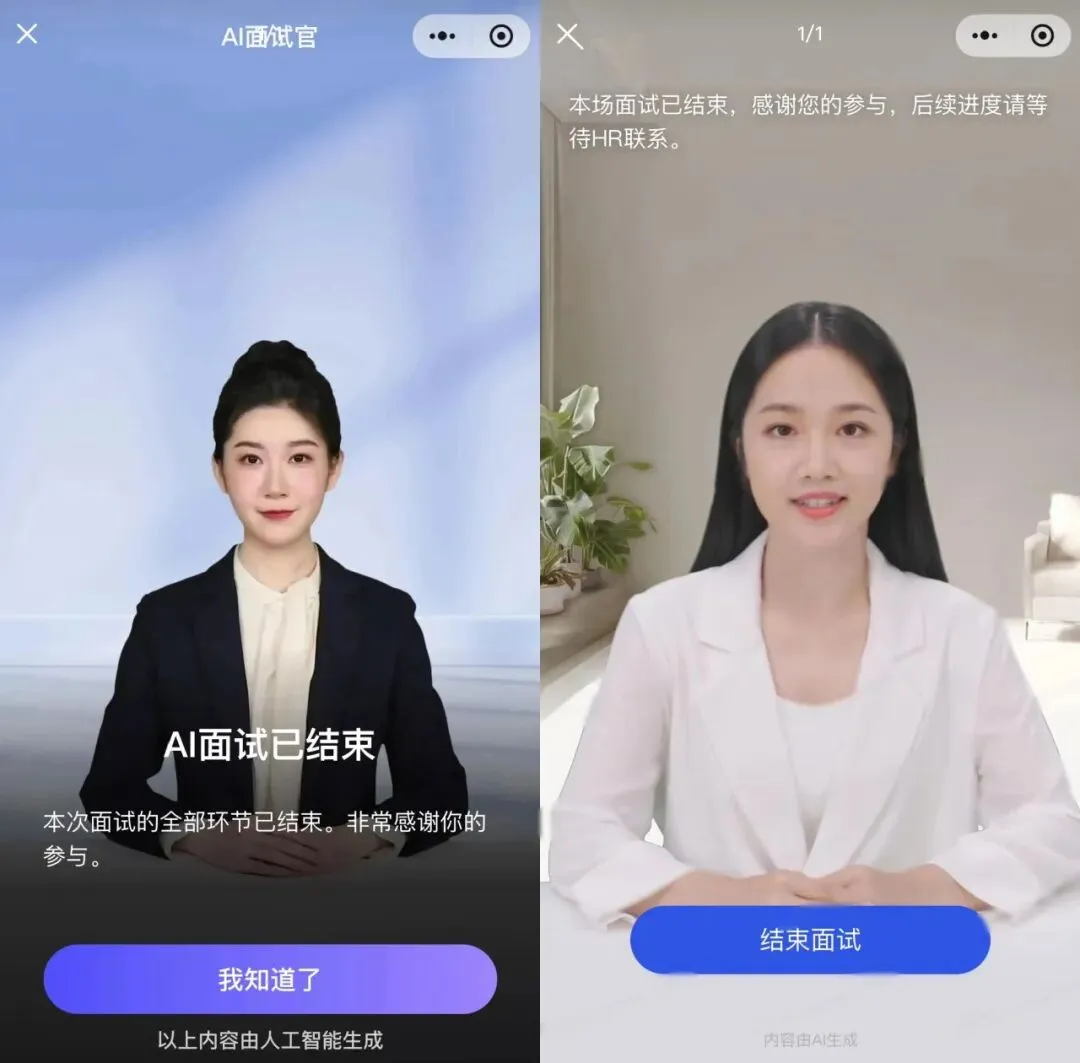
On Oct. 4, a topic called “AI interview uncanny valley” shot to the top of Weibo, China’s X-like trending platform. Applicants shared the same creepy experience: you open an interview link, and instead of an HR person, you see a virtual human with a realistic face. It asks questions. But it does not smile, nod, react, or show basic empathy.

Virtual humans have been hyped for years. Why are they suddenly giving applicants nightmares? Because these AI interviewers hit the uncanny valley perfectly. The uncanny valley is the uneasy feeling when something looks almost human but not quite human. A metal robot? Fine. A digital face that looks like a real person but acts like a frozen chatbot? Terrifying. These avatars are programs with human faces. They are not people, but they are close enough to make your skin crawl.
Many of these companies are “big tech” firms—prestigious, high-pressure employers that many young Chinese graduates dream about. Companies say AI interviews improve efficiency and fairness. AI can screen candidates faster, reduce some human bias, and cut costs. To HR, it sounds like a smart upgrade. To many applicants, it feels like the company cannot even bother to send a real person to a first interview. You are already anxious about finding a job. Now you cannot even meet a human interviewer.
Some commenters joked darkly: if AI can write resumes and conduct interviews, why not let AI do the work and pay AI the salary? Then the loop would be perfect. Humans could simply be removed from the process.
The Chinese tech account Xiaolei Bibi was not impressed. The issue is not just technology. It is respect. If a company will not give a candidate a real human first impression, how can it expect to find the right person? An AI interview may be cheap and efficient, but it can also feel irresponsible. With no real interaction, it can seem like a shoddy, cut-rate operation.
And AI’s talent for causing trouble does not stop at job interviews. During China’s National Day holiday, known as Golden Week, it became a travel nightmare for some.
Everyone wants to travel during a rare long break. But nobody wants to spend the holiday counting heads at famous tourist spots. So many people tried “reverse tourism”: choosing small, quiet, lesser-known destinations instead of crowded landmarks. To save time, they asked AI chatbots for travel plans.
The problem? Millions of people seemed to be using the same AI brain. The AI recommended the same “hidden gems” to everyone. Hotels that normally cost 200–300 yuan a night jumped to 600, 700, or even 1,000 yuan during the holiday, approaching big-city prices. People who trusted AI for a quiet escape often walked straight into a trap. You thought you had discovered a secret spot. In reality, AI had handed the same guide to the whole country. The obscure place was suddenly not obscure at all.
Put these two stories together, and Chinese social media exploded. Some laughed. Some were angry. Many felt AI is being pushed into roles it should not play.
AI is good at standardized, repetitive work. Screening resumes? Checking basic information? Sure. It may even be faster than humans. But asking AI to conduct a real interview—to communicate, judge, and read a person—is a step too far. An interview is not just a test for the candidate. It is also a chance for the candidate to judge the company. If the first thing an applicant sees is a creepy digital human, the first impression is already ruined. The company may end up driving away the very people it wants.
The AI travel guide problem follows the same logic. AI can assemble a plan that looks beautiful on screen. It does not understand real-world chaos, sudden changes, or whether the plan actually works. If everyone asks the same AI, the answers naturally overlap. A once-small destination can become crowded overnight.
So, have you ever faced an AI digital interviewer in China? Did an AI-recommended Golden Week trip ever ruin your holiday? The comments section is waiting.