理 论 精 讲 - 词 法 5
▹ 讲师:慕伊
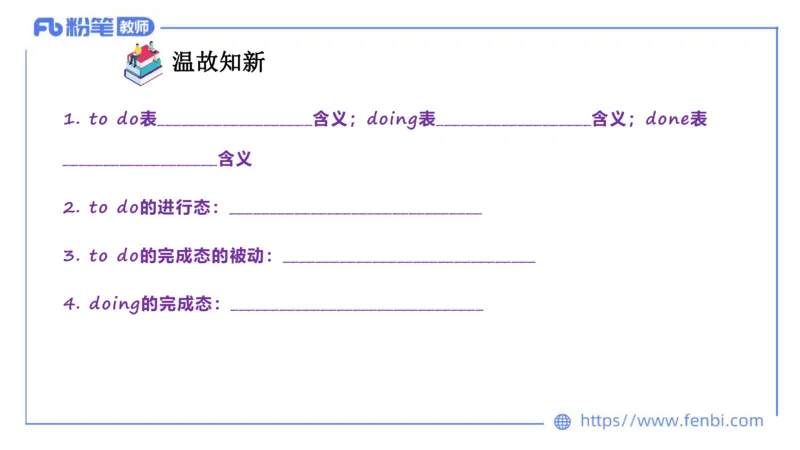
更多干货关注 粉笔教师教育 粉笔教师温故知新
表 含义; 表 含义; 表
1. to do ___________________ doing ___________________ done
含义
___________________
的进行态:
2. to do _______________________________
的完成态的被动:
3. to do _______________________________
的完成态:
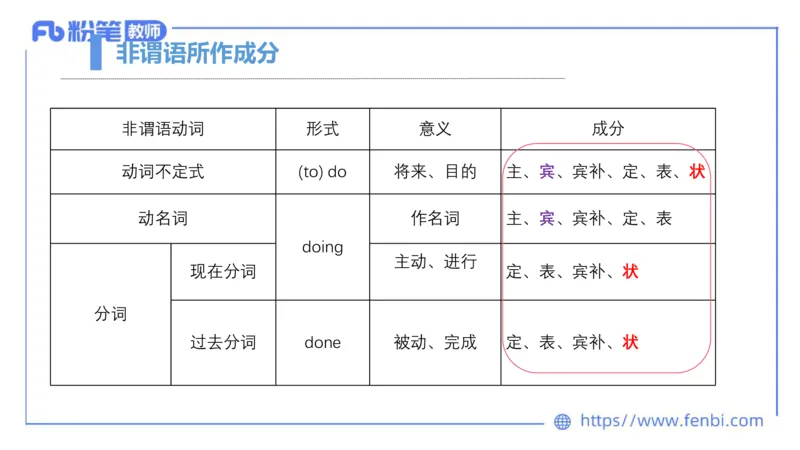
4. doing _______________________________非谓语所作成分
非谓语动词 形式 意义 成分
动词不定式 (to) do 将来、目的 主、宾、宾补、定、表、状
动名词 作名词 主、宾、宾补、定、表
doing
主动、进行
现在分词 定、表、宾补、状
分词
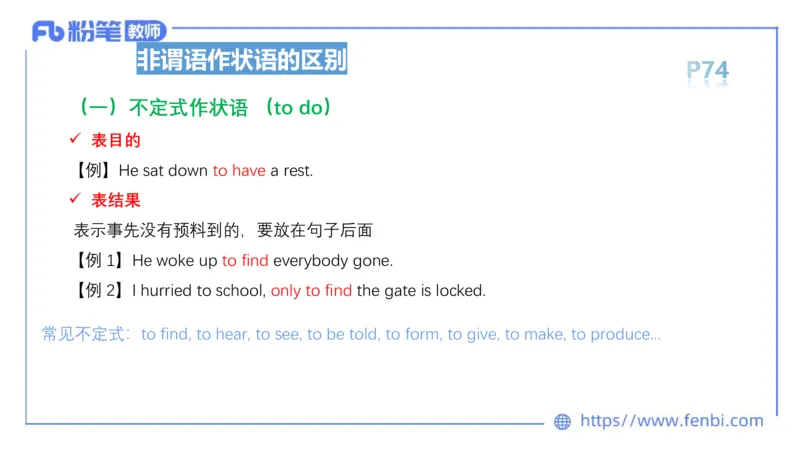
过去分词 done 被动、完成 定、表、宾补、状非谓语作状语的区别
(一)不定式作状语 (to do)
ü 表目的
【例】He sat down to have a rest.
ü 表结果
表示事先没有预料到的,要放在句子后面
【例 1】He woke up to find everybody gone.
【例 2】I hurried to school, only to find the gate is locked.
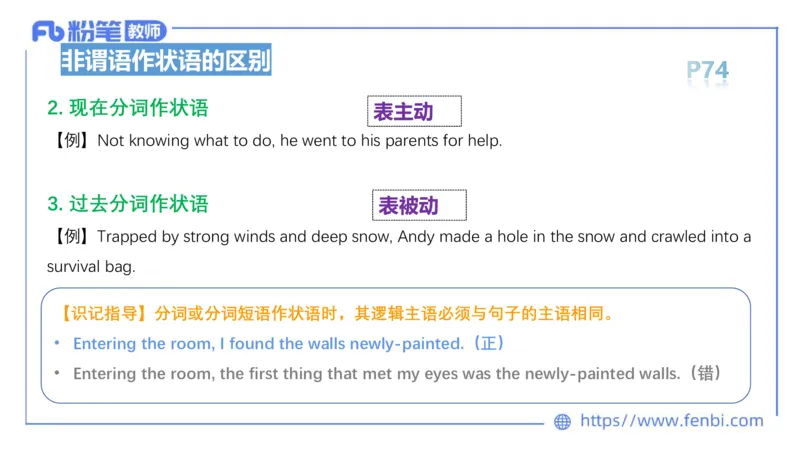
常见不定式:to find, to hear, to see, to be told, to form, to give, to make, to produce...非谓语作状语的区别
2. 现在分词作状语
表主动
【例】Not knowing what to do, he went to his parents for help.
3. 过去分词作状语
表被动
【例】Trapped by strong winds and deep snow, Andy made a hole in the snow and crawled into a
survival bag.
【识记指导】分词或分词短语作状语时,其逻辑主语必须与句子的主语相同。
• Entering the room, I found the walls newly-painted.(正)
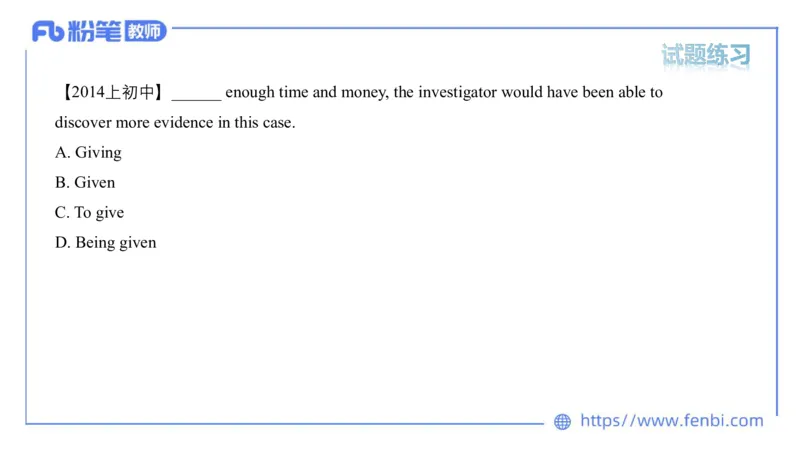
• Entering the room, the first thing that met my eyes was the newly-painted walls.(错)【2014上初中】______ enough time and money, the investigator would have been able to
discover more evidence in this case.
A. Giving
B. Given
C. To give
D. Being given高频考点3 非谓语动词作宾语的比较
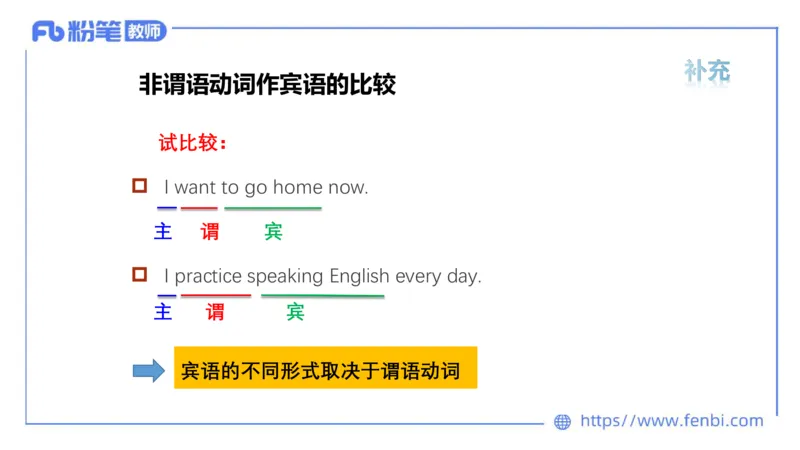
非谓语动词作宾语的比较
试比较:
p I want to go home now.
主 谓 宾
p I practice speaking English every day.
主 谓 宾
宾语的不同形式取决于谓语动词非谓语动词作宾语的比较
两者都可以之意义基本相同
begin, start, like, love, hate, prefer, continue
(接不定式多指具体的动作,接动名词多指一般或习惯行为)
p prefer to do. =prefer doing
I prefer to read a newspaper=I prefer reading a newspaper非谓语动词作宾语的比较
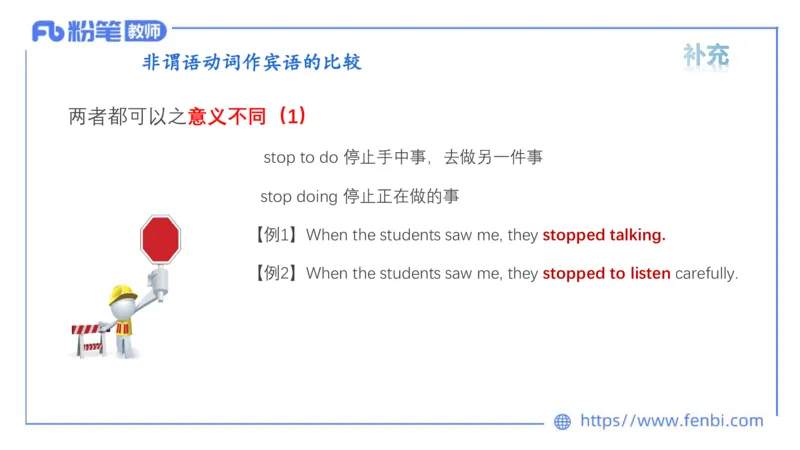
两者都可以之意义不同(1)
stop to do 停止手中事,去做另一件事
stop doing 停止正在做的事
【例1】When the students saw me, they stopped talking.
【例2】When the students saw me, they stopped to listen carefully.非谓语动词作宾语的比较
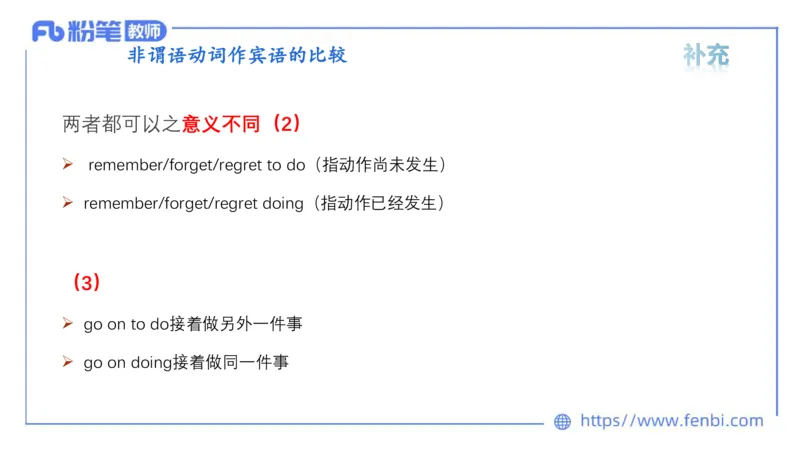
两者都可以之意义不同(2)
Ø remember/forget/regret to do(指动作尚未发生)
Ø remember/forget/regret doing(指动作已经发生)
(3)
Ø go on to do接着做另外一件事
Ø go on doing接着做同一件事非谓语动词作宾语的比较
两者都可以之意义不同(4)
Ø try to do(努力去做,尽力)
Ø try doing(尝试做,试着做)
(5)
Ø mean to do(打算做)
Ø mean doing(意味着)
【例】I meant to give you this book today, but I forgot.
【例】Missing this train means waiting for another hour.
(6)
Ø can’t help to do(不能帮忙做)
Ø can’t help doing(情不自禁做某事)【巩固提升】3. All the time he can devote ________ the task has ________.
A. to completing; run out
B. to complete; run out
C. to completing; been run out
D. to complete; been run outPART 10
独立主格
Absolute structure什么是独立主格?
He walking in the dark, his head hit the wall.
The test finished, we'll have our summer vacation.
p 主语不同
p 有逗号,无连词
p 名词或代词(逻辑主语)与后面的分词、不定式、形容词、
副词、介词短语等存在逻辑上的主谓关系(或动宾关系)
考点(一)独立主格的主要形式
(1)逻辑主语 + 非谓语动词
名词或代词+ 逻辑上的主谓关系,表示主动的
She ran up to me, her hair flying in the wind.
现在分词 或正在进行的动作
名词或代词+ 逻辑上的动宾关系或系表结构表
This done, we went home.
过去分词 示被动或已完成的动作
名词或代词+ 逻辑上的主谓关系,表示将要发 We divided the work, he to clean the window and I
不定式 生的动作,常位于句首或句末 to sweep the floor.【巩固提升】1. Much time ________ sitting at a desk, office workers are generally troubled
by health problems.
A. being spent
B. having spent
C. spent
D. spending【巩固提升】2. The children went home from the grammar school, their lessons ________ for
the day.
A. finishing
B. finished
C. had finished
D. were finished【巩固提升】5. ________ in the dark, his head hit against a tree.
A. Walking
B. He was walking
C. Walked
D. When he was walking(2)逻辑主语 + 形容词/副词/介词短语
名词或代词+ ① He sat in the front row, his mouth half open.
说明性质特征或所处的状态
形容词或副词
② Summer over, the students returned to school.
名词或代词+ 说明性质特征或所处的状态
Miss Smith entered the classroom, book in hand.
介词短语 (注:省略物主代词和冠词)(3)with的复合结构
with + 宾语 + 形容词 The children were listening to the teacher with their eyes wide open.
with + 宾语 + 介词短语 The old man used to take a walk with a stick in his hand.
with + 宾语 + 副词 The proud girl walked away with her head up.
with + 宾语 + 现在分词 Mary felt very shy with so many eyes looking at her.
If you sit looking away from a person, or with your back turned, you
with + 宾语 + 过去分词
are saying you are not interested in that person.
With too much work to do the next day, he felt anxious and didn’t
with + 宾语 + 不定式
sleep well.【巩固提升】4. With his mother ________ him, he is getting on well with his work.
A. help
B. to help
C. helping
D. helps(4)固定句型
There being +名词(代词) There being nothing else to do, we went home.
It being +名词(代词) It being a holiday, all the shops were shut.【巩固提升】3. ________ Sunday, rather than ________ at home, I preferred ________.
A. It being; stay; to travel
B. Being; to stay; to travel
C. Having been; stay; travel
D. It was; to stay; travelling(二)独立主格的主要用法
Ø 作时间状语
The work done, we went home.
Ø 作条件状语
Weather permitting , they will go on an outing to the beach tomorrow.
Ø 作原因状语
An important lecture to be given tomorrow, the professor has to stay up late into the night.
Ø 作伴随状语
He was lying on the grass, his hands crossed under his head.
Ø 表补充说明
A hunter came in, his face red with cold.PART 11
主谓一致
Subject-predicate Agreement一、 语法一致原则
【例 1】The boy is playing basketball now. 这个男孩现在正在打篮球。
【例 2】These boys are playing basketball now. 这些男孩现在正在打篮球。二、 意义一致原则
只用单数
1. 由 and 连接的并列成分指的是同一概念,兼具身份或匹配出现
The worker and writer is from Wuhan.
试比较:The worker and the writer are from Beijing.
【注意】“套装”作主语时,谓语动词用单数
Bread and butter is a daily food in the West.
例如:law and rule, law and order, knife and fork, war and peace
2. clothing, furniture, traffic, jewelry, baggage, equipment,luggage 等无生命的集合名词
作主语时
【例】Clothing is badly needed in this flooded area.二、意义一致原则
只用单数
3. 表示时间、距离、金钱等的复数名词作主语表达整体概念时
【例】Twenty years has passed since he left his hometown.
4. 非谓语动词、名词性从句作主语时
【例 1】Collecting stamps is what he likes.
【比较】To play basketball and to go swimming are of great use for character-training.
【例 2】Whatever was left was taken away.
【比较】What they need are books.二、意义一致原则
只用单数
5.every…and (every)… ; each…and (each)… ; no…and (no)…
【例1】Every desk and every chair is made of wood.
【例2】No teacher and no student is admitted to enter the place.
6. “more than one (many a) + 名词”作主语时
【例】Many a student fails to pass the exam.二、意义一致原则
只用复数
1. 表示山脉、群岛、瀑布、运动会等且以 s 结尾的专有名词作主语时
【例】The Olympic Games are held once every four years.
2. “a number of/quantities of + 名词”作主语时
【例】Quantities of furniture have been ordered recently.
3. 部分集合名词只能看作复数时,如 people(人们,大家), police, cattle, folk, personnel 等 。
【例】The cattle are running.
记忆口诀:警察都是牛人二、意义一致原则 视情况而定
1. 集合名词作主语
集合名词 class, family, army, team, club, population, enemy, party, crowd, crew, audience,
public, government, majority, group 等作主语时
【判断依据:强调“整体”or “成员”】
【例 1】His family is a great one.
【例 2】His family are music lovers.
2. “half/most/enough/part/the rest/lots/plenty/ 分数、百分数 + of + 名词”作主语时,谓语
动词要和 of 之后的名词单复数形式保持一致
【判断依据:of后的名词】
【例】Three fourths of the surface of the earth is covered with water.
【例】Half of the students like math.
3. “the + adj.”
【判断依据:强调“一类人”or “抽象概念”】
【例 1】The rich get richer and the poor get poorer.
【例 2】The beautiful is not always the good, and the good is not always the true.三、 就近原则
ü 谓语动词的单复数形式取决于最靠近它的主语的单复数形式。
ü 主要标志词有or, nor, either...or, neither...nor, not only...but also, not...but;There be句型 等。
记忆口诀:不仅有either...or,而且有neither...nor,不是or,而是nor
【例】There is a teacher and three students in the classroom.
Neither the unpleasant experiences nor the bad luck __________ him discouraged.
A. have caused B. has caused
C. has made D. have made四、就远原则
ü 就远原则:谓语动词单复数与比较远的那个主语保持一致。
ü 主要标志词有but, except, besides, including, like, with, as well as, as much as, no less than, along
with, in addition to, combined with, rather than, together with...
口诀:“四除五和好像包括而不是强调多”
四除:but, except, besides, in addition to
五和: with, along with, together with, combined with, as well as
好像:like
包括:including
而不是:rather than, instead of
强调多:no less than
【例 1】John, rather than his roommates, is to blame.
【例 2】Nobody but two students is in the classroom.限定词与主谓一致
1.只修饰可数名词单数,谓语动词常用单数:
a(an), one, another, each, every, either, neither, many a, such a...
2.只修饰可数名词复数,谓语动词常用复数: 对比1:the number of + 可数名词复数 + 谓
一、复合句中的省
语动词单数,表示“……的数量”
many, a number of, several, both, a couple of, few限定词与主谓一致
3.只修饰不可数名词,谓语动词常用单数: 对比2:large amounts of + 不 可数名词 +
much, a great deal of, a large amount of, little 谓语动词复数
一、复合句中的省
4.既可修饰可数名词又可修饰不可数名词,谓语动词视情况而定: 对比3:large quantities of+ 可
a lot of, lots of, plenty of, some, most, all, a large quantity of 数 /不可数名词 + 谓语动词复数【巩固提升】1. The old ________ well looked after by the government in China.
A. is
B. are
C. has been
D. was【巩固提升】2. One-third of the area ________ covered with green trees. About seventy
percent of the trees ________ been planted.
A. are; have
B. is; has
C. is; have
D. are; has【巩固提升】3. The teacher together with the students ________ discussing Reading Skills
that ________ newly published in America.
A. are; were
B. is; were
C. are; was
D. is; was【巩固提升】4. The number of people invited ________ fifty, but a number of them
_________ absent for different reasons.
A. were; was
B. was; was
C. was; were
D. were; were