























文档内容
978-7-110-07941-6
4 8
9 787110 079416图书在版编目(CIP)数据
英语. 七年级. 下册 / 北京市仁爱教育研究所
编著. -北京 : 科学普及出版社, 2012.12 (2021.12重印)
义务教育教科书
ISBN 978-7-110-07941-6
Ⅰ. ①英... Ⅱ. ①北... Ⅲ. ①英语课-初中-教材
Ⅳ. ①G634.411
中国版本图书馆CIP数据核字(2012)第282870号
策划编辑 徐扬科 许 倩 责任编辑 吕 鸣 林 然
责任印制 徐 飞
是仁爱版教材的商标
仁爱版教材推广及服务中心电话
4008100168 010-82676936 13911468451
义务教育教科书
英 语
七年级 下册
北京市仁爱教育研究所 编著
*
科学普及出版社出版
(北京市海淀区中关村南大街16号)
邮政编码:100081
福建新华发行(集团)有限责任公司发行
北京利丰雅高长城印刷有限公司印刷
*
787mm×1092mm 16开 10印张 200千字
2012年12月第1版 2021年12月第75次印刷
审图号: GS(2017)3050号
ISBN 978-7-110-07941-6/G·3343
定价:9.90 元
著作权所有,请勿擅用本书制作各类出版物,违者必究。
如有质量问题,影响阅读,请与北京市仁爱教育研究所联系调换。
地址: 北京市海淀区北四环西路68号左岸工社12层 邮编: 100080
电话: 4008100168 010-82676936 13911468415
网址:http://www.renai-edu.com 邮箱:editor@renai-edu.com前 言
亲爱的同学们:
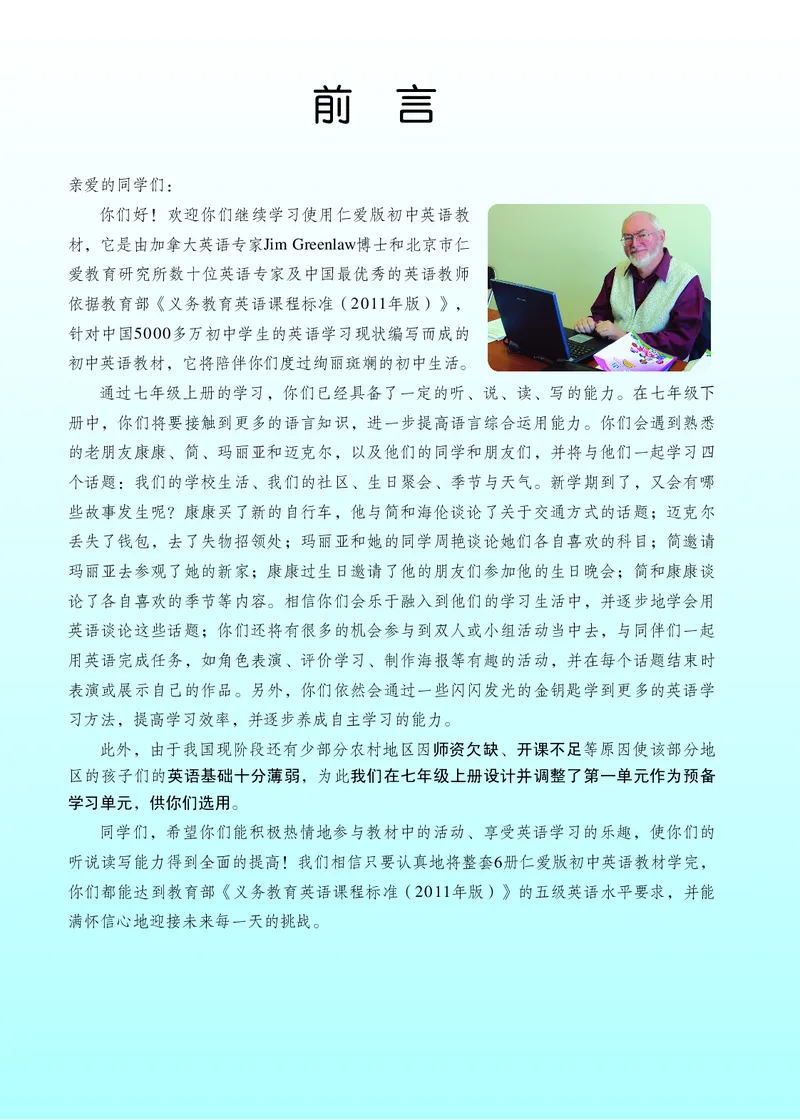
你们好!欢迎你们继续学习使用仁爱版初中英语教
材,它是由加拿大英语专家Jim Greenlaw博士和北京市仁
爱教育研究所数十位英语专家及中国最优秀的英语教师
依据教育部《义务教育英语课程标准(2011年版)》,
针对中国5000多万初中学生的英语学习现状编写而成的
初中英语教材,它将陪伴你们度过绚丽斑斓的初中生活。
通过七年级上册的学习,你们已经具备了一定的听、说、读、写的能力。在七年级下
册中,你们将要接触到更多的语言知识,进一步提高语言综合运用能力。你们会遇到熟悉
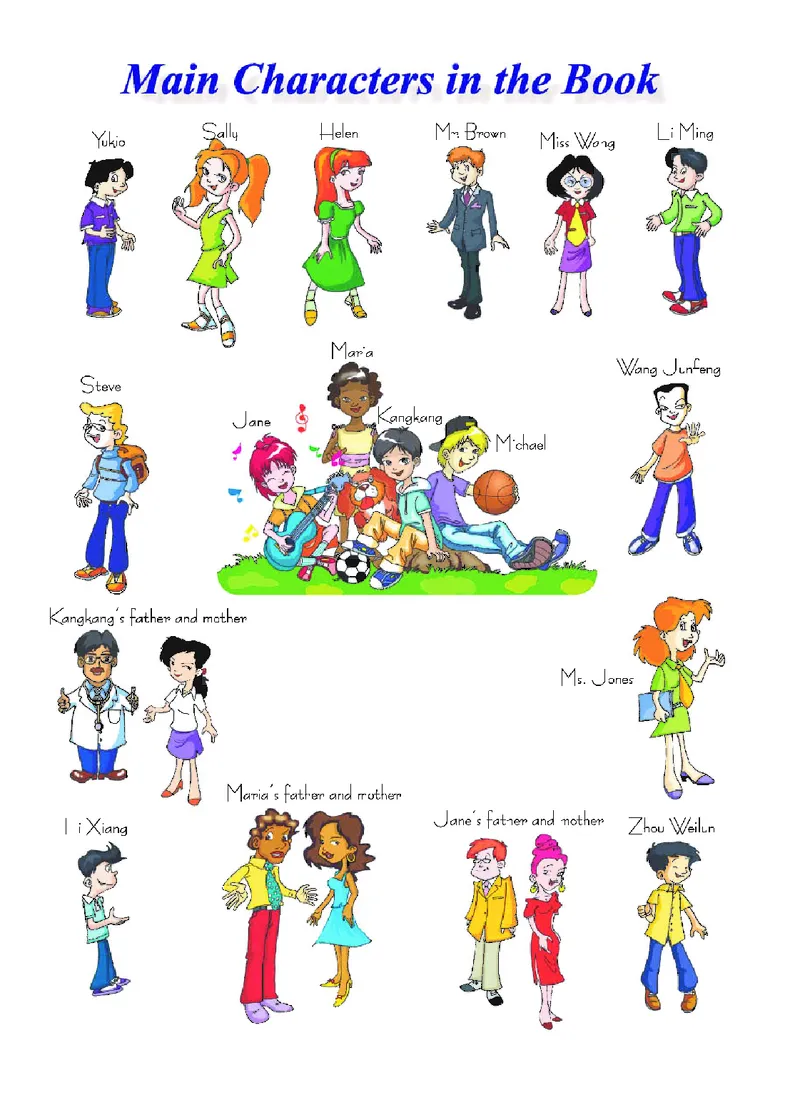
的老朋友康康、简、玛丽亚和迈克尔,以及他们的同学和朋友们,并将与他们一起学习四
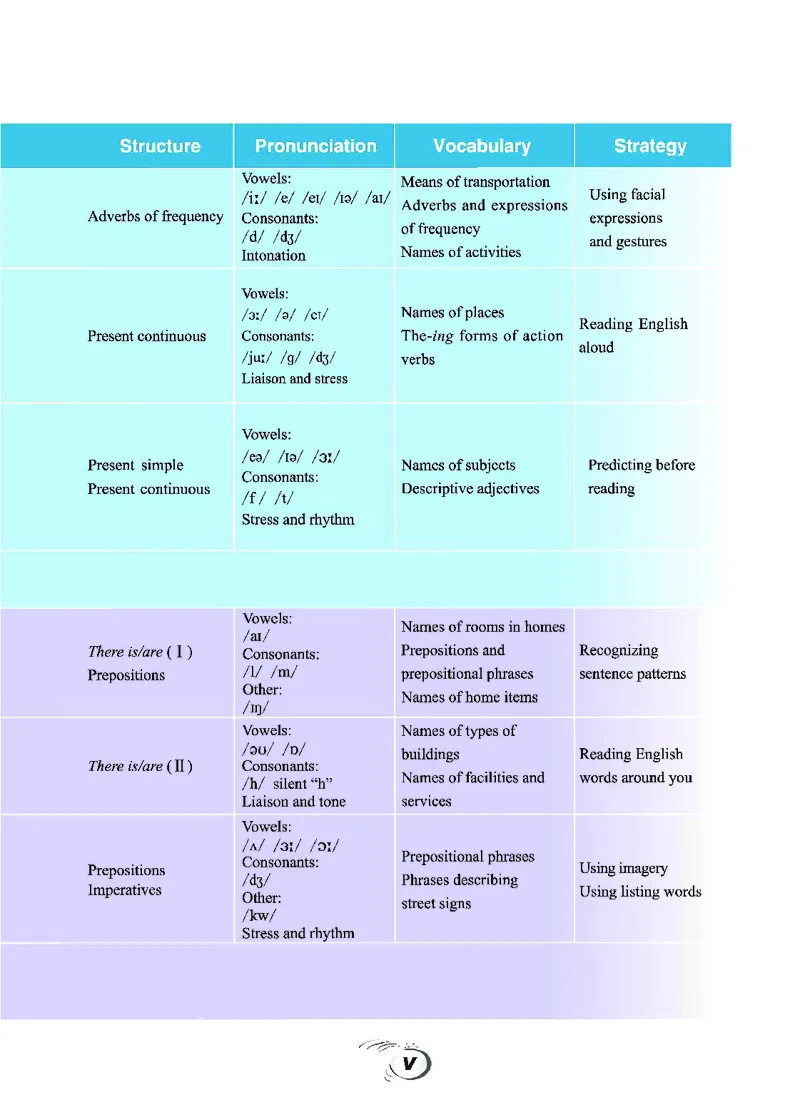
个话题:我们的学校生活、我们的社区、生日聚会、季节与天气。新学期到了,又会有哪
些故事发生呢?康康买了新的自行车,他与简和海伦谈论了关于交通方式的话题;迈克尔
丢失了钱包,去了失物招领处;玛丽亚和她的同学周艳谈论她们各自喜欢的科目;简邀请
玛丽亚去参观了她的新家;康康过生日邀请了他的朋友们参加他的生日晚会;简和康康谈
论了各自喜欢的季节等内容。相信你们会乐于融入到他们的学习生活中,并逐步地学会用
英语谈论这些话题;你们还将有很多的机会参与到双人或小组活动当中去,与同伴们一起
用英语完成任务,如角色表演、评价学习、制作海报等有趣的活动,并在每个话题结束时
表演或展示自己的作品。另外,你们依然会通过一些闪闪发光的金钥匙学到更多的英语学
习方法,提高学习效率,并逐步养成自主学习的能力。
此外,由于我国现阶段还有少部分农村地区因师资欠缺、开课不足等原因使该部分地
区的孩子们的英语基础十分薄弱,为此我们在七年级上册设计并调整了第一单元作为预备
学习单元,供你们选用。
同学们,希望你们能积极热情地参与教材中的活动、享受英语学习的乐趣,使你们的
听说读写能力得到全面的提高!我们相信只要认真地将整套6册仁爱版初中英语教材学完,
你们都能达到教育部《义务教育英语课程标准(2011年版)》的五级英语水平要求,并能
满怀信心地迎接未来每一天的挑战。Appendices 附录
Notes to the Texts 课文注释
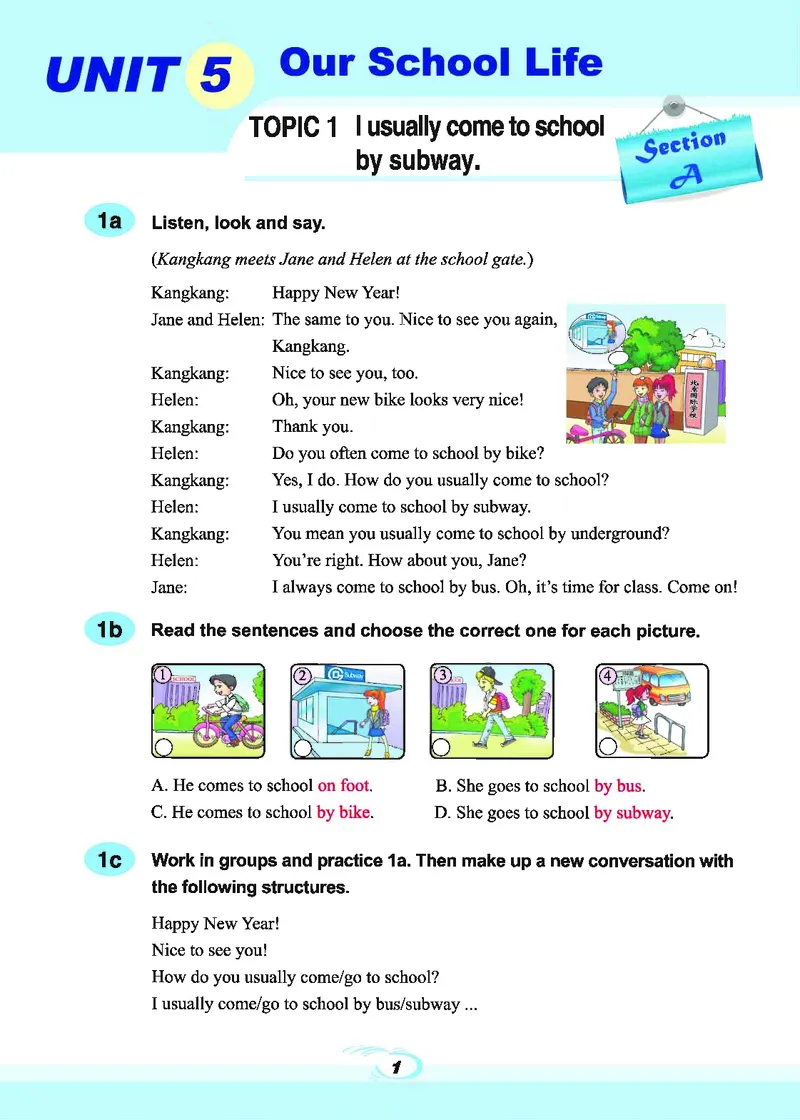
Unit 5 Our School Life
Topic 1 I usually come to school by subway.
Section A
啊 你的新自行车看起来很好看
1. Oh, your new bike looks very nice! , !
意为 看起来 好像 在此用作系动词 后面常跟形容词 如
look “ , ”, , 。 :
她看起来很高兴
She looks very happy. 。
你经常骑自行车来学校吗
2. Do you often come to school by bike? ?
在此意为 乘坐 某种交通工具 后面直接加交通工具 如
by “ ( )”, 。 :
约翰经常乘飞机 火车 巴士去北京
John often goes to Beijing by plane/train/bus. / / 。
Section B
早起的鸟儿有虫吃 笨鸟先飞 捷足先登
The early bird catches the worm. ( / )。
Topic 2 A few students are running around the playground.
Section B
劳驾 我可以借几本英语练习册吗
1. Excuse me, may I borrow some English workbooks? , ?
在此表示请求对方许可 如
may 。 :
我可以进来吗
May I come in? ?
我能借多久
2. How long can I keep them? ?
Section C
一些学生在绕着操场跑步
A few students are running around the playground. 。
意为 几个 一些 表示肯定 意为 很少的 几乎没有 表示否定 两者都可以修
a few “ , ”, ;few “ , ”, 。
饰可数名词的复数形式 如
。 :
我有几个好朋友
I have a few good friends. 。
在美国 很少有学生骑自行车上学
Very few students ride bikes to school in America. , 。
109Section D
这儿有一些他的照片
1. Here are some photos of his. 。
是双重所有格 是名词性物主代词 如
photos of his ,his 。 :
我的一本书 她的一个朋友
a book of mine ;a friend of hers
他看上去很高兴 因为他喜欢游泳
2. He looks happy because he loves swimming. , 。
Topic 3 My school life is very interesting.
Section B
我认为你一定很喜欢英语
I think you must like English very much. 。
在这里表示肯定的推测 具有较大的可能性 如
must , 。 :
灯亮着 他肯定在家
The light is on. He must be at home. , 。
Section C
今天
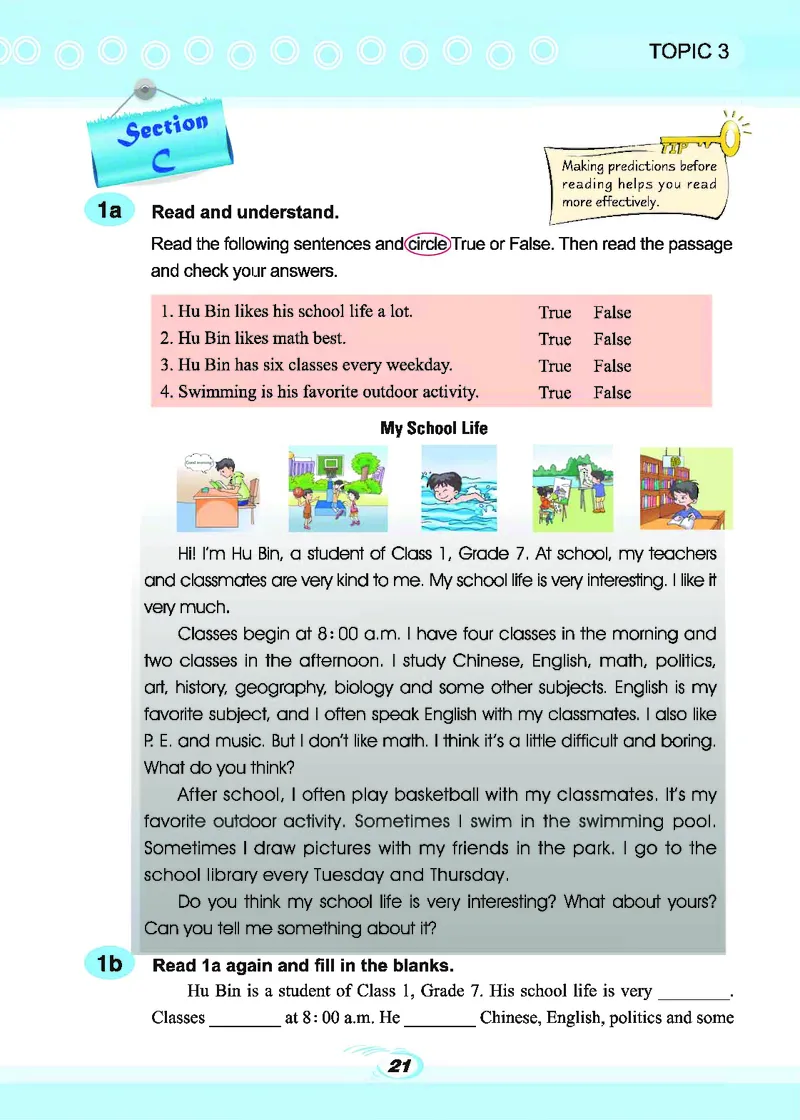
There isa soccergame betweenClassOne andClassTwo onthe playgroundat5:00thisafternoon.
下午五点 一班和二班在操场上进行一场足球赛
, 。
文化背景知识
King Kong和The Sound of Music都是美国经典影片 金刚 讲述了大猩猩金刚爱上了误闯
。 《 》
入神秘丛林的金发美女安 从而展开了一段美女与野兽之恋 音乐之声 讲述的是家庭女教师
, 。 《 》
玛丽亚用音乐和爱心拯救了一个单亲家庭的感人故事
。
Section D
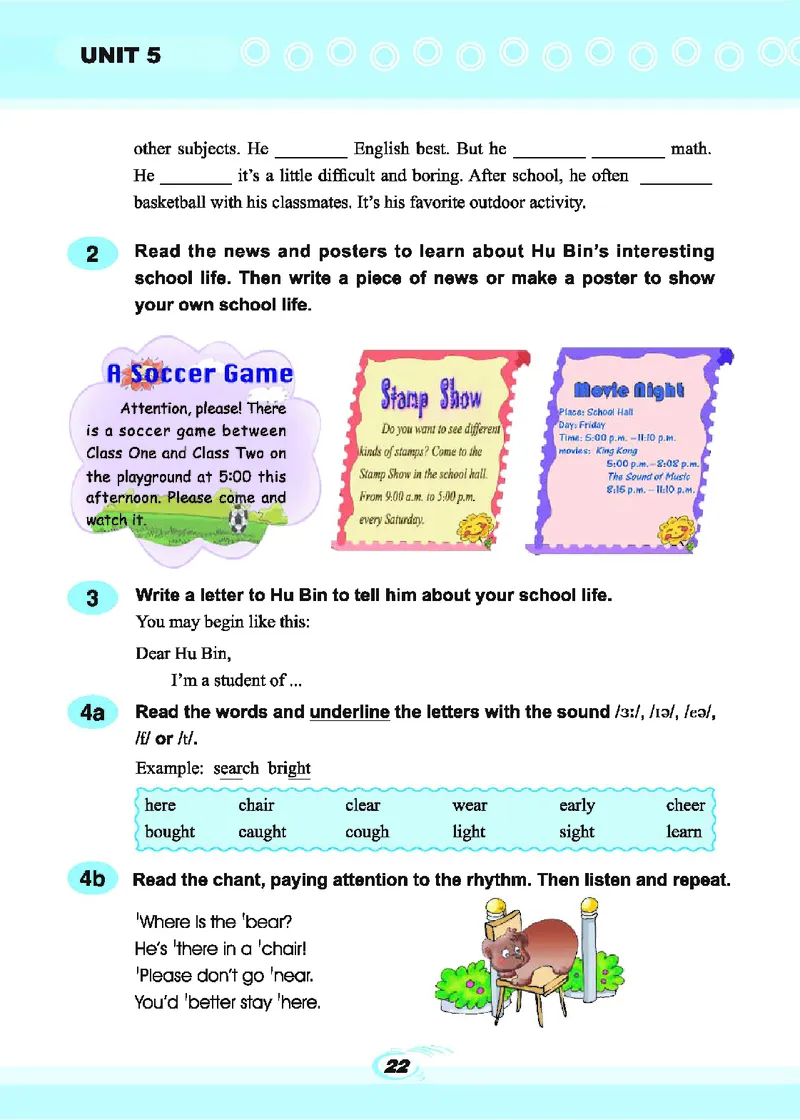
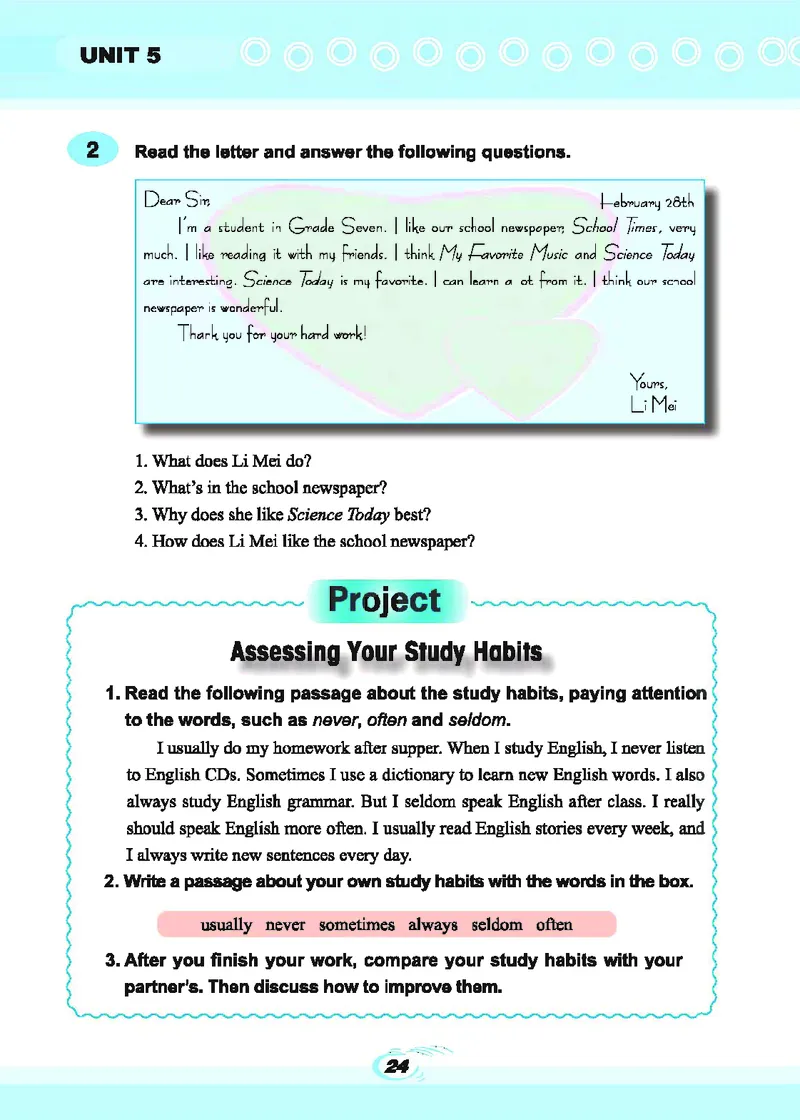
My Favorite Music Science Today 我认为 我最喜欢的音乐 和
1. I think and are interesting. 《 》
今日科学 这两个栏目有趣
《 》 。
My Favorite Music和Science Today是报纸的栏目名称
。
我能从中学到许多 知识
2. I can learn a lot from it. ( )。
意为 从 中学习 如
learn from “ …… ……”。 :
我从吉姆身上学到很多东西
I learn many things from Jim. 。
Unit 6 Our Local Area
Topic 1 There is a study next to my bedroom.
Section A
它 卧室 在二楼
Its on the second floor. ( ) 。
有 地板 之意 此处意为 楼房的 层 美式英语中 意为 一楼 而英式
floor “ ” , “( ) ”。 the first floor “ ”,
英语则用 来表示 英国人说 二楼 是 美式英语则是
the ground floor ; “ ” the first floor, the second floor。
110Section B
教室的前面有什么
Whats in front of the classroom? ?
表示在某人或某物的前面 指自身以外的前面 而 表示在某物内部的
in front of , ; in the front of
前面 如
。 :
我家门前有一棵树
There is a tree in front of my house. 。
教室前面有一块黑板
There is a blackboard in the front of the classroom. 。
Topic 2 My home is in an apartment building.
Section A
出租
1. FOR RENT
此处为名词 多用于告示 广告 意为 出租 招租
rent ,for rent 、 , “ ; ”。
还可用作动词 意为 出租 如
rent , “ ”。 :
她把公寓出租给了学生
She rented (out) her apartment to students. 。
小型学生公寓 出租
2. Small apartment for students ( )
这种不带标点符号的句子经常出现在广告语中 如
。 :
适合学生租住的小房间公寓
Apartment with small rooms for students to live in
房屋求租
3. ROOM WANTED
求租一间安静的双人间 月租低于
4. Look for a quiet room for two people under ¥500.00 a month. ,
元
500 。
相当于 意为 低于 如
under less than, “ ……”。 :
这事花了我们不到一个小时的时间
It took us under an hour. 。
Section B
附近有 商店 吗
1. Are there any near here? ( ) ?
在句中用作代词 指代 以避免与前文重复
any , stores, 。
噢 你真好
2. Oh, its very nice of you. , 。
相当于 表示感谢的用语 通常用于别人对你提供帮助之后
Oh, its very kind of you. , 。
右边没有房子 但是有一棵大树
3. There are no houses on the right, but there is a tall tree. , 。
在此作形容词 用来否定名词 相当于 或 意为 没有 无 修饰可数名词
no , , not a/an not any, “ , ”,
的单 复数形式以及不可数名词 如
、 。 :
课桌上没有书
There are no books on the desk. 。
我的钱包里没有钱
I have no money in my wallet. 。
Section C
有很多老人住在这里
There are many old people living here. 。
111Section D
城市里 交通拥挤 并且生活费用高
The traffic is heavy and the cost of living is high.( ) , 。
意为 的费用 如
the cost of “…… ”。 :
住房的费用低
The cost of housing is low. 。
Topic 3 How can I get to the library
?
Section A
沿着新华大街走到尽头 你会发
1. Go up Xinhua Street to the end, and youll find it on your left. ,
现它 银行 在你的左边
( ) 。
沿着新华大街往前走 在第一个十
2. Go along Xinhua Street and turn right at the first crossing. ,
字路口向右拐
。
意为 沿着 走
go along “ …… ”。
它在左前方约 米处
3. Its about twenty meters along on the left. 20 。
Section B
你不会看不见的
1. You cant miss it. 。
这是给别人指路时的常用语 意为 你不会看不见的 你很容易看到的
, “ / ”。
2. First, you need to take Bus No. 718. Then you should change to the No. 108 bus at Liyuan Stop.
你先乘坐 路公共汽车 然后在立元站换乘 路公共汽车
718 , 108 。
也可表达为
Bus No. 718 the No. 718 bus
禁止右转弯 禁止左转弯
3. No right turn ;No left turn 。
在此作名词 意为 转弯
turn , “ ”。
Section C
每年有许多人在交通事
1. Every year many people get hurt or lose their lives in traffic accidents.
故中受伤或丧生
。
意为 受伤 意为 丧生 失去生命
get hurt “ ”;lose ones life “ , ”。
其次 在过马路之前
2. Second, before we cross the street, we must stop and look both ways , ,
我们必须停下来向两边看看
……
意为 向两边看 通常与复数名词连用 指两者 都 如
look both ways “ ”。 both , ( )。 :
她的父母都是医生
Both of her parents are doctors. 。
超速罚款单
3. a ticket for speeding
在此意为 票据 罚款单
ticket “ , ”。
红灯亮时 你要停下来
4. Stop when the light is red. , 。
Section D
我正在知春
Im calling from a public telephone on the corner of Zhichun Road and Qiuzhi Street.
路和求知街交叉的拐角处的一个公用电话亭打电话
。
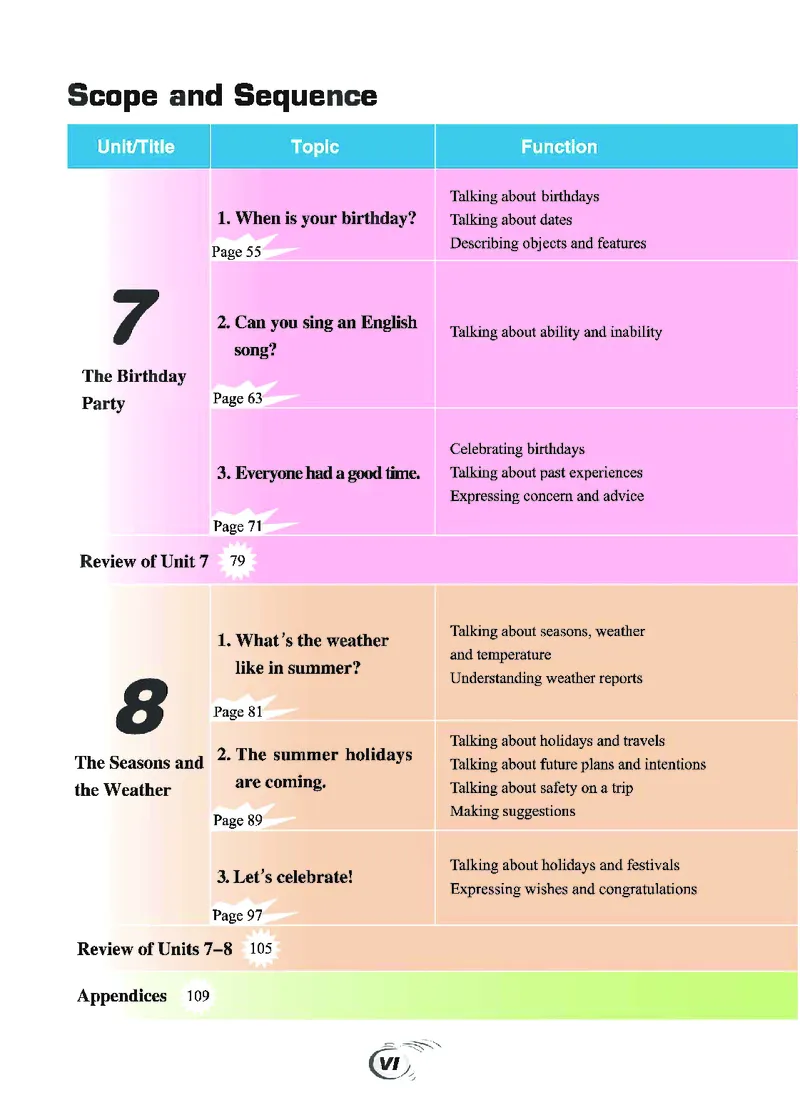
112Unit 7 The Birthday Party
Topic 1 When is your birthday
?
Section A
哇 你真是 罗琳的超级粉丝
Wow! Youre a big fan of J.K.Rowling. ! J.K. 。
文化背景知识
罗琳
J.K.
罗琳 英国女作家 年 月 日出生于英国威尔士 六岁时开始写作 处女作为 兔子
J. K. , ,1965 7 31 。 , 《 》。
年 月出版第一部小说 哈利 波特 该系列丛书已被译成 多种语言 全球销售逾 亿册
1997 6 《 · 》, 60 , 3 。
Section B
噢 你的生日就要到了
1. Oh, your birthday is coming. , 。
此句是用现在进行时表示将来 表示按计划或安排要发生的事
, 。
年 月 日
2. May 13th, 2005 2005 5 13
英语中日期的表达法通常有两种
:
把月份写在日期的前面 如
(1) 。 :
年 月 日 读作
May 21st,2001 2001 5 21 , :May (the) twenty⁃first, two thousand and one
先写日期 再写月份和年份 如
(2) , 。 :
年 月 日 读作
25th May,2001 2001 5 25 , :the twenty⁃fifth of May, two thousand and one
Section C
哦 我猜出来了
1. Oh! I get it. ! 。
读作
2. 6.4 :six point four
Section D
对于布朗夫人来说 那将会是美好的一天
That would be a wonderful day for Mrs. Brown. , 。
Topic 2 Can you sing an English song
?
Section A
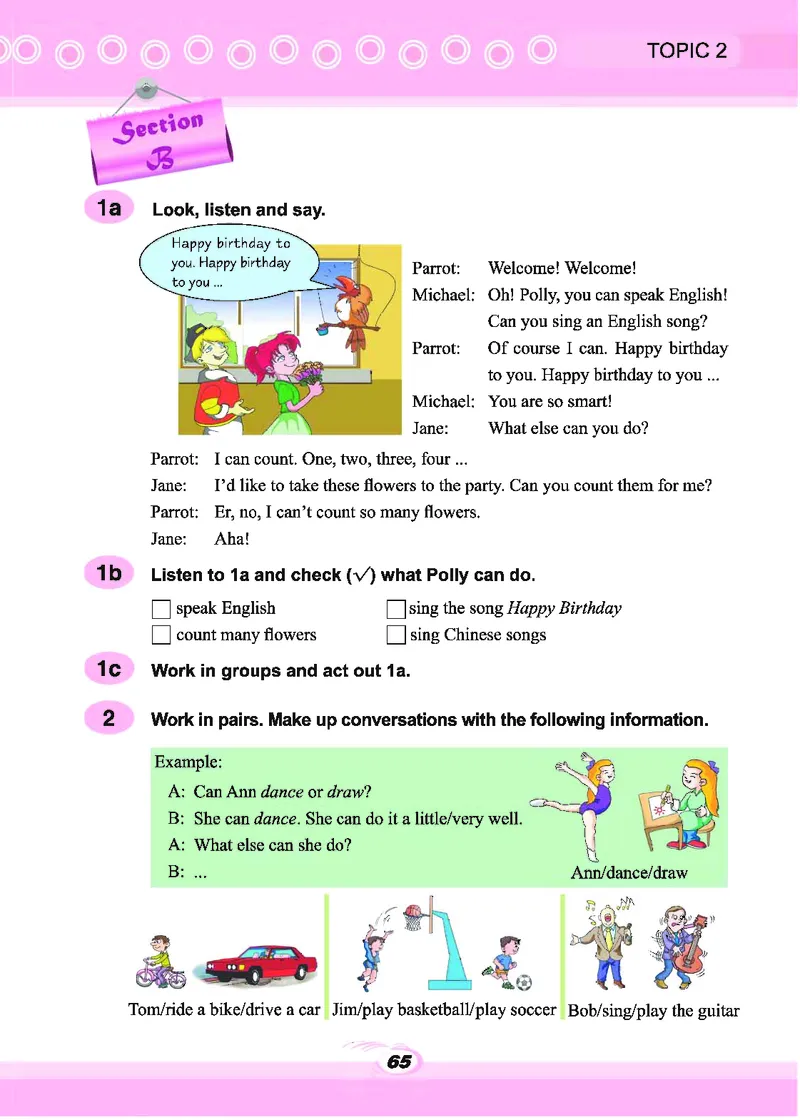
你还会做别的什么吗
1. What else can you do? ?
意为 别的 其他的 常置于疑问代词 疑问副词或不定代词的后面 如
else “ , ”, 、 。 :
你还想去别的地方吗
Where else do you want to go? ?
你还要别的东西吗
Anything else? ?
我想随着迪斯科跳舞
2. Id like to dance to disco. 。
我确信我们会在聚会上玩得很开心
3. Im sure well have a good time at the party. 。
意为 玩得开心 还可用 等词来代替 如
have a good time “ ”。 good great, nice, wonderful 。 :
113昨天我们在动物园玩的很开心
We had a great time at the zoo yesterday. 。
Topic 3 Everyone had a good time.
Section B
怎么啦 有什么问题
1. Whats the matter? / ?
该句后还可接 短语 相当于 常用来询问某人 某物出了什么
with , Whats wrong with sb./sth.? /
问题或毛病 如
。 :
相当于 凯特 你的自
Whats the matter with your bike, Kate? Whats wrong with your bike, Kate? ,
行车怎么啦
?
恐怕是太晚了
2. Im afraid it was too late. 。
用于礼貌地表达令人不愉快 失望或感到遗憾的事 其后常接从句 如
Im afraid 、 , 。 :
恐怕我们不能来
Im afraid we cant come. 。
Section C
他父母给我们买了许多食品和饮料
1. His parents bought lots of food and drinks for us. 。
在此用作不可数名词 表示食物的总称 可表示不同种类的饮料 此时是可数名词 复数
food , 。 drink , ,
加
s。
康康许了一个愿 然后吹灭了蜡烛
2. Kangkang made a wish, and then he blew out the candles. , 。
意为 许愿
make a wish “ ”。
Unit 8 The Seasons and the Weather
Topic 1 Whats the weather like in summer
?
Section B
一切都好吗
1. How are things going? ?
相当于
How is it going?
当你出去时 记住穿雨衣
2. Remember to put on your raincoat when you go outside. , 。
意为 记住要去做某事 如
remember to do sth. “ ”。 :
你出去的时候 请记得把门关上
Please remember to close the door when you go out. , 。
最低温度是零下八摄氏度 最
3. The lowest temperature is -8℃ and the highest temperature is -2℃. ,
高温度是零下二摄氏度
。
是 的最高级形式 意为 最低的 是 的最高级形式 意为 最高的
lowest low , “ ”;highest high , “ ”。
指的是零下八摄氏度 读作 / selsi s/ 或 / ma n s/
-8℃ , :eight degrees Celsius ˈ ə below zero minus ˈ ɪ ə
/ sent gre d/
eight degrees centigrade ˈ ɪ ɪ 。
Section C
但是过些时候 天气 可能又会变得阳光灿烂
1. , but later on, it may get fine again. ……, ,( ) 。
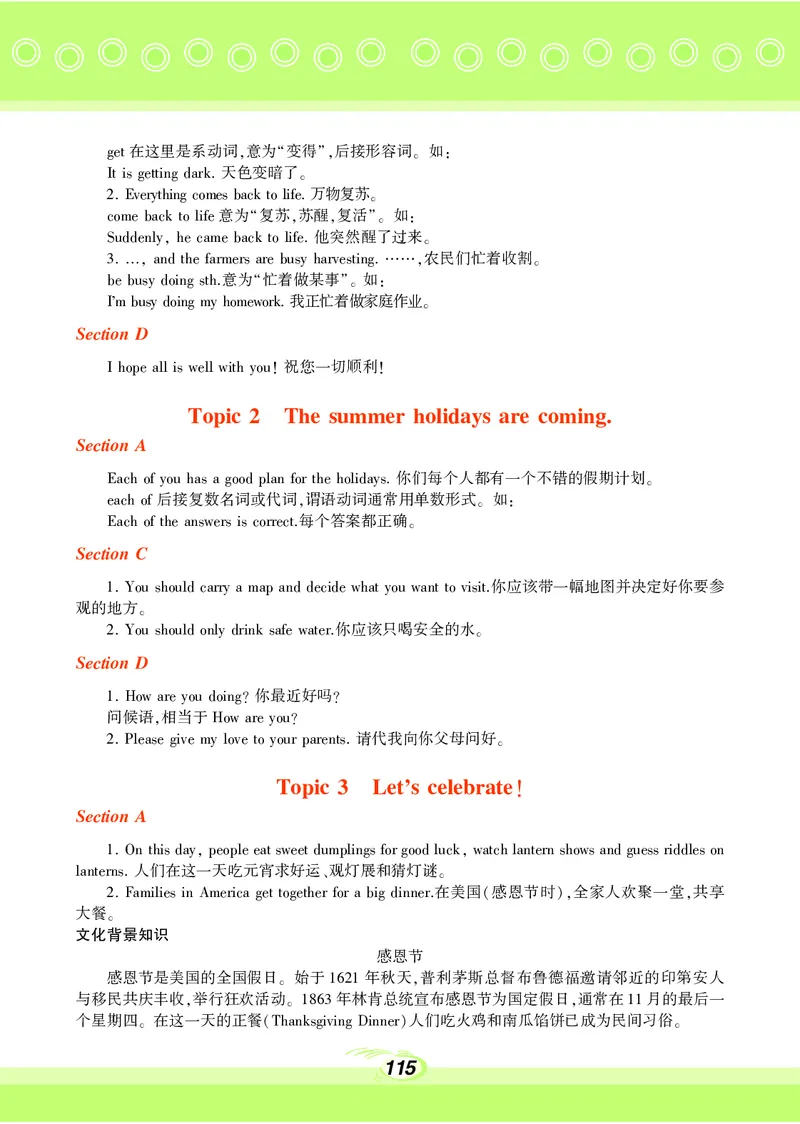
114在这里是系动词 意为 变得 后接形容词 如
get , “ ”, 。 :
天色变暗了
It is getting dark. 。
万物复苏
2. Everything comes back to life. 。
意为 复苏 苏醒 复活 如
come back to life “ , , ”。 :
他突然醒了过来
Suddenly, he came back to life. 。
农民们忙着收割
3. , and the farmers are busy harvesting. ……, 。
意为 忙着做某事 如
be busy doing sth. “ ”。 :
我正忙着做家庭作业
Im busy doing my homework. 。
Section D
祝您一切顺利
I hope all is well with you! !
Topic 2 The summer holidays are coming.
Section A
你们每个人都有一个不错的假期计划
Each of you has a good plan for the holidays. 。
后接复数名词或代词 谓语动词通常用单数形式 如
each of , 。 :
每个答案都正确
Each of the answers is correct. 。
Section C
你应该带一幅地图并决定好你要参
1. You should carry a map and decide what you want to visit.
观的地方
。
你应该只喝安全的水
2. You should only drink safe water. 。
Section D
你最近好吗
1. How are you doing? ?
问候语 相当于
, How are you?
请代我向你父母问好
2. Please give my love to your parents. 。
Topic 3 Lets celebrate
!
Section A
1. On this day, people eat sweet dumplings for good luck, watch lantern shows and guess riddles on
人们在这一天吃元宵求好运 观灯展和猜灯谜
lanterns. 、 。
在美国 感恩节时 全家人欢聚一堂 共享
2. Families in America get together for a big dinner. ( ), ,
大餐
。
文化背景知识
感恩节
感恩节是美国的全国假日 始于 年秋天 普利茅斯总督布鲁德福邀请邻近的印第安人
。 1621 ,
与移民共庆丰收 举行狂欢活动 年林肯总统宣布感恩节为国定假日 通常在 月的最后一
, 。 1863 , 11
个星期四 在这一天的正餐 人们吃火鸡和南瓜馅饼已成为民间习俗
。 (Thanksgiving Dinner) 。
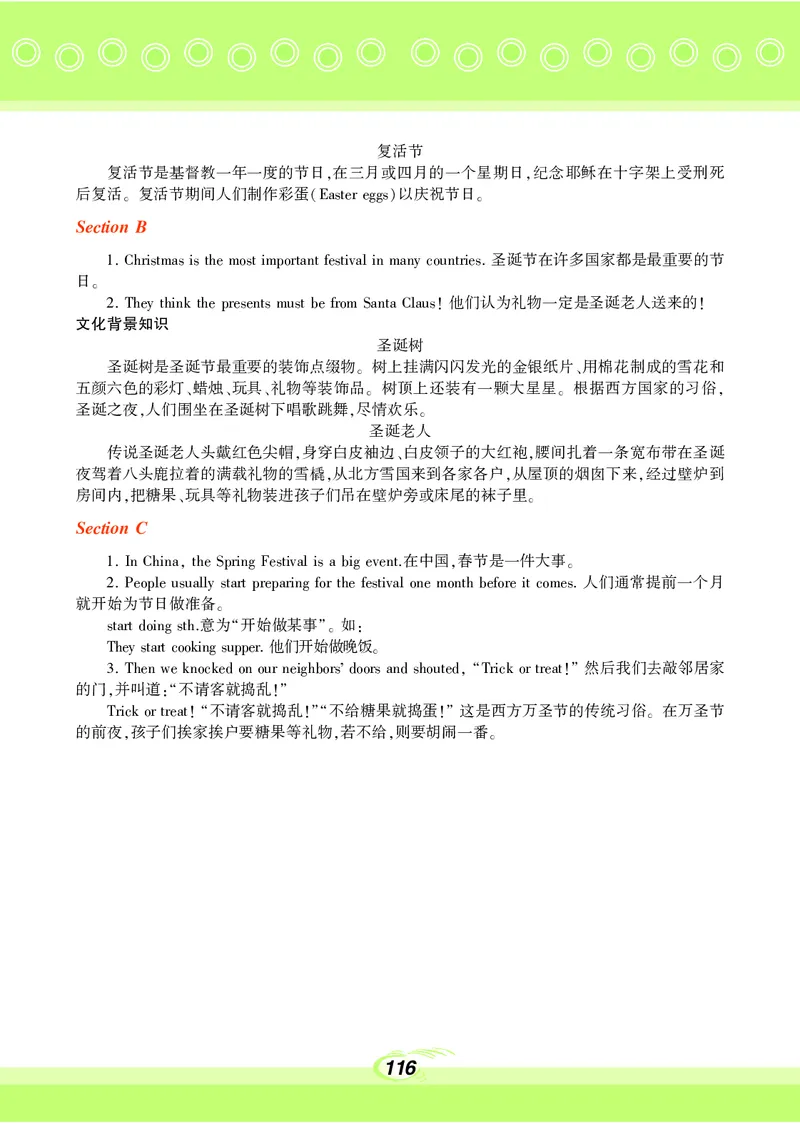
115复活节
复活节是基督教一年一度的节日 在三月或四月的一个星期日 纪念耶稣在十字架上受刑死
, ,
后复活 复活节期间人们制作彩蛋 以庆祝节日
。 (Easter eggs) 。
Section B
圣诞节在许多国家都是最重要的节
1. Christmas is the most important festival in many countries.
日
。
他们认为礼物一定是圣诞老人送来的
2. They think the presents must be from Santa Claus! !
文化背景知识
圣诞树
圣诞树是圣诞节最重要的装饰点缀物 树上挂满闪闪发光的金银纸片 用棉花制成的雪花和
。 、
五颜六色的彩灯 蜡烛 玩具 礼物等装饰品 树顶上还装有一颗大星星 根据西方国家的习俗
、 、 、 。 。 ,
圣诞之夜 人们围坐在圣诞树下唱歌跳舞 尽情欢乐
, , 。
圣诞老人
传说圣诞老人头戴红色尖帽 身穿白皮袖边 白皮领子的大红袍 腰间扎着一条宽布带在圣诞
, 、 ,
夜驾着八头鹿拉着的满载礼物的雪橇 从北方雪国来到各家各户 从屋顶的烟囱下来 经过壁炉到
, , ,
房间内 把糖果 玩具等礼物装进孩子们吊在壁炉旁或床尾的袜子里
, 、 。
Section C
在中国 春节是一件大事
1. In China, the Spring Festival is a big event. , 。
人们通常提前一个月
2. People usually start preparing for the festival one month before it comes.
就开始为节日做准备
。
意为 开始做某事 如
start doing sth. “ ”。 :
他们开始做晚饭
They start cooking supper. 。
然后我们去敲邻居家
3. Then we knocked on our neighbors doors and shouted, “Trick or treat!”
的门 并叫道 不请客就捣乱
, :“ !”
不请客就捣乱 不给糖果就捣蛋 这是西方万圣节的传统习俗 在万圣节
Trick or treat! “ !”“ !” 。
的前夜 孩子们挨家挨户要糖果等礼物 若不给 则要胡闹一番
, , , 。
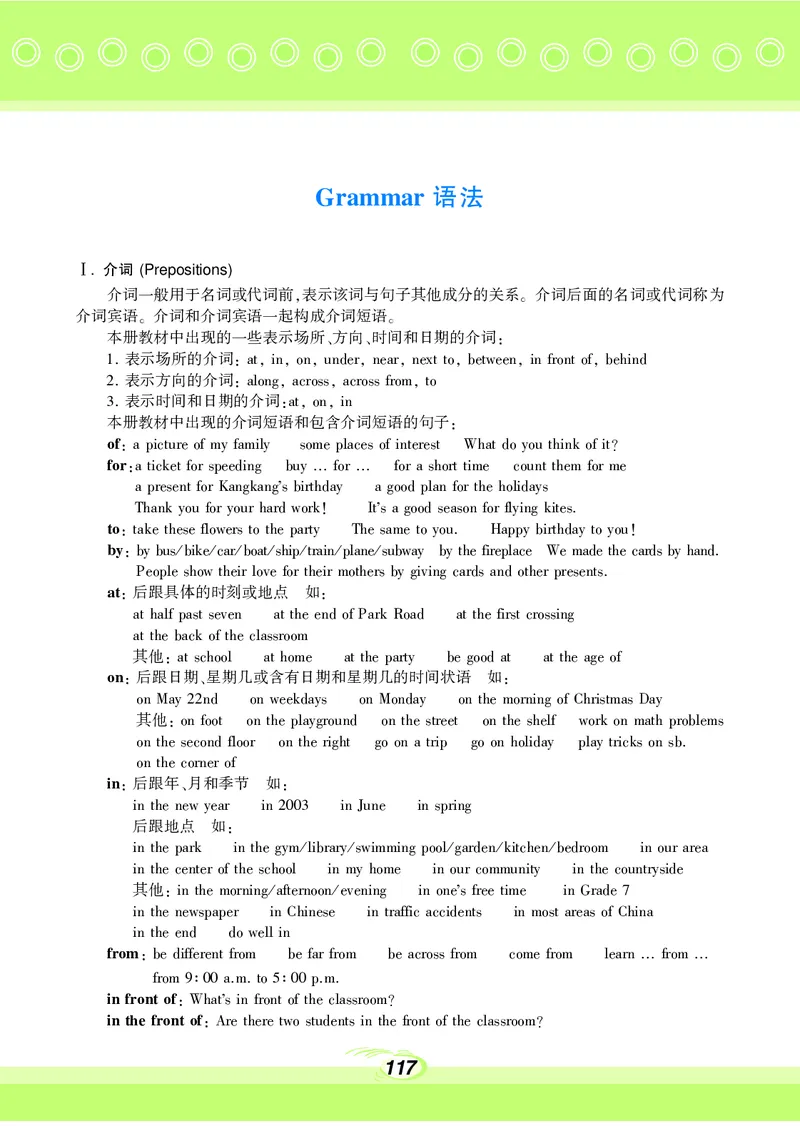
116Grammar 语法
介词 (Prepositions)
Ⅰ
介词一般用于名词或代词前 表示该词与句子其他成分的关系 介词后面的名词或代词称为
, 。
介词宾语 介词和介词宾语一起构成介词短语
。 。
本册教材中出现的一些表示场所 方向 时间和日期的介词
、 、 :
表示场所的介词
1. : at, in, on, under, near, next to, between, in front of, behind
表示方向的介词
2. : along, across, across from, to
表示时间和日期的介词
3. :at, on, in
本册教材中出现的介词短语和包含介词短语的句子
:
of
: a picture of my family some places of interest What do you think of it?
for
:a ticket for speeding buy for for a short time count them for me
a present for Kangkangs birthday a good plan for the holidays
Thank you for your hard work! Its a good season for flying kites.
to
: take these flowers to the party The same to you. Happy birthday to you!
by
: by bus/bike/car/boat/ship/train/plane/subway by the fireplace We made the cards by hand.
People show their love for their mothers by giving cards and other presents.
at 后跟具体的时刻或地点 如
: :
at half past seven at the end of Park Road at the first crossing
at the back of the classroom
其他
: at school at home at the party be good at at the age of
on 后跟日期 星期几或含有日期和星期几的时间状语 如
: 、 :
on May 22nd on weekdays on Monday on the morning of Christmas Day
其他
: on foot on the playground on the street on the shelf work on math problems
on the second floor on the right go on a trip go on holiday play tricks on sb.
on the corner of
in 后跟年 月和季节 如
: 、 :
in the new year in 2003 in June in spring
后跟地点 如
:
in the park in the gym/library/swimming pool/garden/kitchen/bedroom in our area
in the center of the school in my home in our community in the countryside
其他
: in the morning/afternoon/evening in ones free time in Grade 7
in the newspaper in Chinese in traffic accidents in most areas of China
in the end do well in
from
: be different from be far from be across from come from learn from
from 9:00 a.m. to 5:00 p.m.
in front of
: Whats in front of the classroom?
in the front of
: Are there two students in the front of the classroom?
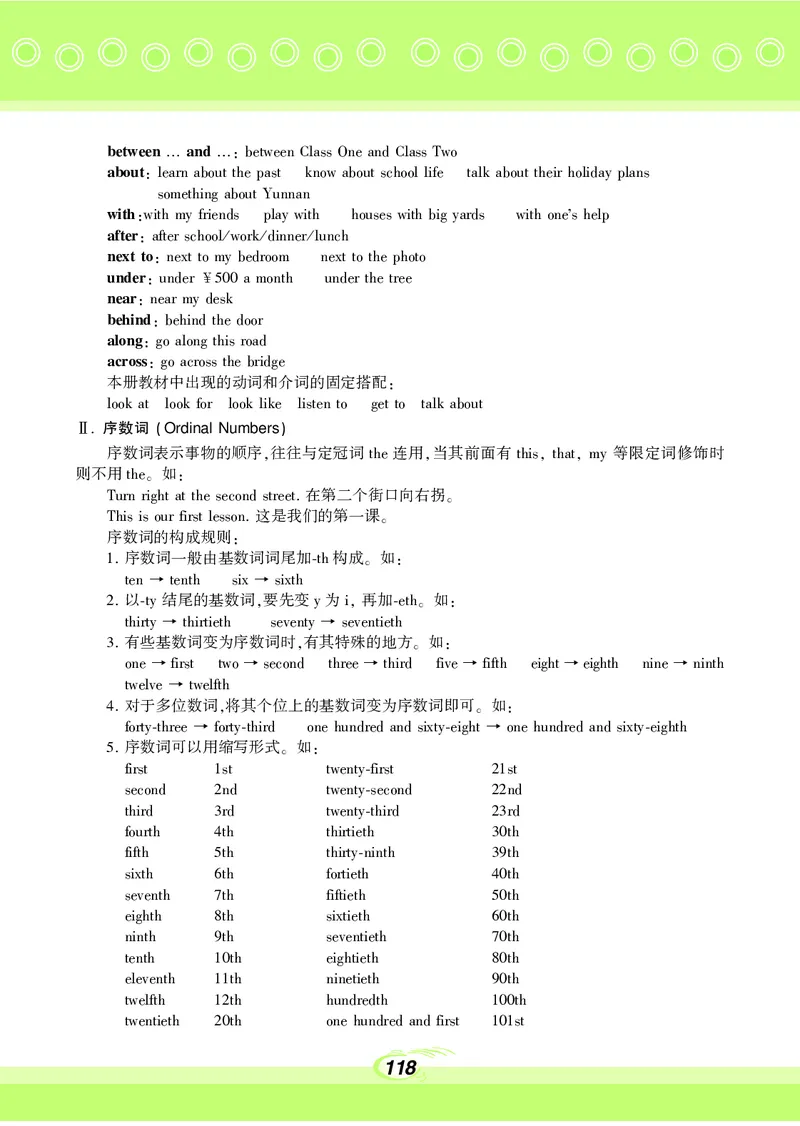
117between and
: between Class One and Class Two
about
: learn about the past know about school life talk about their holiday plans
something about Yunnan
with
:with my friends play with houses with big yards with ones help
after
: after school/work/dinner/lunch
next to
: next to my bedroom next to the photo
under
: under ¥500 a month under the tree
near
: near my desk
behind
: behind the door
along
: go along this road
across
: go across the bridge
本册教材中出现的动词和介词的固定搭配
:
look at look for look like listen to get to talk about
序数词 (Ordinal Numbers)
Ⅱ
序数词表示事物的顺序 往往与定冠词 连用 当其前面有 等限定词修饰时
, the , this, that, my
则不用 如
the。 :
在第二个街口向右拐
Turn right at the second street. 。
这是我们的第一课
This is our first lesson. 。
序数词的构成规则
:
序数词一般由基数词词尾加 构成 如
1. ⁃th 。 :
ten ➝ tenth six ➝ sixth
以 结尾的基数词 要先变 为 再加 如
2. ⁃ty , y i, ⁃eth。 :
thirty ➝ thirtieth seventy ➝ seventieth
有些基数词变为序数词时 有其特殊的地方 如
3. , 。 :
one ➝ first two ➝ second three ➝ third five ➝ fifth eight ➝eighth nine ➝ ninth
twelve ➝ twelfth
对于多位数词 将其个位上的基数词变为序数词即可 如
4. , 。 :
forty⁃three ➝ forty⁃third one hundred and sixty⁃eight ➝ one hundred and sixty⁃eighth
序数词可以用缩写形式 如
5. 。 :
first 1st twenty⁃first 21st
second 2nd twenty⁃second 22nd
third 3rd twenty⁃third 23rd
fourth 4th thirtieth 30th
fifth 5th thirty⁃ninth 39th
sixth 6th fortieth 40th
seventh 7th fiftieth 50th
eighth 8th sixtieth 60th
ninth 9th seventieth 70th
tenth 10th eightieth 80th
eleventh 11th ninetieth 90th
twelfth 12th hundredth 100th
twentieth 20th one hundred and first 101st
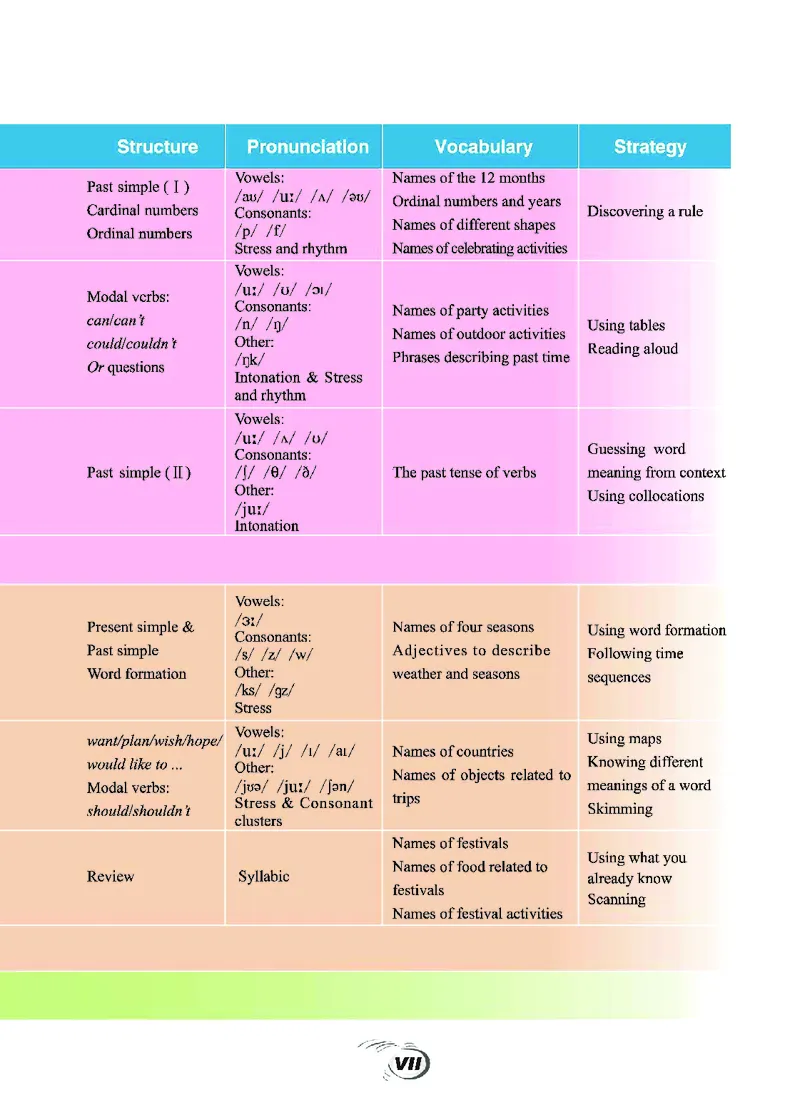
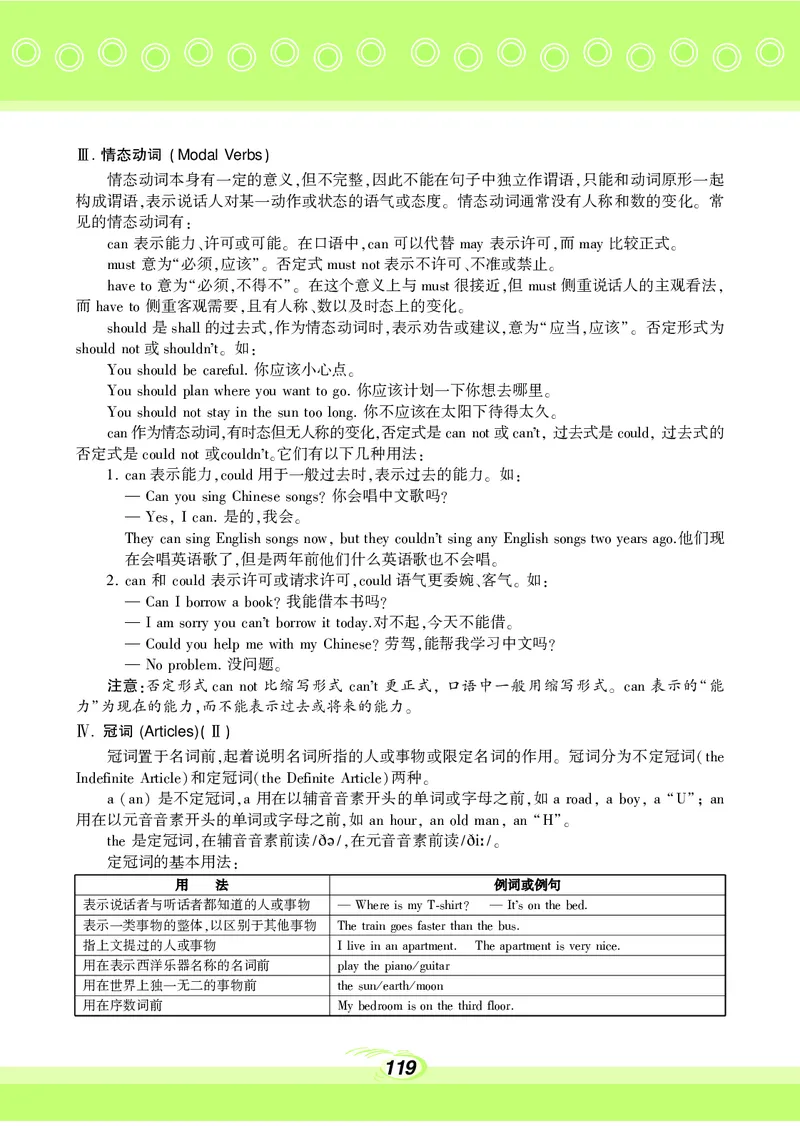
118. 情态动词 (Modal Verbs)
Ⅲ
情态动词本身有一定的意义 但不完整 因此不能在句子中独立作谓语 只能和动词原形一起
, , ,
构成谓语 表示说话人对某一动作或状态的语气或态度 情态动词通常没有人称和数的变化 常
, 。 。
见的情态动词有
:
表示能力 许可或可能 在口语中 可以代替 表示许可 而 比较正式
can 、 。 ,can may , may 。
意为 必须 应该 否定式 表示不许可 不准或禁止
must “ , ”。 must not 、 。
意为 必须 不得不 在这个意义上与 很接近 但 侧重说话人的主观看法
have to “ , ”。 must , must ,
而 侧重客观需要 且有人称 数以及时态上的变化
have to , 、 。
是 的过去式 作为情态动词时 表示劝告或建议 意为 应当 应该 否定形式为
should shall , , , “ , ”。
或 如
should not shouldnt。 :
你应该小心点
You should be careful. 。
你应该计划一下你想去哪里
You should plan where you want to go. 。
你不应该在太阳下待得太久
You should not stay in the sun too long. 。
作为情态动词 有时态但无人称的变化 否定式是 或 过去式是 过去式的
can , , can not cant, could,
否定式是 或 它们有以下几种用法
could not couldnt。 :
表示能力 用于一般过去时 表示过去的能力 如
1. can ,could , 。 :
你会唱中文歌吗
— Can you sing Chinese songs? ?
是的 我会
— Yes, I can. , 。
他们现
They can sing English songs now, but they couldnt sing any English songs two years ago.
在会唱英语歌了 但是两年前他们什么英语歌也不会唱
, 。
和 表示许可或请求许可 语气更委婉 客气 如
2. can could ,could 、 。 :
我能借本书吗
— Can I borrow a book? ?
对不起 今天不能借
— I am sorry you cant borrow it today. , 。
劳驾 能帮我学习中文吗
— Could you help me with my Chinese? , ?
没问题
— No problem. 。
注意:否定形式 比缩写形式 更正式, 口语中一般用缩写形式。 表示的“能
can not cant can
力”为现在的能力,而不能表示过去或将来的能力。
冠词 (Articles)( )
Ⅳ Ⅱ
冠词置于名词前 起着说明名词所指的人或事物或限定名词的作用 冠词分为不定冠词
, 。 (the
和定冠词 两种
Indefinite Article) (the Definite Article) 。
是不定冠词 用在以辅音音素开头的单词或字母之前 如
a (an) ,a , a road, a boy, a “U”; an
用在以元音音素开头的单词或字母之前 如
, an hour, an old man, an “H”。
是定冠词 在辅音音素前读/ / 在元音音素前读/ i /
the , ðə , ðː 。
定冠词的基本用法
:
用 法 例词或例句
表示说话者与听话者都知道的人或事物
— Where is my T⁃shirt? — Its on the bed.
表示一类事物的整体 以区别于其他事物
, The train goes faster than the bus.
指上文提过的人或事物
I live in an apartment. The apartment is very nice.
用在表示西洋乐器名称的名词前
play the piano/guitar
用在世界上独一无二的事物前
the sun/earth/moon
用在序数词前
My bedroom is on the third floor.
119续表
用 法 例词或例句
用在形容词和副词最高级之前
Summer is the hottest season. He runs (the) fastest.
用在由普通名词构成的专有名词前
the Great Wall the Childrens Hospital
用在姓氏的复数形式前 表示某一家人
, the Smiths
用在一些习惯用语中
in the morning/afternoon/evening on the right/left
不用冠词的情况
:
用 法 例词或例句
在专有名词和不可数名词前
Beijing Class4 milk
Its Sunday today.
在星期 月份 季节 节日名词前
、 、 、 Its very cold in winter.
Thanksgiving Day is an important festival in America.
复数名词表示一类人或事物时 Children like animals.
Oranges are orange.
名词前已有 This is my book.
this, that, my, your, some,
等限定词修饰时 How much are these oranges?
any, every, each
There are some people in the room.
Mrs.Smith likes making things.
在称呼语 头衔和职务名词前
、 Mom, this is my Chinese teacher, Mr.Li.
They made him monitor.
在一日三餐及球类名词前 He often goes to school without breakfast.
Michael likes playing basketball.
在某些固定词组中
go to school/work/bed at night/noon
There be结构(There be Structure)
Ⅴ
句型的构成形式一般为 某物 人 某地 时 表示 某地 时有某物
There be “There is/are + / + / ”, “ / /
人
”。
结构的一般现在时基本句型如下
There be :
肯 定
There is a computer on the desk. There are some students on the playground.
否 定
There isnt a computer on the desk. There arent any students on the playground.
疑 问
Is there a computer on the desk? Are there any students on the playground?
回 答 Yes, there is. Yes, there are.
No, there isnt. No, there arent.
注意: 句型中,遵循就近一致原则, 动词的形式由最靠近它的主语决定。 如:
There be be
, 书桌上有一幅地图、一台电脑和一些书。
There is a map a computer and some books on the desk.
, 二楼有两间卧室和一间小书房。
On the second floor there are two bedrooms and a small study.
时态 (Tenses)
Ⅵ
现在进行时
1 (Present Continuous)
现在进行时表示正在发生或进行的动作 常与 等时间状语连用 谓语动
, now, at the moment 。
词形式为 v. 其中 动词的具体形式为 如
:“be + ⁃ing”( be am/is/are)。 :
他现在正在睡觉
He is sleeping at the moment. 。
此外 现在进行时还有以下两种基本用法
, :
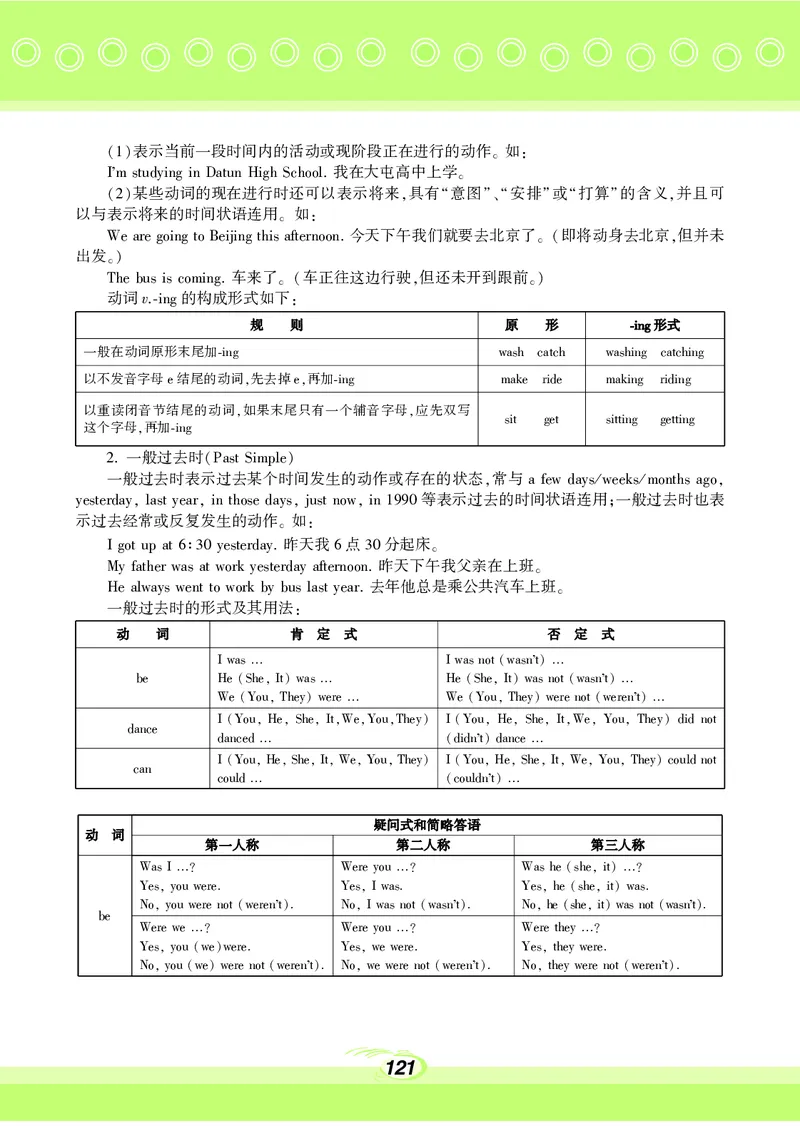
120表示当前一段时间内的活动或现阶段正在进行的动作 如
(1) 。 :
我在大屯高中上学
Im studying in Datun High School. 。
某些动词的现在进行时还可以表示将来 具有 意图 安排 或 打算 的含义 并且可
(2) , “ ”、“ ” “ ” ,
以与表示将来的时间状语连用 如
。 :
今天下午我们就要去北京了 即将动身去北京 但并未
We are going to Beijing this afternoon. 。 ( ,
出发
。)
车来了 车正往这边行驶 但还未开到跟前
The bus is coming. 。 ( , 。)
动词v. 的构成形式如下
⁃ing :
规 则 原 形 形式
⁃ing
一般在动词原形末尾加
⁃ing wash catch washing catching
以不发音字母 结尾的动词 先去掉 再加
e , e, ⁃ing make ride making riding
以重读闭音节结尾的动词 如果末尾只有一个辅音字母 应先双写
, ,
这个字母 再加 sit get sitting getting
, ⁃ing
一般过去时
2 (Past Simple)
一般过去时表示过去某个时间发生的动作或存在的状态 常与
, a few days/weeks/months ago,
等表示过去的时间状语连用 一般过去时也表
yesterday, last year, in those days, just now, in 1990 ;
示过去经常或反复发生的动作 如
。 :
昨天我 点 分起床
I got up at 6:30 yesterday. 6 30 。
昨天下午我父亲在上班
My father was at work yesterday afternoon. 。
去年他总是乘公共汽车上班
He always went to work by bus last year. 。
一般过去时的形式及其用法
:
动 词 肯 定 式 否 定 式
I was I was not (wasnt)
be He (She, It) was He (She, It) was not (wasnt)
We (You, They) were We (You, They) were not (werent)
I (You, He, She, It,We,You,They) I (You, He, She, It,We, You, They) did not
dance
danced (didnt) dance
I (You,He,She,It,We,You,They) I (You,He,She,It,We,You,They) couldnot
can
could (couldnt)
疑问式和简略答语
动 词
第一人称 第二人称 第三人称
Was I ? Were you ? Was he (she, it) ?
Yes, you were. Yes, I was. Yes, he (she, it) was.
No, you were not (werent). No, I was not (wasnt). No,he(she,it) wasnot (wasnt).
be
Were we ? Were you ? Were they ?
Yes, you (we)were. Yes, we were. Yes, they were.
No,you (we) were not (werent). No, we were not (werent). No, they were not (werent).
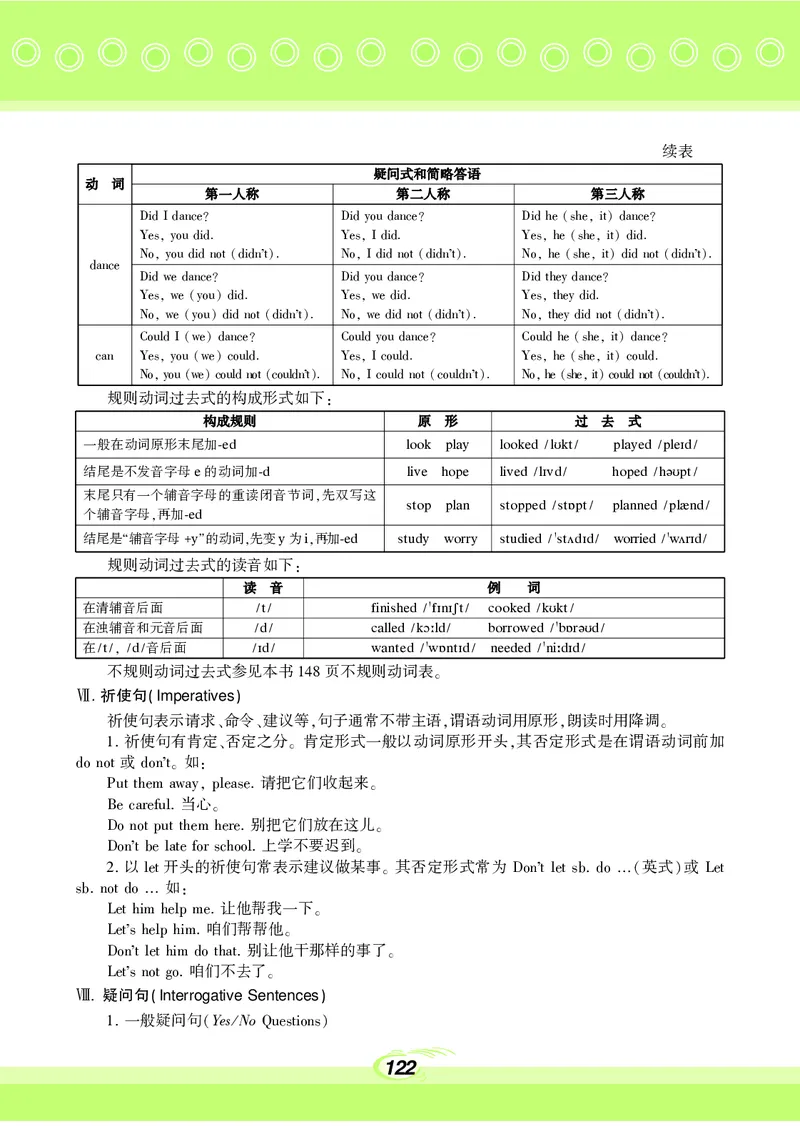
121续表
疑问式和简略答语
动 词
第一人称 第二人称 第三人称
Did I dance? Did you dance? Did he (she, it) dance?
Yes, you did. Yes, I did. Yes, he (she, it) did.
No, you did not (didnt). No, I did not (didnt). No, he (she, it) did not (didnt).
dance
Did we dance? Did you dance? Did they dance?
Yes, we (you) did. Yes, we did. Yes, they did.
No, we (you) did not (didnt). No, we did not (didnt). No, they did not (didnt).
Could I (we) dance? Could you dance? Could he (she, it) dance?
can Yes, you (we) could. Yes, I could. Yes, he (she, it) could.
No,you(we) couldnot(couldnt). No, I could not (couldnt). No,he(she,it)couldnot(couldnt).
规则动词过去式的构成形式如下
:
构成规则 原 形 过 去 式
一般在动词原形末尾加⁃ed look play looked /l kt/ played /pleId/
ʊ
结尾是不发音字母e的动词加⁃d live hope lived /lIvd/ hoped /h pt/
əʊ
末尾只有一个辅音字母的重读闭音节词 先双写这
, stop plan stopped /st pt/ planned /plænd/
个辅音字母 再加⁃ed ɒ
,
结尾是 辅音字母 y 的动词 先变y为i 再加⁃ed study worry studied / st dd/ worried /w rd/
“ + ” , , ˈ ʌ ɪ ˈ ʌɪ
规则动词过去式的读音如下
:
读 音 例 词
在清辅音后面 /t/ finished / fInI t/ cooked /k kt/
ˈ ʃ ʊ
在浊辅音和元音后面 /d/ called /k ld/ borrowed / b r d/
ɔː ˈ ɒ əʊ
在/t/ /d/音后面 /Id/ wanted / w ntId/ needed / nidId/
, ˈ ɒ ˈ ː
不规则动词过去式参见本书 页不规则动词表
148 。
. 祈使句(Imperatives)
Ⅶ
祈使句表示请求 命令 建议等 句子通常不带主语 谓语动词用原形 朗读时用降调
、 、 , , , 。
祈使句有肯定 否定之分 肯定形式一般以动词原形开头 其否定形式是在谓语动词前加
1. 、 。 ,
或 如
do not dont。 :
请把它们收起来
Put them away, please. 。
当心
Be careful. 。
别把它们放在这儿
Do not put them here. 。
上学不要迟到
Dont be late for school. 。
以 开头的祈使句常表示建议做某事 其否定形式常为 英式 或
2. let 。 Dont let sb. do ( ) Let
如
sb. not do :
让他帮我一下
Let him help me. 。
咱们帮帮他
Lets help him. 。
别让他干那样的事了
Dont let him do that. 。
咱们不去了
Lets not go. 。
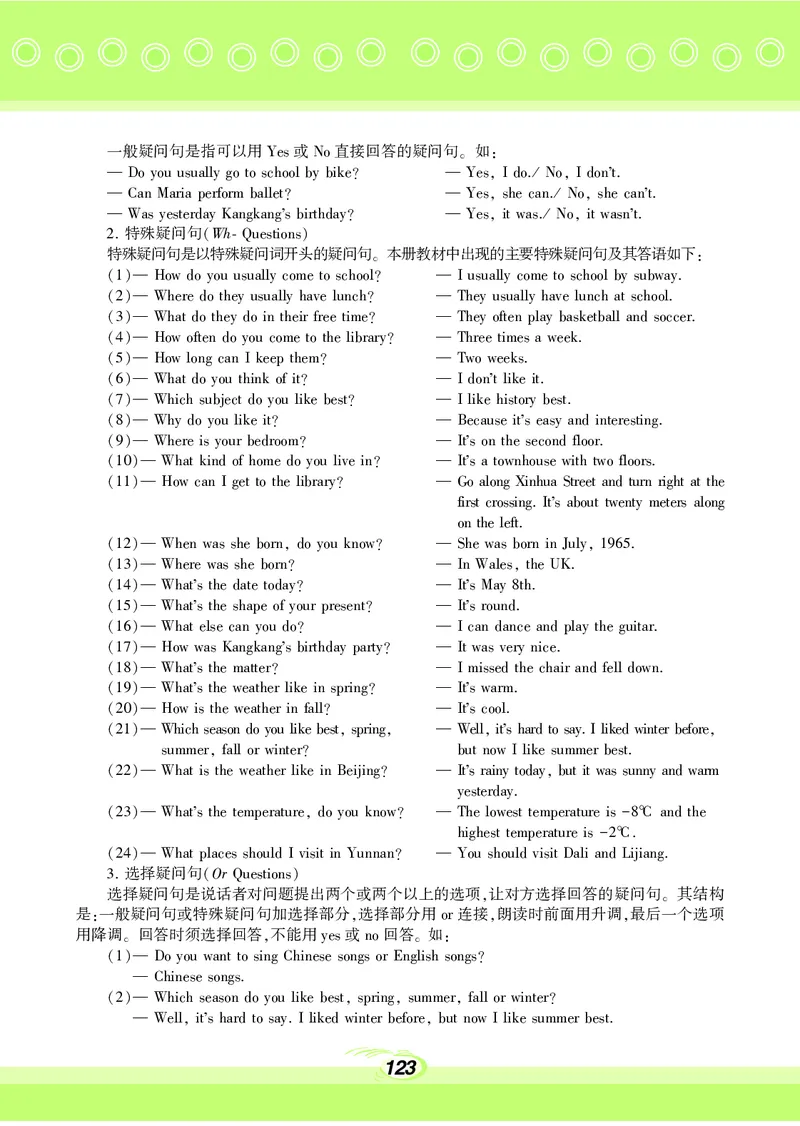
疑问句(Interrogative Sentences)
Ⅷ
一般疑问句 Yes/No
1. ( Questions)
122一般疑问句是指可以用 或 直接回答的疑问句 如
Yes No 。 :
— Do you usually go to school by bike? — Yes, I do./ No, I dont.
— Can Maria perform ballet? — Yes, she can./ No, she cant.
— Was yesterday Kangkangs birthday? — Yes, it was./ No, it wasnt.
特殊疑问句 Wh⁃
2. ( Questions)
特殊疑问句是以特殊疑问词开头的疑问句 本册教材中出现的主要特殊疑问句及其答语如下
。 :
(1)— How do you usually come to school? — I usually come to school by subway.
(2)— Where do they usually have lunch? — They usually have lunch at school.
(3)— What do they do in their free time? — They often play basketball and soccer.
(4)— How often do you come to the library? — Three times a week.
(5)— How long can I keep them? — Two weeks.
(6)— What do you think of it? — I dont like it.
(7)— Which subject do you like best? — I like history best.
(8)— Why do you like it? — Because its easy and interesting.
(9)— Where is your bedroom? — Its on the second floor.
(10)— What kind of home do you live in? — Its a townhouse with two floors.
(11)— How can I get to the library? — Go along Xinhua Street and turn right at the
first crossing. Its about twenty meters along
on the left.
(12)— When was she born, do you know? — She was born in July, 1965.
(13)— Where was she born? — In Wales, the UK.
(14)— Whats the date today? — Its May 8th.
(15)— Whats the shape of your present? — Its round.
(16)— What else can you do? — I can dance and play the guitar.
(17)— How was Kangkangs birthday party? — It was very nice.
(18)— Whats the matter? — I missed the chair and fell down.
(19)— Whats the weather like in spring? — Its warm.
(20)— How is the weather in fall? — Its cool.
(21)— Which season do you like best,spring, — Well,its hard to say. I liked winter before,
summer, fall or winter? but now I like summer best.
(22)— What is the weather like in Beijing? — Its rainy today, but it was sunny and warm
yesterday.
(23)— Whats the temperature, do you know? — The lowest temperature is -8℃ and the
highest temperature is -2℃.
(24)— What places should I visit in Yunnan? — You should visit Dali and Lijiang.
选择疑问句 Or
3. ( Questions)
选择疑问句是说话者对问题提出两个或两个以上的选项 让对方选择回答的疑问句 其结构
, 。
是 一般疑问句或特殊疑问句加选择部分 选择部分用 连接 朗读时前面用升调 最后一个选项
: , or , ,
用降调 回答时须选择回答 不能用 或 回答 如
。 , yes no 。 :
(1)— Do you want to sing Chinese songs or English songs?
— Chinese songs.
(2)— Which season do you like best, spring, summer, fall or winter?
— Well, its hard to say. I liked winter before, but now I like summer best.
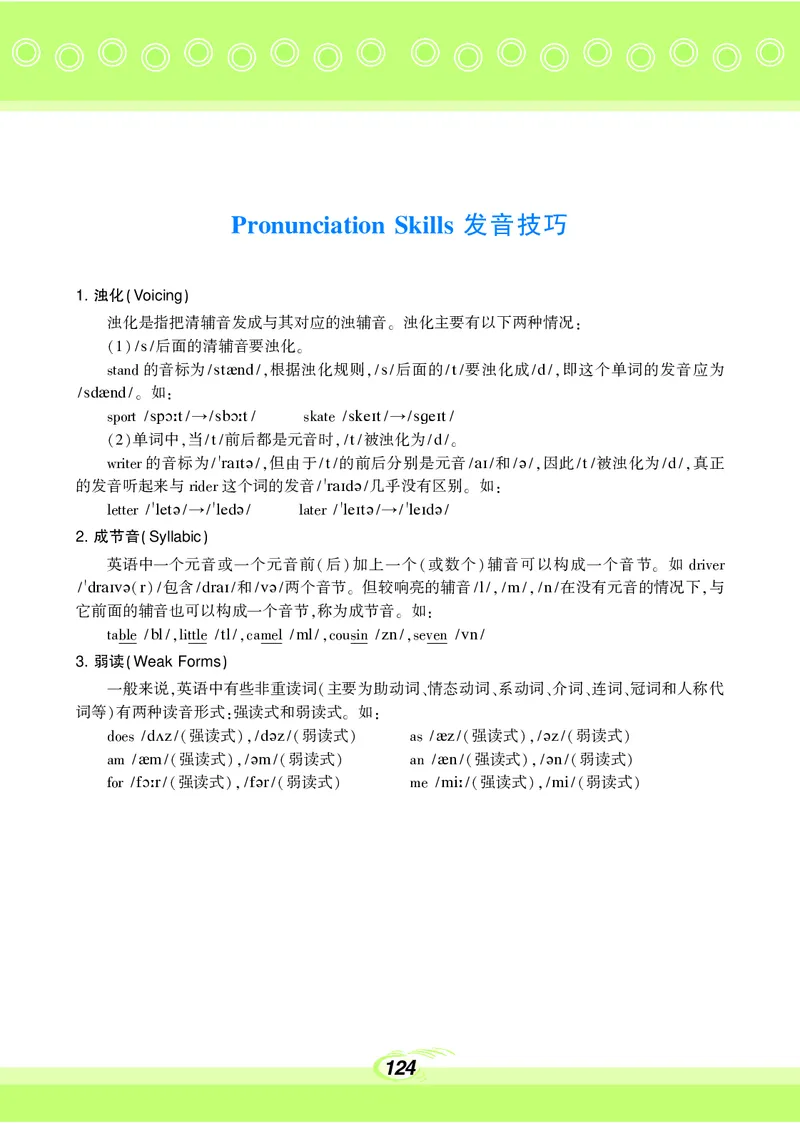
123Pronunciation Skills 发音技巧
1. 浊化(Voicing)
浊化是指把清辅音发成与其对应的浊辅音 浊化主要有以下两种情况
。 :
/s/后面的清辅音要浊化
(1) 。
的音标为/stænd/ 根据浊化规则 /s/后面的/t/要浊化成/d/ 即这个单词的发音应为
stand , , ,
/sdænd/ 如
。 :
/sp t/ /sb t/ /skeIt/ /sgeIt/
sport ɔː → ɔː skate →
单词中 当/t/前后都是元音时 /t/被浊化为/d/
(2) , , 。
的音标为/ raIt / 但由于/t/的前后分别是元音/aI/和/ / 因此/t/被浊化为/d/ 真正
writer ˈ ə , ə , ,
的发音听起来与 这个词的发音/ raId /几乎没有区别 如
rider ˈ ə 。 :
/ let / / led / / leIt / / leId /
letter ˈ ə → ˈ ə later ˈ ə → ˈ ə
2. 成节音(Syllabic)
英语中一个元音或一个元音前 后 加上一个 或数个 辅音可以构成一个音节 如
( ) ( ) 。 driver
/ draIv r /包含/draI/和/v /两个音节 但较响亮的辅音/l/ /m/ /n/在没有元音的情况下 与
ˈ ə( ) ə 。 , , ,
它前面的辅音也可以构成一个音节 称为成节音 如
, 。 :
/bl/ /tl/ /ml/ /zn/ /vn/
table ,little ,camel ,cousin ,seven
3. 弱读(Weak Forms)
一般来说 英语中有些非重读词 主要为助动词 情态动词 系动词 介词 连词 冠词和人称代
, ( 、 、 、 、 、
词等 有两种读音形式 强读式和弱读式 如
) : 。 :
/d z/ 强读式 /d z/ 弱读式 /æz/ 强读式 / z/ 弱读式
does ʌ ( ), ə ( ) as ( ), ə ( )
/æm/ 强读式 / m/ 弱读式 /æn/ 强读式 / n/ 弱读式
am ( ), ə ( ) an ( ), ə ( )
/f r/ 强读式 /f r/ 弱读式 /mi / 强读式 /mi/ 弱读式
for ɔː ( ), ə ( ) me ː ( ), ( )
124Words and Expressions in Each Unit 各单元词汇表
注:黑体词为《英语课程标准》要求掌握的词,白体词为课文中要求理解的词。 单词后
的数字是指此词第一次出现的页码。 本词汇表采用 ( 国
IPA International Phonetic Alphabet
际音标)标注系统。
Unit 5 ride /raId/ v.骑 自行车 马等
( 、 ) (3)
park /p r k/ n.公园
ː( ) (4)
Topic 1 I usually come to school by subway. v.停 车
( ) (37)
gate / eIt/ n.大门 watch /w t / /w t / v.观看 当心
(1) ː ʃ ; ɒ ʃ ; (4)
by /baI/ prep. 表示方式 如乘车等 n.手表
( , );
按照 TV / ti vi / television / telIvI n/
(1) ˌ ː ˈ ː = ˈ ʒ
adv.经过 n.电视
(4)
/ s bweI/ underground / nd r 看电视
subway ˈ ʌ ( ˈʌ ə( ) watch TV (4)
ra nd/ n.地铁 / s k r / / s k r / football
ʊ BrE) (1) soccer ˈ ː ə( ) ; ˈ ɒ ə( ) (
always / lweIz/ adv.总是 一直 / f tb l/ n.足球 运动
ˈɔː , (1) ˈ ʊ ɔː BrE) ( ) (4)
快点儿 加油 来吧 movie / muvi/ film /fIlm/ n.电影
come on ; ; (1) ˈ ː ( BrE)
步行
on foot (1) (4)
plane /pleIn/ n.飞机 begin /bI n/ v.开始
(2) ˈɪ (5)
train /treIn/ n.火车 at school 在学校 在上课
(2) ; (5)
v.培训 after / æft r / / ft r / prep.在 后
ˈ ə( ) ; ˈː ə( ) ……
ship / Ip/ n. 大 船 舰
ʃ ( ) , (2) (5)
boat /b t/ n.小船 舟 conj.在 以后
əʊ , (2) ……
weekday / wi kdeI/ n.工作日 bed /bed/ n.床
ˈ ː (3) (5)
early / r li/ adj.早的 提早的 basketball / bæskItb l/ / b skItb l/
ˈɜː( ) ; (3) ˈ ɔː ; ˈ ː ɔː
adv.早地 提早 n.篮球
; (74) (6)
bird /b r d/ n.鸟 swim /swIm/ v.& n.游泳
ɜː( ) (3) (6)
catch /kæt / v.捉住 接住 染疾 listen / lIsn/ v. 注意地 听
ʃ ; ; (3) ˈ ( ) (6)
/w r m/ n.软体虫 注意地 听 倾听
worm ɜː( ) (3) listen to ( ) ; (6)
sometimes / s mtaImz/ adv.有时 music / mju zIk/ n.音乐
ˈ ʌ (3) ˈ ː (6)
seldom / seld m/ adv.很少 library / laIbreri/ / laIbr ri/ n.图书馆
ˈ ə (3) ˈ ; ˈ ə
walk /w k/ v.& n.步行 散步
ɔː ; (3) (6)
never / nev r / adv.从不 week /wi k/ n.星期 周
ˈ ə( ) (3) ː , (6)
125once /w ns/ adv.一次 曾经 打扫
ʌ ; (6) do some cleaning (10)
conj.一旦 run /r n/ v.跑
ʌ (10)
twice /twaIs/ adv.两次 两倍 dance /dæns/ /d ns/ v.& n.跳舞
; (6) ; ː (10)
great / reIt/ adj.伟大的 好极的 borrow / b r / / b r / v.借借用
; (7) ˈ ː əʊ ; ˈ ɒəʊ , (11)
wall /w l/ n.墙 / w r kb k/ n.练习册
ɔː (7) workbook ˈ ɜː( ) ʊ (11)
长城 course /k r s/ n.过程 课程
the Great Wall (7) ɔː( ) ; (11)
life /laIf/ n.生活 生命 当然
; (7) of course (11)
American / merIk n/ adj.美国的 use /ju z/ v.用 使用
əˈ ə (7) ː , (11)
n.美国人 /ju s/ n.用 使用
ː ,
or / r / conj.或者 否则 寻找
ɔː( ) ; (8) look for (11)
over / v r / adv.结束 穿过 多于 / elf/ pl. / elvz/
ˈəʊ ə( ) ; ; (8) shelf ʃ ( shelves ʃ )
prep.在 上面 n.架子
…… (11)
more /m r / det.更多的 keep /ki p/ v.保存 保持
ɔː( ) (8) ː ; (11)
adv.更多 must /m st m st/ modal v.必须
ʌ ; ə (11)
talk /t k/ v.& n.谈话 return /rIt r n/ v.归还 回来
ɔː (8) ˈ ɜː( ) ; (11)
准时 按时
on time , (11)
Topic 2 A few students are running newspaper / nu zpeIp r /
ˈ ː ə( ) ;
around the playground. / nju zpeIp r /n.报纸
ˈ ː ə( ) (11)
make /meIk/ v.做 制造 使成为 失物招领处
, ; (9) Lost and Found (12)
card /k r d/ n.卡片 贺卡 money / m ni/ n.钱
ː( ) ; (9) ˈ ʌ (12)
boring / b rI / adj.没趣的 无聊的 wallet / w lIt/ / w lIt/ n.钱包
ˈ ɔː , (9) ˈ ː ; ˈ ɒ (12)
soon /su n/ adv. 很快 马上 around / ra nd/ adv.& prep.到处 围绕
ː , (9) əˈ ʊ ;
classroom / klæsru m/ / kl sru m/
ˈ ː ; ˈ ː ː (13)
n.教室 few /fju / adj.很少 不多
(9) ː , (13)
playground / pleI ra nd/ n.操场 pron 很少人 或事物 地方
ˈ ʊ (9) . ( 、 )
lab /læb/ laboratory / læbr t ri/ 一些
= ˈ ə ɔː ; a few (13)
/l b r tri/ n.实验室 game / e m/ n 比赛 运动 游戏
əˈ ɒ ə (9) ɪ . ; ; (13)
computer /k mpjut r / n.计算机 sit /sIt/ v.坐
ə ˈ ː ə( ) (9) (13)
room /ru m r m/ n.房间 空间 n.乒乓球运动
ː ; ʊ ; (9) ping⁃pong (13)
hall /h l/ n.大厅 礼堂 lesson / lesn/ n 课
ɔː , (9) ˈ . (13)
餐厅 write /raIt/ v.写
dining hall (9) (13)
/d Im/ /d ImneIzI m/ / h / interj.啊哈
gym ʒ =gymnasium ʒ ˈ ə aha ːˈ ː (13)
n.体育馆 健身房 blackboard / blækb r d/ n.黑板
, (9) ˈ ɔː( ) (13)
building / bIldI / n.建筑物 楼房 在 的后面
ˈ , (9) at the back of …… (13)
pool /pu l/ n.水池 水塘 draw /dr / v.绘画 抽签
ː , (9) ɔː ; (14)
clean /kli n/ v.使 干净 n.抽签 抽奖
ː …… (10) ,
adj.干净的 picture / pIkt r / n.图片
ˈ ʃə( ) (14)
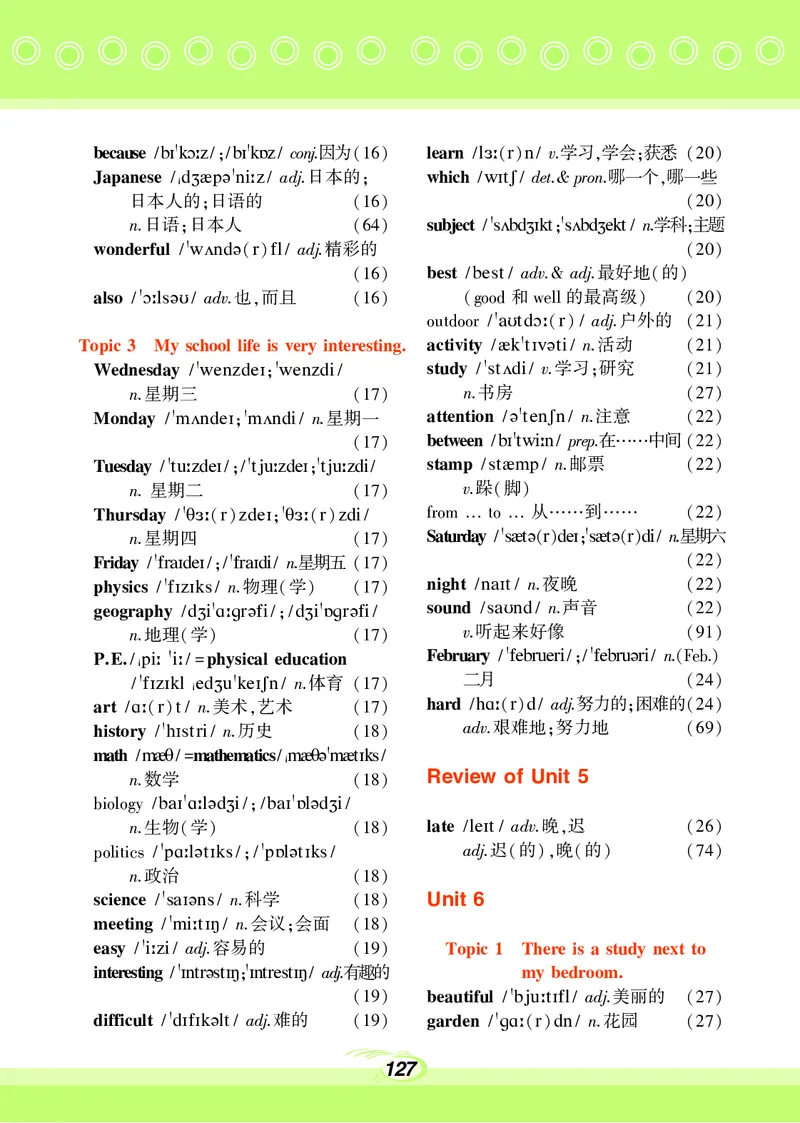
126because /bIk z/ /bIk z/ conj.因为 learn /l r n/ v.学习 学会 获悉
ˈ ɔː ; ˈ ɒ (16) ɜː( ) , ; (20)
Japanese / d æp ni z/ adj.日本的 which /wIt / det.& pron.哪一个 哪一些
ˌ ʒ əˈ ː ; ʃ ,
日本人的 日语的
; (16) (20)
n.日语 日本人 subject / s bd Ikt s bd ekt/ n.学科 主题
; (64) ˈ ʌ ʒ ;ˈ ʌ ʒ ;
wonderful / w nd r fl/ adj.精彩的
ˈ ʌ ə( ) (20)
best /best/ adv. adj.最好地 的
(16) & ( )
also / ls / adv.也 而且 和 的最高级
ˈɔː əʊ , (16) (good well ) (20)
/ a td r / adj.户外的
outdoor ˈ ʊ ɔː( ) (21)
Topic 3 My school life is very interesting. activity /æktIv ti/ n.活动
ˈ ə (21)
Wednesday / wenzdeI wenzdi/ study / st di/ v.学习 研究
ˈ ;ˈ ˈ ʌ ; (21)
n.星期三 n.书房
(17) (27)
Monday / m ndeI m ndi/ n.星期一 attention / ten n/ n.注意
ˈ ʌ ;ˈ ʌ əˈ ʃ (22)
between /bItwi n/ prep.在 中间
(17) ˈ ː …… (22)
Tuesday / tuzdeI/ / tjuzdeI tjuzdi/ stamp /stæmp/ n.邮票
ˈ ː ; ˈ ː ;ˈ ː (22)
n. 星期二 v.跺 脚
(17) ( )
Thursday / r zdeI r zdi/ 从 到
ˈɜː( ) ;ˈɜː( ) from to …… …… (22)
n.星期四 Saturday / sæt r deI sæt r di/ n.星期六
(17) ˈ ə( ) ;ˈ ə( )
Friday / fraIdeI/ / fraIdi/ n.星期五
ˈ ; ˈ (17) (22)
physics / fIzIks/ n.物理 学 night /naIt/ n.夜晚
ˈ ( ) (17) (22)
geography /d i r fi/ /d i r fi/ sound /sa nd/ n.声音
ʒ ˈː ə ; ʒ ˈɒ ə ʊ (22)
n.地理 学 v.听起来好像
( ) (17) (91)
P.E./ pi i / physical education February / februeri/ / febru ri/ n.
ˌ ː ˈ ː = ˈ ; ˈ ə (Feb.)
/ fIzIkl ed ukeI n/ n.体育 二月
ˈ ˌ ʒ ˈ ʃ (17) (24)
art / r t/ n.美术 艺术 hard /h r d/ adj.努力的 困难的
ː( ) , (17) ː( ) ; (24)
history / hIstri/ n.历史 adv.艰难地 努力地
ˈ (18) ; (69)
math /mæ / mathematics/ mæ mætks/
= ˌ əˈ ɪ
n.数学 Review of Unit 5
(18)
/baI l d i/ /baI l d i/
biology ˈː ə ʒ ; ˈɒ ə ʒ
n.生物 学 late /leIt/ adv.晚 迟
( ) (18) , (26)
/ p l tIks/ / p l tIks/ adj.迟 的 晚 的
politics ˈ ː ə ; ˈ ɒ ə ( ), ( ) (74)
n.政治
(18)
science / saI ns/ n.科学 Unit 6
ˈ ə (18)
meeting / mi tI / n.会议 会面
ˈ ː ; (18)
easy / i zi/ adj.容易的 Topic 1 There is a study next to
ˈ ː (19)
interesting / Intr stI IntrestI / adj.有趣的 my bedroom.
ˈ ə ;ˈ
beautiful / bju tIfl/ adj.美丽的
(19) ˈ ː (27)
difficult / dIfIk lt/ adj.难的 garden / r dn/ n.花园
ˈ ə (19) ˈː( ) (27)
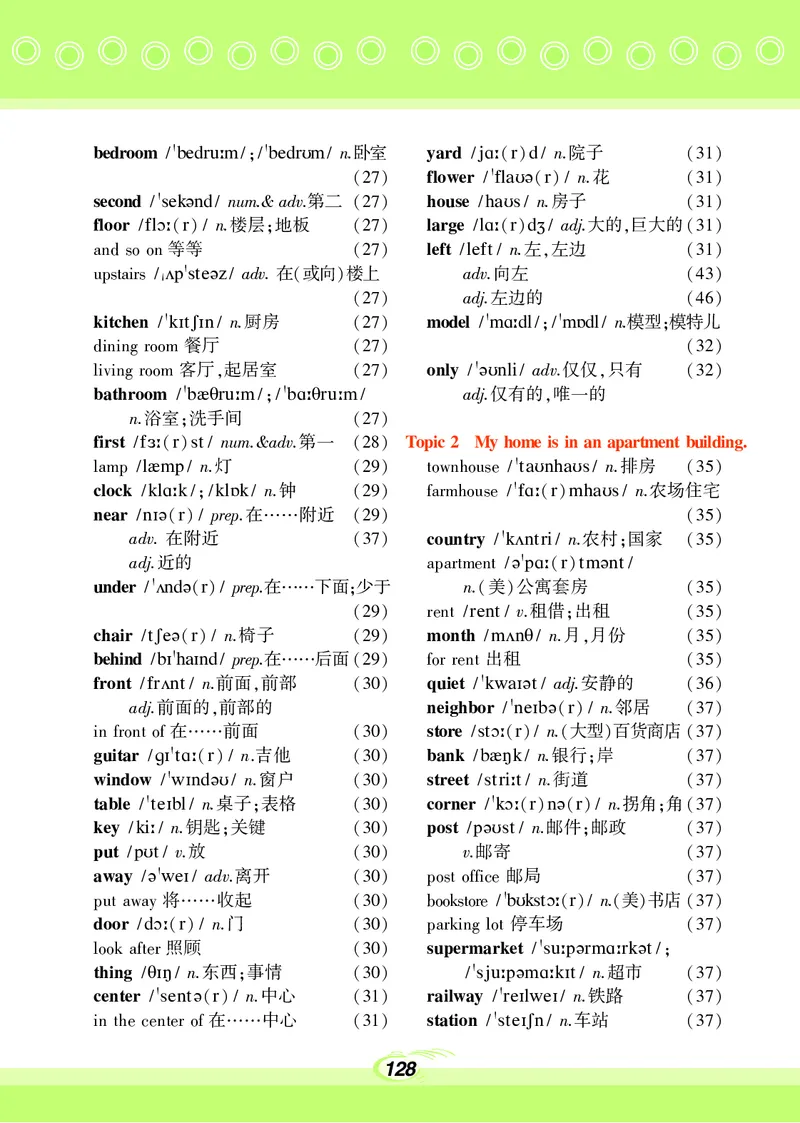
127bedroom / bedru m/ / bedr m/ n.卧室 yard /j r d/ n.院子
ˈ ː ; ˈ ʊ ː( ) (31)
flower / fla r / n.花
(27) ˈ ʊə( ) (31)
second / sek nd/ num.& adv.第二 house /ha s/ n.房子
ˈ ə (27) ʊ (31)
floor /fl r / n.楼层 地板 large /l r d / adj.大的 巨大的
ɔː( ) ; (27) ː( ) ʒ , (31)
等等 left /left/ n.左 左边
and so on (27) , (31)
/ pste z/ adv. 在 或向 楼上 adv.向左
upstairs ˌʌ ˈ ə ( ) (43)
adj.左边的
(27) (46)
kitchen / kIt In/ n.厨房 model / m dl/ / m dl/ n.模型 模特儿
ˈ ʃ (27) ˈ ː ; ˈ ɒ ;
餐厅
dining room (27) (32)
客厅 起居室 only / nli/ adv.仅仅 只有
living room , (27) ˈəʊ , (32)
bathroom / bæ ru m/ / b ru m/ adj.仅有的 唯一的
ˈ ː ; ˈ ː ː ,
n.浴室 洗手间
; (27)
first /f r st/ num.&adv.第一 Topic 2 My home is in an apartment building.
ɜː( ) (28)
/læmp/ n.灯 / ta nha s/ n.排房
lamp (29) townhouse ˈ ʊ ʊ (35)
clock /kl k/ /kl k/ n.钟 / f r mha s/ n.农场住宅
ː ; ɒ (29) farmhouse ˈ ː( ) ʊ
near /nI r / prep.在 附近
ə( ) …… (29) (35)
adv. 在附近 country / k ntri/ n.农村 国家
(37) ˈ ʌ ; (35)
adj.近的 / p r tm nt/
apartment əˈ ː( ) ə
under / nd r / prep.在 下面 少于 n. 美 公寓套房
ˈʌ ə( ) …… ; ( ) (35)
/rent/ v.租借 出租
(29) rent ; (35)
chair /t e r / n.椅子 month /m n / n.月 月份
ʃ ə( ) (29) ʌ , (35)
behind /bIhaInd/ prep.在 后面 出租
ˈ …… (29) for rent (35)
front /fr nt/ n.前面 前部 quiet / kwaI t/ adj.安静的
ʌ , (30) ˈ ə (36)
adj.前面的 前部的 neighbor / neIb r / n.邻居
, ˈ ə( ) (37)
在 前面 store /st r / n. 大型 百货商店
in front of …… (30) ɔː( ) ( ) (37)
guitar / It r / n.吉他 bank /bæ k/ n.银行 岸
ˈ ː( ) (30) ; (37)
window / wInd / n.窗户 street /stri t/ n.街道
ˈ əʊ (30) ː (37)
table / teIbl/ n.桌子 表格 corner / k r n r / n.拐角 角
ˈ ; (30) ˈ ɔː( ) ə( ) ; (37)
key /ki / n.钥匙 关键 post /p st/ n.邮件 邮政
ː ; (30) əʊ ; (37)
put /p t/ v.放 v.邮寄
ʊ (30) (37)
away / weI/ adv.离开 邮局
əˈ (30) post office (37)
将 收起 / b kst r / n. 美 书店
put away …… (30) bookstore ˈ ʊ ɔː( ) ( ) (37)
door /d r / n.门 停车场
ɔː( ) (30) parking lot (37)
照顾 supermarket / su p rm rk t/
look after (30) ˈ ː ə ː ə ;
thing / I / n.东西 事情 / sju p m kIt/ n.超市
; (30) ˈ ː ə ː (37)
center / sent r / n.中心 railway / reIlweI/ n.铁路
ˈ ə( ) (31) ˈ (37)
在 中心 station / steI n/ n.车站
in the center of …… (31) ˈ ʃ (37)
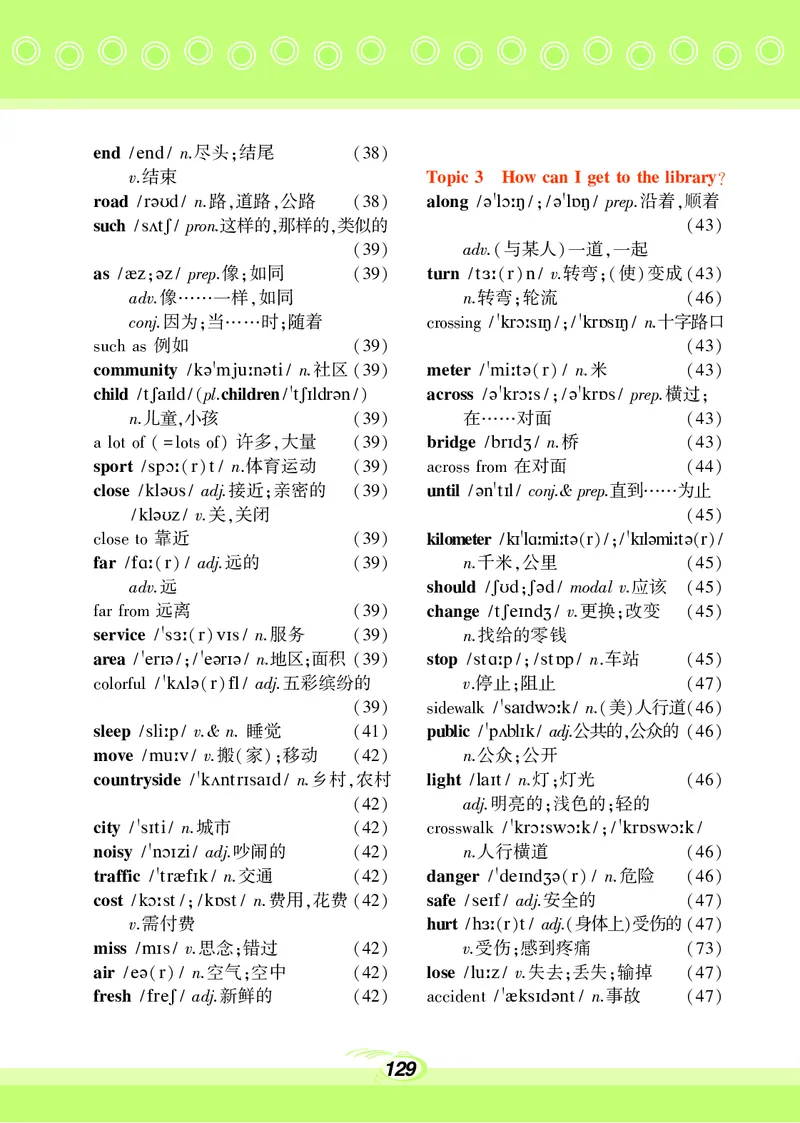
128end /end/ n.尽头 结尾
; (38)
v.结束 Topic 3 How can I get to the library
?
road /r d/ n.路 道路 公路 along / l / / l / prep.沿着 顺着
əʊ , , (38) əˈ ɔː ; əˈ ɒ ,
such /s t / pron.这样的 那样的 类似的
ʌ ʃ , , (43)
adv. 与某人 一道 一起
(39) ( ) ,
as /æz z/ prep.像 如同 turn /t r n/ v.转弯 使 变成
;ə ; (39) ɜː( ) ;( ) (43)
adv.像 一样 如同 n.转弯 轮流
…… , ; (46)
conj.因为 当 时 随着 / kr sI / / kr s / n.十字路口
; …… ; crossing ˈ ɔː ; ˈ ɒ ɪ
例如
such as (39) (43)
community /k mju n ti/ n.社区 meter / mi t r / n.米
əˈ ː ə (39) ˈ ː ə( ) (43)
child /t aIld/ pl.children/ t Ildr n/ across / kr s/ / kr s/ prep.横过
ʃ ( ˈ ʃ ə ) əˈ ɔː ; əˈ ɒ ;
n.儿童 小孩 在 对面
, (39) …… (43)
许多 大量 bridge /brId / n.桥
a lot of (=lots of) , (39) ʒ (43)
sport /sp r t/ n.体育运动 在对面
ɔː( ) (39) across from (44)
close /kl s/ adj.接近 亲密的 until / ntIl/ conj.& prep.直到 为止
əʊ ; (39) ə ˈ ……
/kl z/ v.关 关闭
əʊ , (45)
靠近 kilometer /kIl mi t r / / kIl mi t r /
close to (39) ˈː ː ə( ) ; ˈ ə ː ə( )
far /f r / adj.远的 n.千米 公里
ː( ) (39) , (45)
adv.远 should / d d/ modal v.应该
ʃʊ ;ʃə (45)
远离 change /t eInd / v.更换 改变
far from (39) ʃ ʒ ; (45)
service / s r vIs/ n.服务 n.找给的零钱
ˈ ɜː( ) (39)
area / erI / / e rI / n.地区 面积 stop /st p/ /st p/ n.车站
ˈ ə ; ˈ ə ə ; (39) ː ; ɒ (45)
/ k l r fl/ adj.五彩缤纷的 v.停止 阻止
colorful ˈ ʌ ə( ) ; (47)
/ saIdw k/ n. 美 人行道
(39) sidewalk ˈ ɔː ( ) (46)
sleep /sli p/ v.& n. 睡觉 public / p blIk/ adj.公共的 公众的
ː (41) ˈ ʌ , (46)
move /mu v/ v.搬 家 移动 n.公众 公开
ː ( ); (42) ;
countryside / k ntrIsaId/ n.乡村 农村 light /laIt/ n.灯 灯光
ˈ ʌ , ; (46)
adj.明亮的 浅色的 轻的
(42) ; ;
city / sIti/ n.城市 / kr sw k/ / kr sw k/
ˈ (42) crosswalk ˈ ɔː ɔː ; ˈ ɒ ɔː
noisy / n Izi/ adj.吵闹的 n.人行横道
ˈ ɔ (42) (46)
traffic / træfIk/ n.交通 danger / deInd r / n.危险
ˈ (42) ˈ ʒə( ) (46)
cost /k st/ /k st/ n.费用 花费 safe /seIf/ adj.安全的
ɔː ; ɒ , (42) (47)
v.需付费 hurt /h r t/ adj. 身体上 受伤的
ɜː( ) ( ) (47)
miss /mIs/ v.思念 错过 v.受伤 感到疼痛
; (42) ; (73)
air /e r / n.空气 空中 lose /lu z/ v.失去 丢失 输掉
ə( ) ; (42) ː ; ; (47)
fresh /fre / adj.新鲜的 / æksId nt/ n.事故
ʃ (42) accident ˈ ə (47)
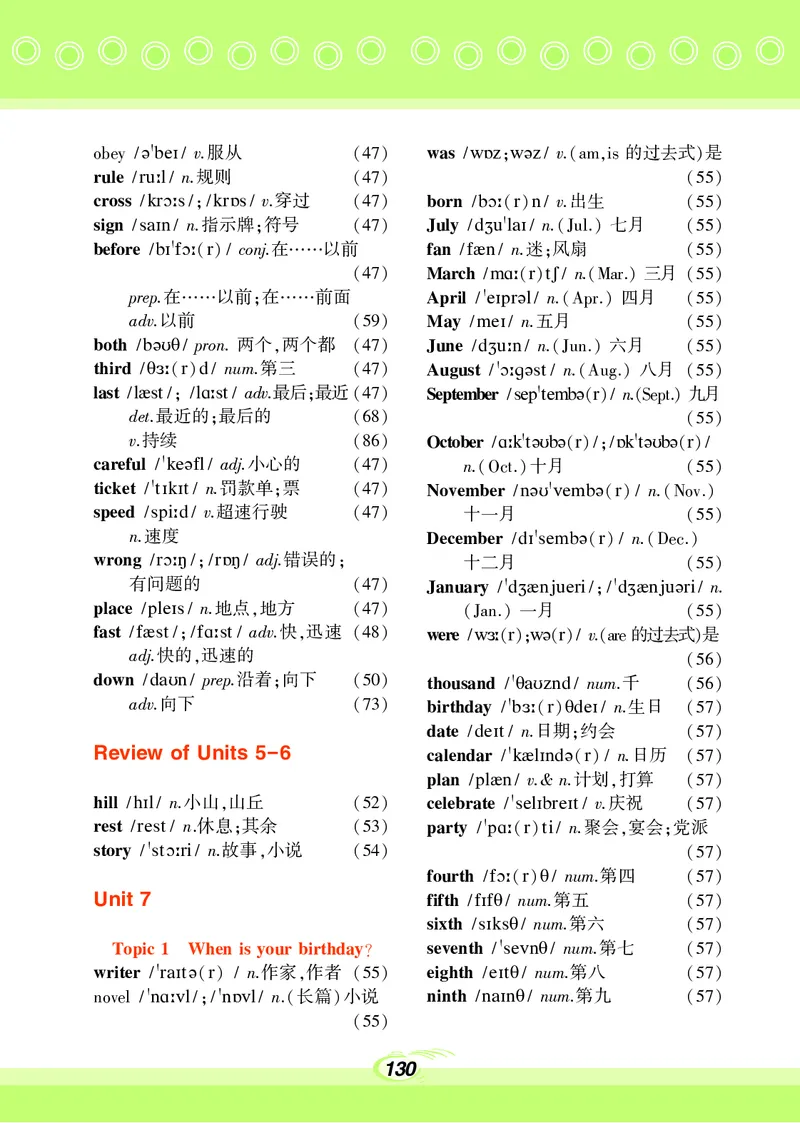
129/ beI/ v.服从 was /w z w z/ v. 的过去式 是
obey əˈ (47) ɒ ; ə (am,is )
rule /ru l/ n.规则
ː (47) (55)
cross /kr s/ /kr s/ v.穿过 born /b r n/ v.出生
ɔː ; ɒ (47) ɔː( ) (55)
sign /saIn/ n.指示牌 符号 July /d ulaI/ n. 七月
; (47) ʒ ˈ (Jul.) (55)
before /bIf r / conj.在 以前 fan /fæn/ n.迷 风扇
ˈ ɔː( ) …… ; (55)
March /m r t / n. 三月
(47) ː( ) ʃ (Mar.) (55)
prep.在 以前 在 前面 April / eIpr l/ n. 四月
…… ; …… ˈ ə (Apr.) (55)
adv.以前 May /meI/ n.五月
(59) (55)
both /b / pron. 两个 两个都 June /d u n/ n. 六月
əʊ , (47) ʒ ː (Jun.) (55)
third / r d/ num.第三 August / st/ n. 八月
ɜː( ) (47) ˈɔːə (Aug.) (55)
last /læst/ /l st/ adv.最后 最近 September /septemb r / n. 九月
; ː ; (47) ˈ ə( ) (Sept.)
det.最近的 最后的
; (68) (55)
v.持续 October / kt b r / / kt b r /
(86) ː ˈ əʊ ə( ) ; ɒ ˈ əʊ ə( )
careful / ke fl/ adj.小心的 n. 十月
ˈ ə (47) (Oct.) (55)
ticket / tIkIt/ n.罚款单 票 November /n vemb r / n.
ˈ ; (47) əʊˈ ə( ) (Nov.)
speed /spi d/ v.超速行驶 十一月
ː (47) (55)
n.速度 December /dIsemb r / n.
ˈ ə( ) (Dec.)
wrong /r / /r / adj.错误的 十二月
ɔː ; ɒ ; (55)
有问题的 January / d ænjueri/ / d ænju ri/ n.
(47) ˈ ʒ ; ˈ ʒ ə
place /pleIs/ n.地点 地方 一月
, (47) (Jan.) (55)
fast /fæst/ /f st/ adv.快 迅速 were /w r w r / v. 的过去式 是
; ː , (48) ɜː( ); ə( ) (are )
adj.快的 迅速的
, (56)
down /da n/ prep.沿着 向下 thousand / a znd/ num.千
ʊ ; (50) ˈ ʊ (56)
adv.向下 birthday / b r deI/ n.生日
(73) ˈ ɜː( ) (57)
date /deIt/ n.日期 约会
; (57)
Review of Units 5-6 calendar / kælInd r / n.日历
ˈ ə( ) (57)
plan /plæn/ v.& n.计划 打算
, (57)
hill /hIl/ n.小山 山丘 celebrate / selIbreIt/ v.庆祝
, (52) ˈ (57)
rest /rest/ n.休息 其余 party / p r ti/ n.聚会 宴会 党派
; (53) ˈ ː( ) , ;
story / st ri/ n.故事 小说
ˈ ɔː , (54) (57)
fourth /f r / num.第四
ɔː( ) (57)
Unit 7 fifth /fIf / num.第五
(57)
sixth /sIks / num.第六
(57)
Topic 1 When is your birthday seventh / sevn / num.第七
? ˈ (57)
writer / raIt r / n.作家 作者 eighth /eIt / num.第八
ˈ ə( ) , (55) (57)
/ n vl/ / n vl/ n 长篇 小说 ninth /naIn / num.第九
novel ˈ ː ; ˈ ɒ .( ) (57)
(55)
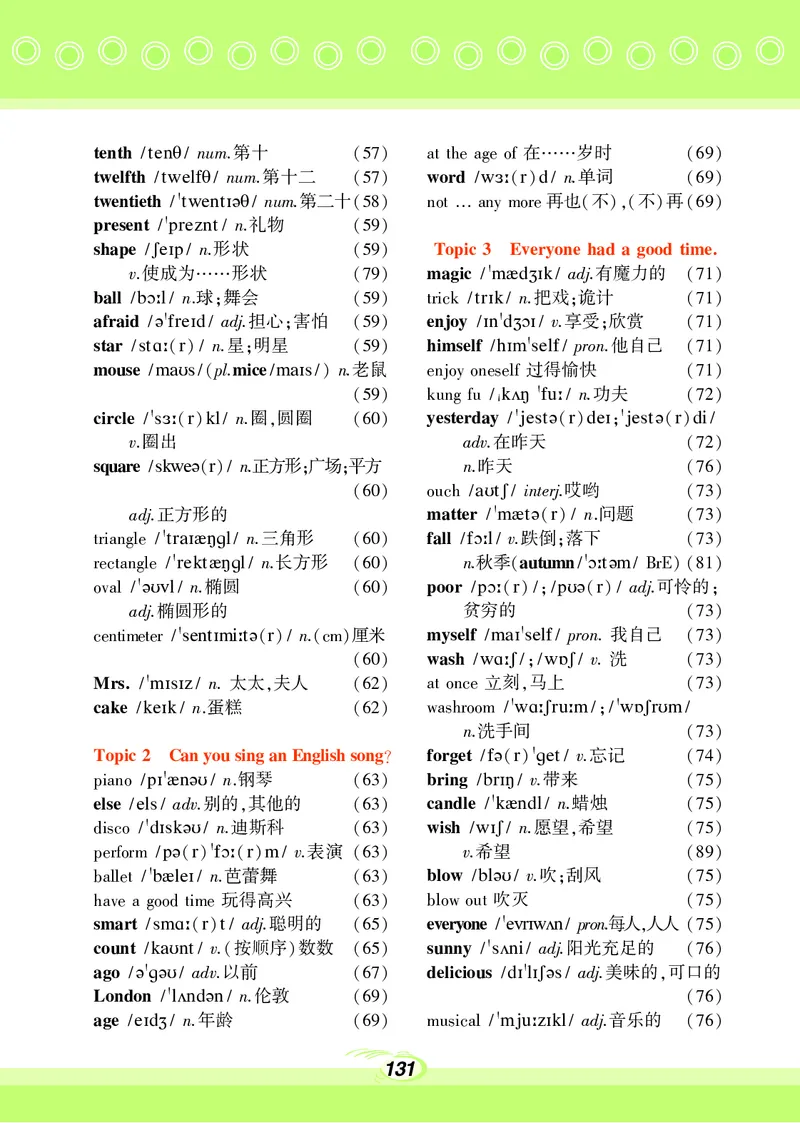
130tenth /ten / num.第十 在 岁时
(57) at the age of …… (69)
twelfth /twelf / num.第十二 word /w r d/ n.单词
(57) ɜː( ) (69)
twentieth / twentI / num.第二十 再也 不 不 再
ˈ ə (58) not any more ( ),( ) (69)
present / preznt/ n.礼物
ˈ (59)
shape / eIp/ n.形状 Topic 3 Everyone had a good time.
ʃ (59)
v.使成为 形状 magic / mæd Ik/ adj.有魔力的
…… (79) ˈ ʒ (71)
ball /b l/ n 球 舞会 /trIk/ n.把戏 诡计
ɔː . ; (59) trick ; (71)
afraid / freId/ adj.担心 害怕 enjoy /Ind I/ v.享受 欣赏
əˈ ; (59) ˈ ʒɔ ; (71)
star /st r / n.星 明星 himself /hImself/ pron.他自己
ː( ) ; (59) ˈ (71)
mouse /ma s/ pl.mice/maIs/ n.老鼠 过得愉快
ʊ ( ) enjoy oneself (71)
/ k fu / n.功夫
(59) kung fu ˌ ʌ ˈ ː (72)
circle / s r kl/ n.圈 圆圈 yesterday / jest r deI jest r di/
ˈ ɜː( ) , (60) ˈ ə( ) ;ˈ ə( )
v.圈出 adv.在昨天
(72)
square /skwe r / n.正方形 广场 平方 n.昨天
ə( ) ; ; (76)
/a t / interj.哎哟
(60) ouch ʊ ʃ (73)
adj.正方形的 matter / mæt r / n.问题
ˈ ə( ) (73)
/ traIæ l/ n.三角形 fall /f l/ v.跌倒 落下
triangle ˈ (60) ɔː ; (73)
/ rektæ l/ n.长方形 n.秋季 autumn/ t m/
rectangle ˈ (60) ( ˈɔː ə BrE) (81)
/ vl/ n.椭圆 poor /p r / /p r / adj.可怜的
oval ˈəʊ (60) ɔː( ) ; ʊə( ) ;
adj.椭圆形的 贫穷的
(73)
/ sentImi t r / n. 厘米 myself /maIself/ pron. 我自己
centimeter ˈ ː ə( ) (cm) ˈ (73)
wash /w / /w / v. 洗
(60) ːʃ ; ɒʃ (73)
Mrs. / m s z/ n. 太太 夫人 立刻 马上
ˈ ɪ ɪ , (62) at once , (73)
cake /ke k/ n.蛋糕 / w ru m/ / w r m/
ɪ (62) washroom ˈ ːʃ ː ; ˈ ɒʃ ʊ
n.洗手间
(73)
Topic 2 Can you sing an English song forget /f r et/ v.忘记
? ə( )ˈ (74)
/pIæn / n.钢琴 bring /brI / v.带来
piano ˈ əʊ (63) (75)
else /els/ adv.别的 其他的 candle / kændl/ n.蜡烛
, (63) ˈ (75)
/ dIsk / n.迪斯科 wish /wI / n.愿望 希望
disco ˈ əʊ (63) ʃ , (75)
/p r f r m/ v.表演 v.希望
perform ə( )ˈ ɔː( ) (63) (89)
/ bæleI/ n.芭蕾舞 blow /bl / v.吹 刮风
ballet ˈ (63) əʊ ; (75)
玩得高兴 吹灭
have a good time (63) blow out (75)
smart /sm r t/ adj.聪明的 everyone / evrw n/ pron.每人 人人
ː( ) (65) ˈ ɪ ʌ , (75)
count /ka nt/ v. 按顺序 数数 sunny / s ni/ adj.阳光充足的
ʊ ( ) (65) ˈ ʌ (76)
ago / / adv.以前 delicious /dIlI s/ adj.美味的 可口的
əˈəʊ (67) ˈ ʃə ,
London / l nd n/ n.伦敦
ˈ ʌ ə (69) (76)
age /eId / n.年龄 / mju zIkl/ adj.音乐的
ʒ (69) musical ˈ ː (76)
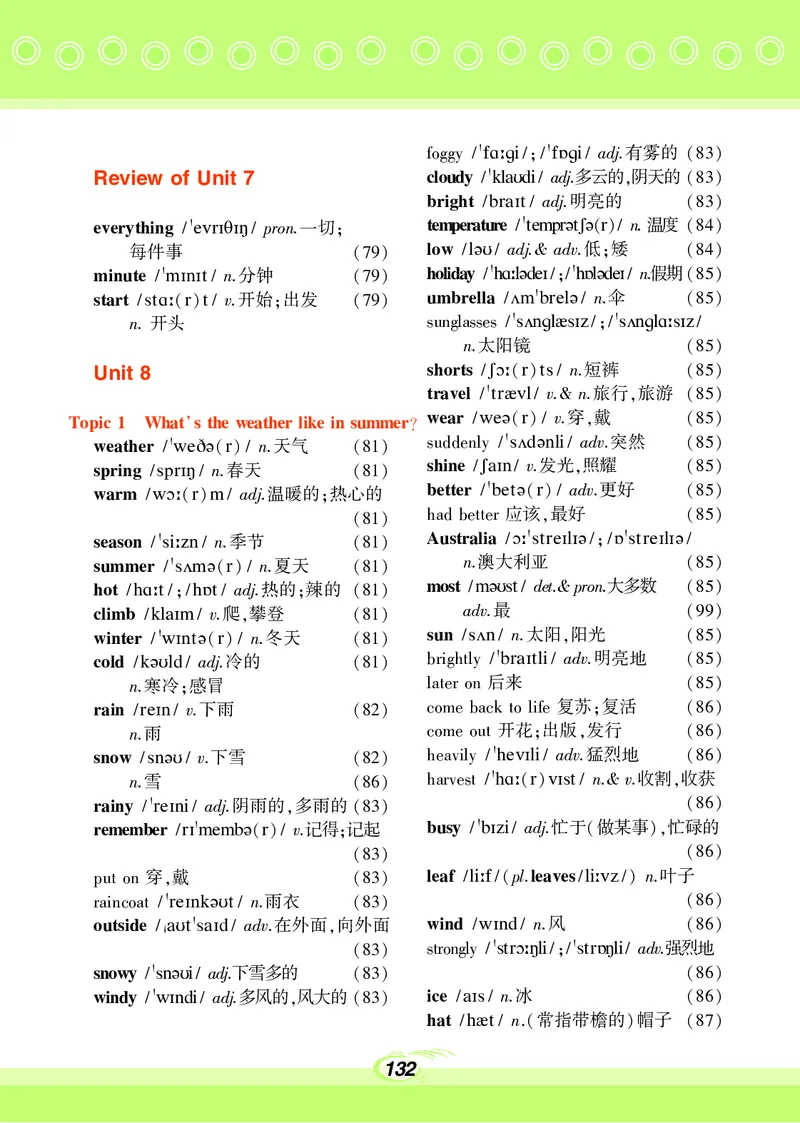
131/ f i/ / f i/ adj.有雾的
foggy ˈ ː ; ˈ ɒ (83)
Review of Unit 7 cloudy / kla di/ adj.多云的 阴天的
ˈ ʊ , (83)
bright /braIt/ adj.明亮的
(83)
everything / evrI I / pron.一切 temperature / tempr t r / n.温度
ˈ ; ˈ ə ʃə( ) (84)
每件事 low /l / adj.& adv.低 矮
(79) əʊ ; (84)
minute / mInIt/ n.分钟 holiday / h l deI/ / h l deI/ n.假期
ˈ (79) ˈ ːə ; ˈ ɒə (85)
start /st r t/ v.开始 出发 umbrella / mbrel / n.伞
ː( ) ; (79) ʌ ˈ ə (85)
n. 开头 / s n læsIz/ / s n l sIz/
sunglasses ˈ ʌ ; ˈ ʌ ː
n.太阳镜
(85)
Unit 8 shorts / r ts/ n.短裤
ʃɔː( ) (85)
travel / trævl/ v. n.旅行 旅游
ˈ & , (85)
Topic 1 What s the weather like in summer
wear /we r / v.穿 戴
ə( ) , (85)
’ ?
weather / we r / n.天气 / s d nli/ adv.突然
suddenly ˈ ʌ ə (85)
ˈ ðə( ) (81)
spring /sprI / n.春天 shine / aIn/ v.发光 照耀
ʃ , (85)
(81)
warm /w r m/ adj.温暖的 热心的 better / bet r / adv.更好
ɔː( ) ; ˈ ə( ) (85)
应该 最好
(81) had better , (85)
season / si zn/ n.季节 Australia / streIlI / / streIlI /
ˈ ː (81) ɔːˈ ə ; ɒˈ ə
summer / s m r / n.夏天 n.澳大利亚
ˈ ʌ ə( ) (81) (85)
hot /h t/ /h t/ adj.热的 辣的 most /m st/ det.& pron.大多数
ː ; ɒ ; (81) əʊ (85)
climb /klaIm/ v.爬 攀登 adv.最
, (81) (99)
winter / wInt r / n.冬天 sun /s n/ n.太阳 阳光
ˈ ə( ) (81) ʌ , (85)
cold /k ld/ adj.冷的 / braItli/ adv.明亮地
əʊ (81) brightly ˈ (85)
n.寒冷 感冒 后来
; later on (85)
rain /reIn/ v.下雨 复苏 复活
(82) come back to life ; (86)
n.雨 开花 出版 发行
come out ; , (86)
snow /sn / v.下雪 / hevIli/ adv.猛烈地
əʊ (82) heavily ˈ (86)
n.雪 / h r vIst/ n.& v.收割 收获
(86) harvest ˈ ː( ) ,
rainy / reIni/ adj.阴雨的 多雨的
ˈ , (83) (86)
remember /rImemb r / v.记得 记起 busy / bIzi/ adj.忙于 做某事 忙碌的
ˈ ə( ) ; ˈ ( ),
(83) (86)
穿 戴 leaf /li f/ pl.leaves/li vz/ n.叶子
put on , (83) ː ( ː )
/ reInk t/ n.雨衣
raincoat ˈ əʊ (83) (86)
outside / a tsaId/ adv.在外面 向外面 wind /wInd/ n.风
ˌ ʊ ˈ , (86)
/ str li/ / str li/ adv.强烈地
(83) strongly ˈ ɔː ; ˈ ɒ
snowy / sn i/ adj.下雪多的
ˈ əʊ (83) (86)
windy / wIndi/ adj.多风的 风大的 ice /aIs/ n.冰
ˈ , (83) (86)
hat /hæt/ n. 常指带檐的 帽子
( ) (87)
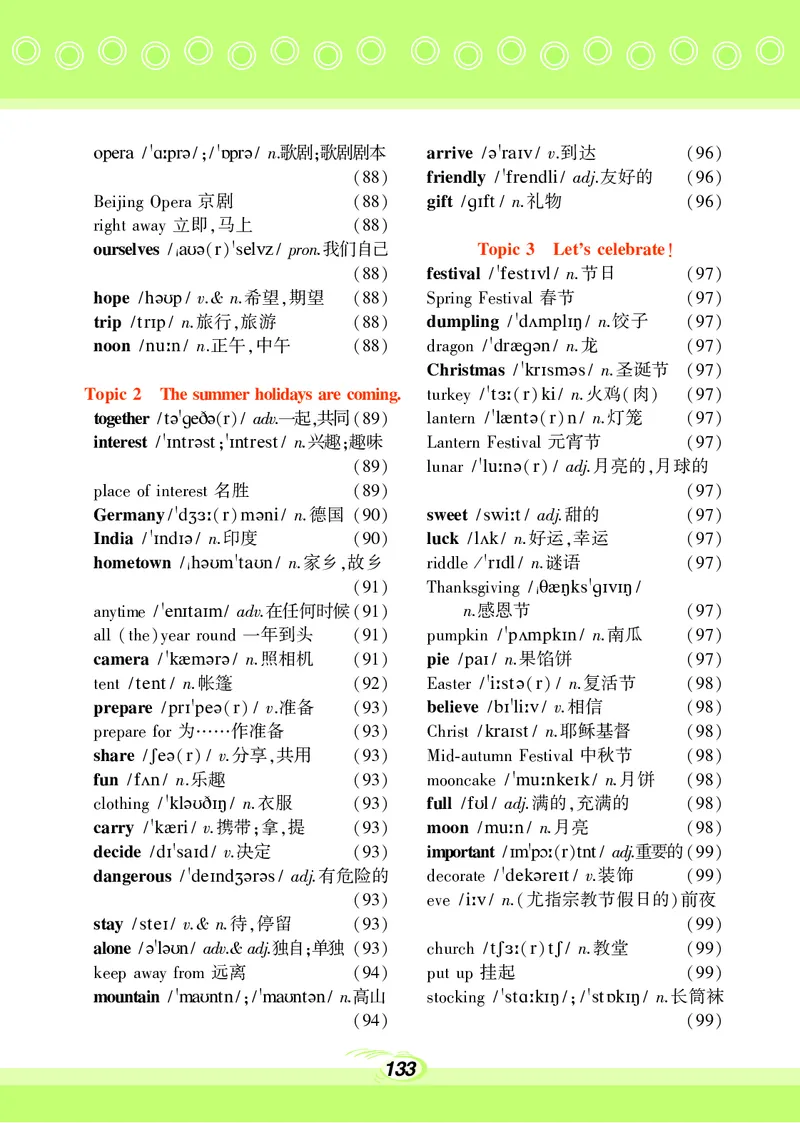
132opera / pr / / pr / n歌剧 歌剧剧本 arrive / ra v/ v 到达
ˈː ə ; ˈɒ ə . ; əˈ ɪ . (96)
friendly / frendli/ adj 友好的
(88) ˈ . (96)
京剧 gift / Ift/ n.礼物
Beijing Opera (88) (96)
立即 马上
right away , (88)
ourselves / a r selvz/ pron.我们自己 Topic 3 Lets celebrate
ˌ ʊə( )ˈ !
festival / festIvl/ n.节日
(88) ˈ (97)
hope /h p/ v.& n.希望 期望 春节
əʊ , (88) Spring Festival (97)
trip /trIp/ n.旅行 旅游 dumpling / d mplI / n.饺子
, (88) ˈ ʌ (97)
noon /nu n/ n 正午 中午 / dræ n/ n.龙
ː . , (88) dragon ˈ ə (97)
Christmas / krIsm s/ n.圣诞节
ˈ ə (97)
Topic 2 The summer holidays are coming. / t r ki/ n.火鸡 肉
turkey ˈ ɜː( ) ( ) (97)
together /t e r / adv.一起 共同 / lænt r n/ n.灯笼
əˈ ðə( ) , (89) lantern ˈ ə( ) (97)
interest / Intr st Intrest/ n.兴趣 趣味 元宵节
ˈ ə ;ˈ ; Lantern Festival (97)
/ lu n r / adj.月亮的 月球的
(89) lunar ˈ ː ə( ) ,
名胜
place of interest (89) (97)
Germany/ d r m ni/ n.德国 sweet /swi t/ adj.甜的
ˈ ʒɜː( ) ə (90) ː (97)
India / ndI / n.印度 luck /l k/ n.好运 幸运
ˈɪ ə (90) ʌ , (97)
hometown / h mta n/ n.家乡 故乡 rIdl/ n.谜语
ˌ əʊ ˈ ʊ , riddle /ˈ (97)
/ æ ks IvI /
(91) Thanksgiving ˌ ˈ
/ enItaIm/ adv.在任何时候 n.感恩节
anytime ˈ (91) (97)
一年到头 / p mpkIn/ n.南瓜
all (the)year round (91) pumpkin ˈ ʌ (97)
camera / kæm r / n.照相机 pie /paI/ n.果馅饼
ˈ ə ə (91) (97)
/tent/ n.帐篷 / i st r / n.复活节
tent (92) Easter ˈ ː ə( ) (98)
prepare /prIpe r / v.准备 believe /bIli v/ v.相信
ˈ ə( ) (93) ˈ ː (98)
为 作准备 /kraIst/ n.耶稣基督
prepare for …… (93) Christ (98)
share / e r / v.分享 共用 中秋节
ʃ ə( ) , (93) Mid⁃autumn Festival (98)
fun /f n/ n 乐趣 / mu nkeIk/ n.月饼
ʌ . (93) mooncake ˈ ː (98)
/ kl I / n.衣服 full /f l/ adj.满的 充满的
clothing ˈ əʊð (93) ʊ , (98)
carry / kæri/ v.携带 拿 提 moon /mu n/ n.月亮
ˈ ; , (93) ː (98)
decide /dIsaId/ v.决定 important /Imp r tnt/ adj.重要的
ˈ (93) ˈ ɔː( ) (99)
dangerous / deInd r s/ adj.有危险的 / dek reIt/ v.装饰
ˈ ʒə ə decorate ˈ ə (99)
/i v/ n. 尤指宗教节假日的 前夜
(93) eve ː ( )
stay /steI/ v.& n.待 停留
, (93) (99)
alone / l n/ adv.& adj.独自 单独 /t r t / n.教堂
əˈəʊ ; (93) church ʃɜː( ) ʃ (99)
远离 挂起
keep away from (94) put up (99)
mountain / ma ntn/ / ma nt n/ n.高山 / st kI / / st kI / n.长筒袜
ˈ ʊ ; ˈ ʊ ə stocking ˈ ː ; ˈ ɒ
(94) (99)
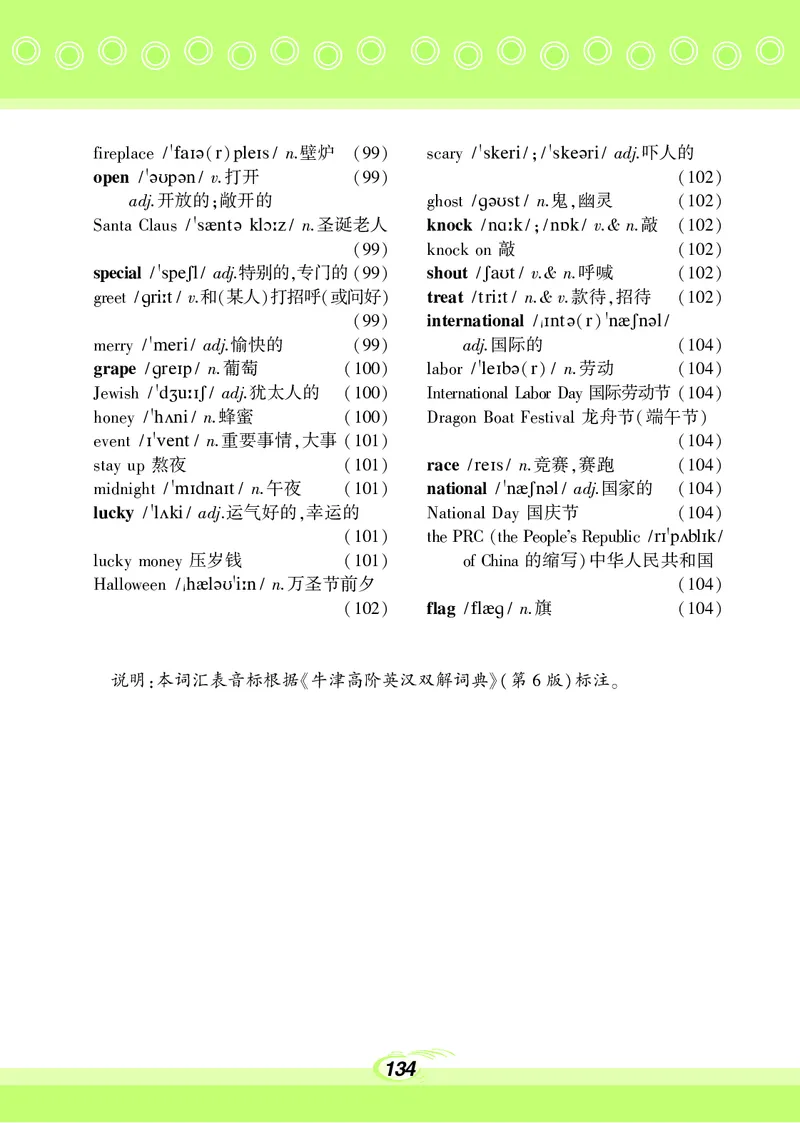
133/ faI r pleIs/ n.壁炉 / skeri/ / ske ri/ adj.吓人的
fireplace ˈ ə( ) (99) scary ˈ ; ˈ ə
open / p n/ v.打开
ˈəʊ ə (99) (102)
adj.开放的 敞开的 / st/ n.鬼 幽灵
; ghost əʊ , (102)
/ sænt kl z/ n.圣诞老人 knock /n k/ /n k/ v.& n.敲
Santa Claus ˈ ə ɔː ː ; ɒ (102)
敲
(99) knock on (102)
special / spe l/ adj.特别的 专门的 shout / a t/ v.& n.呼喊
ˈ ʃ , (99) ʃ ʊ (102)
/ ri t/ v.和 某人 打招呼 或问好 treat /tri t/ n.& v.款待 招待
greet ː ( ) ( ) ː , (102)
international / Int r næ n l/
(99) ˌ ə( )ˈ ʃ ə
/ meri/ adj.愉快的 adj.国际的
merry ˈ (99) (104)
grape / reIp/ n.葡萄 / leIb r / n.劳动
(100) labor ˈ ə( ) (104)
/ d u I / adj.犹太人的 国际劳动节
Jewish ˈ ʒ ː ʃ (100) International Labor Day (104)
/ h ni/ n.蜂蜜 龙舟节 端午节
honey ˈ ʌ (100) Dragon Boat Festival ( )
/Ivent/ n.重要事情 大事
event ˈ , (101) (104)
熬夜 race /reIs/ n.竞赛 赛跑
stay up (101) , (104)
/ mIdnaIt/ n.午夜 national / næ n l/ adj.国家的
midnight ˈ (101) ˈ ʃ ə (104)
lucky / l ki/ adj 运气好的 幸运的 国庆节
ˈ ʌ . , National Day (104)
/rIp blIk/
(101) the PRC (the Peoples Republic ˈ ʌ
压岁钱 的缩写 中华人民共和国
lucky money (101) of China )
/ hæl i n/ n.万圣节前夕
Halloween ˌ əʊˈ ː (104)
flag /flæ / n.旗
(102) (104)
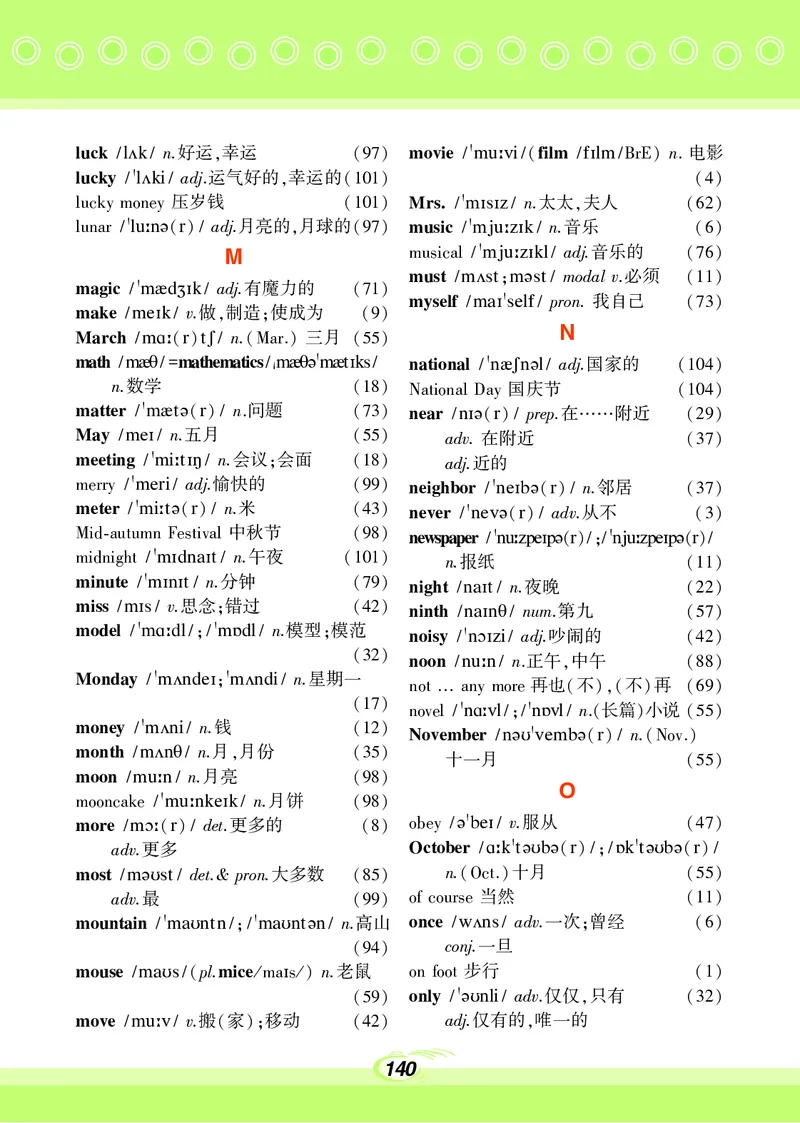
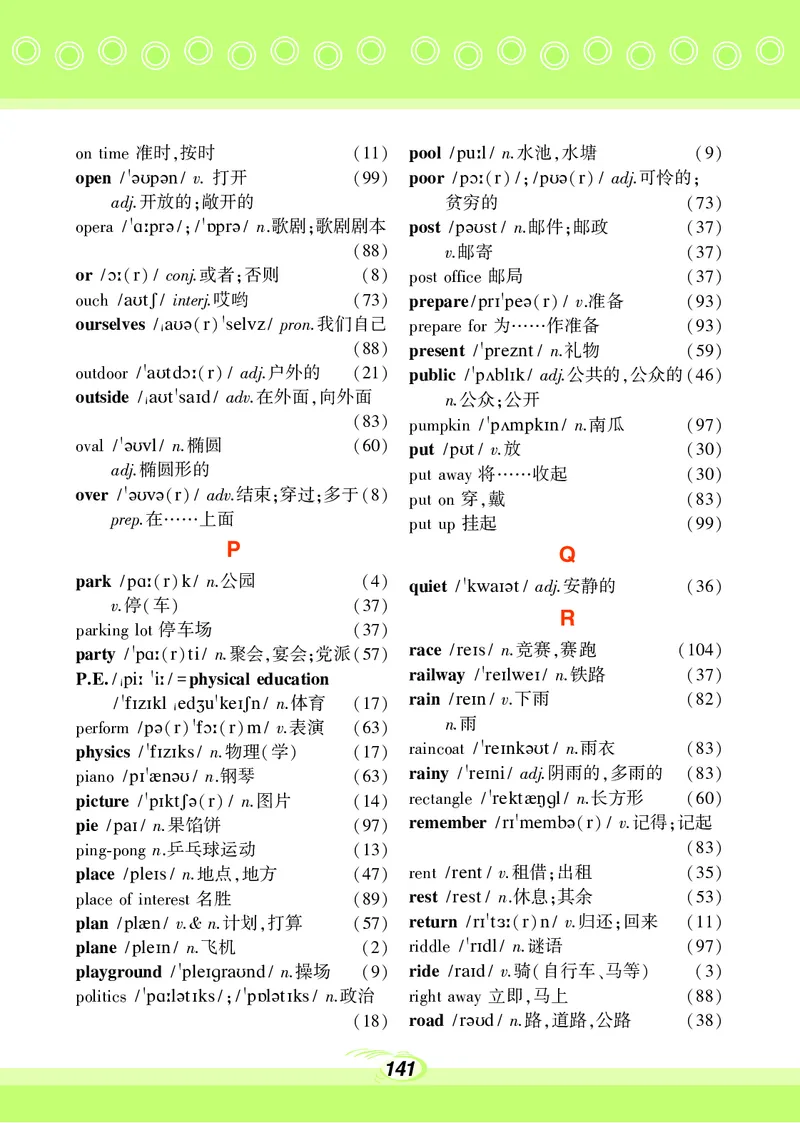
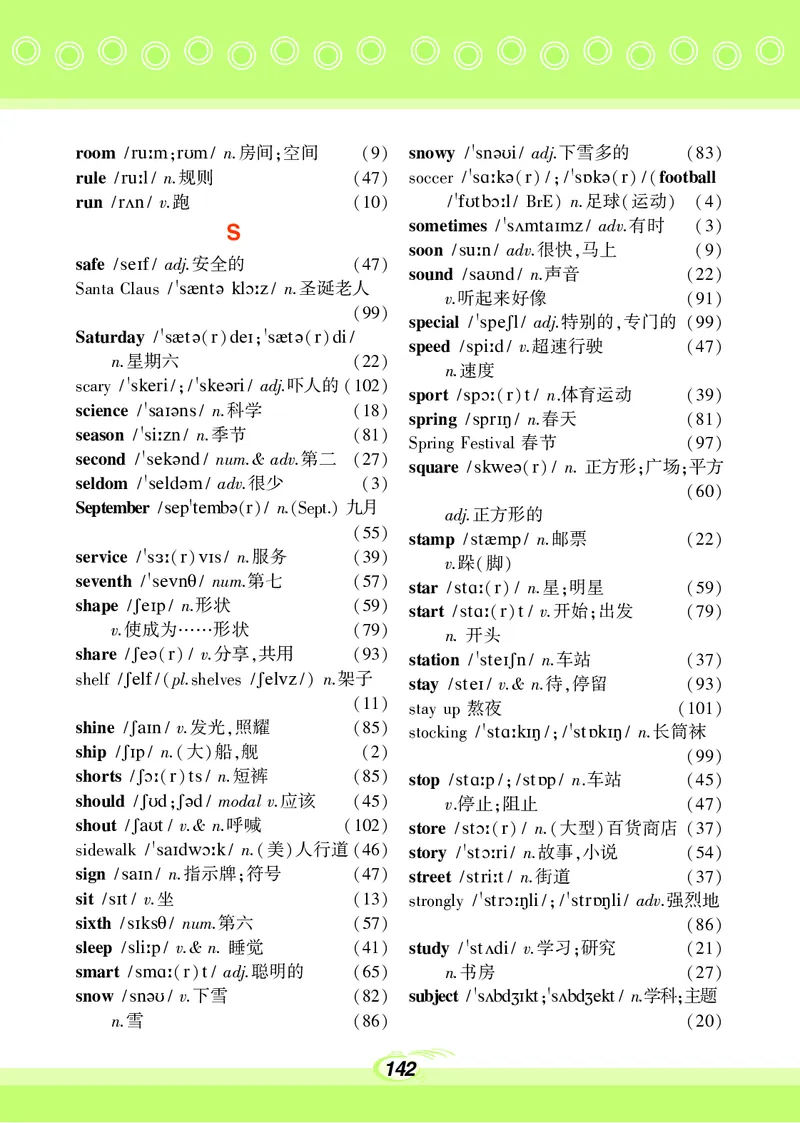
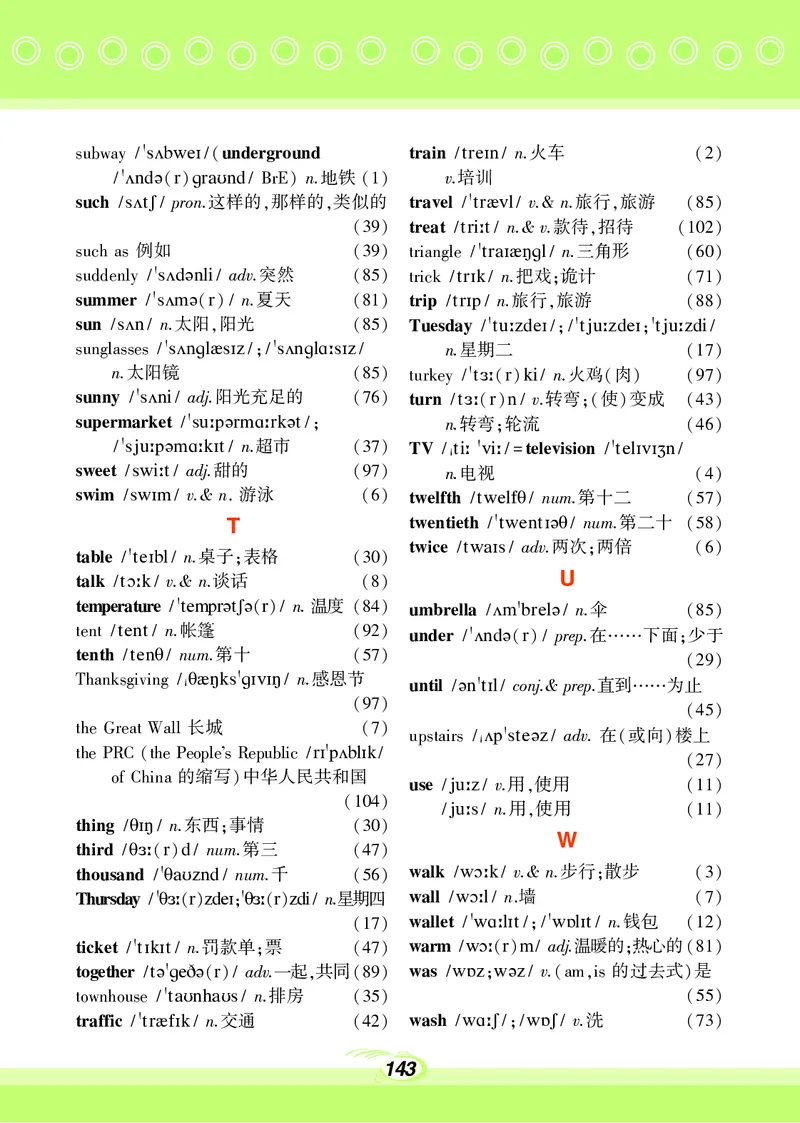
说明:本词汇表音标根据《牛津高阶英汉双解词典》(第 版)标注。
6
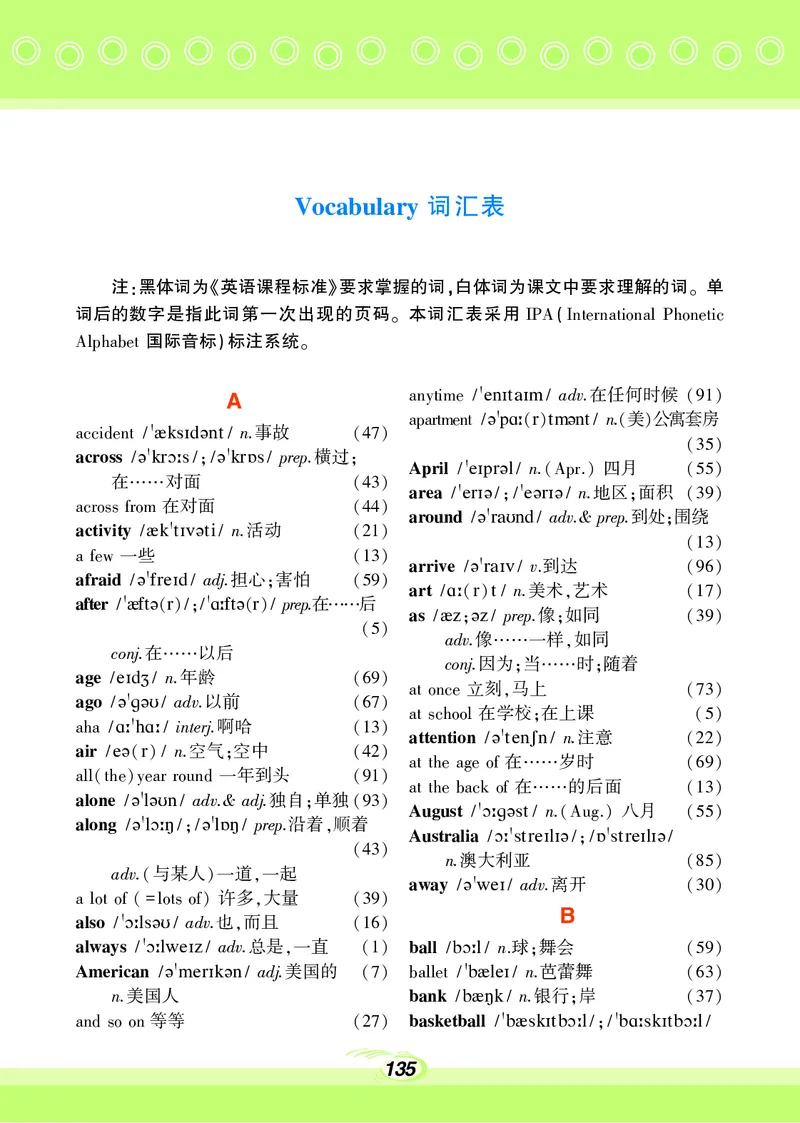
134Vocabulary 词汇表
注:黑体词为《英语课程标准》要求掌握的词,白体词为课文中要求理解的词。 单
词后的数字是指此词第一次出现的页码。 本词汇表采用 (
IPA International Phonetic
国际音标)标注系统。
Alphabet
/ enItaIm/ adv.在任何时候
A
anytime ˈ (91)
/ p r tm nt/ n. 美 公寓套房
/ æksId nt/ n.事故 apartment əˈ ː( ) ə ( )
accident ˈ ə (47)
across / kr s/ / kr s/ prep.横过 (35)
əˈ ɔː ; əˈ ɒ ; April / eIpr l/ n. 四月
在 对面 ˈ ə (Apr.) (55)
…… (43) area / erI / / e rI / n.地区 面积
在对面 ˈ ə ; ˈ ə ə ; (39)
across from (44) around / ra nd/ adv.& prep.到处 围绕
activity /æktIv ti/ n.活动 əˈ ʊ ;
ˈ ə (21)
一些 (13)
a few (13) arrive / ra v/ v 到达
afraid / freId/ adj.担心 害怕 əˈ ɪ . (96)
əˈ ; (59) art / r t/ n.美术 艺术
after / æft r / / ft r / prep.在 后 ː( ) , (17)
ˈ ə( ) ; ˈː ə( ) …… as /æz z/ prep.像 如同
;ə ; (39)
(5) adv.像 一样 如同
conj.在 以后 …… ,
…… conj.因为 当 时 随着
age /eId / n.年龄 ; …… ;
ʒ (69) 立刻 马上
ago / / adv.以前 at once , (73)
əˈəʊ (67) 在学校 在上课
/ h / interj.啊哈 at school ; (5)
aha ːˈ ː (13) attention / ten n/ n.注意
air /e r / n.空气 空中 əˈ ʃ (22)
ə( ) ; (42) 在 岁时
一年到头 at the age of …… (69)
all(the)year round (91) 在 的后面
alone / l n/ adv.& adj.独自 单独 at the back of …… (13)
əˈ əʊ ; (93) August / st/ n. 八月
along / l / / l / prep.沿着 顺着 ˈɔːə (Aug.) (55)
əˈ ɔː ; əˈ ɒ , Australia / streIlI / / streIlI /
ɔːˈ ə ; ɒˈ ə
(43) n.澳大利亚
adv. 与某人 一道 一起 (85)
( ) , away / weI/ adv.离开
许多 大量 əˈ (30)
a lot of (=lots of) , (39) B
also / ls / adv.也 而且
ˈɔː əʊ , (16)
always / lweIz/ adv.总是 一直 ball /b l/ n 球 舞会
ˈɔː , (1) ɔː . ; (59)
American / merIk n/ adj.美国的 / bæleI/ n.芭蕾舞
əˈ ə (7) ballet ˈ (63)
n.美国人 bank /bæ k/ n.银行 岸
; (37)
等等 basketball / bæskItb l/ / b skItb l/
and so on (27) ˈ ɔː ; ˈ ː ɔː
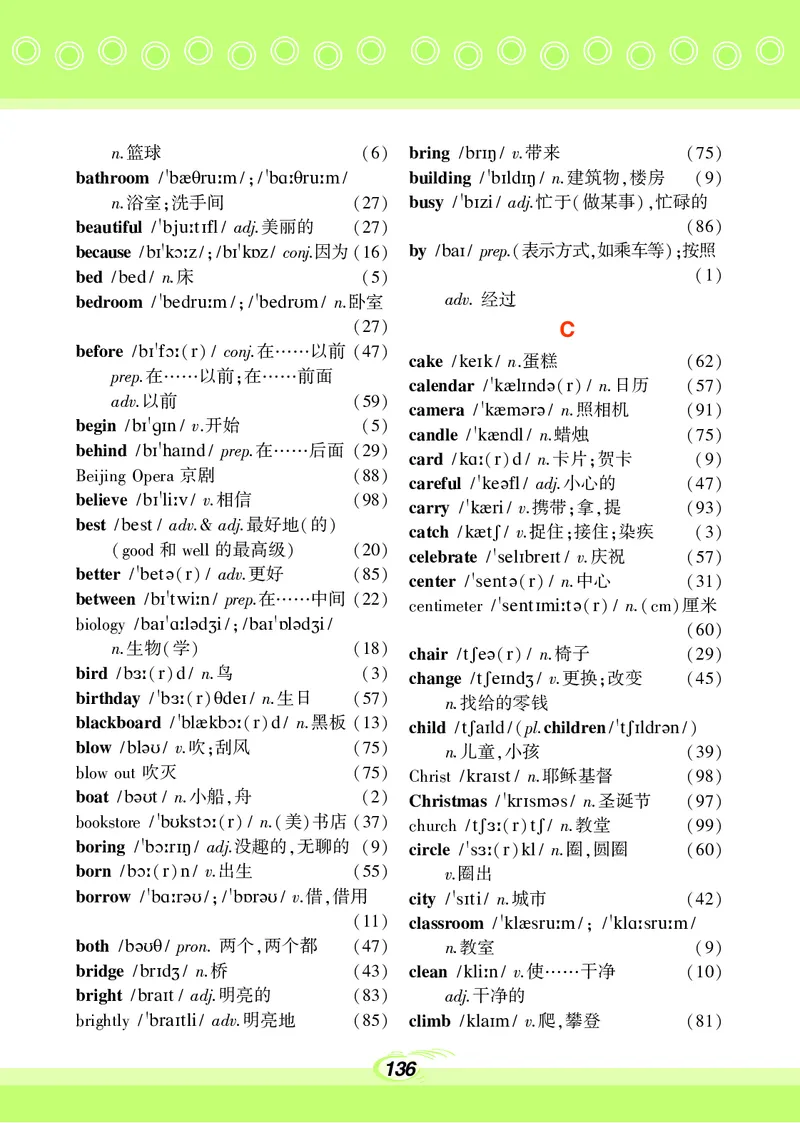
135n.篮球 bring /brI / v.带来
(6) (75)
bathroom / bæ ru m/ / b ru m/ building / bIldI / n.建筑物 楼房
ˈ ː ; ˈ ː ː ˈ , (9)
n.浴室 洗手间 busy / bIzi/ adj.忙于 做某事 忙碌的
; (27) ˈ ( ),
beautiful / bju tIfl/ adj.美丽的
ˈ ː (27) (86)
because /bIk z/ /bIk z/ conj.因为 by /baI/ prep. 表示方式 如乘车等 按照
ˈ ɔː ; ˈ ɒ (16) ( , );
bed /bed/ n.床
(5) (1)
bedroom / bedru m/ / bedr m/ n.卧室 adv. 经过
ˈ ː ; ˈ ʊ
C
(27)
before /bIf r / conj.在 以前
ˈ ɔː( ) …… (47) cake /ke k/ n.蛋糕
prep.在 以前 在 前面 ɪ (62)
…… ; …… calendar / kælInd r / n.日历
adv.以前 ˈ ə( ) (57)
(59) camera / kæm r / n.照相机
begin /bI n/ v.开始 ˈ ə ə (91)
ˈɪ (5) candle / kændl/ n.蜡烛
behind /bIhaInd/ prep.在 后面 ˈ (75)
ˈ …… (29)
card /k r d/ n.卡片 贺卡
京剧 ː( ) ; (9)
Beijing Opera (88)
careful / ke fl/ adj.小心的
believe /bIli v/ v.相信 ˈ ə (47)
carry / kæri/ v.携带 拿 提
ˈ ː (98)
best /best/ adv. adj.最好地 的 ˈ ; , (93)
catch /kæt / v.捉住 接住 染疾
& ( )
和 的最高级 ʃ ; ; (3)
celebrate / selIbreIt/ v.庆祝
(good well ) (20)
better / bet r / adv.更好 ˈ (57)
center / sent r / n.中心
ˈ ə( ) (85)
ˈ ə( ) (31)
between /bItwi n/ prep.在 中间
/ sentImi t r / n. 厘米
ˈ ː …… (22)
centimeter ˈ ː ə( ) (cm)
/baI l d i/ /baI l d i/
biology ˈː ə ʒ ; ˈɒ ə ʒ
(60)
n.生物 学
chair /t e r / n.椅子
( ) (18)
ʃ ə( ) (29)
bird /b r d/ n.鸟
change /t eInd / v.更换 改变
ɜː( ) (3)
ʃ ʒ ; (45)
birthday / b r deI/ n.生日
n.找给的零钱
ˈ ɜː( ) (57)
blackboard / blækb r d/ n.黑板
child /t aIld/ pl.children/ t Ildr n/
ˈ ɔː( ) (13)
ʃ ( ˈ ʃ ə )
blow /bl / v.吹 刮风 n.儿童 小孩
əʊ ; (75) , (39)
吹灭 /kraIst/ n.耶稣基督
blow out (75) Christ (98)
boat /b t/ n.小船 舟 Christmas / krIsm s/ n.圣诞节
əʊ , (2) ˈ ə (97)
/ b kst r / n. 美 书店 /t r t / n.教堂
bookstore ˈ ʊ ɔː( ) ( ) (37) church ʃɜː( ) ʃ (99)
boring / b rI / adj.没趣的 无聊的 circle / s r kl/ n.圈 圆圈
ˈ ɔː , (9) ˈ ɜː( ) , (60)
born /b r n/ v.出生 v.圈出
ɔː( ) (55)
borrow / b r / / b r / v.借 借用 city / sIti/ n.城市
ˈ ː əʊ ; ˈ ɒ əʊ , ˈ (42)
classroom / klæsru m/ / kl sru m/
(11) ˈ ː ; ˈ ː ː
both /b / pron. 两个 两个都 n.教室
əʊ , (47) (9)
bridge /brId / n.桥 clean /kli n/ v.使 干净
ʒ (43) ː …… (10)
bright /braIt/ adj.明亮的 adj.干净的
(83)
/ braItli/ adv.明亮地 climb /klaIm/ v.爬 攀登
brightly ˈ (85) , (81)
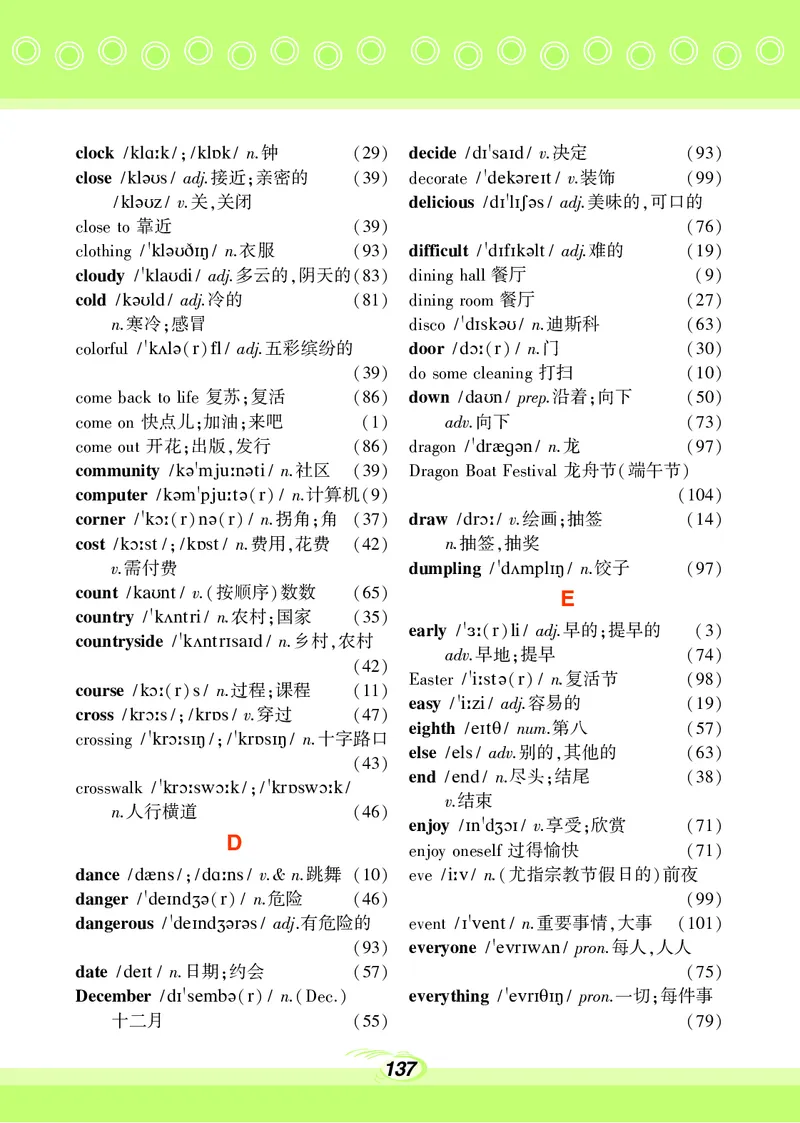
136clock /kl k/ /kl k/ n.钟 decide /dIsaId/ v.决定
ː ; ɒ (29) ˈ (93)
close /kl s/ adj.接近 亲密的 / dek reIt/ v.装饰
əʊ ; (39) decorate ˈ ə (99)
/kl z/ v.关 关闭 delicious /dIlI s/ adj.美味的 可口的
əʊ , ˈ ʃə ,
靠近
close to (39) (76)
/ kl I / n.衣服 difficult / dIfIk lt/ adj.难的
clothing ˈ əʊð (93) ˈ ə (19)
cloudy / kla di/ adj.多云的 阴天的 餐厅
ˈ ʊ , (83) dining hall (9)
cold /k ld/ adj.冷的 餐厅
əʊ (81) dining room (27)
n.寒冷 感冒 / dIsk / n.迪斯科
; disco ˈ əʊ (63)
/ k l r fl/ adj.五彩缤纷的 door /d r / n.门
colorful ˈ ʌ ə( ) ɔː( ) (30)
打扫
(39) do some cleaning (10)
复苏 复活 down /da n/ prep.沿着 向下
come back to life ; (86) ʊ ; (50)
快点儿 加油 来吧 adv.向下
come on ; ; (1) (73)
开花 出版 发行 / dræ n/ n.龙
come out ; , (86) dragon ˈ ə (97)
community /k mju n ti/ n.社区 龙舟节 端午节
əˈ ː ə (39) Dragon Boat Festival ( )
computer /k mpju t r / n.计算机
ə ˈ ː ə( ) (9) (104)
corner / k r n r / n.拐角 角 draw /dr / v.绘画 抽签
ˈ ɔː( ) ə( ) ; (37) ɔː ; (14)
cost /k st/ /k st/ n.费用 花费 n.抽签 抽奖
ɔː ; ɒ , (42) ,
v.需付费 dumpling / d mplI / n.饺子
ˈ ʌ (97)
count /ka nt/ v. 按顺序 数数 E
ʊ ( ) (65)
country / k ntri/ n.农村 国家
ˈ ʌ ; (35) early / r li/ adj.早的 提早的
countryside / k ntrIsaId/ n.乡村 农村 ˈɜː( ) ; (3)
ˈ ʌ , adv.早地 提早
; (74)
(42) / i st r / n.复活节
course /k r s/ n.过程 课程 Easter ˈ ː ə( ) (98)
ɔː( ) ; (11) easy / i zi/ adj.容易的
cross /kr s/ /kr s/ v.穿过 ˈ ː (19)
ɔː ; ɒ (47) eighth /eIt / num.第八
/ kr sI / / kr s / n.十字路口 (57)
crossing ˈ ɔː ; ˈ ɒ ɪ else /els/ adv.别的 其他的
, (63)
(43) end /end/ n.尽头 结尾
/ kr sw k/ / kr sw k/ ; (38)
crosswalk ˈ ɔː ɔː ; ˈ ɒ ɔː v.结束
n.人行横道
(46) enjoy /Ind I/ v.享受 欣赏
D ˈ ʒɔ ; (71)
过得愉快
enjoy oneself (71)
dance /dæns/ /d ns/ v.& n.跳舞 /i v/ n. 尤指宗教节假日的 前夜
; ː (10) eve ː ( )
danger / deInd r / n.危险
ˈ ʒə( ) (46) (99)
dangerous / deInd r s/ adj.有危险的 /Ivent/ n.重要事情 大事
ˈ ʒə ə event ˈ , (101)
everyone / evrIw n/ pron.每人 人人
(93) ˈ ʌ ,
date /deIt/ n.日期 约会
; (57) (75)
December /dIsemb r / n. everything / evrI I / pron.一切 每件事
ˈ ə( ) (Dec.) ˈ ;
十二月
(55) (79)
137F G
fall /f l/ v.跌倒 落下 game / e m/ n 比赛 运动 游戏
ɔː ; (73) ɪ . ; ; (13)
n.秋季 autumn/ t m/ garden / r dn/ n.花园
( ˈɔː ə BrE) (81) ˈː( ) (27)
fan /fæn/ n.迷 风扇 gate / eIt/ n.大门
; (55) (1)
far /f r / adj.远的 geography /d i r fi/ /d i r fi/
ː( ) (39) ʒ ˈː ə ; ʒ ˈɒ ə
adv.远 n.地理 学
( ) (17)
远离 Germany/ d r m ni/ n.德国
far from (39) ˈ ʒɜː( ) ə (90)
/ f r mha s/ n.农场住宅 / st/ n.鬼 幽灵
farmhouse ˈ ː( ) ʊ ghost əʊ , (102)
gift / Ift/ n.礼物
(35) (96)
fast /fæst/ /f st/ adv.快 迅速 grape / reIp/ n.葡萄
; ː , (48) (100)
adj.快的 迅速的 great / reIt/ adj.伟大的 好极的
, ; (7)
February / februeri/ / febru ri/ n. greet / ri t/ v.和 某人 打招呼 或问好
ˈ ; ˈ ə (Feb.) ː ( ) ( )
二月
(24) (99)
festival / festIvl/ n.节日 guitar / It r / n 吉他
ˈ (97) ˈ ː( ) . (30)
few /fju / adj.很少 不多 /d Im/ /d ImneIzI m/
ː , (13) gym ʒ =gymnasium ʒ ˈ ə
pron.很少人 或事物 地方 n.体育馆 健身房
( 、 ) , (9)
fifth /fIf / num.第五
H
(57)
/ faI r pleIs/ n.壁炉
fireplace ˈ ə( ) (99) 应该 最好
first /f r st/ num.&adv.第一
had better , (85)
ɜː( ) (28) hall /h l/ n.大厅 礼堂
flag /flæ / n.旗
ɔː , (9)
(104) / hæl i n/ n.万圣节前夕
floor /fl r / n.楼层 地板
Halloween ˌ əʊˈː (102)
ɔː( ) ; (27) hard /h r d/ adj.努力的 困难的
flower / fla r / n.花
ː( ) ; (24)
ˈ ʊə( ) (31) adv.艰难地 努力地
/ f i/ / f i/ adj.有雾的
; (69)
foggy ˈ ː ; ˈ ɒ (83) / h r vIst/ n.& v.收割 收获
forget /f r et/ v.忘记
harvest ˈ ː( ) ,
ə( )ˈ (74)
出租
(86)
for rent (35) hat /hæt/ n 常指带檐的 帽子
fourth /f r / num.第四
.( ) (87)
ɔː( ) (57)
玩得高兴
fresh /fre / adj.新鲜的
have a good time (63)
ʃ (42)
/ hevIli/ adv.猛烈地
Friday / fraIdeI/ / fraIdi/ n.星期五
heavily ˈ (86)
ˈ ; ˈ
hill /hIl/ n.小山 山丘
, (52)
(17)
himself /hImself/ pron.他自己
friendly / frendli/ adj 友好的
ˈ (71)
ˈ . (96)
history / hIstri/ n.历史
从 到
ˈ (18)
from to …… …… (22)
holiday / h l deI/ / h l deI/ n.假期
front /fr nt/ n.前面 前部
ˈ ː ə ; ˈ ɒ ə
ʌ , (30)
adj.前面的 前部的
(85)
,
full /f l/ adj.满的 充满的
hometown / h mta n/ n.家乡 故乡
ˌ əʊ ˈ ʊ ,
ʊ , (98)
fun /f n/ n 乐趣
(91)
ʌ . (93)
/ h ni/ n.蜂蜜
honey ˈ ʌ (100)
138hope /h p/ v.& n.希望 期望 敲
əʊ , (88) knock on (102)
hot /h t/ /h t/ adj.热的 辣的 / k fu / n.功夫
ː ; ɒ ; (81) kung fu ˌ ʌ ˈ ː (72)
house /ha s/ n.房子
L
ʊ (31)
hurt /h r t/ adj. 身体上 受伤的
ɜː( ) ( ) (47) lab /læb/ laboratory / læbr t ri/
v.受伤 感到疼痛 = ˈ ə ɔː ;
; (73) /l b r tri/ n.实验室
I əˈ ɒ ə (9)
/ leIb r / n.劳动
labor ˈ ə( ) (104)
ice /aIs/ n.冰 /læmp/ n.灯
(86) lamp (29)
important /Imp r tnt/ adj.重要的 / lænt r n/ n.灯笼
ˈ ɔː( ) (99) lantern ˈ ə( ) (97)
在 前面 元宵节
in front of …… (30) Lantern Festival (97)
在 中心 large /l r d / adj.大的 巨大的
in the center of …… (31) ː( ) ʒ , (31)
India / ndI / n.印度 last /læst/ /l st/ adv.最后 最近
ˈɪ ə (90) ; ː ; (47)
interest / Intr st Intrest/ n.兴趣 趣味 det.最近的 最后的
ˈ ə ;ˈ ; ; (68)
v.持续
(89) (86)
interesting / Intr stI IntrestI / late /leIt/ adv.晚 迟
ˈ ə ;ˈ , (26)
adj.有趣的 adj.迟 的 晚 的
(19) ( ), ( ) (74)
international / Int r næ n l/ 后来
ˌ ə( )ˈ ʃ ə later on (85)
adj.国际的 leaf /li f/ pl.leaves/li vz/ n.叶子
(104) ː ( ː ) (86)
国际劳动节 learn /l r n/ v.学习 学会 获悉
International Labor Day (104) ɜː( ) , ; (20)
J left /left/ n.左 左边
, (31)
adv.向左
January / d ænjueri/ / d ænju ri/ (43)
ˈ ʒ ; ˈ ʒ ə adj.左边的
n. 一月 (46)
(Jan.) (55) lesson / lesn/ n.课
Japanese / d æp ni z/ adj.日本的 ˈ (13)
ˌ ʒ əˈ ː ; library / laIbreri/ / laIbr ri/ n.图书馆
日本人的 日语的 ˈ ; ˈ ə
; (16)
n.日语 日本人 (6)
; (64) life /laIf/ n.生活 生命
/ d u I / adj.犹太人的 ; (7)
Jewish ˈ ʒ ː ʃ (100) light /laIt/ n.灯 灯光
July /d ulaI/ n. 七月 ; (46)
ʒ ˈ (Jul.) (55) adj.明亮的 浅色的 轻的
June /d u n/ n. 六月 ; ;
ʒ ː (Jun.) (55) listen / lIsn/ v. 注意地 听
K ˈ ( ) (6)
注意地 听 倾听
listen to ( ) ; (6)
keep /ki p/ v.保存 保持 客厅 起居室
ː ; (11) living room , (27)
远离 London / l nd n/ n.伦敦
keep away from (94) ˈ ʌ ə (69)
key /ki / n.钥匙 关键 照顾
ː ; (30) look after (30)
kilometer /kIl mi t r / / kIl mi t r / 寻找
ˈː ː ə( ) ; ˈ ə ː ə( ) look for (11)
n.千米 公里 lose /lu z/ v.失去 丢失 输掉
, (45) ː ; ; (47)
kitchen / kIt In/ n.厨房 失物招领处
ˈ ʃ (27) Lost and Found (12)
knock /n k/ /n k/ v.& n.敲 low /l / adj.& adv.低 矮
ː ; ɒ (102) əʊ ; (84)
139luck /l k/ n.好运 幸运 movie / mu vi/ film /fIlm/ n 电影
ʌ , (97) ˈ ː ( BrE) .
lucky / l ki/ adj 运气好的 幸运的
ˈ ʌ . , (101) (4)
压岁钱 Mrs. / m s z/ n.太太 夫人
lucky money (101) ˈ ɪ ɪ , (62)
/ lu n r / adj.月亮的 月球的 music / mju zIk/ n.音乐
lunar ˈ ː ə( ) , (97) ˈ ː (6)
M / mju zIkl/ adj.音乐的
musical ˈ ː (76)
must /m st m st/ modal v.必须
magic / mæd Ik/ adj.有魔力的 ʌ ; ə (11)
ˈ ʒ (71) myself /maIself/ pron. 我自己
make /meIk/ v.做 制造 使成为 ˈ (73)
, ; (9)
N
March /m r t / n. 三月
ː( ) ʃ (Mar.) (55)
math /mæ / mathematics/ mæ mætks/ national / næ n l/ adj.国家的
= ˌ əˈ ɪ ˈ ʃ ə (104)
n.数学 国庆节
(18) National Day (104)
matter / mæt r / n.问题 near /nI r / prep.在 附近
ˈ ə( ) (73) ə( ) …… (29)
May /meI/ n.五月 adv. 在附近
(55) (37)
meeting / mi tI / n.会议 会面 adj.近的
ˈ ː ; (18)
/ meri/ adj.愉快的 neighbor / neIb r / n.邻居
merry ˈ (99) ˈ ə( ) (37)
meter / mi t r / n.米 never / nev r / adv.从不
ˈ ː ə( ) (43) ˈ ə( ) (3)
中秋节
newspaper / nuzpeIp r / / njuzpeIp r /
Mid⁃autumn Festival (98)
ˈ ː ə( ) ; ˈ ː ə( )
/ mIdnaIt/ n.午夜
n.报纸
midnight ˈ (101)
(11)
minute / mInIt/ n.分钟
night /naIt/ n.夜晚
ˈ (79)
(22)
miss /mIs/ v.思念 错过
ninth /naIn / num.第九
; (42)
(57)
model / m dl/ / m dl/ n.模型 模范
noisy / n Izi/ adj.吵闹的
ˈ ː ; ˈ ɒ ;
ˈ ɔ (42)
noon /nu n/ n 正午 中午
(32)
ː . , (88)
Monday / m ndeI m ndi/ n.星期一
再也 不 不 再
ˈ ʌ ;ˈ ʌ
not any more ( ),( ) (69)
/ n vl/ / n vl/ n 长篇 小说
(17)
money / m ni/ n.钱 novel ˈ ː ; ˈ ɒ .( ) (55)
November /n vemb r / n.
ˈ ʌ (12)
month /m n / n.月 月份 əʊˈ ə( ) (Nov.)
十一月
ʌ , (35)
moon /mu n/ n.月亮 (55)
ː (98) O
/ mu nkeIk/ n.月饼
mooncake ˈ ː (98)
more /m r / det.更多的 / beI/ v.服从
ɔː( ) (8) obey əˈ (47)
adv.更多 October / kt b r / / kt b r /
ː ˈ əʊ ə( ) ; ɒ ˈ əʊ ə( )
most /m st/ det.& pron.大多数 n. 十月
əʊ (85) (Oct.) (55)
adv.最 当然
(99) of course (11)
mountain / ma ntn/ / ma nt n/ n.高山 once /w ns/ adv.一次 曾经
ˈ ʊ ; ˈ ʊ ə ʌ ; (6)
conj.一旦
(94)
mouse /ma s/ pl.mice n.老鼠 步行
ʊ ( /maɪs/) on foot (1)
only / nli/ adv.仅仅 只有
(59) ˈəʊ , (32)
move /mu v/ v.搬 家 移动 adj.仅有的 唯一的
ː ( ); (42) ,
140准时 按时 pool /pu l/ n.水池 水塘
on time , (11) ː , (9)
open / p n/ v. 打开 poor /p r / /p r / adj.可怜的
ˈəʊ ə (99) ɔː( ) ; ʊə( ) ;
adj.开放的 敞开的 贫穷的
; (73)
/ pr / / pr / n.歌剧 歌剧剧本 post /p st/ n.邮件 邮政
opera ˈː ə ; ˈɒ ə ; əʊ ; (37)
v.邮寄
(88) (37)
or / r / conj.或者 否则 邮局
ɔː( ) ; (8) post office (37)
/a t / interj.哎哟 prepare/prIpe r / v.准备
ouch ʊ ʃ (73) ˈ ə( ) (93)
ourselves / a r selvz/ pron.我们自己 为 作准备
ˌ ʊə( )ˈ prepare for …… (93)
present / preznt/ n.礼物
(88) ˈ (59)
/ a td r / adj.户外的 public / p blIk/ adj.公共的 公众的
outdoor ˈ ʊ ɔː( ) (21) ˈ ʌ , (46)
outside / a tsaId/ adv.在外面 向外面 n.公众 公开
ˌ ʊ ˈ , ;
/ p mpkIn/ n.南瓜
(83) pumpkin ˈ ʌ (97)
/ vl/ n.椭圆 put /p t/ v.放
oval ˈəʊ (60) ʊ (30)
adj.椭圆形的 将 收起
put away …… (30)
over / v r / adv.结束 穿过 多于 穿 戴
ˈəʊ ə( ) ; ; (8) put on , (83)
prep.在 上面
挂起
……
put up (99)
P
Q
park /p r k/ n.公园
quiet / kwaI t/ adj.安静的
ː( ) (4)
ˈ ə (36)
v.停 车
( ) (37) R
停车场
parking lot (37)
party / p r ti/ n.聚会 宴会 党派
race /reIs/ n.竞赛 赛跑
, (104)
ˈ ː( ) , ; (57)
P.E./ pi i / physical education railway / reIlweI/ n.铁路
ˌ ː ˈ ː = ˈ (37)
/ fIzIkl ed ukeI n/ n.体育 rain /reIn/ v.下雨
ˈ ˌ ʒ ˈ ʃ (17) (82)
/p r f r m/ v.表演 n.雨
perform ə( )ˈ ɔː( ) (63)
physics / fIzIks/ n.物理 学 / reInk t/ n.雨衣
ˈ ( ) (17) raincoat ˈ əʊ (83)
/p æn / n.钢琴 rainy / reIni/ adj.阴雨的 多雨的
piano ɪˈ əʊ (63) ˈ , (83)
picture / pIkt r / n.图片 / rektæ l/ n.长方形
ˈ ʃə( ) (14) rectangle ˈ (60)
pie /paI/ n.果馅饼 remember /rImemb r / v.记得 记起
(97) ˈ ə( ) ;
n.乒乓球运动
ping⁃pong (13) (83)
place /pleIs/ n.地点 地方 /rent/ v.租借 出租
, (47) rent ; (35)
名胜 rest /rest/ n.休息 其余
place of interest (89) ; (53)
plan /plæn/ v.& n.计划 打算 return /rIt r n/ v.归还 回来
, (57) ˈ ɜː( ) ; (11)
plane /pleIn/ n.飞机 / rIdl/ n.谜语
(2) riddle ˈ (97)
playground / pleI ra nd/ n.操场 ride /raId/ v.骑 自行车 马等
ˈ ʊ (9) ( 、 ) (3)
/ p l tIks/ / p l tIks/ n.政治 立即 马上
politics ˈ ː ə ; ˈ ɒ ə right away , (88)
road /r d/ n.路 道路 公路
(18) əʊ , , (38)
141room /ru m r m/ n.房间 空间 snowy / sn i/ adj.下雪多的
ː ; ʊ ; (9) ˈ əʊ (83)
rule /ru l/ n.规则 / s k r / / s k r / football
ː (47) soccer ˈ ː ə( ) ; ˈ ɒ ə( ) (
run /r n/ v.跑 / f tb l/ n.足球 运动
ʌ (10) ˈ ʊ ɔː BrE) ( ) (4)
sometimes / s mtaImz/ adv.有时
S
ˈ ʌ (3)
soon /su n/ adv.很快 马上
safe /seIf/ adj.安全的 ː , (9)
(47) sound /sa nd/ n.声音
/ sænt kl z/ n.圣诞老人 ʊ (22)
Santa Claus ˈ ə ɔː v.听起来好像
(91)
(99) special / spe l/ adj.特别的 专门的
Saturday / sæt r deI sæt r di/ ˈ ʃ , (99)
ˈ ə( ) ;ˈ ə( ) speed /spi d/ v.超速行驶
n.星期六 ː (47)
(22) n.速度
/ skeri/ / ske ri/ adj.吓人的
scary ˈ ; ˈ ə (102) sport /sp r t/ n.体育运动
science / saI ns/ n.科学 ɔː( ) (39)
ˈ ə (18)
spring /sprI / n.春天
season / si zn/ n.季节 (81)
春节
ˈ ː (81)
second / sek nd/ num.& adv.第二 Spring Festival (97)
square /skwe r / n. 正方形 广场 平方
ˈ ə (27)
seldom / seld m/ adv.很少 ə( ) ; ;
ˈ ə (3)
September /septemb r / n. 九月 (60)
adj.正方形的
ˈ ə( ) (Sept.)
stamp /stæmp/ n.邮票
(55)
service / s r vIs/ n.服务 (22)
v.跺 脚
ˈ ɜː( ) (39)
( )
seventh / sevn / num.第七
star /st r / n.星 明星
ˈ (57)
ː( ) ; (59)
shape / eIp/ n.形状
start /st r t/ v.开始 出发
ʃ (59)
ː( ) ; (79)
v.使成为 形状
n. 开头
…… (79)
share / e r / v.分享 共用
station / steI n/ n.车站
ʃ ə( ) , (93)
ˈ ʃ (37)
/ elf/ pl. / elvz/ n.架子 stay /steI/ v.& n.待 停留
shelf ʃ ( shelves ʃ )
, (93)
熬夜
(11)
stay up (101)
shine / aIn/ v.发光 照耀 / st kI / / st kI / n.长筒袜
ʃ , (85) stocking ˈ ː ; ˈ ɒ
ship / Ip/ n. 大 船 舰
ʃ ( ) , (2) (99)
shorts / r ts/ n.短裤 stop /st p/ /st p/ n.车站
ʃɔː( ) (85) ː ; ɒ (45)
should / d d/ modal v.应该 v.停止 阻止
ʃʊ ;ʃə (45) ; (47)
shout / a t/ v.& n.呼喊 store /st r / n. 大型 百货商店
ʃ ʊ (102) ɔː( ) ( ) (37)
/ saIdw k/ n. 美 人行道 story / st ri/ n.故事 小说
sidewalk ˈ ɔː ( ) (46) ˈ ɔː , (54)
sign /saIn/ n.指示牌 符号 street /stri t/ n.街道
; (47) ː (37)
sit /sIt/ v.坐 / str li/ / str li/ adv.强烈地
(13) strongly ˈ ɔː ; ˈ ɒ
sixth /sIks / num.第六
(57) (86)
sleep /sli p/ v.& n. 睡觉 study / st di/ v.学习 研究
ː (41) ˈ ʌ ; (21)
smart /sm r t/ adj.聪明的 n.书房
ː( ) (65) (27)
snow /sn / v.下雪 subject / s bd Ikt s bd ekt/ n.学科 主题
əʊ (82) ˈ ʌ ʒ ;ˈ ʌ ʒ ;
n.雪
(86) (20)
142/ s bweI/ underground train /treIn/ n.火车
subway ˈ ʌ ( (2)
/ nd r ra nd/ n.地铁 v.培训
ˈʌ ə( ) ʊ BrE) (1)
such /s t / pron.这样的 那样的 类似的 travel / trævl/ v. n.旅行 旅游
ʌ ʃ , , ˈ & , (85)
treat /tri t/ n.& v.款待 招待
(39) ː , (102)
例如 / traIæ l/ n.三角形
such as (39) triangle ˈ (60)
/ s d nli/ adv.突然 /trIk/ n.把戏 诡计
suddenly ˈ ʌ ə (85) trick ; (71)
summer / s m r / n.夏天 trip /tr p/ n.旅行 旅游
ˈ ʌ ə( ) (81) ɪ , (88)
sun /s n/ n.太阳 阳光 Tuesday / tu zdeI/ / tju zdeI tju zdi/
ʌ , (85) ˈ ː ; ˈ ː ;ˈ ː
/ s n læsIz/ / s n l sIz/ n.星期二
sunglasses ˈ ʌ ; ˈ ʌ ː (17)
n.太阳镜 / t r ki/ n.火鸡 肉
(85) turkey ˈ ɜː( ) ( ) (97)
sunny / s ni/ adj.阳光充足的 turn /t r n/ v.转弯 使 变成
ˈ ʌ (76) ɜː( ) ;( ) (43)
supermarket / su p rm rk t/ n.转弯 轮流
ˈ ː ə ː ə ; ; (46)
/ sju p m kIt/ n.超市 TV / ti vi / television / telIvI n/
ˈ ː ə ː (37) ˌ ː ˈ ː = ˈ ʒ
sweet /swi t/ adj.甜的 n.电视
ː (97) (4)
swim /swIm/ v.& n. 游泳 twelfth /twelf / num.第十二
(6) (57)
T twentieth / twentI / num.第二十
ˈ ə (58)
twice /twaIs/ adv.两次 两倍
table / teIbl/ n.桌子 表格 ; (6)
ˈ ; (30)
talk /t k/ v.& n.谈话 U
ɔː (8)
temperature / tempr t r / n. 温度 umbrella / mbrel / n.伞
ˈ ə ʃə( ) (84) ʌ ˈ ə (85)
/tent/ n.帐篷
under / nd r / prep.在 下面 少于
tent (92)
ˈʌ ə( ) …… ;
tenth /ten / num.第十
(57)
(29)
/ æ ks IvI / n.感恩节
until / ntIl/ conj.& prep.直到 为止
Thanksgiving ˌ ˈ
ə ˈ ……
(97)
(45)
长城
/ pste z/ adv. 在 或向 楼上
the Great Wall (7)
/rIp blIk/ upstairs ˌʌ ˈ ə ( )
the PRC (the Peoples Republic ˈ ʌ
的缩写 中华人民共和国 (27)
of China )
use /ju z/ v.用 使用
ː , (11)
(104)
/ju s/ n.用 使用
thing / I / n.东西 事情 ː , (11)
; (30) W
third / r d/ num.第三
ɜː( ) (47)
thousand / a znd/ num.千 walk /w k/ v.& n.步行 散步
ˈ ʊ (56) ɔː ; (3)
Thursday / r zdeI r zdi/ n.星期四 wall /w l/ n.墙
ˈɜː( ) ;ˈɜː( ) ɔː (7)
wallet / w lIt/ / w lIt/ n.钱包
(17) ˈ ː ; ˈ ɒ (12)
ticket / tIkIt/ n.罚款单 票 warm /w r m/ adj.温暖的 热心的
ˈ ; (47) ɔː( ) ; (81)
together /t e r / adv.一起 共同 was /w z w z/ v. 的过去式 是
əˈ ðə( ) , (89) ɒ ; ə (am,is )
/ ta nha s/ n.排房
townhouse ˈ ʊ ʊ (35) (55)
traffic / træfIk/ n.交通 wash /w / /w / v.洗
ˈ (42) ːʃ ; ɒʃ (73)
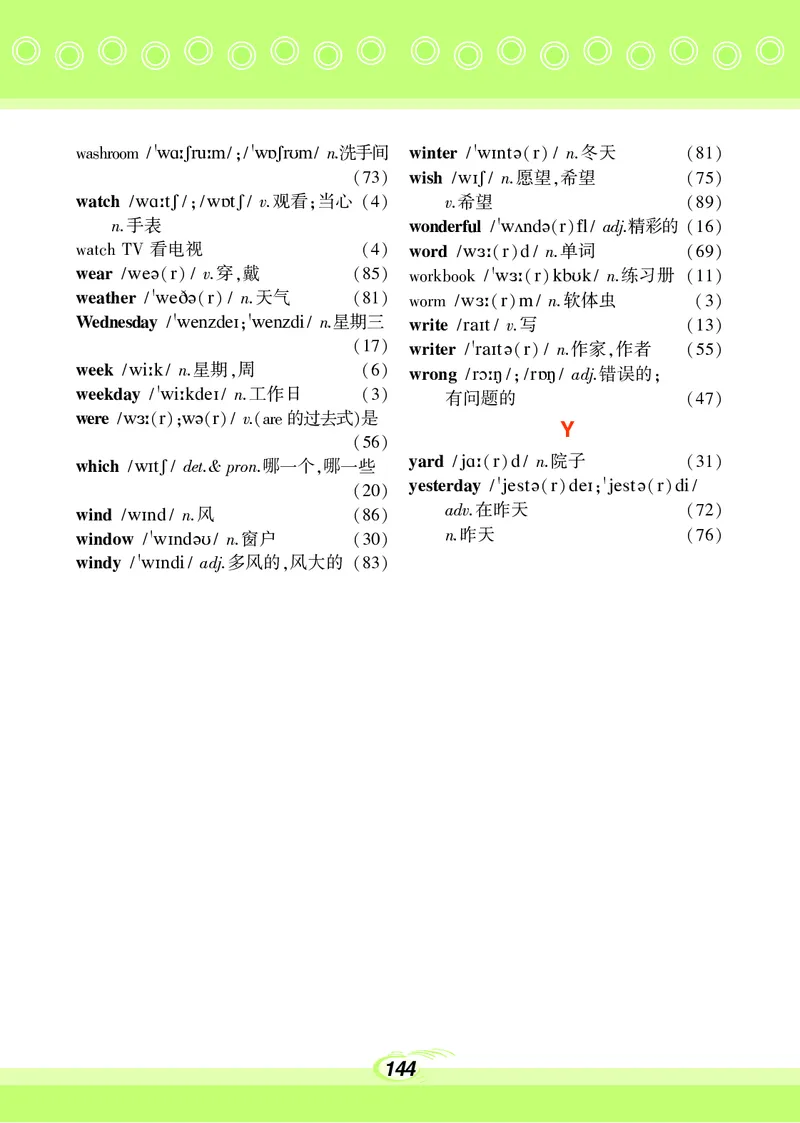
143/ w rum/ / w r m/ n.洗手间 winter / wInt r / n.冬天
washroom ˈ ːʃ ː ; ˈ ɒʃ ʊ ˈ ə( ) (81)
wish /wI / n.愿望 希望
(73) ʃ , (75)
watch /w t / /w t / v.观看 当心 v.希望
ː ʃ ; ɒ ʃ ; (4) (89)
n.手表 wonderful / w nd r fl/ adj.精彩的
ˈ ʌ ə( ) (16)
看电视 word /w r d/ n.单词
watch TV (4) ɜː( ) (69)
wear /we r / v.穿 戴 / w r kb k/ n.练习册
ə( ) , (85) workbook ˈ ɜː( ) ʊ (11)
weather / we r / n.天气 /w r m/ n.软体虫
ˈ ðə( ) (81) worm ɜː( ) (3)
Wednesday / wenzdeI wenzdi/ n.星期三 write /raIt/ v.写
ˈ ;ˈ (13)
writer / raIt r / n.作家 作者
(17) ˈ ə( ) , (55)
week /wi k/ n.星期 周 wrong /r / /r / adj.错误的
ː , (6) ɔː ; ɒ ;
weekday / wi kdeI/ n.工作日 有问题的
ˈ ː (3) (47)
were /w r w r / v. 的过去式 是
ɜː( ); ə( ) (are ) Y
(56)
yard /j r d/ n.院子
which /wIt / det.& pron.哪一个 哪一些
ː( ) (31)
ʃ ,
yesterday / jest r deI jest r di/
ˈ ə( ) ;ˈ ə( )
(20)
wind /wInd/ n.风
adv.在昨天
(72)
(86)
window / wInd / n.窗户 n.昨天
ˈ əʊ (30) (76)
windy / wIndi/ adj.多风的 风大的
ˈ , (83)
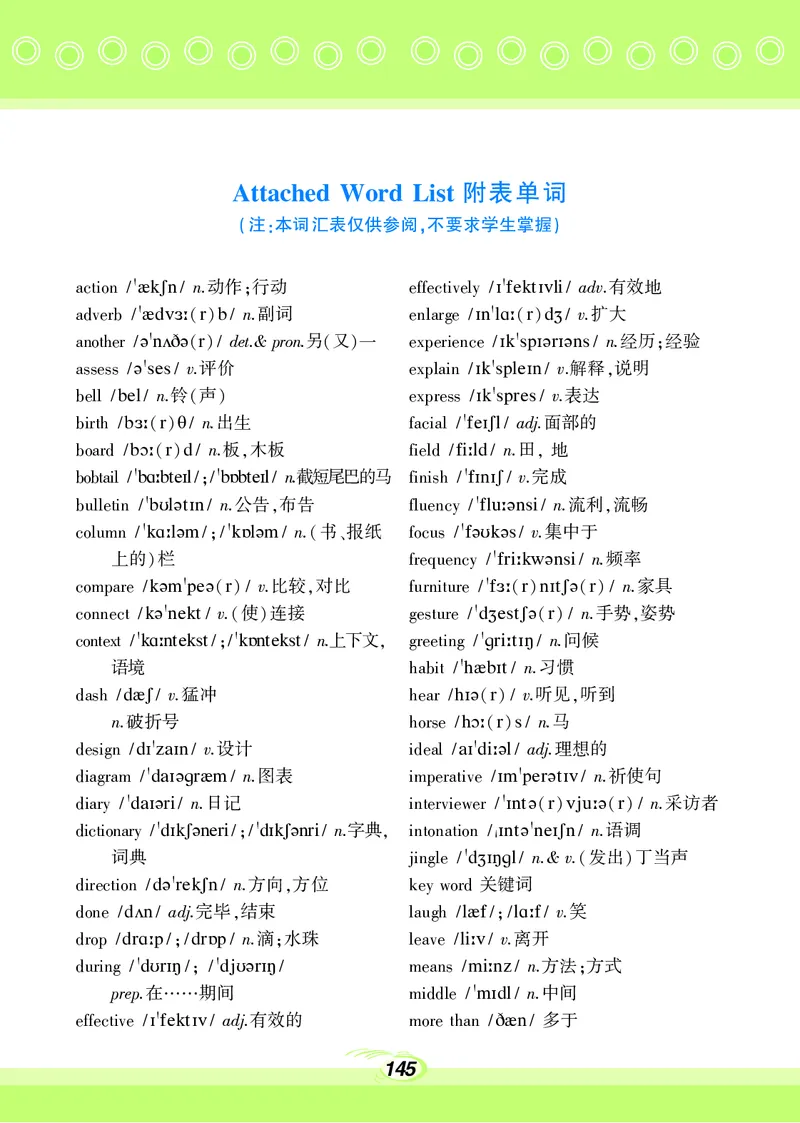
144Attached Word List 附表单词
(注:本词汇表仅供参阅,不要求学生掌握)
/ æk n/ n.动作 行动 /IfektIvli/ adv.有效地
action ˈ ʃ ; effectively ˈ
/ ædv r b/ n.副词 /Inl r d / v.扩大
adverb ˈ ɜː( ) enlarge ˈ ː( ) ʒ
/ n r / det.& pron.另 又 一 / ksp r ns/ n.经历 经验
another əˈ ʌðə( ) ( ) experience ɪ ˈ ɪə ɪə ;
/ ses/ v.评价 / ksple n/ v 解释 说明
assess əˈ explain ɪ ˈ ɪ . ,
/bel/ n.铃 声 /Ikspres/ v.表达
bell ( ) express ˈ
/b r / n.出生 / feI l/ adj.面部的
birth ɜː( ) facial ˈ ʃ
/b r d/ n.板 木板 /fi ld/ n.田 地
board ɔː( ) , field ː ,
/ b bteIl/ / b btel/ n.截短尾巴的马 / fInI / v.完成
bobtail ˈ ː ; ˈ ɒ ɪ finish ˈ ʃ
/ b l tIn/ n.公告 布告 / flu nsi/ n.流利 流畅
bulletin ˈ ʊ ə , fluency ˈ ːə ,
/ k l m/ / k l m/ n. 书 报纸 / f k s/ v.集中于
column ˈ ː ə ; ˈ ɒ ə ( 、 focus ˈ əʊ ə
上的 栏 / fri kw nsi/ n.频率
) frequency ˈ ː ə
/k mpe r / v.比较 对比 / f r nIt r / n.家具
compare ə ˈ ə( ) , furniture ˈ ɜː( ) ʃə( )
/k nekt/ v. 使 连接 / d est r / n.手势 姿势
connect əˈ ( ) gesture ˈ ʒ ʃə( ) ,
/ k ntekst/ / k ntekst/ n.上下文 / ri tI / n.问候
context ˈ ː ; ˈ ɒ , greeting ˈ ː
语境 / hæbIt/ n.习惯
habit ˈ
/dæ / v.猛冲 /h r / v.听见 听到
dash ʃ hear ɪə( ) ,
n.破折号 /h r s/ n.马
horse ɔː( )
/dIzaIn/ v.设计 /a di l/ adj.理想的
design ˈ ideal ɪˈ ːə
/ daI ræm/ n.图表 / mper t v/ n.祈使句
diagram ˈ ə imperative ɪ ˈ ə ɪ
/ daI ri/ n.日记 / Int r vju r / n.采访者
diary ˈ ə interviewer ˈ ə( ) ːə( )
/ dIk neri/ / d k nri/ n.字典 / nt ne n/ n.语调
dictionary ˈ ʃə ; ˈ ɪ ʃə , intonation ˌɪ əˈ ɪʃ
词典 / d I l/ n.& v. 发出 丁当声
jingle ˈ ʒ ( )
/d rek n/ n.方向 方位 关键词
direction əˈ ʃ , key word
/d n/ adj.完毕 结束 /læf/ /l f/ v.笑
done ʌ , laugh ; ː
/dr p/ /dr p/ n.滴 水珠 /li v/ v.离开
drop ː ; ɒ ; leave ː
/ d rI / / dj rI / /mi nz/ n.方法 方式
during ˈ ʊ ; ˈ ʊə means ː ;
prep.在 期间 / m dl/ n.中间
…… middle ˈ ɪ
/IfektIv/ adj.有效的 / æn/ 多于
effective ˈ more than ð
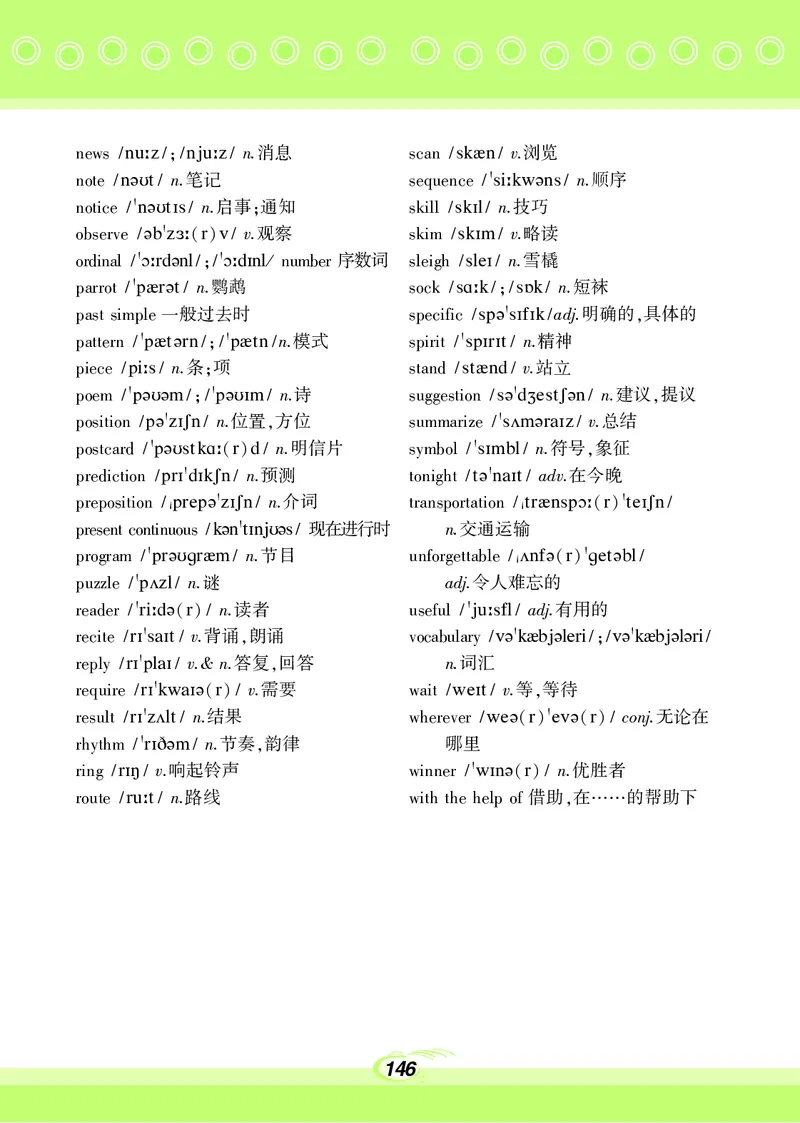
145/nu z/ /nju z/ n.消息 /skæn/ v.浏览
news ː ; ː scan
/n t/ n.笔记 / si kw ns/ n.顺序
note əʊ sequence ˈ ː ə
/ n tIs/ n.启事 通知 /skIl/ n.技巧
notice ˈ əʊ ; skill
/ bz r v/ v.观察 /skIm/ v.略读
observe ə ˈ ɜː( ) skim
/ rd nl/ / d nl 序数词 /sleI/ n.雪橇
ordinal ˈɔː ə ; ˈɔː ɪ / number sleigh
/ pær t/ n.鹦鹉 /s k/ /s k/ n.短袜
parrot ˈ ə sock ː ; ɒ
一般过去时 /sp sIfIk/adj.明确的 具体的
past simple specific əˈ ,
/ pæt rn/ / pætn/n.模式 / spIrIt/ n.精神
pattern ˈ ə ; ˈ spirit ˈ
/pi s/ n.条 项 /stænd/ v.站立
piece ː ; stand
/ p m/ / p m/ n.诗 /s d est n/ n.建议 提议
poem ˈ əʊə ; ˈ əʊɪ suggestion əˈ ʒ ʃə ,
/p zI n/ n.位置 方位 / s m raIz/ v.总结
position əˈ ʃ , summarize ˈ ʌ ə
/ p stk r d/ n.明信片 / sImbl/ n.符号 象征
postcard ˈ əʊ ː( ) symbol ˈ ,
/prIdIk n/ n.预测 /t naIt/ adv.在今晚
prediction ˈ ʃ tonight əˈ
/ prep zI n/ n.介词 / trænsp r teI n/
preposition ˌ əˈ ʃ transportation ˌ ɔː( )ˈ ʃ
/k ntInj s/ 现在进行时 n.交通运输
present continuous ə ˈ ʊə
/ pr ræm/ n.节目 / nf r et bl/
program ˈ əʊ unforgettable ˌʌ ə( )ˈ ə
/ p zl/ n.谜 adj.令人难忘的
puzzle ˈ ʌ
/ ri d r / n.读者 / ju sfl/ adj.有用的
reader ˈ ː ə( ) useful ˈ ː
/rIsaIt/ v.背诵 朗诵 /v kæbj leri/ /v kæbj l ri/
recite ˈ , vocabulary əˈ ə ; əˈ əə
/rIplaI/ v.& n.答复 回答 n.词汇
reply ˈ ,
/rIkwaI r / v.需要 /we t/ v.等 等待
require ˈ ə( ) wait ɪ ,
/rIz lt/ n.结果 /we r ev r / conj.无论在
result ˈ ʌ wherever ə( )ˈ ə( )
/ rI m/ n.节奏 韵律 哪里
rhythm ˈ ðə ,
/rI / v.响起铃声 / w n r / n.优胜者
ring winner ˈ ɪ ə( )
/ru t/ n.路线 借助 在 的帮助下
route ː with the help of , ……
146English Names 英文姓名表
Male Names 男名 Female Names 女名 Family Names 姓
( ) ( ) ( )
/ æl n/ 艾伦 / el n/ 埃伦 /blæk/ 布莱克
Alan ˈ ə Ellen ˈ ə Black
/b b/ 鲍勃 / d eni/ 珍妮 / d æks n/ 杰克逊
Bob ɒ Jenny ˈ ʒ Jackson ˈ ʒ ə
/krIs/ 克里斯 / d u di/ 朱迪 / r lI / 罗琳
Chris Judy ˈ ʒ ː Rowling ˈ əʊ
/d ef/ 杰夫 /ke t/ 凯特 /sm rt/ 斯玛特
Jeff ʒ Kate ɪ Smart ː
/rIk/ 里克 / me ri/ 玛丽 / w tsn/ 华生
Rick Mary ˈ ə Watson ˈ ɒ
/ t ni/ 托尼 / p li/ 波利
Tony ˈ əʊ Polly ˈ ɒ
Names of Places 地名表
/ streIlI / / stre lI / 澳大利亚 /speIn/ 西班牙
Australia ɔːˈ ə ; ɒˈ ɪ ə Spain
/br zIl/ 巴西 / taIlænd/ 泰国
Brazil əˈ Thailand ˈ
/ d r m ni/ 德国 /t r nt / /t r nt / 多伦多
Germany ˈ ʒɜː( ) ə Toronto əˈ ː əʊ ; əˈ ɒ əʊ
/ IndI / 印度 /we lz/ 威尔士
India ˈ ə Wales ɪ
/ Ind ni nd nizI / 印度尼西亚 / w t n di si /
Indonesia ˌ əˈ ːʒə;ˌɪ əˈ ː ə Washington, D.C. ˌ ːʃɪ ə ː ˈ ː ;
/ l nd n/ 伦敦 / w t n di si / 华盛顿
London ˈ ʌ ə ˌ ɒʃɪ ə ː ˈ ː
/ nu zi l nd/
New Zealand ˌ ː ˈ ː ə ;
/ nju zi l nd/ 新西兰
ˌ ː ˈ ː ə
American English and British English
美国英语和英国英语对照表
American English British English American English British English
apartment flat math maths
around round meter metre
bookstore bookshop movie film
center centre neighbor neighbour
centimeter centimetre on the street in the street
colorful colourful sidewalk pavement
crosswalk zebra crossing soccer football
fall autumn store shop
first floor ground floor subway underground/
game match tube
kilometer kilometre vacation holiday
labor labour washroom/restroom t oilet
mail post
147Irregular Verbs 不规则动词表
Infinitive Past tense Infinitive Past tense
/w z w z/ /l t/
be was ɒ ; ə light lit ɪ
/w r w r / / la t d/
were ɜː( ); ə( ) lighted ˈ ɪ ɪ
/bI æn/ /l st/
begin began ˈ lose lost ɒ
/blu / /meId/
blow blew ː make made
/br t/ /ment/
bring brought ɔː mean meant
/b t/ /met/
buy bought ɔː meet met
/k d/ /p t/
can could ʊ put put ʊ
/k t/ /red/
catch caught ɔː read read
/keIm/ /r d/
come came ride rode əʊ
/k st/ /k st/ /ræn/
cost cost ɔː ; ɒ run ran
/dId/ /sed/
do did say said
/dru / /s /
draw drew ː see saw ɔː
/dræ k/ / n/ / n/
drink drank shine shone ʃəʊ ; ʃɒ
/dr v/ /sæ /
drive drove əʊ sing sang
/eIt/ /et/ /sæt/
eat ate ; sit sat
/fel/ /slept/
fall fell sleep slept
/fa nd/ /sp k/
find found ʊ speak spoke əʊ
/flu / /sped/
fly flew ː speed sped
/f r t/ /f t/ / spi dId/
forget forgot ə ˈː ; əˈɒ speeded ˈ ː
/ t/ / t/ /spelt/
get got ː ; ɒ spell spelt
/ eIv/ /speld/
give gave spelled
/went/ /swæm/
go went swim swam
/hæd h d/ /t k/
have had ; ə take took ʊ
/h r t/ /t t/
hurt hurt ɜː( ) teach taught ɔː
/kept/ /t ld/
keep kept tell told əʊ
/nu / /nju / / t/
know knew ː ; ː think thought ɔː
/l r nt/ /w r /
learn learnt ɜː( ) wear wore ɔː( )
/l r nd/ /w d/
learned ɜː( ) will would ʊ
/let/ /r t/
let let write wrote əʊ
148后 记
本册教科书由北京市仁爱教育研究所依据教育部《义务教育英语课程标准(2011年
版)》编写,经教育部基础教育课程教材专家工作委员会2012年审查一次性通过。
自教育部2011年7月下发《义务教育英语课程标准》(送审稿)之日起,北京市仁爱教
育研究所的数十位英语教材编写专家及近百位教材编写人员在加拿大主编Jim Greenlaw博
士和中方主编王德春教授、副主编杨晓钰教授的带领下,对仁爱版初中英语教材进行了深
入、细致的修订改编工作。
修订后的仁爱版初中英语教材更加注重培养学生的语感和良好的语音、语调基础,使
他们形成用英语进行日常交际的思维和能力;注重培养学生良好的学习习惯,提高他们自
主学习的能力;注重培养学生的观察、记忆、思维、想象和创造能力,促进心智和综合人
文素养的全面发展。同时,仁爱版初中英语教材还注重培养学生的爱国主义精神及跨文化
交际意识,为学生的进一步学习奠定良好的基础。
在教材修订的过程中,我们所有参与教材修订的专家、教授、编写、审校人员每天坚
持工作10个小时以上(包括兔年大年三十至龙年正月初九以及所有的节假日和公休日),一
直连续坚持工作到教材送审截止日期的最后一天下午。我们执着的追求最后终于获得了丰
厚的回报——在2012年1月31日开始的第一阶段送审(七上—七下)和2012年12月31日开始
的第二阶段送审(八上—九下)的过程中,仁爱版初中英语教材均分别于2012年3月17日和
2013年3月2日率先一次性通过教育部基础教育课程教材专家工作委员会审查(唯一一套无
需参加2012年4月9日和2013年4月8日的再次会议复核审查),且2012年3月17日第一阶段和
2013年3月2日第二阶段审查通过的唯一结论要求均是:
仁爱版初中英语教材在编写及数百次的修改、审校过程中得到了全国诸多英语教育
专家、教研员和优秀一线教师的指导与帮助,其中有:朱志华、刘梅荣、张红祥、陈丹、
黄少华(按姓氏笔画排序)等同志。同时,仁爱版初中英语教材的每一次修改、审校还吸纳
了很多教研员和一线教师的宝贵意见。在此,北京市仁爱教育研究所向他们表示诚挚的谢
意!
由于时间的关系,教材中可能还存在不足及需要完善之处,衷心希望广大英语专家、
教研员、一线教师、在校学生及学生家长等来电来函批评指正,以便下次修订时改正。
本教科书的绝大部分(99%以上)作品均为北京市仁爱教育研究所原创作品,极少部分
(1%以下)选用的经典作品、图片由于无法与作者取得联系,特委托北京版权代理有限责任
公司向权利人转付稿酬。请您与北京版权代理有限责任公司联系并领取稿酬。联系方式:
(010)82357058/57/56
北京市仁爱教育研究所