英语专项练习(十)
Part I Listening Comprehension (20 minutes)
Section A
Directions: In this section, you will hear 10 short conversations. At
the end of each
conversation, a question will be asked about what was said. Both the
conversation
and the question will be spoken only once. After each question there
will be a pause.
During the pause, you must read the four choices marked A), B), C) and
D), and
decide which is the best answer. Then mark the corresponding letter on
the Answer
Sheet with a single line through the center.
Example: You will hear:
You will read:
A) 2 hours.
B) 3 hours.
C) 4 hours.
D) 5 hours.
From the conversation we know that the two were talking about some work
they will start at 9
o’clock in the morning and have to finish at 2 in the afternoon.
Therefore, D) “5 hours” is the
correct answer. You should choose [D] on the Answer Sheet and mark it
with a single line through
the center.
Sample Answer [A] [B] [C] [D]
1. A) She met with Thomas just a few days ago.
B) She can help with the orientation program.
C) She is not sure she can pass on the message.D) She will certainly try to contact Thomas.
2. A) Set the dinner table.
B) Change the light bulb
C) Clean the dining room.
D) Hold the ladder for him.
3. A) He’d like a piece of pie.
B) He’d like some coffee
C) He’d rather stay in the warm room.
D) He’s just had dinner with his friends.
4. A) He has managed to sell a number of cars.
B) He is contented with his current position.
C) He might get fired.
D) He has lost his job.
5. A) Tony’s secretary.
B) Paul’s girlfriend.
C) Paul’s colleague.
D) Tony’s wife.
6. A) He was fined for running a red light.
B) He was caught speeding on a fast lane.
C) He had to run quickly to get the ticket.
D) He made a wrong turn at the intersection.
7. A) He has learned a lot from his own mistakes.
B) He is quite experienced in taming wild dogs.
C) He finds reward more effective than punishment.
D) He thinks it important to master basic training skills.
8. A) At a bookstore.
B) At the dentist’s.
C) In a restaurant.
D) In the library.
9. A) He doesn’t want Jenny to get into trouble.
B) He doesn’t agree with the woman’s remark.
C) He thinks Jenny’s workload too heavy at college.
D) He believes most college students are running wild.
10. A) It was applaudable.B) It was just terrible.
C) The actors were enthusiastic.
D) The plot was funny enough.
Section B
Directions: In this section, you will hear 3 short passages. At the end
of each passage, you will
hear some questions. Both the passage and the questions will be spoken
only once.
After you hear a question, you must choose the best answer from the four
choices
marked A), B), C) and D). Then mark the corresponding letter on the
Answer Sheet
with a single line through the centre.
Passage One
Questions 11 to 13 are based on the passage you have just heard.
11. A) Social work.
B) Medical care
C) Applied physics
D) Special education.
12. A) The timely advice from her friends and relatives.
B) The two-year professional training she received.
C) Her determination to fulfill her dream.
D) Her parents’ consistent moral support.
13. A) To get the funding for the hospitals.
B) To help the disabled children there.
C) To train therapists for the children there.
D) To set up an institution for the handicapped.
Passage Two
Questions 14 to 17 are based on the passage you have just heard.
14. A) At a country school in Mexico.
B) In a mountain valley of Spain.
C) At a small American college.D) In a small village in Chile.
15. A) By expanding their minds and horizons.
B) By financing their elementary education.
C) By setting up a small primary school.
D) By setting them an inspiring example.
16. A) She wrote poetry that broke through national barriers.
B) She was a talented designer of original school curriculums.
C) She proved herself to be an active and capable stateswoman.
D) She made outstanding contributions to children’s education.
17. A) She won the 1945 Nobel Prize in Literature.
B) She was the first woman to win a Nobel Prize.
C) She translated her books into many languages.
D) She advised many statesmen on international affairs.
Passage Three
Question 18 to 20 are based on the passage you have just heard.
18. A) How animals survive harsh conditions in the wild.
B) How animals alter colors to match their surroundings.
C) How animals protect themselves against predators.
D) How animals learn to disguise themselves effectively.
19. A) Its enormous size.
B) Its plant-like appearance.
C) Its instantaneous response.
D) Its offensive smell.
20. A) It helps improve their safety.
B) It allows them to swim faster.
C) It helps them fight their predators.
D) It allows them to avoid twists and turns.
Part II Reading Comprehension (35 minutes)
Directions: There are 4 passages in this part. Each passage is followed
by some questions or
unfinished statements. For each of them there are four choices marked
A),B),C) andD). You should decide on the best choice and mark the corresponding
letter on the
Answer Sheet with a single line through the centre.
Passage One
Questions 21 to 25 are based on the following passage.
There are good reasons to be troubled by the violence that spreads
throughout the media.
Movies. Television and video games are full of gunplay and bloodshed,
and one might reasonably
ask what’s wrong with a society that presents videos of domestic
violence as entertainment. Most
researchers agree that the causes of real-world violence are complex. A
1993 study by the U.S.
National Academy of Sciences listed “biological, individual, family,
peer, school, and community
factors” as all playing their parts.
Viewing abnormally large amounts of violent television and video
games may well contribute
to violent behavior in certain individuals.
The trouble comes when researchers downplay uncertainties in their
studies or overstate the
case for causality (因果关系). Skeptics were dismayed several years ago
when a group of
societies including the
American Medical Association tried to end the debate by issuing a
joint statement: “At this
time, well over 1,000 studies… point overwhelmingly to a causal
connection between media
violence and aggressive behavior in some children.”
Freedom-of-speech advocates accused the societies of catering to
politicians, and even
disputed the number of studies (most were review articles and essays,
they said). When JonathanFreedman, a social psychologist at the University of Toronto, reviewed
the literature, he found
only 200 or so studies of television-watching and aggression. And when
he weeded out “the most
doubtful measures of aggression”, only 28% supported a connection.
The critical point here is causality. The alarmists say they have
proved that violent media
cause aggression. But the assumptions behind their observations need to
be examined. When
labeling games as violent or non-violent, should a hero eating a ghost
really be counted as a
violent event? And when experimenters record the time it takes game
players to read ‘aggressive’
or ‘non-aggressive’ words from a list, can we be sure what they are
actually measuring? The intent
of the new Harvard Center on Media and Child Health to collect and
standardize studies of media
violence in order to compare their methodologies, assumptions and
conclusions is an important
step in the right direction.
Another appropriate ster would be to tone down the criticism until
we know more. Several
researchers write, speak and testify quite a lot on the threat posed by
violence in the media. That is,
of course, their privilege. But when doing so, they often come out with
statements that the matter
has now been settled, drawing criticism from colleagues. In response,
the alarmists accuse critics
and news reporters of being deceived by the entertainment industry. Such
clashes help neither
science nor society.
21. Why is there so much violence shown in movies, TV and video games?
A) There is a lot of violence in the real world today.
B) Something has gone wrong with today’s society.C) Many people are fond of gunplay and bloodshed.
D) Showing violence is thought to be entertaining.
22. What is the skeptics (Line 3. Para.3) view of media violence?
A) Violence on television is a fairly accurate reflection of real-world
life.
B) Most studies exaggerate the effect of media violence on the viewers.
C) A causal relationship exists between media and real-world violence.
D) The influence of media violence on children has been underestimated.
23. The author uses the term “alarmists” (Line 1. Para.5) to refer to
those who ______.
A) use standardized measurements in the studies of media violence
B) initiated the debate over the influence of violent media on reality
C) assert a direct link between violent media and aggressive behavior
D) use appropriate methodology in examining aggressive behavior
24. In refuting the alarmists, the author advances his argument by first
challenging____.
A) the source and amount of their data
B) the targets of their observation
C) their system of measurement
D) their definition of violence
25. What does the author think of the debate concerning the relationship
between the media and
violence?
A) More studies should be conducted before conclusions are drawn.
B) It should come to an end since the matter has now been settled.
C) The past studies in this field have proved to be misleading.
D) He more than agrees with the views held by the alarmists.
Passage Two
Questions 26 to 30 are based on the following passage.
You’re in trouble if you have to buy your own brand-name
prescription drugs. Over the past
decade, prices leaped by more than double the inflation rate. Treatments
for chronic conditions caneasily top $2,000 a month-no wonder that one in four Americans can’s
afford to fill their
prescriptions. The solution? A hearty chorus of “O Canada.” North of
the border, where price
controls reign, those same brand-name drugs cost 50% to 80% less.
The Canadian option is fast becoming a political wake-up call, “If
our neighbors can buy
drugs at reasonable prices, why can’t we?” Even to whisper that
thought provokes anger.
“Un-American!” And-the propagandists’ trump card (王牌)—“Wreck our
brilliant health-care
system.” Super-size drug prices, they claim, fund the research that
sparks the next generation of
wonder drugs. No sky-high drug price today, no cure for cancer tomorrow.
So shut up and pay up.
Common sense tells you that’s a false alternative. The reward for
finding. Say, a cancer cure is so
huge that no one’s going to hang it up. Nevertheless, if Canada-level
pricing came to the United
States, the industry’s profit margins would drop and the pace of new-
drug development would
slow. Here lies the American dilemma. Who is all this splendid medicine
for? Should our
health-care system continue its drive toward the best of the best, even
though rising numbers of
patients can’t afford it? Or should we direct our wealth toward letting
everyone in on today’s level
of care? Measured by saved lives, the latter is almost certainly the
better course.
To defend their profits, the drug companies have warned Canadian
wholesalers and
pharmacies(药房) not to sell to Americans by mail, and are cutting back
supplies to those who
dare.Meanwhile, the administration is playing the fear card. Officials
from the Food and Drug
Administration will argue that Canadian drugs might be fake, mishandled,
or even a potential
threat to life.
Do bad drugs fly around the Internet? Sure-and the more we look, the
more we’ll find, But I
haven’t heard of any raging epidemics among the hundreds of thousands
of people buying
cross-border.
Most users of prescription drugs don’s worry about costs a lot.
They’re sheltered by employee insurance, owing just a $20 co-pay.
The financial blows rain, instead, on the uninsured, especially the
chronically ill who need
expensive drugs to live, This group will still include middle-income
seniors on Medicare, who’ll
have to dig deeply into their pockets before getting much from the new
drug benefit that starts in
2006.
26. What is said about the consequence of the rocketing drug prices in
the U.S.?
A) A quarter of Americans can’t afford their prescription drugs.
B) Many Americans can’t afford to see a doctor when they fall ill.
C) Many Americans have to go to Canada to get medical treatment.
D) The inflation rate has been more than doubled over the years.
27. It can be inferred that America can follow the Canadian model and
curb its soaring drug
prices by _____.
A) encouraging people to buy prescription drugs online
B) extending medical insurance to all its citizens
C) importing low-price prescription drugs from Canada
D) exercising price control on brand-name drugs
28. How do propagandists argue for the U.S. drug pricing policy?
A) Low prices will affect the quality of medicines in America.B) High prices are essential to funding research on new drugs.
C) Low prices will bring about the anger of drug manufacturers.
D) High-price drugs are indispensable in curing chronic diseases.
29. What should be the priority of America’s health-care system
according to the author?
A) To resolve the dilemma in the health-care system.
B) To maintain America’s lead in the drug industry.
C) To allow the vast majority to enjoy its benefits.
D) To quicken the pace of new drug development.
30. What are American drug companies doing to protect their high
profits?
A) Labeling drugs bought from Canada as being fakes.
B) Threatening to cut back funding for new drug research.
C) Reducing supplies to uncooperative Canadian pharmacies.
D) Attributing the raging epidemics to the ineffectiveness of Canadian
drugs.
Passage Three
Questions 31 to 35 are based on the following passage.
Age has its privileges in America. And one of the more prominent of
them is the senior
citizen discount. Anyone who has reached a certain age-in some cases as
low as 55-is
automatically entitled to a dazzling array of price reductions at nearly
every level of commercial
life. Eligibility is determined not by one’s need but by the date on
one’s birth certificate.
Practically unheard of a generation ago, the discounts have become a
routine part of many
businesses-as common as color televisions in motel rooms and free coffee
on airliners.
People with gray hair often are given the discounts without even
asking for them;yet,
millions of Americans above age 60 are healthy and solvent (有支付能力的). Businesses that
would never dare offer discounts to college students or anyone under 30
freely offer them to older
Americans. The practice is acceptable because of the widespread belief
that “elderly” and “needy”
are synonymous (同义的).
Perhaps that once was true, but today elderly Americans as a group
have a lower poverty rate
than the rest of the population. To be sure, there is economic diversity
within the elderly, and many
older Americans are poor, But most of them aren’t. It is impossible to
determine the impact of the
discounts on individual companies. For many firms, they are a stimulus
to revenue. But in other
cases the discounts are given at the expense.
Directly or indirectly, of younger Americans. Moreover, they are a
direct irritant in what
some politicians and scholars see as a coming conflict between the
generations.
Generational tensions are being fueled by continuing debate over
Social Security benefits,
which mostly involves a transfer of resources from the young to the old.
Employment is another
sore point, Buoyed (支持) by laws and court decisions, more and more
older Americans are
declining the retirement dinner in favor of staying on the job-thereby
lessening employment and
promotion opportunities for younger workers.
Far from a kind of charity they once were, senior citizen discounts
have become a formidable
economic privilege to a group with millions of members who don’t need
them.
It no longer makes sense to treat the elderly as a single group
whose economic needs deservepriority over those of others. Senior citizen discounts only enhance the
myth that older people
can’t take care of themselves and need special treatment; and they
threaten the creation of a new
myth, that the elderly are ungrateful and taking for themselves at the
expense of children and other
age groups. Senior citizen discounts are the essence of the very thing
older Americans are fighting
against-discrimination by age.
31. We learn from the first paragraph that____.
A) offering senior citizens discounts has become routine commercial
practice
B) senior citizen discounts have enabled many old people to live a
decent life
C) giving senior citizens discounts has boosted the market for the
elderly
D) senior citizens have to show their birth certificates to get a
discount
32. What assumption lies behind the practice of senior citizen
discounts?
A) Businesses, having made a lot of profits, should do something for
society in return.
B) Old people are entitled to special treatment for the contribution
they made to society.
C) The elderly, being financially underprivileged,need humane help from
society.
D) Senior citizen discounts can make up for the inadequacy of the Social
Security system.
33. According to some politicians and scholars, senior citizen discounts
will___.
A) make old people even more dependent on society
B) intensify conflicts between the young and the old
C) have adverse financial impact on business companies
D) bring a marked increase in the companies revenues34. How does the author view the Social Security system?
A) It encourages elderly people to retire in time.
B) It opens up broad career prospects for young people.
C) It benefits the old at the expense of the young
D) It should be reinforced by laws and court decisions
35. Which of the following best summarizes the author’s main argument?
A) Senior citizens should fight hard against age discrimination.
B) The elderly are selfish and taking senior discounts for granted.
C) Priority should be given to the economic needs of senior citizens.
D) Senior citizen discounts may well be a type of age discrimination.
Passage Four
Questions 36 to 40 are based on the following passage.
In 1854 my great-grandfather, Morris Marable, was sold on an auction
block in Georgia for
$500. For his white slave master, the sale was just “business as
usual.” But to Morris Marable
and his heirs, slavery was a crime against our humanity. This pattern of
human rights violations
against enslaved African-Americans continued under racial segregation
for nearly another century.
The fundamental problem of American democracy in the 21st century is the
problem of “structural
racism” the deep patterns of socio-economic inequality and accumulated
disadvantage that are
coded by race, and constantly justified in public speeches by both
racist stereotypes and white
indifference. Do Americans have the capacity and vision to remove these
structural barriers that
deny democratic rights and opportunities to millions of their fellow
citizens?
This country has previously witnessed two great struggles to achieve
a truly multicultural
democracy.The First Reconstruction (1865-1877) ended slavery and briefly gave
black men voting rights,
but gave no meaningful compensation for two centuries of unpaid labor.
The promise of “40 acres
and a mule (骡子)”was for most blacks a dream deferred (尚未实现的).
The Second Reconstruction (1954-1968), or the modern civil rights
movement, ended legal
segregation in public accommodations and gave blacks voting rights . But
these successes
paradoxically obscure the tremendous human costs of historically
accumulated disadvantage that
remain central to black Americans’ lives.
The disproportionate wealth that most whites enjoy today was first
constructed from
centuries of unpaid black labor. Many white institutions, including some
leading universities,
insurance companies and banks, profited from slavery. This pattern of
white privilege and black
inequality continues today.
Demanding reparations (赔偿) is not just about compensation for
slavery and segregation. It
is, more important, an educational campaign to highlight the
contemporary reality of “racial deficits” of all kinds, the unequal
conditions that impact blacks regardless of class. Structural racism’s
barriers include “equity inequity.” the absence of black capital
formation that is a direct consequence of America’s history. One third
of all black households actually have negative net wealth. In 1998 the
typical black family’s net wealth was $16,400, less than one fifth
that of white families.
Black families are denied home loans at twice the rate of whites.
Blacks remain the last hired and first fired during recessions.
During the 1990-91 recession. African-Americans suffered
disproportionately. At Coca-Cola, 42 percent of employees who lost their
jobs were blacks. At Sears, 54 percent were black, Blacks havesignificantly shorter life spans, in part due to racism in the health
establishment. Blacks are statistically less likely than whites to be
referred for kidney transplants or early-stage cancer surgery.
36. To the author, the auction of his great-grandfather is a typical
example of____.
A) crime against humanity
B) unfair business transaction
C) racial conflicts in Georgia
D) racial segregation in America
37. The barrier to democracy in 21st century America is____.
A) widespread use of racist stereotypes
B) prejudice against minority groups
C) deep-rooted socio-economic inequality
D) denial of legal rights to ordinary blacks
38. What problem remains unsolved in the two Reconstructions?
A) Differences between races are deliberately obscured.
B) The blacks are not compensated for their unpaid labor.
C) There is no guarantee for blacks to exercise their rights.
D) The interests of blacks are not protected by law.
39. It is clear that the wealth enjoyed by most whites____.
A) has resulted from business successes over the years
B) has been accompanied by black capital formation
C) has derived from sizable investments in education
D) has been accumulated from generations of slavery
40. What does the author think of the current situation regarding racial
discrimination?
A) Racism is not a major obstacle to blacks’ employment.
B) Inequality of many kinds remains virtually untouched
C) A major step has been taken towards reparations.
D) Little has been done to ensure blacks’ civil rights.
Part III Vocabulary (20 minutes)
Direction: There are 30 incomplete sentences in this part. For each
sentence thereare four choices marked A), B), C) and D). Choose the ONE answer that
best
completes the sentence. Then mark the corresponding letter on the Answer
Sheet with
a single line through the centre.
41. Because of the of its ideas, the book was in wide circulation both
at home and abroad.
A)originality B) subjectivity
C) generality D) ambiguity
42. With its own parliament and currency and a common ___ for peace, the
European Union declared itself—in 11 official languages—open for
business.
A) inspiration B) assimilation
C) intuition D) aspiration
43. America has now adopted more _________ European-style inspection
systems, and the incidence of food poisoning is falling.
A) discrete B) solemn
C) rigorous D) autonomous
44. Mainstream pro-market economists all agree that competition is an
___ spur to efficiency and innovation.
A) extravagant B) exquisite
C) intermittent D) indispensable
45. In the late 19th century, Jules Verne, the master of science
fiction, foresaw many of the technological wonders that are ___ today.
A) transient B) commonplace
C) implicit D) elementary
46. I was so ___ when I used the automatic checkout lane in the
supermarket for the first time.
A) immersed B) assaulted
C) thrilled D) dedicated
47. His arm was ___ from the shark’s mouth and reattached, but the boy,
who already died, remained in a delicate condition.
A)retrieved B) retained
C) repelled D) restored48. Bill Gates and Walt Disney are two people America has ___ to be the
Greatest American.
A) appointed B) appeased
C) nicknamed D) dominated
49. The ___ majority of citizens tend to believe that the death penalty
will help decrease the crime rate.
A) overflowing B) overwhelming
C) prevalent D) premium
50. We will also see a ___ increase in the number of televisions per
household, as small TV displays are added to clocks, coffee makers and
smoke detectors.
A) startling B) surpassing
C) suppressing D) stacking
51. The advance of globalization is challenging some of our most ___
values and ideas, including our idea of what constitutes “home”.
A) enriched B) enlightened
C) cherished D) chartered
52. Researchers have discovered that ___ with animals in an active way
may lower a person’s blood pressure.
A) interacting B) integrating
C) migrating D) merging
53. The Beatles, the most famous British band of the 196.s, traveled
worldwide for many years, _________ cultural barriers.
A) transporting B) transplanting
C) transferring D) transcending
54. In his last years, Henry suffered from a disease that slowly ___ him
of much of his sight.
A) relieved B) jeopardized
C) deprived D) eliminated
55. Weight lifting, or any other sport that builds up your muscles, can
make bones become denser and less ___ to injury.
A) attached B) prone
C) immune D) reconciled
56. He has ___ to museums hundreds of his paintings as well as hisentire personal collection of modern art.
A) ascribed B) attributed
C) designated D) donated
57. Erik’s website contains ___ photographs and hundreds of articles
and short videos from his trip around the globe.
A) prosperous B) gorgeous
C) spacious D) simultaneous
58. Optimism is a ___ shown to be associated with good physical health,
less depression and longer life.
A) trail B) trait
C) trace D) track
59. The institution has a highly effective program which helps first-
year students make a successful ___ into college life.
A) transformation B) transmission
C) transition D) transaction
60. Philosophers believe that desire, hatred and envy are “negative
emotions” which ___ the mind and lead it into a pursuit of power and
possessions.
A) distort B) reinforce
C) exert D) scramble
61. The term “glass ceiling” was first used by the Wall Street Journal
to describe the apparent barriers that prevent women from reaching the
top of the corporate ___.
A) seniority B) superiority
C) height D) hierarchy
62. Various efforts have been made over the centuries to predict
earthquakes, including observing lights in the sky and ___ animal
behavior.
A) abnormal B) exotic
C) absurd D) erroneous
63. Around 80 percent of the ___ characteristics of most white Britons
have been passed down from a few thousand Ice Age hunters.
A) intelligible B) random
C) spontaneous D) genetic64. Picasso gained popularity in the mid-20th century, which was ___ of
a new attitude towards modern art.
A) informative B) indicative
C) exclusive D) expressive
65. The country was an island that enjoyed civilized living for a
thousand years or more with little ___ from the outside world.
A) disturbance B) discrimination
C) irritation D) irregularity
66. Fashion designers are rarely concerned with vital things like
warmth, comfort and ________ .
A) stability B) capability
C) durability D) availability
67. Back in the days when people traveled by horse and carriage, Karl
Benz ___ the world with his extraordinary three-wheeled motor vehicle.
A) inhibited B) extinguished
C) quenched D) stunned
68. If we continue to ignore the issue of global warming, We will almost
certainly suffer the _________ effects of climatic changes worldwide.
A) dubious B) drastic
C) trivial D) toxic
69. According to the theory of evolution, all living species are the
modified ___ of earlier species.
A) descendants B) dependants
C) defendants D) developments
70. The panda is an endangered species, which means that it is very
likely to become ___ without adequate protection.
A) intact B) insane
C) extinct D) exempt
Part Ⅳ Error Correction (15 minutes)
Directions: This part consists of a short passage. In this passage,
there are altogether 10 mistakes,
one in each numbered line. You may have to change a word, add a word or
delete aword. Mark out the mistakes and put the corrections in the blanks
provided. If you
change a word, cross it out and write the correct word in the
corresponding blank. If
you add a word, put an insertion make (^) in the right place and write
the missing
world in the blank. If you delete a word, cross it out and put a slash
(/) in the blank.
Example:
Television is rapidly becoming the literatures of our periods.
1. time/times/period
Many of the arguments having used for the study of literature.
2. _____/______
As a school subject are valid for ∧ study of television.
3. _____ the ______
Until recently, dyslexia an and other reading problems were
a mystery to most teachers and parents. As a result, too many
kids passed through school without master the printed page. S1.
Some were treated as mentally deficient: many were left
functionally illiterate (文盲的), unable to ever meet their
potential. But in the last several years, there’s been a
revolution in that we’ve learned about reading and dyslexia, S2.
Scientists are using a variety of new imaging techniques to
watch the brain at work. Their experiments have shown that
reading disorders are most likely the result of what is, in an effect,
S3.
faulty wiring in the brain—not lazy, stupidity or a poor home S4.
environment. There’s also convincing evidence which dyslexia S5.
is largely inherited. It is now considered a chronic problem
for some kids, not just a “phase”. Scientists have also
discarded another old stereotype that almost all dyslexies are
boys. Studies indicate that many girls are affecting as well S6.
and not getting help.
At same time, educational researchers have come up S7.with innovative teaching strategies for kids who are having
trouble learning to read. New screening tests are identifying
children at risk before they get discouraged by year of S8.
frustration and failure. And educators are trying to get the
message to parents that they should be on the alert for the
first signs of potential problems.
It’s an urgent mission, Mass literacy is a relative new S9.
social goal. A hundred years ago people didn’t need to be
good readers in order to earn a living. But in the Information
Age, no one can get by with knowing how to read well and S10.
understand increasingly complex material.
Part Ⅴ Writing (30 minutes)
Directions: For this part, you are allowed 30 minutes to write a short
essay entitled Traveling
Abroad. You should write at least 150 words based on the chart and
outline give
below:
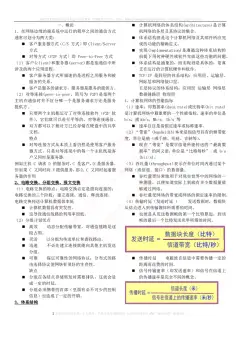
Number of people in City X traveling abroad in 1995, 2000 and 2005
1. 近十年来X市有越来越多的人选择出境旅游
2. 出现这种现象的原因
3. 这种现象可能产生的影响
Traveling Abroad
答案:
Part I Listening Comprehension
1. C) She is not sure she can pass on the message.
2. D) Hold the ladder for him
3. B) He'd like some coffee
4. C) He might get fired
5. D) Tony's wife
6. A) He was fined for running a red light
7. C) He finds reward more effective than punishment
8. B) At the dentist’s9. B) He doesn’t agree with the woman’s remark
10. A) It was applaudable.
11. B.) Medical care
12. C) Her determination to fulfill her dream.
13. B) To help disabled children there.
14. D) In a small village in Chile.
15. A) By expanding their minds and horizons.
16. D) She made outstanding contributions to Children’s education.
17. A) She won the 1945 Nobel Prize in Literature.
18. C) How animals protect themselves against predators.
19. B) Its plant-like appearance.
20. A) It helps improve their safety.
Part II Reading Comprehension
21 D) Showing violence is thought to be entertaining
22 B) Most studies exaggerate the effect of media violence on the
viewers.
23 C) assert a direct line between violent media and aggressive
behavior.
24 D) their definition of violence
25 A) More studies should be conducted before conclusions are drawn.
26 A) A quarter of Americans can't afford their prescription drubs.
27 D) exercising price control on brand-name drugs.
28 B) High prices are essential to funding research on new drugs.
29 C) To allow the vast majority to enjoy its benefits.
30 C) Reducing supplies to uncooperative Canadian pharmacies.
31 A) offering senior citizens discounts has become routine commercial
practice
32 C) The elderly, being financially underprivileged, need human help
from society.
33 B) intensify conflicts between the young and the old
34 C) It benefits the old at the expense of the young.
35 D) Senior citizen discounts may well be a type of age
36 A) crime against humanity37 C) deep-rooted socio-economic inequality
38 B) The blacks are not compensated for their unpaid labor
39 D) has been accumulated from generations of slavery
40 B) Inequality of many kinds remains virtually untouched.
Part Ⅲ Vocabulary
41. A) originality
42. D) aspiration
43. C) rigorous
44. D) indispensable
45. B) commonplace
46. C) thrilled
47. A) retrieved
48. D) nominated
49. B) overwhelming
50. A) startling
51. C) cherished
52. A) interacting
53. D) transcending
54. C) deprived
55. B) prone
56. D) donated
57. B) gorgeous
58. B) trait
59. C) transition
60. A) distort
61. D) hierarchy
62. A) abnormal
63. D) genetic
64. B) indicative
65. A) disturbance
66. C) durability
67. D) stunned
68. B) drastic69. A) descendants
70. C) extinct
Part IV Error Correction
S1. master ------------ --> mastering
S2. that------------------> what
S3. in an effect---------->去掉an
S4. lazy------------------>laziness
S5. which --------------->that
S6. affecting ------------------>affected
S7. at same time--------------->same前加the
S8. year ------------------------>years
S9. relative----------------------> relatively
S10. with ------------------------> without
2006年12月大学英语六级真题及参考答案(B卷)
Part l Listening Comprehension (20 minutes)
Section A
1. A) The foggy weather has affected Mary’s mood.
B) They are puzzled about Mary’s tow spirits.
C) Mary is dissatisfied with her promotion.
D) Mary cares too much about her looks.
2. A) Go to an art exhibition.
B) Dine out with an old friend.
C) Attend the opening night of a play.
D) See his paintings on display.3. A) Her mother was quite outstьI吝녓腽啛Ⲻhttp://www.hjbbs.com/©版权所有沪
江网Ⲻ啛腽녓吝Iьanding in academic work.
B) She was not particularly interested in going to school.
C) Her parents laid great emphasis on academic excellence.
D) She helped upgrade the educational level of immigrants.
4. A) The machines there were ill maintained.
B) Tickets for its members were cheaper.
C) It was filled with people all the time.
D) It had a reputation for good service.
5. A) Both Sarah and Tom have been awarded doctoral degrees.
B) Tom has arranged to meet his bride Sarah in Hawaii.
C) Tom was more excited than Sarah at the wedding.
D) A double blessing has descended upon Tom.
6. A) There were too many questions in the examination.
B) The examination was well beyond the course content.
C) The examination questions were somewhat too difficult.
D) The course prepared him adequately for the examination.
7. A) It’s less time-consuming.
B) His wife is tired of cooking.
C) It’s part of his job.
D) He is sick of home-cooked meals.8. A) He has just started to teach piano lessons.
B) He seldom takes things seriously.
C) He is very proud of his piano skills.
D) He usually understates his achievements.
9. A) It’s tedious.
B) It’s absurd.
C) It’s justifiable.
D) It’s understandable.
10. A) Arrange accommodation for her.
B) Explain the cause of the cancellation.
C) Compensate her for the inconvenience.
D) Allow her to take another flight that night.
Section B
Passage one
Questions 11 to 13 are based on the passage you have just heard.
11. A) Producing legendary paintings.
B) Making a fortune from decorative arts.
C) Manufacturing quality furniture.
D) Setting up a special museum.12. A) To show his fascination with Asian culture.
B) To tell the story of the American Revolution.
C) To promote interest in American decorative arts.
D) To increase the popularity of the Dupont Company.
13. A) By theme or period.
B) By style or design.
C) By manufacturer or origin.
D) By function or purpose.
Passage Two
Questions 14 to 16 are based on the passage you have just heard.
14. A) People may use two or mare languages.
B) People will choose Chinese rather than English.
C) The percentage of native speakers of English will inerease.
D) The number of people relying on their mother tongue will drop.
15. A) The number of Spanish speakers is far greater than that of Arabic speakers.
B) Arabic spoken in one Arab country may not be understood in another.
C) Arabic spoken in Egypt differs from Arabic spoken in Morocco in origin.
D) The number of Arabic speakers is declining because of the invasion of English.
16. A) It is impossible for Arab countries to stꜷ孀想ꊱ侐詂ᑫ
㼤http://bulo.hjenglish.com/menu.htm©版权所有沪江网㼤ᑫ詂侐ꊱ想孀ꜷandardizetheir language.
B) Most people in the world will learn to speak Chinese in the future.
C) It is uncertain whether English will world language in the future.
D) Spanish is very likely to become the top language of the world by 2050.
Passage Three
Questions 17 to 20 are based on the passage you have just heard.
17. A) Because they believe blind students prefer to mix with students who can see.
B) Because it would cost lots of money to build such special colleges.
C) Because it would constitute discrimination against blind students.
D) Because they think blind people should learn to live among sighted people.
18. A) By encouraging them to be more self-reliant.
B) By showing them proper care and respect.
C) By offering them more financial assistance.
D) By providing them with free medical service.
19. A) Financial aid from the American government.
B) Modern technology.
C) Professional support.
D) Help from the National Federation of the Blind.
20. A) Ask American professors to write recommendations on their behalf.
B) Obtain American citizenship before they reach the age of 30.C) Turn to special institutions in their own country for assistance.
D) Apply to the National Federation of the Blind for scholarships.
Part II Reading Comprehension (35 minutes)
Passage One
Questions 21 to 25 are based on the following passage.
Each summer, no matter how pressing my work schedule, I take off one day exclusively
for my son. We call it dad-son day. This year our third stop was the amusement park,
where he discovered that he was tall enough to ride one of the fastest roller coasters(过山
车) in the world. We blasted through face-stretching turns and loops for ninety seconds.
Then, as we stepped off the ride, he shrugged ɘ旍倾뵔괬
ⲙhttp://bulo.hjenglish.com/q/©版权所有沪江网ⲙ괬뵔倾旍ɘand, in a
distressingly calm voice, remarked that it was not as exciting as other rides he’d been on.
As I listened, I began to sense something seriously out of balance.
Throughout the season, I noticed similar events all around me. Parents seemed hard
pressed to find new thrills for indifferent kids. Surrounded by ever-greater stimulation,
their young faces wore looking disappointed and bored.
Facing their children’s complaints of “nothing to do”. Parents were shelling out large
numbers of dollars for various forms of entertainment. In many cases the money seemed
to do little more than buy transient relief from the terrible moans of their bored children.
This set me pondering the obvious question: “How can it be so hard for kids to find
something to do when there’s never been such a range of stimulating entertainment
available to them?”
Why do children immersed in this much excitement seem starved for more? That was, Irealized, the point. I discovered during my own reckless adolescence that what creates
excitement is not going fast, but going faster. Thrills have less to do with speed than
changes in speed.
I’m concerned about the cumulative effect of years at these levels of feverish activity. It
is no mystery to me why many teenagers appear apathetic (麻木的) and burned out, with
a “been there, done that” air of indifference toward much of life. As increasing numbers
of friends’ children are prescribed medications-stimulants to deal with inattentiveness at
school or anti-depressants to help with the loss of interest �拊蟁㙾礈�
緓http://bulo.hjenglish.com/event/©版权所有沪江网緓�礈㙾蟁拊�and joy in their
lives-l question the role of kids boredom in some of the diagnoses.
My own work is focused on the chemical imbalances and biological factors related to
behavioral and emotional disorders. These are complex problems. Yet I’ve been reflecting
more ﻔḇఈӖ깴聠邸 http://bulo.hjenglish.com/podcast.htm©版权所有沪江网 邸
ﶊ ﶊ
聠깴Ӗఈḇﻔand more on how the pace of life and the intensity of stimulation may be
contributing to the rising rates of psychiatric problems among children and adolescents in
our society.
21. The author felt surprised in the amusement park at the face that________.
A) his son was not as thrilled by the roller coaster ride as expected
B) his son blasted through the turns 䝗⯂짩㆙큵ƅ慈http://www.yeshj.com/©版权所有
沪江网慈ƅ큵㆙짩⯂䝗and loops with his face stretched
C) his son appeared distressed but calm while riding the roller coaster
D) his son could keep his balance so well on the fast-moving roller coaster22. According to the author, children are bored _________.
A) unless their parents can find new thrills for them
B) when they don’t have any access to stimulating fun games
C) when they are left alone at weekends by their working parents
D) even if they are exposed to more and more kinds of entertainment
23. From his own experience. the author came to the conclusion that children seem to
expect ________.
A) a much wider variety of sports facilities
B) activities that require sophisticated
C) ever-changing thrilling forms of recreation
D) physical exercises that are more challenging
24. In Para. 6 . the author expresses his doubt about the effectiveness of trying to change
children indifference toward much of life by ________.
A) diverting their interest from electronic visual games
B) prescribing medications for their temporary relief
C) creating more stimulating activities for them
D) spending more money on their entertainment
25. In order to alleviate children’s boredom, the author would probably suggest ____ .
A) adjusting the pace of life and intensity of stimulation
B) promoting the practice of dad-son days
C) consulting a specialist in child psychology
D) balancing school work with extracurricular activitiesPassage Two
Questions 26 to 30 are based on the following passage.
It used to be that people were proud to work for the same company for the whole of their
working lives. They’d get a gold watch at the end of their productive years 슗㊈똜䊯繀
竇㹠껇http://cet.hjenglish.com©版权所有沪江网껇㹠竇繀䊯똜㊈슗and a dinner
featuring speeches by their bosses praising their loyalty/But today’s rich capitalists have
regressed (倒退) to the “survival of the fittest” ideas and their loyalty extends not to their
workers or even to their stockholders but only to themselves. Instead of giving out gold
watches worth a hundred or so dollars for forty or so years of work, they grab tens and
even hundreds of millions of dollars as they sell for their own profit the company they
may have been with for only a few years.
The new rich selfishly act on their own to unfairly grab the wealth that the country as a
whole has produced. The top l percent of the population now has wealth equal to the
whole bottom 95 percent 䂰嶵䌶唊uᑁ窺胹http://bulo.hjenglish.com/myfeed/©版权所
有沪江网胹窺ᑁu唊䌶嶵䂰and they want more. Their selfishness is most shamelessly
expressed in downsizing and outsourcing (将产品包给外公司做) because these business
maneuvers don’t act to create new jobs as the founders of new industries used to do, but
only to cut out jobs while keeping the money value of what those jobs produced for
themselves.
To keep the money machine working smoothly the rich have bought all the politicians
from the top down. The president himself is constantly leaving. Washington and the
business of the nation because he is summoned to “fundraising dinners” where fat cats
pay a thous粕膽穄瓉憋갻http://bulo.hjenglish.com/group.htm©版权所有沪江网갻憋瓉穄膽粕and or so dollars a plate to worm their way into government not through
service but through donations of vast amounts of money. Once on the inside they have
both political parties busily tearing up all the regulations that protect the rest of us from
the greed of the rich.
The middle class used to be loyal to the free enterprise system. In the past, the people of
the middle class mostly thought they’d be rich themselves someday or have a good shot
at becoming rich. But nowadays income is being distributed more and more unevenly and
corporate loyalty is a thing of the past. The middle class may also wake up to forget its
loyalty to the so-called free enterprise system altogether 壵龻톱찳訒
쨂http://cet.hjenglish.com©版权所有沪江网쨂訒찳톱龻壵and the government
which governs only the rest of us while letting the corporations do what they please with
our jobs. As things stand. if somebody doesn’t wake up, the middle class is on a path to
being downsized all the way to the bottom of society.
26. It can be inferred form the first paragraph that people used to place a high value on
_________ .
A) job security
B) bosses’ praise
C) corporate loyalty
D) retirement benefits
27. The author is strongly critical of today’s rich capitalists for _________.
A) not giving necessary assistance to laid-off workers
B) maximizing their profits at the expense of workersC) not setting up long-term goals for their companies
D) rewarding only those who are considered the fittest
28. The immediate consequence of the new capitalists’ practice is ________ .
A) loss of corporate reputation
B) lower pay for the employees
C) a higher rate of unemployment
D) a decline in business transactions
29. The rich try to sway the policy of the government by ________ .
A) occupying important positions in both political parties
B) making monetary contributions to decision-makers
C) pleasing the public with generous donations
D) constantly hosting fundraising dinners
30. What is the author’s purpose in writing this passage?
A) To call on the middle class to remain loyal to the free enterprise system.
B) To warn the government of the shrinking of the American middle class.
C) To persuade the government to change its current economic policies.
D) To urge the middle class to wake up and protect their own interests.
Passage Three
Questions 31 to 35 are based on the following passage
Intel chairman 㯑壨鈡ౙ妵ꑐ㕱http://bulo.hjenglish.com/goal.htm©版权所有沪江网
㕱ꑐ妵ౙ鈡壨㯑Andy Grove has decided to cut the Gordian knot of controversysurrounding stem cell research by simply writing a check.
The check, which he pledged last week, could be for as much as $5 million, depending on
how many donors make gifts of between $50,000 and $500,000. which he has promised
to match. It will be made out to the University of California-San Francisco (UCSF).
Thanks in part to such private donations, university research into uses for human stem
cells the cells earliest stages of development that can form any body part-will continue in
California. With private financial support, the state will be less likely to lose talented
scientists who would be tempted to leave the field or even leave the field or even leave
the country as research dependent on federal money slows to a glacial (极其缓慢的)
pace.
Hindered by limits President Bush placed on stem cell research a year ago, scientists are
turning to laboratories that can carry out work without using federal money. This is
awkward for universities. Which must spend extra money building separate labs and
keeping rigorous records proving no federal funds were involved. Grove’s donation, a
first step toward a $20 million target at UCSF. Will ease the burden.
The president’s decision a year ago to allow research on already existing stem cell lines
was portrayed as a reasonable compromise between scientists’ needs for cells to work
with, ⭘쾫剎쨟뀞阙http://bulo.hjenglish.com/menu.htm©版权所有沪江网阙
뀞쨟剎쾫⭘and concerns that this kind of research cold lead to wholesale creation and
destruction of human embryos (胚胎)。 Cloned infants and a general contempt for
human life.
But Bush’s effort to please both sides ended up pleasing neither. 湞䖞⽾Ṻ墺坳㧩沪江
四六级欢迎您!©版权所有沪江网㧩坳墺Ṻ⽾䖞湞And it certainly didn’t provide thebasis for cutting edge research. Of the 78 existing sxisting stern cell lines which Bush
said are all that science would ever need, only one is in this country ( at the University of
Wisconsin), and only five are ready for distribution to researchers. All were grown in
conjunction with mouse cells, making future therapeutic (治疗的) uses unlikely.
The Bush administration seems bent on satisfying the small but vocal group of Americans
who oppose stem cell research under any conditions. Fortunately, Grove and others are
more interested in advancing scientific research that could benefit the large number of
Americans who suffer from Parkinson’s disease, nerve injuries, heart diseases 퉩䐕跍Ểч
덟棇�http://www.hjbbs.com/©版权所有沪江网�棇덟чỂ跍䐕퉩and many other
problems.
31.When Andy Grove decided to cut the Gordian knot, he meant to _______.
A) put an end to stem cell research
B) end Intel’s relations with Gordian
C) settle the dispute on stem cell research quickly
D) expel Gordian from stem cell research for good
32. For UCSF to carry on stem cell research, new funds have to come from _______.
A) interested businesses and individuals
B) the United States federal government
C) a foundation set up by the Intel Company
D) executives of leading American companies
33. As a result o the limits Bush placed on stem cell research, American universities will
__________.A) conduct the research in laboratories overseas
B) ab棿ଟ廑퇟₣⇮頍嬖http://bulo.hjenglish.com/podcast.htm©版权所有沪江网嬖頍
⇮₣퇟廑ଟ棿andon the research altogether in the near future
C) have to carry out the research secretly
D) have to raise money to build separate labs
34. We may infer from the passage that future therapeutic uses of stem cells will be
unlikely unless ________.
A) human stem cells are used in the research
B) a lot more private donations can be secured
C) more fcderal money is used for the research
D) talented scientists are involved in the research
35. The reason lying behind President Bush’s placing limits on stem cell research is that
__________.
A) his administration is financially pinched
B) he did not want to offend its opponents
C) it amounts to a contempt for human life
D) it did not promise any therapeutic value
Passage Four
Questions 36 to 40 are based on the following passage.
This looks like the year that hard-pressed tenants in California will get relief-not just in
the marketplace, where rents have eased, but from the state capital Sacramento.
Two significant tenant reforms stand a good chance of passage. One bill, which will givemore time to tenants being evicted (逐出),will soon be heading to the governor’s desk.
The other, protecting security deposits, faces a vote in the Senate on Monday.
For more than a century, landlords in California have been able to force tenants out with
only 30 days’ notice. That will now double under SB 1403, which got through the
Assembly recently The new protection will apply to renters who have been in an
apartment for at least a year.
Even 60 days in a tight housing market won’t be long enough for some families to find at
apartment near where their kids go to school, But it will be an improvement in cities like
San Jose where renters rights groups charge that unscrupulous (不择手段的) l糡켜卬훱
http://bulo.hjenglish.com/group.htm©版权所有沪江网훱卬켜糡
andlords have kicked ou tenants on short notice to put up rents.
The California Landlords Association argued that landlords shouldn’t have to wait 60
days to get rid of problem tenants. But the bill gained support when a Japanese real estate
investor sent ou 30-day eviction notices to 550 families renting homes in Sacramento 帊
뿾㍏❡唸븤욆뺇沪江四六级欢迎您!©版权所有沪江网뺇욆븤唸❡㍏뿾帊and Santa
Rosa. The land lords lobby eventually dropped its opposition and instead its forces
against AB 2330, re garding security deposits.
Sponsored by Assemblywoman Carole Migden of San Francisco, the bill would establish;
procedure 鯘얠驁䟜摥 LJ http://bulo.hjenglish.com/goal.htm©版权所有沪江网 LJ
摥䟜驁얠鯘and a timetable for tenants to get back security deposits.
Some landlords view security deposits as a free month’s rent, theirs for the taking. In mos
cases, though, there are honest disputes over damages-what constitutes ordinary wear andtear.
AB 2330 would give a tenant the right to request a walk-through with the lቝ規 ␟뎀瓠
囬╃핳http://bulo.hjenglish.com/menu.htm©版权所有沪江网핳╃囬瓠뎀␟ 規
ቝandlord and to make the repairs before moving out; reputable landlords already do this.
It would increase the penalty for failing to return a deposit.
The original bill would have required the l魆䍖蒴䵷ᇯힶ
䔈http://bulo.hjenglish.com/q/©版权所有沪江网䔈ힶᇯ䵷蒴䍖魆andlord to pay
interest in the deposit. The landlords lobby protested that it would involve too much
paperwork over too little money-less than $10 a year on a $1,000 deposit, at current rates.
On Wednesday, the sponsor dropped the interest section to increase the chance of
passage.
Even in its amended form, AB 2330 is , like SB 1403 , vitally important for tenants and
should be made state law.
36. We learn form the passage that SB1403 will benefit _______.
A) long-term real estate investors
B) short-term tenants in Sacramento
C) l뎔◹繬딢泅毼▸http://www.hjbbs.com/©版权所有沪江网▸毼泅딢繬◹뎔
andlords in the State of California
D) tenants renting a house over a year
37. A 60-day notice before eviction may not be early enough for renters because
_______.
A) moving house is something difficult to arrangeB) appropriate housing may not be readily available
C) more time is needed for their kids’ school registration
D) the furnishing of the new house often takes a long time
38. Very often landlords don’t return tenants’ deposits on the pretext that _______.
A) their rent has not been paid in time
B) there has been ordinary wear and tear
C) tenants have done damage to the house
D) the 30-day notice for moving out is over
39. Why did the sponsor of the AB 2330 bill finally give in on the interest section?
A) To put an end to a lengthy argument.
B) To urge lꞵế쨧ꔪ셲⎂http://bulo.hjenglish.com/podcast.htm©版权所有沪江网⎂셲
ꔪ쨧ếꞵandlords to lobby for its passage.
C) To cut down the heavy paperwork for its easy passage.
D) To make it easier for the State Assembly to pass the bill.
40. It can be learned from the passage that ________.
A) both bills are likely to be made state laws
B) neither bill will pass through the Assembly
C) AB 2330 stands a better chance of passage
D) Sacramento and San Jose support SB 1403
Part III Vocabulary (20 minutes)41. Grey whales have long been _______ in the north Atlantic ⢥졯鵢ំ늣뱊
�http://www.yeshj.com/©版权所有沪江网�뱊늣ំ鵢졯⢥and hunting was an important
cause for that.
A) extinct B) extinguished C) detained D) deprived
42. He was given major responsibility for operating the remote manipulator to ______ the
newly launched satellite.
A) retreat B) retrieve C) embody D) embrace
43. Foreign students are facing unprecedented delays, as visa applications receive closer
_________ than ever.
A) irrigate B) intrigue C) irritate D) intimidate
44. If you are late for the appointment, you might _______ the interviewer and lose your
chance of being accepted.
A) irrigate B) intrigue C) irritate D) intimidate
45. Children’s idea of a magic kingdom is often dancers in animal ______ as they have
often seen in Disneyland.
A) cushions B) costumes C)skeletons D) ornaments
46. Ever since the first nuclear power stations were built, doubts have _____ about their
safety.
A) preserved B) traces C) tracks D) trails47. This clearly shows that crops 팒≰ 蹒嵑쮧危 ༌ 竜http://bulo.hjenglish.com/event/©版
权所有沪江网竜 ༌ 危쮧嵑蹒 ≰팒and weeds have quite a number of ________ in common.
A) traits B) traces C)tracks D) trails
48. From science to Shakespeare. Excellent television and video programs are available
________to teachers.
A) in stock B) in store C) in operation D) in abundance
49. When the Italian poet Dante was ________ from his home in Florence, he decided to
walk form Italy to Paris to search for the real meaning of life.
A) exerted B) expired C) exiled D) exempted
50. Habits acquired in youth-notably smoking and drinking-may increase the risk of
________diseases in a person’s later life.
A) consecutive B) chronic C) critical D) cyclical
51. F.W. Woolworth was the first businessman to erect a true skyscraper to _______
himself, 숬莕斫ʟ입http://bulo.hjenglish.com/myfeed/©版权所有沪江网입ʟ斫
莕숬and in 1929, Al Smith, a former governor of New York, sought to outreach
him.
A) portray B) proclaim C) exaggerate D) commemorate
52. To label their produce as organic, farmers have to obtain a certificate showing that no
_______ chemicals have been used to kill pests on the farm for two years.
A) toxic B) tragic C) nominal D) notorious53. Ancient Greek gymnastics training programs were considered to be an _______ part
of the children’s education.
A) intact B) integral C) inclusive D) infinite
54. Researchers have found that happiness doesn’t appear to be anyone’s ______ ; the
capacity for joy is a talent you develop largely for yourself.
A) disposal B) excelled C) exceeded D) enriched
55. We want our children to have more than job skills; we want their lives to be _____
and their perspectives to be broadened.
A) envisaged B) excelled C) exceeded D) enriched
56. Online schools, which ________ the needs of different people, have emerged as an
increase-ingly popular education alternative.
A) stir up B) switch on C) cater to D) consent to
57. This kind of songbird sleeps much less during its annual ______. But that doesn’t
seem to affect its flying.
A) migration B) emigration C) conveyance D) transference
58. The developing nations want rich countries to help shoulder the cost of _____ forests.
A) updating B) upgrading C) conserving D) constructing
59. In the study, researchers succeeded in determining how coffee ______ different areas
of the brain in 15volunteers.
A) integrated B) motivated C) illuminated D) activated60. They are trying to ______ the risk as much as they can by making a more thorough
investigation of the market.
A) minimize B) harmonize C) summarize D) jeopardize
61. The cycles of the sun and moon are simple but ______ forces which have shaped
human lives since the beginning.
A) frantic B) gigantic C) sensational D) maximum
62. An effort was launched recently to create the first computer ______ of the entire
human brain.
A) repetition B) repression C) saturation D) simulation
63. In the face of the disaster, the world has united to aid millions of ______ people
trying to piece their lives back together.
A) fragile B)primitive C) vulnerable D) susceptible
64. AIDS is a global problem that dem뿡Ⲕ隣ﺝ塎宋勃http://www.yeshj.com/©版权所
有沪江网勃宋塎ﺝ隣Ⲕ뿡ands a unified, worldwide solution, which is not only the
responsibility of nations in which AIDS is most _______.
A) relevant B) prevalent C) vigorous D) rigorous
65. After the earthquake, a world divided by _______ and religious disputes suddenly
faced its common humanity in this shocking disaster.
A) ethnic B) epidemic C) strategic D) pathetic66. Psychologists suggest that children who are shy are more _______ to develop
depression and anxiety later in life.
A) eligible B) engaged C) prone D) prospective
67. Initially, the scientists 텟嫜昺㖄럣磗岢聘http://cet.hjenglish.com©版权所有沪江网
聘岢磗럣㖄昺嫜텟and engineers seemed _______ by the variety of responses people
can make to a poem.
A)reinforced B)embarrassed C) depressed D) bewildered
68. Is it possible to stop drug _______ in the country within a very short time?
A) adoption B) addiction C) contemplation D) compulsion
69. The parents of Lindsay, 13, an _______ tennis player who spends eight hours a day
on the court, admit that a regular school is not an option their daughter.
A) exotic B) equivalent C) elite D) esthetic
70. Our research confirmed the ______ that when children have many different caregiver
important aspects of their development are liable to be overlooked.
A) hypothesis B) hierarchy C) synthesis D) syndrome
The most important starting point for improving the
understanding of science is undoubtedly an adequate
scientific education at school. Public attitudes towards
science owe much the way science is taught in these S1. __________
institutions, Today, school is what most people come into S2. __________
contact with a formal instruction and explanation of sciencefor the first time. At least in a systematic way, It is at this
Point which the foundations are laid for an interest in science. S3. _________
What is taught (졜꣦䬚꒥ᕩ俙㲢賈http://bulo.hjenglish.com/goal.htm©版权所有沪江网
賈㲢俙ᕩ꒥䬚꣦졜and how) in this first encounter will largely
determinc an individual’s view of the subject in adult life
Understanding the original of the negative attitudes S4._________
towards science may help us to modify them . Most education
system neglect exploration, understanding ശ촗猀범賂․
ﵕ
㐞http://bulo.hjenglish.com/group.htm©版权所有沪江网㐞 ․賂범猀촗ശand
ﵕ
reflection, S5. ________
Teachers in schools tend to present science as a collection of
facts, often by more detail than necessary, As a result. S6. _______
children memorize processes such as mathematical formulas
or the periodic table, only to forget it shortly afterwards. The S7. ________
task of learning facts and concepts, one at a time, makes
learning laborious, boring and efficient, Such a purely S8._________
empirical approach, which consists of observation 瀦ഁ迱椝ᚻↅ鄐沪江四六级欢迎您!
©版权所有沪江网鄐ↅᚻ椝迱ഁ瀦and
description, is also, in a sense, unscientific or incomplete,
There is therefore a need for resources and methods of
teaching that facilitates a deep understanding of science in S9. _____
an enjoyable way, Science should not only be “fun” in the
same way as playing a video game, but “hard fun” a deepfeeling of connection made possibly only by imaginative S10. ______
engagement.
The Celebration of Western Festivals
1、 现在国内有不少人喜欢过西方的某些节日,2、 谈谈产生者种现象的原因
3、 这种现象可能带来的影响2006年12月23日六级参考答案
Part I Listening Comprehensio
1. B 2. A 3. C 4. C 5. D
6. B 7. C 8. D 9. B 10. A
11. D 12. C 13. A 14. A 15. B
16. C 17. D 18. A 19. B 20. D
Part II Reading Comprehension
21. A 22. D 23. C 24. B 25. A
26. C 27. B 28. C 29. B 30. D
31. C 32. A 33. D 34. A 35. B
36. D 37. B 38. C 39. D 40. A
Part III Vocabulary
41. A 42. B 43. D 44. C 45. B
46. D 47. A 48. D 49. C 50. B
51. D 52. A 53. B 54. C 55. D
56. C 57. A 58. C 59. D 60. A
61. B 62. D 63. C 64. B 65. A
66. C 67. D 68. B 69. C 70. A
Part IV Error Correction
S1.在much和the way间插入to
S2.what → where
S3.which → that
S4.original → origin
S5.system → systems
S6.by → in
S7.it → them
S8.efficient → inefficientS9.facilitates → facilitate
S10. possibly → possible
2007年6月23日大学英语六级(CET-6)真题试卷(A卷)
Part I Writing (30 minutes)
Directions: For this part, you are allowed 30 minutes to write a short essay entitled
Should One Expect a Reward When Doing a Good Deed? You should write at least
150 words following the outline given below.
1. 有人做好事期望得到回报;
2. 有人认为应该像雷锋那样做好事不图回报;
3. 我的观点。
Should One Expect a Reward When Doing a Good Deed?
Part II Reading Comprehension (Skimming and Scanning) (15 minutes)
Directions: In this part, you will have 15 minutes to go over the passage quickly and
answer the questions on Answer Sheet 1.
For questions 1-4, mark
Y (for YES) if the statement agrees with the information given in the
passage;
N (for NO) if statement contradicts the information given in the
passage;
NG (for NOT GIVEN) if the information is not given in the passage.
For questions 5-10, complete the sentences with the information given in the passage.
Seven Steps to a More Fulfilling Job
Many people today find themselves in unfulfilling work situations. In fact, one in four
workers is dissatisfied with their current job, according to the recent “Plans for 2004”
survey. Their career path may be financially rewarding, but it doesn’t meet their
emotional, social or creative needs. They’re stuck, unhappy, and have no idea what to
do about it, except move to another job.
Mary Lyn Miller, veteran career consultant and founder of the Life and Career Clinic,says that when most people are unhappy about their work, their first thought is to get
a different job. Instead, Miller suggests looking at the possibility of a different life.
Through her book, 8 Myths of Making a Living, as well as workshops, seminars and
personal coaching and consulting, she has helped thousands of dissatisfied workers
reassess life and work.
Like the way of Zen, which includes understanding of oneself as one really is, Miller
encourages job seekers and those dissatisfied with work or life to examine their
beliefs about work and recognize that “in many cases your beliefs are what brought
you to where you are today.” You may have been raised to think that women were best
at nurturing and caring and, therefore, should be teachers and nurses. So that’s what
you did. Or, perhaps you were brought up to believe that you should do what your
father did, so you have taken over the family business, or become a dentist “just like
dad.” If this sounds familiar, it’s probably time to look at the new possibilities for
your future.
Miller developed a 7-step process to help potential job seekers assess their current
situation and beliefs, identify their real passion, and start on a journey that allows
them to pursue their passion through work.
Step 1: Willingness to do something different.
Breaking the cycle of doing what you have always done is one of the most difficult
tasks for job seekers. Many find it difficult to steer away from a career path or make a
change, even if it doesn’t feel right. Miller urges job seekers to open their minds to
other possibilities beyond what they are currently doing.
Step 2: Commitment to being who you are, not who or what someone wants you to
be.
Look at the \gifts and talents you have and make a commitment to pursue those things
that you love most. If you love the social aspects of your job, but are stuck inside an
office or “chained to your desk” most of the time, vow to follow your instinct and
investigate alternative careers and work that allow you more time to interact with
others. Dawn worked as a manager for a large retail clothing store for several years.
Though she had advanced within the company, she felt frustrated and longed to be
involved with nature and the outdoors. She decided to go to school nights and
weekends to pursue her true passion by earning her master’s degree in forestry. She
now works in the biotech forestry division of a major paper company.
Step 3: Self-definition
Miller suggests that once job seekers know who they are, they need to know how to
sell themselves. “In the job market, you are a product. And just like a product, youmost know the features and benefits that you have to offer a potential client, or
employer.” Examine the skills and knowledge that you have identify how they can
apply to your desired occupation. Your qualities will exhibit to employers why they
should hire you over other candidates.
Step 4: Attain a level of self-honoring.
Self-honoring or self-love may seem like an odd step for job hunters, but being able to
accept yourself, without judgment, helps eliminate insecurities and will make you
more self-assured. By accepting who you are – all your emotions, hopes and dreams,
your personality, and your unique way of being – you’ll project more confidence
when networking and talking with potential employers. The power of self-honoring
can help to break all the falsehoods you were programmed to believe – those that
made you feel that you were not good enough, or strong enough, or intelligent enough
to do what you truly desire.
Step 5: Vision.
Miller suggests that job seekers develop a vision that embraces the answer to “What
do I really want to do?” one should create a solid statement in a dozen or so sentences
that describe in detail how they see their life related to work. For instance, the
secretary who longs to be an actress describes a life that allows her to express her love
of Shakespeare on stage. A real estate agent, attracted to his current job because her
loves fixing up old homes, describes buying properties that need a little tender loving
care to make them more saleable.
Step 6: Appropriate risk.
Some philosophers believe that the way to enlightenment comes through facing
obstacles and difficulties. Once people discover their passion, many are too scared to
do anything about it. Instead, they do nothing. With this step, job seekers should
assess what they are willing to give up, or risk, in pursuit of their dream. For one
working mom, that meant taking night classes to learn new computer-aided design
skills, while still earning a salary and keeping her day job. For someone else, it may
mean quitting his or her job, taking out loan and going back to school full time. You’ll
move one step closer to your ideal work life if you identify how much risk you are
willing to take and the sacrifices you are willing to make.
Step 7: Action.
Some teachers of philosophy describe action in this way, “If one wants to get to the
top of a mountain, just sitting at the foot thinking about it will not bring one there. It is
by making the effort of climbing up the mountain, step by step, that eventually the
summit is reached.” All too often, it is the lack of action that ultimately holds peopleback from attaining their ideals. Creating a plan and taking it one step at a time can
lead to new and different job opportunities. Job-hunting tasks gain added meaning as
you sense their importance in your quest for a more meaningful work life. The plan
can include researching industries and occupations, talking to people who are in your
desired area of work, taking classes, or accepting volunteer work in your targeted
field.
Each of these steps will lead you on a journey to a happier and more rewarding work
life. After all, it is the journey, not the destination, that is most important.
注意:此部分试题请在答题卡1上作答。
1. According to the recent “Plans for 2004” survey, most people are unhappy with
their current jobs.
2. Mary Lyn Miller’s job is to advise people on their life and career.
3. Mary Lyn Miller herself was once quite dissatisfied with her own work.
4. Many people find it difficult to make up their minds whether to change their
career path.
5. According to Mary Lyn Miller, people considering changing their careers should
commit themselves to the pursuit of ________.
6. In the job market, job seekers need to know how to sell themselves like
________.
7. During an interview with potential employers, self-honoring or self-love may
help a job seeker to show ________.
8. Mary Lyn Miller suggests that a job seeker develop a vision that answers the
question “________”
9. Many people are too scared to pursue their dreams because they are unwilling to
________.
10. What ultimately holds people back from attaining their ideals is ________.
Part III Listening Comprehension (35 minutes)
Section A
Directions: In this section, you will hear 8 short conversations and 2 long
conversations. At the end of each conversation, one or more questions will be asked
about what said. Both the conversation and the questions will be spoken only once.After each question there will be a pause. During the pause, you must read the four
choices marked A) B) C) and D), and decide which is the best answer. Then mark the
corresponding letter on Answer Sheet 2 with a single line through the centre.
注意:此部分试题请在答题卡2上作答。
11. A) Surfing the net.
B) Watching a talk show.
C) Packing a birthday gift.
D) Shopping at a jewelry store.(A)
12. A) He enjoys finding fault with exams.
B) He is sure of his success in the exam.
C) He doesn’t know if he can do well in the exam.
D) He used to get straight A’s in the exams he took.(B)
13. A) The man is generous with his good comments on people.
B) The woman is unsure if there will be peace in the world.
C) The woman is doubtful about newspaper stories.
D) The man is quite optimistic about human nature.(D)
14. A) Study for some profession.
B) Attend a medical school.
C) Stay in business.
D) Sell his shop.(C)
15. A) More money.
B) Fair treatment.
C) A college education.D) Shorter work hours.(A)
16. A) She was exhausted from her trip.
B) She missed the comforts of home.
C) She was impressed by Mexican food.
D) She will not go to Mexico again.(B)
17. A) Cheer herself up a bit.
B) Find a more suitable job.
C) Seek professional advice.
D) Take a psychology course.(C)
18. A) He dresses more formally now.
B) What he wears does not match his position.
C) He has ignored his friends since graduation.
D) He failed to do well at college.(A)
Questions 19 to 22 are based on the conversation you have just heard.
19. A) To go sightseeing.
B) To have meetings.
C) To promote a new champagne.
D) To join in a training program.(B)
20. A) It can reduce the number of passenger complaints.
B) It can make air travel more entertaining.
C) It can cut down the expenses for air travel.
D) It can lessen the discomfort caused by air travel.(D)21. A) Took balanced meals with champagne.
B) Ate vegetables and fruit only.
C) Refrained from fish or meat.
D) Avoided eating rich food.(D)
22. A) Many of them found it difficult to exercise on a plane.
B) Many of them were concerned with their well-being.
C) Not many of them chose to do what she did.
D) Not many of them understood the program.(C)
Questions 23 to 25 are based on the conversation you have just heard.
23. A) At a fair.
B) At a cafeteria.
C) In a computer lab.
D) In a shopping mall.(A)
24. A) The latest computer technology.
B) The organizing of an exhibition.
C) The purchasing of some equipment.
D) The dramatic changes in the job market.(C)
25. A) Data collection.
B) Training consultancy.
C) Corporate management.
D) Information processing.(B)
Section B
Directions: In this section, you will hear 3 short passages. At the end of eachpassage, you will hear some questions. Both the passage and the questions will be
spoken only once. After you hear a question, you must choose the best answer from
the four choice marked A) B) C) and D). Then mark the corresponding letter on
Answer Sheet 2 with a single line through the centre.
注意:此部分试题请在答题卡2上作答。
Passage One
Questions 26 to 28 are based on the passage you have just heard.
26. A) Improve themselves.
B) Get rid of empty dreams.
C) Follow the cultural tradition.
D) Attempt something impossible.(A)
27. A) By finding sufficient support for implementation.
B) By taking into account their own ability to change.
C) By constantly keeping in mind their ultimate goals.
D) By making detailed plans and carrying them out.(D)
28. A) To show people how to get their lives back to normal.
B) To show how difficult it is for people to lose weight.
C) To remind people to check the calories on food bags.
D) To illustrate how easily people abandon their goals.(D)
Passage Two
Questions 29 to 31 are based on the passage you have just heard.
29. A) Michael’s parents got divorced.
B) Karen was adopted by Ray Anderson.
C) Karen’s mother died in a car accident.
D) A truck driver lost his life in a collision.(B)30. A) He ran a red light and collided with a truck.
B) He sacrificed his life to save a baby girl.
C) He was killed instantly in a burning car.
D) He got married to Karen’s mother.(B)
31. A) The reported hero turned out to be his father.
B) He did not understand his father till too late.
C) Such misfortune should have fallen on him.
D) It reminded him of his miserable childhood.(A)
Passage Three
Questions 32 to 35 are based on the passage you have just heard.
32. A) Germany.
B) Japan.
C) The U.S.
D) The U.K.(B)
33. A) By doing odd jobs at weekends.
B) By working long hours every day.
C) By putting in more hours each week.
D) By taking shorter vacations each year.(D)
34. A) To combat competition and raise productivity.
B) To provide them with more job opportunities.
C) To help them maintain their living standard.
D) To prevent them from holding a second job.(A)35. A) Change their jobs.
B) Earn more money.
C) Reduce their working hours.
D) Strengthen the government’s role.(C)
Section C
Directions: In this section, you will hear a passage three times. When the passage is
read for the first time, you should listen carefully for its general idea. When the
passage is read for the second time, you are required to fill in the blanks numbered
from 36 to 43 with the exact words you have just heard. For blanks numbered from 44
to 46 you are required to fill in the missing information. For these blanks, you can
either use the exact words you have just heard or write down the main points in your
own words. Finally, when the passage is read for the third time, you should check
what you have written.
注意:此部分试题请在答题卡2上作答。
Nursing, as a typically female profession, must deal constantly with the false
impression that nurses are there to wait on the physician. As nurses, we are (36)
________ to provide nursing care only. We do not have any legal or moral (37)
________ to any physician. We provide health teaching, (38) ________ physical as
well as emotional problems, (39) ________ patient-related services, and make all of
our nursing decisions based upon what is best or suitable for the patient. If, in any
(40) ________, we feel that a physician’s order is (41) ________ or unsafe, we have a
legal (42) ________ to question that order or refuse to carry it out.
Nursing is not a nine-to-five job with every weekend off. All nurses are aware of that
before they enter the profession. The emotional and physical stress. However, that
occurs due to odd working hours is a (43) ________ reason for a lot of the career
dissatisfaction. (44) ________________________________. That disturbs our
personal lives, disrupts our sleeping and eating habits, and isolates us from everything
except job-related friends and activities.
The quality of nursing care is being affected dramatically by these situations. (45)
________________________________. Consumers of medically related services
have evidently not been affected enough yet to demand changes in our medical
system. But if trends continue as predicted, (46)
________________________________.
Part IV Reading Comprehension (Reading in Depth) (25 minutes)
Section ADirections: In this section, there is a short passage with 5 questions or incomplete
statements. Read the passage carefully. Then answer the questions or complete
statements in the fewest possible words. Please write your answers on Answer Sheet
2.
Questions 47 to 51 are based on the following passage.
Google is a world-famous company, with its headquarters in Mountain View,
California. It was set up in a Silicon Valley garage in 1998, and inflated (膨胀) with
the Internet bubble. Even when everything around it collapsed the company kept on
inflating. Google’s search engine is so widespread across the world that search
became Google, and google became a verb. The world fell in love with the effective,
fascinatingly fast technology.
Google owes much of its success to the brilliance of S. Brin and L. Page, but also to a
series of fortunate events. It was Page who, at Stanford in 1996, initiated the
academic project that eventually became Google’s search engine. Brin, who had met
Page at a student orientation a year earlier, joined the project early on. They were both
Ph.D. candidates when they devised the search engine which was better than the rest
and, without any marketing, spread by word of mouth from early adopters to,
eventually, your grandmother.
Their breakthrough, simply put, was that when their search engine crawled the Web, it
did more than just look for word matches, it also tallied (统计) and ranked a host of
other critical factors like how websites link to one another. That delivered far better
results than anything else. Brin and Page meant to name their creation Googol (the
mathematical term for the number 1 followed by 100 zeroes), but someone misspelled
the word so it stuck as Google. They raised money from prescient (有先见之明的)
professors and venture capitalists, and moved off campus to turn Google into
business. Perhaps their biggest stroke of luck came early on when they tried to sell
their technology to other search engines, but no one met their price, and they built it
up on their own.
The next breakthrough came in 2000, when Google figured out how to make money
with its invention. It had lots of users, but almost no one was paying. The solution
turned out to be advertising, and it’s not an exaggeration to say that Google is now
essentially an advertising company, given that that’s the source of nearly all its
revenue. Today it is a giant advertising company, worth $100 billion.
注意:此部分试题请在答题卡2上作答。
47. Apart from a series of fortunate events, what is it that has made Google so
successful?48. Google’s search engine originated from ________ started by L. Page.
49. How did Google’s search engine spread all over the world?
50. Brin and Page decided to set up their own business because no one would
________.
51. The revenue of the Google company is largely generated from ________.
Section B
Directions: There are 2 passages in this section. Each passage is followed by some
questions or unfinished statements. For each of them there are four choices marked
A), B), C), and D). You should decide on the best choice and mark the corresponding
letter on Answer Sheet 2 with a single line through the centre.
Passage One
Questions 52 to 56 are based on the following passage.
You hear the refrain all the time: the U.S. economy looks good statistically, but it
doesn’ t feel good. Why doesn’ t ever-greater wealth promote ever-greater
happiness? It is a question that dates at least to the appearance in 1958 of The Affluent
(富裕的) Society by John Kenneth Galbraith, who died recently at 97.
The Affluent Society is a modern classic because it helped define a new moment in
the human condition. For most of history, “hunger, sickness, and cold” threatened
nearly everyone, Galbraith wrote. “Poverty was found everywhere in that world.
Obviously it is not of ours.” After World War II, the dread of another Great
Depression gave way to an economic boom. In the 1930s unemployment had
averaged 18.2 percent; in the 1950s it was 4.5 percent.
To Galbraith, materialism had gone mad and would breed discontent. Through
advertising, companies conditioned consumers to buy things they didn’t really want or
need. Because so much spending was artificial, it would be unfulfilling. Meanwhile,
government spending that would make everyone better off was being cut down
because people instinctively—and wrongly—labeled government only as “a necessary
evil.”
It’s often said that only the rich are getting ahead; everyone else is standing still or
falling behind. Well, there are many undeserving rich—overpaid chief executives, for
instance. But over any meaningful period, most people’s incomes are increasing.
From 1995 to 2004, inflation-adjusted average family income rose 14.3 percent, to
$43,200. people feel “squeezed” because their rising incomes often don’t satisfy their
rising wants—for bigger homes, more health care, more education, faster Internet
connections.The other great frustration is that it has not eliminated insecurity. People regard job
stability as part of their standard of living. As corporate layoffs increased, that part has
eroded. More workers fear they’ve become “the disposable American,” as Louis
Uchitelle puts it in his book by the same name.
Because so much previous suffering and social conflict stemmed from poverty, the
arrival of widespread affluence suggested utopian (乌托邦式的) possibilities. Up to a
point, affluence succeeds. There is much les physical misery than before. People are
better off. Unfortunately, affluence also creates new complaints and contradictions.
Advanced societies need economic growth to satisfy the multiplying wants of their
citizens. But the quest for growth lets loose new anxieties and economic conflicts that
disturb the social order. Affluence liberates the individual, promising that everyone
can choose a unique way to self-fulfillment. But the promise is so extravagant that it
predestines many disappointments and sometimes inspires choices that have anti-
social consequences, including family breakdown and obesity (肥胖症). Statistical
indicators of happiness have not risen with incomes.
Should we be surprised? Not really. We’ve simply reaffirmed an old truth: the pursuit
of affluence does not always end with happiness.
注意:此部分试题请在答题卡2上作答。
52. What question does John Kenneth Galbraith raise in his book The Affluent
Society?
A) Why statistics don’t tell the truth about the economy.
B) Why affluence doesn’t guarantee happiness.
C) How happiness can be promoted today.
D) What lies behind an economic boom.(B)
53. According to Galbraith, people feel discontented because ________.
A) public spending hasn’t been cut down as expected
B) the government has proved to be a necessary evil
C) they are in fear of another Great Depression
D) materialism has run wild in modern society(D)54. Why do people feel squeezed when their average income rises considerably?
A) Their material pursuits have gone far ahead of their earnings.
B) Their purchasing power has dropped markedly with inflation.
C) The distribution of wealth is uneven between the r5ich and the poor.
D) Health care and educational cost have somehow gone out of control.(A)
55. What does Louis Uchitelle mean by “the disposable American” (Line 3, Para. 5)?
A) Those who see job stability as part of their living standard.
B) People full of utopian ideas resulting from affluence.
C) People who have little say in American politics.
D) Workers who no longer have secure jobs.(D)
56. What has affluence brought to American society?
A) Renewed economic security.
B) A sense of self-fulfillment.
C) New conflicts and complaints.
D) Misery and anti-social behavior.(C)
Passage Two
Questions 57 to 61 are based on the following passage.
The use of deferential (敬重的) language is symbolic of the Confucian ideal of the
woman, which dominates conservative gender norms in Japan. This ideal presents a
woman who withdraws quietly to the background, subordinating her life and needs to
those of her family and its male head. She is a dutiful daughter, wife, and mother,
master of the domestic arts. The typical refined Japanese woman excels in modesty
and delicacy; she “treads softly (谨言慎行)in the world,” elevating feminine
beauty and grace to an art form.
Nowadays, it is commonly observed that young women are not conforming to the
feminine linguistic (语言的) ideal. They are using fewer of the very deferential“women’s” forms, and even using the few strong forms that are know as
“men’s.” This, of course, attracts considerable attention and has led to an outcry
in the Japanese media against the defeminization of women’s language. Indeed, we
didn’t hear about “men’s language” until people began to respond to girls’
appropriation of forms normally reserved for boys and men. There is considerable
sentiment about the “corruption” of women’s language—which of course is viewed as
part of the loss of feminine ideals and morality—and this sentiment is crystallized by
nationwide opinion polls that are regularly carried out by the media.
Yoshiko Matsumoto has argued that young women probably never used as many of
the highly deferential forms as older women. This highly polite style is no doubt
something that young women have been expected to “grow into”—after all, it is
assign not simply of femininity, but of maturity and refinement, and its use could be
taken to indicate a change in the nature of one’s social relations as well. One might
well imagine little girls using exceedingly polite forms when playing house or
imitating older women—in a fashion analogous to little girls’ use of a high-pitched
voice to do “teacher talk” or “mother talk” in role play.
The fact that young Japanese women are using less deferential language is a sure sign
of change—of social change and of linguistic change. But it is most certainly not a
sign of the “masculization” of girls. In some instances, it may be a sign that girls are
making the same claim to authority as boys and men, but that is very different from
saying that they are trying to be “masculine.” Katsue Reynolds has argued that girls
nowadays are using more assertive language strategies in order to be able to compete
with boys in schools and out. Social change also brings not simply different positions
for women and girls, but different relations to life stages, and adolescent girls are
participating in new subcultural forms. Thus what may, to an older speaker, seem like
“masculine” speech may seem to an adolescent like “liberated” or “hip” speech.
注意:此部分试题请在答题卡2上作答。
57. The first paragraph describes in detail ________.
A) the standards set for contemporary Japanese women
B) the Confucian influence on gender norms in Japan
C) the stereotyped role of women in Japanese families
D) the norms for traditional Japanese women to follow(B)
58. What change has been observed in today’s young Japanese women?
A) They pay less attention to their linguistic behavior.B) The use fewer of the deferential linguistic forms.
C) They confuse male and female forms of language.
D) They employ very strong linguistic expressions.(B)
59. How do some people react to women’s appropriation of men’s language forms as
reported in the Japanese media?
A) They call for a campaign to stop the defeminization.
B) The see it as an expression of women’s sentiment.
C) They accept it as a modern trend.
D) They express strong disapproval.(D)
60. According to Yoshiko Matsumoto, the linguistic behavior observed in today’s
young women ________.
A) may lead to changes in social relations
B) has been true of all past generations
C) is viewed as a sign of their maturity
D) is a result of rapid social progress(A)
61. The author believes that the use of assertive language by young Japanese women
is ________.
A) a sure sign of their defeminization and maturation
B) an indication of their defiance against social change
C) one of their strategies to compete in a male-dominated society
D) an inevitable trend of linguistic development in Japan today(C)
Part V Cloze (15 minutes)
Directions: There are 20 blanks in the following passage. For each blank there are
four choices marked A), B), C) and D) on the right side of the paper. You should
choose the ONE that best fits into the passage. Then mark the corresponding letter onAnswer Sheet 2 with a single line through the centre.
注意:此部分试题请在答题卡2上作答。
Historically, humans get serious about avoiding disasters only after one has just struck
them. __62__ that logic, 2006 should have been a breakthrough year for rational
behavior. With the memory of 9/11 still __63__ in their minds, Americans watched
hurricane Katrina, the most expensive disaster in U.S. history, on __64__ TV. Anyone
who didn’t know it before should have learned that bad things can happen. And they
are made __65__ worse by our willful blindness to risk as much as our __66__ to
work together before everything goes to hell.
Granted, some amount of delusion (错觉) is probably part of the __67__ condition. In
A.D. 63, Pompeii was seriously damaged by an earthquake, and the locals
immediately went to work __68__, in the same spot—until they were buried
altogether by a volcano eruption 16 years later. But a __69__ of the past year in
disaster history suggests that modern Americans are particularly bad at __70__
themselves from guaranteed threats. We know more than we __71__ did about the
dangers we face. But it turns __72__ that in times of crisis, our greatest enemy is
__73__ the storm, the quake or the __74__ itself. More often, it is ourselves.
So what has happened in the year that __75__ the disaster on the Gulf Coast? In New
Orleans, the Army Corps of Engineers has worked day and night to rebuild the flood
walls. They have got the walls to __76__ they were before Katrina, more or less.
That’s not __77__, we can now say with confidence. But it may be all __78__ can be
expected from one year of hustle (忙碌).
Meanwhile, New Orleans officials have crafted a plan to use buses and trains to
__79__ the sick and the disabled. The city estimates that 15,000 people will need a
__80__ out. However, state officials have not yet determined where these people will
be taken. The __81__ with neighboring communities are ongoing and difficult.
62. A) To
B) By
C) On
D) For(B)
63. A) fresh
B) obvious
C) apparentD) evident(A)
64. A) visual
B) vivid
C) live
D) lively(C)
65. A) little
B) less
C) more
D) much(D)
66. A) reluctance
B) rejection
C) denial
D) decline(A)
67. A) natural
B) world
C) social
D) human(D)
68. A) revising
B) refining
C) rebuilding
D) retrieving(C)
69. A) reviewB) reminder
C) concept
D) prospect(A)
70. A) preparing
B) protesting
C) protecting
D) prevailing(C)
71. A) never
B) ever
C) then
D) before(B)
72. A) up
B) down
C) over
D) out(D)
73. A) merely
B) rarely
C) incidentally
D) accidentally(B)
74. A) surge
B) spur
C) surfD) splash(A)
75. A) ensued
B) traced
C) followed
D) occurred(C)
76. A) which
B) where
C) what
D) when(B)
77. A) enough
B) certain
C) conclusive
D) final(A)
78. A) but
B) as
C) that
D) those(C)
79. A) exile
B) evacuate
C) dismiss
D) displace(B)
80. A) rideB) trail
C) path
D) track(A)
81. A) conventions
B) notifications
C) communications
D) negotiations(D)
Part VI Translation (5 minutes)
Directions: Complete the sentences by translating into English the Chinese given in
brackets. Please write your translation on Answer Sheet 2.
注意:此部分试题请在答题卡2上作答,只需写出译文部分。
82. The auto manufacturers found themselves ________________________ (正在同
外国公司竞争市场的份额).
83. Only in the small town ________________________ (他才感到安全和放松).
84. It is absolutely unfair that these children ________________________ (被剥夺
了受教育的权利).
85. Our years of hard work are all in vain, ________________________ (更别提我
们花费的大量金钱了).
86. The problems of blacks and women ________________________ (最近几十年
受到公众相当大的关注).
2007年6月23日六级参考答案
Part I Writing (30 minutes)
Part II Reading Comprehension (Skimming and Scanning) (15 minutes)
1. N
2. Y
3. NG
4. Y
5. those things that they love most
6. products
7. more confidence
8. What do I really want to do?
9. give up, or risk
10. the lack of action
Part III Listening Comprehension (35 minutes)11. A) Surfing the net.
12. B) He is sure of his success in the exam.
13. D) The man is quite optimistic about human nature.
14. C) Stay in business.
15. A) More money.
16. B) She missed the comforts of home.
17. C) Seek professional advice.
18. A) He dresses more formally now.
19. B) To have meetings.
20. D) It can lessen the discomfort caused by air travel.
21. D) Avoided eating rich food.
22. C) Not many of them chose to do what she did
23. A) At a fair.
24. C) The purchasing of some equipment.
25. B) Training consultancy.
26. A) Improve themselves.
27. D) By making detailed plans and carrying them out.
28. D) To illustrate how easily people abandon their goals.
29. B) Karen was adopted by Ray Anderson.
30. B) He sacrificed his life to save a baby girl.
31. A) The reported hero turned out to be his father.
32. B) Japan.
33. D) By taking shorter vacations each year.
34. A) To combat competition and raise productivity.
35. C) Reducing their working hours.
36. licensed
37. obligation
38. assess
39. coordinate
40. circumstance
41. inappropriate
42. responsibility
43. prime
44. It is sometimes required that we work overtime, and that we change shifts four or
five times a month.
45. Most hospitals are now staffed by new graduates, as experienced nurses finally
give up trying to change the system.
46. they will find that most critical hospital cares will be provided by new,
inexperienced, and sometimes inadequately trained nurses.
Part IV Reading Comprehension (Reading in Depth) (25 minutes)
47. The brilliance of S. Brin and L. Page
48. the academic project
49. By word of mouth
50. meet their price51. advertising
52. B) Why affluence doesn’t guarantee happiness?
53. D) materialism has run wild in modern society
54. A) Their material pursuits have gone far ahead of their earnings.
55. D) Workers who no longer have secure jobs
56. C) New conflicts and complaints
57. B) the Confucian influence on gender norms in Japan
58. B) They use fewer of the deferential linguistic form
59. D) They express strong disapproval
60. A) may lead to changes in social relations
61. C) one of their strategies to compete in a male-dominated society
Part V Cloze (15 minutes)
62. B) By
63. A) fresh
64. C) live
65. D) much
66. A) reluctance
67. D) human
68. C) rebuilding
69. A) review
70. C) protecting
71. B) ever
72. D) out
73. B) rarely
74. A) surge
75. C) followed
76. B) where
77. A) enough
78. C) that
79. B) evacuate
80. A) ride
81. D) negotiations
Part VI Translation (5 minutes)
82. competing with foreign firms for market share
83. does he feel secure and relaxed
84. are deprived of the rights to receive education
85. not to mention / let alone the large amount of money we have spent
86. have gained / caused considerable public concern in recent decades
2007年12月大学英语六级考试真题
Part I Writing (30 minutes)
The digital age1. 如今,数字化产品越来越多,如…
2. 使用数字化产品对于人们学习工作和生活的影响。
Part II Reading Comprehension (Skimming and Scanning) (15
minutes)
Seven way to Save the World
Forget the old idea that conserving energy is a form of self-denial
—riding bicycles, dimming the lights, and taking fewer showers.
These days conservation is all about efficiency: getting the same—
or better—results from just a fraction of the energy. When a slump
in business travel forced Ulrich Ramer to cut costs at his family—
owned hotel in Germany, he replaced hundreds of the hotel’s
wasteful light bulbs, getting the same light for 80 percent less
power. He bought a new water boiler with a digitally controlled
pump, and wrapped insulation around the pipes. Spending about
£100,000 on these and other improvements, he slashed his
£90,000 fuel and power bill by £60,000. As a bonus, the hotel’s
lower energy needs have reduced its annual carbon emissions by
more than 200 metric tons. “For us, saving energy has been very,
very profitable,” he says. “And most importantly, we’re not giving
up a single comfort for our guests.”
Efficiency is also a great way to lower carbon emissions and help
slow global warming. But the best argument for efficiency is its cost
—or, more precisely, its profitability. That’s because quickly growing
energy demand requires immense investment in new supply, not to
mention the drain of rising energy prices.
No wonder efficiency has moved to the top of the political
agenda. On Jan. 10, the European Union unveiled a plan to cut
energy use across the continent by 20 percent by 2020. Last March,
China imposed a 20 percent increase in energy efficiency by 2020.
Even George W. Bush, the Texas oilman, is expected to talk about
energy conservation in his State of the Union speech this week.
The good news is that the world is full of proven, cheap ways to
save energy. Here are the seven that could have the biggest
impact.
Insulate
Space heating and cooling eats up 36 percent of all the world’s
energy. There’s virtually no limit to how much of that can be saved,as prototype “zero-energy homes” in Switzerland and Germany
have shown. There’s been a surge in new ways of keeping heat in
and cold out (or vice versa). The most advanced insulation follows
the law of increasing returns: if you add enough you can scale down
or even eliminate heating and air-conditioning equipment, lowering
costs even before you start saving on utility bills. Studies have
shown that green workplaces (ones that don’t constantly need to
have the heat or air-conditioner running) have higher worker
productivity and lower sick rates.
Change Bulbs
Lighting eats up 20 percent of the world’s electricity, or the
equivalent of roughly 600,000 tons of coal a day. Forty percent of
that powers old-fashioned incandescent light bulbs—a 19th-century
technology that wastes most of the power it consumes on unwanted
heat.
Compact fluorescent lamps, or CFLS, not only use 75 to 80
percent less electricity than incandescent bulbs to generate the
same amount of light, but they also last 10 times longer. Phasing
old bulbs out by 2030 would save the output of 650 power plants
and avoid the release of 700 million tons of carbon into the
atmosphere each year.
Comfort Zone
Water boilers, space heaters and air conditioners have been
notoriously inefficient. The heat pump has altered that equation. It
removes heat from the air outside or the ground below and uses it
to supply heat to a building or its water supply. In the summer, the
system can be reversed to cool buildings as well.
Most new residential buildings in Sweden are already heated with
ground-source heat pumps. Such systems consume almost no
conventional fuel at all. Several countries have used subsidies to
jump-start the market, including Japan, where almost I million heat
pumps have been installed in the past two years to heat water for
showers and hot tubs.
Remake Factories
From steel mills to paper factories, industry eats up about a third
of the world’s energy. The opportunities to save are vast. In
Ludwigshafen, German chemicals giant BASF runs an
interconnected complex of more than 200 chemical factories, whereheat produced by one chemical process is used to power the next.
At the Ludwigshafen site site alone, such recycling of heat and
energy saves the company £200 million a year and almost half its
CO2 emissions. Now BASF is doing the same for new plants in
China. “Optimizing (优化) energy efficiency is a decisive competitive
advantage,” says BASF CEO Jurgen Hambrecht.
Green Driving
A quarter of the world’s energy---including two thirds of the annual
production of oil—is used for transportation. Some savings come
free of charge: you can boost fuel efficiency by 6 percent simply by
keeping your car’s tires properly inflated (充气). Gasoline-electric
hybrid(混合型的) models like the Toyota Prius improve mileage by a
further 20 percent over conventional models.
A Better Fridge
More than half of all residential power goes into running household
appliances, producing a fifth of the world’s carbon emissions. And
that’s true even though manufacturers have already hiked the
efficiency of refrigerators and other white goods by as much as 70
percent since the 1980s. According to an International Energy
Agency study, if consumers chose those models that would save
them the most money over the life of the appliance, they’d cut
global residential power consumption (and their utility bills) by 43
percent.
Flexible Payment
Who says you have to pay for all your conservation investments?
“Energy service contractors” will pay for retrofitting(翻新改造)in
return for a share of the client’s annual utility-bill savings. In
Beijing. Shenwu Thermal Energy Technology Co. specializes in
retrofitting China’s steel furnaces. Shenwu puts up the initial
investment to install a heat exchanger that preheats the air going
into the furnace, slashing the client’s fuel costs. Shenwu pockets a
cut of those savings, so both Shenwu and the client profit.
If saving energy is so easy and profitable, why isn’t everyone doing
it? It has do with psychology and a lack of information. Most of us
tend to look at today’s price tag more than tomorrow’s potential
saving. That holds double for the landlord or developer, who won’t
actually see a penny of the savings his investment in better
insulation or a better heating system might generate. In manypeople’s minds, conservation is still associated with self-denial.
Many environmentalists still push that view.
Smart governments can help push the market in the right direction.
The EU’s 1994 law on labeling was such a success that it extended
the same idea to entire buildings last year. To boost the market
value of efficiency, all new buildings are required to have an
“energy pass” detailing power and heating consumption. Countries
like Japan and Germany have successively tightened building codes,
requiring an increase in insulation levels but leaving it up to builders
to decide how to meet them.
The most powerful incentives, of course, will come from the market
itself. Over the past year, sky-high fuel prices have focused minds
on efficiency like never before. Ever-increasing pressure to cut costs
has finally forced more companies to do some math on their energy
use.
Will it be enough? With global demand and emissions rising so fast,
we may not have any choice but to try. Efficient technology is here
now, proven and cheap. Compared with all other options, it’s the
biggest, easiest and most profitable bang for the buck.
1. What is said to be best way to conserve energy nowadays?
A) Raising efficiency. B) Cutting unnecessary
costs..
C) Finding alternative resources. D) Sacrificing some
personal comforts.
2. What does the European Union plan to do?
A) Diversify energy supply. B) Cut energy
consumption.
C) Reduce carbon emissions. D) Raise production
Raise production efficiency.
3. If you add enough insulation to your house, you may be able to
_____________.
A) improve your work environment B) cut your utility
bills by half
C) get rid of air-conditioners D) enjoy much better
health
4. How much of the power consumed by incandescent bulbs is
converted into light?
A) A small portion. B) Some 40 percent. C) Almosthalf. D) 75 to 80 percent.
5. Some countries have tried to jump-start the market of heat
pumps by __________.
A)upgrading the equipment B)encouraging investments C)
implementing high-tech D)providing subsidies
6. German chemicals giant BASF saves £200 million a year by
___________.
A) recycling heat and energy B) setting up factories
in China
C) using the newest technology D) reducing the CO2
emissions of its plants
7. Global residential power consumption can be cut by 43 percent if
___________.
A) we increase the insulation of walls and water pipes
B) We choose simpler models of electrical appliances
C) We cut down on the use of refrigerators and other white goods
D) We choose the most efficient models of refrigerators and other
white goods
8. Energy service contractors profit by taking a part of
clients____________.
9. Many environmentalists maintain the view that conservation has
much to do with _____.
10. The strongest incentives for energy conservation will derive
from __________.
Part III Listening Comprehension (35 minutes)
Section A
11. A) Proceed in his own way. B) Stick to the
original plan.
C) Compromise with his colleague. D) Try to change his
colleague’s mind.
12. A) Mary has a keen eye for style. B) Nancy regrets
buying the dress.
C) Nancy and Mary went shopping together in Rome. D) Nancy
and Mary like to follow the latest fashion.
13. A) Wash the dishes. B) Go to the theatre.
C) Pick up George and Martha. D) Take her daughter
to hospital.14. A) She enjoys making up stories about other people. B) She
can never keep anything to herself for long.
C) She is eager to share news with the woman. D) She is the
best informed woman in town.
15. A) A car dealer. B) A mechanic C) A driving
examiner. D) A technical consultant.
16. A) The shopping mall has been deserted recently. B)
Shoppers can only find good stores in the mall.
C) Lots of people moved out of the downtown area. D) There
isn’t much business downtown nowadays.
17. A) He will help the woman with her reading. B) The lounge
is not a place for him to study in.
C) He feels sleepy whenever he tries to study. D) A cozy
place is rather hard to find on campus.
18. A) To protect her from getting scratches. B) To help
relieve her of the pain.
C) To prevent mosquito bites. D) To avoid getting
sunburnt.
Questions 19 to 22 are based on the conversation you have just
heard.
19. A) In a studio. B) In a clothing store. C) At a beach
resort D) At a fashion show
20. A) To live there permanently. B) To stay there for
half a year.
C) To find a better job to support herself. D) To sell
leather goods for a British company.
21. A) Designing fashion items for several companies. B)
Modeling for a world-famous Italian company.
C) Working as an employee for Ferragamo. D) Serving as a
sales agent for Burberrys.
22. A) It has seen a steady decline in its profits. B) It has
become much more competitive.
C) It has lost many customers to foreign companies. D) It has
attracted lot more designers from abroad.
23. A) It helps her to attract more public attention. B) It
improves her chance of getting promoted.
C) It strengthens her relationship with students. D) It enables
her to understand people better.24. A) Passively. B) Positively. C) Skeptically. D)
Sensitively.
25. A) It keeps haunting her day and night. B) Her teaching
was somewhat affected by it.
C) It vanishes the moment she steps into her role. D) Her mind
goes blank once she gets on the stage.
Section B
Passage One
Questions 26 to 29 are based on the passage you have just heard.
26. A) To win over the majority of passengers from airlines in
twenty years.
B) To reform railroad management in western European
countries.
C) To electrify the railway lines between major European cities.
D) To set up an express train network throughout Europe.
27. A) Major European airliner will go bankrupt.
B) Europeans will pay much less for traveling.
C) Traveling time by train between major European cities will be
cut by half.
D) Trains will become the safest and most efficient means of
travel in Europe.
28. A) Train travel will prove much more comfortable than air
travel.
B) Passengers will feel much safer on board a train than on a
plane.
C) Rail transport will be environmentally friendlier than air
transport.
D) Traveling by train may be as quick as, or even quicker than,
by air.
29. A) In 1981. B) In 1989. C) In 1990. D) In
2000.
Passage Two
Questions 30 to 32 are based on the passage you have just heard.
30. A) There can be no speedy recovery for mental patients.
B) Approaches to healing patients are essentially the same.
C) The mind and body should be taken as an integral whole.
D) There is no clear division of labor in the medical profession.
31. A) A doctor’s fame strengthens the patients’ faith in them.B) Abuse of medicines is widespread in many urban hospitals.
C) One third of the patients depend on harmless substances for
cure.
D) A patient’s expectations of a drug have an effect on their
recovery.
32. A) Expensive drugs may not prove the most effective.
B) The workings of the mind may help patients recover.
C) Doctors often exaggerate the effect of their remedies.
D) Most illnesses can be cured without medication.
Passage Three
Questions 33 to 35 are based on the passage you have just heard.
33. A) Enjoying strong feelings and emotions. B) Defying all
党ers when they have to.
C) Being fond of making sensational news. D) Dreaming of
becoming famous one day.
34. A) Working in an emergency room. B) Watching
horror movies.
C) Listening to rock music. D) Doing daily routines.
35. A) A rock climber. B) A psychologist. C) A resident
doctor. D) A career consultant.
Section C
If you’re like most people, you’ve indulged in fake listening many
times. You go to history class, sit in the third row, and look (36)
________ at the instructor as she speaks. But your mind is far
away, (37) _______ in the clouds of pleasant daydreams. (38)
________ you come back to earth: the instructor writes an
important term on the chalkboard, and you (39) _______ copy it in
your notebook. Every once in a while the instructor makes a (40)
_________ remark, causing others in the class to laugh. You smile
politely, pretending that you’ve heard the remark and found it
mildly (41) ___________. You have a vague sense of (42)
___________ that you aren’t paying close attention, but you tell
yourself that any (43) ________ you miss can be picked up from a
friend’s notes. Besides, (44) _______________________. So back
you go into your private little world. Only later do you realize you’ve
missed important information for a test.
Fake listening may be easily exposed, since many speakers are
sensitive to facial cues and can tell if you’re merely pretending tolisten. (45) ________________________.
Even if you’re not exposed, there’s another reason to avoid fakery;
it’s easy for this behavior to become a habit. For some people, the
habit is so deeply rooted that (46) _________________. As a
result, they miss lots of valuable information.
Part IV Reading Comprehension (Reading in Depth) (25 minutes)
Section A
Questions 47 to 51 are based on the following passage.
Men, these days, are embracing fatherhood with the round-the-
clock involvement their partners have always dreamed of –handling
night feedings, packing lunches and bandaging knees. But unlike
women, many find they’re negotiating their new roles with little
support or information. “Men in my generation (aged 25-40) have a
fear of becoming dads because we have no role models,” says Jon
Smith, a writer. They often find themselves excluded from mothers’
support networks, and are eyed warily (警觉地) on the playground.
The challenge is particularly evident in the work—place. There, men
are still expected to be breadwinners climbing the corporate ladder;
traditionally-minded bosses are often unsympathetic to family
needs. In Denmark most new fathers only take two weeks of
paternity leave (父亲的陪产假)—even though they are allowed 34
days. As much as if not more so than women, fathers struggle to be
taken seriously when they request flexible arrangements.
Though Wilfried-Fritz Maring, 54, a data-bank and Internet
specialist with German firm FIZ Karlsruhe, feels that the time he
spends with his daughter out慰ghs any disadvantages, he admits,
“With my decision to work from home I dismissed any opportunity
for promotion.”
Mind-sets (思维定势) are changing gradually. When Maring had a
daughter, the company equipped him with a home office and
allowed him to choose a job that could be performed from there.
Danish telecom company TDC initiated an internal campaign last
year to encourage dads to take paternity leave: 97 percent now do.
“When an employee goes on paternity leave and is with his kids, he
gets a new kind of training: in how to keep cool under stress,” says
spokesperson Christine Elberg Holm. For a new generation of dads,
kids may come before the company –but it’s a shift that benefitsboth.
47. Unlike women, men often get little support or information from
______________.
48. Besides supporting the family, men were also expected to
________.
49. Like women, men hope that their desire for a flexible schedule
will be _____________.
50. When Maring was on paternity leave, he was allowed by his
company to work___________.
51. Christine Holm believes paternity leave provides a new kind of
training for men in that it can help them cope with _____________.
Section B
Passage One
Questions 52 to 56 are based on the following passage.
Like most people, I’ve long understood that I will be judged by my
occupation, that my profession is a gauge people use to see how
smart or talented I am. Recently, however, I was disappointed to
see that it also decides how I’m treated as a person.
Last year I left a professional position as a small-town reporter and
took a job waiting tables. As someone paid to serve food to people.
I had customers say and do things to me I suspect they’d never say
or do to their most casual acquaintances. One night a man talking
on his cell phone waved me away, then beckoned (示意) me back
with his finger a minute later, complaining he was ready to order
and asking where I’d been.
I had waited tables during summers in college and was treated like
a peon(勤杂工) by plenty of people. But at 19 years old. I believed I
deserved inferior treatment from professional adults. Besides,
people responded to me differently after I told them I was in
college. Customers would joke that one day I’d be sitting at their
table, waiting to be served.
Once I graduated I took a job at a community newspaper. From my
first day, I heard a respectful tone from everyone who called me. I
assumed this was the way the professional world worked-cordially.
I soon found out differently, I sat several feet away from an
advertising sales representative with a similar name. Our calls
would often get mixed up and someone asking for Kristen would be
transferred to Christie. The mistake was immediately evident.Perhaps it was because money was involved, but people used a
tone with Kristen that they never used with me.
My job title made people treat me with courtesy. So it was a shock
to return to the restaurant industry.
It’s no secret that there’s a lot to put up with when waiting tables,
and fortunately, much of it can be easily forgotten when you pocket
the tips. The service industry, by definition, exists to cater to
others’ needs. Still, it seemed that many of my customers didn’t get
the difference between server and servant.
I’m now applying to graduate school, which means someday I’ll
return to a profession where people need to be nice to me in order
to get what they want. I think I’ll take them to dinner first, and see
how they treat someone whose only job is to serve them.
52. The author was disappointed to find that
___________________.
A) one’s position is used as a gauge to measure one’s intelligence.
B) talented people like her should fail to get a respectable job
C) one’s occupation affects the way one is treated as a person
D) professionals tend to look down upon manual workers
53. What does the author intend to say by the example in the
second paragraph?
A) Some customers simply show no respect to those who serve
them.
B) People absorbed in a phone conversation tend to be absent-
minded.
C) Waitresses are often treated by customers as casual
acquaintances.
D) Some customers like to make loud complaints for no reason at
all.
54. How did the author feel when waiting tables at the age of 19?
A) She felt it unfair to be treated as a mere servant by
professionals.
B) She felt badly hurt when her customers regarded her as a peon.
C) She was embarrassed each time her customers joked with her.
D) She found it natural for professionals to treat her as inferior.
55. What does the author imply by saying “…many of my customers
didn’t get the difference between server and servant” (Lines 3-4,
Para.7)?A) Those who cater to others’ needs are destined to be looked down
upon.
B) Those working in the service industry shouldn’t be treated as
servants.
C) Those serving others have to put up with rough treatment to
earn a living.
D) The majority of customers tend to look on a servant as a server
nowadays.
56. The author says she’ll one day take her clients to dinner in
order to _______.
A) see what kind of person they are B) experience the
feeling of being served
C)show her generosity towards people inferior to her D)arouse
their sympathy for people living a humble life
Passage Two
Questions 57 to 61 are based on the following passage.
What’s hot for 2007 among the very rich? A S7.3 million diamond
ring. A trip to Tanzania to hunt wild animals. Oh. and income
inequality.
Sure, some leftish billionaires like George Soros have been railing
against income inequality for years. But increasingly, centrist and
right-wing billionaires are starting to worry about income inequality
and the fate of the middle class.
In December. Mortimer Zuckerman wrote a column in U.S News &
World Report, which he owns. “Our nation’s core bargain with the
middle class is disintegrating,” lamented (哀叹) the 117th-richest
man in America. “Most of our economic gains have gone to people
at the very top of the income ladder. Average income for a
household of people of working age, by contrast, has fallen five
years in a row.” He noted that “Tens of millions of Americans live in
fear that a major health problem can reduce them to bankruptcy.”
Wilbur Ross Jr. has echoed Zuckerman’s anger over the bitter
struggles faced by middle-class
Americans. “It’s an outrage that any American’s life expectancy
should be shortened simply because the company they worked for
went bankrupt and ended health-care coverage,” said the former
chairman of the International Steel Group.
What’s happening? The very rich are just as trendy as you and I,and can be so when it comes to politics and policy. Given the recent
change of control in Congress, popularity of measures like
increasing the minimum wage, and efforts by California’ governor to
offer universal health care, these guys don’t need their own
personal weathermen to know which way the wind blows.
It’s possible that plutocrats(有钱有势的人) are expressing solidarity
with the struggling middle class as part of an effort to insulate
themselves from confiscatory (没收性的) tax policies. But the
prospect that income inequality will lead to higher taxes on the
wealthy doesn’t keep plutocrats up at night. They can live with that.
No, what they fear was that the political challenges of sustaining
support for global economic integration will be more difficult in the
United States because of what has happened to the distribution of
income and economic insecurity.
In other words, if middle-class Americans continue to struggle
financially as the ultrawealthy grow ever wealthier, it will be
increasingly difficult to maintain political support for the free flow of
goods, services, and capital across borders. And when the United
States places obstacles in the way of foreign investors and foreign
goods, it’s likely to encourage reciprocal action abroad. For people
who buy and sell companies, or who allocate capital to markets all
around the world, that’s the real nightmare.
57. What is the current topic of common interest among the very
rich in America?
A) The fate of the ultrawealthy people. B) The
disintegration of the middle class.
C) The inequality in the distribution of wealth. D) The conflict
between the left and the right wing.
58. What do we learn from Mortimer Zuckerman’s lamentation?
A) Many middle-income families have failed to make a bargain for
better welfare.
B) The American economic system has caused many companies to
go bankrupt.
C) The American nation is becoming more and more divided
despite its wealth.
D) The majority of Americans benefit little from the nation’s
growing wealth.
59. From the fifth paragraph we can learn that ____________.A) the very rich are fashion-conscious
B) the very rich are politically sensitive
C) universal health care is to be implemented throughout America
D) Congress has gained popularity by increasing the minimum
wage
60. What is the real reason for plutocrats to express solidarity with
the middle class?
A) They want to protect themselves from confiscatory taxation.
B) They know that the middle class contributes most to society.
C) They want to gain support for global economic integration.
D) They feel increasingly threatened by economic insecurity.
61. What may happen if the United States places obstacles in the
way of foreign investors and foreign goods?
A) The prices of imported goods will inevitably soar beyond
control.
B) The investors will have to make great efforts to re-allocate
capital.
C) The wealthy will attempt to buy foreign companies across
borders.
D) Foreign countries will place the same economic barriers in
return.
Part V Cloze (15 minutes)
In 1915 Einstein made a trip to Gattingen to give some lectures
at the invitation of the mathematical physicist David Hilbert. He was
particularly eager—too eager, it would turn 62 --to explain all the
intricacies of relativity to him. The visit was a triumph, and he said
to a friend excitedly. “I was able to 63 Hilbert of the general theory
of relativity.”
64 all of Einstein’s personal turmoil (焦躁) at the time, a new
scientific anxiety was about to 65 . He was struggling to find the
right equations that would 66 his new concept of gravity, 67
that would define how objects move 68 space and how space is
curved by objects. By the end of the summer, he 69 the
mathematical approach he had been 70 for almost three years was
flawed. And now there was a 71 pressure. Einstein discovered to
his 72 that Hilbert had taken what he had lectures and was racing
to come up 73 the correct equations first.It was an enormously complex task. Although Einstein was the
better physicist. Hilbert was the better mathematician. So in
October 1915 Einstein 74 himself into a month-long-frantic
endeavor in 75 he returned to an earlier mathematical strategy and
wrestled with equations, proofs, corrections and updates that he
76 to give as lectures to Berlin’s Prussian Academy of Sciences on
four 77 Thursdays.
His first lecture was delivered on Nov.4.1915, and it explained his
new approach, 78 he admitted he did not yet have the precise
mathematical formulation of it. Einstein also took time off from 79
revising his equations to engage in an awkward fan党o (方丹戈双人
舞) with his competitor Hilbert. Worried 80 being scooped (抢先), he
sent Hilbert a copy of his Nov.4 lecture. “I am 81 to know whether
you will take kindly to this new solution,” Einstein noted with a
touch of defensiveness.
62. A) up B) over C) out D) off
63. A) convince B) counsel C) persuade
D) preach
64. A) Above B) Around C) Amid D)
Along
65. A) emit B) emerge C) submit D)
submerge
66. A) imitate B) ignite C) describe D)
ascribe
67. A) ones B) those C) all D)
none
68. A) into B) beyond C) among D)
through
69. A) resolved B) realized C) accepted
D) assured
70. A) pursuing B) protecting C)
contesting D) contending
71. A) complex B) compatible C)
comparative D) competitive
72. A) humor B) horror C) excitement
D) extinction
73. A) to B) for C) with D)
against74. A) threw B) thrust C) huddled D)
hopped
75. A) how B) that C) what D)
which
76. A) dashed B) darted C) rushed D)
reeled
77. A) successive B) progressive C)
extensive D) repetitive
78. A) so B) since C) though D)
because
79. A) casually B) coarsely C) violently
D) furiously
80. A) after B) about C) on D) in
81. A) curious B) conscious C) ambitious
D) ambiguous
Part VI Translation (5 minutes)
82. But for mobile phone, ___________________(我们的通信就不可
能如此迅速和方便)。
83. In handling an embarrassing situation, _____________(没有什么
比幽默感更有帮助的了).
84. The Foreign Minister said he was resigning ,
______________(但他拒绝进一步解释这样做的原因).
85. Human behavior is mostly a product of learning,
_________________(而动物的行为主要依靠本能).
86. The witness was told that under no circumstances
_____________________(他都不应该对法庭说慌).
答案:
Part II Reading Comprehension (Skimming and Scanning)
1 A) Raising efficiency
2 B) Cut energy consumption
3 C) Get rid of air-conditioners
4 A) A small proportion (新东方选B) Some forty percent 错)
5 D) Providing subsidies
6 A) Recycling heat and energy
7 D) We choose the most efficient models of refrigerators and
other white goods
8 annual utility-bill savings.9 self-denial.
10 the market itself.
.Section A
11.C 12.B 13.A 14.C 15.B 16.D 17.B 18.C 19.A 20.B 21.A
22.B 23.D 24.B 25.C
Section B
26.D 27.C 28.D 29.A 30.C 31.D 32.B 33. A 34.D
35.B
Section C
36.squarely 37.floating 38.Occasionsllly 39.dutifully 40.witty
41.humorous 42.guilt 43.material
44.the instructor is talking about road construction in ancient Rome
and noting could be more boring
45. Your blank expression and the faraway look in your eyes are the
cues that betray you inattentiveness
46. they automatically start daydreaming when a speaker begins
talking on something complex or uninteresting
Part IV Reading Comprehension (Reading in Depth)
Section A
47. mother’s support networks 48. climb the corporate
ladder 49. taken seriously
50. from home/ in a home office 51. stress
Section B
52. C 53.A 54.D 55.B 56.A 57. C 58. D 59.B
60.C 61. D
62. C 63.A 64.C 65.B 66.D 67.A 68.D 69.B
70.A 71.D
72.B 73.C 74.A 75.D 76.C 77.A 78.C 79.D
80.B 81.A
Part VI Translation
83. noting can be more helpful than a sense of humor
84. but he refused to give further explanation for doing so
85. while animal behavior depends mainly on instinct
86. should he lie /tell lies to the courtPart I Writing (30 minutes)
The digital age
1. 如今,数字化产品越来越多,如…
2. 使用数字化产品对于人们学习工作和生活的影响。
Part II Reading Comprehension (Skimming and Scanning) (15
minutes)
Seven way to Save the World
Forget the old idea that conserving energy is a form of self-denial
—riding bicycles, dimming the lights, and taking fewer showers.
These days conservation is all about efficiency: getting the same—
or better—results from just a fraction of the energy. When a slump
in business travel forced Ulrich Ramer to cut costs at his family—
owned hotel in Germany, he replaced hundreds of the hotel’s
wasteful light bulbs, getting the same light for 80 percent less
power. He bought a new water boiler with a digitally controlled
pump, and wrapped insulation around the pipes. Spending about
£100,000 on these and other improvements, he slashed his
£90,000 fuel and power bill by £60,000. As a bonus, the hotel’s
lower energy needs have reduced its annual carbon emissions by
more than 200 metric tons. “For us, saving energy has been very,
very profitable,” he says. “And most importantly, we’re not giving
up a single comfort for our guests.”
Efficiency is also a great way to lower carbon emissions and help
slow global warming. But the best argument for efficiency is its cost
—or, more precisely, its profitability. That’s because quickly growing
energy demand requires immense investment in new supply, not to
mention the drain of rising energy prices.
No wonder efficiency has moved to the top of the political
agenda. On Jan. 10, the European Union unveiled a plan to cut
energy use across the continent by 20 percent by 2020. Last March,
China imposed a 20 percent increase in energy efficiency by 2020.
Even George W. Bush, the Texas oilman, is expected to talk about
energy conservation in his State of the Union speech this week.
The good news is that the world is full of proven, cheap ways to
save energy. Here are the seven that could have the biggest
impact.Insulate
Space heating and cooling eats up 36 percent of all the world’s
energy. There’s virtually no limit to how much of that can be saved,
as prototype “zero-energy homes” in Switzerland and Germany
have shown. There’s been a surge in new ways of keeping heat in
and cold out (or vice versa). The most advanced insulation follows
the law of increasing returns: if you add enough you can scale down
or even eliminate heating and air-conditioning equipment, lowering
costs even before you start saving on utility bills. Studies have
shown that green workplaces (ones that don’t constantly need to
have the heat or air-conditioner running) have higher worker
productivity and lower sick rates.
Change Bulbs
Lighting eats up 20 percent of the world’s electricity, or the
equivalent of roughly 600,000 tons of coal a day. Forty percent of
that powers old-fashioned incandescent light bulbs—a 19th-century
technology that wastes most of the power it consumes on unwanted
heat.
Compact fluorescent lamps, or CFLS, not only use 75 to 80
percent less electricity than incandescent bulbs to generate the
same amount of light, but they also last 10 times longer. Phasing
old bulbs out by 2030 would save the output of 650 power plants
and avoid the release of 700 million tons of carbon into the
atmosphere each year.
Comfort Zone
Water boilers, space heaters and air conditioners have been
notoriously inefficient. The heat pump has altered that equation. It
removes heat from the air outside or the ground below and uses it
to supply heat to a building or its water supply. In the summer, the
system can be reversed to cool buildings as well.
Most new residential buildings in Sweden are already heated with
ground-source heat pumps. Such systems consume almost no
conventional fuel at all. Several countries have used subsidies to
jump-start the market, including Japan, where almost I million heat
pumps have been installed in the past two years to heat water for
showers and hot tubs.
Remake Factories
From steel mills to paper factories, industry eats up about a thirdof the world’s energy. The opportunities to save are vast. In
Ludwigshafen, German chemicals giant BASF runs an
interconnected complex of more than 200 chemical factories, where
heat produced by one chemical process is used to power the next.
At the Ludwigshafen site site alone, such recycling of heat and
energy saves the company £200 million a year and almost half its
CO2 emissions. Now BASF is doing the same for new plants in
China. “Optimizing (优化) energy efficiency is a decisive competitive
advantage,” says BASF CEO Jurgen Hambrecht.
Green Driving
A quarter of the world’s energy---including two thirds of the annual
production of oil—is used for transportation. Some savings come
free of charge: you can boost fuel efficiency by 6 percent simply by
keeping your car’s tires properly inflated (充气). Gasoline-electric
hybrid(混合型的) models like the Toyota Prius improve mileage by a
further 20 percent over conventional models.
A Better Fridge
More than half of all residential power goes into running household
appliances, producing a fifth of the world’s carbon emissions. And
that’s true even though manufacturers have already hiked the
efficiency of refrigerators and other white goods by as much as 70
percent since the 1980s. According to an International Energy
Agency study, if consumers chose those models that would save
them the most money over the life of the appliance, they’d cut
global residential power consumption (and their utility bills) by 43
percent.
Flexible Payment
Who says you have to pay for all your conservation investments?
“Energy service contractors” will pay for retrofitting(翻新改造)in
return for a share of the client’s annual utility-bill savings. In
Beijing. Shenwu Thermal Energy Technology Co. specializes in
retrofitting China’s steel furnaces. Shenwu puts up the initial
investment to install a heat exchanger that preheats the air going
into the furnace, slashing the client’s fuel costs. Shenwu pockets a
cut of those savings, so both Shenwu and the client profit.
If saving energy is so easy and profitable, why isn’t everyone doing
it? It has do with psychology and a lack of information. Most of us
tend to look at today’s price tag more than tomorrow’s potentialsaving. That holds double for the landlord or developer, who won’t
actually see a penny of the savings his investment in better
insulation or a better heating system might generate. In many
people’s minds, conservation is still associated with self-denial.
Many environmentalists still push that view.
Smart governments can help push the market in the right direction.
The EU’s 1994 law on labeling was such a success that it extended
the same idea to entire buildings last year. To boost the market
value of efficiency, all new buildings are required to have an
“energy pass” detailing power and heating consumption. Countries
like Japan and Germany have successively tightened building codes,
requiring an increase in insulation levels but leaving it up to builders
to decide how to meet them.
The most powerful incentives, of course, will come from the market
itself. Over the past year, sky-high fuel prices have focused minds
on efficiency like never before. Ever-increasing pressure to cut costs
has finally forced more companies to do some math on their energy
use.
Will it be enough? With global demand and emissions rising so fast,
we may not have any choice but to try. Efficient technology is here
now, proven and cheap. Compared with all other options, it’s the
biggest, easiest and most profitable bang for the buck.
1. What is said to be best way to conserve energy nowadays?
A) Raising efficiency. B) Cutting unnecessary
costs..
C) Finding alternative resources. D) Sacrificing some
personal comforts.
2. What does the European Union plan to do?
A) Diversify energy supply. B) Cut energy
consumption.
C) Reduce carbon emissions. D) Raise production
Raise production efficiency.
3. If you add enough insulation to your house, you may be able to
_____________.
A) improve your work environment B) cut your utility
bills by half
C) get rid of air-conditioners D) enjoy much better
health4. How much of the power consumed by incandescent bulbs is
converted into light?
A) A small portion. B) Some 40 percent. C) Almost
half. D) 75 to 80 percent.
5. Some countries have tried to jump-start the market of heat
pumps by __________.
A)upgrading the equipment B)encouraging investments C)
implementing high-tech D)providing subsidies
6. German chemicals giant BASF saves £200 million a year by
___________.
A) recycling heat and energy B) setting up factories
in China
C) using the newest technology D) reducing the CO2
emissions of its plants
7. Global residential power consumption can be cut by 43 percent if
___________.
A) we increase the insulation of walls and water pipes
B) We choose simpler models of electrical appliances
C) We cut down on the use of refrigerators and other white goods
D) We choose the most efficient models of refrigerators and other
white goods
8. Energy service contractors profit by taking a part of
clients____________.
9. Many environmentalists maintain the view that conservation has
much to do with _____.
10. The strongest incentives for energy conservation will derive
from __________.
Part III Listening Comprehension (35 minutes)
Section A
11. A) Proceed in his own way. B) Stick to the
original plan.
C) Compromise with his colleague. D) Try to change his
colleague’s mind.
12. A) Mary has a keen eye for style. B) Nancy regrets
buying the dress.
C) Nancy and Mary went shopping together in Rome. D) Nancy
and Mary like to follow the latest fashion.13. A) Wash the dishes. B) Go to the theatre.
C) Pick up George and Martha. D) Take her daughter
to hospital.
14. A) She enjoys making up stories about other people. B) She
can never keep anything to herself for long.
C) She is eager to share news with the woman. D) She is the
best informed woman in town.
15. A) A car dealer. B) A mechanic C) A driving
examiner. D) A technical consultant.
16. A) The shopping mall has been deserted recently. B)
Shoppers can only find good stores in the mall.
C) Lots of people moved out of the downtown area. D) There
isn’t much business downtown nowadays.
17. A) He will help the woman with her reading. B) The lounge
is not a place for him to study in.
C) He feels sleepy whenever he tries to study. D) A cozy
place is rather hard to find on campus.
18. A) To protect her from getting scratches. B) To help
relieve her of the pain.
C) To prevent mosquito bites. D) To avoid getting
sunburnt.
Questions 19 to 22 are based on the conversation you have just
heard.
19. A) In a studio. B) In a clothing store. C) At a beach
resort D) At a fashion show
20. A) To live there permanently. B) To stay there for
half a year.
C) To find a better job to support herself. D) To sell
leather goods for a British company.
21. A) Designing fashion items for several companies. B)
Modeling for a world-famous Italian company.
C) Working as an employee for Ferragamo. D) Serving as a
sales agent for Burberrys.
22. A) It has seen a steady decline in its profits. B) It has
become much more competitive.
C) It has lost many customers to foreign companies. D) It has
attracted lot more designers from abroad.
23. A) It helps her to attract more public attention. B) Itimproves her chance of getting promoted.
C) It strengthens her relationship with students. D) It enables
her to understand people better.
24. A) Passively. B) Positively. C) Skeptically. D)
Sensitively.
25. A) It keeps haunting her day and night. B) Her teaching
was somewhat affected by it.
C) It vanishes the moment she steps into her role. D) Her mind
goes blank once she gets on the stage.
Section B
Passage One
Questions 26 to 29 are based on the passage you have just heard.
26. A) To win over the majority of passengers from airlines in
twenty years.
B) To reform railroad management in western European
countries.
C) To electrify the railway lines between major European cities.
D) To set up an express train network throughout Europe.
27. A) Major European airliner will go bankrupt.
B) Europeans will pay much less for traveling.
C) Traveling time by train between major European cities will be
cut by half.
D) Trains will become the safest and most efficient means of
travel in Europe.
28. A) Train travel will prove much more comfortable than air
travel.
B) Passengers will feel much safer on board a train than on a
plane.
C) Rail transport will be environmentally friendlier than air
transport.
D) Traveling by train may be as quick as, or even quicker than,
by air.
29. A) In 1981. B) In 1989. C) In 1990. D) In
2000.
Passage Two
Questions 30 to 32 are based on the passage you have just heard.
30. A) There can be no speedy recovery for mental patients.
B) Approaches to healing patients are essentially the same.C) The mind and body should be taken as an integral whole.
D) There is no clear division of labor in the medical profession.
31. A) A doctor’s fame strengthens the patients’ faith in them.
B) Abuse of medicines is widespread in many urban hospitals.
C) One third of the patients depend on harmless substances for
cure.
D) A patient’s expectations of a drug have an effect on their
recovery.
32. A) Expensive drugs may not prove the most effective.
B) The workings of the mind may help patients recover.
C) Doctors often exaggerate the effect of their remedies.
D) Most illnesses can be cured without medication.
Passage Three
Questions 33 to 35 are based on the passage you have just heard.
33. A) Enjoying strong feelings and emotions. B) Defying all
党ers when they have to.
C) Being fond of making sensational news. D) Dreaming of
becoming famous one day.
34. A) Working in an emergency room. B) Watching
horror movies.
C) Listening to rock music. D) Doing daily routines.
35. A) A rock climber. B) A psychologist. C) A resident
doctor. D) A career consultant.
Section C
If you’re like most people, you’ve indulged in fake listening many
times. You go to history class, sit in the third row, and look (36)
________ at the instructor as she speaks. But your mind is far
away, (37) _______ in the clouds of pleasant daydreams. (38)
________ you come back to earth: the instructor writes an
important term on the chalkboard, and you (39) _______ copy it in
your notebook. Every once in a while the instructor makes a (40)
_________ remark, causing others in the class to laugh. You smile
politely, pretending that you’ve heard the remark and found it
mildly (41) ___________. You have a vague sense of (42)
___________ that you aren’t paying close attention, but you tell
yourself that any (43) ________ you miss can be picked up from a
friend’s notes. Besides, (44) _______________________. So back
you go into your private little world. Only later do you realize you’vemissed important information for a test.
Fake listening may be easily exposed, since many speakers are
sensitive to facial cues and can tell if you’re merely pretending to
listen. (45) ________________________.
Even if you’re not exposed, there’s another reason to avoid fakery;
it’s easy for this behavior to become a habit. For some people, the
habit is so deeply rooted that (46) _________________. As a
result, they miss lots of valuable information.
Part IV Reading Comprehension (Reading in Depth) (25 minutes)
Section A
Questions 47 to 51 are based on the following passage.
Men, these days, are embracing fatherhood with the round-the-
clock involvement their partners have always dreamed of –handling
night feedings, packing lunches and bandaging knees. But unlike
women, many find they’re negotiating their new roles with little
support or information. “Men in my generation (aged 25-40) have a
fear of becoming dads because we have no role models,” says Jon
Smith, a writer. They often find themselves excluded from mothers’
support networks, and are eyed warily (警觉地) on the playground.
The challenge is particularly evident in the work—place. There, men
are still expected to be breadwinners climbing the corporate ladder;
traditionally-minded bosses are often unsympathetic to family
needs. In Denmark most new fathers only take two weeks of
paternity leave (父亲的陪产假)—even though they are allowed 34
days. As much as if not more so than women, fathers struggle to be
taken seriously when they request flexible arrangements.
Though Wilfried-Fritz Maring, 54, a data-bank and Internet
specialist with German firm FIZ Karlsruhe, feels that the time he
spends with his daughter out慰ghs any disadvantages, he admits,
“With my decision to work from home I dismissed any opportunity
for promotion.”
Mind-sets (思维定势) are changing gradually. When Maring had a
daughter, the company equipped him with a home office and
allowed him to choose a job that could be performed from there.
Danish telecom company TDC initiated an internal campaign last
year to encourage dads to take paternity leave: 97 percent now do.
“When an employee goes on paternity leave and is with his kids, hegets a new kind of training: in how to keep cool under stress,” says
spokesperson Christine Elberg Holm. For a new generation of dads,
kids may come before the company –but it’s a shift that benefits
both.
47. Unlike women, men often get little support or information from
______________.
48. Besides supporting the family, men were also expected to
________.
49. Like women, men hope that their desire for a flexible schedule
will be _____________.
50. When Maring was on paternity leave, he was allowed by his
company to work___________.
51. Christine Holm believes paternity leave provides a new kind of
training for men in that it can help them cope with _____________.
Section B
Passage One
Questions 52 to 56 are based on the following passage.
Like most people, I’ve long understood that I will be judged by my
occupation, that my profession is a gauge people use to see how
smart or talented I am. Recently, however, I was disappointed to
see that it also decides how I’m treated as a person.
Last year I left a professional position as a small-town reporter and
took a job waiting tables. As someone paid to serve food to people.
I had customers say and do things to me I suspect they’d never say
or do to their most casual acquaintances. One night a man talking
on his cell phone waved me away, then beckoned (示意) me back
with his finger a minute later, complaining he was ready to order
and asking where I’d been.
I had waited tables during summers in college and was treated like
a peon(勤杂工) by plenty of people. But at 19 years old. I believed I
deserved inferior treatment from professional adults. Besides,
people responded to me differently after I told them I was in
college. Customers would joke that one day I’d be sitting at their
table, waiting to be served.
Once I graduated I took a job at a community newspaper. From my
first day, I heard a respectful tone from everyone who called me. I
assumed this was the way the professional world worked-cordially.
I soon found out differently, I sat several feet away from anadvertising sales representative with a similar name. Our calls
would often get mixed up and someone asking for Kristen would be
transferred to Christie. The mistake was immediately evident.
Perhaps it was because money was involved, but people used a
tone with Kristen that they never used with me.
My job title made people treat me with courtesy. So it was a shock
to return to the restaurant industry.
It’s no secret that there’s a lot to put up with when waiting tables,
and fortunately, much of it can be easily forgotten when you pocket
the tips. The service industry, by definition, exists to cater to
others’ needs. Still, it seemed that many of my customers didn’t get
the difference between server and servant.
I’m now applying to graduate school, which means someday I’ll
return to a profession where people need to be nice to me in order
to get what they want. I think I’ll take them to dinner first, and see
how they treat someone whose only job is to serve them.
52. The author was disappointed to find that
___________________.
A) one’s position is used as a gauge to measure one’s intelligence.
B) talented people like her should fail to get a respectable job
C) one’s occupation affects the way one is treated as a person
D) professionals tend to look down upon manual workers
53. What does the author intend to say by the example in the
second paragraph?
A) Some customers simply show no respect to those who serve
them.
B) People absorbed in a phone conversation tend to be absent-
minded.
C) Waitresses are often treated by customers as casual
acquaintances.
D) Some customers like to make loud complaints for no reason at
all.
54. How did the author feel when waiting tables at the age of 19?
A) She felt it unfair to be treated as a mere servant by
professionals.
B) She felt badly hurt when her customers regarded her as a peon.
C) She was embarrassed each time her customers joked with her.
D) She found it natural for professionals to treat her as inferior.55. What does the author imply by saying “…many of my customers
didn’t get the difference between server and servant” (Lines 3-4,
Para.7)?
A) Those who cater to others’ needs are destined to be looked down
upon.
B) Those working in the service industry shouldn’t be treated as
servants.
C) Those serving others have to put up with rough treatment to
earn a living.
D) The majority of customers tend to look on a servant as a server
nowadays.
56. The author says she’ll one day take her clients to dinner in
order to _______.
A) see what kind of person they are B) experience the
feeling of being served
C)show her generosity towards people inferior to her D)arouse
their sympathy for people living a humble life
Passage Two
Questions 57 to 61 are based on the following passage.
What’s hot for 2007 among the very rich? A S7.3 million diamond
ring. A trip to Tanzania to hunt wild animals. Oh. and income
inequality.
Sure, some leftish billionaires like George Soros have been railing
against income inequality for years. But increasingly, centrist and
right-wing billionaires are starting to worry about income inequality
and the fate of the middle class.
In December. Mortimer Zuckerman wrote a column in U.S News &
World Report, which he owns. “Our nation’s core bargain with the
middle class is disintegrating,” lamented (哀叹) the 117th-richest
man in America. “Most of our economic gains have gone to people
at the very top of the income ladder. Average income for a
household of people of working age, by contrast, has fallen five
years in a row.” He noted that “Tens of millions of Americans live in
fear that a major health problem can reduce them to bankruptcy.”
Wilbur Ross Jr. has echoed Zuckerman’s anger over the bitter
struggles faced by middle-class
Americans. “It’s an outrage that any American’s life expectancy
should be shortened simply because the company they worked forwent bankrupt and ended health-care coverage,” said the former
chairman of the International Steel Group.
What’s happening? The very rich are just as trendy as you and I,
and can be so when it comes to politics and policy. Given the recent
change of control in Congress, popularity of measures like
increasing the minimum wage, and efforts by California’ governor to
offer universal health care, these guys don’t need their own
personal weathermen to know which way the wind blows.
It’s possible that plutocrats(有钱有势的人) are expressing solidarity
with the struggling middle class as part of an effort to insulate
themselves from confiscatory (没收性的) tax policies. But the
prospect that income inequality will lead to higher taxes on the
wealthy doesn’t keep plutocrats up at night. They can live with that.
No, what they fear was that the political challenges of sustaining
support for global economic integration will be more difficult in the
United States because of what has happened to the distribution of
income and economic insecurity.
In other words, if middle-class Americans continue to struggle
financially as the ultrawealthy grow ever wealthier, it will be
increasingly difficult to maintain political support for the free flow of
goods, services, and capital across borders. And when the United
States places obstacles in the way of foreign investors and foreign
goods, it’s likely to encourage reciprocal action abroad. For people
who buy and sell companies, or who allocate capital to markets all
around the world, that’s the real nightmare.
57. What is the current topic of common interest among the very
rich in America?
A) The fate of the ultrawealthy people. B) The
disintegration of the middle class.
C) The inequality in the distribution of wealth. D) The conflict
between the left and the right wing.
58. What do we learn from Mortimer Zuckerman’s lamentation?
A) Many middle-income families have failed to make a bargain for
better welfare.
B) The American economic system has caused many companies to
go bankrupt.
C) The American nation is becoming more and more divided
despite its wealth.D) The majority of Americans benefit little from the nation’s
growing wealth.
59. From the fifth paragraph we can learn that ____________.
A) the very rich are fashion-conscious
B) the very rich are politically sensitive
C) universal health care is to be implemented throughout America
D) Congress has gained popularity by increasing the minimum
wage
60. What is the real reason for plutocrats to express solidarity with
the middle class?
A) They want to protect themselves from confiscatory taxation.
B) They know that the middle class contributes most to society.
C) They want to gain support for global economic integration.
D) They feel increasingly threatened by economic insecurity.
61. What may happen if the United States places obstacles in the
way of foreign investors and foreign goods?
A) The prices of imported goods will inevitably soar beyond
control.
B) The investors will have to make great efforts to re-allocate
capital.
C) The wealthy will attempt to buy foreign companies across
borders.
D) Foreign countries will place the same economic barriers in
return.
Part V Cloze (15 minutes)
In 1915 Einstein made a trip to Gattingen to give some lectures
at the invitation of the mathematical physicist David Hilbert. He was
particularly eager—too eager, it would turn 62 --to explain all the
intricacies of relativity to him. The visit was a triumph, and he said
to a friend excitedly. “I was able to 63 Hilbert of the general theory
of relativity.”
64 all of Einstein’s personal turmoil (焦躁) at the time, a new
scientific anxiety was about to 65 . He was struggling to find the
right equations that would 66 his new concept of gravity, 67
that would define how objects move 68 space and how space is
curved by objects. By the end of the summer, he 69 the
mathematical approach he had been 70 for almost three years wasflawed. And now there was a 71 pressure. Einstein discovered to
his 72 that Hilbert had taken what he had lectures and was racing
to come up 73 the correct equations first.
It was an enormously complex task. Although Einstein was the
better physicist. Hilbert was the better mathematician. So in
October 1915 Einstein 74 himself into a month-long-frantic
endeavor in 75 he returned to an earlier mathematical strategy and
wrestled with equations, proofs, corrections and updates that he
76 to give as lectures to Berlin’s Prussian Academy of Sciences on
four 77 Thursdays.
His first lecture was delivered on Nov.4.1915, and it explained his
new approach, 78 he admitted he did not yet have the precise
mathematical formulation of it. Einstein also took time off from 79
revising his equations to engage in an awkward fan党o (方丹戈双人
舞) with his competitor Hilbert. Worried 80 being scooped (抢先), he
sent Hilbert a copy of his Nov.4 lecture. “I am 81 to know whether
you will take kindly to this new solution,” Einstein noted with a
touch of defensiveness.
62. A) up B) over C) out D) off
63. A) convince B) counsel C) persuade
D) preach
64. A) Above B) Around C) Amid D)
Along
65. A) emit B) emerge C) submit D)
submerge
66. A) imitate B) ignite C) describe D)
ascribe
67. A) ones B) those C) all D)
none
68. A) into B) beyond C) among D)
through
69. A) resolved B) realized C) accepted
D) assured
70. A) pursuing B) protecting C)
contesting D) contending
71. A) complex B) compatible C)
comparative D) competitive
72. A) humor B) horror C) excitementD) extinction
73. A) to B) for C) with D)
against
74. A) threw B) thrust C) huddled D)
hopped
75. A) how B) that C) what D)
which
76. A) dashed B) darted C) rushed D)
reeled
77. A) successive B) progressive C)
extensive D) repetitive
78. A) so B) since C) though D)
because
79. A) casually B) coarsely C) violently
D) furiously
80. A) after B) about C) on D) in
81. A) curious B) conscious C) ambitious
D) ambiguous
Part VI Translation (5 minutes)
82. But for mobile phone, ___________________(我们的通信就不可
能如此迅速和方便)。
83. In handling an embarrassing situation, _____________(没有什么
比幽默感更有帮助的了).
84. The Foreign Minister said he was resigning ,
______________(但他拒绝进一步解释这样做的原因).
85. Human behavior is mostly a product of learning,
_________________(而动物的行为主要依靠本能).
86. The witness was told that under no circumstances
_____________________(他都不应该对法庭说慌).
答案:
Part II Reading Comprehension (Skimming and Scanning)
1 A) Raising efficiency
2 B) Cut energy consumption
3 C) Get rid of air-conditioners
4 A) A small proportion (新东方选B) Some forty percent 错)
5 D) Providing subsidies
6 A) Recycling heat and energy7 D) We choose the most efficient models of refrigerators and
other white goods
8 annual utility-bill savings.
9 self-denial.
10 the market itself.
.Section A
11.C 12.B 13.A 14.C 15.B 16.D 17.B 18.C 19.A 20.B 21.A
22.B 23.D 24.B 25.C
Section B
26.D 27.C 28.D 29.A 30.C 31.D 32.B 33. A 34.D
35.B
Section C
36.squarely 37.floating 38.Occasionsllly 39.dutifully 40.witty
41.humorous 42.guilt 43.material
44.the instructor is talking about road construction in ancient Rome
and noting could be more boring
45. Your blank expression and the faraway look in your eyes are the
cues that betray you inattentiveness
46. they automatically start daydreaming when a speaker begins
talking on something complex or uninteresting
Part IV Reading Comprehension (Reading in Depth)
Section A
47. mother’s support networks 48. climb the corporate
ladder 49. taken seriously
50. from home/ in a home office 51. stress
Section B
52. C 53.A 54.D 55.B 56.A 57. C 58. D 59.B
60.C 61. D
62. C 63.A 64.C 65.B 66.D 67.A 68.D 69.B
70.A 71.D
72.B 73.C 74.A 75.D 76.C 77.A 78.C 79.D
80.B 81.A
Part VI Translation
83. noting can be more helpful than a sense of humor
84. but he refused to give further explanation for doing so85. while animal behavior depends mainly on instinct
86. should he lie /tell lies to the court
2008年6月大学英语六级考试真题
Part I Writing (30 minutes)
Will E-books Replace Traditional Books?
1. 随着信息技术的发展,电子图书越来越多;
2. 有人认为电子图书将会取代传统图书,理由是…
3. 我的看法。
Part Ⅱ Reading Comprehension(Skimming and Scanning)
(15 minutes)
What Will the World Be Like in Fifty Years?
This week some top scientists, including Nobel Prize winners,
gave their vision of how the world will look in 2056, from gas-
powered cars to extraordinary health advances, John Ingham
reports on what the world’s finest minds believe our futures will be.
For those of us lucky enough to live that long, 2056 will be a
world of almost perpetual youth, where obesity is a remote memory
and robots become our companions.
We will be rubbing shoulders with aliens and colonising outer
space. Better still, our descendants might at last live in a world at
peace with itself.
The prediction is that we will have found a source of
inexhaustible, safe, green energy, and that science will have killed
off religion. If they are right we will have removed two of the main
causes of war-our dependence on oil and religious prejudice.
Will we really, as today’s scientists claim, be able to live for ever
or at least cheat the ageing process so that the average person lives
to 150?
Of course, all these predictions come with a scientific health
warning. Harvard professor Steven Pinker says: “This is an
invitation to look foolish, as with the predictions of domed cities and
nuclear-powered vacuum cleaners that were made 50 year ago.”
Living longer
Anthony Atala, director of the Wake Forest Institute in North
Carolina, believes failing organs will be repaired by injecting cells
into the body. They will naturally go straight to the injury and help
heal it. A system of injections without needles could also slow the
ageing process by using the same process to “tune” cells.
Bruce Lahn, professor of human genetics at the University of
Chicago, anticipates the ability to produce “unlimited supplies” oftransplantable human organs without the need for human donors.
These organs would be grown in animals such as pigs. When a
patient needed a new organ, such as a kidney, the surgeon would
contact a commercial organ producer, give him the patient’s
immunological profile and would then be sent a kidney with the
correct tissue type.
These organs would be entirely composed of human cells,
grown by introducing them into animal hosts, and allowing them to
develop into an organ in place of the animal’s own. But Prof. Lahn
believes that farmed brains would be “off limits”. He says: “Very few
people would want to have their brains replaced by someone else’s
and we probably don’t want to put a human brain in an animal
body.”
Richard Miller, a professor at the University of Michigan, thinks
scientist could develop “authentic anti-ageing drugs” by working out
how cells in larger animals such as whales and human resist many
forms of injuries. He says: “It is now routine, in laboratory
mammals, to extend lifespan by about 40%. Turning on the same
protective systems in people should, by 2056, create the first class
of 100-year-olds who are as vigorous and productive as today’s
people in their 60s”
Aliens
Colin Pillinger, professor of planetary sciences at the Open
University, says: I fancy that at least we will be able to show that
life did start to evolve on Mars well as Earth.” Within 50years he
hopes scientists will prove that alien life came here in Martian
meteorites(陨石).
Chris McKay, a planetary scientist at NASA’s Ames Research
Center. believes that in 50 years we may find evidence of alien life
in the ancient permanent frost of Mars or on other planers.
He adds: There is even a chance we will find alien life forms
here on Earth. It might be as different as English is to Chinese.
Princeton professor Freeman Dyson thinks it “likely” that life
form outer space will be discovered before 2056 because the tools
for finding it, such as optical and radio detection and data
processing, are improving.
He says: “As soon as the first evidence is found, we will know
what to look for and additional discoveries are likely to follow
quickly. Such discoveries are likely to have revolutionary
consequences for biology, astronomy and philosophy. They may also
change the way we look at ourselves and our place in the universe.”
Colonies in space
Richard Gott, professor of astrophysics at Princeton, hopes man
will set up a self-sufficient colony on Mars, which would be a “lifeinsurance policy against whatever catastrophes, natural or
otherwise, might occur on Earth.
“The real space race is whether we will colonise off Earth on to
other worlds before money for the space programme runs out.”
Spinal injuries
Ellen Heber-Katz, a professor at the Wistar Institute in
Philadelphia, foresees cures for injuries causing paralysis such as
the one that afflicted Superman star Christopher Reeve.
She says: “I believe that the day is not far off when we will be
able to prescribe drugs that cause severed (断裂的) spinal cords to
heal, hearts to regenerate and lost limbs to regrow.”
“People will come to expect that injured or diseased organs are
meant to be repaired from within, in much the same way that we fix
an appliance or automobile: by replacing the damaged part with a
manufacturer-certified new part.” She predicts that within 5 to 10
years fingers and toes will be regrown and limbs will start to be
regrown a few years later. Repairs to the nervous system will start
with optic nerves and, in time, the spinal cord.” Within 50 years
whole body replacement will be routine,” Prof. Heber-Katz adds.
Obesity
Sydney Brenner, senior distinguished fellow of the Crick-Jacobs
Center in California, won the 2002 Nobel Prize for Medicine and says
that if there is a global disaster some humans will survive-and
evolution will favour small people with bodies large enough to
support the required amount of brain power.” Obesity,” he says.” will
have been solved.”
Robots
Rodney Brooks, professor of robotics at MIT, says the problems
of developing artificial intelligence for robots will be at least partly
overcome. As a result, “the possibilities for robots working with
people will open up immensely”
Energy
Bill Joy, green technology expert in California, says:” The most
significant breakthrough would be to have an inexhaustible source
of safe, green energy that is substantially cheaper than any existing
energy source.”
Ideally, such a source would be safe in that it could not be made
into weapons and would not make hazardous or toxic waste or
carbon dioxide, the main greenhouse gas blamed for global
warming.
Society
Geoffrey Miller, evolutionary psychologist at the University of
New Mexico, says: The US will follow the UK in realizing that religion
is not a prerequisite (前提)for ordinary human decency.“This, science will kill religion-not by reason challenging faith
but by offering a more practical, universal and rewarding moral
framework for human interaction.”
He also predicts that “absurdly wasteful” displays of wealth will
become unfashionable while the importance of close-knit
communities and families will become clearer.
These three changer, he says, will help make us all” brighter,
wiser, happier and kinder”.
1.What is john lngham’s report about?
A) A solution to the global energy crisis B)
Extraordinary advances in technology.
C) The latest developments of medical science D)
Scientists’ vision of the world in half a century
2. According to Harvard professor Steven Pinker, predictions
about the future_____.
A) may invite trouble B) may not come true C) will fool
the public D) do more harm than good
3. Professor Bruce Lahn of the University of Chicago predicts
that____.
A) humans won’t have to donate organs for transplantation B)
more people will donate their organs for transplantation
C) animal organs could be transplanted into human bodies D)
organ transplantation won’t be as scary as it is today
4. According to professor Richard Miller of the University of
Michigan, people will____.
A) life for as long as they wish B) be relieved
from all sufferings
C) live to 100 and more with vitality D) be able to
live longer than whales
5.Priceton professor Freeman Dyson thinks that____.
A) scientists will find alien life similar to ours B) humans will
be able to settle on Mars
C) alien life will likely be discovered D) life will start to
evolve on Mars
6.According to Princeton professor Richard Gott, by setting up a
self-sufficient colony on Mars, Humans_____.
A) might survive all catastrophes on earth B) might
acquire ample natural resources
C) Will be able to travel to Mars freely D)Will move there
to live a better life
7.Ellen Heber-Katz, professor at the Wistar Institute in
Philadelphia, predicts that_____.
A) human organs can be manufactured like appliances B)
people will be as strong and dynamic as supermenC) human nerves can be replaced by optic fibers D) lost
fingers and limbs will be able to regrow
8. Rodney Brooks says that it will be possible for robots to work
with humans as a result of the development of _____
9. The most significant breakthrough predicted by Bill Joy will
be an inexhaustible green energy source that can’t be used to
make__.
10. According to Geoffrey Miller, science will offer a more
practical, universal and rewarding moral framework in place
of_______.
Part III Listening Comprehension (35minutes) 听力请
到中国四六级考试网上下载
Section A
11. A) The man might be able to play in the World Cup. B)
The man’s football career seems to be at an end.
C) The man was operated on a few weeks ago. D) The
man is a fan of world-famous football players.
12. A) Work out a plan to tighten his budget B) Find
out the opening hours of the cafeteria.
C) Apply for a senior position in the restaurant. D) Solve
his problem by doing a part-time job.
13. A) A financial burden. B) A good companion C) A real
nuisance. D) A well-trained pet.
14. A) The errors will be corrected soon. B) The
woman was mistaken herself.
C) The computing system is too complex. D) He has
called the woman several times.
15. A) He needs help to retrieve his files. B) He has
to type his paper once more.
C) He needs some time to polish his paper. D) He will
be away for a two-week conference.
16. A) They might have to change their plan. B) He
has got everything set for their trip.
C) He has a heavier workload than the woman. D) They
could stay in the mountains until June 8.
17. A) They have to wait a month to apply for a student loan.
B) They can find the application forms in the brochure.
C) They are not eligible for a student loan. D) They
are not late for a loan application.
18. A) New laws are yet to be made to reduce pollutant
release. B) Pollution has attracted little attention from the public.
C) The quality of air will surely change for the better. D)
It’ll take years to bring air pollution under control.
Questions 19 to 22 are based on the conversation you have justheard.
19. A) Enormous size of its stores. B) Numerous varieties of
food. C) Its appealing surroundings. D) Its rich and colorful history.
20. A) An ancient building. B) A world of antiques. C) An
Egyptian museum. D) An Egyptian Memorial.
21. A) Its power bill reaches £9 million a year. B) It
sells thousands of light bulbs a day.
C) It supplies power to a nearby town. D) It
generates 70% of the electricity it uses.
22. A) 11,500 B) 30,000 C) 250,000 D) 300,000
Questions 23 to 25 are based on the conversation you have just
heard.
23. A) Transferring to another department. B) Studying
accounting at a university
C) Thinking about doing a different job. D) Making
preparations for her wedding.
24. A) She has finally got a promotion and a pay raise. B) She
has got a satisfactory job in another company.
C) She could at last leave the accounting department. D) She
managed to keep her position in the company.
25. A) He and Andrea have proved to be a perfect match. B)
He changed his mind about marriage unexpectedly.
C) He declared that he would remain single all his life. D) He
would marry Andrea even without meeting her.
Section B
Passage One
Questions 26 to 29 are based on the passage you have just
heard.
26.A) They are motorcycles designated for water sports.
B) They are speedy boats restricted in narrow waterways.
C) They are becoming an efficient form of water transportation.
D) They are getting more popular as a means or water
recreation.
27.A) Water scooter operators’ lack of experience. B)
Vacationers’ disregard of water safety rules.
C) Overloading of small boats and other craft. D)
Carelessness of people boating along the shore.
28.A) They scare whales to death. B) They produce
too much noise.
C) They discharge toxic emissions. D) They endanger
lots of water life.
29.A)Expand operating areas. B) Restrict operating hours. C)
Limit the use of water scooters. D) Enforce necessary regulations.
Passage TwoQuestions 30 to 32 are based on the passage you have just
heard.
30.A) They are stable. B) They are close. C) They are
strained. D) They are changing.
31.A) They are fully occupied with their own business. B)
Not many of them stay in the same place for long.
C) Not many of them can win trust from their neighbors. D)
They attach less importance to interpersonal relations.
32.A) Count on each other for help. B) Give each
other a cold shoulder.
C) Keep a friendly distance. D) Build a fence
between them.
Passage Three
Questions 33 to 35 are based on the passage you have just
heard.
33.A) It may produce an increasing number of idle youngsters.
B) It may affect the quality of higher education in America.
C) It may cause many schools to go out of operation. D) It
may lead to a lack of properly educated workers.
34. A)It is less serious in cities than in rural areas. B) It
affects both junior and senior high schools.
C) It results from a worsening economic climate. D) It is
a new challenge facing American educators.
35. A) Allowing them to choose their favorite teachers. B)
Creating a more relaxed learning environment.
C) Rewarding excellent academic performance. D)
Helping them to develop better study habits.
Section C
I'm interested in the criminal justice system of our country. It
seems to me that something has to be done if we’re to (36) ___ as
a country. I certainly don't know what the answers to our problems
are. Things certainly get (37) ____in a hurry when you get into
them. But I wonder if something couldn't be done to deal with some
of these problems. One thing I'm concerned about is our practice of
putting (38) _____ in jail who haven't harmed anyone. Why not
work out some system (39) _____ they can pay back the debts
they owe society instead of (40) ___ another debt by going to
prison, and of course, coming under the (41) ____of hardened
criminals? I'm also concerned about the short prison sentences
people are (42) ______ for serious crimes. Of course, one
alternative to this is to (43) ______ capital punishment, but I'm not
sure I would be for that. I'm not sure it's right to take an eye for
eye. (44) _____. I also think we must do something about the
insanity plea. In my opinion, anyone who takes another person’s lifeintentionally is insane; however, (45) _____. It’s sad, of course,
that a person may have to spend the rest of his life, or (46)
______.
Part IV Reading Comprehension (Reading in Depth) (25
minutes)
Section A
Questions 47 to 51 are based on the following passage.
If movie trailers(预告片)are supposed to cause a reaction, the
preview for "United 93" more than succeeds. Featuring no famous
actors, it begins with images of a beautiful morning and passengers
boarding an airplane. It takes you a minute to realize what the
movie’s even about. That’s when a plane hits the World Trade
Center. the effect is visceral(震撼心灵的). When the trailer played
before "Inside Man" last week at a Hollywood theater, audience
members began calling out, "Too soon!" In New York City, the
response was even more dramatic. The Loews theater in Manhattan
took the rare step of pulling the trailer from its screens after several
complaints.
“United 93” is the first feature film to deal explicitly with the
events of September 11, 2001, and is certain to ignite an emotional
debate. Is it too soon? Should the film have been made at all? More
to the point, will anyone want to see it? Other 9/11 projects are on
the way as the fifth anniversary of the attacks approaches, most
notably Oliver Stone's " World Trade Center." but as the forerunner,
“United 93” will take most of the heat, whether it deserves it or not.
The real United 93 crashed in a Pennsylvania field after 40
passengers and crew fought back against the terrorists. Writer-
director Paul Greengrass has gone to great lengths to be respectful
in his depiction of what occurred, proceeding with the film only after
securing the approval of every victim's family. "Was I surprised at
the agreement? Yes. Very. Usually there’re one or two families
who're more reluctant," Greengrass writes in an e-mail. "I was
surprised at the extraordinary way the United 93 families have
welcomed us into their lives and shared their experiences with us."
Carole O'Hare, a family member, says, “They were very open and
honest with us, and they made us a part of this whole project.”
Universal, which is releasing the film, plans to donate 10% of its
opening weekend gross to the Flight 93 National Memorial Fund.
That hasn't stopped criticism that the studio is exploiting a national
tragedy. O’Hare thinks that’s unfair. “This story has to be told to
honor the passengers and crew for what they did,” she says. “But
more than that, it raises awareness. Our ports aren’t secure. Our
borders aren’t secure. Our airlines still aren’t secure, and this is
what happens when you’re not secure. That’s the message I wantpeople to hear.”
47. The trailer for “United 93” succeeded in ________ when it
played in the theaters in Hollywood and New York City.
48. The movie “United 93” is sure to give rise to
_______________.
49. What did writer-director Paul Greengrass obtain before he
proceeded with the movie?
50. Universal, which is releasing “United 93”, has been criticized
for _________.
51. Carole O’Hare thinks that besides honoring the passengers
and crew for what they did, the purpose of telling the story is to
_________ about security.
Section B
Passage One
Questions 52 to 56 are based on the following passage.
Imagine waking up and finding the value of your assets has
been halved. No, you’re not an investor in one of those hedge funds
that failed completely. With the dollar slumping to a 26-year low
against the pound, already-expensive London has become quite
unaffordable. A coffee at Starbucks, just as unavoidable in England
as it is in the United States, runs about $8.
The once all-powerful dollar isn’t doing a Titanic against just the
pound. It is sitting at a record low against the euro and at a 30-year
low against the Canadian dollar. Even the Argentine peso and
Brazilian real are thriving against the dollar.
The weak dollar is a source of humiliation, (屈辱),for a
nation’s self-esteem rests in part on the strength of its currency. It’s
also a potential economic problem, since a declining dollar makes
imported food more expensive and exerts upward pressure on
interest rates. And yet there are substantial sectors of the vast U.S.
economy-from giant companies like Coca-Cola to mom-and-pop
restaurant operators in Miami-for which the weak dollar is most
excellent news.
Many Europeans may view the U.S. as an arrogant superpower
that has become hostile to foreigners. But nothing makes people
think more warmly of the U.S. than a weak dollar. Through April,
the total number of visitors from abroad was up 6.8 percent from
last year. Should the trend continue, the number of tourists this
year will finally top the 2000 peak? Many Europeans now apparently
view the U.S. the way many Americans view Mexico-as a cheap
place to vacation, shop and party, all while ignoring the fact that the
poorer locals can’t afford to join the merrymaking.
The money tourists spend helps decrease our chronic trade
deficit. So do exports, which thanks in part to the weak dollar,soared 11 percent between May 2006 and May 2007. For first five
months of 2007, the trade deficit actually fell 7 percent from 2006.
If you own shares in large American corporations, you’re a
winner in the weak-dollar gamble. Last week Coca-Cola’s stick
bubbled to a five-year high after it reported a fantastic quarter.
Foreign sales accounted for 65 percent of Coke’s beverage (饮料)
business. Other American companies profiting from this trend
include McDonald’s and IBM.
American tourists, however, shouldn’t expect any relief soon.
The dollar lost strength the way many marriages break up-slowly,
and then all at once. And currencies don’t turn on a dime. So if you
want to avoid the pain inflicted by the increasingly pathetic dollar,
cancel that summer vacation to England and look to New England.
There, the dollar is still treated with a little respect.
52. Why do Americans feel humiliated?
A) Their economy is plunging B) Their currency has
slumped
C) They can’t afford trips to Europe D) They have lost half
of their assets.
53.How does the current dollar affect the life of ordinary
Americans?
A) They have to cancel their vacations in New England.
B) They find it unaffordable to dine in mom-and-pop
restaurants.
C) They have to spend more money when buying imported
goods.
D) They might lose their jobs due to potential economic
problems.
54. How do many Europeans feel about the U.S with the
devalued dollar?
A) They feel contemptuous of it B) They are
sympathetic with it.
C) They regard it as a superpower on the decline. D) They
think of it as a good tourist destination.
55. what is the author’s advice to Americans?
A) They treat the dollar with a little respect B) They
try to win in the weak-dollar gamble
C) They vacation at home rather than abroad D) They
treasure their marriages all the more.
56. What does the author imply by saying “currencies don’t turn
on a dime” (Line 2,Para 7)?
A) The dollar’s value will not increase in the short term. B)
The value of a dollar will not be reduced to a dime
C) The dollar’s value will drop, but within a small margin. D)Few Americans will change dollars into other currencies.
Passage Two
Questions 57 to 61 are based on the following passage.
In the college-admissions wars, we parents are the true fights.
We’re pushing our kids to get good grades, take SAT preparatory
courses and build resumes so they can get into the college of our
first choice. I’ve twice been to the wars, and as I survey the
battlefield, something different is happening. We see our kids’
college background as a prize demonstrating how well we’ve raised
them. But we can’t acknowledge that our obsession(痴迷) is more
about us than them. So we’ve contrived various justifications that
turn out to be half-truths, prejudices or myths. It actually doesn’t
matter much whether Aaron and Nicole go to Stanford.
We have a full-blown prestige panic; we worry that there won’t
be enough prizes to go around. Fearful parents urge their children
to apply to more schools than ever. Underlying the hysteria(歇斯底
里) is the belief that scarce elite degrees must be highly valuable.
Their graduates must enjoy more success because they get a better
education and develop better contacts. All that is plausible—and
mostly wrong. We haven’t found any convincing evidence that
selectivity or prestige matters. Selective schools don’t
systematically employ better instructional approaches than less
selective schools. On two measures—professors’ feedback and the
number of essay exams selective schools do slightly worse.
By some studies, selective schools do enhance their graduates’
lifetime earnings. The gain is reckoned at 2-4% for every 100-
poinnt increase in a school’s average SAT scores. But even this
advantage is probably a statistical fluke(偶然). A well-known study
examined students who got into highly selective schools and then
went elsewhere. They earned just as much as graduates from
higher-status schools.
Kids count more than their colleges. Getting into Yale may
signify intelligence, talent and ambition. But it’s not the only
indicator and, paradoxically, its significance is declining. The reason:
so many similar people go elsewhere. Getting into college is not
life’s only competition. In the next competition—the job market and
graduate school—the results may change. Old-boy networks are
breaking down. princeton economist Alan Krueger studied
admissions to one top Ph.D. program. High scores on the GRE
helped explain who got in; degrees of prestigious universities didn’t.
So, parents, lighten up. The stakes have been vastly
exaggerated. Up to a point, we can rationalize our pushiness.
America is a competitive society; our kids need to adjust to that.
But too much pushiness can be destructive. The very ambition weimpose on our children may get some into Harvard but may also set
them up for disappointment. One study found that, other things
being equal, graduates of highly selective schools experienced more
job dissatisfaction. They may have been so conditioned to being on
top that anything less disappoints.
57.Why dose the author say that parents are the true fighters in
the college-admissions wars?
A) They have the final say in which university their children are
to attend.
B) They know best which universities are most suitable for their
children.
C) They have to carry out intensive surveys of colleges before
children make an application.
D) They care more about which college their children go to than
the children themselves.
58.Why do parents urge their children to apply to more schools
than ever?
A) They want to increase their children’s chances of entering a
prestigious college.
B)They hope their children can enter a university that offers
attractive scholarships.
C) Their children will have a wider choice of which college to go
to.
D) Elite universities now enroll fewer student than they used to.
59.What does the author mean by “kids count more than their
colleges”Line1, para.4?
A) Continuing education is more important to a person’s
success.
B) A person’s happiness should be valued more than their
education.
C) Kids’ actual abilities are more important than their college
background.
D) What kids learn at college cannot keep up with job market
requirements.
60.What does Krueger’s study tell us?
A) Getting into Ph.D. programs may be more competitive than
getting into college.
B) Degrees of prestigious universities do not guarantee entry to
graduate programs.
C) Graduates from prestigious universities do not care much
about their GRE scores.
D) Connections built in prestigious universities may be
sustained long after graduation.
61.One possible result of pushing children into elite universitiesis that______
A) they earn less than their peers from other institutions B)
they turn out to be less competitive in the job market
C) they experience more job dissatisfaction after graduation D)
they overemphasize their qualifications in job application
Part V Cloze
Seven years ago, when I was visiting Germany, I met with an
official who explained to me that the country had a perfect solution
to its economic problems. Watching the U.S. economy 62 during
the’ 90s, the Germans had decided that they, too, needed to go the
high-technology _63_. But how? In the late’ 90s, the answer
schemed obvious: Indians. _64_ all, Indian entrepreneurs
accounted for one of every three Silicon Valley start-ups. So the
German government decided that it would _65_ Indians to Germany
just as America does: by _66_ green cards. Officials created
something called the German Green Card and _67_ that they would
issue 20,000 in the first year. _68_, the Germans expected that
tens of thousands more Indians would soon be begging to come,
and perhaps the _69_ would have to be increased. But the program
was a failure. A year later _70_ half of the 20,000 cards had been
issued. After a few extensions, the program was _71_.
I told the German official at the time that I was sure the _72_
would fail. It’s not that I had any particular expertise in immigration
policy, _73_ I understood something about green cards, because I
had one (the American _74_). The German Green Card was
misnamed, I argued, _75_ it never, under any circumstances,
translated into German citizenship. The U.S. green card, by
contrast, is an almost _76_ path to becoming American (after five
years and a clean record). The official _77_ my objection, saying
that there was no way Germany was going to offer these people
citizenship. “We need young tech workers,” he said. “That’s what
this program is all _78_.” So Germany was asking bright young
_79_ to leave their country, culture and families, move thousands of
miles away, learn a new language and work in a strange land—but
without any _80_ of ever being part of their new home. Germany
was sending a signal, one that was _81_ received in India and other
countries, and also by Germany’s own immigrant community.
62. A) soar B) hover C) amplify D)
intensify
63. A) circuit B) strategy C) trait D) route
64. A) Of B) After C) In D) At
65. A) import B) kidnap C) convey D) lure
66. A) offering B) installing C) evacuating D)
formulating67. A) conferred B) inferred C) announced D)
verified
68. A) Specially B) Naturally C) Particularly D)
Consistently
69. A) quotas B) digits C) measures D)
scales
70. A) invariably B) literally C) barely D)
solely
71. A) repelled B) deleted C) combated D)
abolished
72. A) adventure B) response C) initiative D)
impulse
73. A) and B) but C) so D) or
74. A) heritage B) revision C) notion D)
version
75. A) because B) unless C) if D) while
76. A) aggressive B) automatic C) vulnerable
D) voluntary
77. A) overtook B) fascinated C) submitted D)
dismissed
78. A) towards B) round C) about D)
over
79. A) dwellers B) citizens C) professionals D)
amateurs
80. A) prospect B) suspicion C) outcome D)
destination
81. A) partially B) clearly C) brightly D)
vividly
Part VI Translation
82. We can say a lot of things about those
________________( 毕 生 致 力 于 诗 歌 的 人 ): they are passionate,
impulsive, and unique.
83. Mary couldn’t have received my letter, ___________ (否则她
上周就该回信了).
84. Nancy is supposed to ____________________ (做完化学实
验) at least two weeks ago.
85. Never once ___________________ (老两口互相争吵) since
they were married 40 years ago.
86. ________________________ (一个国家未来的繁荣在很大程度
上有赖于) the quality of education of its people
答案:
Part II Reading Comprehension (Skimming and scanning)
1. D 2.B 3.A 4.C 5.C 6.A 7.D 8. artificial
intelligence 9. weapons 10. religion-Part III Listening Comprehension
Section A
11. A 12. D 13.C 14. A 15.B 16.A 17.D 18.C 19.B
20.A 21.D 22.B 23.C 24.A 25.B
Section B
26. D 27. A 28. B 29. D 30. D 31. B 32. C 33. D 34.
B 35. C
Section C
36. survive 37. complicated 38. offenders 39. whereby 40.
incurring 41. influence 42. serving 43. restore
44. The alternative to capital punishment is longer sentences
but they would certainly cost the tax-payers much money
45. that does not mean that the person isn’t guilty of the crime
or that he shouldn’t pay society the debt he owes
46. a large part of it in prison for acts that he committed while
not in full control of his mind
Part IV Reading Comprehension (Reading in Depth)
Section A
47. causing a reaction 48. an emotional debate
49. The approval of every victim’s family
50. exploiting a national tragedy 51. raise awareness
Section B
52.B 53.C 54.D 55. C 56.A 57.D 58. A 59.C
60.B 61.C
part V Cloze
62. A 63.D 64.B 65.D 66.A 67.C 68.B 69.A
70.C 71.D
72.C 73.B 74.D 75.A 76.B 77.D 78.C 79.C
80.A 81.B
part VI Translation
82. Who dedicate/ devote/ contribute their life to poems
83. otherwise / or she would have replied to me last week
84. have finished the chemical experiments
85. did the old couple quarrel with each other
86. To a great extent, the future prosperity of a country
depends on / upon
2008年12月大学英语六级真题及答案
Part I writing (30 minutes)
注意:此部分试题在答题卡1上
怎样改善学生的心理健康
1. 学生心理健康的重要性
2. 学校应该怎样做3. 学生自己应该怎样做
参考范文:
How to improve psychological health?
As is known to all, psychological health is as important as, if not more important
than, physical health for a student during his/her growth. However, it’ s quite
worrying that nowadays some students are not quite psychologically healthy.
Undoubtedly, schools and universities should take great account in the
responsibilities of students’ psychological health. Relevant courses and activities
should be introduced to students so that they would be more aware of the significance
of psychological health and find appropriate ways to maintain and improve it. For
example, there should be a psychological counseling hotline or office for students to
turn to when they need some psychological aid.
Of course no psychological health can be obtained without the efforts from the
students themselves. From my perspective, what they can do is trying to stay positive,
optimistic and follow the right guidelines from their schools. To be more specific,
they can participate in some activities such as voluntary work to cultivate an opening
and caring mind. Meanwhile, harmful impacts from the cyber space should definitely
be avoided.
注意:此部分试题在答题卡1上
Part II Reading Comprehension (Skimming and scanning) (15 minutes)
Supersize surprise
Ask anyone why there is an obesity epidemic and they will tell you that it’s al
down to eating too much and burning too few calories. That explanation appeals to
common sense and has dominated efforts to get to the root of the obesity epidemic
and reverse it/ yet obesity researchers are increasingly dissatisfied with it. Many now
believe that something else must have changed in our environment to precipitate(促
成) such dramatic rises in obesity over the past 40 years or so. Nobody is saying that
the “big two” – reduced physical activity and increased availability of food – are not
important contributors to the epidemic, but they cannot explain it all.
Earlier this year a review paper by 20 obesity experts set out the 7 most plausible
alternative explanations for the epidemic. Here they are.
1. Not enough sleep
It is widely believed that sleep is for the brain, not the body. Could a shortage of
shut-eye also be helping to make us fat?
Several large-scale studies suggest there may be a link. People who sleep less
than 7 hours a night tend to have a higher body mass index than people who sleep
more, according to data gathered by the US National Health and Nutrition
Examination Survey. Similarly, the US Nurses’ Health Study, which tracked 68,000
women for 16 years, found that those who slept an average of 5 hours a night gained
more weight during the study period than women who slept 6 hours, who in turn
gained more than whose who slept 7.
It’s well known that obesity impairs sleep, so perhaps people get fat first and
sleep less afterwards. But the nurses’ study suggests that it can work in the other
direction too: sleep loss may precipitate weight gain.Although getting figures is difficult, it appears that we really are sleeping less. In
1960 people in the US slept an average of 8.5 hours per night. A 2002 poll by the
National Sleep Foundation suggests that the average has fallen to under 7 hours, and
the decline is mirrored by the increase in obesity.
2. Climate control
We humans, like all warm-blooded animals, can keep our core body temperatures
pretty much constant regardless of what’s going on in the world around us. We do
this by altering our metabolic(新陈代新的) rate, shivering or sweating. Keeping
warm and staying cool take energy unless we are in the “thermo-neutral zone”, which
is increasingly where we choose to live and work.
There is no denying that ambient temperatures(环境温度) have changed in the
past few decades. Between 1970 and 2000, the average British home warmed from a
chilly 13C to 18C. In the US, the changes have been at the other end of the
thermometer as the proportion of homes with air conditionings rose from 23% to 47%
between 1978 and 1997. In the southern states – where obesity rates tend to be highest
– the number of houses with air conditioning has shot up to 71% from 37% in 1978.
Could air conditioning in summer and heating in winter really make a difference
to our weight?
Sadly,there is some evidence that it does-at least with regard to heating.
Studies show that in comfortable temperatures we use less energy.
3.Less smoking
Bad news: smokers really do tend to be thinner than the rest of us,and quitting
really does pack on the pounds, though no one isn sure why. It probably has
something to do with the fact that nicotine is an appetite suppressant and appears to
up your metabolic rate.
Katherine Flegal and colleagres at the US National Center for Health Statistics in
Hyattsville,Maryland, have calculated that people kicking the habit have been
respousible for a small but significant portion of the US epidemic of fatness.From
data collected aroud 1991 by the US National Health and Nutrition Examination
Survey,they worked out that people who had quit in the previous decade were much
more likely to be overweight than smokers and people who had never
smoked .Among men, for example, nearly half of quitters were overweight compared
with 37% of non-smokers and only 28%of smokers.
4. Genetic effects
Yours chances of becoming fat may be set,at least in part,before you were even
born.children of boese mothers are much more likely to become obest themselves
later in life.Offspring of mice fed a high-fat diet during pregnancy are much more
likely to become fat than the offspring of identical mice fed a normal diet.
Intriguingly,the effect persists for two or three generations.Grand-children of mice fed
a high-fat diet grow up fat even if their own mother is fed normally-so you fate may
have been sealed even before you were conceived.
5.A little older…
Some groups of people just happen to be fatter than others.surveys carried out by
the US national center for health statisties found that adults aged 40 to 79 were aroundthree times as likely to be obese as younger people.non-white females also tend to fall
at the fatter end of the spectreum:Mexican-american women are 30% more likely than
white women to be obsess,and black women have twice the risk.
In the US,these groups account for an increasing percentage of the
population.between 1970 and 2000 the US population aged 35 to 44 grew by 43%.the
proportion of Hispanic-americans also grew,from under 5% to 12.5% of the
population,while the proportion of black Americans increased from 11% to
12.3%.these changes may account in part for the increased prevalence of obesity.
6.mature mums
Mothers around the world are getting older.in the UK,the mean age for aving a
frist child is 27.3,compared with 23.7 in 1970 .mean age at frist birth in the US has
also increased, rising from 21.4 in 1970 to 24.9 in 2000.
This would be neither here nor there if it were’t for the observation that having
an older mother seems to be an independent risk factor for obesity. Results from the
US national heart,lung and blood institute’s study found that the odds of a child
being obese increase 14% for every five extra years of their mother’s age , though
why this should be so is not entirely clear.
Michael Symonds at the university of Nottingham,UK,found that first-bron
children have more fat than younger ones. As family size decreases, firstbrons account
for a greather share of the population. In 1964, british women gave birth to an average
of 2.95 children;by 2005 that figure had fallen to 1.79. in the US in 1976, 9.6% of
woman in their 40s had only one chile;in 2004 it was 17.4%. this combination of
older mothers and more single children could be contributing to the obesity epidemic.
7.Like marrying like
Just as people pair off according to looks, so they do for size. Lean people are
more likely to marry lean an d fat more likely to marry fat. On its own, like marrying
like cannot account for any increase in obesity. But combined with others- particularly
the fact that obesity is partly genetic, and that heavier people have more children-it
amplifies the increase form other causes.
1. A.effects of obesity on people’s health
B.the link between lifestyle an obesity
C.New explanations for the obesity epidemic
D.possible ways to combat the obesity epidemic
2. A.gained the least weight
B.were inclined to eat less
C.found their vigor enhanced
D.were less susceptible to illness
3. A.it makes us sleepy
B.it causes sleep loss
C.it increases our appetite
D.it results from lack of sleep
4. A.it makes us stay indoors more
B.it accelerates our metabolic rate
C.it makes us feel more energeticD.it contributes to our weight gain
5. A.it threatens their health
B.it heightens their spirits
C.it suppresses their appetite
D.it slows down their metabolism
6. A.heavy smokers
B.passive smokers
C.those who never smoke
D.those who quit smoking
7. A.the growing number of smokers among young people
B.the rising proportion of minorities in its population
C.the increasing consumption of high-calorie foods
D.the improving living standards of the poor people
8.according to the US National Heart, Lung and Blood Institute, the reason why
older mothers’ children tend to be obese remains not entirely clear
9.According to Michael Symonds, one factor contributing to the obesity
epidemic is decrease of family size
10 when two heavy people get married, chances of their children getting fat
increase, because obesity is party genetiz
Part III Listening Comprehension
Section A
11. A.He is quite easy to recognize
B.he is an outstanding speaker
C.he looks like a movie star
D.he looks young for his age
12. A.consult her dancing teacher
B.take a more interesting class
C.continue her dancing class
D.improve her dancing skills
13. A.the man did not believe what the woman said
B.the man accompanied the woman to the hospital
C.the woman may be suffering from repetitive strain injury
D.the woman may not followed the doctor’s instructions
14. A.they are not in style any more
B.they have cost him far too much
C.they no longer suit his eyesight
D.they should be cleaned regularly
15. A.he spilled his drink onto the floor
B.he has just finished wiping the floor
C.he was caught in a shower on his way home
D.he rushed out of the bath to answer the phone
16. A.fixing some furniture
B.repairing the toy trainC.reading the instructions
D.assembling the bookcase
17. A.urge Jenny to spend more time on study
B.help Jenny to prepare for the coming exams
C.act towards Jenny in a more sensible way
D.send Jenny to a volleyball training center
18. A.The building of the dam needs a large budget
B.the proposed site is near the residential area
C.the local people fel insecure about the dam
D.the dam poses a threat to the local environment
Question19 to21 are based on the conversation you have just heard
19 A. It saw the end of its booming years worldwide
B. Its production and sales reached record levels.
C. It became popular in some foreign countries
D. Its domestic market started to shrink rapidly.
20. A. They cost less. C. They were in fashion.
B. They tasted better. D. They were widely advertised.
21. A. It is sure to fluctuate . C. It will remain basically stable.
B. It is bound to revive. D. It will see no more monopoly
22. A. Organising protests C. Acting as its spokesman.
B. Recruiting members D. Saving endangered animals.
23. A. Anti-animal-abuse demonstrations B. Anti-nuclear campaigns
C. Surveying the Atlantic Ocean floor D. Removing industrial waste.
24. A. By harassing them. C. By taking legal action.
B. By appealing to the public D. By resorting to force.
25. A. Doubtful C. Indifferent .
B. Reserved D. Supportive
26. A, The air becomes still. C. The clouds block the sun.
B. The air pressure is low. D. The sky appears brighter.
27. A. Ancient people were better at foretelling the weather.
B. Sailors’saying about the weather are unreliable.
C. People knew long ago how to predict the weather.
D. It was easiter to forecast the weather in the old days.
28 A. Weather forecast is getting more accurate today.
B. People can predict the weather by their senses
C. Who are the real esperts in weather forecast .
D. Weather changes affect people’s life remarkably
29. A. They often feel insecure about their jobs.
B. They are unable to decide what to do first .
C. They are feel burdened with numerous tasks every day.
D they feel burdened with numerous tasks every day
30 A. Analyze them rationally. C. Turn to others for help.
B. Draw a detailed to-do list . D. Handle them one by one .
31. A. They have accomplished little . C. They have worked out a way to relax.B. They feel utterly exhausted . D. They no longer feel any sense of guilt.
32. A. Their performance may improve.
B. Their immune system may be reinforced
C. Their blood pressure may rise all of a sudden.
D. Their physical development may be enhanced.
33. A. Improved mental functioning C. Speeding up of blood circulation
B. Increased susceptibility to disease D. Reduction of stress-related hormones
34. A. Pretend to be in better shape. C. Turn more often to friends for help
B. Have more physical exercise . D. Pay more attention to bodily sensations.
35. A. Different approaches to coping with stress.
B. Various causes for serious health problems.
C. The relationship between stress and illness.
D. New finding of medical research on stress.
Part IV Reading Comprehension (Reading in Depth) (25 minutes)
Section A
Questions 47 to 51 are based on the following passage.
One of the major producers of athletic footwear, with 2002 sales of over $10
billion, is a company called Nike, with corporate headquarters in Beaverton, Oregon.
Forbes magazine identified Nike’s president, Philip Knight, as the 53rd-richest man
in the world in 2004. But Nike has not always been a large multimillion-dollar
organization. In fact, Knight started the company by selling shoes from the back of his
car at track meets.
In the late 1950s Philip Knight was a middle-distance runner on the University of
Oregon track team, coached by Bill Bowerman. One of the top track coaches in the
U.S., Bowerman was also known for experimenting with the design of running shoes
in an attempt to make them lighter and more shock-absorbent. After attending Oregon,
Knight moved on to do graduate work at Stanford University; his MBA thesis was on
marketing athletic shoes. Once he received his degree, Knight traveled to Japan to
contact the Onitsuka Tiger Company, a manufacturer of athletic shoes. Knight
convinced the company’s officials of the potential for its product in the U.S. In 1963
he received his first shipment of Tiger shoes, 200 pairs in total.
In 1964, Knight and Bowerman contributed $500 each to from Blue Ribbon
Sports, the predecessor of Nike. In the first few years, Knight distributed shoes out of
his car at local track meets. The first employees hired by Knight were former college
athletes. The company did not have the money to hire “experts”, and there was no
established athletic footwear industry in North America from which to recruit those
knowledgeable in the field. In its early years the organization operated in an
unconventional manner that characterized its innovative and entrepreneurial approach
to the industry. Communication was informal; people discussed ideas and issues in the
hallways, on a run, or over a beer. There was little task differentiation. There were no
job descriptions, rigid reporting systems, or detailed rules and regulations. The team
spirit and shared values of the athletes on Bowerman’s teams carried over and
provided the basis for the collegial style of management that characterized the early
years of Nikes.47. While serving as a track coach, Bowerman tried to design running shoes that
were lighter and more shock-absorbent.
48. During his visit to Japan, Knight convinced the officials of the Onitsuka
Tiger Company that its product would have potentials in the U.S.
49. Blue Ribbon Sports as unable to hire experts due to the absence of
established athletic footwear in North America.
50. In the early years of Nike, communication within the company was usually
carried out informally.
51. What qualities of Bowerman’s teams formed the basis of Nike’s early
management style?
The team spirit and shared valves of the athlets.
Passage one
questions 52 to 56 are based on the following passage
sustainable development is applied to just about eberything from energy to clean
water and economic growth,and as a result it has become difficult to question either
the basic assumptions behind it or the way the concept is put to use.this is especially
true in agriculture,where sustainable development is often taken as the sole measure
of progress without a proper appreciation of histrorcal and cultural perspectives.
To start with,it is important to remember that the nature of agriculture has
changed markedly throughout history,and will continue to do so .medieval agriculture
in northern Europe fed,clothed and shelered a predominantly rural society with a
much lower population density than it is today.it had minimal effect on
biodiversity,and any pollution it caused was typically localized.in termsof energy use
and the nutrients captured in the product it was relatively inefficient.
Contrast this with farming since the start of the industrial revolution.competion
from overseas led farmers to specialize and increase yields.throughout this period
food became cheaper,safe and more reliable.however,these changes have alsoled to
habitat loss and to diminishing biodiversity.
What’smore,demand for animal products in developing countrics is growing so
fast that meeting it will require an extra 300 million tons of grain a year by 2050.yet
the growth of cities and in dustry is reducing the amount of water available for
agriculture in many regions.
All this means that agriculture in the 21st century will have to be very different
from how it was in the 20th.this will require radical thinking.for example,we need to
move away from the idea that traditional practices are inevitably more sustainable
than new ones.we also need to abandon the notion that agriculture can be “zero
impact”. The key will be to abandon the rather simple and static measures of
sustainability,which centre on the need to maintain production without increasing
damage.instead we need a more dynamic interpretation,one that looks at the pros and
cons of all the various way land is used.there are many different ways to measure
agricultural performance besides food yield:energy use, environmental costs,water
purity,carbon footprint and biodiversity. It is clear, for example,that the carbon of
transporting tomatoes from spain to the UKIs less than that of producing them in the UK with additional heating and
lighting.but we do not know whether lower carbon footprints will always be better for
biodiversity.
What is crucial is recognizing that sustainable agriculture is not just about
sustainable food production.
52. How do people ofen measure progress in agriculture?
A.By its productivity C.By its impact on the environmet
B.By its sustainability D.By its contribution to economic growth
53. Specialisation and the effort to incease yields have esulted in________.
A.Localised pollution C.competition from overseas
B.the shrinking of farmland D.the decrease of biodiversity
54.What does the author think of traditional farming practices?
A.They have remained the same over the centuries
B.They have not kept pace with population growth
C.They are not necessarily sustainable
D.They are environmentally friendly
55.What will agriculture be like in the 21st century
A.It will go through radical changes
B.It will supply more animal products
C.It will abandon traditional farming practices
D.It will cause zero damage to the environment
56 What is the author’s purpose in writing this passage?
A.To remind people of the need of sustainable development
B.To suggest ways of ensuring sustainable food production
C.To adance new criteria for measuring farming progress
D.To urge people to rethink what sustainable agriculture is
Passage Two
Questions 57 to 61 are based on the following passage
The percentage of immigrants(including those unlawfully present) in the United
states has been creeping upward for years. At 12.6 percent, it is now higher than at
any point ince the mid1920s
We are not about to go back to the days when Congress openly worried about
inferior races polluing America’s bloodstream. But once again we are wondering
whether we have too many of the wrong sort fo necomers.Their loudest citecs argue
that the new wave of immigrants cannot,and indeed do not want to, fit in as previous
generations did.
We now know that these racist views were wrong.In time, Italians, Romanians
and members of other so-called inferior races became exemplary Americans and
contributed greatly, in ways too numerous to detail , to the building of this
magnificent nation. There is no reason why these new immigrants should not have the
same success.
Although children of Mexican immigrants do better, in terms of educational and
professional attainment, than thir parents UCLA sociologist Edward Telles has found
that the gains don’t continme. Indeed, the fouth generation is marginally worse offthan the third James Jackson,of the University of Michigan,has foud a simila rend
among black Caribbean immigrants,Tells fears that Mexican-Americans may be fated
to follow in the footsteps of American blacks-that largeparts of the community may
become mired in a seemingly state of poverty and Underachievement . Like African-
Americans, Mexican-americans are increasingly relegated to ( 降 入 )segregated,
substandyrd schools, and their dropout rate is the highest for any 儿童会nic group in
the country.
We have learned much about the foolish idea of excluding people on the
presumption of the ethnic/racial inferiority. But what we have not yet learned is how
to make the process of Americanization work for all. I am not talking about requiring
people to learn English or to adopt American ways; those things happen pretty much
on their own, but as arguments about immigration hear up the campaign trail, we also
ought to ask some broader question about assimilation, about ho wto ensure that
people , once outsiders , don’t fovever remain marginalized within these shores.
That is a much larger question than what should happen with undocumented
workers, or how best to secure the border, and it is one that affects not only
newcomers but groups that have been here for generations. It will have more impact
on our future than where we decide to set the admissions bar for the lasest ware of
would-be Americans. And it would be nice if we finally got the answer right.
57.How were immigrants viewed by U.S. Congress in early days?
A.They were of inferior races.
B.They were a Source of political corruption.
C.They were a threat to the nation’s security.
D.They were part of the nation’s bloodstream.
58.What does the author think of the new immigrants?
A.They will be a dynamic work force in the U.S.
B.They can do just as well as their predecessors.
C.They will be very disappointed on the new land.
D.They may find it hard to fit into the mainstream.
59.What does Edward Telles’ research say about Mexican-Americans?
A.They may slowlu improve from generation to generation.
B.They will do better in terms of deucationl attainment.
C.They will melt into the African-American community.
D.They may forever remain poor and underachieving.
60.What should be done to help the new immigrants?
A.Rid them of their inferiority complex.
B.Urge them to adopt American customs.
C.prevent them from being marginalized.
D.Teach them standard American English.
61.According to the author,the burning issue concerning immigrationg
is_______.
A.how to deal with people entering the U.S. without documents
B.how to help immigrants to better fit into American society
C.how to stop illegal immigrants from crossing the corderD.how to limit the number of immigrants to enter the U.S.
Part V
Individuals and businesses have legal protection for intellectual property they
create and own . intellectual proper _62_from creative thinking and may include
products, 63 processes, and ideas. Intellectual property is protected 64
misapproprition(盗用)Misappropriation is taking the Intellectual propetty of others
withour ____65____ compensation and using it for monetary gain.
Legal protection is provided for the ___66___of intellectual propetty. The three
common types of legal protection are patents, copyrights, and trademarks.
Patents provide exclusive use of inventions. If the u.s patent office __67__ a
patent, it is confirmind that the intellectual property is ___68____. The patent
prevents others from making ,using, or selling the invention without the owner’s
__69___ for a period of 20 years.
Copyright are similar to patents __70___that they are applied to artistic works. A
copyright protects the creator of an __72___artisitic or intellectual work, such as a
song or a novel. A copyright gives the owner wxclusive rights to copy, __72___
display, or perform the work . the copyright prevents others from using and selling the
work , the __73___ of a copyright is typically the lifetime of the author 74 an
additional 70 years. Trademarks are words, names, or symbols that Identify
the manufacturer of a product and 75 it from similar goods of others. A servicemark is
similar to a trademark 76 is used to identify services. A trademark prevents others
from using the 77 or a similar word, name, or symbol to take advantage of the
recognition and 78 of the brand or to create confusion in the marketplace.79
registration, a trademark is usually granted for a period of ten years. It can be 80 for
additional ten-year periods indefinitely as 81 as the mark’s use continues.
62A.retrieves
B.deviates
C.results
D.departs
63A.services
B.reservers
C.assumptions
D.motions
64
A.for
B.with
C.by
D.from
65
A.sound
B.partial
C.due
D.random66
A.users
B.owners
C.masters
D.executives
67
A.affords
B.affiliates
C.funds
D.grants
68
A.solemn
B.sober
C.unique
D.universal
69
A.perspective
B.permission
C.conformity
D.consensus
70
A.except
B.besides
C.eyond
D.despite
71
A.absolute
B.alternative
C.original
D.orthodox
72
A.presume
B.stimulate
C.nominate
D.distribute
73
A.range
B.length
C.scale
D.extent
74
A.plus
C.via
B.versusD.until
75
A.distract
C.distinguish
B.differ
D.disconnect
76
A.or
C.so
B.but
D.whereas
77
A.identical
C.literal
B.analogical
D.parallel
78
A.ambiguity
C.popularity
B.utility
D.proximity
79
A.From
C.Before
B.Over
D.Upon
80
A.recurred
C.recalled
B.renewed
D.recovered
81
A.long
C.far
B.soon
D.well
Part VI Translation (5 minutes)
Directions: Complete the sentences by translating into English the Chinese given
in brackets.
Please write your translation on Answer Sheet 2
注意:此部分试题请在答题卡2上作答,只需写出译文部分。
82. He designed the first suspension bridge , which made a perfect combination
of beauty and function. (把美观与功能完美地结合起来)。
83.It was very dark, but Mary seemed to know which way to take instinctively.(本能地知道该走哪条路。)
84. I don’t think it advisable that parents (shoulD.deprive children of their
freedom (剥夺孩子们的自由) to spend their spare time as they wish.
85. Older adults who have a high level of daily activities have more energy and a
lower death rate compared with relatively inactive people(与不那么活跃的人相比死
亡率要低)。
86.Your resume should attract a would-be boss’s attention by demonstrating
why you would be the best candidate.(为什么你是某个特定职位的最佳人选)。
2008年12月英语六级答案
作文例文:
How to improve student's mental health
In recent years, there have been many reports about misbehaved students resort
to violence. Such behavior has exerted negative impacts towards other students,
families as well as the society in a whole. Therefore how to improve students' mental
health has always been a priority issue of our universities and society. To develop a
student in a all-round way is the purpose of our quality-oriented education.
Firstly, parents as the first teacher in students' life should play an important role.
The parenting method as well as the whole family environment has a direct influence
towards the students. Parents should not turn to "punishment" as a tool to teach their
children. Instead, they should talk to them, find out the reasons behind a certain
behavior and guide them through the difficulties. Parents should always be a good
listener.
Secondly, teachers should be trained to help students in a comprehensive way.
Teachers should not just emphasize on a student's academic performance. Some
students feel like they are being ignored by their teachers just because they are not
performing well in the exams. Therefore as a responsible teacher, learning to treat
each student fairly is of great importance.
Finally, it is our shared vision to build a secure and harmonious social
environment for the next generation, the future of our nation.
听力:
11. A.He is quite easy to recognize.
12. C.Continue her dancing class.
13. D.The woman may not have followed the doctor's instructions.
14. C.They no longer suit his eyesight.
15. D.He rushed out of the bath to answer the phone.
16. D.Assembling the bookcase.
17. A.Urge Jenny to spend more time on study.
18. C.The local people feel insecure about the dam.
19. B.Its production and sales reached record levels.
20. A.They cost less.
21. C.It is bound to revive.
22. A.Organising protests.
23. C.Anti-nuclear campaigns.24. A.By harassing them.
25. D.Supportive.
26. B.The air pressure is low.
27. C.People knew long ago how to predict the weather.
28. B.People can predict the weather by their senses.
29. D.They feel burdened with numerous tasks every day.
30. B.Draw a detailed to-do list.
31. A.They have accomplished little.
32. A.Their performance may improve.
33. B.Increased susceptibility to disease.
34. D.Pay more attention to bodily sensations.
35. C.The relationship between stress and illness.
36 appearance
37 symbol
38 decades
39 exported
40 apparent
41 percentage
42 combination
43 convenient
44 Our air quality now suffers from the effects of pollutants emitted directly
from our cars.
45 The problems caused by motorized vehicles in the West are often magnified
in developing nations.
46 Movement in some cities comes to a virtual standstill as motorized traffic
competes with bicycles and pedestrians.
阅读理解:
简短回答问题
47. lighter and more absorbent
48. the potential in the U.S.
49. established athletic footwear industry
50. informally
51. The team spirit and shared values of the athletes
仔细阅读
52. B. By its sustainability
53. D. the decrease of brodiversity
54. C. They are not necessarily sustainable.
55. A. It will go through radical changes.
56. D. To urge people to rethink what sustainable agriculture is.
57. A. They were of inferior races.
58. B. They can do just as well as their predecessors.
59. D. They may forever remain poor and underachieving.
60. C. Prevent them from being marginalized.
61. B. how to help immigrants to better fit into American society.完型和翻译:
62 C results
63 A services
64 D from
65 C due
66 B owners
67 D grants
68 C unique
69 B permission
70 A except
71 C original
72 D distribute
73 B length
74 A plus
75 C distinguish
76 B but
77 A identical
78 C popularity
79 D Upon
80 B renewed
81 A long
82 He designed the first suspension bridge, which combined beauty and function
perfectly.
83 It was very dark, but Mary seemed to know which way to take by instinct.
84 I don't think it advisable that parents deprive children of their freedom to
spend their spare time as they wish.
85 Older adults who have a high level of daily activities have more energy and a
lower death rate compared with those who don't.
86 Your resume should attract a would-be boss's attention by demonstrating why
would be the best candidate.
2009年6月大学英语六级真题
Part I Writing (30 minutes)
Directions: For this part, you are allowed 30 minutes to write a short essay
entitled On the Importance of a Name. you shuold write at least 150 words following
the outline given below.
1. 有人说名字或名称很重要
2. 也有人觉得名字或名称无关紧要
3. 我认为
On the Importance of a Name
Part II Reading Comprehension (Skimming and Scanning) (15 minutes)
Directions: In this part, you will have 15 minutes to go over the passage quickly
and answer the questions on Answer Sheet 1. For questions 1-7, choose the best
answer from the four choices marked A., B., C.and D.. For questions 8-10,complete the sentences with the information given in the passage.
Helicopter Moms vs. Free-Range KidsWould you let your fourth-grader ride
public transportation without an adult? Probably not. Still, when Lenore Skenazy, a
columnist for the New York Sun, wrote about letting her son take the subway alone to
get back to "Long story short:my son got home from a department store on the Upper
East Side, she didn’t expect to get hit with a wave of criticism from readers.
“Long story short: My son got home, overjoyed with independence,” Skenazy
wrote on April 4 in the New York Sun. “Long story longer: Half the people I’ve
told this episode to now want to turn on in for child abuse. As if keeping kids under
lock and key and cell phone and careful watch is the right way to rear kids. It’s not.
It’s debilitating (使虚弱)—for us and for them.”
Online message boards were soon full of people both applauding and
condemning Skenazy’s decision to let her son go it alone. She wound up defending
herself on CNN (accompanied by her son) and on popular blogs like the buffington
post, where her follow-up piece was ironically headlined “More From America’s
Worst Mom.”
The episode has ignited another one of those debates that divides parents into
vocal opposing camps. Are Modern parents needlessly overprotective, or is the world
a more complicated and dangerous place than it was when previous generations were
allowed to wander about unsupervised?
From the “she’s an irresponsible mother” camp came: “Shame on you for
being so careless about his safety,” in Comments on the buffongton post. And there
was this from a mother of four: “How would you have felt if he didn’t come
home?” But Skenazy got a lot of support, too, with women and men writing in with
stories about how they were allowed to take trips all by them selves at seven or eight.
She also got heaps of praise for bucking the “helicopter parent” trend: “Good for this
Mom,” one commenter wrote on the buffongton post. “This is a much-needed reality
check.”
Last week, encouraged by all the attention, Skenazy started her own blog—Free
Range, kids—promoting the idea that modern children need some of the same
independence that her generation had. In the good old days nine-year-old baby
boomers rode their bikes to school, walked to the store, took buses—and even
subways—all by themselves. Her blog, she says, is dedicated to sensible parenting.
“At Free Range Kids, we believe in safe kids. We believe in car seats and safety belts.
We do NOT believe that every time school-age children go outside, they need a
security guard.”
So why are some parents so nervous about letting their children out of their
sight? Are cities and towns less safe and kids more vulnerable to crimes like child
kidnap and sexual abuse than they were in previous generations?
Not exactly. New York City, for instance, is safer than it’s ever been; it’s
ranked 36th in crime among all American cities. Nationwide, stringer kidnaps are
extremely rare; there’s a one-in-a-million chance a child will be taken by a stranger,
according to the Justice Department. And 90 percent of sexual abuse cases are
committed by someone the child knows. Mortality rates from all causes, includingdisease and accidents, for American children are lower now than they were 25 years’
ago. According to Child Trends, a nonprofit research group, between 1980 and 2003
death rates dropped by 44 percent for children aged 5 to 14 and 32 percent for teens
aged 15 to 19.
Then there’s the whole question of whether modern parents are more watchful
and nervous about safety than previous generations. Yes, some are. Part of the
problem is that with wall to wall Internet and cable news, every missing child case
gets so much airtime that it’s not surprising even normal parental anxiety can be
amplified. And many middle-class parents have gotten used to managing their
children’s time and shuttling them to various enriching activities, so the idea of letting
them out on their own can seem like a risk. Back in 1972, when many of today’s
parents were kids, 87 percent of children who lived within a mile of school walked or
biked every day. But today, the Centers for Disease Control report that only 13
percent of children bike, walk or otherwise t themselves to school.
The extra supervision is both a city and a suburb phenomenon. Parents are
worried about crime, and they are worried about kids getting caught in traffic in a city
that’s not used to pedestrians. On the other hand, there are still plenty of kids whose
parents give them a lot of independence, by choice or by necessity. The After School
Alliance finds that more than 14 million kids aged 5 to 17 are responsible for taking
care of themselves after school. Only 6.5 million kids participate in organized
programs. “Many children who have working parents have to take the subway or bus
to get to school. Many do this by themselves because they have no other way to get to
the schools,” says Dr. Richard Gallagher, director of the Parenting Institute at the New
York University Child Study Center.
For those parents who wonder how and when they should start allowing their
kids more freedom, there’s no clear-cut answer. Child experts discourage a one-size-
fits-all approach to parenting. What’s right for Skenazy’s nine-year-old could be
inappropriate for another one. It all depends on developmental issue, maturity, and the
psychological and emotional makeup of that child. Several factors must be taken into
account, says Gallagher. “The ability to follow parent guidelines, the child’s level of
comfort in handling such situations, and a child’s general judgment should be
weighed.”
Gallagher agrees with Skenazy that many nine-year-olds are ready for
independence like taking public transportation alone. “At certain times of the day, on
certain routes, the subways are generally safe for these children, especially if they
have grown up in the city and have been taught how to be safe, how to obtain help if
they are concerned for their safety, and how to avoid unsafe situations by being
watchful and on their toes.”
But even with more traffic and fewer sidewalks, modern parents do have one
advantage their parents didn’t: the cell phone. Being able to check in with a child
anytime goes a long way toward relieving parental anxiety and may help parents
loosen their control a little sooner. Skenazy got a lot of criticism because she didn’t
give her kid her cell phone because she thought he’d lose it and wanted him to learn
to go it alone without depending on mom—a major principle of free-range parenting.But most parents are more than happy to use cell phones to keep track of their kids.
And for those who like the idea of free-range kids but still struggle with their
inner helicopter parent, there may be a middle way. A new generation of GPS cell
phones with tracking software make it easier than ever to follow a child’s every
movement via the Internet—without seeming to interfere or hover. Of course, when
they go to college, they might start objecting to being monitored as they’re on parole
(假释).
注意:此部分试题请在答题卡1上作答。
1. When Lenore Skenazy’s son was allowed to take the subway alone, he
________.
A.was afraid that he might get lost
B.enjoyed having the independence
C.was only too pleased to take the risk
D.thought he was an exceptional child
2. Lenore Skenazy believes that keeping kids under careful watch
A.hinders their healthy growth
B.adds too much to parents’ expenses
C.shows traditional parental caution
D.bucks the latest parenting trend
3. Skenazy’ s decision to let her son take the Subway alone has net
with________.
A.opposition from her own family
B.share parenting experience
C.fight against child abuse
D.protect children’s rights
4. Skenazy started her own blog to ________.
A.promote sensible parenting
B.share parenting experience
C.fight against child abuse
D.protect children’s rights
5. According to the author, New York City ________.
A.ranks high in road accidents
B.is much safe than before
C.ranks low in child mortality rates
D.is less dangerous than small cities
6. Parents today are more nervous about their kids’ safety than previous
generations because________.
A.there are now fewer children in the family
B.the number of traffic accidents has been increasing
C.their fear is amplified by media exposure of crime
D.crime rates have been on the rise over the years
7. According to child experts, how and when kids may be allowed more freedom
depends on ________.
A.the traditions and customs of the communityB.the safety conditions of their neighborhood
C.their parents’ psychological makeup
D.their maturity and personal qualities
8. According to Gallagher and Skenazy, children who are watchful will be better
able to stay away from Unsafe situations.
9. Being able to find out where a child is anytime helps lessen parents’ Their
anxiety and control.
10. Nowadays with the help of GPS cell phones, parents can, from a distance,
track their children’s Movements.
Part III Listening Comprehension (35 minutes)
Section A
注意:此部分试题请在答题卡2上作答。
11. A.Fred forgot to call him last night about the camping trip.
B.He is not going to lend his sleeping bag to Fred.
C.He has not seen Fred at the gym for sometime.
D.Fred may have borrowed a sleeping bag from someone else.
12. A.Summer has become hotter in recent years.
B.It will cool down a bit over the weekend.
C.Swimming in a pool has a relaxing effect.
D.He hopes the weather forecast is accurate.
13. A.Taking a picture of Prof. Brown.
B.Commenting on an oil-painting.
C.Hosting a TV program.
D.Staging a performance.
14. A.She can help the man take care of the plants.
B.Most plants grow better in direct sunlight.
C.The plants need to be watered frequently.
D.The plants should be placed in a shady spot.
15. A.Change to a more exciting channel.
B.See the movie some other time.
C.Go to bed early.
D.Stay up till eleven.
16. A.Both of them are laymen of modern art.
B.She has beamed to appreciate modem sculptures.
C.Italian artists’ works are difficult to understand.
D.Modern artists are generally considered weird.
17. A.They seem satisfied with what they have done.
B.They have called all club members to contribute.
C.They think the day can be called a memorable one.
D.They find it hard to raise money for the hospital.
18. A.The man shouldn’t hesitate to take the course.
B.The man should talk with the professor first.
C.The course isn’t open to undergraduates.
D.The course will require a lot of reading.Questions 19 to 21 are based on the conversation you have just heard.
19. A.Current trends in economic development.
B.Domestic issues of general social concern.
C.Stories about Britain’s relations with other nations.
D.Conflicts and compromises among political parties.
20. A.Based on the poll of public opinions.
B.By interviewing people who file complaints.
C.By analyzing the domestic and international situation.
D.Based on public expectations and editors’ judgment.
21. A.Underlying rules of editing.
B.Practical experience.
C.Audience’s feedback.
D.Professional qualifications.
Questions 22 to 25 are based on the conversation you have just heard.
22. A.The average life span was less than 50 years.
B.It was very common for them to have 12 children.
C.They retired from work much earlier than today.
D.They were quite optimistic about their future.
23. A.Get ready for ecological changes.
B.Adapt to the new environment.
C.Learn to use new technology.
D.Explore ways to stay young.
24. A.When all women go out to work.
B.When family planning is enforced..
C.When a world government is set up.
D.When all people become wealthier.
25. A.Eliminate poverty and injustice.
B.Migrate to other planets.
C.Control the environment.
D.Find inexhaustible resources.
Section B
注意:此部分试题请在答题卡2上作答。
Passage OneQuestions 26 to 28 are based on the passage you have just heard.
26. A.To help young people improve their driving skills.
B.To alert teenagers to the dangers of reckless driving.
C.To teach young people road manners through videotapes.
D.To show teens the penalties imposed on careless drivers.
27. A.Road accidents.
B.Street violence.
C.Drug abuse.
D.Lung cancer.
28. A.It has changed teens’ way of life.
B.It has made teens feel like adults.C.It has accomplished its objective.
D.It has been supported by parents.
Passage TwoQuestions 29 to 31 are based on the passage you have just heard.
29. A.Customers may get addicted to the smells.
B.Customers may be misled by the smells.
C.It hides the defects of certain goods.
D.It gives rise to unfair competition.
30. A.Flexible.
B.Critical.
C.Supportive.
D.Cautious.
31. A.The flower scent stimulated people’s desire to buy.
B.Stronger smells had greater effects on consumers.
C.Most shoppers hated the small the shoe store.
D.84% of the customers were unaware of the smells.
Passage ThreeQuestions 32 to 35 are based on the passage you have just heard.
32. A.A goods train hit a bus carrying many passengers.
B.Two passenger trains crashed into each other.
C.A passenger train collided with a goods train.
D.An express train was derailed when hit by a bomb.
33. A.The rescue operations have not been very effective.
B.More than 300 injured passengers were hospitalized.
C.The cause of the tragic accident remains unknown.
D.The exact casualty figures are not yet available.
34. A.There was a bomb scare.
B.There was a terrorist attack.
C.A fire alarm was set off by mistake.
D.50 pounds of explosives were found.
35. A.Follow policemen’s directions.
B.Keep an eye weather.
C.Avoid snow-covered roads.
D.Drive with special care.
Section C
注意:此部分试题请在答题卡2上作答。
English is the leading international language. In different countries around the
globe, English is acquired as the mother (36) ________, in others it’s used as a
second language. Some nations use English as their (37) ________ language,
performing the function of (38) ________; in others it’s used as an international
language for business, (39) ________ and industry.
What factors and forces have led to the (40) ________ of English? Why is
English now considered to be so prestigious that, across the globe, individuals and
societies feel (41) ________ if they do not have (42) ________ in this language? How
has English changed through 1,500 Years? These are some of the questions that you(43) ________ when you study English.
You also examine the immense variability of English and (44) ________. You
develop in-depth knowledge of the intricate structure of the language. Why do some
non-native speakers of English claim that it’s a difficult language to learn, while
(45) ________? At the University of Sussex, you are introduced to the nature and
grammar of English in all aspects. This involves the study of sound structures, the
formation of words, the sequencing words and the construction of meaning, as well as
examination of the theories explaining the aspects of English usage. (46) ________,
which are raised by studying how speakers and writers employ English for a wide
variety of purposes.
36. tongue
37. official
38. administration
39. commerce
40. spread
41. disadvantageed
42. competence
43. investigate
44. You also examine the immense variability of English and come to understand
how it's used as a symbol of individual identity and social connection。
45. Why do some non-native speakers of English claim that it's a difficult
language to learn while infants born into English speaking communities acquire their
language before they learn to use forks and knives?
46. You are encouraged to develop your own individual responses to various
practical and theoretical issues
Part IV Reading Comprehension (Reading in Depth) (25 minutes)
Section A
Directions: In this section, there is a short passage with 5 questions or incomplete
statements. Read the passage carefully. Then answer the questions or complete
statements in the fewest possible words. Please write your answers on Answer Sheet
2.
Questions 47 to 51 are based on the following passage.
There is nothing new about TV and fashion magazines giving girls unhealthy
ideas about how thin they need to be in order to be considered beautiful. What is
surprising is the method psycholo gists at the University of Texas have come up with
to keep girls from developing eating disorders. Their main weapon against
superskinny (role) models: a brand of civil disobedience dubbed “body activism.”
Since 2001, more than 1,000 high school and college students in the U.S. have
participated in the Body Project, which works by getting girls to understand how they
have been buying into the notion that you have to be thin to be happy or successful.
After critiquing (评论) the so-called thin ideal by writing essays and role-playing with
their peers, participants are directed to come up with and execute small, nonviolent
acts. They include slipping notes saying “Love your body the way it is” into
dieting books at stores like Borders and writing letters to Mattel, makers of theimpossibly proportioned Barbie doll.
According to a study in the latest issue of the Journal of Consulting and Clinical
Psychology, the risk of developing eating disorders was reduced 61% among Body
Project participants. And they continued to exhibit positive body-image attitudes as
long as three years after completing the program, which consists, of four one-hour
sessions. Such lasting effects may be due to girls’ realizing not only how they were
being influenced but also who was benefiting from the societal pressure to be thin.
“These people who promote the perfect body really don’t care about you at all,” says
Kelsey Hertel, a high school junior and Body Project veteran in Eugene, Oregon.
“They purposefully make you feel like less of a person so you’ll buy their stuff and
they’ll make money.”
注意:此部分试题请在答题卡2上作答。
47. Were do girls get the notion that they need to be thin in order to be
considered beautiful?
48. By promoting “body activism,” University of Texas psychologists aim to
prevent ________.
49. According to the author, Mattel’s Barbie dolls are ________.
50. The positive effects of the Body Project may last up to ________.
51. One Body Project participant says that the real motive of those who promote
the perfect body is to ________.
46. TV and fashion magazines
48. Developing eating disorders
49. Impossibly proportioned
50. 3 years
51. Make money
Section B
Passage OneQuestions 52 to 56 are based on the following passage.
For hundreds of millions of years, turtles (海龟) have struggled out of the sea to
lay their eggs on sandy beaches, long before there were nature documentaries to
celebrate them, or GPS satellites and marine biologists to track them, or volunteers to
hand-carry the hatchlings ( 幼龟) down to the water’s edge lest they become
disoriented by headlights and crawl towards a motel parking lot instead. A formidable
wall of bureaucracy has been erected to protect their prime nesting on the Atlantic
coastlines. With all that attention paid to them, you’d think these creatures would at
least have the gratitude not to go extinct.
But Nature is indifferent to human notions of fairness, and a report by the Fish
and Wildlife Service showed a worrisome drop in the populations of several species
of North Atlantic turtles, notably loggerheads, which can grow to as much as 400
pounds. The South Florida nesting population, the largest, has declined by 50% in the
last decade, according to Elizabeth Griffin, a marine biologist with the environmental
group Oceana. The figures prompted Oceana to petition the government to upgrade
the level of protection for the North Atlantic loggerheads from “threatened” to
“endangered”—meaning they are in danger of disappearing without additional help.Which raises the obvious question: what else do these turtles want from us,
anyway? It turns out, according to Griffin, that while we have done a good job of
protecting the turtles for the weeks they spend on land (as egg-laying females, as eggs
and as hatchlings), we have neglected the years spend in the ocean. “The threat is
from commercial fishing,” says Griffin. Trawlers (which drag large nets through the
water and along the ocean floor) and longline fishers (which can deploy thousands of
hooks on lines that can stretch for miles) take a heavy toll on turtles.
Of course, like every other environmental issue today, this is playing out against
the background of global warming and human interference with natural ecosystems.
The narrow strips of beach on which the turtles lay their eggs are being squeezed on
one side by development and on the other by the threat of rising sea levels as the
oceans warm. Ultimately we must get a handle on those issues as well, or a creature
that outlived the dinosaurs (恐龙) will meet its end at the hands of humans, leaving
our descendants to wonder how creature so ugly could have won so much affection.
注意:此部分试题请在答题卡2上作答。
52. We can learn from the first paragraph that ________.
A.human activities have changed the way turtles survive
B.efforts have been made to protect turtles from dying out
C.government bureaucracy has contributed to turtles’ extinction
D.marine biologists are looking for the secret of turtles’ reproduction
53. What does the author mean by “Nature is indifferent to human notions of
fairness” (Line 1, Para. 2)?
A.Nature is quite fair regarding the survival of turtles.
B.Turtles are by nature indifferent to human activities.
C.The course of nature will not be changed by human interference.
D.The turtle population has decreased in spite of human protection.
54. What constitutes a major threat to the survival of turtles according to
Elizabeth Griffin?
A.Their inadequate food supply.
B.Unregulated commercial fishing.
C.Their lower reproductively ability.
D.Contamination of sea water
55. How does global warming affect the survival of turtles?
A.It threatens the sandy beaches on which they lay eggs.
B.The changing climate makes it difficult for their eggs to hatch.
C.The rising sea levels make it harder for their hatchlings to grow.
D.It takes them longer to adapt to the high beach temperature.
56. The last sentence of the passage is meant to ________.
A.persuade human beings to show more affection for turtles
B.stress that even the most ugly species should be protected
C.call for effective measures to ensure sea turtles’ survival
D.warn our descendants about the extinction of species
Passage Two Questions 57 to 61 are based on the following passage.
There are few more sobering online activities than entering data into college-tuition calculators and gasping as the Web spits back a six-figure sum. But economists
say families about to go into debt to fund four years of partying, as well as studying,
can console themselves with the knowledge that college is an investment that, unlike
many bank stocks, should yield huge dividends.
A 2008 study by two Harvard economists notes that the “labor-market premium
to skill”—or the amount college graduates earned that’s greater than what high-
school graduate earned—decreased for much of the 20th century, but has come back
with a vengeance (报复性地) since the 1980s. In 2005, The typical full-time year-
round U.S. worker with a four-year college degree earned $50,900, 62% more than
the $31,500 earned by a worker with only a high-school diploma.
There’s no question that going to college is a smart economic choice. But a
look at the strange variations in tuition reveals that the choice about which college to
attend doesn’t come down merely to dollars and cents. Does going to Columbia
University (tuition, room and board $49,260 in 2007-08) yield a 40% greater return
than attending the University of Colorado at Boulder as an out-of-state student
($35,542)? Probably not. Does being an out-of-state student at the University of
Colorado at Boulder yield twice the amount of income as being an in-state student
($17,380) there? Not likely.
No, in this consumerist age, most buyers aren’t evaluating college as an
investment, but rather as a consumer product—like a car or clothes or a house. And
with such purchases, price is only one of many crucial factors to consider.
As with automobiles, consumers in today’s college marketplace have vast
choices, and people search for the one that gives them the most comfort and
satisfaction in line with their budgets. This accounts for the willingness of people to
pay more for different types of experiences (such as attending a private liberal-arts
college or going to an out-of-state public school that has a great marine-biology
program). And just as two auto purchasers might spend an equal amount of money on
very different cars, college students (or, more accurately, their parents) often show a
willingness to pay essentially the same price for vastly different products. So which is
it? Is college an investment product like a stock or a consumer product like a car? In
keeping with the automotive world’s hottest consumer trend, maybe it’s best to
characterize it as a hybrid (混合动力汽车); an expensive consumer product that, over
time, will pay rich dividends.
注意:此部分试题请在答题卡2上作答。
57. What’s the opinion of economists about going to college?
A.Huge amounts of money is being wasted on campus socializing.
B.It doesn’t pay to run into debt to receive a college education.
C.College education is rewarding in spite of the startling costs.
D.Going to college doesn’t necessarily bring the expected returns.
58. The two Harvard economists note in their study that, for much of the 20th
century, ________.
A . enrollment kept decreasing in virtually all American colleges and
universities
B.the labor market preferred high-school to college graduatesC.competition for university admissions was far more fierce than today
D.the gap between the earnings of college and high-school graduates narrowed
59. Students who attend an in-state college or university can ________.
A.save more on tuition
B.receive a better education
C.take more liberal-arts courses
D.avoid traveling long distances
60. In this consumerist age, most parents ________.
A.regard college education as a wise investment
B.place a premium on the prestige of the College
C.think it crucial to send their children to college
D.consider college education a consumer product
61. What is the chief consideration when students choose a college today?
A.Their employment prospects after graduation.
B.A satisfying experience within their budgets.
C.Its facilities and learning environment.
D.Its ranking among similar institutions.
注意:此部分试题请在答题卡2上作答。
Some historian say that the most important contribution of Dwight
Eisenhower’s presidency (总统任期) in the 1950s was the U.S. interstate highway
system.It was a __62__ project, easily surpassing the scale of such previous human
__63__ as the Panama Canal. Eisenhower’s interstate highways __64__ the nation
together in new ways and __65__ major economic growth by making commerce less
__66__. Today, an information superhighway has been built—an electronic network
that __67__ libraries, corporations, government agencies and __68__. This electronic
superhighway is called the Internet, __69__ it is the backbone (主干) of the World
Wide Web.
The Internet had its __70__ in a 1969 U.S. Defense Department computer
network called ARPAnet, which __71__ Advanced Research Projects Agency
Network. The Pentagon built the network for military contractors and universities
doing military research to __72__ information. In 1983 the National Science
Foundation (NSF), __73__ mission is to promote science, took over.
This new NSF network __74__ more and more institutional users, may of
__75__ had their owm internal networks. For example, most universities that __76__
the NSF network had intracampus computer networks. The NSF network __77__
became a connector for thousands of other networks. __78__ a backbone system that
interconnects networks, internet was a name that fit.
So we can see that the Internet is the wired infrastructure (基础设施) on which
web __79__ move. It began as a military communication system, which expanded
into a government-funded __80__ research network.
Today, the Internet is a user-financed system tying intuitions of many sorts
together __81__ an “information superhighway.”
62. A.concise C.massive B.radical D.trivial63. A.behaviors C.inventions B.endeavors D.elements
64. A.packed C.suppressed B.stuck D.bound
65. A.facilitated C.mobilized B.modified D.terminated
66. A.competitive C.exclusive B.comparative D.expensive
67. A.merges C.relays B.connects D.unifies
68. A.figures C.individuals B.personalities D.humans
69. A.and C.or B.yet D.while
70. A.samples C.origins B.sources D.precedents
71. A.stood by C.stood against B.stood for D.stood over
72. A.exchange C.switch B.bypass D.interact
73. A.their C.when B.that D.whose
74. A.expanded C.attracted B.contracted D.extended
75. A.what C.these B.which D.them
76. A.joined C.participated B.attached D.involved
77. A.moreover C.likewise B.however D.then
78. A.With C.In B.By D.As
79. A.contexts C.messages B.signs D.leaflets
80. A.citizen C.amateur B.civilian D.resident
81. A.into C.over B.amid D.toward
Part VI Translation (5 minutes)
注意:此部分试题请在答题卡2上作答,只需写出译文部分。
82. With the oil prices ever rising, she tried to talk ________ (说服他不买车).
83. ________ (保持幽默有助于) reduce stress and promote creative thinking in
today’s competitive society..
84. When confronted with the evidence, ________ (他不得不坦白自己的罪行).
85. When people say, “I can feel my ears burning,” it means they think
________ (一定有人在说他们坏话).
86. She has decided to go on a diet, but finds ________ (很难抵制冰淇淋的诱
惑).
快速阅读
1. D) He wouldn’t look her in the eye.
2. B) cultural ignorance
3. C) increasing understanding people of other cultures
4. C) A personnel training company
5. B) He must get rid of gender bias.
6. D) It was well-intentioned but poorly conducted
7. D)He told him to get the dates right
8. embarrassed
9. inclusiveness
10. differences and similarities
翻译:
87. difficulty (in) keeping up with his classmates
88. wouldn’t have been caught by the rain89. more likely to put on weight
90. What many people don’t realize
91. closely related to the lack of evercise
听力:
Section A 短对话
11. C) She has always enjoyed great popularity
12. B) They are going to have a holiday.
13. A) He was very courageous.
14. A) Buy a new washing machine.
15. D) He is not excited about his new position
16. B) The man offers to drive the women to the party
17. D) Finalizing a contract
18. C) She ordered some paper
长对话
19 A)He can no longer work at sea
20 C)She passed away years ago
21 B) She has never got on with her father
22 D)He is excellent but looks bad-tempered
23 A)Some of the packs do not contain manuals
24 D) solve the problem at her company’s cost
25 B)Ideal
短文听力:(26-28当时没听清楚需要核对)
26. C) It’s entertaining
27 They may catch some disease
28 A) continue the feeding till it gets warm
29 B) He tells lies whenever he wants
30 C) She made him apologize
31 A) move furniture for her
32 C) The atmosphere they live is unreal
33 D) He has too much to know the value of things
34 A) She has no time to do it herself (不确定)
35 B) The worship of money, beauty and pleasure.
复合听写
36. concentrated 37. information 38. depends 39 straight
40 row 41 suspected 42 phenomenon 43 efficiently
44. Our second rule is this: it is better to study very briefly by often
45. Let’ s say you’ re trying to learn new but rather difficult English
vocabularies using a stack of cards
46. The answer is: it is better to spread out the presentation of the words you are
learning
选词填空
47 C) require 48 G) painful 49 J) especially 50 K) enormous 51 H) mission
52 L) enhance 53 N) daily 54 F) performance 55 M) emotional 56 O) closer
仔细阅读:57)It inspired many leading designers to start going green.
58)quality organic replacements for synthetics are not readily available
59)are gaining more and more support
60)She doesn’t seem to care about it
范文:Nowadays, many parents send their children to various classesin the
children’s spare time. These classes can be classified into two categories. First, on
school subject, their intention is to reinforce and enrich the children’s knowledge
acquired in school by means of more clarification and exercises. Second, classes to
cultivate children’s interest, such as classes in English, dancing, etc.
Children’s attending classes in their spare time has become a controversial
issue. Those who are for it think that the pratice is good for the long term benefit of
children and can enlighten children’s interest, broaden their horizon. Those who are
against it hold the view that children have been deprived of their free timeby attending
classes they are not interested and thus become mechanical learners, at the price of
their own interests.
I think children should have the right to enjoy their childhood, and to play. But certain
guidance by parents to attend some classes is necessarysince the parents
havereasoning power and experince to raise the children to be prepared for their
future with diversified interest and competence. But these classes should be refreshing
and be able to attract children’s interest and not too much.