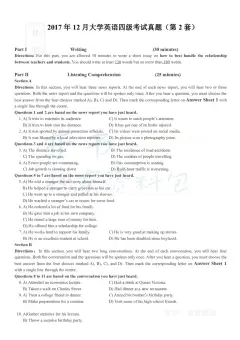
2017 年 12 月大学英语四级考试真题(第 3 套)
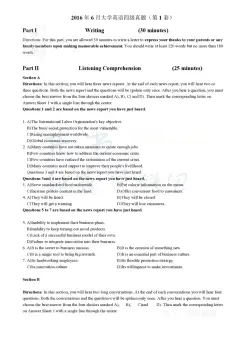
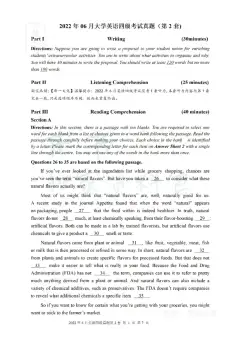
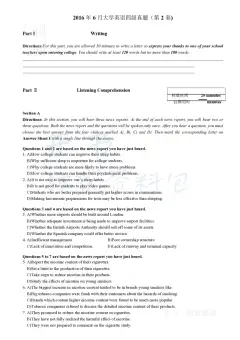
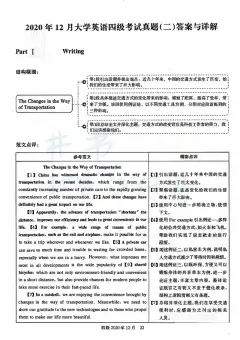
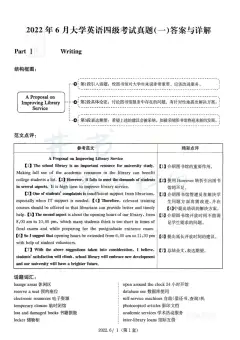
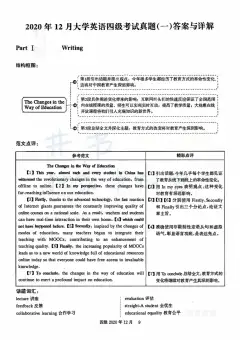
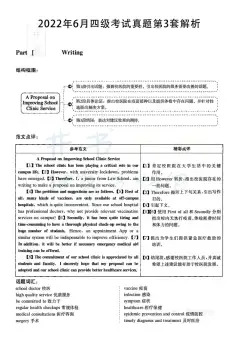
Part I Writing (30minutes)
Directions: For this part, you are allowed 30 minutes to write a short essay on how to best handle the relationship
betweendoctorsandpatients.Youshouldwriteatleast120wordsbutnomorethan180words.
Part II ListeningComprehension (25minutes)
说明:由于2017年12月四级考试全国共考了2套听力,本套真题听力与前2套内容完全一样,只是顺序不一
样,因此在本套真题中不再重复出现。
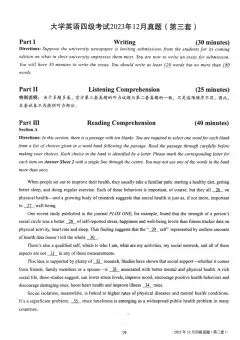
Part Ⅲ ReadingComprehension ( 40minutes )
SectionA
Directions:In this section,there is apassagewith tenblanks.Youarerequiredtoselectonewordforeachblankfrom alist
of choices given in a word bank following the passage. Read the passage through carefully before making your choices.
Each choice in the bank is identified by a letter. Please mark the corresponding letter for each item on Answer Sheet 2
withasinglelinethroughthecentre.Youmaynotuseanyofthewordsinthebankmorethanonce.
Questions26to35arebasedonthefollowingpassage.
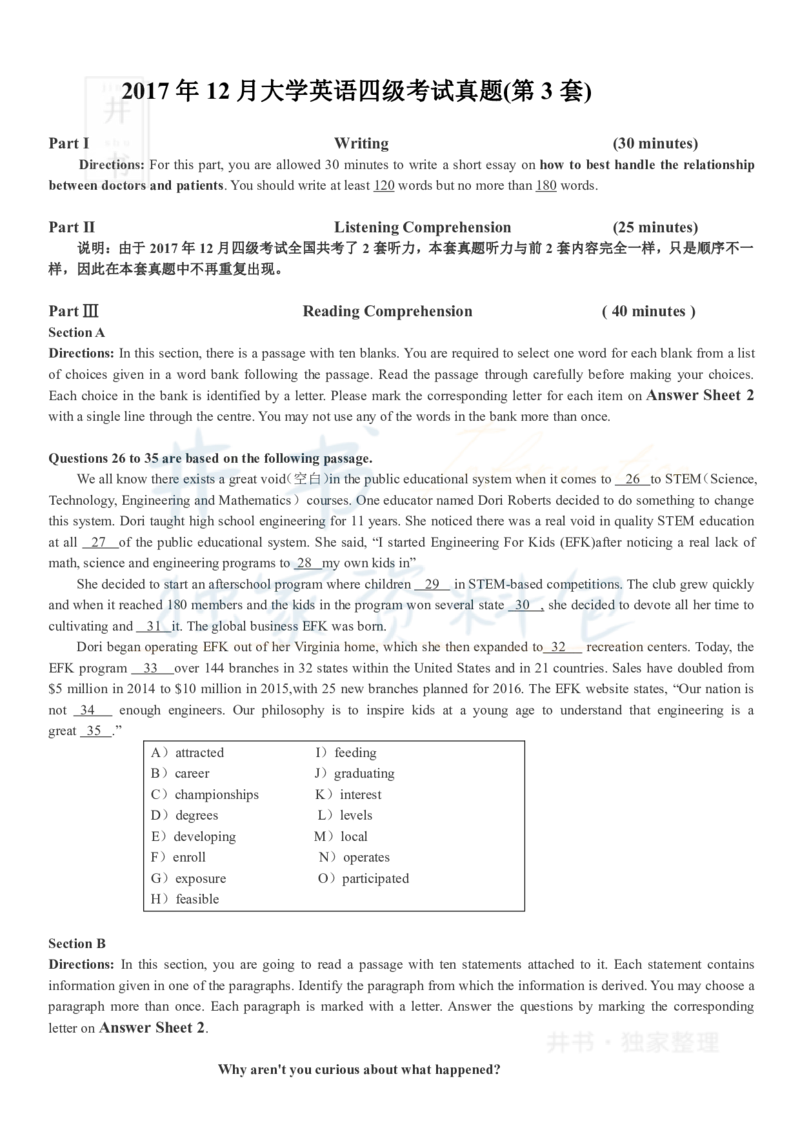
Weallknowthereexistsagreatvoid(空白)inthepubliceducationalsystemwhenitcomesto 26 toSTEM(Science,
Technology,EngineeringandMathematics)courses.Oneeducatornamed DoriRobertsdecidedtodosomethingto change
this system. Doritaught high schoolengineering for 11years. She noticed there was a realvoid in quality STEM education
at all 27 of the public educational system. She said, “I started Engineering For Kids (EFK)after noticing a real lack of
math,scienceandengineeringprogramsto 28 myownkidsin”
Shedecidedtostartanafterschoolprogramwherechildren 29 inSTEM-basedcompetitions.Theclubgrewquickly
andwhenitreached180membersandthekidsintheprogramwonseveralstate 30 ,shedecidedtodevoteallhertimeto
cultivatingand 31 it.TheglobalbusinessEFKwasborn.
Dori began operating EFK out of her Virginia home, which she then expanded to 32 recreation centers. Today, the
EFK program 33 over 144 branches in 32 states within the United States and in 21 countries. Sales have doubled from
$5 million in 2014 to $10 million in 2015,with 25 new branches planned for 2016. The EFK website states, “Our nation is
not 34 enough engineers. Our philosophy is to inspire kids at a young age to understand that engineering is a
great 35 .”
A)attracted I)feeding
B)career J)graduating
C)championships K)interest
D)degrees L)levels
E)developing M)local
F)enroll N)operates
G)exposure O)participated
H)feasible
SectionB
Directions: In this section, you are going to read a passage with ten statements attached to it. Each statement contains
informationgiveninoneoftheparagraphs.Identifytheparagraphfromwhichtheinformationisderived.Youmaychoosea
paragraph more than once. Each paragraph is marked with a letter. Answer the questions by marking the corresponding
letteronAnswerSheet 2.
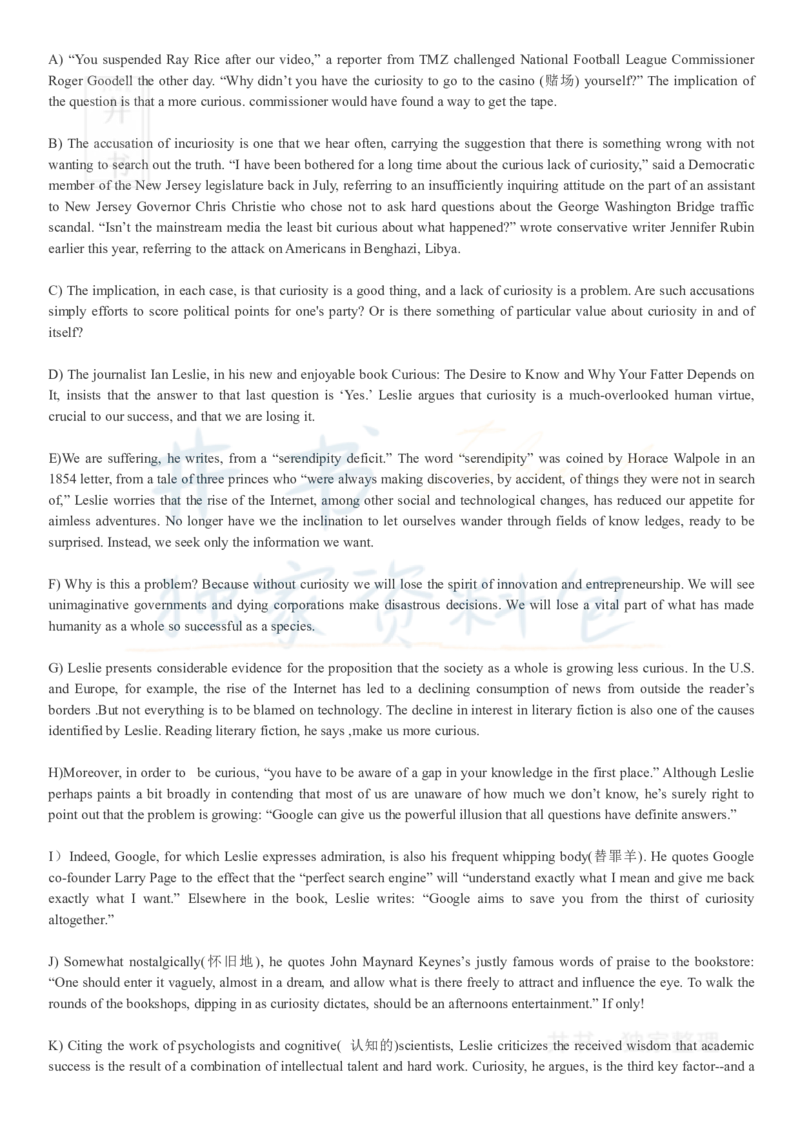
Whyaren'tyoucuriousaboutwhathappened?A) “You suspended Ray Rice after our video,” a reporter from TMZ challenged National Football League Commissioner
Roger Goodell the other day. “Why didn’t you have the curiosity to go to the casino (赌场) yourself?” The implication of
thequestionisthatamorecurious.commissionerwouldhavefoundawaytogetthetape.
B) The accusation of incuriosity is one that we hear often, carrying the suggestion that there is something wrong with not
wantingtosearchoutthetruth.“Ihavebeenbotheredforalongtimeaboutthecuriouslackofcuriosity,”saidaDemocratic
memberoftheNewJerseylegislature backinJuly,referringtoaninsufficiently inquiringattitudeonthe partofanassistant
to New Jersey Governor Chris Christie who chose not to ask hard questions about the George Washington Bridge traffic
scandal. “Isn’t the mainstream media the least bit curious about what happened?” wrote conservative writer Jennifer Rubin
earlierthisyear,referringtotheattackonAmericansinBenghazi,Libya.
C)The implication, in eachcase, is thatcuriosity is agood thing, and alack of curiosity is a problem.Are such accusations
simply efforts to score political points for one's party? Or is there something of particular value about curiosity in and of
itself?
D)ThejournalistIanLeslie,in hisnewandenjoyable bookCurious:TheDesire toKnowandWhyYourFatter Dependson
It, insists that the answer to that last question is ‘Yes.’ Leslie argues that curiosity is a much-overlooked human virtue,
crucialtooursuccess,andthatwearelosingit.
E)We are suffering, he writes, from a “serendipity deficit.” The word “serendipity” was coined by Horace Walpole in an
1854letter,fromataleofthreeprinceswho“werealwaysmakingdiscoveries,byaccident,ofthingstheywerenotinsearch
of,” Leslie worries that the rise of the Internet, among other social and technological changes, has reduced our appetite for
aimless adventures. No longer have we the inclination to let ourselves wander through fields of know ledges, ready to be
surprised.Instead,weseekonlytheinformationwewant.
F)Whyis this aproblem? Becausewithout curiosity we will lose the spirit of innovation and entrepreneurship.We will see
unimaginative governments and dying corporations make disastrous decisions. We will lose a vital part of what has made
humanityasawholesosuccessfulasaspecies.
G) Leslie presents considerable evidence for the proposition that the society as a whole is growing less curious. In the U.S.
and Europe, for example, the rise of the Internet has led to a declining consumption of news from outside the reader’s
borders.Butnoteverythingistobeblamedontechnology.Thedeclineininterestinliteraryfiction isalsooneofthecauses
identifiedbyLeslie.Readingliteraryfiction,hesays,makeusmorecurious.
H)Moreover,in orderto be curious,“you have to beawareof a gap in your knowledge in the firstplace.”Although Leslie
perhaps paints a bit broadly in contending that most of us are unaware of how much we don’t know, he’s surely right to
pointoutthattheproblemisgrowing:“Googlecangiveusthepowerfulillusionthatallquestionshavedefiniteanswers.”
I)Indeed, Google, for which Leslie expresses admiration, is also his frequent whipping body(替罪羊). He quotes Google
co-founderLarryPage tothe effectthatthe“perfectsearchengine” will “understandexactly whatI mean andgive me back
exactly what I want.” Elsewhere in the book, Leslie writes: “Google aims to save you from the thirst of curiosity
altogether.”
J) Somewhat nostalgically(怀旧地), he quotes John Maynard Keynes’s justly famous words of praise to the bookstore:
“One should enter it vaguely,almost in a dream, andallow whatis there freely to attract andinfluence the eye.To walk the
roundsofthebookshops,dippinginascuriositydictates,shouldbeanafternoonsentertainment.”Ifonly!
K) Citing the work of psychologists and cognitive( 认知的)scientists, Leslie criticizes the received wisdom that academic
successisthe resultofacombination ofintellectualtalentandhardwork.Curiosity,heargues, is thethirdkey factor--and adifficult one to preserve. If not cultivated, it will not survive: “Childhood curiosity is a collaboration between child and
adult.Thesurestwaytokillitistoleaveitalone.”
L) School education, he warns, is often conducted in a way that makes children incurious. Children of educated and
upper-middle-class parents turn out to be far more curious, even at early ages, than children of working class and lower
class families. That lack of curiosity produces a relative lack of knowledge, and the lack of knowledge is difficult if not
impossibletocompensateforlateron.
M)AlthoughLeslie’sbookisn’taboutpolitics,hedoesn’tentirelyshyawayfromtheproblem.Politicalleaders,likeleader
of other organizations, should be curious. They should ask questions at crucial moments . There serious consequences, he
warns,innotwantingtoknow.
N) He presents as an example the failure of the George W. Bush administration to prepare properly for the after-effects of
the invasion of Iraq. According to Leslie, those who ridiculed former. Defense Secretary Donald Rumsfeld for his 2002
remark that we have to be wary of the “unknown unknowns” were mistaken. Rumsfeld’s idea, Leslie writes, “wasn’t
absurd-itwassmart.”Headds,“Thetragedyisthathedidn’tfollowhisownadvice.”
O)All of whichbrings us backto Goodellandthe Christie caseand Benghazi. Eachcritic in thoseexamples is charging, in
a different way, that someone in authority is intentionally being incurious. I leave it to the reader's political preference to
decidewhich, if any, charges should stick. But let’s be carefulaboutdemanding curiosity aboutthe other side’s weaknesses
and remaining determinedly incurious about our own. We should be delighted to pursue knowledge for its own sake--even
whenwhatwefindoutissomethingwedidn’tparticularlywanttoknow.
36.Tobecurious,weneedtorealizefirstofallthattherearemanythingswedon’tknow.
37.AccordingtoLeslie,curiosityisessentialtoone’ssuccess.
38.Weshouldfeelhappywhenwepursueknowledgeforknowledge’ssake.
39.Politicalleaders’lackofcuriositywillresultinbadconsequences.
40.Thereareoftenaccusationsaboutpoliticians'andthemedia’slackofcuriositytofindoutthetruth.
41.Thelesscuriousachildis,thelessknowledgethechildmayturnouttohave.
42.Itiswidelyacceptedthatacademicaccomplishmentliesinbothintelligenceanddiligence.
43.Visitingabookshopascuriosityleadsuscanbeagoodwaytoentertainourselves.
44.BoththeriseoftheInternetandreducedappetiteforliteraryfictioncontributetopeople’sdecliningcuriosity.
45.Mankindwouldn’tbesoinnovativewithoutcuriosity.
Section C
Directions: There are 2 passages in this section. Each passage is followed by some questions or unfinished statements. For
each of them there are four choices marked A), B), C) and D). You should decide on the best choice and mark the
correspondingletteronAnswerSheet 2withasinglelinethroughthecentre.
PassageOne
Questions46to50arebasedonthefollowingpassage.
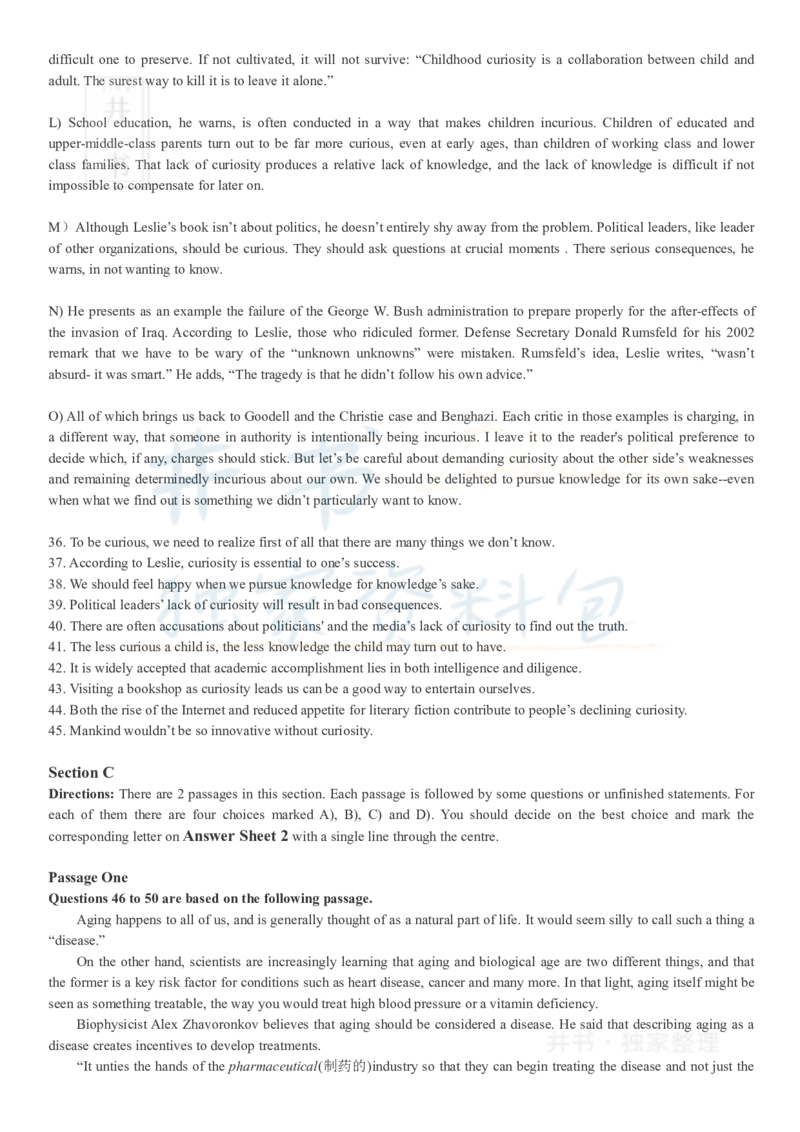
Aginghappenstoallofus,andisgenerallythoughtofasanaturalpartoflife.Itwouldseemsillytocallsuchathinga
“disease.”
On the other hand, scientists are increasingly learning that aging and biological age are two different things, and that
theformerisakeyriskfactorforconditionssuchasheartdisease,cancerandmanymore.Inthatlight,agingitselfmightbe
seenassomethingtreatable,thewayyouwouldtreathighbloodpressureoravitamindeficiency.
BiophysicistAlex Zhavoronkov believes that aging should be considered a disease. He said that describing aging as a
diseasecreatesincentivestodeveloptreatments.
“It unties the hands ofthe pharmaceutical(制药的)industry so that they can begin treating the disease and notjust thesideeffects,”hesaid.
“Right now, people think of aging as natural and something you can’t control,” he said. “In academic circles, people
take aging research as just an interest area where they can try to develop interventions. The medical community also takes
agingforgranted,andcandonothingaboutitexceptkeeppeoplewithinacertainhealthrange.”
But if aging were recognized as a disease, he said, “It would attract funding and change the way we do health care.
Whatmattersisunderstandingthatagingiscurable.”
“It was always known that the body accumulates damage,” he added. “The only way to cure aging is to find ways to
repairthatdamage.Ithinkofitaspreventivemedicineforage-relatedconditions.”
Leonard Hayflick, a professor at the University of California, San Francisco, said the idea that aging can be cured
impliesthehumanlifespancanbeincreased,whichsomeresearcherssuggestispossible.Hayflickisnotamongthem.
“There’re many people who recover from cancer, stroke, or heart disease. But they continue to age, because aging is
separate from their disease,” Hayflick said. “Even if those causes of death were eliminated, life expectancy would still not
gomuchbeyond92years.”
46.Whatdopeoplegenerallybelieveaboutaging?
A)Itshouldcausenoalarmwhatsoever.
B)Theyjustcannotdoanythingaboutit.
C)Itshouldberegardedasakindofdisease.
D)Theycandelayitwithadvancesinscience.
47.Howdomanyscientistsviewagingnow?
A)Itmightbepreventedandtreated.
B)Itcanbeasriskyasheartdisease.
C)Itresultsfromavitamindeficiency.
D)Itisanirreversiblebiologicalprocess.
48.WhatdoesAlexZhavoronkovthinkof“describingagingasadisease”?
A)Itwillpromptpeopletotakeagingmoreseriously.
B)Itwillgreatlyhelpreducethesideeffectsofaging.
C)Itwillfreepharmacistsfromtheconventionalbeliefsaboutaging.
D)Itwillmotivatedoctorsandpharmaciststofindwaystotreataging.
49.Whatdowelearnaboutthemedicalcommunity?
A)Theynowhaveastronginterestinresearchonaging.
B)Theydifferfromtheacademiccirclesintheirviewonaging.
C)Theycancontributetopeople’shealthonlytoalimitedextent.
D)Theyhavewaystointerveneinpeople’sagingprocess.
50.WhatdoesProfessorLeonardHayflickbelieve?
A)Thehumanlifespancannotbeprolonged.
B)Agingishardlyseparablefromdisease.
C)Fewpeoplecanliveuptotheageof92.
D)Heartdiseaseisthemajorcauseofaging.
PassageTwo
Questions51to55arebasedonthefollowingpassage
Female applicants to postdoctoral positions in geosciences were nearly half as likely to receive excellent letters of
recommendation,comparedwiththeirmalecounterparts.ChristopherIntagliatareports.
As in many other fields, gender bias is widespread in the sciences. Men score higher starting salaries, have more
mentoring(指导),andhavebetteroddsofbeinghired.Studies showthey’realsoperceivedasmorecompetentthanwomen
inSTEM(Science,Technology,Engineering,andMathematics) fields.Andnewresearchreveals thatmenaremorelikely to
receiveexcellentlettersofrecommendation,too.“Say, you know, this is the best student I’ve ever had,” says Kuheli Dutt, a social scientist and diversity officer at
Columbia University’s Lamont campus. “Compare those excellent letters with a merely good letter: ‘The candidate was
productive, or intelligent, or a solid scientist or something that’s clearly solid praise,’ but nothing that singles out the
candidateasexceptionaloroneofakind.”
Dutt and her colleagues studied more than 1,200 letters of recommendation for postdoctoral positions in geoscience.
They were all edited for gender and other identifying information, so Dutt and her team could assign them a score without
knowing the gender of the student. They found that female applicants were only half as likely to get outstanding letters,
comparedwiththeirmalecounterparts.Thatincludeslettersofrecommendationfromallovertheworld,andwrittenby,yes,
menandwomen.ThefindingsareinthejournalNatureGeoscience.
Dutt says they were not able to evaluate the actual scientific qualifications of the applicants using the data in the files.
But she says the results still suggest women in geoscience are at a potential disadvantage from the very beginning of their
careersstartingwiththoselessthanoutstandinglettersofrecommendation.
“We’re not trying to assign blame or criticize anyone or call anyone conscious sexist. Rather, the point is to use the
resultsofthis studytoopenupmeaningfuldialoguesonimplicitgenderbias,beitatadepartmentallevel oraninstitutional
levelorevenadisciplinelevel.”Whichmayleadtosomerecommendationsfortheletterwritersthemselves.
51.Whatdowelearnaboutapplicantstopostdoctoralpositionsingeosciences?
A)Therearemanymoremenapplyingthanwomen.
B)Chancesforwomentogetthepositionsarescare.
C)Moremalesthanfemalesarelikelytogetoutstandinglettersofrecommendation.
D)Maleapplicantshavemoreinterestinthesepositionsthantheirfemalecounterparts.
52.Whatdostudiesaboutmenandwomeninscientificresearchshow?
A)Womenengagedinpostdoctoralworkarequicklycatchingup.
B)Fewerwomenareapplyingforpostdoctoralpositionsduetogenderbias.
C)MenarebelievedtobebetterabletoexcelinSTEMdisciplines.
D)WomenwhoarekeenlyinterestedinSTEMfieldsareoftenexceptional.
53.Whatdothestudiesfindabouttherecommendationlettersforwomenapplicants?
A)Theyarehardlyeversupportedbyconcreteexamples.
B)Theycontainnothingthatdistinguishestheapplicants.
C)Theyprovideobjectiveinformationwithoutexaggerate.
D)Theyareoftenfilledwithpraiseforexceptionalapplicants.
54.WhatdidDuttandhercolleaguesdowiththemorethan1,200lettersofrecommendation?
A)Theyaskedunbiasedscholarstoevaluatethem.
B)Theyinvitedwomenprofessionalstoeditthem.
C)Themassignedthemrandomlytoreviewers.
D)Theydeletedallinformationaboutgender.
55.WhatdoesDuttaimtodowithherstudy?
A)Raiserecommendationwriters’awarenessofgenderbiasintheirletters.
B)Openupfreshavenuesforwomenpost-doctorstojoininresearchwork.
C)AlertwomenresearcherstoalltypesofgenderbiasintheSTEMdisciplines.
D)Startapublicdiscussiononhowtoraisewomen’sstatusinacademiccircles.
Part Ⅳ Translation (30minutes)
Directions: For this part, you are allowed 30 minutes to translate a passage from Chinese into English. You should
writeyouransweronAnswerSheet 2.
黄山位于安徽省南部。它风景独特,尤以其日出和云海著称。要欣赏大山的宏伟壮丽,通常得向上看。但要欣
赏黄山美景,得向下看。黄山的湿润气候有利于茶树生成,是中国主要产茶地之一。这里还有许多温泉,其泉水有
助于防治皮肤病。黄山是中国主要旅游目的地之一,也是摄影和传统国画最受欢迎的主题。