2025年6月英语六级听力
原文及译文及答案解析
听力音频
听力第一套答案
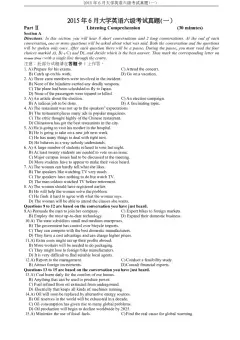
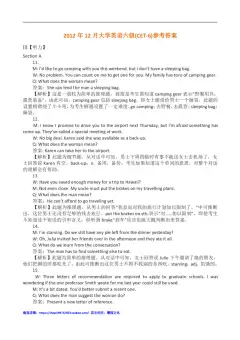
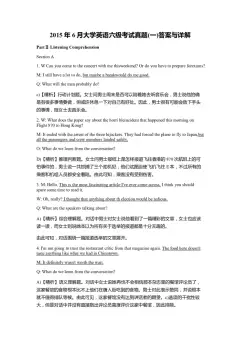
1.C) Calledthe man'scompany.
2.B) Cameassoonas possible.
3.D) Indignation.
4.A) Whether the contents have been backedup.
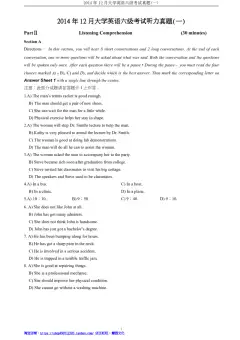
5.A) It'sboring.
6.D) Mediatingland disputes.
7.C) Courts canbe frustratingandexpensive.
8.D) Theability toexpressthemselves clearly and forcefully.
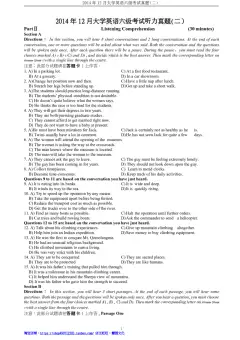
9.C) Theyproposed anexplanation for old people'sdifficulty inretrievingmemories.
10.B)Older adults oftenretrieve irrelevantmemoriesalongwith what theywant.
11.A)They show preserved,and sometimesenhanced,creativity.
12.C)They are rarelyincontrolof many things relatedto their work.
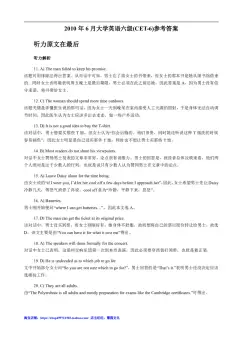
13.B)Theadverse effectonphysical health.
14.B)Itputs jobs andwagesat risk.
15.B)Prioritizing life over work.
16.D)Impactacademicachievements.
17.A)By pressingahiddenbutton.
18.B)Make generalizable inferences aboutpersistencefrom afew examples.
19.A)Offering adviceon overcoming habituallateness.
20.D)Get preparedthe nightbefore.
21.C)Leave timein between activities.
22.D)They havedifferent feels.
23.A)They are notas willingtohelp strangers.
24.D)Itis notpartofBoston'slocalculture.
25.B)Follow the examplessetby Paris andNew YorkCity.
---
听力原文
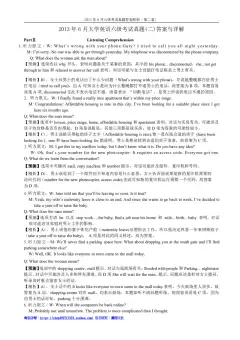
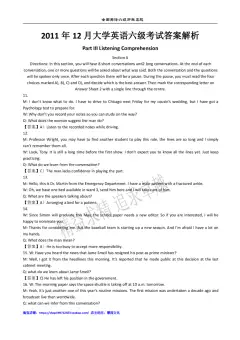
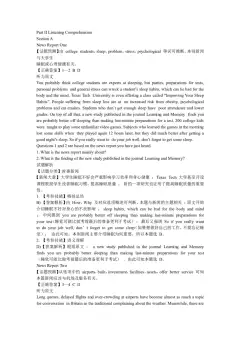
Long Conversation 01M:Goodmorning.My nameis Bob Fetterman.I'm thecomputer technician.
W:Didn'tIcallfor you lastweek?
M:Maybe? Iwork for Alpha Maintenance.Iimagine someonefrom your officecalled our central
officeandI'm theengineer designated toyour case.
W:Yeah,Ispoketoa ladythere lastTuesday, which isnow 10 days ago.Imadeitclear it was
anurgent matter andplease sendsomeone as soonas possible.Couldn'tyou or someoneelse
have comesooner?
M:I'msorry, butI'm notin charge ofscheduling alllogistics.Isimplydo notknow. All Icantell
you isIgotthe call thisweek andcameas soonas Icould.
W:Isee.Well,I'llhave, you know, mymanageris rather indignantthatit's taken you thislong to
come.Iunderstand itmightnotbe your fault,but nevertheless,you should know what thefeeling
isaround here.
M:Iunderstand,and I'msorry for anyinconvenience.Iwilltryto resolve your computer problem
as swiftlyandoptimally asIcan.Whatand whereis the issue?
W:It'sthis machine righthere.Itwas running slow for awhile,Iguess,and graduallygotworse
andworse lastTuesday. Itjuststopped workingaltogether.Ifyou switch iton,you willsee whatI
mean.
M:Okay. Doyou know ifit's backedup?Backed up.Imean, doyou know ifits contentshave
been copied andsaved somewhereelse?
W:Idon't know.
M:Well,depending onthe ensuing operative scenario,ifIneed towipethe systemdirectories
cleanin order to reconfigure defaultprotocols,then myfirstintervention should beto intricately
retrieveall inventoriesthatIcan.Otherwise,alldata thatwas storedon its harddrive willbe
foreverlost.
W:My manager wouldknow. Letmego gethim.
Questions:
Q01:Whatdidthe woman dolastTuesday?
Q02:Whatdoes the man sayhe didwhenhe gotthe call?
Q03:Whatis the feeling aboutthe problemaround the woman'sworkplace?
Q04:Whatdoes the woman sayher managerwould know?
---
Long Conversation 02
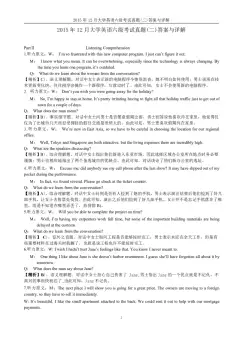
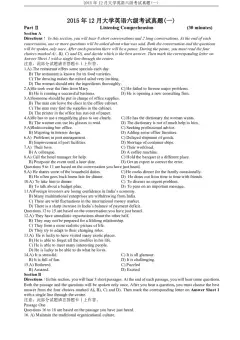
M:Have you given morethought tostudying law?
W:I've beenthinking aboutitalot.Yes.In fact,this iswhy Iwishedto speak toyou.Iwantedto
hear more aboutwhatit's like.
M:A career in law is abeautiful thing inmyopinion.Manypeoplewillsayit's aboring field,butI
disagree.Thethingis thereare manydifferent branchesoflaw andmanydifferent jobs.
W:You are involved with buildings and construction,right?
M:Correct. I'masolicitor specializingin realestate.Mostofmywork involves mediatingland
disputes.
W:Doyou mind givingmean example?
M:Sure.So inmany casesIam employed toarbitratebetween two clashingparties.Let's sayfor
example,there are two landowners who are inathornydisagreement aboutsomethinglike the
borders oftheir adjacent plots.Someone mayemploy metobreakthe deadlock andresolvethe
dispute.Often mywork involvesnegotiating agreements,plain and simple.W:Soyou aresaying thatalotofwhatyou do is fixpeople's legalissues,likeyou tryto find a
solution thatbenefits everyone andthat prevents aproblem fromescalating.
M:Exactlywellput. You need toremember thatcourts like allbureaucracies really canbe very
messy, frustrating,and expensive.For this reason,it'susually better toresolve problemsoutside
ofcourtwheneverpossible.
W:Isee.So besides knowing the law inside out, you need good peopleskills,right?
M:Ofcourse.Anyjobthat involvespeoplerequires goodinterpersonal skills,andany law
professionalneeds tobevery eloquentatarticulating thatargument.
W:Right.SoI've been thinking aboutstudyingcriminal law. Ithinkit soundsvery interesting.
M:Mm-hmm.Yes. I'dsay there'smore money inproperty law,but thestakesare higher in
criminallaw. Icansee howyou would finditmore interesting.
---
Passage01
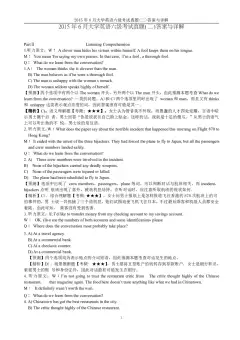
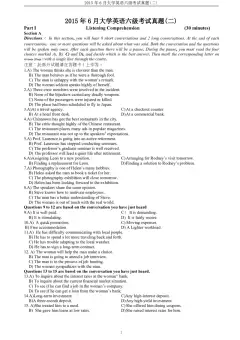
Whena persontries toaccess amemory, their brains quicklyexamineeverythingstored init to
findthe relevant information.Butaswe age,manyof us havedifficulty retrievingmemories.Ina
review published inthe JournalTrends inCognitive Sciences onFebruary 11th,researchers
proposean explanation for why this mightbehappening. Thebrains ofolder adultsallocate more
spaceto accumulatedknowledge andhavemore material tonavigate whenattempting toaccess
memories.Whilethis wealthofprior knowledgecan makememory retrievalchallenging,the
researcherssay ithas its upsides.This lifeexperiencecan aid with creativityand decision making.
ResearchersTarek Amer,JordanaWynn, and Lynn Hasher looked atseveralbehavioraland
brain imagingstudies whichshowthat older adultshavedifficulty suppressing informationthatis
nolonger relevant,and thatwhen searching for aspecificmemory, theyoften retrieveother
irrelevantmemoriesalong with it.Thestudiesalsoshowed that whengivena cognitivetask,older
adultsrely more heavilyon previous knowledgethan younger adultsdo.Whilethe researchers
focusprimarily onthe difficultiesthatthese disorderly, crowded memoriesmay pose,they also
highlightafewsituations in whichthesesamememory patternsmay be useful.Evidence
suggeststhatolder adults show preservedandat timesenhanced creativityas afunction of
enrichedmemories,researchers write.They further hypothesize thatolder adultsmay bewell
served bytheir prior knowledge whenit comes todecisionmakingwhere they canpull ontheir
accumulatedwisdom.
Questions:
Q09:Whatdidthe researchers dointheir review in thejournal Trendsin Cognitive Sciences?
Q10:Whatdo severalbehavioraland brainimaging studies show?
Q11:Whatdoes evidence suggestregarding olderadults?
---
Passage02
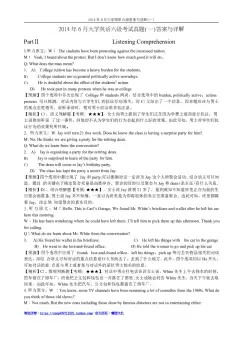
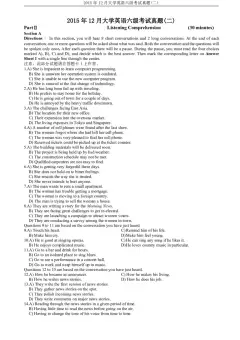
Thereare at leastfour major problemswith work in Americatoday. First,work canbe alienating.
Workersareoften notin controlof how they work,whenthey work, whatisdone with the goods
andservicesthey produce,andwhatis done with the profitsmadefrom their work.Second,
workersare notpaid the fullvalueoftheir labor.Real wages havenotkeptpacewith productivity,drivingeconomic inequalityand adeclinein labor'sshareof income.Third,peopleare timepoor.
Inthe US,full-timeemployees work an averageof8.72 hoursper day. Despite productivity
increases,longworking hours contributetothe feelingof timepoverty, whichhasan adverse
effectonpsychological wellbeing.
Fourth,automationputs jobs andwagesat risk.Technological innovation could,intheory,
liberatepeoplefromthe 40-hour work week,butunlesschangesare madeto the structureof
work,automationwillsimplyexertdownwardpressure on wages andfurther diminishwork
opportunities.
Sowhatcan bedone toalleviate theseproblems?There are competing visionsof the bestway to
arriveatasolution.One vision is what'sknown as the post-work position.Thepost-worktheorists
believethat work should notholda centralposition in our lives or take upsomuchofour time.
They assertthat although doingsomework mightbe necessary, meaning, purpose, and social
valuereside inthe communitiesand relationshipsbuiltand sustainedoutside ofthe workplace.
Thus,lifeshouldbe seen as anendin itself.
Questions:
Q12:Whatdo we learn aboutAmerican workers from the passage?
Q13:Whatdoes the passagesay longworking hours contributeto?
Q14:Whatdoes automation doaccording tothe passage?
Q15:Whatdo post-worktheorists advocate?
---
Lecture01
Recentstudies show thatself-controlandpersistenceincreaseacademicoutcomes,independent
ofIQ.Even our personalbeliefsabout effortcanaffectacademicoutcomes.Childrenwho think
effortleads toachievementoutperform thosewho believe ability isafixedtrait. Given the link
between persistence and academicsuccess,decisionsabout effortareparticularlyimportant in
childhood.Yet relativelylittle researchhasexplored how young children learnwhat's worththe
effort.
Weallknow thatinfants are keen observers ofthesocial world,butthey'renot justidlywatching.
They aretiny learningmachines. Theycan generalize suchabstractconcepts as causal
relationshipsand socialrolesfrom justafew examples.Even a15-month-oldinfant can
outperformahigh-levelcomputer insuchtasks.Could infantsalsomakebroad generalizable
inferences fromafewexamples when itcomestoeffort?Ifso, thenmaybe persistence isn't
simplyacharacter trait.Maybe it's flexible andadaptablebased on socialcontext.
Toexplorethis question,we showed 15-month-old babies one oftwo things—an experimenter
workinghard toachieve two differentgoals,or an experimenter whoeffortlessly reachedeach
goal.Thenwe introduced thebaby toanovelmusic toy thatseemed as ifitcouldbe activatedby
pushinga bigbutton on top.Thebutton couldbe presseddown, butdidn'tactually activate
anything.Outof sightofthe babies,we turnedon the musictoy witha hidden buttonsothatthey
heardthe toy makingmusic.Wegave the babies the music toy andleftthe room.Then analysts
whodidn'tknow which condition eachbaby was in watchedvideotapesof the experimentand
countedhow many timesbabiestried toactivate the toy bypressingthe button.Across onestudyandapre-registered duplication,babieswho hadseenan adultpersistandsucceed pushedthe
buttonabout twiceas many timesas those whosaw an adulteffortlessly succeed.
Inother words,babies learnedthat effortwas valuableafter watching justtwo examples ofan
adultworkinghard andsucceeding. Partof what'sexcitingabout this findingis thatthe babies
didn'tjustimitate the adult'sactions.Instead,theygeneralized the value ofefforttoanoveltask.
Theexperimenter never demonstratedpushing abutton or trying tomakemusic. Instead,the
babieslearnedfromdifferent examples ofeffortfulactions thatthe new toy probably alsorequired
persistence.
Questions:
Q16:Whatdoes the speaker sayevenour personalbeliefsabout effortcan do?
Q17:How didthe researchers turn onthe music toy intheir experiment?
Q18:Whatcould the infants doin the experimentaccordingto the speaker?
---
Lecture02
Ifchroniclatenesshastaken over your lifeand turnedintoadefining traitofwho you are,it's
likely thatyou're losing outon joboffers,recreationalopportunities,friendships,andmore.Ifyou
areshowing uplate toyour own life, getorganized, prioritize punctuality, andaddress any
underlying causes.
Whenyou have tobe somewhere,tryto arrive 15to 30minutes beforeyou need to.Ifyou always
runlate,thatmeans you mustbefailing to accountfor something you always do.Anticipatethat
by givingyourselfextra timetoarrive.Keep trackofwhether or notyou actually do arriveearly—
you mightfind thatleaving earlygets you to placesexactly ontime.
Settwo alarms.Setonealarm thatlets you know it'stimetodrop whatyou'redoing andasecond
alarm thatmeans you need to walk outthe door. Obey the alarmsassoon asthe firstalarmgoes
off—stop whatyou're doing.Ifit'ssomethingyou'llbe comingback to,like aprojectforwork,
makeanote toremindyourselfwhere you leftoff.Grab everythingyou need and makesureyou
know how togetwhere you're going. Aim tobeout thedoor andon your way before the second
alarm rings.This will onlywork ifyou take thealarmsseriously, somakesure you reactas soon
as you hear them.
Preparefor the dayahead.Have allof your notes andmaterials organized well inadvanceof
eacheventsothatallyou haveto dois grabthem andgo whenit's the actual day. Ifmornings
areastruggle foryou, do as muchas you canto ready yourselfthe nightbefore.Beforeyou go to
bed,layout your clothesand packyour bag for the nextday.
Learntoleave timein between tasksandmeetings.Itsoonbecomesunbearable toshiftbetween
onemeeting andanother without spacein between.Ifyou over-scheduleyourself,however, you'll
arrivelateas soon as you hitabump.Aswell as givingyou space,thistimealsoacts asabuffer
between events,whichcanbe borrowed fromshould you be held upin aprior meeting,allowing
you tostill gettothe nextoneon time.Calculate transittimebetween activities andthen add10
to30 minutesfor unexpecteddelays.
Questions:Q19:Whatis the speaker'spurposeofgiving this talk?
Q20:Whatshouldyou do ifmornings areastruggle foryou?
Q21:Accordingtothe speaker,whatcan we doto combatunexpected delays?
---
Lecture03
Doyou thinkBostonians putoutthe welcomemat? Doyou find othercities tobe more or less
polite?Differentcitieshavedifferent feels for visitors.Someare friendly and open,someare
formalanddistant. Boston tendstoseemhurried and sometimesalittle rude.That'swhatsome
tours havesaid. One study foundthatpeoplehere are less willingtovolunteer tohelp strangers
thanthose residentsofother US cities.
Takeacloselook nexttimeyou are in Boston,and here aresomeofthe things you'llprobably
see:people smoking inthe subway stations,despitethe frequentremindersnottodo so;
pedestrians walkingwhen the crosswalklights saynotto doso,ignoring the cars;car drivers
speeding,makingaloudnoise with the horn and occasionally cursingateachother;drivers who
can'tbe botheredto findaplace topark,butinsteadsimplyturnon their blinker andstop inthe
middleofthe street.
Questions:
Q22:Whatdoes the speaker sayabout differentcities?
Q23:Whatdoes the study sayaboutpeople inBoston?
Q24:Whatdoes the speaker implyaboutthe behaviorof Bostonians?
Q25:Whatdoes the speaker suggestBostonshoulddo?
2025年第六感等级考试圆满收官!在本次考试中,小颖团队凭借精准的命题分析,成功押中多道
四六级作文和翻译原题,尤其是六级考试,终极预测中实现双题100%命中的惊人战绩!
命中详情速览:
考前1天!025年6月英语四六级作文翻译终极预测(各一篇)
考前1天!四六级作文高分模版速记黄金三段高分结构.....
考前1天!四六级翻译6大句式专项结构训练题解析
长对话01
男:早上好,我叫鲍勃·费特曼,是电脑技术员。
女:上周不是我给你打的电话吗?
男:可能吧?我在阿尔法维修公司工作。我猜是你们办公室的人联系了我们的总部
,然后我被派来处理你们的问题。
女:是的,我上周二和一位女士通了电话,现在已经过去10天了。我明确表示这是
紧急情况,请尽快派人来。你们就不能早点来吗?
男:很抱歉,我不负责调度安排。我真的不清楚。我只能告诉你,我这周接到通知
后就尽快赶来了。
女:明白了。不过,我的经理对你们拖了这么久非常不满。我知道可能不是你的错
,但你应该了解我们这里的感受。男:我理解,对造成的不便深感抱歉。我会尽快解决电脑问题。问题出在哪里?
女:就是这台机器。它之前运行很慢,上周二突然完全死机了。你开机看看就知道
了。
男:好的。你知道数据是否备份了吗?
女:我不清楚。
男:如果需要重置系统,我得先尝试恢复数据,否则硬盘里的所有内容都会丢失。
女:我经理可能知道,我去叫他。
问题:
Q01:女士上周二做了什么?
Q02:男士说他接到电话后做了什么?
Q03:女士工作场所对问题的情绪是什么?
Q04:女士说她的经理知道什么?
---
长对话02
男:你考虑过学法律吗?
女:我一直在想这件事。其实今天找你就是想听听你的建议。
男:法律职业很棒。虽然有人说它枯燥,但我觉得不同领域差异很大。
女:你是做建筑相关法律的吧?
男:对,我是房地产律师,主要调解土地纠纷。
女:能举个例子吗?
男:比如两个地主因边界问题争执,我的工作就是促成双方达成协议。
女:所以你是通过非诉讼方式解决矛盾?
男:没错。上法庭耗时耗力,庭外和解更高效。
女:除了专业知识,沟通能力也很重要?
男:当然。法律从业者必须善于清晰有力地表达观点。
女:我对刑法很感兴趣。
男:刑法更有挑战性,不过房地产法律更赚钱。
---
短文01
随着年龄增长,许多人检索记忆时会提取到无关信息。2月11日《认知科学趋势》
期刊的论文指出,这是因为老年人脑内存储的知识更多,检索路径更复杂。虽然这
可能导致记忆混乱,但也带来优势——丰富的生活经验能提升创造力和决策能力。研究发现,老年人更难抑制无关信息,且常同时检索到无关记忆。他们更依赖既有
知识,这种模式在某些情境中反而有益。
问题:
Q09:研究者在论文中做了什么?
Q10:行为与脑成像研究显示了什么?
Q11:证据表明老年人有什么特点?
---
短文02
当今美国职场存在四大问题:1)工作异化,劳动者缺乏自主权;2)薪酬与生产力脱
节;3)长时间工作损害心理健康;4)自动化威胁就业。
"后工作理论"主张:工作不应占据生活中心地位,人生意义存在于职场外的社区与
关系中。
问题:
Q12:美国劳动者面临什么现状?
Q13:长时间工作会导致什么?
Q14:自动化有什么影响?
Q15:"后工作理论"提倡什么?
---
讲座01
研究表明,婴儿能从少量观察中抽象出努力的价值。实验中,看过成人坚持完成任
务的婴儿,尝试激活玩具的次数是另一组的两倍。这说明婴儿能将对努力的认知迁
移到新任务中。
问题:
Q16:关于努力的信念能影响什么?
Q17:研究者如何启动音乐玩具?
Q18:婴儿在实验中表现出什么能力?
---
讲座02克服慢性迟到的建议:
1)提前15-30分钟到达;
2)设置双重闹钟(准备铃/出发铃);
3)前一晚准备好衣物和物品;
4)在行程间预留缓冲时间。
问题:
Q19:讲座的目的是什么?
Q20:早晨困难者该怎么做?
Q21:如何应对意外延误?
---
讲座03
波士顿给游客的印象常是匆忙且冷漠。研究显示,当地人不愿主动帮助陌生人,交
通中常见违规行为。建议波士顿向巴黎和纽约学习改进城市礼仪。
问题:
Q22:不同城市有什么特点?
Q23:波士顿人有什么表现?
Q24:波士顿人的行为暗示什么?
Q25:演讲者建议波士顿怎么做?
更多解析请访问公众号:语听颖想说