“由某事件引人 A&P政策”与写作主题相关,也即该学生增删段落的做法及原因均与第五段段首的建议
(段落主旨)“删除无关内容、增加l相关内容”相衔,故[E]为正确顷。
[F]虽涉及同一名学生的同一文章,似与第五段②句相关,实则仅论及单一段落的写作,未体现内容
的增删,与第五段主旨无关,故排除。
达尔文论智力
tJ-~ 一.总体分析
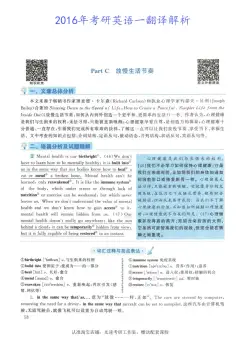
本文选自一篇关于达尔文的学术评论 Charles Darwin: His Place in Modern Science(查尔斯·达尔
文在现代科学中的地位),介绍了达尔文对自身智力水平和l心智变化的评述,本文语篇结构整体性强,考
生只有在了解整个语篇的情况下才能正确、准确地翻译文中囚线部分。 命题考查的具体知识点:各类从
句(定目从句、宾语从句、同位i百从句、从句i报套)、较长的后置定讯、动宾分!痛、固定结构。
喝: 二.语篇分析及试题精解
I In his autobiography, Darwin himself speaks of his
达尔文在其 自传中谈及 自己智力时
111tellectual powers with ext, aorclina1y modesty. He porn ts
极为谦逊。 他指 出 ,在清晰简洁地表达
out that he always ex口巳rienced much difficulty in expressing 自己的思想方面,他总是会经历许多 困
himself clearly and concisely°) , but (46)he believes that this
难。 但是(46)他认为或许正因为(语言
very difficulty may have had the compensating advantage of 表达上的)这种困难,他不得不对自己要
forcing him to think long and intently0 about eve1y sentence, 说的每句话都进行长时间的认真思考,
and thus enabling him to detect errors in reasoning@ and in 从而能发现推理错误及自己言论中的错
his own observations®. He disclaimed® the possession of aηy 误,结果这反而成为他的优点二他不认
great quickness of appeh巳nsion or wit, such as distinguished 为自己具有像著名学者赫骨黎一样敏锐
Huxley. (47) He asse「ted, also, that hi日 power to follow a 的理解力或智慧。 (47)他还坚持认为自
long and purely abstract train of tho山ght was very limited, 己进行长时间纯抽象思维的能力十分有
限,由此他也认定自己在数学方面根本
for which reason he felt certain that he never could have
不可能有大的作为。 他也描述 自己的记
succeeded with mathematics. His memory, too, he described
忆是博而不精。 从某种意义上说他的记
as extensive, but hazy®. So poor in one sense was it that he
忆力如此之差以至于他对一个 日 期或一
never could remember for more than a few days a single date
行诗句的记忆从不会超过几天。 (48)
or a line of poetry. ( 48) On the other hand, he did not accept
另一方面,一些批评者指责他虽然善于
as well founded( the charge® made by some of his c1i tics
观察,却不具备推理能力,而他认为这种
that, while he was a good observer, he had no power of
指责是缺乏根据的。 他认为,这不可能
reasoning. This, he thought, could not be true, because the
是事实,因为《物种起源》从头至尾是一个
“Orig n of Species" is on巳 long argument from the beg111n111g
长篇论证,并且说服了很多有才智的人。
to the end, and has convrnced many able men. No one, he
他认为,没有哪一个不具备一定推理能力
submits®, could have written it without possessrng some
的人能够写出这本书。 他很乐意地宣称:
power of reasoning. He was willing to assert that “I have a “如同相当成功的律师或医生一样,我有
fair ( share of invention, and of common sense or judgment, 着足够多的创造力 ,以及常识或判断力 ,
53such as every fairly successful lawyer or doctor must have, 但,我认为,(我的这些能力)并不 比他们
but not, I believe, in any t鸣her degree. ”(49)旦旦旦旦s a水平更高。”(49)他又自谦地说,或许自己
humbly th3t perhaps he was “superior to the common run of l“在注意到容易被忽略的事物,并对其加
men in noticing things which easily escape attention, and in 以仔细观察方面优于常人”。
observing them carefully. ”
;二;词汇注在当主点::这;::;/
;
( concisely [kan 'sa1sl1] αd. 简明地 \\ ( well foundedα.有事实依据的
②川ly [ m 'tent! 1] αd 专心地 ( charge [ tf a:d3] 11. 指责,谴责
( reasoning ['ri:z(a)nru] 11. 推理 $ ⑤sut、mit [sab1m1t] v. 表示,认为
④阳
$
考后所发表的)言论,评论 .经典搭配
@hazy [ 1he1Z1] α.模糊的,不确切的 ( the common/general/ordinary/usual run of普通类型的
1. so+ 形容词/副词 +主谓倒装 十that+ 从旬, 意为“如此……以至于……”。 So cold was the
weather that we had to stay at home. 天气太冷,我们只好呆在家里。
2. one's fair share of. .. 意为“合理数量的/应有的/足够多的……”。 I have my fair share of success
m the past. 过去我已经取得了应有的成功。
:·遣军分析:-:::;/
第一段论述这尔文对自己智力的谦虚评价(s严对{S of his intellectual powers with extrao时inary m叫esty)。
首旬总领全段,概括指出达尔文论及其智力时极为谦逊。 intellectual powers 明确谈论对象;with
extraordinary modesty强调其谦虚程度。
第二至六旬介绍达尔文对自己语言表达、理解力、抽象思维、记忆力的评价,直接彰显其谦逊态度。
观点引出词 He points out. .. He disclaimed ... He asserted ... he described .. .及逻辑路标词... also ...
too . . .将各句并列衔接。 两组词汇清晰展现本句群与首句“总-分”论证关系: expressing himself. ..
apprehension or wit ... power to follow a long and purely abstract train of thought ... memory 均为
intellectual powers 下义同;always experienced much difficulty ... was very limited ... hazy ... poor 表明达
尔文对自己心智各方面的谦虚评价,回应 extraordinary modesty。
第二句指出达尔文谦虚地认为自己“语言表达能力弱”。 but 形成句内转折,指出这种不足反而成为
了一种优势,更深一层表明其谦逊:自己并非天赋异票、只是能够发现自身不足并努力变不利为有利
(注:句中 observations非其常用含义“观察、观测”,而是取其僻义“评论、言论飞从 and thus 前后暗含的
因果逻辑可推知)。 第三句指出达尔文认为自己“缺乏敏锐的理解力”。 disclaim(公开否认/拒绝承认)
与绝对词 any(与否定性词汇搭配时表示完全否定)共用,凸显其极其谦虚的态度。 第四句指出达尔文认
为自己“进行长时间抽象思维的能力十分有限,,。 句子以含强烈语气的词汇 asserted(断言)、felt certam
very l盯mited、r ver could ,传达其极为谦虚的态度。第五、六句指出达尔文认为自己“记忆力不佳”。两句
为解释关系:第五句以转折结构 extensive, but hazy 凸显其对自己记忆力的谦逊评价“广泛但不准确”;
第六句以倒装强调句 So poor. .. was it that . ..极言其记忆力之糟,具体解释 hazy、凸显极度谦虚。
54第七至末旬介绍这尔文对批评者指责“善于观察却不具备推理能力”的反驳、肯定自己这两项智力因素,
有理有度的语气间接彰显其谦虚态度。 On the other hand 表明本句群和上一句群形成“转折并列、共同
论证首句”的关系:达尔文一方面对自己多项智力因素做出较低评价,另一方面却肯定自己的观察力和
推理能力,但无论是“低评”还是“肯定”,均体现了其谦逊态度。
第七至十句以理反驳批评者对其“不具备推理能力”的指责。观点引出词 he did not accept ... he
thought ... he submits ... He was willing to assert 及代词回指 This (the charge) ... it (Origin of Species)
紧密衔接各句。近义词复现 power of reasoning. .. argument ... power of reasoning ... common sense or
judgment 凸显论述核心“推理能力”。
第七句概述达尔文反驳:指责缺乏根据。 he did not accept as well founded the charge ...常规语序为
he did not accept the charge as well founded ,宾语后置既使句子平衡又凸显达尔文反驳态度。第八,JL句
提出其反驳论据:《物和/1起源》一书便是我推理能力的有力证据。 其中第八句以 long argument、has
convinced many able men 说明该书体现了严密的推理能力。第九句进而以双重否定 !'so one ...
without. .. reasoning强调反驳语气,同时以 some (一些,不多)凸显其谦虚态度。 第十句则直接肯定自
己的创造力和常识判断力、同时传递其谦虚态度。 I have a fair share ( your share of sth is the amoun
that you deserve to hav巳“应得的-份;基于某种原则被分配、被赐予的份额,,;fair 意为 quite a larg巳 size,
number, etc“相当多的,相当大的勺,fairly successfully ( fairly 意为 more than 日 little, but much less than
very“一定的,相当的”但远非“很,非常勺,but not. .. in any higher degree(但一点都不比……水平更高)
共同凸显达尔文作为进化论的奠基人、最伟大的生物学家的谦逊态度:我有幸被赋予了足够多的创造力
和判断力,使我能够取得一定的成功;但同时我知道我的这些能力远非出类拔萃。 此句 or (语用功能为
used to introduce a word or phrase that explains or means the same as another“[用于引出解释性词语]或
者说”)引出的 judgment(判断力,识别力)是对 common sense(直觉决断力,常识)更为直白的解释。
段末句指出达尔文以谦卑的态度肯定“观察力”是其真正优于常人之处。 humbly 回应首句
extraordinary modesty,强调其谦虚态度; superior to the common run of men in noticing ... and m
observing ... ( run 此处为熟词僻义:名词,意为“普通类型,大多数”)在肯定自己智力强项的同时,暗含谦
虚意“自己并非天生智力超群,只是比别人更认真、更仔细”。
(·真:题需:tr(<: £
( 46) He believes that this very difficulty may have had the compensating advantage( 0. 5 分)//
of forcing him to think long and intently about every sentence, ( 0. 5 分)//and thus enabling him to
detect errors(O. 5 分)// in reasoning and in his own observations. (0. 5 分〉
本题考核的知识点是.动名词的逻辑主语、固定结构。正确率:44%
1. 旬法分析
①主旬: He believes that ...
主t吾谓语 宾语
②宾语从旬:this very difficulty may have had the compensating advantage
主语 谓语 宾语
③“of+并列动名词结构”做 the compensating advantage 的后置定语:
of forcing him to think long and intently about every sentence, and thus enabling h,m
介词 动名词结构做of的宾语l 连词状语
55to detect e1 rors in reasoning and in his own observations.
动名词结构做of的宾语2 (后直定语修饰errors)
2. 旬子注释
本句主干是"He十转述动同 believes十宾语从句”。 理解和翻译难点是 compensating advantage of
forci吨 him.. . and thus enabling him . .. 短语,of表同位关系,引出的动名词短语具体说明 advantage 的
内容,forcing 和1 enabling 的逻辑主语是 this very di日1culty,结合上句可知 compensating advantage指的是
能弥补表达能力缺陷的一利1优点。 翻译时采用拆译法:1)可将 of后的内容拆译出来,独立成句,前以冒
号隔开,即“……能弥补缺陷的优点:使他……”;2)也可将 of后的内容与其逻辑主语 this V巳ry difficulty
译在一起“这种困难使他……”,将 compensating advantage拆译出来,独立成句“这反而成为他的优点”。
3. 词义确定
(1) this V巳ry difficulty:由 this 的回指功能及 difficulty 的复现可知,该表述指代上文的 difficulty in
expressing himself. .. ’R/J“语言表达上的阳难,,,可将其具体含义译出;此处 very 为形容词,对名词起强
调作用,意为“正是的’恰好的
(2) think long and intently about :此处 long 为副词“长久地,,,intently 指专注地,短i吾可-译为“)(,J .. ···. .
进行长久认真地思考”。
4. 全旬调整,得出译文
他认为或许正因为(语言表达上的)这种困难,他不得不对自己要说的每句话都进行长时间的认真
思考 ,从而能发现推理铺误及 萨| 己言论中的错误,结果这反而成为他的优点。
(47) He asserted, also, that his power to follow a Ion.εand purely abstract tr缸n of thought was very
limit时,Cl 分)//for which reason he felt certain that he never could have succeeded with mathematics. Cl 分)
本题考核的知识点是:熟词僻义、后置定语、定i吾从旬、固定结构。正确率:51%
1. 旬法分析
①主旬 : He asserted, also, that. ..
主f吾 谓语 (插入语) 宾语
②宾i吾从句 l: his power to follow a long and purely abstract train of thought was very limited
主语 (不定式结构做后直定语) 系动词 表语
①非限定性定语从旬修饰主旬:for which reason he felt certain
(原因状语) 主语谓语部分
④非限定性定语从旬中嵌套的宾语从句 2:
( certain) that he never could hav巳 succeeded with mathematics.
引 导词主语 状语 谓语部分
2. 旬子注释
本句主干是“I-[C十转述动词 asserted 十宾语从句”。 宾语从句 1 中:主语 his power 后接不定式 to
follow. . thought 做后j量定语,可直接译为汉语的前置定语“……的能力”;非限制性定语从句 for which
reason .. .翻译时独立成句,其中 which 可译为汉语的回指词“这,此”。 从句内的谓语 felt certain 后接宾
语从句 2,其中 ncv巳r could have clone表示对过去的推测,意为“(过去)不可能做过某事”。
3. 词义确定
( 1) power:能力。 power 为多义词, power to follow ... thought 呼应开篇的 intellectual powers,而
intellectual powers作为段落总领同,是对下文各种智能(语言表达能力、理解力、记忆力、推理能力等)的
概括,由此判定此句 power 意为“能力”。
56(2)follow a ... train of thought,a train of表示“一连串,一系列”,a train of thought 可按字面义理解
为“一连串的思维,思路”;follow 在此处意为“理解(意义、推理等)”。 最后调整为流畅汉语,将 follow
a. . train of thought 译为“进行妖时间……思维”。
4. 全旬调整,得出译文
他还坚持认为自己进行长时间纯抽象思维的能力十分有限, 由此他也认定自己在数学方面根本不
可能有大的作为。
( 48) On the other hand, he did not accept as well founded the charge( 0. 5 分)//made by som巳
of his critics that, (0. 5 分)// while he was a good observer, (0. 5 分)/ /he had no power of
reasoning. (0. 5 分)
本题考核的知识点是:固定结构、动宾分隔、同位i吾从旬。正确率:44%
1. 旬法分析
① 主旬: On the other hand, he did not accept the charge made by some of his critics
衔接词 主语 谓语 宾语 (过去分词结构做后直定语)
as well founded
宾补
②同位语从旬修饰 the charge:
( the charge) that while he was a good observer, he had no power of reasoning.
引 导词 (让步状语从句) 主语谓语 宾语
2. 旬子注释
本句有两个理解难点:一是主句的动宾分隔现象,即 accept 的宾语(the charge made by ... )过长,被
移至宾补(as well founded)之后;由于 as well (as)出现频率远高于 well founded 短语,很多考生会把此句
中 as 与 well 连在一起理解为“也/还”,导致整句理解不通。二是 charge 的同位语从句,charge 和|其同位
语从句 that, while he was ... reasoning被后置定语 made by some of hi吕 critics 隔开,增加了辨识难度。
3 词义确定
Cl〕charge:指责。 该词作名同时可表示“职责/任务”、“控告/指控”、“指责/谴责”等,要根据上下文
中的行为主体确定其含义,此句中 charge 的行为主体为 critics“批评者”,可推断 charge 意为“指责”。
(2)well founded:有根据的,理由充足的。 founded 是动向 found“把……基于/建立在”的过去分词形
式,well 表示程度高“彻底地,充分地”,well founded 司视为约定俗成的形容词。
( 3) power of reasoning:推理能力。 此处的 power J!青应前文 的 intellectual powers 及 power to
follow . .. .仍指“能力”,reasoning是动词 reason“推理”的功名词形式。
4. 全旬调整,得出译文
另一方面,一些批评者指责他虽然善于观察,却不具备推理能力,而他认为这种指责是缺乏根据的。
( 49) He adds humbly that perhaps he was “superior to(O. 5 分)//the common run of men(O. 5 分)//in
noticing things which easily escape attention(O. 5 分),//and in obs巳叫咱 them carefully.”(0. 5 分)
本题考核的知识点是:介词结构做状语、固定结构。正确率:43%
1. 旬法分析
①主旬: He adds humbly that ...
主语谓语 (状语) 宾语
57②宾语从旬: (that) perhaps he was “superior to the common run of men in notiαng things
(状语) 主语 系动词 表语 (介词结构l做状语)
and in observing them carefully. "
并列连词 (介词结构2做状语)
③定语从旬:“hings) which easily escape attention,
关系代词做主语(状语)谓语 宾语
2. 旬子注释
本句主干为“He十转述动词 adds 十宾语从句”。两个并列的介词短语 in noticing .. . and m
observing ...在宾语从句中做状语,be superior to sb in sth 意为“在……方面胜于某人”;修饰 things 的
which定语从句比较简短,翻译时可译为前置定语。
3. 词义确定
( 1) escape:逃过……的注意;被……忘掉。 escape 常用义为“逃跑/逃脱”,后接 sb、attention 等宾语
时为熟词俯义,意为“不被注意;被忽视”。
4. 全旬调整,得出译文
他又自谦地说,或许自己“在注意到容易被忽略的事物,并对其加以仔细观察方面优于常人”。
II Writing in the last year of his life, he expressed
在生命的最后一年,达尔文在写作中表
the opinion that in two or three respects his mind had
达了这样一种观点:在之前的二三十年里,
changed during the preceding twenty or thirty years. Up
( 他的思想已经在两三个方面发生了变化。
to the age of thirty or beyond it poetry of many kinds gave
直到三十岁或更晚些时,各种诗歌带给他很
him great pleasure. Formerly( , too, pictures had given
大的愉悦。 在那之前,音乐和绘画也都曾给
him considerable, and music very great, delight. In 1881,
他带来巨大快乐。然而,他在 1881 年说到:
however, he said :“Now for many years I cannot endure
“现在我已经很多年元,法耐心阅读一句诗歌
to read a line of poetry. I have also almost lost my taste
了 。 我也几乎失去了对绘画和音乐的兴
for pictures or music. ”。。)Darwir was convinced that
趣”。 (50)达尔文确信,没有了这些爱好不
the loss of these tastes was not only a loss of happiness,
只是少了乐趣,而且可能会有损思维能力,
but might possibly be injurio山s to the intellect, and more
更有可能导致道德品质的下降。
probably to the moral character. [ 406 words]
:::J
:: :词主注在当在句:分析j
( preceding [pr, 1si:d1IJ] α.在前的,前面的 \i ( m one/ some/ every respect( s)在某个/某些/所有方面
( formerly ['fo:ma!,] ad. 以前,从前 :伽…叫有害
. 经典搭配
ti
:·毒草分析-:::
第二段介绍这尔文对自己晚年心智状况的评价:对文学、艺术失去兴趣损害了思维能力(关联上段
即:本段实则在达尔文谦逊指出自己并非智力超群之后,点明自己成就的重要来源一一艺术审美情趣对
心智的提升功用。同时也可视为进一步展示其“自己并非天赋异禀”的谦逊)。
首旬总领段落:达尔文指出在生命的最后二三十年里,自己心智发生了变化。 句中 the preceding
twenty or thirty years( preceding意为“在……之前”)相对 the last year of his life 而言,指其生命的后二、
三十年。 in two or three respects his mind had changed 开启下文具体阐释。
第二至末旬具体阐述变化:晚年文学、艺术爱好的丧失损害了思维能力和道德品质(反向说明:自己
毕生成就极大程度上来自文学、艺术等对心智的提升功用)。 其中第二至四句阐释“因”(对文学和艺术
丧失兴趣),第五句述出“果”(思维能力和道德品质受损)。
58第二、三旬说明其旱年情形:极其享受文学和艺术。 Up to the age of thirty or beyond it( 30 岁或更晚
些,此处 beyond 意为“[时间]迟于,晚于”)... Formerly, too ...与时态变化 gave... had given .. .在两句
间形成倒叙关系,共同说明达尔文早期对文学和艺术的热爱。 gave him great pleasure、had given him
considerable .. . ( had given him) very great, delight 凸显达尔文对文学和艺术的兴趣及其带来的内心愉
悦(注:第三句以省略句式使得语义明晰紧凑)。
第四、五旬转而指出其晚年情形:对文学和艺术完全失去兴趣。 In 1881 , however. ..转承上文,表
明情形转变;I have also 体现两句间并列关系。 cannot endure ...、almost lost my taste .. .与前文 great
pleasure、considerable/very great delight形成鲜明对比:晚年对文学和艺术全然失去兴趣。
文章末旬明确指出对文学和艺术丧失兴趣造成的后果:不仅失去快乐,思维能力和道德品质也受
损。 带有强烈情感色彩的观点引出词 convinced(确信、深信)以及多重语义递进结构 not only ... but
(also) ... and more probably 凸显对文学和艺术失去兴趣(the loss of these tastes 概述前四句)造成的严
重后果,反向说明达尔文对文学和艺术提升心智功用的高度肯定。 a loss of happiness. .. injurious to the
intellect. .. to the moral character 明确首句 in two or three respects his mind had changed 所指,其中
intellect“,思维能力、理解力”为本文论述核心,契合开篇 intellJec tual powers。
真题… 精解
- … -
C5 0) Darwin was convinced that the loss of these tastes C0 . 5 分)I I was not only a loss of
happiness, C0 . 5 分)/ /but might possibly be injurious to the intellect, C0 . 5 分)//and more probably
to the moral character. CO. 5 分)
本题考核的知识点是:宾i吾从旬、固定结构。正确率:50%
1. 旬法分析
①主旬:Darwin was convinced that ...
主语 谓语 宾语
②宾语从旬:(that) the loss of these tastes
主语
③并列连词 not only ... but ( also)连接宾语从句中的两个并列的系表结构:
was not only a loss of happiness, but might possibly be injurious to the intellect,and
系动词l 并列连词 表语I 并列连词 系动词2 表语2
more probably to the moral character.
2. 句子注释
该句主干为“Darwin+转述动词 was convinced + 宾语从句”。宾语从句的谓语部分是由 not
only. .. but ...连接的两个并列系表结构,第二个系表结构中 and 连接了两个并列的由 to 引导的介词短
语,be injurious to 为固定搭配“对……有害”。
3. 词义确定
( 1) the loss of these tastes:这些爱好的丧失,兴趣和品味的丧失。 taste 此处为名词,意为 what a
person likes or prefers“爱好,志趣”。
4. 全旬调整,得出译文
达尔文确信,没有了这些爱好不只是少了乐趣,而且可能会有损思维能力,更有可能导致道德品质
的下降。
59误:第三段首句主语为 Boas,但第二句主语变换为 Historical particularism,由于代词不能隔句指代,若第
三句继续说明该人物,主语应为确切名词 Boas,而不能用人称代词 he,故[BJ与上文衔接不J顷,排除。
44. 本题考核的知识点是:内容一致性+上下文衔接。
【空格推测】空格上文接第三段继续介绍历史特殊论,由第 43 题的分析可知,第三、四、五段现有内
容的行文很可能为“总 分 分”逻辑(简述两理论一分述理论 1 分述理论 2),故推测空格很可能是对
历史特殊论的具体阐释。
【答案敲定】由选项分析可知,[A][B]为本题备选项。
[A]在句式结构和行文逻辑上均契合第 43 空,已经敲定为第 43 题答案;但即使假设[A]可放入本
空,那么[BJ应放入第三段末。这样第三至五段的现有行文顺序变为:论述历史特殊论(第三段)一先继
续阐释历史特殊论,之后引出文化传播论(第四段)一总结历史特殊论,具体阐述文化传播论(第五段),
这样一来,该三段对两种理论的论述穿插跳跃、逻辑混乱,显然[A]放入 44 空不合适,排除。
[BJ涉及“特定文化”,与历史特殊论相关,人称代词 he 可回指 Boas;选项以“他”的具体行为事迹“学
习多学科知识来全面研究某一特定文化”,与上文 Boas 观点“每种文化有其独特历史(,因此需要多角度
全面研究)”一致,故[BJ为本题答案。
45. 本题考核的知识点是:内容一致性。
【空格推测】上文由历史特殊论转折介绍文化传播论,推测空格可能总结对比两种理论,与第三、四
段整体形成“总一分-分一总”的行文逻辑,但也可能继续阐释文化传播论。
【答案敲定】由选项分析可知,〔DJ [F] [G]为本题备选项。
[DJ中指代词 They虽可回指前文 Some ( anthropologists),但选项内容“他们还关注一些重要仪式”
显然与“文化传播论”无关,故排除。
[F]中 Supporters of the theory虽然与第五段②句“一些人支持文化传播论”内容相关联,特指名词
the theory可指代 diffusionism,但这些支持者的观点“文化各个部分有机结合、共同维持社会正常运行”
显然与文化传播论毫不相关,故排除。
[G]首句举例“英国两位人类学家认为农耕等文明源自古埃及,然后传播至全世界”符合文化传播论
的观点,其中关键词 diffused/cultural developments 同义替换文化传播论的要点同汇 diffusionism/
cultural achievement,“农耕、制陶、冶金”是上文“文化成就”的具体列举,故选项首句与上文“文化传播
论”能够形成合理例证逻辑;选项第二句给出作者点评“这-观点有悖实际情况”,明确表明作者并不赞
同文化传播论(与第一句中 incorrectly/inadequate information 表态一致),这样一来,上文(第五段③句)
与选项整体形成“阐述观点一举例一作者点评表态”的行文,逻辑顺畅,故敲定为本题答案。
;守:
广义的教育
本文节选自 1916 年出版的教育专著 Democracy and Education《民主与教育》第一章 Education as a
Necessity of Life(教育是生活必需品)第三节。本文选取前三段:首段抛出问题:应如何正确对待/重视
人际交往中的教育。 第二段论证:要实现“人际交往中教育”的价值,须对年轻人进行“刻意教育”。第三
段正式提出“广义教育”和“正式教育”的概念及其区别。本文主要考查的知识点包括:各类从句、后置定
语、分隔结构、倒装句、根据上下文选择词义。
53