文档文本内容
2026 人教英语九上学霸预习单词批注
Unit 4 Our Memory
同义:n.location(位置)、place(地方);
v.place(放置)、set(安置)
反义:n.displacement(移位);v.remove
(移除)、move(移动)
词性转换:positional(adj. 位置的)
sadness /ˈsædnəs/n. 悲伤
用法:名词,指悲伤的情绪。
搭配:feel sadness(感到悲伤)、express
sadness(表达悲伤)
例句:Asenseof sadness came over her.
(一阵悲伤涌上她心头)
同义:n.sorrow(悲伤)、grief(悲痛)
反义:n.joy(喜悦)、happiness(快乐)
词性转换:sad(adj. 悲伤的)、sadly(adv.
悲伤地)
runout(of sth) 用完;耗尽
用法:短语动词,指某物被用完、耗尽。
搭配:run outof time(时间用完了)、run
outof money(钱花光了)
例句:Our food has runout.(我们的食物
吃完了)
同义:v.use up(用完)、exhaust(耗尽)
反义:v.haveenough(还有剩余)、keep
(保留)
词性转换:run(v. 跑;用完)、out(adv.
position/pəˈzɪʃn/n. 位置;地方 v. 安置; 耗尽)
使处于
react /riˈækt/v. 作出反应;回应
用法:名词指地点、位置;动词指安置、
用法:动词,指对某事作出反应、回应。
使处于某种状态。
搭配:react to thenew(s 对消息作出反应)、
搭配:change position(改变位置)、
react withsurprise(惊讶地回应)
position thecamera(放置相机)
例句:Howdid hereact toyour suggestion?
例句:Canyou show methepositionofthe
(他对你的建议有什么反应?)
cityonthe map?(你能在地图上给我指出
同义:v.respond(回应)、reply(反应)
这座城市的位置吗?)
反义:v.ignore(忽视)、remain calm(保
持平静)
第 1 页 共 10 页2026 人教英语九上学霸预习单词批注
词性转换:reaction(n. 反应) 搭配:stablejob(稳定的工作)、stable
relationship(稳定的关系)
mix up 混淆;弄乱
例句:The country has astableeconomy.
用法:短语动词,指把事物弄混、弄乱。
(这个国家经济稳定)
搭配:mix upthenames(把名字弄混)、
同义:adj. steady(稳定的)、firm(稳
mixupthepapers(把文件弄乱)
固的)
例句:Ialways mix upthetwins.(我总是
反义:adj. unstable(不稳定的)、
分不清这对双胞胎)
changeable(多变的)
同义:v.confuse(混淆)、mess up(弄
词性转换:stability(n. 稳定性)、stabilize
乱)
(v. 使稳定)
反义:v.sort out(整理清楚)、keep
separate(分开) lecture /ˈlektʃə(r)/n. 讲座;讲课
词性转换:mix(v. 混合)、up(adv. 混 用法:名词,指学术性的讲座、讲课。
乱) 搭配:attend alecture(听讲座)、give a
lecture(做讲座)
putsth to good use 有效使用(或利用)
例句:Wehave alecture onhistory this
某物
afternoon.(今天下午我们有一场历史讲
用法:短语动词,指充分利用某物。
座)
搭配:put timetogood use(充分利用时
同义:n.talk(讲座)、speech(演讲)
间)、put thetoolstogood use(好好利用
词性转换:lecture(v. 讲课;演讲)
工具)
例句:Weshould putthe library books to retell/ˌriːˈtel/v. 复述
good use(. 我们应该好好利用图书馆的书) 用法:动词,指重复讲述、复述内容。
同义:v.make good useof(充分利用)、 搭配:retell the story(复述故事)、retell
utilize(有效利用) thepassage(复述段落)
反义:v.waste(浪费)、misuse(误用) 例句:The teacherasked us toretell the
词性转换:put(v. 放)、use(n. 使用) textin our own words.(老师让我们用自
己的话复述课文)
chain/tʃeɪn/n. 链条
同义:v.repeat(重复)、recount(重述)
用法:名词,指金属链条,也可引申为
反义:v.forget(忘记)、misrepresent(误
连锁关系。
传)
搭配:bike chain(自行车链条)、food
词性转换:tell(v. 讲述)
chain(食物链)
例句:The dogis tied witha chain.(狗用 memorize/ˈmeməraɪz/ (= memorise) v.
链子拴着) 记住;记忆
同义:n.link(链环)、series(连锁) 用法:动词,指把事物记在脑子里。
词性转换:chain(v. 用链条拴住) 搭配:memorizewords(记单词)、
memorizethepoem(背诵诗歌)
stable/ˈsteɪbl/adj. 稳定的;稳固的
例句:It’s not easy to memorizeall these
用法:形容词,指状态稳定、不易变化。
rules.(记住所有这些规则不容易)
第 2 页 共 10 页2026 人教英语九上学霸预习单词批注
同义:v.remember(记住)、learn by heart 词性转换:go(v. 经历)、through(prep.
(背下来) 穿过)
反义:v.forget(忘记)、ignore(忽视)
happento 发生于;使遭遇
词性转换:memory(n. 记忆)、
用法:短语动词,指某事发生在某人身
memorization(n. 记忆过程)
上。
tick/tɪk/v. 给…… 打钩 n. 对号;钩号 搭配:What happened to you?(你怎么
用法:动词指打勾标记;名词指对号、 了?)、accident happened tohim(他出
钩号。 了意外)
搭配:tick thebox(在方框里打勾)、put 例句:Strange things happen to himevery
atick(打个对号) day.(他每天都遇到奇怪的事)
例句:Tick thecorrect answer onthepaper. 同义:v.occur to(发生在)、befall(降
(在卷子上给正确答案打勾) 临)
同义:v.mark(标记)、check(勾选); 词性转换:happen(v. 发生)
n.check mark(对号)
keep (...)in mind 记在心中;记住
grandson/ˈɡrænsʌn/n. 孙子;外孙 用法:短语动词,指记住某事。
用法:名词,指儿子的儿子(孙子)或 搭配:keep therules in mind(记住规则)、
女儿的儿子(外孙)。 keep the adviceinmind(记住建议)
搭配:my grandson(我的孙子 / 外孙)、 例句:Keep this important information in
littlegrandson(小孙子) mind.(记住这个重要信息)
例句:The oldman loveshis grandson very 同义:v.remember(记住)、bear inmind
much.(老人非常爱他的孙子) (牢记)
同义:n.grandchild(孙辈) 反义:v.forget(忘记)、ignore(忽视)
反义:n.granddaughter(孙女 / 外孙女) 词性转换:keep(v. 保持)、mind(n. 头
词性转换:grand(adj. 隔代的)、son 脑)
(n. 儿子)
case/keɪs/n. 情况;事实
gothrough 经历;仔细察看 用法:名词,指情况、事例,也可指案
用法:短语动词,指经历困难、过程, 件、盒子。
也指仔细检查。 搭配:inthiscase(在这种情况下)、court
搭配:go through a hard time(经历艰难 case(法庭案件)
时期)、go through thepapers(仔细检查 例句:In most cases, heis right.(大多数
文件) 情况下他是对的)
例句:The country went through many 同义:n.situation(情况)、instance(事
changes.(这个国家经历了许多变化) 例)
同义:v.experience(经历)、examine
insb'scase 就某人的情况而言
(检查)
用法:短语,指针对某人的具体情况。
反义:v.avoid(避免)、skip(跳过)
第 3 页 共 10 页2026 人教英语九上学霸预习单词批注
搭配:In hercase,hard work led to success. 搭配:have apicni(c 去野餐)、picniclunch
(就她的情况而言,努力带来了成功) (野餐午餐)
例句:In his case, he needs more timeto 例句:Wehad apicnicin thepark
study.(就他的情况而言,他需要更多时 yesterday.(昨天我们在公园野餐)
间学习) 同义:n.outdoormeal(户外餐)、outing
同义:adv.for someone(就某人而言)、 (郊游)
as for(至于) 词性转换:picnic(v. 去野餐,
词性转换:case(n. 情况) picnicked/picnicking)
opera /ˈɒprə/n. 歌剧;歌剧团 pardon/ˈpɑːdn/v. 原谅 interj. 请再说
用法:名词,指歌剧艺术或演出歌剧的 一遍;抱歉
团体。 用法:动词指原谅过错;感叹词表示没
搭配:Beijing opera(京剧)、go to the 听清,请求再说一遍。
opera(去看歌剧) 搭配:pardon sb.for sth(. 原谅某人某事)、
例句:My favorite opera is Turandot.(我 pardon me(对不起;请再说一遍)
最喜欢的歌剧是《图兰朵》) 例句:Pardon me, what did you say?(对
同义:n.musical drama(音乐剧)、lyric 不起,你刚才说什么?)
drama(歌剧) 同义:v.forgive(原谅)、excuse(宽恕);
词性转换:operatic(adj. 歌剧的) interj. sorry(抱歉)、excuseme(打扰
了)
ticket/ˈtɪkɪt/n. 入场券;票
反义:v.blame(责备)、condemn(谴
用法:名词,指进入场所、乘坐交通工
责)
具的凭证。
词性转换:pardonable(adj. 可原谅的)
搭配:concert ticket(音乐会门票)、train
ticket(火车票) airport/ˈeəpɔːt/n. 机场
例句:Webought tickets forthefootball 用法:名词,指飞机起降、旅客进出的
match.(我们买了足球比赛的票) 场所。
同义:n.pass(通行证)、coupon(票券) 搭配:arrive at theairport(到达机场)、
airport terminal(机场航站楼)
wallet/ˈwɒlɪt/n. 钱包
例句:Wewill meet you at theairport.(我
用法:名词,指放钱、卡的小皮夹。
们会在机场接你)
搭配:leather wallet(皮钱包)、losethe
同义:n.airfield(机场)、airport terminal
wallet(丢钱包)
(航空港)
例句:He keeps hisID card in hiswallet.
词性转换:air(n. 空气)、port(n. 港
(他把身份证放在钱包里)
口)
同义:n.purse(钱包,尤指女用)、billfold
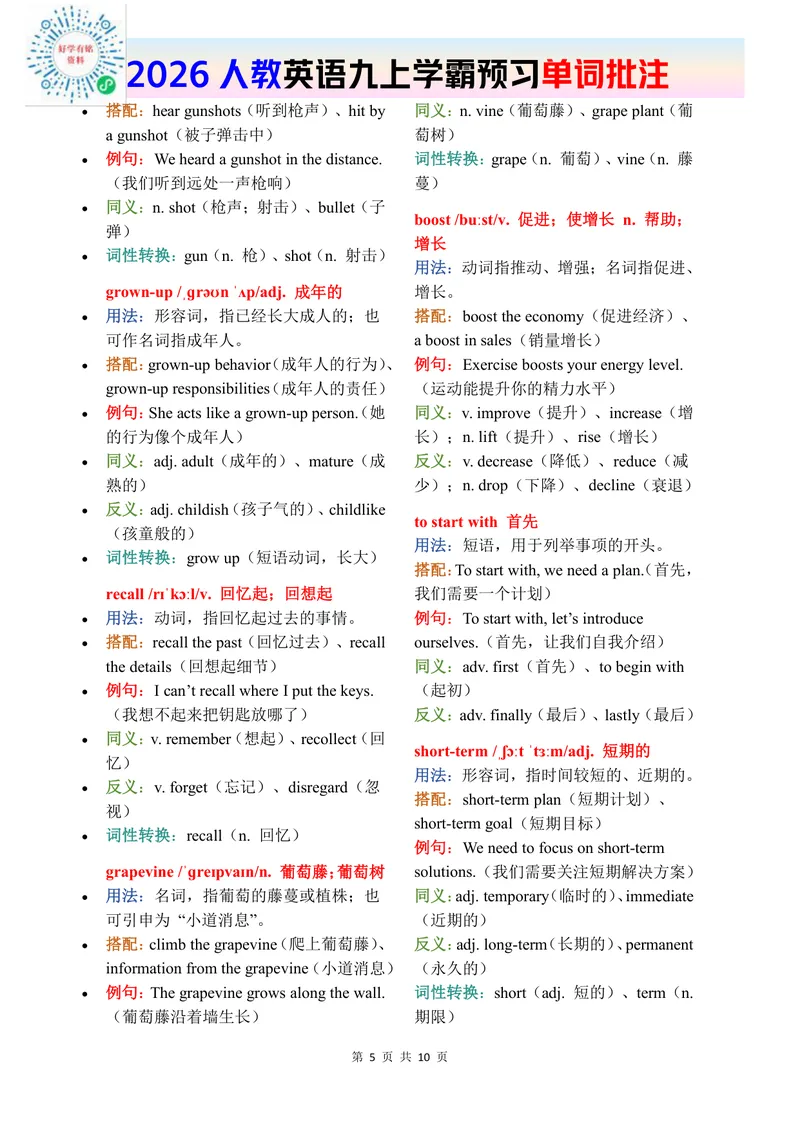
(皮夹) gunshot/ˈɡʌnʃɒt/n. 枪声;(射出的)炮
弹
picnic/ˈpɪknɪk/n. 野餐
用法:名词,指枪发出的声音或射出的
用法:名词,指在户外吃的简餐活动。
子弹。
第 4 页 共 10 页2026 人教英语九上学霸预习单词批注
搭配:hear gunshots(听到枪声)、hit by 同义:n.vine(葡萄藤)、grape plant(葡
agunshot(被子弹击中) 萄树)
例句:Weheard a gunshot in thedistance. 词性转换:grape(n. 葡萄)、vine(n. 藤
(我们听到远处一声枪响) 蔓)
同义:n.shot(枪声;射击)、bullet(子
boost/buːst/v. 促进;使增长 n. 帮助;
弹)
增长
词性转换:gun(n. 枪)、shot(n. 射击)
用法:动词指推动、增强;名词指促进、
grown-up/ˌɡrəʊnˈʌp/adj. 成年的 增长。
用法:形容词,指已经长大成人的;也 搭配:boost theeconomy(促进经济)、
可作名词指成年人。 aboost insales(销量增长)
搭配:grown-up behavio(r 成年人的行为)、 例句:Exercise boostsyour energy level.
grown-up responsibilities(成年人的责任) (运动能提升你的精力水平)
例句:Sheacts likea grown-up person(. 她 同义:v.improve(提升)、increase(增
的行为像个成年人) 长);n.lift(提升)、rise(增长)
同义:adj. adult(成年的)、mature(成 反义:v.decrease(降低)、reduce(减
熟的) 少);n.drop(下降)、decline(衰退)
反义:adj.childish(孩子气的)、childlike
to start with 首先
(孩童般的)
用法:短语,用于列举事项的开头。
词性转换:growup(短语动词,长大)
搭配:Tostart with,we need aplan(. 首先,
recall /rɪˈkɔːl/v. 回忆起;回想起 我们需要一个计划)
用法:动词,指回忆起过去的事情。 例句:Tostart with, let’s introduce
搭配:recallthe past(回忆过去)、recall ourselves.(首先,让我们自我介绍)
thedetails(回想起细节) 同义:adv.first(首先)、to beginwith
例句:Ican’t recallwhere Iput thekeys. (起初)
(我想不起来把钥匙放哪了) 反义:adv.finally(最后)、lastly(最后)
同义:v.remember(想起)、recollect(回
short-term /ˌʃɔːtˈtɜːm/adj. 短期的
忆)
用法:形容词,指时间较短的、近期的。
反义:v.forget(忘记)、disregard(忽
搭配:short-term plan(短期计划)、
视)
short-term goal(短期目标)
词性转换:recall(n. 回忆)
例句:Weneed to focus onshort-term
grapevine/ˈɡreɪpvaɪn/n. 葡萄藤;葡萄树 solutions.(我们需要关注短期解决方案)
用法:名词,指葡萄的藤蔓或植株;也 同义:adj. temporary(临时的)、immediate
可引申为 “小道消息”。 (近期的)
搭配:climb thegrapevine(爬上葡萄藤)、 反义:adj.long-term(长期的)、permanent
information from thegrapevine(小道消息) (永久的)
例句:Thegrapevinegrows along thewall. 词性转换:short(adj. 短的)、term(n.
(葡萄藤沿着墙生长) 期限)
第 5 页 共 10 页2026 人教英语九上学霸预习单词批注
long-term/ˌlɒŋ ˈtɜːm/adj. 长期的 同义:adj. probable(很可能的)、possible
用法:形容词,指时间较长的、长远的。 (可能的)
搭配:long-term goals(长期目标)、 反义:adj. unlikely(不可能的)、impossible
long-term investment(长期投资) (不可能的)
例句:The company has a long-term 词性转换:likelihood(n. 可能性)
strategy.(这家公司有长期战略)
wear out 使疲乏;磨损
同义:adj. lasting(持久的)、permanent
用法:短语动词,指使物品磨损,或使
(永久的)
人疲惫不堪。
反义:adj.short-term(短期的)、temporary
搭配:wear out shoes(穿坏鞋子)、feel
(临时的)
worn out(感到疲惫)
词性转换:long(adj. 长的)、term(n. 期
例句:Myold shoes are worn out.(我的
限)
旧鞋穿坏了)
technique/tekˈniːk/n. 技巧 同义:v.useup(用坏)、tire out(使疲
用法:名词,指做事的方法、技巧。 惫)
搭配:learning technique(学习技巧)、 反义:v.preserve(保存)、refresh(恢
paintingtechnique(绘画技巧) 复精力)
例句:Shehas good techniques for playing 词性转换:wear(v. 穿;磨损)、out(adv.
thepiano.(她弹钢琴的技巧很好) 耗尽)
同义:n.method(方法)、skill(技能)
discuss /dɪˈskʌs/v. 讨论;谈论;商量
词性转换:technical(adj. 技术的)、
用法:动词,指就话题交流意见、商量。
technician(n. 技术员)
搭配:discuss theproblem(讨论问题)、
passage/ˈpæsɪdʒ/n. 段落;走廊 discusswith sb.(和某人商量)
用法:名词,指文章的段落,也指通道、 例句:Wewill discuss theplan at the
走廊。 meeting.(我们会在会议上讨论这个计划)
搭配:readthepassage(读段落)、narrow 同义:v.talk about(谈论)、debate(辩
passage(狭窄的走廊) 论)
例句:Theteacher asked us totranslate the 反义:v.ignore(忽视)、avoid(回避)
passage.(老师让我们翻译这段文字) 词性转换:discussion(n. 讨论)
同义:n.paragraph(段落)、corridor(走
image /ˈɪmɪdʒ/n. 图像;形象
廊)
用法:名词,指图片、影像,也可指人
词性转换:pass(v. 通过)
的形象。
likely /ˈlaɪkli/adj. 可能的 搭配:computerimage(电脑图像)、public
用法:形容词,指某事有可能发生。 image(公众形象)
搭配:belikely to dosth.(可能做某事)、 例句:The cameratook aclear image of
mostlikely(最有可能) thescene.(相机拍下了场景的清晰图像)
例句:It islikely to rain this afternoon(. 今 同义:n.picture(图片)、appearance(形
天下午可能下雨) 象)
第 6 页 共 10 页2026 人教英语九上学霸预习单词批注
词性转换:imagine(v. 想象)、imaginary engine/ˈendʒɪn/n. 发动机
(adj. 想象的) 用法:名词,指机器的动力装置,如汽
车、飞机的引擎。
graph/ɡrɑːf/n. 图;图表
搭配:car engine(汽车发动机)、start the
用法:名词,指表示数据的图表、曲线
engine(启动引擎)
图。
例句:The engineof thecar broke down.
搭配:linegraph(折线图)、bargraph
(汽车的发动机坏了)
(柱状图)
同义:n.motor(马达)、power plant(动
例句:The graph shows thetemperature
力装置)
changes.(图表显示了温度变化)
同义:n.chart(图表)、diagram(示意 fuel /ˈfjuːəl/n. 燃料
图) 用法:名词,指燃烧提供动力的物质,
如汽油、煤。
view/vjuː/v. 看;观看 n. 观点;视野
搭配:fuel thecar(给汽车加燃料)、fossil
用法:动词指观看、看待;名词指观点、
fuel(化石燃料)
景色。
例句:Theplane is runningout of fuel(. 飞
搭配:view thescenery(看风景)、different
机燃料快用完了)
views(不同观点)
同义:n.energy source(能源)、gas(汽
例句:From thetop ofthehill, wehave a
油)
good viewofthecity.(从山顶上,我们能
词性转换:fuel(v. 给…… 提供燃料)
看到城市的好景色)
同义:v.see(看)、watch(观看);n. address /əˈdres/n. 地址
opinion(观点)、sight(景色) 用法:名词,指居住或办公的地点;也
反义:v.ignore(忽视);n.blindness(盲 可作动词表示 “写地址、演讲”。
区) 搭配:homeaddress(家庭地址)、write
词性转换:viewer(n. 观众)、viewpoint theaddress(写地址)
(n. 观点) 例句:Please writeyour nameand address
ontheform.(请在表格上写下你的姓名
effective /ɪˈfektɪv/adj. 有效的
和地址)
用法:形容词,指能达到预期效果的。
同义:n.location(位置)、place(地点)
搭配:effective method(有效的方法)、
词性转换:address(v. 写地址;演讲)
effectivemedicine(有效的药物)
例句:This is an effective way tosolvethe password/ˈpɑːswɜːd/n. 密码;口令
problem.(这是解决问题的有效方法) 用法:名词,指进入账户、系统的秘密
同义:adj. efficient(高效的)、useful(有 代码。
用的) 搭配:computer password(电脑密码)、
反义:adj. ineffective(无效的)、useless set apassword(设置密码)
(无用的) 例句:Iforgot myemail password.(我忘
词性转换:effect(n. 效果)、effectively 了我的邮箱密码)
(adv. 有效地)
第 7 页 共 10 页2026 人教英语九上学霸预习单词批注
同义:n.code(密码)、PIN(个人识别 反义:adj.domestic(家养的)、tame(驯
码) 服的)
词性转换:pass(v. 通过)、word(n. 词) 词性转换:wildlife(n. 野生动物)、
wilderness(n. 荒野)
account/əˈkaʊnt/n. 账户;账目
用法:名词,指银行账户、网络账户, blood/blʌd/n. 血
也指账目。 用法:名词,指动物体内的血液。
搭配:bank account(银行账户)、online 搭配:donateblood(献血)、blood pressure
account(网络账户) (血压)
例句:Ihave an account with this bank(. 我 例句:There was bloodonhis shirt.(他的
在这家银行有账户) 衬衫上有血)
同义:n.account number(账号)、record 同义:n.vital fluid(体液)
(记录) 词性转换:bloody(adj. 血腥的)、bleed
词性转换:account(v. 解释;说明) (v. 流血)
increase/ˈɪŋkriːs/n. 增长 /ɪnˈkriːs/v. 增 wound/wuːnd/n. 伤口;创伤 v. 使受伤
加 用法:名词指身体的伤口;动词指使受
用法:名词指数量、程度的增长;动词 伤。
指增加、提高。 搭配:heal awound(愈合伤口)、be
搭配:increase inpopulation(人口增长)、 wounded inthewar(在战争中受伤)
increase speed(提高速度) 例句:Thesoldierhad adeep wound in his
例句:Theprice of food has increased.(食 leg.(士兵的腿上有个很深的伤口)
品价格上涨了) 同义:n.injury(伤口)、cut(伤口);
同义:n.rise(增长)、growth(增加); v.hurt(使受伤)、injure(伤害)
v.raise(提高)、add(增加) 反义:n.healing(愈合);v.heal(治愈)、
反义:n.decrease(减少)、decline(下 cure(治疗)
降);v.decrease(减少)、reduce(降 词性转换:wounded(adj. 受伤的)
低)
mall/mɔːl/n. 购物商场
词性转换:increasing(adj. 增长的)、
用法:名词,指大型购物中心。
increasingly(adv. 越来越多地)
搭配:shopping mall(购物中心)、go to
wild/waɪld/adj. 野生的;自然生长的 themall(去商场)
用法:形容词,指非人工饲养、自然生 例句:Weoften go tothe mallonweekends.
长的。 (我们周末常去商场)
搭配:wild animals(野生动物)、wild 同义:n.shopping center(购物中心)、
flowers(野花) arcade(商场)
例句:Wesawwild deer in theforest.(我
notebook/ˈnəʊtbʊk/n. 笔记本;笔记本
们在森林里看到了野鹿)
电脑
同义:adj. natural(自然的)、untamed
(未驯服的)
第 8 页 共 10 页2026 人教英语九上学霸预习单词批注
用法:名词,指记录用的本子,也指笔 用法:动词,指认出人或事物,也指承
记本电脑。 认、认可。
搭配:take notes in anotebook(在笔记本 搭配:recognizean old friend(认出老朋
上记笔记)、anewnotebook(新笔记本 友)、recognizetheproblem(承认问题)
电脑) 例句:Ididn’t recognizeyou with your
例句:Shewrote down thephone number newhaircut.(你换了新发型,我没认出
inher notebook.(她把电话号码记在笔记 来)
本上) 同义:v.identify(辨认)、acknowledge
同义:n.notepad(记事本)、laptop(笔 (承认)
记本电脑) 反义:v.fail torecognize(没认出)、deny
词性转换:note(n. 笔记)、book(n. 书) (否认)
词性转换:recognition(n. 认出;认可)
squirrel /ˈskwɪrəl/n. 松鼠
用法:名词,指生活在树上的小型动物。 outline/ˈaʊtlaɪn/n. 纲要 v. 概述
搭配:red squirrel(红松鼠)、watch 用法:名词指大纲、要点;动词指概述、
squirrels(看松鼠) 列提纲。
例句:Thesquirrel iseating nuts in thetree. 搭配:an outlineofthestory(故事梗概)、
(松鼠在树上吃坚果) outlinetheplan(概述计划)
同义:n.rodent(啮齿动物) 例句:Please makean outlineof your essay
before writing.(写作文前请先列提纲)
nut/nʌt/n. 坚果
同义:n.summary(摘要)、sketch(大
用法:名词,指有硬壳的可食果仁,如
纲);v.summarize(概述)、draft(草
核桃、花生。
拟)
搭配:eat nuts(吃坚果)、peanut(花生)、
反义:n.details(细节);v.elaborate(详
walnut(核桃)
细阐述)
例句:Squirrels collect nuts forwinter(. 松
鼠为冬天收集坚果) fully/ˈfʊli/adv. 完全地
同义:n.kernel(果仁) 用法:副词,指完全、彻底地。
搭配:fully understand(完全理解)、fully
dolphin/ˈdɒlfɪn/n. 海豚
prepared(充分准备)
用法:名词,指生活在海洋中的哺乳动
例句:Ifully agree with your opinion.(我
物。
完全同意你的看法)
搭配:swim with dolphins(和海豚一起
同义:adv.completely(完全地)、totally
游泳)、watch dolphins(看海豚)
(全部地)
例句:Dolphins are very friendly animals.
反义:adv.partially(部分地)、
(海豚是很友好的动物)
incompletely(不完全地)
同义:n.sea mammal(海洋哺乳动物)
词性转换:full(adj. 满的;完全的)
recognize /ˈrekəɡnaɪz/ (= recognise) v.
divide/dɪˈvaɪd/v.(把……)分成
辨认出;认可
用法:动词,指把整体分成部分。
第 9 页 共 10 页2026 人教英语九上学霸预习单词批注
搭配:divideintotwo part(s 分成两部分)、 反义:v.combineinto(合并成)、merge
dividethe cake(分蛋糕) into(融合成)
例句:The teacherdivided theclass into 词性转换:divide(v. 划分)
fourgroups.(老师把班级分成了四个小
one-size-fits-all /ˌwʌn saɪz fɪts ˈɔːl/adj.
组)
通用的
同义:v.separate(分开)、split(划分)
用法:形容词,指适用于所有人、所有
反义:v.combine(合并)、unite(联合)
情况的。
词性转换:division(n. 划分)、divided
搭配:one-size-fits-all policy(一刀切的
(adj. 分开的)
政策)、one-size-fits-all clothes(均码衣
dividesth into 把某物分为 服)
用法:短语动词,指将某物划分成若干 例句:There is noone-size-fits-all solution
部分。 tothis problem.(这个问题没有万能的解
搭配:dividetheproject intosteps(把项 决办法)
目分成步骤)、dividethe land intofields 同义:adj. universal(通用的)、standard
(把土地分成田地) (标准的)
例句:Divide thestudentsinto teams of 反义:adj. customized(定制的)、specific
five.(把学生分成五人一组) (特定的)
同义:v.splitinto(分成)、separate into
(划分成)
第 10 页 共 10 页