义
务
教
育
教
科
书
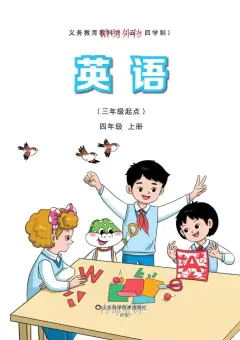
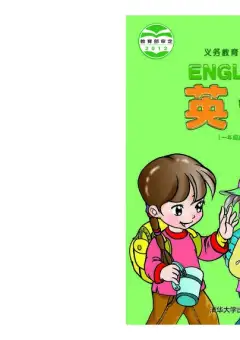
(一年级起点)
二年级 上册
二年级 上册
(一年级起点)
主     编:
副主编:
陈    琳       Printha Ellis (英)
鲁子问
Name ( 姓名):               Class ( 班级):               School ( 学校):
义
务
教
育
教
科
书
前        言
各位同学,你们好!欢迎大家学习本套英语教材!
2000年,外语教学与研究出版社与麦克米伦出版(中国)有限公司依据
国家《义务教育 英语课程标准(实验稿)》共同组织开发了本套教材;作为
我国第一套中小学“一条龙”英语教材,本套教材已出版使用十余年。2011
年,基于新颁布的国家《义务教育 英语课程标准(2011年版)》,我们对教
材进行了认真修订。
在修订后的小学教材中,我们为同学们保留了大家熟悉并喜爱的四个小
伙伴—中国学生大明和玲玲、英国学生Sam和Amy,还增加了其他一些人物
和小动物。他们会带领大家在一系列有趣的故事、对话、游戏、活动和歌曲中
学习英语。
修订后的教材每册包括10个学习模块(Module)、一个复习模块
(Review Module)、四个单词表、一个补充阅读(Reading for Pleasure)
版块以及一个综合运用实践项目(Project)。每个学习模块分两个单元
(Unit),一般情况下,第一单元呈现本模块所要学习的语言内容,第二单元
提供若干任务型(Task-based)活动,包括一首歌曲、歌谣或韵句。学习模
块的课文中呈现了一些语法内容,但不要求老师做理论的讲解,更不要求大家
孤立地、脱离语境地掌握,只希望大家初步学会在恰当的语境中运用包含这些
语法的句子。这一原则也希望老师在教学过程中以及家长在辅导孩子学习的
时候注意。复习模块对前面10个模块所学的内容进行综合和融合性复习,使
大家的语言知识和相应的语言技能得到进一步的巩固与提高。教材有四个单词
表,包括:分模块按出现顺序收录的单词,按字母顺序收录的全书单词,歌
曲、歌谣或韵句中出现的单词以及人名、地名。在歌曲、歌谣或韵句中出现的
新词,只要求理解,不要求学会运用。补充阅读为大家选用了篇幅短小、内容
丰富、形式多样的材料。教材最后设计了一个综合运用实践项目,供同学们根
据兴趣自由选择使用。
本套教材同时还配有对应的网络教材,可供同学们在线学习使用。
同学们,希望大家积极尝试,大胆实践,主动学做教材中的英语活动,
努力学唱英语歌曲、歌谣和韵句。相信你们会在参与活动、完成任务的过程中
体会到学习英语的乐趣,实现英语的灵活运用和自由交际。
N
E
W
 S
TA
N
DA
RD
 E
N
G
LI
S
H
………………………………………………  2
………………………………………………………  5
……………………………………………………  8
………………………………………………… 11
……………………………………………… 14
……………………………………………… 17
………………………………………………… 20
………………………………… 23
………………………………………………………… 26
……………………………………………………… 29
…………………………………… 32
………………………………………………… 35
……………………………………… 38
………………………………………………………… 41
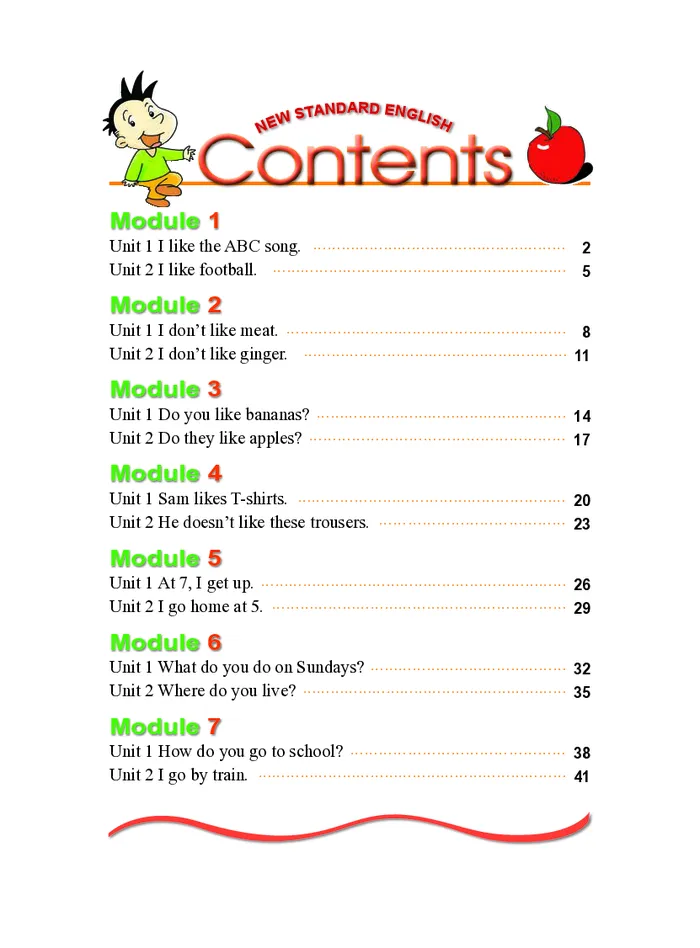
Unit 1 I like the ABC song.
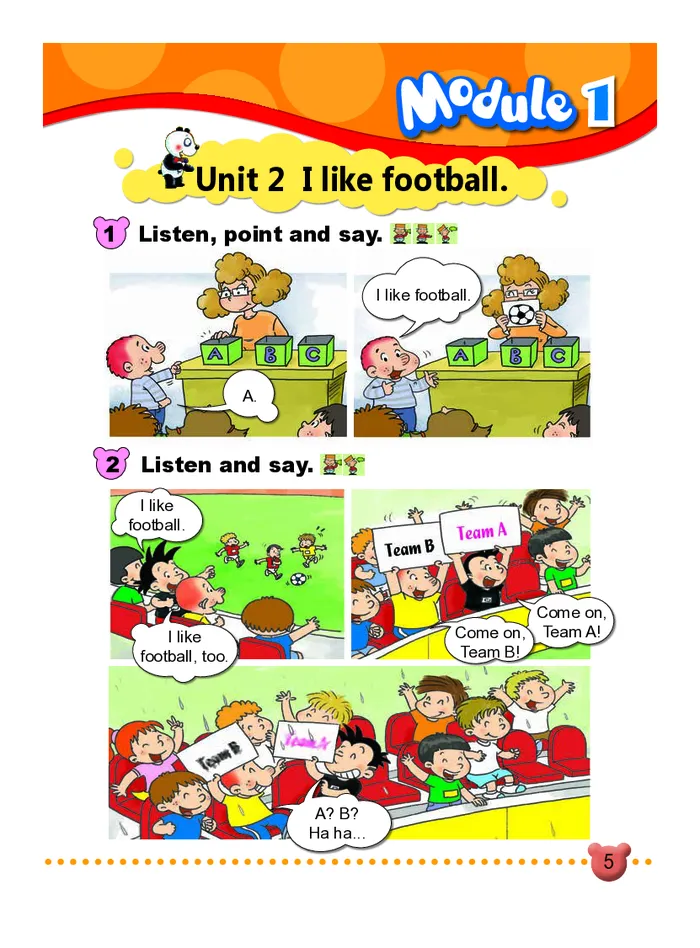
Unit 2 I like football.
Unit 1 I don’t like meat.
Unit 2 I don’t like ginger.
Unit 1 Do you like bananas?
Unit 2 Do they like apples?
Unit 1 Sam likes T-shirts.
Unit 2 He doesn’t like these trousers.
Unit 1 At 7, I get up.
Unit 2 I go home at 5.
Unit 1 What do you do on Sundays?
Unit 2 Where do you live?
Unit 1 How do you go to school?
Unit 2 I go by train.
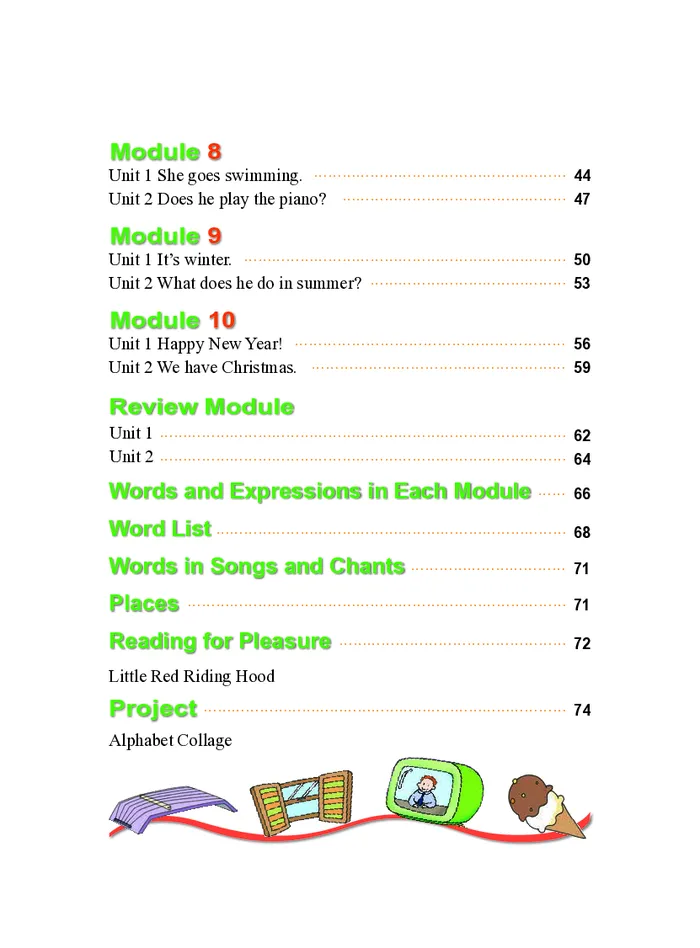
Module 1
Module 4
Module 2
Module 5
Module 3
Module 6
Module 7
Review Module
Words and Expressions in Each Module
Word List
Words in Songs and Chants
Places
Reading for Pleasure
Unit 1
Unit 2
……………………………………………… 44
………………………………………… 47
…………………………………………………………… 50
…………………………………… 53
………………………………………………… 56
……………………………………………… 59
…………………………………………………………………………… 62
…………………………………………………………………………… 64
…… 66
………………………………………………………………… 68
…………………………… 71
……………………………………………………………………… 71
………………………………………… 72
…………………………………………………………………… 74
Module 8
Project
Module 9
Module 10
Alphabet Collage
Little Red Riding Hood
Unit 1 She goes swimming.
Unit 2 Does he play the piano?
Unit 1 It’s winter.
Unit 2 What does he do in summer?
Unit 1 Happy New Year!
Unit 2 We have Christmas.
2
1
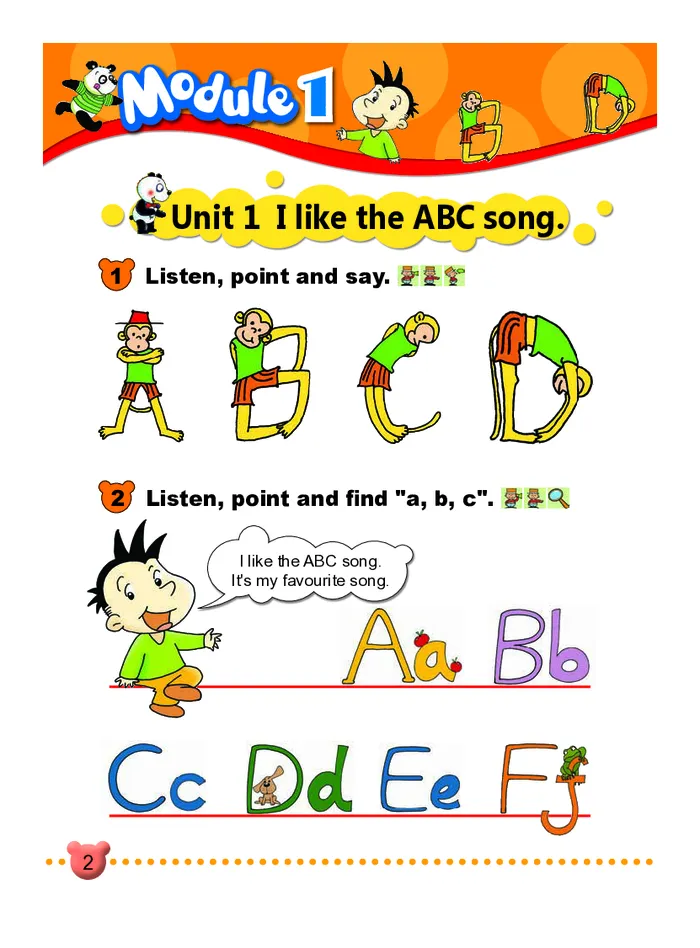
1   Listen, point and say.

Unit 1  I like the ABC song.
2   Listen, point and find "a, b, c".
I like the ABC song.
It's my favourite song.
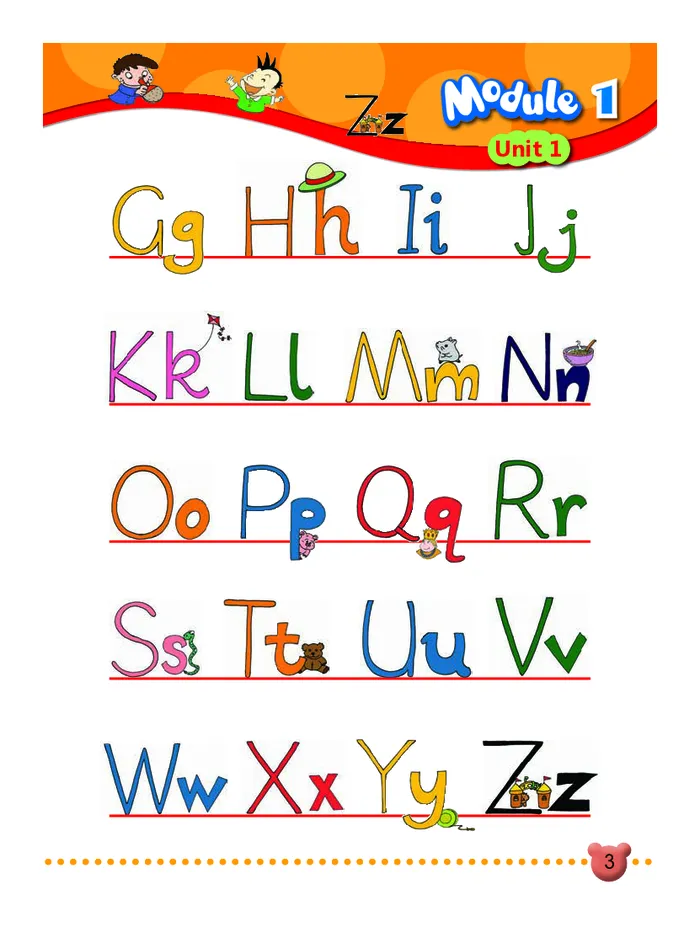
3
1
Unit 1
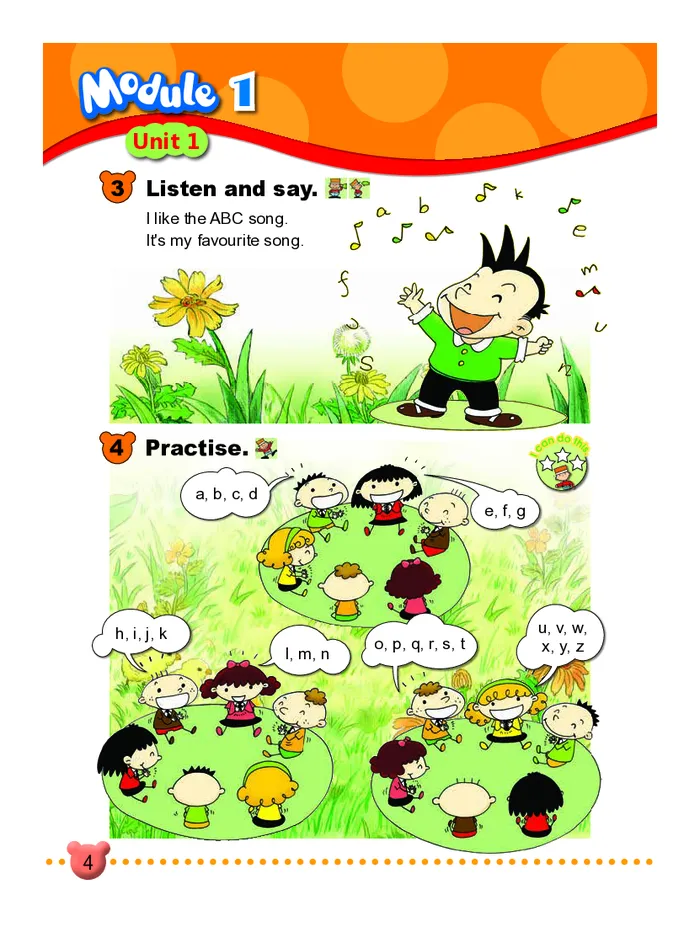
4
1
Unit 1
4   Practise.
3   Listen and say.

a, b, c, d
h, i, j, k
l, m, n
u, v, w,
x, y, z
I like the ABC song.
It's my favourite song.
o, p, q, r, s, t
e, f, g
5
1
2   Listen and say.
Unit 2  I like football.
1   Listen, point and say.
A.
I like football.
I like
football, too.
Come on,
Team A!
Come on,
Team B!
A? B?
Ha ha...
I like
football.
6
1
Unit 2
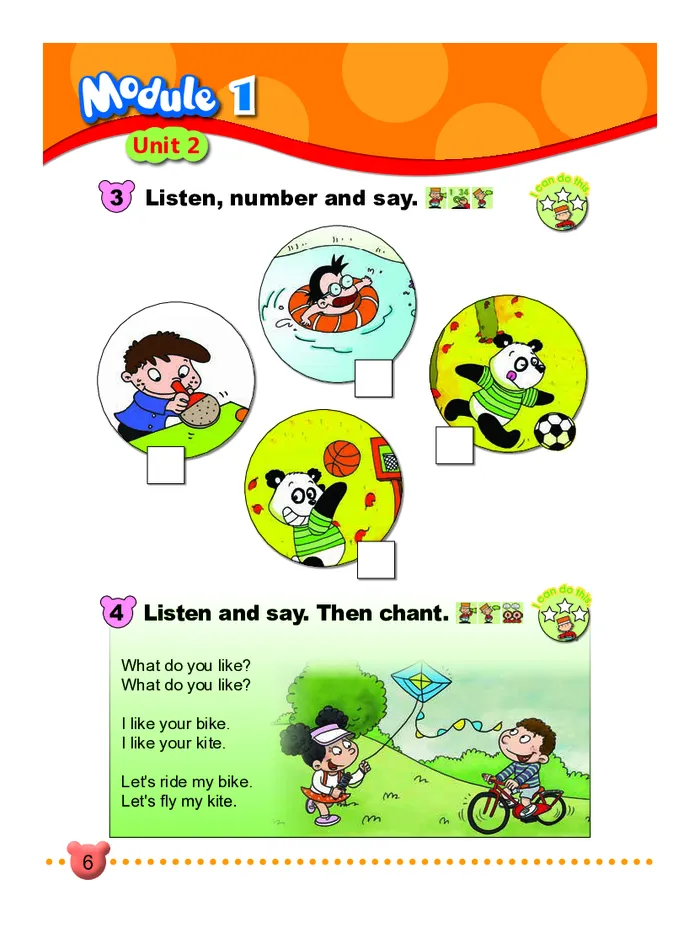
3   Listen, number and say.

4   Listen and say. Then chant.
What do you like?
What do you like?
I like your bike.
I like your kite.
Let's ride my bike.
Let's fly my kite.
7
1
Unit 2
5   Sing and point.
6   Do and say.
Sing the ABC song and point to the letters.
You are the
football team.
I like
football.
I like football,
too.
8
2
1   Listen, point and say.
2   Listen, point and find "I don't like..."

I like meat.
No, no, no! I don't
like noodles.
Unit 1  I don't like meat.
I like meat, too.
I like noodles.
I like noodles, too.
Noodles for you, Tom.
9
2
Unit 1
I like sweets!
I like sweets!
Meat. You like
meat, Tom.
Tom, sweets are for
good boys.
Are you a good boy?
Rice?
No!
I don't like rice.
No! I don't
like meat.
OK. I like rice.
I like meat.
You are good children.
Sweets for you!
Thank you!
10
2
Unit 1
3   Listen and say.
4   Practise.
I don't
like meat.
I like meat.
I don't like
noodles.
I don't like
meat.
meat
noodles
rice
sweets
11
Sorry, Sam.
2
Unit 2  I don't like ginger.
1   Listen and chant.
Meat for
you, Sam.
Thank you.
I like meat.
Aah! Ginger!
I don't like ginger. And onions!
         I don't like onions.
An ice cream
for you!
Thank you.
I like ice cream.
2   Listen and say.
Noodles and rice
are very, very nice.
Mm, mm, mm!
Very, very nice.
1
2
3
My mouth!
My mouth!
12
1
2
3
2
Unit 2
3   Listen and draw
 or .
4   Listen and say. Then chant.
5   Listen, repeat and trace the letters.

A
B
C
D
is for apple.
is for bat.
is for car.
is for duck
and for dog.
1
1
2
1
1
1
2
1
2
1
2
3
3
1
1
13
2
Unit 2
6   Throw and say.

7   Do and say.
I don't like meat.
 I don't like noodles.
I like rice.
Some rice
for you.
Thank you.
I like... / I don't like...
14
3
Unit 1  Do you like bananas?
1   Listen, point and say.
I like
bananas.
I don't like bananas.
I like ice cream.
2   Listen, point and find "Do you like...?"

Do you like
ice cream?
No!
Yes, I do.
Do you like
bananas, Lingling?
15
3
Unit 1
Do you like
milk?
Yes, I do.
Do you like
apples?
Yes, I do.
No, I don't.
Bananas, apples
and milk.
What's that?
It's a fruit milkshake.
Here you are.
I like fruit milkshake.
Thank you, Amy.
Do you like
oranges?
16
3
Unit 1
4   Practise.
A: Do you like milk?
B: Yes, I do.
3   Listen and say.
Do you like
bananas?
Yes, I do.
A: Do you like oranges?
B: No, I don't.
17
3
Unit 2  Do they like apples?
1   Listen and chant.
2   Listen and say.
They like apples.
They like rice.
They like meat.
It's very, very nice.
Do they like
oranges?
Yes. And they really like
rice. It's their favourite.
They like noodles
and bananas and
tomatoes and…
Do they like
apples?
Yes, they do.
Pigs like everything.
All together?
Yes,
they do.
Mm! Rice is nice.
It's my favourite, too.
18
1
1
1
3
1
2
1
1
2
3
3
Unit 2
4   Listen and say. Then chant.
G is for girl.
The girl likes the frog.
5   Listen, repeat and trace the letters.

2
E is for elephant.
F is for frog.
3   Listen and draw
 or .
19
3
Unit 2
7   Ask and answer. Then do.
6   Guess, ask and answer.
Do you like
bananas?
Do you like
apples?
Yes, I do!
Yes, I do.
No, I don't.
No, I don't.
No, I don't.
Do you like
apples?
Do you
like rice?
Make a lunch menu.
Here you are.
Thank you.
Do you like
oranges?
20
4
Unit 1  Sam likes T-shirts.
1   Listen and chant.
2   Listen, point and find "likes".
Look,
a T-shirt.
Sam likes
T-shirts.
Sam,
here's a T-shirt for you.
Thank you, Mum.
Hm,
he likes it.
He likes football.
He likes football.
He likes football.
They like it all!
21
4
Unit 1
Look, a dress.
Amy likes dresses.
Ha ha...
Thank you, Dad.
But it's too small.
Amy, here's
a dress for you.
Amy, look at
this one!
Amy likes
this dress.
22
4
Unit 1
4   Practise.

He likes this blue T-shirt.
She likes...
3   Listen and say.
Sam likes T-shirts.
He likes this T-shirt.
Amy likes dresses.
She likes this dress.
23
1   Listen, point and say.
2   Listen and say.
He doesn't
like the yellow
T-shirt.
He doesn't
like the
blue T-shirt.
He doesn't
like the red
T-shirt.
He likes the
yellow, blue
and red T-shirt.
Sam's at a party.
He doesn't like it. He
doesn't like these clothes.
He doesn't like these
trousers. He doesn't
  like this shirt. And
he doesn't like
these shoes.
4
Unit 2  He doesn't like these trousers.
24
4
Unit 2
3   Point and say.
4   Listen and say. Then chant.
5   Listen, repeat and trace the letters.

About Sam.
He likes this/these...
He doesn't like this/these...
H is for head
and for hat.
I is for ice
on your head.
1
1
2
3
1
2
3
1
2
√
х
х
х
√
25
4
Unit 2
6   Follow and say.
7   Do and say.
I like these red shoes
and the white dress. I don't
like the red dress.
I like blue
dresses.
She likes blue dresses,
he likes yellow T-shirts,
and I like...
She likes blue
dresses and I like
yellow T-shirts.
Xiaojuan likes the
red shoes and the
white dress...
26
5
1   Listen, point and say.
2   Listen, point and find "get up, go, have,
    play".
This is
my poster. Look!
Sam, get up!
Here's a bird for
you!
Get up! Get up!
Look!
Look!
Unit 1  At 7, I get up.
27
5
Unit 1
At 4, I play football.
At 7,
I get up.
Get up!
Get up!
Go to school!
Go to school!
Have lunch!
Have lunch!
Play football!
Play football!
At 8, I go to school.
At 12,
I have lunch.
28
5
Unit 1
4   Practise.
Hi, I'm Panpan.
At 9, I get up.
3   Listen and say.
At 7, I get up.
At 8, I go to school.
At 12, I have lunch.
9:00
10:00
12:00
2:00
29
5
1   Listen, point and say.
Unit 2  I go home at 5.
2   Listen and say.
I don't play
basketball.
I watch TV at 7.
Watch TV!
Watch TV!
I go home
at 5, too.
I go home
at 5.
Ha ha...
I have
lunch at 12.
I have lunch
at 1.
I play
basketball at 4.
I watch
TV at 7.
I watch
TV at 6.
30
Unit 2
5
3   Listen and number.
4   Listen and say. Then chant.
J is for jug.
K is for kite.           Let's fly my kite.
5   Listen, repeat and trace the letters.

1
1
2
1
2
1
12:00
8:00
7:00
8:00
31
5
Unit 2
6   Act and say.
7   Do and say.
I get up at 6.
I get up at…
I go to school at…
32
6
Unit 1  What do you do on Sundays?
1   Listen, point and say.
2   Listen, point and find "what".
What do you do
on Sundays?
I play football
on Sundays. He
   plays football on
Sundays, too.
I go to school
on Sundays.
I play football.
What do you do on
Sundays, Sam?
33
Great!
6
Unit 1
Let's play
together!
Where do you
play football?
Goal!
Goal!
Hooray!
At the park.
I play
football, too.
What do you
do on Sundays?
34
6
Unit 1
4   Practise.
What do you
do on Sundays?
I...
A: What do you do on Sundays?
B: I play football.
A: Where do you play football?
B: I play at the park.
3   Listen and say.
35
6
1   Listen and chant.
Unit 2  Where do you live?
2   Listen and say.
Hi. My name is Tingting. I like swimming and basketball.
I live in Beijing. Beijing is a very big city. I go to Qianmen School.
Where do you live? Is it a big city? What school do you go to?
Tingting
Boy, boy!
Where do you live?
I live in Shanghai.
Moon, moon!
Where do you live?
I live in the sky.
36
6
Unit 2
3   Draw and say.
4   Listen and say. Then chant.
L is for lion.
N is for nose
M is for monkey.
1) My name is...    2) I like... and...    3) I live in...    4) I go to...
About you.
and for noodles.
5   Listen, repeat and trace the letters.

1
1
2
1
2
1
1
1
37
6
Unit 2
7   Do and say.
What do you do
on Sundays?
I play football
at the park.
What do you do
on Sundays?
What do you do
on Sundays?
I play football
on Sundays.
I go swimming
on Sundays.
What do you do
on Sundays?
I play
football on
Sundays.
Where do you
play football?
6   Make your team.
We go swimming
on Sundays.
38
7
1   Listen, point and say.
2   Listen, point and find "how".
How
do you go to
school, Amy?
I go to
school by bus.
Unit 1  How do you go to school?
I walk to school.
And how do
you go to school?
I'm a train.
Chug, chug,
chug…
I'm a bus.
Beep, beep,
beep...
39
7
Unit 1
He goes
to work by bike.
He goes by
bus with my mother.
Tom, do you go to
school by car?
No, I don't.
How about
your father?
40
40
7
Unit 1
3   Listen and say.
4   Practise.
How
do you go to
school?
How do you go
to work?
How about
your father?
I walk
to school.
About you.
by bike
by car
by bus
walk
I go to
work by bike.
He goes to work
by bike.
I walk to
school.
How do
you go to school?
41
41
7
1   Listen and chant.
2   Listen and say.
Unit 2  I go by train.
How do you go to school?
I walk and run to school.
And where's your school?
My school is at the zoo.
I go to Hainan
on holiday. I go by train.
Then I go by ship.
We go to China
on holiday. We go by plane.
We love China.
42
7
Unit 2
3   Listen and match.
4   Listen and say. Then chant.
5   Listen, repeat and trace the letters.

O is for orange.               P is for park.
Q is for queen. The queen is in the car.
1
1
2
1
1
1
2
1
2
Qingdao
Dalian
1
2
3
4
43
7
Unit 2
6   Look and say.
7   Ask and answer.
zoo
farm
school
Beijing
Shanghai
Dalian
by plane
Do you go to Beijing by train?
Do you
go by plane?
by train
by ship
by bus
by car
Yes, I do.
How do you go to
school?
Do a survey about your classmates.
I walk to school.
No, I don't.
44
8
2   Listen, point and find "goes, watches,
     reads".
Goodbye, Ms Smart.
1   Listen, point and say.
My mother watches
TV on Sundays.
My mother
goes swimming
on Sundays.
Unit 1  She goes swimming.
Goodbye, children.
Have a good weekend!
45
Unit 1
8
Yes, I do. I like football.
And I watch TV.
How
about Amy?
Good! Come
and play with Amy
this weekend!
I like books. And
I like swimming, too.
OK.
She goes swimming.
She watches TV
and she reads books.
Sam, do you
play football at the
weekend?
46
Unit 1
8
3   Listen and say.
4   Practise.

At the weekend, I play
football and I watch TV.
She goes swimming.
She watches TV and she
reads books.
He/She... at the weekend.
reads
plays
goes
watches
47
8
No, he doesn't.
He plays the
drums. Listen!
1   Listen, point and say.
2   Listen and say.
Unit 2  Does he play the piano?
My brother likes
music.
Does he
play the piano?
Does he
listen to CDs?
Does your mother
go swimming on
Sundays?
Yes, she
does.
Let's go
swimming, too!
OK.
Let's go!
48
1
1
2
Unit 2
8
3   Point, ask and answer.
4   Listen and say. Then chant.
R is for rabbit.
T is for turtle.                                The turtle is on the train.
S is for snake.
5   Listen, repeat and trace the letters.

1
2
1
2
1
1
About Mengmeng.
A: Does she play the drums?
B: Yes, she does.
√
√
√
√
×
×
×
49
8
Unit 2
6   Do, ask and answer.

7   Do, ask and answer.
A: Does he/she...?
Weekend activities.
B: Yes, he/she does. / No, he/she doesn't.
Does he play
football?
No, he doesn't.
Xiaozhou plays football
at the weekend.
A picture show.
1
2
3
4
5
6
Wang Xin plays basketball
at the weekend.
50
9
1   Listen and chant.
2   Listen, point and find "spring, summer,
     autumn, winter".
Unit 1  It's winter.
I fly kites in spring.
I go swimming in summer.
I play football in autumn.
I go skating in winter.
It's spring. It's warm.
We wear jackets.
We don't wear T-shirts.
51
Unit 1
9
It's summer. It's hot.
We wear T-shirts and
sunglasses.
We don't wear jackets.
It's autumn. It's cool.
We wear sweaters.
We don't wear gloves.
It's winter. It's cold.
We wear coats and
gloves.
We don't wear shirts.
52
Unit 1
9
3   Listen and say.
4   Practise.
It's spring. It's warm.
We wear jackets.
We don't wear T-shirts.
It's autumn. It's cool.
We wear sweaters.
We don't wear gloves.
spring
summer
autumn
winter
It's autumn.
We wear sweaters.
Say and guess the season.
53
9
1   Listen, point and say.
2   Listen and say.
What does he
do in Harbin in
winter?
What does he
do in summer?
He goes
swimming in
summer.
Does he go
swimming in winter?
Yes, he
does!
Oh, that's
very cool!
This is my father.
He likes sports.
Unit 2  What does he do in summer?
He goes
skating.
He goes
swimming.
What does he
do in Sanya in
winter?
54
U is for umbrella.
W is for window.                    The window is open.
V is for violin.
1
1
1
1
2
1
1
3   Ask and answer.
Unit 2
9
4   Listen and say. Then chant.
5   Listen, repeat and trace the letters.

What does your father/mother...
do in summer/winter...?
He/She...
55
Unit 2
9
7   Do, ask and answer.
6   Do and say.
Amy goes
swimming at
the zoo.
What do you do at
the weekend?
I go
swimming.
Ha ha...
What does your friend
do at the weekend?
My friend Xiaoying
goes swimming at the
weekend.
56
56
10
1   Listen and enjoy.
2   Listen, point and find "Happy New Year!"
Unit 1  Happy New Year!
Happy
New Year!
Thank you.
Happy New Year!
Come in, please!
A present
for you.
Happy New Year!  Happy New Year!
Happy New Year to you all...
57
57
Unit 1
10
No, they're not.
They're firecrackers!
Are these
for my hair?
Mm.
I like dumplings!
We have firecrackers
at Chinese New Year!
Aah!
Happy New Year!
What are these?
They're dumplings.
We eat dumplings at
Chinese New Year.
58
58
10
3   Listen and say.
Happy
New Year!
We eat
dumplings at Chinese
New Year.
What do
you do at Chinese
New Year?
I...
TV
dumplings
presents
sweets
Unit 1
4   Practise.
58
59
59
10
1   Listen and enjoy.
2   Listen and say.
Unit 2  We have Christmas.
59
In the UK,
we have Christmas.
Christmas is in winter.
We have Christmas trees and
Christmas presents. We have
a big dinner and sing songs.
WE W
ISH
YOU
 A
HAPP
Y CHRI
STM
AS
We wish you
a happy Christmas.
We wish you
a happy Christmas.
We wish you
a happy Christmas
 and a happy New Year!
60
60
10
4   Listen and say. Then chant.
5   Listen, repeat and trace the letters.

X is for X-ray.
Z is for zebra, a zebra in the zoo.
Y is for yellow.
1
1
2
1
2
1
1
1
2
3   Listen and tick.
It's Christmas.
Unit 2
1
2
3
61
61
10
6   Choose and say.
7   Do and say.
Unit 2
Oh, they're sweets.
Thank you.
Here's a present
for you.
Chinese New Year
is in…
In the UK, we have
Christmas...
62
1   Guess the letter.

Unit 1
Is it "B"?
Is it "T"?
Yes, it is.
No, it isn't.
2   Ask and answer. Then draw
 or
.

About you.
A: Do you like dumplings?
B: Yes, I do. / No, I don't.
63
I get up at 7.
3   Point and say.
4   Listen and tick.
Amy
Sam
Daming
Lingling
Unit 1
What do they do on Sundays?
64
64
64
1   Listen and point. Then point and
   say.
What does Fangfang do at the weekend?
plays
plays
watches
goes
reads
listens to
2   Do a survey.
How do you go to school?
Unit 2
Name
65
3   Do and say.
About Amy.
A: Does Amy like...?
B: Yes, she does. / No, she doesn't.
√
×
×
√
√
×
×
√
√
×
√
√
×
√
√
×
×
√
√
×
√
Unit 2
1
2
3
4
5
6
66
Words and Expressions in Each Module
Module 1
song 歌曲
come on 加油;快点
team 球队,运动队
Module 2
meat 肉
noodles (常复)面条
rice 米饭
sweets (常复)糖果
children (child的复数)孩子们
*ginger 姜
nice 好的
mm
*onion 洋葱
ice cream 冰淇淋
Module 3
banana 香蕉
apple 苹果
milk 奶,牛奶
orange 柑橘,橙
fruit 水果
*milkshake 奶昔
Here you are. 给你。
everything 每件事,所有事物
tomato 番茄,西红柿
really 很,非常
their 他(她/它)们的
favourite 最喜欢的事物
Module 4
T-shirt T恤衫
here's = here is 这是
hm 嗯,唔
dress 连衣裙
too 太……
one 一个
doesn't = does not 不
trousers 裤子
party 聚会
Module 5
get up 起床
*poster 海报,招贴画
go to school 去上学
have 吃,喝
lunch 午餐
 have lunch 吃午餐
home 家
 go home 回家
watch 观看
TV 电视;电视机
 watch TV 看电视
Module 6
on 在……的时候
Sunday 星期日
park 公园
great 太好了,好极了
*goal 进球,得分
hooray(表示激动与高兴的
 呼喊声)好,好哇
live 居住
moon 月亮
sky 天,天空
city 城市
67
Module 7
how 怎样,如何
train 火车
chug (发动机)发出咔嚓声
bus 公共汽车
beep (汽车喇叭) 嘟嘟声
by 乘,坐(交通工具)
walk 步行
How about...? ……怎么样?
goes (go的第三人称单数形式)去
work 工作地点;工作
 go to work 去上班
bike 自行车
with 与……在一起;同;跟;和
run 跑,奔跑
holiday 假期
 on holiday 度假
then 然后
ship 轮船
plane 飞机
love 喜爱
Module 8
watches (watch的第三人称单数形
 式)观看
weekend 周末
read 阅读
come 来
play 演奏(乐器)
*piano 钢琴
music 音乐
listen 听
 listen to... 听……
*CD 激光唱片
*drum 鼓
Module 9
winter 冬天
fly 放飞(风筝)
in 在……期间,在……时候
spring 春天
summer 夏天
autumn 秋天
skating 滑冰
 go skating 去滑冰
warm 温暖的
wear 穿,戴
jacket 夹克,短上衣
*sunglasses 太阳镜
cool 凉爽的;酷的
sweater 毛线衫
glove 手套
cold 寒冷的
coat 外套
Module 10
year 年,年份
 Happy New Year! 新年快乐!
come in 进来
present 礼物
dumpling 水饺
eat 吃
Chinese 中国的
hair 头发
*firecracker 鞭炮,爆竹
have 有
Christmas 圣诞节
wish 祝,祝愿
dinner 正餐,主餐
(注:黑体词为义务教育英语课
程标准二级词汇,标有*的词为
五级词汇表外的词汇)
Word  List
Aa
apple 苹果
autumn 秋天
Bb
banana 香蕉
beep (汽车喇叭) 嘟嘟声
bike 自行车
bus 公共汽车
by 乘,坐(交通工具)
Cc
*CD 激光唱片
children (child的复数)孩子们
Chinese 中国的
Christmas 圣诞节
chug (发动机)发出咔嚓声
city 城市
coat 外套
cold 寒冷的
come 来
come in 进来
come on 加油;快点
cool 凉爽的;酷的
Dd
dinner 正餐,主餐
doesn't = does not  不
dress 连衣裙
*drum 鼓
dumpling 水饺
Ee
eat 吃
everything 每件事,所有事物
Ff
favourite 最喜欢的事物
*firecracker 鞭炮,爆竹
fly 放飞(风筝)
fruit 水果
Gg
get up 起床
*ginger 姜
glove 手套
go to school 去上学
*goal 进球,得分
goes (go的第三人称单数形式)去
great 太好了,好极了
Hh
hair 头发
have 吃,喝;有
68
 have lunch 吃午餐
Here you are. 给你。
here's = here is 这是
hm 嗯,唔
holiday 假期
 on holiday 度假
home 家
 go home 回家
hooray (表示激动与高兴的呼喊声)
 好,好哇
how 怎样,如何
How about...? ……怎么样?
Ii
ice cream 冰淇淋
in 在……期间,在……时候
Jj
jacket 夹克,短上衣
Ll
listen 听
 listen to... 听……
live 居住
love 喜爱
lunch 午餐
Mm
meat 肉
milk 奶,牛奶
*milkshake 奶昔
mm
moon 月亮
music 音乐
Nn
nice 好的
noodles (常复)面条
Oo
on 在……的时候
one 一个
*onion 洋葱
orange 柑橘,橙
Pp
park 公园
party 聚会
*piano 钢琴
plane 飞机
play 演奏(乐器)
*poster 海报,招贴画
present 礼物
Rr
read 阅读
really 很,非常
rice 米饭
run 跑,奔跑
69
Ss
ship 轮船
skating 滑冰
 go skating 去滑冰
sky 天,天空
song 歌曲
spring 春天
summer 夏天
Sunday 星期日
*sunglasses 太阳镜
sweater 毛线衫
sweets (常复)糖果
Tt
team 球队,运动队
their 他(她/它)们的
then 然后
tomato 番茄,西红柿
too 太……
train 火车
trousers 裤子
T-shirt T恤衫
TV 电视;电视机
Ww
walk 步行
warm 温暖的
watch 观看
 watch TV 看电视
watches (watch的第三人称单数形
 式)观看
wear 穿,戴
weekend 周末
winter 冬天
wish 祝,祝愿
with 与……在一起;同;跟;和
work 工作地点;工作
 go to work 去上班
Yy
year 年,年份
 Happy New Year! 新年快乐!
70
bat 球棒
frog 青蛙
ice 冰
jug 罐,壶
open 敞开的
queen 女王,王后
rabbit 兔子
China 中国
Harbin  哈尔滨
Words  in Songs
and Chants
Places
ride 骑(自行车)
turtle 乌龟
umbrella 雨伞
violin 小提琴
X-ray X射线,X光
zebra 斑马
UK 英国
71
72
Little Red Riding Hood
This is a little girl.
Her name is Little
Red Riding Hood.
A wolf sees
Little Red
Riding Hood.
Look, a girl!
I have children
for dinner. Mm.
Hello, Grandma.
This is Little Red Riding
Hood.
Come in!
Go to Grandma.
Yes,
Mother.
Help!
Reading for Pleasure
73
Help!
Reading for Pleasure
These are Grandma's
clothes. This is her
dress. I'm in her bed.
Hello, Grandma!
Hello, Little Red
Riding Hood.
Your ears
are very big!
Your eyes are
very big!
Your nose
is very big!
And your mouth
is very big!
Little Red Riding Hood 小红帽


wolf 狼
Word  List
Yes, I eat little girls with this mouth!
A man
helps Little
Red Riding
Hood.
74
74
1   Cut out pictures and letters.
2   Stick them on the card.
Alphabet Collage
75
75
3   Make an alphabet collage.
4   Talk about the collage.
76
图例对照说明
act/choose/do/enjoy/
make/practise/throw
answer
ask
point
say/talk
sing
listen
match
guess
follow/
repeat
look
number
stick
chant
draw/tick/
trace
find
cut
既名为“后记”,一般应该是本教材使用完毕后才看到的吧。
那么,同学们,你们喜欢这套教材吗?大明、玲玲以及他们的小伙
伴们是否让你们喜爱上了英语,并且帮助你们掌握了一定的英语运用能
力呢?如果是这样,那就太好啦!希望你们在以后的英语学习中继续大
胆地开口说英语——课上说、课下说;继续积极地参与各项语言活动。
一句话,你们要尽量主动使用英语来表达意思和做事情,这样才能把英
语学好。
可敬的老师们,感谢你们的辛勤劳动,以及你们为国家英语课程改
革付出的努力和做出的贡献。在修订本套教材的过程中,我们也充分考
虑了英语课程改革以及一线教学的需求。修订后的教材更加突出了英语
课程工具性和人文性的统一,优化了各册的结构设计和内容安排,以使
教学脉络更加清晰、梯度更加合理。
为了在最大程度上保证教材与课程标准的契合,便于一线教学使用,
所有参与本套教材编写的人员均付出了艰辛的努力。在此我想特别感谢
我的编写团队,没有他们的努力与付出,就没有本教材的问世。
本册教材的主要编写人员如下(中方编写人员按姓氏笔画排序):
Naomi Simmons(英)   Carlos Barcenas(英)
于业宏      王馨悦      孙  泓      张  琦      樊  波
你们的
二〇一二年春日
后 记
后 记