ARTICLE · 1196169
新课标小学英语800核心短句|交际、写作、阅读三大板块整理
总结前言
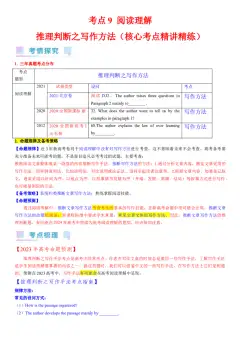
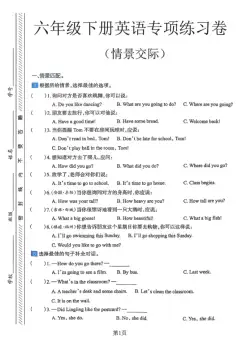
新学期英语想稳住高分,句型是英语学习的骨架!专门整理小学阶段800个必考核心句型,分为情景交际句型、写作万能套用句型、阅读答题关键句型三大板块。不用死啃长篇课文,碎片时间熟读背诵,对话填空、单选、完形、阅读理解、书面表达直接套用,吃透句型,考场做题更轻松。
01
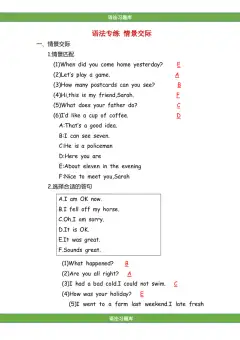
情景交际句型
1. How are you? 你好吗?
2. How do you do? 你好!
3. Nice to meet you. 很高兴见到你。
4. Glad to see you again. 很高兴再次见到你。
5. What’s your name? 你叫什么名字?
6. Where are you from? 你来自哪里?
7. How old are you? 你几岁了?
8. What’s your telephone number? 你的电话号码是多少?
9. How many books do you have? 你有多少本书?
10. How much is this pen? 这支钢笔多少钱?
11. What colour is your bag? 你的书包是什么颜色?
12. What time is it? 几点了?
13. What day is it today? 今天星期几?
14. What’s the date today? 今天几号?
15. What’s the weather like today? 今天天气怎么样?
16. Can you help me? 你能帮帮我吗?
17. May I come in? 我可以进来吗?
18. May I use your ruler? 我可以用你的尺子吗?
19. Could you please pass me the pencil? 能请你把铅笔递给我吗?
20. What can I do for you? 我能为你做点什么?
21. Can I help you? 需要帮忙吗?
22. What’s wrong with you? 你怎么了?
23. What’s the matter? 出什么事了?
24. I’m sorry. 对不起。
25. That’s all right. 没关系。
26. Thank you very much. 非常感谢。
27. You’re welcome. 不客气。
28. Good luck! 祝你好运!
29. Have a good time! 玩得开心!
30. Happy birthday to you! 祝你生日快乐!
31. Merry Christmas! 圣诞快乐!
32. Happy New Year! 新年快乐!
33. See you tomorrow. 明天见。
34. See you later. 回头见。
35. Goodbye. 再见。
36. Come in, please. 请进。
37. Sit down, please. 请坐。
38. Stand up. 起立。
39. Open your books. 打开书本。
40. Close the window, please. 请关上窗户。
41. Don’t be late again. 不要再迟到了。
42. Be quiet, please. 请安静。
43. Would you like some water? 你想要一些水吗?
44. What would you like to eat? 你想吃点什么?
45. What’s your favourite food? 你最喜欢的食物是什么?
46. Which one do you want? 你想要哪一个?
47. Who is that girl? 那个女孩是谁?
48. Whose pencil is this? 这是谁的铅笔?
49. Where is my eraser? 我的橡皮在哪里?
50. Why do you like summer? 你为什么喜欢夏天?
51. How do you go to school? 你怎么去上学?
52. How long does it take? 需要花费多长时间?
53. How often do you read books? 你多久读一次书?
54. What do you usually do on weekends? 你周末通常做什么?
55. Did you go to the park yesterday? 你昨天去公园了吗?
56. Will you take part in the sports meeting? 你会参加运动会吗?
57. Are you good at swimming? 你擅长游泳吗?
58. Is there a library in your school? 你的学校有图书馆吗?
59. There is a tree beside the house. 房子旁边有一棵树。
60. There are some birds in the tree. 树上有一些小鸟。
61. What’s in your classroom? 你们教室里有什么?
62. Is this your schoolbag? 这是你的书包吗?
63. Are those their toys? 那些是他们的玩具吗?
64. Can you swim? 你会游泳吗?
65. Must I finish homework now? 我必须现在完成作业吗?
66. Need I clean the blackboard? 需要我擦黑板吗?
67. What are you doing? 你正在做什么?
68. What were you doing at eight last night? 昨晚八点你在干什么?
69. What will you do this holiday? 这个假期你打算做什么?
70. Where did you visit last summer? 去年夏天你参观了哪里?
71. How was your trip? 你的旅途怎么样?
72. How is your mother feeling now? 你妈妈现在感觉怎么样?
73. What happened? 发生什么事了?
74. Please take care. 请保重。
75. Don’t worry. 别担心。
76. I hope you get better soon. 希望你早日康复。
77. Congratulations! 恭喜你!
78. Well done! 做得好!
79. Try again. 再试一次。
80. Don’t give up. 不要放弃。
81. What’s your hobby? 你的爱好是什么?
82. I like collecting stamps. 我喜欢集邮。
83. What sport do you like best? 你最喜欢什么运动?
84. My favourite sport is running. 我最喜欢跑步。
85. When do you get up every morning? 你每天早上几点起床?
86. I get up at six thirty. 我六点半起床。
87. What do you have for breakfast? 你早餐吃什么?
88. I have milk and bread. 我喝牛奶吃面包。
89. How many seasons are there in a year? 一年有几个季节?
90. There are four seasons in a year. 一年有四季。
91. Which season do you prefer? 你更喜欢哪个季节?
92. I prefer spring because it’s warm. 我喜欢春天,因为很温暖。
93. What’s the temperature today? 今天气温多少?
94. It’s twenty degrees. 20 度。
95. It is raining heavily outside. 外面正在下大雨。
96. The wind blows strongly. 风刮得很大。
97. Can I borrow your storybook? 我能借你的故事书吗?
98. Sure, here you are. 当然,给你。
99. How long can I keep the book? 这本书我可以借多久?
100. You can keep it for two weeks. 你可以借两周。
101. I’d like to buy a pair of shoes. 我想买一双鞋子。
102. What size do you want? 你想要多大码?
103. May I try it on? 我可以试穿吗?
104. It looks nice on you. 你穿上很好看。
105. How much does it cost? 这个多少钱?
106. That’s too expensive. 太贵了。
107. Can you make it cheaper? 可以便宜一点吗?
108. I’ll take it. 我买了。
109. What’s wrong with your bike? 你的自行车怎么了?
110. It doesn’t work. 它坏了。
111. How can I get to the hospital? 我怎么去医院?
112. Go straight and turn left. 直走然后左转。
113. Is it far from here? 离这里远吗?
114. It’s about ten minutes’ walk. 步行大约十分钟。
115. Which bus should I take? 我应该坐哪路公交车?
116. Take No.5 bus. 乘坐 5 路公交。
117. Excuse me, where is the toilet? 打扰一下,洗手间在哪里?
118. It’s over there. 在那边。
119. What time does the shop open? 商店几点开门?
120. It opens at eight in the morning. 早上八点营业。
121. What time does it close? 几点关门?
122. It closes at nine pm. 晚上九点关门。
123. Would you mind opening the window? 你介意打开窗户吗?
124. Of course not. 当然不介意。
125. Please wait a moment. 请稍等片刻。
126. Hold on, please. 请不要挂断。
127. Who’s speaking? 请问是谁?(电话)
128. This is Tom speaking. 我是汤姆。
129. Can I leave a message? 我可以留个口信吗?
130. Please ask him to call me back. 请让他给我回电话。
131. Sorry, he isn’t in now. 抱歉,他现在不在家。
132. What are you going to do this weekend? 这周末你打算做什么?
133. I plan to visit my grandparents. 我打算去看望祖父母。
134. Would you like to come with us? 你愿意和我们一起来吗?
135. I’d love to, but I’m busy. 我很想去,但是我很忙。
136. When shall we meet? 我们什么时候碰面?
137. Let’s meet at two o’clock. 我们两点见面。
138. Where shall we meet? 在哪里碰面?
139. Let’s meet at the school gate. 在学校门口碰面。
140. Don’t forget to bring your notebook. 别忘了带上笔记本。
141. What a lovely day! 天气真好!
142. It’s a fine day for a picnic. 很适合野餐。
143. How beautiful the flowers are! 这些花多美啊!
144. What a cute little cat! 多可爱的小猫!
145. How fast he runs! 他跑的好快!
146. How heavy the box is! 这个箱子好重!
147. I’m tired. 我累了。
148. I feel hungry. 我饿了。
149. I’m thirsty. 我口渴。
150. I feel happy/excited/sad. 我感到开心 / 激动 / 难过。
151. I have a headache. 我头疼。
152. I have a toothache. 我牙疼。
153. You should see a doctor. 你应该去看医生。
154. Drink more warm water. 多喝温水。
155. Have a good rest. 好好休息。
156. How many people are there in your family? 你家有几口人?
157. There are three people in my family. 我家三口人。
158. What does your father do? 你爸爸是做什么工作的?
159. He is a teacher. 他是一名老师。
160. Where does your mother work? 你妈妈在哪里工作?
161. She works in a hospital. 她在医院工作。
162. How old is your sister? 你妹妹几岁?
163. She is ten years old. 她十岁。
164. What does he look like? 他长什么样子?
165. He is tall with short hair. 高高的,短发。
166. What’s he like? 他性格怎么样?
167. He is kind and quiet. 善良又文静。
168. What animals do you like? 你喜欢什么动物?
169. I like pandas because they are cute. 我喜欢熊猫,它们很可爱。
170. Where do pandas live? 熊猫住在哪里?
171. They live in China. 它们生活在中国。
172. What do pandas eat? 熊猫吃什么?
173. They feed on bamboo. 它们以竹子为食。
174. What’s your favourite subject? 你最喜欢哪个科目?
175. I like English best. 我最喜欢英语。
176. Why do you like English? 你为什么喜欢英语?
177. Because it is interesting. 因为很有趣。
178. Who is your English teacher? 你的英语老师是谁?
179. Miss Wang teaches us English. 王老师教我们英语。
180. When do you have English class? 你们什么时候上英语课?
181. How many lessons do you have every day? 你每天有几节课?
182. We have six lessons each day. 我们每天六节课。
183. What do you do after class? 课后你做什么?
184. I often play games with my classmates. 我经常和同学玩游戏。
185. Do you have PE class on Monday? 周一你有体育课吗?
186. Yes, we do. 是的,我们有。
187. No, we don’t. 不,我们没有。
188. Can you play basketball? 你会打篮球吗?
189. Yes, I can. 是的,我会。
190. No, I can’t. 不,我不会。
191. Who can sing this song? 谁会唱这首歌?
192. Lily can sing it very well. 莉莉唱得很好。
193. Do you like drawing pictures? 你喜欢画画吗?
194. Yes, I love drawing. 是的,我热爱画画。
195. What colour do you like best? 你最喜欢什么颜色?
196. I like blue best. 我最喜欢蓝色。
197. How many stars can you see? 你能看见多少颗星星?
198. I can see many bright stars. 我能看见很多明亮的星星。
199. Is the moon big or small? 月亮是大还是小?
200. It looks big but it’s really small. 看起来大实际很小。
201. What fruit do you like? 你喜欢什么水果?
202. I like apples and bananas. 我喜欢苹果和香蕉。
203. Are grapes sweet? 葡萄甜吗?
204. Yes, they taste sweet. 是的,尝起来很甜。
205. When is your birthday? 你的生日是什么时候?
206. My birthday is in June. 我的生日在六月。
207. What present do you want? 你想要什么礼物?
208. I want a new storybook. 我想要一本新故事书。
209. What will you do on your birthday? 生日那天你打算做什么?
210. I will have a small party at home. 我会在家办一个小派对。
211. Can your friend come to your party? 你的朋友能来派对吗?
212. Sure, he will come on time. 当然,他会准时来。
213. What games will you play? 你们要玩什么游戏?
214. We will play guessing games. 我们要玩猜谜游戏。
215. Would you like some cake? 你想要一点蛋糕吗?
216. Yes, please. 好的,麻烦了。
217. No, thank you. 不用了,谢谢你。
218. What’s in the box? 盒子里面是什么?
219. There is a toy car inside. 里面有一辆玩具车。
220. Whose cap is this? 这是谁的帽子?
221. It’s Tom’s cap. 这是汤姆的帽子。
222. Where are my gloves? 我的手套在哪里?
223. They are on the desk. 在桌子上面。
224. How heavy is the box? 这个箱子多重?
225. It’s about three kilos. 大约三公斤。
226. How tall is your brother? 你弟弟多高?
227. He is 1.4 metres tall. 他一米四高。
228. When does spring begin? 春天什么时候到来?
229. Spring usually comes in March. 春天通常三月到来。
230. What happens in spring? 春天会发生什么?
231. Trees turn green and flowers come out. 树木变绿,花儿开放。
232. What can we do in spring? 春天我们可以做什么?
233. We can fly kites in the park. 我们可以在公园放风筝。
234. What do people wear in summer? 夏天人们穿什么?
235. They wear T-shirts and shorts. 他们穿 T 恤短裤。
236. Why do we eat ice cream in summer? 夏天为什么吃冰淇淋?
237. Because it can make us cool. 因为能让我们凉快。
238. What do farmers do in autumn? 农民秋天做什么?
239. They harvest their crops. 他们收割庄稼。
240. What’s winter like? 冬天是什么样子?
241. It is cold and sometimes snowy. 天气寒冷,有时下雪。
242. What can we do on snowy days? 下雪天我们可以做什么?
243. We can make snowmen and have snowball fights. 堆雪人、打雪仗。
244. Do you like snowy days? 你喜欢下雪天吗?
245. Yes, it’s great fun. 是的,非常好玩。
246. How do you feel on cold days? 天冷的时候你感觉怎么样?
247. I feel cold and I need warm clothes. 我觉得冷,需要保暖衣服。
248. What can we do to keep warm? 我们怎么保暖?
249. We can wear coats and scarves. 我们可以穿外套戴围巾。
250. What’s your favourite holiday? 你最喜欢哪个节日?
251. My favourite holiday is Children’s Day. 我最喜欢儿童节。
252. When is Children’s Day? 儿童节在什么时候?
253. It’s on June 1st. 在 6 月 1 日。
254. What do you do on Children’s Day? 儿童节你做什么?
255. We have a show and play games. 我们表演节目、玩游戏。
256. What about Mid-Autumn Festival? 中秋节呢?
257. We eat mooncakes and watch the moon. 我们吃月饼赏月。
258. What do you usually do during Spring Festival? 春节你通常做什么?
259. We visit relatives and get red packets. 走亲访友,收红包。
260. What food do we eat at Spring Festival? 春节吃什么食物?
261. We eat dumplings. 我们吃饺子。
262. Where do you go for your holiday? 假期你去哪里?
263. I go to the beach with my family. 我和家人去海边。
264. What can you see at the beach? 在海边你能看到什么?
265. I can see the sea and white sand. 我能看见大海和白沙。
266. What can you do at the beach? 在海边可以做什么?
267. I can swim and collect shells. 游泳、捡贝壳。
268. Is the sea water salty? 海水是咸的吗?
269. Yes, it tastes salty. 是的,尝起来是咸的。
270. What animals live in the sea? 海里生活着什么动物?
271. Fish, dolphins and many sea animals. 鱼、海豚还有很多海洋生物。
272. Can we pollute the sea? 我们可以污染海洋吗?
273. No, we must protect it. 不行,我们必须保护它。
274. What is your pet like? 你的宠物是什么样的?
275. My pet dog is small and cute. 我的小狗小巧可爱。
276. What does your pet like to eat? 你的宠物喜欢吃什么?
277. It likes meat and dog food. 它喜欢肉和狗粮。
278. How often do you feed your pet? 你多久喂一次宠物?
279. I feed it twice every day. 我每天喂两次。
280. What do you do with your pet? 你和宠物做什么?
281. I take it for a walk every evening. 我每晚带它散步。
282. Do you need to clean its room? 你需要清理它的窝吗?
283. Yes, I clean it every week. 是的,我每周清理。
284. What plants do you grow at home? 家里种了什么植物?
285. I grow some green plants. 我种了一些绿植。
286. How often do you water them? 多久浇一次水?
287. I water them every two days. 我每两天浇水。
288. Where should we put the plants? 植物应该放在哪里?
289. Put them in the sunny place. 放在有阳光的地方。
290. What will happen without sunlight? 没有阳光会怎么样?
291. They will turn yellow and die. 它们会变黄枯萎。
292. What do you do in your free time? 空闲时间你做什么?
293. I often read storybooks. 我经常读故事书。
294. What kind of books do you like? 你喜欢哪种书?
295. I like books about animals. 我喜欢关于动物的书。
296. Where do you borrow books? 你在哪借书?
297. I borrow books from the school library. 在学校图书馆借书。
298. Do you read before bedtime? 睡前看书吗?
299. Yes, I read for ten minutes. 是的,读十分钟。
300. Reading helps me learn new words. 阅读帮我学习新单词。
02
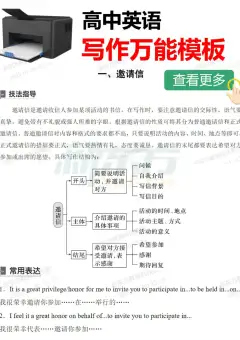
写作万能套用句型
301. There is/are… 有……
302. It is + 形容词 +to do sth. 做某事是…… 的
303. It takes sb. + 时间 +to do sth. 做某事花费某人多长时间
304. sb. spend (s) 时间 / 钱 on sth. 某人在某物上花费时间 / 金钱
305. sb. spend (s) 时间 (in) doing sth. 某人花时间做某事
306. It’s time for sth. 到做某事的时间了
307. It’s time to do sth. 该去做某事了
308. want to do sth. 想要做某事
309. would like to do sth. 想要做某事
310. decide to do sth. 决定做某事
311. plan to do sth. 计划做某事
312. hope to do sth. 希望做某事
313. try to do sth. 努力做某事
314. learn to do sth. 学习做某事
315. forget to do sth. 忘记要去做某事
316. remember to do sth. 记得要去做某事
317. ask sb. to do sth. 要求某人做某事
318. tell sb. to do sth. 告诉某人做某事
319. help sb. (to) do sth. 帮助某人做某事
320. let sb. do sth. 让某人做某事
321. make sb. do sth. 使某人做某事
322. keep doing sth. 持续做某事
323. like doing sth. 喜欢做某事(习惯爱好)
324. enjoy doing sth. 享受做某事
325. practice doing sth. 练习做某事
326. finish doing sth. 完成做某事
327. be good at doing sth. 擅长做某事
328. be interested in doing sth. 对做某事感兴趣
329. be afraid of doing sth. 害怕做某事
330. thank you for doing sth. 谢谢你做某事
331. stop doing sth. 停止正在做的事
332. stop to do sth. 停下来去做另一件事
333. not only…but also… 不仅…… 而且……
334. both…and… …… 和…… 两者都
335. either…or… 要么…… 要么……
336. neither…nor… 既不…… 也不……
337. so…that… 如此…… 以至于……
338. such…that… 如此…… 以至于……
339. too…to… 太…… 而不能……
340. enough…to do… 足够…… 可以做……
341. as…as… 和…… 一样
342. not as/so…as… 不如……
343. the + 比较级,the + 比较级 越……,就越……
344. It’s important for sb. to do sth. 对某人来说做某事很重要
345. It’s necessary for sb. to do sth. 对某人来说做某事是必要的
346. It’s difficult for sb. to do sth. 对某人来说做某事有难度
347. I think that… 我认为……
348. I hope that… 我希望……
349. I find it + 形容词 +to do sth. 我发现做某事是…… 的
350. What a/an + 形容词 + 名词!多么…… 的……!
351. How + 形容词 / 副词!多么……!
352. Why not do sth.? 为什么不做某事?
353. What about doing sth.? 做某事怎么样?
354. How about doing sth.? 做某事如何?
355. It’s a good idea to do sth. 做某事是个好主意
356. We should… 我们应该……
357. We shouldn’t… 我们不应该……
358. We’d better (not) do sth. 我们最好(不要)做某事
359. It’s our duty to do sth. 做某事是我们的责任
360. We are supposed to do sth. 我们应该做某事
361. It seems + 形容词。看起来……
362. It sounds great. 听起来很棒。
363. It smells delicious. 闻起来很香。
364. It tastes nice. 尝起来不错。
365. It feels soft. 摸起来柔软。
366. keep + 宾语 + 形容词 使某物保持…… 状态
367. make + 宾语 + 形容词 使…… 变得……
368. find sb./sth. + 形容词 发现某人 / 某物……
369. see sb. do sth. 看见某人做了某事
370. see sb. doing sth. 看见某人正在做某事
371. hear sb. do sth. 听见某人做某事
372. hear sb. doing sth. 听见某人正在做某事
373. watch sb. do sth. 观看某人做某事
374. watch sb. doing sth. 观看某人正在做某事
375. notice sb. do sth. 注意到某人做某事
376. notice sb. doing sth. 注意某人正在做某事
377. want sb. to do sth. 想要某人做某事
378. wish sb. to do sth. 希望某人做某事
379. invite sb. to do sth. 邀请某人做某事
380. encourage sb. to do sth. 鼓励某人做某事
381. warn sb. to do sth. 警告某人做某事
382. allow sb. to do sth. 允许某人做某事
383. refuse to do sth. 拒绝做某事
384. manage to do sth. 设法成功做成某事
385. afford to do sth. 负担得起做某事
386. offer to do sth. 主动提出做某事
387. promise to do sth. 承诺做某事
388. pretend to do sth. 假装做某事
389. happen to do sth. 碰巧做某事
390. seem to do sth. 似乎要做某事
391. remember doing sth. 记得做过某事
392. forget doing sth. 忘记做过某事
393. regret doing sth. 后悔做过某事
394. mean doing sth. 意味着做某事
395. mean to do sth. 打算做某事
396. go on doing sth. 继续做同一件事
397. go on to do sth. 接着去做另一件事
398. can’t help doing sth. 忍不住做某事
399. be busy doing sth. 忙于做某事
400. spend time doing sth. 花时间做某事
401. have fun doing sth. 开心地做某事
402. have trouble doing sth. 做某事有困难
403. have problems doing sth. 做某事遇到麻烦
404. have difficulty doing sth. 做某事有困难
405. feel like doing sth. 想要做某事
406. look forward to doing sth. 期待做某事
407. pay attention to doing sth. 注意做某事
408. be used to doing sth. 习惯于做某事
409. prefer doing A to doing B. 比起 B 更喜欢 A
410. prefer to do A rather than do B. 宁愿做 A 不愿做 B
411. would rather do A than do B. 宁愿做 A 不愿做 B
412. as soon as 一…… 就……
413. since 自从
414. until 直到
415. when 当…… 时候
416. while 当…… 时候(延续动作)
417. because 因为
418. though /although 虽然,尽管
419. if 如果;是否
420. unless 除非
421. so that 以便,为了
422. in order that 为了
423. such as 例如
424. for example 例如
425. besides 此外
426. except 除…… 之外
427. instead 代替
428. however 然而
429. therefore 因此
430. otherwise 否则
431. What’s more,… 而且……
432. Worse still,… 更糟的是……
433. To my surprise,… 令我惊讶的是……
434. To be honest,… 说实话……
435. In a word,… 总而言之……
436. All in all,… 总的来说……
437. Last but not least,… 最后但同样重要的是……
438. On the one hand… On the other hand… 一方面… 另一方面…
439. At the same time,… 与此同时……
440. As we all know,… 众所周知……
441. As far as I know,… 据我所知……
442. From my point of view,… 在我看来……
443. It goes without saying that… 不言而喻……
444. There is no doubt that… 毫无疑问……
445. It is said that… 据说……
446. It is reported that… 据报道……
447. It is believed that… 人们相信……
448. It is well-known that… 众所周知……
449. It seems obvious that… 显然……
450. It turns out that… 结果证明……
451. The reason why …is that… …… 的原因是……
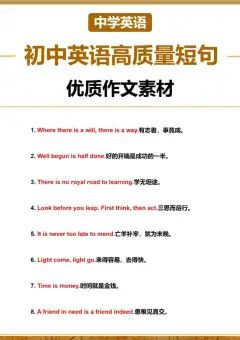
452. That is why… 那就是…… 的原因
453. That is because… 那是因为……
454. What I want to say is that… 我想说的是……
455. What matters most is… 最重要的事情是……
456. The more we read, the more we know. 我们读得越多,懂得越多。
457. The harder you work, the better grades you will get. 越努力,成绩越好。
458. Nothing is impossible. 一切皆有可能。
459. Where there is a will, there is a way. 有志者事竟成。
460. Practice makes perfect. 熟能生巧。
461. It’s never too old to learn. 活到老学到老。
462. Every coin has two sides. 凡事都有两面性。
463. Actions speak louder than words. 事实胜于雄辩。
464. We should take action to protect our environment. 我们应该行动保护环境。
465. It’s important for us to form good learning habits. 养成良好学习习惯对我们很重要。
466. We should learn how to get on well with others. 我们应该学会与人友好相处。
467. Reading can open our eyes and enrich our mind. 阅读可以开阔眼界丰富思想。
468. Doing sports helps us keep healthy and strong. 运动帮助我们保持健康强壮。
469. We should learn to control our feelings. 我们要学会管理情绪。
470. It’s polite to say thank you when we receive help. 得到帮助说谢谢是礼貌的。
471. We must follow school rules. 我们必须遵守校规。
472. Don’t waste food or water. 不要浪费食物和水。
473. We should care for animals and plants. 我们要爱护动植物。
474. We’d better turn off lights when leaving the room. 离开房间最好关灯节约用电。
475. It’s helpful to keep a diary every day. 每天写日记很有帮助。
476. We should listen carefully in class and take notes. 上课认真听讲做好笔记。
477. It’s wise to review lessons after school. 课后复习是明智的。
478. Never put off today’s work till tomorrow. 今日事今日毕。
479. We should be confident and believe in ourselves. 我们要自信,相信自己。
480. If we try our best, our dream will come true one day. 如果全力以赴,梦想终会实现。
481. We should be polite to everyone around us. 我们应对身边所有人有礼貌。
482. We should speak softly in the library. 在图书馆我们要轻声说话。
483. We should wait in line when we buy things. 买东西要排队。
484. Don’t cut in line. 不要插队。
485. We should keep our voice down in public. 在公共场合压低声音。
486. It is bad manners to laugh at others. 嘲笑别人是不礼貌的。
487. We should respect people’s differences. 我们应当尊重人与人之间的差异。
488. Everyone has his own advantages. 每个人都有自己的优点。
489. We can learn good points from our classmates. 我们可以向同学学习优点。
490. Don’t laugh at people when they make mistakes. 别人犯错时不要嘲笑。
491. We can give them a hand when they meet trouble. 别人遇到困难可以伸出援手。
492. A friend in need is a friend indeed. 患难见真情。
493. True friendship needs honesty. 真正的友谊需要真诚。
494. We should keep our promises. 我们应当信守承诺。
495. If you promise something, you must do it. 一旦许诺就要做到。
496. It is wrong to tell lies. 说谎是不对的。
497. Honesty makes you popular among friends. 诚实会让你在朋友中受欢迎。
498. We should say sorry when we hurt others. 伤害别人要主动道歉。
499. We should learn to forgive others’ small mistakes. 学会原谅别人的小错误。
500. Communication helps solve many problems. 沟通可以解决很多问题。
501. We should talk calmly when we disagree. 意见不合时冷静沟通。
502. It’s good to share your feelings with your parents. 和父母分享感受是好事。
503. Parents can give us good advice. 父母可以给我们好建议。
504. We should understand our parents. 我们要理解父母。
505. They work hard to give us a better life. 他们努力工作给我们更好的生活。
506. We can help parents do simple housework. 我们可以帮父母做简单家务。
507. Housework teaches us to be responsible. 家务教会我们承担责任。
508. We should cherish food on our plate. 珍惜盘中食物。
509. Don’t order more food than you can eat. 不要点吃不完的食物。
510. Saving food is a good virtue. 节约粮食是美德。
511. We should save every drop of water. 节约每一滴水。
512. We can reuse water to water flowers. 废水可以二次利用浇花。
513. We should save electricity at home. 在家节约用电。
514. Turn off the lights if no one is in the room. 房间没人就关灯。
515. We should use reusable bags instead of plastic bags. 用环保袋代替塑料袋。
516. Plastic is bad for our earth. 塑料对地球有害。
517. We can sort rubbish in daily life. 日常生活做好垃圾分类。
518. Rubbish sorting helps protect the environment. 垃圾分类保护环境。
519. Trees can clean the air around us. 树木可以净化空气。
520. We should not pick flowers or break branches. 不要摘花折树枝。
521. We should protect small animals. 我们要保护小动物。
522. Never hurt little animals for fun. 不要为了玩乐伤害小动物。
523. Wild animals are our friends. 野生动物是我们的朋友。
524. We must not buy products made from wild animals. 不购买野生动物制品。
525. The earth needs our protection. 地球需要我们的保护。
526. Small actions can change the world. 微小行动可以改变世界。
527. We should keep healthy every day. 我们每天都要保持健康。
528. We should eat more vegetables and fruit. 多吃蔬菜水果。
529. We should eat less junk food. 少吃垃圾食品。
530. Drinking enough water is good for our body. 喝足量水对身体有益。
531. We should sleep at least eight hours a day. 每天至少睡 8 小时。
532. Staying up late is bad for our health. 熬夜有害健康。
533. We should take exercise for an hour every day. 每天锻炼一小时。
534. Running and jumping are good sports. 跑步跳绳都是很好的运动。
535. Sports make us strong and full of energy. 运动让我们强壮充满活力。
536. We should wash hands before meals. 饭前洗手。
537. It keeps germs away from our body. 这样可以远离细菌。
538. We should cover our mouth when coughing. 咳嗽捂住嘴巴。
539. Learn to relax when we feel tired. 疲惫时学会放松。
540. Listening to soft music can help us relax. 听轻音乐有助于放松。
541. We should learn to manage our time well. 学会管理时间。
542. Make a simple plan for your daily study. 为日常学习制定简单计划。
543. Finish homework before playing. 先完成作业再玩耍。
544. Don’t put off your school work. 不要拖延学习任务。
545. Review old lessons before learning new ones. 温故而知新。
546. Preview new lessons before class. 课前预习新课。
547. Take notes carefully while listening. 听课认真记笔记。
548. Ask questions bravely when you don’t understand. 不懂就大胆提问。
549. It’s OK to make mistakes in learning. 学习中犯错很正常。
550. Correct your mistakes in time. 及时订正错误。
551. Keep an error notebook for your mistakes. 准备错题本。
552. Read English aloud every morning. 每天早上大声朗读英语。
553. Reading aloud improves your pronunciation. 大声朗读改善发音。
554. Try to speak English as much as possible. 尽量多说英语。
555. Don’t be afraid of speaking English. 不要害怕说英语。
556. Watching English cartoons helps listening. 看英语动画提升听力。
557. We can learn new words from stories. 我们可以从故事中学新单词。
558. Keep reading for 20 minutes every day. 坚持每日阅读 20 分钟。
559. Reading opens up a whole new world. 阅读打开全新世界。
560. Books are our quiet friends. 书籍是我们安静的朋友。
561. We can get much knowledge from reading. 阅读收获大量知识。
562. Writing helps us organize our ideas. 写作帮我们梳理思路。
563. Try to write simple sentences first. 先尝试写简单句子。
564. Use new words you learn in your writing. 在写作中使用学到的新词。
565. Check your sentences after writing. 写完检查句子。
566. Watch out for spelling mistakes. 留意拼写错误。
567. Good writing needs constant practice. 好的写作需要持续练习。
568. Hobbies make our life colourful. 爱好丰富生活。
569. We can develop hobbies in our spare time. 课余培养爱好。
570. Hobbies help us relax after study. 爱好帮助我们学习后放松。
571. We should balance study and hobbies. 平衡学习与爱好。
572. Don’t spend too much time on hobbies. 不要在爱好上花费过多时间。
573. We can join different school clubs. 可以参加不同学校社团。
574. We can meet new friends in clubs. 在社团认识新朋友。
575. Teamwork teaches us to work with others. 团队合作教会我们协作。
576. We should listen to teammates’ ideas. 倾听队友想法。
577. Help each other in a team. 在团队里互相帮助。
578. Don’t argue easily with teammates. 不要轻易和队友争吵。
579. We should take part in school activities. 积极参加校园活动。
580. Activities help us grow in many ways. 活动从多方面帮助我们成长。
581. We should learn safety knowledge. 我们要学习安全知识。
582. Remember traffic rules when crossing roads. 过马路牢记交规。
583. Look left and right before crossing. 过马路左右看一看。
584. Never play on the road. 不要在马路上玩耍。
585. Don’t ride bikes too fast. 骑车不要太快。
586. We should stay away from fire. 远离火源。
587. Don’t play with matches or lighters. 不要玩火柴打火机。
588. Learn to call 119 when there is a fire. 着火学会拨打 119。
589. Don’t swim alone in rivers or lakes. 不要独自下河下湖游泳。
590. Go swimming with adults only. 游泳一定要有大人陪同。
591. Don’t touch strange animals. 不要触碰陌生动物。
592. If an animal bites you, tell adults quickly. 被动物咬伤尽快告诉大人。
593. Don’t open the door for strangers. 不要给陌生人开门。
594. Don’t tell strangers your home address. 不要告诉陌生人家庭住址。
595. We should use the Internet wisely. 理性使用网络。
596. Don’t visit bad websites. 不要浏览不良网站。
597. Don’t chat with strangers online. 不要网上和陌生人聊天。
598. We can use the Internet for study. 可以用网络来学习。
599. Don’t spend too much time playing online games. 不要长时间玩网游。
600. Protect our eyes when we look at screens. 看屏幕时保护眼睛。
03
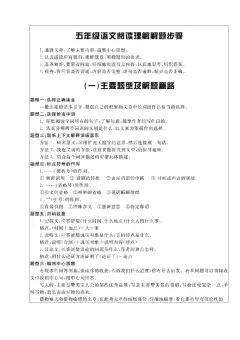
阅读答题关键句型
601. The main idea of the passage is… 文章的主旨是……
602. From the story, we can know that… 从故事中,我们可以知道……
603. We can learn from the text that… 我们可以从文中了解到……
604. According to the passage… 根据短文……
605. The writer wants to tell us… 作者想要告诉我们……
606. What does the underlined word mean? 划线单词是什么意思?
607. We can infer that… 我们可以推断出……
608. Which of the following is true? 下面哪一项是正确的?
609. Which of the following is NOT true? 下面哪一项是错误的?
610. What can we do to…? 我们可以做什么来……?
611. Why did he…? 他为什么……?
612. When did they…? 他们什么时候……?
613. Where will she…? 她将要去哪里……?
614. How does he feel? 他感觉如何?
615. The reason is that… 原因是……
616. It shows that… 这表明……
617. The best title of this article is… 文章最佳标题是……
618. In the first paragraph… 在第一段中……
619. At the beginning of the story… 在故事开头……
620. At the end of the story… 在故事结尾……
621. As mentioned above… 如上所述……
622. This tells us a lesson that… 这给我们一个启示……
623. The character thinks that… 文中人物认为……
624. The problem is… 问题在于……
625. One of the ways is to… 方法之一是……
626. People usually… 人们通常……
627. It is said that… 据说……
628. Some people think… 一些人认为……
629. However,… 然而……
630. But in fact,… 但事实上……
631. For example,… 例如……
632. That is to say,… 也就是说……
633. In this way,… 用这种方式……
634. As a result,… 结果……
635. Because of this,… 正因如此……
636. Without…, we can’t… 没有……,我们就不能……
637. If we…, we will… 如果我们……,我们将会……
638. When we…, we can… 当我们……,我们可以……
639. Unless we…, we won’t… 除非我们……,否则我们不会……
640. Although it is hard,… 尽管很难,……
641. Even though… 即使……
642. No matter what happens… 无论发生什么……
643. What’s more important is… 更重要的是……
644. The biggest change is… 最大的变化是……
645. It is clear that… 很明显……
646. It seems that… 似乎……
647. Maybe it is because… 或许这是因为……
648. It is possible that… 有可能……
649. We may find that… 我们或许会发现……
650. In my opinion, the answer is… 在我看来,答案是……
651. The passage mainly talks about… 文章主要讲述……
652. The story mainly tells us… 故事主要告诉我们……
653. The writer’s purpose is to… 作者的目的是……
654. We can guess that… 我们可以猜测……
655. What can we learn from the story? 我们能从故事学到什么?
656. What is the passage about? 这篇文章讲了什么?
657. How many … are there in the text? 文中有多少……?
658. How long did they spend on…? 他们在…… 花了多久?
659. Where did the event take place? 这件事发生在哪里?
660. Who helped the boy solve the problem? 是谁帮助男孩解决问题?
661. What caused the change? 是什么造成这个变化?
662. What advice does the writer give? 作者给出了什么建议?
663. Which word can replace the underlined word? 哪个单词可以替换划线词?
664. The underlined sentence means… 划线句子意思是……
665. The word “…” refers to… 单词…… 指代……
666. The writer agrees that… 作者同意……
667. The writer doesn’t agree with… 作者不同意……
668. We can know … from Paragraph 3. 从第三段我们可以知道……
669. The main character in the story is… 故事主角是……
670. What will happen next? 接下来会发生什么?
671. The event took place in… 事件发生在……
672. The weather in the story was… 故事里的天气是……
673. Why did the writer write this text? 作者为什么写这篇文章?
674. We can tell that the writer feels… 我们能看出作者的感受是……
675. What can we infer from Paragraph Two? 从第二段可以推断出什么?
676. The correct order of events is… 事件正确顺序是……
677. What is the right order? 正确顺序是什么?
678. The text comes from… 文章出自……
679. This article may be from a magazine. 本文可能来自杂志。
680. It may be a story from a textbook. 这可能是课本里的故事。
681. What suggestion can you get? 你能得到什么建议?
682. What should we do according to the text? 根据文章我们应该做什么?
683. We must remember that… 我们必须记住……
684. We need to realize that… 我们需要意识到……
685. It reminds us that… 它提醒我们……
686. The fact shows us… 事实向我们展示……
687. From the sentence we can see… 从这句话我们能看出……
688. The character felt … at first. 人物一开始感到……
689. Later, he changed his idea. 后来,他改变想法。
690. At last, he made a right choice. 最后,他做出正确选择。
691. He tried his best to solve the trouble. 他尽力解决麻烦。
692. The trouble taught him a good lesson. 这次困难给他上了一课。
693. We should learn from his experience. 我们可以借鉴他的经历。
694. The article tells us how to… 文章告诉我们如何……
695. There are some ways to… 有一些方法可以……
696. One way is to… 一种方法是……
697. Another way is… 另一种方法是……
698. The last way is… 最后一种方法是……
699. If you want to…, you can… 如果你想要……,你可以……
700. You’d better not… 你最好不要……
701. It is not a good idea to… …… 不是个好主意。
702. Be careful when you… 当你…… 的时候要小心。
703. You should pay attention to… 你应当注意……
704. Keep in mind the rules when… …… 时牢记规则。
705. Don’t forget to… 不要忘记……
706. It is important to remember… 记住…… 很重要。
707. We should take it seriously. 我们应当认真对待。
708. Many people think that… 很多人认为……
709. But the fact is different. 但事实并非如此。
710. Some people hold the idea that… 有些人持有这样的观点……
711. Others believe… 另一些人相信……
712. In the writer’s eyes,… 在作者眼中……
713. The passage shows us two sides of… 文章展示了…… 的两面性。
714. On one side,… On the other side,… 一方面…… 另一方面……
715. We should see both sides of the thing. 我们要看到事物的两面。
716. It’s natural to have such feelings. 有这种感受很正常。
717. Everyone may meet such problems. 每个人都可能遇到这类问题。
718. The best way to deal with it is… 解决这件事最好的办法是……
719. It takes time to change. 改变需要时间。
720. Little by little, things will get better. 慢慢地,情况会变好。
721. Never give up when meeting difficulties. 遇到困难不要放弃。
722. Small efforts can bring big changes. 小小的努力可以带来巨大改变。
723. We can learn good qualities from him. 我们可以从他身上学到优秀品质。
724. His spirit encourages us to keep going. 他的精神鼓励我们继续前行。
725. The story tells us not to judge people quickly. 故事告诉我们不要轻易评判他人。
726. We need to be patient with others. 我们要对别人有耐心。
727. Kindness can warm other people’s heart. 善意可以温暖人心。
728. Honesty is one of the best qualities. 诚实是最好的品质之一。
729. Being honest helps us win trust. 诚实帮助我们赢得信任。
730. We should respect people around us. 我们应当尊重身边的人。
731. It’s necessary to learn to share. 学会分享很有必要。
732. Sharing brings more happiness. 分享带来更多快乐。
733. Helping others also brings joy to ourselves. 帮助别人也会给自己带来快乐。
734. We should learn to understand others. 我们要学会理解他人。
735. Try to put ourselves in other’s shoes. 试着换位思考。
736. Friendship needs care and time. 友谊需要用心和时间经营。
737. True friends stay with you in hard times. 真正的朋友患难相伴。
738. We should learn to say sorry when we make mistakes. 犯错时学会道歉。
739. Everyone makes mistakes in life. 人生人人都会犯错。
740. The key is to learn from mistakes. 关键在于从错误中学习。
741. It’s brave to admit your mistake. 承认错误是勇敢的。
742. We should take responsibility for our actions. 要为自己的行为负责。
743. We should keep trying even if we fail. 就算失败也要继续尝试。
744. Failure is the mother of success. 失败是成功之母。
745. Don’t be afraid of making mistakes. 不要害怕犯错。
746. Mistakes are chances for us to improve. 错误是提升自己的机会。
747. We can make progress step by step. 我们可以一步步取得进步。
748. Keep practicing and you will make it. 坚持练习,你就能成功。
749. Success comes from hard work. 成功源于努力。
750. Nothing can be achieved without effort. 不付出努力就无法收获成果。
751. Time waits for no man. 岁月不等人。
752. We should make good use of our free time. 好好利用空闲时间。
753. Reading opens a new world for us. 阅读为我们打开新世界。
754. Books are our best friends. 书籍是我们最好的朋友。
755. We can learn much knowledge from books. 我们可以从书中学很多知识。
756. We should love nature and protect it. 我们要热爱自然、保护自然。
757. The earth is our only home. 地球是我们唯一的家园。
758. We should save water and electricity. 我们要节约水电。
759. Reduce pollution to keep the world clean. 减少污染,保持世界洁净。
760. We should plant more trees. 我们应该多种树。
761. Animals are our friends. 动物是人类的朋友。
762. We must stop hurting wild animals. 我们必须停止伤害野生动物。
763. We should keep healthy by doing sports. 我们通过运动保持健康。
764. Good eating habits keep us strong. 良好饮食习惯让我们强壮。
765. Enough sleep is good for our study. 充足睡眠有益于学习。
766. We should stay away from junk food. 远离垃圾食品。
767. It’s helpful to take exercise every day. 每天锻炼很有益。
768. We should balance study and rest. 劳逸结合。
769. Too much pressure is bad for us. 过多压力对我们不好。
770. Learn to relax when feeling tired. 感觉疲惫学会放松。
771. We can talk to our parents or teachers. 可以和父母老师倾诉。
772. They can give us useful advice. 他们可以给我们有用建议。
773. We should listen carefully to their words. 认真听取他们的话。
774. Parents always love and care for us. 父母一直爱护关心我们。
775. We should be thankful for their love. 感恩他们的爱。
776. Teachers help us learn and grow. 老师帮助我们学习成长。
777. We should be polite to our teachers. 对老师要有礼貌。
778. School is a place for us to learn and make friends. 学校是学习交友的地方。
779. We should keep our classroom clean and tidy. 保持教室干净整洁。
780. We should follow the rules and respect classmates. 遵守规则,尊重同学。
781. It’s good to take part in after-school activities. 参加课外活动是好事。
782. We can develop our hobbies in our free time. 空闲时间培养爱好。
783. Hobbies make our life more colourful. 爱好让生活丰富多彩。
784. We should keep our rooms tidy at home. 在家保持房间整洁。
785. It’s our duty to help parents with housework. 帮父母做家务是责任。
786. We can learn many life skills from housework. 做家务能学到生活技能。
787. We should learn to look after ourselves. 学会照顾自己。
788. Self-care is an important skill. 自理是一项重要能力。
789. We should keep safe when we go out. 外出注意安全。
790. Remember traffic rules when crossing roads. 过马路牢记交通规则。
791. Don’t swim alone in rivers or lakes. 不要独自在河湖游泳。
792. We must stay away from fire. 我们必须远离火源。
793. It’s important to know how to protect ourselves. 学会自我保护很重要。
794. When we meet danger, call for help at once. 遇到危险立刻求救。
795. Keep calm when something bad happens. 遇到坏事保持冷静。
796. We should not easily believe strangers. 不要轻易相信陌生人。
797. Don’t give our personal information to strangers. 不要向陌生人透露个人信息。
798. We should use the Internet in a right way. 正确使用网络。
799. Don’t spend too much time online. 不要花太多时间上网。
800. We can use the Internet to study and get useful information. 我们可以用网络学习获取有用信息。
以上就是小学阶段800个核心英语句型,分为情景交际、写作套用、阅读答题三大板块。不用死记硬背,每天抽出10分钟朗读背诵,理解句型逻辑,做题、写作文直接拿来套用。
英语学习贵在坚持,句型熟练之后,孩子读短文、做完形、写作文都会明显顺畅。建议家长帮孩子打印收藏,日常循环复盘,把基础打扎实,考试少丢基础分!