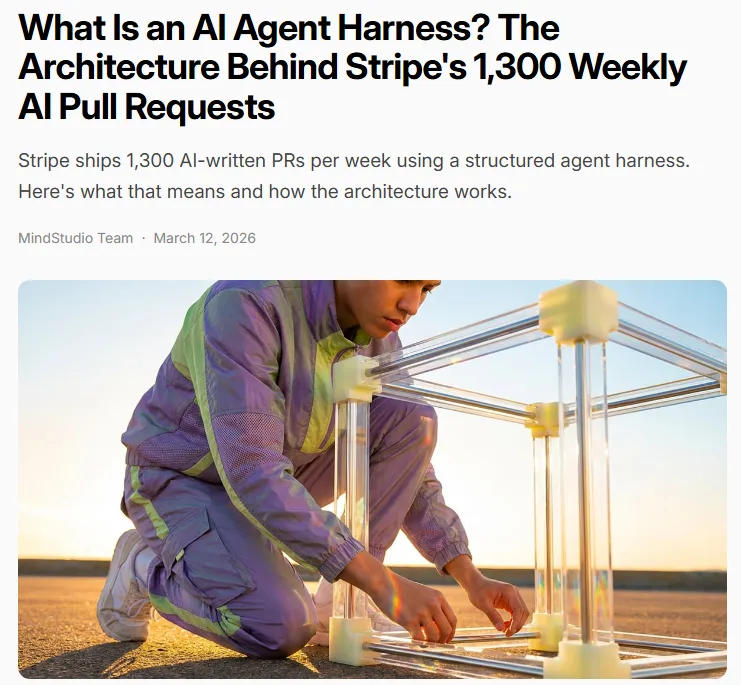
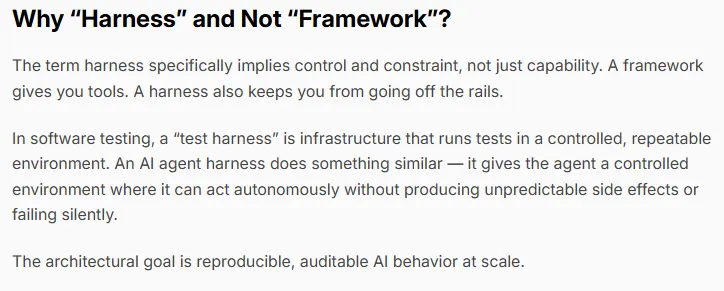
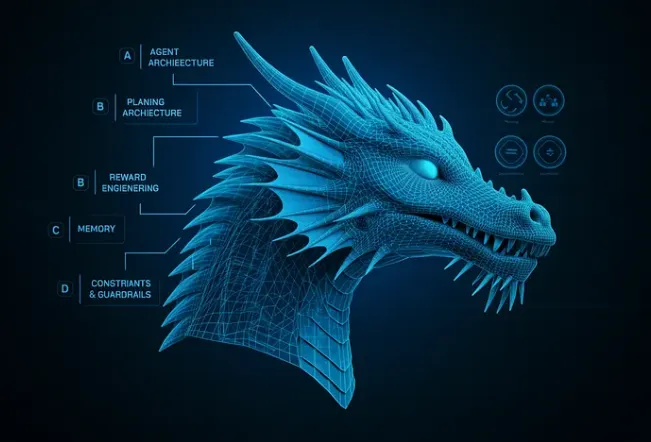
| The word “harness” fundamentally refers to equipment such as reins, bridles, and saddles used to control and guide powerful animals like horses. This metaphor is deliberate in the AI context: the model is the powerful horse, and the harness is the infrastructure that directs its force toward productivity. | “Harness”一词本义指缰绳、笼头、鞍具等用于控制和引导马等强大动物的装备。这一比喻在AI语境中是刻意的:模型是强大的马,而Harness是将它的力量转化为生产力的基础设施。 |
| In engineering, it also denotes safety belts (like a five-point harness) for fall protection in industries, and wire harnesses or cable harnesses in electronics for managing bundles of wires. | 在工程领域,它也指工业防坠落用的安全带(如五点式安全带),以及在电子领域用于管理线束的线束或电缆束。 |
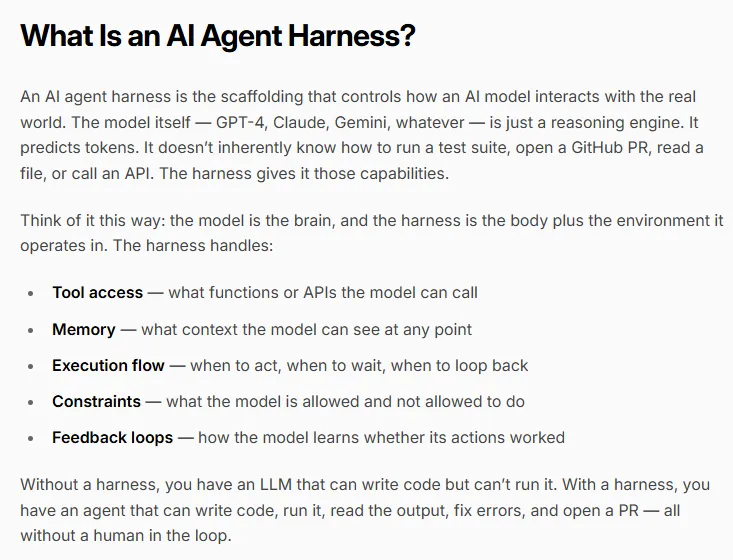
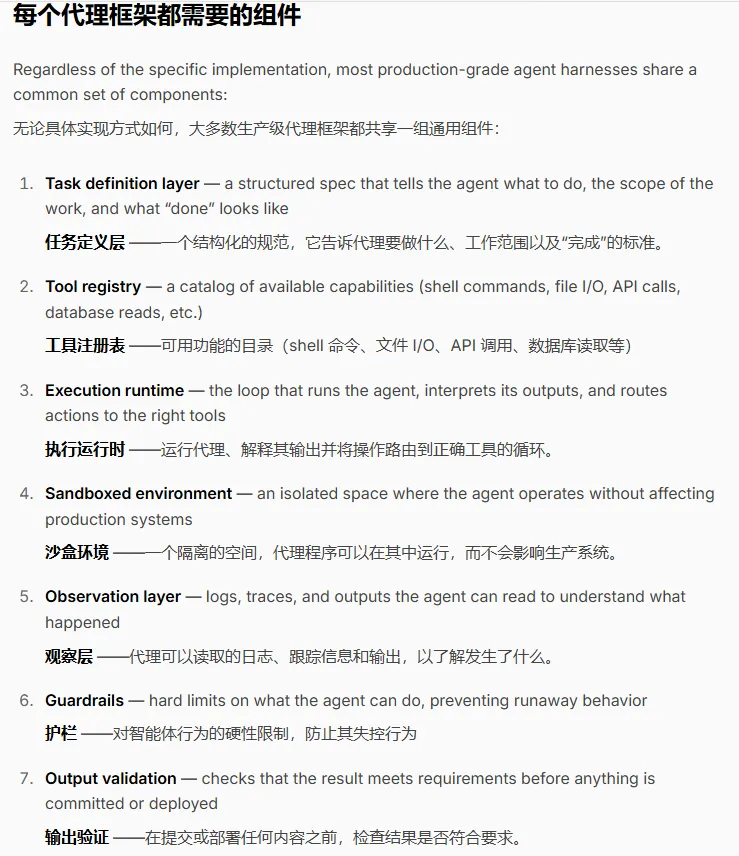
| In the AI field, particularly since 2025, “Harness” has evolved into a core technical term describing the infrastructure system built around AI Agents. It encompasses context management, tool calling, memory, guardrails, and orchestration. | 在AI领域,特别是自2025年以来,“Harness”已演变为描述围绕AI智能体构建的基础设施系统的核心技术术语。它涵盖上下文管理、工具调用、记忆、护栏和编排。 |
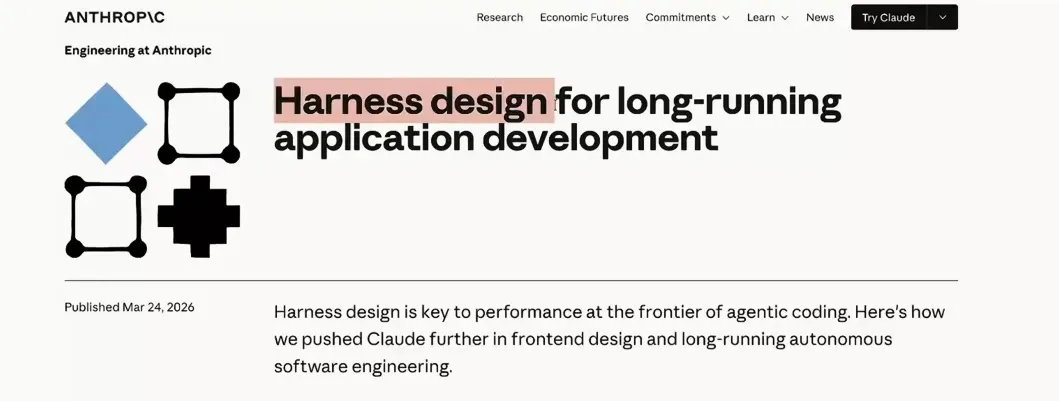
| Anthropic provides a formal definition: “An agent harness (or scaffold) is the system that enables a model to act as an agent: it processes inputs, orchestrates tool calls, and returns results.” This positions the harness as essential for transforming a passive model into an active agent. | Anthropic给出了一个正式定义:“Agent Harness(或称脚手架)是让模型能够作为智能体工作的系统:它处理输入、编排工具调用、返回结果。” 这一定位将Harness视为将被动模型转变为主动智能体的关键。 |
| A widely recognized formula in the industry is: Agent = Model + Harness. The model provides raw capability (reasoning, generation), while the harness provides structure, direction, and constraints, turning limitless potential into purposeful action. | 业界一个广为认可的公式是:智能体 = 模型 + Harness。模型提供原始能力(推理、生成),而Harness提供结构、方向和约束,将无限的可能性收敛为有目的的行动。 |
| Harness Engineering is the emerging discipline of designing these systems. Its process involves: Constraining what the agent can do, Informing it what to do, Verifying if it’s done correctly, and Correcting it when it errs. | Harness工程是设计这些系统的新兴学科。其过程包括:约束智能体能做什么,告知它该做什么,验证它是否正确完成,以及在其出错时进行纠正。 |
| According to OpenAI’s framework, Harness Engineering rests on three pillars: 1) Context Engineering (providing the right information), 2) Architectural Constraints (enforcing good practices mechanically), and 3) Entropy Management (preventing codebase decay over time). | 根据OpenAI的框架,Harness工程建立在三大支柱上:1) 上下文工程(提供正确信息),2) 架构约束(以机械方式强制执行良好实践),3) 熵管理(防止代码库随时间腐化)。 |
| The value proposition is clear: Models are becoming commodities, while Harness is the moat. LangChain improved its coding agent’s performance on Terminal Bench 2.0 from 52.8% to 66.5% solely by enhancing the harness, without changing the underlying model. | 其价值主张很明确:模型正变为商品,而Harness才是护城河。LangChain将其编程智能体在Terminal Bench 2.0上的表现从52.8%提升到66.5%,仅仅通过改进Harness,而未更改底层模型。 |
 夜雨聆风
夜雨聆风