第 08 讲 阅读理解议论文
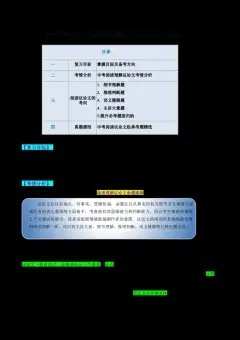
目录
01 模拟基础练
【题型一】夹叙夹议文的考查
【题型二】议论文的考查
02 重难创新练
03 真题实战练
题型一 夹叙夹议文的考查
1.(2025·浙江·模拟预测)Mathematics has an image problem: too many people stumble over it and
conclude that the subject is just not for them. But the core problems I suppose is how maths is presented as cold and
dry.
I have a different approach which is to relate abstract maths to questions of politics and social justice. I have
taught fairly maths-phobic art students in this way and have seen their attitudes transformed. They now embrace
maths and even believe it can genuinely assist them.
At a basic level, maths is founded on logic, so when I am teaching logic, I use examples from contemporary
events rather than the old-fashioned type of problem. Instead of studying the logic of a statement like “all dogs have
four legs”, I might discuss the statement like “___________”. However, rather than sticking to this type of dry
mathematical example, I introduce issues like privilege and wealth — If someone has a higher status, are they
automatically wealthier? We can also ask about working hours and income: if someone works more hours, do they
necessarily earn more? The answer is clearly not.
My approach is controversial because, traditionally, maths is supposed to be neutral. I have been criticized
by people claiming my approach will be annoying to those who don’t care about social justice. However, the dry
approach is also off-putting to those who do care. Sometimes, such society-oriented questions may benefit the well-
rounded development of the students.
In fact, I believe that all academic disciplines should address our most important issues. I don’t demand that
students agree with me about politics, but I do ask that they construct thorough arguments to back up their thoughts
and develop the crucial ability to analyze the logic of people they disagree with.Maths isn’t just about numbers and equations (方程式); it is about studying different logical systems. We can
apply it to balls rolling down different hills, but we can also apply it to pressing social issues. I think we should do
both, for the sake of society and to be more inclusive towards different types of students in maths education.
1.What is the author’s main argument on the teaching of mathematics?
A.Mathematics should be taken more seriously.
B.The traditional approach needs to be revised.
C.A focus on real-world applications is proposed.
D.Students should have their personalized methods.
2.Which of the following can be the likely statement in the third paragraph?
A.All cats are mammals. B.No hard workers are losers.
C.All immigrants are illegal. D.No students like mathematics.
3.How does the author respond to the criticism?
A.He compromises by emphasizing his teaching goals.
B.He dismisses it as irrelevant to his teaching approach.
C.He admits that maths should be non-political and solely focus on numbers.
D.He suggests social issue discussion be essential for comprehensive education.
4.What skill does the author hope his students should gain?
A.Quick and accurate equation-solving.
B.Using math concepts across various fields.
C.Crafting logical arguments for their perspectives.
D.Working together to build a more inclusive society.
2.(2024·山西临汾·三模)When does spring begin? For some, it’s the second Sunday in March, when we
turn our clocks forward by an hour in the United States. For others, it’s when they first realize they’ve finished
dinner and it’s still light out. This year, impatient as ever for winter to end, I decided to skip my usual routine of
calendar watching and see if I couldn’t do something to speed up spring’s arrival.
It’s only a three-hour flight from La Guardia (rainy, cold), New York to West Palm Beach (sunny, 81 degrees,
slight breeze), Florida and from there an hour’s drive to Clover Park in Port St. Lucie, the spring training home of
the New York Mets, where the traffic of more than 7,000 fans descended. Here in Port St. Lucie on a Tuesday
afternoon, weeks before the season’s official start, cheery fans were dressed in lightweight clothing, drinking
Modelo Especial and snacking on peanuts, heckling (起哄) the players. Here, spring was already happening.
Being outdoors in the sunshine and fresh air, things do feel slower and easier. I love that baseball has long
been considered America’s national pastime. A pastime is something that makes the passing of time pleasant. Isn’t
that what we’re dying for in the winter months? Something that makes time not just tolerable but enjoyable?
By the time I left Florida, it was pouring rain and even a little chilly. How was I supposed to take springtime
home with me, I wondered fiercely. It was still raining in New York when I landed. Spring isn’t just weather, of
course, and it certainly makes no promises about rain. I'm trying to resist cliché (陈词滥调), to keep from sayingsomething similar to “spring is a state of mind,” even though I wish it were.
I went looking for spring and I found it where spring breakers find it every year, already in full swing in the
Sunshine State. My own official removal of woolen coats will occur on Tuesday, when spring finally arrives. But
having experienced 24 hours of spring’s full pageant (盛会), my own little preseason, I feel slightly pacified.
Perhaps I can be patient as spring establishes itself, and offer the season a little grace as it clicks into place.
5.What is presented in Paragraph 1?
A.Spring falls on a fixed date.
B.Spring came late this year.
C.The author was longing for spring restlessly.
D.The author was celebrating the end of winter.
6.How did the author find Port St. Lucie?
A.A fast-paced world. B.Full of a joyful atmosphere.
C.The birthplace of baseball. D.Home to delicious food.
7.What does the underlined word “pacified” in the last paragraph mean?
A.Puzzled. B.Disappointed. C.Curious. D.Calm.
8.What can be a suitable title for the text?
A.In Search of Spring B.In Praise of Spring
C.A Trip to Florida D.A Farewell to New York
3.(2024·安徽黄山·二模)Now my dad is one of those people who never seem to have much trouble
figuring out how to make money. Sure, Mom and Dad had some trouble keeping it for a little while during the
bankruptcy (破产) years, but bringing home a good income was never really a problem. That’s because my parents
have never been confused about where money comes from.
It’s something my dad has told me pretty much every day: Money comes from work. Our culture has made
many wonderful advances to ensure the safety and well-being of children. But we may have taken this too far.
Many parents today are so centered on what their children want that they have lost perspective on what their
children really need. Perspective — looking at life over time — demands that you teach children to work. Teaching
a child to work is not child abuse. We teach them to work not for our benefit, but because it gives them both dignity
in a job well done today and the tools and character to win in the future as adults.
You should view teaching your children to work in the same way you view teaching them to bathe and brush
their teeth — as a necessary skill for life. If your child graduates from high school and his only skill set consists of
playing video games, complaining and eating junk food, then you have set him up to fail.
Another huge benefit of teaching a child the wonder of work is that she will tend to stay away from people
who refuse to work. Why is this good? Because you want your daughter to marry Mr. Right, not Mr. Lazy.
So train up a child in the way he should go, and when he is old, he will not go away from it.
9.Which of the following can best describe the author’s dad?
A.Generous. B.Hardworking.C.Considerate. D.Confident.
10.According to paragraph 2, what are parents today supposed to do?
A.To instruct children to work. B.To focus on children’s needs.
C.To ensure children’s well-being. D.To maintain the dignity of children.
11.What’s the benefit children can get from work?
A.Getting rid of bad habits. B.Helping support the family.
C.Learning to use money wisely. D.Keeping away from lazy people.
12.Which column does the text possibly come from?
A.Career planning. B.Parental education.
C.Financial management. D.Parent-child relationship.
4.(2024·河南·三模)All three of my children were subject-matter experts before they even left primary
school. My eldest son memorized every statistic on every football trading card he got his hands on. His brother
knew hundreds of car makes and models by heart. And I’m sure that my daughter — a huge One Direction fan —
remembered more facts about the band than they did! The experience of becoming an expert can bring long-term
benefits for learning — and it’s never too late. “Having a specialist subject helps you learn anything,” says our
memory expert, Jonathan Hancock, “There are good reasons for all of us to do a spot of specialist learning.”
It schools our observation: a vital first step to remembering. Children are particularly good at seeing slight
differences — like my younger son and his cars — then using them to organize information and inspire recall. But
focused learning like this can push anyone to start noticing key details — ready to remember them.
It gives us a mental framework (框架), to which we can attach unrelated ideas. Even when his trading-card
period was over, my son often linked new numbers with stored-away sports statistics. Your own area of interest
might help you by suggesting soundalike words for people’s names, or letting you “map” travel directions.
It gets us learning in a variety of ways, often with the help of all our senses. My daughter’s pop knowledge
was a rich mix of music, dances and colourful costumes, with precise facts. Burying yourself in a subject boosts
your brain to work at its best.
It restores our confidence to remember. We get to see what a difference it makes to be interested in
something, to build up information in layers (层次), and to keep refreshing, testing and showing off what we know.
It can give all our learning a boost.
Why not pick a topic that interests you, find some books, take a course, join a club... and enjoy becoming at
least an entry-level expert? Even a short spell of specialist study can reawaken learning skills that used to feel like
child’s play.
13.What do the author’s children have in common?
A.Having a variety of hobbies. B.Dreaming of being a top-class expert.
C.Learning school subjects well. D.Showing exceptional talent in their areas.
14.Which probably belongs to a mental framework?
A.Recognizing a pair of twins. B.Lecturing at an opening ceremony.C.Learning English by watching a film. D.Planning a tour route in a strange city.
15.What is the purpose of the last paragraph?
A.To advocate. B.To confirm. C.To evaluate. D.To explain.
16.What can be the most suitable title for the text?
A.Raise Children’s Memory B.Remember Like an Expert
C.Reform Learning Methods D.Reawaken Learning Skills
5.(2024·湖北襄阳·三模)I used to be anorexic (厌食的). I was skeletal, each of my rib bones jutted out,
like ridges on my body; my head, which looked abnormally huge, was barely supported by my backbone.
It would take an hour for me to eat a spoon of food. Should I attempt to eat to please my parents on teachers,
I would lock myself in the toilet and throw up the food. I looked pale and weak all the time because of the lack of
food. My family members were distressed. They cried a lot.
It all started when a boy in my class called me “fat” I was devastated. I adopted an extremely strict diet and
exercise routine. I lost 10kg within three months and continued to lose more weight. I was absolutely obsessed
about losing even more weight. One day, my heart rate dropped and I was breathless. I almost lost my life. That was
when I decided to turn my life around.
Looking good is extremely important to a teenager. We want to look a certain way so we can be popular and
accepted. We are attracted by well-toned and sculpted bodies. Now, with social media, we have access to a pool of
photographs of people, whose bodies and appearances we admire. Those images make us envious. We long to be
like them.
We're in danger when we start to hate the way we look and take drastic measures to attain the body we
dream of having. These measures can lead to eating disorders, unrealistic and unhealthy exercise habits, low self-
esteem and depression. Besides affecting the physical health, teenagers who are body conscious can also suffer
from mental instability. They may plunge into despair, guilt and hopelessness if they are unable to keep up with
their rigid exercise routines or eating habits. They can be emotionally fragile too. They become sensitive to
comments made by others. They are ashamed of the way they look. If you are currently experiencing these feelings,
seek help before itis too late.
It is important to feel confident and positive about your image and not subscribe to man-made standards of
beauty, which will change with time. You are unique.
17.What can we infer about the author from the first two paragraphs?
A.He developed a deadly disease.
B.He was on an exceptionally strict diet.
C.He was upset because of not achieving the goal.
D.He was in bad condition due to food shortage.
18.Why did the author decide to turn his life around?
A.To look good. B.To stay healthy.
C.To satisfy his parents. D.To disappoint the boy.19.What does the underlined word “drastic” in paragraph 5 mean?
A.Extreme. B.Immediate. C.Temporary. D.Preventive.
20.What is the best title of this passage?
A.Be unique. B.Seek beauty.
C.Build your body. D.Accept your body.
6.(2025·甘肃张掖·模拟预测)“What do you mean by this phrase? It’s incorrect and adds nothing to the
sentence. Omit (省略).” Professor Jones’s critical feedback on my paper hurt me when I first read it. I scanned his
comments for a “Good job!” or “I love this idea,” but they were nowhere to be found.
Everyone likes warmth and encouragement, but purely positive affirmations (肯定) don’t communicate what
can be improved. Research conducted on Character Lab Research Network finds that direct, useful feedback
requiring students to revise their own work is more effective. For Professor Jones, this looked like a note at the end
of another paper: “I’m sure things will improve as the term and year wear on.” However, feedback that does the
work for a student—correcting a misspelled word, rewriting a sentence—can signal a teacher’s low expectations.
When kids see comments that suggest what needs to be changed, they come to realize they can do things on
their own and become more independent learners. As a bonus, this kind of feedback lets students know that their
teacher believes in them.
As for me, I was benedictory for Professor Jones’s pointed criticism which let me know that he took me
seriously. He was expecting me to do better, and the detailed comments scrawled (潦草地写) on every page gave
me the tools to improve. Teachers can add affirmations to their feedback as long as it’s not the only thing they’re
doing.
Don’t confuse warmth with promoting a growth mindset. Being nice isn’t the same as showing someone you
believe they can improve. So give detailed feedback that sets young people up to take charge of their own learning.
For example, instead of rewriting a sentence, say: “This is a run-on sentence. Try reading it out loud and add
punctuation in places where you naturally take a breath.” Ask worth-exploring questions that inspire students to
think about their approach, then let them revise on their own. When it comes to writing, the easiest path isn’t
always the best one.
21.How did the author initially feel about Professor Jones’s feedback?
A.Happy and motivated. B.Upset and disappointed.
C.Indifferent and unconcerned. D.Confident and encouraged.
22.What is the key aspect of effective feedback mentioned in the article?
A.It should be brief and to the point. B.It should be warm and encouraging.
C.It should be written at the end of the paper. D.It should be up to students to fix their own work.
23.What does the underlined word “benedictory” mean in paragraph 4?
A.Responsible. B.Generous. C.Regretful. D.Grateful.
24.What should teachers do when checking student’s paper according to the text?
A.Give students general praise. B.Rewrite sentences for students.C.Provide students critical support. D.Show students corrected assignments.
7.(2024·广东汕头·二模)When I was a child, the new year’s activity for my family is dumpling-making,
but it’s been years since I’ve last experienced the uniquely carefree comfort and connection I felt during moments.
My family has changed a lot, and gatherings like these simply don’t come together with the same ease as they once
did.
This year, I came home in the evening to a dark house with pieces missing. I noticed things that I wouldn’t
have before, like how my family slept earlier and got up later and how my dog had more trouble jumping up on my
bed. After all, it’s easier to become blind to its subtle changes when you occupy it virtually every day of the year,
and much harder when you must be exposed to months of accumulated change all at once.
Personally, the most precious childhood privilege is not the free extra snacks from flight attendants, but the
privilege of thinking of the people and relationships around you with a sense of permanence. I mean this in the
sense that it escaped my eight-year-old brain to think about how my parents were aging as I did or about the
sacrifices they made for me until suddenly, I was an adult as they were.
I turn 20 in a couple months, so I’ve been seized with a feeling of adulthood, which feels far stronger than
the transition into legal adulthood at 18 ever felt. It seems as if the “teen” part of“19”keeps me attached to the same
category as the one my newly 13-year-old self occupied, carrying with it a certain comfort in the social allowances
made for the immaturity inherent (固有的) to youth. But marching into 20 is different.
I’d so desperately wanted to move away and get a taste of independence upon starting college, but now I
know that such freedom comes with loss and responsibility. Now I start to understand the governance of a
circularity (循环) inherent to our lives and have a newfound appreciation for the things that remain the same.
25.What does the underlined word “subtle” in paragraph 2mean?
A.Obvious. B.Sudden. C.Unusual. D.Unnoticeable.
26.Which of the following might the author agree with when he was eight?
A.Everything would be the same. B.His parents were becoming old.
C.Free extra snacks were common. D.His parents had done a lot to him.
27.In what way is 20 years old different according to the author?
A.Physical maturity. B.The social expectation.
C.The loss of freedom. D.The shift into legal adulthood.
28.What can be the best title of the passage?
A.A newfound appreciation for life. B.The difference between teens and adults.
C.My passing memories of childhood. D.My reflection on the switch into adulthood.
8.(2024·天津和平·二模)Every bookstore in Beijing used to have a massive fiction room piled to the
ceiling with great books. These days, you’re as likely as not to find that those rooms have been shrunk down to the
size of a solitary (单独的) table thickly covered with the latest releases and best-selling novels. This, however, begs
the question: Is fiction dying out, or is print media finally succumbing to (屈服于) its electronic and audio copyrivals (对手)?
Now that Kindle is leaving China, some say that maybe people will get back to traditional reading. I doubt it,
however. This downward reading trend has been evident for a long time now. When Jeff Bezos first launched
Kindle, Steve Jobs from Apple said it would fail because “people don’t read anymore. It doesn’t matter how good
or bad the product is.”
But I don’t think reading itself is dying. It is merely becoming more functional — in other words, something
you have to do in order to get some tangible (实际的) benefit. Gone are the days when people just read for fun.
Why lumber (迫使担负) through a musty old book when you can watch an action movie or play a video game? Of
course, people know that these are poor substitutes (替代品) for a good book.
In fact, there is nothing better than getting lost in a great book. I remember reading Shackleton, the British
polar explorer, when I was a boy. After turning over the last leaf of this extraordinary adventure, I felt as if I, too,
had just been to the South Pole and back. This imaginary achievement translated into a sense of confidence which
must have been infectious, as soon afterwards all of my friends were themselves picking up books to read for fun.
Psychologists say that you are the average of the five friends you surround yourself with. We can learn from them
and they can also come to have a profound effect on our own habits and mindset. In this way, a book, too, can be a
mentor (导师). The ideas, advice, mindset, and experiences of other people living in other times can get transmitted
to us down through the pages of a good book.
In the age of fragmented (碎片化的) information, the winners will be those who can stay focused. However,
in a world that easily gets distracted, deep reading seems to be getting further away from us. Our biggest problem is
not Kindle’s departure from China, but our own departure from reality. Great books transmit universal truths; get
them read. How exactly you do so is up to you.
29.The author mentioned Kindle in the text to _______.
A.praise its convenience and popularity in reading
B.explore the reason for the decline of print media
C.highlight the decreasing trend of traditional reading
D.show our regret for its departure from China’s market
30.Which of the following statements is true about Shackleton according to the passage?
A.He is famous for imaginary writing. B.He finds nothing better than an old book.
C.He visited the South Pole many times himself. D.His adventure story influenced the author a lot.
31.We can benefit a lot from reading according to the author except that _______.
A.we can be influenced by positive ideas B.we’d surround ourselves with good friends
C.we can learn from other people’s experiences D.we can develop good habits and ways of thinking
32.The author probably agrees that _______.
A.great books are more popular than action movies
B.we should avoid being distracted by modern technology
C.reading great books can help us stay focused
D.traditional reading will eventually disappear33.What can be inferred from the last paragraph?
A.It’s necessary to find a better substitutes for books like Kindle.
B.We should read more in order to escape from reality.
C.We need to face the reality that reading is becoming less popular.
D.We have to accept the fact that Kindle is leaving China.
34.What is the author’s main purpose in writing this passage?
A.To discuss the future trend of reading. B.To advocate the benefits of reading.
C.To analyze the reasons for the decline of reading. D.To compare different forms of reading.
9.(2024·辽宁·二模)Many of us seem to have lives that follow a certain way. From kindergarten all the
way to getting married, every stage of our lives seems to be preset (预置). And although this works well for a lot of
people, according to British scholar Jay Shetty, there is no “right” schedule to live our lives by.
A few months ago, a video of Shetty’s speech “Before You Feel Pressure” became popular on the Internet
across the world. In the video, he sends an important message that we should think “outside of the way” and have
the courage to follow our hearts. As Shetty says in the video, we don’t have to get stressed and put ourselves in the
race with our peers (同龄人) or judge our lives based on others’. “Everything in life happens according to our time,
our clocks,” he says.
In his inspiring speech, Shetty points out that UK author J. K. Rowing got her famous “Harry Potter” series
published at age 32, after being turned down by 12 publishers. Shetty also mentions that Chinese businessman Jack
Ma didn’t even start the Alibaba Group until he was 35 years old. So we shouldn’t let anyone rush us.
As physicist Albert Einstein once said, “Not everything that counts can be counted, and not everything that is
counted truly counts. The key to staying on our own tracks is to be patient and keep our own interest.” In Australian
nurse Bronnie Ware’s best-selling book “The Top Five Regrets of the Dying”, she recorded the dying regrets of her
patients, and the top one on the list was: “I wish I had the courage to live a life true to myself, not the one others
expected of me.”
Indeed, we are all unique in our personalities and gifts, and there is no perfect fit for all. We should listen to
our inner voices and ignore what the world has taught us, and what we have picked up from people around us. “It is
important to allow people to go back to being self-aware of their own interests, needs and concerns”, Shetty told the
magazine. “It’s disconnecting from what makes sense to what actually moves you and what makes sense internally
(内在的).”
35.What does Jay Shetty agree to?
A.All people live their lives according to schedules.
B.The stages of our lives should be preset.
C.Few people have lives that follow a certain way.
D.We can live our lives not according to the given way.
36.For what purpose does Shetty list three famous people?
A.To show everyone can be a winner.B.To show great new life can begin anytime.
C.To show hard work is the key to success.
D.To show success does not happen in one’s youth.
37.What can we learn from Albert Einstein or Bronnie Ware?
A.The top dying regret was not living the life people wanted.
B.We should count and analyze everything in life.
C.One should live a life as expected by others.
D.Everything that is counted truly counts.
38.We can conclude from the last paragraph that ______.
A.people should listen to others’ advice
B.we should follow the heart and do what we want to do
C.what makes sense should not be about what people care internally
D.needs and concerns are not acceptable
题型二 议论文的考查
1.(2024·四川达州·二模)“I spilled soup all over the table, but it wasn’t my fault”. “I got into trouble at
school, but it wasn’t my fault.” Such statements are often heard. “It’s not my fault” is actually a common response
for so many people and especially teenagers. Parents complain that they’re tired of the “excuses”.
The reason why variations of “it’s not my fault” are so popular is that they get us out of guilt, blame and
anger. Those emotions may come from others’ reactions or our own self-talks. In the case of adolescents, they are
often trying to escape responsibility and punishment for mistakes.
Some teens would benefit from decreasing their self-blame. Those who blame themselves for things that they
can’t control tend to be highly self-critical and are more likely to be anxious.
Many teens overly rely on “it’s not my fault”. However, overuse of the phrase can result in feelings of
helplessness to control their own lives. Besides, “it’s not my fault” focuses a teen’s attention on what is done as
opposed to what needs to be done. In trying to get them to assume responsibility, many parents attempt to convince
their children that something is their fault, but the approach tends to be ineffective. A more effective approach is to
face up to drawbacks to find solutions to the drawbacks actively.
People may not have caused all their problems, but they have to solve them anyway. Getting stuck in sharing
blame often keeps people from moving forward effectively. What does one do if he is pushed into a deep lake? One
could certainly stay in water, yelling, “It’s not my fault.” However, that is not going to get him out of water. At
some point, he needs to swim to shore, regardless of the fault.
Like most things in life, freeing ourselves from blame has its advantages and disadvantages. The question
isn’t what is “right”, but what is most effective in moving forward.
1.Who is likely to rely on “it’s not my fault”?
A.A highly self-critical teenager.
B.A teenager unwilling to admit a fault.C.A teenager facing up to his responsibilities.
D.A teenager anxious about uncontrollable things.
2.What is the author’s advice on getting teens to assume responsibility?
A.Letting them focus on what is done.
B.Persuading them to admit their fault.
C.Making them correct the mistake actively.
D.Helping them analyze the reason for the mistake.
3.Why does the author raise such a question in Paragraph 5?
A.To put forward a new solution to drawbacks.
B.To show handling problems should come first.
C.To explain why teenagers get stuck in sharing blame.
D.To analyze what kind of problem is caused by others.
4.What is the author’s purpose in writing this text?
A.To help teenagers out of self-blame.
B.To tell parents how to educate children.
C.To help teenagers face mistakes properly.
D.To tell children to do self-talks consciously.
2.(23-24高三·河北石家庄·期末)Would you BET on the future of this man? He is 53 years old. Most of
his adult life has been a losing struggle against debt and misfortune. A war injury has made his left hand stop
functioning, and he has often been in prison. Driven by heaven-knows-what motives, he deter-mines to write a
book.
The book turns out to be one that has appealed to the world for more than 350 years. That former prisoner
was Cervantes, and the book was Don Quixote (《堂吉诃德》). And the story poses an interesting question: why
do some people discover new vitality and creativity to the end of their days, while others go to seed long before?
We’ve all known people who run out of steam before they reach life’s halfway mark. I’m not talking about
those who fail to get to the top. We can’t all get there. I’m talking about people who have stopped learning on
growing because they have adopted the fixed attitudes and opinions that all too often come with passing years.
Most of us, in fact, progressively narrow the variety of our lives. We succeed in our field of specialization
and then become trapped in it. Nothing surprises us. We lose our sense of wonder. But, if we are willing to learn,
the opportunities are everywhere.
The things we learn in maturity seldom involve information and skills. We learn to bear with the things we
can’t change. We learn to avoid self-pity. We learn that however much we try to please, some people are never
going to love us——an idea that troubles at first but is eventually relaxing.
With high motivation and enthusiasm, we can keep on learning. Then we will know how important it is to
have meaning in our life. However, we can achieve meaning only if we have made a commitment to something
larger than our own little egos (自我), whether to loved ones, to fellow humans, to work, or to some moral concept.Many of us equate (视……等同于) “commitment” with such “caring” occupations as teaching and nursing.
But doing any ordinary job as well as one can is in itself an admirable commitment. People who work toward such
excellence whether they are driving a truck, or running a store———make the world better just by being the kind
of people they are. They’ve learned life’s most valuable lesson.
5.The passage starts with the story of Cervantes to show that ________.
A.loss of freedom stimulates one’s creativity
B.age is not a barrier to achieving one’s goal
C.misery inspires a man to fight against his fate
D.disability cannot stop a man´s pursuit of success
6.What could be inferred from Paragraph 4?
A.Those who dare to try often get themselves trapped.
B.Those who tend to think back can hardly go ahead.
C.Opportunity favors those with a curious mind.
D.Opportunity awaits those with a cautious mind.
7.What does the author intend to tell us in Paragraph 5?
A.A tough man can tolerate suffering.
B.A wise man can live without self-pity.
C.A man should try to satisfy people around him.
D.A man should learn suitable ways to deal with life.
8.What is the author’s purpose in writing the passage?
A.To provide guidance on leading a meaningful adult life.
B.To stress the need of shouldering responsibilities at work.
C.To state the importance of generating motivation for learning.
D.To suggest a way of pursuing excellence in our lifelong career.
3.(2024·湖北武汉·模拟预测)Is forgiveness against our human nature? To answer our question, we need
to ask a further question: What is the essence of our humanity? For the sake of simplicity, people consider two
distinctly different views of humanity. The first view involves dominance and power. In an early paper on the
psychology of forgiveness, Droll (1984) made the interesting claim that humans’ essential nature is more aggressive
than forgiving allows. Those who forgive are against their basic nature, much to their harm. In his opinion,
forgivers are compromising their well-being as they offer mercy to others, who might then take advantage of them.
The second view involves the theme of cooperation, mutual respect, and even love as the basis of who we
are as humans. Researchers find that to fully grow as human beings, we need both to receive love from and offer
love to others. Without love, our connections with a wide range of individuals in our lives can fall apart. Even
common sense strongly suggests that the will to power over others does not make for harmonious interactions. For
example, how well has slavery worked as a mode of social harmony?
From this second viewpoint of who we are as humans, forgiveness plays a key role in the biological andpsychological integrity of both individuals and communities because one of the outcomes of forgiveness, shown
through scientific studies, is the decreasing of hatred and the restoration of harmony. Forgiveness can break the
cycle of anger. At least to the extent the people from whom you are estranged accept your love and forgiveness and
are prepared to make the required adjustments. Forgiveness can heal relationships and reconnect people.
As an important note, when we take a Classical philosophical perspective, that of Aristotle, we see the
distinction between potentiality and actuality. We are not necessarily born with the capacity to forgive, but instead
with the potential to learn about it and to grow in our ability to forgive. The actuality of forgiving, its actual
appropriation in conflict situations, develops with practice.
9.What is Droll’s idea about forgiveness?
A.People should offer mercy to others.
B.People who forgive can have their own welfare affected.
C.Forgiveness depends on the nature of humanity.
D.Aggressive people should learn to forgive.
10.What does the example in Paragraph 2 illustrate?
A.To forgive is to love. B.To fight is to grow.
C.To dominate is to harm. D.To give is to receive.
11.What is the writer’s attitude toward forgiveness?
A.Objective. B.Reserved. C.Favorable. D.Skeptical.
12.What is message of the last paragraph?
A.Forgiveness is in our nature. B.Forgiveness grows with time.
C.Actuality is based on potentiality. D.It takes practice to forgive.
4.(2024·湖南衡阳·模拟预测)In a world where everyone has their own opinions on just about everything,
it’s common for people to be critical of each other’s mistakes and imperfections without noticing their own. Some
individuals mistakenly think it’s their responsibility to make you into a better person. They do this by first pointing
out your shortcomings directly and then providing advice on how you can improve.
So what is the possible solution to criticism? If you are the one forcing others to feel ashamed of themselves,
please stop. Make a conscious decision rather than highlight the negative aspect of a person’s performance or
attitudes. You are more likely to offer helpful suggestions from the beginning. If you are on the receiving end of
criticism, the “OK” response is a perfect solution. When someone comments negatively on a task you are doing or
a personality issue of yours, a natural response is to defend and attack. However, this approach is rarely effective as
it puts both parties on the defensive. Instead, simply reply with “OK”. This brief one-word response acknowledges
the other person’s comment without agreeing with it or feeling necessary to engage in a debate about it.
It’s crucial to stay connected to what the other person is talking about, and listen without getting upset, to be
an objective observer. In fact, there is much that one can learn from a negative review. You can ask yourself: Did I
make a mistake? Could I have done better? Did I give 100% of myself to the task at hand? If so, how can I improve
myself? As for chronic criticizers: It is important to set strict boundary with them. Remove yourself from their
presence when necessary.In any case, one can learn to be “OK” with criticism and not allow it to negatively impact your life or
relationship with the other party.
13.What might the author think of people who like to judge others?
A.Self-centered. B.Responsible. C.Talkative. D.Warm-hearted.
14.What does a person mean by saying “OK” according to Paragraph 3?
A.He thinks the advice is helpful. B.He completely agrees with the comments.
C.He wants to avoid unnecessary arguments. D.He defends himself with the response.
15.What is the recommended action for dealing with chronic criticizers?
A.Embrace their views. B.Criticize them in return.
C.Avoid interaction if needed. D.Engage with them regularly.
16.What is the most suitable title for the text?
A.The Art of Giving Criticism B.Mastering Self-Defense against Criticism
C.Dealing with Personal Relationships Flexibly D.The Path to Self-Improvement through Criticism
5.(2024·四川成都·模拟预测)One by one, prejudices are disappearing in the West. People may hold
private suspicions that other people’s race or sex makes them inferior—but to say so openly is totally taboo (禁忌).
One old prejudice remains undisturbed, though. Just ask a childless person.
They are not charged to special taxes, as they were in Soviet Russia; nor are they driven from their homes, as
they still are in some poor countries. The childless nonetheless come in for a lot of criticism. Some point out that
non-parents are failing to produce the future workers who will pay for their pensions. Childless politicians are
charged with not having a proper stake in society. “He talks to us about the future, but he doesn’t have children!”
complained Jean-Marie Le Pen, co-founder of the National Front party, of Emmanuel Macron, who went on to win
the French presidency. Similar attacks on Theresa May and Angela Merkel also failed but researchers find that
many voters quietly agree.
If non-breeders are selfish, they have a strange way of showing it. They are more likely to set up charitable
foundations than people with children, and much more likely to donate money to good causes. According to one
American estimate, the mere fact of not having children raises the amount a person leaves to charity by a little over
$10,000. The childless are thus a small but useful counterweight to the world’s parents, who stop social stability by
passing on their social and economic advantages to their children.
The charge that childless people fail to pull their weight in population is correct, but is less serious than it
appears. Those who do not have children do put pressure on public pension systems. Governments have to do
unpopular things like making pensions less generous, as Japan has done, or accepting more immigrants, as some
Western countries have done. But to sustain public pensions in the long term, countries do not actually need more
parents. What they need instead is more babies. It is possible to combine a high rate of childlessness with a high
birth rate, provided people who become parents have more than one or two children. That was the pattern in many
Western countries a century ago. Ireland, yet another country with a childless leader, still manages it today.
The childless also do everyone else a favor by creating wonderful works of art. British novelists have been
especially likely to have no offspring: think of Hilary Mantel, P.G Wodehouse and the Bronte sisters. In Septemberlast year Britain put Jane Austen on its ten-pound note. That decision was controversial, though it was hard to see
why. Few people have written as shrewdly about money or about families even though Austen did not marry, and
had no children.
17.What is the main idea of Paragraph 2?
A.The childless often come under sharp criticism.
B.Childlessness is to future workers’ disadvantage.
C.Many highly successful people have no children
D.The childless politicians get attacked in society.
18.The childless are prejudiced because people think the childless ______.
A.have a strange way to show selfishness
B.set a bad example for young people
C.are not as generous as those with children
D.are the government’s financial burden
19.What does the underlined word “it” in Paragraph 4 refer to?
A.Accepting more immigrants.
B.Reducing the pensions for the aged.
C.Encouraging parents to have more children.
D.Supporting the political leaders with no children.
20.What is the best title for the passage?
A.In defense of the childless. B.Prejudice against non-breeders.
C.Why don’t they have children? D.Measures to address childlessness.
6.(2024·山东·三模)We all enjoy being part of a group — there’s no better work than teamwork, right?
Actually, I disagree. Teamwork can be hard. In fact, it was so difficult that I left my office job and started working
from home on my own. It’s a much better fit for me, and it has made me think about why teamwork can make our
jobs harder rather than easier.
Personalities can make teamwork difficult. There’s often someone on the team that puts their needs first. The
team often goes along with this person, whose ideas might not be the best, just the loudest. Just one difficult
personality can make teamwork hard. Combining (结合) several challenging personality types is even harder.
Not having enough time together can also make teamwork challenging. To successfully work as a team, you
need time together — and lots of it.
A final reason why teamwork is difficult is that there’s often no training on how to work on a team. You can’t
just put people in a room and expect them to work well with each other. You need to build trust with your team
members.
Teamwork can be hard, but working alone has its challenges, too. When I have a great idea, I don’t have
anyone to share it with to see if it really is a great idea. Don’t get me wrong — I still like my team of one and enjoy
making all of the important decisions by myself. But now I realize what was wrong with the teamwork I did in thepast and how good teamwork could be if done correctly. And that’s useful information because one day I might
want to turn my ME TEAM into a WE TEAM.
21.Why did the writer choose to work from home on his own?
A.To keep himself busier. B.To keep himself healthier.
C.To make his job easier. D.To make his team harder.
22.Which of the following makes teamwork difficult?
A.Strong personalities. B.Lots of teamwork time.
C.Challenging ideas. D.More training on teamwork.
23.What do you need to do if you want to work on a team?
A.You need to work with others in a room.
B.You need to build trust with your team members.
C.You just need to make all decisions by yourself.
D.You need to have different ideas with your team members.
24.What can we learn from the last paragraph?
A.A WE TEAM has hardly any advantages.
B.A ME TEAM needs a lot of IT engineers.
C.A ME TEAM has no challenges for the writer.
D.A WE TEAM may be the writer’s choice one day.
25.What is the purpose of the passage?
A.To show the advantages of teamwork. B.To explain the difficulties of teamwork.
C.To introduce the influence of teamwork.D.To tell the importance of teamwork.
7.(2024·北京海淀·二模)We are a social animal. Indeed, it is our sociality — such as the ability to make
sense of each other, to communicate, to work cooperatively and, finally, to create culture — that marks us off from
other animal species.
But then why are we everywhere striving to increase our isolation and limit our contact with others? As
musician David Byrn e argues in an essay published last month, it is a striking fact about the new technologies that
have so come to shape our lives, that they have precisely this effect: they limit our need for human contact. Online
shopping? Check. Automated checkout? Check. Ride hail apps? Check.
Efficiency is the key. We purchase efficiency by limiting the human aspect, known as “autonomous
operation”. This is perhaps even more pronounced with new technologies on the horizon. Take the MOOC, the
teacher-less virtual classroom. As Byrn e notes, this is meant to deliver the values of a learning environment
without, well, without the environment — you get to stay at home — no teacher, but also, no fellow students.
Byrne isn’t claiming we are consciously choosing to isolate ourselves. We shop online because it is
convenient. The absence of contact with others is a side-effect. Maybe even an unavoidable one, as one of the
things that makes online shopping so easy is precisely the absence of contact with other people.
But Bryne’s thought is that whatever our intention, the tendency of our tech to isolate us may be a feature,not a bug. His hypothesis is that we actually, at some level, crave (渴望) the increased isolation and we are actually
making technologies to satisfy impulses that, in some way, go beyond or against our social nature. But I wonder, is
this really new?
Even if we are social by nature, and do everything we can to embed ourselves socially, the need to find ways
to be alone is, well, nothing new. It’s also striking that the very activities that risk separating us — in the old days,
books, newspapers, TV; nowadays, the latest apps also connect us. We read about each other. What we read gives
us information to share with each other.
I am well aware of the data that shows the more time you spend on social media, the sadder and more
isolated and envious you feel of others. But how novel is the isolating effect of social media? Being there reminds
me a lot of what it was like to be social in high school — you have a vivid sense of your status and your standing in
relation to others, and you have to deal with that.
This may be isolating, sure. But it’s the isolating face of the social lives we’ve always had. It is isolating
because of the ways technology brings us into real contact with others, not because it removes that contact.
I wonder whether more isolation is a real option, after all.
26.Which of the following best reflects “autonomous operation”?
A.Getting a toothbrush via a hotel delivery robot.
B.Teaching mom how to establish a smart home.
C.Seeking help by calling human customer services.
D.Having an online meeting at home with colleagues.
27.Which of the following might the author agree?
A.Technology offers fresh insights into our social status.
B.Actions seemingly isolating can bond people.
C.Social platforms help bring people closer.
D.Social media has come to define our life.
28.What would be the best title for the passage?
A.What Technologies Do to Human NatureB.Do Technologies Shape Our Lives?
C.How Isolation Changes with ConnectionD.Can We Erase Human Element?
8.(2024·河北唐山·二模)I like an organized, clean house. I am, however, often in the minority in the
house.
Every time I walk in the front door and make the turn to hang my coat in the mudroom (Amudroom is a
space set aside in a house where people can take off their outdoor clothing, remove their soiled shoes, store
equipment), I frown at the mess that meets my eyes. Lots of shoes littered all over the floor, along with slippers (拖
鞋) and anything you can imagine. No matter how many times I attempt to restore the scene, this room immediately
ends up back in mess.
The other day I started to think about why the mu droom is the most challenging room to keep in order. I
came to the realization that it is because the mu droom is both the beginning and the end, it is the jumping off pointto the adventures of our day and it is the storage ground when the sun sets. In turn, those four walls have become a
holder of memories, and a museum of my family’s treasures, as each item tells a story of those that I love most.
The bright white Nike high tops cast off on the floor belong to my oldest son, nearing 12,presenting his
emerging fashion sense. The worn black and blue runners introduce my youngest,a lively tornado in a 10-year-old’s
body.
The slippers belong to my husband. They were a Christmas present from the boys and me many years ago.
During the colder months, it is the first thing that my husband does when he return s home from work, he slips on
those grey wool slippers and continues to settle in. He loves and wears them so much that the initial pair wore right
through the toe. He won’t part with those treasures but now has a second pair; the exact same make and model.
Recently it occurred to me that my annoyance at the mudroom chaos is temporary. This disorder will last
only a few years. The boys are getting older, and the toys and mess will move on ... as will my sons eventually. This
makes me sad for what I know will feel like a big loss. Each day that I see that collection of goods means that my
house is full of love, energy, passion and family.
29.What does the author intend to tell us in paragraph 2?
A.Intense desire to be clean. B.Strong ha te of the mudroom.
C.Ongoing struggle to maintain order. D.Great tension between her and her family.
30.What can we learn from the author’s reflection?
A.Her regret and restart. B.Her wonder and willpower.
C.Her frustration and forgiveness. D.Her acceptance and appreciation.
31.Why does the story refer to the husband’s slippers?
A.To prove their comfort. B.To show their emotional value.
C.To offer insight into his daily life. D.To praise his money management.
32.What is the best title of the text?
A.Loss? Universal Gain! B.Chaos? Life’s Loving Marks!
C.Litter? Proof of Daily Routine! D.Mudroom? Family’s Obligation!
题型 阅读理解
A
(2024·安徽合肥·三模)In Nathaniel Hawthorne’s short story The Birth-Mark, a chemist called Aylmer
marries a young woman, Georgiana, whose only imperfection is a red spot on her left cheek. He considers it a
“terrible flaw”. So she asks him to use his skills to remove it. At length Aylmer creates a medicine that has the
desired effect: to kill her without pain.
Hawthorne’s story illustrates the harm of perfectionism. It is Thomas Curran’s starting-point for a study ofwhat he calls a “hidden epidemic(流行病)”. He thinks the endless efforts for higher standards is mainly a disaster.
As a social psychologist at the London School of Economics, Mr. Curran describes himself as “a recovering
perfectionist”. Drawing on both academic research and his own experiences, he makes a convincing case.
Mr. Curran distinguishes between two sorts of perfectionism. The first, which looks inward, is the
unforgiving self-criticizing of the hardworking employees. A second version, directed towards others, is commonly
found in bosses who have unrealistic expectations of their staff and sharply criticize their supposed failings. Its
victims tend to feel lonely. Often they think about harming themselves.
Having noted the potential negative effects, Mr. Curran suggests some causes. These include a lack of job
security, unreasonable requirements by helicopter parents and the unhealthy advertising, which fuel consumption
and anxiety.
“The economy”, he claims, “is based on our discontent. Social media flood users with images of finely
sculpted bodies, seemingly perfect dresses and unbelievably romantic weddings.”
His greatest attack, though, is directed at society. In this he draws on the thinking of Michael Sandel, a
philosopher at Harvard. Especially in the book, The Tyranny of Merit, Professor Sandel has argued that using
achievements as a sorting machine leads to a society that is divided into just winners and losers, while ignoring the
common good. Like Mr. Curran, Professor Sandel has a good point.
1.Who can be considered as the second type of perfectionist by Thomas Curran?
A.Aylmer. B.Georgiana. C.Michael Sandel. D.Nathaniel Hawthorne.
2.According to Thomas Curran, a healthy economy should .
A.not have winners or losers B.provide job security for everyone
C.be free from advertisements D.not be driven just by anxiety
3.What does the author think of Michael Sandel’s criticism of the society?
A.Unfair. B.Convincing. C.Misleading. D.Gentle.
4.Which of the following can be the best title for the text?
A.The Imperfection of Our Society B.A Review of The Tyranny of Merit
C.Comments on Thomas Curran’s Study D.Effective Ways to Deal With Perfectionism
B
(2024·重庆·模拟预测)Independent will is what really makes effective self-management possible. It is the
ability to make decisions and choices and to act in accordance with them. It is the ability to act rather than to be
acted upon.
The human will is an amazing thing. Time after time, it has won against unbelievable difficulties. The Helen
Kellers of this world give dramatic evidence to the value, the power of the independent will. But as we examine it
in the context of effective self-management, we realize it’s usually not the dramatic, the visible, the once-in-a-
lifetime effort that brings enduring success. Empowerment comes from learning how to use independent will in the
decisions we make every day.
The degree to which we have developed our independent will in our everyday lives is measured by our
personal integrity. Integrity is, fundamentally, the value we place on ourselves. It’s our ability to make and keep
commitments to ourselves — to “walk our talk.” It’s honor with self, a fundamental part of the character ethic, theessence of active growth.
Effective management is putting first things first. While leadership decides what “first things” are, it is
management that puts them first, day-by-day, moment-by-moment. Management is discipline, carrying it out.
Discipline stems from disciple (追随者) — disciple to a philosophy, disciple to a set of principles, disciple to
a set of values, and disciple to an ultimate. purpose. In other words, if you are an effective manager of your self,
your discipline comes from within; it is a function of your independent will. You are a disciple, a follower, of your
own deep values and their source. And you have the will, the integrity, to place your feelings, your urges, your
moods after those values.
That placement requires a purpose, a mission. It also requires independent will, the power to do something
when you don’t want to do it, to be a function of your values rather than a function of the urge or desire of any
given moment. It’s the power to act with integrity to your first creation.
5.What is the author’s purpose in mentioning “the Helen Kellers” in paragraph 2?
A.To explain a reason. B.To highlight a point.
C.To make a prediction. D.To give a definition.
6.What do the underlined words “walk our talk” in paragraph 3 mean?
A.Put words into deeds. B.Display confidence.
C.Stop talking big. D.Strike a balance.
7.To achieve effective self-management, what will the author probably recommend?
A.Seeking external support. B.Undertaking more missions.
C.Sticking to one’s own values. D.Following one’s desires.
8.Which of the following is the best title for the text?
A.The Secret Behind Self-discipline B.The Magic of Personal Integrity
C.The Power of Independent Will D.The Road to Effective Management
1.(2024全国甲卷)
“I didn’t like the ending,” I said to my favorite college professor. It was my junior year of undergraduate, and
I was doing an independent study on Victorian literature. I had just finished reading The Mill on the Floss by
George Eliot, and I was heartbroken with the ending. Prof. Gracie, with all his patience, asked me to think about it
beyond whether I liked it or not. He suggested I think about the difference between endings that I wanted for the
characters and endings that were right for the characters, endings that satisfied the story even if they didn’t have a
traditionally positive outcome. Of course, I would have preferred a different ending for Tom and Maggie Tulliver,
but the ending they got did make the most sense for them.
This was an aha moment for me, and I never thought about endings the same way again. From then on, if Iwanted to read an ending guaranteed to be happy, I’d pick up a love romance. If I wanted an ending I couldn’t
guess, I’d pick up a mystery (悬疑小说). One where I kind of knew what was going to happen, historical fiction.
Choosing what to read became easier.
But writing the end—that’s hard. It’s hard for writers because endings carry so much weight with readers. You
have to balance creating an ending that's unpredictable, but doesn’t seem to come from nowhere, one that fits
what’s right for the characters.
That’s why this issue (期) of Writer’s Digest aims to help you figure out how to write the best ending for
whatever kind of writing you’re doing. If it’s short stories, Peter Mountford breaks down six techniques you can try
to see which one helps you stick the landing. Elizabeth Sims analyzes the final chapters of five great novels to see
what key points they include and how you can adapt them for your work.
This issue won’t tell you what your ending should be—that’s up to you and the story you’re telling—bu it
might provide what you need to get there.
32. Why did the author go to Prof. Gracie?
A. To discuss a novel. B. To submit a book report.
C. To argue for a writer. D. To ask for a reading list.
33. What did the author realize after seeing Gracie?
A. Writing is a matter of personal preferences.
B. Readers are often carried away by character.
C. Each type of literature has its unique end.
D. A story which begins well will end well.
34. What is expected of a good ending?
A It satisfies readers’ taste. B. It fits with the story development.
C. It is usually positive. D. It is open for imagination.
35. Why does the author mention Peter Mountford and Elizabeth Sims?
A. To give examples of great novelists. B. To stress the theme of this issue.
C. To encourage writing for the magazine. D. To recommend their new books.
2.(2023全国乙卷)
If you want to tell the history of the whole world, a history that does not privilege one part of humanity, you
cannot do it through texts alone, because only some of the world has ever had texts, while most of the world, for
most of the time, has not. Writing is one of humanity’s later achievements, and until fairly recently even many
literate (有文字的) societies recorded their concerns not only in writing but in things.
Ideally a history would bring together texts and objects, and some chapters of this book are able to do just that,
but in many cases we simply can’t. The clearest example of this between literate and non-literate history is perhaps
the first conflict, at Botany Bay, between Captain Cook’s voyage and the Australian Aboriginals. From the English
side, we have scientific reports and the captain’s record of that terrible day. From the Australian side, we have only
a wooden shield (盾) dropped by a man in flight after his first experience of gunshot. If we want to reconstruct what
was actually going on that day, the shield must be questioned and interpreted as deeply and strictly as the written
reports.In addition to the problem of miscomprehension from both sides, there are victories accidentally or
deliberately twisted, especially when only the victors know how to write. Those who are on the losing side often
have only their things to tell their stories. The Caribbean Taino, the Australian Aboriginals, the African people of
Benin and the Incas, all of whom appear in this book, can speak to us now of their past achievements most
powerfully through the objects they made: a history told through things gives them back a voice. When we consider
contact (联系) between literate and non-literate societies such as these, all our first-hand accounts are necessarily
twisted, only one half of a dialogue. If we are to find the other half of that conversation, we have to read not just
the texts, but the objects.
32. What is the first paragraph mainly about?
A. How past events should be presented. B. What humanity is concerned about.
C. Whether facts speak louder than words. D. Why written language is reliable.
33. What does the author indicate by mentioning Captain Cook in paragraph 2?
A. His report was scientific. B. He represented the local people.
C. He ruled over Botany Bay. D. His record was one-sided.
34. What does the underlined word “conversation” in paragraph 3 refer to?
A. Problem. B. History. C. Voice. D. Society.
35. Which of the following books is the text most likely selected from?
A. How Maps Tell Stories of the World B. A Short History of Australia
C. A History of the World in 100 Objects D. How Art Works Tell Stories
3.(2022北京卷)
Quantum (量子) computers have been on my mind a lot lately. A friend has been sending me articles on how
quantum computers might help solve some of the biggest challenges we face as humans. I’ve also had exchanges
with two quantum-computing experts. One is computer scientist Chris Johnson who I see as someone who helps
keep the field honest. The other is physicist Philip Taylor.
For decades, quantum computing has been little more than a laboratory curiosity. Now, big tech companies
have invested in quantum computing, as have many smaller ones. According to Business Weekly, quantum
machines could help us “cure cancer, and even take steps to turn climate change in the opposite direction.” This is
the sort of hype (炒作) that annoys Johnson. He worries that researchers are making promises they can’t keep.
“What’s new,” Johnson wrote, “is that millions of dollars are now potentially available to quantum computing
researchers.”
As quantum computing attracts more attention and funding, researchers may mislead investors, journalists, the
public and, worst of all, themselves about their work’s potential. If researchers can’t keep their promises,
excitement might give way to doubt, disappointment and anger, Johnson warns. Lots of other technologies have
gone through stages of excitement. But something about quantum computing makes it especially prone to hype,
Johnson suggests, perhaps because “‘quantum’ stands for something cool you shouldn’t be able to understand.” And
that brings me back to Taylor, who suggested that I read his book Q for Quantum.
After I read the book, Taylor patiently answered my questions about it. He also answered my questions about
PyQuantum, the firm he co-founded in 2016. Taylor shares Johnson’s concerns about hype, but he says thoseconcerns do not apply to PyQuantum.
The company, he says, is closer than any other firm “by a very large margin (幅度)” to building a “useful”
quantum computer, one that “solves an impactful problem that we would not have been able to solve otherwise.”
He adds, “People will naturally discount my opinions, but I have spent a lot of time quantitatively comparing what
we are doing with others.”
Could PyQuantum really be leading all the competition “by a wide margin”, as Taylor claims? I don’t know.
I’m certainly not going to advise my friend or anyone else to invest in quantum computers. But I trust Taylor, just
as I trust Johnson.
31. Regarding Johnson’s concerns, the author feels ________.
A. sympathetic B. unconcerned C. doubtful D. excited
32. What leads to Taylor’s optimism about quantum computing?
A. His dominance in physics.
B. The competition in the field.
C. His confidence in PyQuantum.
D. The investment of tech companies.
33. What does the underlined word “prone” in Paragraph 3 most probably mean?
A. Open. B. Cool. C. Useful. D. Resistant.
34. Which would be the best title for the passage?
A. Is Johnson More Competent Than Taylor?
B. Is Quantum Computing Redefining Technology?
C. Will Quantum Computers Ever Come into Being?
D. Will Quantum Computing Ever Live Up to Its Hype?
4.(2022天津卷)
Ralph Emerson once said that the purpose of life is not to be happy, but to be useful, to be loving, to make
some difference in the world. While we appreciate such words of wisdom, we rarely try to follow them in our lives.
Most people prefer to live a good life themselves, ignoring their responsibilities for the world. This narrow
perception of a good life may provide short-term benefits, but is sure to lead to long-term harm and suffering. A
good life based on comfort and luxury may eventually lead to more pain be-cause we spoil our health and even our
character, principles, ideals, and relationships.
What then, is the secret of a good life? A good life is a process, not a state of being : a direction, not a
destination. We have to earn a good life by first serving others without any expectation in return because their
happiness is the very source of our own happiness. More importantly, we must know ourselves inside out. Only
when we examine ourselves deeply can we discover our abilities and recognize our limitations, and then work
accordingly to create a better world.
The first requirement for a good life is having a loving heart. When we do certain right things merely as a duty,
we find our job so tiresome that we’ll soon burn out. However, when we do that same job out of love, we not only
enjoy what we do, but also do it with an effortless feeling.
However, love alone is insufficient to lead a good life. Love sometimes blinds us to the reality. Consequently,our good intentions may not lead to good results. To achieve desired outcome, those who want to do good to others
also need to equip themselves with accurate world knowledge. False knowledge is more dangerous than ignorance.
If love is the engine of a car knowledge is the steering wheel(方向盘). If the engine lacks power, th car can’t move;
if the driver loses control of the steering, a road accident probably occurs. Only with love in heart and the right
knowledge in mind can we lead a good life.
With love and knowledge, we go all out to create a better world by doing good to others. When we see the
impact of our good work on the world we give meaning to our life and earn lasting joy and happiness.
51. What effect does the narrow perception of a good life have on us?
A. Making us simple-minded
B. Making us short-sighted.
C. Leading us onto a busy road.
D. Keeping us from comfort and luxury.
52. According to the author, how can one gain true happiness?
A. Through maintaining good health.
B. By going through pain and suffering.
C. By recognizing one’s abilities and limitations.
D. Through offering help much needed by others.
53. According to Paragraph 4, doing certain right things with a loving heart makes one________.
A. less selfish
B. less annoying
C. more motivated
D. more responsible
54. In what case may good intentions fail to lead to desired results?
A. When we have wrong knowledge of the world.
B. When our love for the world is insufficient.
C. When we are insensitive to dangers in life.
D. When we stay blind to the reality.
55. According to Paragraph 5, life can be made truly good when ________.
A. inspired by love and guided by knowledge
B. directed by love and pushed by knowledge
C. purified by love and enriched by knowledge
D. promoted by love and defined by knowledge
5.(2020北京卷)
Certain forms of AI are indeed becoming ubiquitous. For example, algorithms(算法)carry out huge volumes
of trading on our financial markets, self-driving cars are appearing on city streets, and our smartphones are
translating from one language into another. These systems are sometimes faster and more perceptive than we
humans are. But so far that is only true for the specific tasks for which the systems have been designed. That is
something that some AI developers are now eager to change.Some of today's AI pioneers want to move on from today's world of “weak” or “narrow” AI, to create “strong”
or “full” AI, or what is often called artificial general intelligence(AGI). In some respects, today's powerful
computing machines already make our brains look weak. AGI could, its advocates say, work for us around the
clock, and drawing on all available data, could suggest solutions to many problems. DM, a company focused on the
development of AGI, has an ambition to “solve intelligence”. “If we're successful,” their mission statement reads,
“we believe this will be one of the most important and widely beneficial scientific advances ever made.”
Since the early days of AI, imagination has outpaced what is possible or even probable. In 1965, an
imaginative mathematician called Irving Good predicted the eventual creation of an "ultra- intelligent machine…
that can far surpass all the intellectual (智力的) activities of any man, however clever." Good went on to suggest
that “the first ultra -intelligent machine "could be “the last invention that man need ever make."
Fears about the appearance of bad, powerful, man-made intelligent machines have been reinforced (强化) by
many works of fiction—Mary Shelley's Frankenstein and the Terminator film series, for example. But if AI does
eventually prove to be our downfall, it is unlikely to be at the hands of human-shaped forms like these, with
recognisably human motivations such as aggression ( 敌对行为). Instead, I agree with Oxford University
philosopher Nick Bostrom, who believes that the heaviest risks from A GI do not come from a decision to turn
against mankind but rather from a dogged pursuit of set objectives at the expense of everything else.
The promise and danger of true A GI are great. But all of today's excited discussion about these possibilities
presupposes the fact that we will be able to build these systems. And, having spoken to many of the world's
foremost AI researchers, I believe there is good reason to doubt that we will see A GI any time soon, if ever:
42. What does the underlined word “ubiquitous” in Paragraph I probably mean?
A. Enormous in quantity. B. Changeable daily.
C. Stable in quality. D. Present everywhere.
43. What could A GI do for us, according to its supporters?
A. Help to tackle problems.
B. Make brains more active.
C. Benefit ambitious people.
D. Set up powerful databases.
44. As for Irving Good's opinion on ultra-intelligent machines, the author is ____________.
A. supportive B. disapproving
C. fearful D. uncertain
45. What can be inferred about A GI from the passage?
A. It may be only a dream.
B. It will come into being soon.
C. It will be controlled by humans.
D. It may be more dangerous than ever.
6.(2019全国III卷)
For Western designers, China and its rich culture have long been an inspiration for Western creative.
"It's no secret that China has always been a source(来源)of inspiration for designers," says Amanda Hill, chiefcreative officer at A+E Networks, a global media company and home to some of the biggest fashion(时尚)shows.
Earlier this year, the China Through A Looking Glass exhibition in New York exhibited 140 pieces of China-
inspired fashionable clothing alongside Chinese works of art, with the aim of exploring the influence of Chinese
aesthetics(美学)on Western fashion and how China has fueled the fashionable imagination for centuries. The
exhibition had record attendance, showing that there is huge interest in Chinese influences.
"China is impossible to overlook," says Hill. "Chinese models are the faces of beauty and fashion campaigns
that sell dreams to women all over the world, which means Chinese women are not just consumers of fashion —
they are central to its movement. "Of course, only are today's top Western designers being influenced by China;
some of the best designers of contemporary fashion are themselves Chinese." Vera Wang, Alexander Wang, Jason
Wu are taking on Galiano, Albaz, Marc Jacobs-and beating them hands down in design and sales," adds Hil.
For Hill, it is impossible not to talk about China as the leading player when discussing fashion. "The most
famous designers are Chinese, so are the models, and so are the consumers," she says. "China is no longer just
another market; in many senses it has become the market. If you talk about fashion today, you are talking about
China-its influences, its direction, its breathtaking clothes, and how young designers and models are finally
acknowledging that in many ways."
24. What can we learn about the exhibition in New York?
A. It promoted the sales of artworks.
B. It attracted a large number of visitors.
C. It showed ancient Chinese clothes.
D. It aimed to introduce Chinese models.
25. What does Hill say about Chinese women?
A. They are setting the fashion.
B. They start many fashion campaigns.
C. They admire super models.
D. They do business all over the world.
26. What do the underlined words "taking on" in paragraph 4 mean?
A. learning from
B. looking down on
C. working with
D. competing against
27. What can be a suitable title for the text?
A. Young Models Selling Dreams to the World
B. A Chinese Art Exhibition Held in New York
C. Differences Between Eastern and Western Aesthetics
D. Chinese Culture Fueling International Fashion Trends
7.(2018北京卷)
Preparing Cities for Robot Cars
The possibility of self-driving robot cars has often seemed like a futurist’s dream, years away frommaterializing in the real world. Well, the future is apparently now. The California Department of Motor Vehicles
began giving permits in April for companies to test truly self-driving cars on public roads. The state also cleared the
way for companies to sell or rent out self-driving cars, and for companies to operate driverless taxi services.
California, it should be noted, isn’t leading the way here. Companies have been testing their vehicles in cities
across the country. It’s hard to predict when driverless cars will be everywhere on our roads. But however long it
takes, the technology has the potential to change our transportation systems and our cities, for better or for worse,
depending on how the transformation is regulated.
While much of the debate so far has been focused on the safety of driverless cars(and rightfully so),
policymakers also should be talking about how self-driving vehicles can help reduce traffic jams, cut emissions(排
放) and offer more convenient, affordable mobility options. The arrival of driverless vehicles is a chance to make
sure that those vehicles are environmentally friendly and more shared.
Do we want to copy — or even worsen — the traffic of today with driverless cars? Imagine a future where
most adults own individual self-driving vehicles. They tolerate long, slow journeys to and from work on packed
highways because they can work, entertain themselves or sleep on the ride, which encourages urban spread. They
take their driverless car to an appointment and set the empty vehicle to circle the building to avoid paying for
parking. Instead of walking a few blocks to pick up a child or the dry cleaning, they send the self-driving minibus.
The convenience even leads fewer people to take public transport — an unwelcome side effect researchers have
already found in ride-hailing(叫车) services.
A study from the University of California at Davis suggested that replacing petrol-powered private cars
worldwide with electric, self-driving and shared systems could reduce carbon emissions from transportation 80%
and cut the cost of transportation infrastructure(基础设施) and operations 40% by 2050. Fewer emissions and
cheaper travel sound pretty appealing. The first commercially available driverless cars will almost certainly be
fielded by ride-hailing services, considering the cost of self-driving technology as well as liability and maintenance
issues(责任与维护问题). But driverless car ownership could increase as the prices drop and more people become
comfortable with the technology.
Policymakers should start thinking now about how to make sure the appearance of driverless vehicles doesn’t
extend the worst aspects of the car-controlled transportation system we have today. The coming technological
advancement presents a chance for cities and states to develop transportation systems designed to move more
people, and more affordably. The car of the future is coming. We just have to plan for it.
47. According to the author, attention should be paid to how driverless cars can __________.
A. help deal with transportation-related problems
B. provide better services to customers
C. cause damage to our environment
D. make some people lose jobs
48. As for driverless cars, what is the author’s major concern?
A. Safety. B. Side effects.
C. Affordability. D. Management.
49. What does the underlined word “fielded” in Paragraph 4 probably mean?A. Employed. B. Replaced.
C. Shared. D. Reduced.
50. What is the author’s attitude to the future of self-driving cars?
A. Doubtful. B. Positive.
C. Disapproving. D. Sympathetic.
8.(2021天津卷)
There is something to be said for being a generalist, even if you are a specialist. Knowing a little about a lot of
things that interest you can add to the richness of a whole, well-lived life.
Society pushes us to specialize, to become experts. This requires commitment to a particular occupation,
branch of study or research. The drawback to being specialists is we often come to know more and more about less
and less. There is a great deal of pressure to master one's field. You may pursue training, degrees, or increasing
levels of responsibility at work. Then you discover the pressure of having to keep up.
Some people seem willing to work around the clock in their narrow specialty. But such commitment can also
weaken a sense of freedom. These specialists could work at the office until ten each night, then look back and
realize they would have loved to have gone home and enjoyed the sweetness of their family and friends, or traveled
to exciting places, meeting interesting people. Mastering one thing to the exclusion (排 除)of others can hold
back your true spirit.
Generalists, on the other hand, know a lot about a wide range of subjects and view the whole with all its
connections. They are people of ability, talent, and enthusiasm who can bring their broad perspective (视角)into
specific fields of expertise (专长).The doctor who is also a poet and philosopher is a superior doctor, one who
can give so much more to his patients than just good medical skills.
Things are connected. Let your expertise in one field fuel your passions in all related areas. Some of your
interests may not appear to be connected but, once you explore their depths, you discover that they are. My editor
Toni, who is also a writer, has edited several history books. She has decided to study Chinese history. Fascinated by
the structural beauty of the Forbidden City as a painter, she is equally interested to learn more about Chinese
philosophy. "I don't know where it will lead, but I'm excited I'm on this pursuit."
These expansions into new worlds help us by giving us new perspectives. We begin to see the
interconnectedness of one thing to another in all aspects of our life, of ourselves and the universe. Develop broad,
general knowledge and experience. The universe is all yours to explore and enjoy.
51. To become a specialist, one may have to_____.
A. narrow his range of knowledge
B. avoid responsibilities at work
C. know more about the society
D. broaden his perspective on life
52. The specialists mentioned in Paragraph 3 tend to______.
A. treasure their freedom
B. travel around the world
C. spend most time workingD. enjoy meeting funny people
53. According to the author, a superior doctor is one who_____.
A. is fully aware of his talent and ability
B. is a pure specialist in medicine
C. should love poetry and philosophy
D. brings knowledge of other fields to work
54. What does the author intend to show with the example of Toni?
A. Passion alone does not ensure a person's success.
B. In-depth exploration makes discoveries possible.
C. Everyone has a chance to succeed in their pursuit.
D. Seemingly unrelated interests are in a way connected.
55. What could be the best title for the passage?
A. Be More a Generalist Than a Specialist
B. Specialist or Generalist: Hard to Decide
C. Turn a Generalist into a Specialist
D. Ways to Become a Generalist