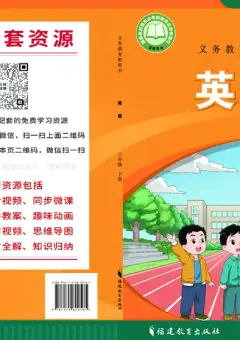
义
务
教
育
教
科
书
五·四学制
英
语
七年级 下册
图书在版编目(CIP)数据
义务教育教科书. 英语 五四学制 七年级 下册 / 程
晓堂主编. -- 北京 : 教育科学出版社 : 外语教学与研
究出版社, 2025. 12. -- ISBN 978-7-5191-4837-9
Ⅰ. G634
中国国家版本馆CIP 数据核字第2025ST9692 号
义
务
教
育
教
科
书
五·四学制
英
语
七年级 下册
主 编
程晓堂
编 者
刘玉祥
许 敏
苏 勇
沈湘平 张志清
武继国
(按照姓氏笔画排序)
致同学
各位同学,你们好!欢迎学习本套教材!
本套教材共7 册。六至八年级分为上、下两册,九年级为全一册。六至八
年级各册由5 个学习单元、1 个复习单元及附录组成,其中六年级上册第一个
学习单元(Welcome to junior high)为小初衔接单元。九年级包括6 个学习单
元、2 个复习单元及附录。
每个学习单元由以下板块构成:背景激活(Start it!)、词汇准备(Get
ready)、阅读与新知(Read to learn)、听说提升(Listen up)、语言运用
(Language in action 1 & 2)、交际互动(Speak out)、写作实践(Write now)、
文化广角(About our world)/ 综合实践(Project)、单元回顾(Wrap up)、策
略拓展(Learn to learn)。复习单元通过形式多样、语境丰富的词汇、语法和
综合运用活动,帮助同学们巩固本册教材的核心语言知识,强化语用实践,
提升综合素养。教材的附录包括Notes on the texts、Words and expressions 等
板块。
本套教材提供了大量真实、地道且价值导向正确的语篇,使同学们在学习
英语的同时,亦能充分了解社会发展新变化、科学技术进步新成果、社会主义
建设新成就。为帮助大家循序渐进地学习各种语言知识和技能,深入探究主题
意义,教材中提供了形式丰富多样的学习活动,并从完成活动所需要的语言知
识、学习策略及百科知识入手,搭建有效支架,为同学们在真实生活中运用语
言做好充足的准备。本套教材非常重视跨文化意识的培养,通过学习及比较中
外文化,大家能够深入探索不同国家优秀文化的内涵,了解文化异同,发展跨
文化沟通与交流的能力,同时加深对中华文化的理解和认同,树立国际视野,
坚定文化自信。
英语学习需要长期的努力。同学们要保持学习的积极性,树立能学好英语
的信心,大胆说、勤练习、不怕错。希望大家通过本套教材的学习,发展语言
能力、文化意识、思维品质和学习能力等核心素养,为今后继续学习英语和走
向更广阔的世界打下坚实的基础。
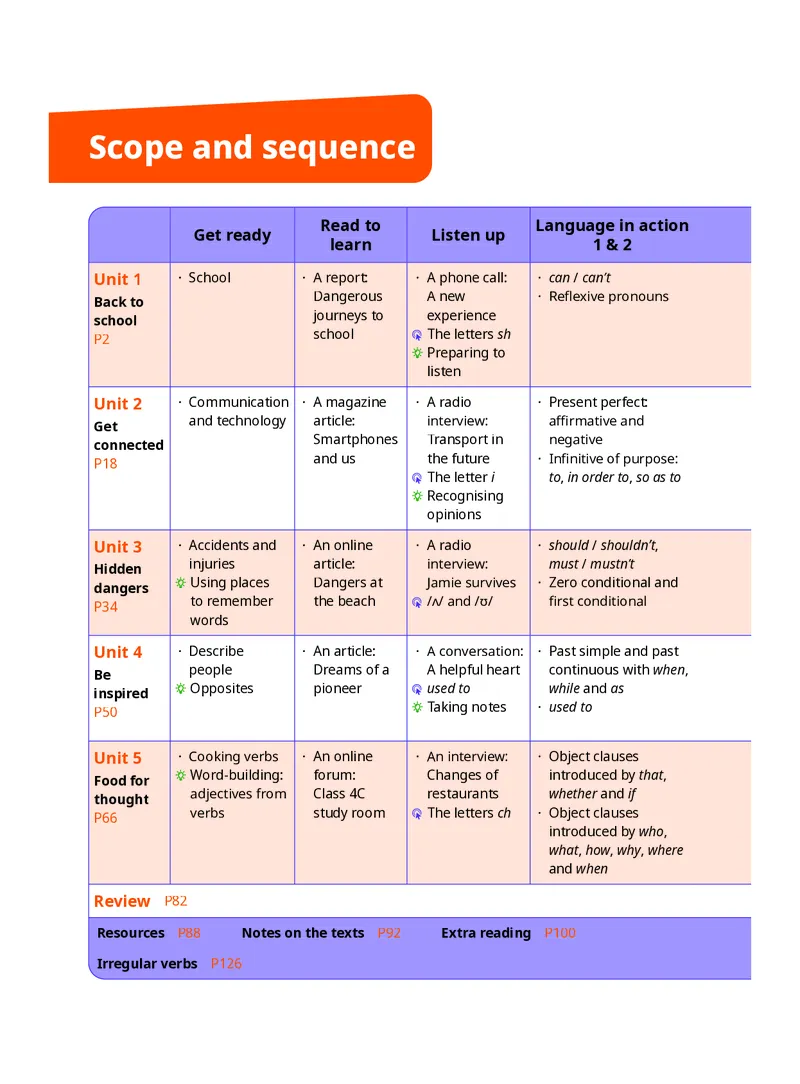
Get ready
Read to
learn
Listen up
Language in action
1 & 2
Unit 1
Back to
school
P2
· School
· A report:
Dangerous
journeys to
school
· A phone call:
A new
experience
The letters sh
Preparing to
listen
· can / can’t
· Refl exive pronouns
Unit 2
Get
connected
P18
· Communication
and technology
· A magazine
article:
Smartphones
and us
· A radio
interview:
Transport in
the future
The letter i
Recognising
opinions
· Present perfect:
affi rmative and
negative
· Infi nitive of purpose:
to, in order to, so as to
Unit 3
Hidden
dangers
P34
· Accidents and
injuries
Using places
to remember
words
· An online
article:
Dangers at
the beach
· A radio
interview:
Jamie survives
/ʌ/ and /ʊ/
· should /
d
shouldn’t,
must /
t
mustn’t
· Zero conditional and
fi rst conditional
Unit 4
Be
inspired
P50
· Describe
people
Opposites
· An article:
Dreams of a
pioneer
· A conversation:
A helpful heart
used to
Taking notes
· Past simple and past
continuous with when,
while and as
· used to
Unit 5
Food for
thought
P66
· Cooking verbs
Word-building:
adjectives from
verbs
· An online
forum:
Class 4C
study room
· An interview:
Changes of
restaurants
The letters ch
· Object clauses
introduced by that,
whether and
r
if
· Object clauses
introduced by who,
what, how, why,
y,y where
and when
Review
P82
Resources
P88
Notes on the texts
P92
Extra reading
P100
Irregular verbs
P126
Scope and sequence
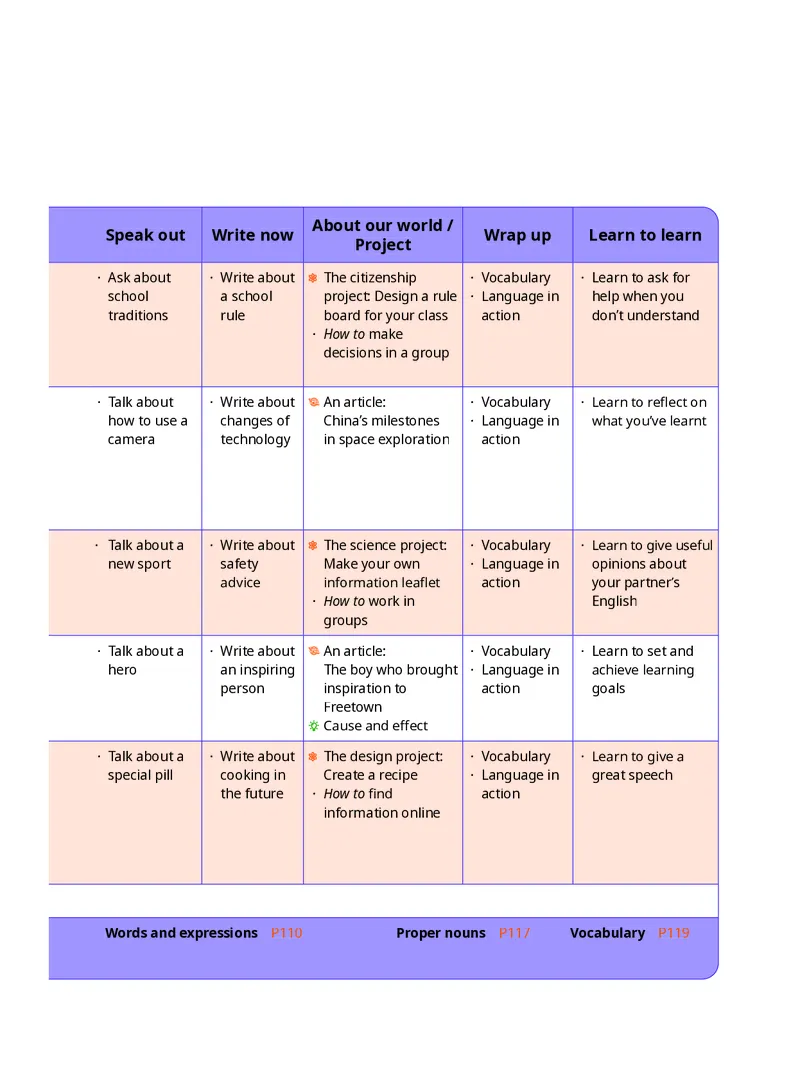
Speak out
Write now
About our world /
Project
Wrap up
Learn to learn
· Ask about
school
traditions
· Write about
a school
rule
The citizenship
project: Design a rule
board for your class
· How to make
decisions in a group
· Vocabulary
· Language in
action
· Learn to ask for
help when you
don’t understand
· Talk about
how to use a
camera
· Write about
changes of
technology
An article:
China’s milestones
in space exploration
· Vocabulary
· Language in
action
· Learn to refl ect on
what you’ve learnt
· Talk about a
new sport
· Write about
safety
advice
The science project:
Make your own
information leafl et
· How to work in
groups
· Vocabulary
· Language in
action
· Learn to give useful
opinions about
your partner’s
English
· Talk about a
hero
· Write about
an inspiring
person
An article:
The boy who brought
inspiration to
Freetown
Cause and eff ect
· Vocabulary
· Language in
action
· Learn to set and
achieve learning
goals
· Talk about a
special pill
· Write about
cooking in
the future
The design project:
Create a recipe
· How to fi nd
information online
· Vocabulary
· Language in
action
· Learn to give a
great speech
Words and expressions
P110
Proper nouns
P117
Vocabulary
P119
Start it!
Look at the picture. Where do you think the students
are going? Why?
Back to
school
1
Learning outcomes
In this unit, let’s explore schools. After
completing the unit, you will be able to:
· use some expressions to talk about
school life.
· use can / can’t and reflexive pronouns.
· ask for information.
· write an essay about a school rule.
· talk about differences and similarities in
school life across different countries.
Unit 1
2
1 Match the expressions with the pictures
a–h. Then listen and repeat.
School
2 Complete the sentences
with the correct form of
expressions from Activity 1.
1 Paula all her – she
got A’s in history and science!
2 I on ancient history –
I got an F! I need to take it
again.
3 The teacher him
because he was absent from
school many times.
4 Please try to on
time, Sam! That’s the second
time you’ve given it to me
late this week!
5 and listen to
everything he says, or you
won’t know how to do the
project.
Get ready
help each other�
hand in homework
pay attention to the teacher
tell somebody off
take an exam
fail an exam
pass an exam
revise for an exam
3 Complete the table with the
expressions from Activity 1. Then
tell your partner your sentences.
I don’t worry
about ...
I often worry
about ...
Use it!
4 Read the questions. Then ask
and answer with a partner.
1 Is it better to revise alone or
with friends?
2 What are the good and bad
things about exams?
a
b
c
d
e
f
g
h
Back to school
3
1
�School should be free and
all children can attend. But
some students have to make
dangerous journeys to get
there. This report looks at the
problem of dangerous journeys
to school. I researched this for
DANGEROUS
JOURNEYS TO
SCHOOL
1 Look at the pictures.
What are the ways of
getting to school? How do
you come to school every
day? Why do you choose
that way?
2 Do you know any other
ways to get to school?
Discuss in pairs.
3 Read the report. Does it
mention your ideas?
A report
Read to learn
Unit 1
4
my school project “Education Around the World”.
Here I give some examples of these dangerous
journeys and suggest one way to change the
situation.
2
�In Indonesia, for example, children from Batu
Busuk village walk along a rope over nine metres
above a river. They then walk about 11 kilometres
through a forest before they finally get to school.
They can’t walk to school during heavy rain, since
it becomes too risky. In Colombia, some children
use an 800-metre zip line to cross a river. Young
children can’t cross the river by themselves. They
are too small to do this. They can only travel with a
parent or an older child – or even inside a bag!
3
�Online education may be an answer to the problem.
A teacher can teach a class on screen. Students can
hand in homework by email and take exams online.
In this way, children in some areas would be able to
have a basic education. And dangerous journeys to
school would be a thing of the past.
5
Back to school
Language in action 1
can / can’t
4 What is this report about? Use
the thinking map to organise
your ideas.
Voice it!
5 Discuss the questions.
1 Why do children in some
countries have to make
dangerous journeys to school?
2 Do you think the children in the
report are brave? Why or
why not?
3 How are the things mentioned
in the report different from your
school life?
1 Complete the examples in
the tables below with can
or can’t. Use the report on
pages 4–5 to help you.
Permission
School should be free and all
children
1 attend.
Prohibition
They
2 walk to school
during heavy rain.
Ability
Young children
3 cross the
river by themselves.
Introduction
of the report
This report looks
at the problem of
Examples of
dangerous
journeys
Example 1:
Example 2:
A possible
solution
A teacher can
Students can
6
Unit 1
2 Complete the sentences with
can or can’t. Do they express
permission, prohibition
or ability? Write PE
(permission), PR (prohibition)
or A (ability).
1 �Students borrow
two books from the
library.
2 �You use a
dictionary in the English
exam.
3 �A teacher teach a
class on screen.
4 �Students stay in
the classroom when it’s
raining.
5 �My classmate Xiaoxiao
speak English
better than me.
4 Use the ideas in the box to
write questions with can.
Then ask and answer with
your partner.
Use it!
5 Discuss the questions.
1 Does your school have any
traditions in the first week
of each school term?
2 What can or can’t you do at
school?
Can you cycle to school?�
cycle to school
use your phone at home
put up posters in your bedroom
watch TV before dinner
3 Complete the text with the correct form of the words in the box.
can / leave can / go can / take can / bring can / litter
We have a field trip during the last week of each school term.
We to farms or parks, or visit museums. Wherever we
go, there are always rules to follow. For example, we
water and snacks, but we
around. We photos and make
notes, but we the group. Most
importantly, we should always listen
carefully to our teachers. I like field trips.
For me, it’s a great and fun way to learn!
Back to school
7
1 Look at the pictures. In what
situations do you think the
conversation might occur?
A phone call
Preparing to listen
Before listening, decide what you want
to know about the topic. It helps you
prepare.
LEARNING TIPS
3 Listen to the conversation.
Then tell your partner which
of your questions from
Activity 2 were answered.
Listen up
Pronunciation
The letters sh
1 Listen and repeat.
1. she
2. fish
3. share
2 Practise saying the words.
1. shoe
2. sheep
3. wish
4. brush
5. shy
6. shell
3 Listen, check and repeat.
2 You will hear Qin Wei talking
about his junior high school
life in England. Write three
questions you want to ask
about their talk.
�
Voice it!
5 Would you like to study in
another country? Why or
why not?
4 Listen again and answer the
questions.
1 Where is Qin Wei?
2 What happened on Qin
Wei’s first day of school?
3 When do students do
homework?
4 What is their mum doing?
A new
A new
experience
experience
8
Unit 1
Reflexive pronouns
2 Circle the correct options.
Language in action 2
1 Complete the examples in the table below. Use the phone call to
help you. Listen and check.
We have to do lots of things by
1 .
I dropped orange juice all over
2 !
Some students teach
3 new
things!
She’s teaching
4 how to play the
violin.
Take care of
5 !
1 Qin Wei found him / himself nervous on the
first day of school.
2 Students tidy up the room and wash
clothes by them / themselves.
3 To study in another country, you have to
learn to do a lot of things by yourselves / you.
4 Have you ever taught yourself / myself how
to play an instrument?
5 You can teach yourself / ourselves new
things after school.
9
Back to school
Dear Mr and Mrs Brown,
Sorry to hear that Fred is in hospital.
Tell him to look after .
Mr Green
Teacher from Year 9
Hi Fred,
I brought some fruit for you!
Help !
From Mia
3 Complete the sentences with
reflexive pronouns.
Use it!
4 Think of the following
situations and leave notes
for each of them.
1
2
Dear Fred,
I hope you like these toys.
I made them !
From Clara
Hi Fred,
Click here to take the
test .
Mr Smart
3
4
1 Your friend is nervous
about exams.
2 Your classmate keeps
coughing before a singing
competition.
3 Your friend studies far
from home and he feels a
little bit unhappy.
4 Your sister always hands in
her homework late.
Exams aren’t everything. You should
relax yourself sometimes.�
10
Unit 1
Ask about school
traditions
1 Listen to the conversation. What
traditions do they talk about?
2 Complete the conversation with the
help of the Useful language box. Listen
and check.
3 Look at the Everyday English box. Find and underline the expressions
in the conversation.
Check this out! Is that it? I’m not really sure.
Everyday English
Speak out
4 Work in pairs. Practise the conversation.
5 Work in pairs. Talk about a tradition in your school.
LU KAI Check this out! It’s about
a school race.
QI ZHE
1
LU KAI The students run more
than 10 km over hills.
QI ZHE Wow.
2
LU KAI The fastest runner wins
a sports cap.
QI ZHE Is that it?
LU KAI Yeah. As the saying goes,
“It’s not the winning,
but the taking part that
counts.”
QI ZHE That’s true! Do you have
any traditions in your
school?
LU KAI Yeah. Every year we
celebrate Teachers’ Day.
QI ZHE
3
LU KAI We wear something red.
QI ZHE
4
LU KAI I’m not really sure. And
we make cards and put
on a show.
QI ZHE It sounds fun.
What do you do? That sounds challenging!
Why’s that? What’s so special about that?
Useful language
Back to school
11
1 Make a list of good and bad things about school uniforms.
Then read the essay. Do you agree with the ideas in the essay?
Write about a school rule
Write now
Should students wear
a uniform?
An essay
For many students, wearing a uniform is part of
their school life. But for some, it’s not.
1 share
some different views on school uniforms.
2 ,
3 students don’t need to decide what
to wear each day. So they can focus on their study,
and not on what other students are wearing.
4 ,
5 while a uniform brings a sense of
belonging, students themselves should have the
freedom to discover what they like to wear.
Perhaps it’s better for students to choose what
to wear. However, the choice should be based on
schools’ rules. It is important to find a balance in
between.
Unit 1
12
3 Read the essay again. Are the
sentences T (true) or F (false)?
1 Wearing a uniform is part
of school life. But some
students can decide what
to wear.
2 �Students who wear
uniforms can focus
on studying.
3 �Some people think
uniforms can’t help
students discover what
they like to wear.
4 �The author thinks all
students should wear
uniforms.
Write your own essay about a
school rule.
PLAN
4 Think of two good things and
two bad things about one
of your school rules. Write
notes.
The school rule: �
Good things: ��
�
Bad things: ��
�
WRITE
5 Write your essay. Remember
to include can / can’t and
reflexive pronouns, and use
the expressions from the
Useful language box.
CHECK
6 Do you …?
· have an introduction and a
conclusion
· write about good things and
bad things
In this essay, I will
On the one hand
On the other hand
some say that
others argue that
Useful language
2 Complete the essay with
the expressions from the
Useful language box.
13
Back to school
2 Write down the problems
these rules may solve. Then
compare your answers with
your partner’s.
�
1 Read the Class Rule Board
for Unity Hill School. In what
ways are the rules different
from the rules at your school?
How to make decisions
in a group
Work with your partner and put
the stages of decision-making in
order.
�Find the best solution.
�Check if the group is ready to vote.
�Present the problem.
�Vote on the decision.
�Ask for suggestions.
�Discuss the pros and cons of
each idea.
Rule No. 1
• �Students must be kind and
respectful to teachers and other
students.
Class Rule
Board for
Unity Hill
School
Rules to follow during a class
• �Students must raise their hands
before speaking in class. They
can’t just shout out answers.
• �Students must listen to everyone’s
ideas when they work in groups.
• �After finishing their work, students
can read on their own, but they
can’t use electronic devices.
THE
CITIZENSHIP
PROJECT
A class rule board
14
Unit 1
Rules to follow after class
• �Students can’t talk loudly or run in
the classroom building.
• �During break, students can play
outside but can’t leave the
school grounds.
• �Students can’t eat snacks in the
classroom.
• �Students must keep the classroom
clean and tidy.
Let’s all help each other to make
sure our class is a fun and kind place
for everyone!
PRESENT
4 Present your rule board
to the class. Remember to
include a title, the rules,
and an encouraging final
statement.
CHECK
5 Read your classmates’ rules.
What rules do they have?
Which rule(s) do you like best?
6 Vote for the best ten rules
and make them your class
rules.
Design a rule board for your class.
PLAN
3 Work in groups. Refer to How
to box to complete the steps.
· Think of one or two areas of
school life you think could
be better, such as indoor
behaviours, outdoor activities,
group work, or homework.
· List some problems in these
areas.
· Suggest some class rules to
solve the problems.
· Discuss and vote on the rules.
Back to school
15
WRAP UP
1 Complete the sentences
with the correct form of the
expressions on page 3.
1 The teacher him
as he didn’t attend class on
time.
2 Take some time to ,
and you will pass the exam.
3 The students didn’t ,
so they don’t know what to
do now.
4 He was really sad because
he .
5 Remember to stay focused
when you .
6 They always support and
in studying.
7 He reminds his sister to
before the deadline.
Vocabulary
3 Put the words in the correct
order to make sentences.
1 for something like this / you
shouldn’t / be so angry with
yourself
�
.
2 take a photo of / I’m going
to / myself
�
.
3 enjoyed ourselves / we
really / on our holidays
�
.
4 herself / taught / how to /
she / play the guitar
�
.
5 challenged / run a race /
they / to / and succeeded /
themselves
�
.
school students
1 choose the
subjects they want to study. Near
the end of secondary school, they
2 drop some subjects. They
3 drop subjects like music
and art. But they
4 drop
maths or English.
I think this is a good idea because
many students
5 do some
subjects better than others. For
example, I love art and
6
draw well, but I’m not good at
science. Students
7 then
spend more time on the subjects
they’re good at.
2 Complete the text with can /
can’t.
Language in action
Should students choose the
subjects they want? The answer
is “Yes!” In the UK, secondary
16
Unit 1
LEARN
TO LEARN
Learn to ask for help
when you don’t
understand
There are different ways to ask
English speakers for help if you
can’t understand them.
3 Complete the conversations
from Activity 2 with these
expressions.
1 I don’t understand what
that word means
2 let me check if I’ve got this
right
3 Could you say that again,
please?
1 Do you have any problems
understanding someone
in English? What were the
problems? How did you solve
them?
2 Read the conversations 1–3
on page 88. Match situations
a–c with the conversations.
a studying in class
Self-assessment
I can talk about school life in English.
I can use can / can’t to talk about permission, prohibition and
ability.
I can use reflexive pronouns to describe actions or situations where
the subject and the object of the action are the same person.
I can ask for information in an appropriate way.
I can write an essay about a school rule.
I can talk about differences and similarities in school life across
different countries.
4 Take turns to talk about one
of the topics below. Use the
expressions from Activity 3
to help you.
· �how to get from your school
to your house
· �how to form and use
reflexive pronouns
· �the rules of a sport
b at the subway station
c asking for directions
Resources p88
Back to school
17
Get
connected
2
Learning outcomes
In this unit, let’s explore technology.
After completing the unit, you will be
able to:
· use some words and expressions to talk
about communication and technology.
· use present perfect and infinitive of
purpose.
· give instructions.
· write an article about changes of
technology.
· talk about the importance of
technological development to human
society.
18
Unit 2
18
Unit 2
Start it!
· Look at the picture. What type of car is it?
· How is it different from traditional cars?
1 Match the words and expression
in the box with pictures a–i.
Listen, check and repeat.
Communication and technology
3 Write three sentences about
yourself or people you
know, using the words and
expression from Activity 1.
�My father has got a lot of apps on his
phone.�
2 Complete the sentences with
the correct form of the words
and expression from Activity
1. Then listen and check.
1 I got a blue virus on
my computer. What should
I do?
2 Our school will the
website to share news and
events.
3 Most of my friends
their photos to .
4 Look at this . It’s great
for practising new English
words. Why don’t you
it, too?
5 She sent me a(n)
filled with to express
her excitement.
6 My computer is the I
use to stay connected with
my friends.
Is the sentence T (true) or F (false)?
On average, people check their phones
ten times a day.�
Find an interesting fact about technology.
Then write a question for your partner
to answer.
Explore it!
Get ready
update
download
social media
upload
app
I spend about three hours a day in
front of a screen.
I only spend about two hours.
4 Work in pairs. Compare the
sentences from Activity 3
with your partner.
message
device
screen
emoji
a
b
d
f
h
g
e
i
c
Get connected
19
Read to learn
SMARTPHONES
AND US
20
Unit 2
A magazine article
1 Read the fact file and answer
the questions.
2 Read the magazine article
and check your answer to
Question 3 in Activity 1.
In 1992, the first smartphone
arrived. It weighed half a kilo and
it didn’t have a camera. Today’s
smartphones are smaller, faster
and more interesting. They have
changed our lives.
Communication
Smartphone technology has given
us many ways to communicate.
One of the most popular ways is
In 1973, people invented
the first mobile phone.
In 2012, smartphones
became the main tool for
going online.
In 2024,
· �98% of people use
smartphones for messaging.
· �45.5% of people use
smartphones for work.
· �82.3% of people use
smartphones for shopping.
1 What do the following
numbers refer to?
1973 �
98% �
82.3% �
2 What can you learn from the
fact file?
3 What other things can people
do with smartphones?
Get connected
21
messaging. Users of a very well-
known app can send 60 billion
messages every day! And then there’re
video calls. Once, video calls were
only in our imagination. But now
they are common.
Sharing
Over 4.8 billion people have
created social media profiles. We’ve
posted news, uploaded photos and
shared videos. Some of us haven’t
got much of a private life. Because
we’ve shared too much of our
lives online. And some of us may
have just a few close friends in
real life. Instead, we may have got
hundreds of “friends” on social
media.
Learning
Not only has
smartphone
technology
brought new ways
of communication
and information sharing, but it
has also brought new ways of
learning. Educational apps let us
learn anytime, anywhere on our
smartphones. Companies have
developed more than 200 million
educational apps. According
to an educational technology
company, around 87% of students
are learning through these apps.
Smartphone technology has also
built huge libraries of e-books.
Today, many children have learnt
to read and write with e-books.
Language in action 1
3 Read again and complete
the sentences.
1 The first smartphone
arrived in .
2 One of the most popular
ways to communicate
through smartphones
is .
3 Over 4.8 billion of us have
created profiles.
4 Smart technology has
also built huge libraries
of .
4 Answer the questions.
1 According to the article,
what are the differences
between today’s
smartphones and the first
smartphone?
2 Why do some people have
fewer friends in real life but
more online?
3 What are the benefits of
using educational apps?
Voice it!
5 Do you agree with the
statements below? Discuss
your answers with your
partner.
1 Today people are using
smartphones too much.
2 There should be no
smartphones in schools.
Present perfect:
affirmative and negative
1 Complete the examples in the
table below with the correct
form of have (not). Use the article
on pages 20–21 to help you.
Smartphones 1 changed our
lives.
Smartphone technology
2
given us many ways to communicate.
We 3 got much of a private
life.
Smartphone technology
4
only brought new ways of
communication and information
sharing, but also brought new ways
of learning.
22
Unit 2
2 Complete the sentences with
the present perfect form of
the verbs in brackets.
1 Smartphones (become)
easier to carry.
2 Smartphones (change)
our lives.
3 Smartphones (help) us
to communicate.
4 Some people (get)
many friends in real life
because they (spend)
too much time online.
5 She (read) any e-books
for the past two hours.
Use it!
4 Work in pairs. Discuss what
you have or haven’t done
today. Use the ideas in the box.
I’ve read an e-book ...
chat on social media
read an e-book
upload a photo
watch TV
3 Complete the conversation with the correct form of the verbs in
the box.
LI LEI
What’s wrong, Li Jing?
LI JING I
1 my e-reader.
Do you know where it is?
LI LEI
No, I don’t. Perhaps it’s
in your bedroom?
LI JING I
2 in my
bedroom. It’s not there.
LI LEI
Perhaps you
3 it
in Mum’s car.
LI JING No, I don’t think so. I used
it this afternoon. But I can’t
remember where I left it.
LI LEI
Maybe Mum
4 it
somewhere.
LI JING No, I
5 her and
she says she
6 it.
Li Lei, can you help me
search?
LI LEI
Sure. Let me go check for
it in the living room.
LI JING Here, look! I
7 it. It
was in my bag all the time.
LI LEI
Great! Now you can “get
connected” with
your favourite
books again!
ask find leave look lose not see put
Get connected
23
Transport
Transport
in the future
in the future
1 Look at the forms of transport
in the pictures. Will we use
them in the future? Discuss
your ideas with a partner.
A radio interview
Recognising opinions
It’s important to understand the
difference between facts and opinions.
When people give an opinion, they
often begin with expressions like these:
In my view … In my opinion …
I (don’t) think …
LEARNING TIPS
2 �Flying cars have a long way
to go.
3 You can fly far with a jetpack.
4 �The hyperloop can travel
through a tube.
5 �Scientists are developing the
jetpack.
Listen up
Use it!
4 Work in groups. Discuss the
questions and give your
opinions.
1 How will the hyperloop
influence our daily life?
2 Can you imagine other forms
of transport in the future?
What would it be like?
Pronunciation
The letter i
1 Listen and repeat.
/ɪ/ think hit lift /aɪ/ bike kite idea
2 Write the words in the correct
place.
3 Listen, check and repeat.
4 Listen and repeat the sentences.
1. James rode a bike for 10 kilometres
this morning.
2. I can watch video online on my new
device.
2 Listen to the radio interview.
In which order do they discuss
the transports from Activity 1?
3 Listen again. Which of these
opinions does Anna Brown have?
1 �Flying cars can make our
journeys quicker.
/ɪ/
/aɪ/
flying car
hyperloop
jetpacks
mile device internet online
video will write instead like
kilometre
24
Unit 2
Infinitive of purpose: to, in order to, so as to
Language in action 2
1 Complete the examples in the table below. Use the radio
interview to help you. Listen and check.
2 Put the words in the correct order to make sentences.
1 quicker / flying cars / go to school or work / we should have / in
order to
�
.
2 so as not to / flying cars / we should have / have traffic problems
�
.
3 to / a lot of power / the jetpacks / need / make us fly
�
.
4 are working on / in order to / scientists / in use soon / put it / the
transport of the future
�
.
“So as to” and “in order to” have similar meanings, both referring to the reason or
purpose behind an action. They can be used interchangeably in many situations.
However, “in order to” is more formal, while “so as to” is less formal.
Get it right!
(not) to / in order (not) to / so as (not) to
Many people take buses
1 go to
school or work.
2 take off, flying cars need a very
long road to speed up.
That’s
3 hit another car.
Get connected
25
3 Complete the conversation
using the expressions in
brackets.
5 Work in groups. Discuss
the questions with your
partners.
1 Do you agree with your
partners’ statements from
Activity 4?
2 Will the way we travel to our
holiday places change? If so,
how?
3 Will the travel to Mars
become a reality?
Use it!
4 Complete the following
statements with your own
ideas.
1 In the future, we should
use clean energy
to .
2 Public transport should use
technology
reduce .
3 travel
faster, .
4 Self-driving cars need to be
tested make
sure .
HE YI Let’s go to this exhibition
called “Tourists of
Tomorrow”!
LI YU What’s that about?
HE YI It’s a 3-D exhibition about
future holiday and
1 (future transport /
create an exciting
experience) for visitors
to imagine the future of
travel and tourism.
LI YU How do you think we’ll go
on holiday in the future?
HE YI I think we’ll use
2
(driverless cars / get
around).
LI YU Really? I hope we’ll have
3 (greener
transport / cause
pollution). Maybe we’ll find
out more at the exhibition.
HE YI Yes. I want to go to
4 (the exhibition /
learn more) about space
travel. I’d love to go in a
rocket.
LI YU That sounds amazing. I’d
like to go
5 (in a
rocket / travel to Mars), too.
26
Unit 2
26
Talk about how to use a camera
1 Listen to the conversation. What is Tom explaining to his grandpa?
2 Complete the conversation with the help of the
Useful language box. Listen and check.
3 Look at the Everyday English box. Find and underline the
expressions in the conversation.
Got that? Not quite. That’s it.
Everyday English
4 Work in pairs. Practise the conversation.
5 Work in pairs. Give instructions for using a new device.
Speak out
TOM
So, Grandpa,
1 , turn
the camera to record
mode.
GRANDPA Pardon? Which one?
TOM
The record mode. It
needs to be on to film
a video. Now, look at
this little screen.
GRANDPA I can’t see anything.
TOM
Ah.
2
your hand isn’t in front
of the camera!
GRANDPA Is this better?
TOM
Not quite. You need to
put your fingers here.
That’s it. Now, do you
see this button?
GRANDPA This one?
TOM
No, this one here.
3 it’s
turned on to record
sounds. Oh, and
4 the
light is red. That
means you’re
recording. Got that?
GRANDPA Yes. Thanks, Tom!
before you start ... It’s really important that ...
make sure that ... Remember to check that ...
Useful language
Get connected
27
1 What can you see in the two
pictures? Can you think of
other changes that technology
has made at school?
Write about changes of technology
2 Read the article. Does it mention any of your ideas in Activity 1?
Write now
An article
1
The development of technology has changed
teaching in a rapid manner. For instance, in
the past, teachers used chalks and blackboards
to teach. What’s more, the only technology in
classrooms was a TV or a tape player.
2
Today, teachers use lots of technology. For
example, they use digital whiteboards to teach.
In addition, they can even teach students in
another country online.
3
Some believe future teachers will be robots.
However, I don’t think that will happen.
Teachers help us learn things, but they take
care of us, too. Robots can’t do that. The
technology may change over time. But the best
teachers will always be real people.
28
Unit 2
3 Read the article again.
Are the sentences T (true)
or F (false)?
1 �In the past, there was
a lot of technology in
the classroom.
2 �Today, technology
enables teachers to
teach students in
another country online.
3 �Teachers use digital
whiteboards in
the past.
4 Some people think
robots will teach
students in the future.
5 �Robots can do
everything teachers do.
4 Complete the Useful
language box with the
expressions in bold in the
article.
WRITE
CHECK
Write your own article about
changes of technology.
PLAN
5 Make notes about changes
of technology. Think about
cooking, cleaning and
entertainment. Make notes
for your three paragraphs.
1 In the past: �
�
2 Today: �
�
3 In the future: �
�
6 Write your article. Remember
to include three paragraphs
and use the language from
this unit and expressions
from the Useful language box.
7 Do you …?
· describe technology in the past
· describe technology at the
present time
· make certain and uncertain
predictions for the future
Giving examples:
1 ,
2
Adding more information:
3 ,
4
Useful language
Get connected
29
ABOUT OUR
WORLD
1 Look at the photos. What are
they? What are they used
for? Read and check.
An article
In the past few years, China has
made great progress in space
exploration. This has helped us
better understand the universe.
Chang’e-1 is the first satellite
in China’s moon exploration
programme. One of its mission
was to collect the images of the
moon. Later on, Chang’e-3 became
the first spacecraft to land on the
moon. Chang’e-5 even brought soil
and rocks from the moon back
to earth.
China’s space station. Tiangong
has two laboratories. Scientists
do research there so as to
explore space.
BeiDou is China’s network of
satellites. It provides many
services, including navigation. We
can use it on our smartphones
and other devices. The BeiDou
network isn’t only used in China.
It’s used by people all over the
China’s milestones
China’s milestones
in space exploration
in space exploration
China’s milestones
in space exploration
China’s Long March carrier
rockets are used to take Shenzhou
manned spaceships to space. The
astronauts then land on Tiangong,
a
b
c
30
Unit 2
2 Read the text. Match
the pictures a–e with
achievements 1–5.
1 �Make discoveries about
conditions in space.
2 �Provide many services,
including navigation of
the earth.
3 �Explore the moon.
4 Collect radio waves from
space.
5 �Take Shenzhou manned
spaceships to the space
station.
3 Read the text again and
write T (true), F (false) or DS
(doesn’t say).
1 Chang’e-5 was the first
spacecraft to bring rocks to
the moon from earth.
2 Long March rockets are
developed in China.
3 Scientists do research in the
laboratories of the Tiangong
space station.
4 BeiDou is only used in China.
5 FAST is used to search for
new life on earth.
Voice it!
4 Discuss the questions.
1 Why do we need to
make efforts on space
exploration?
2 Do you know any of the
goals of China’s space
programme for the future?
world in order to explore new
places.
Another great achievement is
FAST. It is the largest single-dish
radio telescope in the world! FAST
collects radio waves from space.
Scientists study these waves to
learn more about the universe.
d
e
Get connected
31
WRAP UP
1 Circle the correct options.
1 I usually send my mother
a device / message if I’m not
home on time.
2 She uploaded / downloaded
the latest software on her
computer.
3 You can listen to music on
your tablet or any other
mobile emojis / devices.
4 Iris dropped her phone and
broke the app / screen.
5 Social media / Message has
changed the way people
connect and communicate.
Language in action
Vocabulary
2 Complete the sentences
with the correct form of the
words in brackets.
1 My grandma (learn)
to use her phone now.
2 Paul (hear) the news,
so you need to tell him.
3 I (design) a website
for our basketball team.
3 Complete the text with the correct
form of the words and expressions
from the box. You may use some
words more than once.
Carla, a 12-year-old student at
Masters School,
1 lots of
subjects this term. However, she
2 the opportunity
3 see
a computer in the classroom. During
each class, her teacher uses a
blackboard and chalk
4 write.
The teachers at Masters School
believe that teaching without
technology can help students focus
more on learning. However, Carla
doesn’t agree with this view. She
thinks that
5 learn effectively,
students can use technology to
some extent. So high-tech or no-
tech? What do you think?
study to never have in order to
4 The students (finish)
their tasks yet, so the teacher
reminded them.
5 Congratulations! You
(complete) the first step of your
goal.
6 We (visit) that museum
yet, but we plan to go soon.
32
Unit 2
Learn to reflect on
what you’ve learnt
LEARN
TO LEARN
1 After you’ve finished a class, what will you do?
a Relax and get ready for the next one.
b Take a moment to reflect on what I’ve learnt.
c Ask the teacher some questions.
Reflecting on what you’ve learnt is an important skill that
helps you understand and remember new information.
Self-assessment
I can talk about communication and technology in English.
I can use present perfect to talk about past events that are still
relevant.
I can use infinitive of purpose to talk about the reasons for doing
something.
I can give instructions in an appropriate way.
I can write an article about changes of technology.
I can talk about the importance of technological development to
human society.
2 Read the texts on page 89. How do the students reflect on what
they’ve learnt? Which of these ways do you prefer?
3 How do you reflect on what you’ve learnt? Use one of these four
methods on page 89 to reflect upon a topic you’ve learnt this week.
4 Share your method with your partners.
Resources p89
Get connected
33
Learning outcomes
In this unit, let’s explore hidden
dangers. After completing the unit, you
will be able to:
· use some expressions to talk about
accidents and injuries.
· use should / shouldn’t, must / mustn’t, zero
conditional and first conditional.
· make suggestions and respond.
· write a blog post to give safety advice.
· talk about attitudes towards life safety
from different cultures.
Hidden
dangers
3
Start it!
· �What can you see in the picture?
· Do you think it is dangerous? Why or why not?
Unit 3
34
a chair
e
1 Complete the expression in each
picture with the words and phrase in
the box. Listen, check and repeat.
2 Think of a place where each accident from
Activity 1 might happen.
trip over a chair — in the classroom�
Get ready
Accidents and injuries
head toe break burn cut kick
leg hit trip over hand finger
Use it!
4 Ask and answer these questions
using the expressions from Activity 1.
1 When was the last time one of these
things happened to you or someone
you know?
2 Where did it happen and what
exactly happened?
3 Work in pairs. Test your partner. Say a place
that you thought of in Activity 2. Your partner
guesses the accident or injury you thought of.
The kitchen.
Cut your finger?
Using places to remember words
It can help you to remember new words if you
think of where they might be used.
LEARNING TIPS
your
your
your
your
a
your
b
c
d
f
Hidden dangers
35
An online article
1 Look at the pictures. What
type of danger does each
picture show?
2 Read the online article.
Which dangers from
Activity 1 aren’t mentioned?
Read to learn
at the beach
Dangers
An online article
There is sunshine, sand and lots
of fun on the beach, but accidents
can happen, too. You could step
on a rock and cut your foot. So
you should take special care.
The beach is a great place to
do sport. However, water can
sometimes move quickly and
suddenly away from the beach.
This is called a “rip current”. If you
find yourself in a rip current, it’s
Remember!
If there is no one to help
you on the beach, don’t go
into the water.
36
Unit 3
important not to fight it. Instead,
you should swim along the beach
until you reach safer water.
Everyone knows that sharks
and crocodiles sometimes swim
near beaches. You must always
be careful with sea animals, no
matter whether they are big or
small. The greater blue-ringed
octopus is as small as your hand.
But you mustn’t go near it as it
could be deadly!
Did you know that the sand sends
back sunlight? This increases
the danger of sunburn. Sunburn
can cause heatstroke or even
skin cancer. You shouldn’t stay in
the direct sunlight when the sun
is the strongest. That’s usually
between 11 am and 3 pm.
Remember!
Keep away from all sea
animals.
Remember!
Wear suitable clothes
and sunglasses. Put on
sunscreen regularly.
37
Hidden dangers
Dangers
at the
beach
Rip
current
Sea
animals Sunburn
How to
avoid it
What to
remember
Language in action 1
3 Are the sentences T (true) or F
(false)?
1 You should fight against it
if you find yourself in a rip
current.
2 Crocodiles sometimes swim
near beaches.
3 We don’t need to keep away
from small sea animals.
4 Rip currents can send back
sunlight.
4 Read the article again. Find out
how to avoid each danger. Use
the table below to help you.
should / shouldn’t, must /
mustn’t
1 Complete the examples in
the table below with should /
shouldn’t or must / mustn’t.
Use the article on pages
36–37 to help you.
You
1 take special care.
You
2 always be careful
with sea animals.
You
3 go near it as it
could be deadly!
You
4 stay in the direct
sunlight when the sun is the
strongest.
“Should” is typically used to give advice
or make suggestions, while “must”
is used to express a strong advice or
emphasise a rule or requirement.
Get it right!
Voice it!
5 Discuss the questions.
1 What other dangers at the
beach do you know?
2 What other dangerous places
do you know?
Unit 3
38
2 Circle the correct words.
1 You should / shouldn’t always
be careful with beach activities.
2 We shouldn’t / mustn’t
kill sharks or crocodiles.
Such action will be strictly
punished by the law.
3 You shouldn’t / must follow
the guard’s instructions at
the beach for your safety.
4 You mustn’t / should stay out
of direct sunlight when the
sun is the strongest.
3 Complete the notice with should / shouldn’t or must / mustn’t.
Use it!
4 Write rules and advice for
staying safe while doing
these activities.
�
Important notice: tips for your Antarctica trip
Dear travellers,
Please note the following important tips for your Antarctica trip:
1. �It’s very cold in Antarctica. You
1 always wear warm
gloves, hats and shoes. You
2 leave your body uncovered.
2. �The bright snow in Antarctica can cause snow blindness. You
3 look directly at the snow without protection.
Therefore, wearing sunglasses isn’t only a choice, but something
you
4 do.
3. �You shouldn’t miss a visit to the lovely penguins. However, you
5 touch or feed them. Such actions are against the law.
Enjoy watching them from far away!
Stay safe and have fun!
Best Wishes,
Mrs Wang
go hiking in the forest
watch the sunrise in the
mountains
go camping by the lake
Hidden dangers
39
1 Choose one picture from each
set of three and use them to
make a story.
Listen up
Jamie survives
A radio interview
2 Listen to the interview.
What parts of your story are
correct?
3 Listen again and answer the
questions.
1 How often do crocodiles
attack people?
2 What was Jamie doing before
his accident?
3 What did Jamie do to the
crocodile?
Voice it!
4 Do you know how to protect
yourself from dangerous
animals?
Pronunciation
/ʌ/ and /ʊ/
1 Listen and repeat.
/ʌ/ mustn’t suddenly trouble /ʊ/ pull look should
2 Write the words in the correct place.
brother could cousin cut foot put took gun
/ʌ/ /ʊ/
3 Listen, check and repeat.
4 Listen and repeat the sentences.
1. She cut her foot very badly, so she couldn’t visit her cousin.
2. You shouldn’t put the food in the cupboard.
Pronunciation
a
b
c
a
b
c
a
b
c
a
b
c
40
Unit 3
1 Complete the tables below with Action / Situation or Result.
Zero conditional and first conditional
Language in action 2
1 If a crocodile is hungry,
2 If a crocodile attacks you,
3 If you get too close to a
crocodile,
4 If a crocodile loses a tooth,
a it (try) to pull you
under the water.
b another one (grow).
c it (attack).
d it (run away) or
(react) dangerously.
2 Match 1–4 with a–d. Then complete the results with the correct
form of the verbs in brackets.
Zero conditional
When a crocodile attacks you, it usually means the end of your life.
(Action / Situation) (Result)
A crocodile sometimes opens its mouth if you hit it in the eye.
(
1 ) (
2 )
First conditional
If they don’t see you as a danger, you will be fine.
(
3 ) (
4 )
I will do the same if that happens to me one day!
(
5 ) (
6 )
Hidden dangers
41
Snakes
Snakes
1 in the grass or trees if they hear
people coming. If you get bitten by them, make
sure to
2 straight to hospital to get medical aid.
Scorpions
There are about 2,000 different kinds of scorpions.
About 30 of them are deadly. Scorpions live under
rocks. You won’t get hurt if you
5 from rocks.
3 Complete the information about the Amazon jungle with the
correct form of the words and expressions in the box.
Use it!
4 Imagine you’re planning a jungle holiday. Talk about the following
situations with a partner.
1 Do not enter if the area �
.
2 Carry away all the rubbish when �
.
3 If I see a snake on the path, �
.
4 If I get lost, �
.
5 �
.
Big cats
You probably won’t see any big cats.
They
3 when they sense danger.
However, if a big cat
4 young babies,
it will probably attack you.
stay away go have hide run away
42
Unit 3
42
3 Look at the Everyday English
box. Find and underline the
expressions in the conversation.
1 Listen to the conversation. What sport are
they talking about?
2 Complete the conversation with the help of
the Useful language box. Listen and check.
LI KAI
1 cycle to school, Su Mei? It’s really fun!
SU MEI
I’m not sure. I’m not very sporty.
LI KAI
Come on!
2 do some sports to keep fit.
SU MEI
OK. I’ll give it a try. Do you think I should buy a bike online?
LI KAI
Not really.
3 buy one without trying it first.
SU MEI
OK. Anything else?
LI KAI
4 buy a good helmet, too. You can really hurt yourself if
you fall off.
SU MEI
Oh god! That scares me.
LI KAI
Don’t worry.
5 joining my bike club? I’ll help you on the
way.
SU MEI
Yeah! Good idea!
Talk about a new sport
Speak out
4 Work in pairs. Practise the
conversation.
5 Work in pairs. Think of a new
sport you want to try. Ask for
suggestions and respond.
It’s really fun! I’ll give it a try.
Anything else?
Everyday English
How about ...?
Why don’t you ...?
Make sure you don’t ...
You should definitely ...
We’d better ...
Useful language
Hidden dangers
43
Write about safety advice
1 Look at the photo. What do you think the blog post is
about? Read and check.
Thanks for all your comments on my posts. Here are my answers
to your questions.
1
There are some cheap skateboards. However, you need to spend
more for a good one. Also, make sure to choose the right size. If
you have small feet, get a narrow board for better control.
2
Yes! Always! Accidents happen. That’s why you need a helmet. It
must be a proper and right-sized helmet for skateboarding. If it
moves when you shake your head, it’s too big.
3
If you ask me, the street is too dangerous for skateboarding.
A skatepark is the best place. If there isn’t a skatepark nearby,
some park should be OK.
That’s all for now. Have fun, but stay safe!
Write now
MATT’S BLOG
MATT’S BLOG
A blog post
44
Unit 3
2 Match the questions a–c
with the paragraphs 1–3.
a Can I skate in the street?
b What board should I buy?
c Should I wear a helmet?
3 Read again and tick Matt’s
opinions.
1 �Cheap skateboards
aren’t very good.
2 �The size of the
skateboard is very
important.
3 �For some people,
narrow skateboards
are the best.
4 �Your helmet shouldn’t
move when you wear it.
5 �The only safe place
for skateboarding is a
skatepark.
4 Complete the expressions
in the Useful language box
with words that Matt uses
for giving advice.
Write your own blog post to
give safety advice.
PLAN
WRITE
CHECK
5 Choose an activity. Think of
three questions about doing
it safely. Make notes for the
answers.
1 �
2 �
3 �
6 Write your blog post.
Remember to include an
introduction, three questions
and answers, and an ending.
Use should / shouldn’t, must /
mustn’t, zero conditional,
first conditional and
expressions from the Useful
language box.
7 Do you …?
· have an introduction and an
ending
· answer each question
· use the language from this
unit
1 sure
2 why
3 you ask me
Useful language
45
Hidden dangers
THE SCIENCE
PROJECT
1 Read the information leaflet.
What is it about?
2 Read the leaflet again. Are
the sentences T (true) or F
(false)?
1 You can live without water
for seven days.
2 You must lie down if a
sandstorm is coming.
3 You shouldn’t use a strong
sunscreen if it’s freezing.
How to work in groups
Which of the ways of working in
the following three groups is the
best? Why?
Group A decided what the
different jobs were for the project.
Each person did a different job.
Group B shared the writing on
the project. Each person wrote a
different section.
Group C worked alone first. Then
they chose different sections of
each person’s work to make their
information leaflet.
Deserts can be very dangerous
places. Here are some of the
dangers you should know about.
No water
What’s the danger?
You can’t live without water for more
than three days.
· Around 30% of the land on the
earth is desert.
· Only 20% of deserts are sandy.
Some have ice.
· Highest recorded desert
temperature: 56.7 °C (Death
Valley, USA)
· Lowest recorded desert
temperature: –89.2 °C
(Antarctica)
Fact file
An information leaflet
Desert
survival
An information leaflet
46
Unit 3
Make your own information leaflet.
PLAN
3 Work in groups. Choose a
remote place. Then complete
the steps below. Use the
information from the How to
box to help you.
· Decide how your group will
work together.
· Decide on the sections
your information leaflet will
include.
· Decide what images and
diagrams you could include.
PRESENT
4 Display your information
leaflet on your classroom
wall. Remember to
include different sections,
interesting facts and
pictures.
CHECK
5 Look at your classmates’
information leaflets and
give feedback on their work.
Which information leaflet is
your favourite? Why?
What should you do?
Walk slowly and rest often. Drink
a little and often. If you’re lost,
follow birds. They’ll take you to
the nearest water.
Sandstorms
What’s the danger?
Strong winds cause sandstorms.
Sandstorms can move at 40
kilometres per hour. They can
cause harm to the eyes and
breathing system.
What should you do?
If a sandstorm is coming,
you must hide. Sandstorms
usually last for a few minutes.
But sometimes they last three
hours!
Freezing temperatures
What’s the danger?
The frozen landscape in
Antarctica is also considered
as deserts. Even though the
lowest temperature is really
low, the sunlight is still strong.
It can cause sunburn in just 30
minutes.
What should you do?
Wear proper clothing and sun-
glasses. Use a strong sunscreen!
Hidden dangers
47
1 Circle the correct words.
1 Sue touched a hot pan and
burned / broke her hand.
2 Juan tripped over / hit on a
stone while walking in the
forest.
3 I broke / cut my finger with
a knife.
4 She tripped over / kicked her
toe on the table.
5 If someone breaks / hits a
leg, it will hurt a lot.
6 He jumped to catch the ball
and broke / hit his head.
2 Complete the sentences with
should / shouldn’t or must /
mustn’t and the verbs in
the box.
Vocabulary
sleep play talk wear
forget see
1 You a seatbelt in
the car. It’s the law.
2 You with fire,
because it’s very dangerous.
Language in action
3 Circle the correct words to
complete the notes.
Stay safe in the forest
Before you go, you
1 should /
shouldn’t tell someone where
you’re going. If you get lost, it
2 is / will be easier to find you.
You
3 must / mustn’t take a map.
If you
4 don’t / won’t follow a
map, you’ll probably get lost.
You
5 shouldn’t / mustn’t eat
mushrooms. Some are very
dangerous. If you
6 eat / will eat
them, you might get extremely ill.
If you see a bear, you
7 should /
shouldn't stay calm and walk
away slowly.
3 You for eight hours
at night.
4 You on your phone
while riding a bike.
5 You your key, or
you won’t get in.
6 You’re not very well. Perhaps
you a doctor.
WRAP UP
48
Unit 3
1 Read the advice about how
to give useful opinions.
Complete the advice with
should or shouldn’t.
Be polite when you give opinions
about your partner’s English. You
can help each other improve.
LEARN
TO LEARN
You
1 …
a �say what you think in a
horrible way.
b �talk about your partner’s
personality.
You
2 always …
c �say what you think, but also
be nice.
d �say positive things.
e �give ideas for how your
partner can improve.
Learn to give useful
opinions about your
partner’s English
2 Read the statements on page
90. Match 1–5 with a–e from
Activity 1.
I saw a snake when I was walking
in the mountains with my family ...
· I like the way you …
· Why don’t you …?
· �You made some mistakes
with …
· You used … That was nice!
3 Invent a story about an
accident. Then work in pairs.
Take turns to tell your stories.
While your partner is speaking,
think about what they do well
and how they can improve.
4 Give three helpful opinions
about your partner’s English.
Use the expressions in the box.
Resources p90
Self-assessment
I can talk about accidents and injuries in English.
I can use should / shouldn’t and must / mustn’t to talk about rules
and advice.
I can use the zero conditional to discuss general truths and the
first conditional to discuss specific situations.
I can make suggestions and respond in an appropriate way.
I can write a blog post to give safety advice.
I can talk about attitudes towards life safety from different cultures.
Hidden dangers
49
Be
inspired
4
Learning outcomes
In this unit, let’s explore inspiring
people. After completing the unit, you
will be able to:
· use some new words to describe people.
· use the past simple, the past continuous,
and used to.
· conduct an interview.
· write a letter about an inspiring person.
· talk about inspiring people from
different cultures.
Start it!
· What can you see in the picture?
· Do you feel inspired by the picture? Why or why not?
50
Unit 4
1 Match the adjectives in the colour wheel with
the definitions 1–12. Listen, check and
repeat.
Someone who …
1 is relaxed and doesn’t worry.
2 is willing to help people.
3 is happy.
4 is naturally good at something.
5 likes making friends.
6 is always busy doing things.
7 is showing no fear of dangerous or difficult things.
8 is able to produce new ideas or things.
9 feels they can do things well.
10 doesn’t get angry when things take a long time.
11 makes you feel you want to do something great.
12 is quick to understand and learn things.
Describe people
b
r
a
v
e
,
t
a
l
e
n
t
e
d
i
n
s
p
i
r
i
n
g
c
o
n
f
i
d
e
n
t
s
o
c
i
a
b
l
e
p
a
ti
e
n
t
a
c
t
iv
e
,
c
r
e
a
t
i
v
e
,
c
h
e
e
r
f
u
l,
h
e
l
p
f
u
l,
c
a
l
m
,
s
m
a
r
t
2 Look at the adjectives on your favourite colour.
Do they describe you? Why or why not?
Opposites
When you learn a new
adjective, write the
opposite.
LEARNING TIPS
3 Match the adjectives from Activity 1 with their
opposites.
1 nervous
2 silly
3 impatient
4 unhelpful
5 uninspiring
6 inactive
7 unsociable
8 untalented
9 unhappy
10 unconfident
11 unimaginative
12 fearful
Use it!
4 Think of three adjectives to describe your partner. Does your
partner agree? Did you both choose the same adjectives?
Get ready
Be inspired
51
1 Look at the picture and
answer the questions:
What do you know about
this man? What are his
achievements?
Read to learn
2 Read the article and check
your answers to Activity 1.
3 Match the headings a–d
with the paragraphs 1–4.
a The dream of super rice
b A love for nature
c Turning dreams into reality
d The worldwide influence
1
�It was a sunny day. The
children were happy for the
trip to the garden. While
others were chatting, one
boy stood alone. He was
enjoying the beauty of the
natural views: the green
grass, the flowers and the
juicy fruits. At that moment,
he fell in love with nature.
2
�The boy’s name was Yuan
Longping. He was born in
Beijing in 1930. When Yuan
was young, there wasn’t
enough food and people
were hungry. “Without food
you can do nothing,” Yuan
realised. From then on, he
began to dream of “super
rice”. In his imagination, the
rice plant was growing over
52
Unit 4
his head and the rice was as
big as peanuts.
3
�Later, Yuan became a
scientist. He worked hard to
make his dream come true.
After years of hard work,
Yuan cultivated his “super
rice” plant. As people were
eating Yuan’s rice, a new
dream came into his mind.
He wanted to feed the whole
world.
4
�Yuan then spent years
sharing his knowledge
worldwide. When he passed
away in 2021, farmers were
growing his rice plant in over
40 countries and regions.
Today Yuan’s rice feeds
billions of people all over the
world.
Dreams
Dreams of
of
a pioneer
pioneer
An article
Be inspired
53
Language in action 1
Past simple and past
continuous with when,
while and as
4 Complete the table with
the information from
the article.
Voice it!
5 Discuss the questions.
1 How do Yuan Longping’s
achievements inspire
young generations?
2 What should we do to
become a great man like
Yuan Longping?
1 Complete the examples in the
table below. Use the article on
pages 52–53 to help you.
1 others were chatting,
one boy stood alone.
2 people were eating
Yuan’s rice, a new dream came
into his mind.
3 he passed away in
2021, farmers were growing his
rice plant in over 40 countries
and regions.
“When”, “while” and “as” can all be used
to describe two actions happening at
the same time. For example:
1 When / While / As others were chatting,
one boy stood alone.
2 When / While / As I was cooking lunch,
the phone rang.
Get it right!
Name:
Place and year of birth:
The problem:
His first dream:
What he did:
His second dream:
What he did:
Achievements:
54
Unit 4
2 Circle the correct words.
1 What did Yuan Longping do /
is Yuan Longping doing when
others were chatting?
2 He fell / was falling in love
with nature while others
were enjoying the trip.
3 A new dream came / was
coming into his mind while
people ate / were eating
his rice.
Use it!
4 Discuss the questions using
the past simple and the past
continuous with when, while
and as.
1 Do you remember the latest
news you heard about
helping others? What was
the news?
2 Have you helped people
with anything? What was
that?
3 Complete the text with the correct form of the verbs in brackets.
Xu Ning is a 14-year-old boy. One day, he
1 (help) in
his family’s restaurant, when suddenly, it
2 (start) to
rain. While he
3 (look) out of the window, he
4 (see) an elderly lady. She was crossing the street
without an umbrella. Xu Ning picked up an umbrella
and rushed outside. He then helped the
elderly lady cross the street. As this
5 (happen), people inside the
restaurant
6 (film) the scene. Later,
thousands of people watched videos of the helpful
boy online.
Be inspired
55
1 Look at the photo. What do
you think the boy’s doing?
A conversation
Listen up
Taking notes
Writing down keywords can help
you remember what the listening is
about.
LEARNING TIPS
2 Listen to the conversation.
What is the concert for?
a To celebrate Carl’s birthday.
b To raise money.
c To find weekend jobs.
Pronunciation
1 Listen and repeat.
1. Did you use to like concerts?
2. His sister used to be ill.
2 Listen to the sentences. Are the
words in bold pronounced the
same in each sentence?
1. She used a friend’s phone to
call her parents.
2. She used to have her mum’s
phone.
3 Listen and repeat the sentences.
1. She used to play football after
school.
2. My dad used to listen to
classical music.
3. Did you use to live here?
used to
3 Listen again and complete the notes.
Concert
• Takes place at 1 .
• Carl’s 2 ill; concert to raise
money for people with the same illness.
• Carl wants to raise at least 3
pounds at the concert.
Charity work
• Carl made more than 4 pounds
last month for charity.
• Jobs he did: washed 5 , cut the
grass, took rubbish away.
• Worked every afternoon and 6 .
Voice it!
4 Discuss the questions.
1 Do you want to do charity work?
What do you want to raise
money for?
2 Can you think of other ways to
raise money? Share them with
the class.
56
Unit 4
used to
1 Complete the examples in the table below with the correct form of
used to. Use the conversation to help you. Listen and check.
Did you
1 ______ like concerts?
Carl’s sister
2 ______ be ill.
2 Match 1–5 with a–e.
1 Gary used to enjoy attending concerts,
2 Carl felt very sad because of his sister’s illness,
3 Carl’s sister used to be ill,
4 He used to do small jobs to get money,
5 He used to work some afternoons to raise money,
a but now she’s well.
b but now he is holding concerts to raise money.
c but this time he is performing in a concert.
d and now he’s helping people with the same illness.
e but now he works every afternoon and some weekends.
Language in action 2
To make questions, we use did + subject + use to +
infinitive.
Did you use to walk to school? √
Did you used to walk to school? ×
Get it right!
Be inspired
57
3 Complete the text with the
correct form of the verbs in
brackets. You may use used
to if necessary.
Use it!
4 Discuss the questions.
1 Do you find Daniel inspiring?
What can we learn from him?
2 Look at the pictures. What
do you know about these
people? What can we learn
from them?
Daniel Kish from
the United States is
blind. All his friends
1 (ride)
bikes to school.
Daniel
2 (cycle) with
them. But he couldn’t
3 (watch) the road like
his friends. As Daniel cycled, he
4 (make) clicking
sounds. These were like the
sounds made by bats. The
sounds travel as waves until
they hit something. The sound
waves then return to the
bats with information. This
method of getting information
is called echolocation. Daniel
5 (use) echolocation to
cycle to school!
5 Work in groups. Share your
ideas from Activity 4.
Do you know the person
in Picture 1?
Yes, he couldn’t walk because
of illness, but ...
That’s Shi Tiesheng. He’s really
inspiring.
Shi Tiesheng
1
2
Ludwig van Beethoven
58
Unit 4
Talk about a hero
1 What is a hero? Listen to the conversation.
Do you agree with Sam?
2 Complete the conversation with the help of
the Useful language box. Listen and check.
5 Work in pairs. Role-play an interview about a hero.
4 Work in pairs. Practise the conversation.
3 Look at the Everyday English box. Find and underline the
expressions in the conversation.
Speak out
LI YU
Hey, Sam.
1 for the school magazine?
SAM
Sure. Go ahead.
LI YU
2 , who’s your hero and why?
SAM
My teacher, Ms Xu. Last month we had a field trip to the river,
and she saved a boy there.
LI YU
Really?
3 what happened?
SAM
The boy fell into the water by accident. Ms Xu saw that and
immediately jumped in to pull him out.
LI YU
Good for her!
4 , in your opinion, what is a hero?
SAM
I used to think all heroes were famous. Now I think when
someone does something brave, they’re a hero, too.
LI YU
I’m with you there.
5 , Sam. Thanks!
Can I ask you a few questions …?
Can you tell us …?
First of all …
One more thing …
That’s all …
Useful language
Everyday English
Go ahead. Good for her! I’m with you there.
Be inspired
59
Write about an inspiring person
1 Do you know any inspiring teenagers? What inspiring things do
they do?
2 Teen Magazine is having a competition to find an inspiring person.
Read Luke’s letter. Who does he recommend?
Write now
Dear Sir or Madam,
1
�I am writing in reply to your
“Inspiring Person” competition.
Personally, I think Anoka
should win.
2
�In 2004, Anoka was living in Sri Lanka, when a
tsunami hit the country. Anoka was only 12 years old,
but she volunteered and shouldered the responsibility
to help plant new trees. Today she works with other
young people to take care of the environment. For me,
her most exciting project is her music video “Make It
Green Again”. The video calls upon people to care for
the environment.
3
�In my view, Anoka is an inspiring person because she’s
hardworking and helpful. I look up to her because she
used to be a common schoolgirl. Now she’s changing
the world.
Yours,
Luke
A letter
60
Unit 4
3 Match the questions a–c
with the paragraphs 1–3.
a Why should this
person win?
b Who should win the
competition?
c What inspiring things
does this person do?
4 Are the sentences T (true)
or F (false)? Read and
check.
1 Anoka was a volunteer
when a tsunami hit the
country.
2 Anoka helped plant new
trees when she was only
12 years old.
3 Anoka’s music video asks
people to care for the
environment.
4 Luke thinks Anoka is
inspiring because she is
changing the world.
5 Complete the expressions
in the Useful language
box. Then check in the
letter.
PLAN
6 Refer to the notes to write
your own letter about an
inspiring person you know.
WRITE
CHECK
7 Write your letter. Remember
to include three paragraphs
and use the past tense, used
to and the expressions from
the Useful language box.
8 Do you …?
· introduce the person in the
first paragraph
· include what the person does
· explain why the person
should win
1 , I think …
2 me, …
3 view, …
Useful language
Write your own letter about
an inspiring person.
Who? my friend Gina
What does she do? runs for
charity, raises money for sick
children
Why should she win? never
gives up, cheerful, talented,
helpful
Be inspired
61
1 Do you know where Freetown
is? How is life in Freetown
different from where you
live?
2 Read the article and check
your answers to Activity 1.
Kelvin Doe is an inspiring young man from Freetown, Sierra Leone. As
a boy, Kelvin was interested in how things worked. He used to get very
excited about making things. In his neighbourhood, electricity didn’t
always work. The lights used to come on just once a week. Then he made
a battery for lighting at night. Kelvin used to pick up rubbish in the
street and do some amazing things with them. For example, he used old
electronic objects to repair broken TVs and radios.
When Kelvin was a teenager, he took part in a summer camp. Students
had to think of a way to deal with a problem. Kelvin knew that the people
in his neighbourhood would love to have their own radio station. So he
decided to build a radio station. Kelvin used to play a lot of music on
the radio. When he wasn’t playing music, he interviewed
people about life in Freetown. Kelvin was good at talking
to all kinds of people. Soon, his radio show was very
popular.
With these efforts to the community, Kelvin has
become a true inspiration to the local people of
Freetown.
ABOUT OUR
WORLD
An article
The boy who brought inspiration to
The boy who brought inspiration to
62
Unit 4
3 Put the events in order.
He built a radio station.
He made a battery.
�He played music on the
radio.
�He picked up rubbish.
Voice it!
5 Discuss the questions.
1 Do you know any people
like Kelvin Doe? Share their
story with the class.
2 What can you do to help
your community?
Cause and effect
Identifying why something happened
(the cause) and what happened (the
effect) can improve your reading.
LEARNING TIPS
1 The electricity worked
only once a week, so
Kelvin .
· build a radio station
· made a battery
· picked up rubbish
· �collected old
electronic objects
4 Use the language from the
box to complete the causes
and effects.
2 Kelvin knew that the people
in his neighbourhood would
love to have their own radio
station. So, he decided
to .
3 He so he could
repair broken TVs and
radios.
4 Kelvin and did
some amazing things with
them.
Guess the correct answer.
The official language of Sierra Leone
is .
a Spanish b French c English
Find another interesting fact about
Sierra Leone. Then write a question
for your partner to answer.
Explore it!
Be inspired
63
1 Circle the correct words.
1 When I have problems with
my homework, I ask my
brother. He’s very helpful /
cheerful.
2 I’ve watched all her films. I
want to be just like her one
day – she’s so calm / inspiring.
3 Sophie is very patient /
confident. She talks to
everyone and is never shy.
4 He has the most amazing
voice. He’s so talented /
sociable.
5 He felt brave / creative as he
stood up to speak in front of
the class.
WRAP UP
Vocabulary
2 Complete the text with the past
simple or past continuous form
of the verbs in brackets.
Language in action
I
1 (play) tennis
yesterday with Anna when a
dog
2 (run) onto the
court. The dog chased our ball
and picked it up. While Anna
3 (run) after it, the dog
4 (jump) on her. As I
5 (go) to check if she
was OK, she
6 (smile).
It was her cousin’s dog!
3 Put the words in the correct order to make sentences with used to.
1 have / Did you / mobile phones
�
2 She / in the park / take walks
�
3 go out / together / They didn’t / often
�
4 when / play the piano / younger / I / was / I
�
6 She’s over 80, but she’s in good
health and leads a very smart /
active life.
64
Unit 4
I’m Su Mei. Last year, five Australian
students visited our school. Our teacher
told us a month before their visit. I wanted
to make them feel welcomed, but my
English wasn’t very good. I was getting
good marks, but conversations were
difficult for me. My teacher helped me
make an action plan. My plan was to
learn some easy phrases in conversations
and practise them every day with my
sister — she speaks English really well.
The plan worked! I spoke a lot of English
with the Australian students and we
became good friends.
1 What was Su Mei’s learning
goal?
When you know what you want
to achieve with English, you can
take steps to get there.
LEARN
TO LEARN
Learn to set and achieve
learning goals
3 Think of a goal and complete
your own action plan.
4 Tell your partner about your
action plan. Do they think it is
workable? Why or why not?
2 Complete Su Mei’s action plan.
Action plan
Name: Su Mei
1
What did I
want to do?
2
How much
time did I
have?
3
How did I
achieve it?
4
How do I
know that
I achieved
my goal?
Self-assessment
I can describe people in English.
I can use the past simple and the past continuous with when,
while and as to describe different events and actions in the past.
I can use used to to talk about past habits or actions.
I can conduct an interview in an appropriate way.
I can write a letter about an inspiring person.
I can talk about inspiring people from different cultures.
Be inspired
65
Learning outcomes
In this unit, let’s explore future food.
After completing the unit, you will be
able to:
· �use some new words to describe
cooking.
· �use object clauses.
· �express agreement and disagreement.
· �write a listicle about cooking in the
future.
· �talk about the influence of
technological development on future
food.
Food for
thought
5
66
Unit 5
Start it!
· What food can you see in the picture?
· Would you like to eat this food? Why or why not?
Cooking verbs
2 Complete the sentences with
the words from Activity 1.
1 The old lady likes to
some bread for breakfast
and some butter
on it.
2 To prepare Beijing roast
duck, you need to
the duck over an
open fire, and up
some thin pancakes.
3 You can use some spices
to fish. Be careful
not to it. The fish
cooks very quickly!
4 You can dumplings
in water, or them
in a pan. They’re always
delicious!
5 To make a healthy snack,
some fruit and
yogurt together.
Get ready
1 Match the words in the box with the
pictures a–i. Listen, check and repeat.
Use it!
4 Discuss the questions.
1 Do you often eat fried, baked
or roast food? Which are your
favourites?
2 What can you cook?
3 Write the adjective form of the
verbs from Activity 1.
�
Word-building: adjectives from verbs
Learn the adjective form of the verbs.
Sometimes the form is similar, for
example, bake (v.) vs baked (adj.).
Sometimes the form is the same, for
example, roast (v.) and roast (adj.).
LEARNING TIPS
h
i
a
f
g
d
b
e
c
bake
overcook
fry
season
spread
mix
heat
roast
boil
Food for thought
67
Read to learn
a
68
Unit 5
1 What types of food
can you see in the
pictures a–d? Which
one(s) would you
eat?
2 Read the online
forum and match the
comments 1–4 with
pictures a–d.
1 3
2
4
CLASS 4C
CLASS 4C
STUDY ROOM
STUDY ROOM
CLASS 4C STUDY ROOM
An online forum
d
b
c
69
Food for thought
There won’t be enough food for everyone in the future.
That’s because the world’s population is growing. We
need to find new food. I read that in some countries
people eat jellyfish. I’m not sure if eating jellyfish will
catch on here. Jellyfish probably doesn’t have much
taste. I wonder whether or not it might be tasty with
proper cooking methods!
It’s likely that we’ll eat lab-grown fish or meat. I don’t like
the idea at all. But scientists say it will be better for the
planet. I don’t know if it will become true. I’m only going
to eat lab–grown burgers if they’re the last option!
People buy more than they need, and throw away far
too much food. Some cool apps will tell people what’s
in their fridges. These apps also suggest recipes with
what’s already inside. In this way people don’t waste so
much food. I think these apps will be really popular.
I’m not sure whether the idea of printing food is a bit
strange or not. People say that we’ll print food from
leftovers. So maybe 3-D printers will reduce food
waste.
Do some research on future food and leave your comments.
Mr Jones is coming to Friday’s class and we’re going to
discuss your ideas.
Dana
Marco
1
2
Li Jie
3
Zhang
Wei
4
Language in action 1
Object clauses introduced by
that, whether and if
1 Complete the examples in the
table below. Use the forum
on page 69 to help you.
“If” and “whether” are often used
interchangeably in object clauses.
However, only “whether” can be
used after prepositions, before
infinitives, and when directly
followed by “or not”. For example:
1 �I’m not sure if / whether eating
jellyfish will catch on here.
2 �She’s wondering whether to wait for
them.
3 �I asked him whether or not he won. (I
asked him whether / if he won or not.)
Get it right!
I read
1
in some
countries people eat jellyfish.
I'm not sure
2
eating
jellyfish will catch on here.
I wonder
3
or not it
might be tasty with proper
cooking methods!
Voice it!
4 Discuss the questions.
1 Which of the ideas in the
online forum are your
most and least favourites?
Why?
2 What other future food
solutions can you think
of?
3 Read again and complete
the table.
Future food
solution
Why it solves
the problem
Jellyfish
a new food
already eaten
in
1
Lab-grown
food
better for the
2
Apps
tell people
what’s in their
3
so they
don’t
4
3-D printers
can make new
food from old
food so as to
reduce
5
70
Unit 5
2 Correct the sentences.
1 It’s likely if we’ll eat lab-grown fish or
meat.
�
2 I’m not sure if to eat jellyfish.
�
3 I don’t know if or not it will become true.
�
4 I couldn’t tell that the idea of printing
food is strange or not.
�
I heard that ...
I wonder whether …
Do you know if …
Use it!
4 What else do you
want to know about
future food? Complete
the sentences and
share your thoughts
with your partner.
3 Complete the conversation with that, whether or if.
DONG WEN �Have you heard
1 insects are the food of the
future?
LI FEI
�That sounds awful!
DONG WEN �I know, but they’re a great source of protein.
Insect farming is greener than traditional farming.
LI FEI
�But do you think
2 people would actually
want to eat insects?
DONG WEN �Well, insects could be quite tasty. Do you know
3 some people eat insects as a snack?
LI FEI
�I’m not sure
4 I could eat them or not.
DONG WEN �Scientists say our traditional methods of farming
are harming the planet. I wonder
5 insect
farming will be the solution.
LI FEI
�It might be. But I hope
6 it’s not the only
solution!
Food for thought
71
Listen up
1 Discuss the questions with a
partner.
1 Do you prefer to eat out or
eat at home?
2 How can technology affect
the way people eat?
2 Listen to the interview and
circle what it’s about.
a The future food
b The future food industry
c The future restaurants
3 Listen again and answer the
questions.
1 Who will prepare food and
serve customers in future
restaurants?
2 Why are these changes
happening?
3 Where will we see the
changes first?
restaurants
Voice it!
4 Work in pairs and answer
the questions.
1 What do you think about
the changes? Would you like
to be served by robots?
2 What other changes can
you think of in future
restaurants?
Changes of
Pronunciation
Pronunciation
The letters ch
1 Listen and repeat.
/ʃ/ machine /k/ technical /tʃ/ change
2 �Put the words in the correct place according to the pronunciation of the
letters ch.
3 Listen, check and repeat.
check chemistry school headache cheese
machine reach search touch cheat
/ʃ/
/tʃ/
/k/
72
Unit 5
72
An interview
Language in action 2
Can you tell us
1
restaurants
will change in the future?
Do you know
2
effect this will have on
the food industry?
Can you tell us
3
these changes are happening?
Do you know
4
we will see the changes first?
Do you have an idea
5
these changes will
happen?
Can you tell us
6
might have more information
about the testing?
Object clauses introduced by who,
what, how, why, where and when
2 Complete the text with the correct words.
1 Complete the examples in the table below. Use the interview to help
you. Listen and check.
Future of restaurants
Future of restaurants
Talk with Dr Liu
read more
comments …
Food for thought
73
Food for thought
73
My friend’s a waiter. He’s very
worried about the future. Do
you know
2
he will be
replaced by a robot?
Can you explain
1
the
machines will prepare food?
I think that tasting the
food they prepare is
very interesting!
Use it!
4 Write questions with who,
what, how, why, where, or when.
1 Do you know / bake a cake?
�
2 Can you imagine / will become
popular / new food?
�
3 Are you curious to know /
restaurants / will use robot
waiters?
�
4 Can you explain / restaurants /
are using more local food?
�
5 Do you know / we can find 3-D
printed food / in the future?
�
3 Circle the correct words to
complete the text.
5 Work in pairs. Ask and answer
the questions in Activity 4.
If you can’t decide
1 where /
how to eat, why not try our
restaurant? It is designed to
give you an amazing dining
experience. For starters, robot
waiters will show you
2 what /
when the speciality is and
3 when / how to order the food.
That’s already surprising, right?
But technology doesn’t only
change
4 who / how works in
restaurants, but also
5 where /
what to eat. Our menu mixes
traditional tastes with new and
fun ways of cooking. You will
find out
6 why / what people call
us “Restaurant of the Future”. So,
why wait? Come and join us on
this exciting dining journey!
Restaurant
Restaurant
of the Future
of the Future
Do you know how to
bake a cake?
Yes, I do. It’s easy!
74
Unit 5
always plan ahead. For
example, bring a snack with
you.
JACK
But you can’t always plan for
everything! Taking a pill is a
quick and easy solution.
SU LI
3 , but you need
to take care of your body.
JACK
4 . But
sometimes it can be
acceptable.
SU LI
Well,
5 , it’s
really important to eat three
proper meals a day.
SU LI
Are you OK, Jack?
JACK
Not really. I didn’t have any
breakfast. Now I’m hungry.
SU LI
Oh, dear. That’s not good.
JACK
I hope there is a special pill.
That way, I won’t need to
eat.
SU LI
1 . Food gives
you the energy you need.
JACK
But imagine if you haven’t
got any food, or are in a
hurry. Taking a pill can be a
good option.
SU LI
2 . You can
3 Look at the Everyday English box. Find and underline the expressions
in the conversation.
Useful language
I disagree. That’s not true. I hear you.
I see your point … in my opinion …
4 Work in pairs. Practise the conversation.
5 Work in pairs. Do you think there should be such pills?
Not really. That’s (not) good. That way ...
Everyday English
1 Listen to the conversation. What’s the special pill for?
2 Complete the conversation with the help of the Useful language
box. Listen and check.
Talk about a special pill
Food for thought
75
Speak out
Write about cooking in the future
1 How will technology change the way we cook? Read Megan’s
listicle. Which of her predictions do you agree with?
Three pioneering ways to change cooking in the future
A listicle
Augmented reality (AR)
Learning to cook will be easier with the help
that AR technology provides. From seasoning
to roasting, a virtual cook will take you through
every step. You’ll never overcook your family’s
favourite mutton dish again!
Robot cook
The future might see a robot cook in every
kitchen. These useful robots know how to bake a
tasty strawberry cake. All you’ll have to do is eat
the cake!
Cloud cooking
This technology allows people to cook food in the
home or out of the home! People can use cloud
cooking to control their cooking equipment. You
will always come home to see a delicious home-
cooked meal!
76
Unit 5
Write now
Write your own listicle about
cooking in the future.
PLAN
5 Look at the questions and
make notes.
1 What other types of
technology will change the
ways we cook?
2 Will robots take the place of
cooks in the future?
3 Will our life be better with
such types of cooking
technology?
WRITE
6 Write your own listicle
about cooking in the future.
Remember to include object
clauses and use the language
from this unit and the
expressions from the Useful
language box.
CHECK
7 Do you …?
· answer the questions from
Activity 5
· use object clauses
· use the language from this
unit
2 Which of the following are
the features of Megan’s
listicle?
1 an interesting title�
2 a number in the title�
3 short texts about
the title�
4 some interesting
predictions�
5 pictures�
3 Read again and correct the
sentences.
1 AR technology will cook
the food for you.
2 You have to teach the
robot cook how to cook.
3 People can only use
cloud cooking when
they’re home.
4 Explain the meanings of
the expressions from the
Useful language box in your
own words.
1 … take you through
every step
2 the future might see …
3 all you have to do is …
Useful language
Food for thought
77
THE DESIGN
PROJECT
1 Look at the recipe and correct the
sentences.
1 It’s a hot dish.
2 You need to fry the jellyfish first.
3 You need five types of food to
make the dish.
A food recipe
Jellyfish
Jellyfish
salad
salad
2 Work in pairs. Talk about what you
like and don’t like about the recipe.
How to find information
online
There are several steps to help
you to ensure the information
you find online is relevant and
reliable. Work with your partner
and put the steps in order.
Use relevant keywords
Check update date
Review the content
Decide your topic or question
Beware of misinformation
Find sources from official websites
78
Unit 5
Create a recipe.
PLAN
3 Work in groups. Decide
on a food of the future.
Refer to How to box to find
information online.
· Choose a name for your
recipe.
· Decide what food you need.
· Decide how to make it.
· Plan and design your recipe.
· Add pictures to your recipe.
PRESENT
4 Share your recipe with
other groups. Remember to
use the information from
Activity 3.
CHECK
5 Look at other groups’ recipes
and answer the following
questions.
· What is the name of the
recipe?
· Why is / isn’t it a food of the
future?
· Which group has the best
recipe for a food of the
future?
1. Take some jellyfish.
2. Boil them in water.
3. �Fry the jellyfish with
some oil.
4. �Leave them to cool
down.
5. �Wash and chop
some tomatoes and
cucumbers.
6. �Put them in a small
bowl with the jellyfish.
7. �Add some lemon juice
and a little salt.
8. Mix and serve!
Food for thought
79
1 Complete the sentences with
the words on page 67.
1 Let’s the oven to
tasty cookies.
2 butter on toast for
breakfast.
3 Don’t pasta, or it
will get too soft.
4 the rice to make
some porridge.
5 eggs in a pan for a
delicious breakfast.
6 Dad likes to chicken
on the barbecue every Sunday.
7 My sister knows how to
the pasta to make
it delicious.
8 Mum likes to
different vegetables to
make healthy salad for us.
WRAP UP
Language in action
2 Circle the correct options to
complete the conversation.
AMY Hi Ben, I heard
1 if / that you’re
planning a birthday dinner.
BEN That’s right.
AMY Have you decided
2 what /
how to eat yet?
BEN Not sure
3 that / whether to eat
steak or Beijing roast duck.
AMY If your friends like Western
food, steak is great. If they
prefer Chinese food, Beijing
roast duck is a good choice.
BEN True. I have to think about
4 what / when everyone really
likes and
5 where / how they
would like to dine.
AMY That sounds thoughtful!
3 Complete the following
conversation.
1 A: �Do you know won
the cooking competition?
B: �It was Sarah.
2 A: �Can you show me
you bake the cake?
B: �Sure! First, prepare some flour,
sugar and butter ...
3 A: �I want to know you
chose to study cooking.
B: �Because I like eating.
4 A: �I can’t decide to eat
for dinner.
B: �Why not go to the restaurant
with me?
5 A: �I’m not sure she liked
my cooking or not.
B: �I’m sure she did. You are a
good cook.
Vocabulary
80
Unit 5
2 A speech usually has 3 parts.
Write the name of each part. Then
number them in order.
To give a great speech, prepare your
message, speak clearly, engage the
audience, and end with a memorable
conclusion.
LEARN
TO LEARN
Learn to give a great speech
1 Read the speech on page 91. What
is it about?
conclusion introduction body
You need to get the
audience’s attention. Use
a personal experience or
story to get their interest
in the topic. Or you can ask
your audience a question.
This is the longest part
of your speech. Here you
give information about
the main points of your
speech. You can include
real examples and images.
3 Imagine you are giving this
speech. Practise the speech.
Don‘t forget the tips on
page 91.
4 Work in pairs. Give a short
speech about future food.
Then give your partner tips
about how to improve their
speech.
Self-assessment
I can describe different ways of cooking in English.
I can use object clauses to provide more details about different
situations.
I can express agreement and disagreement in an appropriate
way.
I can write a listicle about cooking in the future.
I can talk about the influence of technological development on
future food.
Resources p91
Resources p91
This is a summary of the main
information. You can also repeat
the most important points from
your speech.
Food for thought
81
Review
Vocabulary
1 Circle eight verbs in the
wordsearch. Then use the
words to complete the
expressions about school life.
2 Circle the correct words.
1 I received some messages /
symbols from my friends on my
birthday.
2 The teacher asked the students
to update / upload their research
papers with new information.
3 Blogs and other types of social
media / apps are great fun.
4 A computer is a screen / device
for processing information.
5 I saved the document to the
cloud so others can upload /
download it.
3 Complete Jimmy’s diary.
1 help each other
2 in homework
3 somebody off
4 an exam
5 an exam
6 attention to the teacher
7 an exam
8 for an exam
H
G
E
T
X
C
I
E
L
O
E
H
U
T
T
T
A
L
G
R
L
R
O
V
P
A
S
S
A
E
P
A
Y
T
E
A
H
O
K
V
T
L
E
F
A
I
L
E
L
I
A
P
M
A
E
H
G
K
D
S
K
L
P
T
T
A
S
E
O
E
E
T
N
I
G
N
L
L
A
H
T
E
L
L
O
D
P
M
H
S
L
Y
H
T
L
A
E
H
O
D
15 Jun Sunday Sunny
Today, my family and I went to
the park. The park was great but
we had a bad day. I
1 my
toe on a stone, and then Dad
2 his head on a tree.
My sister
3
4 a ball,
and my brother even
5
his leg. Can you believe it?
But I learnt a lesson – it’s always
important to be careful when
we’re out.
82
Review
5 Choose the verbs in the box to complete the recipe.
spread season overcook steam fry mix
active calm cheerful confident helpful
inspiring patient sociable talented
4 Match the people with the adjectives in the box.
Recipe for spring rolls
Ingredients:
spring roll wrappers carrots green onions mushrooms
sweet chilli sauce oil
Steps:
1 vegetables and put them into spring roll wrappers.
2 � the oil in the pan and the spring rolls for 3–4
minutes.
3 � the spring rolls with some sweet chilli sauce and enjoy
them!
Tips:
You may also the rolls for a healthy meal! But don’t
it!
1 She runs every morning and goes to the gym at the weekend,
too!
2 Mark always wants to do things for other people.
3 He never gets nervous. He always looks relaxed.
4 Shasha can play the piano very well. She’s also an amazing singer.
5 Paul loves talking to people and making new friends.
6 John is always sure about everything he does − he believes he can
do anything.
7 The little girl watched her plant grow day by day.
8 We all look up to George. He’s an amazing person.
9 Lulu is always smiling, even when everyone else is sad or tired.
83
Language in action
6 Complete the rules for the four places with can / can’t.
7 Circle the correct words.
1 He decided to fix the broken chair himself / itself.
2 You two should prepare yourself / yourselves for the exam.
3 Have you ever taught myself / yourself a new skill?
4 The cat washes yourself / itself carefully every morning.
5 Those kids are old enough to look after themselves / ourselves.
1 In the library, you speak softly, but
you shout. You borrow
books, but you write or draw on them.
2 In the museum, you learn about the
artworks, but you touch them. You
carry a small bag, but you
eat or drink inside.
3 In a swimming pool, you swim with a
swimming ring, but you dive.
4 When taking exams at school, you sit
with lots of other students, but you
talk to them. You bring pens, but you
use mobile phones.
84
Review
8 Rewrite the sentences with the infinitive of purpose.
1 We walked to the station. We bought tickets there.
�
2 I left the house at 6 am. I wanted to catch the first train.
�
3 We got on the train quickly. That’s how we got the best seats.
�
10 Circle the correct words.
1 If you get close to / will get close to a crocodile, you’ll be in trouble.
2 I’ll carry your bags if your shoulders will hurt / hurt.
3 The roads will be dangerous if it snows / will snow tonight.
4 There will be an accident if they aren’t / won’t be more careful.
5 If she will run / runs too fast, her leg will start to hurt.
9 Complete the text with should, shouldn’t, must or mustn’t.
1 You care about the environment of the museum.
This is a responsibility we all share.
2 You use flashes or selfie sticks in the exhibition
halls. They can cause trouble for other visitors.
3 You always visit the exhibition halls in order
when it gets crowded.
4 You touch any of the exhibits. This is strictly
not allowed.
Last but not least, enjoy your visit!
Mrs Li
Rules for visiting the Palace Museum
Dear students,
You’re welcome to visit the Palace Museum. Here are some rules
to make your visit a pleasant experience.
85
13 Complete the object clauses.
1 We know practice makes perfect.
2 Let me show you the library is.
3 She introduced her friend and explained they had
met in college.
4 She couldn’t understand he was saying.
5 I can’t understand he made that decision.
6 He didn’t know the concert would start.
7 She taught me to bake a delicious cake.
11 Complete the conversation
with the correct form of
the verbs in brackets.
12 Put the words in the
correct order.
1 you / use to / Did / mobile
phones / have / ?
�
�
2 did / How / communicate
with / people / use to /
you / ?
�
�
3 free time / in / your / What /
you / did / use to / do / ?
�
�
4 I / play the piano / used to /
was / a child / I / when / .
�
�
A
1 you (finish)
your task yet?
B Yes, I
2 (complete) it
last night. When did you
3 (finish) yours?
A I
4 (finish) mine
earlier today while you
5 (have) lunch.
I
6 (work) on it since
this morning.
B Oh, I see. As I
7
(work), I
8 (realise)
how challenging it was.
A True, but we’ve both
9 (do) a great job!
86
Review
Put it together
14 Listen and complete the text.
Today I read a book about Zhang Qian and I found him really
inspiring. Over 2,000 years ago, the Xiongnu
1 cause a lot of
problems for the Han government. The emperor sent Zhang Qian
2 partners in the Western Regions. He set out from
Chang’an. While he
3 to the west, he
4 many
challenges. And he even got caught by the Xiongnu. At first, he didn’t
know
5 he could survive. But he kept telling
6 never
to give up. After 11 years, he managed to get away and returned
home. A few years later, he went on another journey. This time he
successfully opened a land trade route. The route connected the East
and West and became known as the "Silk Road”. Since then, it
7 one of the most important trade routes in the world.
I think we
8 all learn from Zhang Qian. His exploration
9 us to face difficulties and move on.
15 Complete the flow chart. Then use it to retell the text to your
partner.
Zhang
Qian
The emperor sent him
partners in the
Western Regions
He many
challenges, and he even
by the Xiongnu.
He kept never to .
The land trade
route he opened is
known as .
I think Zhang
Qian is inspiring
because .
87
Resources
A: Excuse me, how do I get to the museum, please?
B: �Go straight down this road, cross the bridge and it’s
on the corner.
A: �Sorry.
1
B: �Sure. Go straight down this road, cross the bridge …
A: OK, everybody, why are infographics useful?
B: Teacher,
2 .
A: Which word? Infographics?
B: Yes.
A: OK, an infographic is …
A: �Excuse me, I’m trying to get to the Beijing Daxing
International Airport.
B: �You need to take the subway to Caoqiao Station first.
Then you take the Daxing Airport Express.
A: �OK,
3 . So firstly, I take the subway to Caoqiao
Station? Then take the Daxing Airport Express?
B: �That’s right.
A: Thanks.
1
2
3
1
Unit
88
Note-taking
I make notes on key points of a topic. I also draw pictures
in order to remember important information. Sometimes I
write down my thoughts and feelings about the topic.
Alex
Information-sharing
I talk to my classmates, friends, or family members about
what I’ve learnt. I like to share knowledge and listen to other
people’s thoughts. Discussing a topic helps me to understand
it better and gives me new insights into it.
Susie
Mind-mapping
I’m a big fan of mind-mapping. In the centre of mind-mapping,
I write the main topic. Around it, I add different subtopics or
key points. A mind map helps me to organise my thoughts. It
also helps me to see the connections between different ideas.
Jacob
Stella
Teaching
I’d like to pretend to be a teacher and explain what I’ve learnt
to my parents, or even one of my old toys! That way, I can
organise my thoughts and practise explaining information in
simple terms.
2
Unit
89
Resources
1 Well done! You’re a really interesting person.
2 That wasn’t your best level of English, but I
know you can do better.
3 You made some mistakes with the first
conditional. Why don’t you study the grammar
from the unit again?
4 You used lots of adjectives to describe things.
That was really nice!
5 I think your English was awful!
3
Unit
90
Good morning everyone!
Think of your school meal yesterday. Do you
remember what’s on the menu?
There was lots of chicken, beef and rice. But
there weren't many fresh vegetables and there
wasn’t any fresh fruit. That’s not healthy.
Here is how I think we can get more fresh
food onto school menus.
I think every school should grow its own food.
Firstly, it can reduce the cost of food.
Moreover, it ensures fresh and safe food.
Finally, it gives students a chance to learn
about growing food themselves.
In short, a garden in every school is a good
way to improve the school menus.
Stand up straight.
Look the audience in the eye.
Try to speak clearly.
Smile!
Tips
Tips
5
Unit
91
Resources
92
Notes on
the texts
1 In Indonesia, for example, children from Batu Busuk village walk
along a rope over nine metres above a river.
译文:例如在印尼,巴都布苏克村的孩子们沿着一条悬在河面上
九米多高的绳索行走。
介词 along 意为“沿着,顺着”,后面通常跟road, river, corridor,
line 这类名词,它们所指的都是形状狭长的东西。短语walk
along 用来描述在某个物体旁边或沿着某个物体方向行走的动作。
这个物体可以是自然界中的,如河流或者山脉等;也可以是人造
的,如街道或者走廊等。例如:
She likes to walk along the beach at sunset. 她喜欢在日落时沿着海
滩散步。
The hikers walked along the path through the forest. 徒步者沿着小径
穿过森林。
2 They then walk about 11 kilometres through a forest before they
finally get to school.
译文:然后他们步行约11 公里,穿过森林,最后到达学校。
短语walk through 意为“穿过”或“走遍”一个特定的区域,如
走过森林、校园、建筑物等。此外,walk through 也用来表示
“讲解”或“解释”一个复杂的概念、流程或任务。以下为两种
不同意义的例句:
They walked through the park on their way to the museum. 他们去博
物馆的路上穿过了公园。
The teacher walked the students through the problem-solving process.
老师向学生详细讲解了解决问题的过程。
1
Notes on the texts
93
3 They are too small to do this.
译文:他们还太小,无法这样做。
too ... to ... 是一个常用结构,用来表示某个程度或状况超出了
能够进行某事的范围或限度。too 后面通常与一个形容词或副词
一起使用来说明为何某事无法实现。例如,too big, too fast, too
heavy 等。而to 是动词不定式的标记,用来引导不定式形式的动
词,表明某事无法发生或无法完成。例如:
It’s too hot to go outside. 外面太热了,不适合出去。
He was too tired to walk home. 他累到没办法走路回家。
4 And dangerous journeys to school would be a thing of the past.
译文:危险的上学之路或将成为历史。
短语a thing of the past 用于描述曾经存在的事物或情况,但现在
已经不再存在。这个短语可以用来突出对比,表达从过去到现在
的改变或进步。在本句中,它强调了一种转变,即危险的上学之
路这一情况即将得到改善。例如:
Using paper maps to get around might be a thing of the past, with
GPS apps on our smartphones. 随着智能手机中GPS 应用程序的广
泛使用,使用纸质地图导航可能会成为过去时。
Carrying cash in China is becoming a thing of the past because more
and more people pay with their phones. 在中国携带现金出门正在成
为历史,因为越来越多的人都在通过手机支付。
1 Some of us haven’t got much of a private life.
译文:我们当中有些人没有太多的私人生活。
much 修饰不可数名词,通常用于否定句或疑问句中,而在肯
定句中通常会使用 a lot of 或 lots of 来代替much。本句中使用
much of 而不是much 是因为它后面跟着一个单数名词,much of
2
94
可修饰单数名词或不可数名词。例如:
There isn’t much of a difference between the two options. 这两种选
择区别不大。
There is much of happiness in small moments. 生活中许多微小的瞬
间,蕴含着大大的幸福。
2 And some of us may have just a few close friends in real life.
译文:我们当中有些人在现实生活中可能只有几个亲近的朋友。
短语a few 通常用来指“一些但不多”的数量,它具有肯定的意
义,与some 的意思接近,且常与复数名词连用。当不带a 时,
few 具有否定意义,强调数量很少,几乎接近无。例如:
I have a few books on the shelf. 我的书架上有几本书。
He has few friends. 他几乎没有朋友。
3 Instead, we may have got hundreds of “friends” on social media.
译文:相反,我们在社交媒体上可能有数百个“朋友”。
短语hundreds of 通常是指数百个,强调数量众多,但不是精确
数目。hundreds of 后接可数名词的复数形式,来表示各种大量存
在的人或物。例如:
There were hundreds of birds in the sky. 天空中有数百只鸟。
She has read hundreds of books. 她读过数百本书。
4 Not only has smartphone technology brought new ways of
communication and information sharing, but it has also brought
new ways of learning.
译文:智能手机技术不仅带来了新的沟通和信息共享方式,还带
来了新的学习方式。
not only ... but also ... 是一个比较正式的结构,用来连接两个并列
的短语或句子,后半句通常是需要强调的信息。not only 和but
also 都可以直接置于其所修饰的词语或表达方式的前边。but 或
also 有时可省略。例如:
Notes on the texts
95
She is not only smart but also hardworking. 她不仅聪明,而且勤奋。
Not only does the restaurant serve delicious food, but it also has an
amazing view of the city. 这家餐馆不仅提供美味的食物,在这里
还可以欣赏到绝佳的城市景观。
1 However, water can sometimes move quickly and suddenly away
from the beach.
译文:然而,海水有时会突然快速地从海滩退去。
短语away from 用于表示离开某处,它既可以表示实际的物理距
离,也可以表示比喻意义上的距离或情感上的远离。以下是两种
含义的例句:
She walked away from the house. 她走出了房子。
It’s important to take your mind away from work and relax at weekends.
在周末将心思从工作上转移开来,放松一下,这很重要。
2 If you find yourself in a rip current, it’s important not to fight it.
译文:如果你发现自己被卷入了离岸流,一定不要和它对抗。
find yourself in / at 是一个固定搭配,意为“发现自己处于某种
状况,尤指未料到的糟糕状况;或发现自己无意间来到某处”。
例如:
After missing the last bus, I found myself in an empty street. 错过了
最后一班公交后,我发现自己身处一条空无一人的街道中。
After taking some wrong turns during the hike, I found myself in an
unfamiliar part of the forest. 徒步中几次误入岔道后,我发现自己
来到了森林中的一个陌生区域。
3 Instead, you should swim along the beach until you reach safer
water.
译文:你真正需要做的是沿着海滩游泳,直至游到更安全的
水域。
3
96
instead 是副词,用来表示一种选择的替代或提出一个与之前提到
的内容相对的行为或状况。当instead 出现在句首或句尾时,用
于强调对比或替代的事物;当与of 连接作为短语出现时,用于
强调被替代的事物。例如:
They didn’t have coffee, so I drank tea instead. 他们没有咖啡了,所
以我改喝了茶。
He decided to write an email instead of calling. 他决定写一封电子邮
件而不是打电话。
4 You must always be careful with sea animals, no matter whether
they are big or small.
译文:你必须始终小心海洋动物,无论它们是大是小。
no matter 是一个连词短语,表示“无论……都……”。它可以和
疑问词如who, whose, what, which, where, when, how 等结合使用。
例如:
No matter what happens, I’ll be there for you. 无论发生什么事,我
都会支持你。
No matter how hard it is, don’t give up. 无论有多困难,都不要放弃。
5 The greater blue-ringed octopus is as small as your hand.
译文:大蓝环章鱼和你的手一样小。
as ... as ... 用于谈论人与人、物与物之间在某一特定方面相同。其
结构是“as+ 形容词(副词)+as”,否定形式是not as ... as ...,
用来谈论两个事物或两个人的不同之处。例如:
She is as tall as her brother. 她和她的哥哥一样高。
The test was not as difficult as we expected. 考试没有我们预期的那
么难。
大蓝环章鱼(greater blue-ringed octopus)是一种小型章鱼,通常
分布在温带到热带海域,它们会变色伪装在潮间带海域,遭到骚
扰或威胁会发动攻击,其神经剧毒会使被攻击对象出现全身无
力、呼吸困难等症状,目前医学上还没有解毒的办法。
Notes on the texts
97
1 At that moment, he fell in love with nature.
译文:在那一刻,他爱上了自然。
at that moment 意为“在那个时刻”或“就在那时”,用于强调一
个特定时间点,在叙述中它往往标志着情节的转折点或关键时
刻。at that moment 可以灵活地放在句子的开头、中间或末尾,
根据句子的流畅性和强调的内容来决定。例如:
The door opened at that moment. 门在那一刻打开了。
At that moment, the baby started crying. 在那一刻,婴儿哭了起来。
2 Without food you can do nothing ...
译文:没有食物,你什么都做不了……
without 是一个介词,表示“没有某物或某事”,用来表达缺乏的
状态,有时也用来表示假设的情形。其后不能直接跟句子,而是
跟名词或动词-ing 形式。例如:
I wouldn’t be here without your help. 如果没有你的帮助,我不会在
这里。
He finished the work without making any mistakes. 他完成了那项工
作,且没出任何差错。
3 In his imagination, the rice plant was growing over his head ...
译文:在他的想象中,水稻已经长得高过了他的头……
over 可以用作介词、副词、形容词等,用法和含义因上下文而
异。在该句中,over 用作介词,描述的是水稻的高度高于头部,
强调的是相对位置关系,表达“高于”或“在……之上”之义。
例如:
The plane flew over the city. 飞机飞越了这座城市。
He put a blanket over the baby. 他给婴儿盖了一条毯子。
4 Yuan then spent years sharing his knowledge worldwide.
译文:袁隆平接下来花了多年时间在全世界分享他的知识。
4
98
spend years doing sth 是一个短语,表示花费多年的时间持续做某
事,doing 是动词-ing 形式,years 可以替换为表示时间长度的其
他词或短语。例如:
She spent the whole afternoon reading her favourite book. 她花了一
下午阅读她最喜欢的那本书。
He spends a lot of time practising the piano every day. 他每天花很多
时间练习弹钢琴。
5 袁隆平是中国杰出的农业科学家,被誉为“杂交水稻之父”。他
的主要成就是研究出了高产的杂交水稻品种,在全球范围内极大
地提高了水稻产量,对世界尤其是发展中国家减少饥饿和保障食
物安全做出了巨大贡献。袁隆平团队在杂交水稻的基础上,进一
步研发出了“超级稻”(super rice)品种。超级稻项目始于20
世纪90 年代末,并在21 世纪初取得了突破性进展。该项目致力
于发展可以满足日益增长的人口食物需求的高产水稻,目标是比
传统水稻品种拥有更好的抗病性和抗逆性,同时还能适应更广泛
的种植环境,最终实现单位面积产量的显著增加。袁隆平通过不
断创新杂交水稻研究,使得中国和其他许多国家的稻米产量大幅
增加,为保障全球的粮食安全做出了重要贡献。遗憾的是,袁隆
平于2021 年去世,但他的贡献和遗产仍然激励着农业科学家继
续在粮食安全的道路上前进。
1 I’m not sure if eating jellyfish will catch on here.
译文:我不确定吃海蜇是否会在这里流行起来。
catch on 是一个动词短语,意为“变得流行”或“被广泛接受”。
通常用来描述某种事物、趋势、活动等在一定时间内逐渐受到人
们的喜爱和推崇,从而变得流行。catch on 也有“理解,明白”
之义。例如:
It took time, but the trend finally caught on. 虽然花了一些时间,但
这个趋势最终还是流行起来了。
It took me a moment to catch on to his joke. 我过了一会儿才反应过
来他的玩笑是什么意思。
5
Notes on the texts
99
2 I don’t like the idea at all.
译文:我一点儿也不喜欢这个想法。
短语not ... at all 是由not 和at all 两部分组成的。not 用于表示否
定或拒绝,而at all 通常用来强调前面的否定词,使得否定的意
味更加绝对或强烈。这个短语可以应用于积极或消极的情境,无
论是情绪、程度还是强度等方面,都可以表达“绝对不”的含
义。例如:
I’m not tired at all. 我一点儿也不累。
It’s not important at all. 这一点儿也不重要。
3 People buy more than they need, and throw away far too much
food.
译文:人们购买的食物超出了他们所需,他们扔掉了太多的食物。
too much 与不可数名词连用,意为“过多,超过预期或可接受的
数量或程度”,far 在这里起到加强的作用,表明超出正常范围的
不是一点点,而是很多。例如:
He spends far too much time playing video games when he should be
studying. 他本应该学习的,却花了太多时间玩电子游戏。
There is far too much sugar in this recipe, and it’s not healthy. 这个食
谱里的糖分太多了,这样是不健康的。
4 In this way people don’t waste so much food.
译文:这样人们就不会浪费太多食物了。
in this way 意为“通过这种方式”或者“用这种方法”,用来说明
人们执行一个动作或者采取一种行为的具体方式或方法,表明句
子中描述的结果是采取了某种方式或者方法的直接后果。例如:
In this way, we can solve the problem quickly. 通过这种方式,我们
可以迅速解决问题。
Try doing it in this way and you’ll see it works better. 尝试按这种方
法来做,你会发现效果更好。
Extra reading
Meet Dorlma, a high school student in Lhasa, 1,500
kilometres and a 25-hour bus journey away from her home
in Ngari Prefecture.
In 2016, the Chinese government decided to move students
out of areas of Ngari Prefecture to Lhasa, capital of Xizang
Autonomous Region. It wanted to encourage students from
the countryside to attend boarding schools in the city –
for free.
1,600 students, all from Ngari Prefecture, attend this large
high school. There are three other boarding schools just
like it, and the government plans to build at least two
more.
“I really like my life at boarding school,” Dorlma says
happily.
When Dorlma was born, there weren’t enough workers in
Xizang. Most parents had to leave their children at home to
work on farms.
In 1984, the Chinese government offered free education
and accommodation to Xizang students at many levels
1
Unit
A day in the life of a Tibetan high
schooler
100
of school, including primary and high school. This was life-
changing for thousands of people and allowed them to move
away from a farming life. The government’s plan of providing
education to children in this area has been very important in
the autonomous region’s development.
Since 2012, education in the region has led the country by
providing 15 years of free schooling. This is offered to children
in schools at all levels including kindergarten and senior high
school. In most parts of the country, children only receive nine
years of free education.
This has proved a huge success. 99.5 percent of students
attend primary school, 99.5 percent attend middle school, 82.3
percent attend senior high school and 39.2 percent attend
colleges and universities.
Discuss the questions.
1 What is special about Dorlma’s journey to school?
2 Why is the policy considered life-changing?
3 How do you go to school every day?
Extra reading
101
Living a smart life
Over the last twenty years, the development of technology
has reshaped our lives. As smart phones, tablets and
watches come onto the market, things become a lot easier
for us. For example, smart watches can make and receive
calls. They can be used to make mobile payments and
control music. They can even help us to take better care of
our health. They collect information on our health and give
warnings if something is wrong.
Now, we’re seeing “smart homes” developing fast and life
has become even more convenient. For example, imagine
it’s Friday evening. You are tired and want to relax. Your
smart home control remembers that Friday evening is
film time! It sets everything up for you to have the perfect
film experience. It can even make a cup of tea for you!
Moreover, you won’t need to worry about forgetting to turn
the lights off when you go out. Your smart home control
will do everything for you.
Looking to the future, nearly 70% of the world’s
population will live in smart cities. In these cities, there
will be a huge digital web. This web is called the Internet
of Things (IoT). The IoT will connect everything we see
and use. It will also collect and share information about
our lives, and this will make our lives better. For example,
information about traffic. Cars will communicate with
traffic lights to avoid too many cars on the same road.
Streetlights will only turn on when people move past
them. Our lives will certainly become more convenient
2
Unit
102
with IoT. Do you like the idea of IoT? What other changes will
we see in the next twenty years?
Discuss the questions.
1 �How has technology reshaped our lives in the last twenty
years?
2 What can smart home control do? List some examples.
3 �Apart from what is mentioned in the passage, what do
you think a smart city should be like?
Extra reading
103
The storm
I could not believe the wind that day. There is no way to
describe it. Imagine millions of tons of sand. Imagine this
sand moving at 190 kilometers an hour. Do all of this, and
you may get a small idea of what that wind was like.
The sea was high at first, but it was pushed down by the
wind. Captain Oudouse had something on the Petite Jeanne.
It was something I had never seen before on a South Sea
boat – a sea anchor. The sea anchor remained just under
the surface of the ocean. A long line connected the anchor
with our boat. As a result, the Petite Jeanne sailed on the
wind, and the anchor kept it still.
The wind strongly hit our boat, but there was worse to
come. The boat was heading towards the center of the
storm.
I couldn’t believe the strength of the wind. I was just about
to give up when the center hit us. There was not a breath of
air. Suddenly, the pressure of the wind was gone. I felt like I
was about to fly apart. But that lasted only for a moment.
Without the wind and pressure the sea jumped up. It
jumped straight up towards the clouds. The waves were 25
metres high at least. 25! They were explosions. I had never
seen waves like that in my life!
The Petite Jeanne? The Captain told me afterwards that she
was broken into small pieces. When I woke up, I was in the
3
Unit
104
water, swimming. How I got there, I don’t know. The wind was
blowing again, but the sea was much calmer. I knew that I had
passed through the center.
Discuss the questions.
1 �What is a storm?
2 �What is the purpose of a sea anchor?
3 �What should you do if you face a storm?
Extra reading
105
Our hero in war and peacetime
Zhu Zaibao was honored for his bravery during the Korean
War to Resist US Aggression and Aid Korea (1950–1953).
More recently, he has been fighting for another cause –
environmental protection.
Most of his environmental activities focus on children. He
has worked with many schools in Yueyang. He has given
speeches to over a million students on protecting the
environment. This includes protecting wetlands, saving
fresh water, and being eco-friendly.
“Teenagers are an important group for environmental
education. I believe in education as a force for change.
Even in their early years, children can develop ideas
and habits that last forever,” he said. “Their actions will
decide the future of our world. Every one of us has the
responsibility to stop pollution and to save water and
energy. Environmental protection is long-term work and is
beneficial to people now and in the future.”
Zhu works for 12 hours a day, over 300 days a year to
protect the environment. He doesn’t get paid. In 1999, the
government asked people to protect the animals and plants
of the Yangtze River. Zhu and his team raised 2 million
yuan to plant over a million trees along the river between
1999 and 2020. They also visited different places around
Yueyang to talk about Zhu’s Four Protection scheme – to
protect trees, birds, snakes and frogs. They also discussed
Zhu’s Four No’s – no hunting, no killing, no buying / selling,
4
Unit
106
and no eating wild animals. What’s more, Zhu cycles for
kilometres between places to encourage people to protect the
environment. He has said that he will fight for the environment
until the last day of his life. “As a Party member, I am willing to
spend all my life serving the people,” he said. “People only live
once, and I choose to make my life as important as possible.”
Discuss the questions.
1 �Why does Zhu focus on involving children in
environmental activities?
2 �What are Zhu’s Four Protection plan and Five No’s?
3 �How do you understand the title “Our hero in war and
peacetime”?
Extra reading
107
3-D printed food: A future food option
3-D printing is a way of creating three-dimensional (3-D)
objects from a digital model. In industries like building,
design and fashion, 3-D printing has already been used
very successfully. Now 3-D printing has entered the food
industry, and it is changing the way we prepare and enjoy
food. It provides opportunities for making special foods
and for healthy eating.
An exciting part of 3-D printed food is the ability to make
special foods for different people. We can change the
design of the food according to our own taste. We can
also print food designed to our health requirements. For
example, a sushi restaurant in Japan offers 3-D printed
sushi according to the health needs of each customer. The
restaurant collects health information from its customers,
and then makes them special sushi. And each piece of
sushi looks just like a piece of art. In addition to its use on
earth, 3-D printed food is also being used in space. Take
NASA, for example. They recognise that 3-D printed food
can improve the diets of astronauts in space. This includes
those who may one day live on the moon or on Mars. So
far, they have produced food like 3-D printed pizzas, and
lunch sticks. They are also researching how to use 3-D
printing to produce healthy meals in the difficult conditions
of outer space. They want to be able to keep the food
fresh for a long time. This work highlights the different
uses of 3-D printing technology. It can offer help with our
challenges both on earth and beyond!
5
Unit
108
3-D printed food has the power to change the food industry.
It can reduce food waste and its environmental impact. The
technology is still developing, so there are still challenges for
us, but the future of 3-D printed food looks bright.
Discuss the questions.
1 �What is 3-D printing?
2 �How is 3-D printing applied in the sushi restaurant and by
NASA?
3 �From your point of view, how can 3-D printing change the
food industry?
Extra reading
109
注:加粗词汇为义务教育英语课程标准三级词汇
wherever /weərˈevə/ adv. 无论去
哪里
(7)
cycle /ˈsaɪkǝl/ v. 骑自行车
(7)
term /tɜːm/ n. 学期
(7)
shy /ʃaɪ/ adj. 羞怯的,腼腆的
(8)
shell /ʃel/ n. 壳
(8)
drop /drɒp/ v. 让(某物)落下
(9)
violin /ˌvaɪəˈlɪn/ n. 小提琴
(9)
himself /hɪmˈself/ pron. 他自己
(9)
myself /maɪˈself/ pron. 我自己
(9)
instrument /ˈɪnstrəmənt/ n. 乐器 (9)
ourselves /aʊəˈselvz/ pron. 我们
自己
(9)
click /klɪk/ v. 点击 (鼠标)
(10)
cough /kɒf/ v. 咳嗽,咳
(10)
challenging /ˈtʃælɪndʒɪŋ/ adj. 富于
挑战性的
(11)
perhaps /pəˈhæps/ adv. 可能,
大概,也许
(12)
balance /ˈbæləns/ n.平衡
(12)
respectful /rɪˈspektfǝl/ adj. 有礼貌
的,恭敬的
(14)
UNIT 2
connected /kəˈnektɪd/ adj. 连接的,
相连的
(18)
UNIT 1
fail /feɪl/ v. 不及格,未能通过
(3)
revise /rɪˈvaɪz/ v. 温习,复习
(3)
absent /ˈæbsənt/ adj. 不在的,
缺席的
(3)
report /rɪˈpɔːt/ n. 报告,汇报
(4)
suggest /səˈdʒest/ v. 提议,建议
(5)
situation /ˌsɪtʃuˈeɪʃən/ n. 情况,
形势
(5)
rope /rəʊp/ n. 绳索,缆
(5)
since /sɪns/ conj. 由于
(5)
risky /ˈrɪski/ adj. 有危险的,
有风险的
(5)
zip line 溜索
(5)
be able to do sth 可以去做某事
(5)
introduction /ˌɪntrəˈdʌkʃǝn/ n. 介绍
(6)
mention /ˈmenʃən/ v. 提到
(6)
dictionary /ˈdɪkʃənəri/ n. 词典,
字典
(7)
litter /ˈlɪtə/ v. 乱扔(垃圾)
(7)
Words and
expressions
110
million /ˈmɪljən/ n. 百万
(21)
somewhere /ˈsʌmweə/ adv. 在某处
(23)
search /sɜːtʃ/ v. 寻找
(23)
transport /ˈtrænspɔːt/ n. 交通运输
系统,运输方式
(24)
hyperloop /ˈhaɪpəˌluːp/ n. 超级
高铁,超级环路列车
(24)
jetpack /ˈdʒetpæk/ n. 单人喷气
飞行器,喷气背包
(24)
tube /tjuːb/ n. 圆管,管子
(24)
scientist /ˈsaɪəntɪst/ n. 科学家
(24)
lift /lɪft/ v. 抬起;提起;举起
(24)
mile /maɪl/ n. 英里
(24)
speed up 加速,增速
(25)
traffic /ˈtræfɪk/ n. 交通
(25)
exhibition /ˌeksɪˈbɪʃən/ n. 展览(会)
(26)
tourist /ˈtʊərɪst/ n. 游客
(26)
tourism /ˈtʊərɪzəm/ n. 旅游业
(26)
rocket /ˈrɒkɪt/ n. 火箭
(26)
public /ˈpʌblɪk/ adj. 公共的
(26)
reality /riˈælɪti/ n. 现实
(26)
mode /məʊd/ n. 状态,模式
(27)
pardon /ˈpɑːdn/ interj. 请再说
一遍
(27)
finger /ˈfɪŋɡə/ n. 手指
(27)
communication /kəˌmjuːnɪˈkeɪʃən/
n. 信息交流;沟通
(19)
download /ˌdaʊnˈləʊd/ v. 下载
(19)
social /ˈsəʊʃəl/ adj. 社交的,交际的
(19)
medium /ˈmiːdiəm/ n. (复数 media)
传播媒介
(19)
social media 社交媒体
(19)
upload /ʌpˈləʊd/ v. 上载,上传
(19)
emoji /ɪˈməʊdʒi/ n. 表情图标
(19)
virus /ˈvaɪərəs/ n.(计算机)
病毒
(19)
express /ɪkˈspres/ v. 表达
(19)
smartphone /ˈsmɑːtfəʊn/ n. 智能
手机
(20)
communicate /kəˈmjuːnɪkeɪt/ v.
与(他人)交流信息,沟通 (20)
imagination /ɪˌmædʒɪˈneɪʃǝn/ n.
想象力
(21)
completely /kəmˈpliːtli/ adv. 完全地,
彻底地
(21)
billion /ˈbɪljən/ n. 十亿
(21)
private /ˈpraɪvɪt/ adj. 私人的
(21)
educational /ˌedjʊˈkeɪʃənəl/ adj.
有教育意义的
(21)
anytime /ˈenitaɪm/ adv. 任何时候 (21)
111
Words and expressions
UNIT 3
hidden /ˈhɪdn/ adj. 隐藏的,隐秘的
(34)
accident /ˈæksɪdənt/ n. 事故
(35)
injury /ˈɪndʒəri/ n. (身体上的)伤,
损害
(35)
toe /təʊ/ n. 脚趾
(35)
burn /bɜːn/ v. 烫伤;烧伤
(35)
kick /kɪk/ v. 踢
(35)
sand /sænd/ n. 沙滩;沙,沙子 (36)
rip current 离岸流
(36)
shark /ʃɑːk/ n. 鲨(鱼)
(37)
crocodile /ˈkrɒkədaɪl/ n. 鳄鱼
(37)
whether /ˈweðə/ conj. 是否
(37)
octopus /ˈɒktəpəs/ n. 章鱼,八爪鱼
(37)
deadly /ˈdedli/ adj. 致命的
(37)
increase /ɪnˈkriːs/ v. 增加;增大;
提高
(37)
sunburn /ˈsʌnbɜːn/ n. 晒伤,(日晒
过量而引起的)皮肤灼痛 (37)
heatstroke /ˈhiːtstrəʊk/ n. 中暑
(37)
cancer /ˈkænsə/ n. 癌(症)
(37)
direct /dəˈrekt/ adj. 直接的
(37)
sunscreen /ˈsʌnskriːn/ n. 防晒霜;
防晒油
(37)
regularly /ˈreɡjələli/ adv. 经常
(37)
avoid /əˈvɔɪd/ v. 躲避,避开
(38)
kill /kɪl/ v. 弄死,杀死
(39)
button /ˈbʌtn/ n. 按钮
(27)
rapid /ˈræpɪd/ adj. 快速的,迅速的
(28)
manner /ˈmænə/ n. 方式,方法 (28)
instance /ˈɪnstəns/ n. 例子
(28)
for instance 例如
(28)
chalk /tʃɔːk/ n. 粉笔
(28)
tape /teɪp/ n. 磁带;录音带
(28)
whiteboard /ˈwaɪtbɔːd/ n. 白板
(28)
addition /əˈdɪʃən/ n. 增添,添加 (28)
in addition 除此之外,此外
(28)
milestone /ˈmaɪlstəʊn/ n. 重大事件,
里程碑
(30)
exploration /ˌekspləˈreɪʃǝn/ n. 探索
(30)
universe /ˈjuːnəvɜːs/ n.宇宙
(30)
satellite /ˈsætəlaɪt/ n. 人造卫星
(30)
image /ˈɪmɪdʒ/ n. 图像,影像
(30)
spacecraft /ˈspeɪs-krɑːft/ n. 航天器,
宇宙飞船
(30)
laboratory /ləˈbɒrətəri/ n. 实验室;
实验大楼
(30)
network /ˈnetwɜːk/ n. 网络,
网状系统
(30)
including /ɪnˈkluːdɪŋ/ prep. 包括
(其中)
(30)
navigation /ˌnævɪˈɡeɪʃən/ n. 导航 (30)
achievement /əˈtʃiːvmənt/ n. 成绩;
成就
(31)
telescope /ˈtelɪskəʊp/ n. 望远镜
(31)
112
aid /eɪd/ n. 援助
(42)
scorpion /ˈskɔːpiən/ n. 蝎子
(42)
path /pɑːθ/ n. 小径,小道
(42)
definitely /ˈdefɪnətli/ adv. 无疑,
确定
(43)
helmet /ˈhelmət/ n. 头盔,安全帽
(43)
god /ɡɒd/ n. 天啊
(43)
narrow /ˈnærəʊ/ adj. 狭窄的
(44)
proper /ˈprɒpə/ adj. 合适的,
适当的
(44)
desert /ˈdezət/ n. 沙漠,荒漠
(46)
sandy /ˈsændi/ adj. 被沙覆盖的;
多沙的
(46)
death /deθ/ n. 死,死亡
(46)
sandstorm /ˈsændstɔːm/ n. 沙暴,
沙尘暴
(47)
wind /wɪnd/ n. 风
(47)
harm /hɑːm/ n. 损害;伤害
(47)
system /ˈsɪstəm/ n. 系统
(47)
landscape /ˈlændskeɪp/ n. (陆上的)
风景,景致,景色
(47)
UNIT 4
inspired /ɪnˈspaɪəd/ adj. 卓越的;
激动人心的
(50)
cheerful /ˈtʃɪəfəl/ adj. 高兴的,
兴高采烈的
(51)
confident /ˈkɒnfɪdənt/ adj.
有信心的,自信的
(51)
strictly /ˈstrɪktli/ adv. 严格地,
严厉地
(39)
punish /ˈpʌnɪʃ/ v. 惩处(犯罪行为)
(39)
guard /ɡɑːd/ n. 卫兵;警卫;门卫
(39)
instruction /ɪnˈstrʌkʃən/ n. 命令,
指示
(39)
safety /ˈseɪfti/ n. 安全
(39)
tip /tɪp/ n. 窍门,忠告,建议
(39)
glove /ɡlʌv/ n. 手套
(39)
uncover /ʌnˈkʌvə/ v. 移去……的
覆盖物
(39)
blindness /ˈblaɪndnəs/ n. 失明
(39)
directly /dəˈrektli/ adv. 直接地
(39)
protection /prəˈtekʃǝn/ n. 保护;
防护
(39)
therefore /ˈðeəfɔː/ adv. 因此,
所以
(39)
trouble /ˈtrʌbəl/ n. 麻烦,问题,
困难
(40)
gun /ɡʌn/ n. 枪;炮
(40)
react /riˈækt/ v. 作出反应
(41)
dangerously /ˈdeɪndʒərəsli/ adv.
危险地,有危害地
(41)
straight /streɪt/ adv. 立即;径直,
不延误地
(42)
medical /ˈmedɪkəl/ adj. 医疗的;
医学的
(42)
113
Words and expressions
cultivate /ˈkʌltɪveɪt/ v. 种植,培育
(53)
birth /bзːθ/ n. 出生
(54)
generation /ˌdʒenəˈreɪʃən/ n.
一代(人)
(54)
rush /rʌʃ/ v. (尤因赶路而)急速
行进,冲,奔
(55)
illness /ˈɪlnɪs/ n. 病,疾病
(56)
at least 不少于,至少,起码
(56)
pound /paʊnd/ n. 英镑
(56)
classical /ˈklæsɪkəl/ adj. (音乐)
古典的
(56)
blind /blaɪnd/ adj. 盲的,失明的 (58)
bat /bæt/ n. 蝙蝠
(58)
method /ˈmeθəd/ n. 方法,办法 (58)
echolocation /ˌekəʊləʊˈkeɪʃən/ n. 回声
定位
(58)
immediately /ɪˈmiːdiətli/ adv. 即刻,
马上
(59)
madam /ˈmædəm/ n. 女士,
夫人
(60)
personally /ˈpɜːsənəli/ adv. 就个人
而言
(60)
tsunami /tsʊˈnɑːmi/ n. 海啸
(60)
shoulder /ˈʃəʊldə/ v. 承担
(60)
call upon 呼吁,号召
(60)
hardworking /ˌhɑːdˈwɜːkɪŋ/ adj.
努力工作的,勤奋的
(60)
sociable /ˈsəʊʃəbǝl/ adj. 好交际的,
喜欢与人交往的
(51)
active /ˈæktɪv/ adj. 积极的
(51)
inspiring /ɪnˈspaɪərɪŋ/ adj. 鼓舞
人心的;启发灵感的
(51)
patient /ˈpeɪʃənt/ adj. 有耐心的,
能忍耐的
(51)
naturally /ˈnætʃərəli/ adv. 天生地 (51)
impatient /ɪmˈpeɪʃənt/ adj. 不耐
烦的
(51)
unhelpful /ʌnˈhelpfəl/ adj. 不予帮助
的;没有帮助的,无用的 (51)
inactive /ɪnˈæktɪv/ adj. 懒散的
(51)
unsociable /ʌnˈsəʊʃəbǝl/ adj. 不爱交
际的,不合群的
(51)
untalented /ʌnˈtæləntɪd/ adj. 没有
天赋的
(51)
unconfident /ʌnˈkɒnfɪdənt/ adj. 不自
信的
(51)
unimaginative /ˌʌnɪˈmædʒənətɪv/
adj. 缺乏想象力的
(51)
fearful /ˈfɪəfəl/ adj. 担心的,害怕的
(51)
super /ˈsuːpə/ adj. 超级的
(52)
worldwide /ˌwɜːldˈwaɪd/ adj. 世界各
地的
(52)
nothing /ˈnʌθɪŋ/ pron. 没有事;
没有任何东西
(52)
pioneer /ˌpaɪəˈnɪə/ n. 先驱,先锋 (53)
114
likely /ˈlaɪkli/ adj. 可能的;可能
发生的;可能是真的
(69)
planet /ˈplænɪt/ n. 地球
(尤用于谈论环境)
(69)
option /ˈɒpʃən/ n. 选择
(69)
fridge /frɪdʒ/ (=refrigerator
/rɪˈfrɪdʒəreɪtə/) 冰箱,冰柜 (69)
recipe /ˈresɪpi/ n. 食谱
(69)
already /ɔːlˈredi/ adv. 已经
(69)
print /prɪnt/ v. 打印;印,印刷 (69)
leftover /ˈleftəʊvə/ n. 剩饭菜
(69)
printer /ˈprɪntə/ n. (与计算机连接
的)打印机
(69)
solve /sɒlv/ v. 解决(问题)
(70)
insect /ˈɪnsekt/ n. 昆虫
(71)
awful /ˈɔːfəl/ adj. 糟糕的,
恶劣的
(71)
protein /ˈprəʊtiːn/ n. 蛋白质
(71)
affect /əˈfekt/ v. 影响
(72)
serve /sɜːv/ v. 提供,端上(饭菜等)
(72)
customer /ˈkʌstəmə/ n. 顾客,客户
(72)
technical /ˈteknɪkəl/ adj. 技术的 (72)
headache /ˈhedeɪk/ n. 头痛
(72)
cheat /tʃiːt/ v. (尤指在竞赛、游戏
或考试中)欺骗,作弊
(72)
testing /ˈtestɪŋ/ n. 测试;检验;
检测
(73)
dine /daɪn/ v. 进餐
(74)
schoolgirl /ˈskuːlɡзːl/ n. (中小学的)
女生,女学童
(60)
neighbourhood /ˈneɪbəhʊd/
n. 社区,住宅小区
(62)
electricity /ɪˌlekˈtrɪsəti/ n. 电
(62)
battery /ˈbætəri/ n. 电池
(62)
electronic /ɪˌlekˈtrɒnɪk/ adj.
电子的,用电子操作的;
电子器件的
(62)
deal with 对付,应付,处理
(62)
effort /ˈefət/ n. 努力
(62)
UNIT 5
thought /θɔːt/ n. 思想,想法
(66)
bake /beɪk/ v. 烘,烤,焙
(67)
fry /fraɪ/ v. 油煎,油炸,油炒 (67)
roast /rəʊst/ v. 炙,烤(肉等)
adj. 烤制的
(67)
boil /bɔɪl/ v. (使)沸腾,煮沸,
烧开
(67)
season /ˈsiːzən/ v. (加盐、胡椒粉等)
给……调味
(67)
spread /spred/ v. 涂抹
(67)
pancake /ˈpænkeɪk/ n. 薄煎(烤,
烙)饼
(67)
spice /spaɪs/ n. 香料
(67)
dumpling /ˈdʌmplɪŋ/ n. 水饺
(67)
yogurt /ˈjɒɡət/ n. 酸奶
(67)
wonder /ˈwʌndə/ v. 想要知道;
(对某事)感到疑惑
(69)
115
Words and expressions
listicle /ˈlɪstɪkəl/ n. 清单体文章 (76)
virtual /ˈvɜːtʃuəl/ adj. 虚拟的
(76)
mutton /ˈmʌtn/ n. 羊肉
(76)
strawberry /ˈstrɔːbəri/ n. 草莓
(76)
allow /əˈlaʊ/ v. 使有可能
(76)
salad /ˈsæləd/ n. (生吃的)蔬菜
沙拉
(78)
chop /tʃɒp/ v. 切
(79)
bowl /bəʊl/ n. 碗
(79)
lemon /ˈlemən/ n. 柠檬
(79)
salt /sɔːlt/ n. 盐,食盐
(79)
starter /ˈstαːtə/ (一顿饭的)第一道
菜,开胃小吃
(74)
speciality /ˌspeʃiˈæləti/ n. (某人、
餐馆或地方的)特色食品 (74)
curious /ˈkjʊəriəs/ adj. 好奇的
(74)
disagree /ˌdɪsəˈɡriː/ v. 不同意,反对,
有分歧
(75)
pill /pɪl/ n. 药丸,药片
(75)
acceptable /əkˈseptəbəl/ adj. 可接
受的
(75)
pioneering /ˌpaɪəˈnɪərɪŋ/ adj. 开创
性的;探索性的
(76)
116
Dana /ˈdeinə/ 丹娜
(69)
Marco /ˈmɑːkəʊ / 马可
(69)
PLACES
Indonesia /ˌɪndəʊˈniːziə/ 印度尼西亚
(5)
Batu Busuk /ˈbætuː ˈbʊsuːk/
巴都布苏克
(5)
Colombia /kəˈlɒmbiə/ 哥伦比亚
(5)
Antarctica /ænˈtɑːktɪkə/ 南极洲
(39)
Death Valley /ˈdeθ ˈvæli/ 死谷
(46)
the United States 美国
(58)
Sri Lanka /ˌsriː ˈlæŋkə/ 斯里兰卡 (60)
Freetown /ˈfriːtaʊn/ 弗里敦
(62)
Sierra Leone /siˌerə liˈəʊn/ 塞拉利昂
(62)
OTHERS
3-D /ˌθriːˈdiː/ 三维的,立体的
(26)
NAMES
Paula /ˈpɔːlə/ 葆拉
(3)
Fred /fred/ 弗雷德
(10)
Mia /ˈmiːə/ 米娅
(10)
Clara /ˈklɑːrə/ 克拉拉
(10)
James /dʒeɪmz/ 詹姆斯
(24)
Matt /mæt/ 马特
(44)
Carl /kɑːl/ 卡尔
(56)
Gary /ˈɡæri/ 加里
(57)
Daniel Kish /ˈdænjəl ˈkɪʃ/
丹尼尔·基什
(58)
Ludwig van Beethoven /ˈlʊdvɪɡ væn
ˈbeɪthəʊvən/ 路德维希·凡·贝
多芬
(58)
Anoka /ænˈɒkə/ 安诺卡
(60)
Luke /luːk/ 卢克
(60)
Kelvin Doe /ˈkelvɪn ˈdəʊ/
凯尔文·多伊
(62)
Proper
nouns
117
Proper nouns
Tiangong 天宫空间站
(30)
BeiDou 北斗卫星导航系统
(30)
FAST(Five-hundred-meter Aperture
Spherical radio Telescope
/faɪv ˈhʌndrɪd ˈmiːtə ˈæpətʃə
ˈsferɪkəl ˈreɪdiəʊ ˈteləskəʊp/)
500 米口径球面射电望远镜 (31)
AR(augmented reality /ɔːɡˈmentɪd
riˈælɪti/)增强现实
(76)
Chang’e-1 嫦娥一号
(30)
Chang’e-3 嫦娥三号
(30)
Chang’e-5 嫦娥五号
(30)
China’s Long March carrier rockets
/ˈtʃaɪnəz lɒŋ mɑːtʃ ˈkæriə ˈrɒkɪts/
中国长征系列运载火箭
(30)
Shenzhou manned spaceships
/mænd ˈspeɪsʃɪps/ 神舟载人
飞船
(30)
118
balance /ˈbæləns/ n.平衡
(12)
bat /bæt/ n. 蝙蝠
(58)
battery /ˈbætəri/ n. 电池
(62)
be able to do sth 可以去做某事
(5)
billion /ˈbɪljən/ n. 十亿
(21)
birth /bзːθ/ n. 出生
(54)
blind /blaɪnd/ adj. 盲的,失明的 (58)
blindness /ˈblaɪndnəs/ n. 失明
(39)
boil /bɔɪl/ v. (使)沸腾,煮沸,
烧开
(67)
bowl /bəʊl/ n. 碗
(79)
burn /bɜːn/ v. 烫伤;烧伤
(35)
button /ˈbʌtn/ n. 按钮
(27)
C
call upon 呼吁,号召
(60)
cancer /ˈkænsə/ n. 癌(症)
(37)
chalk /tʃɔːk/ n. 粉笔
(28)
challenging /ˈtʃælɪndʒɪŋ/ adj. 富于
挑战性的
(11)
cheat /tʃiːt/ v. (尤指在竞赛、游戏
或考试中)欺骗,作弊
(72)
cheerful /ˈtʃɪəfəl/ adj. 高兴的,
兴高采烈的
(51)
chop /tʃɒp/ v. 切
(79)
classical /ˈklæsɪkəl/ adj. (音乐)
古典的
(56)
click /klɪk/ v. 点击 (鼠标)
(10)
A
absent /ˈæbsənt/ adj. 不在的,
缺席的
(3)
acceptable /əkˈseptəbəl/ adj. 可接
受的
(75)
accident /ˈæk.sɪ.dənt/ n. 事故
(35)
achievement /əˈtʃiːvmənt/ n. 成绩;
成就
(31)
active /ˈæktɪv/ adj. 积极的
(51)
addition /əˈdɪʃən/ n. 增添,添加 (28)
affect /əˈfekt/ v. 影响
(72)
aid /eɪd/ n. 援助
(42)
allow /əˈlaʊ/ v. 使有可能
(30)
allow /əˈlaʊ/ v. 使有可能
(76)
already /ɔːlˈredi/ adv. 已经
(69)
anytime /ˈenitaɪm/ adv. 任何时候 (21)
at least 不少于,至少,起码
(56)
avoid /əˈvɔɪd/ v. 躲避,避开
(38)
awful /ˈɔːfəl/ adj. 糟糕的,
恶劣的
(71)
B
bake /beɪk/ v. 烘,烤,焙
(67)
Vocabulary
119
Vocabulary
direct /dəˈrekt/ adj. 直接的
(37)
directly /dəˈrektli/ adv. 直接地
(39)
disagree /ˌdɪsəˈɡriː/ v. 不同意,反对,
有分歧
(75)
download /ˌdaʊnˈləʊd/ v. 下载
(19)
drop /drɒp/ v. 让(某物)落下
(9)
dumpling /ˈdʌmplɪŋ/ n. 水饺
(67)
E
echolocation /ˌekəʊləʊˈkeɪʃən/ n. 回声
定位
(58)
educational /ˌedjʊˈkeɪʃənəl/ adj.
有教育意义的
(21)
effort /ˈefət/ n. 努力
(62)
electricity /ɪˌlekˈtrɪsɪəti/ n. 电
(62)
electronic /ɪˌlekˈtrɒnɪk/ adj.
电子的,用电子操作的;
电子器件的
(62)
emoji /ɪˈməʊdʒi/ n. 表情图标
(19)
exhibition /ˌeksɪˈbɪʃən/ n. 展览(会)
(26)
exploration /ˌekspləˈreɪʃǝn/ n. 探索
(30)
express /ɪkˈspres/ v. 表达
(19)
F
fail /feɪl/ v. 不及格,未能通过
(3)
fearful /ˈfɪəfəl/ adj. 担心的,害怕的
(51)
finger /ˈfɪŋɡə/ n. 手指
(27)
communicate /kəˈmjuːnɪkeɪt/ v.
与(他人)交流信息,沟通 (20)
communication /kəˌmjuːnɪˈkeɪʃən/
n. 信息交流;沟通
(19)
completely /kəmˈpliːtli/ adv. 完全地,
彻底地
(21)
confident /ˈkɒnfɪdənt/ adj.
有信心的,自信的
(51)
connected /kəˈnektɪd/ adj. 连接的,
相连的
(18)
cough /kɒf/ v. 咳嗽,咳
(10)
crocodile /ˈkrɒkədaɪl/ n. 鳄鱼
(37)
cultivate /ˈkʌltɪveɪt/ v. 种植,培育
(53)
curious /ˈkjʊəriəs/ adj. 好奇的
(74)
customer /ˈkʌstəmə/ n. 顾客,客户
(72)
cycle /ˈsaɪkǝl/ v. 骑自行车
(7)
D
dangerously /ˈdeɪndʒərəsli/ adv.
危险地,有危害地
(41)
deadly /dedli/ adj. 致命的
(37)
deal with 对付,应付,处理
(62)
death /deθ/ n. 死,死亡
(46)
definitely /ˈdefɪnətli/ adv. 无疑,
确定
(43)
desert /ˈdezət/ n. 沙漠,荒漠
(46)
dictionary /ˈdɪkʃənəri/ n. 词典,
字典
(7)
dine /daɪn/ v. 进餐
(74)
120
image /ˈɪmɪdʒ/ n. 图像,影像
(30)
imagination /ɪˌmædʒ.Iˈneɪ.ʃǝn/ n.
想象力
(21)
immediately /ɪˈmiːdiətli/ adv. 即刻,
马上
(59)
impatient /ɪmˈpeɪʃənt/ adj. 不耐
烦的
(51)
in addition 除此之外,此外
(28)
inactive /ɪnˈæktɪv/ adj. 懒散的
(51)
including /ɪnˈkluːdɪŋ/ prep. 包括
(其中)
(30)
increase /ɪnˈkriːs/ v. 增加;增大;
提高
(37)
injury /ˈɪndʒəri/ n. (身体上的)伤,
损害
(35)
insect /ˈɪnsekt/ n. 昆虫
(71)
inspired /ɪnˈspaɪəd/ adj. 卓越的;
激动人心的
(50)
inspiring /ɪnˈspaɪərɪŋ/ adj. 鼓舞
人心的;启发灵感的
(51)
instance /ˈɪnstəns/ n. 例子
(28)
instruction /ɪnˈstrʌkʃən/ n. 命令,
指示
(39)
instrument /ˈɪnstrəmənt/ n. 乐器 (9)
introduction /ˌɪntrəˈdʌkʃǝn/ n. 介绍
(6)
J
jetpack /ˈdʒetpæk/ n. 单人喷气
飞行器,喷气背包
(24)
for instance 例如
(28)
fridge /frɪdʒ/ (=refrigerator
/rɪˈfrɪdʒəreɪtə/) 冰箱,冰柜 (69)
frozen /ˈfrəʊzən/ adj. 结冰的
(47)
fry /fraɪ/ v. 油煎,油炸,油炒 (67)
G
generation /ˌdʒenəˈreɪʃən/ n.
一代(人)
(54)
glove /ɡlʌv/ n. 手套
(39)
god /ɡɒd/ n. 天啊
(43)
guard /ɡɑːd/ n. 卫兵;警卫;门卫
(39)
gun /ɡʌn/ n. 枪;炮
(40)
H
hardworking /ˌhɑːdˈwɜːkɪŋ/ adj.
努力工作的,勤奋的
(60)
harm /hɑːm/ n. 损害;伤害
(47)
headache /ˈhedeɪk/ n. 头痛
(72)
heatstroke /ˈhiːtstrəʊk/ n. 中暑
(37)
helmet /ˈhelmət/ n. 头盔,安全帽
(43)
hidden /ˈhɪdn/ adj. 隐藏的,隐秘的
(34)
himself /hɪmˈself/ pron. 他自己
(9)
hyperloop /ˈhaɪpəˌluːp/ n. 超级
高铁,超级环路列车
(24)
I
illness /ˈɪlnɪs/ n. 病,疾病
(56)
121
Vocabulary
million /ˈmɪl.jən/ n. 百万
(21)
mode /məʊd/ n. 状态,模式
(27)
mutton /ˈmʌtn/ n. 羊肉
(76)
myself /maɪˈself/ pron. 我自己
(9)
N
narrow /ˈnærəʊ/ adj. 狭窄的
(44)
naturally /ˈnætʃərəli/ adv. 天生地 (51)
navigation /ˌnævɪˈɡeɪʃən/ n. 导航 (30)
neighbourhood /ˈneɪbəhʊd/
n. 社区,住宅小区
(62)
network /ˈnetwɜːk/ n. 网络,
网状系统
(30)
nothing /ˈnʌθɪŋ/ pron. 没有事;
没有任何东西
(52)
O
octopus /ˈɒktəpəs/ n. 章鱼,八爪鱼
(37)
option /ˈɒpʃən/ n. 选择
(69)
ourselves /aʊəˈselvz/ pron. 我们
自己
(9)
P
pancake /ˈpænkeɪk/ n. 薄煎(烤,
烙)饼
(67)
pardon /ˈpɑːdn/ interj. 请再说
一遍
(27)
path /pɑːθ/ n. 小径,小道
(42)
K
kick /kɪk/ v. 踢
(35)
kill /kɪl/ v. 弄死,杀死
(39)
L
laboratory /ləˈbɒrətəri/ n. 实验室;
实验大楼
(30)
landscape /ˈlændskeɪp/ n. (陆上的)
风景,景致,景色
(47)
leftover /ˈleftəʊvə/ n. 剩饭菜
(69)
lemon /ˈlemən/ n. 柠檬
(79)
lift /lɪft/ v. 抬起;提起;举起
(24)
likely /ˈlaɪkli/ adj. 可能的;可能
发生的;可能是真的
(69)
listicle /ˈlɪstɪkəl/ n. 清单体文章 (76)
litter /ˈlɪtə/ v. 乱扔(垃圾)
(7)
M
madam /ˈmædəm/ n. 女士,
夫人
(60)
manner /ˈmænə/ n. 方式,方法 (28)
medical /ˈmedɪkəl/ adj. 医疗的;
医学的
(42)
medium /ˈmiːdiəm/ n. ( 复数 media)
传播媒介
(19)
mention /ˈmenʃən/ v. 提到
(6)
method /ˈmeθəd/ n. 方法,办法 (58)
mile /maɪl/ n. 英里
(24)
milestone /ˈmaɪlstəʊn/ n. 重大事件,
里程碑
(30)
122
react /riˈækt/ v. 作出反应
(41)
reality /riˈælɪti/ n. 现实
(26)
recipe /ˈresɪpi/ n. 食谱
(69)
regularly /ˈreɡjələli/ adv. 经常
(37)
report /rɪˈpɔːt/ n. 报告,汇报
(4)
respectful /rɪˈspektfǝl/ adj. 有礼貌
的,恭敬的
(14)
revise /rɪˈvaɪz/ v. 温习,复习
(3)
rip current 离岸流
(36)
risky /ˈrɪski/ adj. 有危险的,
有风险的
(5)
roast /rəʊst/ v. 炙,烤(肉等)
adj. 烤制的
(67)
rocket /ˈrɒkɪt/ n. 火箭
(26)
rope /rəʊp/ n. 绳索,缆
(5)
rush /rʌʃ/ v. (尤因赶路而)急速
行进,冲,奔
(55)
S
safety /ˈseɪfti/ n. 安全
(39)
salad /ˈsæləd/ n. (生吃的)蔬菜
沙拉
(78)
salt /sɔːlt/ n. 盐,食盐
(79)
sand /sænd/ n. 沙滩;沙,沙子 (36)
sandstorm /ˈsændstɔːm/ n. 沙暴,
沙尘暴
(47)
sandy /ˈsændi/ adj. 被沙覆盖的;
多沙的
(46)
satellite /ˈsætəlaɪt/ n. 人造卫星
(30)
schoolgirl /ˈskuːlɡзːl/ n. (中小学的)
女生,女学童
(60)
scientist /ˈsaɪən.tɪst/ n. 科学家
(24)
scorpion /ˈskɔːpiən/ n. 蝎子
(42)
patient /ˈpeɪʃənt/ adj. 有耐心的,
能忍耐的
(51)
perhaps /pəˈhæps/ adv. 可能,
大概,也许
(12)
personally /ˈpɜːsənəli/ adv. 就个人
而言
(60)
pill /pɪl/ n. 药丸,药片
(75)
pioneer /ˌpaɪəˈnɪə/ n. 先驱,先锋 (53)
pioneering /ˌpaɪəˈnɪərɪŋ/ adj. 开创
性的;探索性的
(76)
planet /ˈplænɪt/ n. 地球
(尤用于谈论环境)
(69)
population /ˌpɒpjʊˈleɪʃən/ n. 人口 (69)
pound /paʊnd/ n. 英镑
(56)
practise /ˈpræktIəs/ v. 练习,实践
(19)
print /prɪnt/ v. 打印;印,印刷 (69)
printer /ˈprɪntə/ n. (与计算机连接
的)打印机
(69)
private /ˈpraɪvɪt/ adj. 私人的
(21)
proper /ˈprɒpə/ adj. 合适的,
适当的
(44)
protection /prəˈtekʃǝn/ n. 保护;
防护
(39)
protein /ˈprəʊtiːn/ n. 蛋白质
(71)
public /ˈpʌblɪk/ adj. 公共的
(26)
punish /ˈpʌnɪʃ/ v. 惩处(犯罪行为)
(39)
R
rapid /ˈræpɪd/ adj. 快速的,迅速的
(28)
123
Vocabulary
straight /streɪt/ adv. 立即;径直,
不延误地
(42)
strawberry /ˈstrɔːbəri/ n. 草莓
(76)
strictly /ˈstrɪktli/ adv. 严格地,
严厉地
(39)
suggest /səˈdʒest/ v. 提议,建议
(5)
sunburn /ˈsʌnbɜːn/ n. 晒伤,(日晒
过量而引起的)皮肤灼痛 (37)
sunscreen /ˈsʌnskriːn/ n. 防晒霜;
防晒油
(37)
super /ˈsuːpə/ adj. 超级的
(52)
system /ˈsɪstɪəm/ n. 系统
(47)
T
tape /teɪp/ n. 磁带;录音带
(28)
technical /ˈteknɪkəl/ adj. 技术的 (72)
telescope /ˈtelɪskəʊp/ n. 望远镜
(31)
term /tɜːm/ n. 学期
(7)
testing /ˈtestɪŋ/ n. 测试;检验;
检测
(73)
therefore /ˈðeəfɔː/ adv. 因此,
所以
(39)
thought /θɔːt/ n. 思想,想法
(66)
tip /tɪp/ n. (使)倾斜;(使)倾覆
(39)
toe /təʊ/ n. 脚趾
(35)
tourism /ˈtʊərɪzəm/ n. 旅游业
(26)
tourist /ˈtʊərɪst/ n. 游客
(26)
traffic /ˈtræfɪk/ n. 交通
(25)
transport /ˈtrænspɔːt/ n. 交通运输
系统,运输方式
(24)
search /sɜːtʃ/ v. 寻找
(23)
season /ˈsiːzən/ v. (加盐、胡椒粉等)
给……调味
(67)
serve /sɜːv/ v. 提供,端上(饭菜等)
(72)
shark /ʃɑːk/ n. 鲨(鱼)
(37)
shell /ʃel/ n. 壳
(8)
shoulder /ˈʃəʊldə/ v. 承担
(60)
shy /ʃaɪ/ adj. 羞怯的,腼腆的
(8)
since /sɪns/ conj. 由于
(5)
situation /ˌsɪtʃuˈeɪʃən/ n. 情况,
形势
(5)
smartphone /ˈsmɑːtfəʊn/ n. 智能
手机
(20)
sociable /ˈsəʊʃəbǝl/ adj. 好交际的,
喜欢与人交往的
(51)
social /ˈsəʊʃəl/ adj. 社交的,交际的
(19)
social media 社交媒体
(19)
solve /sɒlv/ v. 解决(问题)
(70)
somewhere /ˈsʌmweə/ adv. 在某处
(23)
spacecraft /ˈspeɪs-krɑːft/ n. 航天器,
宇宙飞船
(30)
speciality /ˌspeʃiˈæləti/ n. (某人、
餐馆或地方的)特色食品 (74)
speed up 加速,增速
(25)
spice /spaɪs/ n. 香料
(67)
spread /spred/ v. 涂抹
(67)
starter /ˈstαːtə/ (一顿饭的)第一道
菜,开胃小吃
(74)
124
V
violin /ˌvaɪəˈlɪn/ n. 小提琴
(9)
virtual /ˈvɜːtʃuəl/ adj. 虚拟的
(76)
virus /ˈvaɪərəs/ n.(计算机)
病毒
(19)
W
wherever /weərˈevə/ adv. 无论去哪里
whether /ˈweðə/ conj. 是否
(37)
whiteboard /ˈwaItbɔːd/ n. 白板
(28)
wind /wɪnd/ n. 风
(47)
wonder /ˈwʌndə/ v. 想要知道;
(对某事)感到疑惑
(69)
worldwide /ˌwɜːldˈwaɪd/ adj. 世界各
地的
(52)
Y
yogurt /ˈjɒɡət/ n. 酸奶
(67)
Z
zip line 溜索
(5)
trouble /ˈtrʌbəl/ n. 麻烦,问题,
困难
(40)
tsunami /tsʊˈnɑːmi/ n. 海啸
(60)
tube /tjuːb/ n. 圆管,管子
(24)
U
unconfident /ʌnˈkɒnfɪdənt/ adj. 不自
信的
(51)
uncover /ʌnˈkʌvə/ v. 移去……
的覆盖物
(39)
unhelpful /ʌnˈhelpfəl/ adj. 不予帮助
的;没有帮助的,无用的 (51)
unimaginative /ˌʌnɪˈmædʒənətɪv/
adj. 缺乏想象力的
(51)
universe /ˈjuːnəvɜːs/ n.宇宙
(30)
unsociable /ʌnˈsəʊʃəbǝl/ adj. 不爱交
际的,不合群的
(51)
untalented /ʌnˈtæləntɪd/ adj. 没有
天赋的
(51)
upload /ʌpˈləʊd/ v. 上载,上传
(19)
125
Vocabulary
Infinitive
Past tense
Past participle
am / is
was /wəz; wɒz/
been /biːn; bɪn/
are
were /wə; wɜː/
been
awake
awoke /əˈwəʊk/
awoken /əˈwəʊkən/
bear
bore /bɔː/
born /bɔːn/, borne
beat
beat /biːt/
beaten /biːtn/
become
became /bɪˈkeɪm/
become
begin
began /bɪˈgæn/
begun /bɪˈgʌn/
bleed
bled /bled/
bled
blow
blew /bluː/
blown /bləun/
break
broke /brəʊk/
broken /ˈbrəʊkən/
bring
brought /brɔːt/
brought
build
built /bɪlt/
built
burn
burnt /bɜːnt/,
burned
burnt, burned
buy
bought /bɔːt/
bought
can
could /kəd; kʊd/
—
catch
caught /kɔːt/
caught
choose
chose /tʃəʊz/
chosen /ˈtʃəʊzən/
come
came /keɪm/
come
Irregular
verbs
126
Infinitive
Past tense
Past participle
cost
cost /kɒst/
cost
cut
cut /kʌt/
cut
deal
dealt /delt/
dealt
dig
dug /dʌg/
dug
do
did /dɪd/
done /dʌn/
draw
drew /druː/
drawn /drɔːn/
dream
dreamt /dremt/,
dreamed
dreamt, dreamed
drink
drank /dræŋk/
drunk /drʌŋk/
drive
drove /drəʊv/
driven /ˈdrɪvən/
eat
ate /et; eɪt/
eaten /ˈiːtn/
fall
fell /fel/
fallen /ˈfɔːlən/
feed
fed /fed/
fed
feel
felt /felt/
felt
fight
fought /fɔːt/
fought
find
found /faʊnd/
found
fly
flew /fluː/
flown /fləʊn/
forget
forgot /fəˈgɒt/
forgotten /fəˈgɒtn/
freeze
froze /frəuz/
frozen /ˈfrəuzən/
127
Irregular verbs
127
Irregular verbs
Infinitive
Past tense
Past participle
get
got /gɒt/
got, gotten /gɒtn/
give
gave /geɪv/
given /ˈɡɪvən/
go
went /went/
gone /gɒn/
grow
grew /gruː/
grown /grəʊn/
hang ( 悬挂 )
hung /hʌŋ/
hung
have / has
had /həd; hæd/
had
hear
heard /hɜːd/
heard
hide
hid /hɪd/
hidden /ˈhɪdn/, hid
hit
hit /hɪt/
hit
hold
held /held/
held
hurt
hurt /hɜːt/
hurt
keep
kept /kept/
kept
know
knew /njuː/
known /nəʊn/
lay
laid /leɪd/
laid
lead
led /led/
led
learn
learnt /lɜːnt/,
learned
learnt, learned
leave
left /left/
left
lend
lent /lent/
lent
128
Infinitive
Past tense
Past participle
let
let /let/
let
lie ( 躺)
lay /leɪ/
lain /leɪn/
light
lit /lɪt/, lighted
lit, lighted
lose
lost /lɒst/
lost
make
made /meɪd/
made
may
might /maɪt/
—
mean
meant /ment/
meant
meet
met /met/
met
mistake
mistook /məˈstʊk/
mistaken /məˈsteɪkən/
must
had to
—
pay
paid /peɪd/
paid
put
put /pʊt/
put
read
read /red/
read /red/
ride
rode /rəʊd/
ridden /ˈrɪdn/
ring
rang /ræŋ/
rung /rʌŋ/
rise
rose /rəʊz/
risen /ˈrɪzən/
run
ran /ræn/
run /rʌn/
say
said /sed/
said
129
Irregular verbs
Infinitive
Past tense
Past participle
see
saw /sɔː/
seen /siːn/
sell
sold /səʊld/
sold
send
sent /sent/
sent
set
set /set/
set
shake
shook /ʃʊk/
shaken /ˈʃeɪkən/
shall
should /ʃəd; ʃʊd/
—
shine
shone /ʃɒn/
shone
shoot
shot /ʃɒt/
shot
show
showed
shown /ʃəʊn/
shut
shut /ʃʌt/
shut
sing
sang /sæŋ/
sung /sʌŋ/
sit
sat /sæt/
sat
sleep
slept /slept/
slept
smell
smelt /smelt/,
smelled
smelt, smelled
speak
spoke /spəʊk/
spoken /ˈspəʊkən/
spell
spelt /spelt/,
spelled
spelt, spelled
spend
spent /spent/
spent
130
Infinitive
Past tense
Past participle
spread
spread /spred/
spread
stand
stood /stʊd/
stood
steal
stole /stəʊl/
stolen /ˈstəʊlən/
stick
stuck /stʌk/
stuck
sweep
swept /swept/
swept
swim
swam /swæm/
swum /swʌm/
take
took /tʊk/
taken /ˈteɪkən/
teach
taught /tɔːt/
taught
tell
told /təʊld/
told
think
thought /θɔːt/
thought
throw
threw /θruː/
thrown /θrəʊn/
understand
understood
/ˌʌndəˈstʊd/
understood
wake
woke /wəʊk/
woken /ˈwəʊkən/
wear
wore /wɔː/
worn /wɔːn/
will
would /wʊd/
—
win
won /wʌn/
won
write
wrote /rəʊt/
written /ˈrɪtn/
131
本套初中英语教科书由程晓堂教授担任主编,全国优秀教育教学专家、教
研员和一线教师担任编者,由教育科学出版社和外语教学与研究出版社联合
出版。
本套教材的编写得到了广大教研员和一线教师的无私帮助。他们提供的宝
贵意见和建议使教材内容和设计更加科学合理,更加贴合一线教学需求。
众多专家学者、社会各界人士及组织的支持保证了教材语言真实地道、内
容丰富鲜活。在此,我们一并表示诚挚的谢意。
我们真诚地欢迎广大师生和社会各界人士在使用过程中提出宝贵意见,帮
助我们共同打造培根铸魂、启智增慧的精品教材。
电 话:010-64989543 4008987008
电子邮箱:beed@fltrp.com
教育科学出版社
外语教学与研究出版社
后 记
定价:8.20 元
批准文号:京发改规〔2016〕13号
价格举报电话:12315