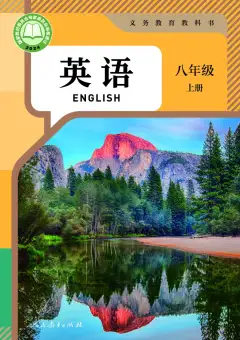
义
务
教
育
教
科
书
八
年
级
上
册
定价:7.70元
五
·
四
学
制
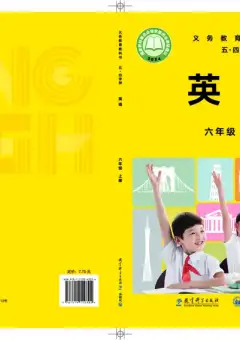
英
语
封面 英语(五四学制) 8年级上册.indd 1
2019/3/14 16:04
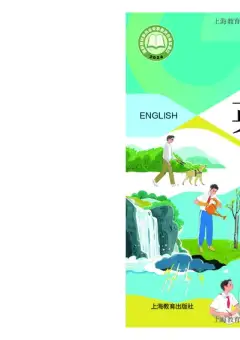
八年级 上册
义务教育教科书
五·四学制
又一个新学年启程了,同学们迎来了八年级的学习生活。
如今,在英语能力方面同学们都已经具备了良好的基础。那么
面对即将开始的八年级的学习,大家是否充满期待,跃跃欲试
呢?
上学期我们跟随课文中的主人公一起初探了航天的奥秘,
了解了旅行的相关知识,纵览了东西方文化的各种差异等。在
学习的过程中我们体验乐趣,增长知识,开阔了国际视野,提
高了跨文化的交际能力。本学期,我们将穿越时空,领略古代
文明与现代科技的进步;探索我们身边的世界,发现一些平时
不被关注但又与我们的生活息息相关的事物;学会关心周围需
要帮助的人,爱护我们的家园。希望通过本册书的学习,同学
们能够更加开阔视野,加深对祖国的了解,养成良好的学习生
活习惯,增强环保意识并积极投身到环保行动中。
在本册教科书的学习中,同学们除了可以继续沿用之前的
学习策略和方法外,还可以适当使用工具书查找信息,尝试利
用图书馆或网络上的学习资源,经常与老师和同学交流学习体
会,从而提高自主学习的能力,逐步形成符合个人特点和需要
的学习策略和学习习惯。
2
10
18
26
32
40
48
56
62
70
78
86
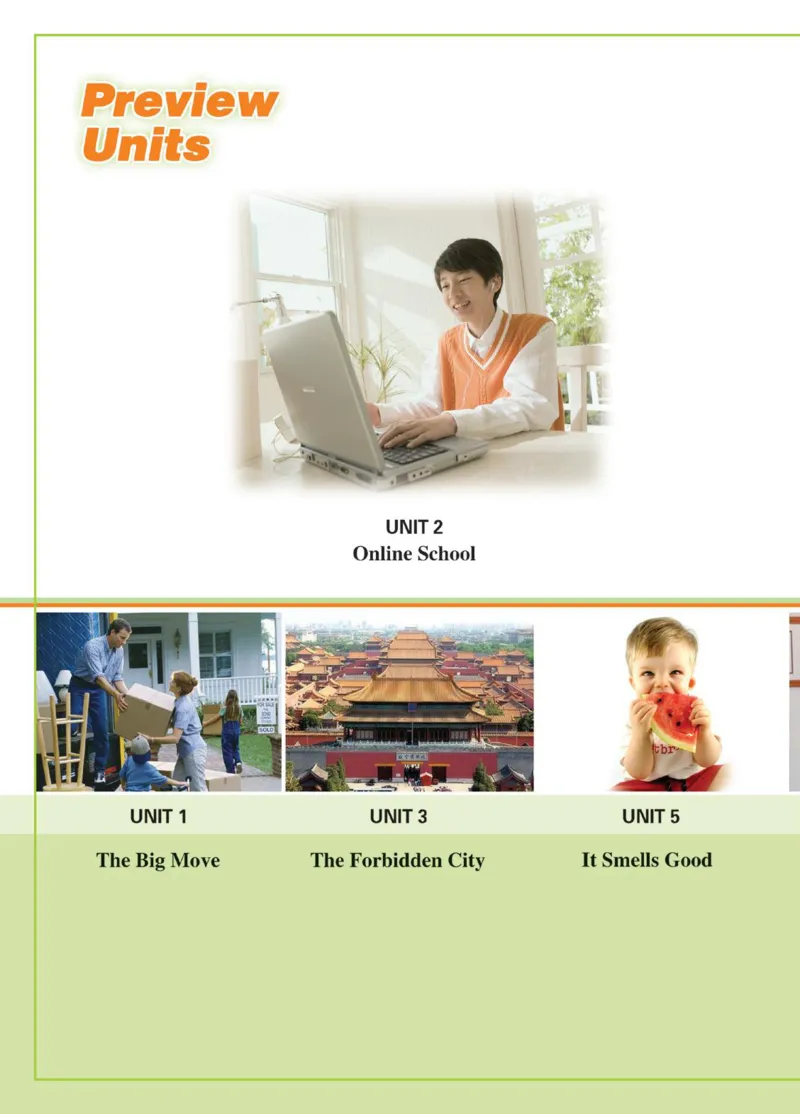
UNIT 1 The Big Move
UNIT 2 Online School
UNIT 3 The Forbidden City
UNIT 4 Review
UNIT 5 It Smells Good
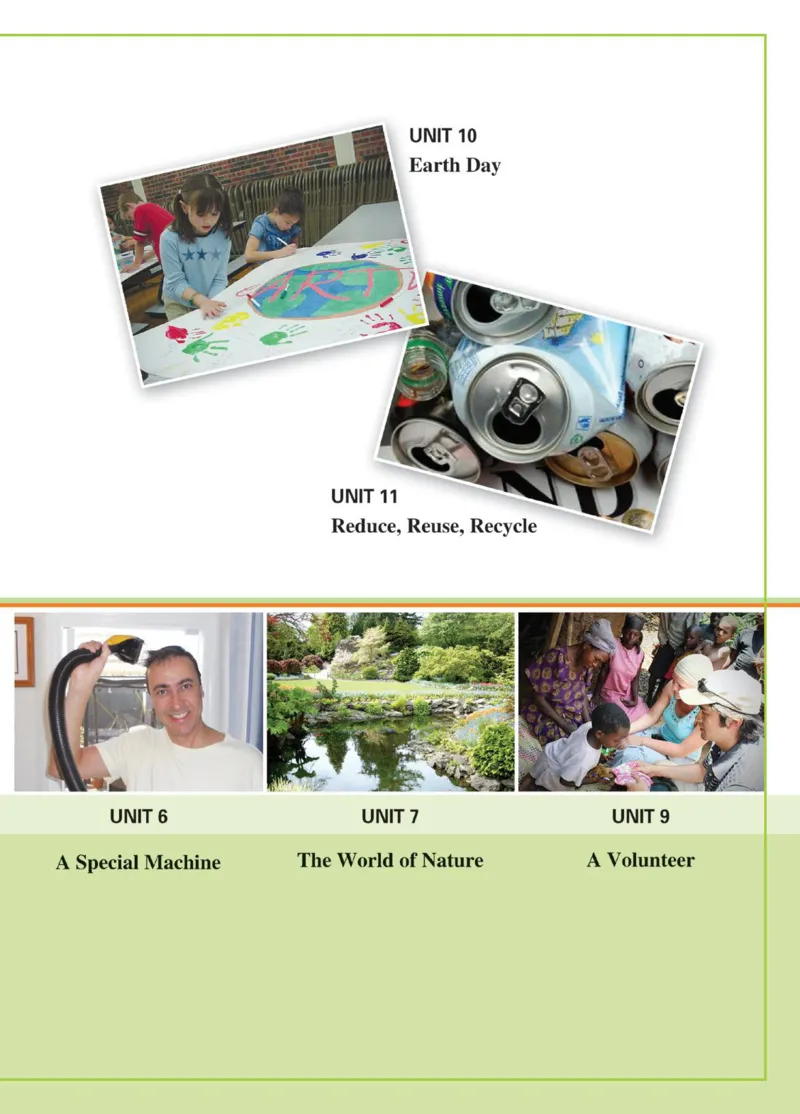
UNIT 6 A Special Machine
UNIT 7 The World of Nature
UNIT 8 Review
UNIT 9 A Volunteer
UNIT 10 Earth Day
UNIT 11 Reduce, Reuse, Recycle
UNIT 12 Review
Notes to the Texts 课文注释
Grammar 语法
Words and Expressions in Each Unit
各单元单词和习惯用语
Vocabulary 词汇表
Listening Script 听力录音稿
Scope and Sequence 单元学习要点
92
103
109
114
119
122
Appendix 附录
The Big Move
Listen to the dialog. Check the correct answer to each question.
Read and complete the sentences about your own feelings.
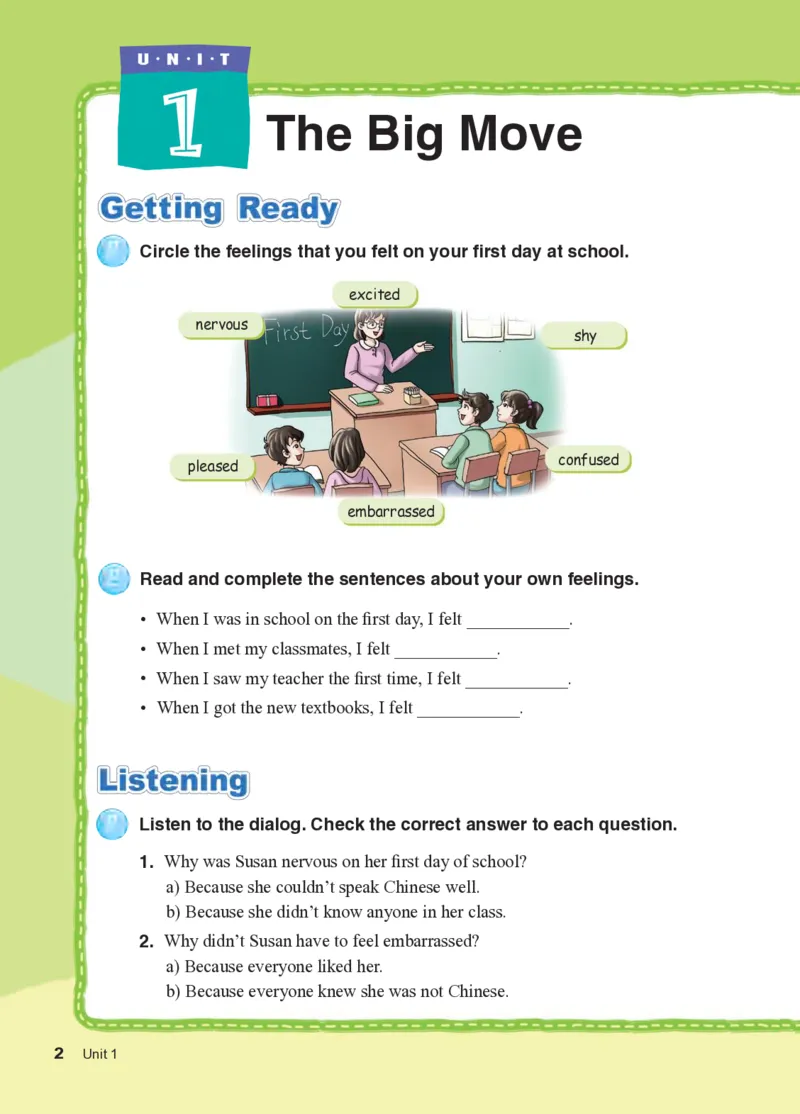
Circle the feelings that you felt on your first day at school.
2
Unit 1
nervous
pleased
embarrassed
confused
excited
shy
• When I was in school on the first day, I felt ____________.
• When I met my classmates, I felt ____________.
• When I saw my teacher the first time, I felt ____________.
• When I got the new textbooks, I felt ____________.
1. Why was Susan nervous on her first day of school?
a) Because she couldn’t speak Chinese well.
b) Because she didn’t know anyone in her class.
2. Why didn’t Susan have to feel embarrassed?
a) Because everyone liked her.
b) Because everyone knew she was not Chinese.
Look at the pictures and talk with your partner. Follow the pattern
in dialog A.
Listen again. Check T for true or F for false.
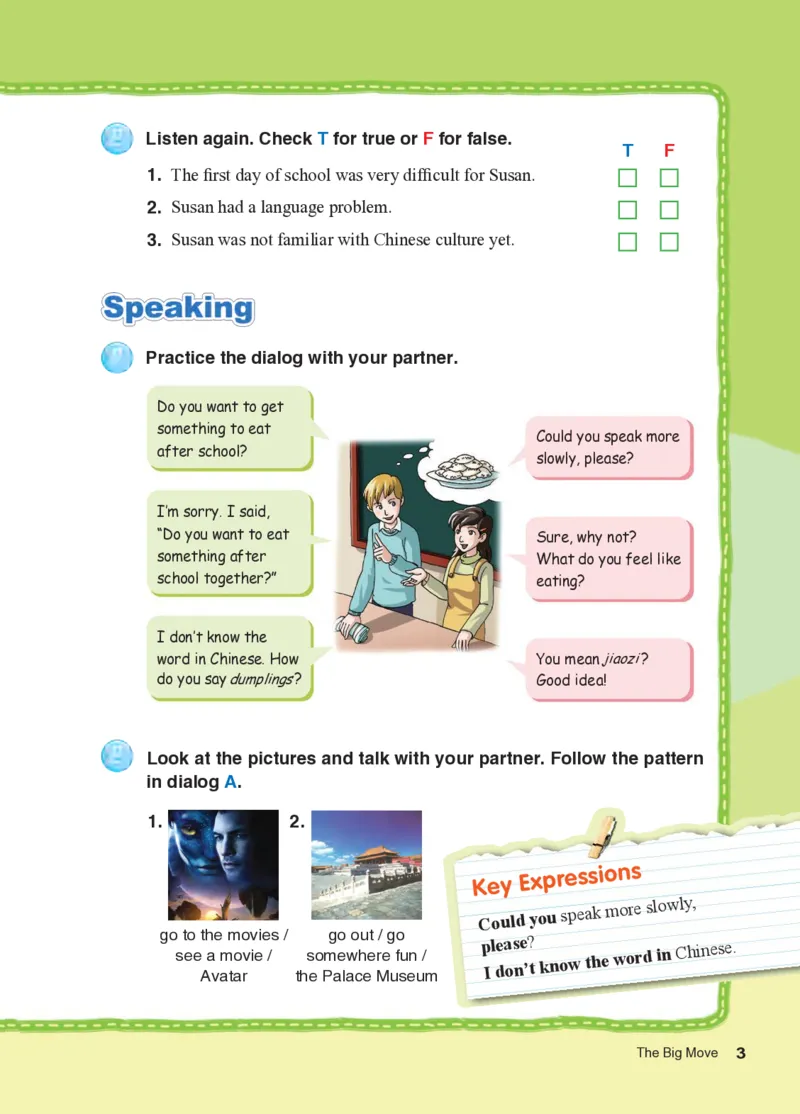
Practice the dialog with your partner.
Key Expressions
Could you speak more slowly,
please?
I don’t know the word in Chinese.
3
The Big Move
You mean jiaozi ?
Good idea!
Do you want to get
something to eat
after school?
I don’t know the
word in Chinese. How
do you say dumplings?
I’m sorry. I said,
“Do you want to eat
something after
school together?”
Sure, why not?
What do you feel like
eating?
Could you speak more
slowly, please?
go to the movies /
see a movie /
Avatar
go out / go
somewhere fun /
the Palace Museum
1. The first day of school was very difficult for Susan.
2. Susan had a language problem.
3. Susan was not familiar with Chinese culture yet.
T F
1. 2.
Before Reading
Think about your last vacation. Share your experience with your partner.
4
Unit 1
1. Where did you go?
2. When did you go there?
3. What happened there?
4. How did you feel?
Reading -- The Big Move
I found my old diary today. I wrote this when I first moved to China. At that
time, I didn’t understand things here. But thanks to Liu Chang, I soon got used to
living in China.
Dear Diary,
Guess where I am. I am in a new country — China! Things are
very interesting, but I am having some problems.
When I arrived at the airport, I was very excited. Then, I
looked at the signs. I couldn’t read them!
I was so confused.
As soon as I went to a restaurant, I had another problem:
eating! My first Chinese meal was very delicious, but I had trouble
eating it. There were no forks on the table, only chopsticks. It
was my first time eating with chopsticks. I dropped food on the table. Nobody laughed at
me, but I felt embarrassed.
Before my first class at school, I was so nervous! I was too shy to talk to anyone.
While I was standing outside, a boy came up to me. He introduced himself. He could
speak English! After I talked with him, I felt better. He told me many things about life
here in China. In fact, now we are friends! My new friend’s name is Liu Chang.
After Reading
Check T for true or F for false.
Choose the best answers.
1. Susan was confused at the airport because she could not ____________.
a) meet her friend
b) read the signs
c) find her bag
d) eat Chinese food
2. Susan felt ____________ before her first class.
a) nervous
b) happy
c) comfortable
d) excited
3. Susan couldn’t talk to anyone at school because ____________.
a) she didn’t know anyone
b) she couldn’t speak Chinese
c) she was too shy
d) she didn’t like her new friends
1. Susan didn’t like Chinese food.
2. Some people laughed at Susan when she dropped her food.
3. Liu Chang introduced himself to Susan.
4. Susan felt better after she talked with Liu Chang.
T F
Read the passage again. Number the sentences in the correct order.
5
The Big Move
Susan and Liu Chang became friends.
Susan met Liu Chang on her first day at school.
Susan came to China.
Susan could not read the signs at the airport.
Susan used chopsticks for the first time.
WORD BOX
come up
guess
embarrased
feel better
laugh at
get used to
Fill in the blanks. Use the words in the WORD BOX. Change the word
forms if necessary.
1. Can you _____________ his age? He is older than he looks.
2. You will soon _____________ driving a car.
3. I felt _____________ when I fell down the stairs.
4. Please take a nap and you will _____________.
5. All my friends _____________ my idea, so I got angry.
6. Our teacher _____________ to our group and handed out the
papers.
Learn this chant. Can you sing it with your book closed?
Listen and repeat. Make sure you pause between each sense group.
1. My first Chinese meal was very delicious, but I had trouble eating it.
2. While I was standing outside, a boy came up to me.
Let’s imagine we’re going on a trip.
We fly in a plane.
We’re going to sing and dance,
And meet new boys and girls.
We’re going to have fun
With our imagination.
6
Unit 1
Listen and read the sentences.
1. When I arrived at the airport, I was very excited.
2. As soon as I went to a restaurant, I had another problem: eating!
• I was very excited when I arrived at the airport.
• I can’t go out before my mom comes home.
• As soon as I arrived at a restaurant, I had another problem.
• While I was standing outside, a boy came up to me.
• After I talked with him, I felt better.
7
The Big Move
Combine the two sentences using the words given.
Fill in the blanks with when, while, before, or after.
Choose the correct words.
1. As soon as / While I arrived here, I felt sick.
2. I was very confused when / while I first moved to China.
3. I go jogging every day before / when I have breakfast.
4. Be quiet after / while I am speaking.
1. ___________ I was doing my homework, my brother played outside.
2. ___________ we make a decision, does anyone want to say anything else?
3. I was reading a newspaper ___________ my brother came in.
4. He looked inside the box ___________ he opened it.
1. I should return the book. I read it. (after)
______________________________________________________________
2. Please tell him to call me. He arrives. (as soon as)
______________________________________________________________
3. I want to finish my homework first. I go shopping. (before)
______________________________________________________________
4. I washed dishes. My mom was cooking. (while)
______________________________________________________________
Write about yourself. Use the words when, as soon as, after, before,
or while.
Unscramble the words to make complete sentences.
Write a diary about your first day at school. Use the sample writing
as a guide.
1. He ___________________________________________ introducing myself.
( while / I / wrote something / was )
2. She came __________________________________________ the classroom.
( as soon as / up to me / entered / I )
3. I felt ______________________________________________ me directions.
( when / embarrassed / a foreigner / asked )
4. We ___________________________________________________________.
( our seats / before / found / started / the show )
8
Unit 1
1. I felt embarrassed _______________________________________________.
2. I was very relaxed _______________________________________________.
3. I felt nervous ___________________________________________________.
4. I was excited ___________________________________________________.
Dear Diary,
In the morning, I was very happy because today was my first day
of eighth grade at school. While I was walking to school, I was very
pleased. But when I entered the classroom, I couldn’t find my best
friend. I was worried about him because he was never absent from
school. After my teacher told us about him, I knew that he moved to
another city and went to a new school. I felt very sorry to hear that.
I hope he will get used to the new teachers and classmates as soon as
possible.
Now work with a new partner. Tell your partner about yourself using
the sentences from Activity A.
Work with a partner. Take turns asking and answering questions
while looking at the information below.
9
The Big Move
1. While I’m in
the school, my
mom /dad is ...
2. When I do
something for
the first time,
I feel ...
3. As soon as
I wake up,
I usually ...
4. Before I go to
bed, I usually ...
5. After I finish
my homework,
I often ...
6. I never ... while
my teacher is
talking.
7. I will ... when
I am older.
8. My mom / dad
usually ... as
soon as she / he
finishes
breakfast.
9. I usually ...
before I go to
school.
10. When I meet
a new person,
I ...
11. I always feel ...
after I
exercise.
12. I never ...
when I watch
a movie.
Tell me about
yourself.
I _______________.
After I finish my homework, I often help my mom cook dinner.
I never talk when I watch a movie.
10
Unit 2
Online School
Listen to the dialog. Check the correct answer for each question.
Put a check next to the things that you like to do on the Internet.
Add more to the list.
What are the students doing with the Internet? Match the pictures
with the correct sentences.
1.
3.
2.
4.
a) I am buying some products.
b) I am looking for information.
c) I am chatting with friends.
d) I am taking online classes.
1. How did Wang Dandan spell “panda”?
a) She spelled it “P-E-N-D-A.”
b) She spelled it “P-A-N-D-A.”
2. What does Wang Dandan do to find some information about pandas?
a) She goes to the library.
b) She uses the Internet.
chat with friends
find information
communicate with teachers
take online classes
do homework
11
Look at the pictures and talk with your partner. Follow the pattern
in dialog A.
1. Wang Dandan knows a lot about pandas.
2. Mike knows the correct spelling of “panda.”
3. Wang Dandan is an Internet expert.
Practice the dialog with your partner.
Thanks!
That’s all right.
I can help you.
Oops! I don’t know
anything about
computers.
My computer doesn’t
work.
What’s the matter?
Oh, you’ve made a
mistake. You should
plug the keyboard in
here, not there.
printer / connect it
to the computer
1.
2.
camera /
press this button
Listen again. Check T for true or F for false.
T F
Key Expressions
You’ve made a mistake.
I don’t know anything about
computers.
Online School
12
Before Reading
Choose your favorite way to study. Tell your partner why.
Reading -- Online School
What does the word “online” mean to you? For most students, it means that
they can use the Internet to find information, send e-mails, or chat with friends. But
for some young people, it means so much more. They use online schools to get an
education. Read the following story to find out how.
Wang Huansheng is a young man with a physical handicap. He
uses a wheelchair because he can’t walk. When he was seven years
old, he became ill. He lost the ability to walk. At first, he tried to
go to school like everyone else. But it was hard for him to travel
to and from school. His family did not know what to do.
One day, his mother read some information in a newspaper about an online school. It
was a free school for handicapped children like Wang Huansheng.
Now Wang Huansheng takes online classes. Online classes
are very convenient for him. He does not have to travel between
home and school any more. The less time he uses to travel, the
more time he can spend studying. Wang Huansheng uses the
Internet to learn different subjects. He can also communicate with his teachers and
hand in homework online.
Sometimes, he feels lonely because he has no friends to talk to. But he is learning
how to make new friends on the Internet.
“Online” classes are very special to young people like Wang Huansheng. The
Internet helps them get a good education even though they are handicapped.
At home
by myself
In the classroom
with my friends
In the library
by myself
By online classes
with cyber teachers
Unit 2
1.
2.
3.
4.
13
After Reading
Check T for true or F for false.
Choose the best answers.
1. What is this reading about?
a) The benefits of online schools. b) The benefits of Internet shopping.
c) The history of online schools. d) The importance of home schooling.
2. How old was Wang Huansheng when he lost his ability to walk?
a) Five years old.
b) Six years old.
c) Seven years old.
d) Eight years old.
3. How does an online school help Wang Huansheng?
a) He can play computer games.
b) He spends less time traveling to school.
c) He doesn’t need to go to the shopping mall.
d) He doesn’t need to communicate with his teacher.
1. Some young people use online schools to get an education.
2. At first, Wang Huansheng tried to go to school like other students.
3. Wang Huansheng can’t communicate with his teachers on the
Internet.
4. Wang Huansheng cannot make new friends on the Internet.
T F
Read the passage again. Fill in the advertisement of Wang
Huansheng’s online school using the words in the hint below.
Most students use the Internet just for playing computer
games! How about using it for a better reason?
You can get a wonderful online education with us.
Save your time; save your _____________!
Free for _____________ students!
Learn different _____________!
Make new _____________!
handicapped
money
friends
subjects
Online School
WORD BOX
handicapped
convenient
hand in
ability
education
even though
Fill in the blanks. Use the words in the WORD BOX. Change the word forms
if necessary.
1. He doesn’t have the ___________ to do this job.
2. The building has a good system for ___________ people.
3. It is very ___________ for you to live near your school.
4. Time is up. ___________ your papers.
5. Most parents want their children to get a good ___________.
6. You need to keep practicing ___________ you are tired.
1. For most students, it means that they can use the Internet to find information,
send e-mails, or chat with friends.
2. Wang Huansheng uses the Internet to learn different subjects.
I learn a lot at school.
My classmates are very friendly.
My teacher helps me every day.
I enjoy doing my homework.
I like my daily life.
14
Listen and read the sentences.
1. His mother read some information in a newspaper about an online school.
2. The Internet helps them get a good education even though they are handicapped.
Learn this chant. Can you sing it with your book closed?
Unit 2
Listen and repeat. Make sure you pause between each sense group.
• He is learning how to make new friends on the Internet.
• I am hungry, but I don’t know what to eat.
• My mom told me when to come back home.
• I don’t know where to go when school vacation begins.
Unscramble the words to make complete sentences.
1. I found out _________________ fruit cheaply. ( to / where / buy )
2. She does not know _________________ next. ( do / what / to )
3. Do you know _________________ it? ( how / spell / to )
4. I asked my father _________________ the machine. ( stop / to / when )
Fill in the blanks like the example below.
1. Can you tell me where I should go?
Can you tell me _________________?
2. Please let me know what I should buy in the store.
Please let me know _________________ in the store.
3. My friend and I talked about when we should take online classes.
My friend and I talk about _________________ online classes.
15
Correct the underlined parts.
• The less time he uses to travel, the more time he can spend studying.
• The longer you look back, the farther you can look forward.
Online School
My English teacher taught me how I can speak English well.
My English teacher taught me ______________ English well.
how to speak
1. The much we have, the more we want.
( )
2. The sooner you do it, the good it will be.
( )
3. The more friends you have, the happy you are.
( )
Complete the sentences with the correct structure of the words
given.
Write about what you do on the Internet.
1.
2.
3.
16
1. When I bought my first computer, I didn’t know _____________ it. (start)
2. On the first day of school, I didn’t know _____________. (go)
3. I don’t know _____________ noodles in the pot. (put)
I take an online class every weekend. It is very convenient for me. The
less time I use to travel, the more time I can spend for myself. Sometimes,
I look for some information for my homework. On weekends, I also like
to chat with my classmates. Before I turn on my computer, I always plan
what to do on the Internet. Then, I do not waste my time.
What do you know about computers? Make sentences using words
from each list.
I know
I don’t know
I’m not sure
how
what
where
to find information on the Internet
to send e-mails
to take online classes
to play computer games
to download music
to do if my computer couldn’t be turned on
I know where to find information on the Internet.
Unit 2
How?
Where?
When?
Tell your group members’ opinions to your partner.
Form groups of five. Interview your group members about taking
online classes.
17
Let me tell you some good
points about online classes.
First, we can learn many
different subjects. Second, ...
● What are good points about taking online classes?
● What are bad points about taking online classes?
A: What are good points about taking online classes?
B: I can learn many different subjects.
A: What are bad points about taking online classes, then?
B: I cannot ask questions directly during the lesson.
Name Good points Bad points
1.
2.
3.
4.
Mike
I can learn many different
subjects.
I cannot ask questions
directly during the lesson.
Online School
19
Look at the pictures and talk with your partner. Follow the pattern
in dialog A.
Listen again. Choose the correct answer to the blank.
Practice the dialog with your partner.
a) the Forbidden City
b) the Dragon Throne
a) take a closer look at
b) sit on
1. The Hall of Supreme Harmony is in _________.
2. Mike wants to _________ the Longyi.
3. Mike takes a picture _________ the building.
a) inside
b) outside
Oh, I’ve left my
dictionary at home.
What are you doing?
I’m not sure.
Why don’t you look it
up in the dictionary?
No, not everything.
What does this word
mean?
Can you understand
everything?
I’m trying to read
about Chinese palaces.
learn about
the MP3 player /
icon / the manual
use the copy
machine / button /
call the company
Key Expressions
What does the word mean?
Why don’t you look it up
in the dictionary?
1. 2.
The Forbidden City
20
Before Reading
Have you ever been to the Forbidden City? Talk about what you know
about it with your partner.
Reading -- The Forbidden City
The tour began in the morning. My family and I were lucky to have a good tour
guide. She could speak English well. She also knew many interesting facts about
the palace. To begin with, she explained that the palace is called the Forbidden City
because no common people could enter it for about five hundred years. But today,
the Palace Museum is open to over a million visitors each year.
It is hard to believe, but our tour guide also told us that the Forbidden City is
the world’s largest palace. Actually, I think this might be true because she said that
there are nine thousand, nine hundred, and ninety-nine rooms in the Forbidden City!
Why not ten thousand? I asked the same question. Our tour guide explained that
the emperor did not want to make “Heaven” angry. I guess ten thousand is a special
number for Chinese people.
Another interesting thing about the palace is its wall. The palace is surrounded
by a wall. The wall is ten meters high. And the wall is surrounded by a small canal of
water. The canal is fifty-two meters wide. The water goes all around the Forbidden
City. I asked the tour guide why these things had been built. She said that there had
been many wars at that time. So the emperors wanted to build a safe place to live
during the wars.
There are so many interesting things to write about. I will never forget my visit
to one of UNESCO’s world heritage sites — the Forbidden City!
Unit 3
21
After Reading
Choose the best answers.
1. How many people visit the Forbidden City each year?
a) Five hundred. b) Ten thousand.
c) More than a million. d) Nine thousand, nine hundred, and ninety-nine.
2. The Forbidden City got its name because ___________.
a) there were many wars at that time
b) it is the largest palace in the world
c) common people were not allowed to go inside the palace
d) it is hard to enter into it because of its walls
3. The emperor didn’t build the palace with ten thousand rooms because
___________.
a) there was a big war at that time
b) he didn’t want to make “Heaven” angry
c) he didn’t have enough money to build ten thousand rooms
d) he didn’t need as many as ten thousand rooms in his palace
1. The Forbidden City is the biggest palace in the world.
2. A canal runs through the Forbidden City.
3. The Forbidden City is one of UNESCO’s world heritage sites.
4. There was no war in China when the palace was built.
Read the passage again. Fill in the blanks with the correct numbers.
The number of the rooms:
The height of the wall:
meters
meters
The width of the canal:
Check T for true or F for false.
T F
The Forbidden City
WORD BOX
heritage
palace
to begin with
lucky
emperor
surround
22
Fill in the blanks. Use the words in the WORD BOX. Change the word forms
if necessary.
1. The lake is _____________ by trees.
2. _____________, let me introduce myself.
3. Twenty-four emperors lived in this _____________.
4. I’m very _____________ to have such a good friend like you.
5. The Forbidden City is an important cultural _____________
of China.
6. The Great Wall was built by the First _____________ of the
Qin Dynasty.
Listen and read the sentences.
Learn this chant. Can you sing it with your book closed?
1. Another interesting thing about the palace is its wall.
2. I will never forget my visit to one of UNESCO’s world heritage sites — the
Forbidden City!
Listen and repeat. Make sure you pause between each sense group.
We’ll take a trip this weekend.
We’ll take pictures of the sea.
That’s what we want to see.
We’ll visit many beautiful sights.
We’ll have fun days and nights.
Unit 3
1. The palace is surrounded by a wall.
2. She said that there had been many wars at that time.
23
Match the two parts of the sentences.
Complete the sentences to represent the same meaning as the
sentences given.
Choose the correct answers.
1. Jane says, “ I am upset.”
Jane __________ that __________ __________ upset.
2. Tim said, “I want some milk.”
Tim __________ that __________ __________ some milk.
3. They said to us, “We will win the game.”
They told __________ that __________ __________ __________ the game.
4. Jane asked Mike, “When are you coming?”
Jane __________ __________ when __________ __________ coming.
• Paul says, “I don’t want to go.”
→ Paul says (that) he doesn’t want to go.
• Mike said, “I am busy.”
→ Mike said (that) he was busy.
• Mary said to me, “I will buy it.”
→ Mary told me (that) she would buy it.
• I asked him, “Where is your hat?” → I asked him where his hat was.
1. Susan said
•
• Susan that she should travel to Beijing.
2. Liu Chang told
•
• everybody that her grandma lived in Beijing.
3. Mike asked
•
• she would like to travel in China.
4. Wang Dandan told •
• her when she was going there.
1. The guide said that China has / had a long history of more than 5,000 years.
2. Liu Chang told me that Changjiang is / was the longest river in China.
3. He said that he takes / took a walk in the morning.
4. Wang Dandan says that paper is / was invented by Chinese people.
• Our tour guide told us that the Forbidden City is the world’s largest palace.
• Susan says that Columbus discovered America in 1492.
The Forbidden City
24
Write about a place you will visit. Use the sample writing as a guide.
This dialog happened yesterday. Read and write what they said.
I want to visit the Summer Palace. My friend Mike has been there
twice. Mike said he couldn’t say how wonderful it was. He also told
me that the Summer Palace is one of the most famous Chinese gardens.
There is a mountain, a lake, and much more. Lots of people say that it’s
in perfect harmony with nature. I’m going to visit the Summer Palace
sometime.
1. Mike asked his friends ___________________________________________.
2. Bill told his friends ______________________________________________.
3. Jane asked Amy ________________________________________________.
4. Amy said ______________________________________________________.
I’ll go to Beijing
next year.
Unit 3
Mike
Bill
Jane
Amy
I’m going to the
Summer Palace.
Will you visit
Beijing, Amy?
Where are you going
during the holidays?
25
Tell your classmates’ travel information to your partner using
reported speech.
Go around the classroom and ask other students the following
questions. Write their answers on the chart.
Name Travel Information
He visited the Great Wall with his family.
The Great Wall means “a ten-thousand-mile long wall ” in Chinese.
He was very proud of China.
Li Jun
Li Jun said that he visited the
Great Wall with his family. He said
that the Great Wall means a ten-
thousand-mile long wall in Chinese.
He told us that he was very proud
of China .
The Forbidden City
● Where did you go for vacation? Who did you go with?
● What does the name of the place mean?
● How did you feel being there?
26
Review
Fill in the blanks to complete the sentences.
Unscramble the letters to make a word that matches the clue.
Match the words in the box. Fill in the blanks. Change the word
forms if necessary.
1. A pretty girl ____________ to me and asked the
way to the City Hall.
2. You should not ____________ him. It’s not polite.
3. You have to ____________ your homework sheet.
4. You’ll ____________ after a good night’s sleep.
1. This is a very large house for a king, a queen, or other important people.
( )
2. This is the process of teaching or learning in a school.
( )
3. You feel shy or worried about what other people think of you.
( )
4. This is the power to do something.
( )
guess handicapped convenient heritage surround
1. High mountains _______________ the town.
2. You should help _______________ people.
3. I _______________ there are about 100 people here.
4. We should keep our cultural _______________.
5. The No.4 bus is very _______________ for me since it stops near my house.
laugh
● ● in
feel
● ● at
hand
● ● up
come ● ● better
Unit 4
p
a
a
l
e
c
c d e n o t i u a
r r a b a e s m s e d
a
i
l
t
i
y
b
27
Listen and draw under the linking parts. Then read the sentences.
Listen and draw / after the parts where you should breathe. Then
read the sentences.
chopsticks
1. Things are very interesting, but I am having some problems.
2. One day, his mother read some information in a newspaper about an online
school.
3. For most students, it means that they can use the Internet to find information,
send e-mails, or chat with friends.
4. My family and I were lucky to have a tour guide.
Write the words in the correct columns according to their stress
patterns.
Keep a listening notebook.
When you listen to a dialog or a recording of a reading
text, write it down in your listening notebook.
Review
Oo
oO Ooo oOo ooOo
1. Before my first class at school, I was so nervous!
2. Nobody laughed at me, but I felt embarrassed.
3. He can also communicate with his teachers and hand in homework online.
4. Our tour guide also told us that the Forbidden City is the world’s largest
palace.
28
Listen and practice with your partner.
1.
3.
5.
2.
4.
6.
A: Where are you going now?
B: I am going to the post office.
___________ tell me the way
to the post office, please?
A: OK. I will.
A: This door does not open.
B: _________________________
You should not pull the door.
You should push it.
A: Oh, I see.
A: Today, I learned a saying “The
early bird catches the worm.”
B: ___________________________
A: It means we should be diligent
if we want to succeed.
A: Do you know how I can listen to
music with this MP3 player?
________________ MP3 players.
B: You should press this button.
A: Thank you.
A: It is very hot. I am very thirsty.
B: _____________ drink ice water
and take a shower?
A: OK. Thank you.
A: Do you know what these are in
English?
B: No. _____________________ in
English. Do you know?
A: Yes. These are “chopsticks” in
English.
Unit 4
29
Choose the correct words.
1. Be quiet after / while I am speaking.
2. After / While she finishes it, she will go home.
3. After / When you are in the library, you should not make noise.
4. I usually take a bath before / as soon as I go to bed.
5. Before / As soon as he heard the news, he turned pale.
Fill in the blanks using how, what, where, or when.
Circle three wrong parts and correct them.
1. I can’t play tennis. Please show me ____________ to play tennis.
2. I don’t know ____________ to take the bus. Do you know any bus stop near
here?
3. I didn’t decide ____________ to wear for my birthday party tomorrow.
4. The traffic light tells us ____________ to cross the road.
I met Susan yesterday. Susan asked me what I
was going to do the next day. I told Susan that I will
go fishing. Then she told if she might join me. I told
her that I wanted to go fishing with you, too.
Review
30
Ask your partner the following questions and write down the
answers on the lines like in the example.
Create sentences using the words given.
1. how to ...
2. what to ...
3. where to ...
4. when to ...
I asked Mike where he was going next weekend. Mike told me
that he was going to City Park next weekend. I asked him who he
was going with. He said that he was going there with his friends. I
asked him what he was going to do there. He said that he was going
to take pictures.
• Where are you going next weekend?
• Who are you going with?
• What are you going to do there?
1. He is going to the City Park next
weekend.
2. He is going there with his friends.
3. He is going to take pictures.
1.
2.
3.
Now write about your partner’s plan for next weekend based on
the answers in Activity B. Use the sample writing as a guide. Then
present it to the class.
Unit 4
31
Play the game.
• Form groups of six.
• Prepare word cards with the words below.
• Turn the cards over.
• Decide who will go first by playing “rock, scissors, paper.”
• Player 1 chooses one of the cards and makes a sentence using the word on the card.
• The sentence should also include when, after, while, or as soon as.
• If the player makes a correct sentence, he or she gains 2 points and Player 2 takes
a turn. If the sentence is not correct, the card is turned over again and Player 3
takes a turn.
• The player who gains the most points is the winner.
I was very nervous
when I sang a song in
front of my friends.
nervous
pleased
shy
confused
excited
embarrassed
Review
It Smells Good
Listen to the dialog. Number the sentences in the correct order.
a) Tim asks Zhang Wei to speak up.
b) Zhang Wei asks Tim if he can come to her
house.
c) Zhang Wei tells Tim she is eating cookies.
d) Tim says that he will come to Zhang Wei’s
house.
A: What do you usually do with your eyes?
B: I read books with my eyes. I use my sense of sight.
sense of sight
sense of smell
sense of hearing
sense of touch
sense of taste
How do we use the different parts of our body (eyes, ears, nose, mouth,
fingers ... )? Look at the pictures and share your ideas with your partner.
1. 2.
3. 4.
32
Unit 5
Look at the pictures and talk with your partner. Suppose you’re
talking over the telephone. Follow the pattern in dialog A.
Key Expressions
Hello. May I speak to Susan,
please?
This is Amy speaking.
1. Zhang Wei asks Tim to eat out.
2. Zhang Wei made some cookies.
3. Zhang Wei invites Tim to her house.
This is Wang Dandan
speaking.
Hello. May I speak
to Wang Dandan,
please?
Why don’t you come
over and taste the
bread right now?
Wow! I’m sure it
tastes great.
Hi, this is Mike.
What are you doing?
I‘m cooking bread with
my mom.
watch a cartoon
movie / exciting /
watch it together
do homework /
good habit /
do homework together
Listen again. Check T for true or F for false.
T F
Practice the dialog with your partner.
33
1.
2.
It Smells Good
34
Before Reading
Put a check next to the words you can use with each verb. Add one more to
the list.
Reading -- It Smells Good
taste look sound smell feel
good
soft
smart
bitter
tired
delicious
big
lovely
salty
beautiful
sour
noisy
sweet
happy
terrible
A baby learns about the world through the five senses: his eyes,
ears, fingers, nose, and tongue. He sees his parents. They look big to
him. He hears a song. It sounds beautiful. He touches a pillow. It feels
soft. He smells food. It smells good. He eats food. It tastes good.
Wait! Food smells good, and food tastes good, too. Do our noses
and tongues do the same thing? Not really. Let’s look more closely at noses and
tongues. A person’s nose can smell many different things. Try this test. Close your
eyes and tell your friend to put something right under your nose. Now smell it. Can
you tell what it is? Mostly, yes. Our noses are very smart. Most people can smell
thousands of different things. For example, when you smell a rose, you know it
smells different from other flowers.
What about our tongues? A person’s tongue is not as smart as his nose. In the
past, we thought we could only taste four different flavors such as sweet, sour, salty,
and bitter. Some food tastes like sugar or lemons. Other food can taste like salt or
bitter medicine. Recently, however, scientists found out about a
fifth taste. The fifth taste is hard to describe. It’s the taste in meat. A
food like cheese also has this taste.
Why do foods have different flavors? All candy tastes sweet, but
not all candy tastes the same. We use our noses and tongues at the
same time. Thus, grape candy tastes different from orange candy.
Unit 5
taste
look
sound
smell
feel
35
After Reading
Choose the best answers.
1. How many senses do we have?
a) Three senses.
b) Four senses.
c) Five senses.
d) Six senses.
2. Why are our noses “smart”?
a) Because they look nice.
b) Because they smell well like tongues.
c) Because they smell many different things.
d) Because they can taste five different flavors.
3. Where can you find the fifth taste?
a) In meat.
b) In a flower.
c) In candy.
d) In sugar.
1. If we close our eyes and smell something, it’s not easy to tell
what it is.
2. Our tongues are smarter than our noses.
3. We can taste five different flavors.
4. We can taste different flavors of candies using our noses and
tongues.
Read the passage again. Fill in the blanks using the words in the
hint. Change the word forms if necessary.
What does a baby do with
different parts of his body?
What does he learn?
1. He sees his parents.
2. He hears a song.
3. He touches a pillow.
4. He smells food.
5. He eats food.
They ____________ big.
It ____________ beautiful.
It ____________ soft.
It ____________ good.
It ____________ good.
feel
look
smell
taste
sound
Check T for true or F for false.
T F
It Smells Good
36
WORD BOX
pillow
different from
describe
at the same time
smell
recently
Fill in the blanks. Use the words in the WORD BOX. Change the word forms
if necessary.
1. My opinion is ______________ hers.
2. We can’t work and play ______________.
3. I can’t sleep without a ______________.
4. They ______________ returned to Beijing from London.
5. Words cannot ______________ the beauty of the river.
6. If it ______________ bad or strange, do not eat it.
1. Close your eyes and tell your friend to put something right under your nose.
2. In the past, we thought we could only taste four different flavors such as
sweet, sour, salty, and bitter.
1. A baby learns about the world through the five senses.
2. A person’s tongue is not as smart as his nose.
It’s a great day for a picnic.
We eat grapes under the trees.
We see and smell the roses.
We feel so good today.
Learn this chant. Can you sing it with your book closed?
Listen and repeat. Make sure you pause between each sense group.
Listen and read the sentences.
Unit 5
37
Fill in the blanks using the words in the hint below. Change the word
form if necessary.
Correct the underlined parts.
● His parents look big.
● The song sounds beautiful.
● The pillow feels soft.
● The food tastes good.
● The rose smells nice.
1. This tea tastes sweet / sweetly.
2. I felt very strange / strangely in New York.
3. What’s wrong with him? His voice sounds nervous / like nervous.
4. You look / look like your mom when she was young.
5. This milk smells bad / badly. Don’t drink it.
● The candy smells like a lemon.
● I look like my mother.
1. You ___________ great in that dress tonight.
2. Listen to this music. It ___________ wonderful.
3. These flowers ___________ so sweet. I want to buy some.
4. This vegetable soup ______________ too salty. I can’t eat
any more.
5. I ___________ much better after I had a rest.
look
taste
smell
sound
feel
Choose the correct words.
It Smells Good
1. The machine sounds very noise.
( )
2. Judy felt very happily because she got good grades.
( )
3. I saw your picture in the paper the other day, but it didn’t look you.
( )
38
Complete the sentences with your own ideas. Use the verbs given.
Complete the sentences with your own ideas.
You got a letter from a friend in Paris. She explains what a croissant
is like. Now, read the letter and write back to her.
1. Flowers smell __________, but garbage smells __________.
2. Chocolate tastes __________, but medicine tastes __________.
3. Feathers feel __________, but stones feel __________.
4. Classical music sounds __________, but rock music sounds __________.
1. I ate the pizza and ___________________. (taste)
2. I heard some traditional Chinese music and ___________________. (sound)
3. I was in heavy rain and ___________________. (feel)
4. I passed by a garbage can on the street and ___________________. (smell)
5. I saw some children in the park and ___________________. (look)
Dear Wang Dandan,
Hi, it’s Marie from Paris. I had croissants for breakfast. Do you
know what croissants are? Croissants are small bread. They look like
a crescent. French people enjoy having them for breakfast. Croissants
smell really good. Freshly baked croissants taste very delicious. It makes
me happy. When you visit Paris, try some croissants. I am sure you will
like them. Now, please tell me about Chinese food in your next letter. I
am looking forward to hearing from you. Take care.
Your friend,
Marie
Unit 5
39
Play the game.
Form groups of four. Think of three things that you can describe in
the following five ways. Now describe each using the following verbs.
Name of the thing Taste Look Sound Feel Smell
candy sweet hard sweet
How to Play
• Each group in turn comes to the front and describes the things on their list.
• The other groups should try to guess what the group is trying to describe.
Use specific questions for this part.
e.g. Does it taste sweet?
• Each member takes a turn to answer a question.
• If a team gets the correct answer, the team gets 100 points.
• When the game is finished, figure out how many points your group gets.
- Does it taste sweet?
- Yes, it tastes sweet.
- Does it feel soft?
- No, it doesn’t feel soft.
- Then, does it feel hard?
- Yes, it feels hard.
- I think I know the answer!
It’s candy.
- Yes, you are right.
It Smells Good
Choose the correct expression for each blank from Key Expressions.
Practice the dialog with your partner.
1. Wang Dandan wants to have a robot vacuum cleaner.
2. A robot vacuum cleaner cleans the floor by moving back and
forth.
3. They know how much the robot vacuum cleaner is.
Key Expressions
That’s just what I was thinking.
It would be nice to drive it.
Yes, they say it’s
small, but very
powerful.
What is that?
It would be nice
to have one.
Wow! That’s nice.
Can it help me
cool off?
That’s just what
I was thinking.
It is a pocket
motor fan.
1. A: What shall we have for dinner?
B: How about spaghetti?
A: ___________________________
2. A: Wow! Look at that new car.
It looks great.
B: ___________________________
Listen again. Check T for true or F for false.
T F
Practice the dialog with your partner.
41
A Special Machine
42
Before Reading
Do you know who invented the following items and why they invented them?
Talk about them with your partner.
Reading -- A Special Machine
The Flowbee was invented in the late 1980s. What is it? It is a special kind of
machine. It cuts hair with little mess. Was it invented by a barber? No! The Flowbee
was made by an American man who built things with wood.
In 1987, Rick Hunt was working in his wood shop. A
lot of wood was cut in the shop, so little pieces of wood were
everywhere. Pieces of wood were on the ground, on Hunt’s shirt,
and even in his hair. The shop had a big vacuum for cleaning.
Hunt used it to clean not only the shop, but also himself. The
pieces of wood were easily sucked from his clothes and his hair. As Hunt’s hair was
cleaned by the vacuum, he got an idea. “This would be a good way to cut hair with
less mess,” he thought.
Some special parts were added to a common vacuum. In this
way, the first Flowbees were built. Those first Flowbees were sold
out of Hunt’s home. Then, a fall festival was held near Hunt’s
home. He took all of his Flowbees there, and a lot of people
bought them. Next, Hunt went on television with the Flowbee.
More and more Flowbees were sold.
More than a million Flowbees were sold in America over the next ten years.
Today, this interesting machine is sold to people around the world. Hunt’s clever
way to cut hair really works. Sometimes great ideas come from surprising places.
Unit 6
43
After Reading
1. What kind of machine is the Flowbee?
a) A hair cutting machine.
b) A clothes cleaning machine.
c) A wood cutting machine.
d) A house cleaning machine.
2. What was the job of the inventor of the Flowbee?
a) A barber.
b) A carpenter.
c) An office cleaner.
d) A salesperson.
3. Why was the Flowbee invented?
a) To give more beautiful haircuts.
b) To make less mess when we cut hair.
c) To clean pieces of wood on the ground.
d) To give a nice feeling to our heads.
1. Flowbees were invented in 1987.
2. Rick Hunt invented the Flowbee by adding some parts to a
common vacuum cleaner.
3. Flowbees are sold only in the United States.
4. The first Flowbees were sold in a market near Hunt’s house.
a)
b)
c)
d)
e)
Check T for true or F for false.
Choose the best answers.
T F
Read the passage again. Number the pictures in the correct order.
A Special Machine
44
WORD BOX
invent
vacuum
suck
barber
mess
more and more
1. She ______________ orange juice through a straw.
2. He went to the ______________ shop to get his hair cut.
3. This ______________ cleaner is very noisy but powerful.
4. Thomas Edison ______________ a lot of useful things.
5. Our lives are becoming ______________ convenient.
6. Clean up that ______________ before your mom sees it.
1. Hunt used it to clean not only the shop, but also himself.
2. More than a million Flowbees were sold in America over the next ten years.
1. The Flowbee was invented in the late 1980s.
2. He took all of his Flowbees there, and a lot of people bought them.
I love my camera
And I’ll be a good photographer.
Give me a big smile,
When I take a picture of you.
It’ll be a good gift for you.
Fill in the blanks. Use the words in the WORD BOX. Change the word forms
if necessary.
Learn this chant. Can you sing it with your book closed?
Listen and repeat. Make sure you pause between each sense group.
Listen and read the sentences.
Unit 6
45
Fill in the blanks using the expressions in the box below. Change
the form of each be verb.
Complete the sentences to represent the same meanings as the
sentences given.
Fill in the blanks using the words given.
• The Flowbee was made by an American man.
• Was it invented by a barber?
• She was surprised at the news.
• He is very interested in inventions.
1. They speak English in Canada.
English ___________________ in Canada.
2. He wrote the letter yesterday.
The letter ___________________ by him yesterday.
3. My aunt baked these cookies for us.
These cookies ___________________ for us by my aunt.
be satisfied with be known to be covered with be filled with
1. The street _________________________ fallen leaves.
2. The bus _________________________ many people.
3. He is a famous actor. He _________________________ everyone.
4. The customers _________________________ the food in this restaurant.
1. The mail ______________ two weeks ago, but I still haven’t received it. (send)
2. He ______________ to the party yesterday, but he couldn’t go. (invite)
3. This house ______________ by my father. (build)
4. America ______________ in 1492. (discover)
A Special Machine
46
Answer the following questions.
Look at the pictures. Complete the dialogs like the example below.
What do you think the greatest human invention is? Write a few
interesting facts about the invention.
Alexander Graham Bell
Shakespeare
Gustave Eiffel
A: This is a very sad story. Who wrote it?
B: It ____________________________________.
A: This is a very beautiful tower. Who designed it?
B: It ____________________________________.
1. When and where were you born?
______________________________________________________________
2. When was your school built?
______________________________________________________________
3. By whom was your favorite book written?
______________________________________________________________
Interesting Facts about Eyeglasses
1.
2.
The first real eyeglasses were invented in 1284 or 1285. No one
knows exactly who invented them however. We only know that they
were invented by an Italian. After the invention of the printing press
in 1456, people read more books, so more eyeglasses were needed. As
a result, eyeglasses became an important part of everyday life.
Unit 6
A: A telephone is very useful. Who invented it?
B: It ________________________________________.
was invented by Alexander Graham Bell
Now, form groups of four. Talk about your inventions with your
group members.
47
Many inventions were made because of problems in daily life. Do
you have any problems in your daily life? Ask your friends about
their problems and write down an invention that might help them.
Mike has a problem when he
watches TV. He cannot find
the remote control when he
wants to change the channel.
So I want to make a remote
control necklace for him.
Name My friend’s problem Invention
Mike
Remote control necklace
He cannot find the remote
control when he watches TV.
A Special Machine
48
The World of Nature
Listen to the dialog. Why do people cut down trees? Write the missing
information.
Look at the pictures and talk with your partner about how you can
enjoy nature. Add one more activity that you want to do outdoors.
I can climb a mountain. I can swim in the river. I can enjoy the day
under a tree.
What do you want to do?
Read the questions and add one more answer to each question.
1. What do we make with trees?
• paper
• furniture •
2. What do trees give us?
• fresh air
• fruit •
3. What do trees need to grow?
• water
• air
•
3. People make __________.
1. People clear land for __________.
People do this to make __________.
2. People make __________.
Unit 7
49
Talk with your partner. Ask the following questions.
1. Zhang Wei thinks we will have more trees in five years.
2. Mike thinks that people should cut down trees.
3. Zhang Wei thinks protecting nature is the most important thing.
Key Expressions
What makes you think that?
To me, nothing is more important
than respecting nature.
1. What do you think is the most important
thing in life?
2. What makes you think that?
That’s true, but if
we understand the
balance of nature, it
will not harm us.
Because it always
takes care of us. To
me, nothing is more
important than
respecting nature.
I think we can call
nature “mother.”
I agree with you on
that point.
I guess you’re right,
but nature is not
always kind.
Sometimes we have
droughts and floods.
What makes you think
that?
Listen again. Check T for true or F for false.
T F
Practice the dialog with your partner.
The World of Nature
50
Before Reading
What causes natural disasters? How do natural disasters affect people?
Share your ideas with your partner.
Reading -- The World of Nature
Many people call nature around us “mother nature.”
Have you ever thought about why? It is because nature is
like our mother. It is always taking care of us. When you
are cold, the sun can keep you warm. When you are hungry,
the ground can give you food. And in many more ways,
nature always gives us what we need.
On the other hand, nature is sometimes like our enemy. Droughts can dry up all
the water in a large area. Strong storms can harm buildings and destroy crops. These
things happen because man has slowly broken the balance in nature.
Global warming is one example. Scientists say that the earth is getting warmer
and warmer. Humans are the main cause behind global warming. Every day we
drive hundreds of millions of cars and use machines. They create a lot of gases. These
gases keep the sun’s heat from escaping. It causes a greenhouse effect. As a result,
the earth is getting warmer year by year. What is the result?
Some scientists say that storms will become stronger
because of global warming. In many places around the
world, the deserts will get larger. Some plants may die out
because of the warmer weather. The number of harmful
insects will increase. They will carry many kinds of disease.
As you can see, it is important for humans to
understand the balance of nature. We must not do anything to upset this balance.
Otherwise, “mother nature” will no longer be so kind. Nature still wants to take good
care of us. Now it’s time for us to take care of nature.
Unit 7
51
After Reading
1. Why do many people call nature “mother nature”?
a) Because it sometimes gives us food.
b) Because it always takes care of us.
c) Because it always makes us warm with sunlight.
d) Because it protects us from disease.
2. Why is the earth getting warmer?
a) Because the sun is getting hotter.
b) Because gases stop the sun’s heat from escaping.
c) Because the deserts are getting bigger.
d) Because storms are becoming stronger.
3. From the reading, which one is not a result of the greenhouse effect?
a) The deserts will get larger.
b) Some small islands may disappear.
c) The earth is getting warmer.
d) The number of harmful insects will increase.
1. Global warming is caused by humans.
2. Nature can sometimes be our “mother” and other times our
“enemy.”
3. Strong storms will cause global warming.
4. There is nothing we can do to stop global warming.
Storms will become stronger.
Check T for true or F for false.
Choose the best answers.
T F
Read the passage again. Write the causes and effects of global
warming.
The World of Nature
WORD BOX
escape
effect
disease
increase
harm
keep ... from ...
52
1. He broke the door and __________ from the room.
2. I could __________ myself __________ falling asleep.
3. The world population has __________.
4. This movie can have a bad __________ on teenagers.
5. Smoking causes many kinds of __________.
6. Telling lies to a friend can __________ your friendship.
1. Have you ever thought about why?
2. It is always taking care of us.
We cut down trees everywhere.
We throw away things everywhere.
We make things worse everywhere.
Mother nature’s crying somewhere.
Fill in the blanks. Use the words in the WORD BOX. Change the word forms
if necessary.
Learn this chant. Can you sing it with your book closed?
1. Every day we drive hundreds of millions of cars and use machines. They
create a lot of gases.
2. Some scientists say that storms will become stronger because of global
warming.
Listen and repeat. Make sure you pause between each sense group.
Listen and read the sentences.
Unit 7
53
Complete the sentences using the expressions given.
Complete the paragraph using because or because of.
• These things happen because man has slowly broken the balance of
nature.
• Some plants may die out because of the warmer weather.
Match the two parts of the sentences.
1. Lots of lawyers have messy ●
desks
2. Many people couldn’t sleep ●
well last night
3. Dolphins are popular among ●
children
4. Mr. Brown remembered all ●
the names of his students in
a minute
● because of their amazing shows.
● because the weather was too
hot.
● because he has a good memory.
● because of their busy working
schedules.
Many people call nature “mother nature” ____________ nature takes
care of us and gives us what we need. On the other hand, nature is like our
enemy ____________ it also causes droughts and floods. Storms become
stronger and deserts get larger. These things happen ____________ global
warming.
• Fast-food restaurants are popular because __________________.
• Fast-food restaurants are popular because of __________________.
• I was late for school yesterday because __________________.
• I was late for school yesterday because of __________________.
the fast service the service is fast
1.
it rained heavily the heavy rain
2.
The World of Nature
54
Choose the phrases and complete the sentences using because or
because of.
Think and write why nature is important. Use the sample writing as
a guide.
Write some reasons for global warming.
We often forget how important the nature is. Nature gives us what we
need. It gives us water, food, trees, and many other things. Nature also
makes our life better. We can swim in the ocean and play in the green
fields. We shouldn’t hurt nature because it’s very important to our life.
We should protect it because our life depends on it.
all plants and animals depend on each other dirty water
they give people fresh air global warming
1. Recently icebergs are melting _____________________________________.
2. Sea turtles are dying _____________________________________________.
3. We shouldn’t break the balance in nature ____________________________.
4. We should take care of forests _____________________________________.
Global warming is getting more serious ...
● _______________________________________________________________
● _______________________________________________________________
● _______________________________________________________________
● _______________________________________________________________
Unit 7
because people drive hundreds of millions of cars.
55
Take turns explaining your group’s poster to the class. Talk about
what your poster shows and what it means.
Form groups of four. Draw a poster about global warming. The poster
should have a simple slogan which describes your idea.
Global Warming Is Real!
Stop Global Warming
We drew icebergs. They
are melting because of the
greenhouse effect. We
should ...
The World of Nature
56
Review
Choose the words from the box to complete the sentences. Find the
words in the puzzle and circle them.
Circle the phrase to each blank and write it.
____________
____________
____________
____________
everywhere barber invent mess harm describe
1. He carries his camera __________.
2. They made a lot of noise and a __________.
3. Both droughts and floods __________ crops.
4. I can’t find the words to __________ it.
5. The __________ cut the hair of his son.
6. I want to __________ something new like
Edison.
differentpolufromfgh
atyotheorsamejftimed
gpmoreonandbumoreo
1. I’m scared and excited _____________.
2. The story is getting _____________ interesting.
3. My opinion is _____________ yours.
Find the opposite word of each underlined part in the box and write
it.
Unit 8
1. The flood washed the bridge away.
2. Stress can decrease the ability to remember.
3. What was the cause of the fire?
4. I visited the museum long ago.
drought
recently
effect
increase
57
Listen and draw under the linking parts. Then read the sentences.
1. When you smell a rose, you know it smells different from other flowers.
2. The Flowbee was made by an American man who built things with wood.
3. Today, this interesting machine is sold to people around the world.
4. As you can see, it is important for humans to understand the balance of
nature.
Listen and draw / after the parts where you should breathe. Then
read the sentences.
because
1. Recently, however, scientists found out about a fifth taste.
2. Those first Flowbees were sold out of Hunt’s home.
3. Humans are the main cause behind global warming.
4. Scientists say that the earth is getting warmer and warmer.
Review
Oo
oO Ooo oOo ooO
Read something other than your textbook.
Find other reading resources. They can be storybooks,
magazines, newspapers, websites, or whatever you
enjoy reading. Read as much as you can.
Write the words in the correct columns according to their stress
patterns.
58
Listen and practice with your partner.
A: Hello. ________________ Andrew, please?
B: This is Andrew speaking.
Who’s calling, please?
A: Hi, ______________ Amy ______________.
Let’s go to the movie theater tonight.
B: That sounds great.
A: Look at that pretty blue dress!
B: Oh, it’s very cool. ___________________ to
have it.
A: That’s just ___________________________.
B: Let’s go into the shop and try the dress on.
A: That’s a good idea!
A: I think Peter is sick.
B: _____________________________________
A: He didn’t come to school today.
B: To me, nothing is more important than
health.
A: I couldn’t agree more.
1.
2.
3.
Unit 8
59
Choose the correct words.
1. The towers look very new / newly.
2. The cat sounds / sounds like a baby crying.
3. I feel / feel like sorry for you.
4. Sausages taste / taste like good with pancakes.
5. This flower smells / smells like a rose.
Correct the underlined parts.
Circle four wrong parts and correct them.
My son’s room is always fill with trash.
His room always looks messy and smells
like bad. Also his desk is usually covered
by dust. He often loses things because his
bad habit.
Review
1. The book read by me.
2. This flower should water every day.
3. Dogs not allow in this store.
4. The telephone invent by Bell.
5. One hundred people kill in the earthquake yesterday.
60
Look and guess. Then complete the sentences with your own words.
1.
2.
Create sentences using the words given like the example.
Change the word forms if necessary.
1. ( hear / sound )
______________________________________________
2. ( smell / smell )
______________________________________________
3. ( feel / feel )
______________________________________________
4. ( see / look )
______________________________________________
Unscramble the words to make complete sentences.
Unit 8
The man is surprised because
_____________________________.
The woman is upset because
_____________________________.
( taste / taste )
→I _______ candy. It ________ sweet.
taste
tastes
1. opened him the door by .
____________________________________________________________
2. the was letter you by written ?
____________________________________________________________
3. work with the satisfied I am .
____________________________________________________________
4. Canada is in spoken English .
____________________________________________________________
61
Play the game.
• Form groups of four. Two teams play the game together.
• Decide which team will go first by playing “rock, scissors, paper.”
• Player 1 makes a sentence using the words on the board.
• If the player makes a correct sentence, Player 2 makes a new sentence using the
words on the next box. If the sentence is not correct, the opposite team takes a turn.
• The first team to get to the end of the board is the winner.
Review
Zhang Guimei
Zhang Guimei
Zhang Guimei
Zhang Guimei
64
Before Reading
Look at the pictures below. What did the people in the pictures do when
they were alive? Talk about them with your partner.
Reading -- A Volunteer
Mom, you’ve been a volunteer, haven’t you? I think I want to
volunteer somewhere, too. I’m old enough to do it, don’t you think?
Sure you are, Susan. It’s a great idea. I
used to be a volunteer in our hometown in
America for many years. I have also done
this in other countries, too.
Which other countries have you been a
volunteer in?
Well, I have been a volunteer in several countries in Africa. Because
we live in China now, I also do volunteer work here. Since last
year, I have helped at both the local hospital and an elementary
school.
What kind of volunteer work did you do in America?
I worked in schools and nursing homes. Also, I helped any of our
neighbors who needed help. There are so many things which you
can do to help people.
Do they pay you for volunteer work?
No, Susan. A volunteer is a person who does work without being
paid for it. We help people in order to show them our love and
kindness. We feel good when we are showing kindness to others.
What can I do?
I have already seen some jobs which are suitable for you at the local
hospital. Let me talk to some of the nurses right now.
Thank you, Mom. I can’t wait to start.
Albert Schweitzer
Mother Teresa
Florence Nightingale
Susan:
Susan’s mother:
Susan:
Susan’s mother:
Susan:
Susan’s mother:
Susan:
Susan’s mother:
Susan:
Susan’s mother:
Susan:
Unit 9
65
After Reading
After Reading
Check T for true or F for false.
Choose the best answers.
1. What is Susan asking her mother about?
a) Getting a volunteer job.
b) Visiting foreign countries.
c) Working in hospitals.
d) Going back to their own country.
2. What volunteer work has Susan’s mother not done yet?
a) Working in hospitals.
b) Helping at an elementary school.
c) Helping neighbors.
d) Working in children’s homes.
3. After this conversation, what is Susan’s mother going to do?
a) Work at the local hospital.
b) Help Susan find a volunteer job.
c) Go abroad to find different volunteer work.
d) Give some money to Susan.
1. Susan is interested in getting a volunteer job.
2. Susan’s mother doesn’t do volunteer work in China now.
3. Susan’s mother did various kinds of volunteer work in America.
4. Susan’s mother got some money by doing volunteer work.
T F
Read the passage again. Write the missing information.
Susan’s mother
America
Africa
China
schools
a hospital
A Volunteer
66
WORD BOX
volunteer
local
kindness
used to
nursing home
enough to
in order to
Fill in the blanks. Use the words in the WORD BOX. Change the word forms
if necessary.
1. I visit a ________________ twice a month and talk with old
people.
2. She is old ________________ get married.
3. We need more than ten ________________ at this children’s
center.
4. Thank you for your ________________.
5. She works for the ________________ library.
6. When I was younger, I ______________ live in New York.
7. I studied hard ________________ pass the exam.
Listen and repeat. Make sure you pause between each sense group.
Listen and read the sentences.
Learn this chant. Can you sing it with your book closed?
1. I used to be a volunteer in our hometown in America for many years.
2. We help people in order to show them our love and kindness.
1. Which other countries have you been a volunteer in?
2. I have been a volunteer in several countries in Africa.
Treat the poor with kindness,
To help and give them a chance.
Be considerate and wise,
To help and improve their life.
Helping them makes you happy, too.
Unit 9
67
• I helped any of our neighbors who needed help.
• I have already seen some jobs which are suitable for you at the local
hospital.
• There are so many things which you can do to help people.
Match the two parts of the sentences.
Choose the correct words.
1. A pilot is a person •
• a) which lives in Australia.
2. Glasses are things •
• b) who flies planes.
3. Lei Feng is a hero •
• c) which help people see.
4. A kangaroo is an animal •
• d) who lives in the hearts of
many Chinese.
Complete the sentences to represent the same meaning as the
sentences given.
1. A person who drink / drinks a lot of water is healthy
2. The girl who listened to his music was / were happy.
3. I will take the book which is / are on the table.
4. They are the songs which are / were popular in the world.
1. I know a grocery store. It sells really fresh fruit.
I know a grocery store which ___________________________________.
2. Do you know the girls? They are standing by the window.
Do you know the girls who ____________________________________?
3. Liu Chang is reading the letter. Mike wrote it in U.S.A.
Liu Chang is reading the letter ___________________________________.
4. The man is my uncle. He plays the guitar.
The man _____________________________________________________.
A Volunteer
68
What are these things? Complete the sentences like the example
using the words given.
Write some details about a few people in your family or school.
Use the sample writing as a guide.
What do these people do? Look them up in your dictionary. Then
complete sentences like the example.
1. An astronaut is a person who ______________________________________.
2. A waiter is _____________________________________________________.
3. A musician _____________________________________________________.
4. A pioneer ______________________________________________________.
1. A fridge is a machine which _____________________. ( keep / things cold )
2. A kettle is __________________________________________. ( boil / water )
3. A microwave oven ___________________________________. ( heat / food )
4. A food mixer ________________________________________. ( mix / food )
Mike is my cousin who plays soccer very well. He likes music which
makes him excited. He also likes to watch movies which have a happy
ending. He enjoys food that his mom cooks. He wants to be a person who
helps the poor.
Unit 9
A volunteer __________________________________________________.
is a person who does work without being paid for it
A washing machine _______________________________. ( wash / clothes )
is a thing which washes clothes
69
Make a group of eight. Cut a piece of paper into four pieces. In your
group, make sentences to describe your classmates.
• Write one sentence on each piece of paper using who or which. Then give your
pieces to a nearby group. Don’t read the sentences that they give you.
• Is the sentence correct? Listen to your leader say the correct sentences and write
them down in the chart below.
1. Mike wants to have a dog which can play with him.
A Volunteer
How to Play
• Sit in a circle and choose a leader in your group.
• The leader should have all of the pieces from the
other group. Then, the leader whispers a sentence
on one piece to a person in his or her group.
• Keep whispering the sentence to each friend in
your group.
• The last person in line should say the sentence
back to the leader loudly.
Zhang Wei is a girl who likes
telling jokes.
70
Earth Day
Listen and choose the correct answer. What do many people do
today?
Match the students’
actions with the correct sentences.
Write things that can help or hurt the earth.
a)
b)
c)
d)
1.
2.
3.
4.
a) Let’s pick up the garbage.
b) I am throwing garbage on the ground.
c) Put garbage in a garbage can like this.
d) Planting a tree is fun.
Unit 10
What helps the earth?
turning off the lights
saving water
throwing garbage on the ground
cutting down many trees
What hurts the earth?
71
Listen again. Check T for true or F for false.
1. Tim and Wang Dandan want to play more computer games.
2. Most people are outside doing something because today is
Earth Day.
3. Tim and Wang Dandan will go to the mountain to plant trees.
Practice the dialog with your partner.
Key Expressions
I don’t have any interest in swimming .
I suggest we clean up the river.
Talk with your partner. Ask the following questions.
Do you want to go
swimming? I don‛t
have any interest in
swimming.
Hi, Amy. Let‛s go to
the river near
downtown.
Yes. Last weekend,
I was fishing there.
But I caught trash
instead of a fish. It's
No. I suggest we
clean up the river.
Clean up the river?
You are right.
Okay, let‛s go.
1. Do you have interest in protecting
the earth?
2. It’s important to protect the earth.
Do you have any suggestions for
saving our earth?
T F
Earth Day
important to protect
the environment.
72
Before Reading
What kind of pollution do you see in the pictures? Write the names in the
blanks. Then, talk about solutions for the problems with your partner.
Reading -- Earth Day
Have you ever heard of Earth Day? On Earth Day,
we think about life on our beautiful planet. People
celebrate Earth Day on April 22 of every year. That is the
middle of spring, so it is a good time for planting trees
and flowers. Many people plant things in honor of Earth
Day. Some people clean up garbage. At school on Earth
Day, students learn about helping the earth. Teachers often talk about pollution.
Students learn about reducing pollution.
Do you know when it started? The first Earth Day was celebrated by 20 million
people that came from thousands of schools and hundreds of communities across
America on April 22, 1970. The 30th anniversary of Earth Day was in 2000. At that
time, important people from many countries gathered together and wrote a paper.
It says our planet is in trouble. We can fix it, however. We just need to do certain
things. We must think about our planet every day. Also, we should remember Earth
Day every year.
Today, many countries do things in honor of Earth Day. Do
you want to do something for Earth Day, too? Here are some
things we can do. First, plant new trees. Second, don’t throw
cans or paper on the ground. Instead, pick up garbage that is on
the ground. Third, save water. Fourth, turn off the lights that we
are not using. It’s not that difficult to help. Let’s think of every day as Earth Day.
Unit 10
air pollution
soil pollution
water pollution
1.
2.
3.
73
After Reading
Check T for true or F for false.
Choose the best answers.
1. What is this reading about?
a) Three kinds of pollution.
b) Information about Earth Day.
c) How to celebrate Earth Day.
d) How to reduce pollution.
2. Choose the activity that people don’t do on Earth Day.
a) Cleaning up garbage.
b) Planting trees and flowers.
c) Learning about reducing pollution.
d) Writing a letter to important people.
3. From the paper written in 2000, what have we learned?
a) People need more trees.
b) The earth is in trouble.
c) We need to find another planet.
d) Our life will be easier.
1. Earth Day is in the middle of spring.
2. People buy plants to celebrate Earth Day.
3. We need to think of every day as Earth Day.
4. We cannot fix the problems that the earth has.
T F
Read the passage again. Find the information about Earth Day from
the passage and complete the Earth Day campaign poster.
LET’S SAVE OUR EARTH!
Earth Day
The first Earth Day started in America on April 22, _________________.
We can do the following things for our earth on Earth Day.
1. _________________ new trees.
2. _________________ garbage that is on the ground.
3. _________________ water.
4. _________________ the lights that we are not using.
Join us to help save our beautiful planet!
WORD BOX
planet
in honor of
gather
pollution
anniversary
certain
celebrate
74
Fill in the blanks. Use the words in the WORD BOX. Change the word forms
if necessary.
1. _____________ our success, we are going to have a big party.
2. Earth is the third _____________ from the sun.
3. Jane will _____________ her sixteenth birthday next month.
4. Many people are worried about _____________ in China.
5. _____________ members of my club may not agree with my
opinion.
6. Today is the first _____________ of our opening.
7. They ______________ together and cheered for the Chinese
soccer team last night.
Listen and repeat. Make sure you pause between each sense group.
Listen and read the sentences.
Learn this chant. Can you sing it with your book closed?
1. That is the middle of spring, so it is a good time for planting trees and flowers.
2. At that time, important people from many countries gathered together and
wrote a paper.
1. Have you ever heard of Earth Day?
2. Teachers often talk about pollution.
It’s Earth Day.
It’s time to celebrate.
Let’s plant trees and keep earth clean.
Let’s do it all together.
We can save our earth.
We love earth very much.
Unit 10
75
Complete the sentences using the expressions given.
Choose the correct words.
If the sentence can leave out“that”, check in ○, if not, check in ×.
● The first Earth Day was celebrated by 20 million people that came from
thousands of schools and hundreds of communities across America.
● Pick up the garbage that is on the ground.
● Here are some things ( that ) we can do.
1. I met a woman who / which helped me in China.
2. This is the book who / that my aunt wrote.
3. The music who / which the band is playing is a popular Chinese song.
4. I lost my pen who / that my sister gave me for my birthday.
1. This is the alarm clock ___________________________________________.
2. Jackie Chan is an actor ____________________________________________.
3. We checked everything ___________________________________________.
4. The store _____________________________________ sells wonderful toys.
that we needed for travel that I really like
that wakes me up every day that is near my house
Earth Day
1. The eggs that you bought yesterday are bad.
2. We eat the vegetables that we grow.
3. My friend that had an accident is in the hospital now.
4. This is the house that my father built ten years ago.
○ ×
76
Write about an experience of yours that helped our earth. Use the
sample writing as a guide.
Rewrite the sentences using that like the example given in the box.
1. There was a factory that polluted the river near my house.
2.
3.
4.
One day, I walked along the river near our village. When I stopped
to pick up some garbage, I found a water bird that was almost dead
because of water pollution. I took the bird to an animal hospital. I saved
the bird’s life. I felt so sorry and sad. I think that pollution is becoming
more serious. We should stop polluting and save our earth for people and
animals.
Unit 10
1. There was a factory
near my house. It
polluted the river.
2. I was surprised at
some people. They
threw trash on the
street.
4. Our city is full of cars.
They are polluting
the air.
3. There are a few
people in the river.
They are washing
their cars.
77
Form groups of four. What do you think we should do on Earth Day and
why? Ask your group members the question and fill in the chart below.
Why should we do
that?
What do you think
we should do on
Earth Day?
It will make the air
fresh and clean up
the mountain.
I think we should
plant trees on the
mountain and pick up
garbage that people
left on the mountain.
Earth Day
1. to make the air fresh
2. to clean up the mountain
Mike
Name Things to do Reasons
1. plant trees on the mountain
2. pick up garbage that people
left on the mountain
78
Reduce, Reuse, Recycle
Listen to the dialog. Which picture best describes the paper that
Liu Chang will take home?
Look at the pictures below. How long does each item take to break
down in the environment? Look up the answers on the Interent or
Put a check next to the activities that you should do to protect our
environment. Add more to the list.
1.
2.
3.
4.
5.
over 20 days
about ______ months
put newspapers into recycling bins use both sides of paper
pick up trash around the playground use paper cups
use a new plastic bag every time
a) b) c) d)
in a book.
Unit 11
79
Choose the correct expression for each blank from Key Expressions.
Practice the dialog with your partner.
Listen again. Check T for true or F for false.
1. Amy has a separate recycling area.
2. Liu Chang wants to take some used paper for drawing.
3. Amy is glad that Liu Chang can reuse the bottles.
Practice the dialog with your partner.
Key Expressions
I’m very pleased with it.
Do you mind if I open the window?
It’s great that you’re
reusing my toys. I’m
very pleased with it.
What are you doing?
They still look new.
Do you mind if I give
them to my brother?
He will be very
happy with them.
I am throwing my old
toys away.
Of course not.
Go ahead.
1. A: Congratulations! You have passed
the exam.
B: Yes. _________________________
2. A: This room is too hot.
_____________________________
B: Not at all.
T F
Reduce, Reuse, Recycle
80
Before Reading
Look at the pictures. Find out which items you can recycle and how.
Share your ideas with your partner.
Reading -- Reduce, Reuse, Recycle
Many years ago, people never thought about buying drinking
water. But today, millions of people must buy drinking water
because clean water is getting hard to find. This is just one
example of a huge problem. There aren’t enough resources left —
trees, water, oil, fish, animals, or clean air for our future. If we
continue to waste these natural resources, our life will get much
more difficult. One day, we may even have to pay for the air that
we breathe! But it is still not too late. There are things that we can
do to make things better. We can remember the “3R’s” : Reduce,
Reuse, and Recycle. Let’s think about what these three words mean.
To reduce means to use less. Here are some simple things that you can do to
reduce waste.
• Turn off the water while you brush your teeth.
• Take a cloth bag when you go shopping so you won’t need to use plastic bags.
To reuse means to use something again. How can you reuse things? Here are
some examples.
• Buy things that you can fill again and again, like refillable pens and refillable
shampoo bottles.
• Use both sides of a sheet of paper before you use a new one.
To recycle means to make something new from used things. Fortunately,
recycling is now a common practice in most parts of the
world. Here are some materials that can be recycled.
• Paper • Glass • Plastic • Metal
Please remember to reduce, reuse, and recycle. If
you do this, the quality of life will improve for us and our
children.
Unit 11
81
After Reading
Choose the best answers.
1. Why didn’t people buy drinking water many years ago?
a) Because they didn’t have money.
b) Because drinking water was not clean enough.
c) Because there was a lot of clean water to drink.
d) Because they knew a simple method to make water clean.
2. What is the purpose of the “3R’s”?
a) To develop new natural resources. b) To get fresh air to breathe.
c) To save natural resources. d) To stop water pollution.
3. If we continue to waste natural resources, what will happen?
a) Our life will get much more difficult.
b) We will have to buy drinking water.
c) We will not need to practice the “ 3R’s.”
d) There won’t be many problems on the earth.
Check T for true or F for false.
1. We have enough natural resources for our future.
2. To reuse means to make something new from used things.
3. Recycling is becoming more common in many areas.
4. By practicing the “ 3R’s,” our quality of life will improve.
T F
Read the passage again. Put the actions in the correct column.
a Put paper and glass in separate bins.
b Buy products that you can fill again and again.
c Turn off the water when it is not in use.
d Use your own shopping bags when you shop.
e Don’t use just one side of a piece of paper.
Reduce Reuse Recycle
Reduce, Reuse, Recycle
82
WORD BOX
breathe
resource
material
quality
improve
refillable
Fill in the blanks. Use the words in the WORD BOX. Change the word forms
if necessary.
1. Just ________________ deeply and try to relax.
2. Wood and stone are building ________________.
3. There is some hope that things will ________________.
4. The country is rich in natural ________________.
5. You can buy milk in a ________________ glass bottle.
6. This restaurant is famous for its high ________________
of service.
Listen and repeat. Make sure you pause between each sense group.
Listen and read the sentences.
Learn this chant. Can you sing it with your book closed?
1. Many years ago, people never thought about buying drinking water.
2. Use both sides of a sheet of paper before you use a new one.
1. There are things that we can do to make things better.
2. One day, we may even have to pay for the air that we breathe!
Recycle all the things you throw away:
Plastic, paper, cans, or glass.
There’s no need to be wasteful.
All of them are useful.
You can make new things with them.
Recycling will make you creative.
Unit 11
83
• She is even younger than I am.
• He runs far faster than his brother.
• If we continue to waste these natural resources, our life will get much
more difficult.
Using the words given, fill in the blanks like the example below.
Correct the underlined parts.
Choose the correct words.
1. I feel very / much good today.
2. She is very / far brighter than her sister.
3. Planes are very / much faster than the trains.
4. The situation was very / even worse than I thought.
5. You look a lot / very better today.
1. My bag is _____________ than yours. ( far / light )
2. He was perhaps in an _____________ situation than Jean was. ( even / bad )
3. This vacuum cleaner is _____________ than that one. ( a lot / powerful )
4. This dictionary is _____________ than others. ( even / useful )
( )
( )
( )
( )
Reduce, Reuse, Recycle
This box is _____________ than I expected. ( much / heavy )
much heavier
1. This MP3 player is a lot expensive than mine.
2. I like you even much than he does.
3. Andrew is much handsome than his brother.
4. The show was far bad than he had expected.
84
Think about what you can do for nature and write a letter to it.
Look at the pictures. Using the words given, complete the sentences
like the example below.
_________________________________ than I thought.
( water pollution / serious )
1.
2.
3.
even
much
far
a lot
Dear Nature,
I am sorry that you are very sick because we human beings are doing
bad things to you. I promise
Thank you again and I will be your friend forever.
Yours,
Unit 11
Water pollution is much more serious
1. __________________________________________________ than I thought.
( this car / expensive )
2. __________________________________________________ than I thought.
( the movie / exciting )
3. __________________________________________________ than I thought.
( this book / interesting )
85
Choose the greenest persons in your class. Then have them say
something about protecting the environment.
Compare your answers with your partner’s. Who is greener?
How green are you? Read the following and check your answers.
I use paper cups.
I use recycled paper.
I use new plastic bags.
I use both sides of a piece of paper.
I put newspapers into recycling bins.
I turn off the light when I leave a room.
I turn the water off while I am using soap.
I drink cold water with the refrigerator
door closed.
I use a bike or walk when I am traveling
short distances.
never sometimes usually always
Reduce, Reuse, Recycle
86
Review
Complete the puzzle based on the clue sentences.
Choose the word that matches the clue.
Fill in the blanks using the given phrases.
1. being kind toward someone
2. the process of making air, water, and
soil dirty
3. to take air in and out through your
nose and mouth
4. to come together and form a group
breathe
pollution
kindness
gather
1. We arrived early ___________ buy our tickets.
2. This building ____________ be a hotel.
3. The party was held ___________ my teacher who
was leaving.
used to
in honor of
in order to
Unit 12
1. Americans _______________ Thanksgiving Day on the fourth Thursday in
November.
2. She used to work in the _____
_____________ library.
3. You should not ____________
water.
4. What is important is the
________________ of our life.
5. Wood is a kind of building _____________.
87
Listen and draw
under the linking parts. Then read the sentences.
1. I have helped at both the local hospital and an elementary school.
2. It says our planet is in trouble. We can fix it, however.
3. Instead, pick up garbage that is on the ground.
4. There aren’t enough resources left — trees, water, oil, fish, animals, or clean
air for our future.
Listen and draw / after the parts where you should breathe. Then
read the sentences.
Oo
oO Ooo oOo ooO
already
1. I have already seen some jobs which are suitable for you at the local hospital.
2. The first Earth Day was celebrated by 20 million people that came from
thousands of schools and hundreds of communities across America on April
22, 1970.
3. There are things that we can do to make things better.
4. Fortunately, recycling is now a common practice in most parts of the world.
Review
Study out loud.
Say vocabulary words aloud, read passages aloud,
and do pronunciation activities aloud. Study orally not
just mentally!
Write the words in the correct columns, according to their stress
patterns.
88
Listen and practice with your partner.
1.
A: Have you ever heard of Thomas Edison?
B: I think so. _______________ the American
inventor who invented the light bulb?
A: That’s right. He was one of the greatest
inventors of his time.
B: You _____________ know a lot about him.
A: I’m very sleepy.
B: _______________ you should go
to bed.
A: OK. I’ll do that.
A: You know what? I won the first
prize in the English speech contest.
B: Congratulations!
____________________________
A: Thank you for saying so.
A: Let’s go to the mountain near our
school.
B: Do you want to climb the mountain?
______________________ climbing.
A: Really? Climbing is good for your
health.
A: It’s windy today.
B: Yes, it is. It’s a little cold in here.
_________________________ I close
the window?
A: Of course not. Go ahead.
2.
3.
4.
5.
Unit 12
89
Complete the sentences with who or which.
Match two sentences. Then combine the sentences using that like
the example given in the box.
1. The people _______________ live next door are Americans.
2. The shop _______________ sells good bread is closed today.
3. The dictionary _______________ I bought yesterday isn’t very good.
4. Do you know the man _______________ helped Jane yesterday?
1. Penguins are birds.
a) They like eating bamboo.
2. Pandas are animals.
b) They cannot fly.
3. Hami melons are fruit.
c) They grow in Xinjiang.
4. Table tennis is a sport.
d) It is very popular in China.
•
•
•
•
•
•
•
•
Review
Circle the wrong parts and correct them.
My friend Ann is tall, but I am very taller than she is. Ann drinks
many water, but I drink a lot more water than she does. She runs even
fast, but I run far faster than she does. She has many pencils, but I have
much many pencils than she does.
1.
2.
3.
4.
Penguins are birds that cannot fly.
90
Write about your favorite things, using who, which, or that. Use
the sample writing as a guide.
Look at the pictures. Complete the sentences using the words
given.
Unit 12
1.
2.
Frogs jump high, but kangaroos
___________________________________.
Rabbits run fast, but tigers
___________________________________.
This is my favorite book that my mom bought
me last Christmas. The book’s title is The Giving
Tree. The book makes me think about true love.
Monkeys eat many bananas, but elephants
______________________________________.
(even)
(far)
(much)
eat even more bananas
91
• Form groups of four and make a circle.
• Decide who will go first by playing “rock, scissors, paper.”
• The first person starts by making a sentence.
• The next person memorizes the first person’s sentence and repeats it. Then
he or she should add his or her own words using who, which, or that. Look
at the example below as a guide.
• Continue until the last person says a full sentence correctly.
• Write down the sentence of your group and tell the class.
I know a girl who
lost a dog.
I know a girl who lost a
dog that looks like a lion.
I know a girl.
I know a girl who lost a dog that looks like a
lion that runs much slower than a pig.
Play the game.
Write your group’s sentence and check if there are any wrong
parts that need to be corrected.
Introduce the group’s sentence to your class.
Review
Appendix
Notes to the Texts
课文注释
Appendix
附录
Unit 1
1.
I wrote this when I first moved to China.
我第一次来到中国时写了这篇日记。
·move to
搬(家)到……
move 有“移动”的意思,还可以指“搬家”。想表达搬到某处,可在后面接to 加
地点。
例When is she moving to Paris?
她什么时候搬到巴黎去?
2.
I soon got used to living in China.
我很快就习惯了在中国生活。
·get used to
习惯于……
use 本意“使用”,是动词。而used 是形容词,通常用在词组get / become used to
中,意思是“习惯于……”,后面可接名词、代词或动词-ing 形式。
例I蒺m sure I蒺ll get used to the hard work.
我肯定会习惯这项艰苦的工作。
He became used to getting up at 5 o蒺clock in the morning.
他习惯了在早晨五点钟起床。
3.
As soon as I went to a restaurant, I had another problem: eating!
我一去餐厅,就出现了另一个难题:吃饭!
·as soon as
一……就……
as soon as 常用来引导时间状语从句。
例I蒺ll write to you as soon as I get there.
我一到那里就给你写信。
4.
My first Chinese meal was very delicious, but I had trouble eating it.
我的第一顿中餐非常可口,但是要如何吃却使我为难。
·have trouble(in)doing something
做某事有困难
例He has trouble(in)spelling words.
他在单词拼读方面有困难。
92
Notes to the Texts
5.
Nobody laughed at me, but I felt embarrassed.
没有人笑我,但是我感觉很尴尬。
·laugh at(somebody)嘲笑(某人)
laugh 是大笑,出声的笑,与smile 不同,smile 一般指微笑。
例Are you laughing at me?
你是在嘲笑我吗?
She smiled at me and said hello to me.
她朝我微笑并对我说你好。
Unit 2
1.
You蒺ve made a mistake.
你犯了个错误。
·make a mistake
犯错误
例Don蒺t make a mistake again!不要再犯错误了!
2.
You should plug the keyboard in here, not there.
你应该把键盘插头插在这里,而不是那里。
·plug in
接通(电源)
一般指电器的插头与电源连通。
例The girl asked her mother to plug in the TV set.
女孩请她的母亲插上电视机的插头。
3.
Oops!
哎哟!
Oops 是感叹词。在差点出事故,摔破物品,做了令人尴尬的事,说了无理的话,或
泄露了秘密等情况下常用这个词。
例Oops! I nearly dropped my glasses!
哎呀!
我差点把眼镜摔在地上!
Oops! I put in sugar instead of salt.
啊!我错把糖当盐放了。
4.
But it was hard for him to travel to and from school.
但对他来说往返学校很困难。
·be hard(for somebody)to do something (对某人来说)做某事很困难
例It is hard for foreigners to learn Chinese.
对外国人来说学习汉语很困难。
·to and from
往返
to and from school
往返学校
to and from work
上下班
93
Appendix
5.
He can also communicate with his teachers and hand in homework online.
他也可以在网上与他的老师们交流并上传作业。
·communicate with
与……交流
指交换信息,或互相沟通思想、感情。
例Parents sometimes find it difficult to communicate with their teenage children.
孩子长到十几岁,父母有时会发觉难以与他们交流。
·hand in something
上交,提交某物
例We must hand in our homework today.
我们今天必须上交作业。
6.
The Internet helps them get a good education even though they are handicapped.
尽管他们身体残疾,但网络帮助他们获得了良好的教育。
·help somebody(to)do something
帮助某人做某事
例He helped me(to)find my watch.
他帮我找到了手表。
·even though
虽然,尽管
例I can still remember, even though it was so long ago.
虽然这是很久以前的事,可我还是记得。
Unit 3
1.
But today, the Palace Museum is open to over a million visitors each year.
但如今,故宫博物院每年都会迎来超过100 万的参观者。
·over
超过
在这里over 相当于more than,可以表达在数量上“超过……”或“多于……”。
例They have lived here for over twenty years.
他们已经在这里居住超过20 年了。
2.
Actually, I think this might be true because she said that there are nine thousand,
nine hundred, and ninety-nine rooms in the Forbidden City!
事实上,我想这可能是真的,因为她说在紫禁城里有九千九百九十九间屋子!
民间传说故宫的房屋有九千九百九十九间半,为什么恰好要建造这些数量的房屋,
而不是一万间呢?据说因为玉帝天宫的房屋才有一万间,人间皇宫的房屋最多也不
能超过一万间,于是建造时特意造了半间。那么故宫的房屋究竟有多少间呢?1972
94
Notes to the Texts
年经有关古建筑专家们实地调查统计,故宫大小宫殿、堂、楼、斋、阁等共有八千七
百零七间。因此,说故宫房屋有九千九百九十九间半,是不确切的,只是传说而已。
3.
I will never forget my visit to one of UNESCO蒺s world heritage sites
the Forbidden
City!
我将永远不会忘记参观了联合国教科文组织认定的世界文化遗产之一——
—紫禁城!
UNESCO(United Nations Educational, Scientific and Cultural Organization)是联合国教
科文组织。该组织于1946年成立,总部设在法国巴黎。其宗旨是促进教育、科学及
文化方面的国际合作,以利于各国人民之间的相互了解,维护世界和平。UNESCO蒺s
world heritage sites 是联合国教科文组织世界文化遗产,是指被联合国教科文组织和
世界遗产委员会确认的人类罕见的、目前无法替代的财富,是全人类公认的具有突
出意义和普遍价值的文物古迹及自然景观。
Unit 5
1.
This is Wang Dandan speaking.
我就是王丹丹。
·This is ...
我是……
在打电话的时候通常不说I am ...,而用This is ...(speaking).
2.
Not really.
其实并不是这样。
常用于口语。可以表示轻微、委婉的否定,意思为“事实并非如此”。
例- Are you busy now?
你现在忙吗?
- Oh, not really. Why?
哦,不怎么忙,什么事?
- Do you understand?
你懂吗?
- Not really.
不是很懂。
3.
Let蒺s look more closely at noses and tongues.
让我们进一步观查一下鼻子和舌头吧。
词组look at 中间有一个比较级的短语more closely,在这里是“离近看”的意思。
look 在此句中是实义动词,译为“看”,而不是系动词,所以后面不能接形容词
close,只能用它的副词形式closely 来修饰。
95
Appendix
4.
Some food tastes like sugar or lemons.
有些食物尝起来像糖或柠檬。
·taste like ...
尝起来像……
taste like ... 后面通常加名词,类似的表达还有:smell like ... 闻起来像……,sound like
... 听起来像……,等等。
例This chicken tastes like turkey.
这鸡肉吃起来味道像火鸡肉。
This shirt smells like roses.
这件衬衫上的味道闻起来像玫瑰花。
Her voice sounds like a bird singing.
她的声音听起来就像鸟儿在唱歌。
Unit 6
1.
Can it help me cool off?
它能帮我降温吗?
·cool off
冷却,(温度)降下来
例Come on, have some ice cream and cool off.
来,吃点冰激凌,凉快一下。
2.
It would be nice to have one.
如果有一台就太好了。
·It would be nice to ...
如果……就太好了。
表示说话人的某种假设、愿望。
例It would be nice to drink some coffee.
如果能喝点咖啡就太好了。
3.
The Flowbee was invented in the late 1980s.
Flowbee(真空理发器)于20 世纪80 年代晚期问世。
·in the late 1980s
20 世纪80 年代晚期
英文中在年份后面加“s”,代表的是“ 伊伊世纪伊伊年代”。翻译时要把前两位数
字加1 为世纪,后两位数为年代。在前面可以加early, middle of, late 分别表示是
在该时代的“早期、中期、晚期”。
例in the early 1860s
19 世纪60 年代早期
in the middle of 1930s
20 世纪30 年代中期
4.
It cuts hair with little mess.
用它剪头发显得不乱。
“with”在此句中是指伴随着某种情况。
例The door closed with a crash behind him.
门在他身后砰的一声关上了。
He sleeps with the light on.
他开着灯睡着了。
96
Notes to the Texts
5.
Some special parts were added to a common vacuum.
一些特殊的零件被添加在一台普通的吸尘器上。
·add ... to
把……加在……上
此句为被动语态,... be added to 意思是“……被加在……上(里)”。
例Please add some salt to the food.
请给食物加一些盐。
Some salt is added to the food.
一些盐被加进食物中。
6.
Next, Hunt went on television with the Flowbee.
再后来,亨特带着Flowbee(真空理发器)出现在电视荧屏上。
·go on television
上电视
例Mr. Brown will go on television this evening.
布朗先生今晚将会上电视。
·Flowbee 是一种理发工具,用吸尘器把头发吸起再用电动剃发器剪除。使用者完全
可以自行操作,给自己理发,可以节省去理发店的时间和费用。
7.
More and more Flowbees were sold.
越来越多的Flowbee(真空理发器)被售出。
·more and more ...
越来越多的……
本句中more and more 起形容词的作用,修饰后面的名词。
例You will have more and more friends.
你的朋友将会越来越多。
Unit 7
1.
And in many more ways, nature always gives us what we need.
并且在更多方面,大自然会给予我们所需要的东西。
·what we need
我们所需要的
what we need 在整个句子中作give 的直接宾语。
例We have already bought what we need.
我们已经买了我们所需要的。
2.
Droughts can dry up all the water in a large area.
干旱会使大面积的地区缺水。
·dry up
完全变干,干涸
例Many rivers in Africa have dried up recently.
最近非洲许多河流都干涸了。
The sun蒺s heat can dry up the wet clothes.
太阳的热量可以使湿衣服变干。
3.
Scientists say that the earth is getting warmer and warmer.
科学家们说地球正在逐步变暖。
·warmer and warmer
越来越暖
97
Appendix
这是“比较级+ 比较级”的结构,表示“越来越……”。
·get
变成
get 一般强调变化的过程,后面接形容词。
例The days are getting longer and longer.
天越来越长了。
4.
Every day we drive hundreds of millions of cars and use machines. They create a
lot of gases.
每天我们都开着数亿辆小汽车并且使用机器。它们都会产生大量的气体。
·hundreds of millions of ...
亿万的……
英文中没有万、十万等一些汉语中的计数单位,所以要叠用一些计数单位来表达
所想表达的数字。millions of ... 译为“数以百万计的……”,在前面加hundreds
of ...,词面意思为“上百个百万”,译为“亿万的”或“数亿的”。
例We paid hundreds of millions of dollars in taxes.
我们交纳了数亿美元的税金。
5.
These gases keep the sun蒺s heat from escaping.
这些气体阻止太阳的热量消散。
·keep somebody / something from doing something
阻止某人做某事,阻止某事发生
例I don蒺t want to keep you from doing your work.
我不想阻止你去做你的工作。
You should water your flower every day, and keep it from dying.
你应该每天给花浇水,不要让它死掉。
6.
Some plants may die out because of the warmer weather.
由于天气逐渐变暖,有些植物也许会灭绝。
·die out
消失,灭绝
例Why did dinosaurs die out?
为什么恐龙灭绝了?
7.
As you can see, it is important for humans to understand the balance of nature.
如你所见,对于人类来说,了解自然的平衡是很重要的。
·it is important(for somebody)to do something (对某人来说)做某事很重要
例It蒺s important for her to win the game.
对她来说比赛获胜很重要。
8.
Otherwise,“mother nature”will no longer be so kind.
否则,“自然母亲”将不再友善。
·no longer
不再
表示不再继续一直延续的动作或状态。
98
Notes to the Texts
例He was no longer a child.
他不再是小孩子了。
Unit 9
1.
Wasn蒺t she the actress who starred in the movie Roman Holiday?
她不是那个主演电影《罗马假日》的女演员吗?
·star
主演
star 在本句中是动词,译为“主演”。另外它还可作名词,译为“星星”“明星”。
例In his last film he starred as a doctor.
他在最近的一部影片中主演一名医生。
We can see the stars at night.
夜晚我们可以看见群星。
2.
You seem to know a lot about her!
你似乎对她很了解!
·seem to do ...
似乎……
例All my troubles seem to go away.
我所有的烦恼似乎都消失了。
3.
I蒺m old enough to do it, don蒺t you think?
我已经长大,能够做这件事了,您不觉得吗?
·形容词+ enough to do something
足够……去做某事
enough 修饰形容词时,一般放在形容词之后,例如:big enough
足够大,heavy enough
足够重。
例I蒺m tall enough to reach the top of the tree.
我个子很高,能触摸到树顶。
4.
I used to be a volunteer in our hometown in America for many years.
我曾经在我们美国的家乡做过多年志愿者。
·used to be ...
过去曾经是……
例We used to be best friends.
我们曾经是最好的朋友。
Hamburgers used to be my favourite food.
汉堡曾经是我最喜欢的食物。
5.
Do they pay you for volunteer work?
他们会为你的志愿者工作付钱吗?
·pay for ...
为……付款
pay 后面可以接人,表示为某人付款,也可以接钱数,表示付多少钱。for 后面接
名词或动词-ing 形式,表示为了某物或做某事而付款。
例My mother pays for my dinner.
我的晚饭是我妈妈付的款。
They pay me for cleaning the room.
他们付给我打扫房间的钱。
I paid three dollars for the book.
这本书我付了3 美元。
99
Appendix
6.
We help people in order to show them our love and kindness.
我们帮助他人,向他们表达我们的爱心和友善。
·in order to ...
为了……,以便……
表示为了达到某种目的去做某事,后面接动词原形。
例We started early in order to arrive before dark.
为了在天黑前到达,我们很早就动身了。
Unit 10
1.
I don蒺t have any interest in swimming.
我对游泳一点兴趣也没有。
·have interest in ...
对……感兴趣
interest 在本句中意思是“兴趣”,为名词。我们学习过be interested in ...,也译
为“对……感兴趣”,其中interested 是形容词。
例He has interest in reading.
他对读书感兴趣。
When he was young, he was interested in music.
他小时候对音乐感兴趣。
2.
I suggest we clean up the river.
我建议我们把河水清理干净。
·suggest(that)...
建议……
表示向他人提出建议,用于客气地表达不同的想法。suggest 后面从句部分结构应
为:主语+ (should)+ do,表示“建议(应该)做……”。从句中should 可以省略,
动词用原形。
例I suggested that he should stop working.(= I suggested he stop working.)
我建议他停止工作。
3.
Have you ever heard of Earth Day?
你曾经听说过地球日吗?
·hear of
听说
例Have you ever heard of a greenhouse effect?
你曾经听说过温室效应吗?
·Earth Day
地球日
地球日为每年的4 月22 日,是一个世界性的环境保护活动日。该活动是在1970 年
由美国的盖洛德·尼尔森和丹尼斯·海斯发起的,随后影响越来越大。活动旨在
唤起人类爱护地球、保护家园的意识,促进资源开发与环境保护的协调发展,进
而改善地球的整体环境。
100
Notes to the Texts
4.
People celebrate Earth Day on April 22 of every year.
人们在每年的4 月22 日庆祝地球日。
英文中习惯用序数词读日期中“日”的部分。例如:April 22 要读成April twenty-second。
5.
Many people plant things in honor of Earth Day.
许多人以栽种的方式庆祝地球日。
·in honor of ...
庆祝……,纪念……
例The building is in honor of a scientist.
这个大楼是为了纪念一位科学家而建的。
Unit 11
1.
I am throwing my old toys away.
我正要把我的旧玩具扔掉。
·throw ... away
把……扔掉
例Throw the broken dish away.
把碎盘子扔掉。
He threw away the old sofa.
他扔掉了旧沙发。
2.
- Do you mind if I give them to my brother?
如果我把它们给我的弟弟你会介意吗?
- Of course not.
当然不会。
·Do you mind if ...?如果……你会介意吗?
此句用来表达委婉请求别人的同意,也可以表达为:Would you mind if ...?would
表示更加委婉、客气的语气,do 则多用于熟人之间。If 后面引导表达条件的从句。
例Would / Do you mind if I use your cell phone?
你介意我用你的手机吗?
3.
Go ahead.
拿去吧。
ahead 意思是“向前”。go ahead 是口语中常见的表达,表示同意或允许,可译为
“说吧”“做吧”“去吧”等。
例- Can I borrow your dictionary?
我可以借用你的词典吗?
- Yes, go ahead.
可以,拿去吧。
- Can I say something?
我可以说几句吗?
- Yes, go ahead.
可以,说吧。
4.
If we continue to waste these natural resources, our life will get much more difficult.
如果我们继续浪费这些自然资源,我们的生活将变得更加困难。
·continue to do ...
继续做……
101
Appendix
例After finishing my homework, I continue to watch TV.
我写完作业接着去看电视。
5.
We can remember the“3R’s”: Reduce, Reuse, and Recycle.
我们可以记住3R 原则:减量,再利用,再循环。
3R’s 中用“’”把s 与前面字母分隔开,用来表示字母或数字的复数。
例The a蒺s look like u’s in your paper.
你卷子中的字母a 写得像u。
6.
To reduce means to use less.
减量意味着降低使用量。
to reduce 在本句中是动词不定式作主语。除了作主语,动词不定式还可以作宾语等
其他成分。
例To swim with you was very enjoyable.
和你一起游泳我非常高兴。
I decide to look for a job.
我决定找一份工作。
7.
Buy things that you can fill again and again, like refillable pens and refillable
shampoo bottles.
购买能够反复填充的用品,如可重复灌墨水的钢笔和可重复灌洗发剂的瓶子。
·again and again
反复地,再三地
例I have told you her name again and again.
我三番五次告诉过你她的名字。
102
Grammar
语法
Unit 1
时间状语从句
在复合句中,修饰主句的动词、形容词或副词等的从句叫作状语从句。状语从句由
从属连词引导。状语从句根据它表达的意思可分为时间、原因、条件、让步、比较、结
果、目的和方式等状语从句。本单元我们学习时间状语从句。
1. 引导时间状语从句的连词有as soon as, after, before, when, while, as, until / till, since 等。
例如:As soon as I arrive, I will call you.
我一到就给你打电话。
You should return the book after you read it.
你应该在看完书后把它还回去。
When the weather is fine, many people go out for a walk.
当天气好的时候,许多人都出去散步。
Don蒺t make any noise while I am recording.
当我录音的时候别出声。
2. 连词when, while, as 都表示“当……时候”的意思,但用法不同。学习时需要注意以下
几点:
(1)当从句中的谓语动词是表示持续性的动作时,我们可以用when,while 或as。
例如:While / When / As I was watching TV, my mom was cooking in the kitchen.
当我看电视的时候,妈妈正在厨房做饭。
当从句中的谓语动词表示瞬间动作时,不可以用while。
例如:As / When I stopped my car, a man came up to me.
当我停车时,一个人向我走来。
(2)当从句的动作发生于主句动作之前,要用when 引导这个从句,不可用as 或while。
例如:When you finished your work, you may have a rest.
当你完成工作时,你可以休息一下。
(3)当从句表示“随时间推移”,连词应用as,不用when 或while。
例如:As the day went on, the weather got worse.
日子一天天过去,天气越变越坏。
Unit 2
疑问词加动词不定式在句子中的应用;
“the + 比较级,the + 比较级”的句式
1. 疑问词加动词不定式在句子中的应用。
动词不定式前面有时可加上连接代词what, which 或连接副词when, where, how, 主要
Grammar 103
Appendix
用作know, learn, tell, wonder, ask, find, forget, teach, remember, decide, explain 等动词的宾
语,其作用相当于宾语从句。当不定式的逻辑主语和句子的主语一致时,可以用这种句式。
例如:I don蒺t know what to say.
我不知道该说什么。
We蒺d better find out where to put it.
我们最好弄清楚把它放在哪儿。
Please tell me how to play.
请告诉我怎么玩。
I just want to know when to start.
我只是想知道什么时候开始。
2.“the + 比较级,the + 比较级”的句式。
表示两个过程按比例同时增减,翻译为“越……越……”。
例如:The more, the better.
越多越好。
The more you give, the more you gain.
付出越多,得到越多。
Unit 3
动词say,tell 和ask 及后随的宾语从句
动词say,tell 和ask 常用于引述别人或自己讲出的话。在引用别人的原话时,被引
用的句子前后要使用引号,将原话放在引号内。若用自己的话对别人所讲的话加以转述
时,被转述的话不加引号,称之为间接引语,属于宾语从句。由引述动词say 和tell 引出
的句子为间接陈述句;由引述动词ask 引出的句子为间接疑问句。
1. 由引述动词say 或tell 引出的间接陈述句通常用从属连词that 引导,从属连词that 在
句中有时可被省略。间接陈述句中say 后面不加间接宾语(说话的对象),但用tell 转述
时后面可加宾语。
(员)引述动词为现在时的间接陈述句。
间接陈述句的引述动词如果为现在时,随后的间接引语不需改变时态形式,
但有人称的相应变化。这种情况常见于转述刚刚说完的话。
例如:淤Susan says,“I go to school at 7 every morning.”
苏珊说:“我每天早晨7 点钟去上学。”
间接陈述句为:
Susan says(that)she goes to school at 7 every morning.
苏珊说她每天早晨7点钟去上学。
于“I蒺ve bought a new computer,”Peter says to me.
“我买了一台新的计算机。”彼得对我说。
间接陈述句为:
Peter tells me(that)he has bought a new computer.
彼得告诉我他买了一台新的计算机。
(圆)引述动词为过去时的间接陈述句。
间接陈述句的引述动词如果为过去时,其随后的间接引语中的时间关系要向
后推移,引起动词时态的变化。
104
例如:淤Susan said,“My mother is cooking.” 苏珊说:“我妈妈正在做饭。”
间接陈述句为:
Susan said(that)her mother was cooking.
苏珊说她妈妈正在做饭。
于“I will go swimming,”Peter said to me. “我要去游泳。”彼得告诉我。
间接陈述句为:
Peter told me(that)he would go swimming.
彼得告诉我他要去游泳。
(猿)在有些场合,特别是引语表达的是客观事实、普遍真理等,尽管引述动词为过去
时,间接引语中的动词时态也不需改变。
例如:淤He said,“People exchange gifts at Christmas.”
他说:“人们在圣诞节交换礼物。”
间接陈述句为:
He said that people exchange gifts at Christmas.
他说人们在圣诞节交换礼物。
于“The earth moves around the sun,”their teacher told them.
“地球围绕太阳转动。”老师告诉他们。
间接陈述句为:
Their teacher told them that the earth moves around the sun.
老师告诉他们地球是围绕太阳转动的。
2. 由引述动词ask 引出的间接疑问句。
若别人所述的原话是疑问句,在间接转述时要保留原话中的疑问代词或疑问副词作
为引出间接疑问句的引导词,并将原句中的疑问句语序变为陈述句语序。ask 后面可接间
接宾语。
例如:(1)“What are you doing?”she asked me. “你正在做什么?”她对我说。
间接陈述句为:
She asked me what I was doing.
她问我正在干什么。
(2)“When shall we meet again?”asked Marry. “我们何时才能再见面?”玛丽问。
间接陈述句为:
Marry asked when they would meet again.
玛丽问他们什么时候才能再见面。
Unit 5
动词feel, look, smell, sound, taste 可作为系动词的用法
动词按其是否可带有宾语或补语可分类为及物动词、不及物动词和连系动词(系动
词)。在本单元中,我们将具体学习feel,look,smell,sound,taste 这五个最常用动词分
别作为系动词、不及物动词和及物动词时的用法和区别。具体说明如下:
1. 均可作为系动词,后面接形容词作表语,用来说明主语所处的状态,分别译为“摸/
看/ 闻/ 听/ 尝起来……”。除look 之外,其他几个动词的主语往往是物,而不用于人。
Grammar 105
Appendix
例如:These flowers smell very sweet.
这些花闻起来很香。
This pillow feels very soft.
这个枕头摸起来很软。
2. 这些动词后面也可接介词like 短语,like 后面常用名词。
例如:Her idea sounds like fun.
她的主意听起来很有趣。
You look like your mother.
你长得像你的母亲。
3. 这些动词也属于实义动词,既可作及物动词也可作不及物动词,其主语通常是人。
例如:We smelt the roses.
我们闻了闻这些玫瑰花。
The child felt cold.
这个孩子感觉冷。
Don蒺t sound“h”in“hour.” 在“hour”这个单词中,“h”不发音。
Unit 6
被动语态(域)
前面我们已经初步认识了被动语态,在本单元我们将学习被动语态中介词的用法。
1. 被动语态中通常用介词by 后加表示动作的执行者。
例如:This book was written by Lu Xun.
这本书是鲁迅写的。
当我们不知道谁是动作的执行者,或者没有必要指出谁是动作的执行者时,此部分
可以省略。
例如:This computer was made in China.
这款计算机是中国制造的。
The book was published in 2000.
这本书是2000 年出版的。
2. 运用其他介词后加动作的执行者。
例如:The mountain is covered with snow.
那座山被雪覆盖了。
She is a famous singer. She is known to a lot of people.
她是一位著名的歌手。她被很多人所熟知。
Unit 7
because 和because of
because 和because of 都可以译为“因为”“由于”,表示原因。它们的区别如下:
1. because 是连词,引导原因状语从句,后面跟一个完整的句子。
例如:He didn蒺t go to school because he was ill.
他没去上学是因为他生病了。
2. because of 是一个介词短语,后跟名词、名词性的词组或动词-ing 形式。
例如:He didn蒺t go to school because of his illness.
由于生病他没去上学。
Unit 9
定语从句(I)
在主从复合句中,起定语作用的从句被称作定语从句。定语从句对其修饰的名词起
限定作用。
106
例如:She is the teacher who teaches us English.
她就是教我们英语的
。
从上述例句中的英、汉两种不同句式的比较来看,英语的定语从句是一组内含主谓
结构的从句(who 是主语,teaches 是谓语),置于被修饰名词(teacher)之后,而汉语的
定语是一组带有“的”字的动宾结构(汉语译文中的“教”是动词,“我们”是宾语),
置于被修饰名词(老师)之前。这是同学们在英、汉互译中需掌握的要点。
学习并掌握定语从句的要领:
1. 定语从句由关系代词who (指人)、which (指事物)、that (兼指人或物)等引出。
2. 关系代词在主从复合句中起双重作用:一方面,它指代主句中被修饰或限定的名词
“先行词”,使主句与从句成为一体,从而起到连接词的作用;另一方面,这些起连接作
用的关系代词又在从句的内部充当从句中的某一成分。
例如:(1)They met Dandan who visited America last year.
他们遇见了去年访问美国的丹丹。
关系代词who 指代主句中被修饰的人Dandan,Dandan 是先行词;who 又在
定语从句中作主语,是谓语动词visited 的执行者;who 起到了连接主句与从
句的作用。
(2)This is the question which Mr. Brown asked me.
这就是布朗先生问我的那个问题。
关系代词which 指代主句中被限定的事物question,question 是先行词;which
又在定语从句中作asked 的宾语;将从句中的宾语which 提到定语从句之首
并置于主句的先行词question 之后,在句子结构上起到了连接主句和从句的
作用。
上述两个例句中的who 与which 可以分别用that 替换。
Unit 10
定语从句(II)
在定语从句中,关系代词that 指代“人”时,相当于who;指代“事物”时,相当
于which,在定语从句中作主语或宾语,作宾语时通常可以省略。
例如:The boy that / who is singing a song is from Canada.
那个正在唱歌的男孩来自加拿大。
The house that / which was built here last year is my father蒺s.
去年在这里盖的那栋房子是我爸爸的。
The gesture(which / that)we have learned means“Okay.”
我们学习过的那个手势意思是“好的”。
Grammar 107
Appendix
Unit 11
修饰比较级的副词
形容词和副词比较级前可加much, a little, a lot, far, even 等词或词组来修饰,用来加
强比较的语气或程度,在句中作状语。
例如:This text is much more difficult than that one.
这篇课文比那篇课文难很多。
Your apple is a little bigger than mine.
你的苹果比我的大一些。
I feel a lot better today.
我今天感觉好多了。
This is far better than that.
这个比那个好很多。
She is even prettier than her sister.
她甚至比她妹妹还漂亮。
108
Words and Expressions in Each Unit
各单元单词和习惯用语
Unit 1
* pleased /责造蚤蘼扎凿/ adj. 高兴的
2
* embarrassed /覦皂謖遭覸则藜泽贼/ adj. 尴尬的,难堪的
2
* confused /噪藜灶謖枣躁怎蘼扎凿/ adj. 困惑的,烦恼的
2
* tough /贼蘧枣/ adj. 困难的,艰苦的
2
guess /弈es/ v. 猜,猜想
2
get used to
习惯于……
2
thanks to
多亏;由于
2
somewhere /謖泽蘧皂憎e藜/, /謖泽蘧皂謣h憎e藜r/ adv. 某地
3
as soon as
一……就……
4
fork /枣蘅蘼(r)噪/ n. 餐叉
4
chopstick /謖贼蘩鬑责(謣)泽贼覦噪/ n. 筷子
4
laugh at
嘲笑
4
come up
走近
4
* nap /灶覸责/ n. 小睡,打盹
6
take a nap
小睡一下
6
hand out
分发;拿出
6
paper /謖责藻覦责藜(r)/ n. 卷子;论文;报纸
6
return /则覦謖贼誻蘼(r)灶/ v. 归还;返回
7
classroom /謖噪造藁蘼泽则怎蘼皂/, /謖噪造覸泽謣则怎蘼皂/ n. 教室
8
relaxed /则覦謖造覸噪泽贼/ adj. 放松的
8
absent /謖覸遭泽灶贼/ adj. 缺席的,不在场的
8
Unit 2
* expert /謖藻噪泽责誻蘼(r)贼/ n. 专家;能手
10
* plug /责造蘧弈/ v. 插入
11
* oops /尬责泽/ int. 哎哟
11
* press /责则藻泽/ v. 压;按
11
* button /謖遭蘧贼灶/ n. 按钮
11
printer /謖责则覦灶贼藜(r)/ n. 打印机
11
connect /噪藜謖灶藻噪贼/ v. 连接
11
* cyber /謖泽葬覦遭藜(r)/ adj. 计算机(网络)的
12
physical /謖枣覦扎覦噪造/ adj. 身体的
12
* handicap /謖澡覸灶凿覦(謣)噪覸责/ n. 障碍,阻碍
12
* wheelchair /謖憎蚤蘼造(謣)贼蘩藻藜(r)/ n. 轮椅
12
ability /藜謖遭覦造藜贼蚤/ n. 能力;才能
12
* handicapped /謖澡覸灶凿覦(謣)噪覸责贼/ adj. 身体有缺陷的,12
残疾的
* convenient /噪藜灶謖增蚤蘼灶蚤藜灶贼/, /噪藜灶謖增蚤蘼灶躁藜灶贼/ adj. 方便的12
subject /謖泽蘧遭凿廾覦噪贼/ n. 学科,科目
12
hand in
交上;递交
12
lonely /謖造藜尬灶造蚤/ adj. 孤独的,寂寞的
12
though /奁藜尬/ conj. 尽管,即使
12
Words and Expressions in Each Unit
注:带* 的词为非《英语课程标准》要求掌握的词。单词后的数字是指本单词第一次出现时所在的页码。
在英式发音和美式发音有区别时,英式发音在前,美式发音在后。
109
Appendix
even though
即使,纵然
12
* benefit /謖遭藻灶藜枣覦贼/ n. 利益,好处
13
importance /覦皂謖责蘅蘼(r)贼灶泽/ n. 重要性
13
cheaply /謖贼蘩蚤蘼责造蚤/ adv. 便宜地
15
* download /謣凿葬尬灶謖造藜尬凿/, /謖凿葬尬灶謣造藜尬凿/ v. 下载
16
directly /凿藜謖则藻噪贼造蚤/ adv. 直接地
17
Unit 3
forbidden /枣藜(则)謖遭覦凿灶/ adj. 被禁止的
18
the Forbidden City
紫禁城
18
temple /謖temp藜l/, /謖templ/ n. 神殿;庙宇
18
heaven /謖hev藜n/ n. 天堂;天空
18
Temple of Heaven
天坛
18
Summer Palace
颐和园
18
square /泽噪憎e藜(r)/ n. 正方形;广场
18
tower /謖贼葬尬藜(则)/ n. 塔
18
supreme /su蘼謖责则蚤蘼皂/ adj. 至高的;最重要的
18
harmony /謖澡藁蘼(则)皂藜灶蚤/ n. 协调;融洽
18
Hall of Supreme Harmony
太和殿
18
dragon /謖dr覸弈藜灶/ n. 龙
18
throne /夼则藜尬灶/ n. 王位;宝座
18
Dragon Throne
龙椅
18
* icon /謖葬覦噪鬑灶/ n. 图标
19
* manual /謖皂覸灶躁怎藜造/ adj. 手工的
19
tour /贼尬藜/ n. 旅行,观光
20
lucky /謖造蘧噪蚤/ adj. 幸运的
20
to begin with
首先,起初
20
Palace Museum
故宫博物院
20
visitor /謖增覦扎覦贼藜(则)/ n. 参观者;游客
20
* surround /泽藜謖则葬尬灶凿/ v. 包围,围绕
20
* canal /噪藜謖灶覸造/ n. 运河,沟渠
20
wide /憎葬覦凿/ adj. 宽的
20
* UNESCO /躁怎蘼謖灶藻泽噪藜尬/ n. 联合国教科文组织
20
* heritage /謖澡藻则覦贼覦凿廾/, /謖澡藻则藜贼覦凿廾/ n. 文化遗产
20
* site /泽葬覦贼/ n. 地点,位置
20
width /憎覦凿夼/ n. 宽度
21
cultural /謖噪蘧造贼蘩藜则藜造/ adj. 文化的
22
* dynasty /謖凿覦灶藜泽贼蚤/, /謖凿葬覦灶藜泽贼蚤/ n. 王朝,朝代
22
Unit 4
queen /噪憎蚤蘼灶/ n. 女王,皇后
26
* process /謖责则藜尬泽藻泽/, /謖责则鬑泽藻泽/ n. 过程
26
* worm /憎誻蘼(则)皂/ n. 虫
28
pale /责藻覦造/ adj. 苍白的
29
cross /噪则鬑泽/ v. 横跨;穿越
29
Unit 5
* sight /泽葬覦贼/ n. 视力
32
smell /泽皂藻造/ n.& v. 嗅觉;闻
32
hearing /謖澡覦藜则覦耷/, /謖澡覦则覦耷/ n. 听力,听觉
32
cartoon /噪藁蘼(则)謖贼怎蘼灶/ n. 动画片
33
* bitter /謖遭覦贼藜(则)/ adj. 苦的
34
* tongue /贼蘧耷/ n. 舌头
34
* pillow /謖责覦造藜尬/ n. 枕头
34
recently /謖ri蘼泽灶贼造蚤/ 葬凿增. 最近,近来
34
describe /凿覦謖s噪则葬覦遭/ v. 描述
34
* thus /奁蘧泽/ adv. 因此,这样
34
grape /弈则藻覦责/ n. 葡萄
34
110
garbage /謖弈藁蘼(则)遭覦凿廾/ n. 垃圾
38
* feather /謖枣藻奁藜(则)/ n. 羽毛
38
stone /泽贼藜尬灶/ n. 石头
38
* croissant /謖噪憎藁蘼泽鬑耷/, /噪憎蘅蘼謖泽鬑灶贼/ n. 羊角面包,
38
新月形面包
* crescent /謖噪则藻泽灶贼/ n. 新月,月牙
38
Unit 6
* vacuum /謖增覸噪躁尬藜皂/ n. 真空
40
vacuum cleaner
真空吸尘器
40
* oven /謖蘧增藜灶/ n. 烤炉,烤箱
40
microwave oven
微波炉
40
* conditioner /噪藜灶謖凿覦蘩藜灶藜(则)/ n. 调节器
40
air conditioner
空调设备
40
dish washer
洗碗机
40
imagine /覦謖皂覸凿廾覦灶/ v. 设想,想象
40
salesperson /謖泽藻覦造扎謣责誻蘼(r)泽灶/ n. 售货员
40
* motor /謖皂藜尬贼藜(则)/ adj. 机动的
41
motor fan
电扇
41
powerful /謖责葬尬藜(则)枣藜造/ adj. 强大的;有效的
41
mess /皂藻泽/ n. 混乱
42
* barber /謖遭藁蘼(则)遭藜(则)/ n. 理发师
42
* suck /泽蘧噪/ v. 吮吸
42
* carpenter /謖噪藁蘼(则)责藜灶贼藜(则)/ n. 木匠
43
* haircut /謖澡藻藜(r)(謣)噪蘧贼/ n. 发型,发式
43
* straw /泽贼则蘅蘼/ n. 吸管
44
invention /覦灶謖增藻灶蘩藜灶/ n. 发明,创造
45
fallen /謖枣蘅蘼造藜灶/ adj. 落下的
45
customer /謖噪蘧泽贼藜皂藜(则)/ n. 顾客
45
* Alexander Graham Bell /謣覸造覦弈謖扎藁蘼灶凿藜謖弈则藻覦藜皂遭藻造/ 46
亚历山大·格雷厄姆·贝尔(美国发明家)
* Gustave Eiffel /弈尬謖泽贼藁蘼增謖葬覦枣藜造/
46
居斯塔夫·埃菲尔(埃菲尔铁塔设计者)
whom /澡怎蘼皂/ pron.(who的宾格)谁
46
eyeglasses /謖葬覦弈造藁蘼泽覦扎/, /謖葬覦謣弈造覸泽覦扎/ n. 眼镜
46
exactly /覦弈謖扎覸噪贼造蚤/ adv. 精确地,确切地
46
printing press
印刷机
46
everyday /謖藻增则覦(謖)凿藻覦/ adj. 日常的,每天的
46
* remote /则覦謖皂藜尬贼/ adj. 远离的
47
control /噪藜灶謖贼则藜尬造/ n. 控制;管理
47
remote control
遥控(装置)
47
* necklace /謖灶藻噪造覦泽/ n. 项链
47
Unit 7
* furniture /謖枣誻蘼(则)灶覦贼蘩藜(则)/ n. 家具
48
human /謖澡躁怎蘼皂藜灶/ n. 人类
48
land /造覸灶凿/ n. 陆地;土地
48
respect /则覦泽謖责藻噪贼/ v. 尊敬
49
* drought /凿则葬尬贼/ n. 干旱,旱灾
49
* flood /枣造蘧凿/ n. 洪水
49
harm /澡藁蘼(则)皂/ v. 损害,伤害
49
ever /謖藻增藜(则)/ adv. 曾经
50
enemy /謖藻灶藜皂蚤/ n. 敌人
50
dry up
枯竭
50
* destroy /凿覦謖泽贼则蘅覦/ v. 破坏,摧毁
50
* crop /噪则鬑责/ n. 农作物,庄稼
50
global /謖弈造藜尬遭造/ adj. 全球的
50
effect /覦謖枣藻k贼/, /藜謖枣藻噪贼/ n. 影响;效果
50
Words and Expressions in Each Unit 111
Appendix
* greenhouse effect
温室效应
50
as a result
结果,因此
50
* desert /謖凿藻扎藜(则)贼/ n. 沙漠;荒地
50
die out
(指物种等)绝种,绝灭
50
harmful /謖澡藁蘼(则)皂枣藜造/ adj. 有害的
50
insect /謖覦灶泽藻噪贼/ n. 昆虫
50
increase /覦灶謖噪则蚤蘼泽/ v. 增加,增多
50
disease /凿覦謖扎蚤蘼扎/ n. 疾病
50
no longer
不再
50
sunlight /謖泽蘧灶(謣)造葬覦贼/ n. 阳光
51
friendship /謖枣则藻灶凿蘩覦责/ n. 友谊
52
service /謖泽誻蘼(则)增覦泽/ n. 服务
53
* lawyer /謖l蘅蘼躁藜(则)/ n. 律师
53
messy /謖皂藻泽蚤/ adj. 凌乱的,散乱的
53
among /藜謖皂蘧耷/ prep.(表示位置)处在……中
53
* iceberg /謖葬覦泽(謣)遭誻蘼(则)弈/ n. 冰山
54
serious /謖泽覦藜则i藜泽/, /謖泽覦则i藜泽/ adj. 严重的;严肃的
54
* ocean /謖藜尬蘩藜灶/ n. 海洋
54
Unit 8
bridge /遭则覦凿廾/ n. 桥
56
* decrease /凿覦謖噪则蚤蘼泽/ v. 减少
56
earthquake /謖誻蘼(则)夼(謣)噪憎藻覦噪/ n. 地震
59
* trash /贼则覸蘩/ n. 垃圾,废物
59
* dust /凿蘧泽贼/ n. 灰尘
59
Unit 9
volunteer /謣增蘅造藜灶謖贼覦藜(r)/ n. 志愿者
62
v. 自愿(做某事)
village /謖增覦造覦凿廾/ n. 村庄
62
nursing home
疗养院
62
* Mother Teresa /謖皂蘧奁藜贼藜謖则蚤蘼扎藜/
特蕾莎修女
62
(阿尔巴尼亚慈善工作者)
* nun /灶蘧灶/ n. 修女,尼姑
62
* Nobel Peace Prize
诺贝尔和平奖
62
* Calcutta /噪覸造謖噪蘧贼藜/ n. 加尔各答(印度城市)
62
move /mu蘼v/ v. 使感动
62
* Audrey Hepburn /謖蘅蘼凿则覦謖澡藻遭誻蘼灶/
63
奥黛丽·赫本(英国女影星)
* Roman Holiday
罗马假日(电影名)
63
* soldier /謖泽藜尬造凿廾藜(则)/ n. 士兵,军人
63
* Hong Kong /謖澡蘅蘼耷謖噪蘅蘼耷/ n. 香港
63
* Albert Schweitzer /謖覸造遭藜贼謖蘩增葬覦贼泽藜/
64
艾伯特·史怀哲(法国人道主义伟人)
* Florence Nightingale /謖枣造蘅蘼则藜灶泽謖灶葬覦贼灶謣弈藻覦造/
64
弗洛伦斯·南丁格尔(英国护士,护理业先驱)
used to
过去时常,过去曾经
64
local /謖造藜尬噪藜造/, /謖造藜尬噪造/ adj. 地方的,当地的
64
* elementary /謣藻造藜謖皂藻灶贼藜则蚤/ adj. 基本的,初级的
64
in order to
为了……
64
kindness /謖噪葬覦灶凿灶覦泽/ n. 仁慈,友好的行为
64
* suitable /謖泽怎蘼贼藜遭造/ adj. 适当的,适宜的
64
conversation /謣噪蘅灶增藜(则)謖泽藻覦蘩藜灶/ n. 谈话
65
abroad /藜謖遭则蘅蘼凿/ adv. 国外
65
* kangaroo /謣噪覸耷弈藜謖则怎蘼/ n. 袋鼠
67
heart /澡藁蘼(则)贼/ n. 心;心脏
67
musician /皂躁怎蘼謖扎覦蘩藜灶/, /皂躁怎謖扎覦蘩藜灶/ n. 音乐家
68
pioneer /謣责葬覦藜謖灶覦藜/ n. 先驱
68
112
* kettle /謖噪藻贼造/ n.(烧水用的)壶
68
ending /謖藻灶凿覦耷/ n. 结束,终止
68
Unit 10
throw /夼则藜尬/ v. 投,扔
70
suggest /泽藜謖凿廾藻泽贼/, /泽藜弈謖凿廾藻泽贼/ v. 建议,提议
70
* downtown /謣凿葬尬灶謖贼葬尬灶/ n. 市中心
71
suggestion /泽藜謖凿廾藻泽贼蘩藜灶/, /泽藜弈謖凿廾藻泽贼蘩藜灶/
71
n. 建议,意见
pollution /责藜謖造怎蘼蘩藜灶/ n. 污染
72
* soil /泽蘅覦造/ n. 泥土,土地
72
celebrate /謖sel藜bre覦t/ v. 庆祝
72
* honor /謖鬑灶藜(则)/ n. 敬意;荣誉
72
in honor of
为了向……表示敬意
72
* reduce /则覦謖凿躁怎蘼泽/, /则覦謖凿怎蘼泽/ v. 减少
72
* community /噪藜謖皂躁怎蘼灶藜贼蚤/ n. 社区
72
* anniversary /謣覸灶藜謖增誻蘼(则)泽藜则蚤/ n. 周年纪念日
72
* gather /謖弈覸奁藜(则)/ v. 聚集
72
certain /謖泽誻蘼(则)贼灶/ adj. 某个;某些
72
success /泽藜噪謖泽藻泽/ n. 成功,成就
74
pollute /责藜謖造怎蘼贼/ v. 污染
76
Unit 11
reuse /则蚤蘼謖躁怎蘼扎/ v. 重新使用
78
* recycle /謣则蚤蘼謖泽葬覦噪造/, /则蚤蘼謖泽葬覦噪造/ v. 回收利用
78
* bin /遭覦灶/ n. 箱子,容器
78
* plastic /謖责造覸泽贼覦噪/ adj. 塑料的
78
separate /謖泽藻责藜则覦贼/ adj. 分开的
78
* ahead /藜謖澡藻凿/ adv. 前面,向前
79
go ahead
进行
79
* congratulations /噪藜灶謣弈则覸贼蘩藜謖造藻覦蘩藜灶扎/ n. 祝贺
79
* resource /则覦謖扎蘅蘼泽/, /謖则蚤蘼泽蘅蘼则泽/ n. 资源
80
continue /噪藜灶謖贼覦灶躁怎蘼/, /噪藜灶謖贼覦灶躁怎/ v. 继续
80
* breathe /遭则蚤蘼奁/ v. 呼吸
80
simple /謖泽覦皂责造/ adj. 简单的
80
* cloth /噪造鬑夼/, /噪造蘅蘼夼/ n. 布
80
refillable /则蚤蘼謖枣覦造藜遭造/ adj. 可再填充的
80
* shampoo /蘩覸皂謖责怎蘼/ n. 洗发剂,洗发香波
80
* fortunately /謖枣蘅蘼贼蘩藜灶藜贼造蚤/, /謖枣蘅蘼则贼蘩藜灶覦贼造蚤/ adv. 幸运地80
* material /皂藜謖贼覦藜则蚤藜造/, /皂藜謖贼覦则蚤藜造/ n. 材料,原料
80
* metal /謖皂藻贼造/ n. 金属
80
* quality /謖噪憎鬑造藜贼蚤/ n. 质量,品质
80
improve /覦m謖pr怎蘼v/ v. 改善;变得更好
80
develop /凿覦謖增藻造藜责/ v. 开发,发展
81
deeply /謖凿蚤蘼责造覦/ adv. 深深地
82
relax /则覦謖造覸噪泽/ v. 放松
82
perhaps /责藜(则)謖澡覸责泽/ adv. 或许,可能
83
handsome /謖澡覸灶泽藜皂/ adj. 英俊的
83
* forever /枣藜则謖藻增藜(则)/ adv. 永远
84
* soap /泽藜尬责/ n. 肥皂
85
Unit 12
* Thanksgiving Day
感恩节
86
* bulb /遭蘧造遭/ n. 电灯泡
88
* melon /謖皂藻造藜灶/ n. 瓜
89
* frog /枣则鬑弈/ n. 青蛙
90
Christmas /謖噪则覦泽皂藜泽/ n. 圣诞节
90
* title /謖贼葬覦贼造/ n. 标题,题目
90
Words and Expressions in Each Unit 113
Appendix
Vocabulary
词汇表
A
ability /藜謖遭覦造藜贼覦/ n. 能力;才能
2
12
abroad /藜謖遭则蘅蘼凿/ adv. 国外
9
65
absent /謖覸遭泽灶贼/ adj. 缺席的,不在场的
1
8
* ahead /藜謖澡藻凿/ adv. 前面,向前
11
79
air conditioner
空调设备
6
40
* Albert Schweitzer /謖覸造遭藜贼謖蘩增葬覦贼泽藜/
9
64
艾伯特·史怀哲(法国人道主义伟人)
* Alexander Graham Bell
6
46
/謣覸造覦弈謖扎藁蘼灶凿藜謖弈则藻覦藜皂遭藻造/
亚历山大·格雷厄姆·贝尔(美国发明家)
among /藜謖皂蘧耷/ prep.(表示位置)
7
53
处在……中
* anniversary /謣覸灶藜謖增誻蘼(则)泽藜则蚤/ n. 周年纪念日10
72
as a result
结果,因此
7
50
as soon as
一……就……
1
4
* Audrey Hepburn /謖蘅蘼凿则覦謖澡藻遭誻蘼灶/
9
63
奥黛丽·赫本(英国女影星)
B
* barber /謖遭藁蘼(则)遭藜(则)/ n. 理发师
6
42
* benefit /謖遭藻灶藜枣覦贼/ n. 利益,好处
2
13
* bin /遭覦灶/ n. 箱子,容器
11
78
* bitter /謖遭覦贼藜(则)/ adj. 苦的
5
34
* breathe /遭则蚤蘼奁/ v. 呼吸
11
80
bridge /遭则覦凿廾/ n. 桥
8
56
* bulb /遭蘧造遭/ n. 电灯泡
12
88
* button /謖遭蘧贼灶/ n. 按钮
2
11
C
* Calcutta /噪覸造謖噪蘧贼藜/ n. 加尔各答(印度城市)9
62
* canal /噪藜謖灶覸造/ n. 运河,沟渠
3
20
* carpenter /謖噪藁蘼(则)责藜灶贼藜(则)/ n. 木匠
6
43
cartoon /噪藁蘼(则)謖贼怎蘼灶/ n. 动画片
5
33
celebrate /謖sel藜(謣)bre覦t/ v. 庆祝
10
72
certain /謖s誻蘼(则)tn/ adj. 某个;某些
10
72
cheaply /謖贼蘩蚤蘼责造蚤/ adv. 便宜地
2
15
chopstick /謖贼蘩鬑责(謣)泽贼覦噪/ n. 筷子
1
4
Christmas /謖噪则覦泽皂藜泽/ n. 圣诞节
12
90
classroom /謖噪造藁蘼泽则怎蘼皂/, /謖噪造覸泽謣则怎蘼皂/ n. 教室
1
8
* cloth /噪造蘅蘼夼/, /噪造鬑夼/ n. 布
11
80
come up
走近
1
4
* community /噪藜謖皂躁怎蘼灶藜贼蚤/ n. 社区
10
72
conditioner /噪藜n謖d覦蘩藜灶藜(则)/ n. 调节器
6
40
* confused /噪藜灶謖枣躁怎蘼扎凿/ adj. 困惑的,烦恼的
1
2
* congratulations /噪藜灶謣弈则覸贼蘩藜謖造藻覦蘩藜灶扎/ n. 祝贺
11
79
注:带* 号的单词为非《英语课程标准》要求掌握的词。单词后的前一个数字标示所在单元,后一个数字为
本单词第一次出现时所在的页码。在英式发音和美式发音有区别时,英式发音在前,美式发音在后。
114
connect /噪藜謖灶藻噪贼/ v. 连接
2
11
continue /噪藜灶謖贼覦灶躁怎蘼/, /噪藜灶謖贼覦灶躁怎/ v. 继续
11
80
control /噪藜灶謖贼则藜尬造/ n. 控制;管理
6
47
* convenient /噪藜灶謖增蚤蘼灶蚤藜灶贼/, /噪藜灶謖增蚤蘼灶躁藜灶贼/
2
12
adj. 方便的
conversation /謣噪鬑灶增藜(则)謖泽藻覦蘩藜灶/ n. 谈话
9
65
* crescent /謖噪则藻泽灶贼/ n. 新月,月牙
5
38
* croissant /謖噪憎藁蘼泽鬑耷/, /kw蘅蘼謖泽鬑灶贼/ n. 羊角面包,5
38
新月形面包
* crop /噪则鬑责/ n. 农作物,庄稼
7
50
cross /噪则鬑泽/ v. 横跨,穿越
4
29
cultural /謖噪蘧造贼蘩藜则藜造/ adj. 文化的
3
22
customer /謖噪蘧st藜m藜(则)/ n. 顾客
6
45
* cyber /謖泽葬覦遭藜(则)/ adj. 计算机(网络)的
2
12
D
* decrease /凿覦謖噪则蚤蘼泽/ v. 减少
8
56
deeply /謖凿蚤蘼责造i/ adv. 深深地
11
82
describe /凿覦謖s噪则葬覦遭/ v. 描述
5
34
* desert /謖凿藻扎藜(则)贼/ n. 沙漠;荒地
7
50
* destroy /凿覦謖泽贼则蘅覦/ v. 破坏,摧毁
7
50
develop /凿覦謖增藻造藜责/ v. 开发,发展
11
81
die out
(指物种等)绝种,绝灭
7
50
directly /凿藜謖则藻噪贼造蚤/ adv. 直接地
2
17
disease /凿覦謖扎蚤蘼扎/ n. 疾病
7
50
dish washer
洗碗机
6
40
* download /謣凿葬尬灶謖造藜尬凿/, /謖凿葬尬灶謣造藜尬凿/ v. 下载
2
16
* downtown /謣凿葬尬灶謖贼葬尬灶/ n. 市中心
10
71
* dragon /謖dr覸弈藜灶/ n. 龙
3
18
* Dragon Throne
龙椅
3
18
* drought /凿则葬尬贼/ n. 干旱,旱灾
7
49
dry up
枯竭
7
50
* dust /凿蘧泽贼/ n. 灰尘
8
59
* dynasty /謖凿覦n藜泽贼蚤/, /謖凿葬覦灶藜泽贼蚤/ n. 王朝,朝代
3
22
E
earthquake /謖誻蘼(则)夼(謣)噪憎藻覦噪/ n. 地震
8
59
effect /覦謖枣藻k贼/, /藜謖枣藻噪贼/ n. 影响;效果
7
50
* elementary /謣藻造藜謖皂藻灶贼藜则蚤/ adj. 基本的,初级的9
64
* embarrassed /覦皂謖遭覸则藜泽贼/ adj. 尴尬的,难堪的1
2
ending /謖藻灶凿覦耷/ n. 结束,终止
9
68
enemy /謖藻灶藜皂蚤/ n. 敌人
7
50
even though
即使,纵然
2
12
ever /謖藻增藜(则)/ adv. 曾经
7
50
everyday /謖藻增则覦(謖)凿藻覦/ adj. 日常的,每天的
6
46
exactly /覦弈謖扎覸噪贼造蚤/ adv. 精确地,确切地
6
46
* expert /謖藻噪泽责誻蘼(则)贼/ n. 专家;能手
2
10
eyeglasses /謖葬覦弈造藁蘼泽覦扎/, /謖葬覦謣弈造覸泽覦扎/ n. 眼镜
6
46
F
fallen /謖枣蘅蘼造藜灶/ adj. 落下的
6
45
* feather /謖枣藻奁藜(则)/ n. 羽毛
5
38
* flood /枣造蘧凿/ n. 洪水
7
49
* Florence Nightingale /謖枣造蘅蘼则藜灶泽謖灶葬蚤贼灶弈藻覦造/
9
64
弗洛伦斯·南丁格尔(英国护士,护理业先驱)
* forbidden /枣藜(则)謖b覦dn/ adj. 被禁止的
3
18
* forever /枣藜则謖藻增藜(则)/ adv. 永远
11
84
fork /枣蘅蘼(则)噪/ n. 餐叉
1
4
* fortunately /謖枣蘅蘼贼蘩藜灶藜贼造蚤/, /謖枣蘅蘼则贼蘩藜灶覦贼造蚤/
11
80
adv. 幸运地
friendship /謖枣则藻灶凿蘩覦责/ n. 友谊
7
52
Vocabulary 115
Appendix
* frog /枣则鬑弈/ n. 青蛙
12
90
* furniture /謖枣誻蘼(则)灶覦贼蘩藜(则)/ n. 家具
7
48
G
garbage /謖弈藁蘼(则)遭覦凿廾/ n. 垃圾
5
38
* gather /謖弈覸奁藜(则)/ v. 聚集
10
72
get used to
习惯于……
1
2
global /謖弈造藜尬遭造/ adj. 全球的
7
50
go ahead
进行
11
79
grape /弈则藻覦责/ n. 葡萄
5
34
* greenhouse effect
温室效应
7
50
guess /弈es/ v. 猜,猜想
1
2
* Gustave Eiffel /弈尬謖泽贼藁蘼增謖葬覦枣藜造/
6
46
居斯塔夫·埃菲尔(埃菲尔铁塔设计者)
H
* haircut /謖澡藻藜(r)(謣)噪蘧贼/ n. 发型,发式
6
43
* Hall of Supreme Harmony
太和殿
3
18
* handicap /謖澡覸灶凿覦(謣)噪覸责/ n. 障碍,阻碍
2
12
* handicapped /謖澡覸灶凿覦(謣)噪覸责贼/ adj.
2
12
身体有缺陷的,残疾的
hand in
交上;递交
2
12
hand out
分发;拿出
1
6
handsome /謖澡覸灶泽藜皂/ adj. 英俊的
11
83
harm /澡藁蘼(则)皂/ v. 损害,伤害
7
49
harmful /謖澡藁蘼(则)皂枣藜造/ adj. 有害的
7
50
* harmony /謖澡藁蘼(则)m藜n覦/ n. 协调;融洽
3
18
hearing /謖澡覦藜则覦耷/, /謖澡覦则覦耷/ n. 听力,听觉
5
32
heart /澡藁蘼(则)贼/ n. 心;心脏
9
67
* heaven /謖澡ev藜n/ n. 天堂;天空
3
18
* heritage /謖澡藻则覦贼覦凿廾/, /謖澡藻则藜贼覦凿廾/ n. 文化遗产
3
20
* Hong Kong /謖澡蘅蘼耷謖噪蘅蘼耷/ n. 香港
9
63
* honor /謖鬑灶藜(则)/ n. 敬意;荣誉
10
72
human /謖澡躁怎蘼皂藜灶/ n. 人类
7
48
I
* iceberg /謖葬覦泽(謣)遭誻蘼(则)弈/ n. 冰山
7
54
* icon /謖葬覦噪鬑灶/ n. 图标
3
19
imagine /覦謖皂覸凿廾藜灶/ v. 设想,想象
6
40
importance /覦皂謖责蘅蘼(r)贼灶泽/ n. 重要性
2
13
improve /覦皂謖责ru蘼v/ v. 改善;变得更好
11
80
increase /覦灶謖噪则蚤蘼泽/ v. 增加,增多
7
50
in honor of
为了向……表示敬意
10
72
in order to
为了……
9
64
insect /謖覦灶泽藻噪贼/ n. 昆虫
7
50
invention /覦灶謖增藻灶蘩藜灶/ n. 发明,创造
6
45
K
* kangaroo /謣噪覸耷弈藜謖则怎蘼/ n. 袋鼠
9
67
* kettle /謖噪藻贼造/ n.(烧水用的)壶
9
68
kindness /謖噪葬覦灶凿灶覦泽/ n. 仁慈,友好的行为
9
64
L
land /造覸灶凿/ n. 陆地;土地
7
48
laugh at
嘲笑
1
4
* lawyer /謖l蘅蘼躁藜(则)/ n. 律师
7
53
local /謖造藜尬噪藜造/, /謖造藜尬噪造/ adj. 地方的,当地的
9
64
lonely /謖造藜尬灶造蚤/ adj. 孤独的,寂寞的
2
12
lucky /謖造蘧噪蚤/ adj. 幸运的
3
20
M
* manual /謖皂覸灶躁怎藜造/ adj. 手工的
3
19
* material /皂藜謖贼覦藜则蚤藜造/, /皂藜謖贼覦则蚤藜造/ n. 材料,原料
11
80
* melon /謖皂藻造藜灶/ n. 瓜
12
89
116
mess /皂藻泽/ n. 混乱
6
42
messy /謖皂藻泽蚤/ adj. 凌乱的,散乱的
7
53
* metal /謖皂藻贼造/ n. 金属
11
80
microwave oven
微波炉
6
40
* Mother Teresa /謖皂蘧奁藜贼藜謖则蚤蘼扎藜/
9
62
特蕾莎修女(阿尔巴尼亚慈善工作者)
* motor /謖皂藜尬贼藜(则)/ adj. 机动的
6
41
motor fan
电扇
6
41
move /謖皂怎蘼v/ v. 使感动
9
62
musician /皂躁怎蘼謖扎覦蘩藜灶/, /皂躁怎謖扎覦蘩藜灶/ n. 音乐家9
68
N
* nap /灶覸责/ n. 小睡,打盹
1
6
* necklace /謖灶藻噪造覦泽/ n. 项链
6
47
* Nobel Peace Prize
诺贝尔和平奖
9
62
no longer
不再
7
50
* nun /灶蘧灶/ n. 修女,尼姑
9
62
nursing home
疗养院
9
62
O
* ocean /謖藜尬蘩藜灶/ n. 海洋
7
54
* oops /尬责泽/ int. 哎哟
2
11
* oven /謖蘧增藜灶/ n. 烤炉,烤箱
6
40
P
Palace Museum
故宫博物院
3
20
pale /责藻覦造/ adj. 苍白的
4
29
paper /謖责藻覦责藜(则)/ n. 卷子;论文;报纸
1
6
perhaps /责藜(则)謖澡覸责泽/ adv. 或许,可能
11
83
physical /謖枣覦扎覦噪造/ adj. 身体的
2
12
* pillow /謖责覦造藜尬/ n. 枕头
5
34
pioneer /謣责葬覦藜謖灶覦藜/ n. 先驱
9
68
* plastic /謖责造覸泽贼覦噪/ adj. 塑料的
11
78
* pleased /责造蚤蘼扎凿/ adj. 高兴的
1
2
* plug /责造蘧弈/ v. 插入
2
11
pollute /责藜謖造怎蘼t/ v. 污染
10
76
pollution /责藜謖造怎蘼蘩藜灶/ n. 污染
10
72
powerful /謖责葬尬藜(则)枣藜造/ adj. 强大的;有效的
6
41
* press /责则藻泽/ v. 压;按
2
11
printer /謖责则覦灶贼藜(则)/ n. 打印机
2
11
printing press
印刷机
6
46
* process /謖责则藜尬泽藻泽/, /謖责则鬑泽藻泽/ n. 过程
4
26
Q
* quality /謖噪憎鬑造藜贼蚤/ n. 质量,品质
11
80
queen /噪憎蚤蘼灶/ n. 女王,皇后
4
26
R
recently /謖ri蘼泽灶贼造蚤/ adv. 最近,近来
5
34
* recycle /謣则蚤蘼謖泽葬覦噪造/, /则蚤蘼謖泽葬覦噪造/ v. 回收利用
11
78
* reduce /则覦謖凿怎蘼泽/ v. 减少
10
72
refillable /则蚤蘼謖枣覦造藜遭造/ adj. 可再填充的
11
80
relaxed /则覦謖造覸噪泽贼/ adj. 放松的
1
8
relax /则覦謖造覸噪泽/ v. 放松
11
82
* remote /则覦謖皂藜尬贼/ adj. 远离的
6
47
remote control
遥控(装置)
6
47
* resource /则覦謖扎蘅蘼泽/, /謖则蚤蘼泽鬑则泽/ n. 资源
11
80
respect /则覦泽謖责藻噪贼/ v. 尊敬
7
49
return /则覦謖贼誻蘼(则)灶/ v. 归还;返回
1
7
reuse /则蚤蘼謖躁怎蘼扎/ v. 重新使用
11
78
* Roman Holiday
罗马假日(电影名)
9
63
S
salesperson /謖泽藻覦造扎謣责誻蘼(r)泽灶/ n. 售货员
6
40
separate /謖泽藻责藜则覦贼/ adj. 分开的
11
78
serious /謖泽覦藜则i藜泽/, /謖泽覦则i藜泽/ adj. 严重的;严肃的7
54
Vocabulary 117
Appendix
service /謖泽誻蘼(则)增覦泽/ n. 服务
7
53
* shampoo /蘩覸皂謖责怎蘼/ n. 洗发剂,洗发香波
11
80
* sight /泽葬覦贼/ n. 视力
5
32
simple /謖泽覦皂责造/ adj. 简单的
11
80
* site /泽葬覦贼/ n. 地点,位置
3
20
smell /泽皂藻造/ n.& v. 嗅觉;闻
5
32
* soap /泽藜尬责/ n. 肥皂
11
85
* soil /泽蘅覦造/ n. 泥土,土地
10
72
* soldier /謖泽藜尬造凿廾藜(则)/ n. 士兵,军人
9
63
somewhere /謖泽蘧皂憎e藜/, /謖泽蘧皂謣澡憎e藜r/ adv. 某地
1
3
square /泽噪憎e藜(r)/ n. 正方形;广场
3
18
stone /泽贼藜尬灶/ n. 石头
5
38
* straw /泽贼则蘅蘼/ n. 吸管
6
44
subject /謖泽蘧遭凿廾覦噪贼/ n. 学科,科目
2
12
success /泽藜噪謖泽藻泽/ n. 成功,成就
10
74
* suck /泽蘧噪/ v. 吮吸
6
42
suggest /泽藜謖凿廾藻泽贼/, /泽藜弈謖凿廾藻泽贼/ v. 建议,提议
10
70
suggestion /泽藜謖凿廾藻泽贼蘩藜灶/, /泽藜弈謖凿廾藻泽贼蘩藜灶/
10
71
n. 建议,意见
* suitable /謖泽怎蘼贼藜遭造/ adj. 适当的,适宜的
9
64
* Summer Palace
颐和园
3
18
sunlight /謖泽蘧灶(謣)造葬覦贼/ n. 阳光
7
51
* supreme /泽怎蘼謖责则蚤蘼皂/ adj. 至高的;最重要的
3
18
* surround /泽藜謖则葬尬灶凿/ v. 包围,围绕
3
20
T
take a nap
小睡一下
1
6
* temple /謖贼藻皂责藜l/, /謖贼藻皂责l/ n. 神殿;庙宇
3
18
* Temple of Heaven
天坛
3
18
* Thanksgiving Day
感恩节
12
86
thanks to
多亏;由于
1
2
* the Forbidden City
紫禁城
3
18
though /奁藜尬/ conj. 尽管,即使
2
12
* throne /夼则藜尬灶/ n. 王位;宝座
3
18
throw /夼则藜尬/ v. 投,扔
10
70
* thus /奁蘧泽/ adv. 因此,这样
5
34
* title /謖贼葬覦贼造/ n. 标题,题目
12
90
to begin with
首先,起初
3
20
* tongue /贼蘧耷/ n. 舌头
5
34
* tough /贼蘧枣/ adj. 困难的,艰苦的
1
2
tour /贼尬藜/ n. 旅行,观光
3
20
tower /謖贼葬尬藜(则)/ n. 塔
3
18
* trash /贼则覸蘩/ n. 垃圾,废物
8
59
U
* UNESCO /躁怎蘼謖灶藻泽噪藜尬/ n. 联合国教科文组织3
20
used to
过去时常,过去曾经
9
64
V
* vacuum /謖增覸噪躁怎藜皂/ 灶. 真空
6
40
vacuum cleaner /謖增覸噪躁怎藜皂謖噪造蚤蘼灶藜(则)/
6
40
真空吸尘器
village /謖增覦造覦凿廾/ n. 村庄
9
62
visitor /謖增覦扎覦贼藜(则)/ n. 参观者;游客
3
20
volunteer /謣增蘅造藜灶謖贼覦藜(r)/ n. 志愿者
9
62
v. 自愿(做某事)
W
* wheelchair /謖憎蚤蘼造(謣)贼蘩藻藜(r)/ n. 轮椅
2
12
whom /澡怎蘼皂/ pron.(who 的宾格)谁
6
46
wide /憎葬覦凿/ adj. 宽的
3
20
width /憎覦凿夼/ n. 宽度
3
21
* worm /憎誻蘼(则)皂/ n. 虫
4
28
118
Listening Script
听力录音稿
Unit 1
Listening ....................................................p.2
Liu Chang: I remember your first day of school,
Susan. You looked very nervous.
Susan: I was nervous, Liu Chang. It was a
tough day for me.
Liu Chang: Why were you so nervous?
Susan: I couldn蒺t speak Chinese well. I was
always saying,“Could you speak more
slowly, please?”
Liu Chang: Yeah. I guess that would make you
feel ... um ... I don蒺t know the word
in English. How do you say red-faced?
Susan: Embarrassed.
Liu Chang: Oh, right! Embarrassed! There蒺s no
need to be embarrassed. Everyone
knows you蒺re not Chinese.
Susan: Yeah. I guess you蒺re right.
Liu Chang: And you will get used to Chinese soon.
Don蒺t worry.
Susan: I hope so. Actually I蒺m already getting
used to Chinese culture, thanks to
you!
Unit 2
Listening ..................................................p.10
Mike: What are you looking for on the
Internet, Dandan?
Wang Dandan: I蒺m trying to find some information
aboutpandas. Idon蒺tknowanything
about pandas.
Mike: Have
you
found
any
good
information?
Wang Dandan: No. I can蒺t find anything.
Mike: Let me take a look. Ah! You蒺ve
made a mistake.
Wang Dandan: What do you mean, Mike?
Mike: You spelled panda with an“e.”
It蒺s supposed to be“P-A-N-D-A.”
Wang Dandan: Aha! How silly of me!
Mike: It蒺s okay. You蒺ll almost be an expert
on pandas after today.
Unit 3
Listening ..................................................p.18
Tour guide: Welcome to the Forbidden City!
Mike: Wow ! What
is
that
beautiful
building?
Tour guide: That is called the Hall of Supreme
Harmony. There, you can find the
Longyi.
Mike: Longyi? What does that mean?
Tour guide: It means “Dragon Throne.”The
emperors sat on a special seat.
Listening Script 119
Appendix
Mike: Can we go inside and take a closer
look?
Tour guide: Sure. Before that, why don蒺t you take
a picture? The outside of the building
is very beautiful.
Mike: Good idea.
Tour guide: I蒺ll take the picture. Why don蒺t you
go stand over there?
Mike: Okay. Thanks.
Unit 5
Listening ..................................................p.32
Tim: Hello?
Zhang Wei: Hello. May I speak to Tim, please?
Tim: This is Tim speaking.
Zhang Wei: Hi, Tim. This is Zhang Wei. How
about coming over to my house?
Tim: Sorry. I can蒺t hear you. Could you
speak up?
Zhang Wei: Sure. I asked you if you can come
over to my house. Can you hear me
clearly?
Tim: Much better! Why do you want me
to visit you? What蒺s that noise? Are
you eating something?
Zhang Wei: Yes, my mom made cookies. I蒺m
eating one now. They are delicious!
So I want to give you some.
Tim: Wow! I蒺ll be right over.
Unit 6
Listening ..................................................p.40
Tim: Dandan, what is that?
Wang Dandan: It蒺s a robot vacuum cleaner.
Tim: How does it work?
Wang Dandan: You just turn it on and it will go
back and forth cleaning the floor.
Tim: That蒺s clever! It would be nice
to have one of those.
Wang Dandan: That蒺s just what I was thinking,
Tim!
Tim: Imagine watching TV while the
robot cleans the house.
Wang Dandan: I know what you mean.
Tim: Let蒺s ask the salesperson how
much it costs.
Wang Dandan: Okay!
Unit 7
Listening ..................................................p.48
Mike: Zhang Wei, look at all those beautiful
trees.
Zhang Wei: I wonder if they will be here after
five years.
Mike: What makes you think that?
Zhang Wei: They say that humans cut down
thousands of trees every day.
Mike: That蒺s sad. What蒺s the reason for that?
Zhang Wei: There are many reasons. Some people
cut down trees to clear land for
buildings. Others do it to make paper
and furniture.
Mike: I guess they will keep doing it to make
money.
Zhang Wei: True, Mike. But to me, nothing is
more
important
than
protecting
120
nature.
Mike: I think you蒺re right.
Unit 9
Listening ..................................................p.62
Zhang Wei: Tim, have you heard of Mother
Teresa?
Tim: I think so. Wasn蒺t she the nun who
received the Nobel Peace Prize?
Zhang Wei: That蒺s right. They say that she was
one of the greatest people of our day.
Tim: Really? What did she do?
Zhang Wei: She spent her whole life helping
others, especially the poor and the
sick in Calcutta.
Tim: You seem to know a lot about her,
Zhang Wei.
Zhang Wei: Actually, I just read a book about
her and I was very moved.
Tim: Could you let me borrow the book?
I want to read it.
Zhang Wei: Sure. I will give it to you tomorrow.
Unit 10
Listening ..................................................p.70
Wang Dandan: Hey, Tim. This game is getting
boring. Let蒺s go outside and do
something.
Tim: Sorry, Dandan. But I don蒺t have
any interest in going outside
today.
Wang Dandan: But today is Earth Day. Most people
are outside doing something.
Tim: Earth Day? What is that?
Wang Dandan: It蒺s a day when people do things
that are good for the earth.
Tim: You mean like planting trees and
cleaning up parks?
Wang Dandan: Exactly. I suggest we go to the town
park and see what we can do to
help.
Tim: Well ... I don蒺t know ...
Wang Dandan: Come on! We蒺ll probably see some
friends there.
Tim: You think so? Okay, let蒺s go.
Unit 11
Listening ..................................................p.78
Liu Chang: Hey, Amy. Where should I put these
bottles?
Amy: Over there, in the recycling bin.
Liu Chang: Wow!You have a separate recycling
area. This is great.
Amy: Thanks , Liu Chang . We蒺re very
pleased with it.
Liu Chang: Hey, do you mind if I take some
sheets of paper home with me?
Amy: That蒺s fine. But those sheets have
already been used.
Liu Chang: I know. But I can reuse them for
drawing.
Amy: Oh, okay. I蒺m glad that you can reuse
them. It蒺s better than just throwing
them away.
Liu Chang: Thanks, Amy.
Amy: Don蒺t mention it.
Listening Script 121
Appendix
Theme玉: Then and Now
4
1
2
3
Communicative
Functions
Listening
&
Speaking
Target Language
The Big Move
·Requesting
·Expressing the words
I don蒺t know
·Could you speak more
slowly, please?
·I don蒺t know the word
in Chinese.
Online School
·Noticing one蒺s
mistakes
·Expressing things I
don蒺t know
·You蒺ve made a
mistake.
·I don蒺t know anything
about computers.
The Forbidden City
·Asking about the
meanings of certain
things
·Making suggestions
·What does the word
mean?
·Why don蒺t you look it
up in the dictionary?
Reading
&
Writing
Structure
·Understanding a
diary about someone蒺s
experience of moving
overseas
·Writing a diary about
my first day at school
·Adverbial clauses of
time: when, before, as
soon as, while, after
·Understanding a
reading about people
who attend online
schooling
·Writing about what I
do on the Internet
·Interrogative pronouns
+ to infinitive
·Comparative
·Understanding a
reading about a tour
of the Forbidden City
·Writing about a place
I want to visit
·Object clauses with
the verbs: say, tell, ask
Unit
Title
Scope and Sequence
单元学习要点
122
Theme域: The World around Us
8
5
6
7
Communicative
Functions
Listening
&
Speaking
Target Language
It Smells Good
·Making telephone
calls
·Answering the phone
·Hello. May I speak to
Susan, please?
·This is Amy speaking.
A Special Machine
·Agreeing
·Expressing hope
·That蒺s just what I was
thinking.
·It would be nice to
drive it.
The World of Nature
·Asking about reasons
why
·Expressing one蒺s
thoughts
·What makes you think
that?
·To me, nothing is
more important than
respecting nature.
Reading
&
Writing
Structure
·Understanding a
reading about the five
senses and different
flavors of food
·Writing a letter back
tomyfriendexplaining
one Chinese food
·Use of sensory verbs
·Understanding a
reading about the
invention of the
Flowbee
·Writing some
interesting facts about
the greatest human
invention
·Thepassivevoice(域)
·Understanding a
reading about the
balance of nature
·Writing about the
importance of nature
·The use of because
and because of
Unit
Title
Scope and Sequence 123
Appendix
Theme 芋: Helping Those around Us
12
9
10
11
Communicative
Functions
Listening
&
Speaking
Target Language
A Volunteer
·Confirming facts
·Expressing opinions
·Wasn蒺t she the actress
who starred in the
movie RomanHoliday?
·You seem to know a
lot about her.
Earth Day
·Making suggestions
·Expressing lack of
interest
·I don蒺t have any
interest in swimming.
·I suggest we clean up
the river.
Reduce, Reuse,
Recycle
·Expressing feelings
·Asking for permissions
·I蒺m very pleased with
it.
·Do you mind if I open
the window?
Reading
&
Writing
Structure
·Understanding a
dialog about volunteer
work
·Writing about your
family members or
your classmates
·Attributive clause
(玉)
·Understanding a
reading about things
we need to do on
Earth Day
·Writing about my
experience in helping
our earth
·Attributive clause
(域)
·Understanding a
reading about the
importance of reduce,
reuse, and recycle
·Writing a letter about
what I can do for
nature
·Adverbs in
comparisons:
even, far, much, a lot
Unit
Title
124