文档文本内容
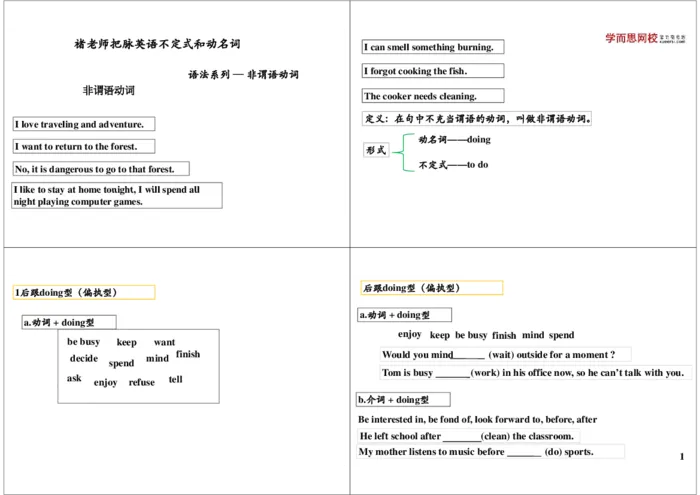
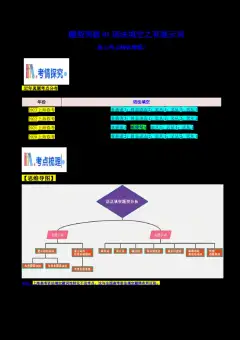
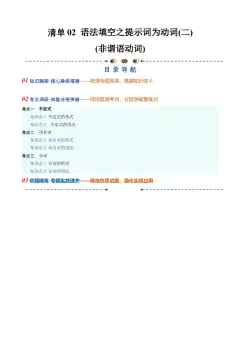
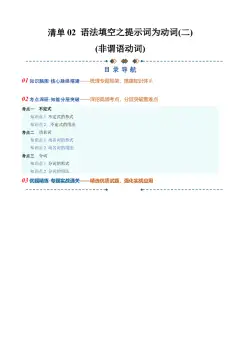
褚老师把脉英语不定式和动名词
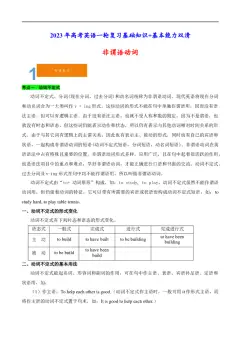
语法系列— 非谓语动词
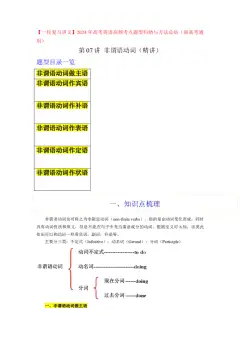
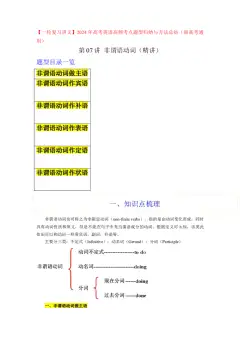
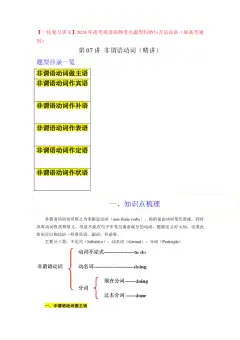
非谓语动词
I love traveling and adventure.
I want to return to the forest.
No, it is dangerous to go to that forest.
I like to stay at home tonight, I will spend all
I like to stay at home tonight, I will spend all
night playing computer games.
I can smell something burning.
I forgot cooking the fish.
The cooker needs cleaning.
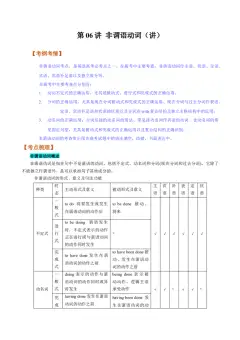
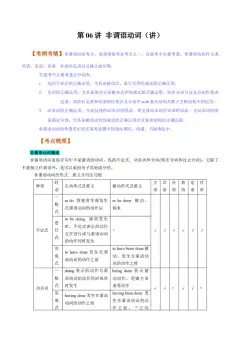
定义:在句中不充当谓语的动词,叫做非谓语动词。
动名词
d i
形式
动名词——doing
不定式
to do
不定式——to do
1后跟doing型(偏执型)
a.动词+ doing型
be busy
keep
want
decide
mind finish
decide
spend
mind
ask
enjoy
refuse
tell
enjoy
refuse
后跟doing型(偏执型)
a.动词+ doing型
be busy
keep
spend
mind
finish
enjoy
Would you mind
(wait) outside for a moment ?
Would you mind              (wait) outside for a moment ?
Tom is busy               (work) in his office now, so he can’t talk with you.
b.介词+ doing型
Be interested in, be fond of, look forward to, before, after
He left school after
(clean) the classroom.
He left school after                (clean) the classroom.
My mother listens to music before                (do) sports.
1
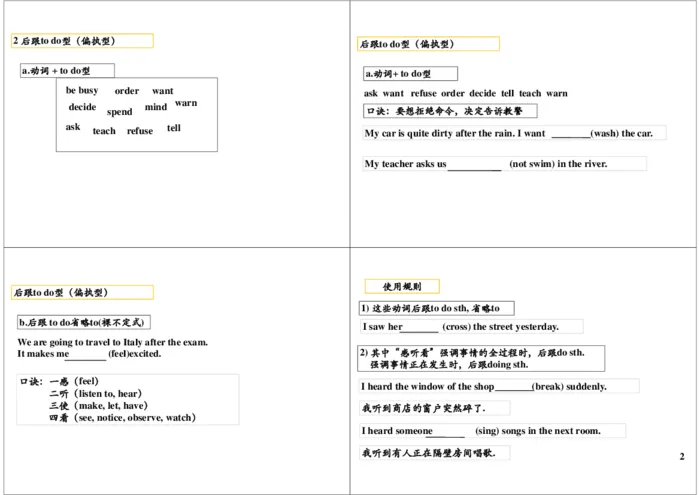
2 后跟to do型(偏执型)
a.动词+ to do型
be busy
order
want
decide
spend
mind warn
spend
ask
teach
refuse
tell
后跟to do型(偏执型)
a.动词+ to do型
ask  want   refuse  order  decide  tell  teach  warn
口诀:要想拒绝命令
决定告诉教警
My car is quite dirty after the rain. I want                  (wash) the car.
口诀:要想拒绝命令,决定告诉教警
y
q
y
(
)
My teacher asks us
(not swim) in the river
My teacher asks us                         (not swim) in the river.
后跟to do型(偏执型)
b.后跟to do省略to(裸不定式)
We are going to travel to Italy after the exam.
It makes me                (feel)excited.
(
)
口诀:一感(feel)
诀:
感(
)
二听(listen to, hear)
三使(make, let, have)
四看(see, notice, observe, watch)
使用规则
1) 这些动词后跟to do sth, 省略to
I saw her                (cross) the street yesterday.
(
)
y
y
2) 其中“感听看”强调事情的全过程时,后跟do sth.
中
,
强调事情正在发生时,后跟doing sth.
I h
d th
i d
f th
h
(b
k)
dd
l
I heard the window of the shop               (break) suddenly.
我听到商店的窗户突然碎了.
我听到商店的窗户突然碎了
I heard someone                 (sing) songs in the next room.
我听到有人正在隔壁房间唱歌.
2
使用规则
3) 当这些词被用于被动语态时
后跟正常的不定式.
3) 当这些词被用于被动语态时,后跟正常的不定式.
Jim was made            (do) a lot of extra work at weekend.
Sh
h
d
(t ll) th
t t h
f i
d
She was heard                    (tell) the secret to her friends.
3阴晴不定型(后跟to do/doing区别型)
a) 发生没发生
a) 发生没发生
forget
remember
to do sth 表示“未发生”
remember
stop
regret
to do sth. 表示
未发生
doing sth. 表示“已发生”
regret
go on
doing sth. 表示
已发生
forget
b
to do sth 表示“未发生”
remember
stop
regret
to do sth. 表示
未发生
doing sth 表示“已发生”
regret
go on
doing sth. 表示
已发生
Sorry, I forgot                 (bring)  the book.
对不起
我忘了带书了
I forgot                      (borrow) a book from you.
对不起,我忘了带书了
我忘记着曾经向你借书这件事。
b) 现在或永久
like
dislike
to do sth. 表示“一次性喜欢”
love
hate
doing sth. 表示“长期喜欢”
She always goes to swim, because she likes
(swim).
她总去游泳,因为她喜欢游泳。
她总去游泳,因为她喜欢游泳。
She usually does her homework in the afternoon but this afternoon she
She usually does her homework in the afternoon, but this afternoon she
likes                    (swim).
她通常在下午做作业,但是今天下午她想游泳。
3
b) 主动或被动
need
want
to do sth. 表主动
want
be worth
doing sth. 表被动
You don’t need                         (water) the flowers.
你不用浇花了
你不用浇花了。
The flowers need                    (water).
这些花需要浇水。
Review
Practice
--What should we do with the bag which blocked the traffic?
--What should we do with the bag which blocked the traffic?
--Stop the traffic, move the bag away, and then let traffic                again.
A. going         B. goes        C. to go       D. go
g
g
g
g
g
We can’t help crying after
the sad news
We can t help crying after                   the sad news.
A. hear          B. heard        C. hearing         D. to hear
g
Practice
My aunt played the light music to make the baby
crying.
A
d
B
C
D
A. stopped         B. stops        C. to stop       D. stop
Mrs. Sawyer asked those boys                so much noise.
A. do not make          B. not make
C. not making
D. not to make
C. not making           D. not to make
Practice
He raised his voice to make everybody in the room               him clearly.
A. heard         B. hear        C. to hear       D. hearing
4