文档文本内容
高 中
时 事
关于立冬,你可能不知道的 8 件事
8 things you may not know about Start of Winter
transition [trænˈzɪʃ(ə)n]
n. 转变;过渡;变迁
ancestor [ˈænsestər]
n. 祖先;祖宗
festival [ˈfestɪv(ə)l]
n. 节日
classic [ˈklæsɪk]
adj. 第一流的;典范的;典型的 /
n. 优秀的典范;文学经典;名著
resemble [rɪˈzemb(ə)l]
v. 相似;类似
prevent [prɪˈvent]
v. 防止;预防;妨碍
northern [ˈnɔːrðərn]
adj. 北方的
believe [bɪˈliːv]
v. 相信;认为;信任
popular [ˈpɑːpjələr]
adj. 流行的;受欢迎的;大众的
against [əˈɡenst]
prep. 对着;与…相反;反对;违
反;倚着;碰
ancient [ˈeɪnʃənt]
adj. 古代的;古老的 / n. 古人
track [træk]
n. 轨道;踪迹;小路;跑道 / v.
追踪;跟踪
period [ˈpɪriəd]
n. 时期;阶段
count [kaʊnt]
v. 计算;清点;看作;有价值 / n.
计数;计算
around [əˈraʊnd]
adv. 到处;在附近;环绕;大约 /
prep. 在…周围;环绕
prepare [prɪˈper]
v. 准备;预备
store [stɔːr]
n. 商店;店铺;仓库;储存 / v.
贮藏;存储
vegetable [ˈvedʒtəb(ə)l]
蔬菜
单词数:153个
@2025/11/06  ✅每日1篇时事阅读  ✅高效积累高中3500词
DATE:
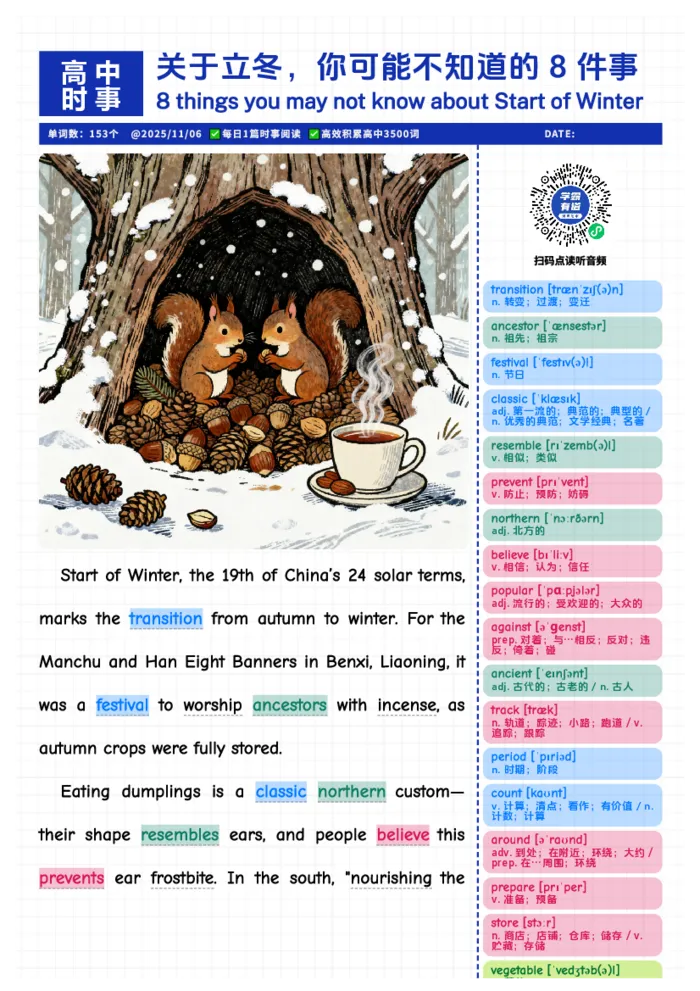
Start of Winter, the 19th of China’s 24 solar terms,
marks the transition from autumn to winter. For the
Manchu and Han Eight Banners in Benxi, Liaoning, it
was a festival to worship ancestors with incense, as
autumn crops were fully stored.
Eating   dumplings   is   a   classic   northern custom—
their shape resembles ears, and people believe this
prevents  ear  frostbite. In  the  south,  "nourishing the
扫码点读听音频
n. 蔬菜
ceremony [ˈserəmoʊni]
n. 仪式;典礼
winter [ˈwɪntər]
n. 冬季;冬天
completely [kəmˈpliːtli]
adv. 非常;完全地
change [tʃeɪndʒ]
n. 变化;变革;零钱 / v. 变化;
变革
animal [ˈænɪm(ə)l]
n. 动物
jog [dʒɑːɡ]
v. 慢跑;轻碰;轻撞 / n. 慢跑;
轻碰;轻撞
tradition [trəˈdɪʃ(ə)n]
n. 传统;惯例
adapt [əˈdæpt]
v. 适应;改编
warm [wɔːrm]
adj. 温暖的 / v. (使)变暖
sport [spɔːrt]
n. 体育运动
healthy [ˈhelθi]
adj. 健康的;健壮的
alive [əˈlaɪv]
adj. 活着的;活泼的
modern [ˈmɑːdərn]
adj. 现代的;时髦的
winter" is popular: people eat mutton or chicken to
warm their bodies against the cold.
Ancient Chinese began "counting nine cold days"
around this time, a way to track the harshest winter
period. Farmers also start preparing for winter plowing
and   storing   vegetables. Emperors   even   held grand
ceremonies   to   welcome   winter   in   ancient   times.
Nature   changes   noticeably   too:   leaves   fall
completely,   and   some   animals   enter   hibernation.
Today, people add warm clothes and do sports like
jogging or skiing to stay healthy, keeping traditions
alive while adapting to modern life.