热点时文06 智联全球・消除数字鸿沟
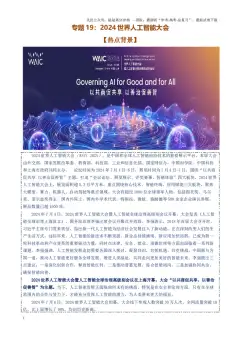
UN-promoted global AI network established in Geneva
由联合国推动的全球人工智能网络在日内瓦成立
A United Nations-promoted global network aimed at strengthening artificial intelligence capacity building and
bridging the AI gap was established in Geneva on Sunday.
联合国推动的一个旨在加强人工智能能力建设、弥合人工智能发展差距的全球网络于周日在日内瓦正
式成立。
The newly-built alliance serves as a practical response to UN Secretary-General Guterres’ appeal for shared AI
public goods and the implementation of the Global Digital Compact adopted by the UN General Assembly last year.
The Global Network of Centers for Exchange and Cooperation on AI Capacity Building brought together leading AI
institutions from Africa, Asia, Europe, Latin America and the Caribbean to enhance international cooperation in AI
development.
这一新成立的联盟切实回应了联合国秘书长古特雷斯关于共享人工智能公共产品的呼吁,并落实了联
合国大会去年通过的《全球数字契约》。人工智能能力建设交流与合作中心全球网络汇聚了来自非洲、亚洲、
欧洲、拉丁美洲及加勒比地区的顶尖人工智能机构,旨在加强人工智能领域的国际合作。
The formal establishment of the global network for AI capacity building, with UN support, marks phased
progress in strengthening international cooperation on AI capacity building and achieving inclusive AI development
for the Global South, Ambassador Shen Jian, deputy representative of permanent mission of the People's Republic
of China to the UN Office at Geneva and other international organizations in Switzerland, said.
中华人民共和国常驻联合国日内瓦办事处及瑞士其他国际组织代表团副代表沈健大使表示,在联合国
支持下,全球人工智能能力建设网络的正式成立,标志着在加强人工智能能力建设国际合作以及实现全球南
方包容性人工智能发展方面取得了阶段性进展。
After nearly two years of preparation, representatives from 19 countries and organizations across four continents
signed the cooperation framework at the launch ceremony.
经过近两年的筹备,来自四大洲19 个国家和组织的代表在启动仪式上签署了该合作框架。
Jin Li, academician of the Chinese Academy of Sciences and president of Fudan University, who also serves as
director of the Center for Global AI Innovative Governance, was present at the ceremony. The Fudan-based center
served as a founding member and helped coordinate the network's establishment.
中国科学院院士、复旦大学校长兼全球人工智能创新治理中心主任金立出席了仪式。该研究中心以复旦
大学为基地,是该网络的创始成员之一,并协助推动了整个网络的建立工作。
Over the past year, the center has organized specialized training modules on AI ethics, security governance and
international cooperation mechanisms for officials and researchers from Global South countries.
在过去一年中,该中心为来自全球南方国家的官员和研究人员组织了关于人工智能伦理、安全治理及国
际合作机制的专业培训课程。
What most participating delegates stressed at the signing event was that without equal access to open-source
algorithms and low-cost computing infrastructure, low-and middle-income nations would struggle to tap AI’s
potential to advance smart agriculture, public medical diagnosis and digital governance that closely tie to the UN
2030 Sustainable Development Goals.
大多数与会代表在签署仪式上强调:若无法平等获取开源算法和低成本计算基础设施,中低收入国家将
难以充分发挥人工智能的潜力,推动智能农业、公共医疗诊断和数字治理发展,这些都与联合国2030 年可
持续发展目标紧密相关。
The network will develop AI training programs, promote open computing infrastructure, and facilitate
knowledge sharing to help Global South nations build fundamental AI capabilities. It will also set up a permanent
online exchange platform where researchers can exchange localized AI solutions free of charge and jointly draft
unified ethical guidelines fitting diverse regional development realities.
该网络将开发人工智能培训项目、推广开放计算基础设施,并促进知识共享,以帮助全球南方国家建立
基础性人工智能能力;同时还将搭建一个永久性的在线交流平台,供研究人员免费共享本土化的人工智能解
决方案,并共同制定符合各地区发展实际情况的统一伦理准则。
【词库·筑基】——课标词汇提取
1. capacity /kəˈpæsəti/ n. 能力;容量
2. bridge /brɪdʒ/ v. 弥合(差距)
3. enhance /ɪnˈhɑːns/ v. 增强;提升;改善
4. phased /feɪzd/ adj. 分阶段的;分期的
5. inclusive /ɪnˈkluːsɪv/ adj. 包容的
6. deputy /ˈdepjuti/ adj. 副的
【词库·拓维】
7. representative /ˌreprɪˈzentətɪv/  n. 代表
8. specialized /ˈspeʃəlaɪzd/ adj. 专业的;专门的
9. ethics /ˈeθɪks/ n. 道德准则;伦理学
10. infrastructure /ˈɪnfrəstrʌktʃə(r)/ n. 基础设施
11. capability /ˌkeɪpəˈbɪləti/ n.能力(复数指综合实力)
12. jointly /dʒɔɪntli/ adv. 共同地;联合地
1. alliance  /əˈlaɪəns/ n. 联盟;同盟;结盟
The two countries formed a military alliance.  这两个国家缔结了军事同盟。
2. implementation  /ˌɪmplɪmenˈteɪʃn/  n. 实施;执行;落实
The implementation of the new policy took six months.  新政策的落实耗时六个月。
3. academician /ˌækədəˈmɪʃn/  n. 院士;学者
He is an academician of the Chinese Academy of Sciences.  他是中国科学院院士。
4. coordinate  /kəʊˈɔːdɪneɪt/ v. 协调;统筹;配合
She coordinates all the activities of the team. 她统筹团队所有活动。
5. algorithm /ˈælɡərɪðəm/ n. 算法;计算程序
This search engine uses a new matching algorithm.  这款搜索引擎采用全新匹配算法。
6. diagnosis /ˌdaɪəɡˈnəʊsɪs/ n. 诊断
The doctor made an accurate diagnosis of his illness.  医生对他的病症做出了精准诊断。
7. facilitate  /fəˈsɪlɪteɪt/ v. 促进
Online meetings facilitate communication across cities.  线上会议便利了跨城市沟通。
 【长句·解码】
原句1: Jin Li, academician of the Chinese Academy of Sciences and president of Fudan University, who also serves
as director of the Center for Global AI Innovative Governance, was present at the ceremony.
1. 语法解析:
句子主干:Jin Li was present at the ceremony , 句子是主系表结构;
同位语:academician...Fudan University(介绍身份)
非限制定语从句:who also serves as...(补充兼职职务)
2.翻译技巧
身份前置,长定语拆短句,中文先说头衔再说人名。
标准翻译:中国科学院院士、复旦大学校长兼全球人工智能创新治理中心主任金立出席了仪式。
3.仿写练习
班长、读书会负责人汤姆同时兼任志愿辅导老师,出席了本次活动。
____________________________________________________________________________________________
____________________________________________________________________________________________
原句2:What most participating delegates stressed at the signing event was that without equal access to open-source
algorithms and low-cost computing infrastructure, low-and middle-income nations would struggle to tap AI’s
potential to advance smart agriculture, public medical diagnosis and digital governance that closely tie to the UN
2030 Sustainable Development Goals.
1. 语法解析:
句子主干:What delegates stressed was that...,句中What delegates stressed 是主语从句,what 引导从句,在
从句中作stressed 的宾语;
句中that without equal access to open-source algorithms and low-cost computing infrastructure, low- and middle-
income nations would struggle to....是that 引导的表语从句;
在表语从句中,without equal access to open-source algorithms and low-cost computing infrastructure 是介词短语
作状语,主语是low- and middle-income nations,谓语是would struggle ,宾语是to tap AI’s potential ,目的
状语是to advance smart agriculture, public medical diagnosis and digital governance ,定语从句是that closely tie
to the UN 2030 Sustainable Development Goals,修饰先行词smart agriculture, public medical diagnosis and digital
governance。
2.翻译技巧
技巧 1:What 引导主语从句压缩句式
原结构:What sb stressed was that… 去掉 “的内容是”,把主从复合句直接转成主谓短句,省去冗余衔接词。
精简处理:参会代表在签约仪式上重点指出……
技巧 2:介词短语 without 提前拆分,化长句为流水短句
英文习惯一整串后置状语;中文先摆前提,再讲结论。 without equal access to… 不直译 “没有平等获取……
的渠道”,精简为:若无法平等获取开源算法、低成本算力基础设施(前置铺垫逻辑,避免后半句臃肿)。
技巧 3:定语从句 that tie to 转前置定语或者分句收尾
本句先行词太长,可以译为一个分句子,直接译为:这些与联合国2030 年可持续发展目标紧密相关。
原句翻译:大多数与会代表在签署仪式上强调:若无法平等获取开源算法和低成本计算基础设施,中低收入
国家将难以充分发挥人工智能的潜力,推动智能农业、公共医疗诊断和数字治理发展,这些都与联合国2030
年可持续发展目标紧密相关。
3.仿写练习
多数学生在座谈会上表示,缺少足量练习的初学者很难掌握利于日常交流的技能。
____________________________________________________________________________________________
____________________________________________________________________________________________
原句3:It will also set up a permanent online exchange platform where researchers can exchange localized AI
solutions free of charge and jointly draft unified ethical guidelines fitting diverse regional development realities.
1.语法解析:
句子主干:It will also set up a permanent online exchange platform,主语是it, 谓语是will set up , also 是状语,
宾语是a permanent online exchange platform。
定语从句:where researchers can exchange localized AI solutions free of charge and jointly draft unified ethical
guidelines fitting diverse regional development realities, where 引导定语从句,修饰先行词platform。在从句
中,主语是researchers, 谓语是can exchange....and draft....., 宾语是localized AI solutions free of charge 和
unified ethical guidelines, fitting diverse regional development realities 是现在分词短语作后置定语修饰
guidelines。
2.翻译技巧
where 引导定语从句,英文后置长定语,中文拆短句,避免一长串前置修饰 原从句:where researchers can
exchange... ,断句另起分句,用 “供科研人员……” 衔接,不堆砌 “…… 的平台”
原句翻译:它还将搭建一个永久性的在线交流平台,供研究人员免费共享本土化的人工智能解决方案,并共
同制定符合各地区发展实际情况的统一伦理准则。
3.仿写练习
学校将设立免费自习室,学生可在此共享笔记、制定贴合自身学习节奏的简易计划。
____________________________________________________________________________________________
____________________________________________________________________________________________
一、阅读理解
根据文章内容,从每题所给的A、B、C、D 四个选项中,选出最佳选项。
1. What is the fundamental purpose of the UN-launched global AI network?
A. To compete with developed AI institutions in global tech competition
B. To narrow the worldwide divide in AI to achieve balanced digital growth
C. To take absolute control of global high-performance computing resources
D. To promote the revision of the UN 2030 Sustainable Development Goals
2. What can be inferred about the Center for Global AI Innovative Governance?
A. It dominates the formulation of global AI industry rules
B. It plays a critical foundational role in the network’s launch
C. It is supervised by Ambassador Shen Jian in Geneva
D. It mainly offers academic courses for European researchers
3. Why does the author mention the UN 2030 Sustainable Development Goals in Paragraph 8?
A. To highlight the far-reaching practical value of inclusive AI
B. To prove the limitation of current global AI governance
C. To stress the urgency of upgrading global computing system
D. To show worldwide dissatisfaction with digital compact
4. What is the author’s attitude toward the newly-built AI network?
A. Critical
B. Doubtful
C. Favorable
D. Unclear
二.语法填空
阅读下面短文,在空白处填入1 个适当的单词或括号内单词的正确形式。
A United Nations-promoted global network _____1_____(aim) at strengthening artificial intelligence capacity
building and bridging the AI gap was established in Geneva on Sunday.
The Global Network of Centers for Exchange and Cooperation on AI Capacity Building brought together leading
AI institutions from Africa, Asia, Europe, Latin America and the Caribbean _____2______(enhance) international
cooperation in AI development.
The formal establishment of the global network for AI capacity building, with UN support, marks phased
progress in strengthening international cooperation on AI capacity building and achieving _____3_____ (include) AI
development for the Global South, Ambassador Shen Jian, deputy representative of permanent mission of the People's
Republic of China to the UN Office at Geneva_____4_____other international organizations in Switzerland, said.
After nearly two years of preparation, ______5______(represent) from 19 countries and organizations across
four continents signed the cooperation framework at the launch ceremony.
Jin Li, academician of the Chinese Academy of Sciences and president of Fudan University,______6_____ also
serves as director of the Center for Global AI Innovative Governance, was present _____7______the ceremony. The
Fudan-based center served as _____8______ founding member and helped coordinate the network's establishment.
Over the past year, the center _______9_______(organize) specialized training modules on AI ethics, security
governance and international cooperation mechanisms for officials and researchers from Global South countries.
The network will _____10______(steady) develop AI training programs, promote open computing
infrastructure, and facilitate knowledge sharing to help Global South nations build fundamental AI capabilities.
三.应用文写作
近日,联合国普惠AI 协作网在日内瓦成立。你校英语广播站邀请你以 Global AI, Shared Future 为题写一篇
英文演讲稿,内容包括:
1. 事件简介(日内瓦成立全球AI 协作网络);
2. 该网络的意义(弥合数字鸿沟、助力发展中国家);
3. 青年视角(青少年面对AI 发展如何做)
要求:
1. 词数80 左右;
2. 可以适当增加细节,使行文连贯;
Good morning, everyone.
____________________________________________________________________________________________
____________________________________________________________________________________________
____________________________________________________________________________________________
   Thank you.
一.阅读理解
A
(2026·湖南长沙·模拟)
In a quiet corner of Oxford University’s Bodleian Library, a robotic arm flips through a 15th-century
manuscript, its high-resolution cameras capturing every faded ink stroke. This is ARCHiVE (Automated Robotic
Cultural Heritage Inspection and Verification Engine), a £2.3 million project revolutionizing how fragile artifacts are
preserved and studied. Combining robotics, artificial intelligence, and advanced imaging, ARCHiVE represents a
model shift in cultural conservation.
Traditional conservation methods often risk damaging delicate materials. ARCHiVE’s robotic system,
equipped with micro-sensors and AI algorithms, can detect cracks invisible to the human eye and predict structural
weaknesses before they worsen. “It’s like having a doctor for ancient books,” explains Dr Emily Carter, lead
conservator. Since its 2022 launch, ARCHiVE has scanned over 8,000 items, from Egyptian papyri to medieval maps,
with 99.7% accuracy in damage assessment. Its non-invasive approach has reduced physical handling by 85%,
significantly lowering the risk of accidental damage.
The project’s digital twin technology creates exact virtual copies, allowing global access to restricted
collections. During the 2023 Cairo Museum flood, ARCHiVE’s digital models enabled researchers to virtually
“restore” water-damaged artifacts within hours. “We’re not just saving objects,” says Carter, “but we’re preserving
humanity’s collective memory.” This technology has also democratized access, with over 50,000 digital artifacts now
available to researchers and the public worldwide.
However, some scholars argue that over-reliance on technology may distance researchers from hands-on
experience. “You can’t smell history through a screen,” protests Prof James Whitaker, a traditionalist at Cambridge.
Others worry about data ownership, as scanned artifacts become digital assets potentially controlled by tech
corporations. A 2024 survey revealed that 62% of conservators fear losing control over digitized cultural
heritage.    ARCHiVE’s next phase involves 4D scanning, capturing how materials change over time. Pilot tests on
Viking ship timbers have already revealed previously unknown construction techniques. Meanwhile, UNESCO is
developing global standards for digital heritage, ensuring these technological marvels serve humanity rather than
corporate interests. As Carter reflects, “Our ancestors left us these treasures; our duty is to pass them forward —
both physically and digitally.”
1.What is the main function of ARCHiVE’s robotic system?
A.Repairing damaged artifacts.
B.Creating virtual museum tours.
C.Identifying and forecasting damage.
D.Selling digital copies of artifacts.
2.How did ARCHiVE help during the Cairo Museum flood?
A.By raising emergency funds online.
B.By training local conservation staff.
C.By physically moving artifacts to safety.
D.By providing digital models for restoration.
3.What is Prof Whitaker’s main concern about ARCHiVE?
A.Data ownership concerns.
B.Loss of direct experience.
C.High operating costs.
D.Environmental impact.
4.Which of the following would be the best title for the text?
A.ARCHiVE: Digital Guardians of the Past
B.ARCHiVE and the Traditional-Digital Balance
C.ARCHiVE: The Battle for Heritage Preservation
D.AI in ARCHiVE: Ethical Dilemmas and Their Resolutions
B
(2026·安徽芜湖·模拟预测)
Despite advances in digital technology, no virtual platform has yet solved the problem of physical presence.
While virtual tours have gained popularity, many users acknowledge that viewing an object through a screen
fundamentally changes their perception. Features such as texture, weight, and scale are inevitably affected by a flat
image. This sensory gap suggests that digital representations, however advanced, remain imperfect substitutes for
direct engagement.
Beyond these sensory limitations, technological and economic barriers further complicate the ideal of universal
access. A virtual museum that relies on virtual reality headsets, high-speed network, or recently released devices may
unknowingly exclude individuals with older hardware or unstable connections. Moreover, digital preservation
introduces challenges different from those associated with physical collections. Websites become outdated, software
platforms are discontinued, and file formats fall out of use. Whereas a physical museum demands structural
maintenance, a virtual one requires continuous migration of data and updating of systems — a commitment often
underestimated.
Trust also poses a significant concern. In a virtual environment — particularly one operated by individuals or
small organizations — viewers may find it difficult to determine whether an image faithfully represents the original
or merely offers a loosely sourced picture accompanied by incomplete documentation. Clear origin notes and
transparent labeling can mitigate such concerns, yet skepticism remains a reasonable response.
Interestingly, the museum term “deaccessioning” (藏品注销) also fits private collectors who want to sell or
give away their collections. Virtual museums and digital catalogs are very helpful for them. When collectors make
clear digital records, they sort out key details: where they got the items, sizes, condition and related materials. These
records are greatly useful for their family inheritors who know little about the collection. They also help museums
decide whether to accept the donated items. Even if the collection is later divided up, the digital record keeps its
original order and value, so its hidden meaning and logical connection will not disappear.
5.What does the author point out about virtual tours in paragraph 1?
A.They rely heavily on advanced equipment.
B.They are preferred by most museum visitors.
C.They fail to convey certain physical qualities. D.They improve the resolution of digital images.
6.Which of the following is closest in meaning to the underlined word “mitigate”?
A.Reduce.
B.Ignore.
C.Identify.
D.Create.
7.What can be inferred from the last paragraph about private collectors?
A.They prefer to keep their collections complete.
B.They underestimate the value of documentation.
C.They can benefit a lot from creating digital records.
D.They often rely on digital list to sell their collections.
8.Which statement best summarizes the main idea of the text?
A.Digital technology has transformed museum experiences.
B.Virtual museums face limitations in accessibility and authenticity.
C.Private collectors benefit more from digitization than museums do.
D.Physical museums are superior to virtual alternatives in every aspect.
C
(2026·江西·模拟预测)
In early 2026, a major study from the Université de Montréal — one of the largest of its kind — sparked
heated discussion in global art and literary circles. The research compared creative abilities between 100,000 human
participants and top AI models, covering tasks from painting drafts to short poem writing. It offered fresh evidence
for the long-running debate over AI’s role in creative work.
The study delivered a mixed conclusion. On standard divergent thinking tests, which assess basic creative
potential, generative AI outperformed the average human participant. These tests measure the ability to produce
multiple new ideas, a basic skill widely used in artistic and literary creation. Yet the result showed a clear gap in
more complex, expressive tasks.
When it came to poetry and storytelling, the top 10 percent of human creators held a noticeable lead. AI works
often lacked personal voice and emotional depth that comes from real life experience, though they followed formal
rules neatly. This finding matched observations from writing teachers and art critics across different regions.
A separate 2026 report from the Savannah College of Art and Design (SCAD) added further insights. It
surveyed hundreds of professional artists and writers about their daily use of AI tools in creation. Most respondents
viewed AI as a helpful assistant rather than a replacement for human effort.
The report also noted a rising “authenticity economy” in global creative markets. Audiences now place higher
value on works with clear human authorship and real emotional resonance. Works with visible personal touches, even
small imperfections, often win more public recognition than polished AI outputs.
Overall, the research points to a future of collaboration, not replacement. AI handles repetitive or technical
steps, freeing creators to focus on core judgment and emotional expression. This ongoing shift is gradually reshaping
training and career expectations in art and literature fields.
9.What is a finding of the Montréal study?
A.AI produces top poetic works.
B.AI outperforms average human participants.
C.AI masters deep emotional expression.
D.AI replaces most professional writers.
10.What can we infer from the SCAD report?
A.AI saves little working time.
B.Artists refuse all AI tools.
C.AI lifts work quality greatly.
D.Creative judgment weighs most now.
11.Why do audiences prefer human-created works?
A.They cost much less money.
B.They follow strict formal rules.
C.They look very perfectly polished.
D.They hold real emotional depth.
12.What conclusion can we draw from the text?
A.AI will dominate creative fields.
B.Human creators face unemployment risks.
C.Human-AI cooperation represents the future. D.Training for creators becomes useless.
二.七选五
(2026·湖北黄冈·阶段检测)
Nowadays, many people talk about AI but only recite definitions or know nothing about technical terms. I
believe that there are these 4 terms that, if you actually understand them, you’ll be miles ahead of almost everyone
else in the room. Let’s start.
Tokens
13     Instead, they process small text pieces known as tokens. For example, the sentence “I love pizza” can
be broken into 3 tokens: “I”, “love”, “pizza”. Tokens are the atoms (原子) of AI language. The way your prompt
(提示词) gets split into tokens directly affects how the AI responds.     1
Context window
It’s the total amount of text measured in tokens that an AI model can see and consider at one time. This includes
everything: your instructions, any documents you’ve shared, and the model’s own replies.     1     What is the
practical lesson? If you’re working on something important like summarizing a long document or analyzing data,
always be aware that your AI might be forgetting earlier parts of your conversation.
Temperature
When you ask an AI to write something, there’s a setting known as temperature, which decides how random or
predictable the output will be. Higher= more creative, lower= more predictable. So here’s the unwritten rule that
most people don’t know: If you’re using AI for writing fiction, increase the temperature.     1     If you’re using
AI for factual tasks, you want low temperature. The AI should be precise, not creative.
Hallucination
Hallucination is when an AI gives out wrong answers with absolute confidence. Why does this happen? AI
language models are not databases. They don’t look up facts. They predict the next most likely token based on patterns
they learned during training.     1
A.AI models don’t read words or even letters.
B.This generates surprising plots and fresh ideas.
C.It’s the advantage of almost every useful AI product.
D.So we should never trust AI blindly for vital information.
E.Understand it, and you’ll see why some prompts work better.
F.This helps you know why your AI assistant is acting confused.
G.Think of it as a whiteboard— old content must be erased when full.
三.完形填空
(2026·云南玉溪·模拟预测)
Tim Wilson, an 18-year-old student at Barker College in Sydney, Australia, designed a soft robot that gives
reassuring (使安心的) hugs. His     1     was his sister’s frequent trouble getting a good night’s sleep.
“I saw the     2     of poor sleep on her,” Tim says. Therefore, for a high-school research project, he     3
to deal with “a real need in the world”. His     4     — a huggable, co-sleeping robot — won him a big prize at an
international competition.
Besides returning hugs, Tim’s     5     also copies breathing through its chest (胸膛), which rises and falls
stably and gently. “The robot even attempts to     6     its breathing rate to the hugger’s and     7     how fast
the hugger’s breathing,” Tim says. “That part proved difficult. After all, a bedroom fan might be enough to throw off
the gas levels. It’s not always going to be mirroring you     8    ,” he adds.
“My sister     9     it very cute,” he says. “One of the things that surprised me was that she told me it was
quite     10     and reassuring.”
Some people with sleeping problem     11     emotional support dogs. But some places might not     12
animals. In a super-clean hospital, an animal may cause a(n)     13     to sick kids. “Being able to assure kids is
quite a     14     thing,” Tim says. “But it would be     15     if my product could do it.”
1.A.intention
B.destination
C.response
D.inspiration
2.A.impact
B.focus
C.advice
D.impression
3.A.failed
B.decided
C.refused
D.disagreed
4.A.commitment
B.function
C.discovery
D.solution
5.A.computer
B.engine
C.machine
D.vehicle
6.A.attach
B.refer
C.match
D.compare
7.A.handle
B.notice
C.comfort
D.mirror
8.A.exactly
B.immediately
C.ultimately
D.generally
9.A.made
B.kept
C.found
D.proved
10.A.independent
B.relaxing
C.responsible
D.casual
11.A.attend to
B.take over
C.figure out
D.turn to
12.A.accommodate B.feed
C.require
D.train
13.A.difference
B.alternative
C.risk
D.opportunity
14.A.typical
B.challenging
C.convenient
D.promising
15.A.wonderful
B.obvious
C.flexible
D.normal
四.语法填空
(2026·四川成都·模拟预测)
阅读下面短文,在空白处填入1 个适当的单词或括号内单词的正确形式。
On June 9, 2026, Apple officially released iOS 27 at the Worldwide Developers Conference (WWDC).
However,     1     (far) from receiving praise, the new operating system was quickly met with widespread
criticism from Chinese users.
The main complaint centered on the absence of Apple Intelligence and the new Siri AI features. Due to
regulatory requirements, these core     2     (function) are not available in the Chinese version of iOS 27. As a
result, many tech bloggers have joked that the domestic version of iOS 27 should     3     (call) “iOS 26.5” instead.
The only significant update that Chinese users can actually experience is the long-awaited holiday alarm clock,
4     automatically adapts to China’s complex holiday schedules and avoids waking users up on make-up workdays.
“It took Apple years to add     5     feature that Android phones have had for ages,” one netizen commented
bitterly.
Well-known entrepreneur Luo Yonghao also weighed in on the debate,     6     (express) his
disappointment with Apple’s lack of innovation. “Wow, so many innovations,” he said sarcastically. He further
argued that consumers should not “act so cheap”     7     simply accepting incremental upgrades that offer no real
value.
The controversy reflects a     8     (grow) frustration among Chinese consumers. While Apple has long
been regarded as a leader in technological innovation, its recent performance suggests it is falling behind domestic
competitors like Huawei and Xiaomi,     9     are rapidly integrating advanced AI features into their devices. For
now, iOS 27 seems unlikely to win back user trust, and many are left     10     (wonder) whether Apple still
prioritizes the Chinese market.
五.书面表达
(2026·吉林延边·模拟)
假定你是校英语社团成员李华,学校英语角将开展主题分享活动,请你以The Significance of
English Learning in the AI Era 为题,发表一篇英文演讲稿。
内容包括:
1.AI 时代现状;
2.英语学习不可替代的意义;
3.你的态度。
注意:
1.词数80 词左右;
2.开头结尾已给出,不计入总词数。
The Significance of English Learning in the AI Era
    Good morning, everyone.
_______________________________________________________________________________________
____________________________________________________________________________________________
____________________________________________________________________________________________
____________________________________________________________________________________________
____________________________________________________________________________________________
____________________________________________________________________________________________
____________________________________________________________________________________________
____________________________________________
Thank you!