 夜雨聆风
夜雨聆风


MCP协议:AI工具调用的"USB-C"接口革命
当大模型从”能说会道”进化到”能干活”,MCP正在成为AI应用开发的下一个行业标准
🔬技术热点 / Tech Spotlight
What the Industry Is Talking About
🇬🇧 English
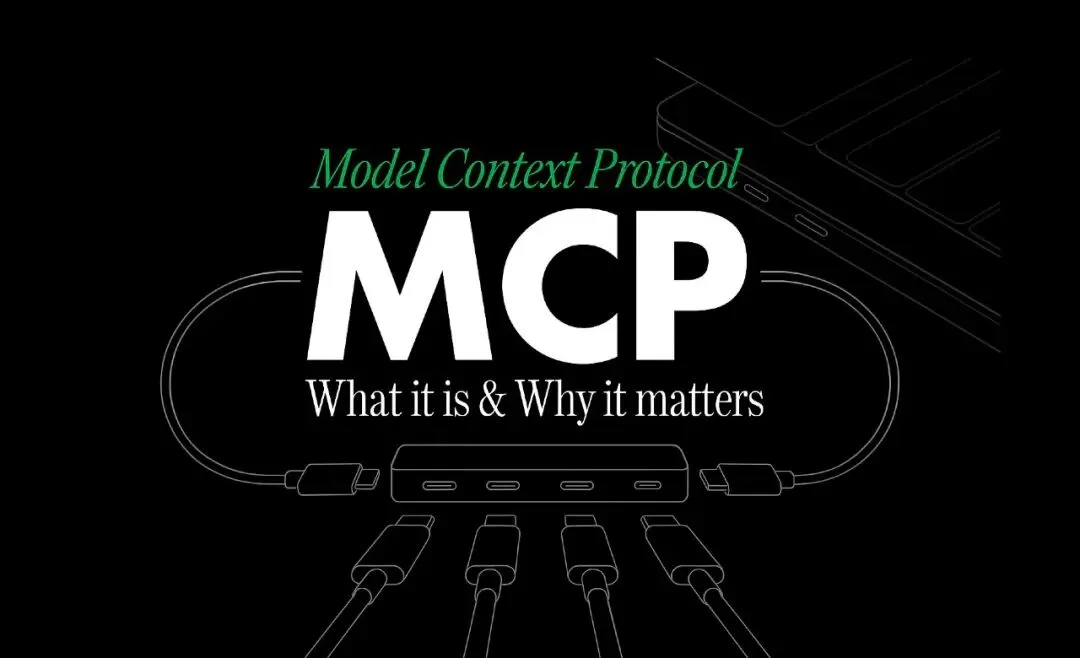
There’s a quiet revolution happening in how AI applications connect to the outside world. Enter the Model Context Protocol—better known as MCP—an open standard that Anthropic introduced in late 2024 and subsequently donated to the Linux Foundation’s Agentic AI category. Think of it as the USB-C of AI tool integration: just as USB-C gave us one port to rule them all for charging and data transfer, MCP is providing a universal interface through which any AI model can communicate with external data sources, tools, and services.
What makes this significant? Before MCP, developers building AI-powered workflows had to write custom integrations for every new tool. Connecting a language model to your ticket system required a bespoke adapter; hooking it up to your data warehouse needed another entirely different one. This was brittle, time-consuming, and didn’t scale. MCP changes the game by defining a standardized “handshake” between the AI model and the tool. Once a tool implements the MCP spec, any model that speaks MCP can use it—immediately, without additional glue code.
The momentum behind MCP has been remarkable. Since Claude 3.5 Sonnet became the first major model to support MCP natively, the ecosystem has exploded. Companies like Block, Apollo, and Cloudflare have all shipped MCP-compatible servers. Even mobility platforms like Hello (哈啰出行) have launched MCP services, allowing AI assistants to book rides directly within the chat interface. In China, tech giants including Alibaba, Tencent, and ByteDance are racing to integrate MCP support into their AI products, signaling that this isn’t just a Western trend—it’s going global.
For IT professionals, this shift matters for a simple reason: it’s making AI agents actually useful in enterprise environments. When your AI assistant can query your internal knowledge base, open a support ticket, or pull real-time analytics without human intervention, you’ve crossed the line from a clever chatbot into a genuine productivity multiplier.
🇨🇳 中文
一场静悄悄的革命正在AI应用与外部世界连接的方式中悄然发生。它就是MCP(模型上下文协议)——Anthropic于2024年底推出、随后捐赠给Linux基金会Agentic AI类目的一个开放标准。不妨把它想象成AI工具集成领域的”USB-C接口”:正如USB-C用一个接口统一了充电和数据传输一样,MCP正在为所有AI模型与外部数据源、工具和服务的通信提供一个通用接口。
这件事的意义何在?在MCP出现之前,开发者在构建AI驱动的工作流时,每接入一个新工具都需要编写定制化集成代码。让语言模型连接工单系统需要一个专门的适配器,连接数据仓库又需要另一套完全不同的代码。这种方式脆弱、耗时,且无法规模化。MCP通过定义AI模型与工具之间的标准化”握手协议”改变了这一局面。一旦某个工具实现了MCP规范,任何支持MCP的模型都可以直接调用它——无需额外的粘合代码。
MCP背后的发展势头令人瞩目。自从Claude 3.5 Sonnet率先原生支持MCP以来,其生态系统迅速扩张。Block、Apollo、Cloudflare等公司都已发布兼容MCP的服务端。出行平台哈啰出行也推出了MCP服务,让AI助手可以直接在对话界面内叫车。在中国,阿里巴巴、腾讯、字节跳动等科技巨头也在竞相将MCP支持集成到自家AI产品中——这说明这不仅仅是一股西方潮流,而是正在走向全球。
对于IT从业者而言,这一变革的意义简单而直接:它正在让AI智能体在企业环境中真正发挥作用。当你的AI助手可以在无需人工干预的情况下查询内部知识库、创建支持工单或获取实时数据分析时,你就从”聪明的聊天机器人”跨越到了真正的生产力倍增器。
📊深度解读 / In-Depth Analysis
Behind the Headlines
🇬🇧 English
Let’s get beneath the hype and examine what MCP actually does technically—and why it matters for enterprise IT architecture.
The Core Architecture: Host, Client, and Server
MCP follows a three-component architecture: a host (the AI application itself, such as Claude Desktop), one or more clients embedded within the host, and a server for each external tool or data source. The client-server relationship is always initiated by the host. When a user asks the AI to perform a task, the host determines which MCP server(s) to call, sends the request through the appropriate client, receives the response, and incorporates it into the model’s context window.
This design is elegantly minimal. Tool developers only need to implement one MCP server—the protocol handles everything else. For enterprise architects, this translates into a future where adding a new internal tool to your AI ecosystem is as straightforward as deploying an MCP server, not writing custom integration code for each model you support.
Case Study 1: RAG Knowledge Base → AI Research Assistant
Consider a common enterprise scenario: you have a RAG (Retrieval-Augmented Generation) knowledge base holding thousands of internal documents—policies, architecture diagrams, runbooks. Traditionally, the AI could only answer questions based on what was indexed. With MCP, you deploy an MCP server that connects your RAG pipeline to the model. Now the AI doesn’t just retrieve information—it can take action: send a retrieved document to your email, update a project tracker, or flag an article for follow-up. This transforms passive Q&A into an active workflow partner.
Case Study 2: Multi-Cloud Cost Dashboard
Imagine your AI assistant querying AWS Cost Explorer via one MCP server, pulling Azure budget data from another, and synthesizing the combined output into a plain-language cost report for your CFO—all in a single conversation. Previously, building this required three separate API integrations and significant glue logic. With MCP, you write or install three MCP servers once, and any MCP-compatible model can orchestrate them on demand.
Case Study 3: Automated Incident Response
In a Security Operations center, an MCP-powered AI agent could monitor multiple tools simultaneously: receiving alerts from your SIEM, cross-referencing IP reputations against threat intelligence feeds, consulting your CMDB for affected assets, and opening a Jira ticket with a draft incident report—all before a human analyst has even opened their laptop. MCP is what makes this multi-tool choreography possible at scale.
Sources: Anthropic MCP Documentation (anthropic.com), CSDN Technical Blog (2026-04), Hello Mobility MCP Launch Report (2026-04)
🇨🇳 中文
让我们拨开表象,深入探究MCP的技术实现细节,以及它为何对企业的IT架构具有重要意义。
核心架构:主机、客户端与服务器
MCP遵循三组件架构:一个主机(即AI应用本身,如Claude Desktop)、嵌入主机中的一个或多个客户端,以及每个外部工具或数据源对应的服务器。客户端与服务器之间的连接关系始终由主机发起。当用户请求AI执行某个任务时,主机决定调用哪个MCP服务器,通过相应的客户端发送请求,接收响应后将其合并到模型的上下文窗口中。
这个设计简洁而优雅。对于工具开发者而言,只需实现一个MCP服务器,协议本身会处理其余所有事务。对于企业架构师而言,这意味着在未来的AI生态中,将新的内部工具接入AI系统,只需要部署一个MCP服务器——而非为每个支持的模型单独编写定制集成代码。
案例一:RAG知识库 → AI研究助手
设想一个常见的企业场景:你的RAG(检索增强生成)知识库中存储着数千份内部文档——包括政策文件、架构图、运维手册等。传统上,AI只能基于已索引的内容回答问题。有了MCP后,你只需部署一个连接RAG管道与模型的MCP服务器,AI就不再只是检索信息——它可以采取行动:将检索到的文档发送到邮箱、更新项目跟踪状态,或标记某篇文章供后续跟进。这将被动的一问一答转变为主动的工作流伙伴。
案例二:多云成本仪表盘
想象一下,你的AI助手同时查询AWS Cost Explorer(通过一个MCP服务器)、拉取Azure预算数据(通过另一个MCP服务器),并将合并后的结果综合成一份通俗易懂的成本报告,直接呈交给CFO——所有这些都在一次对话中完成。在过去,构建这样的功能需要三套独立的API集成和大量粘合代码。有了MCP,你只需一次性编写或安装三个MCP服务器,任何兼容MCP的模型都可以按需编排它们。
案例三:自动化安全事件响应
在安全运营中心,一个由MCP驱动的AI智能体可以同时监控多个工具:从SIEM接收告警,将IP地址与威胁情报源交叉比对,查询CMDB获取受影响资产,并创建一条带有事件初稿报告的Jira工单——所有这一切,都发生在人工分析师还没来得及打开笔记本电脑之前。MCP正是让这种大规模多工具协同成为可能的关键。
💼职场应用 / Workplace Application
Making It Work in Your Day Job
🇬🇧 English
MCP isn’t just a backend technology concept—it has direct implications for how IT teams communicate, plan, and collaborate in multinational environments. As more vendors and internal platforms begin supporting MCP, you’ll find yourself in meetings where colleagues are evaluating whether a tool is “MCP-compatible,” just as they once asked “does it have a REST API?”
The shift also changes the nature of vendor conversations. Instead of asking a SaaS provider to build a one-off integration for your specific LLM setup, you can simply ask: “Do you have an MCP server? What’s the endpoint?” This is a fundamentally more scalable and vendor-neutral approach to tool integration.
For cross-functional collaboration, MCP standardizes the language everyone uses to describe AI-tool interactions. When your data engineering team, your platform team, and your AI product team all reference the same MCP concepts—servers, resources, prompts—they communicate faster and with fewer misunderstandings. It’s the same principle that REST APIs brought to web services: a shared vocabulary accelerates adoption.
📋 Real Meeting Scenario: Evaluating an MCP VendorSarah (IT Architect): “Before we sign the contract, I need to understand your MCP support. Do you ship a managed MCP server, or do we self-host it?”Tom (Vendor SE): “We offer both. Our managed endpoint is at mcp.example.com—fully gated, with OAuth 2.0. If you prefer self-hosted, we publish a Docker image you can run in your own VPC.”Sarah: “Great. And what resources does your server expose? We’re particularly interested in pulling incident data and change logs.”Tom: “Currently we expose three read-only resources: incidents, changes, and assets. Write operations come through tools—you’d authorize specific tools per your role-based access policy.”Sarah: “Perfect. Can you send over the server manifest so our AI team can do a proof-of-concept this sprint?”
🇨🇳 中文
MCP不仅仅是后端技术概念——它直接影响着IT团队在跨国环境中如何沟通、规划和协作。随着越来越多的供应商和内部平台开始支持MCP,你会发现自己在会议中被问到某个工具是否”MCP兼容”,就像曾经被问到”它有REST API吗?”一样。
这种转变也改变了与供应商沟通的性质。你不再需要请求某个SaaS供应商为你的特定LLM配置单独构建一个定制集成,而只需问:”你们有MCP服务器吗?端点是什么?”这是一种从根本上更具可扩展性、更中立的供应商工具集成方式。
对于跨职能协作而言,MCP统一了所有人描述AI工具交互的语言。当你的数据工程团队、平台团队和AI产品团队都引用相同的MCP概念——服务器(servers)、资源(resources)、提示(prompts)——他们沟通得更快,误解也更少。这与REST API为Web服务带来的原则相同:共享词汇表加速了采纳。
📚词汇加油站 / Vocabulary Hub
Your English Toolkit for AI Tool Integration
🔧 固定短语 / Fixed Phrases
|
|
|
|
|---|---|---|
|
|
|
|
|
|
|
|
|
|
|
|
|
|
|
|
|
|
|
|
|
|
|
|
|---|---|---|
|
|
|
|
|
|
|
|
|
|
|
|
|
|
|
|
|
|
|
|
🚀 高级词汇 / Advanced Vocabulary
|
|
|
|
|---|---|---|
|
|
|
|
|
|
|
|
|
|
|
|
|
|
|
|
|
|
|
|
|
|
|
|
|---|---|---|
|
|
|
|
|
|
|
|
|
|
|
|
|
|
|
|
|
|
|
|
✨ 地道表达 / Natural Expressions
|
|
|
|
|---|---|---|
|
|
|
|
|
|
|
|
|
|
|
|
|
|
|
|
|
|
|
|
感谢您阅读到这里,如果本文对您有所帮助,请点亮底下的大拇指👍🏻和小心心❤️~欢迎点击关注本公众号。我们将持续分享更多有价值的内容,包括行业洞察、实战经验与前沿趋势,期待与您一起成长。转载原创请联系我们,获得授权。