 夜雨聆风
夜雨聆风


AI的大手正在伸向美国议会| 经济学人
01 文章选材
April 25TH-May 1ST |United States

【Para. 1】以肯特的工作内容引入:立法议员的职责繁多
【Para. 2-3】因此越来越多议员开始依赖人工智能辅助工作
【Para. 4】AI确实能缓解人手问题,但也引发悲观者的担忧
【Para. 5】大模型容易出现重复和编造内容的问题,由此产生的校对工作体量依旧庞大
【Para. 6】此外,也有人担忧过度依赖AI会削弱立法者独立批判思考的能力
03 原文音频

 619 words ★★★☆☆(难度评级)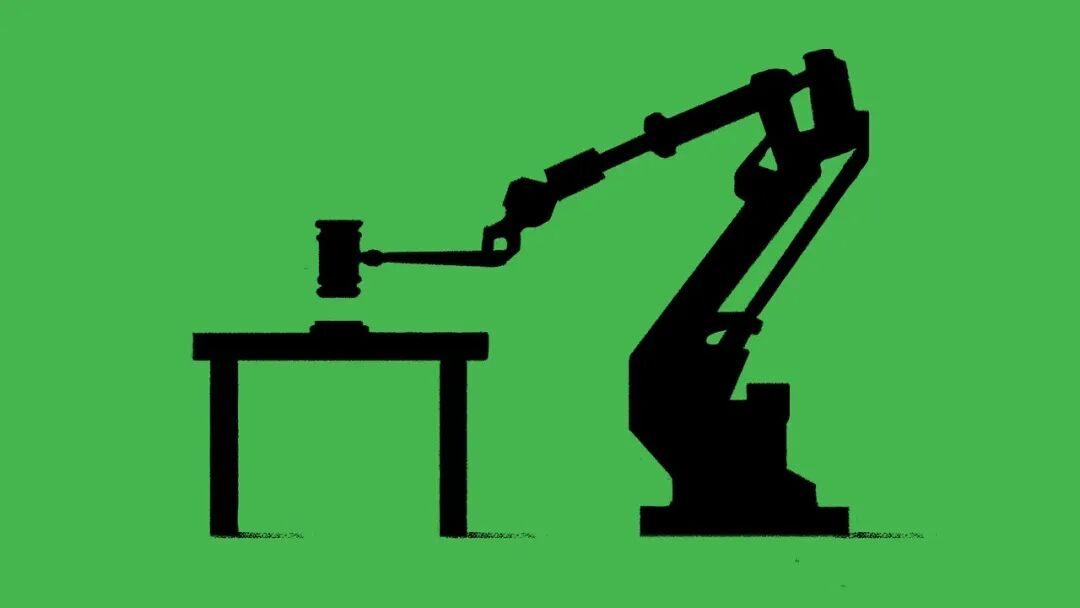
Artificial intelligence is creeping into American lawmaking
【Para.1】Kent Roe is a busy man. In addition to his full-time job as a farmland appraiser, he sits on the board of a utility company and on the council of his local Lutheran church. If that wasn’t enough already, for up to 40 days a year he serves as one of 70 lawmakers in South Dakota’s House of Representatives. It is gruelling work, without much help. South Dakota has the smallest legislative staff in the country; roughly 60 staffers help lawmakers with research and drafting legislation.
【Para.2】These days Mr Roe relies increasingly on artificial intelligence (AI) to manage his workload. The representative says he uses AI chatbots for research, crafting arguments and mulling over talking points. “Honestly I love it,” he enthuses. “It’s a search engine on steroids.” He sometimes uses AI to help write bits of legislation, too. The lawmaker runs first drafts of bills through Grok, an AI tool developed by Elon Musk’s xAI, to refine his ideas or check which other states might have passed similar laws. He likes to prompt Grok to apply what he calls a “constitutional stress test” on proposed legislation. “It’s an accepted tool, same as a calculator is to do math, or a cell phone is to do phone calls,” he points out. “We’re not in the world of buggy whips anymore.”
【Para.3】Usage of AI is booming among state lawmakers and their staff. A survey by the National Conference of State Legislatures, a non-partisan grouping of sitting lawmakers, found that 44% of state legislative staff used AI in their work last year, up from just 20% in 2024. Governors and state agencies are also adopting the technology, in part to prune back excessive and badly written regulations. Doomers warn of a deluge of AI-generated “slop laws” gumming up legislatures, to say nothing of representatives merely regurgitating whatever Claude or ChatGPT tells them.
【Para.4】Most state legislators turn to AI out of need. “You have a lot of workload and no staff to help you out,” laments Nick Hoheisel, a Republican member of the Kansas House of Representatives. He says research that previously took him hours can now be done in a matter of minutes. AI can also help stretched legislators, who are expected to grasp a bewildering array of policy issues, push back against better-resourced lobbyists. Monique Priestley, a Democratic member of the Vermont House of Representatives, says she uses AI to fact-check lobbyists on the fly during committee hearings. “I’ve actually caught lobbyists in lies,” she says.
【Para.5】For lawmakers using general-purpose models, however, AI making stuff up is a big problem. Mr Roe says he occasionally runs an AI prompt “ten times or a hundred times over” to calibrate for the right answer. Mr Hoheisel, for his part, says AI models hallucinate the most when it comes to case law. In any case, bills drafted with the help of AI are still overseen by lawyers, editors and researchers, notes John McCullough, the head of South Dakota’s legislative research council. But lawyers on legislative councils deal with crushing workloads as it is; a wave of AI-slop laws might easily overwhelm them.
【Para.6】At a deeper level, there is growing unease that lawmakers too reliant on AI may find it harder to think critically on important issues. Thought processes like writing, problem-solving and reasoning are inherent to the job. Offloading that to an AI raises stark questions about what it means to be a legislator. “I do worry that chatbots take away independent thought,” admits Mr Hoheisel in Kansas. “Your constituents aren’t electing Claude or ChatGPT. They’re electing you.”
05 检验题
Read the following text carefully and answer the questions below by choosing A, B, C or D.
21. According to Paragraph 2, Kent Roe uses AI primarily to ________.
A draft complete legislative texts for submission
B streamline his research and legislative preparation
C verify the constitutional validity of enacted laws
D communicate more efficiently with his fellow lawmakers
22. What does the survey by the National Conference of State Legislatures reveal?
A Nearly half of state lawmakers personally use AI tools.
B AI adoption among legislative staff has declined since 2024.
C Most governors have rejected AI for regulatory purposes.
D A growing proportion of legislative staff have embraced AI.
23. It can be inferred from Paragraph 4 that AI enables state legislators to ________.
A counter the influence of well-equipped lobbyists more effectively
B reduce their dependence on legislative support staff
C gain a comprehensive mastery of all policy domains
D bypass the traditional committee hearing process entirely
24. The author mentions Monique Priestley’s experience to illustrate that ________.
A Democratic legislators are more open to AI than Republicans.
B AI can entirely replace human fact-checking in legislative work.
C AI serves as a practical tool for legislators to scrutinize lobbying claims.
D lobbyists frequently provide inaccurate information during hearings.
25. Toward the growing reliance on AI in state legislatures, the author appears to be ________.
A enthusiastically supportive of its widespread adoption
B cautiously concerned about its potential drawbacks
C completely dismissive of its practical benefits
D indifferent to how lawmakers choose to employ it
看更多单词注释,全文翻译,长难句解析,写作积累以及答疑服务;
扫码下方报名训练营获取👇👇👇



注:在线课程报名之后不接受退款,报名之前有疑问请先加助教微信(ttzhujiao888)查看例文免费试学和训练营介绍,考虑清楚再报名