ARTICLE · 1047061
雅思阅读近期高频真题:新西兰海藻

免费领取雅思福利
大家可以跟读下面英语,然后学习对应的英文,积累相应材料。
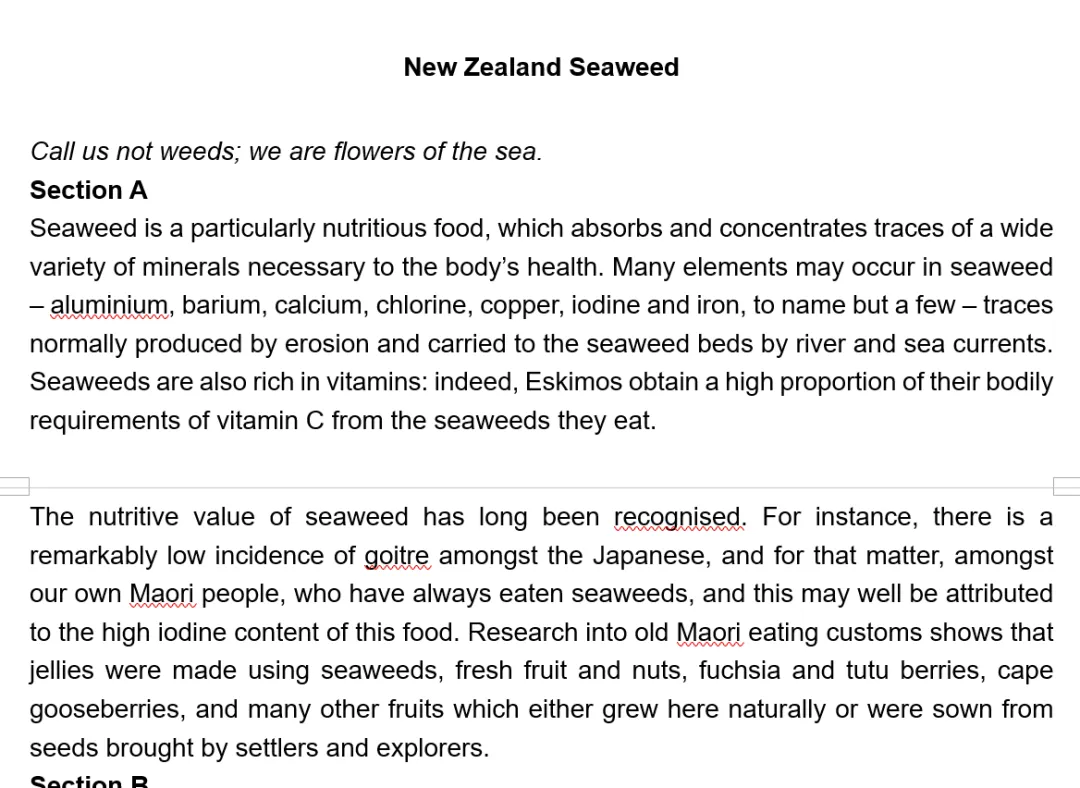
Seaweed is a highly nutritious food because it absorbs minerals such as iodine, calcium, iron, and copper, as well as important vitamins. Its high iodine content may explain the low rate of goitre among people such as the Japanese and Māori, who have traditionally eaten seaweed. Māori also used seaweed with fruits and nuts to make jellies.

海藻是一种高营养食物,它能够吸收碘、钙、铁、铜等多种矿物质以及各类重要维生素。海藻碘含量丰富,这或许可以解释为何日本人与毛利人等族群甲状腺肿大的患病率偏低 —— 他们素来有食用海藻的传统。毛利人还会将海藻搭配水果、坚果来制作果冻。
New Zealand has around 700 species of seaweed, including many varieties of commercially valuable red seaweed. Species such as Gigartina and Pterocladia produce agar, a gel used in foods, medicines, cosmetics, toothpaste, and several industries. Although New Zealand once imported Irish moss and agar, it now produces its own agar from locally available seaweeds.
Seaweeds are classified as red, brown, or green, and their colours may change when they dry.

新西兰拥有约 700 种海藻,其中包含多种具备商业价值的红藻。角叉菜(Gigartina)、翼枝藻(Pterocladia)这类海藻可以产出琼脂。琼脂是一种凝胶物质,广泛应用于食品、药品、化妆品、牙膏以及多个工业领域。新西兰曾经进口爱尔兰苔藓与琼脂,如今已经可以利用本土海藻自主生产琼脂。
They usually grow in distinct zones: green seaweeds in shallow water, brown seaweeds at medium depths, and red seaweeds in deeper water. Their distribution depends on factors such as sunlight, temperature, water depth, and exposure to air. Seaweeds reproduce through spores or fertilisation, absorb nutrients through their fronds, and have holdfasts for attachment rather than true roots. Some species have air-filled floats, water-filled stems, or protective mucilage to maintain buoyancy and prevent drying out or damage from waves.

海藻分为红藻、褐藻、绿藻三大类,海藻干燥之后颜色可能会发生变化。它们通常生长在不同深度的海域:绿藻生长于浅水区,褐藻在中等水深区域,红藻则生活在更深的水下。海藻的分布受光照、温度、水深、暴露于空气中的时长等因素影响。海藻依靠孢子或者受精的方式繁殖,直接通过藻叶吸收养分;它们有着用于固定自身的固着器,而非真正意义上的根。部分海藻长有充满空气的浮囊、储水茎或是保护性黏液,以此维持浮力,防止脱水以及海浪冲击带来的损伤。
(原文在原题库)
课程价格
299元
报名方式
近期课程介绍