ARTICLE · 1106111
LK DESIGN|到2030年,AI有可能自动化掉人类99%的工作!
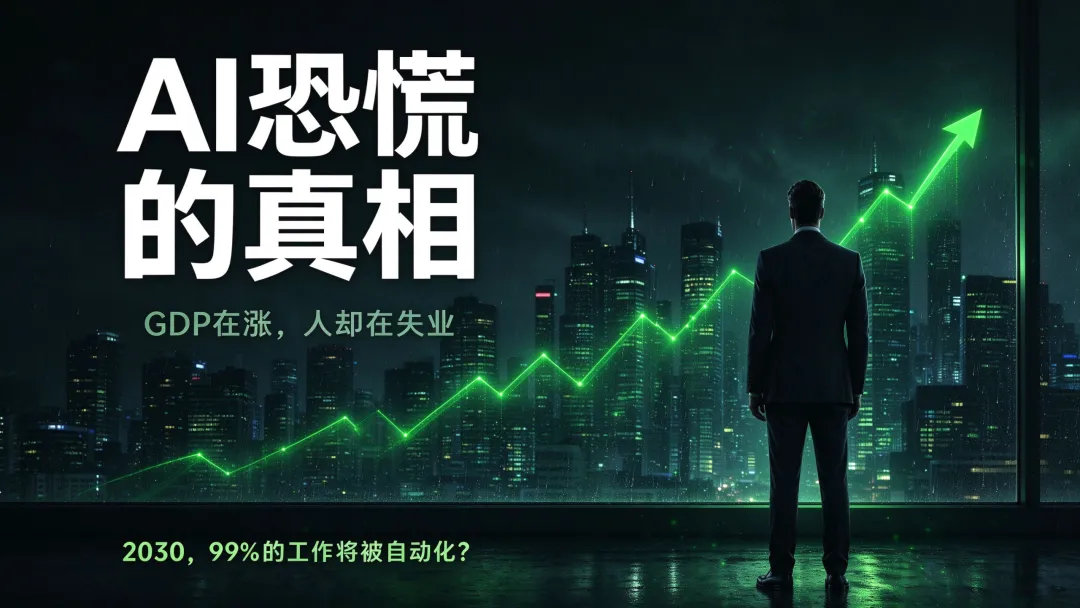
但我发现大家怕的方向错了。AI真正让我们夜里睡不着的,不是机器哪天突然有了自己的想法。而是账面上GDP在涨,客户的预算在涨,同行的利润表也在涨,可你打开通讯录,会发现以前一起干活的人,一个一个,都没班可上了。
Having run a company for years, I’ve been chatting with several fellow business owners lately. We’re no longer talking about whether business is good or bad; instead, we’re discussing something else — who will be the first to lose their jobs amid this AI wave.
Yet I think most of us are afraid of the wrong thing. What really keeps business leaders up at night with AI isn’t the prospect of machines suddenly developing minds of their own someday. It’s that GDP is rising on paper, clients’ budgets are expanding, and competitors’ profit statements are looking better. But when you scroll through your contacts, you realize many people you used to work with are one by one losing their livelihoods.

有个研究AI安全的学者叫罗曼·杨波尔斯基,他做过一个极端的压力测试:到2030年,AI有可能自动化掉人类99%的工作。
我知道你第一反应是——这不可能,主流机构没这么说。对,这不是共识预测,这是有人故意把数字推到最极端,逼我们看清楚一件事:AI真的有可能造出人类史上最多的财富,但同时,把普通人靠"上班拿工资"这条路,整个切掉。
There’s an AI safety researcher named Roman Yampolskiy. He ran an extreme stress test: by 2030, AI could automate 99% of human jobs.
I know your first thought is — that can’t be right; mainstream institutions don’t claim this. True, this is not a consensus forecast. Someone deliberately pushed the number to its most extreme to force us to see one thing clearly: AI may well generate the greatest wealth in human history, yet at the same time completely cut off the path for ordinary people to “earn a living by working for a wage.”

我先把结论放在这:这一轮最可怕的,不是AI造不出价值。是价值造出来了,但跟大多数人的收入,彻底脱钩了。
Let me state my conclusion upfront: the most terrifying part of this wave is not that AI fails to create value. It’s that value gets created, yet becomes completely decoupled from most people’s incomes.
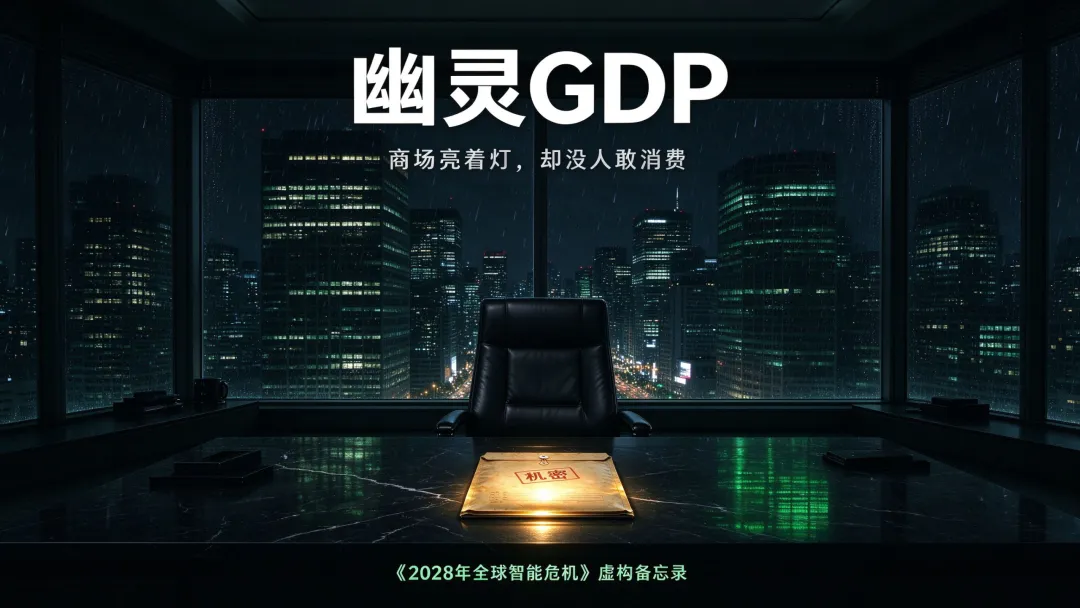
华尔街最近在传一份虚构的备忘录,叫《2028全球智能危机》。它写了一个极端场景:那一年美国失业率干到10.2%,标普500从高点跌了38%,但你猜怎么着?GDP和生产率,还在涨。
它给这种现象起了个名字,叫"幽灵GDP"——商场还亮着灯,餐厅还放着音乐,公司财报还在出,但是街上的人不敢花钱了。因为GDP这个数字,只统计机器造了多少东西,从来不统计这些钱最后落到谁口袋里。
A fictional memo has been circulating on Wall Street lately, titled The 2028 Global Intelligence Crisis. It paints an extreme scenario: that year, U.S. unemployment hits 10.2%, and the S&P 500 drops 38% from its peak. But guess what? GDP and productivity keep rising.
It has a name for this phenomenon: “phantom GDP.” Stores still have their lights on, restaurants still play music, and companies keep releasing financial reports. Yet people on the street dare not spend money. Because the GDP figure only counts how much stuff machines produce. It never tracks who ultimately ends up with all that money.
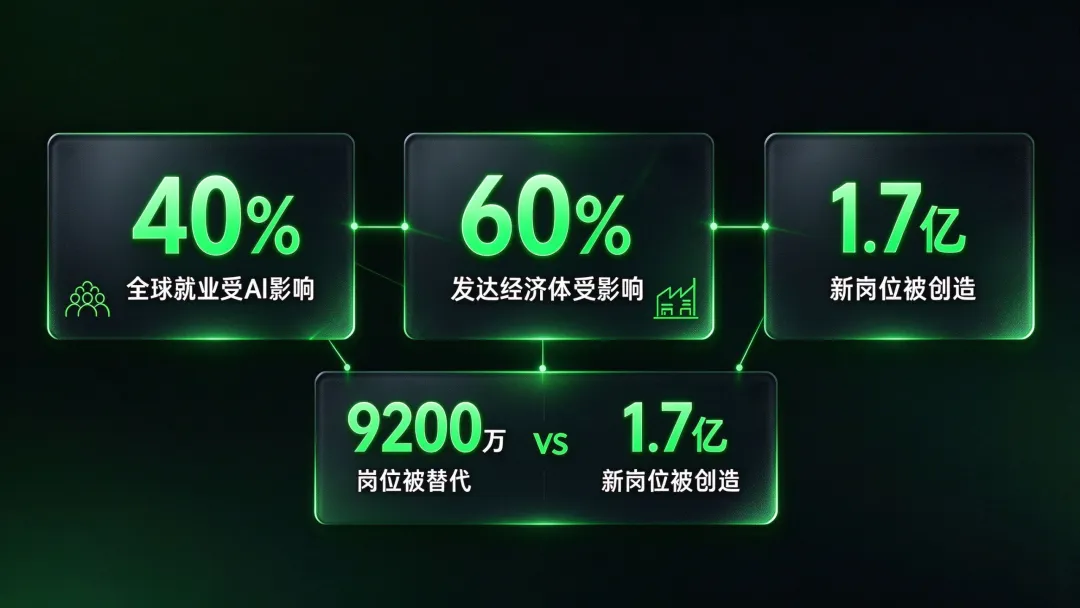
这不是预言,是压力测试。IMF算过,全球大概40%的工作会被AI影响,发达国家接近60%。世界经济论坛更直接:到2030年,9200万个岗位会被替代,但同时会冒出1.7亿个新岗位。
This is not a prophecy; it is a stress test. The IMF has estimated that roughly 40% of jobs worldwide will be impacted by AI, and nearly 60% in developed economies. The World Economic Forum puts it more plainly: by 2030, 92 million jobs will be displaced, while 170 million new roles will emerge.
So you see, that “99%” figure is not the definitive answer. But we can already make out that dangerous chain reaction.

第一步被干掉的,不是岗位,是岗位背后的议价权。
做生意这么多年我太清楚了——过去客户为什么愿意多付钱?就两个字:"算了"。方案太麻烦算了,货比三家太累算了,换个供应商成本太高算了。
可是AI不会累,不会社恐,也不会嫌麻烦。它24小时帮你比价、砍价、退订,甚至自己动手写个小工具把中间环节全跳过去。当"算了"这两个字被AI删掉的时候,那些靠信息差、靠客户懒得换、靠切换成本活着的公司,利润会先一步消失。
The first casualty won’t be jobs, but the bargaining power behind those jobs.
After years in business, I know this all too well. Why would clients pay more in the old days? One simple reason: “it’s not worth the hassle.” The project is too much trouble — not worth it. Comparing too many vendors is exhausting — not worth it. Switching suppliers would cost too much — not worth it.
But AI never gets tired, has no social anxiety, and never minds extra work. It can compare prices, negotiate discounts, cancel orders around the clock. It can even build small tools to cut out all the middle steps entirely. Once AI erases that mindset of “it’s not worth the hassle,” companies that survive on information asymmetry, customer inertia, and switching costs will see their profits vanish first.
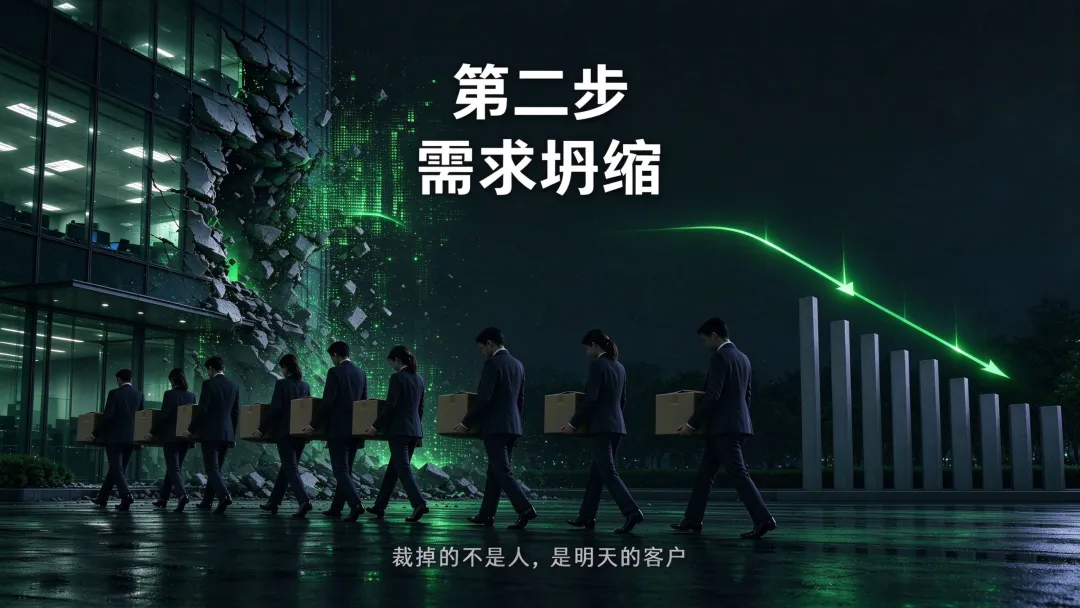
第二步,裁员会滚成一个雪球。
你开公司你就懂:一家公司用AI砍了15%的人,它下一年就不会再雇那么多外部顾问、不会再订那么多差旅、不会再买那么多办公软件。上游供应商收入掉了,它只能继续裁人,然后把省下来的钱,再投去买AI。
每一家公司单独看都是理性的——降本增效、活下去。可所有人加在一起,就是一场需求的坍缩。
真正把消费打趴下的,不是已经失业的那批人,是所有害怕自己明天会失业的人。当白领和中产一起开始存钱,机器造出来的东西再便宜,也没人买了。
The second step: layoffs snowball.
If you run a business, you understand this. When a company cuts 15% of its workforce using AI, the following year it will hire far fewer external consultants, book less travel, and purchase fewer software subscriptions. Revenues drop for its upstream suppliers, leaving them no choice but to cut staff as well. They then reinvest the savings into more AI.
Individually, every firm is acting rationally — cutting costs, boosting efficiency, surviving. But when all of them do this together, aggregate demand collapses.
It is not the already unemployed that crush consumption. It is everyone who fears losing their job tomorrow. When white-collar workers and the middle class start saving en masse, no one will buy goods no matter how cheaply machines produce them.
Machines can manufacture things, but machines do not dine out, buy homes, or send their children to extracurricular classes costing eight thousand a month.

所以你问我,99%的公司都会倒闭吗?不会。但99%的公司,都得被迫把自己重做一遍。
靠人头收费、靠工时收费、靠"客户不知道外面还有什么"赚钱的组织,会先被淘汰。
能活下来的是什么?是这五样东西:你攒下的私有数据、客户跟你多年的信任、你的品牌、出了问题谁来签字负责、最后真的能把东西交到客户手上的那个能力。
AI越便宜,"执行"就越贱。反过来——能定义问题、能定规矩、能验收结果、出了事能扛责任的人,会越来越贵。
So you ask me: will 99% of companies go bankrupt? No. But 99% of them will be forced to rebuild themselves from the ground up.
Organizations that charge by headcount, bill by the hour, or profit from keeping customers unaware of alternatives will be the first to be eliminated.
What survives boils down to five things: your proprietary data, years of trust built with clients, your brand, who signs off and takes accountability when things go wrong, and finally, the capability to actually deliver what the customer needs.
The cheaper AI becomes, the less valuable raw execution gets. Conversely, people who can frame problems, set rules, validate outcomes, and bear responsibility when failures happen will grow increasingly valuable.

那我们做公司的,现在该干嘛?我自己在公司内部定了三条:
第一,别给旧流程贴个AI插件就叫转型。把手上所有事摊开,分成三类——机器能干的、人必须拍板的、系统绝对不能碰的。
第二,别再卖你有多少人、加了多少班,开始卖你最后交付了什么结果。把客户数据、交付经验、这么多年攒下的口碑,变成AI抄不走的护城河。
第三,赶紧立一份"AI权责清单":谁来定规则、谁来批例外、谁来审计、真出了事谁按暂停键、谁来回头擦屁股。
未来最危险的公司,不是没用AI的公司,是只拿AI砍成本、却从来没想过责任和利润该怎么重新分的公司。你把客户都当成成本优化掉了,最后发现——客户没了,你的需求也没了。
对我们每个普通人,我也给三件今天就能动手的事:
第一,每周主动挑一件你在重复做的活儿,交给AI去做。别等公司拿着AI来重新定义你的岗位——你要先把自己从"干活的",挪到"定方向、划边界、验结果"的位置上。
第二,攒三样AI抄不走的东西:你自己的案例和数据、别人对你的信任和关系、还有一套你自己跑顺了的、能稳定出活的AI工作流。
第三,手里留够至少6到12个月的活钱。降负债、砍固定开支。技术大变革的时候,现金不是钱,现金是你敢对烂机会说"不"的底气。
So what should those of us running businesses do right now? I’ve set three internal rules for my own company.
First, don’t slap an AI plugin onto old workflows and call that transformation. Lay out every task you have and split them into three buckets: what machines can handle, what humans must sign off on, and what systems must never touch.
Second, stop selling how many people you have or how many overtime hours you log. Start selling the end results you deliver. Turn your client data, delivery experience, and reputation built over the years into an AI-proof moat.
Third, draw up an AI accountability framework without delay: who sets the rules, who approves exceptions, who conducts audits, who hits the pause button when something goes wrong, and who cleans up the mess afterward.
The most vulnerable companies in the future won’t be those skipping AI entirely. They will be firms that only use AI to cut costs, yet never rethink how responsibility and profits should be redistributed. If you treat your customers merely as costs to optimize, you’ll eventually find your customers gone — and your demand along with them.
For every individual, I also have three actionable steps you can start today.
First, pick one repetitive task each week and hand it over to AI. Don’t wait for your company to redefine your role with AI. Move yourself from being a doer to someone who sets direction, defines boundaries, and verifies outcomes.
Second, build three assets AI cannot copy: your own portfolio of cases and data, trust and relationships others have with you, and a refined personal AI workflow that reliably produces results.
Third, keep enough liquid funds to cover at least six to twelve months of expenses. Reduce debt and trim fixed costs. During major technological shifts, cash is not merely money. Cash gives you the confidence to say “no” to bad opportunities.

最后送你一句话,也是我贴在自己办公室白板上的:
不要跟AI抢"谁干得快",要抢回来三件东西——定规则的权力、跟人建立信任的能力、还有属于你自己的资产。
"99%"这个数字可能是错的,但它指的那个方向,不能装看不见。AI时代真正的分水岭,不是人跟机器,是——一边是能指挥AI、能审计AI的人,一边是自己的全部工作都能被写成一张SOP的人。
你今晚回家可以自己对一下:你现在这份收入,到底是靠执行、靠判断、靠关系,还是靠资产?
越早想清楚自己站在哪一层,越有机会从"被定义的人",变成"定规则的人"。
One final thought I keep written on the whiteboard in my office:
Don’t compete against AI over who can work faster. Fight to hold onto three things: the power to set rules, the ability to build trust with people, and assets that are uniquely yours.
That “99%” figure may be wrong, but we cannot ignore the direction it points to. The real dividing line in the AI age is not humans versus machines. It separates those who can direct and audit AI from those whose entire job can be boiled down to a single SOP.
Go home tonight and ask yourself: what is your income really built on? Execution? Judgment? Relationships? Or assets?
The sooner you figure out which camp you are in, the better your chance to move from being someone who gets defined, to someone who defines the rules.
关于我们
About Us
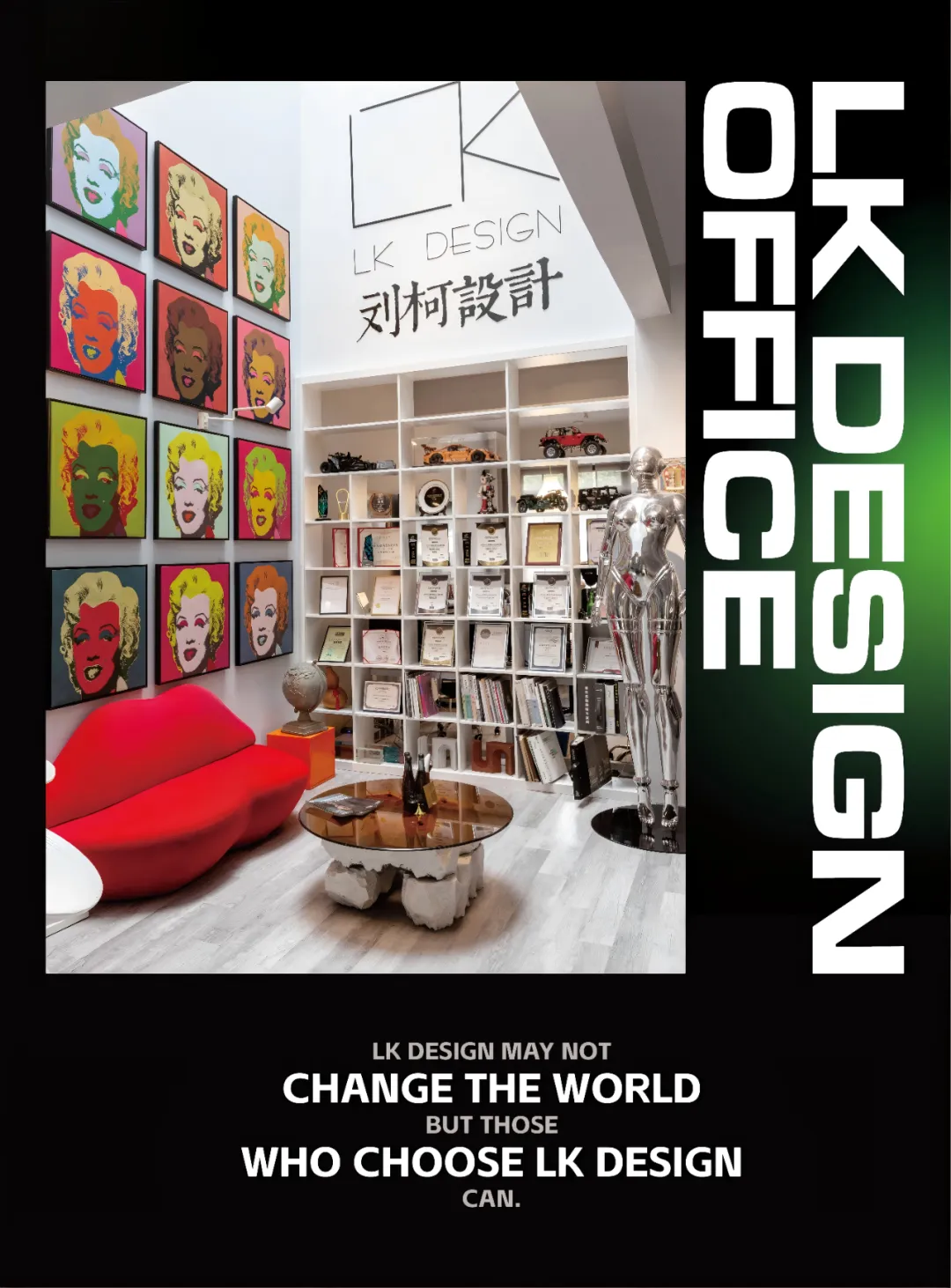
青岛刘柯设计工作室位于中国青岛
是一家以“为客户品牌升维” 为定位的专业设计机构
以“为客户创作作品,更为客户创造商业价值” 为公司宗旨
以“打造场景创新的标杆级作品” 为使命。
我们专注于 EIS(品牌环境识别系统)与 CIS(品牌形象识别系统)两大业务领域
以自身独有的商业逻辑和创新思维
为客户定制空间设计与品牌建设的联合赋能解决方案
凭借年轻锐意的设计团队
专注于高尔夫、娱乐 KTV、潮流酒吧、时尚健身、潮流门店和互联办公的细分赛道
落地完成了多个突破边界的迭代项目并始终保持作品的引领性。
It is a professional design institution positioned to "enhance the brand value of clients".
Our company mission is "to create works for clients and also create commercial value for them".
Our mission is "to build benchmark-level innovative works in the field of scenarios".
We focus on two business areas:
EIS (Brand Environment Identification System) and CIS (Brand Image Identification System).
With our unique business logic and innovative thinking,
we customize joint empowerment solutions for space design and brand building for clients.
With a young and innovative design team,
we focus on specialized fields such as golf, entertainment KTV,
trendy bars, fashionable fitness, trendy stores, and connect offices.
We have completed multiple boundary-breaking iterative projects and always maintain the leading edge of our works.