ARTICLE · 1310038
11.04 考研英语阅读文本源外刊模拟试题【完形填空】
Section I Use of English
Part A
Directions: Read the following text. Choose the best word (s) for each numbered blank and mark A, B, C or D on the ANSWER SHEET. (10 points)
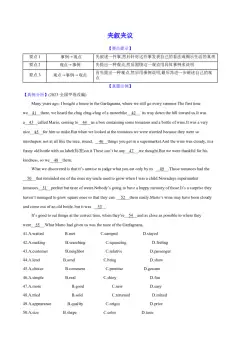
Being able to tell when someone is lying is a useful skill, 1. __ lies can affect us in many ways, some of them harmful. The 2. __ is that, as studies have shown, doing so reliably is difficult, for the simple reason that liars do not all look or 3. __ alike. A better approach may be to use our ears rather than our eyes: 4.__ people say, and how they say it, can provide clues about whether they are trying to deceive us.
These clues 5. __ , however, because liars do not all lie in the same way: some lies are made up on the spot, some are prepared well in 6. __ , and some are merely a twisted version of the truth. Liars may also have to 7. __ their replies to the situation and to each new question they face.
Repetition is one such clue. Asked a question they are not 8.__ for, people may get stuck on a pronoun, repeating it again and again as they look for a way to go on. Others repeat the same verb or adjective just when they are struggling to 9. __ detail to an invented story. Some liars repeat themselves simply to 10.__ cooperative and open. But supplying convincing detail means inventing more of it, and keeping 11. __ of it takes effort, so their speech often grows muddled and less fluent.
Another clue is the order in which information is given. 12. __ describing an event, people usually go through it in sequence, but when the matter is urgent they put the crucial fact first. Liars, 13. __ , often open with an excuse or a long story and reach the real point late, using more words than honest people would. Such an account may well have been 14. __ beforehand.
Word choice can also 15. __ a speaker’s true feelings. We keep people we dislike at arm’s 16. __ by calling them “that person” instead of using a name, which is perfectly natural. It is suspicious only when such distancing appears where it would not be 17. __ .
Truthful accounts of shocking experiences are rich in what was seen, heard, smelt or felt, 18. __ invented memories are not tied to real perceptual experience and so tend to 19. __ such detail. Liars also often avoid saying “I”, which leaves them 20. __ , and say “we” instead, hoping to find safety in numbers. However hard they try to keep the focus off themselves, their language often betrays them.
A. because B. unless C. although D. whereas A. surprise B. advantage C. trouble D. result A. dress B. act C. speak D. sound A. That B. Whether C. Which D. What A. differ B. disappear C. increase D. arrive A. turn B. place C. advance D. line A. repeat B. withdraw C. explain D. adapt A. trained B. prepared C. blamed D. rewarded A. add B. remove C. recall D. check A. prove B. remain C. appear D. become A. record B. sight C. charge D. track A. Unless B. When C. Although D. Because A. in contrast B. as a result C. for instance D. in short A. cancelled B. rejected C. misplaced D. rehearsed A. protect B. change C. reveal D. imitate A. reach B. length C. distance D. range A. expected B. allowed C. avoided D. repeated A. unless B. until C. whereas D. so that A. include B. exaggerate C. explain D. lack A. relieved B. exposed C. confused D. admired
附注:根据历年考研英语真题阅读题源外刊等,摘选最新文章,模拟仿真出题。
参考答案见以下。
Quick look: ACBDA CDBAC DBADC BACDB
1. A【解析】题型:逻辑关系定位:Being able to tell when someone is lying is a useful skill, (1) lies can affect us in many ways...分析:后半句说明前半句"这是一项有用的技能"的理由,用 because 表因果。干扰项:[B]unless 表条件,[C]although 表让步,[D]whereas 表对比,均与前后的因果关系不符。
2. C【解析】题型:固定搭配定位:The (2) is that, as studies have shown, doing so reliably is difficult分析:The trouble is that... 是引出问题、麻烦的固定句式。前文说这是一项有用的技能,此处转折指出"可靠地做到并不容易"。干扰项:[A]surprise 强调出人意料,文中无此意;[B]advantage(优势)与 difficult 矛盾;[D]result(结果)缺乏因果前提。
3. B【解析】题型:词义辨析定位:liars do not all look or (3) alike分析:look or act alike 指外表和举止各不相同,与下文"用耳朵而不是眼睛"呼应:靠观察难以识别说谎者。干扰项:[A]dress 与说谎无关;[C]speak 与[D]sound 都指"说话/听起来",而下文才转向"听",与"观察不可靠"的前提不符。
4. D【解析】题型:语法(主语从句)定位:(4) people say, and how they say it, can provide clues分析:空处引导主语从句,并在从句中作 say 的宾语,应用 what,与后面的 how 并列。干扰项:[A]That 在从句中不作成分;[B]Whether 表"是否",意义不符;[C]Which 需要有明确的范围或先行词,此处不合。
5. A【解析】题型:词义辨析定位:These clues (5), however, because liars do not all lie in the same way分析:因为说谎的方式不同,所以线索也各不相同(differ),however 与前文"线索能提供信息"形成转折。干扰项:[B]disappear(消失)、[C]increase(增加)、[D]arrive(到来)均不符合"不同方式导致线索不同"的逻辑。
6. C【解析】题型:固定搭配定位:some are prepared well in (6)分析:in advance 意为"事先",well in advance 是常见搭配,指谎言是提前准备好的。干扰项:[A]turn、[B]place、[D]line 都不能与 in 构成"事先"的意思。
7. D【解析】题型:词义辨析(搭配)定位:Liars may also have to (7) their replies to the situation and to each new question they face.分析:adapt ... to ... 意为"使……适应……",指说谎者要根据情境和问题调整回答。干扰项:[A]repeat(重复)、[B]withdraw(撤回)语义不符;[C]explain 不与 to the situation 构成这样的搭配。
8. B【解析】题型:固定搭配定位:Asked a question they are not (8) for分析:be prepared for 意为"对……有准备",指被问到没有准备的问题时,人容易卡在代词上。干扰项:[A]trained 一般不说 trained for a question;[C]blamed、[D]rewarded 虽可与 for 搭配,但语义不符。
9. A【解析】题型:词义辨析(搭配)定位:struggling to (9) detail to an invented story分析:add ... to ... 意为"给……添加",指说谎者难以给编造的故事增添细节。干扰项:[B]remove(去除)与 struggling 矛盾;[C]recall 不与 to 搭配,且编造的故事无从"回想";[D]check(检查)语义不符。
10. C【解析】题型:词义辨析定位:repeat themselves simply to (10) cooperative and open分析:appear + 形容词意为"显得……",指有些说谎者重复自己的话,只是为了让人觉得合作、坦率。干扰项:[A]prove、[B]remain、[D]become 都没有"装出某种样子"的含义。
11. D【解析】题型:固定搭配定位:keeping (11) of it takes effort分析:keep track of 意为"追踪、记住",指要记住自己编造了哪些细节。干扰项:[A]record 通常用 keep a record of,缺少冠词;[B]sight 用于 keep sight of,指不忘目标,不合此处;[C]charge 需用 in charge of。
12.B【解析】题型:语法(分词状语)定位:(12) describing an event, people usually go through it in sequence分析:describing 前省略了与主句相同的主语,when describing 表"在描述一件事时"。干扰项:[A]Unless、[C]Although、[D]Because 分别表条件、让步、原因,均不合逻辑。
13. A【解析】题型:逻辑衔接(对比)定位:people usually ... put the crucial fact first. Liars, (13), often open with an excuse...分析:前文讲一般人先说关键事实,后文讲说谎者先说借口,二者形成对比,用 in contrast。干扰项:[B]as a result 表结果;[C]for instance 表举例;[D]in short 表概括,均不合上下文。
14. D【解析】题型:词义辨析定位:Such an account may well have been (14) beforehand.分析:rehearsed beforehand 意为"事先排练过",与前文"开头很长、迟迟说不到要点"呼应,指这样的叙述可能是预先准备好的。干扰项:[A]cancelled、[B]rejected、[C]misplaced 都不能与 account 和 beforehand 构成合理的意思。
15. C【解析】题型:词义辨析定位:Word choice can also (15) a speaker’s true feelings.分析:reveal 意为"揭示",对应下文:人们对不喜欢的人用疏远的称呼,这就暴露了他们的感受。干扰项:[A]protect、[B]change、[D]imitate 均与"用词暴露感受"不符。
16. B【解析】题型:固定搭配定位:We keep people we dislike at arm’s (16)分析:keep sb. at arm’s length 意为"与某人保持距离",与"不喜欢的人"相符。干扰项:[A]reach 用于 within arm’s reach,意为"伸手可及",意思相反;[C]distance、[D]range 不构成此固定搭配。
17. A【解析】题型:词义辨析定位:It is suspicious only when such distancing appears where it would not be (17).分析:疏远的措辞出现在本不该出现、没人预料到的场合才值得怀疑,故用 expected。干扰项:[B]allowed(允许)、[C]avoided(避免)、[D]repeated(重复)均不符合句意。
18. C【解析】题型:逻辑关系(对比)定位:Truthful accounts ... are rich in what was seen, heard, smelt or felt, (18) invented memories are not tied to real perceptual experience分析:前后分别讲真实叙述与编造的记忆,二者形成对比,用 whereas。干扰项:[A]unless 表条件;[B]until 表时间;[D]so that 表目的或结果,均不表对比。
19. D【解析】题型:词义辨析定位:so tend to (19) such detail分析:编造的记忆与真实的感知经历没有联系,所以往往缺少这类细节(lack)。干扰项:[A]include 与文意相反;[B]exaggerate(夸大)、[C]explain(解释)均不合逻辑。
20. B【解析】题型:词义辨析定位:Liars also often avoid saying “I”, which leaves them (20), and say “we” instead分析:"I" 让说谎者暴露无遗(exposed),所以他们改说 “we” 来寻求"人多势众"的安全感。干扰项:[A]relieved(如释重负)、[C]confused(困惑)、[D]admired(受钦佩)均与"改说 we 以躲避"的动机不符。
【参考译文】
能够辨别一个人是否在说谎是一项很有用的技能,1. 因为 谎言可能会以多种方式影响我们,其中一些影响甚至是有害的。2. 问题 在于,正如研究所表明的那样,想要可靠地做到这一点是很困难的,原因很简单:说谎者并非都长得一样,或者表现一样的 3. 行为举止。一种更好的方法或许是用耳朵而不是眼睛:4. 人们所说的内容 以及他们说话的方式,都能够为我们提供线索,帮助判断他们是否试图欺骗我们。
然而,这些线索 5. 各不相同,因为说谎者并非都以相同的方式撒谎:有些谎言是临时编造出来的,有些则是 6. 提前 精心准备好的,还有一些不过是对事实进行了歪曲。说谎者还可能不得不根据具体情境以及自己面对的每一个新问题,7. 调整 自己的回答。
重复是一种这样的线索。当人们被问到一个自己没有 8. 事先准备 的问题时,可能会卡在某个代词上,一遍又一遍地重复它,同时寻找继续说下去的办法。还有一些人恰恰会在努力为编造的故事 9. 添加 细节时,反复使用同一个动词或形容词。有些说谎者重复自己的话,仅仅是为了 10. 显得 合作而坦诚。但是,提供令人信服的细节意味着需要编造更多细节,而要始终 11. 掌握 这些细节则需要付出努力,因此,他们的言语往往会逐渐变得混乱,流畅程度也会下降。
另一个线索是信息呈现的顺序。12. 当 人们描述一件事情 时,通常会按照事情发生的先后顺序进行叙述;但当事情十分紧急时,他们会把最关键的事实放在最前面。13. 相比之下 ,说谎者往往先以借口或一段冗长的故事作为开场,很晚才谈到真正的重点,而且使用的词语比诚实的人更多。这样的叙述很可能是事先 14. 排练 过的。
用词选择也能够 15. 显露 说话者的真实情感。我们会通过称呼自己不喜欢的人为“那个人”,而不是直接使用其姓名,来与他们保持一定的距离,也就是与他们保持 16. 一臂之距 ,这完全是一种自然的表达方式。只有当这种疏远的称呼出现在不应该 17.预期 它出现的场合时,才值得怀疑。
对令人震惊的经历的真实叙述,往往充满了有关视觉、听觉、嗅觉或触觉的细节,18.然而 编造出来的记忆并不与真实的感官体验相联系,因此往往 19. 缺乏 这类细节。
说谎者也经常避免使用“I”(我)这个词,因为这会使他们 20. 暴露无遗 ,于是转而使用“we”(我们),希望借助人数的优势获得安全感。无论他们多么努力地试图将注意力从自己身上转移开,他们的语言往往还是会出卖他们。