ARTICLE · 1367534
初中英语基本句型(总结版)
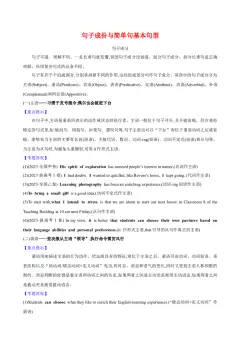
一、简单句
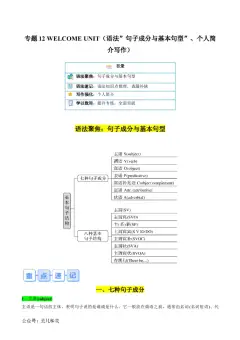
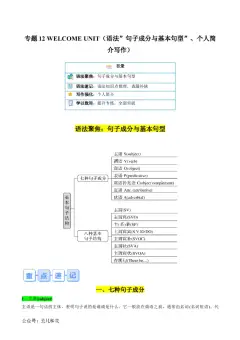
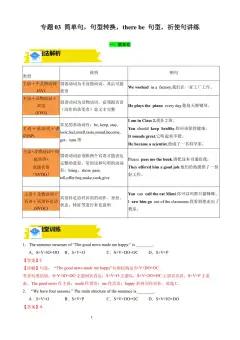
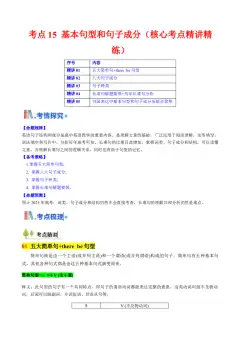
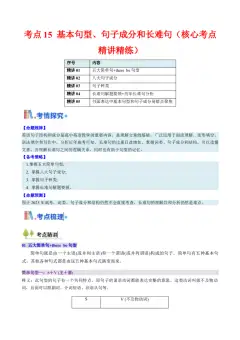
只含有一个主谓结构并且句子各成分都只由单词或短语构成的独立句子或分句叫作简单句。简单句的基本句型如下:
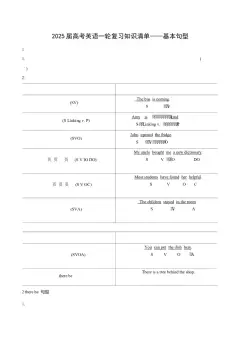
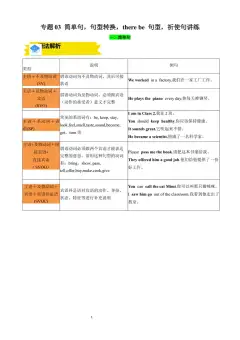
1. 主+谓(S+V)
该句型中,谓语动词为不及物动词,能表达完整的意思。不及物动词后不能直接跟宾语,有时表示动作发生的频率、程度、时间、地点等,可接状语进行修饰。
例句:The bus is coming. 公共汽车来了。
2. 主+谓+宾(S+V+O)
该句型中,谓语动词为及物动词,须跟宾语(动作的承受者),句子意义才能表达完整。
例句:Tom bought a new book. 汤姆买了本新书。
3. 主+系+表(S+V+P)
该句型中,谓语动词为连系动词,不能表达完整的意思。连系动词后可直接跟名词、代词或形容词作表语。
例句:I feel tired. 我感觉累了。
4. 主+谓+间宾+直宾(S+Vt+IO+DO)
该句型中,谓语动词需要跟两个宾语才能表达完整的意思,俗称双宾语。常见的跟双宾语的动词有 buy、pass、lend、give、teach、show、bring、offer 等。
例句:Miss White teaches us English. White小姐教我们英语。
5. 主+谓+宾+宾补(S+Vt+O+OC)
该句型共有两种作用:①说明宾语的特点、身份等;②过感官知道宾语做了某事或让宾语去完成某个动作。
例句:I take my sister to practice basketball. 我带着我的妹妹去练习篮球。
6. There+be+主语(+地点/时间状语)
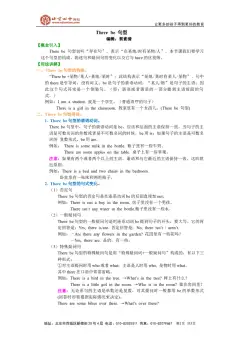
该句型为存现句,表示“某地或某时有某人或某物”。there在此结构中没有实际意义,句中的be动词和后面所跟的名词在“数”方面保持一致。
例句:There is a boy beside the tree. 树旁边有一个男孩。
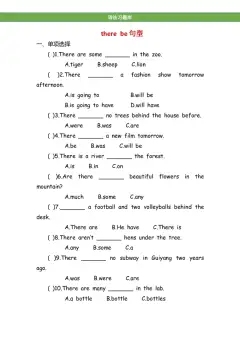
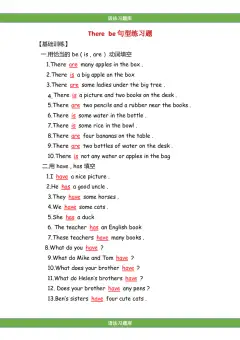
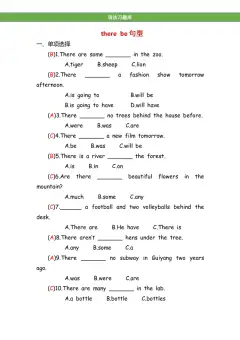
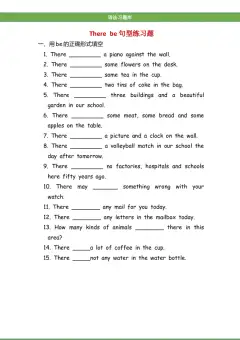
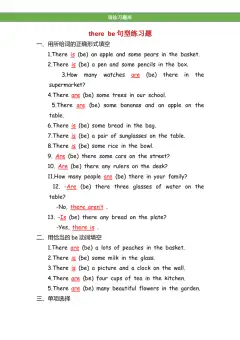
二、存现句(there be句型)
1. 存现句的句式
肯定句:There be+主语(+地点/时间状语).
例句:There is a big park across from the supermarket. 在超市对面有一个大公园。
- 否定句:There be+not/no+主语(+地点/时间状语).
例句:There isn't any meat in the fridge. 冰箱里没有肉了。
一般疑问句:Be+there+主语(+地点/时间状语)?
例句:—Are there many people here on vacation? 这儿有很多人在度假吗?
—Yes, there are. 是的,有。/—No, there aren't. 不,没有。
特殊疑问句:特殊疑问词+主语+be+there(+地点/时间状语)?
例句:How many students are there in the class? 班上有多少名学生?
例句:There is a new computer on the desk. 桌子上有一台新的电脑。
口诀助记:
there be有特点,主语放在be后面。就近原则是重点,单数is复数are。变否定很简单,be后要把not添。变疑问也不难,把be提到there前。肯定句中用some,否定句、疑问句用any。
2. 存现句的时态(由连系动词be体现)
一般现在时:There is/are…
例句:I believe that there are many ways to show our love. 我相信有很多方式来表达我们的爱。
一般过去时:There was/were…
例句:There was heavy rain outside yesterday. 昨天外面下大雨。
一般将来时:There will be… / There is/are going to be…
例句:There will be a concert on Saturday. 周六将有一场音乐会。
现在完成时:There have/has been…
例句:Scientists think that there has been life on the earth for hundreds of millions of years. 科学家们认为地球上已有生命存在数亿年了。
含情态动词:There+情态动词+be…
例句:There may be some new clothes on sale in the shop now. 现在商店可能有一些新衣服在特价出售。
3. 存现句(there be句型)的用法
(1)遵循主谓一致原则
如果存现句(there be句型)中有一个主语时,be动词必须和主语在人称和单复数上保持一致,即“主谓一致”。
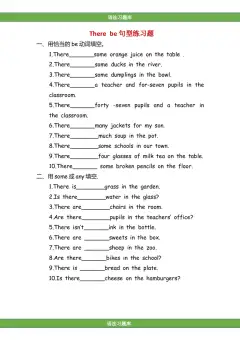
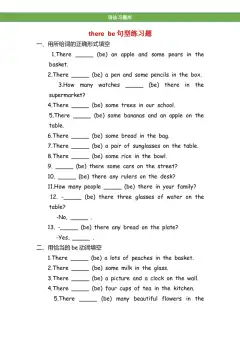
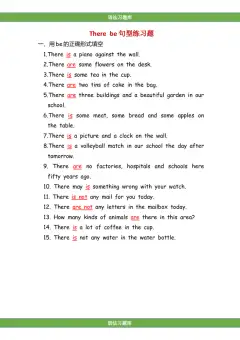
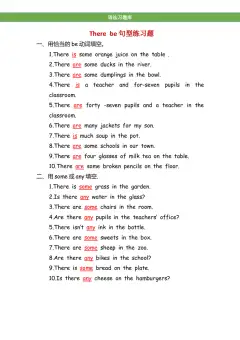
例句:There are some apples in the fridge. 冰箱里有些苹果。
There are some flowers in the bottle. 瓶子里有一些花。
There is some milk in the bottle. 瓶子里有一些牛奶。
There is much ice on the river. 河上有很多冰。
(2)如果存现句(there be句型)中有两个及以上并列主语时,be动词要和最靠近它的主语在人称和单复数上保持一致,即“就近原则”。
例句:There is a teacher's desk and forty students' desks in the classroom. 教室里有一张讲桌和40张学生的课桌。
There is a zoo and some parks in our city. 在我们的城市里有一个动物园和一些公园。
(3)there be+sb.+doing sth(+地点/时间状语),表示“某地/某时某人在做某事”。
例句:There is a girl reading in the classroom. 教室里有一个女孩正在看书。
(4)there be句型的常用句型:
①there is/was no use(in)doing sth,表示“做某事没有用”。
②there is/was no need(for sb.)to do sth,表示“(对某人来说)做某事没必要”。
③there is/was no doubt that…表示“毫无疑问……”。
易混警示:存现句 there be 与 have 的用法区别
(1)there be表示“某地有某物/某人”,句型强调位置关系、存在,不强调这个物品归谁所有。
例句:There is a new lab at the school. 学校里有一个新实验室。
There is a ruler on the desk. 桌子上有一把尺子。
(2)have表示“某人/某物拥有某物”,主语是人/物,强调所属关系。
例句:I have a new bike. 我有一辆新自行车。
I have a notebook. 我有一个笔记本。