 夜雨聆风
夜雨聆风保研英语口语高频题与回答模板
英语口语面试是很多同学的焦虑源:怕发音不标准,怕听不懂问题,怕脑子空白。其实保研口语考察的并不是雅思 7 分的发音,而是你能不能清晰、连贯地表达学术想法。掌握高频题型和模板,完全可以在短期内突击到合格线以上。
— INFO —
一句话总结:保研口语考的不是"说得像外国人",而是"说得清楚、有逻辑、不冷场"。
一、口语面试到底考什么
从大量院校真题来看,口语题目可以归为六大类。
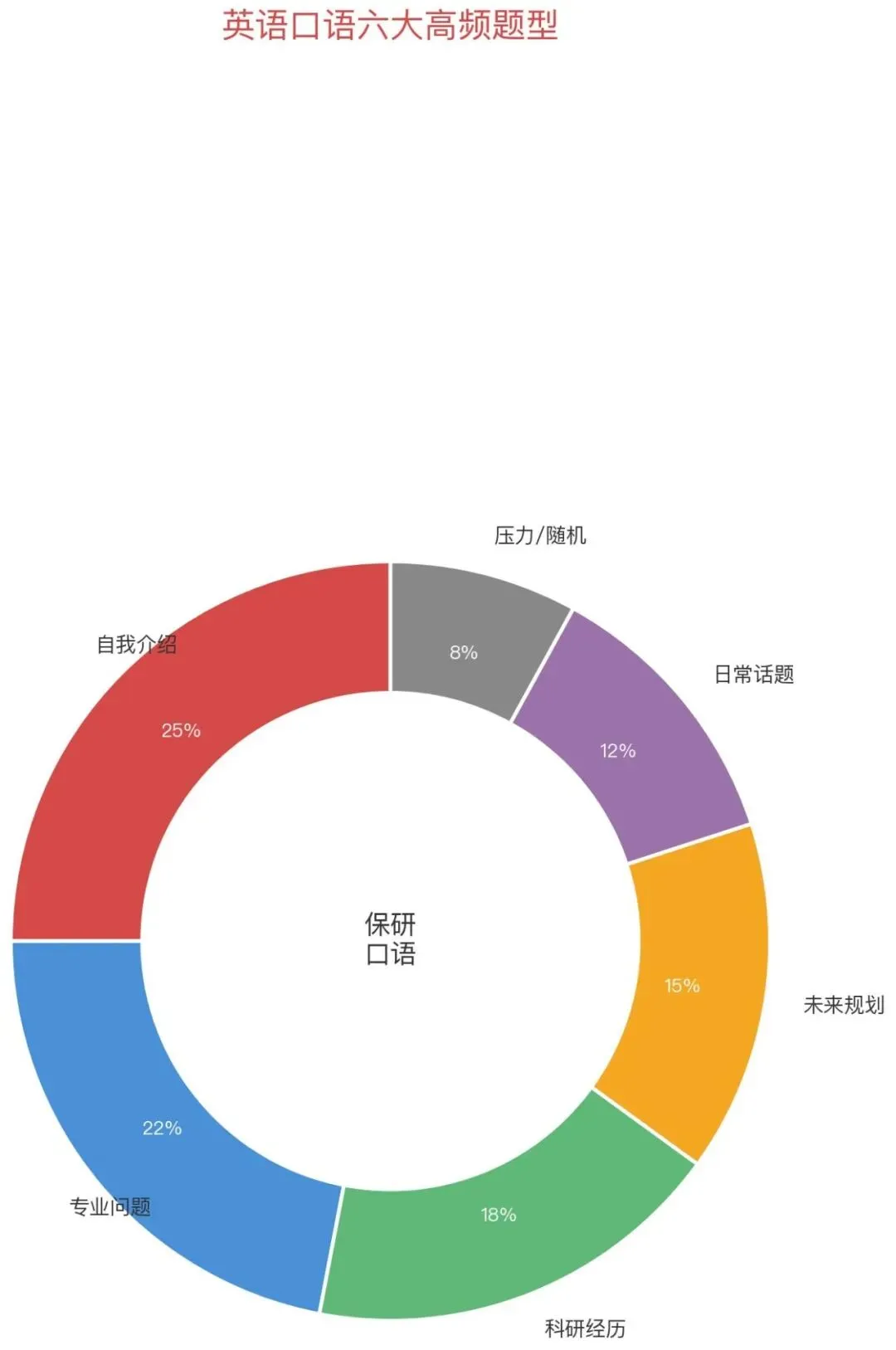
其中自我介绍和专业问题占比最高,是备考的重中之重。日常话题看似轻松,但如果完全没有准备,也容易卡壳。
二、回答结构:金字塔模型
不管遇到什么题,都建议用金字塔结构组织答案:先给结论,再补理由、例子,最后回扣主题。
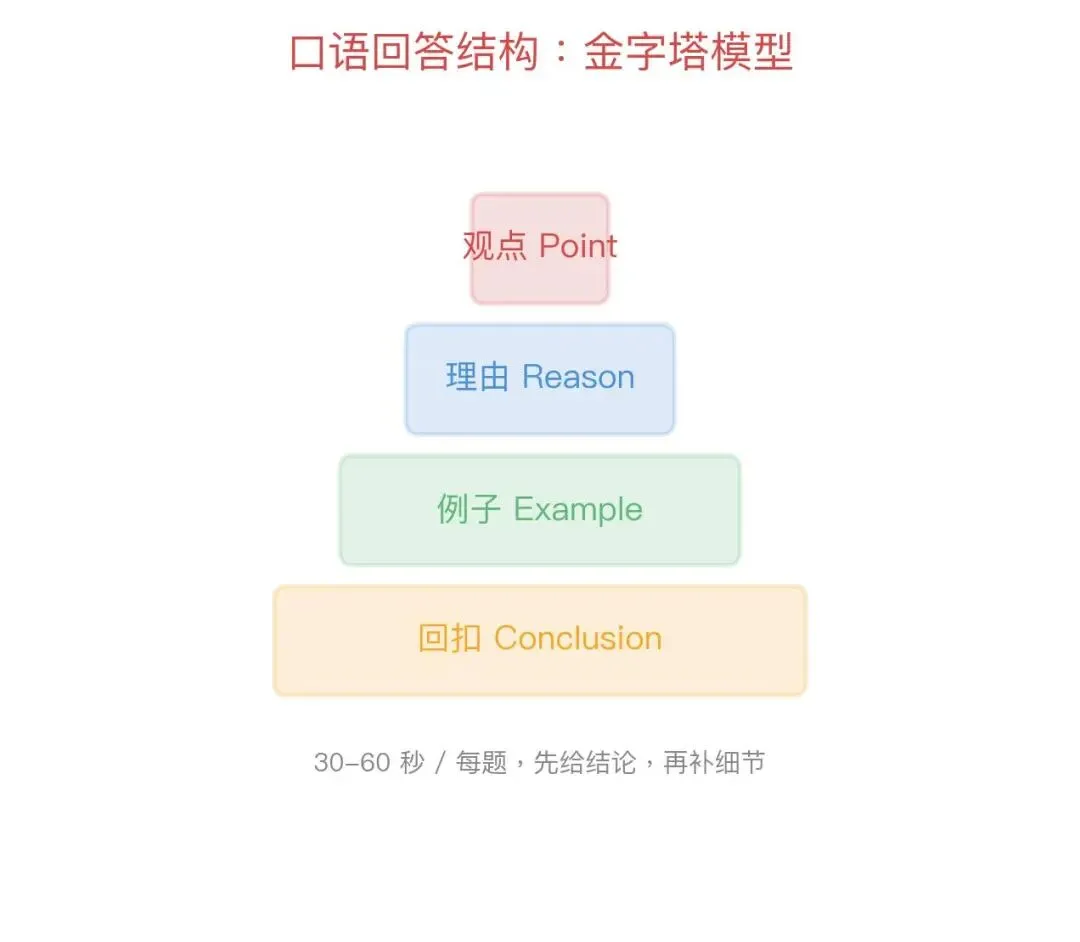
- Point
:一句话回答核心问题。 - Reason
:给出 1-2 个理由。 - Example
:用经历或数据支撑。 - Conclusion
:再回扣观点,自然收尾。
— SUCCESS —
示例:"Why do you choose our university?" - Point:First, your lab is one of the best in this field. - Reason:I have read several papers from Professor X, and I am particularly interested in ... - Example:My undergraduate project on ... is highly related to this direction. - Conclusion:So I believe this is the best place for me to continue my research.
三、六大高频题型与模板
1. 自我介绍 Self-introduction
控制在 60-90 秒,包含学校、专业、研究兴趣、一段核心经历。
— NOTE —
模板: Good morning, professors. My name is Zhang San, majoring in Computer Science at XX University. I rank top 5% in my class and have a strong interest in machine learning. Last year, I joined a project on text classification and improved the F1 score by 15%. I am eager to continue research in NLP under your guidance.
2. 专业问题 Professional questions
可能问到专业名词解释、研究方法、模型原理。
— SUCCESS —
答题思路:定义 + 核心思想 + 应用场景。
📌 模板 1: Transformer is a deep learning model based on self-attention. Its core idea is to capture global dependencies without relying on recurrence. It is widely used in NLP tasks such as machine translation and text summarization.
📌 模板 2(机器学习通用): Overfitting happens when a model learns the training data too well, including noise. To avoid it, we can use cross-validation, regularization, or dropout.
3. 科研经历 Research experience
老师常问"Tell me about your project"或"What is your contribution?"。
— SUCCESS —
用 STAR 法则回答,重点讲你的具体贡献。
📌 模板: In this project, I was responsible for model design. We used a CNN-based approach to solve ... My main contribution was optimizing the loss function, which improved accuracy from 78% to 86%.
4. 未来规划 Future plan
分短期和长期,体现目标感。
— NOTE —
模板: In the short term, I plan to solidify my foundation in ... and complete coursework. In the long run, I hope to publish high-quality papers and contribute to ...
5. 日常话题 Daily topics
常见题:hometown、hobbies、favorite book。
— SUCCESS —
准备 3-5 个通用素材,可以迁移到多个题目。
📌 示例 1(家乡): I come from Hangzhou, a city famous for the West Lake. It is not only beautiful but also a hub for tech companies, which influenced my interest in computer science.
📌 示例 2(爱好与书籍): I enjoy reading popular science books in my spare time. My favorite is "The Master Algorithm" by Pedro Domingos. It gave me a broad view of machine learning and inspired me to pursue research in this area.
📌 示例 3(失败经历): Last year, my first research attempt failed because I did not clean the data carefully. I learned that data quality is as important as model design, and my next project improved a lot.
6. 压力/随机问题 Stress questions
比如"What if you fail?"或"Why should we choose you?"。
— NOTE —
模板 1: I believe my academic background and research experience make me a good fit. Even if I face challenges, I am willing to learn and adjust quickly.
📌 模板 2(为什么选择你): I have a solid foundation in ..., hands-on experience in ..., and a strong motivation to explore ... I am confident that I can contribute to your team.
四、发音与流利度:短期可提升的部分
保研口语对发音要求并不高,但流利度和清晰度会直接影响老师的第一印象。
每天 15 分钟练习法
打开一段 1 分钟英文视频,先盲听。 第二遍看字幕,标记不熟悉的连读和弱读。 第三遍跟读,模仿语调和停顿。 用手机录下自己的版本,回听找差距。
— SUCCESS —
推荐素材:TED-Ed 短片、3Blue1Brown 数学科普、目标导师组的英文论文引言。
语速比发音更重要
说得太快容易吞音,说得太慢显得不自信。每分钟 100-120 词是适合面试的语速。练习时刻意停顿,在逗号和句末留半秒。
五、卡壳时的救场句
即使准备充分,也可能遇到听不懂或突然空白的情况。准备几句救场语,能帮你稳住节奏。
— SUCCESS —
没听清: Sorry, could you please repeat the question? I want to make sure I understand it correctly.
✅ 需要思考时间: That is a good question. Let me think about it for a moment.
✅ 某个词不会说: I am not sure how to express it in English, but it means ...
✅ 话题不熟悉: I have limited knowledge in this area, but from my understanding, ...
⚠️ 注意:救场句只能用一次,频繁使用会让老师觉得你准备不足。
五、7 天突击计划
如果你只剩一周准备口语,可以按下面这个节奏走:
六、10 道必练真题
把这些题目做成自己的"口语题库",每道题写出 30-60 秒答案并反复录音:
Please introduce yourself. Why do you want to pursue graduate study? Why did you choose our university / our lab? What is your research interest? Tell me about your most impressive project. What is your greatest strength and weakness? Where do you see yourself in five years? What do you know about our research group? How do you deal with stress or failure? Do you have any questions for us?
✅ 最后一题"Do you have any questions?"一定要准备,可以问培养方案、课题组氛围或导师对学生的期望。
七、面试当天的三个提醒
1. 提前测试设备
线上面试的同学,务必提前检查麦克风、摄像头和网络。准备一副有线耳机,避免蓝牙断连。
2. 环境光线与背景
选择光线均匀、背景整洁的位置。背后不要出现杂乱书架或床。女生可以把头发扎起来,显得精神;男生保持面部清爽即可。
3. 进门三句话
面试开始时的三句话很重要:问候、感谢、自我介绍。语速放慢,眼神看镜头。
✅ 示例: Good morning, professors. Thank you for giving me this opportunity. My name is Zhang San, and I am from XX University.
八、写在最后
口语面试的底层逻辑是"交流",不是"背诵"。模板帮你搭建骨架,但真正的自然感来自反复开口练习。今晚就开始对着镜子说一遍自我介绍,你会发现并没有想象中那么难。
THE · END
♥ 如果觉得有用,欢迎转发 / 在看 ♥