文档文本内容
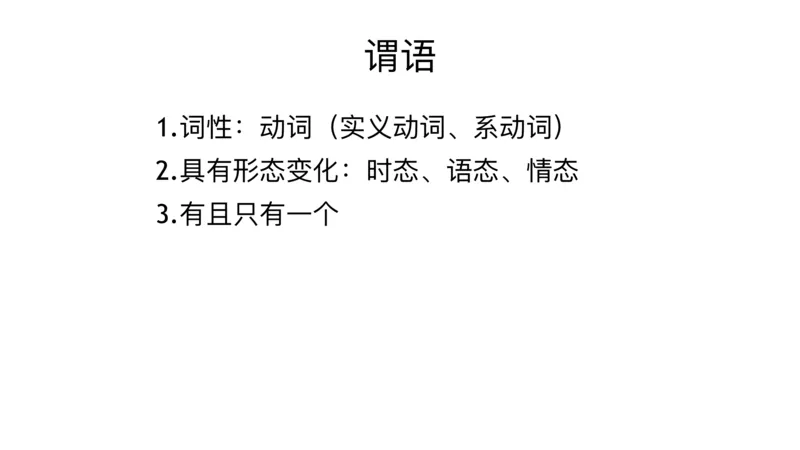
谓语谓语
1.
词性:动词(实义动词、系动词)
2.
具有形态变化:时态、语态、情态
3.
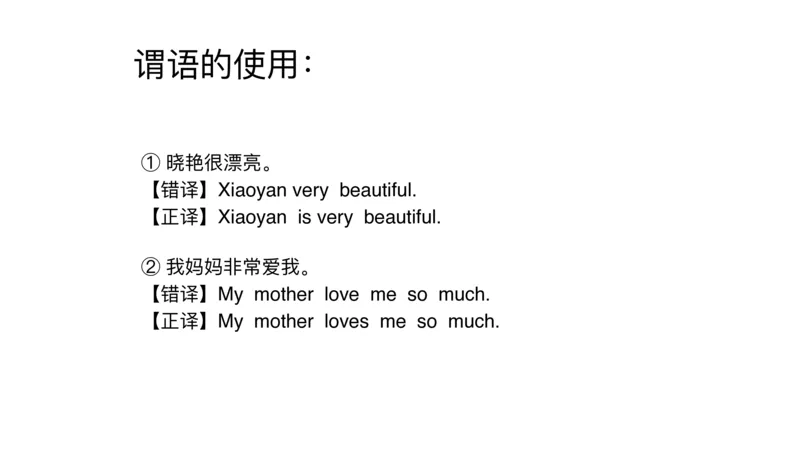
有且只有⼀个谓语的使⽤:
① 晓艳很漂亮。
Xiaoyan very beautiful.
【错译】
Xiaoyan is very beautiful.
【正译】
② 我妈妈⾮常爱我。
My mother love me so much.
【错译】
My mother loves me so much.
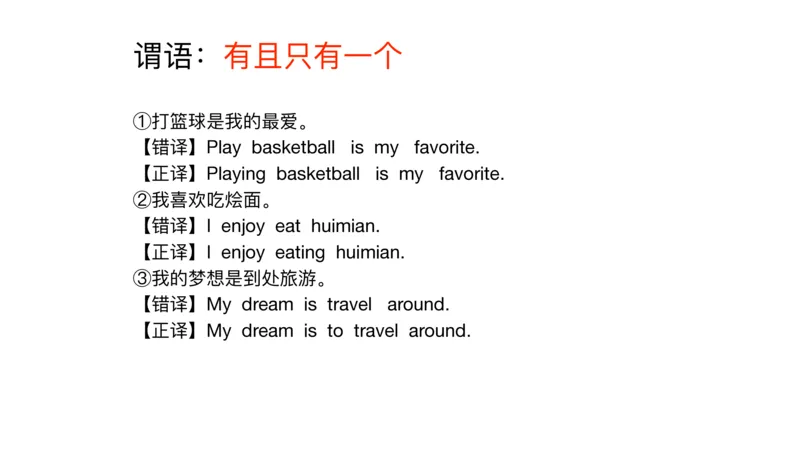
【正译】谓语:有且只有⼀个
①打篮球是我的最爱。
Play basketball is my favorite.
【错译】
Playing basketball is my favorite.
【正译】
②我喜欢吃烩⾯。
I enjoy eat huimian.
【错译】
I enjoy eating huimian.
【正译】
③我的梦想是到处旅游。
My dream is travel around.
【错译】
My dream is to travel around.
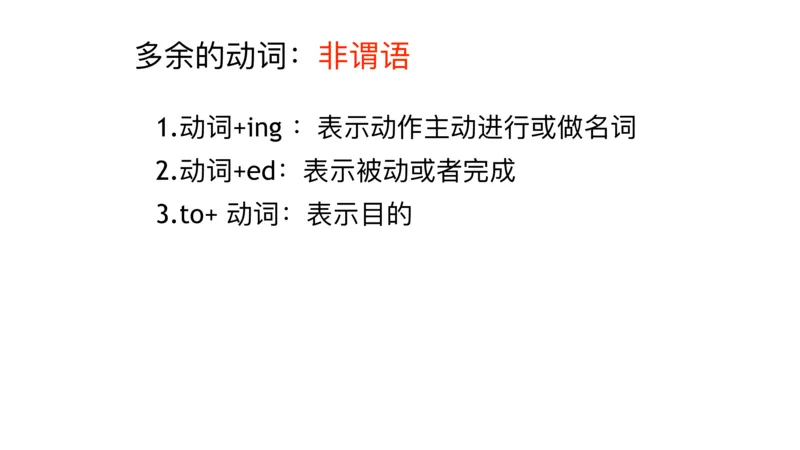
【正译】多余的动词:⾮谓语
1. +ing
动词 :表示动作主动进⾏或做名词
2. +ed
动词 :表示被动或者完成
3.to+
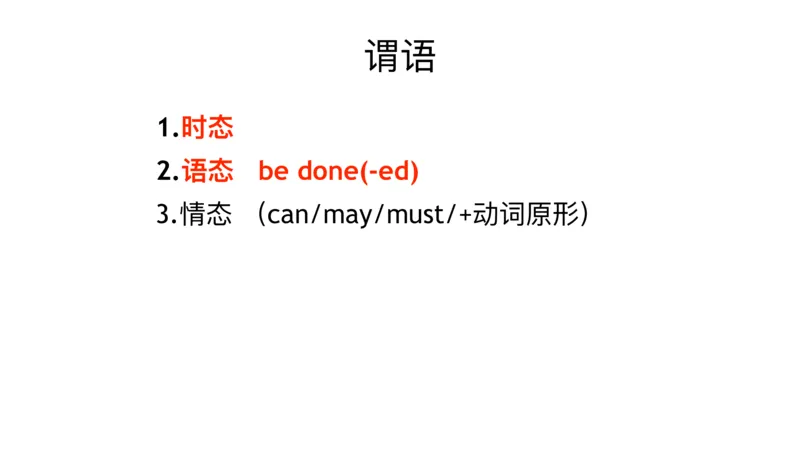
动词:表示⽬的谓语
1.
时态
2. be done(-ed)
语态
3. can/may/must/+
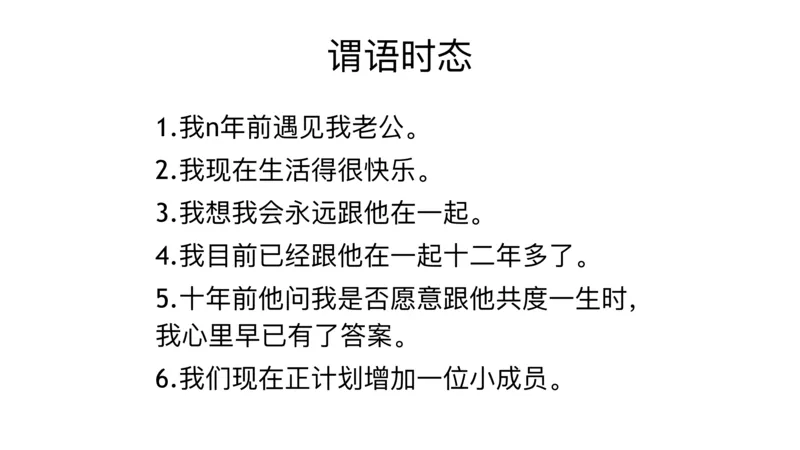
情态 ( 动词原形)谓语时态谓语时态
1. n
我 年前遇⻅我⽼公。
2.
我现在⽣活得很快乐。
3.
我想我会永远跟他在⼀起。
4.
我⽬前已经跟他在⼀起⼗⼆年多了。
5.
⼗年前他问我是否愿意跟他共度⼀⽣时,
我⼼⾥早已有了答案。
6.
我们现在正计划增加⼀位⼩成员。谓语时态
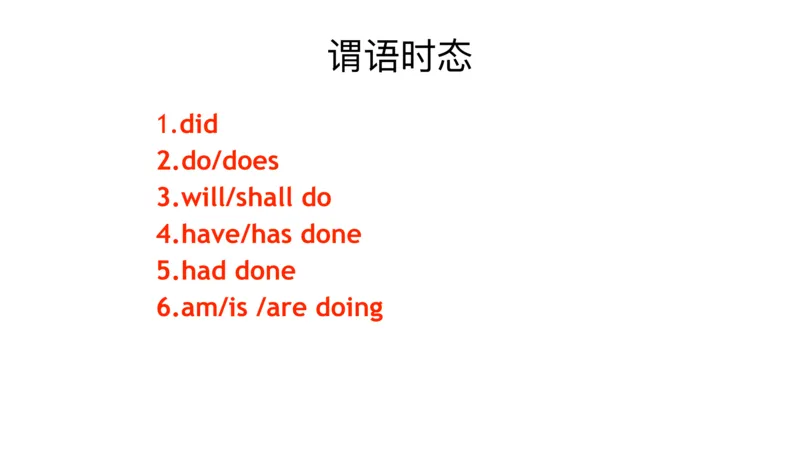
1.did
2.do/does
3.will/shall do
4.have/has done
5.had done
6.am/is /are doing谓语时态表
过去 现在 将来 过去将来
时间
时态
⼀般
进⾏
完成
完成进⾏谓语时态表
过去 现在 将来 过去将来
时间
时态
was/were am/is /are will/shall do would do
⼀般
did do/does
was/were/ am/is/are will be doing would/should
进⾏
+doing +doing +be doing
had done have//has will/shall would/should
完成
done +have done +have done
had been have/has will/shall would/should
完成进⾏
+doing been +doing +have been doing +have been doing被动语态被动语态
条件:如果主语不作出动作,可以使⽤被动结构。被动结构
③街⻆正在盖房⼦。
On the corner of the street is building the house.
【错译】
【正译】
④我的⾃⾏⻋是去年买的。
【翻译】
2008
⑤ 年的奥运会在北京举⾏。
【翻译】被动结构
③街⻆正在盖房⼦。
On the corner of the street is building the house.
【错译】
The house is being built on the corner of the street.
【正译】
④我的⾃⾏⻋是去年买的。
【翻译】
2008
⑤ 年的奥运会在北京举⾏。
【翻译】被动结构
③街⻆正在盖房⼦。
On the corner of the street is building the house.
【错译】
The house is being built on the corner of the street.
【正译】
④我的⾃⾏⻋是去年买的。
【翻译】 M y bicycle was bought last year.
2008
⑤ 年的奥运会在北京举⾏。
【翻译】被动结构
③街⻆正在盖房⼦。
On the corner of the street is building the house.
【错译】
The house is being built on the corner of the street.
【正译】
④我的⾃⾏⻋是去年买的。
【翻译】 M y bicycle was bought last year.
2008
⑤ 年的奥运会在北京举⾏。
T he 2008 Olympic Games was held in Beijing.
【翻译】+
被动语态 时态
1
、⼈类的⽣存环境正在遭到破坏。
2
、从去年开始,这幅油画⼀直保存在这家博馆。
3 18
、这本书已经被翻译成了 种语⾔。
4 1990
、这栋楼在 年之前就已经竣⼯了。
5
、元代时期,它曾传到世界上的很多国家。+
被动语态 时态
1
、⼈类的⽣存环境正在遭到破坏。
2
、从去年开始,这幅油画⼀直保存在这家博物馆。
3 18
、这本书已经被翻译成了 种语⾔。
4 1990
、这栋楼在 年之前就已经竣⼯了。
5
、元代时期,它曾传到世界上的很多国家。+
被动语态 时态
过去 现在 将来 过去将来
时间
时态
was/ were am/is /are will/shall be would be
⼀般
+done +done +done +done
was/were/ am/is/are will be would/should
进⾏
+being done +being done +being done +being done
had been has been will/shall would/should
完成
+done +done +have been done +have been done
had been has been will/shall would/should
完成进⾏
+being done +being done +have been being +have been being
+done +done真题翻译练习
2008
中秋节已经被列为中国的⽂化遗产, 年⼜被定
为公共假⽇,⽉饼如今被视为中秋节不可或缺的美
⻝。真题翻译练习
2008
中秋节已经被列为中国的⽂化遗产, 年⼜被定
为公共假⽇,⽉饼如今被视为中秋节不可或缺的美
⻝。
The Mid-Autumn Festival has been listed as a China
cultural heritage.In 2008 it was designated as a public
holiday. The moon cake now is considered as
indispensable food in the Middle Autumn Festival.修饰语
1
、状语(修饰动作和句⼦)
2
、定语(修饰名词)
3
、同位语
4
、插⼊语状语
作⽤:修饰动作和句⼦
特点:位置⽐较灵活状语
考点:
1
、副词做状语
2
、介词短语做状语
3
、⾮谓语做状语状语
①副词作状语
She works hard.
他努⼒地⼯作。
Her painting is really awesome.
她的画作⾮常棒。状语
①副词作状语
She works hard.
他努⼒地⼯作。
Her painting is really awesome.
她的画作⾮常棒。
②介词短语作状语
They sit in the middle of the room.
他们坐在教室的正中间。
We often have breakfast at 7:00 a.m.
我们经常早上七点吃早饭。状语
①副词作状语
She works hard.
他努⼒地⼯作。
Her painting is really awesome.
她的画作⾮常棒。
②介词短语作状语
They sit in the middle of the room.
他们坐在教室的正中间。
We often have breakfast at 7:00 a.m.
我们经常早上七点吃早饭。
③⾮谓语动词作状语
Not knowing her address, we could not send her this letter.
由于不知道她的地址,我们⽆法给她寄出这封信。
He sat down to have a rest.
他坐下来休息。状语翻译练习
1
、我⽤了很⼤的⼒⽓说服他去学法语。
2
、⾼铁极⼤的改变了中国⼈的⽣活⽅式。状语练习
1
、我⽤了很⼤的⼒⽓说服他去学法语。
I persuade him to learn French with great
efforts.
2
、⾼铁极⼤的改变了中国⼈的⽣活⽅式。状语翻译练习
1
、我⽤了很⼤的⼒⽓说服他去学法语。
I persuaded him to learn French with great
efforts.
2
、⾼铁极⼤的改变了中国⼈的⽣活⽅式。
High-speed train greatly changed the lifestyle
of Chinese people.状语翻译练习
3
、过去,⾃⾏⻋曾经是中国城乡最主要的交通⼯
具。
4
、⼈们仅需⽤⼀ 部⼿机就可以随时使⽤共享单⻋。状语翻译练习
3
、过去,⾃⾏⻋曾经是中国城乡最主要的交通⼯
具。
In the past, bicycles were the main transport
in Chinese towns and villages.
4
、⼈们仅需⽤⼀ 部⼿机就可以使⽤共享单⻋。状语练习
3
、过去,⾃⾏⻋曾经是中国城乡最主要的交通⼯
具。
In the past, bicycles are the main transport in
Chinese towns and villages.
4
、⼈们仅需⽤⼀部⼿机就可以使⽤共享单⻋。
People can use shared bikes only with a
cellphone .定语
作⽤:修饰名词
特点:放在名词前或后,限定名词。
“ ”
汉语标志词: 的定语
考点:
1
、形容词、名词、做定语(前置)
2
、介词短语、⾮谓语做定语(后置)定语
①形容词作定语
A handsome boy
⼀个帅⽓的男孩
An old computer
⼀台⽼式电脑名词作定语
②名词做定语
An apple tree
⼀颗苹果树
A paper factory
⼀座纸⼚
③⾮谓语作定语
The boy smiling at me
The hero infected with H1N1
④介词短语作定语
The boy in the classroom
An analysis of history定语⼩试⽜⼑:
红⾊连⾐裙的⼥⼈ 有着悠久历史的中国
被狼群养⼤的孩⼦
有着悠久历史的中国
⼀线城市
⼋宝粥
坐在台阶上的⼥孩定语⼩试⽜⼑:
红⾊连⾐裙的⼥⼈ 有Th着e w悠om久an i历n a史 red的 dr中ess国
被狼群养⼤的孩⼦
有着悠久历史的中国
⼀线城市
⼋宝粥
坐在台阶上的⼥孩定语⼩试⽜⼑:
红⾊连⾐裙的⼥⼈ 有Th着e w悠om久an i历n a史 red的 dr中ess国
被狼群养⼤的孩⼦ The boy raised by a pack of wolves
有着悠久历史的中国
⼀线城市
⼋宝粥
坐在台阶上的⼥孩定语⼩试⽜⼑:
红⾊连⾐裙的⼥⼈ 有Th着e w悠om久an i历n a史 red的 dr中ess国
被狼群养⼤的孩⼦ The boy raised by a pack of wolves
有着悠久历史的中国 China with a long history
⼀线城市
⼋宝粥
坐在台阶上的⼥孩定语⼩试⽜⼑:
红⾊连⾐裙的⼥⼈ 有Th着e w悠om久an i历n a史 red的 dr中ess国
被狼群养⼤的孩⼦ The boy raised by a pack of wolves
有着悠久历史的中国 China with a long history
First-tier cities
⼀线城市
⼋宝粥
坐在台阶上的⼥孩定语⼩试⽜⼑:
红⾊连⾐裙的⼥⼈ 有Th着e w悠om久an i历n a史 red的 dr中ess国
被狼群养⼤的孩⼦ The boy raised by a pack of wolves
有着悠久历史的中国 China with a long history
First-tier cities
⼀线城市
Eight-treasure porridge
⼋宝粥
坐在台阶上的⼥孩定语⼩试⽜⼑:
红⾊连⾐裙的⼥⼈ 有Th着e w悠om久an i历n a史 red的 dr中ess国
被狼群养⼤的孩⼦ The boy raised by a pack of wolves
有着悠久历史的中国 China with a long history
First-tier cities
⼀线城市
Eight-treasure porridge
⼋宝粥
坐在台阶上的⼥孩
The girl sitting on the stairs