文档文本内容
牛津版广州深圳九年级下册 Unit 3 The environment
话题3:环境保护(基础版)
A. 听单句话(5分)
根据所听到的话和卷面的问题,选择符合题意的图画回答问题,并将答题卡上对应题目所选的选项涂黑
每小题听一遍。
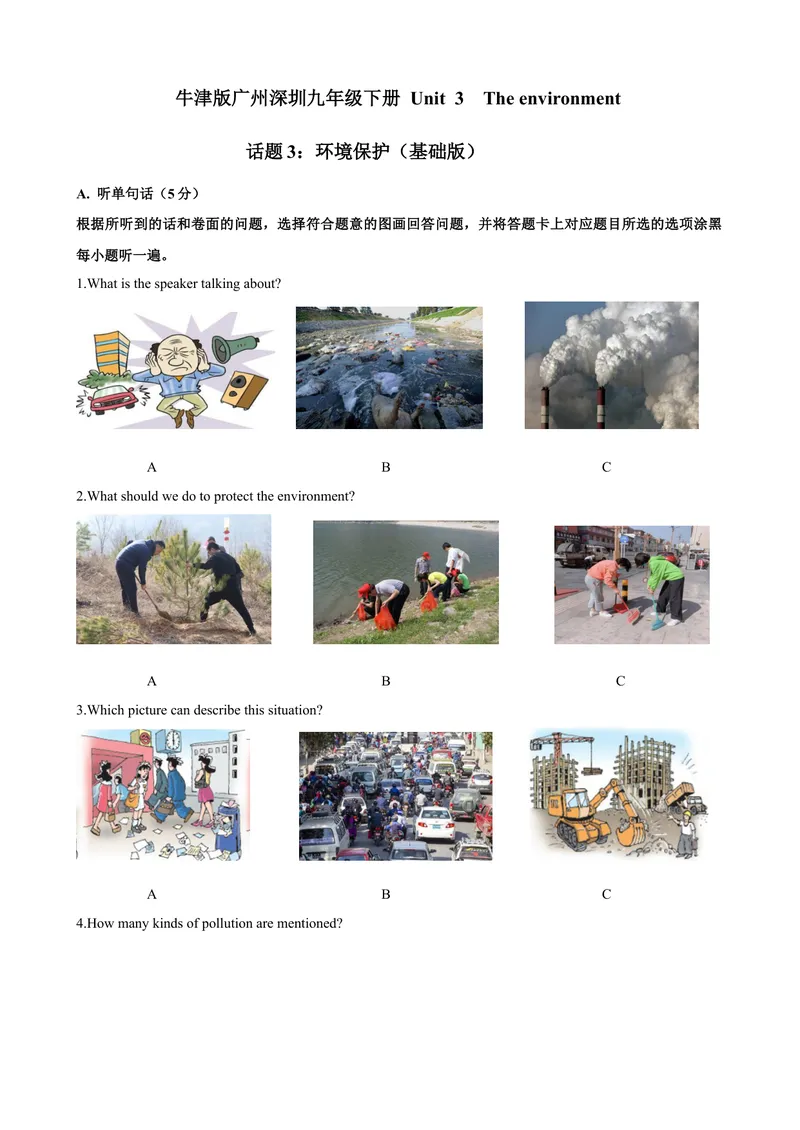
1.What is the speaker talking about?
A B C
2.What should we do to protect the environment?
A B C
3.Which picture can describe this situation?
A B C
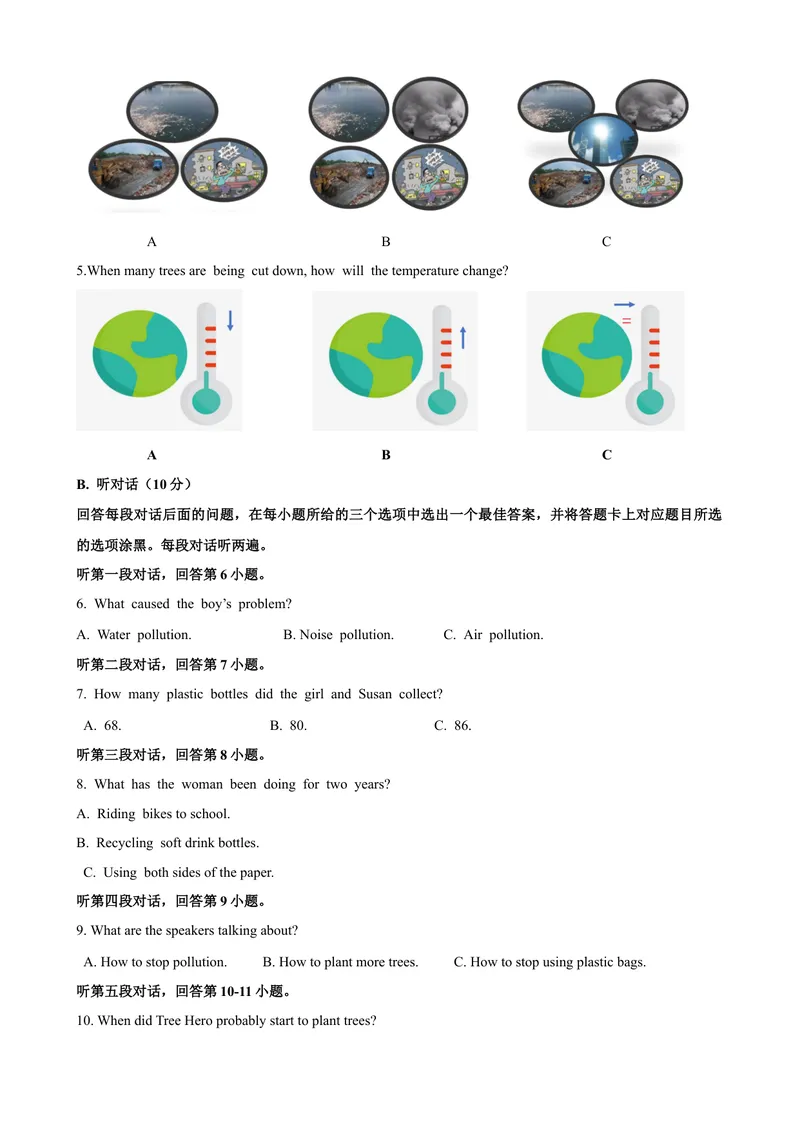
4.How many kinds of pollution are mentioned?A B C
5.When many trees are being cut down, how will the temperature change?
A B C
B. 听对话(10分)
回答每段对话后面的问题,在每小题所给的三个选项中选出一个最佳答案,并将答题卡上对应题目所选
的选项涂黑。每段对话听两遍。
听第一段对话,回答第6小题。
6. What caused the boy’s problem?
A. Water pollution. B. Noise pollution. C. Air pollution.
听第二段对话,回答第7小题。
7. How many plastic bottles did the girl and Susan collect?
A. 68. B. 80. C. 86.
听第三段对话,回答第8小题。
8. What has the woman been doing for two years?
A. Riding bikes to school.
B. Recycling soft drink bottles.
C. Using both sides of the paper.
听第四段对话,回答第9小题。
9. What are the speakers talking about?
A. How to stop pollution. B. How to plant more trees. C. How to stop using plastic bags.
听第五段对话,回答第10-11小题。
10. When did Tree Hero probably start to plant trees?A. At the age of 20. B. At the age of 63. C. At the age of 82.
11. Where will the speakers go?
A. To the reading room.
B. To the playground.
C. To the school library.
听第六段对话,回答第12-13小题。
12. What don’t people use in the man’s home town?
A. Paper cups. B. Plastic bags. C. Washing machines.
13. What would the man like to do when he finishes his studies?
A. Join a football team. B. Join a club. C. Join an environmental organization.
听第七段对话,回答第14-15小题。
14. What is the girl doing?
A. Planting trees. B. Writing an article. C. Reading an article.
15. When does the conversation take place?
A. On March 11th. B. On March 12th. C. On March 13th.
C. 听独白(10分)
请根据所听内容,在每小题所给出的三个选项中,选出一个能完成句子的最佳答案,并将答题卡上对应
题目所选的选项涂黑。独白听两遍。
听第一段独白,回答第16-20小题。
16. When did World Water Day start?
A. In 1990. B. In 1992. C. In 1993.
17. What is the subject of World Water Day in 2018?
A. Nature for Water. B. Wastewater. C. Leaving no one behind.
18. What problem is driving water problems?
A. Air pollution. B. Climate change. C. Soil pollution.
19. What measure can be taken to balance (平衡) the water cycle?
A. Use less water in agriculture (农业).
B. Restore wetlands.
C. Save more water.
20. Where can we probably read this article?
A. On a science magazine. B. On a history magazine. C. On a teenager magazine.
听第二段独白,回答第21-25小题。21.The speaker went to an activity last________.
A.Sunday B. Saturday C. Friday
22.About ________ people attended an activity.
A. 5 B.15 C.50
23.They attended this activity________.
A.by the river B. on the street C. in a park
24.Some of them __________, others introduced this activity.
A. planted trees B. picked up rubbish C. cleaned the street
25.The weather is ________, but many people supported them.
A. cool B. rainy C. hot
D. 听填信息(5分)
你将听到一段短文,请你根据所听内容填写下面的信息卡,并将答案写在答题卡相应题目的答题位置。
Ways to help our environment
• 26___________the rubbish into different bags for bottles,
cans, paper and food.
Amy's family Recycling
• Keep the plastic bags from the 27_____________ to use
them again.
• Have short 28___________.
Tom's family Saving water
• Tom’s 29___________ doesn't leave the tap running when
brushing teeth.
Lucy’s family Saving electricity • Never leave 30. ________ on when leaving the rooms.
• Turn off the TV when nobody is watching it.