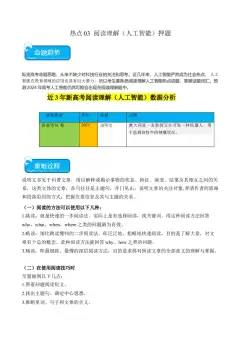
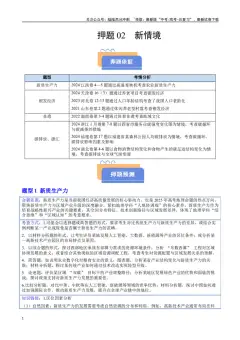
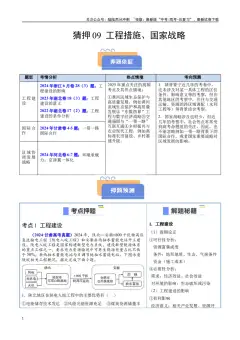
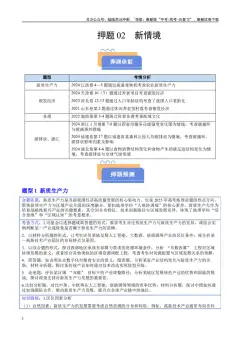
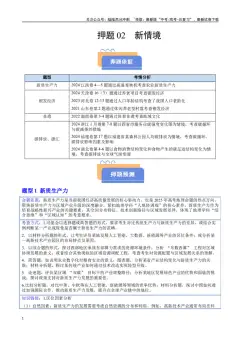
押热点 3 人工智能
3年真
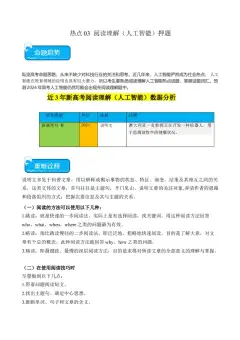
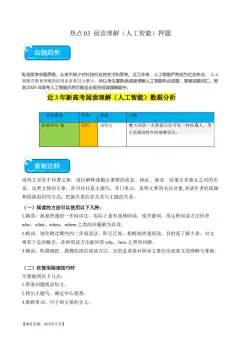
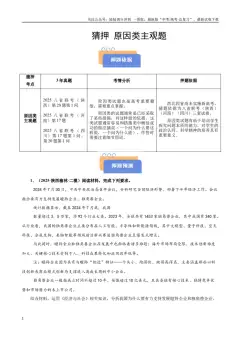
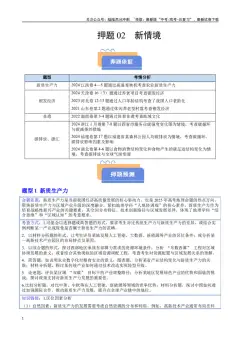
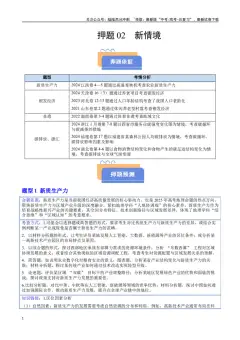
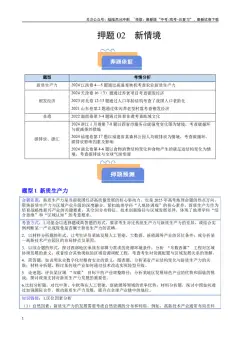
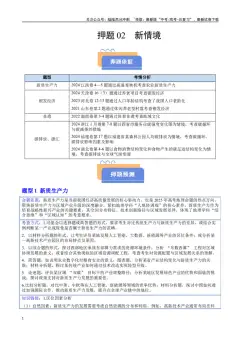
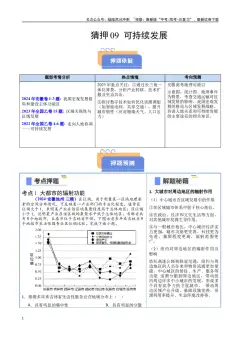
猜押考点 考情分析 押题依据
题
2023年6 2024 年上海秋考阅读 B 篇聚焦"智 人工智能作为上海卷高频考
月上海高 能科技词汇与大脑发展",要求考 点,需重点关注科技伦理、社
考英语 生分析 AI 对教育的影响;2023 年 会影响、政策法规等维度。
春考阅读 C 篇探讨"AI 与就业市场 2024 年全国卷 AI 相关试题占
人 工 智 2024年1
变革",涉及算法歧视与职业转 比提升30%,上海卷可能跟进
能 月上海春
型。
季高考英
语
2025届上海市浦东新区高三下学期二模(期中)英语试卷
In Shanghai’s busy streets and towering highrises, a new dialect appears —
one spoken in algorithms(算法). From decoding local idioms in conference rooms
to preserving disappearing crafts and guiding graduates toward tech careers, AI is
becoming the city’s cultural bridge. This is urban intelligence with local flavor.
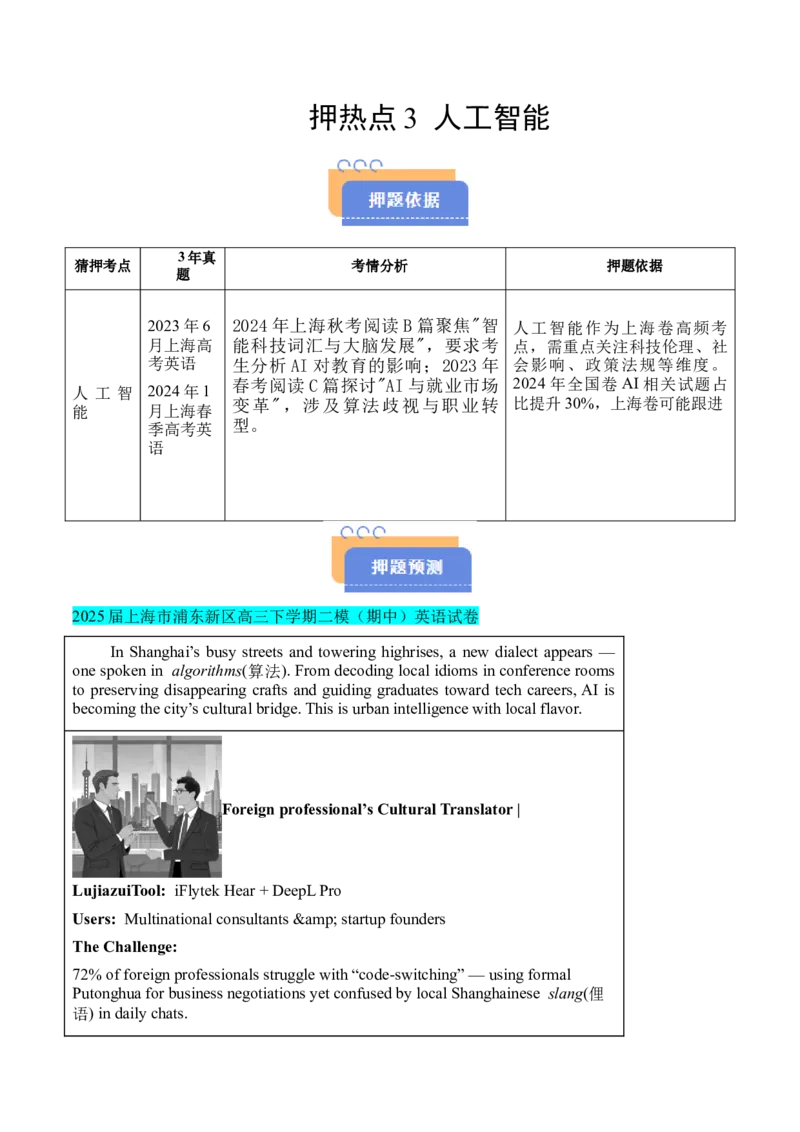
Foreign professional’s Cultural Translator |
LujiazuiTool: iFlytek Hear + DeepL Pro
Users: Multinational consultants & startup founders
The Challenge:
72% of foreign professionals struggle with “code-switching” — using formal
Putonghua for business negotiations yet confused by local Shanghainese slang(俚
语) in daily chats.The Solution:
iFlytek Hear converts local dialect to Putonghua text.
DeepL Pro translates with cultural notes:
Business: “关系” → “strategic partnership”
Casual: “lùzi” → “trusted local networks”The Impact:
“Now when colleagues use local slang, I understand its implied meaning,” says
Klaus Becker, investment analyst.
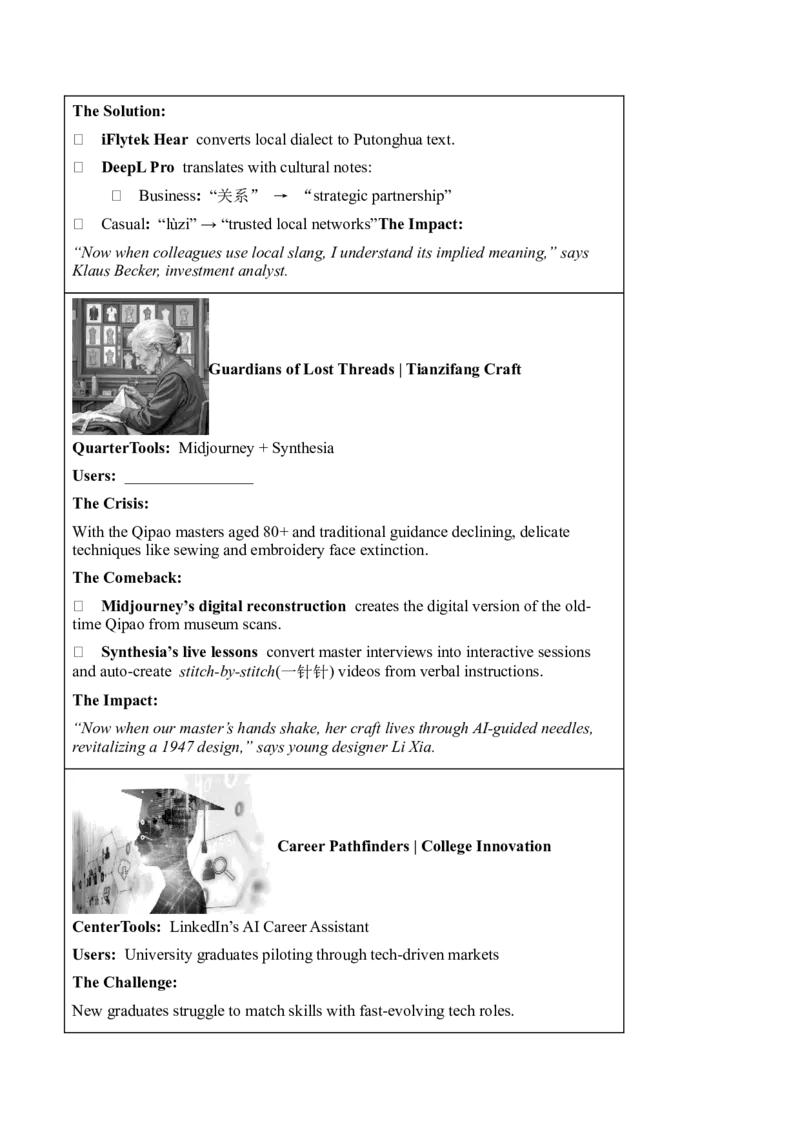
Guardians of Lost Threads | Tianzifang Craft
QuarterTools: Midjourney + Synthesia
Users: ________________
The Crisis:
With the Qipao masters aged 80+ and traditional guidance declining, delicate
techniques like sewing and embroidery face extinction.
The Comeback:
Midjourney’s digital reconstruction creates the digital version of the old-
time Qipao from museum scans.
Synthesia’s live lessons convert master interviews into interactive sessions
and auto-create stitch-by-stitch(一针针) videos from verbal instructions.
The Impact:
“Now when our master’s hands shake, her craft lives through AI-guided needles,
revitalizing a 1947 design,” says young designer Li Xia.
Career Pathfinders | College Innovation
CenterTools: LinkedIn’s AI Career Assistant
Users: University graduates piloting through tech-driven markets
The Challenge:
New graduates struggle to match skills with fast-evolving tech roles.The Approach:
Analyzes 100K+ job posts to identify high-demand hybrid roles (e.g., data
analyst for smart urban planning).
Recommends skill-building courses adapted for Shanghai’s tech growth
sectors.
The Feedback:
“AI matched my statistics degree with data roles upgrading public transport
systems,” says grad Emily Zhang.
1.Target users for the blank are likely to be ________________.
A.vocational trainers developing craft curricula
B.culture researchers digitizing Qipao collections
C.new designers learning from aging craft masters
D.local businesses expanding craftsman e-commerce
2.Which of the following toolsets best suits a foreign art student in Shanghai in the hope of mixing
tech roles with traditional crafts?
A.iFlytek Hear + Synthesia. B.DeepL Pro + Midjourney.
C.DeepL Pro + LinkedIn’s AI. D.Midjourney + LinkedIn’s AI.
3.Where would readers most likely find this article?
A.A business blog.
B.A career journal.
C.A policy brief.
D.A tech magazine.
2025届上海市闵行区高三上学期质量调研(一模)英语试题
The conversational tone of an AI chatbot or voice-based assistant is a good way to learn new
concepts, but it may actually make us more willing to believe inaccuracies, compared with
information presented in a static (静态的) article.
To investigate this issue, Sonja Utz from Germany asked 1,200 participants to engage with one
of three formats. The first involved text appearing letter by letter in the style of a large model, similar
to ChatGPT; the second provided information through a voice-based device; and the third was astatic, text-based copy of content.
Participants couldn’t interact with the systems as they might with the real versions, in order to
keep the experience consistent across the study. In some cases, participants were given accurate
information, while in others, they saw factual errors. Some of these errors were plain wrong, such as
naming Sofia as the capital of France, but others involved certain statements that were contradicted
elsewhere in the same response.
Participants were asked to rate the accuracy of the information on a seven-point scale, where7
is entirely accurate. In the answers where errors were introduced, the information presented in a
static format was rated as 4.24 on average. The ChatGPT-like system managed 4.76, while the voice
assistant scored 5.29. Participants rated all of the systems higher for answers where no errors were
introduced, but the differences were smaller for the voice assistant and chatbot.
“People find conversational chat agents more convincing because humans seem to be
hardwired to assign credibility to things that seem lifelike,” says Mike Katell from UK. “The way the
chatbots and voice agents are programmed to use a friendly and helpful conversational tone also
confuses people. Chatbot makers are trying to put users at ease, which is achieved through believable
content and inoffensive delivery.”
People have learned that these models generate false information sometimes. “But people don’t
realize that this interaction mode makes us tend to believe whatever is written there.” Utz says. “That
should be in media literacy training.”
4.What was the main focus of Sonja Utz’s study?
A.Features of AI chatbots or voice-based assistants.
B.People’s preference for information sources.
C.Why static articles differ from conversational content.
D.How text formats influence information trustworthiness.
5.In paragraph 3, text errors in the study can be summarized as________
A.inevitable and conflicting B.minor and common
C.obvious and internally inconsistent D.repetitive and randomly selected
6.According to Mike Katell, which of the following is NOT a reason why people find
conversational chat agents more convincing?
A.People’s inborn trust in lifelike things.B.Inoffensive delivery of personalized content.
C.The chatbot’s use of a gentle conversational tone.
D.The makers’ intention to make users feel relaxed.
7.Which of the following can be inferred from the passage?
A.Utz suggests people improve media awareness and competence.
B.People’s preference for lifelike things may be overstated.
C.How information is presented doesn’t affect how much we believe it.
D.The research results are uncertain due to the lack of man-system interaction.
2025届上海市长宁区高三上学期一模英语试题
Machine identifies songs from people’s brainwaves
Artificial intelligence has learned to identify the songs someone is listening to from their brain
readings.
Derek Lomas at Delft University of Technology in the Netherlands and his colleagues asked 20
people to listen to 12 songs through headphones. 8 Each person’s brainwaves were
recorded using an EEG (脑电图) cap that detects electrical activity.
The EEG readings from each person were cut into short pieces and used along with the
matching music clip to train an AI to spot patterns between the two. 9 But the software
struggles if it is trained on EEG data from one person and then attempts to identify a song when
someone else listens to it. Accuracy in such tests fell to less than one in every ten attempts.
10 And people tend to focus on different elements of the music during training.
Ultimately, however, they aim to identify aspects of EEG responses to music that are common to all
humans.
11 “I think it’s really stimulating to think about how the combination of machine
learning and high-density (高密度的) data from EEG can be combined to bring insights into moving
emotional experiences, but also to figure out what’s going on inside your head,” he says.
Music is ultimately “just electrical signals,” he says. “And it’s the same with the EEG.”
A.Lomas hopes that this will further our understanding of the brain, as well as boost knowledge of
how and why humans consume music.
B.The AI was then tested on unseen portions of the data, identifying songs with a precision of 85per cent.
C.The experiment was conducted to determine if AI could replace human musicians.
D.This suggests that the AI’s ability to identify songs highly depends on the individual’s brain
activity.
E.The volunteers did this blindfolded and in a faintly lit room to minimise the effect of their other
senses on the results.
F.The researchers believe that this is due to each person’s preference towards a song being unique.
2025届上海市嘉定区高三下学期二模英语试题
Imagine a world where machines don’t just respond to commands but actually understand how
you feel. Your phone senses sadness in your voice and suggests calling a friend; your computer sees
you’ re tired and reminds you to rest. Sounds 12 ? Not anymore. Emotion AI — the
technology that allows machines to recognize and interpret human emotions — is already here.
For Rana el Kaliouby, this idea was 13 . Years ago, when she moved from Egypt to
the UK, she and her husband kept in touch through text messages. But something was 14 :
No matter how many words they exchanged, he couldn’t see the exhaustion on her face or hear the
sadness in her voice. That experience planted a seed in her mind: What if technology could bridge
that emotional 15 ? Driven by this vision, she co-founded Affectiva, a company
specializing in emotion-detecting AI.
The concept is simple yet powerful. Machines are trained to recognize emotions through facial
expressions, tone of voice, and even body language. Affectiva, 16 , works with marketing
firms to analyze how people react to advertisements. Meanwhile, companies like Behavioral Signals
focus on voice analysis, using tone and speech patterns to discover emotions in customer service
calls. The potential 17 are vast, from education to healthcare to driver safety.
But here’s the catch: recognizing an emotion isn’t the same as 18 it. A furrowed
brow (皱眉) — does it mean anger, deep thought, or just bad lighting? A scowl (怒视) could signal
frustration, but it might just as 19 indicate concentration. And then there’s 20
— what looks like excitement in one part of the world might be mistaken for anxiety in another.
Beyond accuracy, there’s a bigger question: Should AI be 21 to make decisionsbased on emotions? Some police forces have already experimented with emotion AI to assess
whether people appear “suspicious.” Critics argue this is a 22 game, especially since
studies show AI can be prejudiced, sometimes interpreting emotions differently based on race or
gender. The 23 thing society needs is faulty technology influencing important decisions
like hiring, law enforcement, or mental health diagnoses.
24 , the progress is undeniable. Car manufacturers are developing AI systems that
monitor drivers’ emotions and 25 if they appear distracted or tired. In classrooms,
researchers are exploring ways AI could figure out when students are struggling or disengaged and
adjust lessons in real time.
So, where does that leave us? Emotion AI is fascinating, full of promise — but also full of
risks. But one thing is certain: the line between human and machine is becoming 26
with each passing day.
12.A.reasonable B.futuristic C.familiar D.necessary
13.A.personal B.ridiculous C.complex D.collective
14.A.unusual B.missing C.pointless D.accessible
15.A.wound B.variety C.tension D.gap
16.A.by contrast B.in addition C.in summary D.for example
17.A.applicationsB.obstacles C.transformations D.investments
18.A.conveying B.controlling C.understanding D.redirecting
19.A.barely B.slowly C.severely D.easily
20.A.improvement B.pressure
C.disorder D.culture
21.A.requested B.trusted C.forbidden D.improved
22.A.casual B.dangerous C.strategic D.boring
23.A.urgent B.confusing C.last D.right
24.A.Still B.Rather C.Subsequently D.Consequently
25.A.wait B.leave C.intervene D.ignore
26.A.less clear B.less artificial C.more crucial D.more definable
2025届上海市高三下学期2月联考调研英语试题Artificial intelligence (AI) is commonly used to make predictions from datasets, but this
typically requires creating a 27 model for each task. Hollmann et all have developed a
solution — a foundation model — that 28 applying machine learning across different tasks
without task-specific training. This development could streamline prediction tasks, such as predicting
patient deterioration in hospitals.
In a typical tabular machine learning scenario, a hospital uses a 29 to track patient
information, such as age, blood-oxygen level, and vital signs, with the last column indicating if a
patient’s condition 30 . A model is then trained on this data to predict risk. 31 ,
you need to train multiple models for different tasks, which is time-consuming. With a foundation
model like TabPFN, you can immediately use any dataset to make 32 without training a
new model each time.
Foundation models, like TabPFN, are 33 and can be applied across many tasks,
similar to tools like ChatGPT and Stable Diffusion. These models reduce the effort and time required
for machine learning tasks, 34 faster deployment of AI solutions in healthcare, finance,
and more.
TabPFN has several key advantages: it can handle new datasets quickly, making predictions in
35 of a second without training. It also deals well with issues like missing values and outliers
and performs excellently on datasets with up to 10,000 rows and 500 columns.
To overcome the challenge of limited real-world data, TabPFN was pre-trained on 100 million
randomly generated data table that 36 real data’s statistical properties. This allowed it to
learn general patterns without relying on actual datasets.
Even if predictions can be made in less than a second, TabPFN is not 37 challenges.
It is a “black box,” so users cannot easily understand how it makes predictions. It may also 38
with very large datasets, particularly those with over 10,000 rows and 500 columns. As the first
model of its kind, its full 39 and limitations are still being explored.
Despite these challenges, TabPFN could mark the beginning of a 40 in tabular
machine learning. Data scientists may soon use foundation models like TabPFN to handle much of
the heavy lifting, opening the door for faster, more efficient machine learning applications, similar to
the 41 impact of large language models on natural language processing.
27.A.unique B.complex C.typical D.temporary28.A.complicatesB.simplifies C.restricts D.blocks
29.A.diagram B.chart C.graph D.table
30.A.worsened B.expanded C.evolved D.decreased
31.A.Occasionally B.Similarly
C.TraditionallyD.Typically
32.A.assumptions B.predictions
C.evaluations D.preparations
33.A.flexible B.systematic C.trained D.approachable
34.A.providing B.improving C.gaining D.enabling
35.A.transitions B.microseconds C.durations D.fractions
36.A.represent B.ignore C.imitate D.reject
37.A.faced with B.free from C.striving for D.combined with
38.A.benefit B.enhance C.struggle D.lengthen
39.A.schemes B.potentials C.outputs D.intentions
40.A.decline B.charge C.shift D.modification
41.A.harmful B.gradual C.insignificant D.transformative
2024届上海市宝山区高三下学期第二次教学质量监测试英语试题
For decades, people have guessed that artificial intelligence (AI) will eventually replace human
workers. But developments in the past few years have 42 these concerns as companies have
released AI that can answer questions, write articles and create images. Now, even people in creative
fields must consider the 43 of AI replacing them. But many experts still insist that these AI
programs are no substitute for human ability.
AI programs have the 44 to perform some tasks currently performed by human
workers. These include media jobs, such as writing advertisements and articles, along with many
jobs in the financial fields and even tech-related jobs such as computer programming. AI is good at
45 data, so financial analysts and market research analysts may find their jobs 46 .
Using AI for certain tasks may be a good thing. Perhaps AI will 47 less interesting
work, allowing people to do more satisfying jobs, just as earlier technologies have. Using a machine
to do laundry saves time 48 to washing clothes by hand, and many people use that extra timeproductively. 49 , AI may be able to take over dull tasks, liberating people to be truly creative,
since thinking up new ideas is something AI cannot do.
Another big challenge for AI is human 50 . Most people prefer to communicate with
humans rather than machines. Hence, AI is 51 to replace humans for jobs that require
personal connection, such as counseling or teaching. A robot can perform tasks, but it cannot 52
care about others, and sometimes care is what people need.
AI can process data quickly, but it can only use data that it is given. So it cannot adapt to
situations that 53 significantly from those in its data. Thus, although some AI programs
can create content, none of them can be truly creative as the content AI creates will 54
consist of some combination of its sources.
Finally, if the AI receives false information, it has no way of recognizing that as false. Humans
can also be fooled, but life experience can tell them whether a claim is reasonable, an ability that AI
does not have. 55 , AI must continually be fact-checked to make sure its data, and
therefore its conclusions, are accurate.
Thus, although AI may replace some jobs, others require a human 56 . At best AI
may eliminate certain boring parts of tasks so that humans can focus on things that only they can do.
42.A.denied B.prevented C.transferred D.intensified
43.A.function B.possibility C.capability D.character
44.A.potential B.schedule C.objective D.ambition
45.A.searching B.providing C.analyzing D.storing
46.A.at risk B.at work C.at last D.at least
47.A.bring over B.get over C.turn over D.take over
48.A.wasted B.compared C.consumed D.spared
49.A.However B.Therefore C.Similarly D.Meanwhile
50.A.interaction B.resource C.resistance D.creativity
51.A.unwilling B.unlikely C.unfair D.unfortunate
52.A.deeply B.accurately C.directly D.genuinely
53.A.evolve B.range C.differ D.result
54.A.inevitably B.immediately C.insignificantly D.improbably
55.A.Frequently B.Generally C.Instantly D.Consequently56.A.nature B.need C.touch D.permission
学易金卷:2025年高考第二次模拟考试
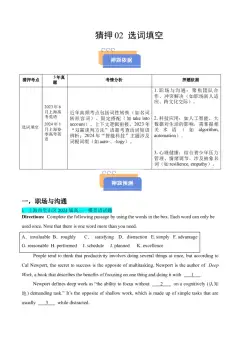
Directions: Complete the following passage by using the words in the box. Each word can only be
used once. Note that there is one word more than you need.
B. C. D. E. cutting-
A.digital F. access
initiative considerable safeguard edge
H. I. ever-
G. strictly J. towers K. comprehensive
weathered present
AI goes ancient to preserve thousand-year-old Chinese pagoda
In the heart of China’s Shanxi Province stands a remarkable testament to human ingenuity and
resilience: the Yingxian Wooden Pagoda. Nearly a thousand years old, this architectural marvel has
57 the ravages of time, surviving the chaos of wars and the fury of natural disasters. Standing 67
meters high, the structure - also called the Sakyamuni Pagoda of the Fogong Temple - 58
above the surrounding landscape, multi-tiered wooden roofs offering a striking contrast to the rolling
hills and smaller buildings that dot the region.
Even with its staggering resilience, the pagoda is showing its 59 age. Built in 1056 and
recognized by UNESCO as the world’s oldest and tallest entirely wooden structure, the Yingxian
pagoda faces the inevitable effects of time: weathering, structural fatigue, and the 60 threat
of wood decay. In fact, it is no longer accessible to tourists who would otherwise leap at the chance
to step back in time.
Now, the pagoda’s unparalleled value to shared world heritage has inspired a revolutionary
effort to preserve it for future generations. Lenovo, the global technology leader, will 61 this
ancient treasure using groundbreaking artificial intelligence (AI) technology. In collaboration with
Tsinghua University’s School of Architecture, Lenovo launched the “Smart Yingxian Pagoda” project
to create a 62 twin of the pagoda that captures every exquisite detail of its architecture, from
intricate wood grains to subtle imperfections in statues.
This AI-powered replication is much more than just a high-fidelity virtual model - the
interactive, navigable experience democratizes 63 to the pagoda’s splendor, allowing people
from around the world to explore and study its ancient halls. Moreover, it accelerates ongoingrestorative efforts and ensures they 64 adhere to the original style, preserving the pagoda’s
historical integrity.
“AI for cultural heritage is about using 65 technology to reach back a thousand years to
preserve these wonders for the future,” said Shijie Mao, Lenovo vice president and director of
research in Shanghai “We relentlessly pursue innovation and transformation, especially in the era of
AI, but always with an eye on our communities and human experiences. This 66 embodies
our commitment to smarter AI for all.”
Looking ahead, Lenovo is exploring involvement in similar heritage preservation projects
globally, welcoming more opportunities for collaboration.
2024届上海市金山区高三下学期二模英语试题
Directions: After reading the passage below, fill in each blank with a proper word given in the box.
Each word can be used only once. Note that there is one word more than you need.
A.actually B.amazed C. breathtaking D.critics E. gradually F. prize G.
reflection H. release I. solid J. standardize K. switched
Will AI allow humans to play a part?
Rebecca used to have a regular job, translating a fashion brand’s website into German. One day
a big change happened. The company 67 to using machine translation. She kept the job, and
it still paid the bills; however, she was now there to check and 68 whatever was produced by
the computer. But there was a complaint.
“What it meant, 69 , was that we humans were training a machine,” she says. Each
corrected caption for a mid-priced T-shirt, each pair of skinny jeans, was a data point for the robot
that was going to replace her. With the 70 of chat programs that can imitate humans, the
world is now beginning to consider what the coming of artificial intelligence means. What will it do
for our jobs if many once 71 professions — law, accountancy, medicine — disappear? What
does it mean to be a human when the thing that humans most 72 — intelligence — has
become the cheapest product on the planet? Translators, for good and ill, don’t have to wonder. “You
can take the world of translators and interpreters as a 73 of the world,” says Nicki Bone,
chairwoman of the board of the Institute of Translating and Interpreting. Not all of them areadjusting. “Of course, we have our 74 ,” but she adds, “There are also opportunities, and
optimists.”
The speed of change, though, has been 75 . Increasingly, says Bone, she and her
colleagues are acting as editors of a machine’s first pass, rather than translators of the raw material.
For some, that’s fine. “People will say, ‘OK, instead of working at one rate for this number of
words per hour, I’m working at many more words per hour, but for a much lower rate.’ Some are
happy to take on. Some won’t, as a matter of principle.”
As we are 76 at ChatGPT and its great ability to imitate human writing, translators are,
compared with the rest of the professions, sensitive. Anyway, this technology is here to stay.
2025届上海市徐汇区高三上学期一模考试英语试题
Directions: After reading the passage below, fill in the blanks to make the passage coherent and
grammatically correct. For the blanks with a given word, fill in each blank with the proper form of
the given word; for the other blanks, use one word that best fits each blank.
Pioneers in artificial intelligence win the Nobel Prize in physics
The 2024 Nobel Prize in physics has been awarded to John Hopfield and Geoffrey Hinton.
They are known for their fundamental discoveries in machine learning, 77 paved the way for
how artificial intelligence is used today.
Machine learning differs from traditional software. The software receives data, which is
processed according to a clear description, and 78 (produce) the results. In machine learning,
the computer learns by example, enabling it to tackle problems that are too complicated 79
(manage) by step-by-step instructions.
Hinton and Hopfield 80 (credit) with using tools from physics to advance basic
research in the field. In 1982, Hopfield developed a model of neural (神经的) networks, today
known as the Hopfield network, to describe how the brain recalls memories when 81 (feed)
partial information, similar to the method your brain uses to remember a word on the tip of your
tongue.
Geoff Hinton and colleagues further developed the Hopfield network. To do that, Hinton used
statistical physics, based on an equation invented by the nineteenth century physicist LudwigBoltzmann, creating a “Boltzmann machine.” It can learn— not from instructions, but from 82
(give) examples. A trained Boltzmann machine can recognize familiar traits (特质) in information it
has not previously seen. Imagine meeting a friend’s brother or sister, and you can immediately see
that they 83 be related. In a similar way, the Boltzmann machine can recognize an entirely
new example 84 it belongs to a category found in the training material.
Hinton has also urged caution around the technology. Hinton quit his job as a vice president
last year at a tech giant. He said he left because he wanted to be able to share his concerns about the
risks of artificial intelligence without worrying 85 it would mean for his employer.
“One of the ways in which these systems might escape control is by writing their own
computer code to modify 86 ,” Hinton said in a 2023 interview. “That’s something we need
to seriously worry about.”
2025届上海市青浦区高三上学期一模考试英语试题
87.AI已经慢慢融入创造性艺术,让生活充满惊喜。 (integrate) (汉译英)