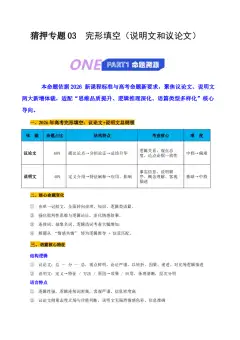
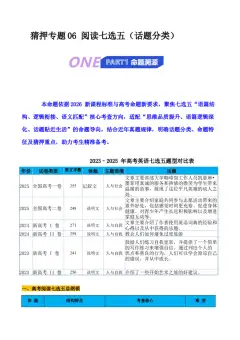
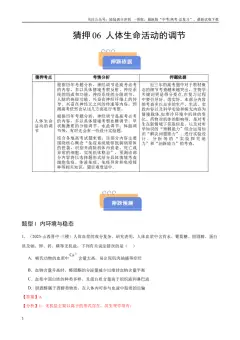
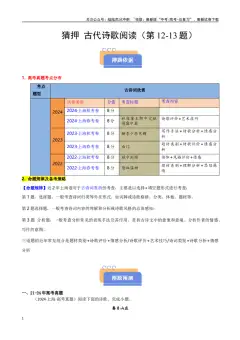
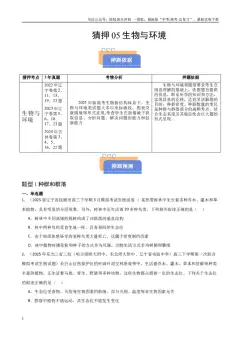
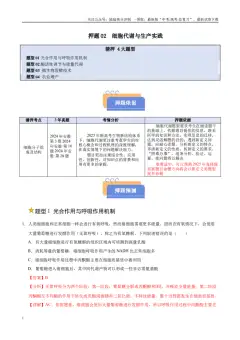
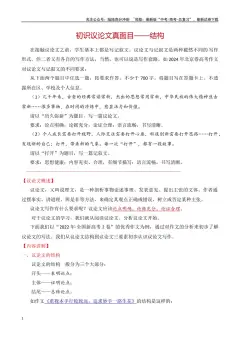
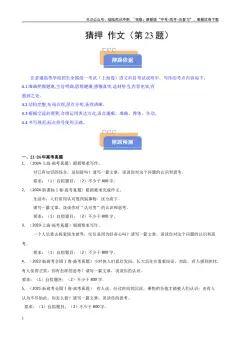
猜押 06 阅读理解议论文(按话题分类)
3年真
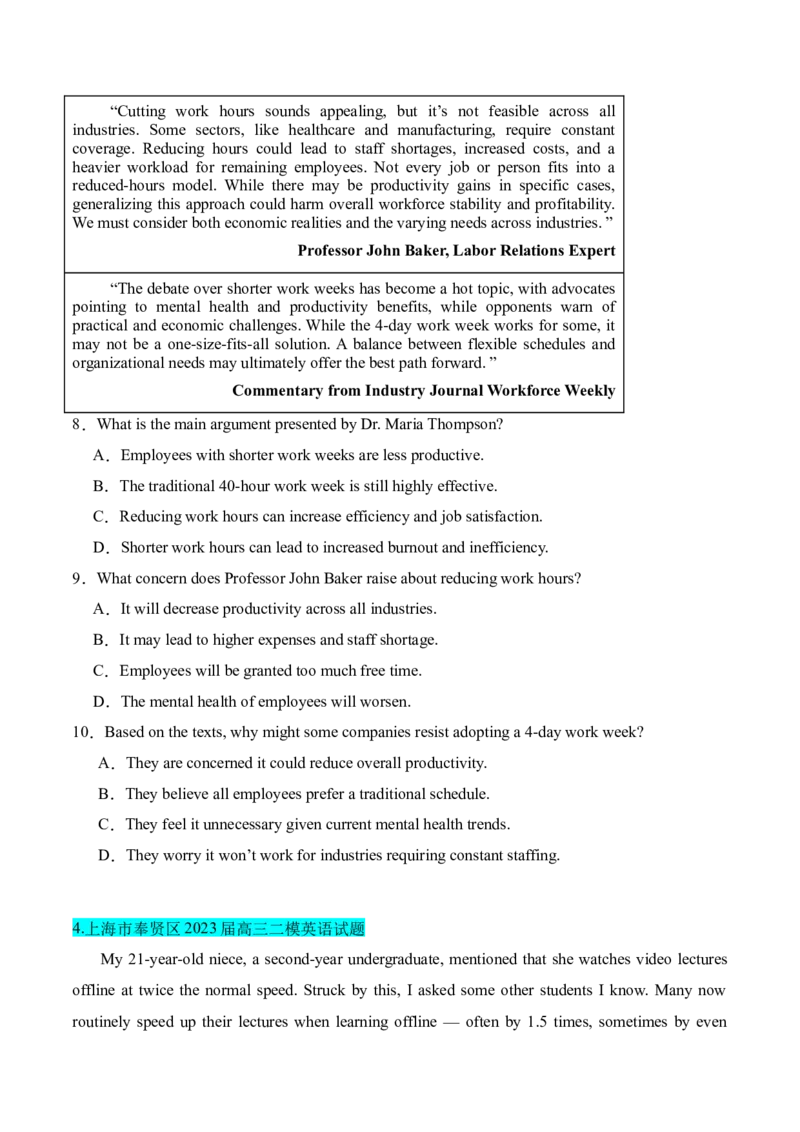
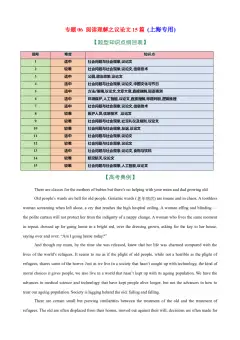
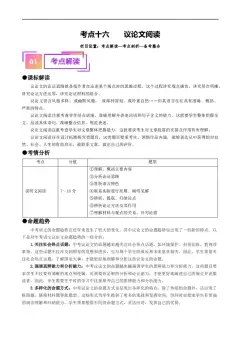
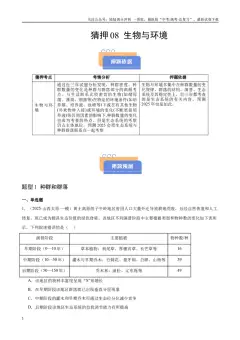
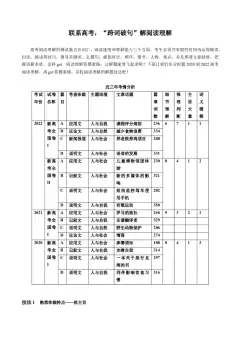
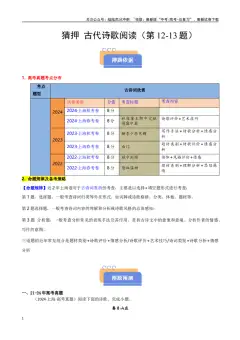
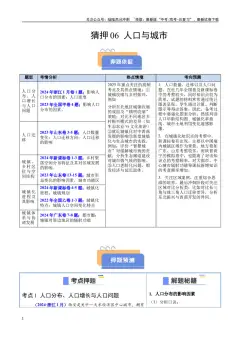
猜押考点 考情分析 押题依据
题
2023年6 思辨性话题:人工智能替代人
月上海高 类、线上教育利弊,需辩证分
考英语 析。
阅 读 理
2024年1 医患关系(2023)、艺术家形象
解 议 论
月上海春 (2024)、教育理念(2025春考)。
文 社会议题:人口老龄化、数字
季高考英
化鸿沟,结合政策建议。
语
一,思辨性话题
1.2025届上海市闵行区高三上学期质量调研(一模)英语试题
Li Lin, a senior high 3 student, is preparing an argumentative essay on sea exploration. He has
collected some texts for reference, two of which are shown below for his writing.
Text 1Exploring the sea usually means exploiting it, which has caused numerous
problems and will continue to cause more.
More exploration means more pollution. The Deepwater Horizon spilled over 200 million
gallons (加仑) of oil into the sea in 2010. Plastic pollution is also harmful, killing many birds and
fish, and has even been found in our tap water. Mining for resources is damaging, especially in the
Arctic. Climate change has led to less ice, which means we can look for more fossil fuels(化石燃料)
further north. But if we burn these, the ice will melt more, thus worsening this negative cycle.
Whales and dolphins are also overfished for their meat or for research. Although this was banned in
1982, some countries are still “murdering” these intelligent creatures without mercy.
The sea stretches out immeasurably but it is more sensitive than we think. If we don’t protect it,
future generations will not forgive us.
Text 2To truly understand our planet, we must explore the oceans which cover most of
it. Opponents may be concerned, but sea exploration matters to the future.Gaining more insights into the sea will also help us manage its resources better. Logging new
species will improve our understanding of life on the earth. It may enable us to discover new
medicines, as well as new sources of food and energy. Accessing the deep ocean may provide hints
of events such as earthquakes. The population of the world is growing and we need new resources
for future development. There are probably vast amounts of resources under the sea and ice, not just
oil and gas but also valuable minerals. The related environmental risks should be balanced with
economic needs. Hopefully, as technology improves, we can have more options for managing this
balance.
1.Which of the following can be inferred from the texts?
A.Plastic pollution has directly contributed to the melting of Arctic ice.
B.Logging new species could lead to advancements in medicine and food production.
C.Overfishing has been completely stopped due to international bans introduced in 1982.
D.The population growth worldwide has reduced the need for deep-sea resources.
2.Before writing, Li Lin puts forward some questions. Which question CAN NOT Li Lin find the
answer to from the texts?
A.What’s the purpose of sea exploration?
B.How does sea exploration cause damage to the sea?
C.What benefits can sea exploration bring to other research fields?
D.What can we do to balance environmental protection and sea exploration?
3.If Li Lin is determined to write an essay based on opinions from both texts, which of the
following will most probably be the central theme of his essay?
A.Ways to improve the efficiency of sea development.
B.Technological breakthroughs in sea exploration.
C.Balance between the impact of sea exploration and its benefits.
D.Appeal to protect the sea from unsustainable exploration.
2.2024届上海市徐汇区高三下学期二模考试英语试题
Both my parents worked for 30-plus years for their employers — they had lifelong careers at a
single company. Growing up, they taught me the importance of “loyalty” and “commitment”.
But in a rapidly changing world, the concept of a job for life has become as rare as a dial-up
internet connection. This shift from stable, long-term employment and single-employer careers to a
world where frequent job changes are the norm comes directly from globalisation, rapidtechnological advancements and the changing ideas about work.
Globalisation has turned the world economy into a giant, interconnected web. This has made
job markets fiercely competitive and talent and opportunities in the labour market more diverse and
digitally accessible.
Jobs can be widely publicised and explored online and are no longer tied to your city of birth.
Add to this the rapid technological progress. We now live in a world where the skills you learned
yesterday might not be enough for today’s job market.
The job market is transforming, with new careers emerging as automation and artificial
intelligence (AI) advances. Risks and price policies can be efficiently assessed using AI, making
insurance underwriters redundant while advanced software in banking and finance mean data
analysis can be automated.
Online booking has reduced demand for travel agents and desktop publishers are being
replaced by user-friendly software, which allows people to create their own materials. These changes
highlight the need for professionals to update their skills and adapt to a technologically evolving job
market.
As a result, career paths have become fluid and multi-directional. It’s no longer just about
climbing the corporate ladder and getting a regular paycheck; it’s about exploring different paths,
switching jobs and industries and sometimes even venturing into freelancing and the gig economy.
Loyalty is defined as an employee’s commitment to their organisation and its goals. It means a
willingness to put in extra effort and to uphold the company’s values and objectives. Loyal workers
often identify strongly with their workplace, are reliable and view the organisation positively, even
during tough times.
When long-term employees change workplaces, it does not mean they are disloyal. It signifies
a change in priorities and a redefined loyalty bond. Employees are loyal to their employer and its
interests while working there. But they also seek mutual growth and expect to be recognised and
rewarded.
Career paths are now a kaleidoscope (万花筒) of experiences and opportunities. Instead of a
career identity being about a company brand, it is about skills, experiences and the meaningfulness of
the work. This transformation means career decision-making is more intricate, considering personal
aspirations, market trends and family considerations.4.What factors have contributed to the shift in job market dynamics?
A.Increased reliance on desktop publishing software.
B.Changing ideas about loyalty and commitment.
C.The decreasing demand for travel agents due to online booking systems.
D.Globalization, rapid technological advancements, and evolving work concepts.
5.What skills are highlighted as essential for professionals in the evolving job market?
A.Skills related to desktop publishing.
B.Skills that were relevant yesterday.
C.Skills in data analysis and adaptability.
D.Skills in insurance underwriting.
6.How does the passage suggest employees should approach loyalty in the modern workplace?
A.By remaining with a single employer for their entire career.
B.By prioritizing personal growth and recognition.
C.By relying on traditional definitions of loyalty.
D.By avoiding job changes to maintain loyalty.
7.The best title for the passage is________.
A.Forget About a Job for Life
B.Learn More as Much as You Can
C.Benefit from Long-term Employment
D.The Impact of Globalization
二,社会议题
3.2025届上海市普陀区高三上学期一模考试英语试题
The following texts explore different perspectives on the topic of reducing work hours. As you
read, consider the arguments and evidence presented to understand the complexities of this issue.
“Reducing work hours can actually boost productivity. Studies show that
employees with a 4-day work week are more focused and efficient. With fewer
hours, workers spend less time on non-productive activities, experiencing less
burnout and higher job satisfaction. The traditional 40-hour work week is outdated;
it doesn’t fit with today’s fast-paced work environments or mental health needs.
Companies implementing shorter weeks have seen up to a 20% increase in
productivity, indicating that quality often surpasses quantity. ”
Dr. Maria Thompson, Behavioral Economist“Cutting work hours sounds appealing, but it’s not feasible across all
industries. Some sectors, like healthcare and manufacturing, require constant
coverage. Reducing hours could lead to staff shortages, increased costs, and a
heavier workload for remaining employees. Not every job or person fits into a
reduced-hours model. While there may be productivity gains in specific cases,
generalizing this approach could harm overall workforce stability and profitability.
We must consider both economic realities and the varying needs across industries. ”
Professor John Baker, Labor Relations Expert
“The debate over shorter work weeks has become a hot topic, with advocates
pointing to mental health and productivity benefits, while opponents warn of
practical and economic challenges. While the 4-day work week works for some, it
may not be a one-size-fits-all solution. A balance between flexible schedules and
organizational needs may ultimately offer the best path forward. ”
Commentary from Industry Journal Workforce Weekly
8.What is the main argument presented by Dr. Maria Thompson?
A.Employees with shorter work weeks are less productive.
B.The traditional 40-hour work week is still highly effective.
C.Reducing work hours can increase efficiency and job satisfaction.
D.Shorter work hours can lead to increased burnout and inefficiency.
9.What concern does Professor John Baker raise about reducing work hours?
A.It will decrease productivity across all industries.
B.It may lead to higher expenses and staff shortage.
C.Employees will be granted too much free time.
D.The mental health of employees will worsen.
10.Based on the texts, why might some companies resist adopting a 4-day work week?
A.They are concerned it could reduce overall productivity.
B.They believe all employees prefer a traditional schedule.
C.They feel it unnecessary given current mental health trends.
D.They worry it won’t work for industries requiring constant staffing.
4.上海市奉贤区2023届高三二模英语试题
My 21-year-old niece, a second-year undergraduate, mentioned that she watches video lectures
offline at twice the normal speed. Struck by this, I asked some other students I know. Many now
routinely speed up their lectures when learning offline — often by 1.5 times, sometimes by evenmore. Speed learning is not for everyone, but there are websites where students discuss how odd it
will be once they return to the lecture theatre. One contributor wrote: “Normal speed now sounds like
drunk speed.”
Education was adapting to the digital world long before Covid-19 but, as with so many other
human activities, the pandemic has given learning a huge push towards the virtual. Overnight,
schools and universities closed and teachers and students had to find ways to do what they do only
via the internet. “This is a time for schools and systems to reimagine education without schooling or
classrooms,” says Professor Yong Zhao. Dr Jim Watterston in Australia thinks that, while the
traditional classroom is still alive and well, education needs to be more adventurous and flexible.
Earlier this year, Zhao and Watterston co-authored a paper in which they identified some major
changes that should happen in education post-lockdown.
The first concerns the content, which should emphasize such things as creativity, critical
thinking and leadership, rather than the collection and storage of information. “For humans to
progress in the age of smart machines, it is essential that they do not compete with machines.”, they
wrote, “Instead, they need to be more human.”
The second is that students should have more control over their learning, with the teacher’s role
shifting from instructor to supervisor of learning resources, advisor and motivator. This is where so-
called “active learning” comes in with a growing body of research suggesting that comprehension
and memory are better when students learn in a hands-on way — through discussion and interactive
technologies, for example. It’s also where the concept of “productive failure” applies. Professor
Manu Kapurin argues that students learn better from their own or others’ failed attempts to solve a
problem before or even instead of being told how to solve it.
If the progress of the times is unable to hold back the coming revolution in education, it seems
unlikely that the traditional classroom is going to have any luck in its attempts trying to turn back the
clock. As Laurillard puts it, “It took a global pandemic to drive home what we’ve been saying for 20
years.”
11.By giving examples of “speed learning” in the first paragraph, the author wants to show that
_________.
A.digital world is dramatically reforming the way of learning.
B.speed learning completely replaces normal speed learning.C.returning to the lecture theatre is strange after speed learning.
D.education begins to adapt to digital world after Covid-19.
12.According to the passage, which of the following statements is TRUE?
A.It is essential for smart machines to be more human.
B.Students should possess more information about creativity.
C.Students value others’ failure over their own failure.
D.“Active learning” calls for diverse ways of involvement.
13.According to Zhao and Watterston, the major changes in education should include _________.
①learning mode ②learning motive ③learning attitude ④learning focus
A.①④ B.②③ C.①③ D.②④
14.According to the passage, what does the author most probably agree with?
A.Speed learning harms students’ learning efficiency.
B.The coming revolution in education is irreversible.
C.Teachers will play a less important role in the future.
D.The traditional classrooms will eventually disappear.
5.2024届上海市普陀区高三下学期二模英语试题
In bringing up children, every parent watches eagerly the child’s acquisition of each new skill
— the first spoken words, the first independent steps, or the beginning of reading and writing. It is
often tempting to hurry the child beyond his natural learning rate, but this can set up dangerous
feelings of failure and states of worry in the child. This might happen at any stage. A baby might be
forced to use a toilet too early, a young child might be encouraged to learn to read before he knows
the meaning of the words he reads. On the other hand, though, if a child is left alone too much, or
without any learning opportunities, he loses his natural enthusiasm for life and his desire to find out
new things for himself.
Parents vary greatly in their degree of strictness towards their children. Some may be especially
strict in money matters. Others are severe over times of coming home at night or punctuality for
meals. In general, parents’ demands and social values are as important as children’s own well-being.
Therefore, parents also need to constantly observe the world and explore the unknown so as to give
the children good personalized education in their growth.As regards the development of moral standards in the growing child, consistency is very
important in parental teaching. To ban a thing one day and excuse it the next is no foundation for
morality. Also, parents should realize that “example is better than precept (训诫)”. If they are not
sincere and do not practice what they say, their children may grow confused, and emotionally
insecure when they grow old enough to think for themselves, and realize they have been to some
extent fooled.
A sudden awareness of a marked difference between their parents’ principles and their morals
can be a dangerous disappointment. Parents must pay more attention to their own behavior and
language, passing on the right values and cognition to their children. In this way, children can grow
up healthily on the right track.
15.What do parents usually do when their children are growing up?
A.Speed up their children’s learning.
B.Watch their children learn new skills.
C.Put their children into a state of isolation.
D.Make their children live on their own.
16.What’s right about parents’ being strict with their children?
A.Parents should not expect too much of them.
B.Parents should encourage them to read faster than others.
C.Parents should create as many learning opportunities as possible.
D.Parents should find a balance between being strict and leaving them alone.
17.The second paragraph mainly tells us that ______.
A.parents should be strict with their children
B.parents need to be strict with themselves
C.different parents treat their children differently
D.parents set strict limits on their children’s spending
18.In moral matters, parents should ______.
A.keep in line in words and deeds
B.demand that their children listen to them
C.know the difference between adults and children
D.consistently ensure the security of their children