专题18 阅读理解之议论文12 篇 (天津专用)
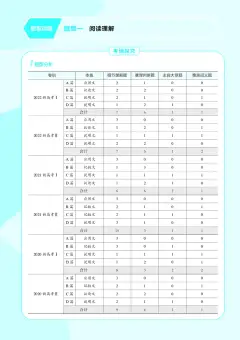
【题型知识点细目表】
题号
难度
知识点
1
适中
哲理感悟,议论文
2
适中
哲理感悟,议论文
3
适中
哲理感悟,议论文,直接理解,逻辑推理,标题判断
4
适中
环境保护,环境污染,议论文,词义猜测,语意转化,目的意图,观点态度
5
适中
社会问题与社会现象,哲理感悟,议论文,词义猜测,语意转化,逻辑推理
6
适中
自然科学,科普知识 ,议论文
7
适中
社会问题与社会现象,议论文
8
适中
方法/策略,议论文,健康饮食
9
适中
议论文,当代教育问题
10
较难
语言与文化 ,社会问题与社会现象,议论文
11
适中
电影与戏剧,社会问题与社会现象,议论文
12
适中
电影与戏剧,方法/策略,议论文
【高考典例】
Ask most people what “the good life” involves, and they will likely draw up a rapid list of goods — money,
friendship, a rewarding career, etc. Even Aristotle, who believed that the key to happiness is the cultivation (培养)
and exercise of virtue, still thought certain goods were either necessary conditions for happiness or were goods
that came to virtuous people.
If we’re comparing how happy various people’s lives are, it seems natural to look for certain goods, and
compare who has more of them. Let’s imagine the lives of two actors, Toby and Ybot. Toby struggles to get work
for many years, suffering all sorts of difficulties. He becomes a famous and wealthy actor, and wins an Oscar for
his final movie before retiring. Ybot, however, wins an Oscar for his very first film role. But over time he
becomes less famous and less well paid, and he begins to suffer difficulties. In the end, he retires as a nobody.
These two actors’ lives, like their names, are mirror-images. Toby and Ybot both seem to lead lives of equal
net worth. Yet most of us would think that the ordering of these goods does make a decisive difference to how we
compare Toby and Ybot’s careers. Someone who climbs a mountain will experience more struggle than someone
who gets carried to the peak by bus, but the climber will also have a sense of accomplishment the other person
may well envy. In that sense, we might think Toby’s life is better because his highs seem more well-earned than
Ybot’s do.
But that’s not the whole story. The narrative (叙述) itself seems to make a difference. A life of early success
followed by decline seems like a less overall successful life than one where success comes later in the day. Where
the story ends seems to matter in itself. We value happy endings, not just happy moments.
This immediate judgment finds expression in what’s been called the “shape of life” hypothesis (假说). On
this view, living a good life is not simply about having the right kind of experiences or life-events, but of having
them in the right order. The hypothesis suggests that our lives are not simply bags into which we stuff good things
and bad things. The type of life — the narrative of that life-story — matters too. Without the right shape, even a
life full of wondrous things can end up as a tale we’d prefer not to live out.
1.What can be learned about Aristotle’s view on happiness?
A.Goods contribute to happiness.
B.Virtuous people may not be happy.
C.Too many goods reduce happiness.
D.Happy people care less about goods.
2.According to the author, what do both Toby and Ybot experience?
A.They start from a humble beginning.
B.They reach the same height in career.
C.They recover from the same sufferings. D.They retire with honour from the film industry.
3.What does the author try to convey with the example of mountain climbing?
A.Easy success is often envied.
B.There are various paths to success.
C.Fierce struggle is vital to success.
D.Hard-earned success is treasured more.
4.In writing Paragraph 4, the author tries to________.
A.introduce another topic
B.draw a conclusion
C.further an argument
D.provide new evidence
5.What could be the best title for the passage?
A.To Shape Your Life with Good Deeds. B.Defining the Shape of a Good Life.
C.The Essential Components of Good Life.
D.How We Can Have a Good Shape of Life.
Ralph Emerson once said that the purpose of life is not to be happy, but to be useful, to be loving, to make
some difference in he world. While we appreciate such words of wisdom, we rarely try to follow them in our
lives.
Most people prefer to live a good life themselves, ignoring their responsibilities for the world. This narrow
perception of a good life may provide short-term benefits, but is sure to lead to long-term harm and suffering. A
good life based on comfort and luxury may eventually lead to more pain be-cause we spoil our health and even
our character, principles, ideals, and relationships.
What then, is the secret of a good life? A good life is a process, not a state of being : a direction, not a
destination. We have to earn a good life by first serving others without any expectation in return because their
happiness is the very source of our own happiness. More importantly, we must know ourselves inside out. Only
when we examine ourselves deeply can we discover our abilities and recognize our limitations, and then work
accordingly to create a better world.
The first requirement for a good life is having a loving heart. When we do certain right things merely as a
duty, we find our job so tiresome that we’ll soon burn out. However, when we do that same job out of love, we not
only enjoy what we do, but also do it with an effortless feeling.
However, love alone is insufficient to lead a good life. Love sometimes blinds us to the reality.
Consequently, our good intentions may not lead to good results. To achieve desired outcome, those who want to
do good to others also need to equip themselves with accurate world knowledge. False knowledge is more
dangerous than ignorance. If love is the engine of a car knowledge is the steering wheel( 方向盘). If the engine
lacks power, the car can’t move; if the driver loses control of the steering, a road accident probably occurs. Only
with love in heart and the right knowledge in mind can we lead a good life.
With love and knowledge, we go all out to create a better world by doing good to others. When we see the
impact of our good work on the world we give meaning to our life and earn lasting joy and happiness.
1.What effect does the narrow perception of a good life have on us?
A.Making us simple-minded
B.Making us short-sighted.
C.Leading us onto a busy road.
D.Keeping us from comfort and luxury.
2.According to the author, how can one gain true happiness?
A.Through maintaining good health.
B.By going through pain and suffering.
C.By recognizing one’s abilities and limitations.
D.Through offering help much needed by others.
3.According to Paragraph 4, doing certain right things with a loving heart makes one________.
A.less selfish
B.less annoying
C.more motivated
D.more responsible
4.In what case may good intentions fail to lead to desired results?
A.When we have wrong knowledge of the world.
B.When our love for the world is insufficient.
C.When we are insensitive to dangers in life.
D.When we stay blind to the reality.
5.According to Paragraph 5, life can be made truly good when ________.
A.inspired by love and guided by knowledge
B.directed by love and pushed by knowledge
C.purified by love and enriched by knowledge
D.promoted by love and defined by knowledge
There is something to be said for being a generalist, even if you are a specialist. Knowing a little about a lot
of things that interest you can add to the richness of a whole, well-lived life.
Society pushes us to specialize, to become experts. This requires commitment to a particular occupation,
branch of study or research. The drawback to being specialists is we often come to know more and more about
less and less. There is a great deal of pressure to master one's field. You may pursue training, degrees, or
increasing levels of responsibility at work. Then you discover the pressure of having to keep up.
Some people seem willing to work around the clock in their narrow specialty. But such commitment can
also weaken a sense of freedom. These specialists could work at the office until ten each night, then look back and
realize they would have loved to have gone home and enjoyed the sweetness of their family and friends, or
traveled to exciting places, meeting interesting people. Mastering one thing to the exclusion (排 除)of others
can hold back your true spirit.
Generalists, on the other hand, know a lot about a wide range of subjects and view the whole with all its
connections. They are people of ability, talent, and enthusiasm who can bring their broad perspective (视角)
into specific fields of expertise (专长).The doctor who is also a poet and philosopher is a superior doctor, one
who can give so much more to his patients than just good medical skills.
Things are connected. Let your expertise in one field fuel your passions in all related areas. Some of your
interests may not appear to be connected but, once you explore their depths, you discover that they are. My editor
Toni, who is also a writer, has edited several history books. She has decided to study Chinese history. Fascinated
by the structural beauty of the Forbidden City as a painter, she is equally interested to learn more about Chinese
philosophy. "I don't know where it will lead, but I'm excited I'm on this pursuit."
These expansions into new worlds help us by giving us new perspectives. We begin to see the
interconnectedness of one thing to another in all aspects of our life, of ourselves and the universe. Develop broad,
general knowledge and experience. The universe is all yours to explore and enjoy.
1.To become a specialist, one may have to_____.
A.narrow his range of knowledge
B.avoid responsibilities at work
C.know more about the society
D.broaden his perspective on life
2.The specialists mentioned in Paragraph 3 tend to______.
A.treasure their freedom
B.travel around the world
C.spend most time working
D.enjoy meeting funny people
3.According to the author, a superior doctor is one who_____.
A.is fully aware of his talent and ability
B.is a pure specialist in medicine
C.should love poetry and philosophy
D.brings knowledge of other fields to work
4.What does the author intend to show with the example of Toni?
A.Passion alone does not ensure a person's success.
B.In-depth exploration makes discoveries possible.
C.Everyone has a chance to succeed in their pursuit.
D.Seemingly unrelated interests are in a way connected.
5.What could be the best title for the passage?
A.Be More a Generalist Than a Specialist
B.Specialist or Generalist: Hard to Decide
C.Turn a Generalist into a Specialist
D.Ways to Become a Generalist
【热点话题练习】
Although the shortcomings of the world’s dependence on plastics are all too obvious, the benefits they
provide are all too easily ignored. Materials made from plastics are lighter, and cheaper and easier to produce.
These materials have become vital in everything from building to car making. Plastics have also eased the world’s
dependence on older materials, and on the living beings, from which many of them came. There are perhaps 10
million pianos in the world. If all the white keys were made of ivory, how many elephants would remain?
Just as the benefits of plastics are often unseen, however, so are some potential harms. Now there is
growing concern about what happens when they break up into micro pieces invisible to the eye. In the past decade
such “microplastics” have been found in food chains, in human brains and even in the snow of Antarctica.
To deal with the plastics pollution, the best approach is not to ban plastics, but to manage them more
carefully. Better recycling technologies, now under development, are one part of the answer. The percentage of
plastics which end up being recycled has doubled in the past two decades, but it is still only 9%. This is not
because people do not care about the planet. It is because recycling is harder and more costly than most people
realise.
Greater use should therefore be made of landfill. When properly managed and well monitored, this is far
less environmentally ruinous than often believed, and can be simpler and more effective. It also sidesteps the risk
that plastics sent across the world for recycling will be dumped (倾倒) or burned. Incinerator (焚烧炉), which can
both produce energy and allow the resulting carbon to be trapped, are a useful choice too, though they are also
unpopular. Fortnum,a Finnish company, has found a way to turn the hydrocarbons (烃) back into plastic materials.
Such innovation should be built on. When it comes to plastics, the benefits are very much greater than most
people will allow — and so is the potential for managing the costs.
1.Why does the author mention the example of piano keys in paragraph 1?
A.To argue that pianos should only be made from plastics.
B.To stress the environmental benefits of using plastics.
C.To show how plastic materials have replaced natural resources.
D.To explain the environmental impact of using traditional materials.
2.What is the main reason for the low rate of plastic recycling?
A.The risks caused by recycling.
B.The undeveloped recycling technology.
C.The difficulty and high cost of recycling.
D.People’s lack of concern for the environment.
3.What does the underlined word “sidestep” in paragraph 4 mean?
A.Increases.
B.Encourages.
C.Represents.
D.Avoids.
4.According to the author, what is the key factor that makes landfill a recommended option for plastic waste
management?
A.Its ability to generate clean energy efficiently.
B.Its role in promoting global recycling industries.
C.Its low cost and simplicity when properly managed.
D.Its popularity among environmentalists and the public.
5.What is the author’s overall attitude toward the future of plastic management?
A.Hopeless.
B.Optimistic.
C.Indifferent.
D.Critical.
“A lie is halfway around the world before the truth has got its boots on.” It’s a well-known saying. But a
more accurate version would be: “A confidently told lie is halfway around the world before the truth has got its
boots on.” Because basically, we humans are far more likely to accept and believe information delivered
confidently. By a confident person, or by a source using confident language, etc.
When two or more people are involved in a decision-making process where they know different things,
confidently expressed arguments are perceived as delivering better information, which determines the decision.
And as the modern world has shown us repeatedly, this regularly leads to undesirable outcomes.
Why would this tendency come about? Well, humans are highly gregarious, and during our evolutionary
(进化的) development, most of our information about the world came from other people. So, if ancient humans
heard someone confidently declare “There’s a tiger coming”, instinctively (本能地) believing them was a valuable
survival skill.
Confidently delivered information may be more persuasive, but that doesn’t mean it’s correct, even if the
confident person genuinely believes it is. We’ve all met someone who confidently lectures others on how the
world works, despite being wrong about literally everything. It’s the Dunning-Kruger effect, where people with
low ability/ experience/ knowledge about something often significantly overestimate their abilities/ expertise
regarding it.
This is because the ability to recognize your intellectual limits requires sufficient intelligence. Lacking that,
you won’t question your (limited) understanding, so you can mouth laughable nonsense with total confidence.
We live in a highly interconnected, increasingly complex society, where countless people and worldviews
end up overlapping (重叠) constantly. So, someone who is objectively, unquestionably wrong, but still unshakably
confident can end up convincing many others that they’re right.
Left unchecked, it can end up with individuals with no abilities beyond unshakeable confidence being put
in charge. And that won’t end well for anyone.
1.What tendency is presented about humans in the first two paragraphs?
A.Hating bad results much.
B.Believing lies too easily.
C.Trusting confident statements.
D.Lacking decision-making skills.
2.What does the underlined word “gregarious” in paragraph 3 mean?
A.Sensitive.
B.Competitive.
C.Ignorant.
D.Social.
3.Why do some people fall into the Dunning-Kruger effect?
A.They aren’t wise enough.
B.They are hard to persuade.
C.They aren’t questioned by experts.
D.They are afraid of admitting mistakes.
4.In what tone is the last paragraph written?
A.Approving.
B.Doubtful.
C.Enthusiastic.
D.Concerned.
5.Which of the following statements is TRUE based on the text?
A.Confident people are always right.
B.Confidence always leads to positive outcomes.
C.Confidence can mislead people.
D.Lies are easier to detect than truths.
There are hundreds of personality quizzes online that assert they can ascertain whether the right or left half
of your brain is dominant. Left-brained people are supposedly logical and excel at language and math while right-
brained people are more imaginative, emotionally intelligent and skilled with spatial reasoning. There’s just one
problem: That’s not how brains work.
Popular science enthusiasts sort of took this idea and ran with it, and it’s become woven in popular culture
now, and it’s not going away.
Despite this enduring belief, there’s no such thing as being “right-brained” or “left-brained”. Whether
you’re someone who tends more towards creativity or logic has nothing to do with one hemisphere of your brain
being dominant over the other. But the actual science of how the two halves of our brains work together is
sometimes stranger than fiction.
The human brain is divided into two hemispheres, the left and right. In all vertebrate (脊椎的) animals, the
right hemisphere controls the left side of the body and vice versa. And scientists have long known, thanks to the
behaviors of patients who suffered brain injuries, that different areas of the brain do different things.
But many scientists struggled with this idea, because the very suggestion that the left and right halves of the
brain operate differently disrupted the idea that nature tends toward perfect symmetry.
Work by neuroscientists (神经科学家) has revealed the importance of different hemispheres of the brain
for different activities. However, their research quickly saw some misinterpretations in the general public: Some
presumed creative people must be right-brained and logical people left-brained. It is proven that not only is
personality unrelated to the different halves of the brain, but people aren’t really right or left-brained to begin
with. The idea that we have left-dominant people and right-dominant people, and that this is related to personality,
is categorically false. That’s never been supported in the neuroscience community. Neuroscientists don’t believe
that and never have.
What scientists learned is that there are really important differences between the left hemisphere and the
right hemisphere. It’s just that they have nothing to do with personality or whether cognitive strategy is more
logical or free spirited or creative. While researchers have shown the limitations of how the hemispheres of our
brains influence our lives, it’s not difficult to understand the appeal of such ideas. People are endlessly fascinated
by themselves and their friends, and the subtle differences in how people think about the world are really
meaningful to them. When you come up with an online quiz that tells us something about ourselves, we’re drawn
to that. It’s irresistible. But you have to take it with an enormous grain of salt.
1.What do numerous personality quizzes online claim they are able to do?
A.Distinguish between the two hemispheres of one’s brain.
B.Determine whether one is left-brained or right-brained.
C.Tell if one is more of a linguist or of a mathematician.
D.Ascertain how one’s brain performs different tasks.
2.What does the author say is sometimes stranger than fiction?
A.How one hemisphere of the brain impacts creativity.
B.How the two halves of our brains work alternatively.
C.How the two hemispheres of our brains cooperate.
D.How one half of the brain dominates the other.
3.Why did many scientists have difficulty endorsing the idea that different areas of the brain do different things?
A.It contradicts the assumption that the two hemispheres of the brain are symmetrical.
B.It dismisses the view that the universe has been evolving in a consistent manner.
C.It is in conflict with the suggestion that the left and right halves of the brain work together.
D.It disrupts the idea that the right hemisphere of the brain controls the left side of the body.
4.What belief have neuroscientists long rejected according to the passage?
A.There are left-dominant people and right-dominant people with different personalities.
B.There are noticeable differences between the left and right hemispheres of the brain.
C.One’s personality is hardly related to the different halves of the brain.
D.Different areas of the brain are responsible for different activities.
5.What are we advised to do with an online quiz that tells us something about ourselves?
A.Follow its judgement.
B.Scrutinize its originality.
C.Evaluate its popularity.
D.Question its reliability.
While safety improvements might have been made to our streets in recent years, transport studies also show
declines in pedestrian ( 行人) mobility, especially among young children. Many parents say there’s too much
traffic on the roads for their children to walk safely to school, so they pack them into the car instead.
Dutch authors Thalia Verkade and Marco te Brömmelstroet are bothered by facts like these. In their new
book Movement: How to Take Back Our Streets and Transform Our Lives, they call for a rethink of our streets
and the role they play in our lives.
Life on city streets started to change decades ago. Whole neighbourhoods were destroyed to make way for
new road networks and kids had to play elsewhere. Some communities fought back. Most famously, a Canadian
journalist who had moved her family to Manhattan in the early 1950s led a campaign to stop the destruction of her
local park. Describing her alarm at its proposed replacement with an expressway, Jane Jacobs called on her mayor
(市长) to champion “New York as a decent place to live, and not just rush through.” Similar campaigns occurred
in Australia in the late 1960s and 1970s as well.
Although these campaigns were widespread, the reality is that the majority of the western cities were
completely redesigned around the needs of the motor car. The number of cars on roads has been increasing
rapidly. In Australia we now have over twenty million cars for just over twenty-six million people, among the
highest rate of car ownership in the world.
We invest a lot in roads that help us rush through, but we fail to account for the true costs. Do we really
recognise what it costs us as a society when children can’t move safely around our communities? The authors of
Movement have it right: it’s time to think differently about that street outside your front door.
1.What phenomenon does the author point out in paragraph 1?
A.Cars often get stuck on the road.
B.Traffic accidents occur frequently.
C.People walk less and drive more.
D.Pedestrians fail to follow the rules.
2.What were the Canadian journalist and other campaigners trying to do?
A.Keep their cities livable.
B.Promote cultural diversity.
C.Help the needy families.
D.Make expressways accessible.
3.What can be inferred about the campaigns in Australia in the late 1960s and 1970s?
A.They boosted the sales of cars.
B.They turned out largely ineffective.
C.They won government support.
D.They advocated building new parks.
4.What can be a suitable title for the text?
A.Why the Rush?
B.What’s Next?
C.Where to Stay? D.Who to
Blame?
5.What does the author imply about the high rate of car ownership in Australia?
A.It has reduced the cost of road construction.
B.It reflects the success of road network expansion.
C.It has worsened the problem of pedestrian mobility.
D.It meets the growing travel needs of local families.
When I was a child I was often told what not to eat. “You don’t want to get fat” was on constant repeat
throughout my childhood. It really messed up my relationship with food — something that took me years to
overcome. Because of this, I’m careful not to connect what my kids weigh with their worth as people. I encourage
my daughter to make healthy snack choices and often dissuade ( 劝阻) her from a second dessert. But one day
when I heard her saying “I think I’m too fat,” my heart sank. It made me wonder if giving her advice on snacks
was having an unintentionally negative impact.
According to Charlotte Markey, a professor of psychology, food is one of the rare subjects where, as
parents, saying less is more. “There are so many things in parenting that are good to talk through, but I’m not
convinced that food is one of them,” she says. “It just creates some worries and insecurities in kids that aren’t
necessarily healthy.”
Instead, she recommends applying a well-known concept among nutrition experts called the “Division of
Responsibility,” where parents provide a variety of mostly healthy foods to their kids at fixed times, and the kids
themselves decide what and how much they want to consume — even if that means occasionally eating more
cookies than carrots.
Allowing kids to eat what they want also exposes them to the natural consequences of their decisions.
“When your child says, ‘My stomach hurts,’ you can say, ‘Well you had a lot of sugary foods and you might feel
better if you made some other choices,’” says Markey. “Let them feel like they have some control over it.”
I’ve been trying out these strategies and I’ve found that when I’m less restrictive, they do make better
decisions. “Feeding is a long game,” says Markey. “The food you have available makes a huge difference. Even if
they don’t eat it, they’re seeing it. And then all of a sudden it clicks.”
1.What can be inferred about the author from the first paragraph?
A.She is upset by her kids’ weight.
B.She is critical of the way she was fed.
C.She is interested in making food.
D.She is particular about what she eats.
2.Which of the following would Markey disapprove of?
A.Allowing kids to eat cookies occasionally.
B.Offering various foods to kids at fixed times.
C.Explaining to kids the risks of taking snacks. D.Talking with kids about school at mealtimes.
3.What should kids do according to the “Division of Responsibility”?
A.Make diet decisions on their own.
B.Share their food with other kids.
C.Eat up what is provided for them.
D.Help their parents do the dishes.
4.Why does Markey emphasize that “feeding is a long game”?
A.Kids need time to develop healthy eating habits independently.
B.Parents should spend long hours preparing healthy food.
C.It takes years to correct kids’ bad eating behaviors.
D.The effect of food choices on health is not immediate.
5.What does the author think of the strategies she has been following?
A.Costly.
B.Complex.
C.Workable.
D.Contradictory.
The debate surrounding the ideal approach to education has been ongoing for many years. One suggestion
that often arises is the inclusion of unpaid community service as a compulsory component of high school
programs. In reality, a significant number of students, including those in college, already engage in charitable
work, community service, and internships (实习) prior to graduation. Personally, I am totally in favor of it.
Participating in volunteer activities offers students numerous benefits, particularly in terms of improved
social relationships. Engaging in these services provides graduating students with valuable experiences that help
prepare them for the challenges they will encounter in society at a young age. Charities may teach students how to
help the needy and spread warmth without the form of money. Activities such as helping neighbors or mentoring
younger pupils are practical ways to enhance social acceptability, as they encourage greater communication and
interaction with others. Additionally, involvement in these programs encourages students to make more
meaningful use of their time, promoting outdoor activities that contribute to their overall well-being. Rather than
spending excessive time at home playing video games or chatting online, students can dedicate their time to
helping others.
Moreover, unpaid school programs can address various issues commonly faced by young individuals. A
previous study conducted in the United States revealed a significant reduction in the juvenile (未成年的) crime
rate, specifically from 11.6% to 6.3% around the year 2015. Fear, anxiety, and loneliness are prevalent among
youths who may feel rejected by society. However, successful completion of community service teaches a sense of
accomplishment, promoting communication skills and developing self-confidence. These aspects play a crucial
role in transforming young individuals into responsible and productive members of society.
Overall, unpaid programs for school students are the key parts to shape students’ worldviews before they
step into society. It is a challenging decision for the government, but it is undeniably a win-win situation for both
students and communities. By actively participating in unpaid community service, students acquire essential life
skills, enhance their social connections, contribute to the improvement of society, and lay a strong foundation for
their personal and professional growth. It is an approach that holds enormous potential and should be given
serious consideration in the field of education.
1.What is the topic of the ongoing debate mentioned in the passage?
A.The importance of extracurricular activities in education.
B.The inclusion of unpaid community service in high school.
C.The existing involvement of students in internships.
D.The effectiveness of college internships.
2.Participating in volunteer activities help graduating students with ________.
A.acquiring job opportunities
B.improving their financial status
C.enhancing their physical fitness
D.preparing for challenges in society
3.What effect did unpaid community work have on students, according to a previous study?
A.It lowered the juvenile crime rate.
B.It placed financial burdens on students.
C.It improved students’ study performance.
D.It promoted excessive video game playing.
4.What message does the last paragraph convey?
A.The importance of unpaid community services in shaping students’ worldviews.
B.The advantages and disadvantages of unpaid community services.
C.The challenges in carrying out unpaid community services.
D.The potential of unpaid community services in education.
5.What is the author’s purpose in writing this passage?
A.To persuade readers to participate in unpaid community services.
B.To illustrate the education system with unpaid community services.
C.To explain the benefits of unpaid community services to the readers.
D.To share the author’ personal experience with unpaid community services.
For some readers, a dictionary opens up a world. Dictionaries contain multiple pleasures, such as settling
word-game wars by turning actual pages. For the rest, a dictionary is either outdated or strictly online. In 2012,
Encyclopaedia Britannica stopped printing new editions, going digital-only.
In his book, Unabridged: The Thrill of (and Threat to) the Modern Dictionary, American journalist Stefan
Fatsis writes of the shift brought about by our decade-old dependence on search engines: “Definitions, good and
bad, were a click away, and most people didn’t care or couldn’t tell which was which: expert research, scraped
data, zombie (僵尸) websites, whatever popped up in a search.”
When I was a child, I loved dictionaries, and so did every sensible parent in Calcutta. If your child was
literate, one of the 20 volumes of the Oxford English Dictionary or an illustrated Collins was the surest way to
keep them happily occupied, setting them off on hunts for lost or forgotten words.
Fatsis sees dictionary-making as “a human endeavor stretching back to the third millennium BCE”. From
the Akkadians to Sanskrit scholars, what dictionary makers hoped to do went far beyond the already tricky task of
writing definitions: their job was to explain and track “the endless shifts in language”.
Change is inevitable, though Fatsis also asks what we lose in the name of convenience. He writes, “the job
of the dictionary was firmly established... By the time I finished this book, it wasn’t clear how much longer flesh-
bone-and-blood lexicographers (词典编纂者) would be needed to document the march of the English language.
Between traditional search engines and AI-enhanced search through LLMs (large language models), the way we
look up words, and find meaning in language itself, has changed.”
We can’t claim that humanity still needs physical dictionaries. Like encyclopedias and atlases (地图册), the
best of them have long moved online. Indeed, the starting points of most search engines were the encyclopedias
and dictionaries compiled (编纂) by experts. But I plan to hold on to my beloved, dog-eared physical dictionaries
— such priceless time capsules, one of the last paradises of freedom from the endless scroll of digital content.
1.What’s the primary factor that has reduced people’s reliance on physical dictionaries?
A.The economic unsustainability of print media as a whole.
B.The effortless access to definitions provided by search engines.
C.The public’s growing lack of concern for linguistic precision.
D.The strategic decision by publishers to phase out printed editions.
2.Why does the author mention “zombie websites” in the quote from Stefan Fatsis?
A.To criticize the low quality of content on some online platforms.
B.To illustrate misinformation can be mistaken for credible sources in digital searches.
C.To emphasize the technical challenges of maintaining up-to-date digital records.
D.To highlight the cost of keeping outdated websites running online.
3.What conclusion can be drawn about the future role of human lexicographers based on Fatsis’s concern?
A.They will need to handle much more language data.
B.Their expertise will continue to be indispensable.
C.Their traditional role may be threatened.
D.They must learn to work with AI and computers.
4.Why does the author stick to physical dictionaries?
A.They boost long-term memory.
B.They last longer than digital files.
C.They offer an escape from screens.
D.They give more authoritative definitions.
5.What can be a suitable title for the text?
A.A Word in Favor of Physical Dictionaries
B.The Dictionary Debate: Physical VS. Digital
C.A Best-seller on the Theme of Change
D.The Pleasure of Flipping Through a Dictionary
As someone closely involved in the fashion tech industry, I’ve watched the growth of the Chinese short
drama from its early days. Chinese short dramas — also known as “vertical shorts” or “mini TV series” — are
becoming more popular in the global market. By the end of February 2024, the US emerged as a key market for
these dramas. According to Sensor Tower, a mobile application data analysis company, Chinese platforms like
ReelShort, DramaBox and GoodShort generated 69, 57 and 66 percent of their total earnings from the US market,
respectively.
Despite their market potential, Chinese short dramas still face challenges in global expansion, including
cultural differences and language barriers. Here are some strategies I believe could help them succeed in Western
markets.
First, they need to localize their content more effectively. This means working with native speakers and
professionals from the target country. I’ve encountered many translated scripts ( 剧本) that lack natural
expressions and logical flow, often the result of machine translation. Additionally, since most Chinese short
dramas are aimed at women, it’s essential to involve more women writers, directors and producers. With a
growing audience of women over 35, it’s important to show women in leadership roles and tell stories that reflect
their real-life experiences and ambitions, avoiding cliched (老套的) Cinderella-style rescue stories.
Short dramas can also attract more young audiences by partnering with fashion and lifestyle brands.
Compared to traditional films that rely on ticket sales and product placement, Chinese short dramas use a pay-to-
view model, allowing investors to see significant returns. I’ve noticed that overseas audiences are often willing to
spend $40 —100 (about 292 — 730 yuan) to watch high-quality series on their mobile devices. These platforms
serve people who enjoy watching content during daily travel or in their free time. With younger generations using
social media more for entertainment, this trend is likely to grow, making short dramas a smart and long-term
investment.
I also believe AI will play a crucial role in expanding short drama story ideas. AI can assist with pre-
production, planning and scheduling, which is especially valuable for low-budget projects. Generative AI can
create backgrounds, impressive wide-angle scenes with crowds and special effects, starting a new era of digital
content creation that crosses borders.
While challenges remain, they also present opportunities for investors seeking high returns. By
strengthening international collaboration ( 合作), promoting cultural exchange and using up AI technology to
come up with new kinds of stories, I believe Chinese short dramas can succeed in overseas markets.
1.What challenge do Chinese short dramas face in global markets?
A.High production expenses.
B.Culture and language barriers.
C.Outdated marketing strategies.
D.Limited interest in their content.
2.Why does the author emphasize the involvement of women creators in short dramas?
A.To attract new age groups.
B.To ensure diverse storytelling.
C.To meet the target audience’s needs.
D.To balance the gender ratio of creators.
3.How do short dramas profit differently from traditional films?
A.By selling branded merchandise.
B.By charging a pay-to-view fee.
C.By partnering with fashion brands.
D.By relying on mobile advertisements.
4.According to the author, what role does AI play in short drama production?
A.Improving script translations.
B.Adding more entertainment elements.
C.Designing characters and costumes.
D.Enhancing story creation and special effects.
5.Which is the best title of the passage?
A.Strategies for Short Drama to succeed in Western Markets
B.Rise of Chinese Short Dramas in the Western markets
C.AI: Key to Short Drama’s Success in Foreign Markets
D.Short Dramas: Global Achievements & Obstacles
As someone closely involved in the fashion tech industry, I’ve watched the growth of the Chinese short
drama from its early days. Chinese short dramas-also known as “vertical shorts” or “mini TV series” — are
becoming more popular in the global market. By the end of February 2024, the US emerged as a key market for
these dramas. According to Sensor Tower, a mobile application data analysis company, Chinese platforms like
ReelShort, DramaBox and GoodShort generated 69, 57 and 66 percent of their total earnings from the US market,
respectively.
Despite their market potential, Chinese short dramas still face challenges in global expansion, including
cultural differences and language barriers. Here are some strategies I believe could help them succeed in Western
markets.
First, they need to localize their content more effectively. This means working with native speakers and
professionals from the target country. I’ve encountered many translated scripts ( 剧本) that lack natural
expressions and logical flow, often the result of machine translation. Additionally, since most Chinese short
dramas are aimed at women, it’s essential to involve more women writers, directors and producers. With a
growing audience of women over 35, it’s important to show women in leadership roles and tell stories that reflect
their real-life experiences and ambitions, avoiding cliched (老套的) Cinderella-style rescue stories.
Short dramas can also attract more young audiences by partnering with fashion and lifestyle brands.
Compared to traditional films that rely on ticket sales and product placement, Chinese short dramas use a pay-to-
view model, allowing investors to see significant returns. I’ve noticed that overseas audiences are often willing to
spend $40 —100 (about 292 — 730 yuan) to watch high-quality series on their mobile devices. These platforms
serve people who enjoy watching content during daily travel or in their free time. With younger generations using
social media more for entertainment, this trend is likely to grow, making short dramas a smart and long-term
investment.
I also believe AI will play a crucial role in expanding short drama story ideas. AI can assist with pre-
production, planning and scheduling, which is especially valuable for low-budget projects. Generative AI can
create backgrounds, impressive wide-angle scenes with crowds and special effects, starting a new era of digital
content creation that crosses borders.
While challenges remain, they also present opportunities for investors seeking high returns. By
strengthening international collaboration ( 合作), promoting cultural exchange and using up AI technology to
come up with new kinds of stories, I believe Chinese short dramas can succeed in overseas markets.
1.What challenge do Chinese short dramas face in global markets?
A.High production expenses.
B.Culture and language barriers.
C.Outdated marketing strategies.
D.Limited interest in their content.
2.Why does the author emphasize the involvement of women creators in short dramas?
A.To attract new age groups.
B.To ensure diverse storytelling.
C.To meet the target audience’s needs.
D.To balance the gender ratio of creators.
3.How do short dramas profit differently from traditional films?
A.By selling branded merchandise.
B.By charging a pay-to-view fee.
C.By partnering with fashion brands.
D.By relying on mobile advertisements.
4.According to the author, what role does AI play in short drama production?
A.Improving script translations.
B.Adding more entertainment elements.
C.Designing characters and costumes.
D.Enhancing story creation and special effects.
5.Which is the best title of the passage?
A.Strategies for Short Drama to succeed in Western Markets
B.Rise of Chinese Short Dramas in the Western markets
C.AI: Key to Short Drama’s Success in Foreign Markets
D.Short Dramas: Global Achievements & Obstacles