ARTICLE · 1195231
初中英语450个必背基础句型,覆盖90%考点,背完直接提分!(附音频可直接打印)
初中英语学习,单词是基础,句型是关键。很多同学单词背了不少,遇到完形填空、阅读理解和英语作文时,还是不知道怎样准确表达。问题往往出在对固定句型、动词搭配和语法结构掌握得不够扎实。
这份450个初中英语基础句型,按照实际表达功能和常见考点进行整理,涵盖基础句式、时态、疑问句、情态动词、非谓语动词、从句、比较结构及写作高频表达等内容。每个句型都配有中文释义和实用例句,方便理解、背诵和打印复习。
建议每天背诵一部分,先读懂句型,再朗读例句,最后尝试遮住中文独立翻译。坚持积累,才能逐步把学过的语法真正用起来。
UNIT 1
第一类:把句子骨架搭牢——五大基本句型与核心表达
主语 + 不及物动词:表示主语自身的动作。
例句:Birds sing in the morning. 鸟儿在早晨歌唱。
主语 + 不及物动词 + 状语:说明动作发生的时间、地点或方式。
例句:He runs very fast. 他跑得很快。
主语 + 不及物动词 + 地点状语:说明动作发生的地点。
例句:The children played outside. 孩子们在外面玩耍。
主语 + 不及物动词 + 时间状语:说明动作发生的时间。
例句:The meeting starts at nine. 会议九点开始。
主语 + 不及物动词 + 方式状语:说明动作进行的方式。
例句:She smiled happily. 她开心地笑了。
主语 + 系动词 + 名词:说明主语的身份或性质。
例句:My father is a doctor. 我爸爸是一名医生。
主语 + 系动词 + 形容词:描述主语的状态或特征。
例句:The soup tastes delicious. 这汤尝起来很美味。
主语 + become + 名词:表示身份或状态发生变化。
例句:He became a teacher. 他成了一名教师。
主语 + become + 形容词:表示逐渐进入某种状态。
例句:The weather became cold. 天气变冷了。
主语 + look + 形容词:表示看起来怎么样。
例句:You look tired today. 你今天看起来很累。
主语 + sound + 形容词:表示听起来怎么样。
例句:Your idea sounds great. 你的主意听起来很棒。
主语 + smell + 形容词:表示闻起来怎么样。
例句:The flowers smell sweet. 这些花闻起来很香。
主语 + feel + 形容词:表示感觉或感受。
例句:I feel much better now. 我现在感觉好多了。
主语 + keep + 形容词:表示保持某种状态。
例句:Please keep quiet. 请保持安静。
主语 + seem + 形容词:表示似乎处于某种状态。
例句:He seems unhappy. 他似乎不开心。
主语 + be + 介词短语:表示位置或状态。
例句:The keys are on the desk. 钥匙在书桌上。
主语 + be + 形容词 + 介词:形容词与特定介词搭配。
例句:She is good at math. 她擅长数学。
主语 + be + 名词 + 介词短语:说明身份及相关信息。
例句:He is a member of the club. 他是俱乐部的一名成员。
主语 + 及物动词 + 宾语:表示动作作用于某个对象。
例句:I enjoy English. 我喜欢英语。
主语 + 动词 + 人 + 物:表示给某人某物。
例句:She gave me a present. 她送给我一份礼物。
主语 + 动词 + 物 + to + 人:表示把某物给某人。
例句:He sent a letter to me. 他给我寄了一封信。
主语 + 动词 + 物 + for + 人:表示为某人做某事或准备某物。
例句:Mom bought a bag for me. 妈妈给我买了一个包。
主语 + 动词 + 宾语 + 宾语补足语:补充说明宾语的状态或身份。
例句:We call him Tom. 我们叫他汤姆。
主语 + make + 宾语 + 形容词:使某人或某物处于某种状态。
例句:The news made me happy. 这个消息让我很开心。
主语 + keep + 宾语 + 形容词:使某人或某物保持某种状态。
例句:Exercise keeps us healthy. 锻炼使我们保持健康。
主语 + find + 宾语 + 形容词:发现某人或某物处于某种状态。
例句:I find the book interesting. 我觉得这本书很有趣。
主语 + ask + 宾语 + to do:要求某人做某事。
例句:The teacher asked us to listen carefully. 老师要求我们认真听。
主语 + tell + 宾语 + to do:告诉或嘱咐某人做某事。
例句:Dad told me to be careful. 爸爸嘱咐我要小心。
主语 + want + 宾语 + to do:想要某人做某事。
例句:I want you to come early. 我希望你早点来。
主语 + help + 宾语 + do:帮助某人做某事。
例句:She helped me solve the problem. 她帮我解决了这个问题。
主语 + let + 宾语 + do:让某人做某事。
例句:My parents let me choose. 父母让我自己选择。
主语 + see + 宾语 + do:看见某人做了某事或做某事的全过程。
例句:I saw him cross the road. 我看见他过了马路。
主语 + see + 宾语 + doing:看见某人正在做某事。
例句:I saw him running in the park. 我看见他正在公园里跑步。
There is + 单数名词:表示某处有一个人或物。
例句:There is a book on the desk. 书桌上有一本书。
There are + 复数名词:表示某处有多个人或物。
例句:There are many students in the room. 房间里有许多学生。
There be + 名词 + 地点状语:表示某处存在某物。
例句:There is a park near my home. 我家附近有一个公园。
It is + 形容词 + to do:表示做某事怎么样。
例句:It is important to exercise. 锻炼很重要。
It takes + 人 + 时间 + to do:表示某人做某事花费多长时间。
例句:It takes me twenty minutes to walk to school. 我步行上学要花二十分钟。
It is time to do:表示到了做某事的时间。
例句:It is time to go home. 到回家的时间了。
It is one's turn to do:表示轮到某人做某事。
例句:It is my turn to clean the room. 轮到我打扫房间了。
主语 + spend + 时间 + doing:表示花时间做某事。
例句:I spend an hour reading every day. 我每天花一个小时阅读。
主语 + pay + 钱 + for + 物:表示为某物付钱。
例句:He paid fifty yuan for the book. 他花了五十元买这本书。
物 + cost + 人 + 钱:表示某物花费某人多少钱。
例句:The shirt cost me 100 yuan. 这件衬衫花了我100元。
主语 + have difficulty (in) doing:表示做某事有困难。
例句:I have difficulty understanding him. 我理解他的话有困难。
主语 + have a chance to do:表示有机会做某事。
例句:We have a chance to visit the museum. 我们有机会参观博物馆。
UNIT 2
第二类:时间线不能混——时态与动作状态
主语 + am/is/are + doing:表示此刻正在发生的动作。
例句:She is reading a book now. 她现在正在读书。
主语 + was/were + doing:表示过去某一时刻正在发生的动作。
例句:I was watching TV at eight last night. 昨晚八点我正在看电视。
主语 + do/does:表示一般现在时的习惯或事实。
例句:He goes to school by bus. 他乘公共汽车上学。
主语 + did:表示过去发生的动作。
例句:We visited the museum yesterday. 我们昨天参观了博物馆。
主语 + will do:表示将来要发生的动作。
例句:I will call you tomorrow. 我明天会给你打电话。
主语 + be going to do:表示计划或有迹象表明即将发生的事。
例句:We are going to have a picnic. 我们打算去野餐。
主语 + have/has + 过去分词:表示过去发生的动作对现在有影响。
例句:I have finished my homework. 我已经完成了作业。
主语 + have/has never + 过去分词:表示从未有过某种经历。
例句:I have never seen snow. 我从未见过雪。
主语 + have/has just + 过去分词:表示刚刚完成某事。
例句:She has just arrived. 她刚刚到达。
主语 + have/has already + 过去分词:表示已经完成某事。
例句:He has already eaten lunch. 他已经吃过午饭了。
主语 + have/has not + 过去分词 + yet:表示某事尚未完成。
例句:I haven't finished yet. 我还没有完成。
主语 + have/has been + doing:表示动作从过去持续到现在,强调持续过程。
例句:She has been learning English for two years. 她学英语已经两年了。
主语 + had + 过去分词:表示过去某个时间点之前已经完成的动作。
例句:The train had left before we arrived. 我们到达前,火车已经离开了。
主语 + will be doing:表示将来某个时间正在进行的动作。
例句:I will be studying at nine tonight. 今晚九点我将正在学习。
主语 + will have + 过去分词:表示到将来某个时间已经完成的动作。
例句:I will have finished the work by Friday. 到星期五,我就会完成这项工作。
主语 + used to do:表示过去常常做某事,现在通常不再如此。
例句:I used to get up late. 我过去常常起床很晚。
主语 + be used to doing:表示习惯于做某事。
例句:She is used to getting up early. 她习惯早起。
主语 + be used to do:表示某物被用于某种用途。
例句:This knife is used to cut bread. 这把刀是用来切面包的。
主语 + have been to + 地点:表示去过某地并已回来。
例句:I have been to Beijing twice. 我去过北京两次。
主语 + have gone to + 地点:表示已经去了某地,尚未回来。
例句:My father has gone to Shanghai. 我爸爸去上海了。
主语 + have been in + 地点 + 一段时间:表示在某地待了多久。
例句:He has been in Beijing for three days. 他在北京已经待了三天。
主语 + have/has done + since + 时间点:表示从某个时间点起一直持续到现在。
例句:I have lived here since 2020. 从2020年起我就住在这里。
主语 + have/has done + for + 时间段:表示某种状态或动作持续了一段时间。
例句:We have known each other for five years. 我们认识五年了。
主语 + was/were + 形容词:表示过去的状态。
例句:The classroom was clean yesterday. 昨天教室很干净。
主语 + will be + 形容词:表示将来的状态。
例句:The weather will be sunny tomorrow. 明天天气将会晴朗。
主语 + do/does not + 动词原形:构成一般现在时的否定句。
例句:She doesn't like coffee. 她不喜欢咖啡。
主语 + did not + 动词原形:构成一般过去时的否定句。
例句:He didn't go to school yesterday. 他昨天没有去上学。
主语 + will not + 动词原形:构成一般将来时的否定句。
例句:I won't forget your help. 我不会忘记你的帮助。
主语 + am/is/are not + doing:构成现在进行时的否定句。
例句:They aren't playing football now. 他们现在没有在踢足球。
主语 + have/has not + 过去分词:构成现在完成时的否定句。
例句:She hasn't read the book. 她还没有读过这本书。
主语 + have/has + 过去分词 + before:表示以前有过某种经历。
例句:I have heard this song before. 我以前听过这首歌。
主语 + have/has + 过去分词 + several times:表示某事已经发生多次。
例句:We have visited the park several times. 我们已经参观过这个公园好几次。
主语 + was/were doing + when + 一般过去时:表示一个动作进行时,另一个动作突然发生。
例句:I was sleeping when the phone rang. 电话响时我正在睡觉。
主语 + did + when + 主语 + was/were doing:表示某动作发生时,另一个动作正在进行。
例句:The rain started when we were playing outside. 我们在外面玩耍时开始下雨了。
主语 + had done + before + 一般过去时:表示某动作发生在另一过去动作之前。
例句:She had left before I arrived. 我到达前她就离开了。
主语 + did + after + 主语 + had done:表示在另一动作完成后才发生某事。
例句:We went out after we had finished dinner. 吃完晚饭后,我们出去了。
主语 + will do + when + 一般现在时:在时间状语从句中,用一般现在时表示将来。
例句:I will call you when I arrive. 我到达时会给你打电话。
主语 + will do + as soon as + 一般现在时:表示一……就……。
例句:I will tell you as soon as he comes. 他一来我就告诉你。
主语 + have/has done + since + 从句:表示自某个过去动作以来一直如此。
例句:I have known him since we met at school. 自从我们在学校相遇,我就认识他了。
主语 + have/has been doing + for + 时间段:强调动作持续进行的时长。
例句:He has been running for an hour. 他已经跑了一个小时。
主语 + was/were going to do:表示过去原本打算做某事。
例句:I was going to call you. 我当时正打算给你打电话。
主语 + would do:表示过去视角下的将来,或用于委婉表达。
例句:He said he would help me. 他说他会帮助我。
主语 + always + 一般现在时:表示经常发生的习惯或行为。
例句:She always arrives on time. 她总是准时到达。
主语 + used to be + 名词/形容词:表示过去的身份或状态。
例句:This place used to be quiet. 这个地方过去很安静。
主语 + be about to do:表示即将做某事。
例句:The movie is about to begin. 电影马上就要开始了。
UNIT 3
第三类:提问不丢分——疑问句与交际问答
Be + 主语 + 其他?:询问身份、状态或情况。
例句:Are you ready? 你准备好了吗?
Do/Does + 主语 + 动词原形?:询问一般现在时的情况。
例句:Does he like football? 他喜欢足球吗?
Did + 主语 + 动词原形?:询问过去发生的事情。
例句:Did you see the film? 你看过这部电影吗?
Will + 主语 + 动词原形?:询问将来的安排或意愿。
例句:Will you join us? 你会加入我们吗?
Have/Has + 主语 + 过去分词?:询问是否已经完成某事或是否有过某种经历。
例句:Have you finished your homework? 你完成作业了吗?
What + be + 主语?:询问事物或身份。
例句:What is your hobby? 你的爱好是什么?
What + do/does + 主语 + do?:询问职业或日常活动。
例句:What does your father do? 你爸爸是做什么工作的?
What time + 一般疑问句?:询问具体时间。
例句:What time do you get up? 你几点起床?
When + 一般疑问句?:询问时间。
例句:When will the meeting start? 会议什么时候开始?
Where + 一般疑问句?:询问地点。
例句:Where does she live? 她住在哪里?
Who + 谓语动词?:询问动作的执行者。
例句:Who broke the window? 谁打破了窗户?
Who + do/does/did + 主语 + 动词原形?:询问动作涉及的对象。
例句:Who did you meet yesterday? 你昨天遇见了谁?
Whose + 名词 + be动词?:询问物品的归属。
例句:Whose bag is this? 这是谁的包?
Which + 名词 + 一般疑问句?:询问特定范围内的选择。
例句:Which subject do you like best? 你最喜欢哪门学科?
Why + 一般疑问句?:询问原因。
例句:Why are you late? 你为什么迟到了?
Why don't you + 动词原形?:提出建议。
例句:Why don't you take a rest? 你为什么不休息一下呢?
How + be动词 + 主语?:询问状态或感受。
例句:How are you today? 你今天怎么样?
How do/does + 主语 + 动词原形?:询问方式或做法。
例句:How do you make a cake? 你怎么做蛋糕?
How old + be动词 + 主语?:询问年龄。
例句:How old is your brother? 你弟弟多大了?
How many + 可数名词复数?:询问可数名词的数量。
例句:How many books do you have? 你有多少本书?
How much + 不可数名词?:询问不可数名词的数量。
例句:How much water do you need? 你需要多少水?
How much + be动词 + 主语?:询问价格。
例句:How much is this shirt? 这件衬衫多少钱?
How long + 一般疑问句?:询问时间长度或持续时间。
例句:How long will you stay here? 你将在这里待多久?
How often + 一般疑问句?:询问频率。
例句:How often do you exercise? 你多久锻炼一次?
How soon + 一般疑问句?:询问多久之后。
例句:How soon will you be back? 你多久之后回来?
How far + 一般疑问句?:询问距离。
例句:How far is it from here to school? 从这里到学校有多远?
How tall + be动词 + 主语?:询问身高或高度。
例句:How tall is your sister? 你姐姐有多高?
What ... like?:询问某人或某物的特征、情况。
例句:What is your new teacher like? 你的新老师怎么样?
What do you think of ...?:询问对某事或某物的看法。
例句:What do you think of this book? 你觉得这本书怎么样?
How do you like ...?:询问对某事物的评价。
例句:How do you like your new school? 你觉得新学校怎么样?
Would you like + 名词?:礼貌地询问对方是否想要某物。
例句:Would you like some tea? 你想喝点茶吗?
Would you like to do?:礼貌地邀请对方做某事。
例句:Would you like to go shopping? 你想去购物吗?
Would you mind + doing?:礼貌地询问对方是否介意。
例句:Would you mind opening the window? 你介意打开窗户吗?
Could you please + 动词原形?:礼貌地请求对方做某事。
例句:Could you please help me? 你能帮帮我吗?
May I + 动词原形?:礼貌地请求许可。
例句:May I use your phone? 我可以用一下你的手机吗?
Can I help you?:询问是否需要帮助。
例句:Can I help you with your bags? 我可以帮你拿包吗?
Shall we + 动词原形?:提出共同做某事的建议。
例句:Shall we go for a walk? 我们去散步好吗?
What about + doing?:提出建议或询问看法。
例句:What about playing basketball? 打篮球怎么样?
Let's + 动词原形:提出一起做某事的建议。
例句:Let's clean the classroom. 我们打扫教室吧。
Do you mind if + 从句?:询问对方是否介意某种行为。
例句:Do you mind if I sit here? 你介意我坐在这里吗?
What's wrong with ...?:询问某人或某物出了什么问题。
例句:What's wrong with your bike? 你的自行车怎么了?
What's the matter with ...?:询问某人的不适或问题。
例句:What's the matter with you? 你怎么了?
Are you sure that ...?:询问是否确定某件事。
例句:Are you sure that he is right? 你确定他是对的吗?
Do you know + 疑问词引导的从句?:询问对方是否知道某事。
例句:Do you know where she lives? 你知道她住在哪里吗?
Could you tell me + 疑问词引导的从句?:礼貌地询问信息。
例句:Could you tell me how I can get there? 你能告诉我怎么去那里吗?
UNIT 4
第四类:情态动词与行为规则——能力、义务、许可和推测
主语 + can + 动词原形:表示能力或许可。
例句:I can swim well. 我游泳游得很好。
主语 + cannot + 动词原形:表示不能或不会做某事。
例句:He cannot drive. 他不会开车。
Can + 主语 + 动词原形?:询问能力或请求许可。
例句:Can you speak English? 你会说英语吗?
主语 + could + 动词原形:表示过去的能力,也可用于委婉请求。
例句:I could ride a bike at six. 我六岁时就会骑自行车了。
Could you + 动词原形?:礼貌地请求帮助。
例句:Could you open the door? 你能打开门吗?
主语 + may + 动词原形:表示可能性或许可。
例句:It may rain tomorrow. 明天可能会下雨。
May I + 动词原形?:请求许可。
例句:May I come in? 我可以进来吗?
主语 + might + 动词原形:表示不太确定的可能性。
例句:She might be at home. 她可能在家。
主语 + must + 动词原形:表示必须做某事。
例句:You must wear a seat belt. 你必须系好安全带。
主语 + mustn't + 动词原形:表示禁止做某事。
例句:You mustn't smoke here. 你不可以在这里吸烟。
主语 + have/has to + 动词原形:表示客观上不得不做某事。
例句:I have to finish the work today. 我今天必须完成这项工作。
主语 + don't/doesn't have to + 动词原形:表示没有必要做某事。
例句:You don't have to come early. 你不必早来。
主语 + should + 动词原形:表示建议或应该做某事。
例句:You should eat more vegetables. 你应该多吃蔬菜。
主语 + shouldn't + 动词原形:表示不应该做某事。
例句:You shouldn't stay up late. 你不应该熬夜。
Should + 主语 + 动词原形?:征求意见或询问是否应该做某事。
例句:Should I tell him the truth? 我应该告诉他真相吗?
主语 + ought to + 动词原形:表示应该做某事。
例句:We ought to help the poor. 我们应该帮助穷人。
主语 + had better + 动词原形:表示最好做某事。
例句:You had better leave now. 你最好现在就离开。
主语 + had better not + 动词原形:表示最好不要做某事。
例句:You had better not touch it. 你最好不要碰它。
主语 + need to + 动词原形:表示需要做某事。
例句:I need to buy some food. 我需要买些食物。
主语 + don't need to + 动词原形:表示不需要做某事。
例句:You don't need to worry. 你不必担心。
Need + 主语 + 动词原形?:用情态动词 need 询问是否有必要。
例句:Need I finish it today? 我必须今天完成它吗?
主语 + dare not + 动词原形:表示不敢做某事。
例句:He dare not tell a lie. 他不敢说谎。
主语 + would like to + 动词原形:表示想要做某事。
例句:I would like to join the club. 我想加入这个俱乐部。
主语 + would rather + 动词原形:表示宁愿做某事。
例句:I would rather stay at home. 我宁愿待在家里。
主语 + would rather do A than do B:表示宁愿做A也不愿做B。
例句:I would rather walk than take a taxi. 我宁愿走路也不愿坐出租车。
主语 + prefer to do A rather than do B:表示更愿意做A而不是做B。
例句:I prefer to read rather than watch TV. 我更愿意读书而不是看电视。
主语 + be able to + 动词原形:表示有能力做某事。
例句:She is able to solve the problem. 她能够解决这个问题。
主语 + be unable to + 动词原形:表示不能做某事。
例句:He was unable to attend the meeting. 他没能参加会议。
主语 + be allowed to + 动词原形:表示被允许做某事。
例句:We are allowed to use the library. 我们被允许使用图书馆。
主语 + be not allowed to + 动词原形:表示不被允许做某事。
例句:Students are not allowed to run in the hall. 学生不可以在大厅里奔跑。
主语 + be supposed to + 动词原形:表示应该做某事或按规定应当如此。
例句:We are supposed to arrive on time. 我们应该准时到达。
主语 + be expected to + 动词原形:表示被期望或要求做某事。
例句:Students are expected to work hard. 学生应该努力学习。
主语 + be likely to + 动词原形:表示很可能发生某事。
例句:It is likely to rain tonight. 今晚很可能下雨。
主语 + must be + 名词/形容词:表示根据现有情况作出肯定推测。
例句:He must be tired after the trip. 旅行之后他一定累了。
主语 + can't be + 名词/形容词:表示有把握地判断某事不可能。
例句:That can't be true. 那不可能是真的。
主语 + may/might be + 名词/形容词:表示对当前情况的推测。
例句:She may be busy now. 她现在可能很忙。
主语 + must have + 过去分词:表示对过去情况的肯定推测。
例句:He must have forgotten the meeting. 他一定是忘了这次会议。
主语 + can't have + 过去分词:表示对过去情况的否定推测。
例句:She can't have left already. 她不可能已经离开了。
主语 + should have + 过去分词:表示过去本应该做却没有做的事。
例句:You should have told me earlier. 你本应该早点告诉我。
主语 + shouldn't have + 过去分词:表示过去本不应该做却做了的事。
例句:I shouldn't have wasted so much time. 我本不应该浪费那么多时间。
主语 + needn't have + 过去分词:表示过去做了其实没有必要做的事。
例句:You needn't have bought so much food. 你本来没必要买这么多食物。
主语 + could have + 过去分词:表示过去本来可以做某事。
例句:We could have won the game. 我们本来有可能赢得比赛。
主语 + may have + 过去分词:表示对过去情况的可能性推测。
例句:He may have missed the bus. 他可能错过了公共汽车。
主语 + be willing to + 动词原形:表示愿意做某事。
例句:I am willing to help you. 我愿意帮助你。
主语 + refuse to + 动词原形:表示拒绝做某事。
例句:He refused to answer the question. 他拒绝回答这个问题。
UNIT 5
第五类:动作怎么表达——非谓语动词与固定搭配
enjoy + doing:喜欢做某事。
例句:I enjoy reading novels. 我喜欢读小说。
finish + doing:完成某事。
例句:She finished writing the letter. 她写完了这封信。
avoid + doing:避免做某事。
例句:Try to avoid making the same mistake. 尽量避免犯同样的错误。
practice + doing:练习做某事。
例句:He practices speaking English every day. 他每天练习说英语。
suggest + doing:建议做某事。
例句:She suggested taking a taxi. 她建议乘出租车。
mind + doing:介意做某事。
例句:Do you mind waiting here? 你介意在这里等候吗?
keep + doing:持续做某事。
例句:Keep trying and you will succeed. 继续努力,你就会成功。
give up + doing:放弃做某事。
例句:Never give up learning. 永远不要放弃学习。
put off + doing:推迟做某事。
例句:We put off having the meeting. 我们推迟了开会。
look forward to + doing:期待做某事。
例句:I look forward to seeing you. 我期待见到你。
be interested in + doing:对做某事感兴趣。
例句:He is interested in collecting stamps. 他对集邮感兴趣。
be good at + doing:擅长做某事。
例句:She is good at drawing. 她擅长画画。
be busy + doing:忙于做某事。
例句:My mother is busy cooking. 我妈妈正忙着做饭。
have fun + doing:做某事很开心。
例句:We had fun playing games. 我们玩游戏玩得很开心。
feel like + doing:想要做某事。
例句:I feel like taking a walk. 我想去散步。
can't help + doing:忍不住做某事。
例句:I couldn't help laughing. 我忍不住笑了。
be worth + doing:值得做某事。
例句:The book is worth reading. 这本书值得一读。
be used to + doing:习惯于做某事。
例句:He is used to getting up early. 他习惯早起。
spend time + doing:花时间做某事。
例句:She spends much time practicing the piano. 她花很多时间练习钢琴。
have trouble + doing:做某事有困难。
例句:I have trouble remembering names. 我记人名有困难。
decide to + 动词原形:决定做某事。
例句:We decided to leave early. 我们决定早点离开。
hope to + 动词原形:希望做某事。
例句:I hope to see you again. 我希望再次见到你。
plan to + 动词原形:计划做某事。
例句:They plan to travel abroad. 他们计划出国旅行。
promise to + 动词原形:承诺做某事。
例句:He promised to help me. 他答应帮助我。
agree to + 动词原形:同意做某事。
例句:She agreed to join us. 她同意加入我们。
refuse to + 动词原形:拒绝做某事。
例句:He refused to tell the truth. 他拒绝说出真相。
learn to + 动词原形:学习做某事。
例句:Children learn to share with others. 孩子们学习与他人分享。
offer to + 动词原形:主动提出做某事。
例句:He offered to carry my bag. 他主动提出帮我拿包。
expect to + 动词原形:期待或预计做某事。
例句:We expect to win the game. 我们期待赢得比赛。
manage to + 动词原形:设法成功做成某事。
例句:She managed to solve the problem. 她设法解决了这个问题。
fail to + 动词原形:未能做成某事。
例句:He failed to catch the bus. 他没能赶上公共汽车。
choose to + 动词原形:选择做某事。
例句:I chose to stay at home. 我选择待在家里。
seem to + 动词原形:似乎做某事或处于某种状态。
例句:He seems to know the answer. 他似乎知道答案。
want to + 动词原形:想要做某事。
例句:I want to improve my English. 我想提高英语水平。
need to + 动词原形:需要做某事。
例句:You need to get more sleep. 你需要多睡一会儿。
remember to + 动词原形:记得去做某事,事情尚待完成。
例句:Remember to lock the door. 记得锁门。
remember + doing:记得做过某事。
例句:I remember meeting her before. 我记得以前见过她。
forget to + 动词原形:忘记去做某事。
例句:I forgot to bring my notebook. 我忘记带笔记本了。
forget + doing:忘记做过某事。
例句:I'll never forget visiting the Great Wall. 我永远不会忘记参观长城的经历。
stop to + 动词原形:停下来去做另一件事。
例句:He stopped to drink some water. 他停下来喝了些水。
stop + doing:停止正在做的事情。
例句:Please stop talking. 请停止说话。
try to + 动词原形:努力尝试做某事。
例句:I tried to open the box. 我努力想打开这个盒子。
try + doing:尝试某种方法。
例句:Try drinking some warm water. 试着喝点温水。
go on to + 动词原形:完成一件事后接着做另一件事。
例句:He went on to explain the next point. 接着,他继续解释下一个要点。
go on + doing:继续做同一件事。
例句:She went on talking for an hour. 她继续讲了一个小时。
UNIT 6
第六类:句子之间的逻辑——连接词与逻辑关系
both ... and ...:……和……都。
例句:Both Tom and Jack like music. 汤姆和杰克都喜欢音乐。
either ... or ...:要么……要么……。
例句:You can either walk or take a bus. 你可以步行,也可以坐公共汽车。
neither ... nor ...:既不……也不……。
例句:Neither he nor I am wrong. 他和我都没有错。
not only ... but also ...:不仅……而且……。
例句:She is not only kind but also helpful. 她不仅善良,而且乐于助人。
not ... but ...:不是……而是……。
例句:He is not a doctor but a teacher. 他不是医生,而是教师。
as well as:也;以及。
例句:She speaks French as well as English. 她会说英语,也会说法语。
and:表示并列或顺承。
例句:I opened the door and walked in. 我打开门走了进去。
but:表示转折。
例句:He is young, but he is very wise. 他年纪轻,但很有智慧。
or:表示选择或提出警告。
例句:Hurry up, or you will miss the bus. 快点,否则你会错过公共汽车。
so:表示因果关系中的结果。
例句:It was raining, so we stayed home. 当时正在下雨,所以我们待在家里。
because + 从句:表示原因。
例句:I stayed home because I was ill. 因为生病,我待在家里。
because of + 名词/代词/动名词:表示由于某个原因。
例句:The game was canceled because of the rain. 比赛因为下雨取消了。
although + 从句:表示尽管……。
例句:Although he was tired, he kept working. 尽管他很累,他还是继续工作。
though + 从句:表示虽然……。
例句:Though it was late, we continued reading. 虽然很晚了,我们还是继续阅读。
even though + 从句:表示即使……;尽管……。
例句:Even though it was cold, they went swimming. 即使天气寒冷,他们还是去游泳了。
though ... but ...:英语中通常不能在同一个让步关系中同时使用这两个词。
例句:Though he was tired, he finished the work. 虽然他很累,但他完成了工作。
so ... that ...:如此……以至于……。
例句:The box was so heavy that I couldn't move it. 这个箱子太重了,我搬不动。
such ... that ...:如此……以至于……。
例句:It was such an interesting story that I read it twice. 这是一个如此有趣的故事,以至于我读了两遍。
too ... to ...:太……而不能……。
例句:He is too young to drive. 他太年轻了,不能开车。
... enough to ...:足够……可以……。
例句:She is old enough to go to school. 她到了上学的年龄。
so that + 从句:表示目的或结果。
例句:I spoke slowly so that everyone could understand me. 我说得很慢,以便大家都能听懂。
in order to + 动词原形:为了做某事。
例句:He studies hard in order to pass the exam. 为了通过考试,他努力学习。
in order that + 从句:为了使……。
例句:She spoke loudly in order that we could hear her. 她大声说话,以便我们能听见。
if + 一般现在时,主语 + will do:表示真实条件下可能发生的结果。
例句:If it rains tomorrow, we will stay home. 如果明天下雨,我们就待在家里。
unless + 从句:除非……;如果不……。
例句:You will fail unless you work hard. 如果你不努力,就会失败。
as long as + 从句:只要……。
例句:You can go out as long as you finish your work. 只要完成工作,你就可以出去。
even if + 从句:即使……。
例句:I will help you even if I am busy. 即使我很忙,也会帮助你。
whether ... or ...:无论……还是……;是……还是……。
例句:Whether you win or lose, you should try your best. 无论输赢,你都应该尽力。
not ... until ...:直到……才……。
例句:I didn't go to bed until midnight. 我直到午夜才睡觉。
as soon as + 从句:一……就……。
例句:Call me as soon as you arrive. 你一到就给我打电话。
before + 从句:在……之前。
例句:Wash your hands before you eat. 吃饭前要洗手。
after + 从句:在……之后。
例句:We went home after the rain stopped. 雨停后我们回家了。
when + 从句:当……时。
例句:When I got home, my mother was cooking. 我到家时,妈妈正在做饭。
while + 进行时态:表示某个动作正在进行时,另一件事发生或同时进行。
例句:While I was reading, my brother was drawing. 我在阅读时,弟弟正在画画。
since + 从句:自从……以来;既然。
例句:Since you are here, let's begin. 既然你来了,我们就开始吧。
as + 从句:当……时;随着……;因为……,具体含义由语境决定。
例句:As time passed, he grew more confident. 随着时间流逝,他变得更加自信。
until + 从句:直到……为止。
例句:Wait here until I come back. 在这里等到我回来。
as if + 从句:好像……。
例句:He talks as if he knew everything. 他说起话来好像什么都知道。
even when + 从句:即使在……的时候。
例句:She smiles even when she is tired. 即使累了,她也会微笑。
the reason why ... is that ...:……的原因是……。
例句:The reason why I left early is that I felt ill. 我提前离开的原因是身体不舒服。
that's why + 从句:那就是……的原因。
例句:I missed the bus. That's why I was late. 我错过了公共汽车,所以迟到了。
that's because + 从句:那是因为……。
例句:He is tired. That's because he worked all night. 他很累,那是因为他工作了一整夜。
on the one hand ... on the other hand ...:一方面……另一方面……。
例句:On the one hand, it is cheap; on the other hand, it is useful. 一方面,它价格便宜;另一方面,它很实用。
instead of + 名词/doing:代替……;而不是……。
例句:He walked instead of taking a taxi. 他没有坐出租车,而是步行。
rather than + 动词原形/名词:而不是……。
例句:I would walk rather than wait here. 我宁愿走路,也不愿在这里等。
UNIT 7
第七类:给句子加信息——定语从句、宾语从句与主语从句
主句 + that + 宾语从句:表达观点或陈述事实。
例句:I think that he is right. 我认为他是对的。
主句 + whether/if + 宾语从句:表示是否。
例句:I don't know whether he will come. 我不知道他是否会来。
主句 + what + 宾语从句:表示……的内容或事情。
例句:I know what you mean. 我知道你的意思。
主句 + who + 宾语从句:询问或说明某人是谁。
例句:Do you know who she is? 你知道她是谁吗?
主句 + where + 宾语从句:说明某地在哪里。
例句:Tell me where you live. 告诉我你住在哪里。
主句 + when + 宾语从句:说明某事何时发生。
例句:I don't know when he will arrive. 我不知道他什么时候到。
主句 + why + 宾语从句:说明原因。
例句:Can you explain why you are late? 你能解释一下为什么迟到吗?
主句 + how + 宾语从句:说明方式或方法。
例句:Show me how you did it. 给我看看你是怎么做的。
主句 + 疑问词 + to do:表示某事该如何处理。
例句:I don't know what to do. 我不知道该做什么。
主句 + whether to do:表示是否做某事。
例句:We haven't decided whether to go. 我们还没有决定是否去。
It is clear that + 从句:很明显……。
例句:It is clear that he needs help. 很明显,他需要帮助。
It is possible that + 从句:有可能……。
例句:It is possible that she is right. 她有可能是对的。
It is certain that + 从句:可以肯定……。
例句:It is certain that he will come. 可以肯定他会来。
It is said that + 从句:据说……。
例句:It is said that the lake is very deep. 据说这个湖很深。
It seems that + 从句:似乎……。
例句:It seems that he is unhappy. 他似乎不开心。
What + 从句 + is + 表语:主语从句结构,表示……的是……。
例句:What I need is more time. 我需要的是更多时间。
主语 + be + the person who + 从句:用定语从句说明某人的身份或特征。
例句:He is the person who helped me. 他就是帮助我的那个人。
名词 + who + 从句:who引导定语从句,修饰人。
例句:The boy who is running is my brother. 正在跑步的那个男孩是我弟弟。
名词 + whom + 从句:whom在定语从句中作宾语,指人。
例句:The man whom I met was kind. 我遇见的那位男士很友善。
名词 + whose + 名词 + 从句:whose表示所属关系。
例句:I know the girl whose father is a doctor. 我认识那个爸爸是医生的女孩。
名词 + which + 从句:which引导定语从句,修饰物。
例句:The book which I bought is interesting. 我买的那本书很有趣。
名词 + that + 从句:that可以引导修饰人或物的限制性定语从句。
例句:The film that we watched was exciting. 我们看的那部电影很精彩。
名词 + where + 从句:where引导定语从句,表示地点。
例句:This is the house where I was born. 这就是我出生的房子。
名词 + when + 从句:when引导定语从句,表示时间。
例句:I remember the day when we first met. 我记得我们初次见面的那一天。
名词 + why + 从句:why引导定语从句,说明原因。
例句:Tell me the reason why you left. 告诉我你离开的原因。
the person who ...:……的那个人。
例句:The person who called you is my uncle. 给你打电话的人是我叔叔。
the place where ...:……的地方。
例句:This is the place where we met. 这是我们见面的地方。
the time when ...:……的时间。
例句:I remember the time when we lived together. 我记得我们一起生活的那段时光。
the reason why ...:……的原因。
例句:I understand the reason why he was angry. 我明白他生气的原因。
先行词 + that + 主语 + 谓语:that在定语从句中作主语。
例句:The dog that lives next door is friendly. 住在隔壁的那只狗很友好。
先行词 + that + 宾语 + 谓语:that在定语从句中作宾语。
例句:The cake that my mother made was delicious. 我妈妈做的蛋糕很美味。
主句 + as + 从句:as可引导方式、时间或原因状语从句。
例句:Do as I tell you. 按我告诉你的去做。
主句 + than + 比较对象:用于比较级结构。
例句:She is taller than I am. 她比我高。
主句 + the way + 从句:表示……的方式。
例句:I like the way he speaks. 我喜欢他说话的方式。
主句 + whoever + 从句:无论谁……。
例句:Whoever comes first can choose a seat. 无论谁先来,都可以选座位。
主句 + whatever + 从句:无论什么……。
例句:You can choose whatever you like. 你可以选择任何你喜欢的东西。
主句 + wherever + 从句:无论在哪里……。
例句:I will follow you wherever you go. 无论你去哪里,我都会跟着你。
主句 + whenever + 从句:无论什么时候……。
例句:You can call me whenever you need help. 你需要帮助时随时可以给我打电话。
主句 + however + 形容词/副词 + 从句:无论多么……。
例句:However hard it is, we won't give up. 无论有多困难,我们都不会放弃。
No matter what + 从句:无论什么……。
例句:No matter what happens, stay calm. 无论发生什么,都要保持冷静。
No matter who + 从句:无论谁……。
例句:No matter who asks, tell the truth. 无论谁问,都要说实话。
No matter where + 从句:无论在哪里……。
例句:No matter where you go, remember your family. 无论你去哪里,都要记得家人。
No matter when + 从句:无论何时……。
例句:No matter when you need me, I will help you. 无论你什么时候需要我,我都会帮助你。
主语 + be sure + that + 从句:确信某事。
例句:I am sure that you can do it. 我相信你能做到。
主语 + make sure + that + 从句:确保某事发生或成立。
例句:Make sure that all the windows are closed. 确保所有窗户都关好了。
UNIT 8
第八类:把语法用到句子里——被动语态与特殊句式
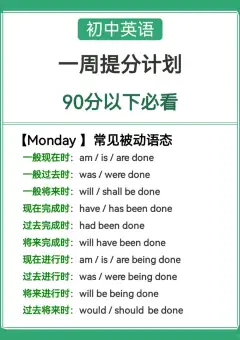
主语 + am/is/are + 过去分词:一般现在时的被动语态。
例句:English is spoken in many countries. 许多国家都使用英语。
主语 + was/were + 过去分词:一般过去时的被动语态。
例句:The bridge was built ten years ago. 这座桥是十年前建造的。
主语 + will be + 过去分词:一般将来时的被动语态。
例句:The work will be finished tomorrow. 这项工作明天将会完成。
主语 + have/has been + 过去分词:现在完成时的被动语态。
例句:The room has been cleaned. 房间已经打扫干净了。
主语 + am/is/are being + 过去分词:现在进行时的被动语态。
例句:The road is being repaired. 这条路正在维修。
主语 + had been + 过去分词:过去完成时的被动语态。
例句:The work had been finished before noon. 中午前这项工作就已经完成了。
情态动词 + be + 过去分词:情态动词的被动语态。
例句:The rules must be followed. 必须遵守这些规则。
主语 + be made of + 材料:表示某物由某种材料制成,通常能看出原材料。
例句:The table is made of wood. 这张桌子是木制的。
主语 + be made from + 材料:表示某物由某种原材料制成,通常看不出原材料的原样。
例句:Paper is made from wood. 纸是由木材制成的。
主语 + be made in + 地点:表示某物的制造地点。
例句:This car is made in China. 这辆汽车是中国制造的。
主语 + be made by + 人:表示某物由谁制造或完成。
例句:The cake was made by my mother. 这个蛋糕是我妈妈做的。
主语 + be known as + 名称/身份:被称为……。
例句:He is known as a great writer. 他被称为一位伟大的作家。
主语 + be known for + 特点:因……而闻名。
例句:The city is known for its beautiful lakes. 这座城市以美丽的湖泊而闻名。
主语 + be known to + 人:为某人所知。
例句:The fact is known to everyone. 这个事实众所周知。
主语 + be filled with + 名词:充满……。
例句:The room is filled with laughter. 房间里充满了笑声。
主语 + be covered with + 名词:被……覆盖。
例句:The ground was covered with snow. 地面被雪覆盖了。
主语 + be interested in + 名词:对某事物感兴趣。
例句:He is interested in science. 他对科学感兴趣。
主语 + be surprised at + 名词:对某事感到惊讶。
例句:I was surprised at the news. 我对这个消息感到惊讶。
主语 + be worried about + 名词:担心某事。
例句:She is worried about her exam. 她担心自己的考试。
主语 + be pleased with + 名词:对某事感到满意。
例句:The teacher is pleased with our work. 老师对我们的工作很满意。
主语 + be different from + 名词:与……不同。
例句:My opinion is different from yours. 我的看法与你的不同。
主语 + be similar to + 名词:与……相似。
例句:This picture is similar to that one. 这张图片与那张相似。
主语 + be full of + 名词:充满……。
例句:The garden is full of flowers. 花园里开满了花。
主语 + be short of + 名词:缺少……。
例句:We are short of time. 我们时间不够。
主语 + be famous for + 名词:因……而出名。
例句:Hangzhou is famous for West Lake. 杭州以西湖闻名。
主语 + be famous as + 身份:作为……而出名。
例句:He is famous as a singer. 他作为一名歌手而出名。
主语 + be crowded with + 名词:挤满……。
例句:The street was crowded with people. 街上挤满了人。
主语 + be connected with + 名词:与……有关或相连。
例句:Health is connected with good habits. 健康与良好习惯有关。
主语 + be separated from + 名词:与……分开。
例句:The two rooms are separated by a wall. 这两个房间被一堵墙隔开。
主语 + be regarded as + 名词:被视为……。
例句:Reading is regarded as a good habit. 阅读被视为一种好习惯。
主语 + be considered to be + 名词/形容词:被认为是……。
例句:He is considered to be honest. 他被认为是诚实的。
主语 + be expected to + 动词原形:被期望或要求做某事。
例句:Everyone is expected to obey the rules. 每个人都应该遵守规则。
主语 + be encouraged to + 动词原形:被鼓励做某事。
例句:Students are encouraged to ask questions. 学生受到鼓励去提问。
主语 + be required to + 动词原形:被要求做某事。
例句:All visitors are required to show their tickets. 所有访客都必须出示门票。
主语 + be invited to + 动词原形:被邀请做某事。
例句:We were invited to attend the party. 我们受邀参加聚会。
主语 + be told to + 动词原形:被告知或要求做某事。
例句:We were told to wait outside. 我们被告知在外面等候。
主语 + be asked to + 动词原形:被要求做某事。
例句:He was asked to clean the room. 他被要求打扫房间。
主语 + be seen/heard to do:被看见或听见做了某事,主动语态中的省略to通常需要恢复。
例句:He was seen to enter the building. 有人看见他进入了大楼。
It is said that + 从句:据说……。
例句:It is said that the old man is very rich. 据说那位老人很富有。
It is believed that + 从句:人们相信……。
例句:It is believed that exercise is good for health. 人们认为锻炼有益健康。
主语 + be said to + 动词原形:据说某人或某物……。
例句:He is said to live abroad. 据说他住在国外。
主语 + have/get + 宾语 + 过去分词:表示请别人完成某事或使某事被完成。
例句:I had my hair cut yesterday. 我昨天剪了头发。
强调句:It is/was + 被强调部分 + that/who ...:强调句中某个成分。
例句:It was Tom who broke the window. 打破窗户的人是汤姆。
倒装句:Here comes + 名词:用于表示某人或某物来了。
例句:Here comes the bus. 公共汽车来了。
倒装句:There goes + 名词:用于表示某人或某物离开或某事发生。
例句:There goes our last chance. 我们最后的机会就这样失去了。
UNIT 9
第九类:作文提分的表达工具——比较、观点与常用搭配
A + be + 形容词比较级 + than + B:A比B更……。
例句:Tom is taller than Jack. 汤姆比杰克高。
A + be + as + 形容词原级 + as + B:A和B一样……。
例句:She is as tall as her sister. 她和姐姐一样高。
A + be + not as/so + 形容词原级 + as + B:A不如B……。
例句:This book is not as interesting as that one. 这本书没有那本有趣。
the + 形容词最高级 + 名词:表示最……的某人或某物。
例句:He is the tallest boy in our class. 他是我们班最高的男孩。
one of the + 形容词最高级 + 名词复数:最……的……之一。
例句:Hangzhou is one of the most beautiful cities in China. 杭州是中国最美丽的城市之一。
比较级 + and + 比较级:表示越来越……。
例句:The days are getting longer and longer. 白天变得越来越长。
the + 比较级,the + 比较级:越……,就越……。
例句:The harder you work, the better you will do. 你越努力,表现就会越好。
比较级 + than any other + 单数名词:表示比同一范围内其他任何一个都……。
例句:He is taller than any other student in his class. 他比班上其他任何一个学生都高。
much/even/far + 比较级:表示……得多。
例句:This question is much easier. 这道题容易得多。
the same as:与……相同。
例句:My answer is the same as yours. 我的答案和你的一样。
different from:与……不同。
例句:Your idea is different from mine. 你的想法和我的不同。
prefer A to B:比起B更喜欢A。
例句:I prefer tea to coffee. 比起咖啡,我更喜欢茶。
prefer doing A to doing B:比起做B,更喜欢做A。
例句:She prefers reading to watching TV. 比起看电视,她更喜欢阅读。
be better at ... than ...:比……更擅长……。
例句:He is better at math than I am. 他比我更擅长数学。
the best way to do:做某事的最佳方法。
例句:The best way to learn English is to practice every day. 学习英语的最佳方法是每天练习。
It's better to do than to do:做某事比做另一件事更好。
例句:It's better to walk than to drive such a short distance. 这么短的距离,步行比开车更好。
It's important for sb. to do:对某人来说,做某事很重要。
例句:It's important for us to protect the environment. 保护环境对我们很重要。
It's necessary for sb. to do:某人有必要做某事。
例句:It's necessary for students to review their lessons. 学生有必要复习功课。
It's difficult for sb. to do:对某人来说,做某事很困难。
例句:It's difficult for me to remember all the words. 对我来说,记住所有单词很困难。
It's kind of sb. to do:某人做某事真是太好了。
例句:It's kind of you to help me. 你帮助我真是太好了。
It's careless of sb. to do:某人做某事真是粗心。
例句:It's careless of him to make that mistake. 他犯那个错误真是粗心。
It is one's duty to do:做某事是某人的责任。
例句:It is our duty to protect nature. 保护自然是我们的责任。
The more ..., the better ...:越多……越好;越……越……。
例句:The more you read, the better you will write. 你读得越多,写作就会越好。
There is no need to do:没有必要做某事。
例句:There is no need to hurry. 没必要着急。
There is no doubt that ...:毫无疑问……。
例句:There is no doubt that health is important. 毫无疑问,健康很重要。
It goes without saying that ...:不言而喻……。
例句:It goes without saying that practice makes perfect. 熟能生巧是不言而喻的。
As far as I know, ...:据我所知……。
例句:As far as I know, he lives in Beijing. 据我所知,他住在北京。
In my opinion, ...:在我看来……。
例句:In my opinion, reading is very useful. 在我看来,阅读非常有用。
I think/believe that ...:我认为……。
例句:I believe that we can succeed. 我相信我们能够成功。
I agree with ...:我同意……。
例句:I agree with your opinion. 我同意你的观点。
I disagree with ...:我不同意……。
例句:I disagree with this idea. 我不同意这个想法。
I am afraid that ...:恐怕……。
例句:I am afraid that I can't come today. 恐怕我今天不能来了。
I am sure that ...:我确信……。
例句:I am sure that he will win. 我确信他会赢。
I hope that ...:我希望……。
例句:I hope that everything goes well. 我希望一切顺利。
I would like to ...:我想……;我愿意……。
例句:I would like to thank you for your help. 我想感谢你的帮助。
I am glad to ...:我很高兴……。
例句:I am glad to meet you. 我很高兴见到你。
I am sorry for/about ...:为……感到抱歉。
例句:I am sorry for being late. 很抱歉我迟到了。
Thank you for + 名词/doing:感谢……。
例句:Thank you for helping me. 谢谢你帮助我。
Thanks to ...:多亏……;由于……。
例句:Thanks to your help, I finished the work. 多亏你的帮助,我完成了工作。
With the help of ...:在……的帮助下。
例句:With the help of my teacher, I improved my English. 在老师的帮助下,我提高了英语水平。
be proud of ...:为……感到自豪。
例句:We are proud of our country. 我们为祖国感到自豪。
be interested in ...:对……感兴趣。
例句:My brother is interested in history. 我弟弟对历史感兴趣。
be responsible for ...:对……负责。
例句:We are responsible for our actions. 我们要对自己的行为负责。
pay attention to ...:注意……。
例句:Please pay attention to your pronunciation. 请注意你的发音。
make a difference to ...:对……产生影响。
例句:Small changes can make a difference to our lives. 小小的改变也能影响我们的生活。
UNIT 10
第十类:考场高频实战——易错搭配、结果表达与写作收尾
too much + 不可数名词:太多的……。
例句:Don't eat too much sugar. 不要吃太多糖。
too many + 可数名词复数:太多的……。
例句:There are too many cars on the road. 路上的汽车太多了。
much too + 形容词/副词:实在太……。
例句:The bag is much too heavy. 这个包实在太重了。
so much + 不可数名词:这么多的……。
例句:Thank you for so much help. 非常感谢你给予这么多帮助。
a little + 不可数名词:一些……;少量的……。
例句:There is a little milk in the glass. 杯子里有一点牛奶。
a few + 可数名词复数:一些……。
例句:I have a few friends here. 我在这里有几个朋友。
few + 可数名词复数:几乎没有……。
例句:Few students understood the question. 几乎没有学生理解这个问题。
little + 不可数名词:几乎没有……。
例句:There is little time left. 剩下的时间不多了。
be different in ...:在……方面不同。
例句:The twins are different in character. 这对双胞胎在性格方面不同。
be similar in ...:在……方面相似。
例句:The two plans are similar in many ways. 这两个计划在很多方面都相似。
have something to do with ...:与……有关系。
例句:His success has something to do with hard work. 他的成功与努力有关。
have nothing to do with ...:与……无关。
例句:This matter has nothing to do with me. 这件事与我无关。
be late for ...:……迟到。
例句:Don't be late for school. 上学不要迟到。
be afraid of ...:害怕……。
例句:She is afraid of dogs. 她害怕狗。
be famous for ...:因……而闻名。
例句:The town is famous for its old buildings. 这座小镇以古老的建筑闻名。
be famous as ...:作为……而出名。
例句:She is famous as a writer. 她作为一名作家而出名。
be made up of ...:由……组成。
例句:The team is made up of ten students. 这个团队由十名学生组成。
be full of ...:充满……。
例句:The box is full of old photos. 盒子里装满了旧照片。
be short for ...:是……的缩写。
例句:TV is short for television. TV是television的缩写。
be different from ...:与……不同。
例句:My school is different from yours. 我的学校和你的学校不同。
take care of ...:照顾……。
例句:We should take care of our grandparents. 我们应该照顾祖父母。
look after ...:照看……。
例句:Can you look after my cat? 你能帮我照看猫吗?
look for ...:寻找……。
例句:I am looking for my keys. 我正在找钥匙。
look up ...:查阅……。
例句:You can look up the word in a dictionary. 你可以在词典里查这个单词。
look through ...:浏览……;快速查看……。
例句:She looked through the report. 她浏览了这份报告。
look forward to ...:期待……。
例句:We look forward to your reply. 我们期待你的回复。
take part in ...:参加……。
例句:I will take part in the school sports meeting. 我将参加学校运动会。
join in ...:参加某项活动。
例句:Everyone joined in the discussion. 每个人都参加了讨论。
be interested in ...:对……感兴趣。
例句:They are interested in Chinese culture. 他们对中国文化感兴趣。
be good for ...:对……有好处。
例句:Walking is good for your health. 散步有益健康。
be bad for ...:对……有害。
例句:Too much salt is bad for your health. 摄入过多盐分有害健康。
do one's best to ...:尽某人最大努力做某事。
例句:We should do our best to help others. 我们应该尽最大努力帮助他人。
try one's best to ...:尽某人最大努力做某事。
例句:He tried his best to finish the task. 他尽最大努力完成了任务。
make up one's mind to ...:下定决心做某事。
例句:She made up her mind to study harder. 她下定决心更加努力学习。
decide on ...:决定……;选定……。
例句:We decided on a date for the trip. 我们确定了旅行日期。
as a result:结果;因此。
例句:He didn't study hard. As a result, he failed the exam. 他学习不努力,结果考试没及格。
for example:例如。
例句:Many sports, for example, swimming, are good for health. 许多运动,例如游泳,都有益健康。
such as ...:例如……。
例句:I like outdoor activities such as hiking and cycling. 我喜欢徒步和骑行等户外活动。
in fact:事实上。
例句:In fact, learning English takes time. 事实上,学习英语需要时间。
in addition:此外。
例句:In addition, we need more practice. 此外,我们还需要更多练习。
first of all:首先。
例句:First of all, we should make a plan. 首先,我们应该制订计划。
above all:最重要的是。
例句:Above all, we must stay safe. 最重要的是,我们必须保证安全。
in short:简而言之。
例句:In short, health is more important than wealth. 简而言之,健康比财富更重要。
all in all:总的来说。
例句:All in all, we had a wonderful day. 总的来说,我们度过了美好的一天。
As long as we keep trying, we will make progress.:只要我们坚持尝试,就会取得进步。
例句:As long as we keep trying, we will make progress. 只要我们坚持尝试,就会取得进步。
PRACTICE
初中英语基础句型综合练习
学完450个句型,别急着合上文章!下面这组练习覆盖时态、非谓语动词、比较结构、从句、被动语态和固定搭配,可以检验自己是不是真的掌握了。
一、单项选择(1—15)
My sister enjoys ______ books before going to bed.
A. read B. reading C. to read D. reads
If it ______ tomorrow, we will stay at home.
A. rains B. will rain C. rained D. is raining
The classroom ______ by the students every afternoon.
A. cleans B. cleaned C. is cleaned D. is cleaning
He is ______ young ______ go to school alone.
A. so; that B. too; to C. enough; to D. such; that
I have lived here ______ 2021.
A. for B. during C. since D. at
Neither Tom nor his friends ______ interested in the game.
A. is B. are C. was D. be
Could you tell me ______?
A. where does he live
B. where he lives
C. where is he live
D. where he live
My mother asked me ______ the window.
A. close B. closing C. to close D. closed
The more carefully you listen, ______ you will understand.
A. the better B. better C. the best D. best
You ______ smoke in the hospital. It is against the rules.
A. don't have to B. mustn't C. needn't D. couldn't
I look forward to ______ you again.
A. see B. seeing C. saw D. seen
This is the school ______ my father studied many years ago.
A. which B. who C. where D. what
She speaks English ______ than her brother.
A. fluent B. more fluently C. most fluently D. fluently
I was doing my homework when my mother ______ home.
A. comes B. came C. was coming D. has come
Thanks to your help, we ______ the problem successfully yesterday.
A. solve B. have solved C. solved D. will solve
二、用所给词的适当形式填空(16—25)
He decided ______ (join) the school basketball team.
The flowers ______ (water) every morning.
I ______ (not finish) my homework yet.
She is used to ______ (get) up early.
If you ______ (work) hard, you will make progress.
My teacher told me ______ (not be) late again.
This book is worth ______ (read).
While I ______ (walk) home, it began to rain.
Neither my brother nor I ______ (like) getting up early.
The question is too difficult for me ______ (answer).
三、句型转换(26—30)
He is so young that he can't go to school alone.(改为同义句)
He is ______ young ______ go to school alone.
They clean the classroom every day.(改为被动语态)
The classroom ______ ______ every day.
I spent two hours doing my homework.(改为同义句)
It ______ me two hours ______ ______ my homework.
He is taller than any other student in his class.(改为同义句)
He is ______ ______ student in his class.
I don't know where I should go.(改为同义句)
I don't know where ______ ______.
ANSWERS
参考答案
一、单项选择
B 2. A 3. C 4. B 5. C
B 7. B 8. C 9. A 10. B
B 12. C 13. B 14. B 15. C
二、用所给词的适当形式填空
to join
are watered
haven't finished
getting
work
not to be
reading
was walking
like
to answer
三、句型转换
too; to
is cleaned
took; to do
the tallest
to go
FINALE
写在最后
初中英语想要稳步提分,不能只靠背单词,也不能只在考试前临时记语法。真正有用的方法,是把常见句型放进具体语境里反复练习,弄清楚每个结构的含义、用法和容易出错的地方。
这450个句型可以作为日常积累的基础清单。建议每天学习15—20个,先朗读英文,再理解中文,最后尝试自己造句。遇到容易混淆的结构,可以单独整理到错题本中,隔几天再复习一次。
句型熟了,阅读理解更容易看懂句子结构,完形填空更容易判断搭配,英语作文也会有更多准确、自然的表达可以使用。
把基础打扎实,提分才更有底气。坚持每天进步一点点,时间会给认真积累的同学答案。
把这450个基础句型收藏起来,每天15—20个,读句型、背例句、试着自己造句——坚持积累,语法才能真正用起来。