Unit 4 What can you do?
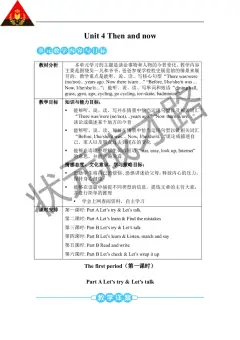
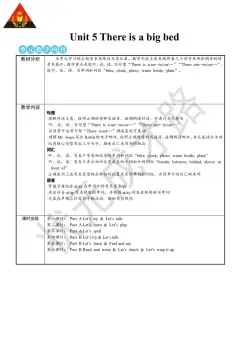
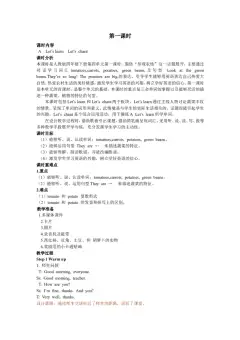
教材分析 本单元学习的主题是文娱活动。教学内容主要是围绕着 “What can you do?”的话题展
开。教学重点是能够听、说、读、写核心句型 “—What can you do? —I can…” “—Can
you…? —Yes, I can./No, I can’t.”; 能够听、说、读、写单词和词组 “dance, sing English
songs, do kung fu, play the pipa, draw cartoons, swim, speak English, cook, play basketball,
play ping-pong”。
教学内容
句型
·完成听录音选图和听录音判断正误的活动
·理解对话大意,按照正确的意群及语音、语调朗读对话,并进行角色扮演
·在情景中运用句型 “—What can you do? —I can…” “—Can you…? —Yes, I can./No,
I can’t.”询问某人能否做某事并作答
·听、说、读、写句型 “—What can you do? —I can…” “—Can you…? —Yes, I can./ No,
I can’t.”
·正确理解并按照正确的意群及语音、语调朗读Robin找朋友的电子邮件,完成读后活动
·写出三个描述自己能否做某事的句子,做到书写规范
词汇
· 听、说、读、写单词和词组 “dance, sing English songs, do kung fu, play the pipa, draw
cartoons, swim, speak English, cook, play basketball, play ping-pong”
·在语境中正确运用上述单词和词组
·完成关于课余文化活动的调查
语音
·掌握字母组合oo的发音规则,即oo在单词中常见的两种发音: 和
·拼读符合oo发音规则的单词,并根据读音拼写符合oo发音规则的单词
·在单线上完成抄写句子的活动,做到书写规范
课时安排 第一课时: Part A Let’s try & Let’s talk
第二课时: Part A Let’s learn & Do a survey
第三课时: Part A Let’s spell
第四课时: Part B Let’s try & Let’s talk
第五课时: Part B Let’s learn & Write and say
第六课时: Part B Read and write & Let’s check & Let’s wrap it up & Part C Story time
3The first period(第一课时)
Part A Let’s try & Let’s talk
教学内容
▶
Let’s try ·独立完成听录音选图片的练习
·通过完成听录音选图的活动初步接触核心句型
Let’s talk ·理解对话大意
·按照正确的语音、语调及意群朗读对话并进行角色扮演
·运用核心句型完成问答活动
·在情景中运用句型 “—What can you do for the party? —I can…”询问并回答某人能做
什么事情
教学重点
▶
学生能够理解Let’s talk板块的对话大意,并掌握本课时的核心句型。
教学难点
▶
学生能够在情景中正确运用本课核心句型询问并回答某人能做什么事情。
教学准备
▶
1.预习《状元大课堂》《创优作业100分》《状元作业本》中本课时的相关内容。
2. PPT课件、课文录音、卡片等。
教学过程
▶
Step 1: Warm-up & Lead-in①
1. Greetings.
2. Let’s chant together. Teaching purpose①
通过chant对本课的重
点句型进行预热,看图问答
环节进一步加深学生对关键
句型的熟悉和了解, 为接下
来的学习奠定良好的基础。
通过对主情景图的学习,很
3. Look and say. 好地导入本课的学习内容。
Show four pictures about the chant above on the PPT. In the
first picture, a dog is running after a boy. The boy asks, “Dog,
dog, what can you do?” In Picture 2, a panda is eating bamboo.
The boy beside it asks, “Panda, panda, what can you do?” In
Picture 3, a mouse is hiding in a shoe. The boy beside it
asks,“Mouse, mouse, what can you do?” In Picture 4, Mike is
4drawing animals in the zoo. The boy beside him asks, “Mike,
Mike, what can you do?”(出示课件) Lead students to answer these
questions by using the sentence pattern “I can…”
After students answer all the questions, ask them to say more
sentences by using the sentence pattern “I can…” Encourage them to say
as many as possible.4Lead-in.
(1) Show the first part of the main scene on page 36. (出示
课件)
T: Look, they’ll have an English party next Tuesday. What can
Chen Jie do for the party?
Lead students to read the sentence and answer: She can play the
pipa.
(2) Show some pictures of different kinds of musical
instruments, such as erhu, guzheng and so on. (出示课件) Lead
students to read the phrases “play the erhu, play the guzheng”.
T: Can you play the pipa / erhu / guzheng?
Students try to answer the questions according to their real
situations.
(3) Show the second part of the main scene on page 36(. 出示
课件)
T: How about Zip and Zoom? What can they do?
Lead students to look at the picture and answer the questions.
Lead students to read the sentences: I can dance! I can sing! La la
la… Encourage them to do the actions at the same time.
Step 2: Presentation
1. Let’s try.②
Teaching purpose②
(1) Show a picture of an English party and the picture of
引导学生在听听力之
Chen Jie. (出示课件)
前观察图片,预测听力内容,
T: Chen Jie has a good news. She tells Mike that they are
激发学生的学习兴趣。让学
going to have an English party. Mike is so happy. Look at these
生明确听力任务,同时引导
two pictures of “Let’s try” on page 38. (出示课件) What can 学生听时抓关键信息,训练
he do for the English party? 学生的听力技巧,提高学生
Ask students to describe the pictures by using the sentence pattern 的听力能力。
“He can…” Then ask them to try to guess which picture is right.
(2) Play the recording of “Let’s try”. (出示课件) Ask students
to try to catch the key information, such as “draw pictures”.
And ask students to tick the right picture.
(3) Play the recording of “Let’s try” again. Check the answer
together.
(4) Show the listening material and the answer. (出示课件)
5Ask one student to stand up and answer the question: What can
Mike do? Lead him/ her to say the sentence: He can draw pictures.
2. Let’s talk.③
(1) Learn the new words and sentence pattern. Predict the main idea Teaching purpose③
of the dialogue. 阅读之前让学生对老师
T: The children will have an English party next Tuesday. 提出的问题进行思考,对图
Show a calendar of this month. Mark two days on the
片内容进行观察和预测,并
带着问题听录音,增强学生
calendar. One day is today and the other day is next Tuesday. (出
学习的目的性和主动性。
示课件) Point to the calendar and tell students that today is in
this week and the other day is in next week. We can also call the
other day next Tuesday. Help students understand the meaning of
“We’ll…next…” Stress that “we’ll=we will”. Then show a
picture of a birthday party. (出示课件) Help students understand
the meaning of “party”.
Show the pictures of Zhang Peng and John in “Let’s talk”
without words. (出示课件)
T: Mike can draw pictures for the party. How about Zhang Peng
and John? Can they draw pictures for the party, too?
Let students observe the pictures and guess the answers. They can
talk freely with their deskmates.
(2) Listen to the recording and answer the questions.
Play the recording of “Let’s talk”. (出示课件) Ask students to
listen carefully and try to answer the questions: ①What can Zhang
Peng do for the party? ②What can John do for the party?
Remind them to underline the key information in their books.
After listening, ask several students to answer the questions. Lead
them to speak out the sentences: Zhang Peng can sing English songs.
John can do some kung fu.
(3) Learn the new phrases and sentences.
① Write down the key sentences “—What can you do for the
party? —I can sing English songs.” on the blackboard. Lead
students to sing English songs, such as ABC song. Help students
understand the meaning of “sing English songs”. Then lead students
to read the sentences three times. Then sing a Chinese song. Lead
students to say the sentence: I can sing Chinese songs, too.
② Point to the picture of John and ask: How about John?
What can John do for the party? Lead students to say: John can
do some kung fu. Write down the key sentences “—How about
you, John? —I can do some kung fu.” on the blackboard. Lead
6students to read the sentences three times. Encourage them to do the
action at the same time.
Show a picture from the movie Kung Fu Panda. In the
picture, the panda is doing kung fu. (出示课件) Lead students to
Teaching purpose④
say: He can do some kung fu. Then show some pictures about
播放录音,学生听录音
Chinese kung fu. (课件出示:男性、女性练中国功夫的图片) Lead
跟读。引导学生按照正确的
students to say: He/ She can do some kung fu.
语音、语调及意群朗读对话,
3. Read and act.④ 并能进行角色扮演。
(1) Play the recording again. Ask students to read the dialogue after
the recording and pay attention to the pronunciation and the intonation.
(2) Let students practice the dialogue in groups.
(3) Ask several groups to role-play the dialogue. Encourage them to
do the actions at the same time.
Step 3: Practice⑤ Teaching purpose⑤
练习环节进一步巩固学
“Prepare for our English party”
生对重点句型的理解和记忆
T: We’ll have an English party, too. But only the students who have
通过完成任务获得英语派对
at least three party invitation cards can come to the party. Finish the
邀请券,激发学生的学习兴
tasks below. Then you can get the cards. 趣。
1. Make dialogues.
Show the second part of “Let’s talk” on page 38 on the PPT. (出示
课件) Ask students to make dialogues according to the example. Divide
students into several groups. Each group has six people. Let them ask
and answer by using the sentence patterns “—What can you do for the
English party? —I can…” They can use the words and the phrases in this
section. They can also use other words and phrases. Provide some words
and phrases for help, such as run, cook, play basketball, play sports and
so on.
Let students ask and answer by playing the game “Drive a train”
like this:
S1: What can you do for the party, S2?
S2: I can… What can you do for the party, S3?
S3: I can… What can you do for the party, S4?
S4: I can… What can you do for the party, S5?
S5: I can… What can you do for the party, S6?
S6: I can… What can you do for the party, S1?
S1: I can…
Choose the best group. Each student in this group can get two party
invitation cards.
2. Fill in the chart.
Ask students to try to complete the chart according to their
dialogues.
7Choose the best group. Each student in this group can get two party
invitation cards.
3. Make a report.
Choose one student from each group to report their chart.
Make a model:
S1 can… S2 can… S3 can… S4 can… S5 can… S6 can…
Choose the best group. Each student in this group can get one party
invitation card.
Step 4: Consolidation & Extension⑥
“English party show”
1. Count the invitation cards.
Teaching purpose⑥
Ask students to count their invitation cards. Let the students who
英语派对秀将课堂推向
have at least three party invitation cards come to the front of the
高潮,让学生在模拟的场景
classroom and stand in a line. 中真实运用本课重点句型进
2. English party show. 行问答。
The students sitting on the chairs ask: What can you do for the
party? The students who were invited to the English party answer the
question one by one and act out what they can do. Each student who
does a good job can get a gift.
板书设计
▶
作业设计
▶
1. Listen to the recording and recite the dialogue.
2. Do the exercises. (见“状元成才路”系列丛书《创优作业100分》或《状元作业本》对应课时作
业)
教学反思
▶
1. 本课的重点在于培养学生良好的听力和交际能力。听前、阅读前都让学生对要学的内容进
行预测,让学生带着问题去听、去阅读,目的明确,使学生在不知不觉中就进入了学习状态。
2. 本课知识与学生的现实生活联系紧密,所以整个课堂紧扣生活,帮助他们在真实有效的情
景中理解和掌握知识。
3. 几轮合作竞赛后给予奖励,强调了团队合作的重要性,帮助学生树立了团队意识。
4. 趣味性的活动将课堂推向高潮,同时有效地巩固了新句型,突破了本课的难点。
85. 板书简洁清晰,重点突出,一目了然。
▶Teaching Contents
Let’s try
·Tick the right picture independently by listening to the recording.
·Perceive the key sentence patterns preliminarily by completing the listening task.
Let’s talk
·Understand the main idea of the dialogue.
·Read the dialogue according to the right pronunciation, intonation and sense group and act it out.
·Use the key sentence patterns to complete asking and answering activities.
·Use the sentence patterns “—What can you do for the party? —I can…” in the real situation to ask
and answer about what someone can do.
▶Teaching Priorities
·Be able to understand the main idea of “Let’s talk” and master the key sentence patterns of this
lesson.
▶Teaching Difficulties
·Be able to ask and answer about what someone can do in the real situation.
▶Teaching Procedures
Teaching Teacher’ s Activities Students’ Activities Teaching Purposes
Stages
Warm-up 1. Greetings. Greetings. Warm up the key
& 2. Let’s chant together. Chant together. sentence patterns of this
Lead-in 3. Look and say. Observe the pictures and lesson. Further deepen
Use pictures to lead students answer each question. Say students’ familiarity and
to answer questions by more sentences by using the understanding of the key
using the key sentence sentence pattern “I can…” sentence patterns and lay
pattern. a good foundation for the
4. Lead-in. (1) Look at the picture and following study. Through
(1) Show the first part of the answer the question. the study of the picture of
main scene on page 36 and (2) Know some other words the main scene, lead in
ask a question. about musical the key content of this
(2) Teach more words about instruments. Answer the lesson.
musical instruments and questions according to
ask questions. real situations.
(3) Show the second part of (3) Talk about Zip and Zoom.
the main scene on page 36.
Talk about Zip and Zoom.
Presentation 1. Let’s try. (1) Describe the pictures and Arouse students’ interest
(1) Lead students to guess guess which picture is in learning. Train
which picture is right. right. students’ listening skills
9(2) Listen and tick the right
(2) Play the recording. picture.
(3) Play the recording again. (3) Check the answer
and improve their
Check the answer. together.
listening abilities.
(4) Show the listening material (4) Read the listening
and the answer. material. And answer the
question.
2. Let’s talk. (1) Learn the words and the Lead students to observe
(1) Teach the new words “next, sentence pattern. Observe the pictures, predict the
party” and the sentence the pictures and guess the main idea of the dialogue,
pattern “We’ll…next…” answers. and listen to the recording
Lead students to predict (2) Listen, underline the key with questions. Improve
the main idea of the information and answer students’ initiative and
dialogue. the two questions. purposefulness.
(2) Ask students to listen to the (3) Learn the new phrases
recording, underline the and sentences. Practice
key information and them by making new
answer the questions. sentences.
(3) Teach the new phrases and
sentences.
① Teach“sing English
songs”.
Lead students to read the
key sentences.
② Teach“do some kung
fu”.
Lead students to read the
key sentences.
3. Read and act. (1) Read the dialogue after Lead students to read the
(1) Let students read the the recording. dialogue according to the
dialogue after the (2) Practice the dialogue in right pronunciation,
recording. groups. intonation and sense
(2) Let students practice the (3) Role-play the dialogue. group.
dialogue in groups.
(3) Ask several groups to
role-play the dialogue.
“Prepare for our English 1. Make dialogues according Further consolidate
party” to the example by playing students’ understanding
Create a situation. the game “Drive a train”. of the key sentence
Practice
1. Make dialogues. 2. Complete the chart patterns. Through the
Show a picture and provide according to their game, fully stimulate
some words and phrases. dialogues. students’ interest in
102. Fill in the chart.
3. Report their chart. learning.
3. Make a report.
Consolidation 1. Count their invitation Help students use the key
& “English party show” cards. sentence patterns in a
Extension 1. Count the invitation cards. 2. Ask and answer. simulated situation. Make
2. English party show. the class atmosphere
reach a climax.
Homework 1. Listen to the recording and recite the dialogue.
2. Do the exercises.
11