文档文本内容
2021 届人大附中高中英语新高考语法一轮复习讲义
(07)授予动词知识点总结整理
Everyday is a new opportunity to hone a skill and make a
difference
授予动词为及物动词的的一种,只是接两个宾语。若动词后接直
接宾语,则在接间接宾语前必须先加介词;反之,若先接间接宾语,
则不需加任何介系词,这一类的动词称为“授与动词”,有以下两种
句型:
句型(1):主语+授与动词+间接宾语(人) +直接宾语(事物)
例: 1 gave him some apples.
Mom cooked us vegetable soup.
句型(2):主词语+授与动词+直接宾语(事物) +介词+间接宾语
(人)
例: I gave some apples to him.Mom cooked vegetable soup for us.
英语中授予动词所用的介系词只有四种,分别是 to、for、of、
on。
其中用介系词“to”的授与动词比较多,用介系词“for”的第二
多,用介系词“of”的授与动词只有“ask”一个,用介系词“on”
的授与动词只有“play”一个。分别说明如下:
1、用介词 to 的授予动词:意思为“把某个东西给某人”
allow、cause、 give、 hand、 lend. offer. owe. pass、
pay、 promise、 read、 sell,
send, show, take. teach, tell, write、 *bring
2、用介词 for 的授予动词:意思为“为了某人而去做某事情”
buy. choose、 cook、 save. fetch. find、 leave、 get、
make、 order、 pick、reserve、*bring
3、用介词 of 的授予动词: ask
例: lasked a question of him
4、用介词 on 的授予动词: play
例: They played a practical joke on her
注意:
①特殊授予动词:explain、introduce、propose、
recommend 和 express 等授予动词只使用句型 2,且要与 to 连
用。
句型(2):主词语授与动词+直接宾语(事物) +介词+间接宾语(人)
例:Wehave to explain Tom everything. (错误)
We have to explain everything to Tom.②表提供的授予动词:offer、provide、supply、furnish、
present。除了 offer 外,其余均要与 with 连用
例:He offered me all I needed
He provided/supplied/furnished me with all I
needed
动词系列总结:
到这期动词的分类及用法就结束啦,不知道大家学会了多少,我
简单总结下。
动词主要 6 个小类,其中助动词主要是帮助主要动词形成各种时
态、语气、语态、疑问句的,不能单独作谓语。
大家如果把动词分类和五大基本句型联系起来。那么你就很容易
明白为什么会有五大基本句型。
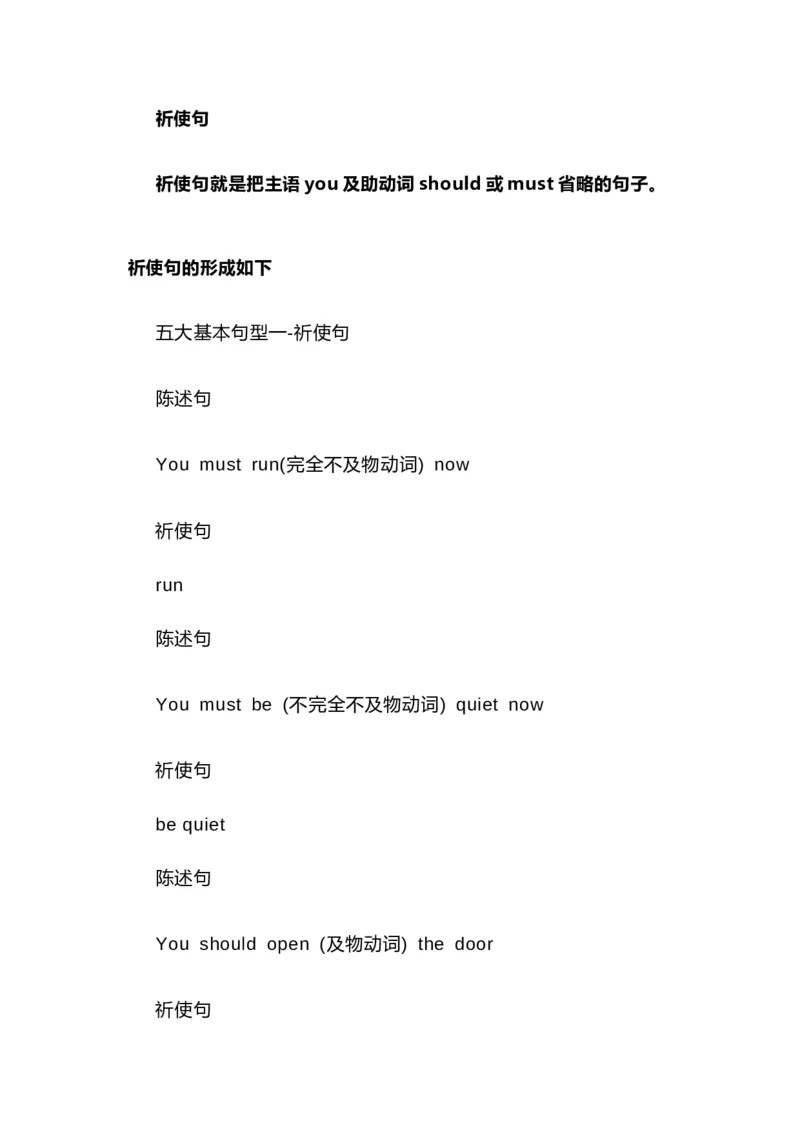
英语中还有祈使句、感叹句和问句 3 类,分别介绍如下:祈使句
祈使句就是把主语 you 及助动词 should 或 must 省略的句子。
祈使句的形成如下
五大基本句型一-祈使句
陈述句
You must run(完全不及物动词) now
祈使句
run
陈述句
You must be (不完全不及物动词) quiet now
祈使句
be quiet
陈述句
You should open (及物动词) the door
祈使句open the door
陈述句
You should make (不完全及物动词) him do it
祈使句
make him do it
陈述句
You should send (授予动词) him a letter
祈使句
send him a letter
感叹句
感叹句均由 How 或者 What 引导,句型如下:
what 引导的感叹句句型
what +
名词(n.)
+主语+动词.
例: what a great man he isWhat a beautiful car he has
What a good boy you have made him
how 引导的感叹句型
1、what +形容词或副词+ 主语+动.....
例: how great he is!
2、how 之后可置带有形容词修饰的单数可数名词,句型如下
How+adj.+a(n)+单数名词+主语+动词
例:how great aman he is!=what a great man he is!
3、how 之后可接 many、much, little 和 few 之类数量形容词,
再接复数或不可数名词
How +数量形容词+复数/不可数名词 +主语+动词
例: how few friends he has!他朋友真少
How much money he has made!他赚了很多钱
疑问句①一般疑问句。这类问句皆可用 yes/no 来回答,由陈述句变化
而成。分由 3 种:
-般疑问句的形成
A.句中有 be 动词时。将 be 动词与主语倒置,加上问号即成
例: Heis nice→Is he nice?
B.句中有助动词 can(could)、may(might)、 will (would) 、
shall (should) 、must,
have (has, had) 等时,将助动词与主语倒置即成
例: He can handle the problem→Can he handle the
problem?
C.若句中只有一般动词,根据时态和主语人称,在句首添加
do、does 或 did 助动词,
再将主语后的动词改为原型动词。
例: He left early.→did he leave early?②特殊疑问句。
此类问句由 when、how、what、where、who、whom、
why 和 which 等疑问词引导,形成方式很简单,句首加上疑问词后,
之后的结构按一般疑问句的倒装原则倒装即可。
例:
Who is she?
Where will you go?
Why did he cry?
注意:what、who 和 which 由于具有名词的性质,在特殊疑问
句中在句首作主语,无需采用倒装结构。
例:what has happened?