2014 年 6 月大学英语六级考试真题(二)
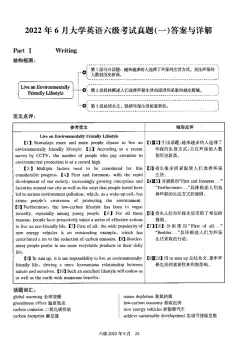
PartI Writing (30 minutes)
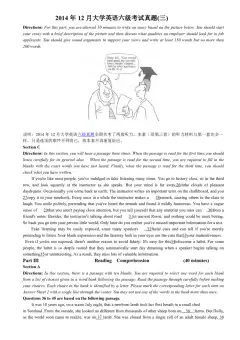
Directions:Forthispart,youareallowed30minutestowriteanessayexplainingwhyitisunwisetoputallyour
eggsinonebasket.Youcangiveexamplestoillustrateyourpoint.Youshouldwriteatleast150wordsbutnomore
than200words.
PartⅡ Listening Comprehension (30 minutes)
SectionA
Directions:Inthissection,youwillhear8shortconversationsand2longconversations.Attheendofeach
conversation,oneormorequestionswillbeaskedaboutwhatwassaid.Boththeconversationandthequestions
willbespokenonlyonce.Aftereachquestiontherewillbeapause.Duringthepause,youmustreadthefour
choicesmarkedA)9B)9C)andD),anddecidewhichisthebestanswer.Thenmarkthe
correspondingletteronAnswerSheet1withasinglelinethroughthecentre
1.A)Theymightbestolengoods. C)Theymightbefaultyproducts.
B)Theymightbefakeproducts. D)Theymightbesmuggledgoods.
2.A)Theyarecivilservants. C)Theyarenewsreporters.
B)Theyarejobapplicants. D)Theyarepublicspeakers.
3.A)Themanhasdecidedtoquithiscomputerclass.
B)Thewomanwantstogetadegreeinadministration.
C)Acomputerdegreeisamustforadministrativework.
D)Themanwenttochangethetimeofhiscomputerclass.
4.A)Alotofcontestantsparticipatedintheshow.
B)Thefifthcontestantwonthebiggestprize.
C)Itwasnotasexcitingashehadexpected.
D)Itwassponsoredbyacarmanufacturer.
5.A)Readinganewspapercolumn. C)DrivingfromNewYorktoBoston.
B)Lookingatarailwaytimetable. D)Waitingforsomeoneattheairport.
6.A)Hewearsacoatboughtinthemall. C)Hehadafingerhurtlastnight.
B)Hegotanewjobatthebarbershop. D)Hehadhishaircutyesterday.
7.A)HecannotappreciatethePicassoexhibition.
B)EvenhisnephewcandrawaswellasPicasso.
C)Heisnotquiteimpressedwithmodernpaintings.
D)Somedrawingsbykindergartenkidsareexcellent.
8.A)Heshouldnotputthecartbeforethehorse.
B)Hisconductdoesnotsquarewithhiswords.
C)Hisattitudetostudentgovernmenthaschanged.
D)Hehaslongbeeninvolvedinstudentgovernment.
Questions9to11arebasedontheconversationyouhavejustheard.
9.A)SheleftherowncarinManchester.
B)Somethingwentwrongwithhercar.
C)Shewantstogotravelingontheweekend.
D)Hercarwon’tbebackinaweek’stime.
10.A)Safety. C)Size.
B)Comfort. D)Cost
11.A)Third-partyinsurance. C)Petrol
B)Value-addedtax D)CDW
Questions12to15arebasedontheconversationyouhavejustheard.
12.A)Howtoupdatethebasicfacilities. C)Wheretolocatetheirplant.
B)Whattodotoenhancetheirposition. D)Howtoattract investments.
13.A)TheirroadlinktootherEuropeancountriesisfast.
B)TheyarealllocatedinthesouthofFrance.
C)Theyareveryclosetoeachother.
D)Theirbasicfacilitiesaregood.
14.A)Trytoavoidmakingahastydecision. C)Talkwiththelocalauthorities.
B)Takeadvantageofthetrainlinks. D)Conductfieldsurveysfirst.
15.A)Futureproductdistribution. C)Roadandraillinksforsmalltowns.
B)Localemploymentpolicies. D)Skilledworkforceinthehillyregion.
SectionB
Directions: In this section, you will hear 3 short passages. At the end of each passage, you will hear some
questions.Boththepassageandthequestionswillbespokenonlyonce.Afteryouhearaquestion,youmustchoosethe best answer from the four choices marked A), B) , C) and D). Then mark the corresponding letter onAnswer
Sheet1withasinglelinethroughthecentre.
PassageOne
Questions16to18arebasedonthepassageyouhavejustheard.
16.A)Onefifthofthemwereonbadtermswiththeirsistersandbrothers.
B)Aboutoneeighthofthemadmittedtolingeringbitterfeelings.
C)Morethanhalfofthemwereinvolvedininheritancedisputes.
D)Mostofthemhadbrokenwiththeirsistersandbrothers.
17.A)Lessconcernwithmoneymatters. C)Advanceinage.
B)Moreexperienceinworldlyaffairs. D)Freedomfromwork.
18.A)Theyhavelittletimelefttorenewcontactwiththeirbrothersandsisters.
B)Theytendtoforgetpastunhappymemoriesandfocusontheirpresentneeds.
C)Theyaremoretolerantofoneanother.
D) Theyfindcloserelativesmorereliable.
PassageTwo
Questions19to22arebasedonthepassageyouhavejustheard.
19.A) Theyhavebrightcolorsandintricatepatterns.
A)TheycanonlysurviveinpartsoftheAmericas.
B)Theyaretheonlyinsectthatmigratesalongfixedroutes.
C)Theyhavestrongwingscapableofflyinglongdistances.
20.A)InaMichiganmountainforest. C)InaKentuckymountainforest.
B)InaLouisianamountainforest. D)InaMexicanmountainforest.
21.A)Eachflockofbutterflieslayseggsinthesamestates.
B)Theystarttolayeggswhentheyareninemonthsold.
C)Eachgenerationinacyclelayseggsatadifferentplace.
D)Onlythestrongestcanreachtheirdestinationtolayeggs.
22.A) Evolutionofmonarchbutterflies.
B)Livinghabitsofmonarchbutterflies.
C)Migrationpatternsofmonarchbutterflies.
D) Environmentalimpactsonmonarchbutterflylife.
PassageThree
Questions23to25arebasedonthepassageyouhavejustheard.
23.A)Timehasbecomemorelimited. C)Timeismoney.
B)Timehasbecomemoreprecious. D)Timeisrelative.
24.A)Americansnowattachmoreimportancetotheeffectiveuseoftime.
B)Americanstodayhavemorefreetimethanearliergenerations.
C)ThenumberofhoursAmericansworkhasincreasedsteadily.
D)MoreandmoreAmericansfeelpressedfortimenowadays.
25.A)Ourinterpersonalrelationshipsimprove. C)Ourlivinghabitsarealtered.
B)Ourworkefficiencyincreasesgreatly. D)Ourbehaviorischanged.
SectionC
Directions: Inthis section,youwillhearapassagethreetimes. Whenthe passageisreadfor thefirsttime,you
shouldlistencarefullyforitsgeneralidea.Whenthepassageisreadforthesecondtime,youarerequiredtofillin
theblankswiththeexactwordsyouhavejustheard.Finally,whenthepassageisreadforthethirdtime,youshould
checkwhatyouhavewritten.
The first copyright law in the United States was passed by Congress in 1790. In 1976 Congress enacted the
latestcopyrightlaw, 26 thetechnologicaldevelopmentsthathadoccurredsincethepassageoftheCopyrightAct
of1909.Forexample,in1909,anyonewhowantedtomakeasinglecopyofa 27 workforpersonalusehadto
dosobyhand.Theveryprocess 28 alimitationonthequantityofmaterialscopied.Today,aphotocopiercando
the work in seconds: the limitation has disappeared. The 1909 law did not provide full protection for films and
soundrecordings,nordidit 29 theneedtoprotectradioandtelevision.Asaresult, 30 ofthelawandabuses
oftheintentofthelawhavelessenedthe 31 rewardsofauthors,artists,andproducers.The1976CopyrightAct
hasnotpreventedtheseabusesfully,butithasclarifiedthelegalrightsoftheinjuredpartiesandgiventheman 32
forremedy.
Since1976theActhasbeen 33 toincludecomputersoftware,andguidelineshavebeenadoptedforfairuse
oftelevisionbroadcasts.Thesechangeshaveclearedupmuchoftheconfusionandconflictthatfollowed 34 the
1976legislation.
Thefinepointsofthelawaredecidedbythecourtsandbyacceptablecommonpracticeovertime.Asthese
decisionsandagreementsaremade,wemodifyourbehavioraccordingly.Fornow,weneedto 35 thelawandits
guidelinesasaccuratelyaswecanandtoactinafairmanner.
2PartⅢ ReadingComprehension (40 minutes)
SectionA
Directions:Inthissection,thereisapassagewithtenblanks.Youarerequiredtoselectonewordforeachblank
from a list of choices given in a word bank following the passage. Read the passage through carefully before
makingyourchoices.Eachchoiceinthebankisidentifiedbyaletter.Pleasemarkthecorrespondingletterforeach
itemonAnswerSheet2withasinglelinethroughthecentre.Youmaynotuseanyofthewordsinthebankmore
thanonce.
Questions36to45arebasedonthefollowingpassage.
Fear can be an effective way to change behavior. One study compared the effects of high-fear and low-fear
appealsonchangesinattitudesandbehaviorsrelatedtodentalhygiene(卫生).Onegroupofsubjectswasshown
awfulpicturesof 36 teethanddiseasedgums;anothergroupwasshownlessfrighteningmaterialssuchasplastic
teeth,charts, andgraphs. Subjects who saw the frightening materials reportedmore anxiety anda greater 37 to
changethewaytheytookcareoftheirteeththanthelow-feargroupdid.
Butwerethesereactionsactually 38 intobetterdentalhygienepractices?Toanswerthisimportantquestion,
subjects were called back to the laboratory on two 39 (five days and six weeks after the experiment). They
cheweddisclosingwafers(牙疾诊断片)thatgivearedstaintoanyuncleanedareasoftheteethandthusprovideda
direct 40 ofhowwelltheywerereallytakingcareoftheirteeth.Theresultshowedthatthehigh-fearappealdid
actuallyresultingreaterandmore 41 changesindentalhygiene.Thatis,thesubjects 42 tohigh-fearwarnings
brushedtheirteethmore 43 thandidthosewhosawlow-fearwarnings.
However, tobeaneffectivepersuasivedeviceitisveryimportantthatthemessagenotbetoofrighteningand
thatpeoplebegiven 44 guidelinestohelpthemtoreducethecauseofthefear.Ifthisisn’tdone,theymayreduce
their anxiety bydenying the message or the 45 of the communicator. If that happens,it is unlikely that either
attitudeorbehaviorchangewilloccur.
A)accustomed F)decayed K)indication
B)carefully G)desire L)occasions
C)cautiously H)dimensions M)permanent
D)concrete I)eligible N)sensitivity
E)credibility J)exposed O)translated
SectionB
Directions: In this section, you are going to read a passage with ten statements attached to it. Each statement
containsinformationgiveninoneoftheparagraphs.Identifytheparagraphfromwhichtheinformationisderived.
You may choose a paragraph more than once. Each paragraph is marked with a letter. Answer the questions by
markingthecorrespondingletteronAnswerSheet2.
TheStreet-LevelSolution
[A]WhenIwasgrowingup,oneofmyfather’sfavoritesayings(borrowedfromthehumoristWillRogers)was:“It
isn’twhatwedon’tknowthatcausesthetrouble;it’s whatwethinkweknowthatjustisn’tso.Oneofthemain
insightstobetakenfromthe100000HomesCampaignanditsstrategytoendchronichomelessnessisthat,until
recently,oursocietythoughtitunderstoodthenatureofhomelessness,butitdidn’t.
[B]Thatledtoaseriesofmistakenassumptionsaboutwhypeoplebecomehomelessandwhattheyneed.Manyofthe
errorsinourhomelessnesspolicieshavestemmedfromtheconceptionthatthehomelessareahomogeneousgroup.
It’sonlyinthepast15yearsthatorganizationslikeCommonGround,andothers,havetakenastreet-levelviewof
theproblem—distinguishing the“episodically homeless” from the“chronicallyhomeless”in order tounderstand
theirneedsatanindividuallevel.Thisiswhywecannowenvisageadifferentapproach—andgetbetterresults.
[C]Mostreadersexpressedsupportfortheeffort,althoughanumberwereskeptical,andafewutterlydismissive,about
the chances of long-term homeless people adapting well to housing. This is to be expected; it’s hard to imagine
whatwehaven’tyetseen.AsNiccoloMachiavelliwroteinThePrince,oneofthemajorobstaclesinanyeffortto
advancesystemicchange isthe“incredulityofmen,”whichis tosaythatpeople“donotreadilybelieve innew
thingsuntiltheyhave hadalongexperienceofthem.” Mostofushave witnessedhomeless peopleonthestreets
for decades. Few have seen formerly homeless people after they have been housed successfully. We don’t have
referencepointsforthatstory.Sowegeneralizefromwhatweknow-orthinkweknow.
[D]Butthatcanbemisleading,eventoexperts.WhenIaskedRosanneHaggerty,founderofCommonGround,which
currentlyoperates2310unitsofsupportivehousing(with552moreunderconstruction),whathadbeenherbiggest
surprise in this work, she replied : “Fifteen years ago, I would not have believed that people who had been so
brokenandstuckinhomelessnesscouldthrivetothedegreethattheydoinourbuildings.’’AndBeckyKanis,the
campaign’sdirector,commented:‘Thereisthissenseinourmindsthatsomeonewho’sonthestreetsisalmostin
their DNA different from someone who has a house. The campaign is creating a first-hand experience for manypeoplethatthatisreallynotthecase.
[E] One of the startling realizations that I had while researching this column is that anybody could become like a
homelessperson—allittakesisatraumatic(创伤的)braininjury.Abicyclefall,acaraccident,aslipontheice,
orifyou’reasoldier,aheadwound—andyourlifecouldbecomeunrecognizable.JamesO’Connell,adoctorwho
has been treating the most vulnerable homeless people on the streets of Boston for 25 years, estimates that 40
percentofthelong-termhomelesspeoplehe’smethadsuchabraininjury.“Formanyitwasaheadinjurypriorto
the time they became homeless,” he said. “They became unpredictable. They’d have mood swings, fits of
explosive behavior. They couldn’t hold onto their jobs. Drinking made them feel better. They’d end up on the
streets.
[F]Oncehomelesspeoplereturntohousing,they’reinamuchbetterpositiontorebuildtheirlives.Butit’simportantto
note that housing alone is not enough. As with many complex social problems, when you get through the initial
crisis,youhaveanotherproblemtosolvewhichisnolesschallenging.Butitisabetterproblem.
[G]Over thepastdecade,O’Connellhasseenthis happen.spendhalfmytimeonthestreetsorinthehospitalandthe
other half making house calls to people who lived for years on the streets,” he said. “So from a doctor’s point of
view it’s a delightful switch, butit’s not as if putting someone in housing is the answer to addressing allof their
problems.It’sthefirststep.”
[H]Onceinhousing,formerlyhomelesspeoplecanbecomeisolatedandlonely.Ifthey’velivedonthestreetsforyears,
they may have acquired a certain standing as well as a sense of pride in their survival skills. Now indoors, those
aspects oftheir identity may be stripped away. Many also experience a profound disorientation at the outset. “If
you’re homeless for more than six months, you kind of lose your bearings, ”says Haggerty. “Existence becomes
notaboutovercominghomelessnessbutaboutfindingfood,begging,lookingforajobtosurviveanotherday.The
wholeprocessofhowyoudefinestabilitygetsreordered.”
[I]Manyneedregular,ifnotcontinuous,supportwithmentalhealthproblems,addictionsandillnesses—and,equally
important, assistance in the day-to-day challenges of life, reacquainting with family, building relationships with
neighbors,findingenjoyableactivitiesorwork,managingfinances,andlearninghowtoeathealthyfood.
[J] For some people, the best solution is to live in a communal(集体)residence, with special services. This isn’t
available everywhere, however. In Boston, for example, homeless people tend to be scattered in apartments
throughoutthecity.
[K] Common Ground’s large residences in New York offer insight into the possibilities for change when homeless
people have a rich array of supports. In addition to more traditional social services, residents also make use of
communal gardens, classes in things like cooking, yoga, theatre and photography, and job placement. Last year,
188formerlyhomelesstenantsinfourofCommonGround^residences,foundjobs.
[L]Becausethepropertieshavemanyservicesandarewell-managed,Haggertyhasfoundposthousingproblemstobe
surprisingly rare. In the past 10 years, there have been only a handful of incidents of quarrels between tenants.
Thereisverylittlegraffiti(涂鸦)orvandalism(破坏).Andtheturnoverisalmostnegligible.InthePrinceGeorge
Hotel in New York, which is home to 208 formerly homeless people and 208 low-income tenants, the average
lengthoftenancyisclosetosevenyears.(Allresidentspay30percentoftheirincomeforrent;fortheformerly
homeless,thiscomesoutoftheirgovernmentbenefits.)Whenpeoplemoveon,itisusuallybecausethey’vefound
apreferableapartment.
[M] “Tenants also want to participate in shaping the public areas of the buildings,” said Haggerty. “They formed a
gardening committee. They want a terrace on the roof. Those are things I didn’t count on.’’ The most common
tenant demand? People always want more storage space—but that’s true of every New Yorker,” she adds. “In
manyways,we’realotlikeanormalapartmentbuilding.Ourtenantslooklikeanyoneelse.”
[N] As I mentioned, homelessness is a catch-all for a variety of problems. A number of readers asked whether the
campaignwilladdressfamilyhomelessness,whichhasdifferentcausesandrequiresadifferentsolution.I’vebeen
following some of the promising ideas emerging to address and prevent family homelessness. Later in 2011, I’ll
explore these ideas in a column. For now, I’ll conclude with an update on the 100 000 Homes Campaign. Since
Tuesday,NewOrleansandafewothercommunitieshavereportednewresults.Thecurrentcountofpeoplehoused
is7043.
46.TenantsinCommonGround’sresidencesallwantmoreroomforstorage.
47.HomesCampaignprovidesfirst-handproofthatthehomelessarenotwhattheywereoncebelievedtobe.
48.CommonGround’sresidencesarewell-managedandbyandlargepeaceful.
49.Housingthehomelessisonlythefirststeptosolvingalltheirproblems.
50.Alargepercentofthechronicallyhomelesshavesufferedfrombraininjury.
51.Afterbeinghousedmanyhomelesspeoplebecomeconfusedatfirstastohowtodealwithlifeoffthestreet.
52.Somepeoplethinkthebestwaytohelpthehomelessistoprovidethemwithcommunalhousing.
53.Thehomelesswithhealthproblemsshouldbegivenregularsupportintheirdailylives.
54.UntilrecentlyAmericansocietyhasfailedtoseewhathomelessnessisallabout.
55.ManyformerlyhomelesstenantsinNewYork’sCommonGround’sresidencesgothired.
4SectionC
Directions:Thereare2passagesinthissection.Eachpassageisfollowedbysomequestionsorunfinished
statements.ForeachofthemtherearefourchoicesmarkedA).B.)C)andD).Youshoulddecideonthebestchoice
andmarkthecorrespondingletteronAnswerSheet2withasinglelinethroughthecentre.
PassageOne
Questions56to60arebasedonthefollowingpassage.
Technologycanmakeussmarterorstupider,andweneedtodevelopasetofprinciplestoguideoureveryday
behavior and make sure that tech is improving and not hindering our mental processes. One of the big questions
being debated today is: What kind of information do we need to have stored in our heads, and what kind can we
leave“inthecloud,”tobeaccessedasnecessary?
Anincreasinglypowerfulgroupwithineducationarechampioning“digitalliteracy”.Intheirview,skillsbeat
knowledge, developing “digital literacy” is more important than learning mere content, and all facts are now
Google-able and therefore unworthy of committing to memory. But even the most sophisticated digital literacy
skillswon’thelpstudentsandworkersnavigatetheworldiftheydon’thaveabroadbaseofknowledgeabouthow
the world actually operates. If you focus on the delivery mechanism and not the content, you’re doing kids a
disservice.
Indeed, evidence from cognitive science challenges the notion that skills can exist independent of factual
knowledge. Datafromthelastthirty years leadstoa conclusionthatis notscientificallychallengeable: thinking
wellrequiresknowingfacts,andthat’struenotonlybecauseyouneedsomethingtothinkabout.Theveryprocesses
thatteacherscareaboutmost—criticalthinkingprocesses—areintimatelyintertwined( 交 织 ) with factual
knowledgethatisstoredinlong-termmemory.
Inotherwords,justbecauseyoucanGooglethedateofBlackTuesdaydoesn’tmeanyouunderstandwhythe
GreatDepressionhappenedorhowitcomparestoourrecenteconomicslump.Thereisnodoubtthatthestudentsof
today, and the workers of tomorrow, will need to innovate, collaborate and evaluate. But such skills can’t be
separated from the knowledge that gives rise to them. To innovate, you have to know what came before. To
collaborate, you have to contribute knowledge to the joint venture. And to evaluate, you have to compare new
informationagainstknowledgeyou’vealreadymastered.
Sohere’saprincipleforthinkinginadigitalworld,intwoparts.First,acquireabaseoffactualknowledgein
anydomaininwhichyouwanttoperformwell.Thisbasesuppliestheessentialfoundationforbuildingskills,andit
can’tbeoutsourced(外包)toasearchengine.
Second,takeadvantageofcomputers’invariablememory,butalsothebrain’selaborativememory.Computers
are great when you want to store information that shouldn’t change. But brains are the superior choice when you
wantinformation to change, in interesting and useful ways: to connect up with other facts and ideas, to acquire
successivelayersofmeaning,tosteepforawhileinyouraccumulatedknowledgeandexperienceandsoproducea
richermentalbrew.
注意:此部分试题请在答题卡2上作答。
56.Whatistheauthor’sconcernabouttheuseoftechnology?
A)Itmayleaveknowledge“inthecloud”.
B)Itmaymisguideoureverydaybehavior.
C)Itmaycauseadivideinthecirclesofeducation.
D)Itmayhinderthedevelopmentofthinkingskills.
57.Whatistheviewofeducatorswhoadvocatedigitalliteracy?
A)Ithelpskidstonavigatethevirtualworldatwill.
B)Ithelpskidstobroadentheirscopeofknowledge.
C)Itincreaseskids’efficiencyofacquiringknowledge.
D)Itliberateskidsfromtheburdenofmemorizingfacts.
58.Whatdoesevidencefromcognitivescienceshow?
A)Knowledgeisbetterkeptinlong-termmemory.
B)Criticalthinkingisbasedonfactualknowledge.
C)Studyskillsareessentialtoknowledgeacquisition.
D)Criticalthinkingmeanschallengingexistingfacts.
59.Whatdoestheauthorthinkiskeytomakingevaluations?
A)Gatheringenoughevidencebeforedrawingconclusions.
B)Masteringthebasicrulesandprinciplesforevaluation.
C)Connectingnewinformationwithone’saccumulatedknowledge.
D)Understandingbothwhathashappenedandwhyithashappened.
60.Whatistheauthor’spurposeinwritingthepassage?
A)Towarnagainstlearningthroughmemorizingfacts.
B)Topromoteeducationalreformintheinformationage.
C)Toexplainhumanbrains5functioninstoringinformation.D)Tochallengetheprevailingoveremphasisondigitalliteracy.
PassageTwo
Questions61to65arebasedonthefollowingpassage.
America’srecenthistoryhasbeenapersistenttilttotheWest—ofpeople,ideas,commerceandevenpolitical
power.CaliforniaandTexasarethetwinpolesoftheWest,butverydifferentones.Formostofthe20thcenturythe
homeofSiliconValleyandHollywoodhasbeenthebrainierandtrendierofthetwo.Texashastrailedbehind:its
stereotypehasbeenaconservativeChristianincowboyboots.Buttwinscanchangeplaces.Isthathappeningnow?
Itiseasyto findevidencethatCalifornia isinapanic.Atthestartofthismonththeoncegoldenstatestarted
payingcreditorsinIOUs(欠条).Thegapbetweenprojectedoutgoingsandincomeforthecurrentfiscal(财政的)
yearhasleapttoahorrible$26billion.Withnosignofanewbudgettoclosethisgulf,onecreditagencyhasalready
downgradedCalifornia’sdebt.Asbudgetsarecut,universitieswillletinfewerstudents,prisonerswillbereleased
earlyandschemestoprotectthevulnerablewillberolledback.
By contrast, Texas has coped well with the recession, with an unemployment rate two points below the
nationalaverageandoneofthelowestratesofhousingrepossession.InpartthisisbecauseTexanbanks,hardhitin
the last property bust, did not overexpand this time. Texas also clearly offers a different model, based on small
government.Ithasnostatecapital-gainsorincometax,andabusiness-friendlyandimmigrant-tolerantattitude.It
ishometomoreFortune500companiesthananyotherstate.
Despiteallthis,itstillseemstooearlytohandoverAmerica’sfuturetoTexas.Tobeginwith,thatleanTexan
modelhasitsownproblems.Ithasnotinvestedenoughineducation,andmanyexpertsrightlyworryabouta“lost
generation”ofmostlyHispanicTexanswithinsufficientskillsforthedemandsoftheknowledgeeconomy.
Second,ithasneverpaidtobetagainstastatewithasmanyinventivepeopleasCalifornia.EvenifHollywood
hasgoneintodepression,itstillboastsanunequalledarrayofsunriseindustriesandthemostbriskventure-capital
industryontheplanet.Thestatealsohasanawesomeabilitytoreinventitself—asitdidwhenitsdefenceindustry
collapsedattheendofthecoldwar.
The truth is that both states could learn from each other. Texas still lacks California’s great universities and
lagsintermsofculture.CaliforniacouldadoptnotjustTexas’sleanerstate,butalsoitsmorebipartisan(两党的)
approach to politics. There is no perfect model of government: it is America’s genius to have 50 public-policy
laboratoriescompetingtofindoutwhatworksbest.
注意:此部分试题请在答题卡2上作答。
61.WhatdoestheauthorsayaboutCaliforniaandTexasinParagraph1?
A)Theyhavebeencompetingfortheleadingposition.
B)CaliforniahasbeensuperiortoTexasinmanyways.
C)Theyarebothmodelsofdevelopmentforotherstates.
D)Texas’scowboycultureislessknownthanCalifornia’s.
62.Whatdoestheauthorsayabouttoday’sCalifornia?
A)Itsdebtsarepushingitintobankruptcy.
B)Itsbudgetshavebeencutby$26billion.
C)Itisfacedwithaseriousfinancialcrisis.
D)Itistryinghardtoprotectthevulnerable.
63.InwhatwayisTexasdifferentfromCalifornia?
A)Itpracticessmallgovernment. C)IthasalargeHispanicpopulation.
B)Itishometotraditionalindustries. D)Ithasanenviablewelfaresystem.
64.WhatproblemisTexasconfrontedwith?
A)ItsHispanicpopulationismostlyilliterate.
B)Itssunriseindustriesareshrinkingrapidly.
C)Itseducationcannotmeettheneedsoftheknowledgeeconomy.
D)Itsimmigrantshaveahardtimeadaptingtoitscowboyculture.
65.WhatdowelearnaboutAmericanpoliticsfromthepassage?
A)Eachstatehasitsownwayofgoverning.
B)Moststatesfavorabipartisanapproach.
C)Partiescollaborateindrawingpublicpolicies.
D)Allstatesbelieveingovernmentforthepeople.
PartⅣ Translation (30 minutes)
Directions:Forthispart,youareallowed30minutestotranslateapassagefromChineseintoEnglish.Youshould
writeyouransweronAnswerSheet2.•
中文热词通常反映社会变化和文化,有些在外国媒体上愈来愈流行。例如,土豪(tuhao)和大妈(dama)
都是老词,但已获取了新的意义。
土豪以前指欺压佃户和仆人的乡村地主,现在用于指花钱如流水或喜欢炫耀财富的人。也就是说,土
豪有钱,但没有品位。大妈是对中年妇女的称呼,但现在特指不久前金价下跌时大量购买黄金的中国妇女。
6土豪和大妈可能会被收入新版牛津(Oxford)英语词典。至今已有约120个中文词被加进了牛津英语词
典,成了英语语言的一部分。