Lesson 2 Chinese Cheongsam中国旗袍
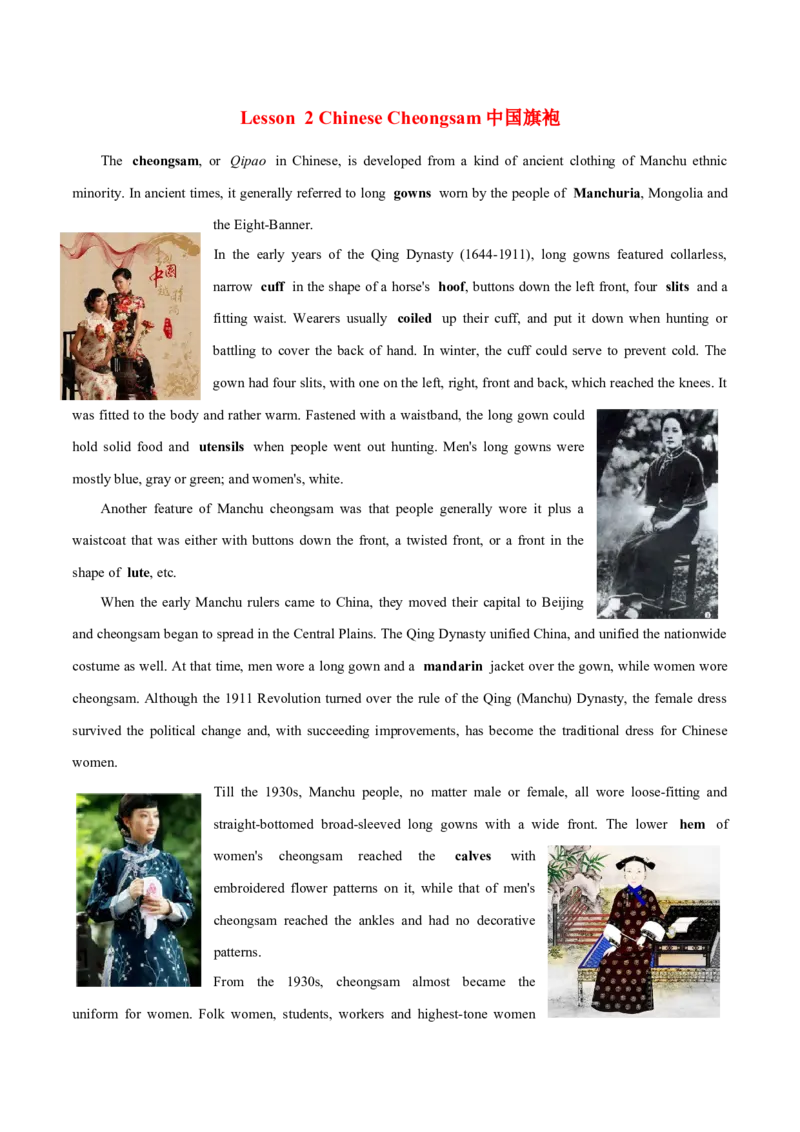
The cheongsam, or Qipao in Chinese, is developed from a kind of ancient clothing of Manchu ethnic
minority. In ancient times, it generally referred to long gowns worn by the people of Manchuria, Mongolia and
the Eight-Banner.
In the early years of the Qing Dynasty (1644-1911), long gowns featured collarless,
narrow cuff in the shape of a horse's hoof, buttons down the left front, four slits and a
fitting waist. Wearers usually coiled up their cuff, and put it down when hunting or
battling to cover the back of hand. In winter, the cuff could serve to prevent cold. The
gown had four slits, with one on the left, right, front and back, which reached the knees. It
was fitted to the body and rather warm. Fastened with a waistband, the long gown could
hold solid food and utensils when people went out hunting. Men's long gowns were
mostly blue, gray or green; and women's, white.
Another feature of Manchu cheongsam was that people generally wore it plus a
waistcoat that was either with buttons down the front, a twisted front, or a front in the
shape of lute, etc.
When the early Manchu rulers came to China, they moved their capital to Beijing
and cheongsam began to spread in the Central Plains. The Qing Dynasty unified China, and unified the nationwide
costume as well. At that time, men wore a long gown and a mandarin jacket over the gown, while women wore
cheongsam. Although the 1911 Revolution turned over the rule of the Qing (Manchu) Dynasty, the female dress
survived the political change and, with succeeding improvements, has become the traditional dress for Chinese
women.
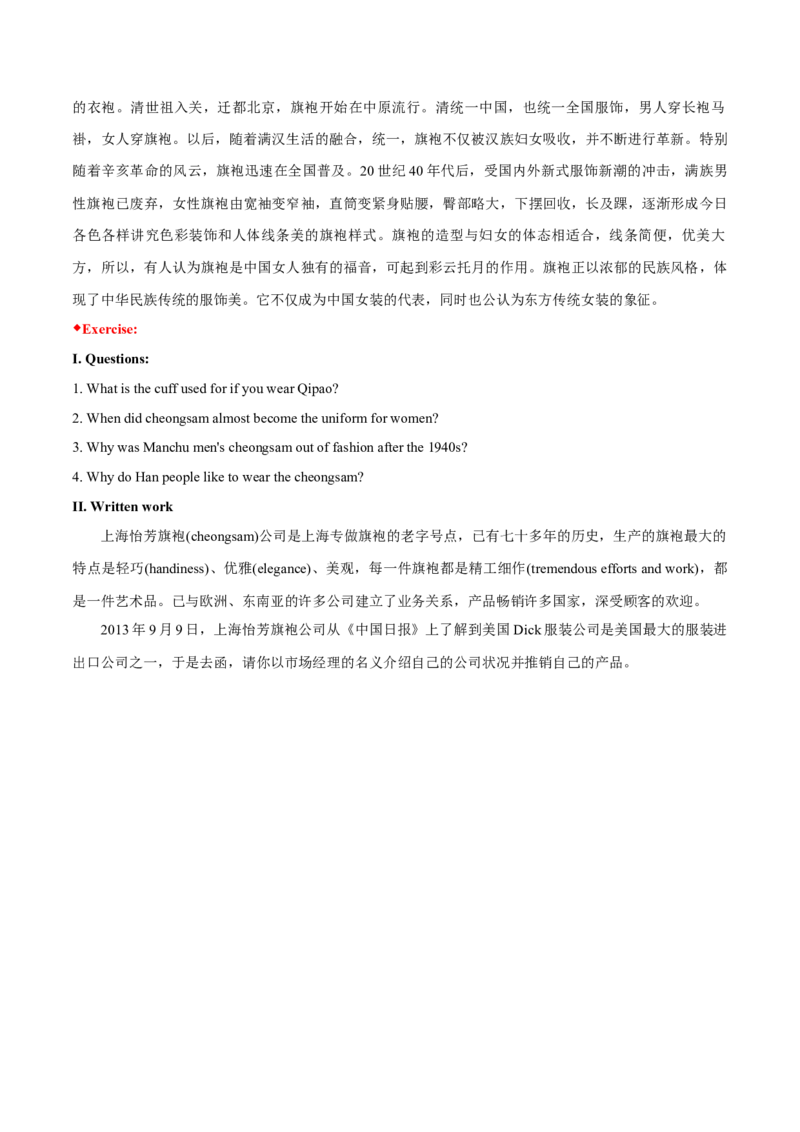
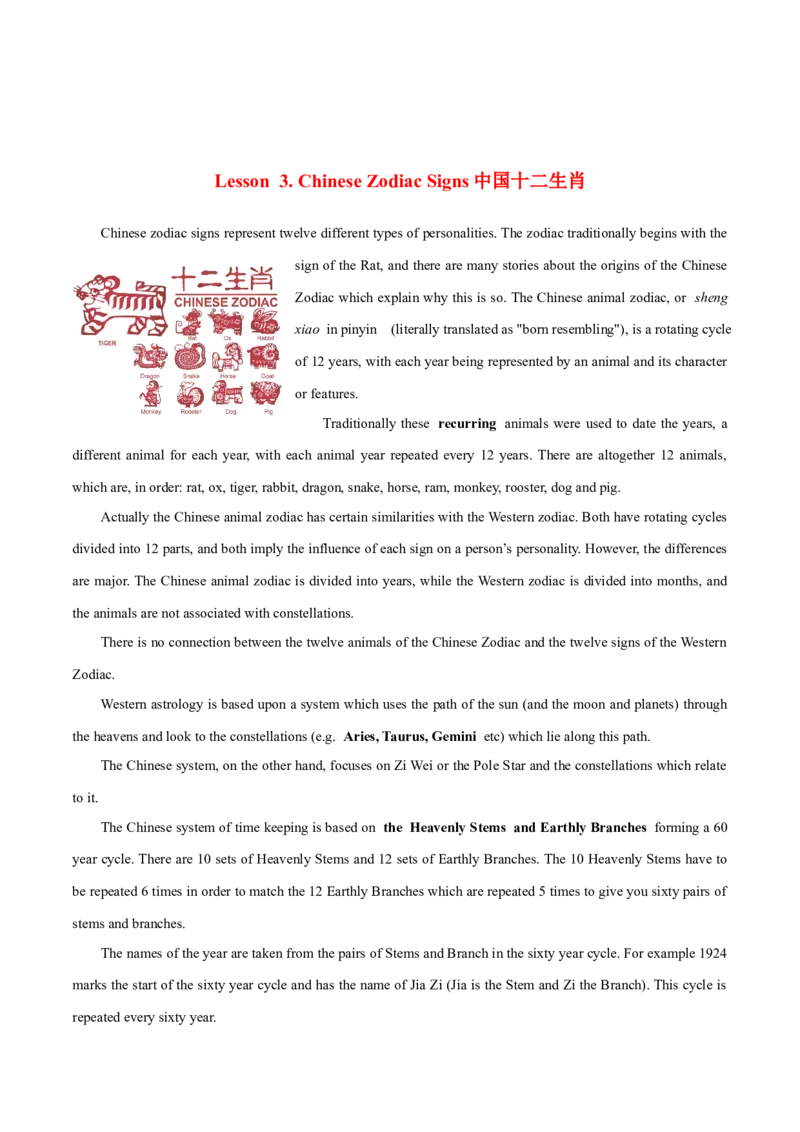
Till the 1930s, Manchu people, no matter male or female, all wore loose-fitting and
straight-bottomed broad-sleeved long gowns with a wide front. The lower hem of
women's cheongsam reached the calves with
embroidered flower patterns on it, while that of men's
cheongsam reached the ankles and had no decorative
patterns.
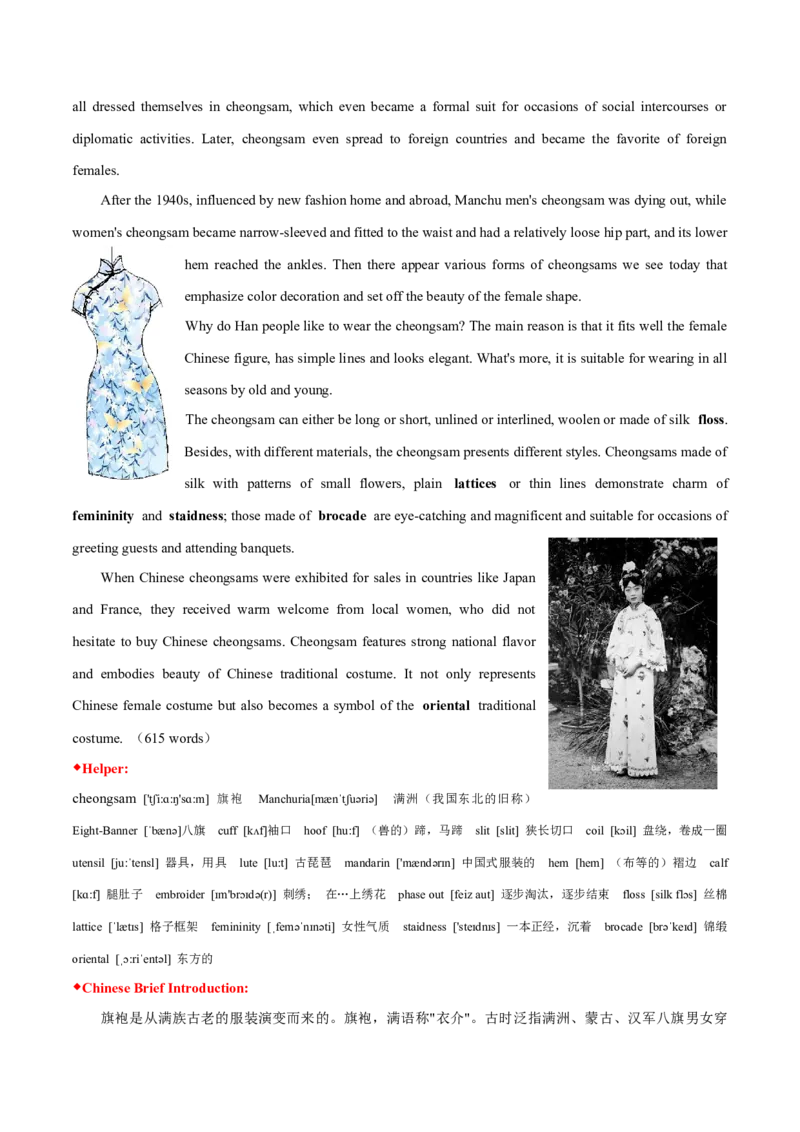
From the 1930s, cheongsam almost became the
uniform for women. Folk women, students, workers and highest-tone womenall dressed themselves in cheongsam, which even became a formal suit for occasions of social intercourses or
diplomatic activities. Later, cheongsam even spread to foreign countries and became the favorite of foreign
females.
After the 1940s, influenced by new fashion home and abroad, Manchu men's cheongsam was dying out, while
women's cheongsam became narrow-sleeved and fitted to the waist and had a relatively loose hip part, and its lower
hem reached the ankles. Then there appear various forms of cheongsams we see today that
emphasize color decoration and set off the beauty of the female shape.
Why do Han people like to wear the cheongsam? The main reason is that it fits well the female
Chinese figure, has simple lines and looks elegant. What's more, it is suitable for wearing in all
seasons by old and young.
The cheongsam can either be long or short, unlined or interlined, woolen or made of silk floss.
Besides, with different materials, the cheongsam presents different styles. Cheongsams made of
silk with patterns of small flowers, plain lattices or thin lines demonstrate charm of
femininity and staidness; those made of brocade are eye-catching and magnificent and suitable for occasions of
greeting guests and attending banquets.
When Chinese cheongsams were exhibited for sales in countries like Japan
and France, they received warm welcome from local women, who did not
hesitate to buy Chinese cheongsams. Cheongsam features strong national flavor
and embodies beauty of Chinese traditional costume. It not only represents
Chinese female costume but also becomes a symbol of the oriental traditional
costume. (615 words)
◆Helper:
cheongsam ['tʃi:ɑ:ŋ'sɑ:m] 旗袍 Manchuria[mænˈtʃuəriə] 满洲(我国东北的旧称)
Eight-Banner [ˈbænə]八旗 cuff [kʌf]袖口 hoof [hu:f] (兽的)蹄,马蹄 slit [slit] 狭长切口 coil [kɔil] 盘绕,卷成一圈
utensil [ju:ˈtensl] 器具,用具 lute [lu:t] 古琵琶 mandarin ['mændərɪn] 中国式服装的 hem [hem] (布等的)褶边 calf
[kɑ:f] 腿肚子 embroider [ɪm'brɔɪdə(r)] 刺绣; 在…上绣花 phase out [feiz aut] 逐步淘汰,逐步结束 floss [silk flɔs] 丝棉
lattice [ˈlætɪs] 格子框架 femininity [ˌfeməˈnɪnəti] 女性气质 staidness ['steɪdnɪs] 一本正经,沉着 brocade [brəˈkeɪd] 锦缎
oriental [ˌɔ:riˈentəl] 东方的
◆Chinese Brief Introduction:
旗袍是从满族古老的服装演变而来的。旗袍,满语称"衣介"。古时泛指满洲、蒙古、汉军八旗男女穿的衣袍。清世祖入关,迁都北京,旗袍开始在中原流行。清统一中国,也统一全国服饰,男人穿长袍马
褂,女人穿旗袍。以后,随着满汉生活的融合,统一,旗袍不仅被汉族妇女吸收,并不断进行革新。特别
随着辛亥革命的风云,旗袍迅速在全国普及。20世纪40年代后,受国内外新式服饰新潮的冲击,满族男
性旗袍已废弃,女性旗袍由宽袖变窄袖,直筒变紧身贴腰,臀部略大,下摆回收,长及踝,逐渐形成今日
各色各样讲究色彩装饰和人体线条美的旗袍样式。旗袍的造型与妇女的体态相适合,线条简便,优美大
方,所以,有人认为旗袍是中国女人独有的福音,可起到彩云托月的作用。旗袍正以浓郁的民族风格,体
现了中华民族传统的服饰美。它不仅成为中国女装的代表,同时也公认为东方传统女装的象征。
◆Exercise:
I. Questions:
1. What is the cuff used for if you wear Qipao?
2. When did cheongsam almost become the uniform for women?
3. Why was Manchu men's cheongsam out of fashion after the 1940s?
4. Why do Han people like to wear the cheongsam?
II. Written work
上海怡芳旗袍(cheongsam)公司是上海专做旗袍的老字号点,已有七十多年的历史,生产的旗袍最大的
特点是轻巧(handiness)、优雅(elegance)、美观,每一件旗袍都是精工细作(tremendous efforts and work),都
是一件艺术品。已与欧洲、东南亚的许多公司建立了业务关系,产品畅销许多国家,深受顾客的欢迎。
2013年9月9日,上海怡芳旗袍公司从《中国日报》上了解到美国Dick服装公司是美国最大的服装进
出口公司之一,于是去函,请你以市场经理的名义介绍自己的公司状况并推销自己的产品。Lesson 3. Chinese Zodiac Signs中国十二生肖
Chinese zodiac signs represent twelve different types of personalities. The zodiac traditionally begins with the
sign of the Rat, and there are many stories about the origins of the Chinese
Zodiac which explain why this is so. The Chinese animal zodiac, or sheng
xiao in pinyin (literally translated as "born resembling"), is a rotating cycle
of 12 years, with each year being represented by an animal and its character
or features.
Traditionally these recurring animals were used to date the years, a
different animal for each year, with each animal year repeated every 12 years. There are altogether 12 animals,
which are, in order: rat, ox, tiger, rabbit, dragon, snake, horse, ram, monkey, rooster, dog and pig.
Actually the Chinese animal zodiac has certain similarities with the Western zodiac. Both have rotating cycles
divided into 12 parts, and both imply the influence of each sign on a person’s personality. However, the differences
are major. The Chinese animal zodiac is divided into years, while the Western zodiac is divided into months, and
the animals are not associated with constellations.
There is no connection between the twelve animals of the Chinese Zodiac and the twelve signs of the Western
Zodiac.
Western astrology is based upon a system which uses the path of the sun (and the moon and planets) through
the heavens and look to the constellations (e.g. Aries, Taurus, Gemini etc) which lie along this path.
The Chinese system, on the other hand, focuses on Zi Wei or the Pole Star and the constellations which relate
to it.
The Chinese system of time keeping is based on the Heavenly Stems and Earthly Branches forming a 60
year cycle. There are 10 sets of Heavenly Stems and 12 sets of Earthly Branches. The 10 Heavenly Stems have to
be repeated 6 times in order to match the 12 Earthly Branches which are repeated 5 times to give you sixty pairs of
stems and branches.
The names of the year are taken from the pairs of Stems and Branch in the sixty year cycle. For example 1924
marks the start of the sixty year cycle and has the name of Jia Zi (Jia is the Stem and Zi the Branch). This cycle is
repeated every sixty year.Rat - Charming
Year of Birth: 1912, 1924, 1936, 1948, 1960, 1972, 1984, 1996, 2008, 2020
Personality: Quick-witted, clever, clairvoyant, short-tempered, ambitious and manipulative. They are
charming and attractive to the opposite sex, loyal and generous to people that they
considers part of their pack. They are resourceful and eager to seek knowledge.
Ox - Patient
Year of Birth: 1913, 1925, 1937, 1949, 1961, 1973, 1985, 1997, 2009, 2021
Personality: Calm, diligent, modest, honest, straight-forward, easy-going but
sometimes can be stubborn. A born leader, the ox has a tendency to inspire confidence in others. They hate failure
and don't like to be challenged.
Tiger - Sensitive
Year of Birth: 1914, 1926, 1938, 1950, 1962, 1974, 1986, 1998, 2010, 2022
Personality: Thoughtful, rebellious, sensitive, success-oriented, humanitarian, impatient and aggressive. Tigers
are embodiment of lordliness and power. They are respected by other people, though they sometimes act
antiauthoritarian and get into conflict with authority or elder people.
Rabbit - Articulate
Year of Birth: 1915, 1927, 1939, 1951, 1963, 1975, 1987, 1999, 2011, 2023
Personality: Popular, amiable, affectionate, sincere, and opportunistic. Rabbits
enjoy being surrounded by family and friends. Sometimes they tend to get
sentimental, but rarely lose temper. Being cautious and conservative, they are said to
be financially lucky and will be successful in business.
Dragon - Healthy
Year of Birth: 1916, 1928, 1940, 1952, 1964, 1976, 1988, 2000, 2012, 2024
Personality: Energetic, intelligent, gifted, healthy, charismatic, noble and brave. The dragon is a popular and
respected individual. A natural born leader, the dragon tends to inspire trust and confidence, and is good at giving
orders, though sometimes they can be tactless and brash.
Snake - Lonely
Year of Birth: 1917, 1929, 1941, 1953, 1965, 1977, 1989, 2001, 2013, 2025
Personality: Smart, intuitive, sympathetic, analytical, cautious, introverted and insecure. Snakes prefer to be
loners, relying strongly on their own intuition and judgment, and have little faith in other’s judgment. They hold a
mine attitude towards money. Being financially lucky, they seldom worry about money.Horse - Popular
Year of Birth: 1918, 1930, 1942, 1954, 1966, 1978, 1990, 2002, 2014, 2026
Personality: Sharp-witted, cheerful, smart, open-minded, talkative and talented. Horses enjoy traveling,
entertainment and large crowds. An independent thinker, the horse does not like to hear other peoples’ suggestions.
They sometimes tend to talk too much and become impatient
Goat - Elegant
Year of Birth: 1919, 1931, 1943, 1955, 1967, 1979, 1991, 2003, 2015, 2027
Personality: Gentle, calm, shy, creative, understanding, insecure and pessimistic. They worry a lot and like to
complain. Appearance and material comfort are very important to them. They need lots of support, love, care, and
reassurance.
Monkey - Clever
Year of Birth: 1920, 1932, 1944, 1956, 1968, 1980, 1992, 2004, 2016, 2028
Personality: Upbeat, clever, inquisitive, sociable and flexible. They are good at solving problems and making
decisions. Monkeys can be loose cannons because they lack self-control and give up easily.
Rooster - Good Thinkers
Year of Birth: 1921, 1933, 1945, 1957, 1969, 1981, 1993, 2005, 2017, 2029
Personality: practical, cautious, conservative, alert, shrewd and sturborn. Roosters do not get along very well with
others because they seem boastful and emotionally cold. They like dreaming and bravado. Firm in sticking to
their own decisions, they often speak their mind.
Dog - Loyal
Year of Birth: 1922, 1934, 1946, 1958, 1970, 1982, 1994, 2006, 2018, 2030
Personality: Loyal, trustworthy, faithful, friendly and modest. They do well in business, but have trouble finding
mates. Dogs have a sharp tongue and tend to find faults with many things. Dogs often feel guilty of telling white
lies, and sometimes are too sensitive and moody
Pig - Chivalrous
Year of Birth: 1923, 1935, 1947, 1959, 1971, 1983, 1995, 2007, 2019, 2031
Personality: Polite, obliging, tolerant, sociable, naive and perfectionist. Pigs make a wonderful companion.
Though they tend not to make lots of friends, they keep a few real and loyal friends. They like helping others, but
also expect the same from others. Pigs have good taste and enjoy fine things. When they face a problem, they solve
it with fortitude and honesty.(983 words)
◆Helper:recurr [rɪ'kɜ:(r)] 再发生, 重现 constellation [ˌkɒnstə'leɪʃən] 星座 astrology [əˈstrɒlədʒi] 占星术 Aries ['eəri:z] [天] 白羊
(星)座 Taurus [ˈtɔ:rəs] 金牛座 Gemini ['dʒemɪnaɪ] [天] 双子座(星座) the Pole Star北极星 the Heavenly Stems and
Earthly Branches天干地支 clairvoyant [kleə'vɔɪənt] 有洞察力的 short-tempered [ʃɔ:tˈtempəd] 脾气坏的,易怒的,毛躁
manipulative [mə'nɪpjələtɪv] 巧妙处理的 humanitarian [hju:ˌmænɪˈteəri:ən] 博爱的 aggressive [əˈɡresiv] 进取心的
embodiment [ɪmˈbɒdimənt] 化身 lordliness ['lɔ:dlɪnɪs] 皇室气派,权势 antiauthoritarian [ænʃi:ʌθɒrɪ'teərɪən] 反独裁主义者的
articulate [ɑ:'tɪkjʊleɪt] 善于表达的 charismatic [ˌkærɪzˈmætɪk] 有魅力的 tactless ['tæktləs]不圆通的, 不替别人着想的
brash [bræʃ] 傲慢的, 轻率的 intuitive [ɪnˈtju:ɪtɪv] 直觉的 introverted [ˈɪntrəvɜ:tɪd] 含蓄的 sharp-witted机敏的 upbeat积
极乐观的 inquisitive [ɪnˈkwɪzətɪv]好奇的, 爱打听的 boastful [ˈbəʊstfʊl] 好自夸的 ravado[brə'vɑ:dəʊ] 虚张声势 moody
['mu:dɪ] 喜怒无常的 chivalrous [ˈʃɪvlrəs] (尤指对女人)有骑士风度的,彬彬有礼的 obliging [əˈblaɪdʒɪŋ] 乐于助人的;
有礼貌的 naive [naɪˈi:v] 幼稚的, 天真的, 单纯的 fortitude [ˈfɔ:tɪˌtu:d, -ˌtju:d] 坚韧
◆Chinese Brief Introduction:
英语中,当谈个人出生的属相时,表达为“What animal sign were you born under? 你属什么?I was
born in the year of the Rat. / Mine is the Rat.我属鼠。”
十二生肖,是中国传统文化的重要部分,源于自然界的11种动物和一个民族图腾即鼠、牛、虎、兔、
龙、蛇、马、羊、猴、鸡、狗、猪组成,用于记年,顺序排列为子鼠、丑牛、寅虎、卯兔、辰龙、巳蛇、
午马、未羊、申猴、酉鸡、戌狗、亥猪。如寅年出生的人属虎,卯年出生的人属兔。“生肖”也就是俗话
说的“属相”,是中国人特有的一种表示出生时间的方式,相当于西方的黄道十二星座。生肖动物原是表
示时辰的状态,古时把一天划分为十二个时辰,每个时辰相等于两小时,相传古人根据中国十二生肖中的
动物的出没时间来命名各个时辰。古人还根据出生的年份推算出人运气、性格等,实际上属与人的性格无
关,年属不能代表同年出生的许多的性格,更不能代表不同年出生相同属的更多人。
◆Exercise:
I. Questions:
1. What’s the difference between the Chinese animal zodiac and the Western zodiac?
2. What’s the year when you were born? According to the text tell your partner your character.
3. Peter was born in 1997. Please tell him what kind person he may be according to Chinese zodiac signs.
4. Please list 12 animals in correct time order.
II. Written work
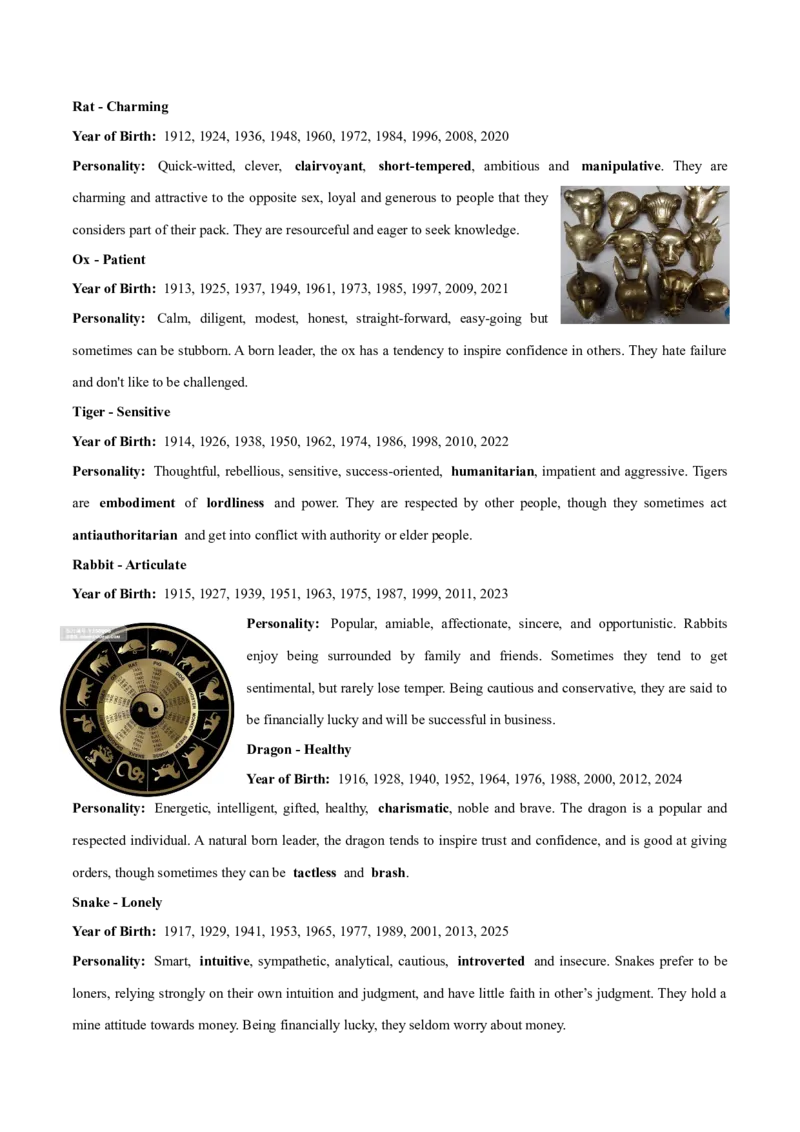
法国一家拍卖公司于2009年 2 月 25 日在巴黎公开拍卖从中国
掠夺的鼠首和兔首铜像, 此举 激起中国人民的强烈愤慨.请你根据下表
提示, 用英语写一篇短文。文物背景:1.鼠首和兔首铜像制作于清代, 是圆明园诸多装饰品之一; 2.1860 年, 英法联军火烧圆明园, 抢走包
括鼠首和兔首铜像等在内的大量 文物. 3.今年二月在巴黎公开拍卖; 4.
中国政府坚决反对, 要求按国际 法无偿归还; 文物事件;5.法国公司一
意孤行; 6.中国人民积极行动, 采 取措施阻止拍卖. 你的感想 (请考生谈
谈对此事的看法, 列举两至三 条)
注意:
1.对所给要点, 逐一陈述, 可适当增加细节, 使其连贯, 不简单翻译.
2.词数: 150 左右.开头已给出, 不计入总词数.
3.参考词汇. auction n. & vt. 拍卖 relic [C] n.文物, 遗物
Suggested Answers
2. Chinese Cheongsam
II. Written work
September 9th, 2013
Dear Sirs,
We learn from China Daily that you are one of the largest clothes import corporations in USA. We are glad toinform you that we, Yifang Cheongsam Corporation, are an old established firm in Shanghai with a history of more
than 70 years.
Our cheongsam is excellent for its handiness, elegance and beauty. Tremendous work and effort have gone into
every dress, which makes dress a piece of art.
We have established trade relations with a lot of corporations in Europe and Southeast Asia. Our clothes sell
well in many countries and enjoy a good fame.
We hope to establish business relations with you and we are sure you would be pleased with our products.
Yours faithfully,
Jennet, Chen
Manager of Marketing Department
3. Chinese Zodiac Signs
II. Written work
Last month in Paris, a French company auctioned two bronze sculptures a rat's head and a rabbits head
captured from China, which has aroused great public concern in China. As is known to all, the two bronze animal
heads were made during the Qing Dynasty to decorate Yuanmingyuan. In 1860, the British and French troops broke
into Beijing and burned down the royal garden, taking away millions of Chinese art works, including the two head
relics. In my opinion, the auction should be strongly condemned. Not only has it hurt the feelings of the Chinese
people but also it brought shame to France. As middle school students, we must study harder so that we can make
our country more powerful in the future and stop any such things from happening again.