But while the events that led to this point are unique, the broader
pattern of events is not. This week's violence is part of a recurring
pattern determined by structural factors in the conflict. If the events in
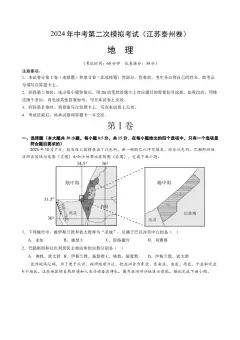
Jerusalem hadn't prompted Hamas rocket fire and Israeli escalation,
something else almost certainly would have.
"The most likely scenario is unfortunately the one we've been in for
the past 15 years," says Ilan Goldenberg, the director of the Middle
East Security Program at the Center for a New American Security.
Goldenberg co-authored a report in 2018 documenting what he terms
"the cycle of violence" between Israel and Hamas. It documents the
ways in which the political status quo is arranged in a way that makes
frequent violent flare-ups all but inevitable.
The stage is set, Goldenberg and his co-authors say, by the policy
approaches of both sides. Israel aims to minimize the threat posed
by Hamas and other militant factions, imposing a harsh blockade
on Gaza that limits the flow of goods and people into the territory.
Hamas aims to cement its hold on power and expand its influence
relative to its Palestinian rivals, seeing violence against Israel as a
key tool in this struggle. This creates an underlying reality in which
fighting breaks out again and again.
Tiger Times 01
巴以冲突,为什么再次爆发?(2)
讲师丨林伯虎 来源丨Vox 日期丨2021.05.20 Thur.
▶ 对巴以冲突走势,观察家普遍态度为什么悲观?
▶ 什么是「暴力周期」?
▶ 对巴勒斯坦这方,从极端派系哈马斯到民选领导阿巴斯,各自出于何种
盘算决定死磕以色列?
▶ 以色列政治为何分为“吞并阵营”和“管控阵营”?在严加封锁加沙的
问题上,两派如何殊途同归?
扫码听课
听课笔记
The Gaza doom loop
讲解正文
"Eventually, humanitarian and economic pressure builds inside
Gaza, and Hamas escalates its use of violence both to generate
domestic political support and to pressure Israel to ease the economic
situation," they write. "Israel responds with its own escalation,
including military strikes inside Gaza and punitive economic
measures that further choke the Strip."
Once the fighting starts, it's not clear how much it'll escalate.
Sometimes it ends swiftly and with minimal loss of life. Other times
— as in 2008 to 2009, 2012, and 2014 — it turns into an all-out war,
with hundreds of (mostly Palestinian) casualties. The current fighting
is rapidly moving in that direction, with Israeli leaders pledging to
continue the bombardment of Gaza indefinitely.
"The IDF [Israel Defense Forces] will continue to strike and bring
complete silence for the long term," Israeli Defense Minister Benny
Gantz said on May 12.
Ultimately, the warring parties either unilaterally decide to stop
bombing or else agree to an internationally brokered settlement that
does little to change the fundamental dynamics. This is the nature of
current conflict: Many people die, and many more suffer, without any
real prospect for change.
"The question isn't why this keeps happening," Elgindy says. "It's
why anyone isn't doing anything to prevent it from [continuing to]
happen."
The doom loop has deep roots in Israeli politics
It's clear that that this status quo produces horrors. The problem,
though, is that these terrible costs are seen as basically tolerable by
the political leadership of all the major parties.
Hamas continues to be able to rule Gaza and reaps the political
benefits from being the party of armed resistance to Israeli
occupation. Palestinian Authority leader Mahmoud Abbas appears
Tiger Times
02
cowed by Hamas's power — most analysts believe he canceled the
Palestinian election because he thought he would lose — and so is
content to let Israel keep his rivals contained in Gaza.
Israel is the most powerful actor of the three: It controls access to the
Gaza Strip and operates a military occupation in the West Bank. If the
Israeli leadership wanted to take actions to short-circuit the cycle of
violence, like easing the blockade of Gaza, it could. But despite the
persistent rocket threat, the leadership isn't willing to try something
new.
Why?
The last time I was in Israel, on a reporting trip in November 2019,
I spoke with Yehuda Shaul, the founder of Breaking the Silence, a
group that helps Israeli soldiers tell their stories about service in the
Palestinian territories. He told me that the traditional categories used
to describe politics — left, right, and center — are fundamentally
inadequate when it comes to explaining what happens in Israel.
These days, he argues, most of Israel's leadership falls into what he
terms the "annexation" camp or the "control" camp.
The annexationists are Jewish extremists, who want to formally seize
large chunks of Palestinian land while either expelling its residents
or denying them political rights — ethnic cleansing or apartheid.
The "control" camp, which includes current Prime Minister Benjamin
Netanyahu, sees things primarily through the lens of military and
physical security: how the Palestinians are ruled is less important
than minimizing the threat they pose to Israeli lives.
"The driving principle [of the control camp] is a national security
idea," Shaul explains. "We are in a zero-sum game: Between the river
and the sea, there is room for one sovereign power. It's either us or
the Palestinians."
The status quo in Gaza serves both groups. From the annexationist
Tiger Times
03
view, keeping the Palestinians weak and divided allows Israeli
settlements to keep expanding and the seizure of both the West
Bank and East Jerusalem to continue apace. Lifting the blockade on
Gaza, and working to promote some kind of renewed peace process
involving both Hamas and the Palestinian Authority, jeopardizes the
agenda of "Greater Israel."
"It is Israeli policy to fragment Palestinians politically and
geographically, to isolate them into these different areas. It's classic
colonial strategy of divide and conquer," Elgindy says.
Meanwhile, the "control" camp sees this as the least bad option.
Any easing of the Gaza blockade would risk Hamas breaking
containment and expanding its presence in the West Bank, which
would be far more dangerous than the rockets — a threat heavily
mitigated by Israel's Iron Dome missile defense system. In this
analysis, periodic flare-ups are a price that has to be paid to minimize
the threat to Israeli lives — with heavy escalations like this one
required to restore a basically tolerable status quo.
Tiger Times
04
Tiger Times
05
recurring /rɪˈkɜːrɪŋ/ adj. 反复出现的,再次发生的
○ happening many times, or happening again
○ e.g. The father-daughter relationship is a recurring theme
in her novels. 父女关系是她小说中一再出现的主题。
prompt /prɒmpt/ v. 引起,导致,激起
○ to make someone decide to do something
○ e.g. What prompted you to buy that suit? 是什么促使你买
了那套西装?
scenario /səˈnɑːriəʊ/ n. 可能发生的事态,设想
○ a situation that could possibly happen
○ e.g. There are several possible scenarios. 有几种可能出现
的局面。
flare-up /ˈfleər ʌp/ n.(暴力或愤怒)爆发,突发,加剧
○ a situation in which someone suddenly becomes angry or
violent
○ e.g. There was another flare-up of rioting later that day. 那
天晚些时候再度爆发骚乱。
impose /ɪmˈpəʊz/ v. 推行,强制实行
○ if someone in authority imposes a rule, punishment, tax
etc., they force people to accept it
○ e.g. The court can impose a fine. 法院可以处以罚款。
cement /sɪˈment/ v. 加强,巩固
○ to make a relationship between people, countries, or
organizations firm and strong
○ e.g. They want to cement a good working relationship
between the government and trade unions. 他们想巩固政府
和工会之间的良好工作关系。
punitive /ˈpjuːnətɪv/ adj. 惩罚性的
○ intended to punish someone
○ e.g. The agency sent a letter, but took no punitive action.
该机构发出了一封信,但没有采取惩罚措施。
choke /tʃəʊk/ v.(使)窒息,(使)呼吸困难
○ if something chokes you, it makes you unable to breathe
properly
○ e.g. The smoke was choking me. 烟呛得我透不过气来。
swiftly /ˈswɪftli/ adv. 很快地,敏捷地
○ quickly; after a very short time
○ e.g. She moved swiftly to the rescue. 她迅速前去营救。
unilaterally /ˌjuːnɪˈlætrəli/ adv. 单方面地,单边地
○ by one person, group or country involved in a situation
without the agreement of the others
○ e.g. The rebels unilaterally declared a ceasefire. 叛军单方
面宣布停火。
broker /ˈbrəʊkər/ v. 协商(协议的细节,尤指在两国间)
○ to arrange the details of a deal etc. so that everyone can
agree to it
○ e.g. The diplomats have failed in their attempts to broker a
ceasefire. 外交官们促成停火的尝试已告失败。
词汇
reap /riːp/ v. 收割,收获,获得
○ to get something, especially something good, as a result of
what you have done
○ e.g. Those who do take risks often reap the rewards. 那些
敢于冒险的人往往会获得回报。
cow /kaʊ/ v.(以威胁或暴力)使害怕,吓唬,恐吓
○ to frighten someone in order to make them do something
○ e.g. The protesters had been cowed into submission by the
police. 抗议者被警察吓得屈服了。
content /ˈkɒntent/ adj. 满意的,满足的,知足的
○ happy and satisfied
○ e.g. We'll be content with a respectable result in tomorrow's
match. 明天的比赛能有个不错的结果,我们就心满意足
了。
rival /ˈraɪvəl/ n. 竞争对手,敌手
○ a person, group, or organization that you compete with in
sport, business, a fight etc.
○ e.g. his chief rival for the job 他的主要竞争对手
short-circuit /ˌʃɔːrt ˈsɜːrkɪt/ v.(做事)抄近路,走捷径
○ to get something done without going through the usual
long methods
○ e.g. The process of becoming a politician can be short-
circuited if you are already a well-known public figure. 如果
你已经是一个知名的公众人物,成为一名政治家的过程
可能会缩短。
annexation /ˌænekˈseɪʃn/ n. 合并,归并,吞并
○ possession taken of a piece of land or a country, usually by
force or without permission
○ e.g. The country's annexation of its neighbour caused an
outcry. 该国吞并邻国引起强烈抗议。
chunk /tʃʌŋk/ n. 一部分,(尤指)大部分
○ a large part or amount of something
○ e.g. The rent takes a large chunk out of my monthly salary.
房租占了我月薪的很大一部分。
expel /ɪkˈspel/ v. 驱逐
○ to force a foreigner to leave a country, especially because
they have broken the law or for political reasons
○ e.g. Three diplomats were expelled for spying. 三名外交
官因从事间谍活动被驱逐出境。
apartheid /əˈpɑːtaɪt/ n.(旧时南非的)种族隔离制度
○ the former political and social system in South Africa, in
which only white people had full political rights and people
of other races, especially black people, were forced to go to
separate schools, live in separate areas etc.
sovereign /ˈsɒvrɪn/ adj. 至高无上的,完全独立的
○ having the highest power in a country
○ e.g. sovereign control 主权控制
seizure /ˈsiːʒə/ n. 占领,夺取
○ the act of suddenly taking control of something, especially
Tiger Times
06
by force
○ e.g. the fascist seizure of power in 1922 1922 年法西斯夺
取政权
apace /əˈpeɪs/ adv. 飞快,迅速
○ happening quickly
○ e.g. Expansion of the company has continued apace. 公司
继续快速扩张。
jeopardize /ˈdʒepədaɪz/ v. 使处于危险境地,危及,损害
○ to risk losing or spoiling something important
○ e.g. large-scale military offensives which could jeopardize
the UN peace process 可能危及联合国和平进程的大规模
军事进攻
fragment /fræɡˈment/ v.(使)支离破碎,(使)分裂
○ to break something, or be broken into a lot of small
separate parts – used to show disapproval
○ e.g. the dangers of fragmenting the Health Service 分裂卫
生服务的危险
containment /kənˈteɪnmənt/ n. 控制,抑制,阻止
○ the act of keeping something under control, stopping it
becoming more powerful etc.
○ e.g. political containment of member states 对成员国的政
治遏制
mitigate /ˈmɪtɪɡeɪt/ v. 使缓和,减轻
○ to make a situation or the effects of something less
unpleasant, harmful, or serious
○ e.g. It is unclear how to mitigate the effects of tourism on
the island. 还不清楚如何缓解旅游业对这个岛屿的影响。
Tiger Times
07
今日习题
1. 根据英文释义写出文中出现的对应词或词组
______: to officially force a rule, tax, punishment, etc. to be obeyed or received
______: pleased with your situation and not hoping for change or improvement
2. 一词多义
Which of the following underlined word is closest in meaning to the one in the sentence "If the events in
Jerusalem hadn't prompted Hamas rocket fire and Israeli escalation, something else almost certainly would
have." ____
A. I forgot my line and had to be prompted.
B. They're usually fairly prompt in dealing with enquiries.
C. We'll be leaving at six o'clock prompt.
D. I don't know what prompted him to leave.
3. 翻译:根据给定中文回译英文
哈马斯(Hamas)的目标是巩固其对权力的控制,扩大其相对于巴勒斯坦的(Palestinian)对手的
影响力,将针对以色列(Israel)的暴力视为这场斗争的关键工具。
_____________________________________________________________________________________
_________________________________________________________________
习题答案
1. impose; content
2. D
3. Hamas aims to cement its hold on power and expand its influence relative to its Palestinian rivals,
seeing violence against Israel as a key tool in this struggle.
编辑丨焰妮