Europe's AI Awakening: Why Mistral AI Is Challenging OpenAI
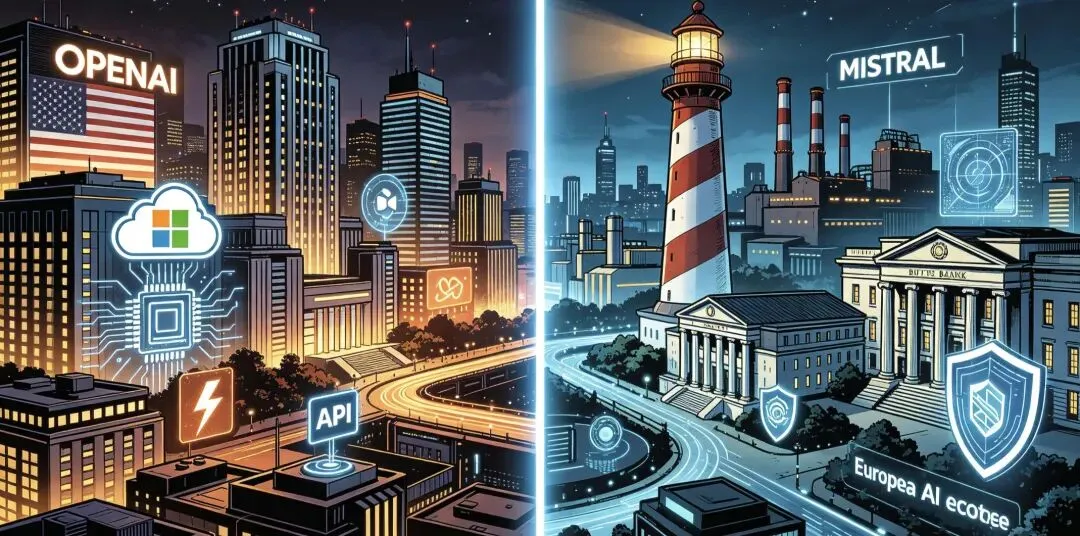
过去几年,全球人工智能产业几乎一直由美国科技巨头主导。从OpenAI掀起生成式AI革命,到Google、Anthropic和xAI不断推出更强大的模型,美国企业牢牢占据着行业中心。然而,欧洲并没有放弃竞争。For years, the global artificial intelligence industry has been dominated by American technology companies. OpenAI ignited the generative AI revolution, while Google, Anthropic, and xAI continued pushing the boundaries of frontier models.法国人工智能公司 Mistral AI 正迅速崛起,被视为欧洲最有希望挑战美国AI领导地位的企业。成立时间不长,却已获得数十亿欧元估值,并吸引了全球资本、政府机构和大型企业客户的关注。French startup Mistral AI has rapidly emerged as one of the world's most promising AI companies. Despite its young age, it has attracted billions of euros in valuation and gained support from investors, governments, and enterprise customers.Mistral不仅代表一家公司的成功,更象征着欧洲希望建立自主AI生态、减少对美国科技依赖的战略转变。More importantly, Mistral represents Europe's determination to build an independent AI ecosystem rather than relying solely on American technology.如果把2023年称为生成式AI元年,那么2026年的全球AI竞争逻辑已经彻底迭代。行业早期的比拼逻辑非常简单:谁能训练出参数更大、跑分更高、通用能力更强的基础大模型,谁就能掌握市场话语权。OpenAI凭借闭源、极致优化的模型体系与微软算力加持,长期垄断全球消费级AI市场,构建起极高的技术与生态壁垒。If 2023 marked the beginning of the generative AI era, the year 2026 has witnessed a fundamental shift in global AI competition. The early race centered entirely on building larger models with higher benchmark scores. Backed by Microsoft’s massive computing resources, OpenAI long dominated the consumer AI market with its closed, highly optimized model system.但当下的AI竞赛,早已跳出单纯的“模型军备竞赛”。技术迭代趋于平稳,行业竞争从单一的性能比拼,延伸为模型能力、算力基建、开发者生态、合规监管、商业化落地的全方位体系对抗。人工智能正式从单点技术突破,升级为国家级的数字工业基建产业。Today, the AI race is no longer defined by model scale alone. Competition spans model performance, computing infrastructure, developer communities, regulatory compliance, and industrial commercialization. Artificial intelligence has evolved from a technical innovation into a core national digital industrial infrastructure.这也是欧洲AI实现弯道超车的核心机遇。长期以来,欧洲坐拥全球顶尖的高校体系、科研人才与基础学科积累,却始终未能诞生能与美国FAANG、硅谷AI巨头抗衡的平台型科技企业。在互联网、移动互联网、云计算时代,欧洲全程处于技术被动跟随状态,数字经济核心话语权长期被美国企业垄断。This structural shift creates a historic opportunity for European AI catch-up. Europe has long possessed world-class academic institutions and top-tier researchers, yet it failed to produce global tech giants during the internet and cloud computing eras, leaving its digital economy heavily dependent on U.S. platforms.人工智能的爆发,成为欧洲重塑全球科技格局、夺回数字主权的历史性窗口。相较于美国自由激进、快速扩张的AI发展模式,欧洲坚持可控、合规、安全、自主的发展理念,依托严格的GDPR数据监管体系,打造差异化竞争优势,而Mistral AI正是欧洲这套战略的核心落地载体。The rise of generative AI offers Europe a rare chance to reshape global tech competition. Unlike America’s fast-expanding, innovation-driven AI model, Europe prioritizes controllability, data security, and regulatory compliance based on the GDPR framework. Mistral AI has become the flagship enterprise carrying Europe’s ambition for digital sovereignty.成立于2023年的Mistral AI,凭借截然不同的发展路线,在短短三年时间内成长为欧洲估值最高的AI独角兽,最新估值突破200亿欧元,完成数十亿欧元大额融资,刷新了欧洲初创科技企业的成长纪录。与OpenAI完全闭源、重度绑定巨头生态、主打C端消费市场的模式相反,Mistral走出了开源轻量化、企业私有化部署、合规优先的欧洲特色AI路径。Founded in 2023, Mistral AI has grown into Europe’s most valuable AI unicorn within three years, with a valuation exceeding 20 billion euros and record-breaking financing rounds. Unlike OpenAI’s closed-source, consumer-oriented model tightly integrated with Microsoft’s ecosystem, Mistral adopts a European-style strategy: open-weight architecture, private enterprise deployment, and compliance-first development.其核心战略优势,在于开放权重的模型架构。不同于完全开源或彻底闭源的极端模式,Mistral采用半开放机制,允许开发者与企业用户自主微调、二次开发、本地化部署。这种模式精准击中欧洲政企市场的核心痛点:既享受前沿AI技术,又能完全掌控本土数据,规避数据跨境泄露风险,完美适配欧洲严苛的数据合规要求。Its greatest competitive strength lies in its flexible open-weight framework. Balancing full open-source and fully closed-source models, Mistral allows developers and enterprises to fine-tune, rebuild, and deploy models locally. This design perfectly addresses European institutional demands, enabling advanced AI adoption while maintaining full domestic data control and complying with strict regional privacy laws.在模型性能层面,Mistral放弃了盲目堆砌参数的行业内卷,主打高效推理、低能耗、轻量化落地。其主力模型虽然参数规模小于GPT系列,但推理速度更快、部署成本更低、适配性更强,尤其适合企业私有机房、本地算力集群、工业场景的常态化落地。对于注重成本、安全与稳定性的欧洲金融、制造、政务企业而言,Mistral的实用性远高于通用型超大模型。Instead of pursuing bloated parameter scales, Mistral focuses on high-efficiency inference, low energy consumption, and lightweight industrial deployment. Although smaller in size than GPT models, its core series delivers faster inference speed, lower operational costs, and stronger adaptability for private enterprise servers and industrial scenarios. For European finance, manufacturing, and government institutions prioritizing security and stability, Mistral’s practicality outperforms oversized universal models.与此同时,Mistral持续补齐技术短板,迭代升级Mistral 3.0系列模型,强化逻辑推理、多模态理解与智能代理能力,逐步缩小与OpenAI、Google Gemini的技术差距。同时布局欧洲本土AI算力云基建,摆脱对美国英伟达算力与微软云服务的依赖,构建独立的欧洲AI算力闭环。Through continuous iteration, the Mistral 3.0 series has greatly improved logical reasoning, multimodal comprehension, and agent capabilities, narrowing the technical gap with OpenAI and Google Gemini. The company is also building Europe’s native AI cloud infrastructure to reduce reliance on U.S. computing resources and establish an independent European computing ecosystem.从商业化维度来看,两者的赛道差异愈发清晰。OpenAI深耕C端大众市场,依靠订阅会员、API调用、消费级产品实现盈利,依托海量用户数据持续反哺模型迭代。而Mistral彻底放弃大众消费赛道,专注B端企业服务与政务AI市场,推出定制化私有化部署、行业模型微调、算力配套服务,打造高壁垒的企业级AI生态。The two players have formed distinct commercial tracks. OpenAI dominates the consumer market through subscriptions, API services, and mass-user products, leveraging massive public data for continuous model optimization. Mistral abandons consumer-facing competition entirely and focuses exclusively on B2B enterprise and government AI services, providing private deployment, industrial model fine-tuning, and localized computing support.2026年,Mistral正式推出自研企业级AI平台Mistral Forge,主打“自主搭建、自主可控”的企业AI解决方案,颠覆了美国AI厂商“云端租赁、数据外存”的传统模式。这套体系让欧洲企业无需依赖海外平台,即可搭建专属行业AI系统,彻底解决数据主权与安全隐患。In 2026, Mistral launched its self-developed enterprise AI platform Mistral Forge, advocating a build-your-own enterprise AI paradigm. It breaks the traditional U.S. cloud-rental model, enabling European companies to build exclusive industrial AI systems with full data sovereignty and zero third-party data exposure risks.欧洲长期拥有世界领先的科研能力,却始终缺少能够与美国科技巨头抗衡的平台企业。过去二十年,全球互联网、软件、云计算、社交赛道的核心话语权,几乎全部被美国企业垄断。AI浪潮到来之前,欧洲在数字产业长期处于“强科研、弱产业”的被动局面。Europe has long retained world-class scientific research capabilities but lacked indigenous platform giants capable of competing with U.S. tech leaders. Over the past two decades, American companies have dominated global search, office software, cloud computing, and social networking. Before the AI era, Europe remained trapped in a paradox of strong academia but weak digital industry.AI产业的崛起,让欧洲终于有机会改写格局。对欧盟各国而言,AI不再只是科技产品,而是数字时代的基础设施与战略主权。如果欧洲持续依赖美国AI模型,其政务数据、工业数据、金融数据将长期暴露在外部平台,国家安全与产业安全将完全受制于人。The rise of AI empowers Europe to rewrite the global technological landscape. For EU nations, artificial intelligence is no longer merely a tech product, but the fundamental infrastructure of digital sovereignty. Reliance on U.S. AI models would expose governmental, industrial, and financial data overseas, creating systemic security vulnerabilities.因此,欧盟通过AI法案、数据合规体系、本土企业扶持政策,全方位倾斜资源,为Mistral等本土AI企业扫清监管障碍、提供资金补贴与场景落地支持。这种政策+产业+资本的区域协同优势,是美国初创企业不具备的独特壁垒。Therefore, the EU has deployed comprehensive support through AI regulatory frameworks, data compliance rules, and industrial incentives to clear obstacles for domestic champions like Mistral. This integrated advantage of policy, industry, and capital forms a unique moat unavailable to U.S. startups.当下全球AI竞争的终局已经明朗:美国擅长技术激进、资本快速变现、全民普及;欧洲擅长安全合规、产业深耕、数据可控。OpenAI代表AI的“速度与创新”,而Mistral代表AI的“秩序与安全”。The endgame of global AI competition is now clear. The United States excels at radical innovation, rapid capitalization, and mass adoption, while Europe specializes in secure, compliant, and controllable industrial AI. OpenAI symbolizes speed and breakthroughs, whereas Mistral represents order and institutional reliability.未来两年,Mistral不会彻底超越OpenAI,但它将彻底打破美国对高端通用AI的独家垄断,标志着全球AI从单极美国霸权正式进入欧美双雄对峙、多元竞争的全新时代。In the next two years, Mistral may not fully surpass OpenAI, but it will permanently end America’s exclusive monopoly on advanced general artificial intelligence. The global AI industry is transitioning from unilateral U.S. dominance into a new multi-polar era defined by transatlantic competition and diversified innovation.
 夜雨聆风
夜雨聆风