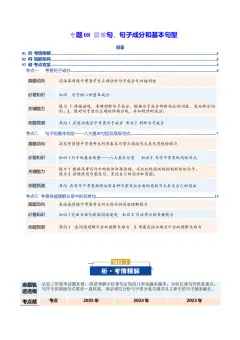
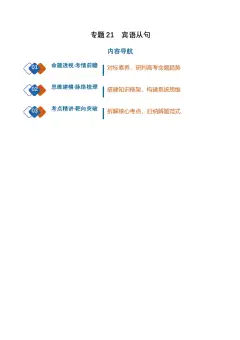
专题 25 词性与句子成分
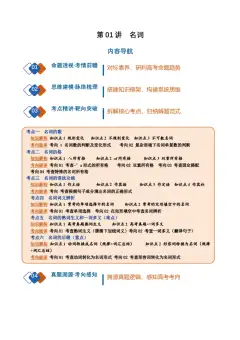
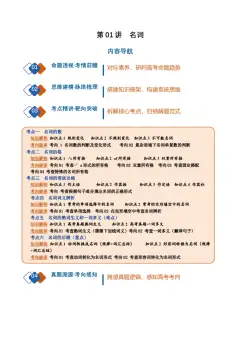
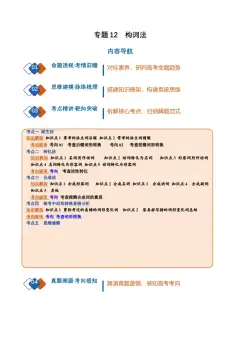
内容导航
命题透视·考情前瞻
01 对标素养,研判高考命题趋势
思维建模·脉络梳理
02 搭建知识框架,构建系统思维
考点精讲·靶向突破
03
拆解核心考点,归纳解题范式
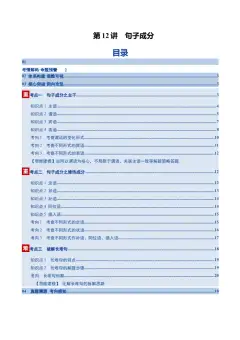
考点一 英语词类的基本知识
知识解构 知识点1 英语的十大词类 知识点2 各种词类概述 知识点3 不同词类之间的关系 知识点4 动词的分类
考向破译 考向 考查词性
考点二 考查句子主干成分
知识解构 知识点1 主语 知识点2 谓语 知识点3宾语 知识点4 表语
考向破译 考向 考查句子主语、谓语、宾语和表语的用法
考点三 考查考查句子修饰成分
知识解构 知识点1 定语 知识点2 状语 知识点3 补语 知识点4 同位语 知识点5 插入语
考向破译 考向 考查句子的修饰成分
考点四 句子成分与语法填空
知识解构 知识点1 主语——词(短语)、主格代词、数词、动词ing(短语)、动词不定式(短语)和从句等 知识点2
谓语——有时态、语态和语气的变化。谓语与主语在人称和数方面必须一致,即主谓一致。 知识点3 宾语——
一般由名词(短语)、宾格代词、动词ing(短语)、动词不定式或从句充当,根据需要也可用it作形式宾语。……
考向破译 考向 考查词性和句子成分在语法填空中的运用
考点五 考查句子成分与遣词造句
知识解构 知识点1 学会使用以形容词/副词(短语)开头作状语将情感和态度的状态表达出来 知识点2 使用并列谓
语动词让动作像电影一样,连续起来,让人物活起来,即Action1 and Action2或者Action1,Action2 and
Action3。 知识点3 ……
考向破译 考向 考查遣词造句能力
考点六 句子成分思维建模04 真题溯源·考向感知
溯源真题逻辑,感知高考考向
命题透视·考情前瞻
——对标素养,研判高考命题趋势
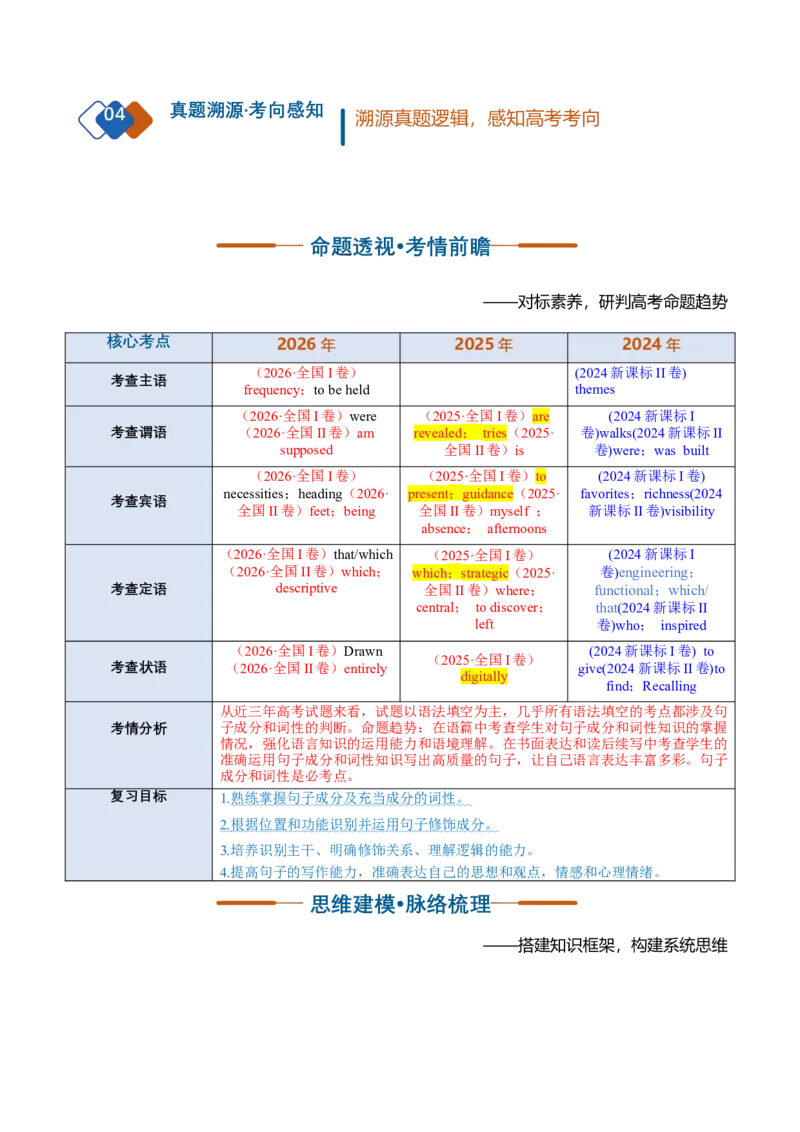
核心考点 2026年 2025年 2024年
(2026·全国I卷) (2024新课标II卷)
考查主语
frequency;to be held themes
(2026·全国I卷)were (2025·全国I卷)are (2024新课标I
考查谓语 (2026·全国II卷)am revealed; tries(2025· 卷)walks(2024新课标II
supposed 全国II卷)is 卷)were;was built
(2026·全国I卷) (2025·全国I卷)to (2024新课标I卷)
necessities;heading(2026· present;guidance(2025· favorites;richness(2024
考查宾语
全国II卷)feet;being 全国II卷)myself ; 新课标II卷)visibility
absence; afternoons
(2026·全国I卷)that/which (2025·全国I卷) (2024新课标I
(2026·全国II卷)which; which;strategic(2025· 卷)engineering;
考查定语 descriptive 全国II卷)where; functional;which/
central; to discover; that(2024新课标II
left 卷)who; inspired
(2026·全国I卷)Drawn (2024新课标I卷) to
(2025·全国I卷)
考查状语 (2026·全国II卷)entirely give(2024新课标II卷)to
digitally
find;Recalling
从近三年高考试题来看,试题以语法填空为主,几乎所有语法填空的考点都涉及句
考情分析 子成分和词性的判断。命题趋势:在语篇中考查学生对句子成分和词性知识的掌握
情况,强化语言知识的运用能力和语境理解。在书面表达和读后续写中考查学生的
准确运用句子成分和词性知识写出高质量的句子,让自己语言表达丰富多彩。句子
成分和词性是必考点。
复习目标 1.熟练掌握句子成分及充当成分的词性。
2 . 根据位置和功能识别并运用句子修饰成分。
3.培养识别主干、明确修饰关系、理解逻辑的能力。
4.提高句子的写作能力,准确表达自己的思想和观点,情感和心理情绪。
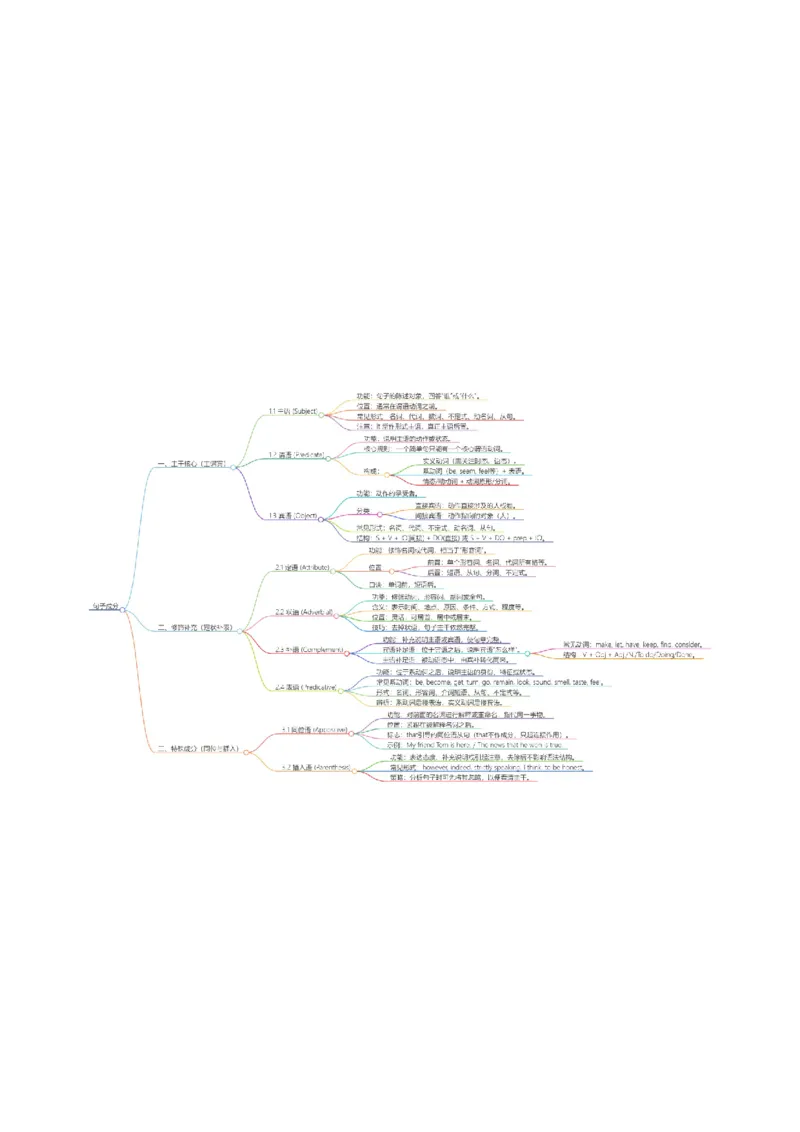
思维建模·脉络梳理
——搭建知识框架,构建系统思维考点精讲·靶向突破
——拆解核心考点,归纳解题范式
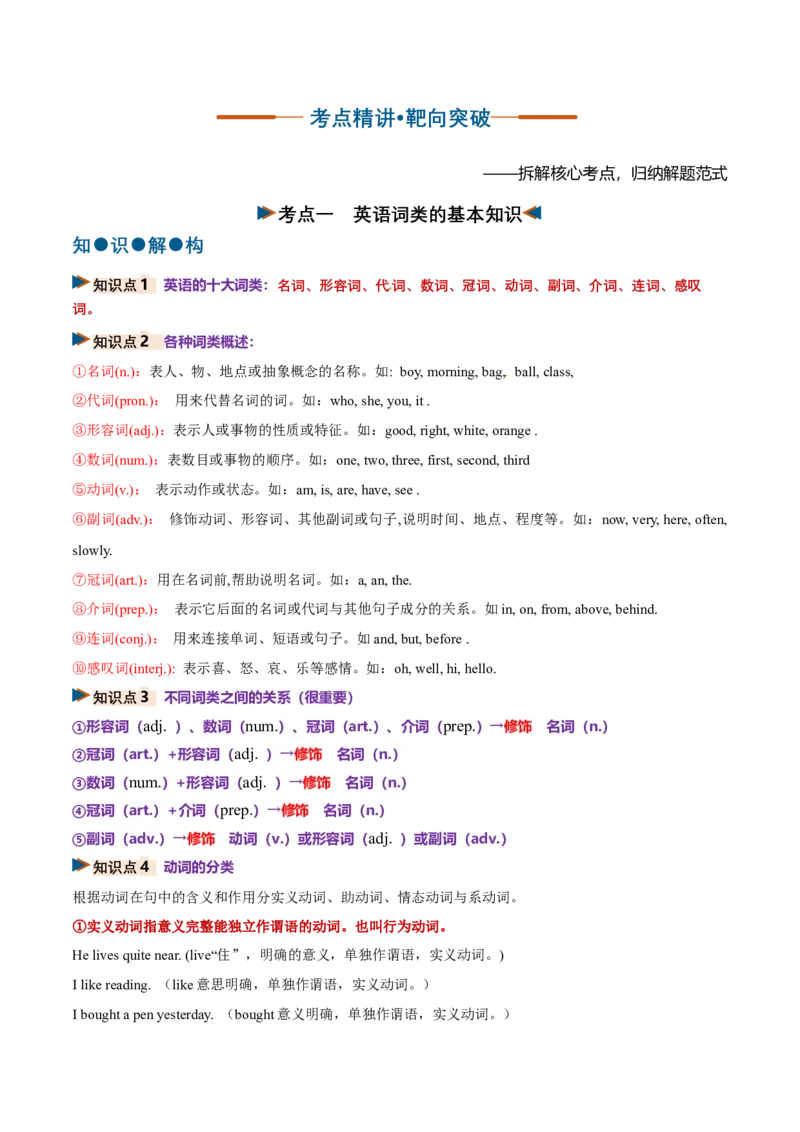
考点一 英语词类的基本知识
知●识●解●构
知识点1 英语的十大词类:名词、形容词、代词、数词、冠词、动词、副词、介词、连词、感叹
词。
知识点2 各种词类概述:
①名词(n.):表人、物、地点或抽象概念的名称。如: boy, morning, bag, ball, class,
②代词(pron.): 用来代替名词的词。如:who, she, you, it .
③形容词(adj.):表示人或事物的性质或特征。如:good, right, white, orange .
④数词(num.):表数目或事物的顺序。如:one, two, three, first, second, third
⑤动词(v.): 表示动作或状态。如:am, is, are, have, see .
⑥副词(adv.): 修饰动词、形容词、其他副词或句子,说明时间、地点、程度等。如:now, very, here, often,
slowly.
⑦冠词(art.):用在名词前,帮助说明名词。如:a, an, the.
⑧介词(prep.): 表示它后面的名词或代词与其他句子成分的关系。如in, on, from, above, behind.
⑨连词(conj.): 用来连接单词、短语或句子。如and, but, before .
⑩感叹词(interj.): 表示喜、怒、哀、乐等感情。如:oh, well, hi, hello.
知识点3 不同词类之间的关系(很重要)
①形容词(adj. )、数词(num.)、冠词(art.)、介词(prep.)→修饰 名词(n.)
②冠词(art.)+形容词(adj. )→修饰 名词(n.)
③数词(num.)+形容词(adj. )→修饰 名词(n.)
④冠词(art.)+介词(prep.)→修饰 名词(n.)
⑤副词(adv.)→修饰 动词(v.)或形容词(adj. )或副词(adv.)
知识点4 动词的分类
根据动词在句中的含义和作用分实义动词、助动词、情态动词与系动词。
①实义动词指意义完整能独立作谓语的动词。也叫行为动词。
He lives quite near. (live“住”,明确的意义,单独作谓语,实义动词。)
I like reading. (like意思明确,单独作谓语,实义动词。)
I bought a pen yesterday. (bought意义明确,单独作谓语,实义动词。)②实义动词分vt.和vi. 实义动词后跟宾语是vt。实义动词后不跟宾语是vi.。
The door opened. (vi.) He opened the door. (vt)
③助动词aux. v. “助”是“帮助”。指那些用来帮助构成时态、语态、疑问句、否定句、倒装句和帮助强
调的词。这些词本身无词汇意义或意义不完全,不能单独作谓语。
A. 帮助构成时态:
The boy is crying. (is帮助构成现在进行时,和crying一起作谓aux. v)
He has arrived. (has帮助构成现在完成时,和arrived一起作谓,aux. v.)
B. 帮助构成否定句和疑问句的:
Does he like English? (does帮助构成一般疑问句,没有具体意义,是aux. v。)
He doesn’t have lunch at home. (does帮助构成否定句,没有具体意义,助动词。)
④情态动词modal v 同助动词一样,不能单独作谓语,要和实义动词一起作谓语。同助动词的区别在于,
助动词本身无意义,而情态动词有自己的意义。
He can swim across the river. You must stay at home.
⑤系动词主要是be;但还有一些实义动词有时也作系动词,这类系动词称为半系动词。
常见的系动词.keep, remain, stay, lie, stand, seem, appear, look,feel, smell, sound, taste, prove, turn out,
become, grow, turn, fall, get, go, come, run。
考●向●破●译
考向 考查词性
1.One cannot (emphasis)too much the potential danger of nuclear energy.
2.To be a good reporter, one needs to be curious, which (enable) one to ask many different questions
and acquire all the information he needs to know.
3.Now it is home to (approximate) 300 folk houses,20 temples and ancestral halls, and 10 opera
stages.
4.I had dreams but they seemed too far away for me to make them a (real).
5.Most students have to look for jobs after university (graduate).
6.The most (universe) facial expression is the smile, whose function is to show happiness.
7.The film star was (annoy) to know that his son was still addicted to drugs.
8.But it was so demanding, and I was afraid of getting (injure), so I went bike riding.
考点二 句子主干成分
知●识●解●构
知识点1 主语:主语是谓语所表示动作或状态的执行者。能够充当主语的主要有名词(短语)、主
格代词、数词、动词ing(短语)、动词不定式(短语)和从句等。当主语为从句时,为避免头重脚轻,可用 it作形式主语。
1. I dashed toward David and gave him a hug. (主格代词作主语) 我冲向大卫然后给了他一个拥抱。
2. Seafood is a part of people's daily diet. (名词作主语) 海鲜是人们日常饮食的一部分。
3. Taking part in a fruit picking activity on a farm is meaningful and rewarding. (动词ing短语作主语)
参加农场里的水果采摘活动是有意义且值得的。
4. To protect the marine environment and ecosystems is to protect us human beings. (动词不定式作主语)
保护海洋环境和海洋生态系统 就是保护我们人类自己。
5. First of all, what we can do is to place importance on our daily actions. (主语从句作主语)
首先,我们能做的就是重视我们的日常行为。
6. It is our hope that in coming decades, advances in science will offer new perspectives from which to study how
people manage their lives. (it作形式主语)
我们希望在未来的几十年内,科技进步将为研究人们如何管理自己的生活提供新的视角。
确定主语 —— 明确动作主体(补充特殊句式)
核心原则:主语是谓语的逻辑主语,通常在谓语前,特殊句式需调整语序。
实操细化:
1.正常语序:直接找谓语前的核心名词 / 代词 / 动名词 / 不定式;
2.特殊句式找主语:
倒装句:将倒装结构还原为正常语序。例:There is a book on the desk.(还原为 A book is there
on the desk,主语为 a book);Only then did we realize the mistake.(还原为 We realized the mistake
only then,主语为 we)
祈使句:省略主语 you,默认主语为 you。例:Close the door.(主语为 you)
形式主语 it:真正主语在句末(to do/doing/ 从句)。例:It takes two hours to finish the work.(真
正主语为 to finish the work)
高考适配案例:2021 年全国卷语法填空第 63 题,句子为 “______ (know) basic first-aid techniques
will help you respond quickly to emergencies.” 第一步找谓语 will help,第二步定位主语为括号内的
know,需变形为动名词 Knowing(作主语)。
知识点2 谓语(Predicate):谓语置于主语之后,描述主语所发出的动作或主语具有的特征或状态。
常用作谓语的主要有动词和动词短语等。谓语有时态、语态和语气的变化。谓语与主语在人称和数方面必
须一致,即主谓一致。
1.I can give a brief introduction of these masterpieces from the perspective of a native speaker of Chinese.(“情态动词+实义动词”作谓语) 我可以从一个以汉语为母语的人的角度简要介绍这些名著。
2. What's more, oceans have a great effect on world climate. (实义动词作谓语)
并且,海洋对全球气候有着巨大的影响。
3.Watching movies is especially beneficial to our spoken English.(系动词作谓语)
看电影尤其对我们的英语口语有益。
4. First of all, as smart online learners, we can make full use of the most extensive educational resources to broaden
our horizons.(“情态动词+实义动词短语”作谓语)
首先,作为聪明的在线学习者,我们可以充分利用最广博的教育资源来开阔自己的眼界。
5. I do expect Youth can publish more classic works and have a promising future. (实义动词前加do强调谓语动
词) 我真的希望《青年》杂志可以多刊登一些经典作品,拥有一个光明的未来。
6. Ecotourism is commonly regarded as low impact travel to undisturbed places. (谓语动词是被动语态)
人们普遍认为生态旅游是在未受干扰地区进行的低影响旅游。
锁定谓语动词 —— 找到句子核心
核心原则:谓语是唯一能体现 “时态、语态、人称” 的动词结构,非谓语动词(to do/doing/done)
不能单独作谓语。
实操细化:
1.先找句子中所有动词(包括实义动词、系动词、助动词);
2.排除非谓语动词:
to do 结构:若前面无情态动词 / 使役动词(如 want/let),则为非谓语;
doing 结构:若前面无 be 动词 / 介词(如 is/for),则为非谓语;
done 结构:若前面无 be 动词 /have(如 is/has),则为非谓语;
3.验证剩余动词是否符合 “时态 + 语态 + 人称”:
时态:如一般现在时三单、现在进行时 be doing、现在完成时 have done;
语态:主动语态(主语发出动作)、被动语态(be done/have been done);
人称:主语为三单时,一般现在时动词加 - s/-es。
高考陷阱案例:
陷阱 1:独立主格中的非谓语。例:The meeting over, we went home.(over 为副词,无谓语,we
went home 为简单句主干)
陷阱 2:介词后的 doing。例:He is good at playing football.(playing 为非谓语,is 为谓语)
陷阱 3:使役动词后的省略 to。例:Let him go.(go 为宾语补足语,let 为谓语)。知识点3 宾语(Object):宾语表示谓语动作、行为的对象,一般位于及物动词和介词的后面,受
到主语的限制和制约。宾语一般由名词(短语)、宾格代词、动词ing(短语)、动词不定式或从句充当,根据
需要也可用it作形式宾语。
1.We can share our success and find solutions to our trouble. (名词作宾语)
我们可以分享取得的成功,寻找解决困难的方法。
2. I’m looking forward to hearing from you about the Chinese poetry competition. (动词ing短语作宾语)
我期待收到你关于诗词大赛的来信。
3.I sincerely hope you can accept my invitation and share your experience. (从句作宾语)
我真诚地希望你可以接受我的邀请并且分享你的经历。
4.Don't forget to praise your friend for the delicious foods he offers. (不定式短语作宾语)
不要忘记夸奖你朋友提供的美食。
5.Mr Smith gave him a lot of valuable advice on how to improve his writing.(双宾语:间接宾语him+直接宾语
a lot of valuable advice)
史密斯先生给了他很多关于如何提高他的写作能力的宝贵建议。
6.Doctors often advise us to pay more attention to our diets and mental health and to take regular examinations.(复
合宾语:宾语us+宾语补足语to pay more attention...examinations”)
医生总是会建议我们多注意饮食和精神健康并进行定期检查。
知识点4 表语(Predicative):表语一般位于系动词(如be、become、get、look、grow、turn、
seem等)之后,用来说明主语的身份、特征和状态,一般由名词、名词性物主代词、形容词、分词、数词、
动词不定式(短语)、动词ing形式、介词短语、副词及表语从句等充当。
1.Needless to say, they were deeply moved.(形容词作表语) 不用说,他们被深深地打动了。
2.The first step is to go exploring.(不定式短语作表语) 第一步就是去探险。
3.My favourite sport is running.(动词ing形式作表语) 我最喜欢的运动是跑步。
分析宾语 / 表语 —— 补充动作 / 状态细节(补充区分技巧)
核心原则:及物动词后接宾语,系动词后接表语,二者不可混淆。
实操细化:
1.先判断谓语类型:
及物动词(vt.):必须接宾语(直接 / 间接),否则句子不完整。例:He bought(及物动词)→ 不
完整,需接宾语:He bought a pen.
不及物动词(vi.):可单独作谓语,若接宾语需加介词。例:He arrived(不及物动词)→ 完整;He
arrived at the station(加介词 at 接宾语)。
系动词(L.):必须接表语,说明主语状态 / 特征。例:She is(系动词)→ 不完整,需接表语:She is happy.
2.宾语分类解析:
直接宾语(DO):动作直接承受者。例:She gave me a book.(a book 为直接宾语)
间接宾语(IO):动作间接承受者(人),可转换为 for/to + 宾语。例:She gave me a book.(me
为间接宾语,可转换为 She gave a book to me)
3.表语形式拓展:
名词 / 代词:He is a student.
形容词:The cake is delicious.
介词短语:They are in the classroom.
从句:My idea is that we should start early.(表语从句)
高考易错点:误将系动词当作及物动词。例:错误表达 “He seems a kind man”(seems 为系动词,
需接表语,正确应为 “He seems to be a kind man” 或 “He is a kind man”)。
考●向●破●译
考向 考查句子主语、谓语、宾语和表语的用法
1.If a child (approach) him, he will pause to give that child his undivided attention.
2.He (criticism) me for my not completing the work in time.
3.The social network they enjoyed in the community protected from the pressure of the modern
world.
4.However, some people believe that cloning human embryos with the (intend) of destroying them shows
no respect for human life.
5.It was too (fog) to drive anywhere, so they had to stop to have a rest at home.
6.You are a bit (concern) about your friend and you will meet him after class.
7.(2026·T8联盟新高考压轴训练(一))“Love begins without reason, and once begun, runs deep; The living
may die for it; the (die) may live again.”
8.(2026·云南省高三第二次模拟)While (push) the body to its extremes often comes at the cost of
mental and emotional balance, taijiquan cultivates an inward-looking bodily experience — reminding people to
reclaim themselves in practice.
考点三 考查句子修饰成分
知●识●解●构
知识点1 定语(Attribute):定语是修饰或限定名词或代词的词、短语或从句。定语服务于它所修饰或
限定的名词或代词,可由形容词、数词、形容词性物主代词、介词短语、非谓语动词(短语)或从句等充当定语有前置和后置两种情况,如短语、从句等作定语时,常置于被修饰词之后。
1.In addition, the ocean plays a crucial role in regulating the global climate. (形容词作定语)
此外,海洋在调节全球气候中扮演着重要的角色。
2.“Talk and Talk” is a fantastic platform where we students can share our success and find solutions to our trouble.
(从句作定语)
“Talk and Talk”是一个很好的平台,我们学生可以在那里分享取得的成功,寻找解决困难的方法。
3.The exhibition will be held in the City Museum located in the north of our city. (过去分词短语作定语) 这个
展览将会在位于我们城市北部的城市博物馆举办。
4.In conclusion, we should have a good understanding of its advantages and disadvantages and find a proper way to
make our study more efficient. (不定式短语作定语) 总之,我们应该对它的优缺点有一个很好的了解,然后
找到一个合理的、使我们的学习更高效的方法。
辨析定语 —— 识别修饰限定(补充高考常考形式)
核心原则:定语的唯一作用是修饰名词 / 代词,明确其 “属性、范围、特征”。
实操细化:
1.定位被修饰词(名词 / 代词);
2.识别定语位置:
前置定语:形容词、数词、限定词、名词作定语,位于被修饰词前。例:a beautiful flower(beautiful
为前置定语)、two books(two 为前置定语)
后置定语:介词短语、分词(一个分词作定语常放在前面)、不定式、定语从句,位于被修饰词后
(高考高频)。例:
介词短语:the girl in red(in red 修饰 girl)
现在分词:the boy playing football(playing football 修饰 boy,主动关系)
过去分词:the letter written by Tom(written by Tom 修饰 letter,被动关系)
不定式:the way to solve the problem(to solve the problem 修饰 way)
定语与中心词的逻辑关系:
主动关系:用现在分词作定语。例:a running dog(dog 与 run 主动)
被动关系:用过去分词作定语。例:a broken window(window 与 break 被动)
高考真题案例:2022 年全国卷短文改错第 76 题,原句为 “I have a friend who name is Li
Ming.” 分析:who name 应为 whose name(whose 引导定语从句,修饰 friend),或改为 a friend
named Li Ming(named 作后置定语)。知识点2 状语(Adverbial):状语是修饰动词、形容词、副词或整个句子,说明动作或状态特征的句
子成分。一般表示行为发生的时间、地点、目的、原因、结果、条件、让步、方式、程度、伴随等意义。
状语可由副词、介词短语、动词不定式(短语)、分词(短语)或从句等充当。
1.Thanks to his efforts in epidemic prevention and control, our neighborhood has been in a good state.
(介词短语作状语) 多亏了他在疫情防控方面的努力,我们的社区一直状态良好。
2.Recently, our class launched a survey named “Learning English Beyond the Classroom”.
(副词作状语)最近,我们的班级开展了一项名为“在课堂之外学英语”的调查。
3.To let us experience the life in the countryside, our school organized a fruit picking activity on a farm last
weekend.(不定式短语作状语)
为了让我们体验乡村生活,我们的学校上周组织了一次农场水果采摘活动。
4.Living in an information era, we have easy and convenient access to various English learning resources.
(现在分词短语作状语) 生活在信息时代,我们可以轻松又便捷地获取各种英语学习资源。
5.When the running began, he ran with all his strength.
(从句作状语) 当跑步(比赛)开始时,他用尽全力奔跑。
6.Refused as I was, I still received some great encouragement, which gives me confidence to be a writer.
(从句作状语) 尽管我被拒绝了,但我仍然收到了一些鼓励,这让我有了成为一个作家的信心。
识别状语 —— 判断修饰逻辑(补充类型与标志词)
核心原则:状语修饰动词、形容词、副词或整个句子,表 “时间、地点、原因、方式、程度、目的
让步” 等。
实操细化:
状语类型与标志词(高考高频):
状语类型 标志词 例句
时间状语 when/while/after/before/every day She gets up at 6 every day.
地点状语 in/on/at/whereThey are studying in the library.
原因状语 because/since/as/for He stayed at home because he was ill.
方式状语 by/with/in + 方式 She goes to school by bike.
程度状语 very/too/so/quite This book is very interesting.
目的状语 to/in order to/so as to He works hard to pass the exam.
让步状语 though/although/even ifThough he is young, he knows a lot.
状语位置灵活度:
句首:Generally speaking, he is a good student.(程度状语)句中:He often goes to the cinema on weekends.(频率状语)
句末:We will have a picnic in the park.(地点状语)
高考适配技巧:语法填空中若提示词为副词,大概率作状语;短文改错中常考 “状语与定语混淆”
(如将副词改为形容词,或反之)。
知识点3 补语(Complement):补语也叫补足语,主要起补充说明的作用,最常见的是宾语补足语
和主语补足语。补足语可由名词(短语)、形容词、副词、动词不定式(短语)、分词、介词短语或从句充当。
1.We sincerely wish you a quick recovery and an early return to China.(名词短语作宾语补足语)
我们真诚地希望你可以尽快康复并且尽早返回中国。
2.We'll try our best to make our country more and more beautiful.(形容词作宾语补足语) 我们会尽我们最大的
努力让我们的国家越来越美丽。
3.Because this activity will be presented on the English website, I sincerely want you to offer me some advice.(不
定式短语作宾语补足语)
因为这次活动将会在英文网站上展示,所以我真诚地希望你能给我一些建议。
知识点4 同位语(Appositive):同位语是对句子中的名词或代词做进一步解释、说明,与前面的名
词或代词在语法上处于同等地位的句子成分。英语句子的表达中一般情况下是没有同位语的,如果要对前
面的名词的具体内容做进一步的说明,这时候就需要用同位语。可以用作同位语的有名词(短语)、代词、
数词、介词短语、动词不定式(短语)、动词ing形式或从句等。
1.We will talk about “Double Reduction Policy”, a hot topic in China nowadays.(名词短语作同位语)
我们将会谈论一个如今在中国很热门的话题——“双减政策”。
2.He followed the instruction to walk along a certain street where I picked him up.(不定式短语作同位语)
他按照指示沿着某一条街走,我在那里接他上了车。
3.Word came that our school is going to hold a class meeting whose topic is related to traditional Chinese customs.
(从句作同位语)
有消息称我们的学校将要举办一次主题与中国传统习俗相关的班会。
知识点5 插入语(Parenthesis):插入语是插在句子主干中间、句首或句末,对整句话或某一内容
起补充说明、语气缓和、逻辑衔接、评价观点作用的成分;它不属于句子主干主谓宾定状补,去掉后主句
语法依然完整通顺。可充当插入语的有:副词、形容词短语、介词短语、不定式短语、现在分词短语、短
句等。
1.To be honest, I’m greatly attracted by Chinese traditional paper-cutting.(不定式短语作插入语)
说实话,我深深被中国传统剪纸吸引。
2.The activity, in my opinion, helps us better understand the value of teamwork.(介词短语作插入语)
在我看来,这项活动让我们更好理解合作的意义。
3.What’s more, reading classics can shape our good personalities.(短句作插入语)
此外,阅读经典能够塑造我们优良的品格。4.The volunteer work, generally speaking, leaves us an unforgettable experience.分词短语作插入语)
一般来说,志愿活动会留给我们一段难忘的经历。
5.This after-school course, surprisingly, receives warm welcome among students.(副词作插入语)
令人意外的是,这门课后课程深受同学们欢迎。
考●向●破●译
考向 考查句子的修饰成分
1.It can easily be seen that the percentage of students who choose listening to English songs and watching English
movies is (respective) 65% and 50%.
2.The hospital has recently obtained new medical equipment, (allow) more patients to be treated.
3.It scared me to see a whale (attack) by a pack of about six other killers at that time.
4.(2026·辽宁大连市第二十四中学综合训练)At just 17, Li Na has become one of the (young)
engineers ever hired by a major tech company. Her journey to success, however, was anything but easy.
5.Frankly (speak), I think your pronunciation should be improved.
6. (conclude), despite the challenges, we should be optimistic about the future. 【答案】To
conclude
考点四 句子成分与语法填空
知●识●解●构
知识点1 主语——词(短语)、主格代词、数词、动词ing(短语)、动词不定式(短语)和从句等。
知识点2 谓语——有时态、语态和语气的变化。谓语与主语在人称和数方面必须一致,即主谓一致。
知识点3 宾语——一般由名词(短语)、宾格代词、动词ing(短语)、动词不定式或从句充当,根据需
要也可用it作形式宾语。
知识点4 表语——一般由名词、名词性物主代词、形容词、分词、数词、动词不定式(短语)、动词-
ing形式、介词短语、副词及表语从句等充当。
知识点5 定语——可由形容词、数词、形容词性物主代词、介词短语、非谓语动词(短语)或从句等充
当。定语有前置和后置两种情况,如短语、从句等作定语时,常置于被修饰词之后。
知识点6 状语——可由副词、介词短语、动词不定式(短语)、分词(短语)或从句等充当。
知识点7 补语——可由名词(短语)、形容词、副词、动词不定式(短语)、分词、介词短语或从句充当。
知识点8 同位语——用作同位语的有名词(短语)、代词、数词、介词短语、动词不定式(短语)、动词-
ing形式或从句等。
知识点9 插入语——可充当插入语的有:副词、形容词短语、介词短语、不定式短语、现在分词短
语、短句等。考●向●破●译
考向 考查词性和句子成分在语法填空中的运用
1.(2026·广东省揭阳市学情调研)Pinnick believes that interest in China among international visitors is
changing in (notice) ways. “In the past, many foreign visitors came to China with an interest in kung
fu,” he said. “Now, more and more are being fascinated by the depth and diversity of traditional Chinese culture.
2.(2026·广东省揭阳市学情调研)Behind her, the pavilion unfolded in soft blue-green colors, showing the
(elegant) of classical Chinese aesthetics (美学).
3.(2026·广东省揭阳市学情调研)“May I take a photo here?” a young blonde woman asked at the China
pavilion, standing before a bamboo installation (装置) displaying the beauty of a classical Chinese garden.
Adjusting her Chinese-style outfit (gentle), she smiled and said, “It feels like I’ve really stepped into an
ancient Chinese painting.”
4.(2026·上海市浦东新区统考)Besides, makes them equipped for survival is that they can also run
up to 50 miles per hour — faster than a greyhound — to escape danger.
5.(2026·四川省成都市统练)China (have) an enthusiasm for British and Irish pop acts for years. In
2023, its music industry overtook France to become the world’s fifth largest.
6.(2026·河南部分学校考前质量检测)By doing so, it has worked wonders in high-altitude areas, with the once
bare mountains (come) alive with green life at present.
考点五 句子成分与遣词造句
知●识●解●构
知识点1 学会使用以形容词/副词(短语)开头作状语将情感和态度的状态表达出来。
①We had no idea where we were and it got dark. Exhausted and hungry , I wondered if we could find our
way back. 我们完全不知道自己身处何地,天色也渐渐暗了下来。疲惫不堪又饥肠辘辘的我,不禁怀疑
是否还能找到回去的路。
【点评】此处是形容词作状语的结构,作了后面句子的伴随状语。
②(2023·新高考Ⅰ卷) A few weeks later, when I almost forgot the contest, there came the news.
Unexpectedly, I beat a lot of participants and won the first prize.几周后,当我几乎快要忘记这场比赛时,消息
突然传来。出乎意料的是,我击败了许多参赛者,赢得了第一名。
【点评】根据该段首句内容“几个星期后,当我几乎忘记比赛的时候,传来了消息。”可知,开始可以写作者
得知这个消息时的感受,可以写兴奋、吃惊或意外,本句用了副词unexpectedly描述当时的意外的心情。
③(2021·浙江高考·6月卷)I was surprised that my dad allowed me to use the money as I wished. Excited and
overjoyed, I rushed into my room and lay in bed thinking about how to spend the money.我惊讶于父亲竟允许我按自己的意愿使用这笔钱。兴奋不已地我冲进房间,躺在床上思考该如何花掉这笔钱。
【点评】由该段首句内容“我很惊讶,我爸爸允许我按照我的意愿使用这笔钱。”可知,本段可描写作者兴
奋的心情,开始用excited and overjoyed准确地描写了作者的这种心情。
①Speechless and happy, she held her son tightly into her arms, with tears welling up in her eyes.她说不出话来,
高兴极了,把儿子紧紧地抱在怀里,眼里噙满了泪水。
【点评】本句用了形容词Speechless and happy描述当时的高兴的心情。
知识点 2 使用并列谓语动词让动作像电影一样,连续起来,让人物活起来,即 Action1 and
Action2或者Action1,Action2 and Action3。
① She hailed a taxi, got into it and told the driver her destination.她叫了一辆出租车,上车后向司机说明了目的
地。
② He reached deep into his pocket , pulled out a handful of change, and held it up to the farmer.他从口袋深处掏
出一把零钱,递给了那位农民。
知识点3 学会使用形容词提高情绪的表达效果。① adj. and adj. …主+谓+宾 ;②Feeling+adj.,
主+谓 +宾 (形容词短语; 伴随状语)③Sb. was +情绪adj.+that +主+谓+宾;④So+情绪adj+was
sb that+主+谓+宾….(某人如此……以至于…)
例 1 Ashamed and embarrassed, Jack lowered his head, stepping back to his seat without saying a
word.
杰克羞愧难当,低着头,一句话也没说,退回到自己的座位上。
例2 Joyful and excited, Lisa raised her head, walking confidently to the stage with a bright smile.
喜悦而雀跃,丽莎昂首挺胸,带着灿烂的笑容自信地走向舞台。
例3 So frightened was Neil that she shivered all over like a leaf.
尼尔吓得浑身发抖,像一片树叶般战栗不止。
例4 So thrilled was Emily that she laughed heartily like a singing bird.
艾米丽非常激动,她笑得像一只唱歌的鸟儿。
知识点4 学会使用情绪名词提高思想情绪的表达力度。
①sb. was overwhelmed/overcome/seized/consumed/flooded with/by +情绪名词 (某 人深感、充
满某种情绪 )
例1 Never in his life had he been overwhelmed with such anger that he stormed out of the room,
slamming the do or furiously behind him.
他一生中从来没有被如此强烈的愤怒所淹没,以至于他冲出房间,砰地关上门,或者愤怒地跟在身
后。例2The child was flooded with joy when he discovered the brightly wrapped present under the Christmas tree,
its ribbons shimmering in the twinkling lights.
当孩子发现圣诞树下那包装得闪闪发光的礼物时,他欣喜若狂,它的丝带在闪烁的灯光下闪闪发光。
②Boiling with/Filled with/Overcome by...+情绪名词,主+谓+宾(非谓语+情绪名词)
例1 Boiling with rage, Sheldon shook his fist at me.
谢尔顿怒火中烧,朝我狠狠挥动着拳头。
例2 Filled with pride, the basketball team celebrated their victory under the glittering gym lights.
篮球队满怀自豪,在闪闪发光的体育馆灯光下庆祝他们的胜利。
③主+谓+宾...,+情绪名词+doing...(独立主格结构)
例1 She stood silently, shame washing over her face.
她静立原地,羞愧如潮水般漫上脸颊。
例2 Excitement rushing through me, my smile stretched from ear to ear.
④
A. Sb.felt a great sense of +情绪名词+welling up in sb’s heart B.Sb.felt a mixture of+情绪
名词2+and+情绪名词2+welling up in sb’s heart
例1 Seeing the helicopter distancing farther and farther, Jane felt a mixture of depression and grievance welling
up in her heart.看着直升机渐行渐远,简的心中涌起一阵抑郁与委屈交织的复杂情绪。
例2 Holding the championship trophy, Tom felt a wave of pride and gratitude swelling within him.
拿着冠军奖杯,汤姆感到一股自豪和感激之情涌上心头。
⑤A.主+谓+宾...,with/in+情绪名词 B.To one’s/Out of +情绪名词,主+谓+宾
例1 He turned to me, with his eyes full of horror.他转向我,眼中充满了恐惧。
例2 To his disappointment, he didn’t win the prize immediately, which threw him into low spirits.
令他失望的是,他没有立即赢得奖,这使他情绪低落。
例3 She turned to me, with her eyes sparkling with joy, holding the golden trophy high above her head.
例4她转过身来,眼睛里闪烁着喜悦的光芒,高举着金色的奖杯。
考●向●破●译
考向 考查遣词造句能力(完成句子)
1.Finally, Dad got three of them into the boat where Lizzy finally closed her eyes, ___________________.最后,
爸爸把其中三个人带进了船,莉齐终于闭上了眼睛,疲惫而松了一口气。
2.He _____________, _______ his parents, and _______, trying not to let his emotions get the better of him. 他
站起来,拥抱他的父母,微笑着,尽量不让自己的情绪控制他。
3.Once home, I placed the necklace in my special spot for special things, ___________________.一到家,我就把项链放在我特殊的地方,为特殊的东西,陷入沉思。
4.I felt _______________________ about my silly mistake.我为自己愚蠢的错误感到尴尬内疚。
5.So __________ was she that she could feel the blood rush to her face.
她羞愧难当,觉得血液涌上了脸。
6.____________________________ as she thanked the stranger for his help, but he just smiled warmly.当她感
谢陌生人的帮助时,感激的泪水涌上了她的眼睛,但他只是暖暖地一笑。
考点六 句子成分思维建模
思维建模 (语法填空的解题方法本质都来源于成分分析与词性的对接)
✅ 技巧1:通过分析句子成分确定相应的句子成分,根据句子成分对接相应的词性,根据词性确定词形。
✅ 技巧2:可作主语的有名词(短语)、代词、数词、名词化的形容词、不定式(短语)、动名词(短
语)或从句等。
✅ 技巧3:谓语动词时、语态、人称与数的变化综合考查。
✅ 技巧4:宾语前有及物动词或介词。宾语一般由名词(短语)、宾格代词、动词ing(短语)、动词不定式或
从句充当。
✅ 技巧5:表语前有系动词。表语一般由名词、名词性物主代词、形容词、分词、数词、动词不定式(短
语)、动词ing形式、介词短语、副词及表语从句等充当。
✅ 技巧6:定语修饰主语、宾语。定语可由形容词、数词、形容词性物主代词、介词短语、非谓语动词
(短语)或从句等充当。
✅ 技巧7:状语是修饰动词、形容词、副词或整个句子。状语可由副词、介词短语、动词不定式(短语)、
分词(短语)或从句等充当。
✅ 技巧8:补语也叫补足语,主要起补充说明的作用,最常见的是宾语补足语和主语补足语。补足语可
由名词(短语)、形容词、副词、动词不定式(短语)、分词、介词短语或从句充当。
✅ 技巧9:同位语是对句子中的名词或代词做进一步解释、说明,与前面的名词或代词在语法上处于同
等地位的句子成分。可以用作同位语的有名词(短语)、代词、数词、介词短语、动词不定式(短语)、动词-
ing形式或从句等。
真题溯源·考向感知
——溯源真题逻辑,感知高考考向
单句填空 在空白处填入1个适当的单词或括号内单词的正确形式。
1.(2026·全国I卷)As transportation and communication 59 (be) underdeveloped at that time, it wasvery difficult for households to obtain daily necessities.
2.(2026·全国I卷)As transportation and communication were underdeveloped at that time, it was very difficult
for households to obtain daily 60 (necessity).
3.(2026·全国I卷)The exact dates and 57 (frequent) of daji vary from region to region.
4.(2026·全国II卷)For the first 15 minutes of my tai chi (太极) class, we remain 56 (entire) in one
spot to warm up.
6.(2026·全国II卷)Angela, a tai chi 57 (instruct) with twenty-eight years of experience, says that a
successful hour of tai chi is an hour with no negative thoughts.
7.(2026·全国II卷)The movements have 62 (describe) names like “holding the bowl” and “grabbing
the bird’s tail.”
8.(2026·全国II卷)In tai chi, the dan tian is your qi core and qi in Chinese means life force. Now, I 60
(suppose) to feel the weight on my legs and sink my dan tian.
9.(2026年1月浙江卷)One of my earliest memories is being held in her arms, counting down the flashing
green 38 (number) together.
10.(2026年1月浙江卷)She would dance us left and right around the kitchen, our eyes watching the microwave
like it was a space rocket countdown, 40 (excite) and tension building to that final moment: BEEP!
11.(2026年1月浙江卷)My mum would find fun even when completing the most boring of tasks. I remember
being pushed in a supermarket trolley (手推车) over 43 uneven car park ground like riding a
rollercoaster.
12.(2026年1月浙江卷)One of my earliest memories is being held 37 her arms, counting down the
flashing green numbers together. Mum is small, but I remember feeling so high up there.
13.(2026年1月浙江卷)One of my ________(early)memories is being held in her arms, counting down
the flashing green numbers together.
14.(2026年1月浙江卷)Life is full of so many seemingly _______(unevent)moments, but we can turn any
of them into a celebration.