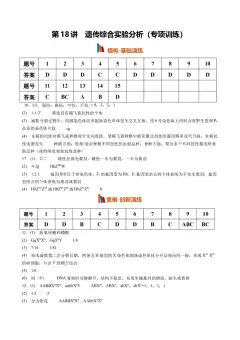
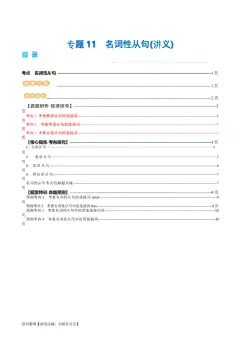
专题21  宾语从句
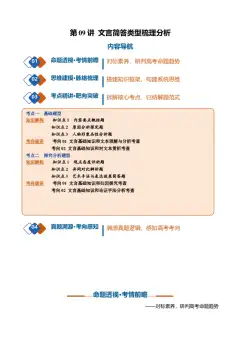
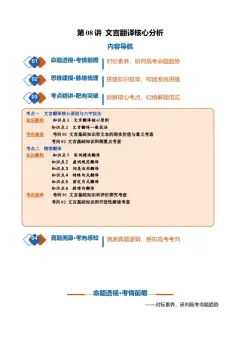
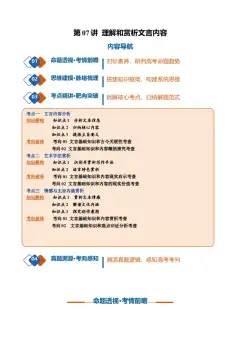
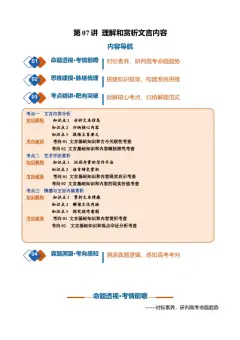
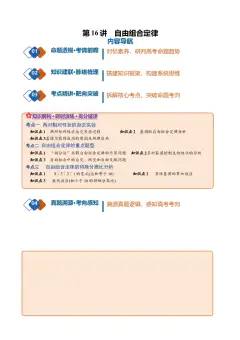
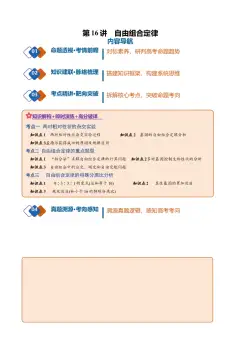
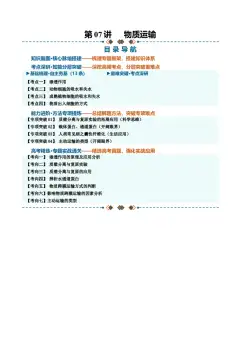
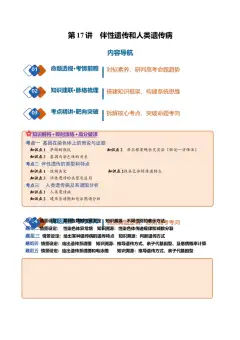
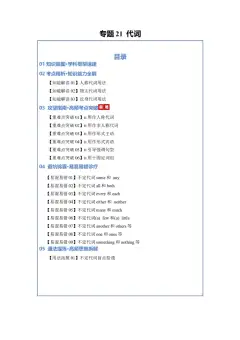
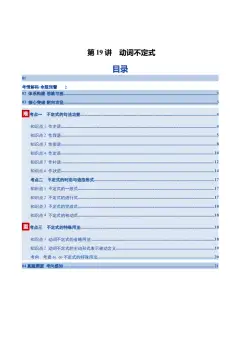
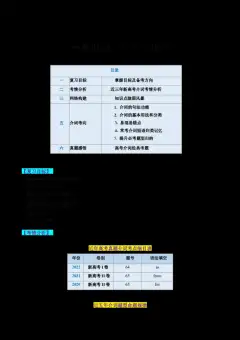
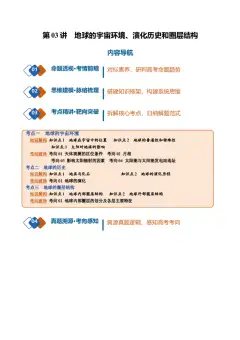
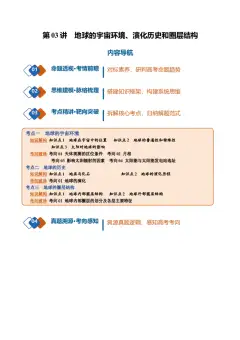
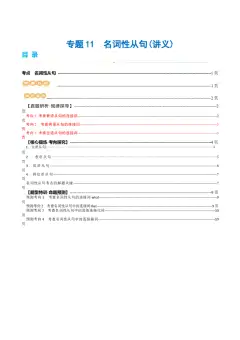
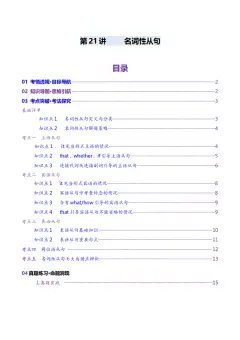
内容导航
01
命题透视·考情前瞻
对标素养,研判高考命题趋势
02
思维建模·脉络梳理
搭建知识框架,构建系统思维
03
考点精讲·靶向突破
拆解核心考点,归纳解题范式
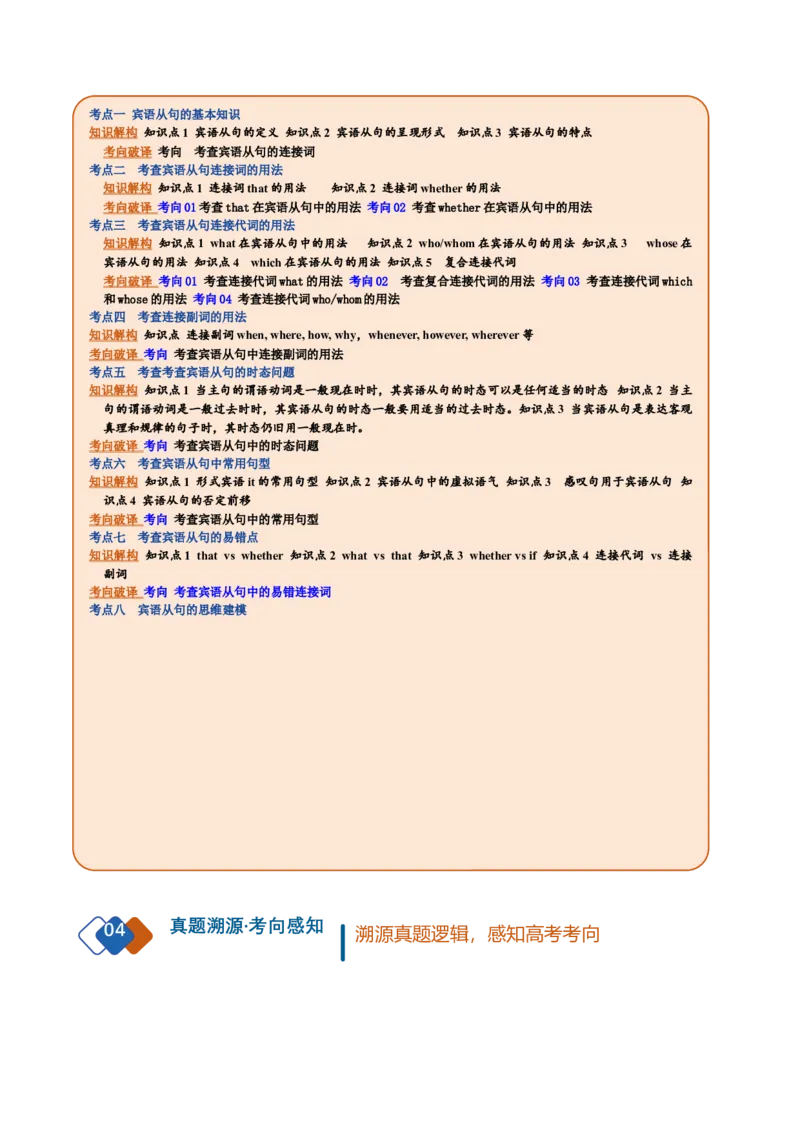
考点一 宾语从句的基本知识
知识解构 知识点1 宾语从句的定义 知识点2 宾语从句的呈现形式  知识点3 宾语从句的特点
考向破译 考向  考查宾语从句的连接词
考点二  考查宾语从句连接词的用法
知识解构 知识点1 连接词that 的用法    知识点2 连接词whether 的用法
考向破译

  考向01 考查that 在宾语从句中的用法 考向02 考查whether 在宾语从句中的用法
考点三  考查宾语从句连接代词的用法
知识解构 知识点1 what 在宾语从句中的用法   知识点2 who/whom 在宾语从句的用法 知识点3   whose 在
宾语从句的用法 知识点4  which 在宾语从句的用法 知识点5  复合连接代词
考向破译

  考向01 考查连接代词what 的用法 考向02  考查复合连接代词的用法 考向03 考查连接代词which
和whose 的用法 考向04 考查连接代词who/whom 的用法
考点四  考查连接副词的用法
知识解构 知识点 连接副词when, where, how, why,whenever, however, wherever 等
考向破译

  考向 考查宾语从句中连接副词的用法
考点五  考查考查宾语从句的时态问题
知识解构 知识点1 当主句的谓语动词是一般现在时时,其宾语从句的时态可以是任何适当的时态 知识点2 当主
句的谓语动词是一般过去时时,其宾语从句的时态一般要用适当的过去时态。知识点3 当宾语从句是表达客观
真理和规律的句子时,其时态仍旧用一般现在时。
考向破译

  考向 考查宾语从句中的时态问题
考点六  考查宾语从句中常用句型
知识解构 知识点1 形式宾语it 的常用句型 知识点2 宾语从句中的虚拟语气 知识点3  感叹句用于宾语从句 知
识点4 宾语从句的否定前移
考向破译

  考向 考查宾语从句中的常用句型
考点七  考查宾语从句的易错点
知识解构 知识点1 that vs whether 知识点2 what vs that 知识点3 whether vs if 知识点4 连接代词 vs 连接
副词
考向破译

  考向 考查宾语从句中的易错连接词
考点八  宾语从句的思维建模
04
真题溯源·考向感知
溯源真题逻辑,感知高考考向
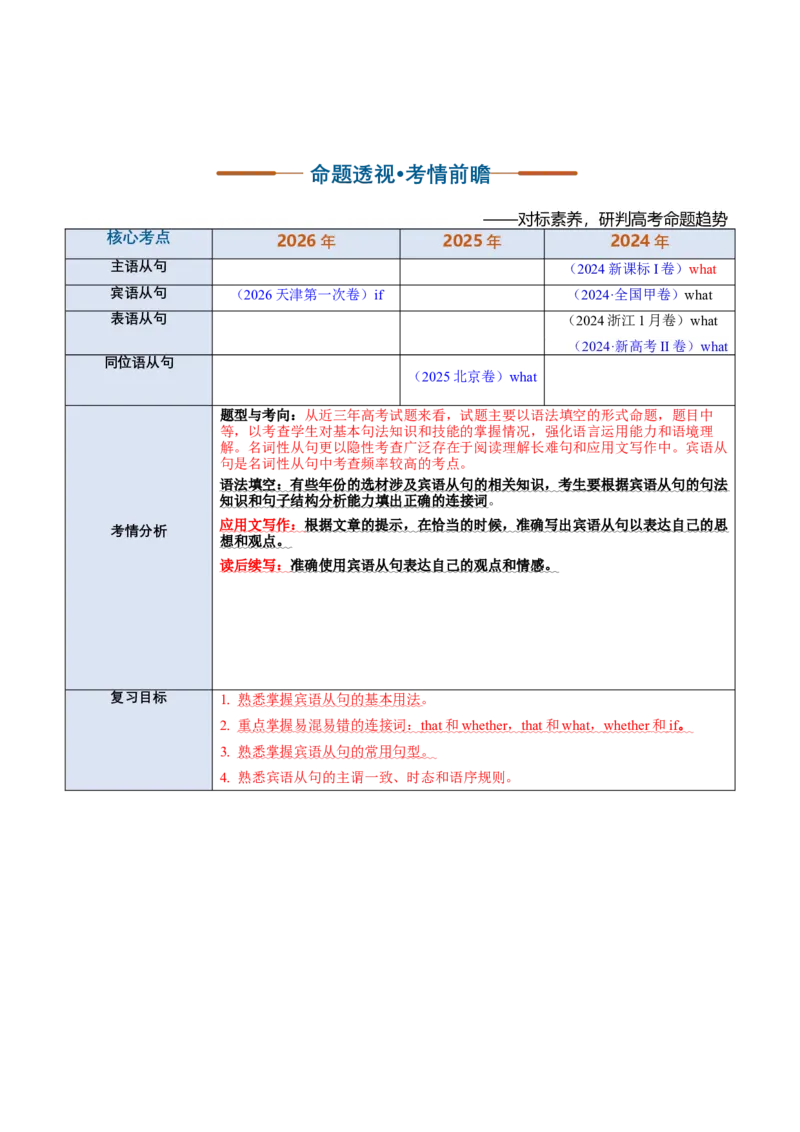
命题透视·考情前瞻
——对标素养,研判高考命题趋势
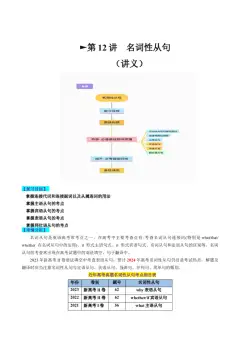
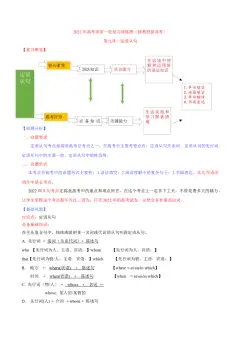
核心考点
2026 年
2025 年
2024 年
主语从句
(2024 新课标I 卷)what
宾语从句
(2026 天津第一次卷)if
(2024·全国甲卷)what
表语从句
(2024 浙江1 月卷)what
(2024·新高考II 卷)what
同位语从句
(2025 北京卷)what
考情分析
题型与考向:从近三年高考试题来看,试题主要以语法填空的形式命题,题目中
等,以考查学生对基本句法知识和技能的掌握情况,强化语言运用能力和语境理
解。名词性从句更以隐性考查广泛存在于阅读理解长难句和应用文写作中。宾语从
句是名词性从句中考查频率较高的考点。
语法填空:

 有些年份的选材涉及

 宾语

 从句的相关知识,考生要根据

 宾语

 从句的句法


知识和句子结构分析能力填出正确的连接词。
应用文写作

 :
  根据文章的提示,在恰当的时候,准确写出宾语从句以表达自己的思


想和观点。
读后续写:

 准确使用宾语从句表达自己的观点和情感。


复习目标
1. 熟悉掌握宾语从句的基本用法。
2. 重点掌握

 易混易错的连接词:

 that
   和
  whether

 ,
  that
  和
   what

 ,
  whether

 和
  if  。

3. 熟悉掌握宾语从句的常用句型

 。

4. 熟悉宾语从句的主谓一致、时态和语序规则。
思维建模·脉络梳理
——搭建知识框架,构建系统思维
考点精讲·靶向突破
——拆解核心考点,归纳解题范式

考点一  宾语从句的基本知识
知●识●解●构
知识点1 宾语从句的定义:在复合句中,用作宾语的从句叫做宾语从句。它可以作谓语动词的宾
语, 也可以作介词的宾语,还能作非谓语动词(动词不定式、动名词等)的宾语。
知识点2  宾语从句的呈现形式:
①及物动词后作宾语:主语 + 及物动词 + 宾语从句;(最常见形式)
②介词后作宾语:主语 + 介词 + 宾语从句;
③形容词后作宾语:主语 + be 动词 + 形容词 + 宾语从句。
知识点3  宾语从句的特点:
①从句不能单独成句,必须充当主句中谓语动词、介词或形容词的宾语,依附于主句存在;
②从句由引导词引导,引导词不充当主句成分,只连接主句和宾语从句,部分引导词在从句中充当一定成
分;
③宾语从句通常位于主句谓语动词之后(及物动词后)、介词之后,或某些形容词(如sure, glad, afraid
等)之后;
④宾语从句的时态需与主句时态呼应,语序必须用陈述语序。
核心组成:主句(谓语动词/介词/形容词) + 引导词 + 宾语从句(陈述语序)
知识点4  引导词分类:
①连接词(不充当从句成分,只起连接作用):that(无含义)、whether/if(是否,表选择);
② 连接代词(在从句中充当主语、宾语、表语、定语):what(……的事情/东西)、who(谁,指人)、
whom(谁,指人,作宾语)、whose(……的,表所属)、which(哪一个,表选择)、whoever(无论
谁)、whatever(无论什么)、whichever(无论哪一个);
③连接副词(在从句中充当状语):when(什么时候)、where(在哪里)、why(为什么)、how(如
何,怎样)、whenever(无论何时)、wherever(无论何地)、however(无论怎样)。
考●向●破●译
考向  考查宾语从句的连接词
1.He was upset          the group chat excluded him from conversations.
2.It increases confidence and independence, offers you a chance to learn new crafts, and gives you time to reflect
on           university is right for you.
3.The photograph will show you          our village looks like.
4.One author mentions             she has always liked ambitious people because she finds talking with those
people is interesting.
5.Researchers hope this new site can tell people           money developed.
考点二 考查宾语从句连接词的用法(高考高频考点)
知●识●解●构
知识点1 连接词that 的用法
核心功能:无实际含义,只起连接作用,不充当从句任何成分;引导的宾语从句语义完整,无需补充信
息。
关键注意点:
- 位于及物动词后时,that 可省略(最常用形式);
- 位于介词后、形容词后时,that 不可省略;
- 当主句谓语动词是think, believe, suppose, expect 等表“认为、猜想”的词时,从句的否定需转移到主句
(否定转移,高频易错点)。
I believe (that) he will come to the party.(及物动词后,that 可省略)
I am sure that he will come to the party.(形容词后,that 不可省略)
I don’t think (that) he will come to the party.(否定转移,译:我认为他不会来派对)
知识点2 连接词whether 的用法
核心功能:有实际含义“是否”,起连接作用,不充当从句成分;引导的宾语从句语义不完整,存在
“是/否”的选择。
关键注意点:
- 多数情况下可互换(及物动词后,无or not 时);
- 不可互换的3 种情况(易错点):① 位于介词后,只能用whether,不能用if;② 后接or not 时,只能
用whether(whether...or not);③ 位于不定式(to do)前,只能用whether。
I don’t know whether/if he will attend the meeting.(及物动词后,无or not,可互换)
I am worried about whether he will attend the meeting.(介词后,只能用whether)
I don’t know whether he will attend the meeting or not.(后接or not,只能用whether)
He hasn’t decided whether to go hiking tomorrow.(不定式前,只能用whether)
考●向●破●译
考向一  考查that 在宾语从句中的用法
1.We know that honesty is an important value and          lying is wrong, but who honestly say that they have
never told a lie?
2.Educationalists argue          teachers should ask proper questions to provoke students’ creativity.
考向二  考查whether 在宾语从句中的用法
1. According to the theory, spending 20 minutes in a park daily helps to reduce stress, regardless of       people
exercise in it or simply take a walk.
2.She wondered          her favorite singer would perform at the concert tonight.
考点三  考查宾语从句连接代词的用法(高考高频考点)
知●识●解●构
知识点1 what 在宾语从句中的用法
含义:“……的事情”“……的东西”“……的内容”,在从句中常作主语、宾语、表语,指代事物。
例句:
I didn’t hear what he said at the meeting.(what 在从句中作宾语,指代“他说的话”)
She told me what matters most is our attitude.(what 在从句中作主语,指代“最重要的事情”)
知识点2  who/whom 在宾语从句的用法
含义:who“谁”(指人),在从句中作主语;whom“谁”(指人),在从句中作宾语(口语中可被who
替代)。
I don’t know who will be our new teacher.(who 在从句中作主语)
He asked me whom we should ask for help.(whom 在从句中作宾语,可替换为who)
知识点3  whose 在宾语从句的用法
含义:“……的”,表所属关系,在从句中作定语,后接名词,可指代人或物。
例句:
She asked me whose book was lost in the classroom.(whose 指代人,修饰book,作定语)
I don’t know whose car is parked in front of our house.(whose 指代物,修饰car,作定语)
知识点4  which 在宾语从句的用法
含义:“哪一个”,表选择,在从句中作主语、宾语、定语,指代人或物(有明确的选择范围)。
He asked me which team will win the game.(which 在从句中作主语,有明确选择范围“参赛队伍”)
I can’t decide which one I will choose.(which 在从句中作宾语)
知识点5  复合连接代词(whoever/whatever/whichever)
含义:“无论谁”“无论什么”“无论哪一个”,表让步,在从句中作主语、宾语、定语,语气比普通连
接代词更强,可引导宾语从句(区别于主语从句:此处无“不能用no matter...结构”的限制,但no
matter...结构更常用于状语从句)。
I will support whoever breaks the rules will be punished.(无论谁违反规则,我都会支持惩罚他。whoever
在从句中作主语)
She will accept whatever he does.(无论他做什么,她都会接受。whatever 在从句中作宾语)
You can choose whichever way you like.(无论你喜欢哪条路,都可以选择。whichever 在从句中作定语)
考●向●破●译
考向一  考查连接代词what 的用法(高频考点)
1.Since he is a typical liar, for you own sake, you should not take          he says seriously.
2.I looked out the window of the bus and dreamed about________we would do while on our trip.
3. The experiment allowed students to get a taste of_______it was like to live in outer space.
考向二  考查复合连接代词的用法。
1. The files can’t be helpful to _________ takes over the job.
2.You could choose        book you want.
3. I told myself I would be satisfied with __________ I could get.
考向三  考查连接代词which 和whose 的用法。
1.There were varieties of brands on the car show, but I didn’t know________was most suitable for me.
2. He didn’t tell me _____ keys were lost.
考向四  考查连接代词who/whom 的用法。
1. You probably know ________ Marie Curie was, but you may not have heard of Rachel Carson.
2. I don’t know ______ book is stolen.
考点四  考查连接副词的用法
知●识●解●构
知识点  连接副词的用法(核心:充当从句状语)
核心功能:既起连接作用,又在宾语从句中充当时间、地点、原因、方式状语,需根据从句语义和成分选
择(用法与主语从句基本一致,重点注意语序和时态呼应)。
1. when/where/why
含义:when“什么时候”(时间状语)、where“在哪里”(地点状语)、why“为什么”(原因状语)。
例句:
I don’t know when we will start the trip.(when 在从句中作时间状语)
He told me where we will hold the party.(where 在从句中作地点状语)
I want to know why he was absent from school yesterday.(why 在从句中作原因状语)
2. how
含义:“如何,怎样”,在从句中作方式状语,也可表示“多么”(修饰形容词/副词,表程度)。
例句:
She taught me how we can solve this problem.(how 在从句中作方式状语,表“如何解决”)
I was surprised at how fast he improved his English.(how 修饰fast,表程度,“多么快”)
3. 复合连接副词(whenever/wherever/however)
含义:“无论何时”“无论何地”“无论怎样”,表让步,在从句中作状语。
例句:
Please call me whenever you come.(无论你什么时候来,都请给我打电话,whenever 作时间状语)
He said he would follow me wherever we go.(无论我们去哪里,他都会跟着我,wherever 作地点状语)
I will help him however hard he tries.(无论他多么努力,我都会帮助他,however 修饰hard,作方式状
语)
考●向●破●译
考向  考查宾语从句中连接副词的用法
1.By boat is the only way to get here, which is________ we arrived.
2.What students do at college seems to matter much more than________they go.
3.Save your apology for________ you really make everything a mess.
4. Concerned about the student, Mr. Liu called his parents to find out _______ he didn’t go to school this
afternoon.
考点五  考查宾语从句的时态问题
知●识●解●构
知识点1 当主句的谓语动词是一般现在时时,其宾语从句的时态可以是任何适当的时态。
She says (that) she works from Monday to Friday. 她说她周一至周五上班。(从句是一般现在时)
she says (that) she will leave a message on his desk. 她说她要在他桌子上留个便条。(从句是一般将来时)
She says (that) she has never been to Mount Emei. 她说她从来没有去过峨眉山。(从句是现在完成时)
知识点2 当主句的谓语动词是一般过去时时,其宾语从句的时态一般要用适当的过去时态。
He said there were no classes yesterday afternoon. 他说昨天下午没有课。(从句是一般过去时)
He said that he was going to take care of the baby. 他说他会去照看这个婴儿。(从句
过去将来时)
He said that they were having a meeting at that time. 他说他们那时正在开会。(从句是过去进行时)
知识点3 当宾语从句是表达客观真理和规律的句子时,其时态仍旧用一般现在时。
The teacher told us that nothing is difficult if we put our hearts into it. 老师告诉我们世上无难事,只怕有心人。
He said that light travels much faster than sound. 他说光比声音传播得快。
考●向●破●译
考向 考查宾语从句中的时态问题
1.Arriving at the party in a great hurry, we were disappointed to find that the band          (stop) playing.
3. She told me that the plane __________(take) off at 8:00 a.m.
3.The teacher said that the sun          (rise) from the east.
考点六 考查宾语从句中常用句型
知●识●解●构
知识点 1 形式宾语it 的常用句型。
①动词 + it +形容词/名词+从句:动词find,feel,think,consider,make,believe,guess,suppose,
assume 等后有宾语补足语时,则需要用it 作形式宾语,而将that 宾语从句后置。
I think it necessary that we take plenty of boiled water every day. 我认为每天多喝开水是有必要的。
I have made it a rule that I keep diaries. 我每天写日记成了惯例
②动词+ it +从句:hate,like,take,owe,have,take for granted 等表示"喜欢;痛恨;认为"的动词或
动词短语和see to 表示"注意,留意"后有宾语补足语时,需要用it 作形式宾语而将宾语从句后置。
I hate it when they talk with their mouth full of food. 我讨厌他们满嘴食物说话。
When you start the engine, you must see to it that the car is in neutral. 启动发动机时,一定要使汽车的离合器
处于空档位置。
③动词短语+ it +that 从句:常用于该句型的动词短语有depend on, rely on, count on, answer for 等,it
作形式宾语,后面的that 从句是真正的宾语。
You may depend on it  that he will come to help you. 你可以相信他会来帮助你的。
知识点 2 宾语从句中的虚拟语气句型。
特殊用法
构成
表示建议、要求、命令等动词后的
宾语从句,从句谓语动词用
“should +动词原形”,should 可省
略。常见动词:suggest, recommend,
demand, require, insist, order, propose
等。
The teacher suggested that we (should) read more books.
老师建议我们多读些书。
He insisted that she (should) accept the offer.
他坚持让她接受这个提议。
 I wish that…后的宾语从句,表示
与现在事实相反,从句谓语用一般
过去时;与过去事实相反用过去完
成时。
I wish I were a bird. 我希望我是一只鸟。
She wishes she had studied harder.
她希望自己当初学习更努力。
would rather that…宾语从句表示
“宁愿某人做某事”, 表示与现在
或将来事实相反,从句谓语用一般
过去时;与过去事实相反用过去完
成时。
I'd rather you came tomorrow. 我宁愿你明天来。
She'd sooner he hadn't said that.
她宁愿他没说过那样的话。
知识点 3 感叹句用于宾语从句。
①主句+what+a(n)+形容词+名词+主语+谓语。
感叹句用于宾语从句时,用陈述语序;what 的中心名词必须是名词;名词区分不可数名词以及可数名词单
复数。
She said what a lovely song it was. 她说那是一首多么动听的歌啊。
I know what an interesting book you have bought! 我知道你买了一本多么有趣的书!
②主句+how+形容词/副词+主语+谓语。
She thought how beautiful the city was. 她认为这座城市多么美丽。
We are talking about how amazing the movie is. 我们在谈论这部电影有多精彩。
知识点 4 宾语从句的否定前移。
宾语从句的否定转移。将think,believe,suppose,expect,fancy,imagine 等动词后面宾语从句的否定词
转移到主句中,即主句的谓语动词用否定式,而从句的谓语动词用肯定式。
I don’t think I know you. 我想我并不认识你。
I don’t believe he will come. 我相信他不会来。
考●向●破●译
考向 考查宾语从句中的常用句型
1.The teacher suggests that we            remember English words by reading them aloud instead of by just
seeing and writing them.
2.It’s rare to hear someone say, “I wish that speaker              (speak) longer.”
3.The doctor insisted that the patient was badly hurt and that he          (operate) on at once.
4.To give full play to family gatherings, the Spring Festival lasts for 15 days, ending with the Lantern Festival.
Many people consider        a great opportunity to taste traditional cuisine such as dumplings, sticky rice cakes,
and fried meatballs, and share the joy of the festival with their loved ones.
5.I hate              when people speak with their mouths full.
6. I can’t imagine ________excited she was when she received your letter and presents.
7. You can rely on it ________ he will take good care of your pet dog while you’re away.
考点 七 宾语从句的易错点
知●识●解●构
知识点1  that vs whether/if(高频辨析)
看从句语义:语义完整(无“是否”含义)→ 用that;
语义不完整(有“是否”选择)→ 用whether/if;
看位置/搭配:介词后、or not 后、不定式前 → 用whether,不用if;及物动词后无特殊搭配 → 可互换;
特殊注意:that 引导的宾语从句,否定可转移(仅限think, believe 等词后);whether/if 引导的宾语从句,
否定不转移。
例句对比:
I believe that he succeeded.(语义完整,用that;否定转移:I don’t believe that he succeeded.)
I don’t know whether/if he succeeded.(语义不完整,表“是否成功”,用whether/if;否定不转移)
知识点2  what vs that(高频易错点)
that:无含义,不充当从句成分,只起连接作用,从句语义完整;
what:有含义(“……的事情/东西”),在从句中充当主语、宾语、表语,从句语义不完整(缺成分)。
例句对比(易错警示):
I didn’t hear that he said at the meeting.(错误:从句缺宾语,that 不能充当宾语)
I didn’t hear what he said at the meeting.(正确:what 在从句中作宾语,指代“他说的话”)
I heard that he spoke at the meeting.(正确:从句“he spoke at the meeting”语义完整,that 只起连接作
用)
知识点3  whether vs if(宾语从句中,3 个禁止用if 的情况)
1. 宾语从句位于介词后时,只能用whether,不能用if;
2. 宾语从句后接or not 时,只能用whether,不能用if;
3. 宾语从句位于不定式(to do)前时,只能用whether,不能用if。
例句对比:
I am thinking about whether he will come or not.(正确:介词后+or not,用whether)
I am thinking about if he will come or not.(错误:介词后+or not,不能用if)
He doesn’t know whether to go or stay.(正确:不定式前,用whether)
He doesn’t know if to go or stay.(错误:不定式前,不能用if)
知识点4 连接代词 vs 连接副词
判断口诀:从句缺主语、宾语、表语、定语 → 用连接代词;从句缺时间、地点、原因、方式状语 → 用
连接副词。(与主语从句完全一致)
例句对比:
I don’t know how we will get there.(从句“we will get there”缺方式状语 → 用how,连接副词)
I don’t know what we will take there.(从句“we will take there”缺宾语 → 用what,连接代词)
I don’t know when we will get there.(从句缺时间状语 → 用when,连接副词)
考●向●破●译
考向  考查宾语从句中的易错连接词
1.As a graduate, he doesn’t know            it needs to start a business here.
2.For a few months after the “library” opened, I didn't bother taking a look, as I had assumed          it would
be stuffed full of cheese love stories.
3.The historian believed steam power was the key to industrial revolution and          the period brought
about the appearance of an urban working class.
4.This has proved to have a negative effect on          you think of your physical appearance.
5.To be honest, I doubt           they will finish the hard task in two days.
6.I don’t know          he will come          not. (用适当的词填空)
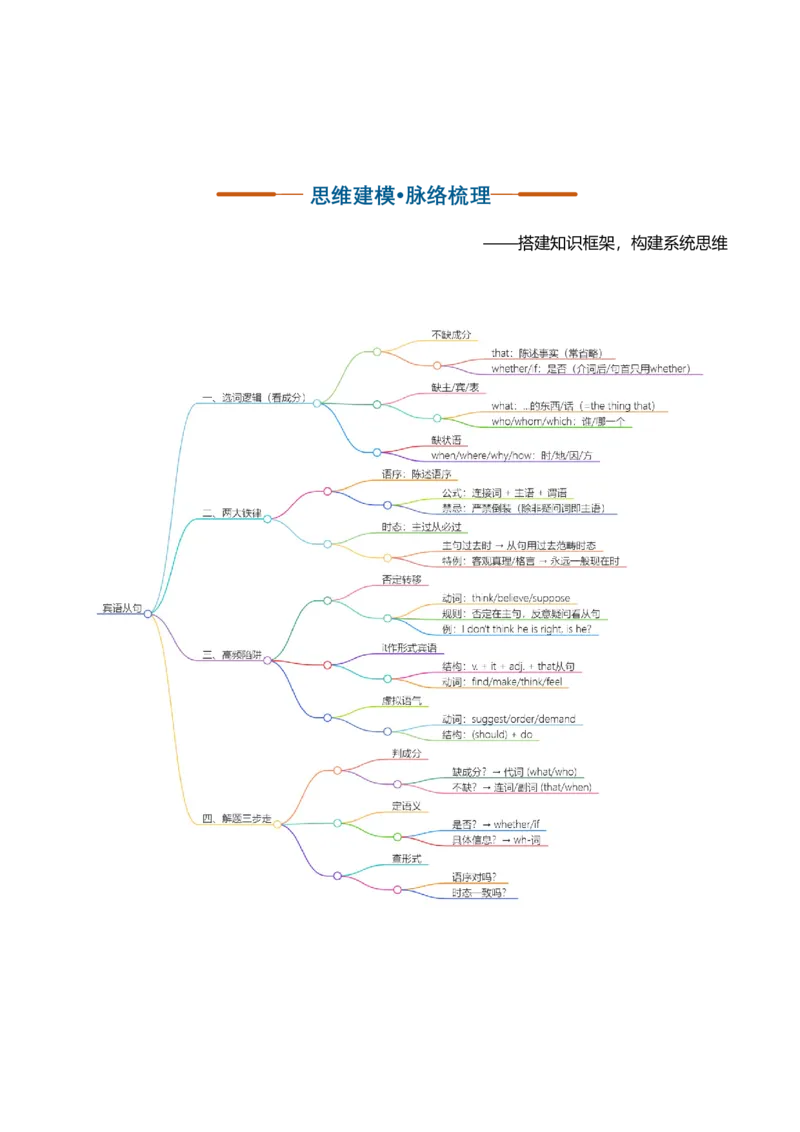
考点八 宾语从句的思维建模
思维建模


✅技巧1:判断是否为宾语从句:看从句是否充当主句的谓语动词、介词或形容词的宾语(位于及物动
词后、介词后、be+形容词后);

✅技巧2:分析宾语从句成分:看从句中缺少什么成分(主语、宾语、表语、定语 → 连接代词;状语
→ 连接副词;不缺成分 → 连接词that/whether/if);

✅技巧3:检查语序和时态:确保从句用陈述语序,时态与主句呼应(客观真理除外),结合句意选择
引导词。
1. 宾语从句必须用陈述语序:即“引导词 + 主语 + 谓语”,不能用疑问语序;
2. 时态呼应:
主句用一般现在时,从句可根据句意用任意时态;
主句用一般过去时,从句需用相应的过去时态(一般过去时、过去进行时、过去完成时等);从句表
客观真理、永恒事实时,无论主句时态如何,从句都用一般现在时;
3. if 和whether 的区别:介词后、or not 后、不定式前,只能用whether;
4. 否定转移:仅适用于think, believe, suppose, expect 等表“认为、猜想”的动词,从句否定转移到主
句;
5. 连接代词whose 后必须接名词,不能单独使用(如:I don’t know whose is missing 错误,应为I
don’t know whose book is missing);
6. that 的省略:及物动词后可省略,介词后、形容词后不可省略。
真题溯源·考向感知
——溯源真题逻辑,感知高考考向
单句填空 在空白处填入1 个适当的单词或括号内单词的正确形式。
1.(2026·天津第一次高考改编)Researcher still wondered ______ the new medicine would be effective on
animals.
2.(2024 新课标I 卷) On a cool, starry night in mid-September 1870, four men relaxed before a campfire along
the Firehole River in         is now northwestern Wyoming.
3.(2023 天津3 月卷)People who value their privacy are concerned about _________Google might do with the
information it is gathering.
4.(2022 年浙江1 月卷)Cobb, for her party, started to ask conference organizers who invited her to speak
______ she could do so remotely.
5.(2022 新课标II 卷)He saved my son’s life," said Mrs. Brown. "I don't know _________ to thank him.”
6.(2021 年北京卷)The poor woman wasn't able to give him any information about ________ she lived.
7.(2020 年浙江卷)Over thousands of years,they began to depend less on ______ could be hunted or gathered
from the wild,and more on animals they had raised and crops they had sown.
8.(2020 年北京卷)Oliver says if you're lucky enough to have someone close to you who enjoys cooking, ask
them __________you can join in when it's possible.