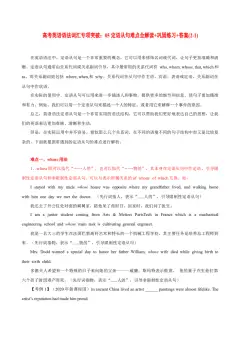
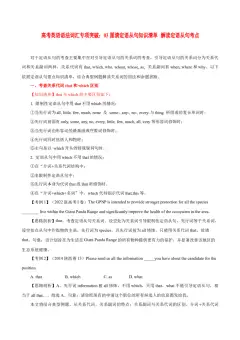
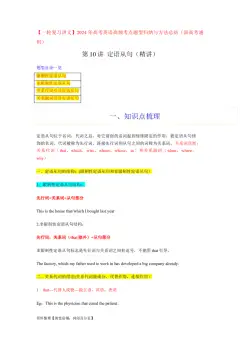
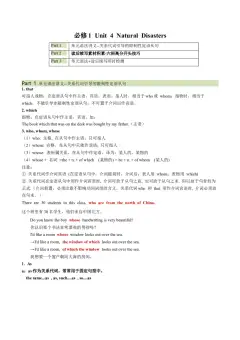
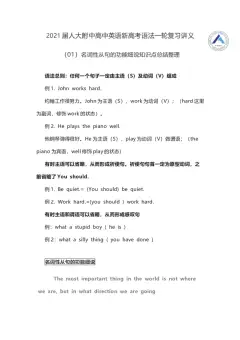
初高中英
定
从句知
点整理
语
语
识
讲义
依据“定
从句
件”和“高二期中复
”整理,
充初高中常考、易
与高考
合考法
语
课
习讲义
补
错
综
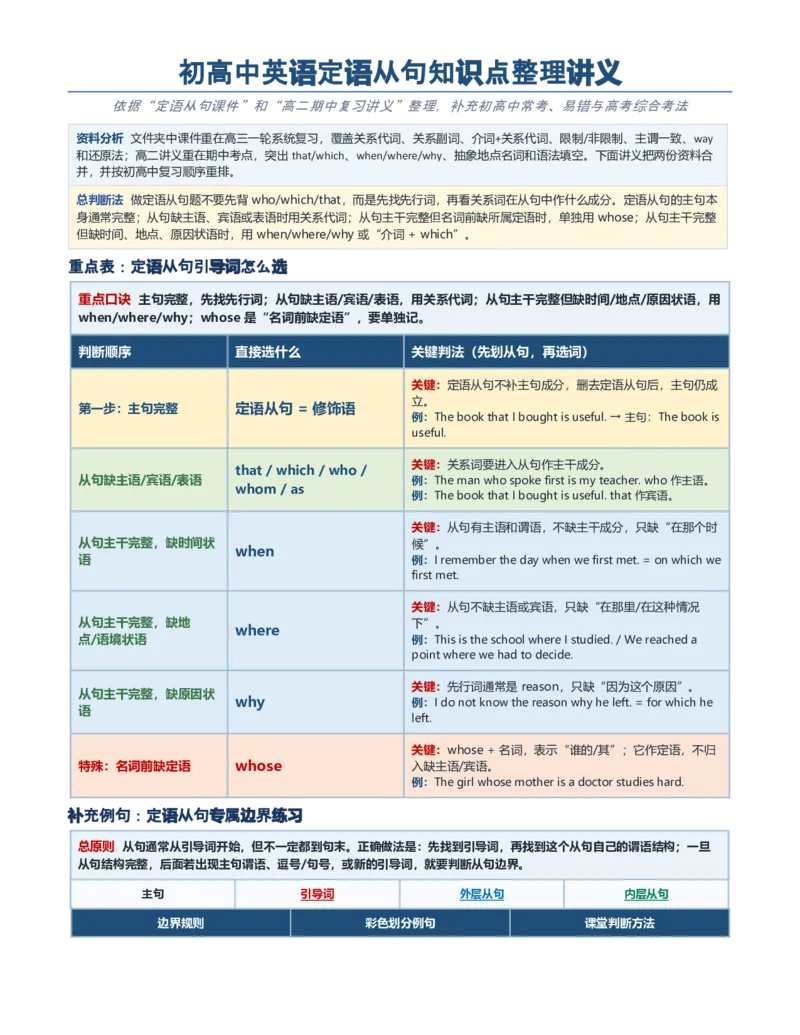
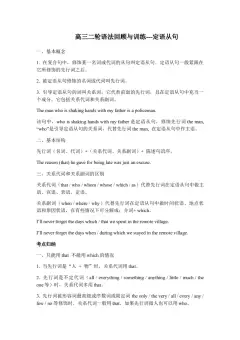
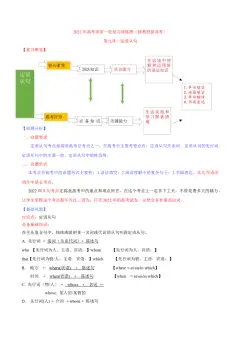
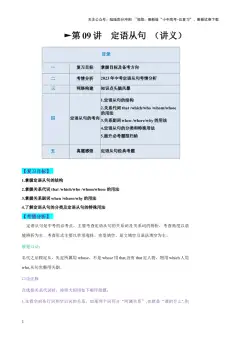
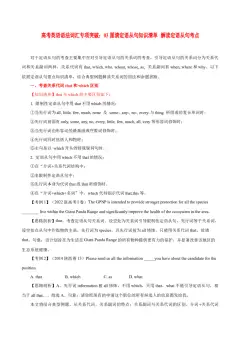
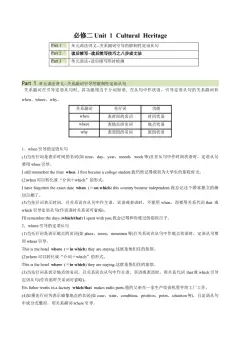
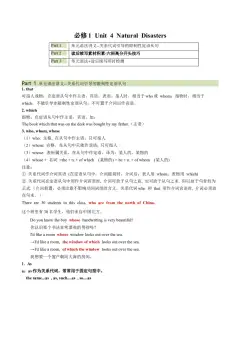
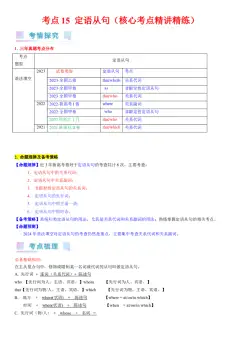
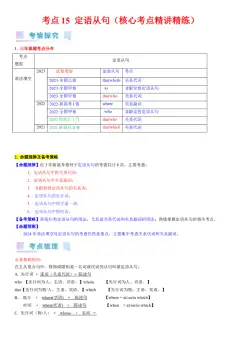
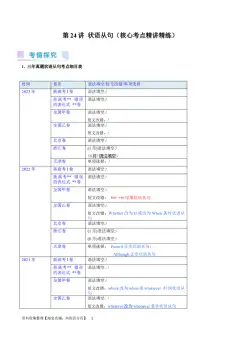
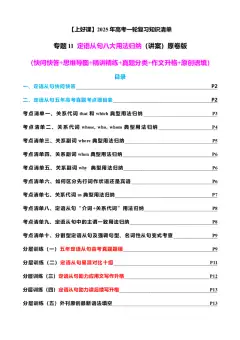
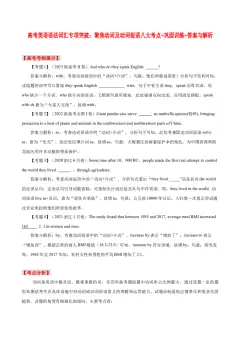
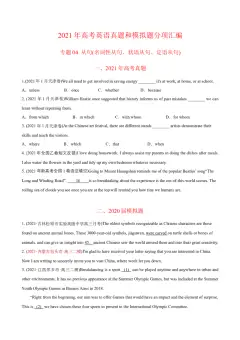
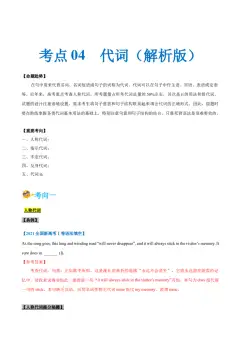
资料分析  文件夹中课件重在高三一轮系统复习,覆盖关系代词、关系副词、介词+关系代词、限制/非限制、主谓一致、way
和还原法;高二讲义重在期中考点,突出 that/which、when/where/why、抽象地点名词和语法填空。下面讲义把两份资料合
并,并按初高中复习顺序重排。
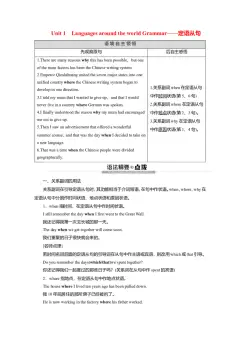
总判断法  做定语从句题不要先背 who/which/that,而是先找先行词,再看关系词在从句中作什么成分。定语从句的主句本
身通常完整;从句缺主语、宾语或表语时用关系代词;从句主干完整但名词前缺所属定语时,单独用 whose;从句主干完整
但缺时间、地点、原因状语时,用 when/where/why 或“介词 + which”。
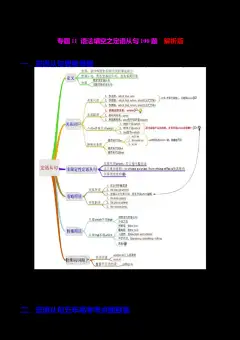
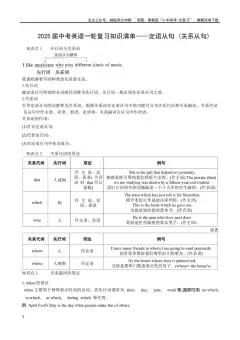
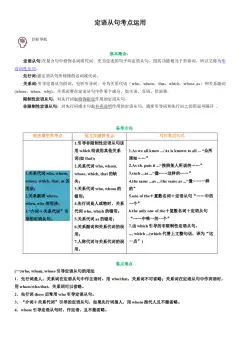
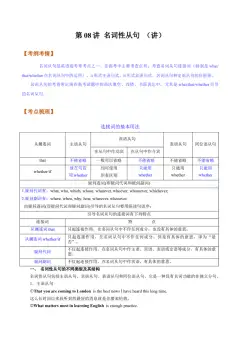
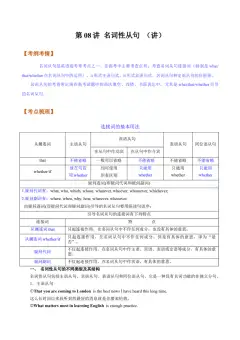
重点表:定
从句引
怎么
语
导词
选
重点口诀  主句完整,先找先行词;从句缺主语/宾语/表语,用关系代词;从句主干完整但缺时间/地点/原因状语,用
when/where/why;whose 是“名词前缺定语”,要单独记。
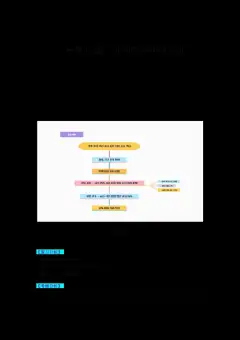
判断顺序
直接选什么
关键判法(先划从句,再选词)
第一步:主句完整
定语从句 = 修饰语
关键:定语从句不补主句成分,删去定语从句后,主句仍成
立。
例:The book that I bought is useful. → 主句:The book is
useful.
从句缺主语/宾语/表语
that / which / who /
whom / as
关键:关系词要进入从句作主干成分。
例:The man who spoke first is my teacher. who 作主语。
例:The book that I bought is useful. that 作宾语。
从句主干完整,缺时间状
语
when
关键:从句有主语和谓语,不缺主干成分,只缺“在那个时
候”。
例:I remember the day when we first met. = on which we
first met.
从句主干完整,缺地
点/语境状语
where
关键:从句不缺主语或宾语,只缺“在那里/在这种情况
下”。
例:This is the school where I studied. / We reached a
point where we had to decide.
从句主干完整,缺原因状
语
why
关键:先行词通常是 reason,只缺“因为这个原因”。
例:I do not know the reason why he left. = for which he
left.
特殊:名词前缺定语
whose
关键:whose + 名词,表示“谁的/其”;它作定语,不归
入缺主语/宾语。
例:The girl whose mother is a doctor studies hard.
充例句:定
从句
属
界
补
语
专
边
练习
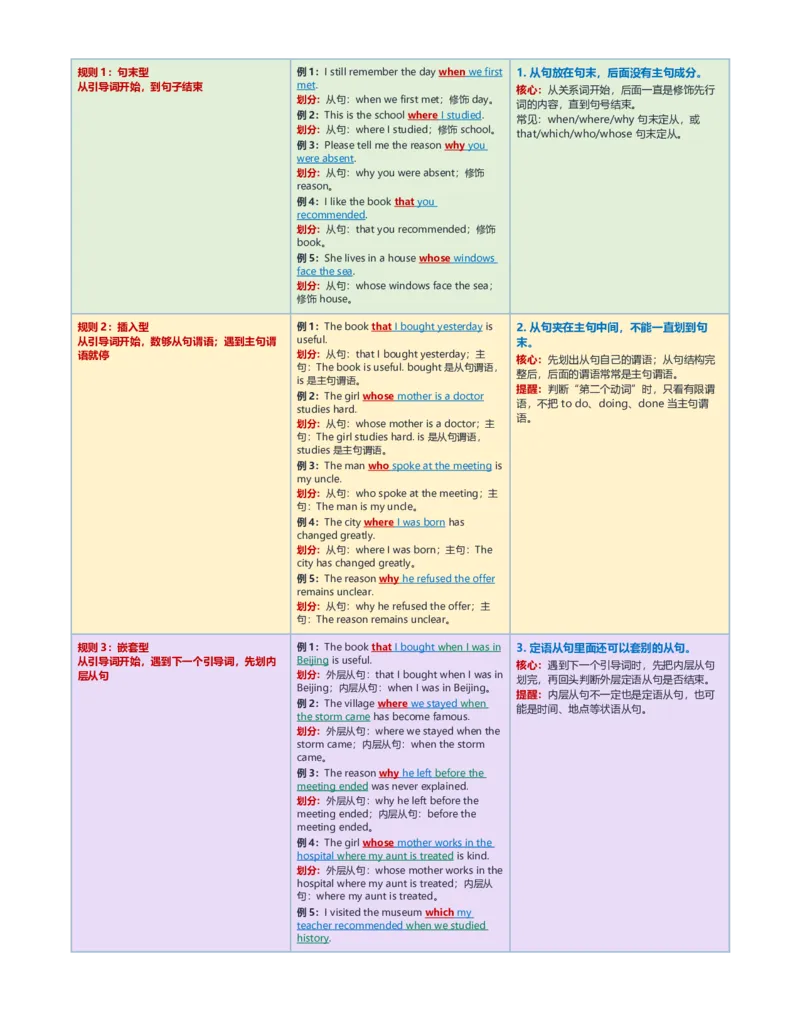
总原则  从句通常从引导词开始,但不一定都到句末。正确做法是:先找到引导词,再找到这个从句自己的谓语结构;一旦
从句结构完整,后面若出现主句谓语、逗号/句号,或新的引导词,就要判断从句边界。
主句
引导词
外层从句
内层从句
边界规则
彩色划分例句
课堂判断方法
规则1:句末型
从引导词开始,到句子结束
例1:I still remember the day when

  we first


met.
划分:从句:when we first met;修饰 day。
例2:This is the school where

  I studied

 .
划分:从句:where I studied;修饰 school。
例3:Please tell me the reason why

  you


were absent.
划分:从句:why you were absent;修饰
reason。
例4:I like the book that

  you


recommended.
划分:从句:that you recommended;修饰
book。
例5:She lives in a house whose

  windows


face the sea.
划分:从句:whose windows face the sea;
修饰 house。
1. 从句放在句末,后面没有主句成分。
核心:从关系词开始,后面一直是修饰先行
词的内容,直到句号结束。
常见:when/where/why 句末定从,或
that/which/who/whose 句末定从。
规则2:插入型
从引导词开始,数够从句谓语;遇到主句谓
语就停
例1:The book that

  I bought yesterday

  is
useful.
划分:从句:that I bought yesterday;主
句:The book is useful. bought 是从句谓语,
is 是主句谓语。
例2:The girl whose

  mother is a doctor


studies hard.
划分:从句:whose mother is a doctor;主
句:The girl studies hard. is 是从句谓语,
studies 是主句谓语。
例3:The man who

  spoke at the meeting

  is
my uncle.
划分:从句:who spoke at the meeting;主
句:The man is my uncle。
例4:The city where

  I was born

  has
changed greatly.
划分:从句:where I was born;主句:The
city has changed greatly。
例5:The reason why

  he refused the offer


remains unclear.
划分:从句:why he refused the offer;主
句:The reason remains unclear。
2. 从句夹在主句中间,不能一直划到句
末。
核心:先划出从句自己的谓语;从句结构完
整后,后面的谓语常常是主句谓语。
提醒:判断“第二个动词”时,只看有限谓
语,不把 to do、doing、done 当主句谓
语。
规则3:嵌套型
从引导词开始,遇到下一个引导词,先划内
层从句
例1:The book that

  I bought

 when I was in


Beijing is useful.
划分:外层从句:that I bought when I was in
Beijing;内层从句:when I was in Beijing。
例2:The village where

  we stayed

 when


the storm came has become famous.
划分:外层从句:where we stayed when the
storm came;内层从句:when the storm
came。
例3:The reason why

  he left

 before the


meeting ended was never explained.
划分:外层从句:why he left before the
meeting ended;内层从句:before the
meeting ended。
例4:The girl whose

  mother works in the


hospital

 where my aunt is treated

  is kind.
划分:外层从句:whose mother works in the
hospital where my aunt is treated;内层从
句:where my aunt is treated。
例5:I visited the museum which

  my


teacher recommended

 when we studied


history.
3. 定语从句里面还可以套别的从句。
核心:遇到下一个引导词时,先把内层从句
划完,再回头判断外层定语从句是否结束。
提醒:内层从句不一定也是定语从句,也可
能是时间、地点等状语从句。
划分:外层从句:which my teacher
recommended when we studied history;内
层从句:when we studied history。
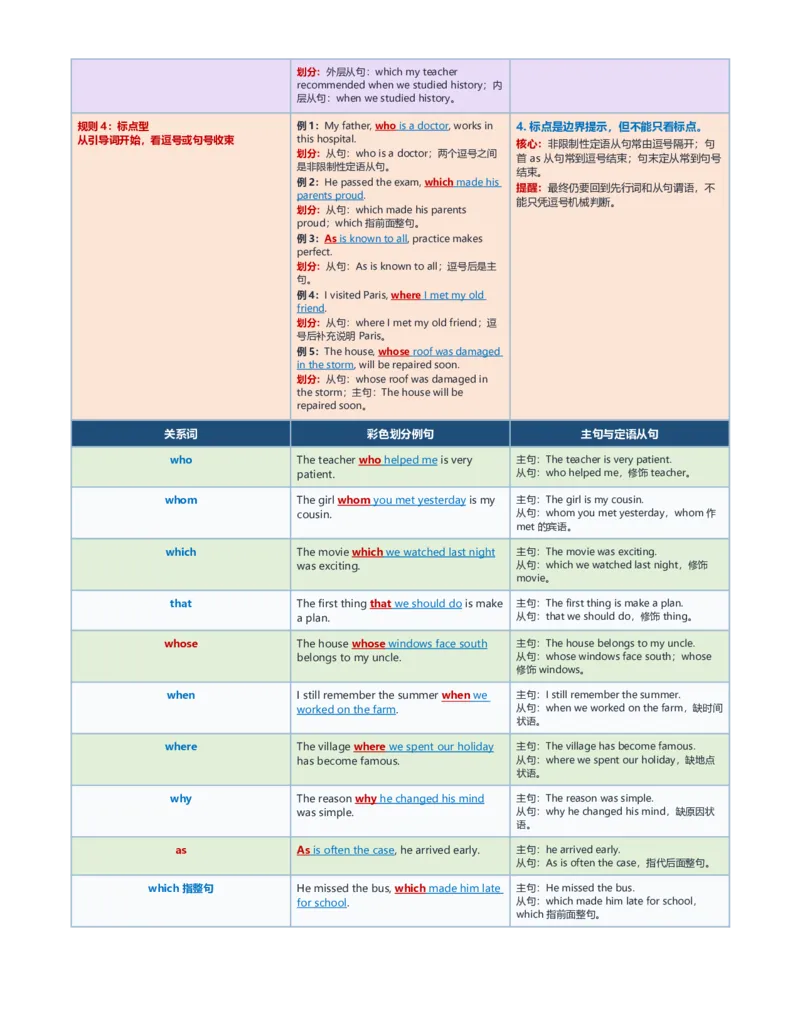
规则4:标点型
从引导词开始,看逗号或句号收束
例1:My father, who

  is a doctor

 , works in
this hospital.
划分:从句:who is a doctor;两个逗号之间
是非限制性定语从句。
例2:He passed the exam, which

  made his


parents proud.
划分:从句:which made his parents
proud;which 指前面整句。
例3:As
   is known to all

 , practice makes
perfect.
划分:从句:As is known to all;逗号后是主
句。
例4:I visited Paris, where

  I met my old


friend.
划分:从句:where I met my old friend;逗
号后补充说明 Paris。
例5:The house, whose

  roof was damaged


in the storm, will be repaired soon.
划分:从句:whose roof was damaged in
the storm;主句:The house will be
repaired soon。
4. 标点是边界提示,但不能只看标点。
核心:非限制性定语从句常由逗号隔开;句
首 as 从句常到逗号结束;句末定从常到句号
结束。
提醒:最终仍要回到先行词和从句谓语,不
能只凭逗号机械判断。
关系词
彩色划分例句
主句与定语从句
who
The teacher who

  helped me

  is very
patient.
主句:The teacher is very patient.
从句:who helped me,修饰 teacher。
whom
The girl whom

  you met yesterday

  is my
cousin.
主句:The girl is my cousin.
从句:whom you met yesterday,whom 作
met 的宾语。
which
The movie which

  we watched last night


was exciting.
主句:The movie was exciting.
从句:which we watched last night,修饰
movie。
that
The first thing that

  we should do

  is make
a plan.
主句:The first thing is make a plan.
从句:that we should do,修饰 thing。
whose
The house whose

  windows face south


belongs to my uncle.
主句:The house belongs to my uncle.
从句:whose windows face south;whose
修饰 windows。
when
I still remember the summer when

  we


worked on the farm.
主句:I still remember the summer.
从句:when we worked on the farm,缺时间
状语。
where
The village where

  we spent our holiday


has become famous.
主句:The village has become famous.
从句:where we spent our holiday,缺地点
状语。
why
The reason why

  he changed his mind


was simple.
主句:The reason was simple.
从句:why he changed his mind,缺原因状
语。
as
As
   is often the case

 , he arrived early.
主句:he arrived early.
从句:As is often the case,指代后面整句。
which 指整句
He missed the bus, which

  made him late


for school.
主句:He missed the bus.
从句:which made him late for school,
which 指前面整句。
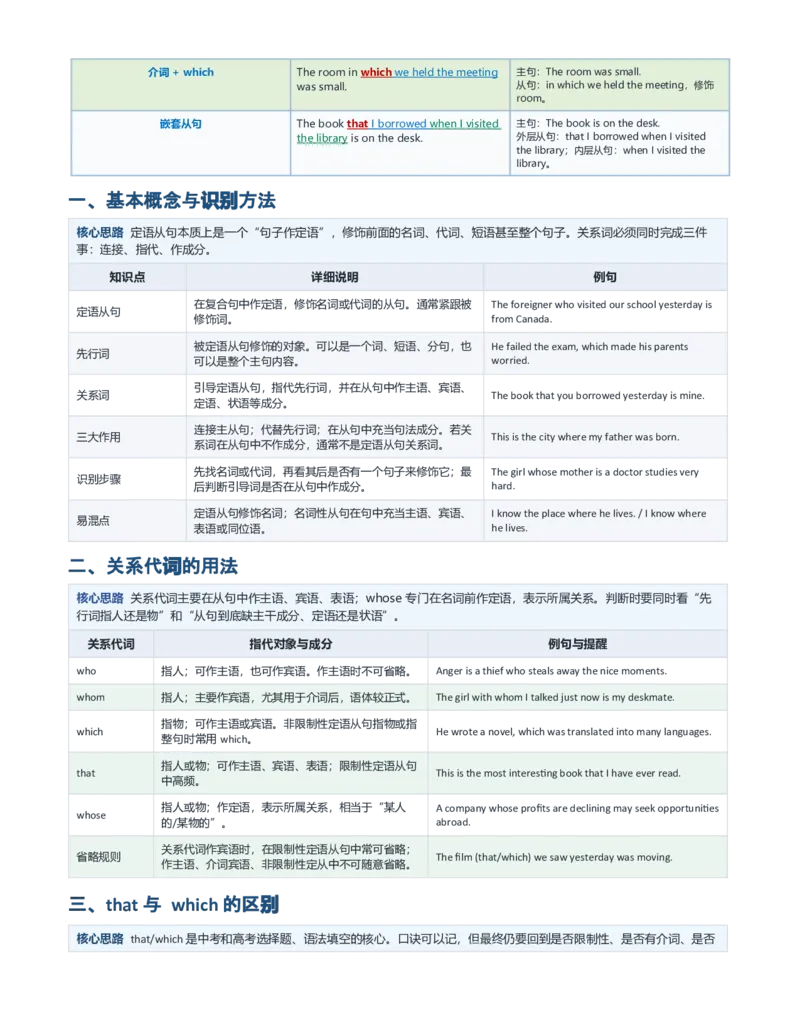
介词 + which
The room in which

  we held the meeting


was small.
主句:The room was small.
从句:in which we held the meeting,修饰
room。
嵌套从句
The book that

  I borrowed

 when I visited


the library is on the desk.
主句:The book is on the desk.
外层从句:that I borrowed when I visited
the library;内层从句:when I visited the
library。
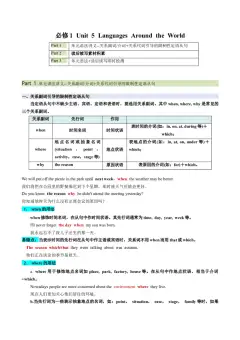
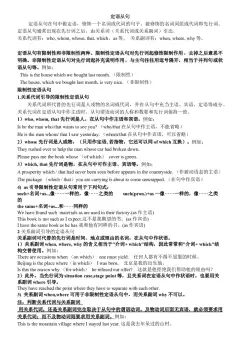
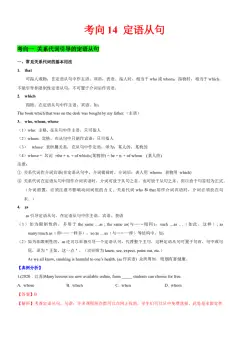
一、基本概念与
方法
识别
核心思路  定语从句本质上是一个“句子作定语”,修饰前面的名词、代词、短语甚至整个句子。关系词必须同时完成三件
事:连接、指代、作成分。
知识点
详细说明
例句
定语从句
在复合句中作定语,修饰名词或代词的从句。通常紧跟被
修饰词。
The foreigner who visited our school yesterday is
from Canada.
先行词
被定语从句修饰的对象。可以是一个词、短语、分句,也
可以是整个主句内容。
He failed the exam, which made his parents
worried.
关系词
引导定语从句,指代先行词,并在从句中作主语、宾语、
定语、状语等成分。
The book that you borrowed yesterday is mine.
三大作用
连接主从句;代替先行词;在从句中充当句法成分。若关
系词在从句中不作成分,通常不是定语从句关系词。
This is the city where my father was born.
识别步骤
先找名词或代词,再看其后是否有一个句子来修饰它;最
后判断引导词是否在从句中作成分。
The girl whose mother is a doctor studies very
hard.
易混点
定语从句修饰名词;名词性从句在句中充当主语、宾语、
表语或同位语。
I know the place where he lives. / I know where
he lives.
二、关系代
的用法
词
核心思路  关系代词主要在从句中作主语、宾语、表语;whose 专门在名词前作定语,表示所属关系。判断时要同时看“先
行词指人还是物”和“从句到底缺主干成分、定语还是状语”。
关系代词
指代对象与成分
例句与提醒
who
指人;可作主语,也可作宾语。作主语时不可省略。
Anger is a thief who steals away the nice moments.
whom
指人;主要作宾语,尤其用于介词后,语体较正式。
The girl with whom I talked just now is my deskmate.
which
指物;可作主语或宾语。非限制性定语从句指物或指
整句时常用 which。
He wrote a novel, which was translated into many languages.
that
指人或物;可作主语、宾语、表语;限制性定语从句
中高频。
This is the most interesting book that I have ever read.
whose
指人或物;作定语,表示所属关系,相当于“某人
的/某物的”。
A company whose profits are declining may seek opportunities
abroad.
省略规则
关系代词作宾语时,在限制性定语从句中常可省略;
作主语、介词宾语、非限制性定从中不可随意省略。
The film (that/which) we saw yesterday was moving.
三、that 与 which 的区别
核心思路  that/which 是中考和高考选择题、语法填空的核心。口诀可以记,但最终仍要回到是否限制性、是否有介词、是否
特殊先行词。
考点
规则
例句
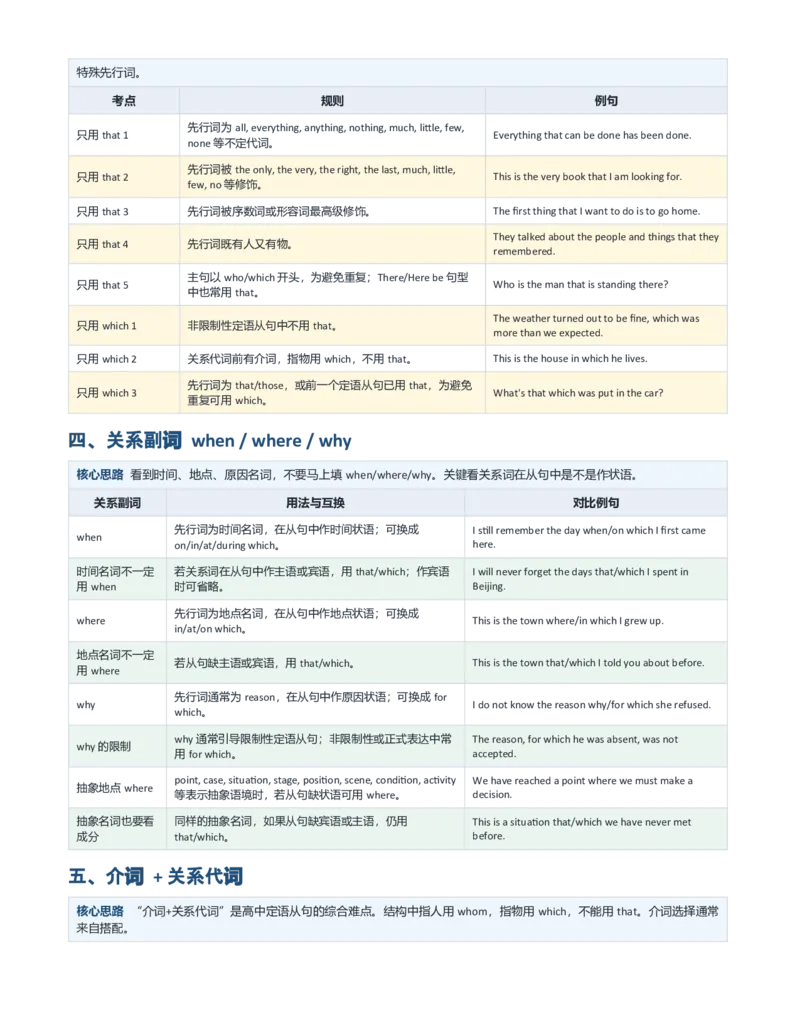
只用 that 1
先行词为 all, everything, anything, nothing, much, little, few,
none 等不定代词。
Everything that can be done has been done.
只用 that 2
先行词被 the only, the very, the right, the last, much, little,
few, no 等修饰。
This is the very book that I am looking for.
只用 that 3
先行词被序数词或形容词最高级修饰。
The first thing that I want to do is to go home.
只用 that 4
先行词既有人又有物。
They talked about the people and things that they
remembered.
只用 that 5
主句以 who/which 开头,为避免重复;There/Here be 句型
中也常用 that。
Who is the man that is standing there?
只用 which 1
非限制性定语从句中不用 that。
The weather turned out to be fine, which was
more than we expected.
只用 which 2
关系代词前有介词,指物用 which,不用 that。
This is the house in which he lives.
只用 which 3
先行词为 that/those,或前一个定语从句已用 that,为避免
重复可用 which。
What's that which was put in the car?
四、关系副

词when / where / why
核心思路  看到时间、地点、原因名词,不要马上填 when/where/why。关键看关系词在从句中是不是作状语。
关系副词
用法与互换
对比例句
when
先行词为时间名词,在从句中作时间状语;可换成
on/in/at/during which。
I still remember the day when/on which I first came
here.
时间名词不一定
用 when
若关系词在从句中作主语或宾语,用 that/which;作宾语
时可省略。
I will never forget the days that/which I spent in
Beijing.
where
先行词为地点名词,在从句中作地点状语;可换成
in/at/on which。
This is the town where/in which I grew up.
地点名词不一定
用 where
若从句缺主语或宾语,用 that/which。
This is the town that/which I told you about before.
why
先行词通常为 reason,在从句中作原因状语;可换成 for
which。
I do not know the reason why/for which she refused.
why 的限制
why 通常引导限制性定语从句;非限制性或正式表达中常
用 for which。
The reason, for which he was absent, was not
accepted.
抽象地点 where
point, case, situation, stage, position, scene, condition, activity
等表示抽象语境时,若从句缺状语可用 where。
We have reached a point where we must make a
decision.
抽象名词也要看
成分
同样的抽象名词,如果从句缺宾语或主语,仍用
that/which。
This is a situation that/which we have never met
before.
五、介

词+ 关系代词
核心思路  “介词+关系代词”是高中定语从句的综合难点。结构中指人用 whom,指物用 which,不能用 that。介词选择通常
来自搭配。
考点
详细说明
例句
介词 + 关系代词
基本结构
介词 + which 指物;介词 + whom 指人。介词后不能用
that,也不能省略关系代词。
The teacher with whom we talked is our head teacher.
介词来自动词搭
配
看从句谓语动词与先行词或人之间的固定搭配。
This is the dictionary for which I paid five dollars. (pay
for)
介词来自形容词
搭配
看从句中的形容词短语需要什么介词。
He gave me some books with which I am not familiar.
(be familiar with)
介词来自先行词
搭配
看先行词本身常与哪个介词搭配。
I still remember the day on which I joined the club.
介词后置与介词 +
关系代词
限制性定语从句中,介词可留在从句末尾;若提前成介
词 + 关系代词,指人用 whom,指物用 which。
This is the house which/that he lives in. = This is the
house in which he lives.
of + which/whom
常考“数量词/不定代词 + of + which/whom”,如 some
of whom, most of which, each of which。
The students, most of whom were tired, continued
working.
whose 转换
whose + n. 可转换为 the + n. + of which/whom 或 of
which/whom + the + n.。
The house whose roof is red = the house the roof of
which is red.
固定短语不能拆
look after, take care of, pay attention to 等短语动词,有时
介词不宜前置。
This is the baby whom she has looked after for years.
六、限制性与非限制性定
从句
语
核心思路  限制性定语从句用于限定先行词身份,删掉后主句意思不完整;非限制性定语从句用于补充说明,前面通常有逗
号。
项目
限制性定语从句
非限制性定语从句
与先行词关系
关系紧密,限定“是哪一个/哪一些”。
补充说明,可删除,主句基本意思仍完整。
逗号
通常不用逗号。
通常用逗号与主句隔开。
that
可以使用 that。
不能使用 that。
关系代词作宾语
who/whom/which/that 作宾语时常可省略。
关系代词不可省略。
whom
可被 who/that 替代,尤其口语中。
介词后或正式表达中多用 whom,不可用 that。
which 指整句
一般不能指代整个主句。
which 可指代前面整个句子。
as 指整句
常用于 the same...as, such...as 等结构。
可放句首、句中、句末,常表示“正如”。
七、as 与 which 引
非限制性定
从句
导
语
核心思路  as/which 都可指代整个主句,但语气和位置不同。高考常考 As is reported / as is known to all 这类固定表达。
项目
as
which
位置
可放句首、句中、句末。
通常放在主句后,不能放句首指代后面整句。
含义
常表示“正如、正像”,带有说话人预期或评论色
彩。
常表示“这件事”,补充说明前面事实,结果可能出
乎意料。
常见结构
as is known to all, as is often the case, as is reported, as
we all know。
which made him famous, which surprised us, which
turned out to be true。
例句
As is reported, a new bridge will be built here.
He was late again, which made the teacher angry.
such/the same
such...as, the same...as 中 as 引导定语从句,as 在从句
中作成分。
This is the same book as I read yesterday.
易错区分
as 引导定语从句时作成分;as 引导状语从句时表
示“按照/当/因为/尽管”等。
比较:Do as I told you. 这里是方式状语从句。
八、特殊先行
与高
易
构
词
频
错结
核心思路  这些结构在高中题里经常把学生从“背规则”拉回到“看成分”。尤其要注意 way、抽象地点、one of、分隔式定
语从句。
结构
考点说明
例句
the way
先行词为 the way,且从句中缺方式状语时,可用 in
which / that / 省略。不能说 the way in that。
I do not like the way (that/in which) you speak to her.
one of + 复数名词
先行词是复数名词,从句谓语用复数。
He is one of the students who have passed the exam.
the only one of + 复
数名词
先行词被 the only 限定为 one,从句谓语用单数。
He is the only one of the students who has passed
the exam.
先行词为整个句子
非限制性定语从句中,which 可指代整个主句内容,从
句谓语通常用单数。
He said he had no time, which was not true.
分隔式定语从句
定语从句有时不紧贴先行词,中间被谓语、状语等隔
开,要根据语义找先行词。
The day will come when we can work out the
problem.
先行词被插入成分
干扰
看到逗号、介词短语或同位语时,仍要回到先行词和从
句成分。
I met some fruit-pickers, several of whom were
university students.
定从与同位语从句
定语从句的关系词代替先行词并作成分;同位语从句解
释抽象名词内容,that 不作成分。
The news that he told me is true. / The news that he
won is true.
定从与状语从句
where/when 在定从中前面有先行词;在状语从句中直
接修饰谓语动作。
I will go where I am needed. / This is the place where
I am needed.
九、定
从句中的主
一致
语
谓
核心思路  当关系代词在从句中作主语时,从句谓语的人称和数由先行词决定,而不是由关系代词本身决定。
情况
规则
例句
先行词为单数
关系代词作主语,从句谓语用单数。
The man who lives next door is a doctor.
先行词为复数
关系代词作主语,从句谓语用复数。
The students who are standing there are from Class
One.
one of + 复数名词
定语从句通常修饰复数名词,从句谓语用复数。
She is one of the girls who have won the prize.
the only one of + 复数名
词
定语从句修饰 the only one,从句谓语用单数。
She is the only one of the girls who has won the prize.
which 指整个句子
which 指代前面整句,从句谓语通常用单数。
He failed the exam, which was a great pity.
十、考
解
方法
场
题
核心思路  资料中的核心方法可以概括为“两步走”和“还原法”。先找从句边界和先行词,再把先行词代回从句,看句子缺
什么。
方法
操作步骤
示例
两步走
第一步找到先行词和定语从句;第二步判断从句缺什么成分。
This is the factory ____ we visited. visited 后
缺宾语,用 that/which。
成分法
缺主语/宾语/定语,用关系代词;缺状语,用关系副词。
This is the factory ____ we worked. worked
后不缺宾语,缺地点状语,用 where。
还原法
把先行词放回从句:放进去通顺,多为关系代词;需要加介词
才通顺,多为关系副词或介词+which。
I spent the days in Beijing -> days 作 spent
宾语,用 that/which。
介词 + 关系代词判断
法
先看动词搭配,再看形容词搭配,最后看先行词搭配;确定介
词后,再选 which 或 whom。
pay for the dictionary -> the dictionary for
which I paid.
逗号提醒法
看到逗号后的定语从句,先排除 that;再看先行词指人、物还
是整句。
He came late, which made us angry.
特殊规则法
遇到不定代词、最高级、序数词、the only、既有人又有物,优
先考虑 that。
The last place that we visited was the Great
Wall.
翻译验证法
若中文可译成“在那时/在那里/因为这个原因”,多考虑
when/where/why。
the reason why he was absent = the reason
for which he was absent.
十一、中高考常
考
方式
见
查
核心思路  初中偏基础识别与关系代词;高中偏成分判断、非限制性、介词结构和复杂句辨析。复习时要按题型训练。
题型
常考方式
应对重点
单项选择
给出四个关系词,考先行词、成分、特殊规则。
划出从句,判断缺主语、宾语、定语还是状语。
语法填空
空前有名词/代词,空后是从句,要求填关系词。
看是否有逗号、介词;再看先行词指人/物/整句。
短文填空
在语篇中考 where/when/which/that/whose/as 等。
结合上下文语义判断先行词,不只看空格附近。
改错/句子纠错
that 用于非限制性、介词后用 that、where/which 混用
等。
重点检查逗号、介词、从句成分是否匹配。
句子合并
把两个简单句合成含定语从句的复合句。
找重复信息,把第二句中的重复词换成关系词。
翻译/写作
用定语从句表达“……的……”或补充说明整句。
优先使用自然、简洁的限制性定语从句;高级表达
可用非限制性 which/as。
长难句阅读
定语从句嵌入主语或宾语后,使主干变长。
先跳过定语从句抓主干,再回看从句补充信息。
十二、易
清
错
单
复习提示  这些错误在资料中的练习和课件里反复出现,适合考前快速过一遍。
• 先行词是时间、地点、原因名词时,不一定用 when/where/why;关键看从句缺不缺状语。
• 非限制性定语从句中不用 that;关系词作宾语也不能省略。
• 介词后不用 that;指人用 whom,指物用 which。
• whose 可指人也可指物,不要只理解成“人的”。
• that 作主语不能省略;that 作宾语在限制性定语从句中可以省略。
• where 可用于抽象地点名词,如 point, situation, case, stage, position,但仍要看从句成分。
• why 只修饰 reason/cause 等原因类先行词;the reason why... 也可写成 the reason for which...。
• as 和 which 都可指代整句,但 as 常译为“正如”,可放句首;which 通常放主句后。
• one of + 复数名词后的定语从句谓语常用复数;the only one of + 复数名词后的定语从句谓语用单数。
• the way 作先行词表示方式时,用 that / in which / 省略,不用 the way in that。
• 定语从句与同位语从句的区别:定从的关系词作成分,同位语从句的 that 不作成分,只解释内容。
• 阅读长难句时,先把定语从句括起来,抓主句主干,再回填修饰信息。
十三、核心
比例句
对
核心思路  最后用对比例句把最容易混的点压实。
对比点
关系代词
关系副词 / 其他
time
I will never forget the days that/which I spent in Beijing.
I will never forget the days when I lived in Beijing.
place
This is the factory that/which we visited yesterday.
This is the factory where we worked yesterday.
reason
The reason that/which he gave was unbelievable.
The reason why he was late was unbelievable.
whole sentence
无逗号时通常修饰具体名词。
He passed the exam, which made his parents happy.
whose
I saw a girl whose beauty took my breath away.
Please pass me the book whose cover is green.
as/which
As is known to all, practice makes perfect.
He was careless, which caused the accident.
way
The way that he solved the problem impressed us.
The way in which he solved the problem impressed us.